


Highlights
What are the main findings?
- The synergistic effect of composite geometric characteristics on the interface behaviors was analyzed.
- A calculation model of aggregate gradation characteristic was established.
What are the implications of the main findings?
- The particle size affects the contribution degree of geometric characteristics.
- The aggregate gradation characteristic index increases with the rising NMAS.
Abstract
The current gradation design of asphalt mixtures relies solely on sieve passing rates of single-sized aggregates. The quantitative evaluation of aggregate gradation is a challenge, considering the combined action of the geometric characteristics, size and passing rates of the aggregates. Analyzing the multi-dimensional geometric synergistic characteristics of graded aggregate can help to quantify the gradation. The AIMS II system was used to systematically and quantitatively evaluate the shape, angularity and texture of parameter distribution of single-sized aggregates. The synergistic effect of composite geometric characteristics on the mesoscopic interface behaviors was analyzed, and then a calculation model of aggregate gradation characteristic was established based on the gray relational analysis method. The results show that the lithology and source of aggregates govern the geometric characteristics indices of single-sized aggregates, whereas particle size controls the extent to which these geometric characteristics contribute to skeleton stability and interface interactions. A higher proportion of large-sized coarse aggregates results in a greater composite angularity index and a more stable skeleton structure within the asphalt mixture. Texture characteristics and particle size distribution are integrated into a unified composite texture index. As this index increases, the lubrication effect of asphalt on the aggregate skeleton becomes more pronounced. The aggregate gradation characteristic index demonstrates strong discriminative capability for different gradations and exhibits a robust linear correlation with aggregate–asphalt interfacial interaction indices. This index demonstrates strong capability to quantitatively describe the synergistic mechanism of multi-dimensional geometric characteristics and gradation types of asphalt mixtures.
1. Introduction
Aggregate gradation is the primary component of asphalt mixtures, accounting for approximately 95% of the total mass [1]. In China’s current design and construction specifications, gradation is typically defined in the form of tables or curves representing the passing rates of standard sieves [2]. This methodological system provides a clear basis for mix proportioning in road engineering; however, its description is essentially one-dimensional and static. It focuses solely on the quantity distribution of aggregates with different particle sizes, without simultaneously considering the geometrical characteristics and the interactions among particles of various sizes. The angularity, texture, and shape of aggregates work together with particle size and passing rate to determine the gradation type, structure, and trend, thereby influencing both the construction performance and mechanical properties of asphalt mixtures.
With the advancement of computer technology, digital image processing (DIP) has gradually emerged as an effective method for analyzing the geometric morphology of aggregates. Liu et al. [3] utilized DIP technology to measure the geometric characteristics of aggregates and integrated X-ray CT scanning technology to reconstruct a three-dimensional microstructural model of asphalt mixtures. The aggregate image measurement system (AIMS), developed by Fletcher et al. [4] and Masad et al. [5], provided an automated measurement of aggregate angularity and surface texture. Wang et al. [6] employed the Fourier transform interferometry (FTI) system to measure aggregate shape, angularity, and texture parameters and developed a multiple regression model correlating geometric parameters with compressive strength. Jiang et al. [7] developed a new method based on laser scanning and image processing technology for three-dimensional morphological reconstruction and analysis of coarse aggregates. Through 3D morphological indices such as the aspect ratio, surface area ratio, and volume ratio, the aggregate shape, texture, and angularity were accurately described, contributing to more effective asphalt mixture design and quality control. Gao et al. [8] proposed a calculation method for three-dimensional angularity indices based on X-ray CT images and, using this method, analyzed the effects of coarse aggregate angularity on the compaction characteristics and mechanical behavior of asphalt mixtures.
Aggregates of different particle sizes exerted different effects in asphalt mixtures. Coarse aggregates were generally considered the foundation for forming the structural skeleton, while fine aggregates primarily serve a filling function. Xiao et al. [9] employed DIP techniques to analyze the shape parameters of fine aggregates and found that the shape characteristics and particle size distribution of aggregates had a significant impact on the void ratio of open-graded asphalt mixtures. Pei et al. [10] explored the impact of aggregate system geometric characteristics and mixture composition on asphalt mixture performance using shear slip and compactability tests. Yang et al. [11] conducted stepwise filling experiments and found that aggregates in the 2.36~4.75 mm size range weakened the skeletal stability. Chen et al. [12] used the discrete element method to simulate the contact force distribution characteristics of aggregates with different particle sizes. The results indicated that 4.75~9.5 mm aggregates optimized the stress transfer path by increasing the number of contact points. Zhang et al. [13] employed three-dimensional laser scanning technology to analyze the texture attenuation behavior of asphalt pavements. Increasing the proportion of coarse aggregates with the size of 4.75~9.5 mm can enhance the surface stress concentration effect. Jiang et al. [14] and Pei et al. [15] found that the nominal maximum aggregate size (NMAS) and gradation influence the internal void distribution of asphalt mixtures. Li et al. [16] investigated the influence of smart aggregate size on the mesostructure and mechanical properties of asphalt mixtures and proposed a new method for monitoring the internal movement and changes of particles within the mixture. Guo et al. [17] employed the enhanced discrete element method (EDEM) to analyze the influence of the correlation state among aggregates on rutting and found that the load in asphalt mixtures was primarily borne by aggregates with radii larger than 1.8 mm.
Although research have been conducted on the geometric characteristics and size effects of single-sized aggregate, the synergistic mechanisms between aggregate morphology, aggregate size and passing rate needed to be investigated. Moreover, there is a lack of effective evaluation methods and parameters for the quantitative analysis of aggregate gradation characteristics. Therefore, this investigation elucidates the synergistic mechanism of the multi-dimensional geometric characteristics of graded aggregate and proposes a calculation model to evaluate the aggregate gradation. The research will provide a theoretical basis for analyzing the effect of gradation characterization on the macro–micro performance of asphalt mixtures and gradation composition design.
2. Materials
2.1. Aggregates
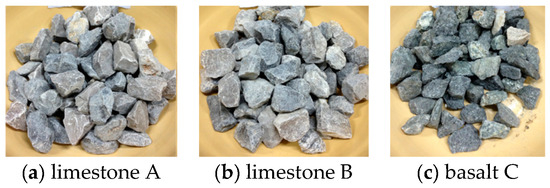
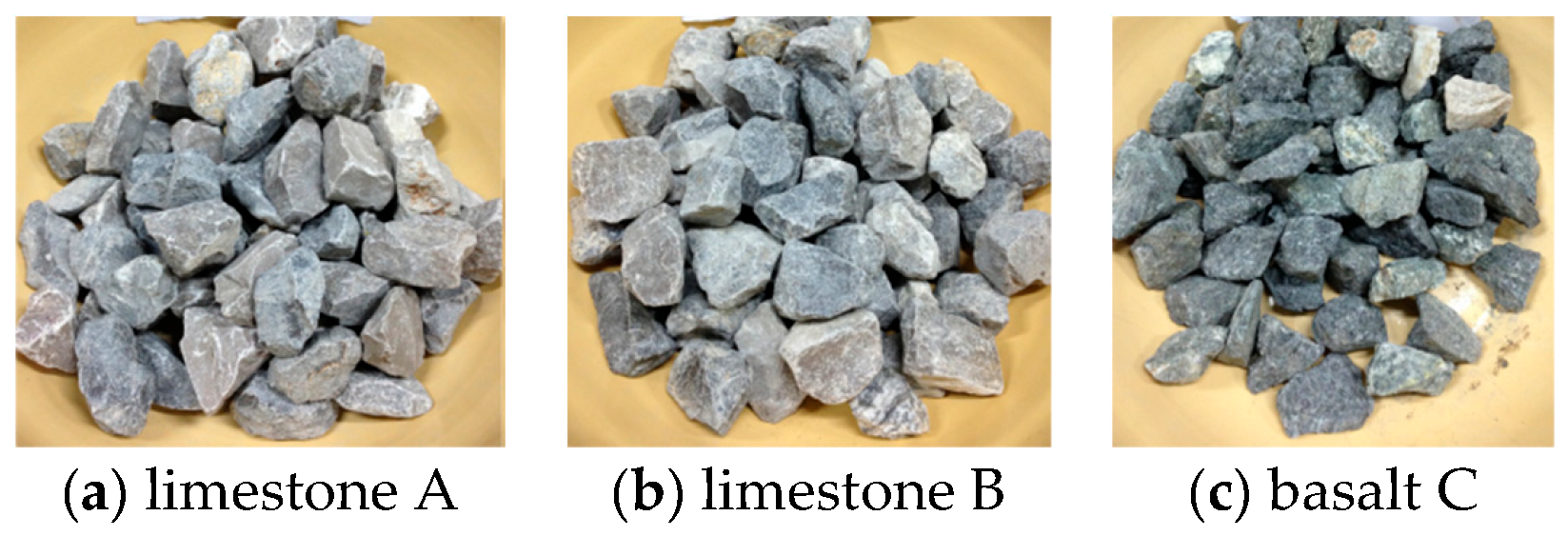
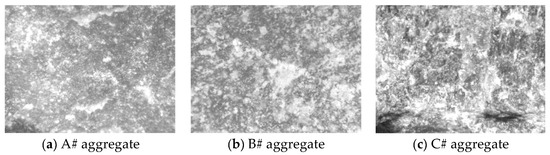
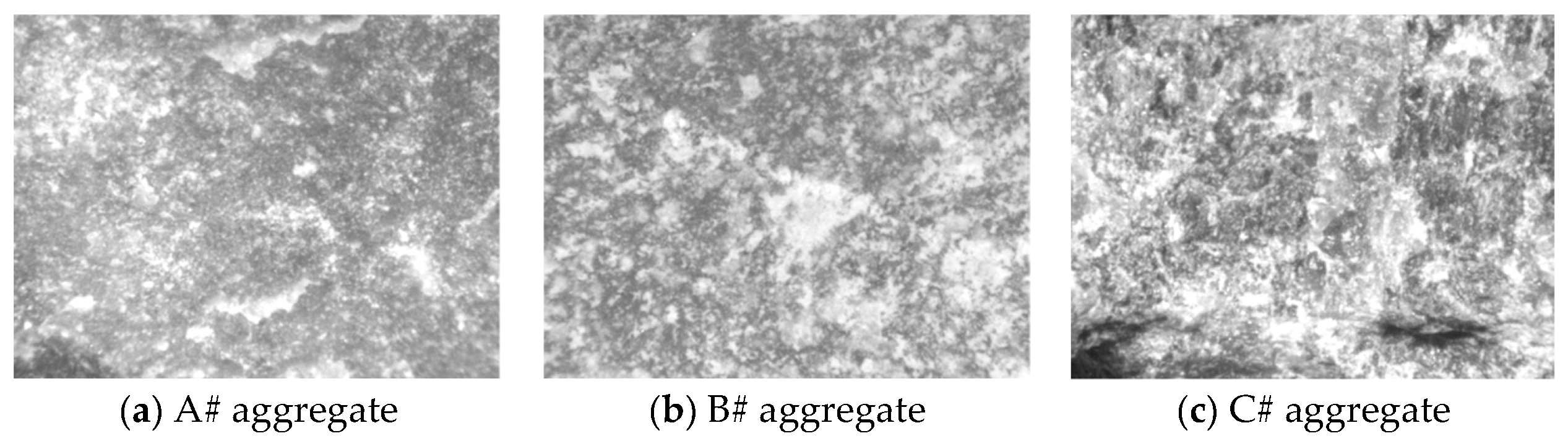
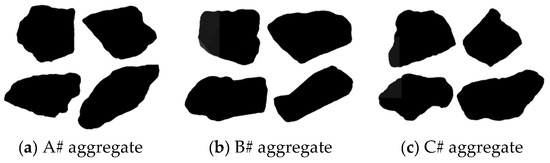
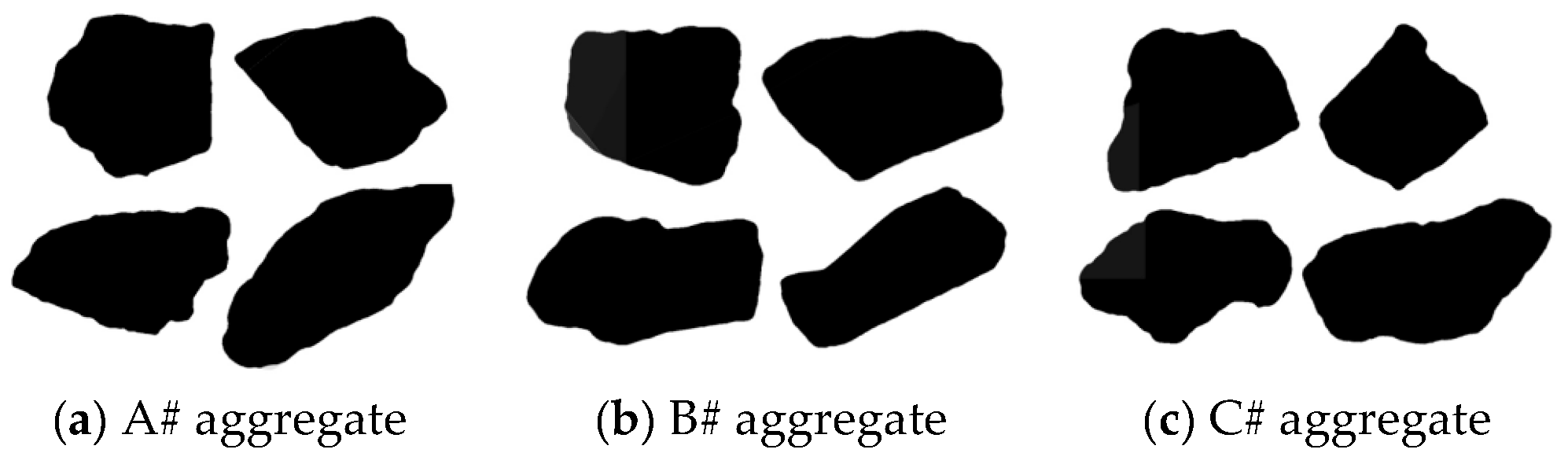
To study the geometric characteristics, two types of limestone (A and B) from Shaanxi Province and one basalt (C) from Guangdong Province were selected, as illustrated in Figure 1. Aggregates A and B exhibit visually similar morphology, whereas aggregate C is distinguished by its darker color and relatively rough surface. The physical and mechanical indicators of the three types of aggregates are presented in Table 1, Table 2, Table 3 and Table 4.
Figure 1.
Three different types of aggregates.
Table 1.
The bulk specific gravity of coarse aggregates.
Table 2.
The apparent relative gravity of fine aggregates.
Table 3.
Physical and mechanical indicators of the coarse aggregates.
Table 4.
Physical and mechanical indicators of the fine aggregates.
2.2. Gradation
In China, asphalt pavements are predominantly constructed using dense-graded asphalt concrete mixtures (AC), stone mastic asphalt mixtures (SMA), and open-graded friction course asphalt mixtures (OGFC). The Technical Specifications for Construction of Highway Asphalt Pavements (JTG F40-2004 [18]) presented the aggregate gradation ranges for the different types of asphalt mixtures. To systematically analyze the multi-dimensional geometric synergistic characteristics, the 33 types of AC, SMA, and OGFC mixtures were conducted, with the passing rates exhibited in Table 5, Table 6 and Table 7.
Table 5.
Gradation passing rates of AC asphalt mixtures.
Table 6.
Gradation passing rates of SMA asphalt mixtures.
Table 7.
Gradation passing rates of OGFC asphalt mixtures.
2.3. Asphalt
Shell 90# (Shell Bitumen, Beijing, China) was used as base asphalt, and the tests were conducted in accordance with the relevant requirements of the Standard Test Methods of Bitumen and Bituminous Mixtures for Highway Engineering (JTJ 052.2000 [19]). The test indicators for the asphalt are presented in Table 8.
Table 8.
Asphalt technical specification requirements and test results [20].
3. Test Method
3.1. Geometric Characteristics Tests Based on AIMS II
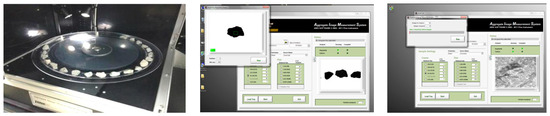
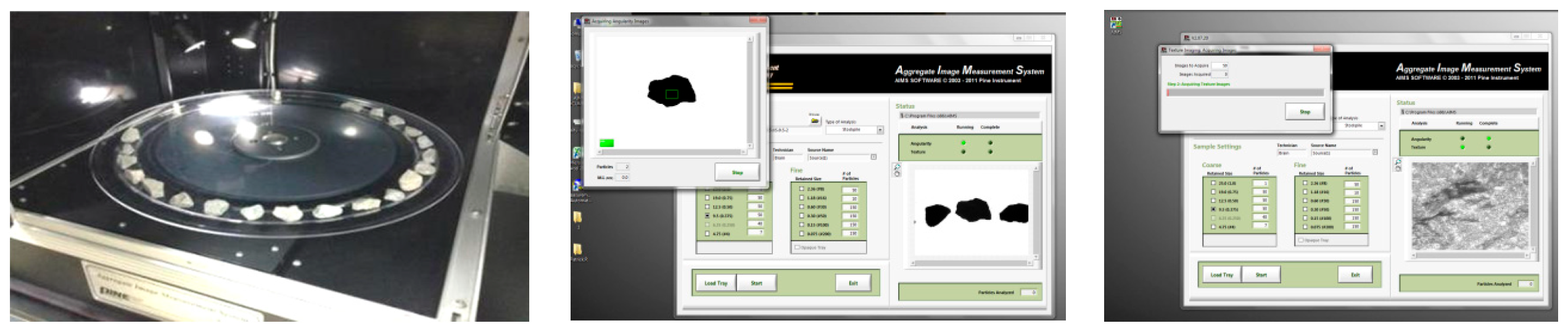
The AIMS II system is used to measure the sphericity (SP), texture coefficient (TX) and angularity gradient (GA) of single-sized aggregates. These parameters can quantitatively evaluate the geometric characteristics, including shape, texture and angularity. The AIMS II system consists of digital camera, rotating tray and specialized lighting components. The built-in software automatically processes the image data and outputs the geometric characteristic indices, as illustrated in Figure 2.
Figure 2.
The AIMS II system.
The system measures the aggregate geometric characteristics through three scanning procedures. Firstly, backlight scanning is conducted to capture the contour images of aggregates, and the angularity gradient is calculated based on the edge sharpness. The second scan measures the three-dimensional sizes (length, width, height). The third scan is performed using a multi-magnification microscope combined with symmetrical light to eliminate ghosting, capture surface texture images and output texture coefficient. According to the geometric indices, relative density, particle volume, surface area and average size of aggregates, the models of composite geometric characteristics are built based on the spreading and recombination principle, as presented in Equations (1)–(3) [21].
where CIGA is the composite angular index of the coarse aggregate for i gradation of aggregates; CITX is the composite texture index of the coarse aggregate for i gradation of aggregates; gi is the bulk relative density for i gradation of aggregates; GA is the angular gradient of grade i coarse aggregate; TX is the texture index of grade i coarse aggregate; Vwi is the weighted volume of the aggregates’ particle shape; SAwi is the weighted surface area of the aggregates’ particle shape; Cwi is the weighted circumference of the aggregates’ particle shape; di is the weighted circumference of the aggregates.
3.2. Aggregates Contact Friction Test
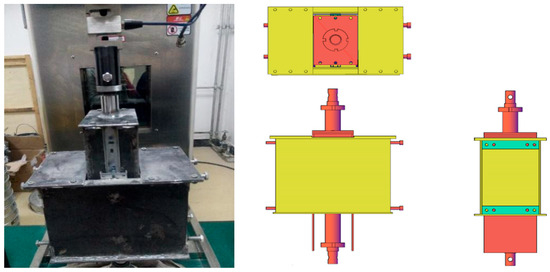
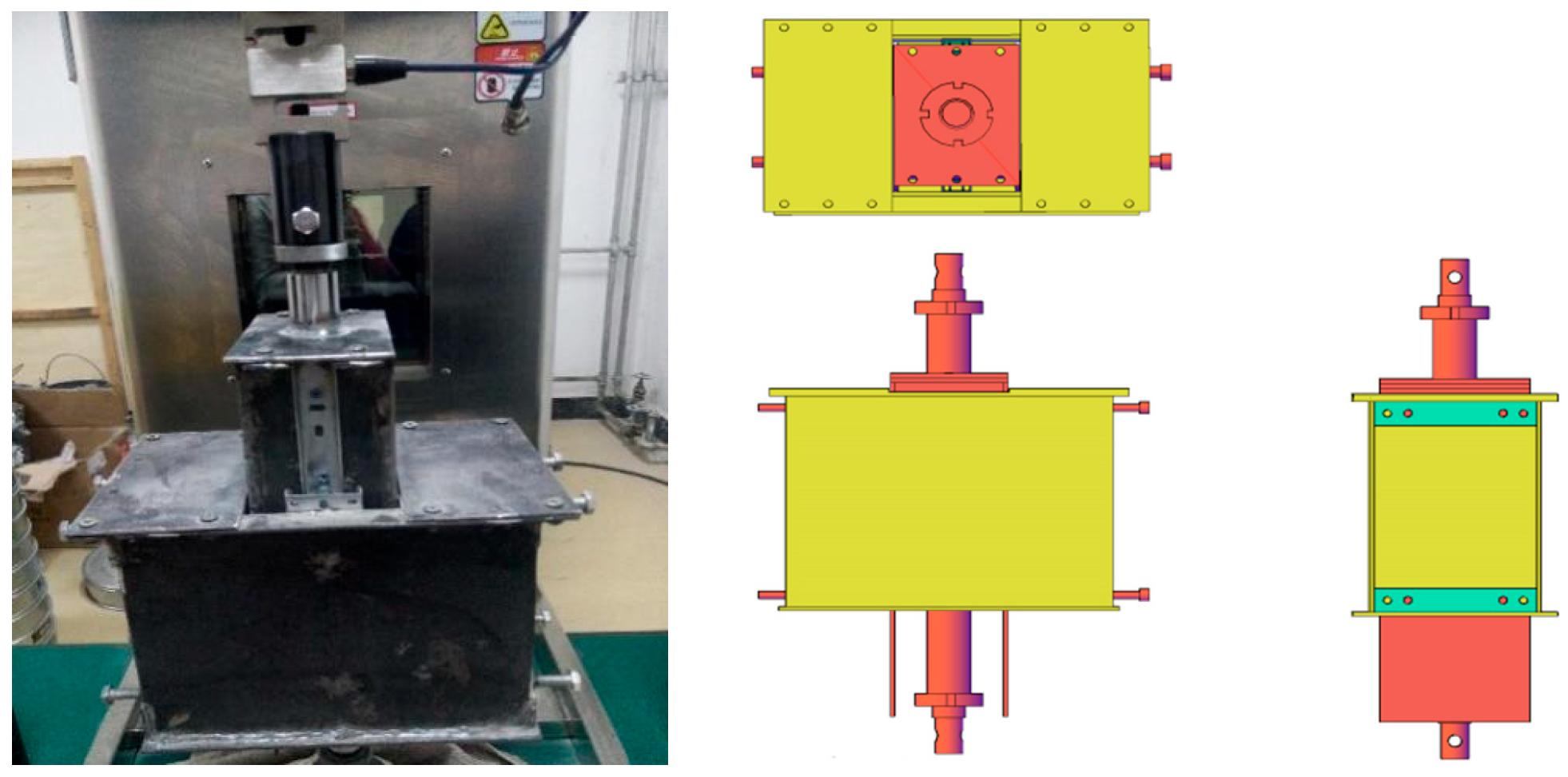
The previously developed aggregates contact friction tester is used to measure the maximum slip force of the asphalt mixture, as illustrated in Figure 3. The aggregates contact friction tester is of constant-volume structure with three chambers for aggregate filling. Under external loading, the central chamber moves upward along the guide track, yielding relative displacement between the aggregates and generating two contact-sliding interfaces in the adjacent side chambers.
Figure 3.
The developed aggregates contact friction tester.
The asphalt mixture is prepared at the optimum mixing temperature and maintained at 140 °C. To reduce the aggregate segregation, the asphalt mixture is divided into three stages and slowly filled into the chambers. The materials testing systems (MTS) is used to exert tension on the asphalt mixture. The upward movement displacement of the center chamber is recorded as the horizontal axis and the applied force from the MTS system as the vertical axis. In this way, the displacement–force curve is obtained. The peak value of the curve is defined as the maximum slip force Fm to evaluate the multiple coupling effects of interlocking, friction, bonding and lubrication between aggregates and asphalt binder. The relative lubrication coefficient L is calculated to evaluate the lubrication effect of asphalt on the interlocking and friction among aggregates. The calculation method can be expressed as shown in Equation (4).
where AES and Es are the contact slip energy of the asphalt mixture and the graded aggregates, J.
The loading rate was set to 10 mm/min. Five parallel tests were conducted on the asphalt mixture, and the average value was used as the final test result.
4. Analysis of Geometric Characteristics of Single-Sized Aggregates
Aggregates with different single sizes are proportionally combined to form graded aggregates. Analyzing the variation in geometric morphologies with particle size is essential for understanding the composite geometric characteristics of multi-grade aggregates. Accordingly, the shape, texture, and angularity were investigated, respectively, based on measurements obtained from the AIMS II system.
4.1. Shape Characteristics
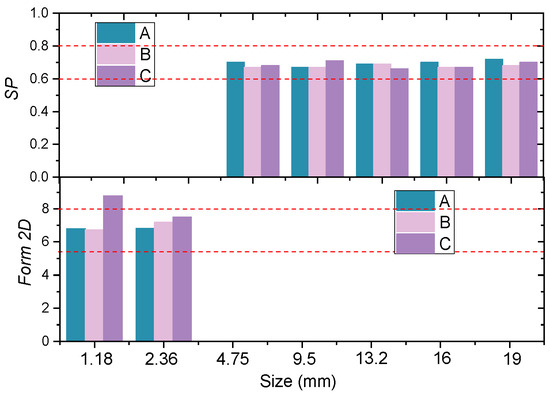
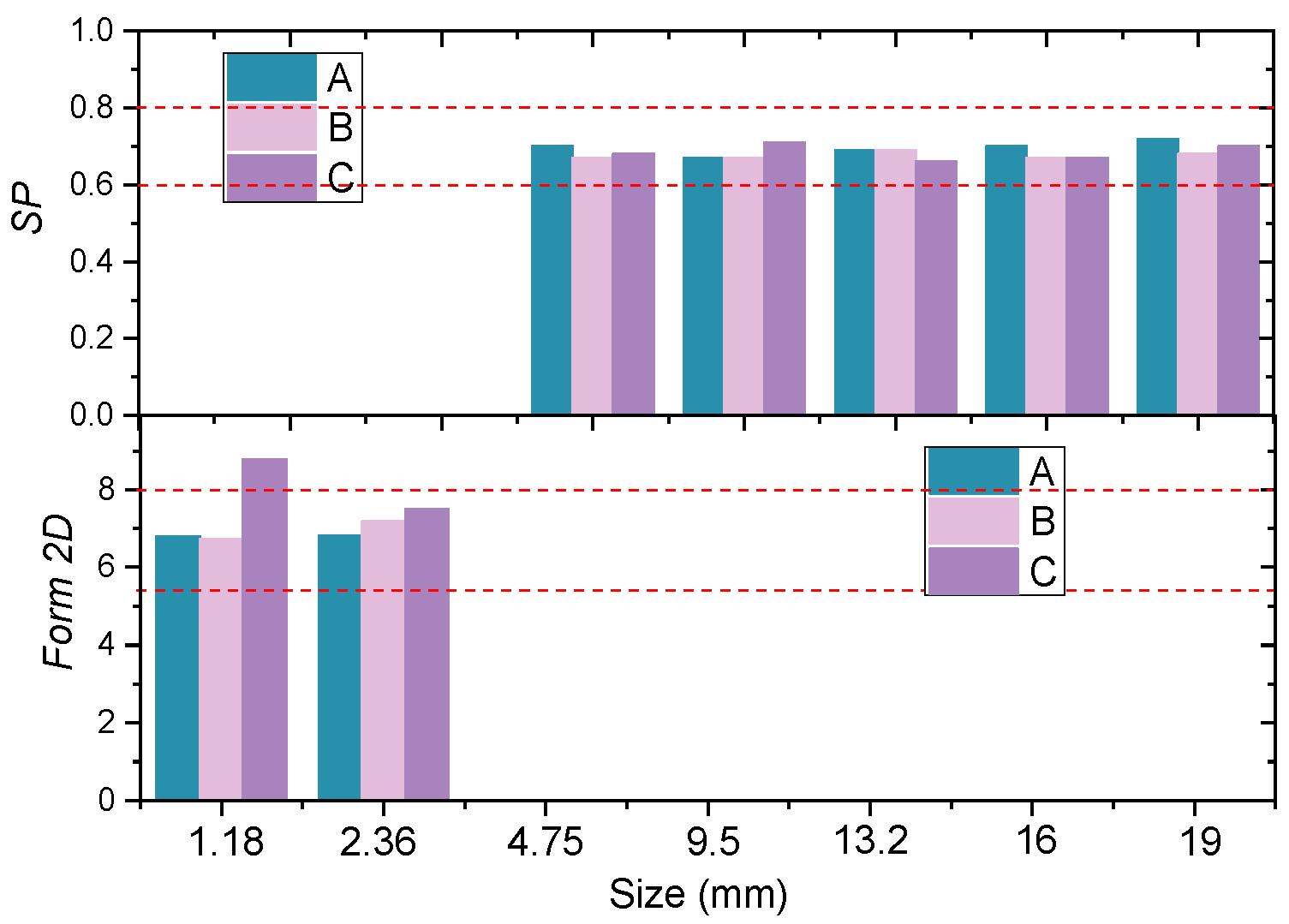
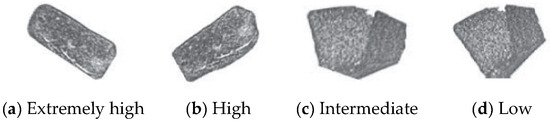
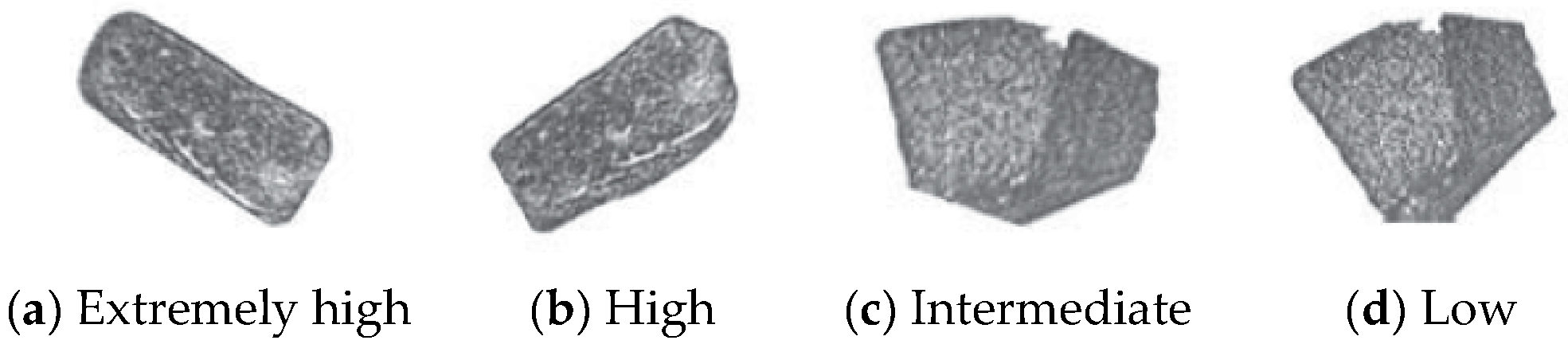
The sphericity (SP) and Form 2D of A#, B# and C# aggregates with varying particle sizes are presented in Figure 4. With the increase in the particle size, the SP of coarse aggregate fluctuates within a narrow range (0.6–0.8), showing no clear trend. This suggests that the coarse aggregates generally exhibit a moderate level of sphericity. The higher SP indicates a morphology closer to a sphere. As illustrated in Figure 5, all three types of coarse aggregates display cube-like geometries, further confirming that particle size has a minimal influence on the shape characteristics of coarse aggregates. In contrast, the Form 2D of fine aggregates shows more irregular and pronounced fluctuations. Among them, the C# aggregate with size of 1.18–2.36 mm exhibits a relatively cube-like shape, while other types and sizes of fine aggregates demonstrate weaker cubic characteristics.
Figure 4.
Shape parameters of aggregates with different particle sizes.
Figure 5.
Coarse aggregates with different sphericity levels.
In addition, Figure 4 delineates that the Form 2D of basalt fine aggregates is noticeably higher than that of the two limestone aggregates, whereas the SP of coarse aggregates exhibits no substantial differences among the three types. This phenomenon is attributed to the higher hardness of basalt compared to limestone. Alternatively, it could be influenced by measurement uncertainties related to the smaller particle size of fine aggregates or the variability in aggregate placement during image acquisition. Further investigation is warranted to clarify these potential factors, particularly by analyzing the corresponding trends in texture and angularity indices.
4.2. Texture Characteristics
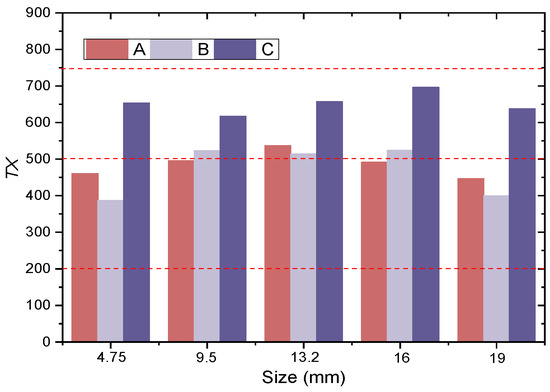
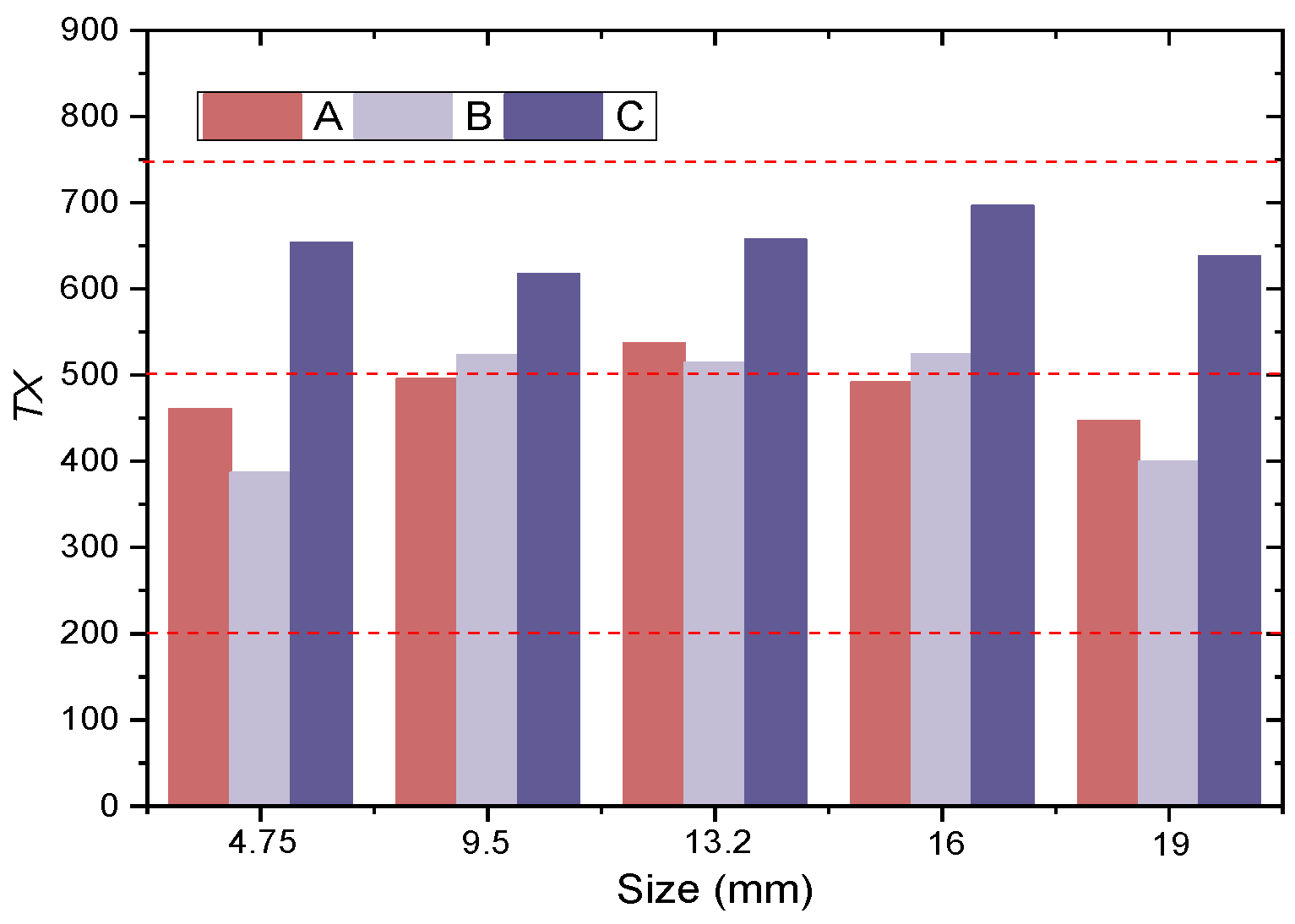
The surface texture of the aggregates is a microscale characteristic, needing to be measured through the combined use of high-magnification microscope and high-resolution digital camera. The small size of fine aggregates limits the ability to accurately capture their surface texture characteristics. Therefore, the texture index was determined only for coarse aggregates using the AIMS II system in this investigation. According to Figure 6, although the texture coefficient (TX) of aggregates from the three rock types exhibits irregularly variations with increasing particle size, the overall fluctuation range remains relatively small. This is primarily because surface texture is an intrinsic property of the parent rock, and all three aggregate types were processed using a standard impact crusher. As a result, the surface texture is largely governed by lithological characteristics and is only minimally influenced by particle size.
Figure 6.
Texture index of aggregates with different particle sizes.
Additionally, basalt aggregates exhibit significantly higher TX than those of the two types of limestone aggregates. Basalt is an igneous rock formed through the cooling and compaction of lava expelled during volcanic eruptions. Owing to the fluidity of magma, basalt aggregates typically display prominent ridge-like and channel-like surface features, as illustrated in Figure 7. These features contribute to a rough and discontinuous surface texture, thereby resulting in higher measured texture index values. In contrast, limestone is a sedimentary rock formed through the compaction and cementation of dehydrated calcium carbonate over long geological periods. Its primary mineral component is calcite with a large crystalline structure, and impurities such as clay and silt are dispersed within its matrix. Consequently, the surface texture of limestone aggregates tends to be more uniform, leading to lower texture index values compared to basalt.
Figure 7.
Texture proofs of the three types of aggregates.
4.3. Angularity Characteristics
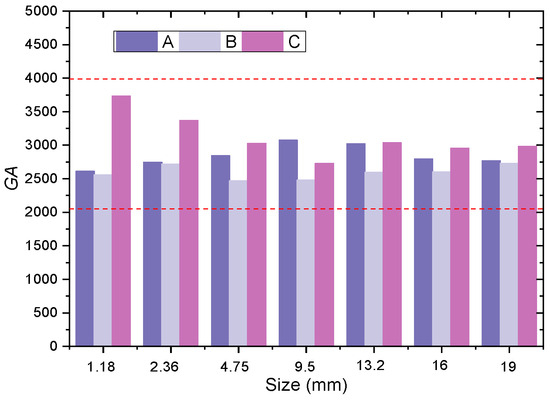
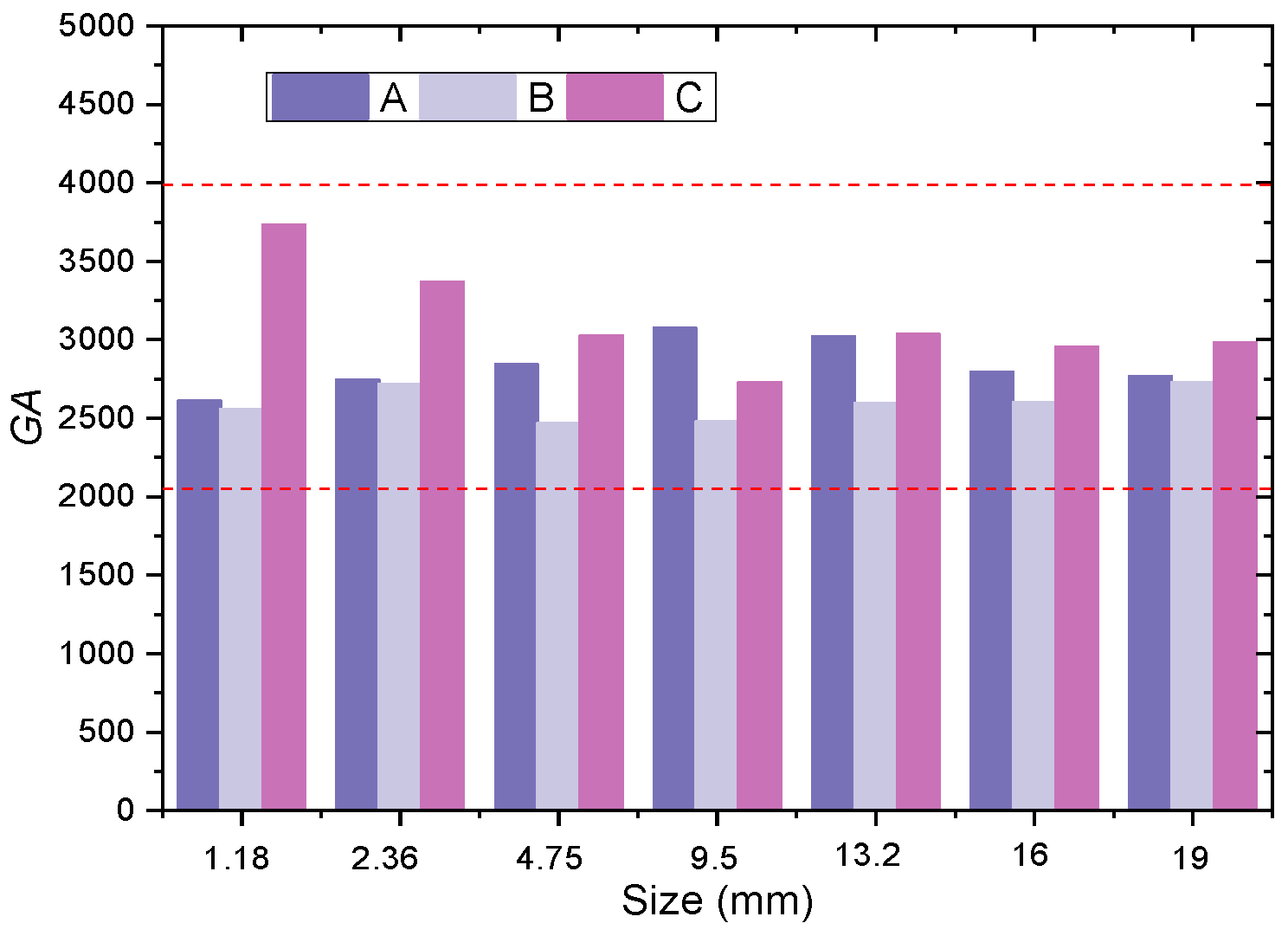
As shown in Figure 4 and Figure 8, the variation trend of the angular gradient (GA) of aggregates differs partially from that of SP. Combined with Figure 9, the GA of the three coarse aggregates remains relatively close with the increase in particle size. They fluctuate within the range of 2400~3100, indicating a moderate angularity level. For fine aggregates, the GA of the two limestone aggregates is similar, whereas the GA of basalt fine aggregates is significantly higher.
Figure 8.
Angularity gradients of different particle sizes.
Figure 9.
Angularity proofs of three types of aggregates.
The aggregates used in this investigation were produced by an impact crusher. During the crushing process, the high-speed rotation of the rotor generates strong centrifugal forces, causing the rocks to undergo intense contact, collision, and friction, ultimately forming coarse and fine aggregates of varying sizes. With the lower hardness of limestone compared to basalt, limestone is easier to crush, allowing for more thorough fragmentation and interaction between coarse and fine particles. In contrast, basalt’s higher hardness increases its crushing resistance, causing most of the crushing energy to concentrate on the coarse particles. As a result, the edges and corners of basalt coarse aggregates are more likely to be abraded than those of fine aggregates, leading to less pronounced cubic and angularity in the coarse fraction.
In summary, limestone aggregates exhibit minimal differences in SP and GA across different particle sizes. However, basalt fine aggregates tend to display a more cubic and higher angularity. Notably, the angularity of coarse aggregates is closely linked to the high-temperature rutting resistance of asphalt mixtures. The above analysis indicates that the geometric properties of coarse aggregates are less dependent on the particle size and more influenced by the inherent characteristics of the parent rock.
5. Multi-Dimensional Geometric Synergistic Behaviors of Graded Aggregates Based on Grey Relational Analysis
5.1. Synergistic Effect of Composite Geometric Characteristics on Interface Behaviors
The aggregate gradations are composed of multiple-sized aggregates. Although the geometric parameters of single-sized aggregate vary irregularly with increasing particle size, the interaction among aggregates of different sizes determines the interlocking and friction force of the asphalt mixture. Additionally, the texture and size of aggregates are closely related to the asphalt coating area, thereby affecting the interface effect of asphalt mixtures [22]. Therefore, based on the intrinsic characteristics of aggregates, it is essential to investigate the interaction mechanisms between the geometric morphologies, size and passing rate of aggregates. The quantitative models of composite shape characteristic CISP, composite texture characteristic CITX and composite angularity characteristic CIGA were built by integrating the particle size distribution, geometric characteristics and passing rate [21]. This approach facilitates a deeper understanding and analysis of the contributions of coarse and fine aggregates in inter-particle contact friction behaviors and further provides a theoretical basis for revealing the complex coupling mechanisms of multiple interface effects between aggregates and asphalt.
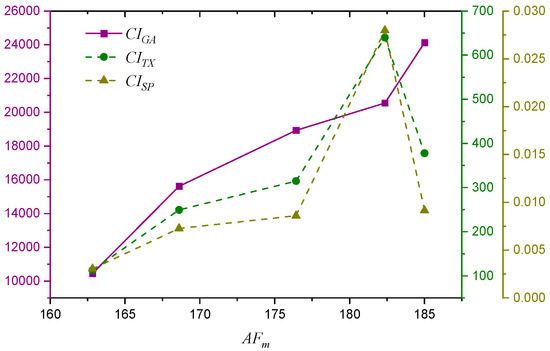
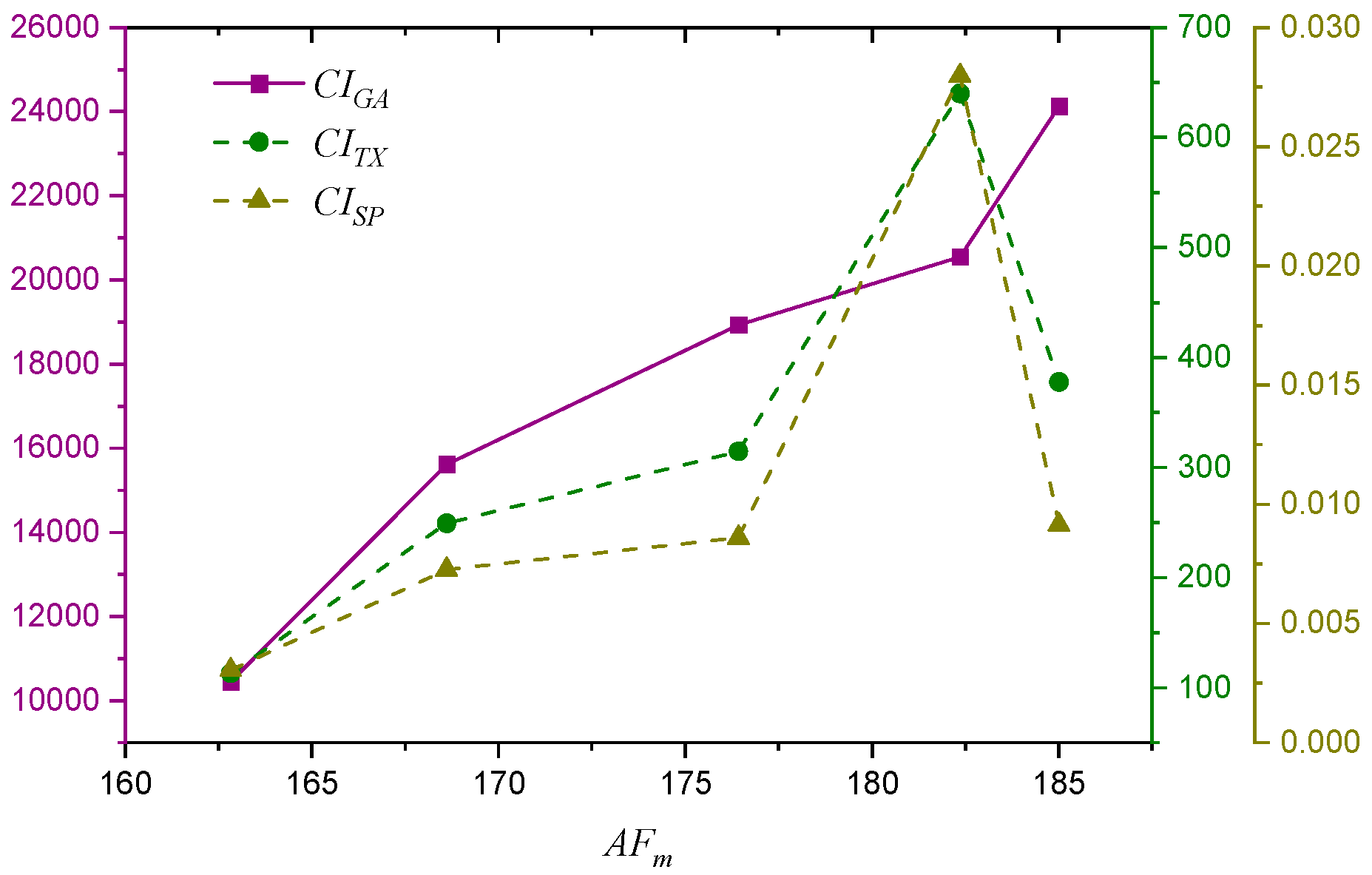
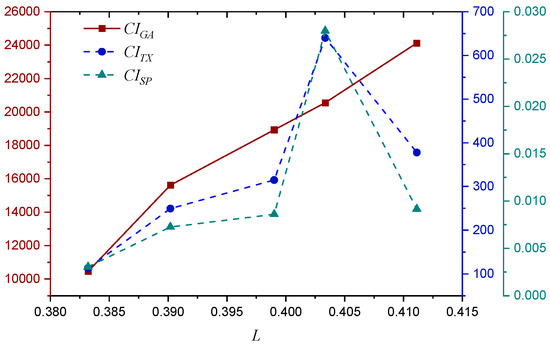
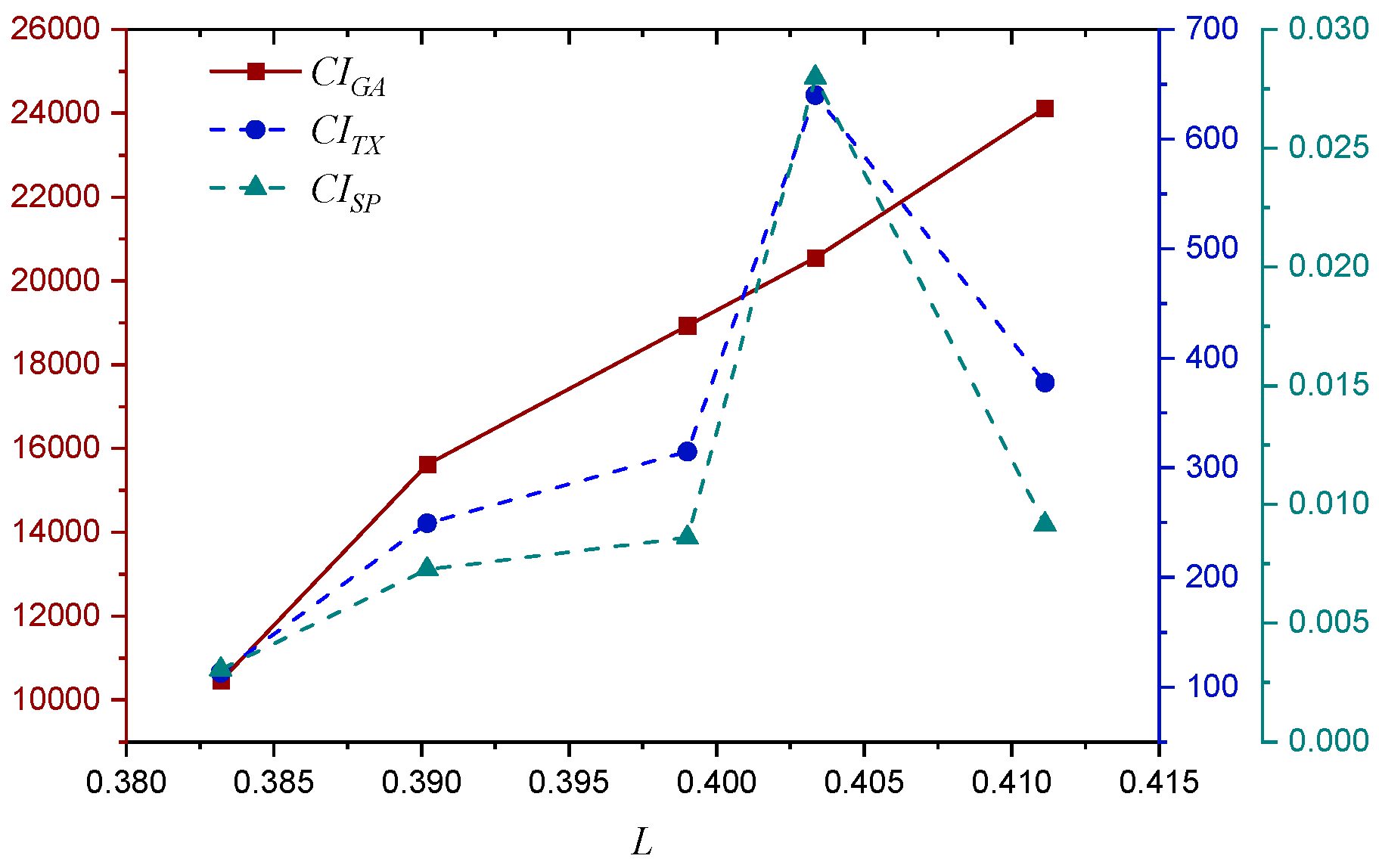
In previous studies, the maximum slip force (AFm) and lubrication index (L) were proposed to evaluate the multiple interface effect of asphalt mixtures [23]. To further analyze the synergistic characteristics of multi-dimensional geometric characteristics, five representative AC asphalt mixture were selected, including gradations of AC-20M, AC-16M, AC-13M, AC-13U, and AC-13L. Contact friction tests were conducted at 140 °C. By analyzing the correlation between CISP, CITX, and CIGA and AFm and L, the influence of the composite geometric characteristics on the interface effect was revealed, as illustrated in Figure 10 and Figure 11.
Figure 10.
The relationship between composite geometric parameters and the maximum slip force.
Figure 11.
The relationship between composite geometric parameters and lubrication index.
According to Figure 10 and Figure 11, AFm and L exhibit an increase followed by a decrease with the rising CISP and CITX, whereas a continuous increase is observed with increasing CIGA. To investigate the influence of the composite geometric characteristics of graded aggregates on the aggregate–asphalt interface interaction, linear regression analysis was performed on the trend lines in Figure 10 and Figure 11, with the results presented in Table 9.
Table 9.
The correlation between composite geometric indices and interface effect parameters.
Table 9 shows that both AFm and L exhibit robust correlation with the composite angularity index CIGA, with correlation coefficients exceeding 0.9, whereas weaker correlations are observed with CITX and CISP. This indicates that the angularity of coarse aggregates is a key factor affecting the aggregate–asphalt interface interaction and structure stability. Moreover, the lubrication effect of asphalt is more pronounced in graded aggregate with a higher proportion of larger-sized coarse aggregates. Aggregates of varying sizes interact through angularity and texture, thereby forming a skeleton structure, while asphalt binds with finer aggregates to form asphalt mortar. At the test temperature of 140 °C, the lubrication effect of asphalt is more pronounced than its bonding effect, and the asphalt mortar primarily functions as a filling and lubricating component within the skeleton structure. Consequently, the effect of fine aggregates transitions from lubrication and interference to filling and lubrication during the mixing, transportation and paving processes of asphalt mixtures. In this way, the asphalt mortar has an adverse impact on the skeleton structure formed by the interlocking and friction of coarse aggregates [24]. As CIGA increases, the content of larger-sized aggregates in the asphalt mixture increases, resulting in more internal voids. As a result, the filling capacity of the asphalt mortar enhances, contributing to a denser skeleton that resists further expansion. Consequently, AFm exhibits a rising trend with the growth of CIGA.
As shown as Figure 10 and Figure 11, both AFm and L increase with rising CITX, except for the AC-13L asphalt mixture. The surface texture can enhance the contact area between aggregates and asphalt. A higher CITX of graded aggregates indicates a larger contact area, thereby enhancing the bonding and lubrication effect of the asphalt mixture. However, the coarse aggregate content is the highest in the AC-13L mixture, resulting in the largest specific surface area and the highest asphalt absorption capacity. In addition, the relatively low content of fine aggregates leads to the lowest effective asphalt content, thereby weakening the bonding effect of asphalt on the aggregate skeleton. Meanwhile, AC-13L contains a relatively high level of coarse aggregates. This results in a strong lubricating effect of asphalt on the skeleton, second only to that of AC-20M asphalt mixture. The shape characteristic affects the stability of contact points by influencing the rotational inertia of aggregates. As a result, the effect of aggregate shape may not appear as a statistically significant standalone correlation with AFm and L. It plays a secondary role compared to angularity and surface texture and thus shows weaker correlations with AFm and L.
5.2. Synergistic Mechanism of Multi-Dimensional Geometric Characteristics
Section 5.1 demonstrates that the geometric characteristics of aggregates with different particle sizes and passing rate, including angularity, texture, and shape, do not function independently within asphalt mixtures. Instead, they interact synergistically through particle contact, interlocking, and spatial migration, resulting in a multi-dimensional geometric synergistic effect that influences the interface interaction between aggregates and asphalt. The angularity of coarse aggregates contributes to the formation of a skeleton contact network through geometric interlocking. Meanwhile, the surface texture enhances interfacial stability via a combined mechanism of frictional resistance and adhesion. Frictional resistance directly enhances the shear resistance between particles, while adhesion increases the effective contact area and strengthens bonding effect of the asphalt. The aggregates’ shape affects the dynamic response of the aggregate skeleton by altering the distribution of rotational inertia, which improves the synergistic efficiency between angularity and texture at the mesoscale. In addition, the particle size distribution changes the relative contributions of three geometric characteristics to the interface interaction and resulting in a multiple coupling interface effect.
To quantitatively evaluate the aggregate gradation, the weighting coefficients of composite shape, composite texture, and composite angularity were determined using grey relational analysis. Based on these results, an evaluation model of aggregate gradation was developed, as described in the next section, incorporating five dimensions: shape, texture, angularity, aggregate size and passing rate.
6. Analysis of Aggregate Gradation Characteristics
6.1. Evaluation Model of Aggregate Gradation Based on Grey Relational Analysis
- (1)
- Construct the reference sequence
The parent sequence, also referred to as the reference sequence or target index, is a data series that reflects the characteristic behavior of the system, and it functions similarly to a dependent variable. In this study, the parent sequence is defined as
Y = [333.2, 359.5, 418.944, 395.422, 442.48]T.
- (2)
- Construct the comparative sequence
The sub-sequence, also known as the comparative sequence or sub-index, is a data series that represents the factors influencing the system’s behavior, and it functions similarly to an independent variable. The sub-sequence is defined as
X1 = [0.003048, 0.007264, 0.027973, 0.008601, 0.009155]T;
X2 = [113.13909, 249.402951, 640.139491, 314.776906, 377.598465]T;
X3 = [10452.550929, 15616.1329, 20550.314785, 18929.771757, 24120.200138]T.
- (3)
- Data preprocessing
Due to the differences between the parent sequence and the sub-sequences, as well as among the sub-sequences themselves, each sequence has its own unit and data range. Therefore, preprocessing is necessary to normalize the data into a similar range. This is achieved by first calculating the mean of each indicator and then dividing each element in the sequence by the mean of that sequence.
After preprocessing, the parent sequence is as follows:
Y = [0.8546, 0.922, 1.0745, 1.0141, 1.1348]T.
The processed sub-sequences are
X1 = [0.2719, 0.6481, 2.4958, 0.7674, 0.8168]T;
X2 = [0.2835, 0.7357, 1.8883, 0.9285, 1.1138]T;
X3 = [0.5828, 0.8708, 1.1459, 1.0555, 1.345]T.
- (4)
- Calculation of grey relational coefficients
① Calculation of the minimum and maximum differences (a and b):
The minimum difference is given by a = min (min|x0(k) − xi(k)|) = 0.021
The maximum difference is given by b = max (max|x0(k) − xi(k)|) = 1.4213.
② Calculation of the relational coefficients:
The grey relational coefficient can be calculated using Equation (5).
where ρ is the resolution coefficient, ρ = 0.5.
The relational coefficients are as follows:
G1 = [0.5657, 0.7431, 0.3432, 0.7642, 0.7113]T;
G2 = [0.5708, 0.8157, 0.4799, 0.9189, 1]T;
G3 = [0.7447, 0.9604, 0.9356, 0.9729, 0.7945]T.
- (5)
- Calculation of relational degree
This involves calculating the mean value of the relational coefficients for each indicator. The relational degree for the composite shape index is 0.6255; for the composite texture index, it is 0.75706; and for the composite angularity index, it is 0.88162.
- (6)
- Calculation of weighting coefficients
The relational degrees are normalized to obtain the aggregate gradation characteristics calculation model:
MGI = 0.276 × CISP + 0.334 × CITX + 0.39 × CIGA
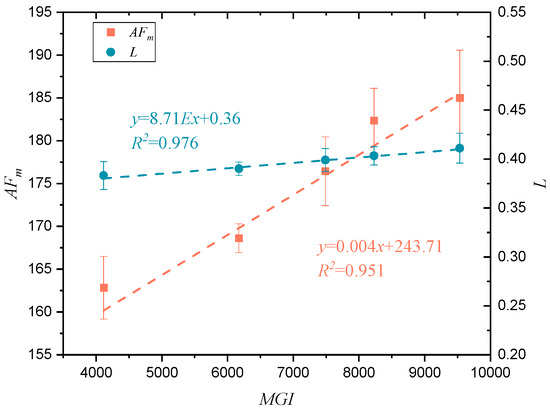
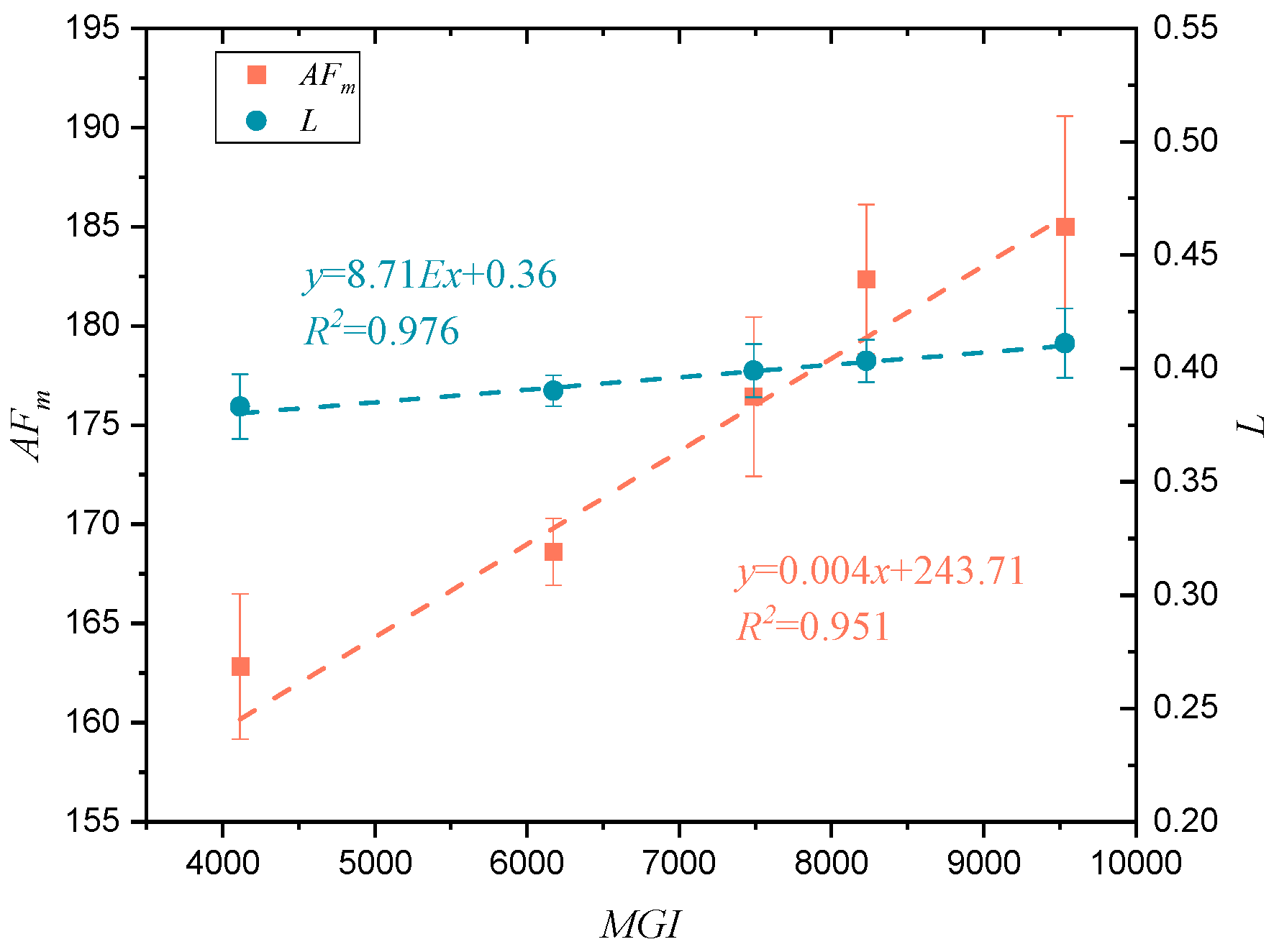
To verify the effectiveness of this model, the aggregate gradation index (MGI) was computed for five gradations, namely AC-13U, AC-13M, AC-13L, AC-16M and AC-20M. The relationship between MGI and the interfacial effect index (AFm and L) was established, as shown in Figure 12.
Figure 12.
The relationship between multi-dimensional geometric synergistic index and interface effect indices.
The results indicate that the MGI exhibits significant distinguishability for different gradations, with the ranking as follows: AC-20M > AC-13L > AC-16M > AC-13M > AC-13U. On the other hand, MGI shows a strong linear correlation with both AFm and L, with R2 of 0.965 and 0.961, respectively. These R2 surpass the correlation indices between CIGA and AFm and L. This demonstrates that the proposed calculation model of aggregate gradation characteristics for asphalt mixtures has high reliability and accuracy. This model not only evaluates the gradation properties of asphalt mixtures but also contributes to analyzing the mechanism of aggregate–asphalt interface interaction at the microscopic level.
6.2. Quantitative Analysis of Aggregate Gradation Characteristics
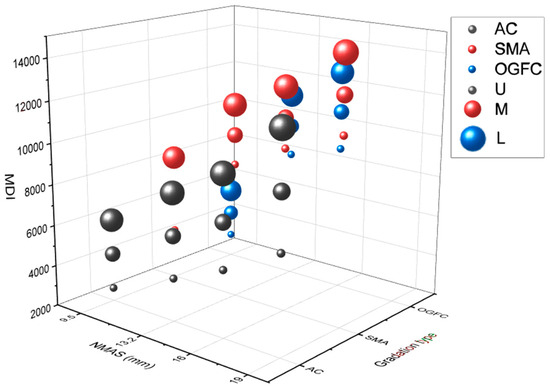
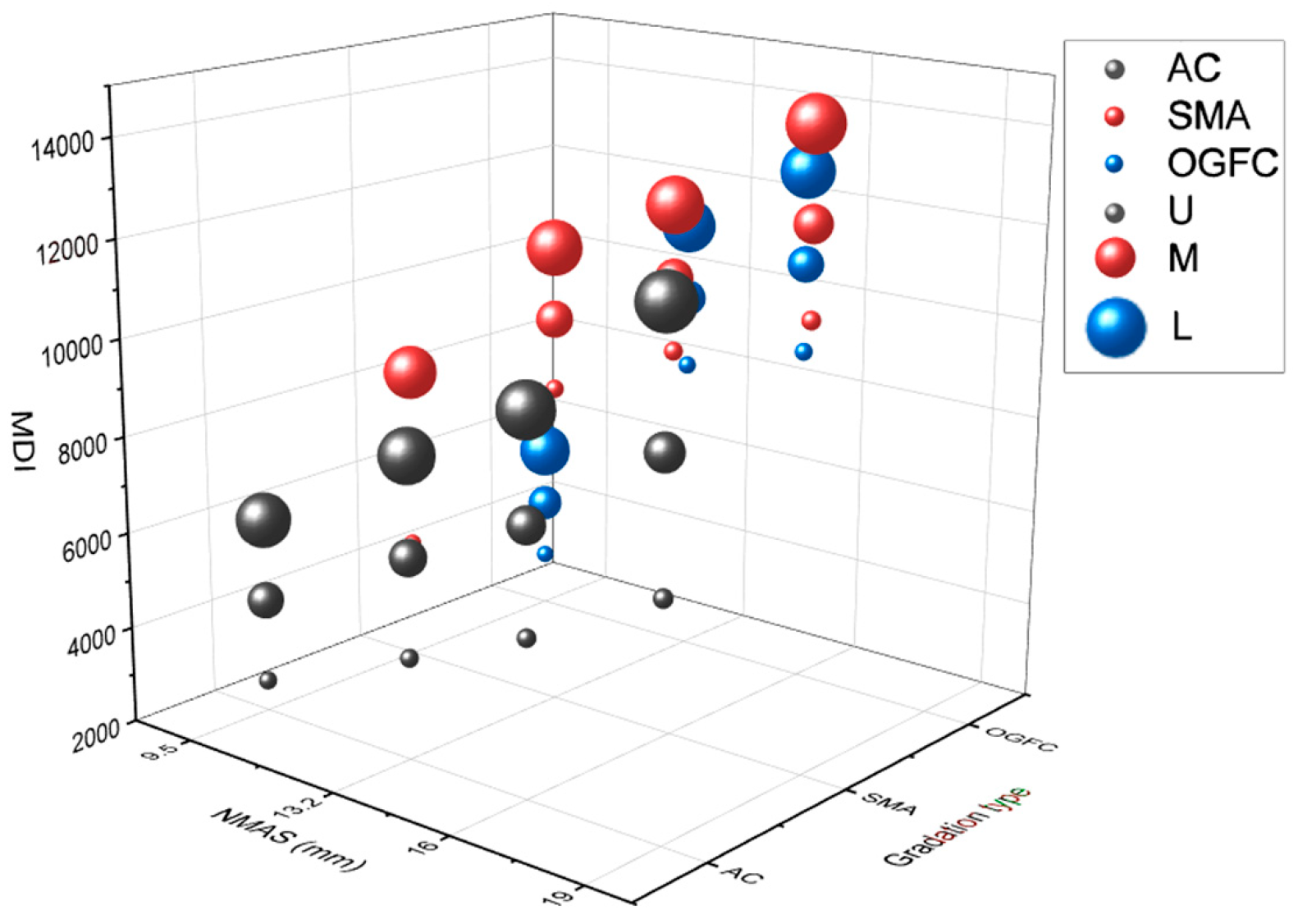
This investigation calculates the aggregate gradation index for 33 asphalt mixtures, including three different gradation types (AC, SMA, OGFC), three gradation structures (upper limit, median, lower limit), and four different nominal maximum aggregate sizes (9.5 mm, 13.2 mm, 16 mm, and 19 mm). All mixtures are based on the specifications outlined in the Technical Specification for Construction of Highway Asphalt Pavement (JTG F40-2004). The calculation results are depicted in Figure 13. The three axes represent the NMAS, gradation type, and aggregate gradation index, while bubble color distinguishes gradation types, and bubble size indicates gradation structures.
Figure 13.
Aggregate gradation index of asphalt mixture.
As shown in Figure 13, when the gradation structure and NMAS are the same, the MGI ranking for different gradation types follows the order: SMA > OGFC > AC. The difference in MGI between the SMA and OGFC asphalt mixture is relatively small, but both are significantly higher than that of the AC asphalt mixture. This is attributed to the fact that SMA adopts a gap-graded structure, while OGFC employs a continuously open-graded structure. Although differing in gradation types, both primarily feature a coarse aggregate skeleton. In contrast, AC gradation is a continuously dense-graded mixture characterized by fine aggregate filling, with a relatively small content of coarse aggregates, resulting in the lowest MGI.
The MGI shows a significant increasing trend with the rise in NMAS, indicating a strong intrinsic correlation between the gradation characteristics and the synergistic effects of multi-dimensional geometric synergistic characteristics. For AC asphalt mixture, the MGI increases linearly with NMAS. The AC adopts a continuously dense-graded gradation with uniformly distributed aggregates, resulting in a consistent enhancement of the synergy among geometric characteristics as the particle size increases. The MGI of the SMA and OGFC asphalt mixtures exhibits a nonlinear increase, as the NMAS rises from 9.5 mm to 13.2 mm, with OGFC showing a slower growth rate compared to the SMA asphalt mixture. Coarse aggregates in the 4.75–9.5 mm size range dominate both the SMA and OGFC asphalt mixtures. However, when the NMAS increases to 13.2 mm, SMA shows a substantial increase in the content of large-sized coarse aggregates. In contrast, the OGFC asphalt mixture exhibits a more limited increase in large aggregates due to its continuously graded spatial distribution. This leads to a significant difference in the growth rates of MGI between the two types of asphalt mixtures. This further suggests that increasing the coarse aggregate content does not necessarily enhance the multi-dimensional geometric synergy in asphalt mixtures. Instead, the enhanced synergy originates from the optimized coordination of coarse and fine aggregates with diverse morphological characteristics, which are reorganized into a stable load-bearing skeleton under the cohesive and lubricating actions of asphalt.
Significant distinctions in MGI are observed among asphalt mixtures with different gradation structures, ranked as lower limit > median > upper limit. Based on the distribution characteristics of the gradation curves, the mass fraction of coarse aggregates increases from the upper limit to the median and then to the lower limit. This continuous change in gradation composition directly leads a restructuring of the aggregate geometry and size distribution, thereby growing the composite angularity index, composite texture index, and composite shape index. After weighting through grey relational analysis, the MGI of the gradation mixtures increases.
7. Conclusions
This investigation employed the AIMS II system to measure the geometric morphologies of single-sized aggregates, focusing on shape, texture, and angularity. The synergistic mechanism of the multi-dimensional geometric characteristics of asphalt mixtures was analyzed. Then, an evaluation model of aggregate gradation was developed. The main conclusions are as follows:
- (1)
- When the aggregate is processed by the same crushing method, its geometric characteristics are primarily affected by lithology, with minimal correlation to particle size. The production regions have a certain influence on the geometric indices. Basalt exhibits a ridge- and channel-like texture with its higher hardness, resulting in a significantly higher texture index compared to the two limestone aggregates.
- (2)
- Increasing the particle size and the proportion of coarse aggregates enhances the role of angularity in forming a stable interlocking skeleton. Although a higher composite texture index is beneficial for strengthening interface friction, it may simultaneously intensify the lubrication effect of asphalt, thereby weakening the frictional contribution. This reveals the dual role of texture in interface mechanical behavior.
- (3)
- A gradation characterization model was developed using the gray relational analysis method, and its reliability was verified. The particle size affects the aggregate gradations by regulating the contribution degree of geometric characteristics. In general, mixtures with larger nominal maximum aggregate sizes present higher gradation indices, and the typical ranking can be summarized as SMA > OGFC > AC. With the gradation from coarse to fine, the aggregate gradation index increases.
8. Limitations
In this study, the quantitative evaluation of aggregate gradation based on a synergistic mechanism of geometric characteristics, size and passing rates was proposed. However, the analysis is based on aggregates from only three different lithological sources, and the regression dataset is relatively small. Future work will involve large-scale AIMS measurements of aggregates from different lithologies and sources to establish a comprehensive database of aggregate geometric and gradation characteristics. In addition, the proposed framework will be further extended to SMA and OGFC asphalt mixtures to develop a more general and widely applicable gradation characterization model.
Author Contributions
Conceptualization, J.S. and M.J.; Methodology, B.Z. and M.J.; Software, P.J.; Validation, X.H.; Formal analysis, P.J.; Investigation, J.X.; Data curation, X.H.; Writing—original draft, B.Z.; Funding acquisition, J.S. All authors have read and agreed to the published version of the manuscript.
Funding
The authors gratefully acknowledge the financial support from the National Natural Science Foundation of China [grant number 52508508], the Natural Science Basic Research Plan in Shandong Province [grant number ZR2023QE122], the Natural Science Foundation of Henan Province [grant number 252300421565], the Fundamental Research Funds for the Central Universities [grant number 300102213530], and the Open Research Project of Shandong Key Laboratory of Highway Technology and Safety Assessment [grant number SH202302].
Institutional Review Board Statement
Not applicable.
Informed Consent Statement
Not applicable.
Data Availability Statement
All data, models, and code generated or used during the study appear in the submitted article.
Conflicts of Interest
The authors declare that they have no known competing financial interests or personal relationships that could have appeared to influence the work reported in this paper.
Abbreviations
| Symbols | Definitions | Units |
| CISP | The composite shape index | None |
| CITX | The composite texture index | None |
| CIGA | The composite angular index | None |
| M | The total mass of the particle system | g |
| The gravity of the i-th file aggregate | g/cm3 | |
| The weighted volume of aggregates | cm3 | |
| The weighted perimeter of aggregates | cm | |
| The average particle size of the i-th file aggregate | cm | |
| ai | The mass fraction of the i-th file aggregate | None |
| SAwi | The weighted surface area of the i-th file aggregate | cm2 |
| SPi | The shape of the i-th file aggregate | None |
| TXi | The texture of the i-th file aggregate | None |
| GAi | The angular of the i-th file aggregate | None |
| AFm | The maximum slip force | N |
| L | The lubrication coefficient | None |
| AES | The contact slip energy of asphalt mixture | J |
| Es | The contact slip energy of graded aggregates | J |
| MGI | The aggregate gradation index | None |
References
- Xing, C.; Liu, B.; Liu, H.; Zhang, L.; Xu, H.; Tan, Y. Topological characterization and typical topologies of disruption aggregates in asphalt mixture. J. Mater. Civ. Eng. 2024, 36, 04024158. [Google Scholar] [CrossRef] [Scilit]
- Dong, S.H.; Han, S.; Su, J.; Su, H.; Niu, D.; Chen, D.; Jia, M.; Wang, W. A review on 3D reconstruction and evaluation methods of asphalt pavement texture. China J. Highw. Transp. 2025, 38, 60–84. [Google Scholar] [CrossRef]
- Liu, P.F.; Hu, J.; Wang, D.W. Modelling and Evaluation of Aggregate Morphology on Asphalt Compression Behavior. Constr. Build. Mater. 2017, 133, 196–208. [Google Scholar] [CrossRef] [Scilit]
- Flether, T.; Chandan, C.; Masad, E. Aggregate Imaging System for Characterizing the Shape of Fine and Coarse Aggregates. Transp. Res. Rec. J. Transp. Res. Board 2003, 1832, 67–77. [Google Scholar] [CrossRef] [Scilit]
- Al-Rousan, T.; Masad, E.; Myers, L.; Speigelman, C. New methodology for shape classification of aggregates. Transp. Res. Rec. 2005, 1913, 11–23. [Google Scholar] [CrossRef]
- Wang, L.; Wang, X.; Mohammad, L.; Abadie, C. Unified Method to Quantify Aggregate Shape Angularity and Texture Using Fourier Analysis. J. Mater. Civ. Eng. 2005, 17, 498–504. [Google Scholar] [CrossRef] [Scilit]
- Jiang, R.; Zhou, X.; Ran, M. 3D Reconstruction and morphology analysis of coarse aggregate using optical laser triangulation and image processing technology. Road Mater. Pavement Des. 2024, 25, 790–819. [Google Scholar] [CrossRef] [Scilit]
- Gao, J.; Wang, H.; Bu, Y.; You, Z.; Zhang, X.; Irfan, M. Influence of Coarse-Aggregate Angularity on Asphalt Mixture Macroperformance: Skid Resistance, High-Temperature, and Compaction Performance. J. Mater. Civ. Eng. 2020, 32, 04020095. [Google Scholar] [CrossRef] [Scilit]
- Xie, X.; Lu, G.; Liu, P.; Wang, D.; Fan, Q.; Oeser, M. Evaluation of Morphological Characteristics of Fine Aggregate in Asphalt Pavement. Constr. Build. Mater. 2017, 139, 1–8. [Google Scholar] [CrossRef] [Scilit]
- Pei, Y.; Li, P.; Jiang, S.; Yao, S.; Ding, Z.; Falchetto, A.C. Mix design optimization of high-viscosity asphalt mixtures for ultra-thin pavement considering geometric properties and interface slip behavior for aggregate system. Constr. Build. Mater. 2025, 464, 140085. [Google Scholar] [CrossRef] [Scilit]
- Yang, X.D.; Ma, L.; Zhang, Z.Q. Analysis of the Influence of Coarse Aggregate Particle Size on the Skeleton Stability of Mineral Mixtures. J. Xi’an Univ. Sci. Technol. 2006, 26, 480–484. [Google Scholar]
- Chen, J.; Huang, X.M. Evaluation of Aggregate Skeleton Structure Using Discrete Element Method. J. Southeast Univ. 2012, 42, 761–765. [Google Scholar] [CrossRef] [Scilit]
- Zhang, X.; Liu, T.; Liu, C.; Chen, Z. Research on Skid Resistance of Asphalt Pavement Based on Three-dimensional Laser-scanning Technology and Pressure-sensitive Film. Constr. Build. Mater. 2014, 69, 49–59. [Google Scholar] [CrossRef] [Scilit]
- Jiang, W.; Sha, A.; Xiao, J. Experimental Study on Relationships among Composition, Microscopic Void Features, and Performance of Porous Asphalt Concrete. J. Mater. Civ. Eng. 2015, 27, 04015028. [Google Scholar] [CrossRef] [Scilit]
- Pei, J.Z.; Zhang, J.L.; Chang, M.F. Effect of Mineral Aggregate Gradation on the Void Distribution Characteristics of Open-Graded Asphalt Mixtures. J. China Highw. 2010, 23, 1–6. [Google Scholar] [CrossRef] [Scilit]
- Li, Y.; Mao, C.; Sun, M.; Hong, J.; Zhao, X.; Li, P.; Xiao, J. Effect of Smart Aggregate Size on Mesostructure and Mechanical Properties of Asphalt Mixtures. Coatings 2024, 14, 1238. [Google Scholar] [CrossRef] [Scilit]
- Guo, Q.; Xu, H.; Wang, J.; Hang, J.; Wang, K.; Hu, P.; Li, H. Gradation Optimization Based on Micro-Analysis of Rutting Behavior of Asphalt Mixture. Coatings 2023, 13, 1965. [Google Scholar] [CrossRef] [Scilit]
- JTG F40-2004; Technical Specifications for Construction of Highway Asphalt Pavements. People’s Republic of China Ministry of Transportation: Beijing, China, 2004.
- JTJ 052-2000; Standard Test Methods of Bitumen and Bituminous Mixtures for Highway Engineering. China Communications Press: Beijing, China, 2000.
- Su, J.; Fan, L.; Zhang, L.; Hu, S.; Xu, J.; Li, G.; Dong, S. A Three-Dimensional Optimization Framework for Asphalt Mixture Design: Balancing Skeleton Stability, Segregation Control, and Mechanical Strength. Coatings 2025, 15, 807. [Google Scholar] [CrossRef] [Scilit]
- Su, J.; Li, P.; Sun, S.; Cheng, L.; Bi, J.; Zhu, D. Effects of composite geometric characteristics of coarse particles on interface interactions of aggregate-asphalt system. Constr. Build. Mater. 2021, 287, 122750, Erratum in Constr. Build. Mater. 2025, 458, 139501. https://doi.org/10.1016/j.conbuildmat.2024.139501. [Google Scholar] [CrossRef] [Scilit]
- Sun, X.; Qin, X.; Liu, Z.; Yin, Y. Damaging effect of fine grinding treatment on the microstructure of polyurea elastomer modifier used in asphalt binder. Measurement 2025, 242, 115984. [Google Scholar] [CrossRef] [Scilit]
- Su, J.; Li, P.; Wei, X.; Zhu, L.; Gao, J. Interface Transformation Behavior of Bonding/Lubrication of Aggregate-Asphalt System. J. Mater. Civ. Eng. 2020, 32, 04020380. [Google Scholar] [CrossRef] [Scilit]
- Zhu, H.; Hu, M.; Zhang, Y.; Abudurahman, A.; Zhu, Y.; Cui, J. Microwave-Functionalized Sustainable Lignin to Enhance the Oxidation Resistance of Asphalt: A Chemical Oxygen Quenching and Physical VOCs Adsorption Perspective. Fuel 2026, 410, 137855. [Google Scholar] [CrossRef] [Scilit]

Disclaimer/Publisher’s Note: The statements, opinions and data contained in all publications are solely those of the individual author(s) and contributor(s) and not of MDPI and/or the editor(s). MDPI and/or the editor(s) disclaim responsibility for any injury to people or property resulting from any ideas, methods, instructions or products referred to in the content. |
© 2026 by the authors. Licensee MDPI, Basel, Switzerland. This article is an open access article distributed under the terms and conditions of the Creative Commons Attribution (CC BY) license.