From Plants to Performance: A Sustainable Approach to Fiber Reinforcement Using Biopolymers

 ,
,  and
and 
Abstract
1. Introduction
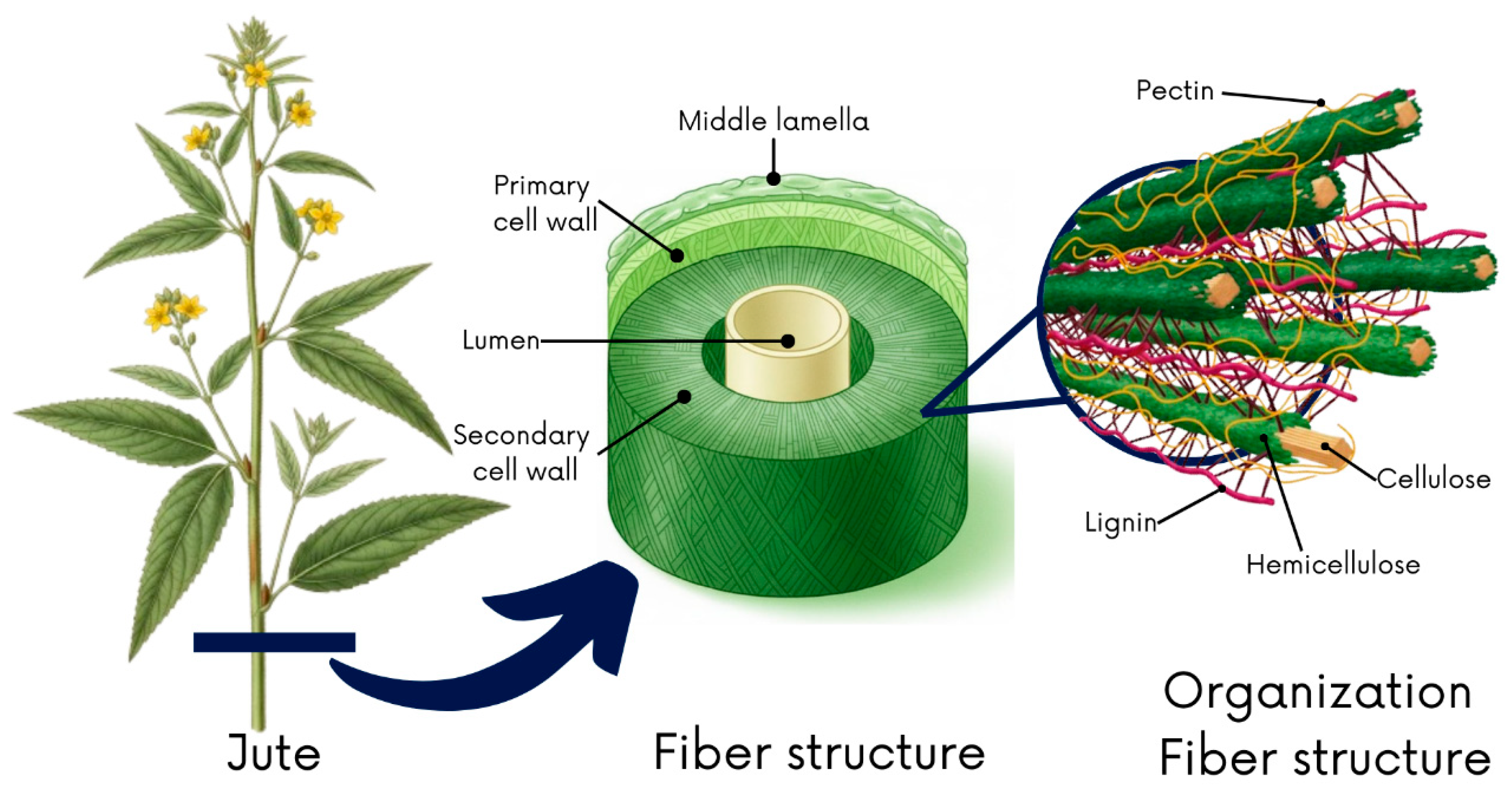
2. Biopolymers and Natural Fiber
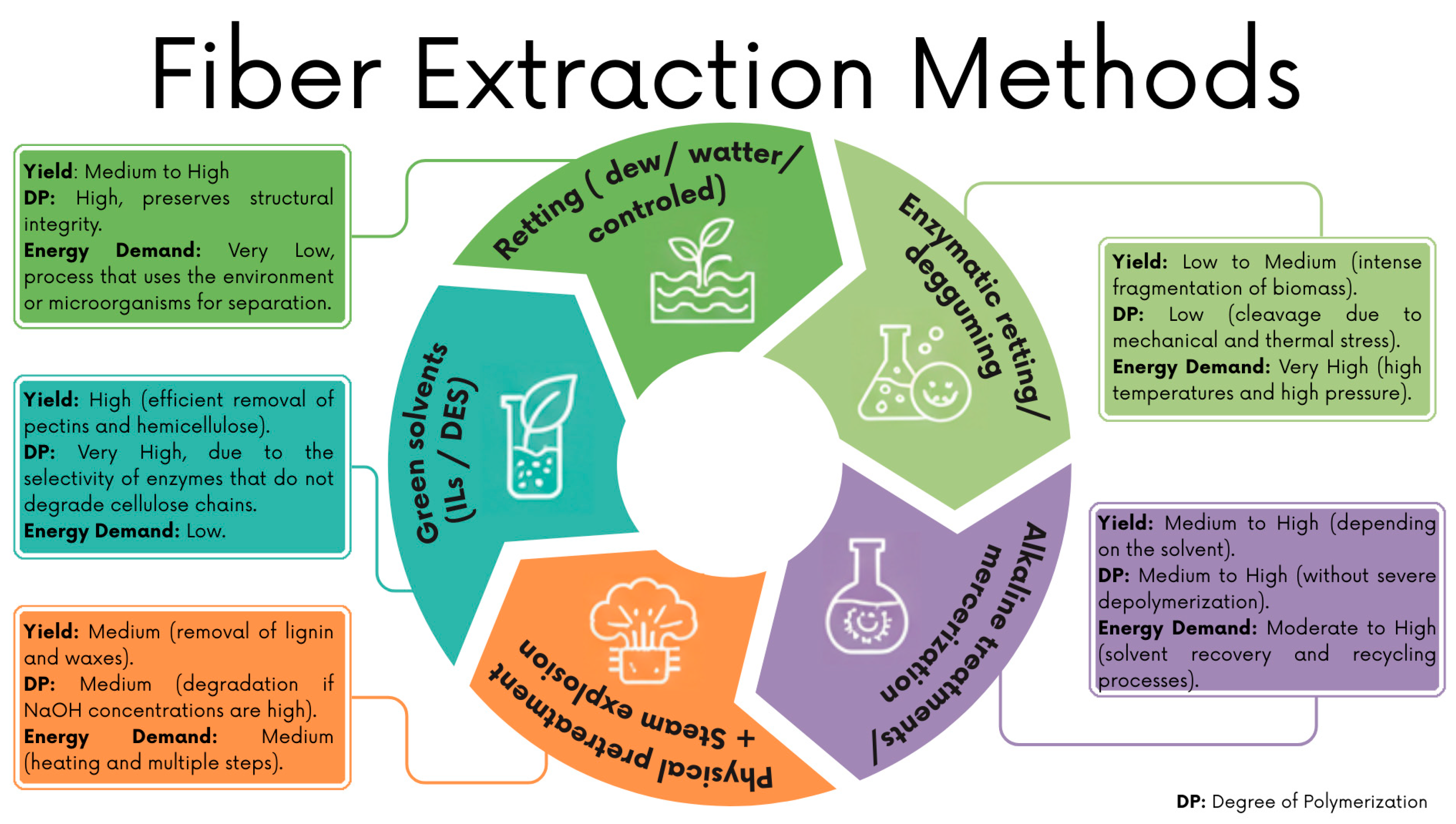
3. Extraction Sources and Processing Requirements
4. Characterization Methods
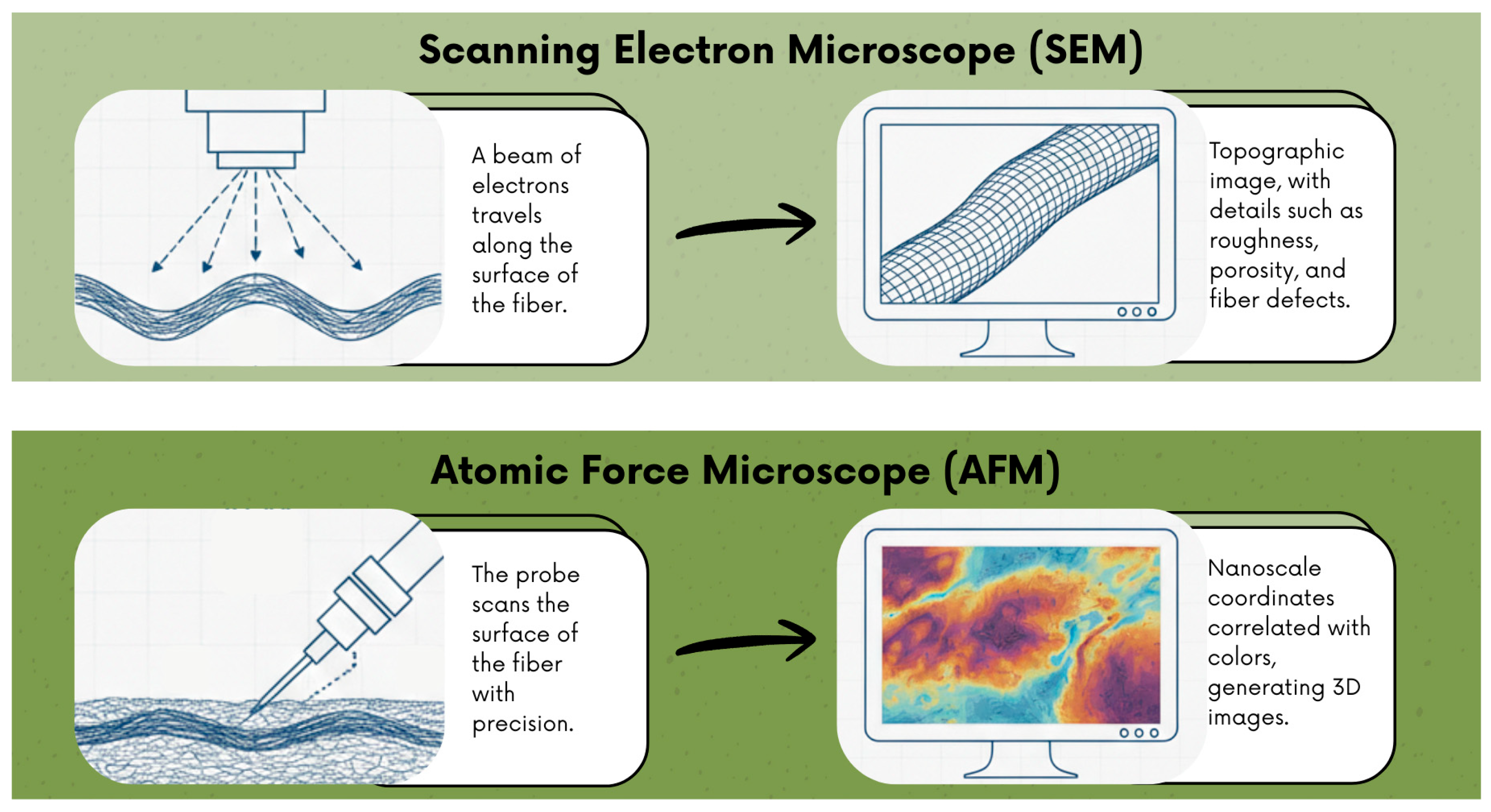
4.1. Structural and Morphological Analysis
4.2. Thermal Characterization
4.3. Mechanical Characterization
4.4. Surface and Chemical Composition Analysis
4.5. Biodegradability and Environmental Performance
5. Reinforcement of Fiber-Based Composites and Products
5.1. Reinforcement Mechanisms
5.2. Fiber Modification and Treatments
5.3. Biopolymer Matrices for Fiber Reinforcement
5.4. Applications and Products
5.5. Challenges and Future Perspectives
- (a)
- Fiber–Matrix Interfacial Optimization: Despite advances in chemical treatments such as alkali mercerization and compatibilizers, achieving consistently strong and durable adhesion between hydrophilic natural fibers and hydrophobic biopolymer matrices remains a challenge. Future research should focus on novel surface modification techniques and coupling agents that can enhance interface compatibility without compromising biodegradability [88].
- (b)
- Standardization of Processing Techniques: The extrusion, molding, and hybrid composite fabrication processes vary widely in parameters and equipment, generating variability in the final properties of fiber-reinforced biopolymer composites. There is a need for standardized protocols and scalable manufacturing processes that ensure reproducibility and optimize mechanical and thermal performance [89].
- (c)
- Comprehensive Life Cycle and Sustainability Assessments: While natural fibers and biopolymers are widely promoted for their environmental benefits, holistic assessments encompassing lifecycle carbon footprints, end-of-life biodegradability, and resource use are insufficient. Future studies should integrate such analyses to quantify real-world sustainability impacts and identify improvement opportunities [90].
- (d)
- Expansion of Application Domains: Current research largely focuses on the construction, automotive, and packaging sectors. Emerging fields such as biomedical devices, flexible electronics, and high-performance structural components require tailored composite formulations and performance evaluations. Exploring multifunctional composites incorporating natural fibers and biopolymers could open new avenues for innovation [91].
6. Conclusions
Author Contributions
Funding
Institutional Review Board Statement
Informed Consent Statement
Data Availability Statement
Conflicts of Interest
Abbreviations
| ASTM | American Society for Testing and Materials |
| DESs | Deep eutectic solvents |
| ILs | Ionic liquids |
| ISO | International Organization for Standardization |
| PHA | Polyhydroxyalkanoates |
| PLA | Polylactic acid |
| SBW | Subcritical water hydrolysis |
| SCW | Supercritical water hydrolysis |
| TPS | Thermoplastic starch |
References
- Prakash, S.O.; Sahu, P.; Madhan, M.; Santhosh, A.J. A Review on Natural Fibre-Reinforced Biopolymer Composites: Properties and Applications. Int. J. Polym. Sci. 2022, 2022, 7820731. [Google Scholar] [CrossRef] [Scilit]
- Keya, K.N.; Kona, N.A.; Koly, F.A.; Maraz, K.M.; Islam, M.N.; Khan, R.A. Natural fiber reinforced polymer composites: History, types, advantages, and applications. Mater. Eng. Res. 2019, 1, 69–87. [Google Scholar] [CrossRef] [Scilit]
- Sahu, P.; Gupta, M.K. A review on the properties of natural fibres and its bio-composites: Effect of alkali treatment. Proc. Inst. Mech. Eng. Part L J. Mater. Des. Appl. 2020, 234, 198–217. [Google Scholar] [CrossRef] [Scilit]
- Zamora-Mendoza, L.; Gushque, F.; Yanez, S.; Jara, N.; Álvarez-Barreto, J.F.; Zamora-Ledezma, C.; Dahoumane, S.A.; Alexis, F. Plant Fibers as Composite Reinforcements for Biomedical Applications. Bioengineering 2023, 10, 804. [Google Scholar] [CrossRef] [Scilit] [PubMed]
- Maiti, S.; Islam, M.R.; Uddin, M.A.; Afroj, S.; Eichhorn, S.J.; Karim, N. Sustainable Fiber-Reinforced Composites: A Review. Adv. Sustain. Syst. 2022, 6, 2200258. [Google Scholar] [CrossRef] [Scilit]
- Beg, M.D.H.; Pickering, K.L.; Akindoyo, J.O.; Gauss, C. Recyclable hemp hurd fibre-reinforced PLA composites for 3D printing. J. Mater. Res. Technol. 2024, 33, 4439–4447. [Google Scholar] [CrossRef] [Scilit]
- Samir, A.; Ashour, F.H.; Hakim, A.A.A.; Bassyouni, M. Recent advances in biodegradable polymers for sustainable applications. NPJ Mater. Degrad. 2022, 6, 68. [Google Scholar] [CrossRef] [Scilit]
- Edah, G.O.; Atiba, J.O.; Fayomi, O.S.I. Advancements in fibre-reinforced polymers: Properties, applications (A mini review). Next Mater. 2025, 8, 100743. [Google Scholar] [CrossRef] [Scilit]
- Firdaus, A.H.M.; Sapuan, S.M.; Siddiqui, V.U.; Atiqah, A.; Zainudin, E.S. Mechanical, physical and morphological properties of arrowroot starch reinforced arrowroot nanocrystalline cellulose biopolymer nanocomposites film. Biomass Bioenergy 2025, 202, 108230. [Google Scholar] [CrossRef] [Scilit]
- Elfaleh, I.; Abbassi, F.; Habibi, M.; Ahmad, F.; Guedri, M.; Nasri, M.; Garnier, C. A comprehensive review of natural fibers and their composites: An eco-friendly alternative to conventional materials. Results Eng. 2023, 19, 101271. [Google Scholar] [CrossRef] [Scilit]
- Flórez, M.; Cazón, P.; Vázquez, M. Selected Biopolymers’ Processing and Their Applications: A Review. Polymers 2023, 15, 641. [Google Scholar] [CrossRef] [Scilit]
- Das, A.; Ringu, T.; Ghosh, S.; Pramanik, N. A comprehensive review on recent advances in preparation, physicochemical characterization, and bioengineering applications of biopolymers. Polym. Bull. 2023, 80, 7247–7312. [Google Scholar] [CrossRef] [Scilit]
- Muir, V.G.; Burdick, J.A. Chemically Modified Biopolymers for the Formation of Biomedical Hydrogels. Chem. Rev. 2021, 121, 10908–10949. [Google Scholar] [CrossRef] [Scilit] [PubMed]
- Çağdaş, B.; Tunalı, D.; Türk, M. Natural Biopolymers and Their Applications in Bioengineering. In Nano-Biomaterials in Tissue Repair and Regeneration; Springer: Berlin/Heidelberg, Germany, 2024; pp. 19–54. [Google Scholar] [CrossRef] [Scilit]
- Lee, C.H.; Khalina, A.; Lee, S.H. Importance of interfacial adhesion condition on characterization of plant-fiber-reinforced polymer composites: A review. Polymers 2021, 13, 438. [Google Scholar] [CrossRef] [Scilit] [PubMed]
- Madhushree, M.; Vairavel, P.; Mahesha, G.T.; Bhat, K.S. A Comprehensive Review of Cellulose and Cellulose-Based Materials: Extraction, Modification, and Sustainable Applications. J. Nat. Fibers 2024, 21, 2418357. [Google Scholar] [CrossRef] [Scilit]
- Song, Y.; Nie, K.; Liu, H.; Jiang, W.; Zhang, Y.; Bai, R.; Yang, F.; Ragauskas, A.; Ma, J. Separation Process of Plant Fibers for Textile and Composite Application: A Review of Recent Advances. J. Nat. Fibers 2024, 21, 2406460. [Google Scholar] [CrossRef] [Scilit]
- Kamarudin, S.H.; Basri, M.S.M.; Rayung, M.; Abu, F.; Ahmad, S.; Norizan, M.N.; Osman, S.; Sarifuddin, N.; Desa, M.S.Z.M.; Abdullah, U.H.; et al. A Review on Natural Fiber Reinforced Polymer Composites (NFRPC) for Sustainable Industrial Applications. Polymers 2022, 14, 3698. [Google Scholar] [CrossRef] [Scilit]
- Shelly, D.; Singhal, V.; Jaidka, S.; Banea, M.D.; Lee, S.Y.; Park, S.J. Mechanical performance of bio-based fiber reinforced polymer composites: A review. Polym. Compos. 2025, 46, S9–S43. [Google Scholar] [CrossRef] [Scilit]
- Yıldırım, R.; Karakaya, N.; Liebau, B.; Welten, T.; Bayram, B.; Kodal, M.; Özkoç, G. From Plant to Polymers: Micro-Processing Sisal Fiber-Reinforced PLA/PHA Bio-LFTs at Laboratory Scale. Polymers 2025, 17, 1618. [Google Scholar] [CrossRef] [Scilit]
- Angulu, M.; Gusovius, H.J. Retting of Bast Fiber Crops Like Hemp and Flax—A Review for Classification of Procedures. Fibers 2024, 12, 28. [Google Scholar] [CrossRef] [Scilit]
- Zimniewska, M. Hemp Fibre Properties and Processing Target Textile: A Review. Materials 2022, 15, 1901. [Google Scholar] [CrossRef] [Scilit]
- Eleutério, T.; Trota, M.J.; Meirelles, M.G.; Vasconcelos, H.C. A Review of Natural Fibers: Classification, Composition, Extraction, Treatments, and Applications. Fibers 2025, 13, 119. [Google Scholar] [CrossRef] [Scilit]
- Magalhães, S.; Fernandes, C.; Pedrosa, J.F.S.; Alves, L.; Medronho, B.; Ferreira, P.J.T.; Rasteiro, M.d.G. Eco-Friendly Methods for Extraction and Modification of Cellulose: An Overview. Polymers 2023, 15, 3138. [Google Scholar] [CrossRef] [Scilit]
- Farag, G.Y.; Taleb, E.M.A.A.; Hamouda, T. Natural Fibers Extraction Methods and Properties: A Review. Egypt. J. Chem. 2024, 68, 445–464. [Google Scholar] [CrossRef] [Scilit]
- Bekele, A.E.; Lemu, H.G.; Jiru, M.G. Study of the Effects of Alkali Treatment and Fiber Orientation on Mechanical Properties of Enset/Sisal Polymer Hybrid Composite. J. Compos. Sci. 2023, 7, 37. [Google Scholar] [CrossRef] [Scilit]
- Sathish, S.; Karthi, N.; Prabhu, L.; Gokulkumar, S.; Balaji, D.; Vigneshkumar, N.; Farhan, T.A.; AkilKumar, A.; Dinesh, V. A review of natural fiber composites: Extraction methods, chemical treatments and applications. Mater. Today Proc. 2021, 45, 8017–8023. [Google Scholar] [CrossRef] [Scilit]
- Majid, M.S.A.; Ridzuan, M.J.M.; Lim, K.H. Effect of nanoclay filler on mechanical and morphological properties of napier/epoxy composites. In Interfaces in Particle and Fibre Reinforced Composites: Current Perspectives on Polymer, Ceramic, Metal and Extracellular Matrices; Elsevier: Amsterdam, The Netherlands, 2019; pp. 137–162. [Google Scholar] [CrossRef] [Scilit]
- Chonsakorn, S.; Srivorradatpaisan, S.; Mongkholrattanasit, R. Effects of different extraction methods on some properties of water hyacinth fiber. J. Nat. Fibers 2019, 16, 1015–1025. [Google Scholar] [CrossRef] [Scilit]
- De Prez, J.; Willem, A.; Vuure, V.; Ivens, J.; Aerts, G.; Van De Voorde, I. Enzymatic treatment of flax for use in composites. Biotechnol. Rep. 2018, 20, e00294. [Google Scholar] [CrossRef] [Scilit] [PubMed]
- Ma, C.; Ni, L.; Guo, Z.; Zeng, H.; Wu, M.; Zhang, M.; Zheng, B. Principle and Application of Steam Explosion Technology in Modification of Food Fiber. Foods 2022, 11, 3370. [Google Scholar] [CrossRef] [Scilit]
- Serrano-Martínez, V.M.; Pérez-Aguilar, H.; Carbonell-Blasco, M.P.; Arán-Ais, F.; Orgilés-Calpena, E. Steam Explosion-Based Method for the Extraction of Cellulose and Lignin from Rice Straw Waste. Appl. Sci. 2024, 14, 2059. [Google Scholar] [CrossRef] [Scilit]
- Casanova, F.; Freixo, R.; Pereira, C.F.; Ribeiro, A.B.; Costa, E.M.; Pintado, M.E.; Ramos, Ó.L. Comparative Study of Green and Traditional Routes for Cellulose Extraction from a Sugarcane By-Product. Polymers 2023, 15, 1251. [Google Scholar] [CrossRef] [Scilit]
- Baraka, F.; Erdocia, X.; Velazco-Cabral, I.; Hernández-Ramos, F.; Dávila-Rodríguez, I.; Maugin, M.; Labidi, J. Impact of deep eutectic solvent pre-treatment on the extraction of cellulose nanofibers. Cellulose 2024, 31, 9645–9660. [Google Scholar] [CrossRef] [Scilit]
- Barbará, P.V.; Choudhary, H.; Nakasu, P.S.; Al-Ghatta, A.; Han, Y.; Hopson, C.; Aravena, R.I.; Mishra, D.K.; Ovejero-Pérez, A.; Simmons, B.A.; et al. Recent Advances in the Use of Ionic Liquids and Deep Eutectic Solvents for Lignocellulosic Biorefineries and Biobased Chemical and Material Production. Chem. Rev. 2025, 125, 5461–5583. [Google Scholar] [CrossRef] [Scilit]
- Fu, Y.; Gu, H.; Wu, H.F.; Shi, S.Q. Comparative Life Cycle Assessment of Bacterial and Thermochemical Retting of Hemp. Materials 2024, 17, 4164. [Google Scholar] [CrossRef] [Scilit]
- Isogai, A. Wood nanocelluloses: Fundamentals and applications as new bio-based nanomaterials. J. Wood Sci. 2013, 59, 449–459. [Google Scholar] [CrossRef] [Scilit]
- Nagaraja, S.; Anand, P.B.; Ammarullah, M.I. Synergistic advances in natural fibre composites: A comprehensive review of the eco-friendly bio-composite development, its characterization and diverse applications. RSC Adv. 2024, 14, 17594–17611. [Google Scholar] [CrossRef] [Scilit]
- Liu, W.; Chen, T.; Fei, M.-E.; Qiu, R.; Yu, D.; Fu, T.; Qiu, J. Properties of natural fiber-reinforced biobased thermoset biocomposites: Effects of fiber type and resin composition. Compos. B Eng. 2019, 171, 87–95. [Google Scholar] [CrossRef] [Scilit]
- Kumar, N.; Rawat, P.; Kandasami, R.K. Enhancing the characteristics of natural coir fiber yarns using biopolymer for textile reinforced cementitious composites. Constr. Build. Mater. 2025, 470, 140427. [Google Scholar] [CrossRef] [Scilit]
- Islam, M.Z.; Sarker, E.; Rahman, M.; Islam, R.; Ahmed, A.T.M.F.; Mahmud, S. Green composites from natural fibers and biopolymers: A review on processing, properties, and applications. J. Reinf. Plast. Compos. 2022, 41, 526–557. [Google Scholar] [CrossRef] [Scilit]
- Ananthapadmanaban, D. Summary of Some Selected Characterization Methods of Geopolymers. In Geopolymers and Other Geosynthetics; IntechOpen: Hamilton, NJ, USA, 2020. [Google Scholar] [CrossRef] [Scilit]
- Swain, P.P.; Penedo, M.; Fantner, G.E. A Comprehensive Analysis of Combined AFM/SEM Systems for In-Situ Nanoscale Characterizations and Multiparametric Correlative Microscopy. Microsc. Microanal. 2025, 31, ozaf110. [Google Scholar] [CrossRef] [Scilit]
- Monteiro, V.F.; Natal, A.M.D.; Soledade, L.E.B.; Longo, E. Morphological analysis of polymers on hair fibers by SEM and AFM. Mater. Res. 2003, 6, 501–506. [Google Scholar] [CrossRef] [Scilit]
- Sari, N.H.; Suteja; Fatriasari, W. Integration of Biopolyesters and Natural Fibers in Structural Composites: An Innovative Approach for Sustainable Materials. J. Renew. Mater. 2025, 13, 1521–1546. [Google Scholar] [CrossRef] [Scilit]
- Jiyas, N.; Sasidharan, I.; Kumar, K.B.; Gopakumar, B.; Dan, M.; Sabulal, B. Mechanical superiority of Pseudoxytenanthera bamboo for sustainable engineering solutions. Sci. Rep. 2023, 13, 18169. [Google Scholar] [CrossRef] [Scilit]
- French, A.D. How Crystalline is My Cellulose Specimen? Probing the Limits of X-ray Diffraction. Bioresources 2022, 17, 5557–5561. [Google Scholar] [CrossRef] [Scilit]
- Lengowski, E.C.; Magalhães, W.L.E.; Nisgoski, S.; de Muniz, G.I.B.; Satyanarayana, K.G.; Lazzarotto, M. New and improved method of investigation using thermal tools for characterization of cellulose from eucalypts pulp. Thermochim. Acta 2016, 638, 44–51. [Google Scholar] [CrossRef] [Scilit]
- Chen, Y.; Prasad, V.; Yasar, M.; Murphy, N.; Ivankovic, A. Enhancing interfacial performance and fracture toughness of carbon fibre reinforced thermoplastic composites. Compos. Part A Appl. Sci. Manuf. 2024, 187, 108434. [Google Scholar] [CrossRef] [Scilit]
- Neto, J.S.S.; de Queiroz, H.F.M.; Aguiar, R.A.A.; Banea, M.D. A Review on the Thermal Characterisation of Natural and Hybrid Fiber Composites. Polymers 2021, 13, 4425. [Google Scholar] [CrossRef] [Scilit]
- Khanam, P.N.; Al-Maadeed, M.A.; Khanam, P.N. Silk as a reinforcement in polymer matrix composites. In Advances in Silk Science and Technology; Elsevier: Amsterdam, The Netherlands, 2015; pp. 143–170. [Google Scholar] [CrossRef] [Scilit]
- McKay, I.; Vargas, J.; Yang, L.; Felfel, R.M. A Review of Natural Fibres and Biopolymer Composites: Progress, Limitations, and Enhancement Strategies. Materials 2024, 17, 4878. [Google Scholar] [CrossRef] [Scilit]
- Zhao, Y.R.; Wang, L.; Dong, Y.Y. Micromechanical Properties of Steel-Fiber-Reinforced Cementitious Composites Characterized with Nanoindentation. Adv. Civ. Eng. 2021, 2021, 6673283. [Google Scholar] [CrossRef] [Scilit]
- Prasad, V.; Vijayakumar, A.A.; Jose, T.; George, S.C. A Comprehensive Review of Sustainability in Natural-Fiber-Reinforced Polymers. Sustainability 2024, 16, 1223. [Google Scholar] [CrossRef] [Scilit]
- Rekha, B.; NagarajaGanesh, B. X-ray Diffraction: An Efficient Method to Determine Microfibrillar Angle of Dry and Matured Cellulosic Fibers. J. Nat. Fibers 2022, 19, 3689–3696. [Google Scholar] [CrossRef] [Scilit]
- Sajith, S. Investigation on effect of chemical composition of bio-fillers on filler/matrix interaction and properties of particle reinforced composites using FTIR. Compos. B Eng. 2019, 166, 21–30. [Google Scholar] [CrossRef] [Scilit]
- Pickering, K.L.; Efendy, M.G.A.; Le, T.M. A review of recent developments in natural fibre composites and their mechanical performance. Compos. Part A Appl. Sci. Manuf. 2016, 83, 98–112. [Google Scholar] [CrossRef] [Scilit]
- Munimathan, A.; Muthu, K.; Subramani, S.; Rajendran, S. Environmental behaviour of synthetic and natural fibre reinforced composites: A review. Adv. Mech. Eng. 2024, 16, 1–19. [Google Scholar] [CrossRef] [Scilit]
- Nofal, R.M. Biodegradable Textiles, Recycling, Sustainability Achievement. In Handbook of Biodegradable Materials; Springer: Berlin/Heidelberg, Germany, 2022; pp. 1–37. [Google Scholar] [CrossRef] [Scilit]
- Kamran, F.; Afshar, H.; Shahi, F. Recent Advances and Applications of Sustainable and Recyclable Polymers. Polym. Eng. Sci. 2025, 65, 3845–3879. [Google Scholar] [CrossRef] [Scilit]
- Gallos, A.; Paës, G.; Allais, F.; Beaugrand, J. Lignocellulosic fibers: A critical review of the extrusion process for enhancement of the properties of natural fiber composites. RSC Adv. 2017, 7, 34638–34654. [Google Scholar] [CrossRef] [Scilit]
- Niutta, C.B.; Ciardiello, R.; Tridello, A.; Paolino, D.S. Epoxy and Bio-Based Epoxy Carbon Fiber Twill Composites: Comparison of the Quasi-Static Properties. Materials 2023, 16, 1601. [Google Scholar] [CrossRef] [Scilit]
- Verma, D.; Goh, K.L. Effect of Mercerization/Alkali Surface Treatment of Natural Fibres and Their Utilization in Polymer Composites: Mechanical and Morphological Studies. J. Compos. Sci. 2021, 5, 175. [Google Scholar] [CrossRef] [Scilit]
- Wittmar, A.S.M.; Prymak, O.; Homm, T.; Surholt, F.; Uhlemann, J.; Stranghöner, N.; Ulbricht, M. Formation of all-biopolymer-based composites with cellulose as the main component. RSC Appl. Interfaces 2025, 2, 508–520. [Google Scholar] [CrossRef] [Scilit]
- Yang, B.; Dai, Z.; Ding, S.Y.; Wyman, C.E. Enzymatic hydrolysis of cellulosic biomass. Biofuels 2011, 2, 421–449. [Google Scholar] [CrossRef] [Scilit]
- Sharma, H.; Kumar, A.; Rana, S.; Sahoo, N.G.; Jamil, M.; Kumar, R.; Sharma, S.; Li, C.; Kumar, A.; Eldin, S.M.; et al. Critical review on advancements on the fiber-reinforced composites: Role of fiber/matrix modification on the performance of the fibrous composites. J. Mater. Res. Technol. 2023, 26, 2975–3002. [Google Scholar] [CrossRef] [Scilit]
- Fernández, A.; Santangelo-Muro, M.; Fernández-Blázquez, J.P.; Lopes, C.S.; Molina-Aldareguia, J.M. Processing and properties of long recycled-carbon-fibre reinforced polypropylene. Compos. B Eng. 2021, 211, 108653. [Google Scholar] [CrossRef] [Scilit]
- Amin, M.N.; Ahmad, W.; Khan, K.; Ahmad, A. A Comprehensive Review of Types, Properties, Treatment Methods and Application of Plant Fibers in Construction and Building Materials. Materials 2022, 15, 4362. [Google Scholar] [CrossRef] [Scilit]
- Seculi, F.; Espinach, F.X.; Julián, F.; Delgado-Aguilar, M.; Mutjé, P.; Tarrés, Q. Evaluation of the Interface Strength in the Abaca-Fiber-Reinforced Bio-Polyethylene Composites. Polymers 2023, 15, 2686. [Google Scholar] [CrossRef] [Scilit] [PubMed]
- Mundhe, A.; Kandasubramanian, B. Advancements in natural fiber composites: Innovative chemical surface treatments, characterizaton techniques, environmental sustainability, and wide-ranging applications. Hybrid Adv. 2024, 7, 100282. [Google Scholar] [CrossRef] [Scilit]
- Osei-Bonsu, R.; Hoque, M.; McMichael, P.S.; Foster, E.J. Subcritical water digestion of woody biomass: Extraction of cellulose nanomaterials under acid-lean condition. Nanoscale Adv. 2024, 6, 3923–3933. [Google Scholar] [CrossRef] [Scilit] [PubMed]
- Liu, Y.; Fu, H.; Zhang, W.; Liu, H. Effect of Crystalline Structure on the Catalytic Hydrolysis of Cellulose in Subcritical Water. ACS Sustain. Chem. Eng. 2022, 10, 5859–5866. [Google Scholar] [CrossRef] [Scilit]
- Aravindh, M.; Sathish, S.; Prabhu, L.; Raj, R.R.; Bharani, M.; Patil, P.P.; Karthick, A.; Luque, R. Effect of Various Factors on Plant Fibre-Reinforced Composites with Nanofillers and Its Industrial Applications: A Critical Review. J. Nanomater. 2022, 2022, 4455106. [Google Scholar] [CrossRef] [Scilit]
- Shaker, K.; Fauster, E. An overview of challenges in processing of sustainable plant fiber composites. Ind. Crops Prod. 2025, 233, 121397. [Google Scholar] [CrossRef] [Scilit]
- Leontijevic, V.; Fechter, T.; Cantero, D.; Jaeger, P.; Cocero, M.J. Surface wettability of lignin materials from supercritical water hydrolysis of wood. J. Supercrit. Fluids 2025, 217, 106458. [Google Scholar] [CrossRef] [Scilit]
- Sikhosana, T.S.; Malebo, N.J.; Mofokeng, T.G.; Motloung, M.P.; Mochane, M.J. Sawdust as a Byproduct of Wood Processing: Properties, Applications and a Reinforcing Filler in Hybrid Polymer Composites. Polymers 2025, 17, 1523. [Google Scholar] [CrossRef] [Scilit] [PubMed]
- Hsin, K.T.; Lee, H.; Huang, Y.-C.; Lin, G.-J.; Lin, P.-Y.; Lin, Y.-C.J.; Chen, P.-Y. Lignocellulose degradation in bacteria and fungi: Cellulosomes and industrial relevance. Front. Microbiol. 2025, 16, 1583746. [Google Scholar] [CrossRef] [Scilit] [PubMed]
- Gupta, U.S.; Dhamarikar, M.; Dharkar, A.; Chaturvedi, S.; Kumrawat, A.; Giri, N.; Tiwari, S.; Namdeo, R. Plasma modification of natural fiber: A review. Mater. Today Proc. 2021, 43, 451–457. [Google Scholar] [CrossRef] [Scilit]
- Hair, A.H.A.; Salleh, K.M.; Mazlan, N.S.N.; Khairunnisa-Atiqah, M.K.; Purhanudin, N.; Akhiri, A.S.M.; Zakaria, S.; Awang, R. Optimisation of nitrogen plasma exposure time for surface modification of cotton fibre. Bioresources 2024, 19, 5699–5716. [Google Scholar] [CrossRef] [Scilit]
- Primc, G.; Mozetič, M. Plasma Treatment of Nanocellulose to Improve the Surface Properties. Polymers 2024, 16, 2516. [Google Scholar] [CrossRef] [Scilit]
- Sánchez-Safont, E.L.; Aldureid, A.; Lagarón, J.M.; Cabedo, L.; Gámez-Pérez, J. Study of the Compatibilization Effect of Different Reactive Agents in PHB/Natural Fiber-Based Composites. Polymers 2020, 12, 1967. [Google Scholar] [CrossRef] [Scilit]
- Arbelaiz, A.; Txueka, U.; Mezo, I.; Orue, A. Biocomposites Based on Poly(Lactic Acid) Matrix and Reinforced with Lignocellulosic Fibers: The Effect of Fiber Type and Matrix Modification. J. Nat. Fibers 2022, 19, 1–14. [Google Scholar] [CrossRef] [Scilit]
- Yashas, Y.G.; Nagaraju, S.B.; Puttegowda, M.; Verma, A.; Rangappa, S.M.; Siengchin, S. Biopolymer-Based Composites: An Eco-Friendly Alternative from Agricultural Waste Biomass. J. Compos. Sci. 2023, 7, 242. [Google Scholar] [CrossRef] [Scilit]
- Castro-Dominguez, B.; Gröls, J.R.; Alkandari, S.; Perge, L.; Sierra-Avila, C.; Ramirez, H.Z.; Fontes, M.d.L.; Yamada, C.; Lazarini, S.C.; Silva, J.M.; et al. Biopolymers and biocomposites: A comprehensive review of feedstocks, functionalities, and advanced manufacturing techniques for sustainable applications. Biotechnol. Sustain. Mater. 2025, 2, 8. [Google Scholar] [CrossRef] [Scilit]
- Daoudi, H.; Benhamou, A.A.; Moubarik, A.; El Achaby, M.; Kassab, Z. Influence of morphological diversity of cellulose nanocrystals and nanospheres on nanocomposites with chitosan. Cellulose 2024, 32, 941–964. [Google Scholar] [CrossRef] [Scilit]
- Kurien, R.A.; Bodaghi, M.; Mathew, N.D.; Paul, M.; Ravi, S.V.; Praveen, P. Fabrication, Properties, and Morphologies of Novel Acacia–Jute Hybrid Polymer Composites. J. Compos. Sci. 2025, 9, 316. [Google Scholar] [CrossRef] [Scilit]
- Martijanti, M.; Sutarno, S.; Juwono, A.L. Polymer Composite Fabrication Reinforced with Bamboo Fiber for Particle Board Product Raw Material Application. Polymers 2021, 13, 4377. [Google Scholar] [CrossRef] [Scilit] [PubMed]
- Saha, S.; Das, S.; Rahman, M.Z. Hybridization in natural fiber composites: Enhanced performance and sustainability. Compos. B Eng. 2026, 308, 112986. [Google Scholar] [CrossRef] [Scilit]
- Kirschnick, U.; Feuchter, M.; Ravindran, B.; Salzmann, M.; Duretek, I.; Fauster, E.; Schledjewski, R. Manufacturing bio-based fiber-reinforced polymer composites: Process performance in RTM and VARI processes. Adv. Manuf. Polym. Compos. Sci. 2024, 10, 2379205. [Google Scholar] [CrossRef] [Scilit]
- Hottle, T.A.; Bilec, M.M.; Landis, A.E. Biopolymer production and end of life comparisons using life cycle assessment. Resour. Conserv. Recycl. 2017, 122, 295–306. [Google Scholar] [CrossRef] [Scilit]
- Yuan, L.L.; Wang, H.M.; Wu, Y.C.; Hou, Q.X.; Sun, R.C. The booming lignin-derived functional composites/nanocomposites. Compos. B Eng. 2024, 287, 111869. [Google Scholar] [CrossRef] [Scilit]



| Biopolymers | Key Properties | Limitations | Typical Trade-Offs | References |
|---|---|---|---|---|
| PLA | High stiffness; excellent processability comparable to polystyrene. | Inherent brittleness; low thermal stability. | High rigidity and processability vs. low toughness. | [6,7] |
| PHAs | Superior biodegradability; biocompatibility suitable for medical uses. | High production costs; narrow processing window. | Excellent biodegradability vs. high cost and narrow processing. | [11] |
| TPS | Derived from abundant, low-cost sources. | High hydrophilicity (poor water resistance, mechanical variation); often requires blending or chemical modification. | Low-cost vs. poor water resistance and mechanical consistency. | [15] |
| Extraction Method | Features | Fiber | Yield | Polymerization Degree | Energy Demand | Reference |
|---|---|---|---|---|---|---|
| Retting (dew/water/ controlled) | Separates fibers by degradation of binding substances; can improve strength if well controlled; quality varies with time and environment; degradation may occur. | Hemp, linen, jute | Medium to high | High when well controlled; may decrease due to excessive microbial degradation. | Low | [21,30] |
| Enzymatic retting/ degumming | More selective; reduces pectin without attacking cellulose; reduces time and variability; less environmental impact than chemical treatments; improves sample homogeneity. | Hemp, flax, ramie | High | High (preservation of cellulose) | Low to moderate | [30,36] |
| Alkaline treatments/mercerization | Removes hemicellulose, lignin, and waxes; increases roughness and crystallinity; improves adhesion; concentration and time can degrade fibers and generate effluents. | Sisal, jute, cotton, bamboo | Medium | Medium to low (reduction in GP by alkaline cleavage) | Moderate | [26,37] |
| Physical pretreatment + steam explosion | Effective for opening lignocellulosic matrix, reducing hemicellulose and partial lignin, generating dispersible fibrils; without the use of organic solvents. | Bamboo, sisal, straw | Medium | Medium (possible reduction by thermal/mechanical shear) | High | [29,32] |
| Green solvents (ILs/DES) | Selective extraction produces nanocellulose with consistent quality and presents a favorable environmental profile when the solvent is recovered and recycled. | Cotton, bamboo, sisal | High | Variable (maybe high under mild conditions) | High | [35] |
Disclaimer/Publisher’s Note: The statements, opinions and data contained in all publications are solely those of the individual author(s) and contributor(s) and not of MDPI and/or the editor(s). MDPI and/or the editor(s) disclaim responsibility for any injury to people or property resulting from any ideas, methods, instructions or products referred to in the content. |
© 2026 by the authors. Licensee MDPI, Basel, Switzerland. This article is an open access article distributed under the terms and conditions of the Creative Commons Attribution (CC BY) license.
Share and Cite
Miki, K.S.L.; Lima-Pereira, Y.; Muniz, N.N.d.S.; Ferreira, W.H.; dos Santos, O.V.; Teixeira-Costa, B.E. From Plants to Performance: A Sustainable Approach to Fiber Reinforcement Using Biopolymers. Coatings 2026, 16, 289. https://doi.org/10.3390/coatings16030289
Miki KSL, Lima-Pereira Y, Muniz NNdS, Ferreira WH, dos Santos OV, Teixeira-Costa BE. From Plants to Performance: A Sustainable Approach to Fiber Reinforcement Using Biopolymers. Coatings. 2026; 16(3):289. https://doi.org/10.3390/coatings16030289
Chicago/Turabian StyleMiki, Karine Sayuri Lima, Ytaiara Lima-Pereira, Nelícia Nunes de Souza Muniz, Willian Hermogenes Ferreira, Orquidea Vasconcelos dos Santos, and Barbara Elisabeth Teixeira-Costa. 2026. "From Plants to Performance: A Sustainable Approach to Fiber Reinforcement Using Biopolymers" Coatings 16, no. 3: 289. https://doi.org/10.3390/coatings16030289
APA StyleMiki, K. S. L., Lima-Pereira, Y., Muniz, N. N. d. S., Ferreira, W. H., dos Santos, O. V., & Teixeira-Costa, B. E. (2026). From Plants to Performance: A Sustainable Approach to Fiber Reinforcement Using Biopolymers. Coatings, 16(3), 289. https://doi.org/10.3390/coatings16030289