1. Introduction
The durability of structures faces a persistent and widespread challenge in sulfate-rich, aggressive environments. These environments include coastal areas and saline lands, affecting building foundations, underground constructions, and historical fabrics. Material degradation in such settings often begins with cracks and fissures, compromising structural integrity and service life. This problem is particularly acute in preserving historical earthen structures, for which fissures are a critical form of deterioration [
1]. This creates a stringent case requiring repair materials with exceptional compatibility and long-term durability. Grouting is a fundamental technique for rehabilitating such damage. Using in situ soil as a primary component in slurries is advantageous as it offers superior compatibility with various substrates and aligns with sustainable construction principles [
2,
3]. However, traditional earthen slurries often have inadequate engineering properties, including slow setting, high drying shrinkage, and weak interfacial bonding, which can compromise repair integrity [
4,
5]. To enhance these properties, quicklime (CaO) is commonly introduced as its hydration promotes faster setting and can mitigate shrinkage through micro-expansion [
6,
7]. Nevertheless, this modification may increase the material’s porosity and susceptibility to sulfate attack. Sulfate attack is a prevalent geochemical hazard in saline environments where salts migrate via capillary action [
8]. This creates a central dilemma in repair material design: improving mechanical and setting properties may inadvertently reduce chemical durability [
9]. Consequently, there is a significant need to develop novel slurries that simultaneously fulfill two key requirements: injectability (including fluidity and setting control) and long-term resistance to sulfate-rich environments.
Sulfate-induced damage is a well-known deterioration process that affects many construction materials [
10,
11]. Salts, like sulfates (e.g., Na
2SO
4, MgSO
4), are highly destructive [
12] and cause crystallization pressure and mass loss within porous material matrices [
13]. The resulting stresses can exceed the material’s tensile strength [
14,
15]. Therefore, sulfate resistance is a paramount design criterion for durable repair materials; this is especially true for applications below ground or in contact with aggressive soils. Existing lime-modified slurries show clear weaknesses [
16] as their compressive strength deteriorates markedly after only a few sulfate wet–dry cycles, confirming poor long-term performance [
17]. This performance gap highlights a critical need: effective sulfate-resistant chemical admixtures must be integrated into the formulation of advanced construction slurries.
Research from related fields offers valuable insights into sulfate inhibition. Studies indicate that specific chemical admixtures can reduce expansive damage by altering sulfate crystallization pathways. For example, borax modifies crystal habit in lime-based systems [
18,
19,
20], while barium hydroxide and phosphoric acid precipitate sulfates into insoluble compounds [
21,
22]. Polymeric coatings, such as sodium alginate, enhance cohesion to reduce salt-induced mass loss [
23,
24]. Finally, another studied showed that sodium methyl silicate forms a hydrophobic barrier, improving water and erosion resistance in stabilized soil [
25]. Although these findings are promising, their application has been largely confined to stone or brick masonry conservation. A significant knowledge gap remains for developing high-performance construction slurries. Crucially, the impact of these admixtures on the fresh-state properties essential for grouting applications is largely unexplored. These critical properties include pumpability (fluidity), setting time control, and volumetric stability. Designing modern repair materials requires a holistic approach and the transition of a slurry from a fluid suspension to a solid, durable mass involves complex rheological and chemical constraints that must be addressed together.
Previous work established a promising base slurry system composed of modified polyvinyl alcohol (SH), quicklime (CaO), fly ash (F), and crushed site soil (C) that exhibits satisfactory injectability and substrate compatibility [
26,
27]. Building on this foundation, the present study aims to develop and systematically optimize novel, durable slurries tailored to aggressive sulfate conditions. Nine sulfate-resistant admixtures were incorporated into the SH-(CaO+F+C) system. These admixtures were disodium hydrogen phosphate (DSP), sodium oxalate (SO), barium hydroxide (BH), borax decahydrate (BDH), borax pentahydrate (BP), sodium alginate (SA), carboxymethyl chitosan (CMCS), hydroxypropyl chitosan (HPCH), and sodium methyl silicate (MAS). The effects of two key variables were experimentally investigated: the liquid-to-solid ratio (X1) and the admixture concentration (X2). Their impact was measured for the following key performance indicators: fluidity (
Fl), setting times (
It,
Ft), and volumetric expansion rate (
Er). To address the complex trade-offs between multiple material properties and cost-effectiveness, an integrated multi-criteria decision-making (MCDM) model was applied to identify the optimal formulation. This model combines the Fuzzy Analytic Hierarchy Process (FAHP), the Criteria Importance Through Intercriteria Correlation (Critic) method, the Multivariate Instability Index (MII) method, and the Technique for Order of Preference by Similarity to Ideal Solution (Topsis). Finally, the sulfate resistance of the top-ranked candidates was rigorously validated. This research provides a systematic, data-driven methodology for designing and optimizing high-performance, sustainable construction materials. It contributes a practical and adaptable solution for durable repair and rehabilitation across the built environment, with applications ranging from specialized heritage conservation to broader building infrastructure projects in aggressive sulfate-laden environments.
2. Materials and Methods
2.1. Experimental Design and Materials
The performance criteria for this grout were defined by its target application: the repair of fissures in historical earthen structures using gravity-fed or low-pressure injection techniques. This approach prioritizes material compatibility with the fragile substrate and aims to prevent damage, which in turn dictates the relevant ranges for key injectability and stability parameters.
This study utilized quicklime (CaO) and fly ash (F) as slurry admixtures. Crushed site soil (C) served as the base material and modified polyvinyl alcohol (SH) acted as the binder. Additionally, nine materials were used as sulfate-resistant admixtures: disodium hydrogen phosphate (DSP), sodium oxalate (SO), barium hydroxide (BH), borax decahydrate (BDH), borax pentahydrate (BP), sodium alginate (SA), carboxymethyl chitosan (CMCS), hydroxypropyl chitosan (HPCH), and sodium methyl silicate (MAS). The slurries were prepared and characterized following a systematic procedure to evaluate key engineering properties. Specifically, the CaO was commercial quicklime compliant with BS EN 459-1:2015 [
28], graded as CL 90-Q (R5 P1), with a calcium oxide content of 93%. The F was a Class F Category II fly ash (Chinese standard), corresponding to Category N according to BS EN 450-1:2012 [
29]. It was sourced from Henan Rongsong and used without alkali activation; its chemical composition is shown in
Table 1. The base material (C) was a silty clay, selected for its representativeness as a common earthen construction substrate. Its inclusion ensures rigorous testing against a realistic matrix, validating the developed slurry’s compatibility under demanding repair conditions. Its basic properties, determined through laboratory tests, are summarized in
Table 2. The symbols in
Table 2 denote the following soil properties: bulk density (ρ), natural water content (
w), dry density (ρ
d), void ratio (e), and specific gravity of soil solids (D
r).
The binder (SH) was colorless, odorless, and infinitely water-soluble. Its stock solution had a 5% mass concentration but had to be diluted to 1.5% before use to prevent excessively low slurry fluidity, which would fail grouting requirements [
30]. The sulfate-resistant chemical admixtures were sourced as follows: DSP, SO, BH, BDH, BP, and SA (each with an effective component mass ratio > 85%) were supplied by Tianjin Baishi Chemical Co., Ltd. (Tianjin, China); CMCS and HPCH (deacetylation degree: 85%) were obtained from Henan Jijia Chemical Co., Ltd. (Zhengzhou, China); and the MAS solution (effective component mass ratio: 42%) was procured from Zhengzhou Runcang (Zhengzhou, China).
A base slurry with a mass ratio of CaO:F:C = 3:3:4 was adopted based on prior optimization studies for compatible repair and stabilization. This formulation leverages the hydration expansion of CaO to achieve compact fissure filling, offering a balance of workability and mechanical compatibility with various substrates. Therefore, this study used the SH-(CaO+F+C) system as the base material. The base solids (CaO, F, C) were fixed at a 3:3:4 mass ratio with SH as the binder. Sulfate-resistant admixtures—DSP, SO, BH, BDH, BP, SA, CMCS, HPCH, and MAS—were then incorporated to produce modified slurries. To systematically evaluate the effects on slurry injectability and stability, two key mix design variables were investigated: the liquid-to-solid ratio and the dosage of the sulfate-resistant admixture. The full experimental matrix is detailed in
Table 3 [
31,
32,
33].
In total, following the experimental matrix in
Table 3, which encompasses all combinations of liquid-to-solid ratio (X1) and the admixture concentration (X2) for the nine sulfate-resistant admixtures, 180 distinct slurry formulations were prepared and tested. For each formulation, replicate samples were produced for evaluating fresh properties (fluidity, setting time), volumetric stability, and—for the shortlisted candidates—unconfined compressive strength before and after sulfate cycling. Overall, this study involved the preparation and testing of more than 700 individual laboratory specimens to generate a comprehensive dataset for analysis and optimization.
2.2. Experimental Process
Most modified slurries were prepared as follows. Firstly, CaO, F, and C were dry-mixed at the specified ratio (3:3:4 by mass) and stirred at 450 r/min for 2–3 min to achieve a homogeneous dry mix. Secondly, the sulfate-resistant admixture was added to the SH binder solution and stirred at 450 r/min for 2 min. Finally, this liquid mixture (SH + admixture) was poured into the dry mix. Stirring continued for 2–3 min at the designed liquid-to-solid ratio (
Table 3) to obtain the final slurry. A specific procedural adjustment was required for slurries containing BDH, BP, or SA. If directly added to SH, these admixtures can induce cross-linking, causing rapid coagulation, gel formation, and a severe loss of fluidity [
34,
35]. For these systems, the admixture was first uniformly blended with the dry solids (CaO, F, and C). The SH solution was then added and mixed. This sequence was critical to prevent premature gelation and maintain essential fluidity for pumping.
The key fresh-state properties governing injectability and in-place performance were fluidity (
Fl), setting times (
It;
Ft), and volumetric expansion rate (
Er), which were evaluated using standardized tests.
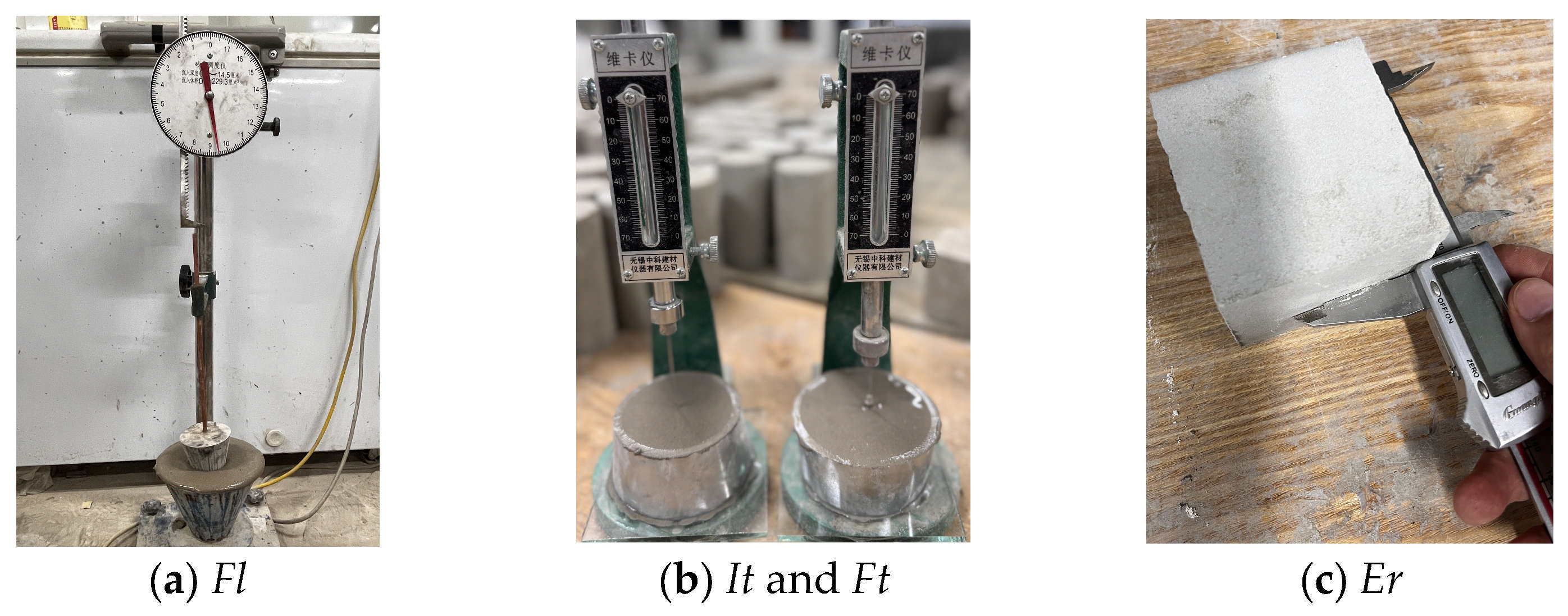
Fl was tested according to JGJ/T 70-2009 (“Standard for Test Methods of Performance of Building Mortars”) using a mortar consistency meter (
Figure 1a) [
36].
It and
Ft were determined following GB/T 1346-2011 (“Test Methods for Water Requirement of Normal Consistency, Setting Time and Soundness of Portland Cement”) with a Vicat apparatus (
Figure 1b) [
37].
Er was measured by casting slurry into 70.7 mm
3 cubic molds, followed by vibration and demolding.
Er was calculated as the percentage volume difference between the cured specimen and the standard mold. A positive
Er (expansion) is desirable to ensure tight interfacial bonding and stress transfer; conversely, a negative
Er (shrinkage) risks debonding and can compromise long-term repair integrity.
3. Results and Analysis
3.1. Performance Trends: Fluidity, Setting Time, and Expansion
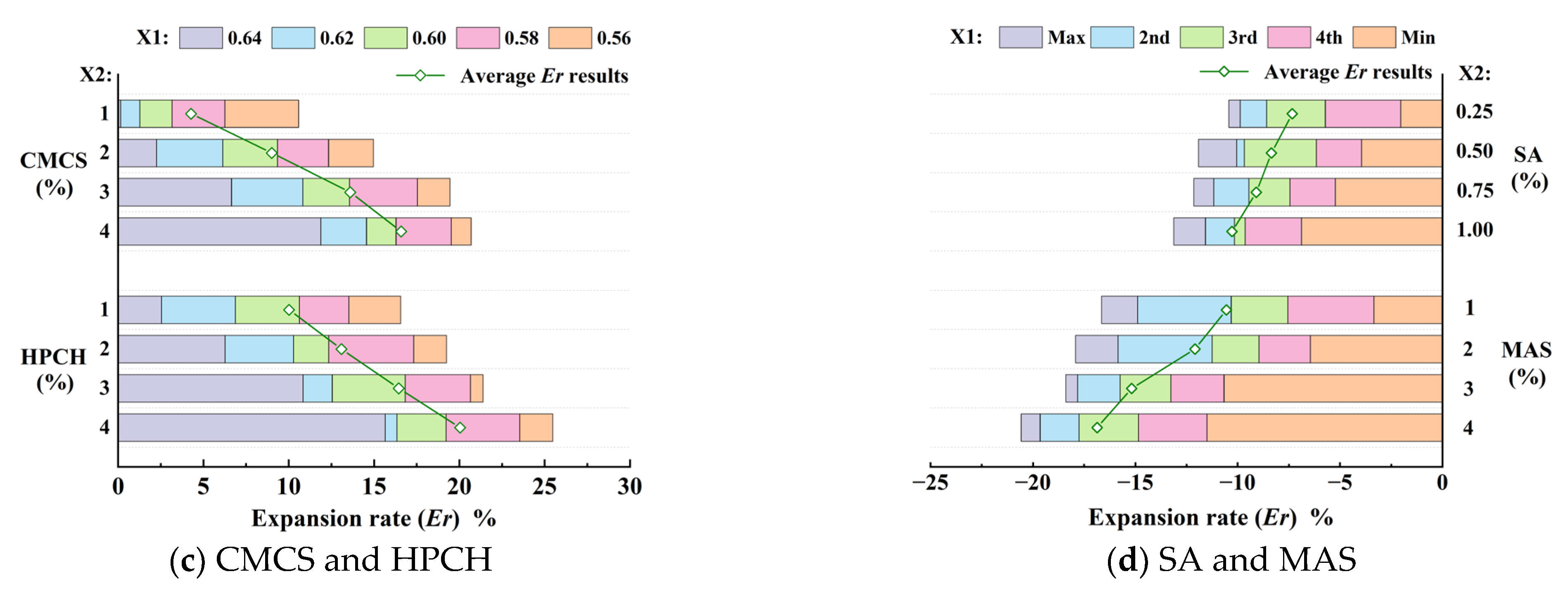
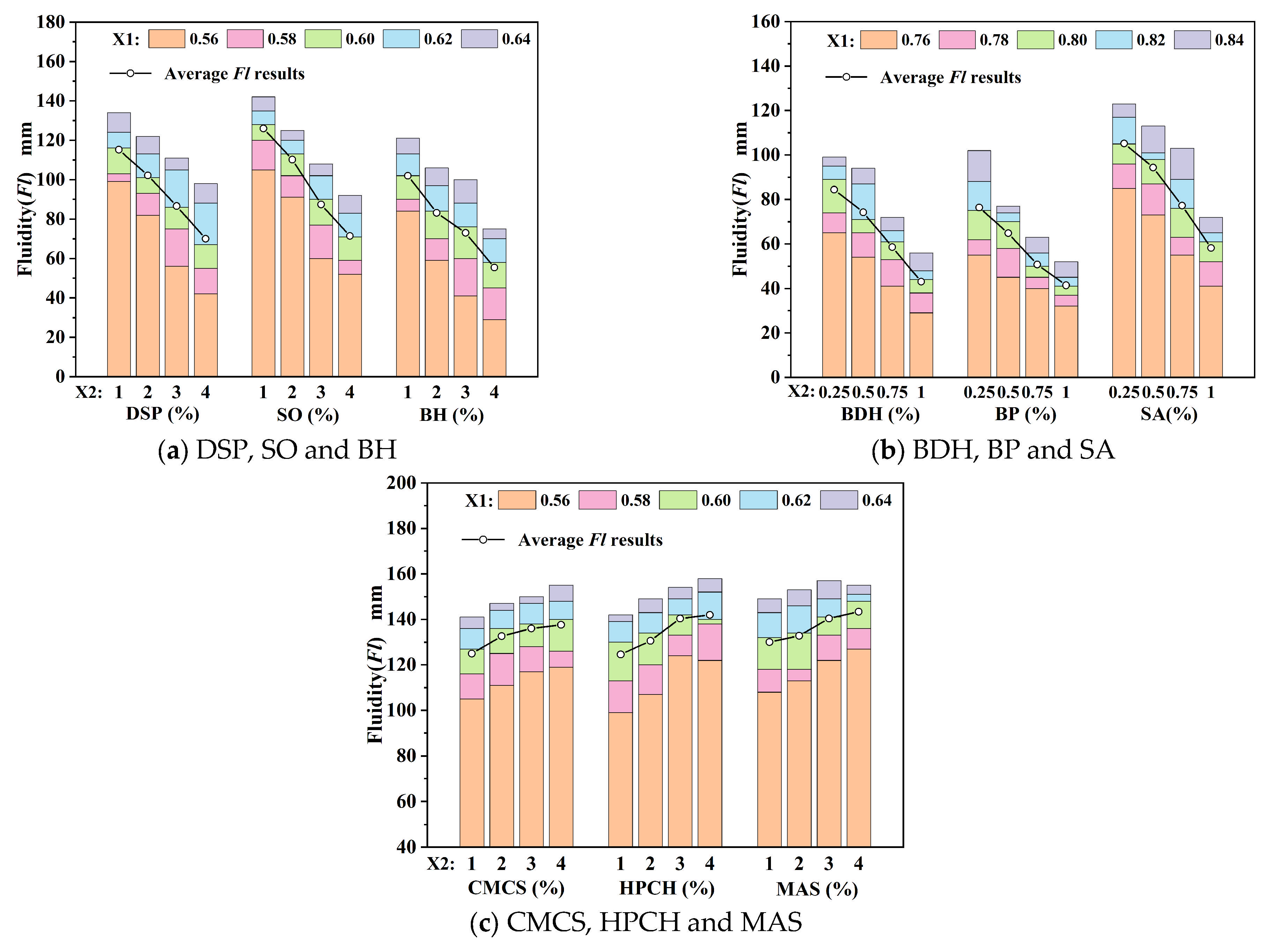
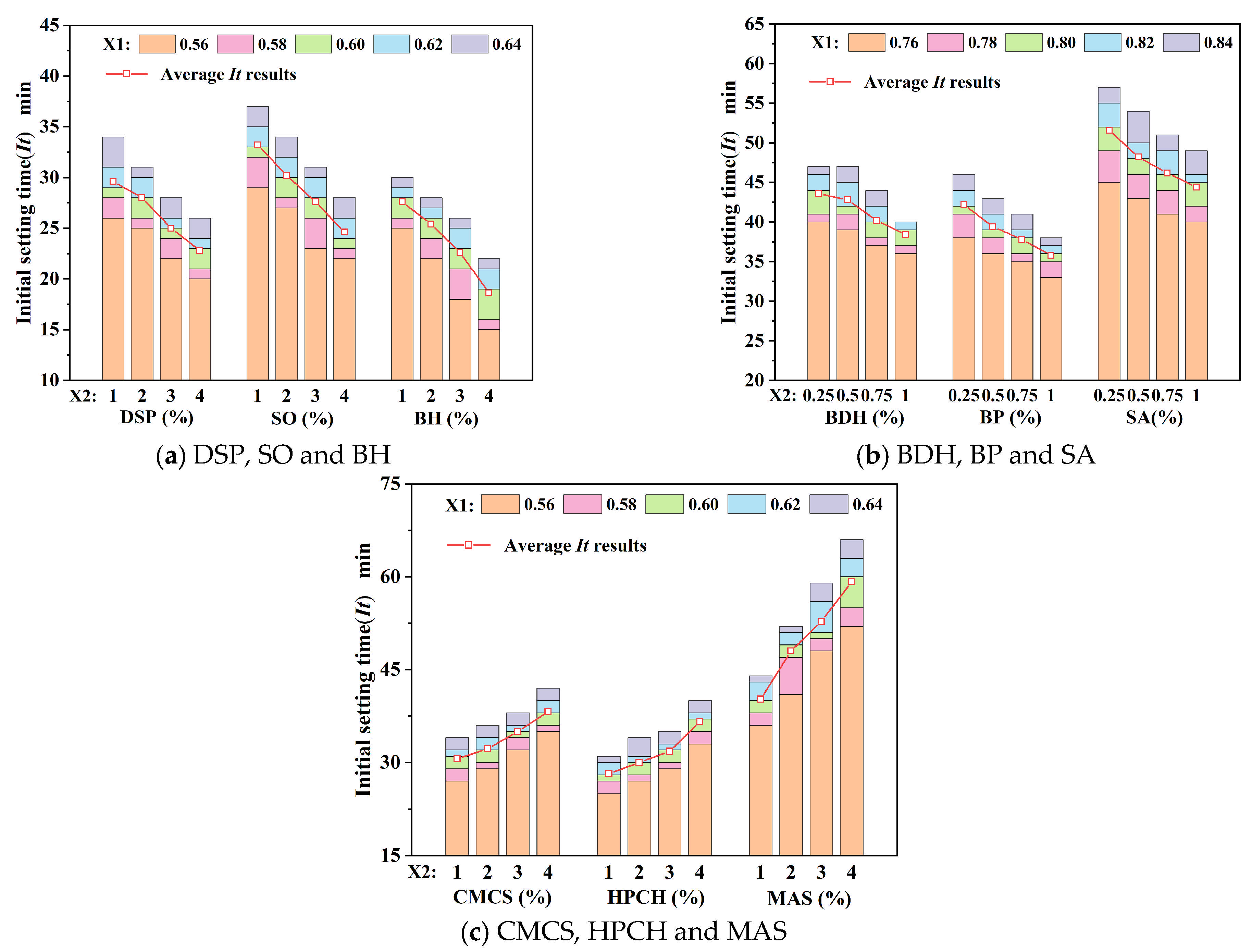
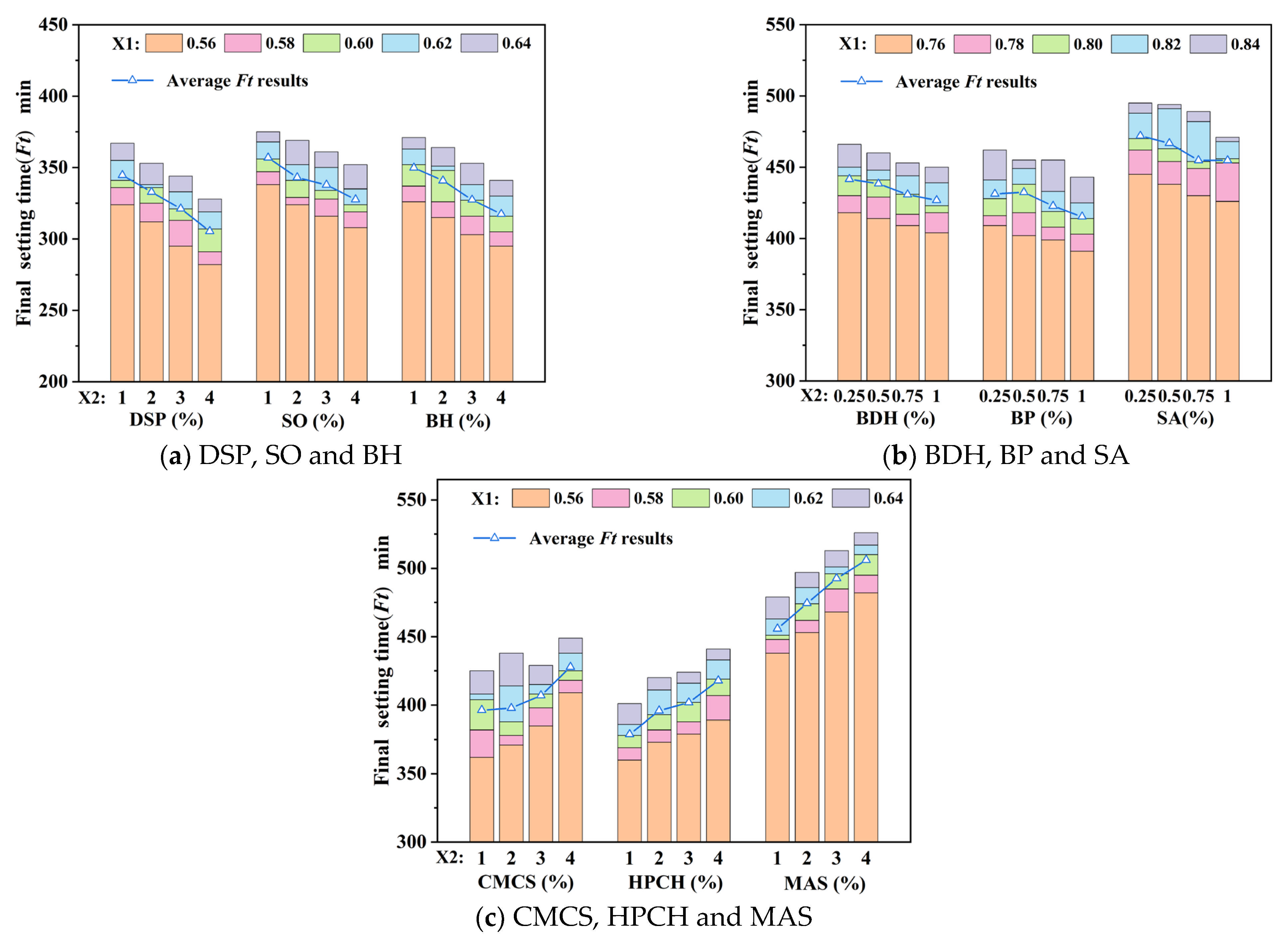
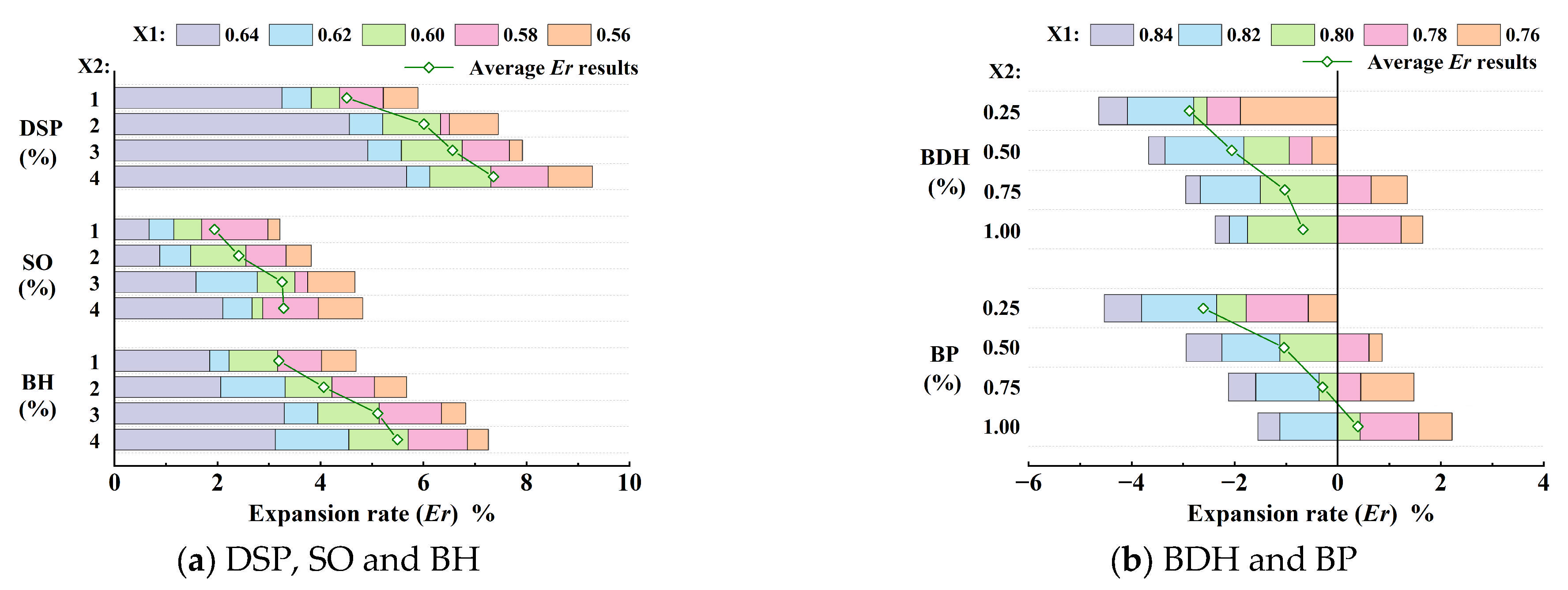
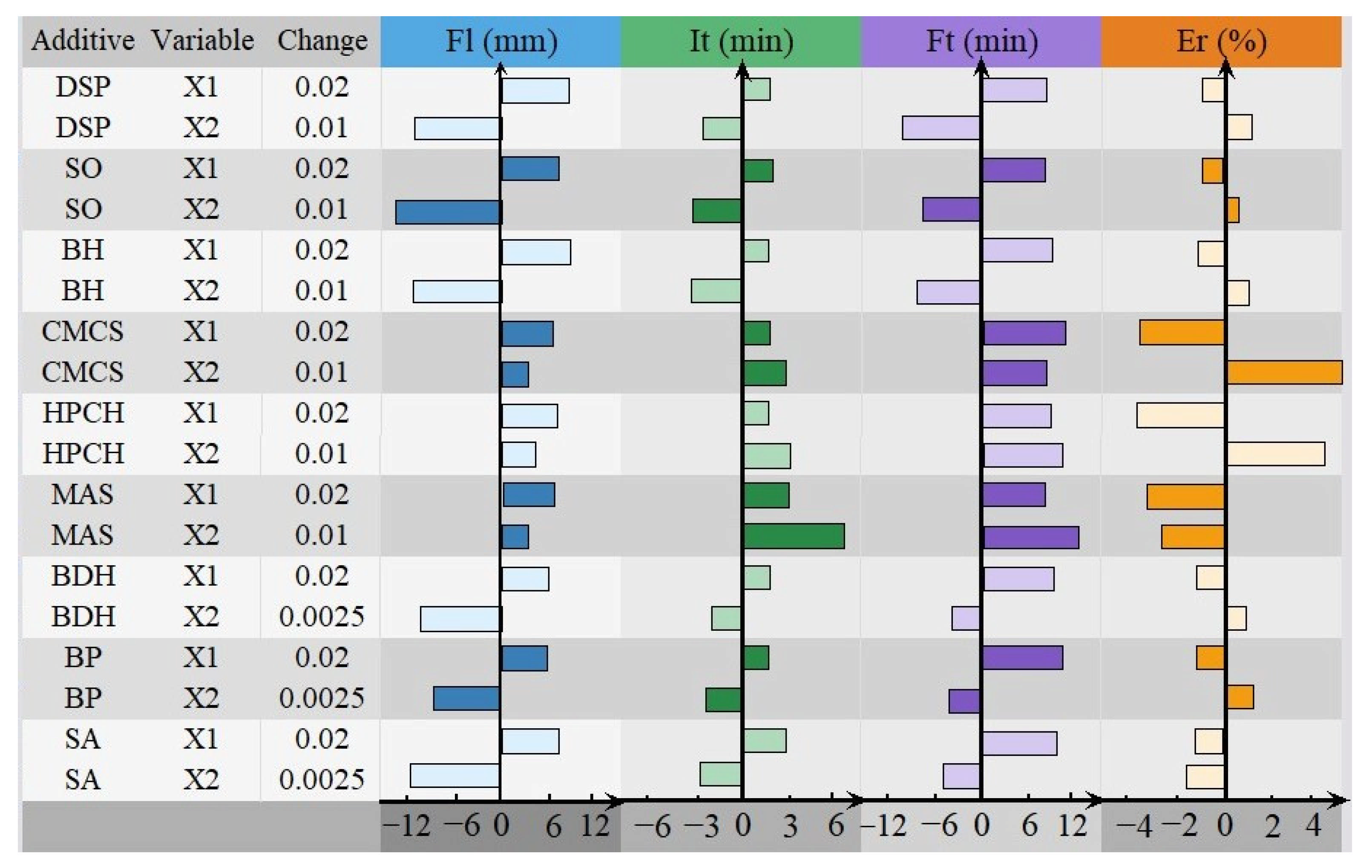
The effects of the liquid-to-solid ratio (X1) and the admixture concentration (X2) on key fresh-state properties are shown in
Figure 2,
Figure 3,
Figure 4 and
Figure 5. Principal trends are summarized below: ① For all systems,
Fl consistently increased with a higher X1 (
Figure 2). The effect of X2 differed, as Fl decreased with increasing X2 for slurries containing DSP, SO, BH, BDH, BP, or SA. Conversely, Fl increased with X2 for slurries modified with CMCS, HPCH, or MAS. ② Both initial and final setting times (
It,
Ft) were prolonged by a higher X1 (
Figure 3 and
Figure 4). The influence of X2 mirrored its effect on fluidity. It and Ft decreased with increasing X2 for DSP, SO, BH, BDH, BP, and SA slurries but increased for CMCS, HPCH, and MAS slurries. ③ The
Er decreased with increasing X1 for all slurries (
Figure 5). Regarding X2, the
Er results increased for slurries modified with DSP, SO, BH, BDH, BP, CMCS, or HPCH, which is beneficial for shrinkage resistance. In contrast, the
Er results decreased for slurries containing SA or MAS. This increase in
Er with X2 for several admixtures is beneficial, as controlled expansion can compensate for drying shrinkage, enhancing interfacial bonding. The underlying mechanisms are discussed in detail in
Section 5.
These results reveal competing effects. For instance, improving fluidity by increasing X1 may reduce the expansion rate. Moreover, a longer It allows the grout to remain pumpable and placeable for an extended period, while a shorter Ft enables the grouted mass to develop structural strength sooner. However, these two setting parameters typically increase or decrease together; therefore, a systematic multi-criteria analysis is essential to identify formulations that achieve the optimal balance among all these properties.
3.2. Quantitative Performance and Stability Assessment
A quantitative analysis was performed to evaluate the influence of X1 and X2 and, crucially, to assess the practical robustness of each admixture system. This analysis determined ① which parameter dominantly controls each property, ② the sensitivity of each system to parameter variation, ③ an overall Performance Stability Index (PSI). Detailed mathematical derivations are provided in
Supplementary Materials S1.
3.2.1. Analysis of Dominant Influencing Factors
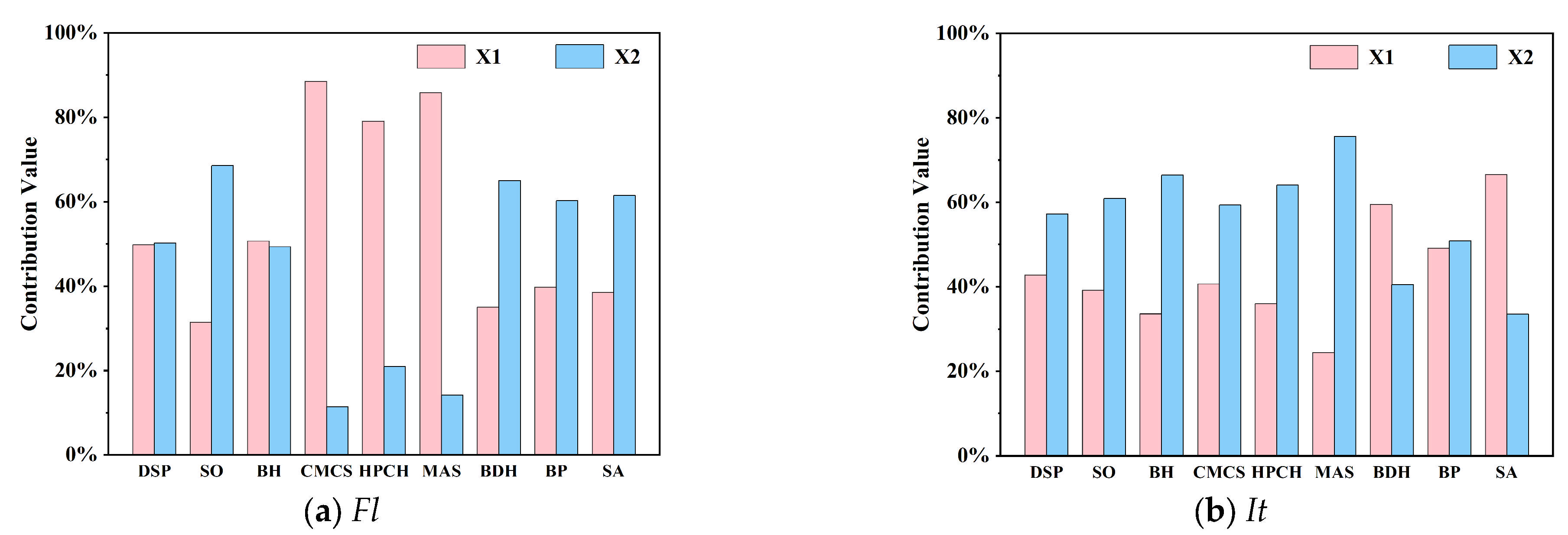
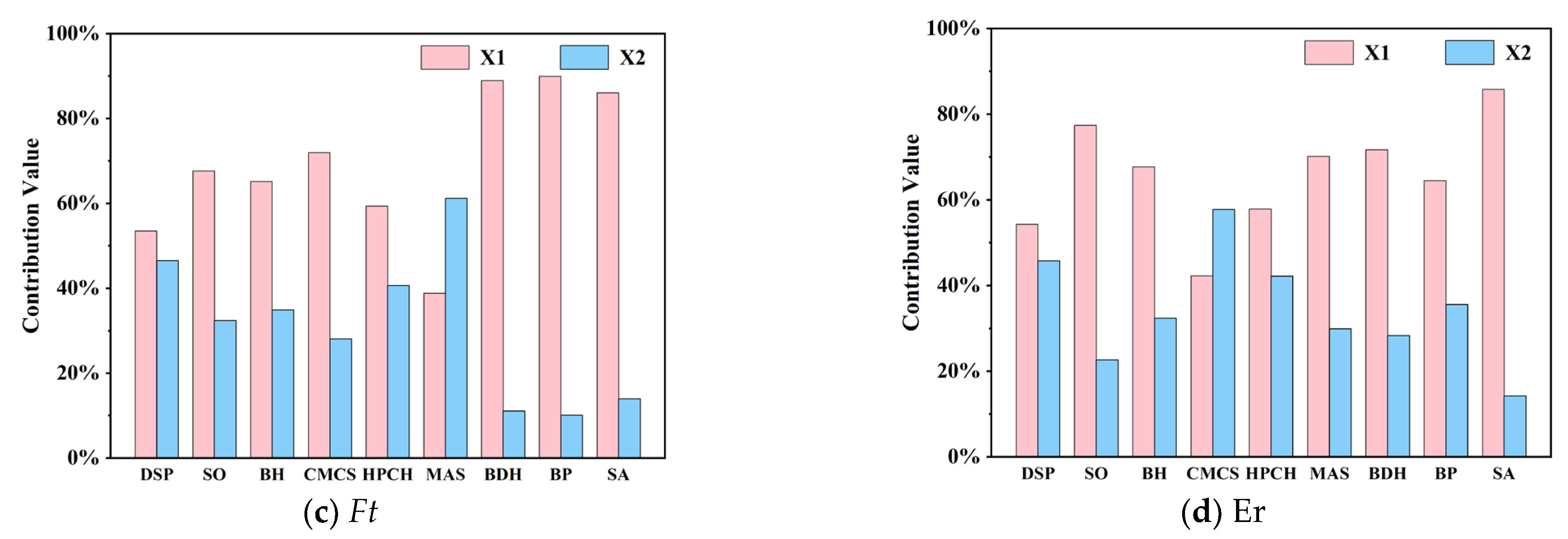
The contribution value of X1 and X2 to the variance in each performance indicator results was quantified in
Figure 6. The calculation is performed using the regression- and standard deviation-based contribution percentage formulas, which can be found in
Equations (S1) and (S2) of Supplementary Material S1 [
38].
The analysis indicates that, for the majority of slurries, X2 appears to be the statistically dominant factor influencing fresh-state rheology, accounting for most of the variation in Fl and It. Conversely, X1 primarily governs the later-stage performance, namely Ft and Er, in most systems. This trend provides a strategic guideline: adjusting pumpability and early stiffening should prioritize modifying X2, while controlling final setting and dimensional compatibility is best achieved by modulating X1.
3.2.2. Evaluation of Sensitivity and System Stability
To assess the practical suitability of each slurry system for field conditions—where minor variations in batching are inevitable—the sensitivity to parameter changes and the overall performance stability were quantified. The average discrete sensitivity index (
Equations (S3) and (S4), see Supplementary Material S1) quantifies the average change in a property resulting from discrete, stepwise variations in X1 or X2 [
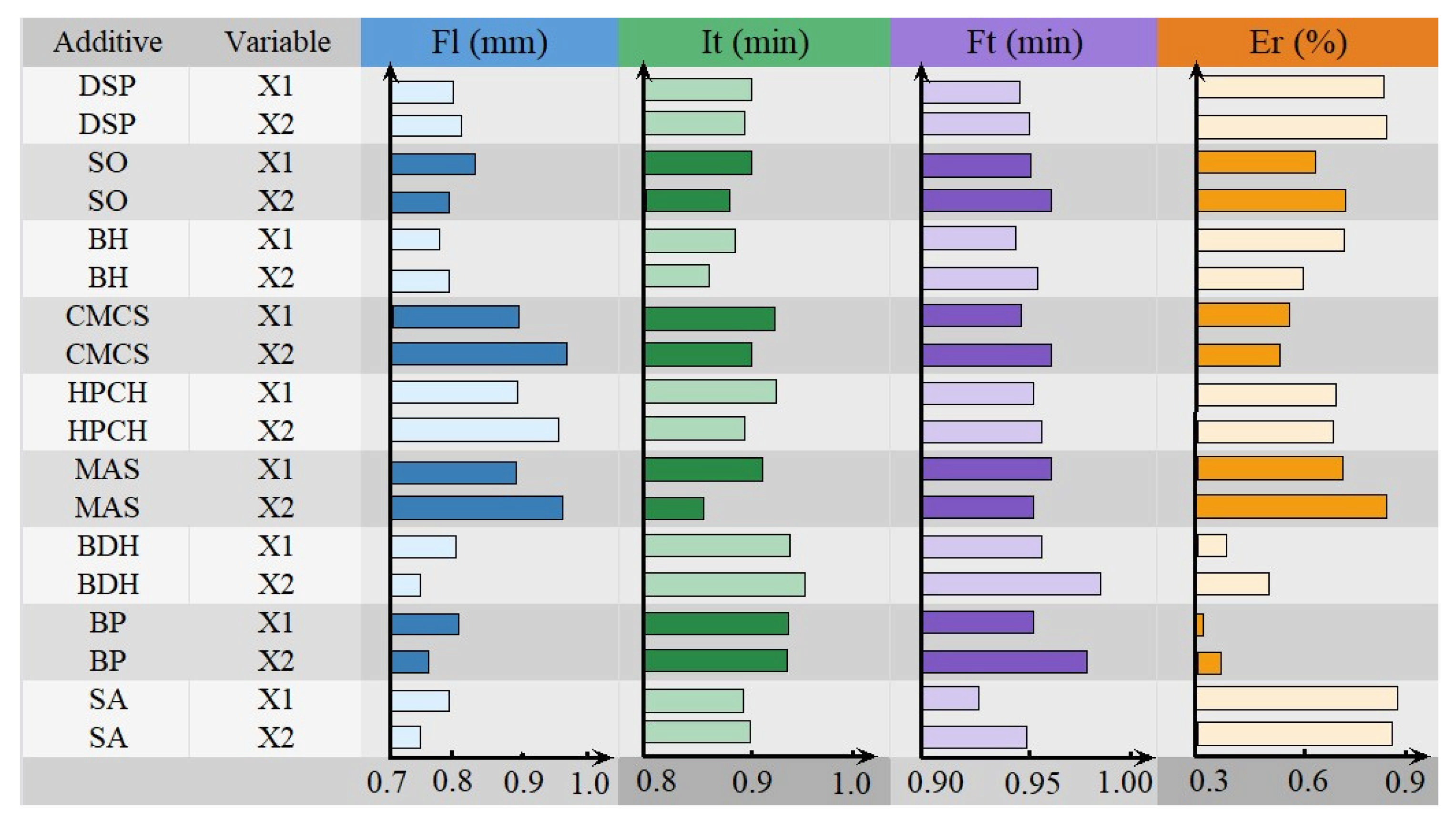
39]. The Performance Stability Index (PSI) evaluates the consistency of each property across the tested parameter ranges, with a higher PSI (closer to 1.0) indicating greater robustness. The calculation formula of PSI can be found in
Supplementary Materials S1 (Equations (S5) and (S6)) [
40].
The sensitivity analysis shown in
Figure 7 identified distinct response profiles. Slurries modified with CMCS, HPCH, and MAS exhibited notably high sensitivity, particularly for the expansion rate (
Er), where calculated values exceeded those of other systems by a factor of three or more. This pronounced sensitivity implies that small, unavoidable deviations in water or admixture content during field preparation could lead to large and unpredictable variations in volumetric stability.
The PSI provides a direct ranking of each system’s overall robustness in
Figure 8. The DSP slurry showed PSI values above 0.80 for all indicators, confirming its high stability and robustness under parameter fluctuations. Several slurries exhibited PSI values below 0.80 for some indicators, which indicates higher performance dispersion. For example, the PSI for the expansion rate (Er) of the MAS slurry was approximately 0.72 under the X1 variation. This instability is attributed to its hydrophobic mechanism, which disrupts the uniform moisture distribution needed for consistent, hydration-driven expansion [
41,
42]. Furthermore, the BDH and BP slurries displayed a very low PSI for
Er (below 0.50). This shows exceptionally high variability and indicates a strong susceptibility to performance loss with parameter changes.
3.3. Synthesis and Integrated Screening of Candidate Admixtures
By integrating qualitative trend analysis, dominant factor identification, and quantitative robustness metrics, a decisive multi-criteria screening of the nine candidate admixtures was conducted. This screening prioritized not only the ability to modify properties desirably but also, crucially, the robustness and predictable performance essential for reliable field application. Consequently, the admixtures are classified into three distinct categories:
① Primary Candidates for Optimization (Low Sensitivity, High Robustness): DSP, SO, and BH. This group, led by DSP, fulfills the dual requirement of effective performance modification and high tolerance to parameter variation. Their superior stability indices suggest reliable performances even under sub-optimal field mixing conditions, making them the most promising candidates for further development.
② Secondary Candidates (Functionally Viable but Control-Sensitive): CMCS, HPCH, BDH, and BP. While capable of imparting specific functional benefits, the utility of these admixtures is constrained by high sensitivity and/or low stability indices. Their successful application would demand impractically precise and stringent quality control during field batching, limiting their practical applicability in most scenarios.
③ Unsuitable Candidates (Fundamentally Incompatible): SA and MAS. These admixtures are screened out due to their fundamental failure to meet the critical requirement for a positive expansion rate. Both consistently induced shrinkage (negative expansion rate, Er), which directly opposes the essential objective of achieving tight, durable interfacial bonding in repair slurries. This inherent property makes them incompatible with the core design principles of a micro-expansive repair material, regardless of their performance in other indicators.
4. Comprehensive Optimization of Grout Formulations Balancing Engineering Performance and Cost
The quantitative analysis in
Section 3 revealed how different sulfate-resistant admixtures and their dosages affect slurry injectability. To move beyond preliminary analysis and address the practical constraint of material cost, this section establishes a framework for selecting optimal formulations. Firstly, acceptable ranges for key injectability indicators were applied to screen viable slurry proportions. These ranges are based on established grouting practice and field experience. Subsequently, material costs were incorporated. Finally, a multi-criteria decision-making (MCDM) model integrating FAHP, MII, CRITIC, and TOPSIS methods was used to evaluate the injectability and cost-effectiveness of each formulation and identify candidates for subsequent sulfate resistance validation. This integrated approach ensures the selection of slurries that are both technically sound and economically viable, promoting practicality and sustainable solutions.
4.1. Data Organization and Preliminary Screening
4.1.1. Initial Screening Based on Injectability Requirements
Drawing on established practice, the optimal operational ranges for injectability indicators were defined as follows [
43]:
① Fluidity (Fl): 40 mm to 120 mm. This ensures workable viscosity and prevents stratification.
② Initial Setting Time (It): Require > 20 min. This allows sufficient time for injection operations.
③ Final Setting Time (Ft): Require < 420 min. This mitigates the risk of cracking due to restrained shrinkage.
④ Expansion Rate (Er): 0% to 10%. This is critical for dimensional compatibility and stress transfer at the slurry–substrate interface.
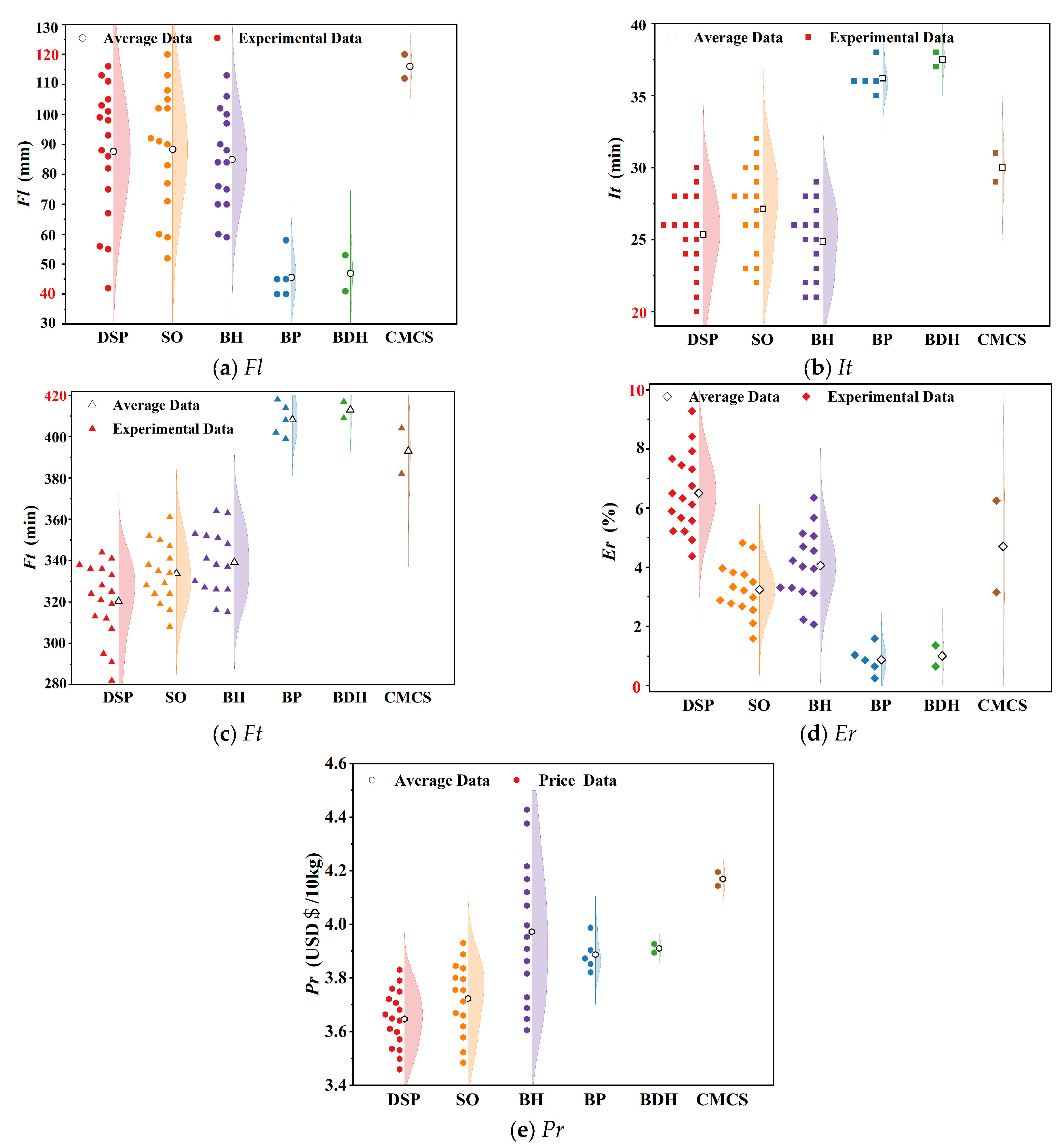
Applying these thresholds using a “one-vote veto” principle, the preliminary screening identified 56 viable slurry proportions. The distribution across admixtures was as follows: 17 DSP slurries, 15 SO slurries, 15 BH slurries, 5 BP slurries, 2 BDH slurries, and 2 CMCS slurries. This outcome aligns with the stability assessment presented in
Section 3 and confirms that DSP, SO, and BH slurries offer the widest viable parameter range. This wide range enhances their robustness and fault tolerance, which is a crucial advantage for reliable construction and repair work under less-than-ideal field control conditions. The distribution of injectability results for these 56 candidate slurries is shown in
Figure 9.
4.1.2. Cost Analysis for Practical Application
In engineering practice, balancing performance with economic feasibility is essential for adopting and scaling new materials. The material cost (
Pr) was calculated for each of the 56 shortlisted formulations (
Table 4); this project-based cost accounting provides a realistic estimate, considering expenses for material acquisition and processing. The use of in situ soil and industrial by-product fly ash enhances both cost-effectiveness and sustainability. The cost of the SH binder was calculated based on the dosage of its diluted working solution. To reflect real-world scenarios, all costs were standardized for a batch of 10 kg of ready-to-use slurry. The calculated costs for all formulations are presented in
Figure 9, which provides a clear economic dimension for the subsequent multi-criteria evaluation.
4.2. Comprehensive Evaluation Using an Integrated MCDM Model
4.2.1. Integrated MCDM Framework and Weight Determination
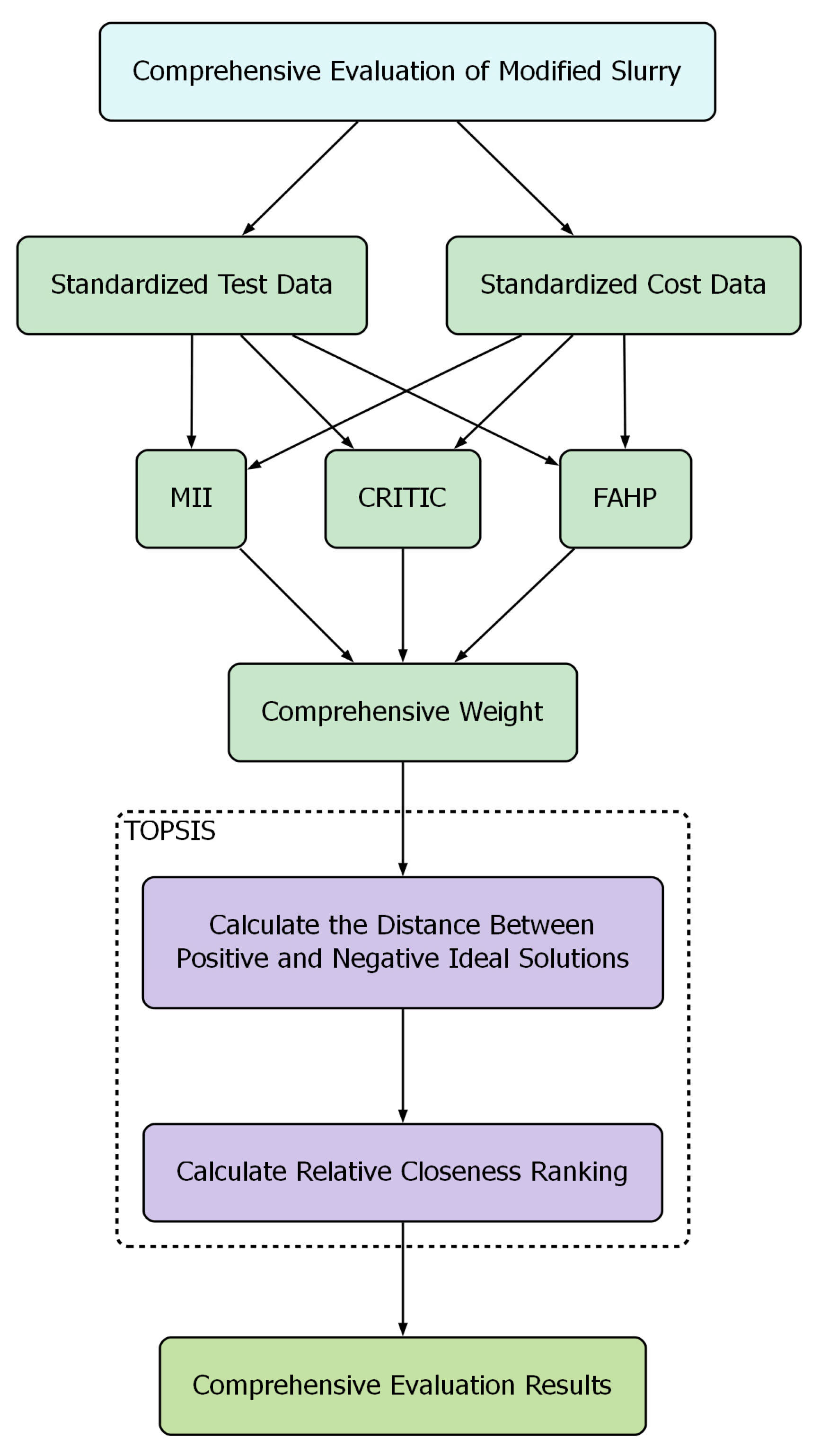
To identify slurry formulations that optimally balance injectability performance and cost, an integrated multi-criteria decision-making (MCDM) model was employed. This model combines the Fuzzy Analytic Hierarchy Process (FAHP), the Multivariate Instability Index (MII) method, the Criteria Importance Through Intercriteria Correlation (CRITIC) method, and the Technique for Order of Preference by Similarity to Ideal Solution (TOPSIS), as outlined in
Figure 10.
This integrated FAHP–MII–CRITIC–TOPSIS framework was designed to leverage the complementary strengths of each method, ensuring a balanced and justified evaluation. Firstly, FAHP incorporates structured expert judgment using triangular fuzzy numbers to translate practical engineering priorities into initial criterion weights, reducing the impact of extreme opinions [
44]. To firmly anchor the model in experimental data, two objective methods are employed in tandem. The MII method assesses the stability of each performance indicator across all mix designs by analyzing synergistic fluctuations among variables, assigning higher weights to more consistent parameters [
45]. Concurrently, the CRITIC method weights indicators objectively based on their contrast intensity and conflicting character, emphasizing those that best differentiate between formulations [
46]. The strong complementarity between MII (focusing on robustness) and CRITIC (focusing on information value) produces a balanced set of objective weights. These objective weights are then integrated with the subjective weights from FAHP. Finally, TOPSIS utilizes this comprehensive set of weights to rank all formulations clearly and transparently based on their relative closeness to the ideal solution.
This multi-stage methodology integrates subjective insight, data-driven stability assessment, statistical discrimination, and practical ranking. It mitigates bias and addresses the inherent multi-objective complexity in material design, providing a scientific basis for rational selection and optimization. Based on this integrated process, the final combined weight for each indicator was determined as follows: Fl (0.2048), It (0.1843), Ft (0.1952), Er (0.2385), and Pr (0.1771). This weighting scheme ensures that the ranking prioritizes formulations with a balanced, robust engineering performance while also accounting for economic constraints.
4.2.2. Ranking Results and Analysis
The TOPSIS was used to rank the 56 slurry proportions based on their relative closeness to the ideal solution. For indicators where higher values are desirable (Fl, It, and Er), distances were calculated relative to the positive ideal solution. For indicators where lower values are preferred (Ft, Pr), distances were calculated relative to the negative ideal solution.
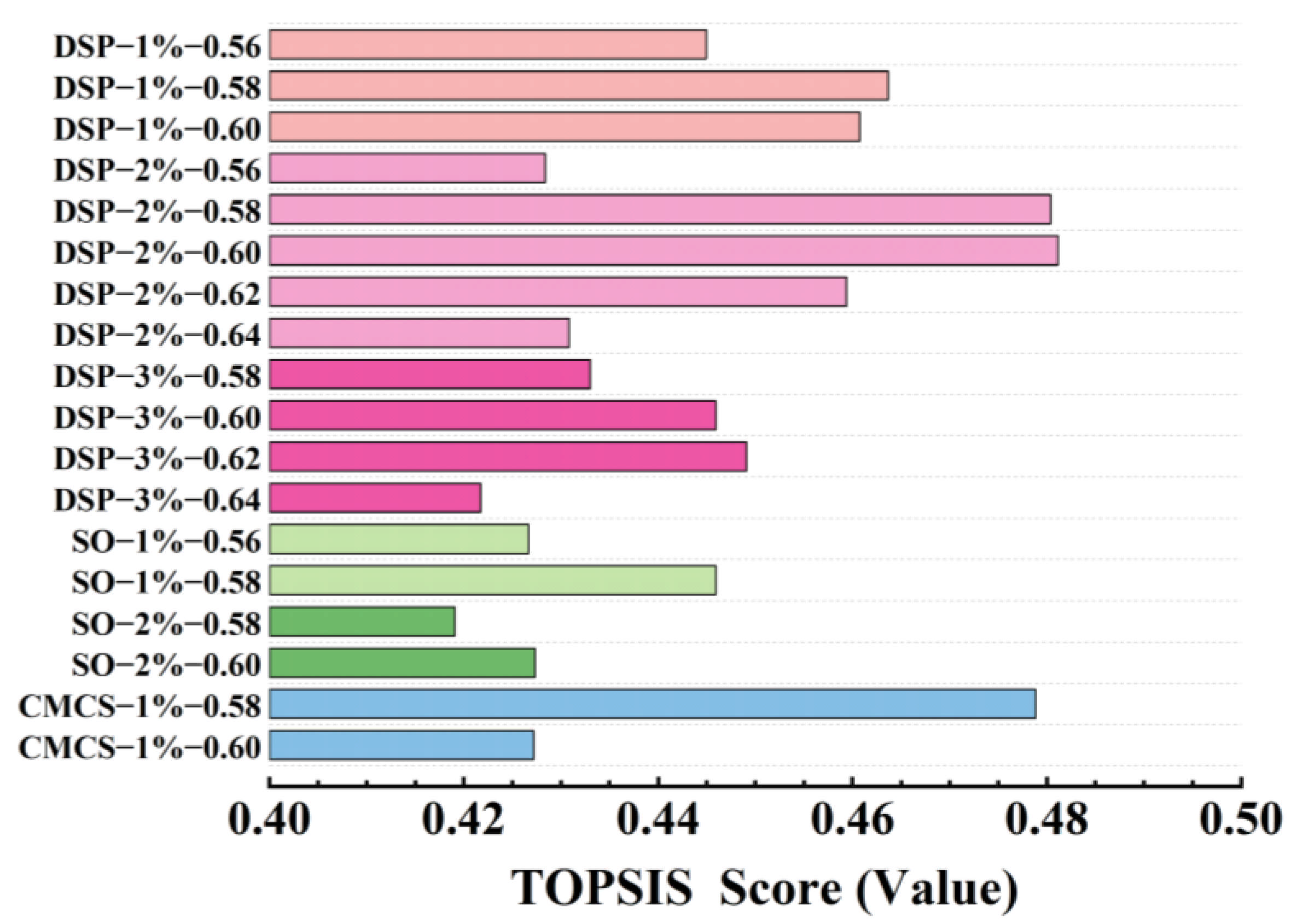
The ranking results are shown in
Figure 11. The top 30% of performers (18 formulations) are predominantly DSP slurries (with 1%, 2%, and 3% X2), SO slurries (with 1% and 2% X2), and one CMCS slurry (with 1% X2). Liquid-to-solid ratios (X1) of 0.58 and 0.60 were most common among these top candidates. This result clearly demonstrates that DSP- and SO-modified slurries offer the best compromise, balancing superior injectability, robust performance stability, and cost-effectiveness. They therefore qualify as the most promising candidates for the subsequent validation of long-term durability under sulfate exposure.
4.2.3. Sensitivity Analysis and Implications
To evaluate the robustness of the ranking results against potential uncertainties in the weighting process—a key consideration raised in the review—a sensitivity analysis was conducted. Each comprehensive criterion weight was individually varied by ±10%, with proportional adjustment of the others. The results of the adjusted weights are provided in
Table S1 (Supplementary Material S2) and the subsequent slurry rankings based on these adjusted weights are detailed in
Figure S1. The analysis confirmed that the composition of the top candidate set remained stable. The leading formulations were consistently concentrated among DSP, SO, and CMCS slurries under all tested weight variations. This demonstrates that the identification of these primary candidate systems is robust and not an artifact of specific, subjective weight choices.
This integrated MCDM process and its robust outcome represent a critical step towards practical implementation. It provides a replicable optimization framework for developing durable repair materials for demanding scenarios in aggressive sulfate-laden environments, ranging from building foundation rehabilitation to the conservation of historic structures.
5. Long-Term Durability Assessment of Optimized Slurries Under Sulfate Attack
The integrated multi-criteria evaluation model (FAHP–MII–CRITIC–TOPSIS) applied in
Section 4 successfully identified slurry proportions that balance injectability with cost. To validate the long-term durability of these top-ranked candidates—a critical criterion for materials in aggressive environments—a sulfate resistance test was conducted.
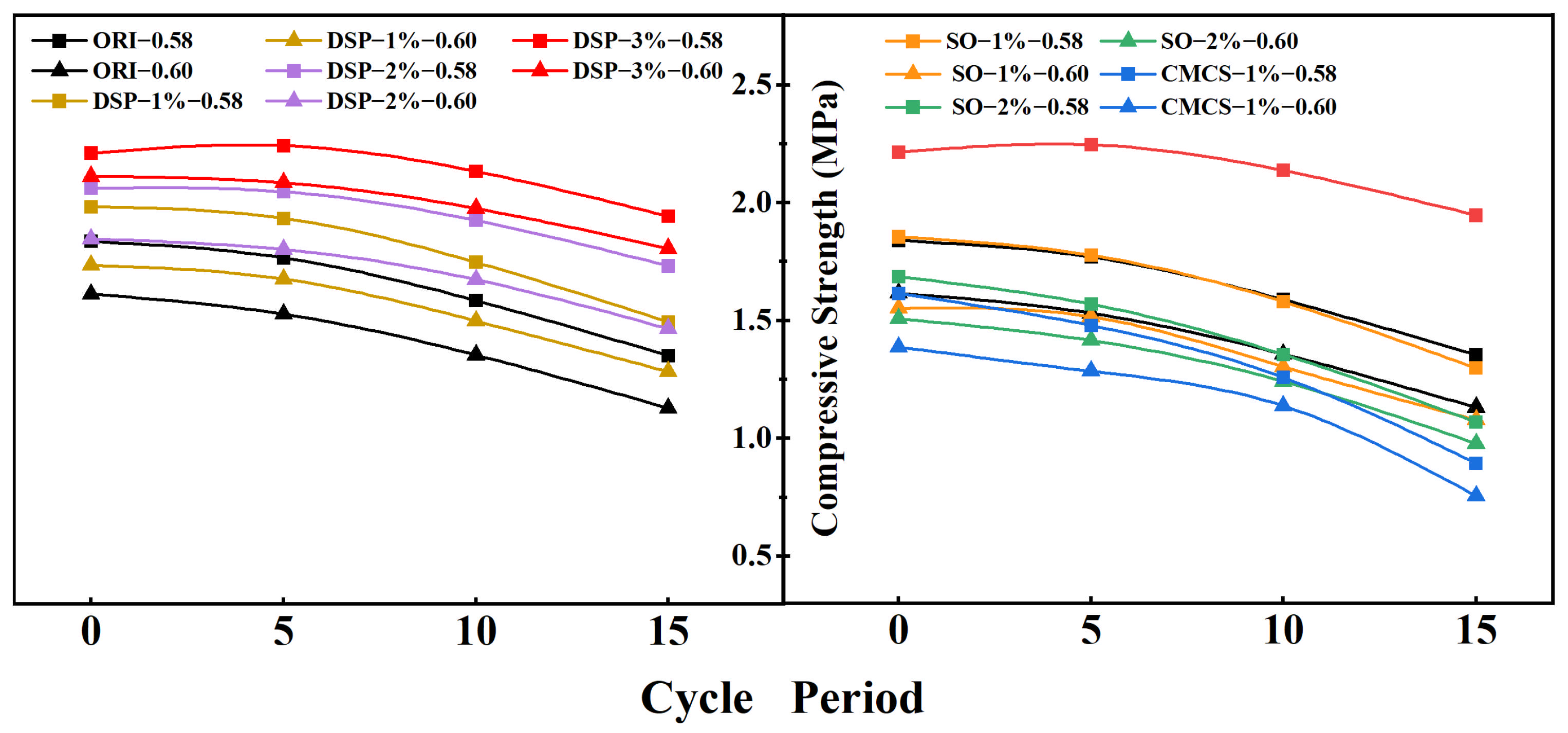
The unmodified base slurry (ORI) served as the control. The experimental groups consisted of the top-performing candidates from the MCDM screening: DSP slurries with 1%, 2%, and 3% admixture dosage (X2); SO slurries with 1% and 2% X2; and one CMCS slurry with 1% X2. All slurries were prepared at liquid-to-solid ratios (X1) of 0.58 and 0.60. Specimens were prepared for unconfined compressive strength (UCS) testing, a fundamental index of mechanical performance. After demolding, they were cured for 63 days and their UCS was then measured after 0, 5, 10, and 15 cycles of immersion in a 5% sodium sulfate solution. The strength retention or loss after these cycles quantitatively indicates the long-term durability of the slurry material under chemical attack.
The compressive strength results (
Figure 12) reveal distinct differences in durability. Slurries modified with DSP consistently exhibited superior strength retention compared with the control (ORI) and other admixtures. This performance advantage widened over successive cycles. In contrast, SO and CMCS slurries showed inferior resistance compared with the unmodified ORI slurry. These findings confirm that incorporating DSP significantly enhances sulfate resistance, while SO and CMCS offer limited protective benefit under aggressive salt attack.
The efficacy of DSP stems from its reaction within the high-pH, calcium-rich environment of the lime-based slurry system, which generates calcium phosphate salts. These salts act synergistically: they fill internal pores and integrate with fly ash hydration products to form a robust composite network. This process enhances interparticle bonding and inhibits microcrack propagation. Crucially, in sulfate-rich environments, this mechanism consumes free calcium ions and encapsulates reactive components, thereby suppressing the deleterious expansive reactions typically induced by sulfate ions [
47,
48]. Conversely, the calcium oxalate crystals formed by SO exhibit poor lattice compatibility with the calcite matrix. This reduces the material’s resistance to crystallization pressure within its pore structure, a primary cause of sulfate-induced expansion and deterioration [
49]. CMCS, due to water absorption and chain swelling, can introduce additional micropores and cracks. This similarly compromises the material’s integrity against salt crystallization and chemical corrosion [
50]. Additionally, the observed increase in expansion rate (
Er) with admixture dosage (X2) for systems like DSP, SO, and BH directly contributes to improved durability by enhancing shrinkage resistance. Controlled micro-expansion during curing generates internal compressive stresses that counteract the tensile stresses induced by drying shrinkage. This mechanism helps maintain intimate contact at the slurry–substrate interface, preventing de-bonding—a critical advantage for repair materials. For DSP, this expansion is likely linked to the formation of space-occupying reaction products within the microstructure. Therefore, DSP is unequivocally identified as the most effective sulfate-resistant admixture for this slurry system.
Furthermore, this superior durability arises from a synergistic mechanism between the SH (polyvinyl alcohol) binder and the DSP admixture. The SH binder contributes through several key actions in the harsh sulfate environment. It possesses inherent chemical stability against sulfate ions and high pH and can form a continuous film that blocks pores, thereby impeding the ingress of fluids and ions. This binder also interacts synergistically with pozzolanic hydration products (e.g., C-S-H) to form a denser hybrid matrix and maintains durable adhesion to solid particles for cohesion under chemical attack. In parallel, the phosphate-based DSP admixture strengthens the inorganic framework of the grout. Together, the flexible organic bonding and pore refinement from SH, combined with the reinforced inorganic structure from DSP, create a composite material with exceptional resistance to sulfate attack.
Among the DSP-modified formulations, the specimen with 3% DSP and a 0.58 liquid-to-solid ratio exhibited superior sulfate resistance. This optimal performance is attributed to two key factors: ① the sufficient admixture dosage ensures the complete activation of the phosphate-based modification mechanism; ② the selected liquid-to-solid ratio promotes better compaction during specimen formation, minimizing large pores vulnerable to sulfate ingress.
This optimal formulation not only delivers the highest durability but also meets the injectability requirements (appropriate setting time and substantial volumetric expansion). These requirements were defined and confirmed by the experimental results in
Section 3 and the subsequent optimization screening in
Section 4. This makes it the most promising candidate for field grouting operations to repair and rehabilitate structures in sulfate-rich environments.
6. Discussion
The optimized grout formulation (3% DSP, L/S = 0.58) meets the key requirements for fissure repair in earthen sites, offering balanced injectability for easy placement into fine cracks. Its controlled micro-expansion counteracts drying shrinkage, which ensures tight, durable bonding with the soil and prevents debonding damage. Critically, the grout’s superior sulfate resistance—confirmed by strength retention—makes it highly suitable for arid regions. In these areas, sulfate salt attack commonly threatens foundations and historic structures. This property combination provides a targeted, sustainable repair solution for such aggressive environments.
The optimal formulation is a product of specific conditions. Our screening process prioritized sulfate resistance, making the results most applicable to environments where sulfate salts are the primary threat. In other contexts, where different salts dominate or where injectability and shrinkage resistance are higher priorities, the ranking could shift. It should be noted that the sulfate resistance reported in this work is primarily assessed through the mechanical retention of compressive strength after cyclic exposure. While this macroscopic performance metric is a reliable and standard indicator of durability in sulfate environments, it is not complemented by microstructural analysis (e.g., SEM, XRD) in the present study. Furthermore, the durability validation relied on compressive strength retention—a key but single-faceted measure. A more comprehensive evaluation, including mass loss and microstructural analysis, would provide a fuller understanding of the degradation and protection mechanisms. It should also be noted that the laboratory tests used a single sulfate salt, whereas real-field exposure often involves mixed salts and combined environmental stresses.
Future work should clarify the micro-scale inhibition mechanism of DSP using techniques like SEM/EDS and XRD. Field validation in actual sulfate-affected structures is the next essential step. In summary, this study presents a systematic method for designing high-performance grouts. It identifies DSP as the optimal admixture for sulfate resistance under the defined conditions and outlines a clear path for future validation.
7. Conclusions
(1) Screening nine sulfate-resistant admixtures identified DSP, SO, and BH as the most compatible with the base slurry’s injectability. Admixtures like CMCS, HPCH, MAS, and SA impaired critical properties, particularly volumetric stability.
(2) The integrated FAHP–MII–CRITIC–TOPSIS framework identified an optimal formulation: 3% DSP at a 0.58 liquid-to-solid ratio. This formulation best balances injectability, dimensional compatibility, and cost-effectiveness.
(3) Accelerated durability tests confirmed the superior sulfate resistance of the DSP-optimized slurry, which retained approximately 88% of its compressive strength after aggressive exposure. This validates its long-term performance potential in aggressive environments.
(4) Future studies should (i) employ micro-analytical techniques to elucidate the precise sulfate inhibition mechanism of DSP and (ii) conduct essential field validation in actual sulfate-affected structures.
Author Contributions
H.S.: Writing—review and editing, Writing—original draft, Visualization, Investigation, Formal analysis, Data curation, Methodology, Conceptualization. K.C.: Writing—review and editing, Resources, Project administration, Funding acquisition, Conceptualization. X.Y.: Supervision, Methodology, Investigation. P.X.: Validation, Supervision, Investigation, Data curation. C.G.: Software, Validation. All authors have read and agreed to the published version of the manuscript.
Funding
This work has been supported by the National Natural Science Foundation of China (No. 41562015, No. 52068050).
Institutional Review Board Statement
Not applicable.
Informed Consent Statement
Not applicable.
Data Availability Statement
All experimental data and numerical results that support the findings of this study are available from the corresponding author upon reasonable request.
Conflicts of Interest
The authors declare no conflict of interest.
References
- Conservation of ancient sites on the Silk Road. China Cult. Herit. 2004, 3, 118–122. Available online: https://d2aohiyo3d3idm.cloudfront.net/publications/virtuallibrary/9781606060131.pdf (accessed on 10 October 2025).
- Keefe, L. Earth Building: Methods and Materials, Repair and Conservation; Taylor & Francis: Abingdon, UK, 2005. [Google Scholar]
- Silva, R.A.; Schueremans, L.; Oliveira, D.V.; Dekoning, K.; Gyssels, T. On the development of unmodified mud grouts for repairing earth constructions: Rheology, strength and adhesion. Mater. Struct. 2012, 45, 1497–1512. [Google Scholar] [CrossRef]
- Costa, S.; Kodikara, J.; Shannon, B. Salient factors controlling desiccation cracking of clay in laboratory experiments. Geotechnique 2013, 63, 18–29. [Google Scholar] [CrossRef]
- Lv, J.; Zhou, T.H.; Du, Q.; Wu, H.H. Experimental investigation on properties of gypsum-quicklime-soil grout material in the reparation of earthen site cracks. Constr. Build. Mater. 2017, 157, 252–262. [Google Scholar] [CrossRef]
- Mueller, U.; Miccoli, L.; Fontana, P. Development of a lime-based grout for cracks repair in earthen constructions. Constr. Build. Mater. 2016, 110, 323–332. [Google Scholar] [CrossRef]
- Cui, K.; Feng, F.; Chen, W.W.; Wang, D.H.; Wang, X.H. Slurry and technology optimization for grouting fissures in earthen sites with quicklime. Adv. Mater. Sci. Eng. 2019, 2019, 9076760. [Google Scholar] [CrossRef]
- Antiohos, S.; Papageorgiou, A.; Tsimas, S. Activation of fly ash cementitious systems in the presence of quicklime. Part II: Nature of hydration products, porosity and microstructure development. Cem. Concr. Res. 2006, 36, 2123–2131. [Google Scholar] [CrossRef]
- Shen, Y.X.; Chen, W.W.; Kuang, J.; Du, W.F. Effect of salts on earthen materials deterioration after humidity cycling. J. Cent. S. Univ. 2017, 24, 796–806. [Google Scholar] [CrossRef]
- Zhang, Q.; Chen, W.; Wu, G. Salt distribution of earthen heritage site wall and its mechanism in northern China. J. Build. Eng. 2023, 76, 107154. [Google Scholar] [CrossRef]
- Han, W.; Gong, R.; Liu, Y.; Gao, Y. Influence mechanism of salt erosion on the earthen heritage site wall in Pianguan Bastion. Case Stud. Constr. Mater. 2022, 17, e01388. [Google Scholar] [CrossRef]
- Arnold, A.; Zehnder, K. Salt weathering on monuments. In Proceedings of the 1st International Conference on Conservation of Monuments in the Mediterranean Basin, Bari, Italy, 7–10 June 1990; pp. 31–58. [Google Scholar]
- Yang, S.; Wang, X.; Guo, Q.; Chen, Y.; Pei, Q. Experimental research on salt threshold of earthen sites in northwest of China. J. Lanzhou Univ. (Nat. Sci.) 2018, 54, 5–12. [Google Scholar]
- Huang, S.; Li, Y.; Zhao, Y. Preliminary study on migration of soluble salts in simulated earthen site. J. Shaanxi Norm. Univ. Nat. Sci. Ed. 2010, 38, 51–55. [Google Scholar]
- Zhang, C.H.; Zhang, S.X.; Qian, L.; Xia, Y.; Hu, H.Y.; Jin, Z.L. Investigation of soluble salts in Yuhuangmiao Shanrong tomb site. Chem. Res. Appl. 2016, 28, 1546–1555. [Google Scholar]
- Chen, W.W.; Liu, J.; Gong, S.Y.; Yang, G.; Wang, D.Y.; Lin, G.C. Researches on the durability of the SH-(C+F+CaO) slurry applied to reinforce the cracks in earthen sites. Chin. J. Rock Mech. Eng. 2016, 35, 4310–4317. [Google Scholar]
- Cui, K.; Xu, P.F.; Huang, J.J.; Yu, X.P.; Wang, X.H. Comparison of bond performance between grouting slurry and soil interface in soil sites and durability in arid environment. J. Jilin Univ. (Eng. Technol. Ed.) 2023, 53, 2856–2868. [Google Scholar]
- Granneman, S.J.; Shahidzadeh, N.; Lubelli, B.; Hees, R.P. Effect of borax on the wetting properties and crystallization behavior of sodium sulfate. CrystEngComm 2017, 19, 1106–1114. [Google Scholar] [CrossRef]
- Granneman, S.J.; Lubelli, B.; Hees, R.P. Characterization of lime mortar additivated with crystallization modifiers. Int. J. Archit. Herit. 2018, 12, 849–858. [Google Scholar] [CrossRef]
- Granneman, S.J.; Lubelli, B.; Hees, R.P. Effect of mixed in crystallization modifiers on the resistance of lime mortar against NaCl and Na2SO4 crystallization. Constr. Build. Mater. 2019, 194, 62–70. [Google Scholar] [CrossRef]
- Rong, Y.; Yang, J.; Huang, S.; Li, Y. Barium Hydroxide Nanoparticle–Phosphoric Acid System for Desalination and Consolidation of Tomb Murals. Crystals 2022, 12, 1171. [Google Scholar] [CrossRef]
- Wang, S.L.; Bai, C.B.; Xie, L.N.; Wang, J.L.; Li, Y.H. A new procedure for desalination and reinforcement of brick cultural relics in typical sulfate environments. Sci. Conserv. Archaeol. 2019, 31, 22–29. [Google Scholar]
- Wang, T.; Leng, B.; Che, R.; Shao, Z. Biomimetic synthesis of multilayered aragonite aggregates using alginate as crystal growth modifier. Langmuir 2010, 26, 13385–13392. [Google Scholar] [CrossRef] [PubMed]
- Andreotti, S.; Franzoni, E.; Ruiz-Agudo, E.; Scherer, G.W.; Fabbri, P.; Sassoni, E.; Rodriguez-Navarro, C. New polymer-based treatments for the prevention of damage by salt crystallization in stone. Mater. Struct. 2019, 52, 17. [Google Scholar] [CrossRef]
- Ma, Q.; Liu, Q.; Cheng, K.; Liu, S. Study on the durability of hydraulic lime soil mixed with sodium methyl silicate. Coatings 2022, 12, 903. [Google Scholar] [CrossRef]
- Cui, K.; Yu, X.P.; Huang, J.J.; Shao, H.A.; Gu, X. Early solidification process of the slurry with quicklime for fissure restoration of earthen sites. J. Build. Eng. 2022, 53, 104530. [Google Scholar] [CrossRef]
- Cui, K.; Shao, H.A.; Yu, X.P.; Pei, Q.Q.; Zhang, S. Mixture optimization for mechanical, environmental, and economic objectives in grouting slurry for repairing earthen sites. Herit. Sci. 2024, 12, 174. [Google Scholar] [CrossRef]
- BS EN 459-1:2015; Building Lime—Definitions, Specifications and Conformity Criteria. British Standards Institution: London, UK, 2015.
- BS EN 450-1:2012; Fly Ash for Concrete—Definition, Specifications and Conformity Criteria. British Standards Institution: London, UK, 2012.
- Chen, H.; Chen, W.; Li, X. The effect of SH-lime composite material on capillary water rise resistance in the Great Wall. J. Build. Eng. 2024, 85, 108512. [Google Scholar] [CrossRef]
- Cui, K.; Feng, F.; Chen, W.W.; Wang, X.H.; Cheng, F.Q. Study on the mechanical compatibility of fissure grouting slurry with quick lime and grouting technology optimization in earthen sites. Rock Soil Mech. 2019, 40, 1–10. [Google Scholar]
- Yu, X.P.; Cui, K.; Hu, X.; Qiao, Q.; Zhang, G. Properties and compatibility assessment of the slurry with quicklime for fissure restoration of earthen sites in Northwest China. Coatings 2022, 12, 1255. [Google Scholar] [CrossRef]
- Zhou, Q.; Lu, S.; Huang, C.; Puglia, D.; Xu, P.; Niu, D.; Ma, P. Polyvinyl alcohol/sodium alginate hydrogels with tunable mechanical and conductive properties for flexible sensing applications. Int. J. Biol. Macromol. 2024, 283, 137822. [Google Scholar] [CrossRef]
- Casassa, E.Z.; Sarquis, A.M.; Van Dyke, C.H. The gelation of polyvinyl alcohol with borax: A novel class participation experiment involving the preparation and properties of a “slime”. J. Chem. Educ. 1986, 63, 57. [Google Scholar] [CrossRef]
- Han, J.; Lei, T.; Wu, Q. Facile preparation of mouldable polyvinyl alcohol-borax hydrogels reinforced by well-dispersed cellulose nanoparticles: Physical, viscoelastic and mechanical properties. Cellulose 2013, 20, 2947–2958. [Google Scholar] [CrossRef]
- JGJ/T 70-2009; Standard for Test Method of Basic Properties of Construction Mortar. Ministry of Housing and Urban-Rural Development of the People’s Republic of China: Beijing, China, 2009.
- GB/T 1346-2011; Test Methods for Water Requirement of Normal Consistency, Setting Time and Soundness of the Portland Cement. General Administration of Quality Supervision, Inspection and Quarantine of the People’s Republic of China. Standardization Administration of the People’s Republic of China: Beijing, China, 2011.
- Harrison, R.B.; Footen, P.W.; Strahm, B.D. Deep soil horizons: Contribution and importance to soil carbon pools and in assessing whole-ecosystem response to management and global change. For. Sci. 2011, 57, 67–76. [Google Scholar] [CrossRef]
- Baratloo, A.; Hosseini, M.; Negida, A.; El Ashal, G. Part 1: Simple definition and calculation of accuracy, sensitivity and specificity. Emergency 2015, 3, 48–49. [Google Scholar] [PubMed]
- Jensen, W.A.; Szarka, J., III; White, K. Stability assessment with the stability index. Qual. Eng. 2019, 31, 289–301. [Google Scholar] [CrossRef]
- Guo, Z.; Zhu, Q.; Liu, C.; Yang, Y.; Wang, X.; Zhang, H. Preparation of Ca-Al-Fe deicing salt and modified with sodium methyl silicate for reducing the influence of concrete structure. Constr. Build. Mater. 2018, 172, 263–271. [Google Scholar] [CrossRef]
- Chen, L.; Wang, Y.; Wang, Z.F.; Lu, H.; Zhang, D.; Liu, K. Diffusion resisting performance of concrete modified with sodium methyl silicate in saline soil area. Constr. Build. Mater. 2022, 350, 128767. [Google Scholar] [CrossRef]
- Yu, X.P. Research on Adhesion Performance and Mechanism of Slurry-Soil Interface for Fissure Repair in Rammed Earthen Sites Under Various Modes. Ph.D. Thesis, Lanzhou University of Technology, Lanzhou, China, 2024. [Google Scholar]
- Noor, A.M.; Fauadi, M.M.; Jafar, F.A.; Nordin, M.H.; Yahaya, S.H.; Ramlan, S.; Aziz, M.S.A. Fuzzy analytic hierarchy process (FAHP) integrations for decision making purposes: A review. J. Adv. Manuf. Technol. (JAMT) 2017, 11, 139–154. [Google Scholar]
- Cui, K.; Yu, L.; Zhang, X.; Dang, X.; Pan, Y.; Wang, D. Research on the Quality Evaluation System of Rammed Earth Sites in Arid Areas. Int. J. Archit. Herit. 2025, 19, 3615–3635. [Google Scholar] [CrossRef]
- Cui, K.; Wei, X.; Xu, P.; Wang, D.; Li, S. Study on the salt-dissipating and settlement-preventing performance of composite modified cushion layers in the roof-propping body of earthen sites’ basal sapping zone. Constr. Build. Mater. 2024, 442, 137595. [Google Scholar] [CrossRef]
- Mahyar, M.; Erdoğan, S.T. Phosphate-activated high-calcium fly ash acid-base cements. Cem. Concr. Compos. 2015, 63, 96–103. [Google Scholar] [CrossRef]
- Defus, A.; Possenti, E.; Sansonetti, A.; Tedeschi, C.; Colombo, C.; Biondelli, D.; Realini, M. Di-ammonium hydrogen phosphate for the consolidation of lime-based historic mortars–Preliminary research. J. Cult. Herit. 2021, 48, 45–53. [Google Scholar] [CrossRef]
- Dreyfuss, T. Artificially induced calcium oxalate on limestone in urban environments–new findings. J. Cult. Herit. 2020, 42, 56–63. [Google Scholar] [CrossRef]
- Žižlavský, T.; Vyšvařil, M.; Bayer, P.; Rovnaníková, P. Properties of aerial lime-based mortars with chitosan ethers. Solid State Phenom. 2018, 276, 75–82. [Google Scholar] [CrossRef]
| Disclaimer/Publisher’s Note: The statements, opinions and data contained in all publications are solely those of the individual author(s) and contributor(s) and not of MDPI and/or the editor(s). MDPI and/or the editor(s) disclaim responsibility for any injury to people or property resulting from any ideas, methods, instructions or products referred to in the content. |