Article

Adhesion Mechanism and Quantitative Evaluation of Bio-Based and Petroleum-Based Oil-Modified Asphalt


1
Heilongjiang Longjiao Engineering Inspection and Reinforcement Co., Ltd., No. 7 Shunyi Street, Harbin Economic Development Zone, Harbin 150006, China
2
School of Transportation Science and Engineering, Harbin Institute of Technology, No. 73, Huanghe Road, Nangang District, Harbin 150090, China
3
Harbin Institute of Technology (Weihai), Qingdao Research Institute, No. 1062, Jing-Cheng Road, Cheng-Yang District, Qingdao 266109, China
4
Chongqing Research Institute of Harbin Institute of Technology, Chongqing 401135, China
*
Authors to whom correspondence should be addressed.
Coatings 2026, 16(2), 253; https://doi.org/10.3390/coatings16020253
Submission received: 25 January 2026 / Revised: 13 February 2026 / Accepted: 14 February 2026 / Published: 16 February 2026

Highlights

What are the main findings?
  • Bio-based oils superiorly enhance asphalt adhesion to acidic granite.
  • Carbonyl and aromatic groups in bio-oils promote interfacial bonding.
What are the implications of the main findings?
  • Digital image processing enables objective quantitative adhesion analysis.
  • Bio-oils optimize low-temperature cracking resistance of asphalt mixtures.

Abstract
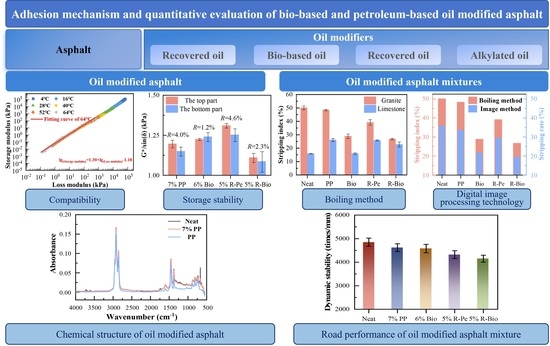
The utilization of waste and renewable oils as asphalt modifiers is a crucial strategy for achieving sustainable development in pavement engineering. However, the different physicochemical effects exerted by oil sources (bio-based versus petroleum-based) on the asphalt–aggregate interface remain insufficiently understood. This study aims to elucidate the influence mechanism of two bio-based oils and two petroleum-based oils on asphalt adhesion and the pavement performance of mixtures. A quantitative evaluation method combining the boiling test with digital image processing (DIP) technology was developed to assess the anti-stripping performance of modified asphalt on different lithological aggregates (acidic granite and alkaline limestone). Additionally, Fourier transform infrared spectroscopy (FTIR) was employed to reveal the chemical evolution of the modified asphalt. The results indicated that, although all oil-based modifiers demonstrated excellent compatibility and storage stability with the base asphalt (segregation ratio < 5%), their adhesion properties were significantly influenced by aggregate lithology. The key finding was that, compared to petroleum-based oils, bio-based oils exhibited superior adhesion performance on acidic granite surfaces, markedly mitigating moisture-induced stripping. FTIR analysis confirmed that this enhancement was attributable to the aromatic and carbonyl functional groups introduced by bio-based oils, which effectively promoted the interfacial bonding. Furthermore, bio-oil-modified mixtures exhibited optimal low-temperature cracking resistance without compromising high-temperature stability. These findings elucidate the mechanism by which bio-oil enhances the water-damage resistance of acidic aggregate systems, providing a theoretical basis for the optimized selection of sustainable asphalt modifiers.

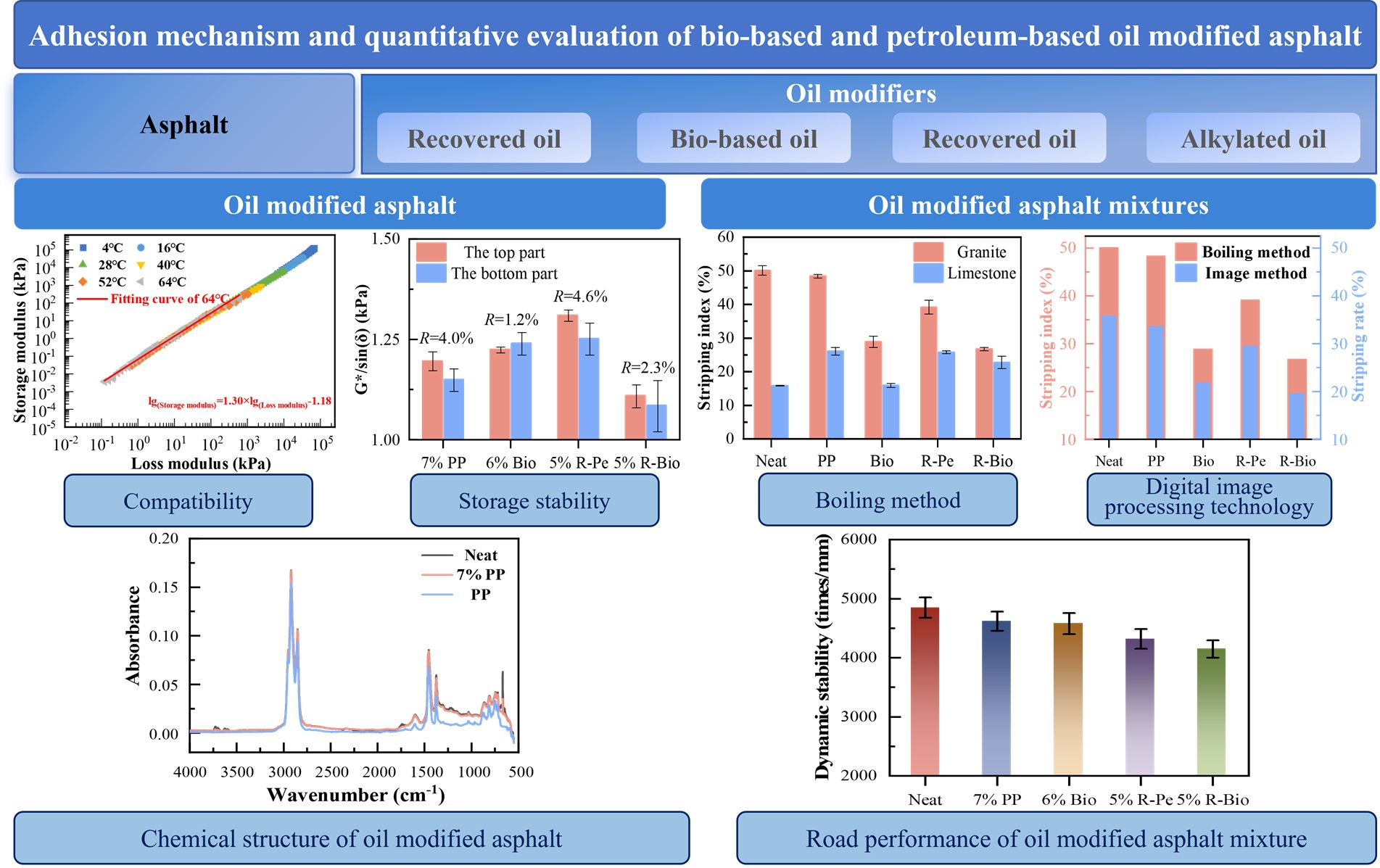
Graphical Abstract

1. Introduction

The asphalt pavement construction industry urgently needs a considerable amount of asphalt materials, but the non-renewable petroleum resources mean that asphalt materials are unsustainable. Currently, the partial substitution of asphalt with recycled oils and bio-oils has been proven to have significant potential to promote the high-performance and sustainable development of asphalt pavement [1,2,3,4,5]. However, there are numerous kinds of oils added to asphalt, and different oils have different effects on asphalt adhesion and low-temperature properties [6,7,8]. Meanwhile, the moisture damage of asphalt pavement occurs under rainfall and traffic loading after the low-temperature cracking phenomenon of pavement. The moisture damage of asphalt pavement is mainly caused by the weakening of adhesion between aggregate and asphalt binder, the weakening of cohesion of the asphalt mixture, or the combined effect of both mechanisms [9,10,11,12]. Therefore, it is necessary to investigate the effect of different oils on asphalt–aggregate adhesion and the road performance of the asphalt mixture.
The application of waste or renewable oils as asphalt modifiers not only improves asphalt properties, but is also ecologically beneficial [13,14]. Currently, many studies have been conducted on the low-temperature properties of oil-modified asphalt materials [15,16,17,18,19,20]. In terms of an asphalt binder, Hill [21], You [22] and Wen [23] incorporated a bio-binder derived from swine manure and waste cooking oil into asphalt, investigated its effect on the rheological properties of asphalt, and the results showed that the high-temperature deformation resistance of asphalt deteriorated, while its low-temperature crack resistance improved. Zhang et al. [24] selected bio-based oils, petroleum-based oils, and refined waste oils to prepare oil-modified asphalt, and indicated that these oils could relatively improve the low-temperature properties of asphalt by a bending beam rheometer (BBR) test and single-edge-notched beam (SENB) test. Sun et al. [25] discovered that bio-oil could improve the low-temperature properties of asphalt based on the BBR test. He et al. [26] revealed that bio-oil improved the low-temperature properties of asphalt through the review of bio-oils, bio-fibers and bio-fillers in the application of improving asphalt properties. For the asphalt mixture, Zhang et al. [24] incorporated a bio-binder derived from wood into asphalt and demonstrated that an oil-modified asphalt mixture had a lower fracture temperature than an ordinary matrix asphalt mixture. Zhang et al. [27] revealed that bio-oil-modified asphalt could improve the low-temperature cracking resistance of the mixture. Zhao et al. [28] discovered that Sasobit and waste cooking oil as warm mix additives could improve the low-temperature cracking resistance of asphalt mixtures based on the BBR test.
Moreover, the moisture damage has been a thorny problem limiting the performance of asphalt pavement over time, and the adhesion of asphalt–aggregate is the key to solving the moisture damage of pavement. Yadykova and Ilyin [29] investigated the adhesion and cohesion properties of bio-oil-modified asphalt, and revealed that the 5%-doped bio-oil improved the adhesion work and adhesion strength of asphalt to the silicate surface. Luo et al. [30] discovered that bio-oil could improve asphalt adhesion properties at the micro-level based on molecular dynamics. Shariati et al. [31] investigated the mechanism of influence of bio-oil on the asphalt–aggregate interface based on an indoor test and molecular modeling, and the results indicated that bio-oil improved the asphalt–aggregate adhesion properties and enhanced its sustainability and durability. In addition, most modified asphalt is prone to delamination and segregation during storage, which affects the road performance of asphalt and leads to early damage of asphalt pavement [32,33]. Therefore, it is a premise to ensure that the oil modifier has excellent compatibility with asphalt to study the adhesion properties of oil-modified asphalt and aggregate and the low-temperature properties of the oil-modified asphalt mixture. Although many studies have been carried out on the low-temperature properties of oil-modified asphalt materials, there have been fewer studies on which oils are suitable for improving asphalt–aggregate adhesion properties and the road performance of the mixture.
For this reason, the effect of bio-based and petroleum-based oils on asphalt–aggregate adhesion and the road performance of the asphalt mixture was analyzed. To prevent the delamination and segregation of oil-modified asphalt during storage, the steady state of oil-modified asphalt was investigated by a compatibility and storage stability test. Subsequently, qualitative and quantitative analyses of oil-modified-asphalt–aggregate adhesion were carried out by the boiling method and digital image processing technique. Meanwhile, the effect of different oil components on the asphalt chemical structure was revealed by Fourier transform infrared spectroscopy (FTIR). Based on that, the effect of oils on the road performance of the mixture was investigated. This study has significant theoretical implications for improving the road performance of oil-modified asphalt pavement and promoting the sustainable green development of asphalt pavement.

2. Materials and Experimental Methods

2.1. Materials

The base asphalt binder selected was the PG 64-22 asphalt commonly used in Wisconsin, USA, abbreviated as Neat in this study. A previous study has shown that increasing the oil content of the asphalt binder improves the low-temperature cracking resistance of asphalt [24]. For this purpose, this study selected two bio-based oils and two petroleum-based oils as oil modifiers from China. Based on previous research [34], the specific oil sources and compositions are described as follows: Bio-oil is a wood-based oil derived from forest biomass processing. R-Bio is refined waste cooking oil collected from the food service industry. Regarding petroleum-based oils, PP is a commercial alkylation oil fraction obtained from petroleum refining, while R-Pe is refined waste motor oil recovered from automotive maintenance. It is important to note that both recovered oils (R-Bio and R-Pe) undergo rigorous refining processes, including sedimentation, filtration, and dehydration, to ensure the removal of impurities such as solid particles and moisture, thereby guaranteeing the stability of the modification. The types and basic properties of oil modifiers are shown in Table 1. Granite and limestone aggregates were selected to investigate the effect of oil modifiers on asphalt–aggregate adhesion. The maximum nominal particle size of both granite and limestone is 19.0 mm.

2.2. Sample Preparation

2.2.1. Oil-Modified Asphalt

Different oils have shown different effects on the improvement of the rheological properties of asphalt [35]. To accurately evaluate the adhesion properties between different oils and asphalt, the dosage of each oil was determined under the condition of ensuring that the high-temperature deformation resistance of different oil-modified asphalts was in approximately the same state. Previous research has demonstrated that the rutting factor can characterize the high-temperature deformation resistance of oil-modified asphalt [23]. For this reason, the different oil dosages selected in this study enabled the rutting factor of different oil-modified asphalts to reach 1.0~1.2 kPa at 58 °C. Meanwhile, the dosage of each oil is limited to no more than 12% (mass ratio) when the oil is used as the modifier [27]. Based on this, a total of eight oil-modified asphalts were prepared in this study according to the type of oil modifier and aggregate. Their specific compositions are detailed in Table 2. Different oil-modified asphalts were prepared through the high-speed shear mixer. The base asphalt binder and different oils were mixed and were sheared at 4500 r·min−1 for 30 min under 150 °C. The code of different oil-modified asphalts and aggregates is shown in Table 2.

2.2.2. Oil-Modified Asphalt Mixtures

According to AASHTO TP4 [36], oil-modified asphalt mixtures were prepared in this study combined with the gradation in Table 3. The asphalt mixture mixing temperature is 155 °C and the forming temperature is 145 °C. The porosity of the asphalt mixture is controlled at 4.0% and the asphalt content is 5.5%. The dosage and type of oil modifiers are 7% PP-3, 6% Bio-1, 5% R-Bio and 5% R-Pe. Limestone is selected for the aggregate.

2.3. Experimental Methods

2.3.1. Compatibility Test

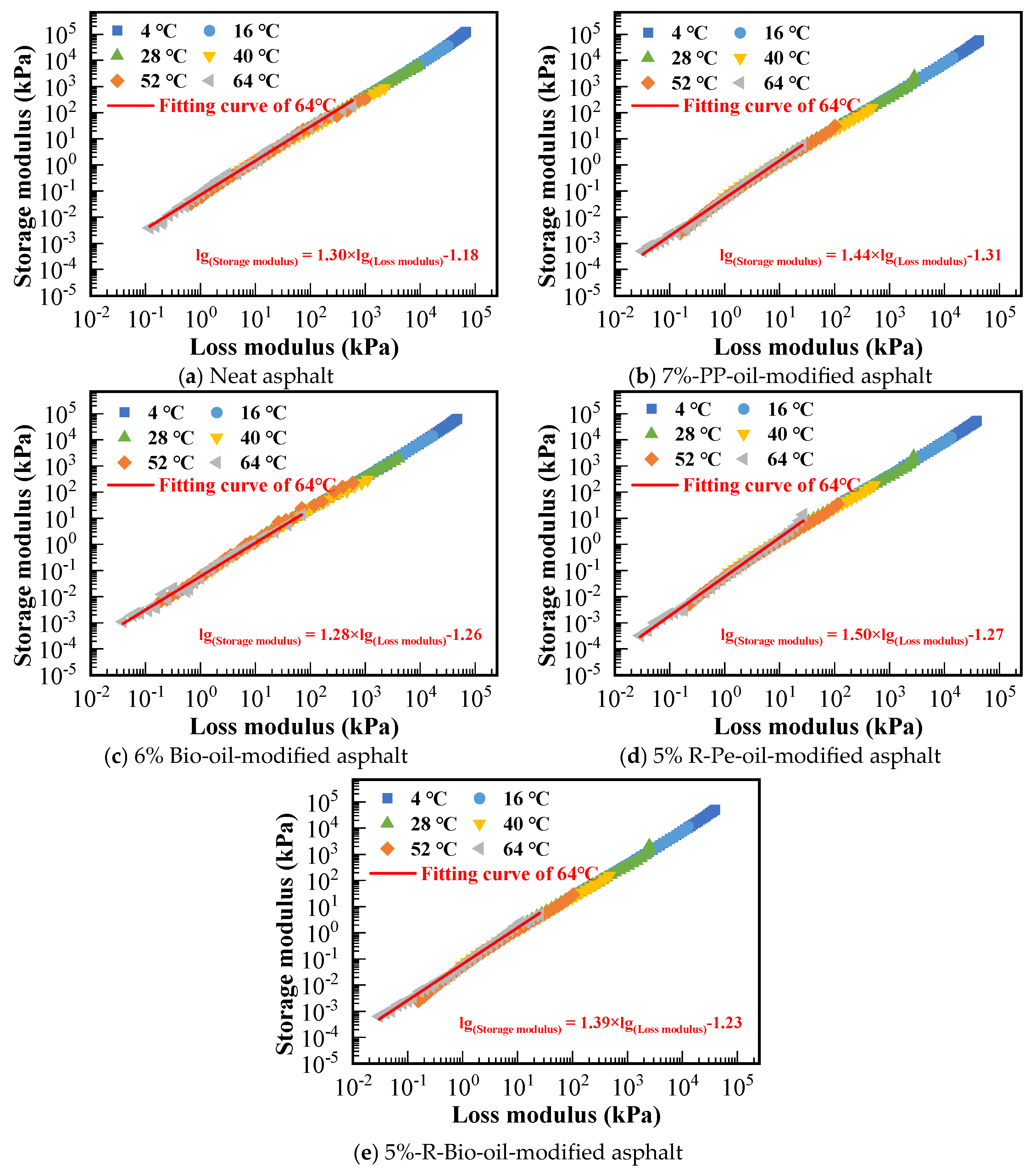
The frequency scanning of oil-modified asphalt was carried out using an Anton Paar Physica MCR301 rheometer (Anton Paar, Graz, Austria) with a frequency of 0.1~100 Hz and temperature of 4~64 °C (12 °C interval). The Han curve is proposed for the homogeneous polymer based on the viscoelastic theory of a homogeneous polymer [37]. The Han curve for a homogeneous polymer has non-temperature dependence, while the Han curve for a multiphase polymer has temperature dependence. According to previous studies [38,39], the Han curve is obtained from the logarithmic storage modulus and logarithmic loss modulus of the frequency scanning test, and its slope is fitted by the data in the low-frequency region. To ensure the reliability of the test, two parallel tests were conducted on each sample (with the error between the two results being less than 5%), and the average of the two test results was taken. Based on a previous study, the Han curve of compatible system is characterized by two features, the Han curves at different temperature overlap and the slope of the Han curve is around 2 [37].

2.3.2. Storage Stability Test

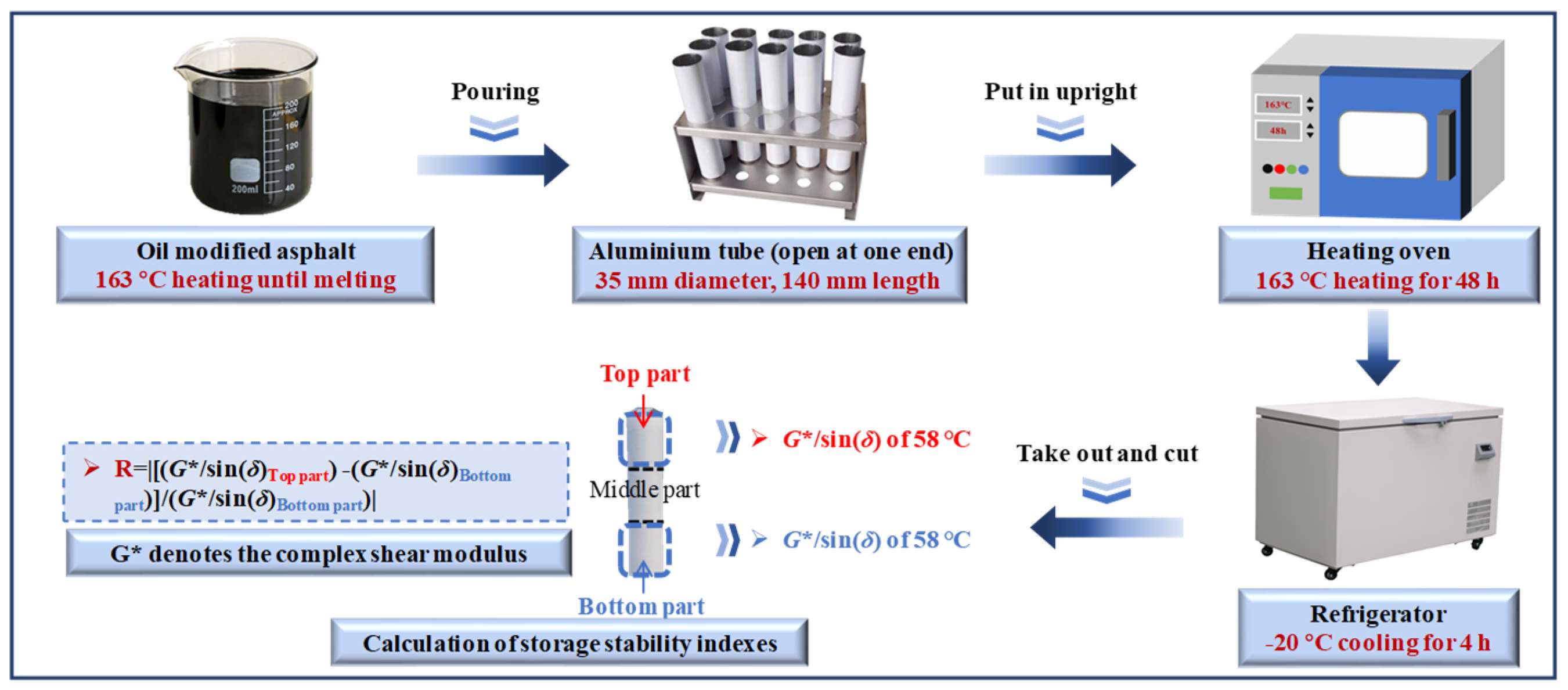
It has been indicated that, compared to the softening point, employing the rutting factor could also effectively evaluate the storage stability of modified asphalt, thereby better reflecting the compatibility between the modifier and the base asphalt [40]. Based on the segregation test method of specification (JTG E20-2011) and the previous literature [40,41], the storage stability of oil-modified asphalt in this study was evaluated using the test procedure in Figure 1. For each sample, three parallel tests were conducted, with the results being the average of the three trials. The error between different parallel test results was less than 5%. In this case, the dynamic shear rheometer was used to test the rutting factor of oil-modified asphalt in the top and bottom parts of the aluminum tube at 58 °C. Subsequently, the difference ratio (R) between the rutting factor of the top and bottom oil-modified asphalt was calculated according to Equation (1). When the difference ratio between the rutting factor of the top and bottom oil-modified asphalt is less than 20%, the oil-modified asphalt shows better storage stability [42].
R = G * / sin δ t o p G * / sin δ b o t t o m G * / sin δ b o t t o m
where R denotes the difference ratio of the rutting factor between the top and bottom sections of each sample. G*/sinδtop represents the rutting factor of the top section of the sample. G*/sinδbottom denotes the rutting factor of the bottom section of the sample.

2.3.3. Boiling Test

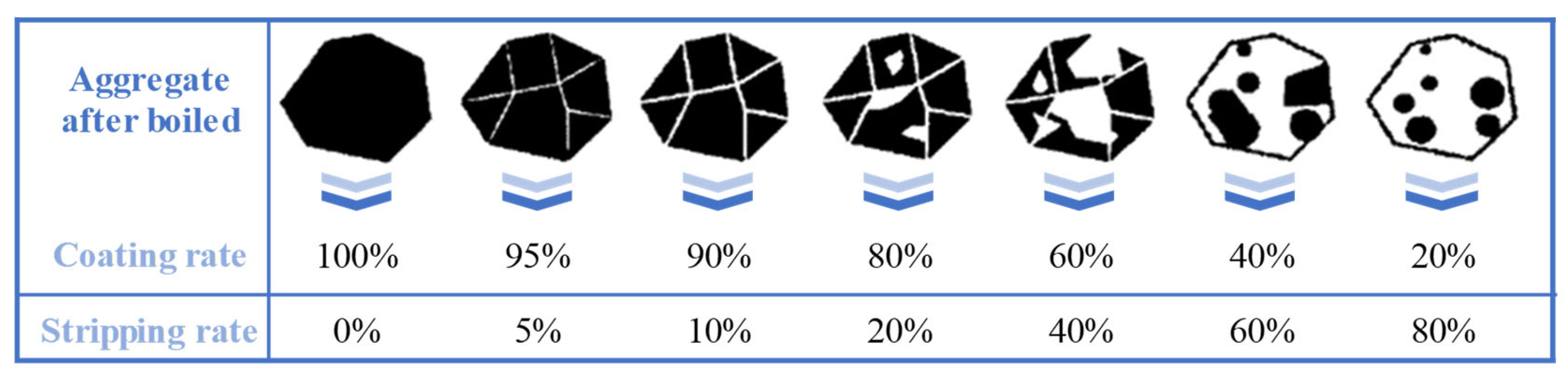
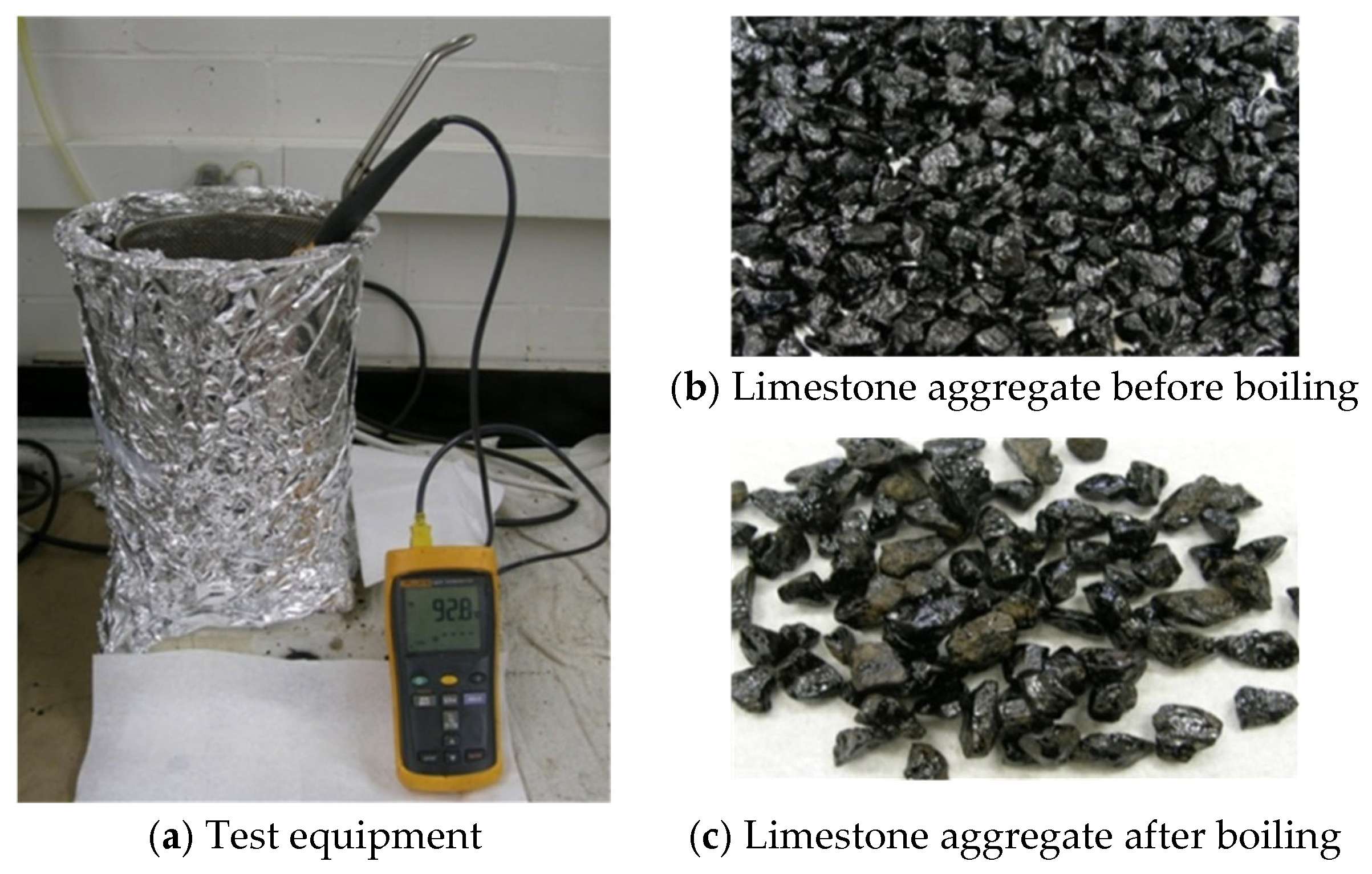
According to the standard boiling test method [43], 1000 g of granite and limestone aggregates with a particle size of 13.2~19.0 mm were weighed from each of the washed and dried aggregates, and heated in the oven at 145 °C for 3 h. The aggregates were mixed using 30 g of asphalt. The aggregates with fully wrapped asphalt were cured in the oven at 145 °C for 2 h. After the cured specimens cooled naturally to ambient temperature, two parallel samples (each with a mass of about 200 g) were taken from the specimens based on the quartering method. Subsequently, each sample was heated in the oven at 90 °C for 1 h. After cooling, they were immersed in slightly boiling water (around 65 °C) for 10 min. Finally, the qualitative evaluation of oil-modified asphalt and aggregate adhesion was carried out according to the asphalt cohesion and stripping rate criteria specified in the European Standard EN 12697-11 methodology [44], as shown in Figure 2. The test equipment for the boiling method and the limestone aggregate before and after the test is shown in Figure 3. To ensure the reliability of the tests, parallel trials with an error margin of less than 5% were conducted for each sample, with results averaged from four parallel trials. Furthermore, to guarantee the rigorous and reliability of the quantitative evaluation, this study employed SPSS 29 software to perform a one-way analysis of variance (ANOVA) to assess the statistical significance of adhesion performance differences among various oil-modified asphalts.

2.3.4. Digital Image Processing (DIP) Technology Test

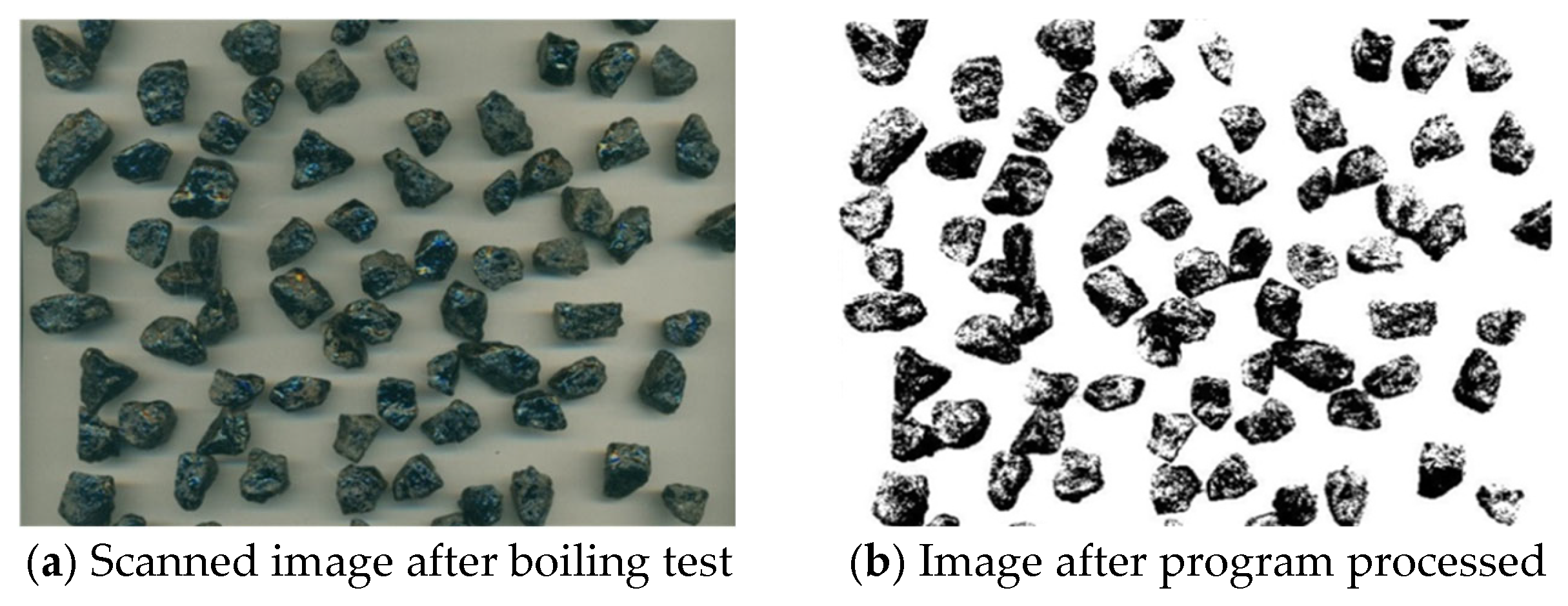
When evaluating the asphalt–aggregate adhesion using the boiling method, the asphalt stripping rate is frequently evaluated by visual observation, and although the method is simple, it is not only time consuming but also affected by subjective factors as each aggregate needs to be identified individually [45]. In order to properly evaluate the oil-modified asphalt and aggregate adhesion from a quantitative perspective, the boiled granite and limestone aggregates were analyzed using digital image processing technology and three parallel tests were conducted for each aggregate type. To ensure data accuracy, the results represent the average of three parallel trials. Meanwhile, the surface color of boiled granite and limestone aggregates was classified using a nonlinear classification model based on the support vector machine theory to accurately identify the asphalt wrapped around the aggregate surface. Furthermore, to accurately obtain the Red, Green, and Blue (RGB) values of the asphalt-coated and aggregate exposed surface, this study identified the RGB values of the foreground and background by acquiring a finite number of corresponding feature points. Subsequently, the image was generalized based on the support vector machine. The aggregate image before and after image processing is shown in Figure 4.
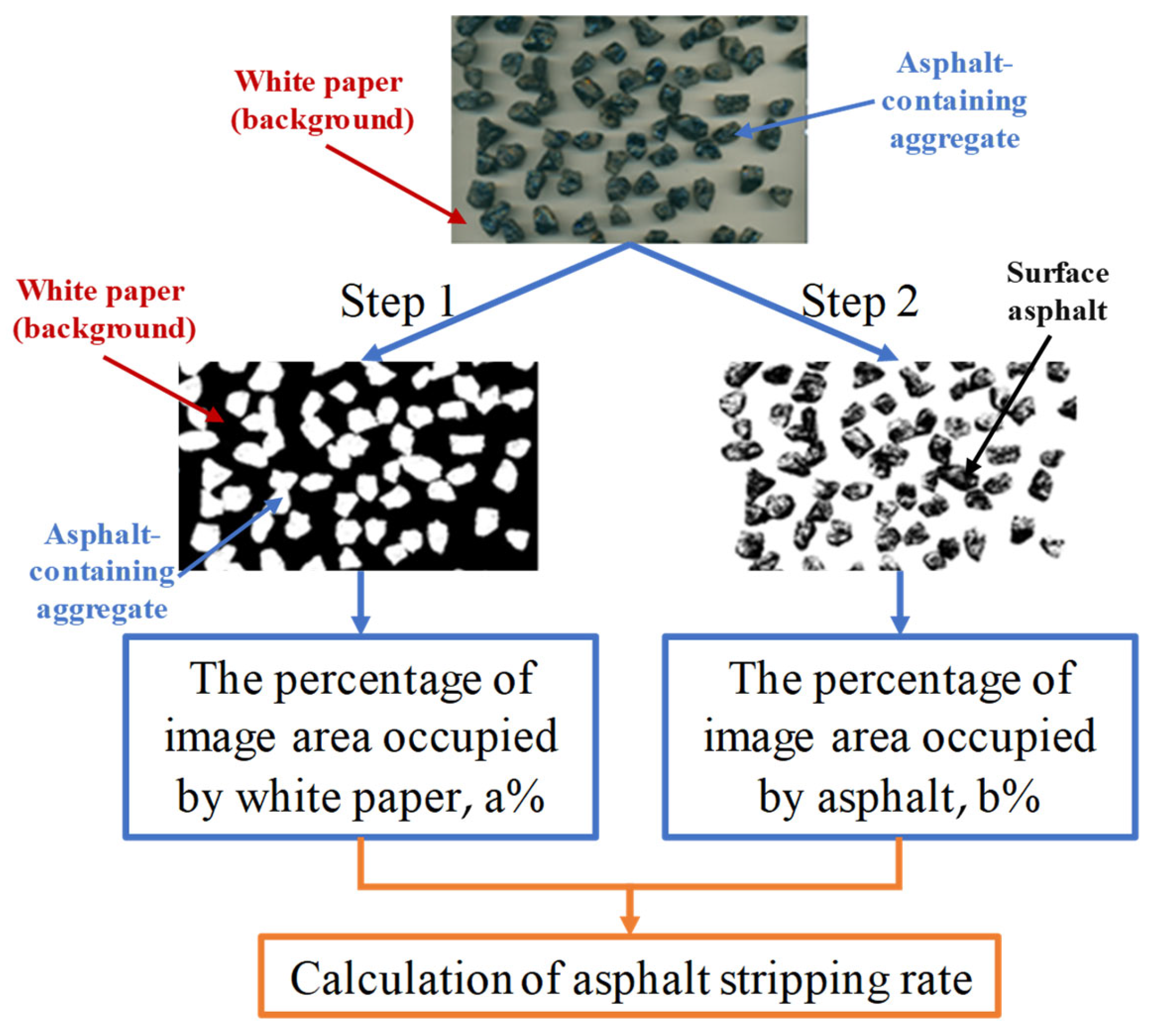
To avoid scanning errors caused by the stacking of aggregates or large gaps between aggregates, the boiled aggregates were randomly placed on the scanning platform, as shown in Figure 4a. In order to improve the accuracy of the post-processing procedure, a piece of white paper was laid on the top of the aggregates in this study. The calculation process of the asphalt stripping rate on the aggregate surface based on digital image processing technology is shown in Figure 5. In addition, the calculation of the asphalt stripping rate (SR) is shown in Equation (2).
S R = 100 a b 100 a × 100 %
where a refers the percentage of image area occupied by white paper (%). b refers the percentage of image area occupied by asphalt (%).

2.3.5. Fourier Transform Infrared Spectroscopy (FTIR) Test

Fourier transform infrared spectroscopy (Nicolet IS5 (Thermo Fisher Scientific, Shanghai, China)) is used to obtain the infrared spectra of oil-modified asphalt. The wavenumber scan range is from 500 to 4000 cm−1 with a resolution of 4 cm−1 and 32 scans. Each sample was tested three times in parallel to ensure that the relative standard deviation was within 5% to satisfy the technical requirement of the standard [46]. The results are the average of the three results. The interpretation of the measurement results adopted a semi-quantitative infrared analysis [47].

2.3.6. Road Performance Test

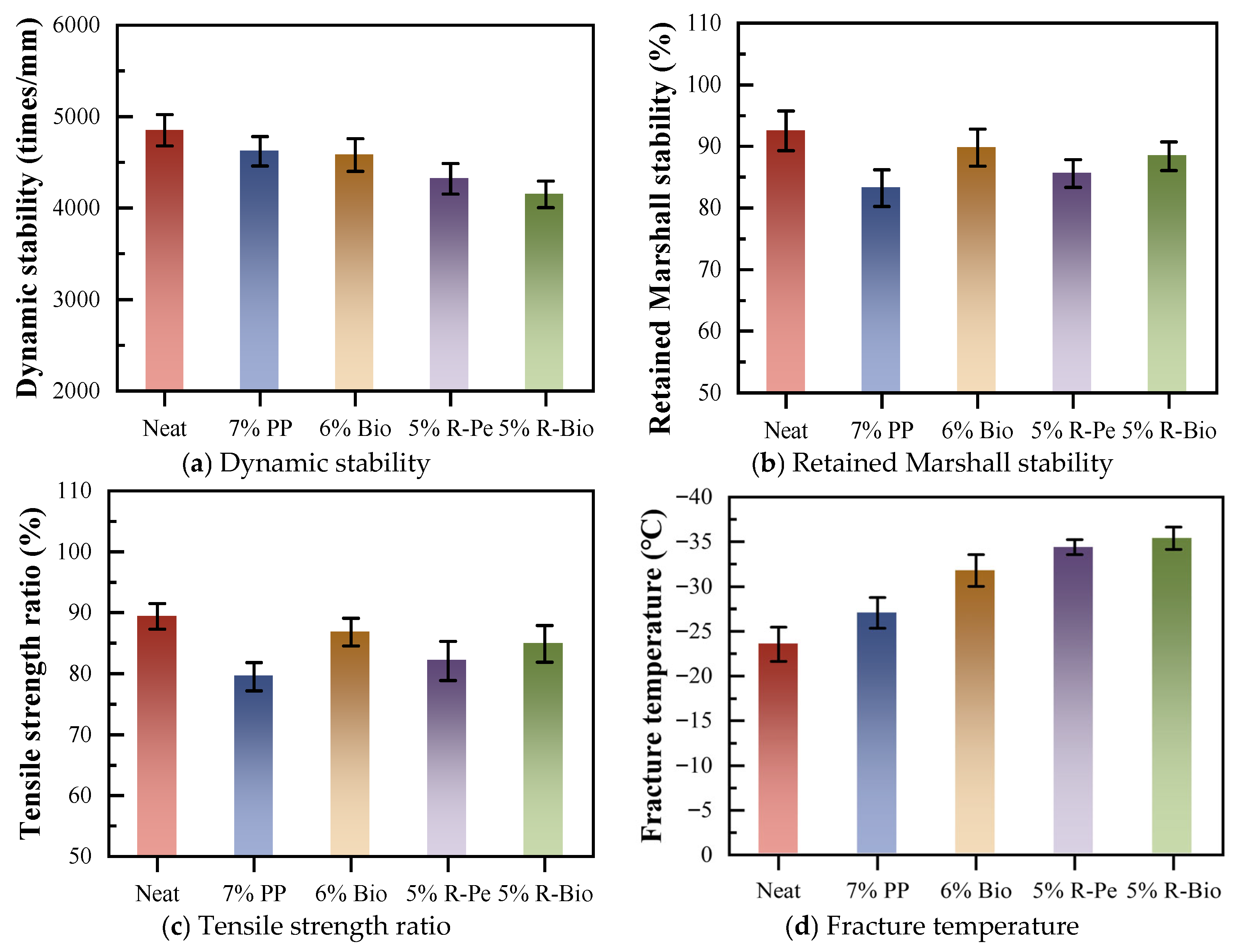
This study employed the 60 °C rutting test in accordance with specification [41] to evaluate the high-temperature deformation resistance of oil-modified asphalt mixtures. To assess the impact of different oil-modified asphalts on the moisture damage performance of mixtures, water damage was also evaluated using the water immersion Marshall test and freeze–thaw splitting test, both conducted following the specification [41]. According to the specification [41], for the rutting test, the result for each sample should be the average of three parallel tests, with the coefficient of variation for the three test results being less than 20%. According to the specification [41], for the water immersion Marshall test and freeze–thaw splitting test, three parallel specimens should be prepared for each sample, and the difference between each result and the average should be less than 1.15 times the standard deviation.
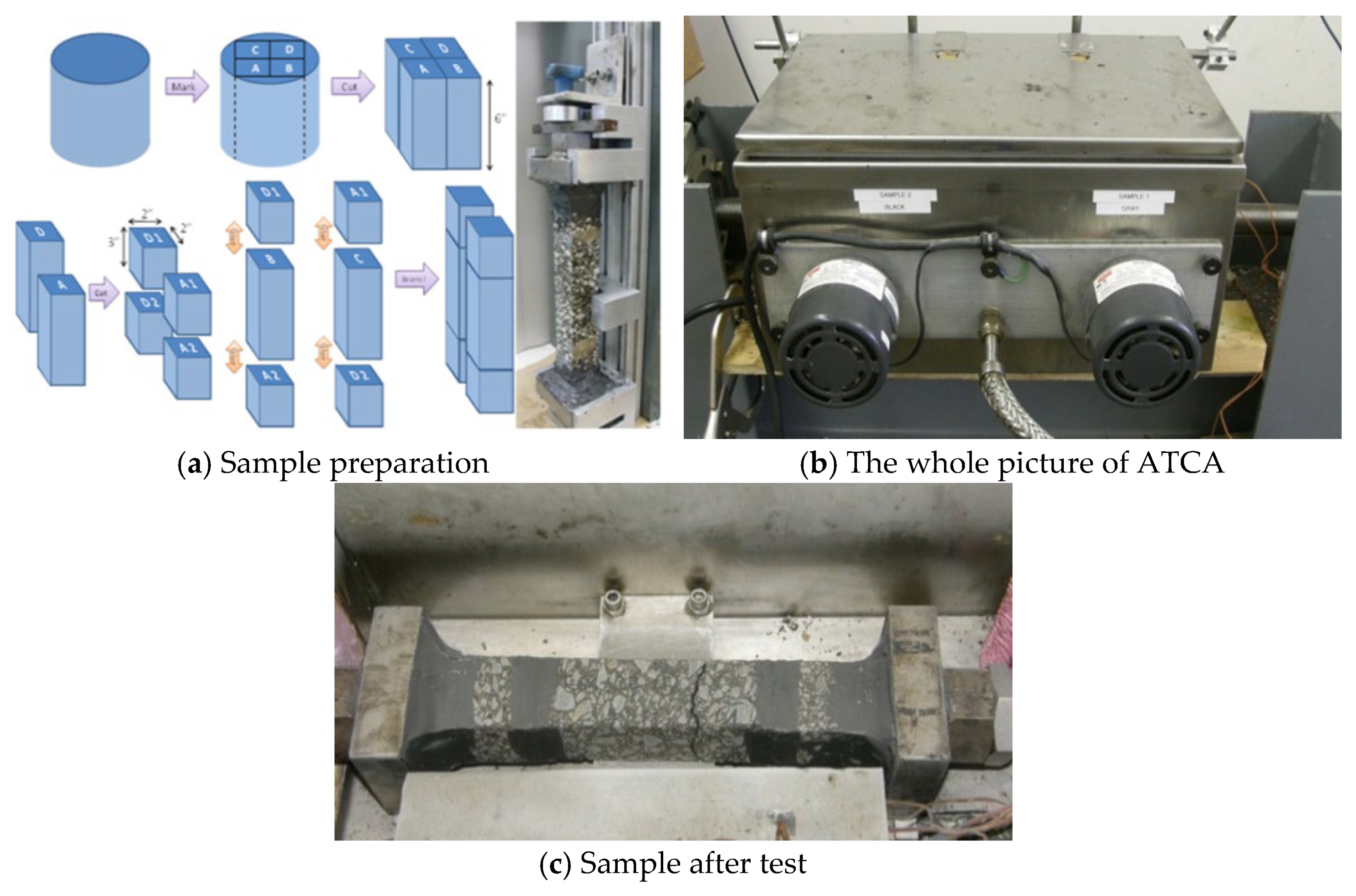
Furthermore, the thermal stress restrained specimen test (TSRST), as mentioned by SHRP, is selected to evaluate the low-temperature anti-cracking performance of the asphalt mixture [48,49]. The TSRST can simulate the actual material properties with the temperature changes. There are four evaluation indexes of fracture temperature, fracture strength, transition temperature and the slope of curve, which could be obtained from the TSRST [48]. According to the previous study [24], the fracture temperature was used as the index for evaluating the low-temperature performance of the oil-modified asphalt mixture. The TSRST is carried out using the equipment developed by the Harbin Institute of Technology. This equipment consists of a temperature control cabinet (−60 °C to +20 °C with 0.5 °C accuracy). The asphalt thermal cracking analyzer (ATCA) was used to conduct the TSRST on an oil-modified asphalt mixture as shown in Figure 6. The TSRST was done on small beams of the dimension 220 mm × 35 mm × 35 mm. The environment chamber controlled the temperature by liquid nitrogen, the initial temperature of the test is 30 °C, and the cooling rate is 1 °C/min. To ensure the reliability of the results, three parallel tests were conducted for each sample, with the results being the average of the three tests.

2.4. Summary of Experimental Design

To systematically evaluate the influence of bio-based and petroleum-based oils on asphalt performance, the experimental program was structured into two primary phases: binder-level characterization and mixture-level performance verification. The specific test methods and evaluation indices are summarized in Table 4.

3. Results and Discussion

3.1. Compatibility and Storage Stability of Oil-Modified Asphalt

3.1.1. Compatibility

To validate the applicability of the temperature–time equivalence principle and assess the structural homogeneity of different oil-modified asphalts, the relationship between the storage modulus and loss modulus was analyzed in a double-logarithmic coordinate system. According to prior research [38,39], if data points collected at different temperatures form a continuous and smooth curve, the asphalt is regarded as a rheologically simple fluid with good compatibility. The Han curves of base asphalt and oil-modified asphalt at different temperature are shown in Figure 7. From Figure 7, it can be seen that the Han curves of oil-modified asphalt at different temperatures overlap, which indicates that there is no temperature dependence in the Han curves of oil-modified asphalt. The slope of the Han curve for oil-modified asphalt is expressed as the slope of the Han curve at 64 °C. From Figure 7a, the Han curve slope of base asphalt is 1.3, and this value is smaller than the theoretical value of the Han curve slope, which is attributed to the dispersion of asphalt molecules, and the asphalt could only be approximately regarded as a homogeneous polymer [37]. The Han curve slopes of different oil-modified asphalts are very similar to that of base asphalt, which indicates that different oils did not alter the phase structure of asphalt, and the steady state of different oil-modified asphalts is comparable to that of base asphalt. Therefore, oil-modified asphalt has better compatibility under the temperature and frequency ranges tested.

3.1.2. Storage Stability

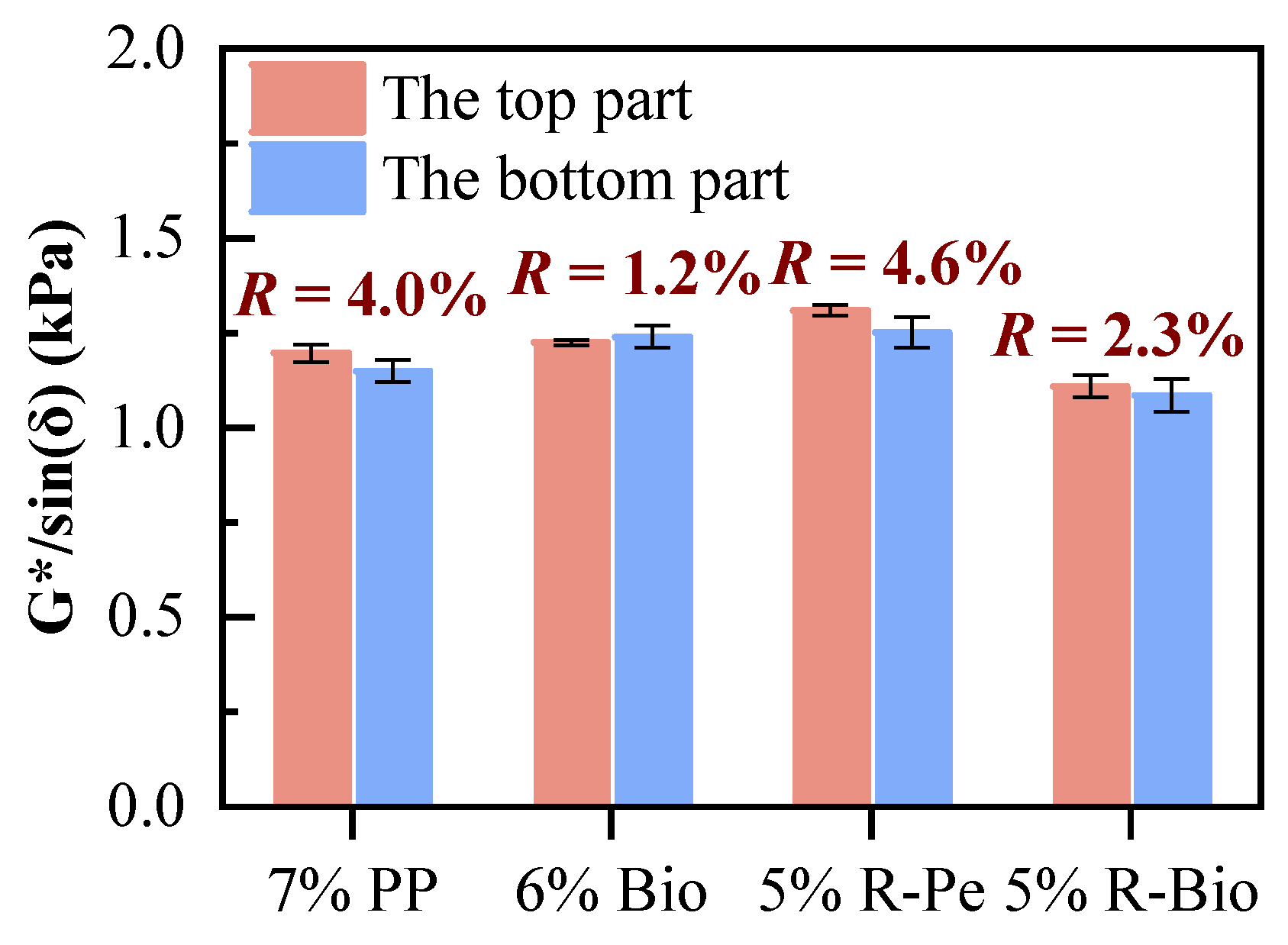
The 58 °C rutting factors of the top and bottom oil-modified asphalts of different aluminum tube specimens are shown in Figure 8. Notably, the R value denotes the ratio characterizing the difference in rutting factors between the top and bottom sections of the sample, calculated by Equation (1). From Figure 8, the difference ratio between the top and bottom rutting factors of each oil-modified asphalt aluminum tube specimen is less than 5%, which indicates that each oil-modified asphalt prepared in this study has good storage stability.

3.2. Adhesion Between Oil-Modified Asphalt and Aggregate

3.2.1. Boiling Method

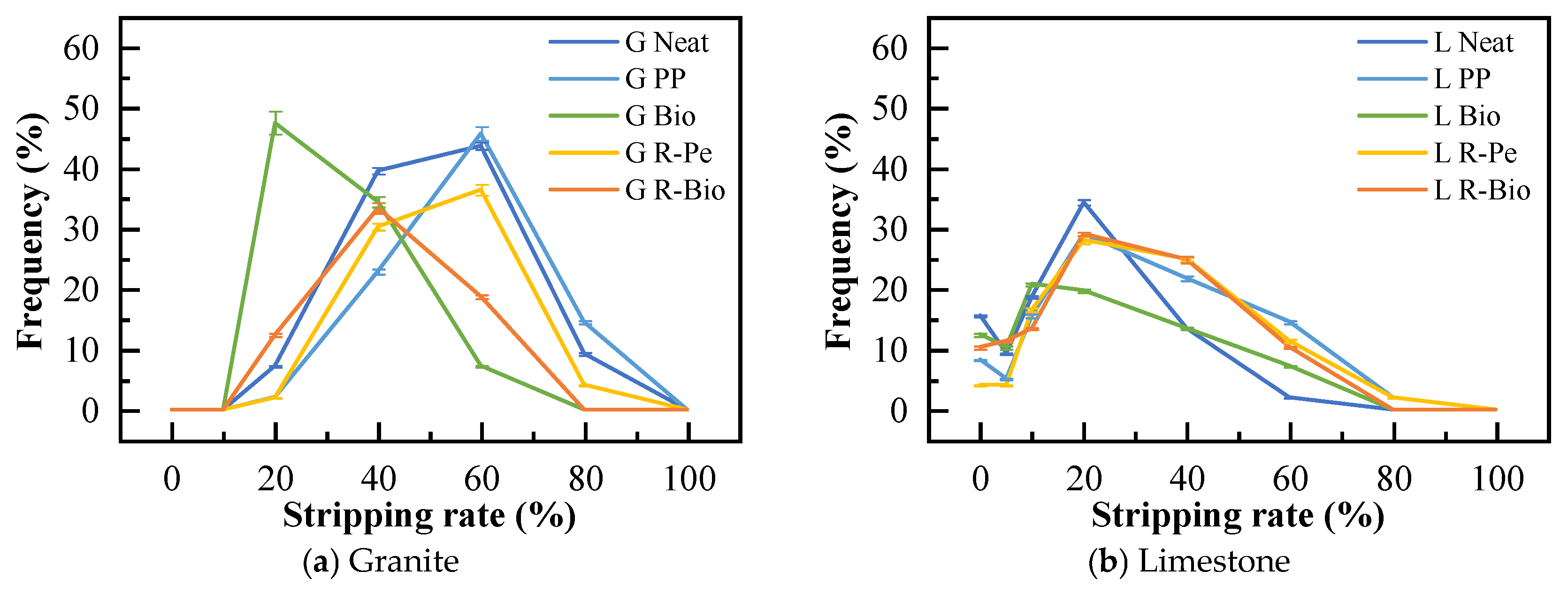
According to the asphalt stripping rate criterion in Figure 2, the frequency of granite and limestone aggregates under different stripping rates is calculated, with the results shown in Figure 9. From Figure 9, it is clear that the observed frequency of granite and limestone aggregates with the increase in the asphalt stripping rate is greater in the middle and less at the two sides. The peak frequency of granite aggregate occurs at around 30%–60% of asphalt stripping while limestone aggregate occurs at around 10%–30% of asphalt stripping, which indicates that the oil-modified asphalt shows better adhesion with the limestone aggregate compared to granite aggregate. There are differences in the adhesion degree of the same oil-modified asphalt to granite and limestone aggregates. It is observed from Figure 9a that the granite aggregate occurs with a frequency of 0 when the asphalt stripping rate is less than 10%, which indicates that all oil-modified asphalts show stripping on the granite aggregate surface. From Figure 9b, there are still some limestone aggregates with the surface completely wrapped by oil-modified asphalt after boiling. In addition, it is also seen from Figure 9a that Bio-oil causes the occurrence frequency of the granite aggregate to move towards a smaller asphalt stripping rate compared to other oils, which indicates that Bio-oil significantly improves the adhesion between the base asphalt and granite aggregate, which in turn improves its resistance to moisture damage. From Figure 9b, the effect of different oils on the adhesion between the base asphalt and limestone aggregate is more or less the same.
To further reveal the effect of different oils on the adhesion between the base asphalt and aggregate, a weighted mean of the frequency of aggregate occurrence under different stripping rates was adopted to reflect the asphalt stripping degree, and the weighted mean was defined as the stripping index (SI). The larger the stripping index, the poorer the resistance of asphalt to stripping. The stripping index is calculated in Equation (3).
S I = N i M i M i × 100 %
where Ni is the frequency value of occurrence of aggregates at the Mi stripping rate.
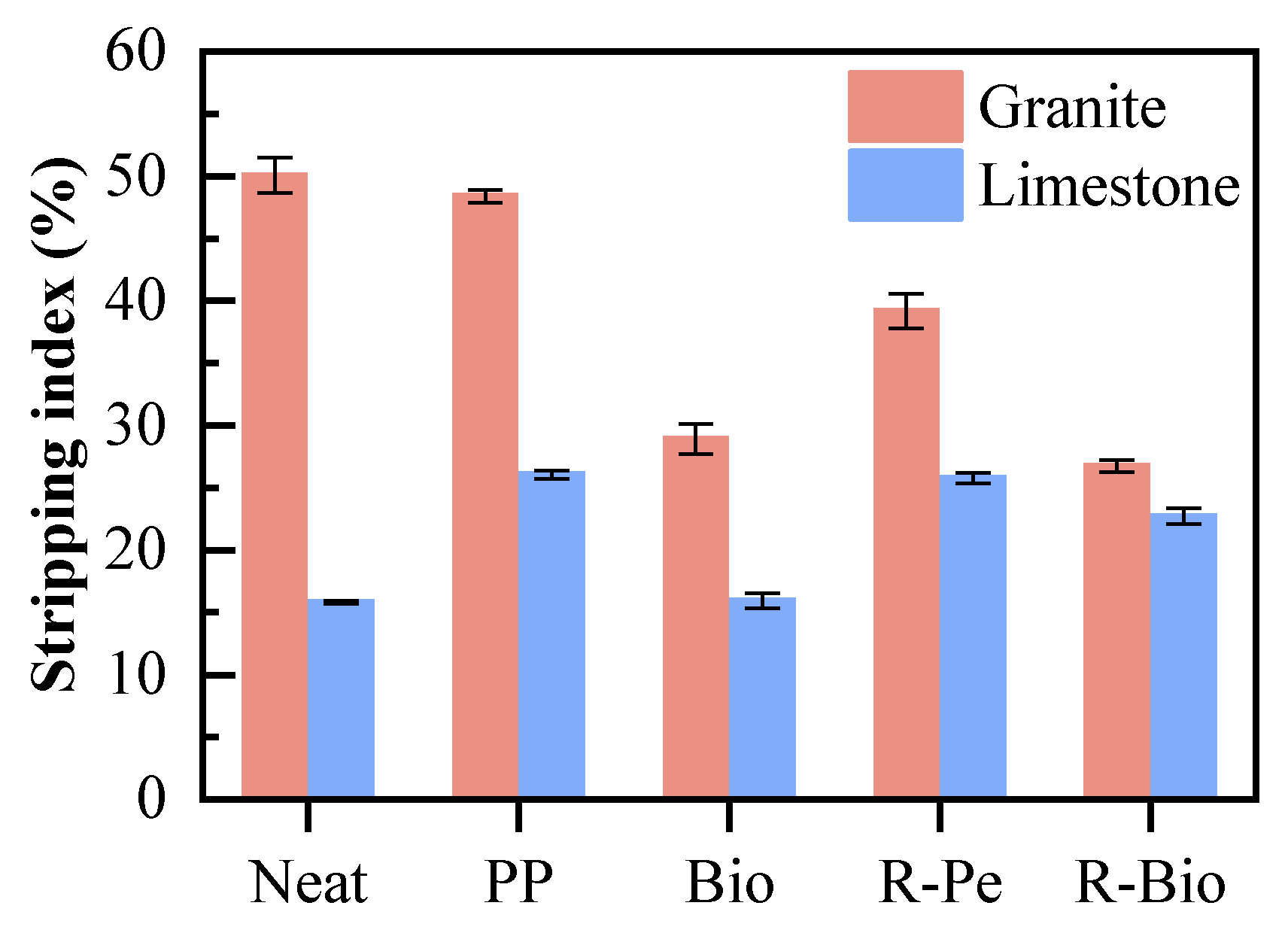
Figure 10 shows the stripping index of different oil-modified asphalts with aggregates. From Figure 10, the stripping index of limestone aggregate with base asphalt and oil-modified asphalt is less compared to the granite aggregate, which indicates that different oil-modified asphalts have better adhesion with the limestone aggregate. For the granite aggregate, the ordering of the stripping index of different oil-modified asphalts satisfies the following: Neat > 7% PP > 5% R-Pe > 6% Bio > 5% R-Bio. It is observed that the stripping indexes of oil-modified asphalt are smaller than that of base asphalt, which shows that the different oils improve the adhesion between the base asphalt and granite aggregate. For the limestone aggregate, the ordering of the stripping index of different oil-modified asphalts satisfies the following: 7% PP > 5% R-Pe > 5% R-Bio > 6% Bio > Neat. From the ordering, it is clear that the stripping indexes of oil-modified asphalt are larger than that of the base asphalt, which indicates that different oils degraded the adhesion between the base asphalt and limestone aggregate. This phenomenon indicates that the effect of different oils on the adhesion between the base asphalt and aggregate is closely related to the aggregate lithology. In addition, it is an interesting observation from the ordering that both the Bio and R-Bio oils promote the adhesion of base bitumen to granite and limestone aggregates compared to other oils.
To statistically validate the aforementioned observations, a one-way analysis of variance was further conducted in this study, with the results presented in Table 5. For both granite and limestone aggregates, the p-values were less than 0.05, indicating significant differences in adhesion performance between different asphalt types for the same aggregate. Consequently, the adhesion between oil-modified asphalt and aggregates is closely related to both the type of oil modifiers and the lithology of the aggregates.
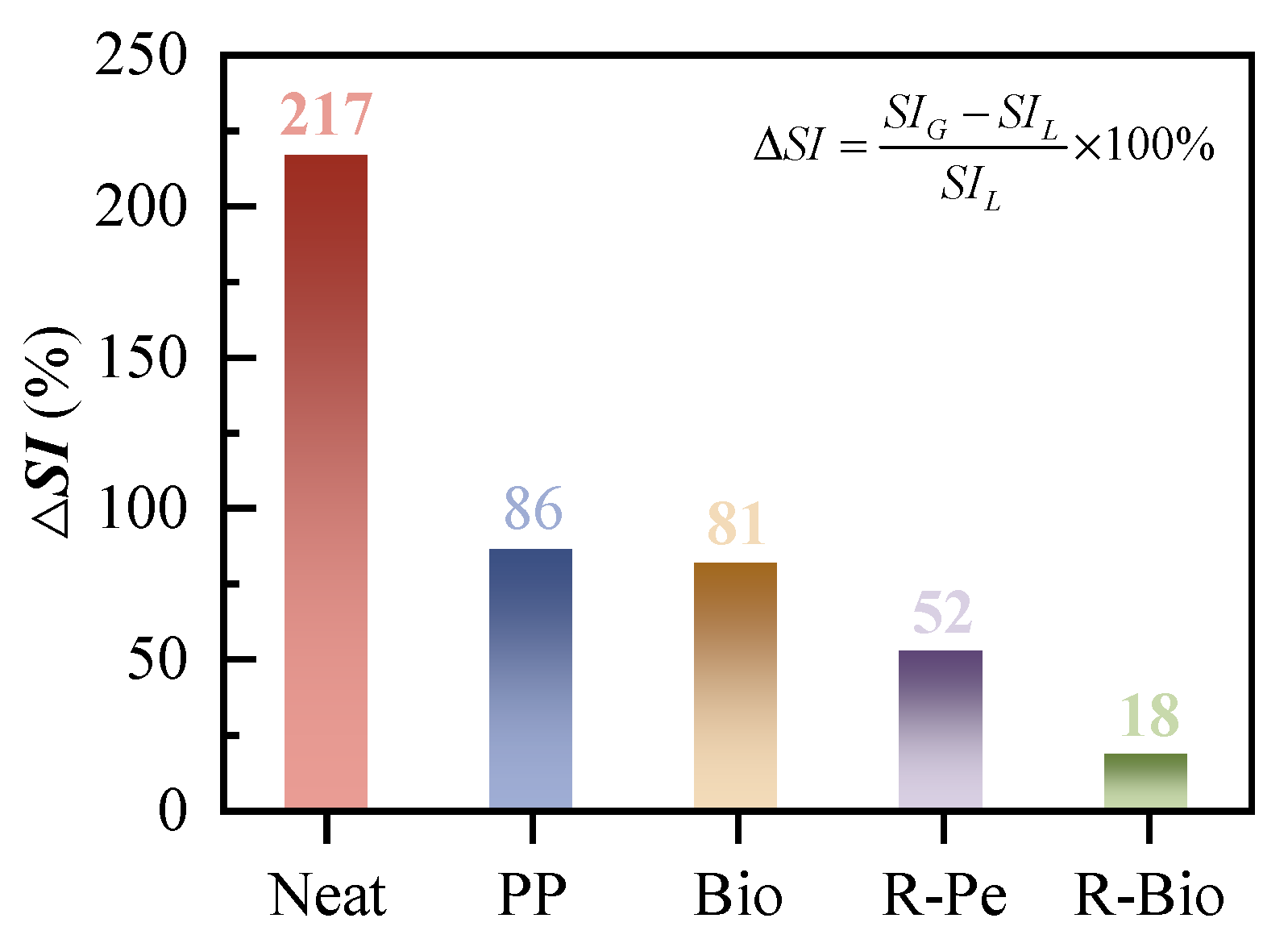
In order to reveal the sensitivity of stripping resistance of different oil-modified asphalts with the change in aggregate lithology, the stripping index change rate of different asphalts was calculated in this study according to Equation (4), and the result is shown in Figure 11.
Δ S I = S I G S I L S I L × 100 %
where S I G is the stripping index between asphalt and the granite aggregate. S I L is the stripping index between asphalt and the limestone aggregate.
From Figure 11, it can be observed that base asphalt has the largest change rate in stripping index of 217%, which indicates that the stripping resistance of base asphalt is the most sensitive to the change in aggregate lithology. Compared with the base asphalt, the different oils could reduce the sensitivity of the base asphalt stripping resistance to aggregate lithology. Among them, R-Bio-oil-modified asphalt shows the smallest change in the stripping index of 18%, which indicates that R-Bio-oil significantly improves the sensitivity of stripping resistance of asphalt to aggregate lithology.

3.2.2. Digital Image Processing Technology

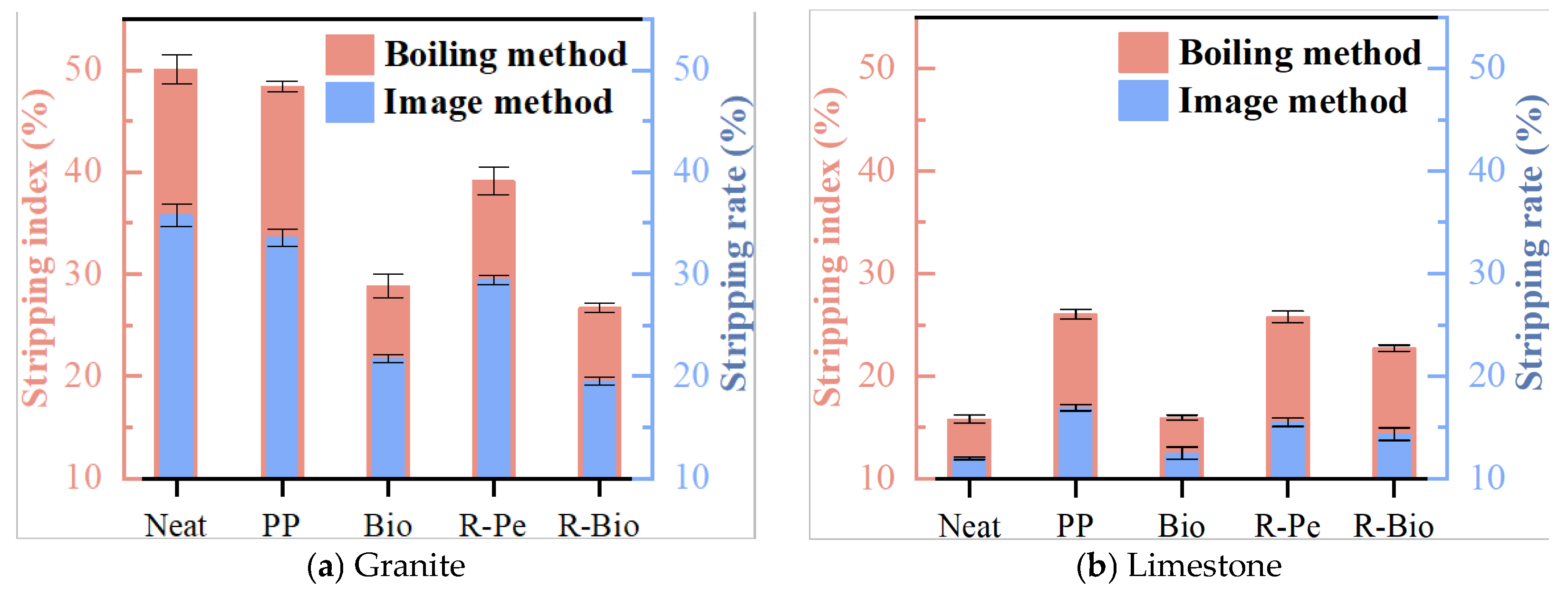
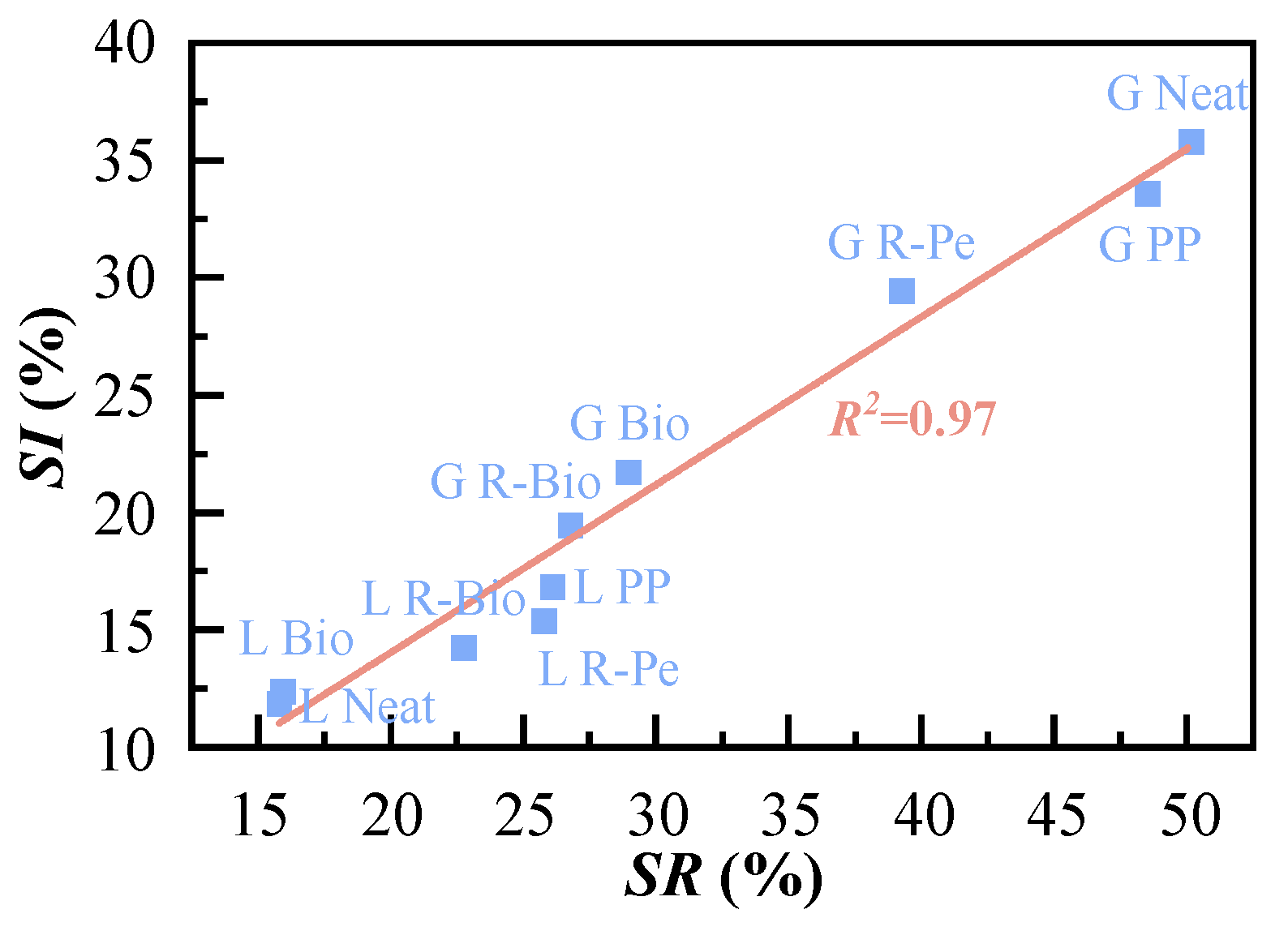
Figure 12 illustrates the asphalt stripping index (SI) obtained by the boiling method and the asphalt stripping rate (SR) obtained by digital image processing technology. From Figure 12, the asphalt stripping rate (SR) is less than the asphalt stripping index (SI) when different oil-modified asphalts interacted with granite and limestone aggregates. The reasons for the difference between the asphalt stripping rate (SR) and asphalt stripping index (SI) can be summarized in two aspects. On the one hand, the asphalt stripping index (SI) obtained based on the boiling method is greatly interfered by human subjective factors. On the other hand, when evaluating asphalt–aggregate adhesion based on digital image processing technology, there are some errors in image scanning and handling, but the errors are traceable and controllable.
To further reveal the correlation between the boiling method and digital image processing technology, the correlation between the asphalt stripping index (SI) and asphalt stripping rate (SR) was analyzed and the result is shown in Figure 13. From Figure 13, there is a great linear correlation between the asphalt stripping index (SI) and asphalt stripping rate (SR) with a correlation coefficient of 0.97, which indicates that there is consistency in evaluating oil-modified-asphalt–aggregate adhesion with the boiling method and digital image processing technology. Crucially, DIP technology visually characterizes fracture properties at the mesoscopic level, in contrast to subjective visual assessments. By identifying specific pixel regions of the exposed aggregate (adhesion failure) and residual asphalt coating (cohesion retention), it provides a quantitative morphology of interfacial fracture. Therefore, considering the efficiency, accuracy and objectivity of the evaluation method, this study recommends the use of digital image processing technology to evaluate the adhesion between asphalt and aggregate.

3.3. Chemical Structure of Oil-Modified Asphalt

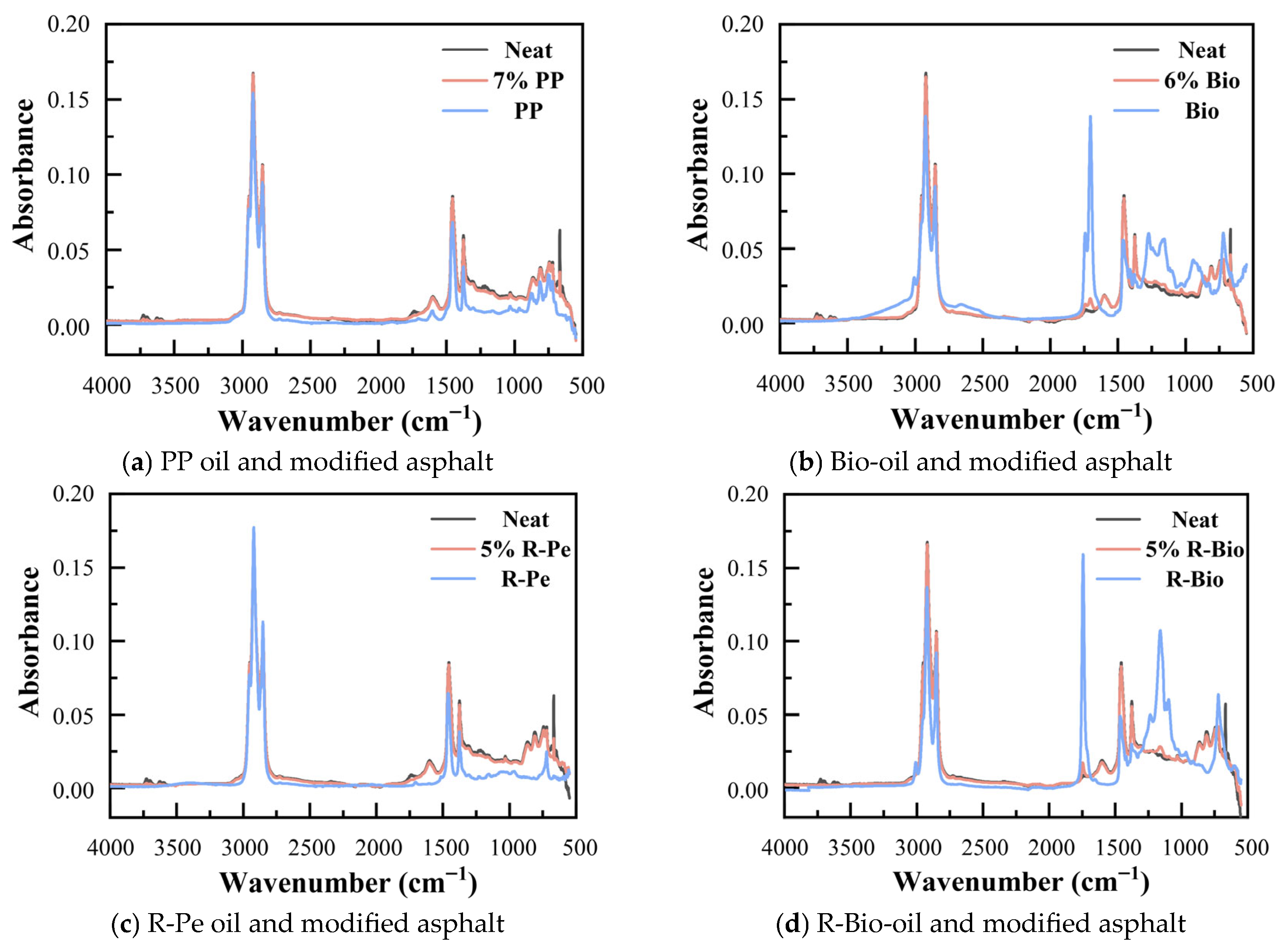
The chemical structure of different oils and modified asphalts is shown in Figure 14. The spectrum presented is the average of three replicate scans. Taking the example of Figure 14a, 7% PP denotes oil-modified asphalt containing 7% PP oil, and PP denotes the oil type. From Figure 14, the spectra of PP and R-Pe oils and their modified asphalt are similar to that of base asphalt, and there are not new wave peaks in the spectra of PP- and R-Pe-oil-modified asphalt compared to base asphalt, which indicates that PP and R-Pe oils do not cause the base asphalt to produce new functional groups. However, the spectra of Bio- and R-Bio-oil-modified asphalt differs significantly from that of base asphalt and shows new wave peaks compared to the base asphalt. Specifically, the Bio and R-Bio oils caused the base asphalt to produce significant new peaks at 3000 cm−1 (aromatic) and 1700 cm−1 (carbonyl). Meanwhile, the location of new wave peaks coincides with the location of wave peaks in the spectra of Bio and R-Bio oils, which indicates that the new wave peaks in the Bio- and R-Bio-oil-modified asphalts are generated due to the introduction of oil. Moreover, it is mentioned in Section 3.2 that the Bio and R-Bio oils promote the adhesion between the base asphalt and aggregate compared to other oils. Therefore, this study deduces that the contribution of Bio- and R-Bio-oils to base asphalt–aggregate adhesion may be related to the new functional groups that Bio and R-Bio oils cause to be produced in base asphalt. This is consistent with the previous literature, which revealed that an increase in the content of carbonyl functional groups contributes to the enhancement of asphalt–aggregate adhesion [50]. From the microscopic perspective, these newly formed chemical bonds fundamentally alter the fracture behavior at the interface. The enhanced chemical interactions resist the complete separation of the binder from the aggregate surface, thereby mitigating adhesive failure.
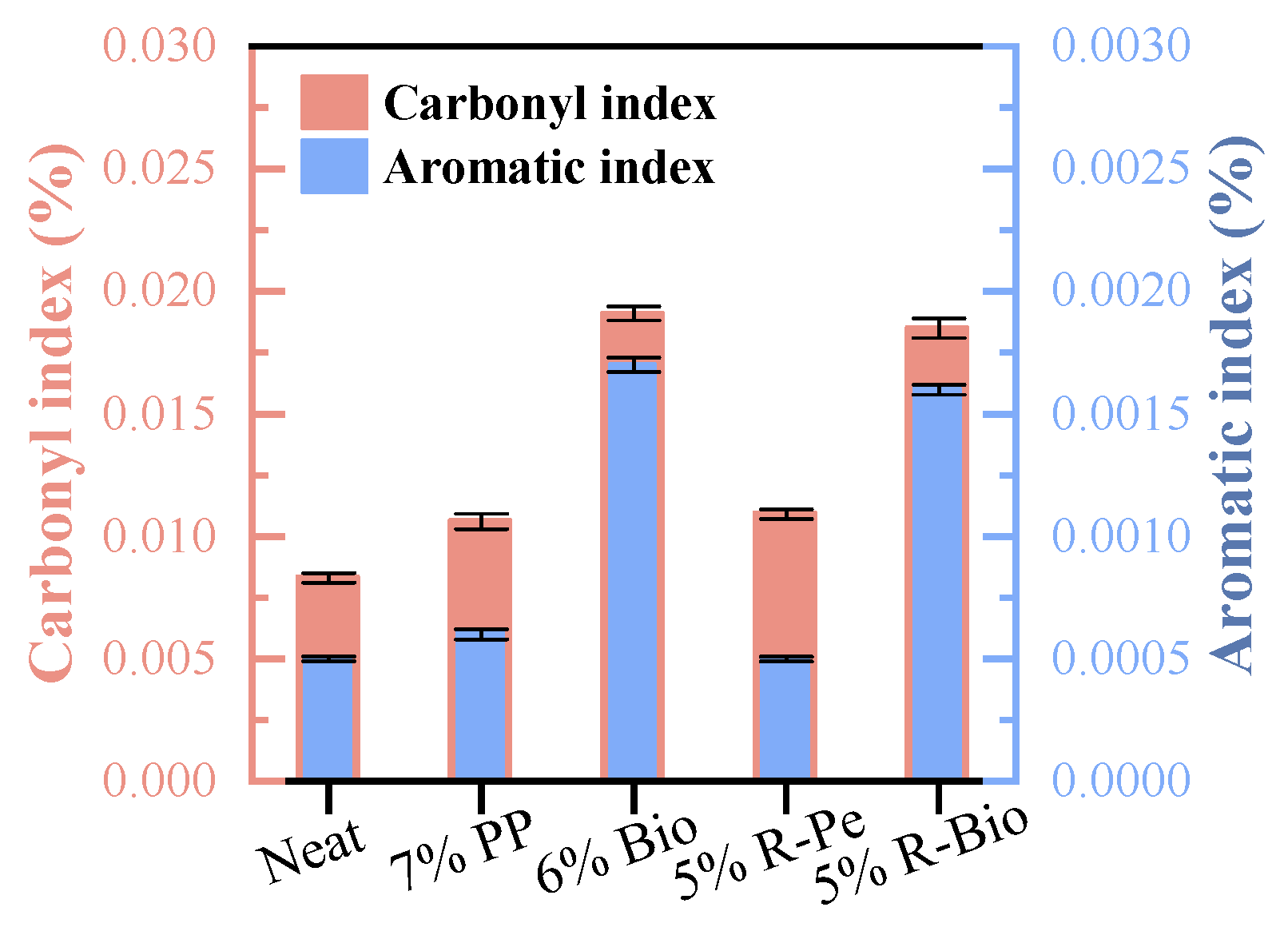
To quantitatively validate the modification effect, the functional group index was calculated by reference to prior research [51], with the results presented in Figure 15. The indexes of PP- and R-Pe-oil-modified asphalts were at the same level as the base asphalt. This indicated that no significant new functional groups were generated in the petroleum-based asphalt. In contrast, the carbonyl indexes of Bio- and R-Bio-oil-modified asphalts showed a marked increase compared to the base asphalt. Furthermore, an aromatic index was observed in the bio-based asphalt. These results confirmed that bio-oils effectively introduced abundant polar carbonyl and aromatic functional groups into the asphalt.

3.4. Road Performance of Asphalt Mixtures

Figure 16 presents the road performance of different oil-modified asphalt mixtures. From Figure 16a, the matrix asphalt mixture exhibited optimal high-temperature rutting resistance. The incorporation of oil-modified asphalt reduced the dynamic stability of asphalt mixtures. However, it is worth noting that the dynamic stability essentially reflects the ability of the material to resist compressive and shear deformation. It should be clarified that the high-temperature rutting resistance of different oil-modified asphalt mixtures still met the specification requirements [41], indicating sufficient compressive bearing capacity remains at elevated temperatures. From Figure 16b,c, the moisture resistance of oil-modified asphalt mixtures was generally lower than that of matrix asphalt mixtures. Regarding compressive behavior, the Marshall stability (MS) value serves as the direct indicator of compressive strength. Although the incorporation of bio-oil resulted in slight reductions in stability values due to decreased viscosity, the mixtures retained sufficient compressive strength to support traffic loads. However, bio-based-oil-modified asphalt demonstrated superior resistance to water damage compared to petroleum-based asphalt. This was attributed to the presence of active functional groups such as carbonyl groups in the bio-oil, which enhanced the adhesion between the asphalt and aggregates. Consequently, this partially compensated for the loss of adhesion caused by oil dilution. From Figure 16d, the fracture temperature of different oil-modified-asphalt mixtures is lower than that of the base asphalt mixture. The TSRST simulates the accumulation of thermal stress until the material exceeds its tensile limit and undergoes macroscopic fracture. Consequently, a lower fracture temperature directly correlates with superior fracture resistance. The results indicate that varying oil contents can enhance the low-temperature crack resistance of the base asphalt mixture. Among them, 5% R-Bio-oil improves the low-temperature cracking resistance of the base asphalt mixture most significantly. This phenomenon also indirectly verifies the accuracy of Section 3.2 in that Bio-oil could significantly improve the adhesion between the base asphalt and aggregate, which in turn improves the low-temperature cracking resistance of the asphalt mixture.

4. Conclusions and Recommendations

This study reveals the effect of bio-based and petroleum-based oils on base asphalt–aggregate adhesion properties and the road performance of mixtures. Several major findings are summarized as follows:
(1) The bio-based and petroleum-based oils show excellent compatibility and storage stability with base asphalt based on the Han curve and storage stability test. The limestone is more adherent to the base asphalt and oil-modified asphalt compared to granite. Compared to base asphalt, oil-modified asphalt adheres more strongly to granite, but its adherence to limestone deteriorates. Oil reduces the sensitivity of the base asphalt stripping resistance to aggregate lithology. There is consistency in the evaluation of oil-modified asphalt–aggregate adhesion using the boiling method and digital image processing technology.
(2) It is found that the contribution of Bio-oil to the asphalt adhesion property originates from the production of aromatic and carbonyl functional groups in base asphalt by Bio-oil, based on FTIR. Different oils could improve the low-temperature cracking resistance of the base asphalt mixture, where Bio-oil has the most obvious effect on the improvement of low-temperature cracking resistance.
(3) This study primarily focused on specific oil types and laboratory-scale adhesion assessments. Although the adhesion mechanism has been elucidated through FTIR and DIP analysis, the lack of direct microscopic observation of the fracture interface remains a limitation. Future research should broaden the diversity of oil modifiers and aggregate lithology to validate the generalization of the findings. Specifically, micro-imaging techniques should be employed to visualize the microstructure of fracture interfaces, providing direct physical evidence for the transition from adhesive failure to cohesive failure. Additionally, the oil-modified-asphalt-mixture test road needs to be paved to verify the improved properties of oil-modified asphalt material through actual road performance.

Author Contributions

W.Z.: Supervision, Validation, Investigation, Writing—review and editing. X.Y.: Supervision, Writing—review and editing. M.L.: Supervision, Conceptualization, Methodology, Visualization. Y.C.: Visualization, Validation, Investigation. L.Z.: Supervision, Methodology, Visualization. H.W.: Conceptualization, Methodology, Data curation, Writing—original draft, Writing—review and editing. All authors have read and agreed to the published version of the manuscript.

Funding

This research was funded by the National Key Research and Development Program of China under Grant No. 2024YFE0216800 and the National Natural Science Foundation of China under Grant No. 52278447. And The APC was funded by the National Key Research and Development Program of China under Grant No. 2024YFE0216800 and the National Natural Science Foundation of China under Grant No. 52278447.

Data Availability Statement

The original contributions presented in this study are included in the article. Further inquiries can be directed to the corresponding authors.

Acknowledgments

This work was supported by the National Key Research and Development Program of China under Grant No. 2024YFE0216800 and the National Natural Science Foundation of China under Grant No. 52278447. The authors gratefully acknowledge their financial support.

Conflicts of Interest

Author Wei Zhang was employed by the Heilongjiang Longjiao Engineering Inspection and Reinforcement Co., Ltd. The remaining authors declare that the research was conducted in the absence of any commercial or financial relationships that could be construed as a potential conflict of interest.

References

  1. Chen, A.; Hu, Z.; Li, M.; Bai, T.; Xie, G.; Zhang, Y.; Li, Y.; Li, C. Investigation on the mechanism and performance of asphalt and its mixture regenerated by waste engine oil. Constr. Build. Mater. 2021, 313, 125411. [Google Scholar] [CrossRef]
  2. Elahi, Z.; Mohd Jakarni, F.; Muniandy, R.; Hassim, S.; Ab Razak, M.S.; Ansari, A.H.; Ben Zair, M.M. Waste cooking oil as a sustainable bio modifier for asphalt modification: A review. Sustainability 2021, 13, 11506. [Google Scholar] [CrossRef]
  3. Tarar, M.A.; Khan, A.H.; Rehman, Z.U.; Abbass, W.; Ahmed, A.; Ali, E.; Sayed, M.M.; Aziz, M. Evaluation of resilience parameters of soybean Oil-modified and unmodified warm-Mix asphalts—A Way forward towards sustainable pavements. Sustainability 2022, 14, 8832. [Google Scholar] [CrossRef]
  4. Jain, S.; Chandrappa, A.K. Critical review on waste cooking oil rejuvenation in asphalt mixture with high recycled asphalt. Environ. Sci. Pollut. Res. 2023, 30, 77981–78003. [Google Scholar] [CrossRef]
  5. Jameel, M.S.; Khan, A.H.; ur Rehman, Z.; Aziz, M.; Tabassum, S.; Mohamed, A. Evaluation of Asphalt Mixes Performance Characteristic With Mustard Oil as a Rejuvenator. Case Stud. Constr. Mater. 2024, 20, e02951. [Google Scholar] [CrossRef]
  6. Xu, J.; Chen, H.; Wen, Y.; Xue, B.; Li, R.; Pei, J. Aging property of oil recycled asphalt binders with reclaimed asphalt materials. J. Mater. Civ. Eng. 2021, 33, 04021246. [Google Scholar] [CrossRef]
  7. Yan, K.; Li, Y.; Long, Z.; You, L.; Wang, M.; Zhang, M.; Diab, A. Mechanical behaviors of asphalt mixtures modified with European rock bitumen and waste cooking oil. Constr. Build. Mater. 2022, 319, 125909. [Google Scholar] [CrossRef]
  8. Li, H.; Feng, Z.; Ahmed, A.T.; Yombah, M.; Cui, C.; Zhao, G.; Guo, P.; Sheng, Y. Repurposing waste oils into cleaner aged asphalt pavement materials: A critical review. J. Clean. Prod. 2022, 334, 130230. [Google Scholar] [CrossRef]
  9. Xu, J.Y.; Ma, B.; Mao, W.J.; Si, W.; Wang, X. Review of interfacial adhesion between asphalt and aggregate based on molecular dynamics. Constr. Build. Mater. 2023, 362, 129642. [Google Scholar] [CrossRef]
  10. Yu, J.; Zou, Y.; Zhang, Y.; Yu, H.; Zou, G. Adhesion Characteristics of Graphene-Modified Asphalt Using Surface-Free Energy Method. J. Mater. Civ. Eng. 2023, 35, 04023182. [Google Scholar] [CrossRef]
  11. Zou, Y.; Gao, Y.; Chen, A.; Wu, S.; Li, Y.; Xu, H.; Wang, H.; Yang, Y.; Amirkhanian, S. Adhesion failure mechanism of asphalt-aggregate interface under an extreme saline environment: A molecular dynamics study. Appl. Surf. Sci. 2024, 645, 158851. [Google Scholar] [CrossRef]
  12. Wu, H.; Ji, X.; Song, W.; Deng, Z.; Zhan, Y.; Zou, X.; Li, Q.; He, F. Multi-scale analysis on fracture behaviors of asphalt mixture considering moisture damage. Constr. Build. Mater. 2024, 416, 135234. [Google Scholar] [CrossRef]
  13. Jiang, Y.; Chen, X.; Xu, T. Development of sustainable compound bio-oil rejuvenator and its rejuvenation mechanism on long-term aged asphalt. J. Clean. Prod. 2023, 429, 139440. [Google Scholar] [CrossRef]
  14. Luo, X.; Muttaqin, F.; Zhang, Y. Investigating non-petroleum-based biodegradable polymers as eco-friendly and sustainable materials in asphalt modification: A review on natural rubbers and natural oils. J. Clean. Prod. 2024, 436, 140483. [Google Scholar] [CrossRef]
  15. Gong, M.; Yang, J.; Zhang, J.; Zhu, H.; Tong, T. Physical–chemical properties of aged asphalt rejuvenated by bio-oil derived from biodiesel residue. Constr. Build. Mater. 2016, 105, 35–45. [Google Scholar] [CrossRef]
  16. Yan, S.; Dong, Q.; Chen, X.; Zhou, C.; Dong, S.; Gu, X. Application of waste oil in asphalt rejuvenation and modification: A comprehensive review. Constr. Build. Mater. 2022, 340, 127784. [Google Scholar] [CrossRef]
  17. Zheng, X.; Liu, Z.; Fu, T.; Easa, S.; Liu, W.; Qiu, R. Performance enhancement of asphalt mixtures enabled by bamboo fibers and acrylated epoxidized soybean oil. ACS Sustain. Chem. Eng. 2023, 11, 5867–5875. [Google Scholar] [CrossRef]
  18. Jameel, M.S.; Khan, A.H.; ur Rehman, Z.; Tarar, M.A. Evaluation of performance characteristics of asphalt mixtures modified with renewable oils and reclaimed asphalt pavement (RAP). Constr. Build. Mater. 2023, 375, 130925. [Google Scholar] [CrossRef]
  19. Xu, B.; Ding, R.; Yang, Z.; Sun, Y.; Zhang, J.; Lu, K.; Cao, D.; Gao, A. Investigation on performance of mineral-oil-based rejuvenating agent for aged high viscosity modified asphalt of porous asphalt pavement. J. Clean. Prod. 2023, 395, 136285. [Google Scholar] [CrossRef]
  20. Elnaml, I.; Mohammad, L.N.; Baumgardner, G.L.; Liu, J.; Cooper, S., III; Cooper, S., Jr. Influence of Petroleum-Based and Bio-Derived Recycling Agents on High-RAP Asphalt Mixtures Performance. Buildings 2024, 14, 567. [Google Scholar] [CrossRef]
  21. Hill, B.; Oldham, D.; Behnia, B.; Fini, E.H.; Buttlar, W.G.; Reis, H. Evaluation of low temperature viscoelastic properties and fracture behavior of bio-asphalt mixtures. Int. J. Pavement Eng. 2018, 19, 362–369. [Google Scholar] [CrossRef]
  22. You, Z.; Mills-Beale, J.; Fini, E.; Goh, S.W.; Colbert, B. Evaluation of low-temperature binder properties of warm-mix asphalt, extracted and recovered RAP and RAS, and bioasphalt. J. Mater. Civ. Eng. 2011, 23, 1569–1574. [Google Scholar] [CrossRef]
  23. Wen, H.; Bhusal, S.; Wen, B. Laboratory evaluation of waste cooking oil-based bioasphalt as an alternative binder for hot mix asphalt. J. Mater. Civ. Eng. 2013, 25, 1432–1437. [Google Scholar] [CrossRef]
  24. Zhang, L.; Hussain, B.; Tan, Y. Effect of bio-based and refined waste oil modifiers on low temperature performance of asphalt binders. Constr. Build. Mater. 2015, 86, 95–100. [Google Scholar] [CrossRef]
  25. Sun, H.G.; Hu, Y.; Wang, H.; Xing, Z. Properties and low-temperature performance of biomass heavy oil used in road applications. Case Stud. Constr. Mater. 2024, 20, e02872. [Google Scholar] [CrossRef]
  26. He, L.; Tao, M.; Liu, Z.; Cao, Z.; Zhu, J.; Gao, J.; Bergh, W.V.D.; Chailleux, E.; Huang, Y.; Vasconcelos, K.; et al. Biomass valorization toward sustainable asphalt pavements: Progress and prospects. Waste Manag. 2023, 165, 159–178. [Google Scholar] [CrossRef] [PubMed]
  27. Zhang, L.; Hussain, B.; Tan, Y.; Cheng, L. Mechanism of low-and intermediate-temperature performance improvement of reclaimed oil-modified asphalt. Road Mater. Pavement Des. 2018, 19, 1301–1313. [Google Scholar] [CrossRef]
  28. Zhao, X.; Lu, Z.; Su, H.; Le, Q.; Zhang, B.; Wang, W. Effect of Sasobit/Waste Cooking Oil Composite on the Physical, Rheological, and Aging Properties of Styrene–Butadiene Rubber (SBR)-Modified Bitumen Binders. Materials 2023, 16, 7368. [Google Scholar] [CrossRef]
  29. Yadykova, A.Y.; Ilyin, S.O. Rheological and adhesive properties of nanocomposite bitumen binders based on hydrophilic or hydrophobic silica and modified with bio-oil. Constr. Build. Mater. 2022, 342, 127946. [Google Scholar] [CrossRef]
  30. Luo, H.; Zheng, C.; Liu, B.; Bao, C.; Tian, B.; Liu, W. Study on SBS modifier of bio-oil/sulfur compound under dry modification mode. Constr. Build. Mater. 2022, 326, 127059. [Google Scholar] [CrossRef]
  31. Shariati, S.; Aldagari, S.; Fini, E.H. Bio-Modifier: A Sustainable Suturing Technology at the Bitumen–Aggregate Interface. ACS Sustain. Chem. Eng. 2023, 11, 8908–8915. [Google Scholar] [CrossRef]
  32. Larsen, D.O.; Alessandrini, J.L.; Bosch, A.; Cortizo, M.S. Micro-structural and rheological characteristics of SBS-asphalt blends during their manufacturing. Constr. Build. Mater. 2009, 23, 2769–2774. [Google Scholar] [CrossRef]
  33. Navarro Gonzalez, M.; Wagner, M.H. Storage stability of bitumen modified by the addition of ground rubber, swollen SBS and polymeric short fibers. Appl. Rheol. 2012, 22, 24691. [Google Scholar] [CrossRef]
  34. Lei, Z.; Yi-qiu, T.; Bahia, H. Relationship between glass transition temperature and low temperature properties of oil modified binders. Constr. Build. Mater. 2016, 104, 92–98. [Google Scholar] [CrossRef]
  35. Zhang, L.; Hussain, B.; Tan, Y.; Cheng, L. Effects of refined waste and bio-based oil modifiers on rheological properties of asphalt binders. Constr. Build. Mater. 2017, 148, 504–511. [Google Scholar] [CrossRef]
  36. AASHTO TP4; Standard Method for Preparing and Determining the Density of Hot Mix Asphalt (HMA) Specimens by Means of the Superpave Gyratory Compactor. American Association of State Highway and Transportation Officials: Washington, DC, USA, 2000.
  37. Zheng, M.; Liu, Y.; Liu, X.; Zhang, W.; Wang, F.; Liu, S. Study on the viscoelastic behaviour of the modified asphalt containing multi-walled carbon nanotubes (MWCNTs) and crumb rubber (CR). Constr. Build. Mater. 2021, 311, 125244. [Google Scholar] [CrossRef]
  38. Dong, Z.; Yang, C.; Luan, H.; Zhou, T.; Wang, P. Chemical characteristics of bio-asphalt and its rheological properties after CR/SBS composite modification. Constr. Build. Mater. 2019, 200, 46–54. [Google Scholar] [CrossRef]
  39. Chen, R.; Chen, L.; Hu, P.; Zhu, H.; Ou, L. Viscoelasticity stage evolution characteristics and multiphase microstructure of aged crumb rubber-modified asphalt. Constr. Build. Mater. 2025, 469, 140531. [Google Scholar] [CrossRef]
  40. Chen, P.; Zou, L.; Zhuang, M.; Hou, H.; Zhong, D.; Zhang, W. Storage stability evaluation method of styrene-gutadiene-styrene block copolymer modified asphalt. Sci. Technol. Eng. 2021, 21, 13505–13509. Available online: https://kns.cnki.net/kcms2/article/abstract?v=K6QWI_fIKJFn3Ek0x-6t1YROfI-rWQjsNaiTgasz0_GIqIgac6D5QGl2j16tIhGYRrEnNtA1eu4UcPsZJoWzzQWckh33rA6sEu4fUOKysRXYiQdKtvkkCPKHaTBkbnGg_TAxCPyBItmPkmQSSx2rY0x5z9CNOQwRQDvVHGlj2tiWkBtOfqIbRA==&uniplatform=NZKPT&language=CHS (accessed on 13 February 2026).
  41. JTG E20-2011; Standard Test Methods of Bitumen and Bituminous Mixtures for Highway Engineering. Ministry of Transport: Beijing, China, 2011.
  42. Adnan, A.M.; Wang, J. Investigation of the effects of nano-Al2O3 addition on compatibility, rutting and fatigue properties of styrene-butadiene-rubber modified asphalt. Constr. Build. Mater. 2024, 416, 135267. [Google Scholar] [CrossRef]
  43. ASTM D3625; Standard Practice for Effect of Water on Bituminous-Coated Aggregate Using Boiling Water. ASTM International: West Conshohocken, PA, USA, 2012.
  44. EN 12697-11; Bituminous Mixtures—Test Methods for Hot Mix Asphalt—Part 11: Determination of the Affinity between Aggregate and Bitumen. European Standard: Brusseles, Belgium, 2012.
  45. Xiao, R.; Polaczyk, P.; Huang, B. Measuring moisture damage of asphalt mixtures: The development of a new modified boiling test based on color image processing. Measurement 2022, 190, 110699. [Google Scholar] [CrossRef]
  46. Wang, H.; Wu, J.; Liu, Q.; Wu, Y.; Jing, C.; Zhu, J. Properties deterioration of recovered bitumen under coupling multi-environment factors based on the ageing simulation device. Road Mater. Pavement Des. 2023, 25, 1980–2000. [Google Scholar] [CrossRef]
  47. Liu, Q.; Wu, J.; Xie, L.; Zhang, Z.; Ma, X.; Oeser, M. Micro-scale investigation of aging gradient within bitumen film around air-binder interface. Fuel 2021, 286, 119404. [Google Scholar] [CrossRef]
  48. Tan, Y.; Zhang, L.; Ji, L. Analysis of the Evaluation Indices from TSRST. J. Mater. Civ. Eng. 2012, 24, 1310–1316. [Google Scholar] [CrossRef]
  49. Budziński, B.; Ratajczak, M.; Majer, S.; Wilmański, A. Influence of bitumen grade and air voids on low-temperature cracking of asphalt. Case Stud. Constr. Mater. 2023, 19, e02255. [Google Scholar] [CrossRef]
  50. Liu, F.; Wang, Q.; Zhang, X.; Zhou, Z.; Guo, C. Effect of oxidation kinetic aging on the adhesion behaviour of asphalt-aggregate interfaces from molecular view. Int. J. Pavement Eng. 2024, 25, 2313499. [Google Scholar] [CrossRef]
  51. Gu, R.; Xu, J.; Wan, W.; Zhang, K.; Zhu, Y.; Tan, X. Oil Effect on Improving Cracking Resistance of SBSMA and Correlations Among Performance-Related Parameters of Binders and Mixtures. Materials 2025, 18, 5443. [Google Scholar] [CrossRef]
Figure 1. Storage stability test procedure.
Coatings 16 00253 g001
Figure 2. The criteria of asphalt cohesion and stripping rate.
Coatings 16 00253 g002
Figure 3. The boiling test equipment and the limestone aggregate before and after the test.
Coatings 16 00253 g003
Figure 4. The results of boiling test specimen scanning image.
Coatings 16 00253 g004
Figure 5. Calculation process of asphalt stripping rate.
Coatings 16 00253 g005
Figure 6. Asphalt thermal cracking analyzer.
Coatings 16 00253 g006
Figure 7. Han curve of neat asphalt and oil-modified asphalt.
Coatings 16 00253 g007
Figure 8. The storage stability test results of oil-modified asphalt.
Coatings 16 00253 g008
Figure 9. The sample distribution curve under different stripping rates.
Coatings 16 00253 g009
Figure 10. Summary of asphalt stripping index.
Coatings 16 00253 g010
Figure 11. Effect of lithology on asphalt stripping resistance.
Coatings 16 00253 g011
Figure 12. Comparation between boiling method and image method results.
Coatings 16 00253 g012
Figure 13. Correlation between asphalt stripping index (SI) and asphalt stripping ratio (SR).
Coatings 16 00253 g013
Figure 14. FTIR test results of oils and oil-modified asphalt.
Coatings 16 00253 g014
Figure 15. Quantitative functional group indexes of different asphalt binders.
Coatings 16 00253 g015
Figure 16. Road performance of oil-modified asphalt mixture.
Coatings 16 00253 g016
Table 1. The types and basic properties of oil modifiers.
CategoriesCodeBasic Properties
Viscosity
(cSt, 40 °C)
API GravityDensity (g/cm3, 15 °C)Flash Point (°C)
Bio-based oilRecovered oilR-BioN/AN/AN/AN/A
Bio-based oilBioN/A20N/A225
Petroleum-based oilRecovered oilR-Pe65.332.8N/AN/A
Alkylated oilPP92.2150.96215
Note: API gravity refers to the density of petroleum and oil products, a measure developed by the American Petroleum Institute. The larger the API, the lighter the oil. The smaller the API, the heavier the oil. N/A indicates not applicable.
Table 2. The code of different oil-modified asphalts and aggregates.
AsphaltAggregateCodeAsphaltAggregateCode
Base asphaltGraniteG NeatBase asphaltLimestoneL Neat
7% PP oil-modified asphaltG PP7% PP oil-modified asphaltL PP
6% Bio-oil-modified asphaltG Bio6% Bio-oil-modified asphaltL Bio
5% R-Pe oil-modified asphaltG R-Pe5% R-Pe oil-modified asphaltL R-Pe
5% R-Bio-oil-modified asphaltG R-Bio5% R-Bio-oil-modified asphaltL R-Bio
Table 3. Gradation of asphalt mixture.
Sieve (mm)251912.59.54.752.361.180.60.30.150.075
Passing (%)100.099.778.964.541.127.418.712.97.84.93.2
Table 4. Summary of experimental design and performance evaluation.
Test SubjectsTest MethodsTest Key ParametersTest Metrics
Oil-modified asphalt bindersCompatibility testFrequency of 0.1~100 Hz; Temperature of 4~64 °C (12 °C interval)Han curve
Storage stability testRutting factor at 58 °CDifference ratio between the rutting factor
Fourier transform infrared spectroscopy (FTIR) testWavenumber scan range of 500 to 4000 cm−1 with a resolution of 4 cm−1 and 32 scansFunctional group Indices
Adhesion between oil-modified asphalt and aggregateBoiling testAggregates with particle size of 13.2~19.0 mmStripping index
Digital image processing (DIP) technology testRed, Green, and Blue (RGB) values of asphalt-coated and aggregate exposed surfaceStripping rate
Oil-modified asphalt mixtureHigh-temperature deformation testTemperature of 60 °CDynamic stability
Immersion Marshall test48 h immersion at 60 °CRetained Marshall stability
Freeze–thaw splitting testFreeze–thaw cyclesTensile strength ratio
Thermal stress restrained specimen testInitial temperature of 30 °C and the cooling rate of 1 °C/minFracture temperature
Table 5. ANOVA results for stripping index.
AggregateSourceSum of SquaresdfMean SquareF-Valuep-Value
GraniteBetween Groups1856.324464.08427.64<0.05
Within Groups16.28151.085
Total1872.6019
LimestoneBetween Groups448.774112.191563.22<0.05
Within Groups2.99150.199
Total451.7519464.08
Disclaimer/Publisher’s Note: The statements, opinions and data contained in all publications are solely those of the individual author(s) and contributor(s) and not of MDPI and/or the editor(s). MDPI and/or the editor(s) disclaim responsibility for any injury to people or property resulting from any ideas, methods, instructions or products referred to in the content.