Article

Microstructure Evolution Mechanism of 4Cr13 Steel During Thermal Deformation

1
State Key Laboratory of Advanced Processing and Recycling of Nonferrous Metals, Lanzhou University of Technology, Lanzhou 730050, China
2
School of Material Science and Engineering, Lanzhou University of Technology, Lanzhou 730050, China
3
School of Advanced Manufacturing, Sun Yat-sen University, Shenzhen 518107, China
*
Author to whom correspondence should be addressed.
Coatings 2026, 16(3), 383; https://doi.org/10.3390/coatings16030383
Submission received: 13 February 2026 / Revised: 13 March 2026 / Accepted: 16 March 2026 / Published: 19 March 2026

Abstract

To investigate the thermal deformation behavior and microstructural evolution of 4Cr13 steel, and to clarify how deformation enhances its microstructure and properties, hot compression tests were conducted on the material at various deformation temperatures (890 °C, 970 °C, 1050 °C, and 1130 °C) and strain rates (0.1 s−1 and 10 s−1), followed by spheroidizing annealing. The results indicate that thermal deformation significantly refines the final microstructure and improves material properties. With increasing deformation temperature, the carbide count decreases, and recrystallization becomes more extensive. At a deformation temperature of 1130 °C and a strain rate of 10 s−1, the microhardness of the specimen reached a maximum value of 738.85 HV. Furthermore, the thermal deformation process stores considerable strain energy in the material, which acts as the driving force for static recovery and recrystallization during annealing. This promotes the development of a spheroidized, equiaxed grain structure free from distortions, thereby reducing the influence of the microstructural inheritance effect on the martensitic structure after annealing.

1. Introduction

Currently, the global plastics industry is undergoing continuous expansion and industrial upgrading, which drives an annual increase in market demand for plastic molding dies [1,2]. Since plastic mold steel must operate in long-term, high-temperature, high-pressure, and abrasive environments, it is subject to higher quality standards [3]. 4Cr13 steel is widely used as a plastic mold steel due to its high hardness, excellent wear resistance, and high polishability [4]. To meet the requirements for 4Cr13 steel as a plastic mold steel, a martensitic phase transformation must be induced to achieve the desired high hardness and wear resistance. However, the high hardness of the martensitic structure poses significant challenges for subsequent machining processes, necessitating a spheroidizing annealing treatment [5,6]. Additionally, as a non-equilibrium structure, martensite exhibits structural inheritance during microstructural evolution [7]. Subsequent studies further indicate that microstructural inheritance is not confined to the austenitization process of non-equilibrium structures. Similarly, carbides present in the original microstructure can be inherited during spheroidizing annealing, serving as nucleation sites for carbide precipitation and growth [8,9]. This microstructural inheritance during the austenite reverse transformation impedes microstructural refinement during heat treatment, thereby reducing the material’s microstructural uniformity and degrading its properties [10,11,12].
Meanwhile, research indicates that deformation increases the stored strain energy within a material, and the associated recovery and recrystallization behavior at elevated temperatures can induce phase transformations and precipitation [13,14]. The high strain energy stored in the deformed microstructure not only promotes dynamic recrystallization at elevated temperatures but also supplies energy for subsequent static recovery and recrystallization during heat treatment. Furthermore, post-deformation microstructures can lead to a finer and more uniform distribution of spheroidal carbides after spheroidizing annealing. Romanovskiy et al. [15] investigated the effects of the temperature range during the cold-rolled finishing stage and the final deformation temperature on the microstructure of low-carbon martensitic steel. They examined how these parameters influence the strength, low-temperature toughness, and fracture resistance of the rolled steel. Their findings revealed that lowering the final deformation temperature enhanced low-temperature impact toughness and increased the proportion of crack propagation work in the total fracture energy. Xue et al. [16] investigated the effects of a closed-loop dual-isothermal angular extrusion deformation process on the microstructure, precipitation behavior, and mechanical properties of low-activated ferritic/martensitic steel. They successfully refined the grain sizes in the tensile and shear deformation zones to 0.68 μm and 0.71 μm, respectively. The yield strength increased to 1093.3 MPa and 1021.1 MPa, respectively. Qian et al. [17] cold-rolled low-carbon martensitic steel obtained by rapid quenching, using varying deformation amounts. They analyzed the mechanical properties and microstructure of the steel after rolling deformation. The results indicate that with increasing deformation, the strength and hardness of the cold-rolled steel increased while the elongation decreased. During plastic deformation, the texture exhibited pronounced rotation, transforming into a relatively stable {112}<110>. The steel displayed a strong α-fiber texture and a weak γ-fiber texture.
However, current research on 4Cr13 steel in this area remains limited. Studies have primarily focused on the effects of isolated thermal deformation on microstructure, on spheroidizing annealing processes, and on the influence of static recovery on carbide precipitation [18,19]. Detailed research on the microstructural evolution of thermally deformed structures during martensitic transformation and annealing processes, and their impact on carbide precipitation, is still lacking.
Therefore, 4Cr13 steel is used as the research subject in the study. Specimens underwent hot compression deformation followed by water quenching to obtain a deformed martensitic microstructure, and then underwent spheroidizing annealing. Using FEI Nova Nano SEM 4300 (Shanghai Yuzhong Industrial Co., Ltd., Shanghai, China) Scanning Electron Microscopy (SEM), JEM-F200 (JEOL Ltd., Tokyo, Japan) Transmission Electron Microscopy (TEM), and Zeiss GEMINI500 (Carl Zeiss AG, Oberkochen, Germany) Electron Back-scattering Patterns (EBSD), this study examines how various process parameters affect the microstructure and properties of the material. The work explores the evolution of microstructure during process transitions and reveals the mechanism of microstructural inheritance effects throughout this process. The aim is to provide a valuable reference for controlling microstructure in the long-term production of this material.
It should be noted that the experimental material in this study is limited to 4Cr13 steel, and the hot deformation conditions are confined to a temperature range of 890–1130 °C and a strain rate range of 0.1–10 s−1. Therefore, the applicability of the conclusions is likewise restricted to these specific conditions. While it is anticipated that the research methodology may serve as a reference for the process development of other material systems, its broader application remains contingent upon further experimental validation.

2. Materials and Methods

2.1. Experimental Materials

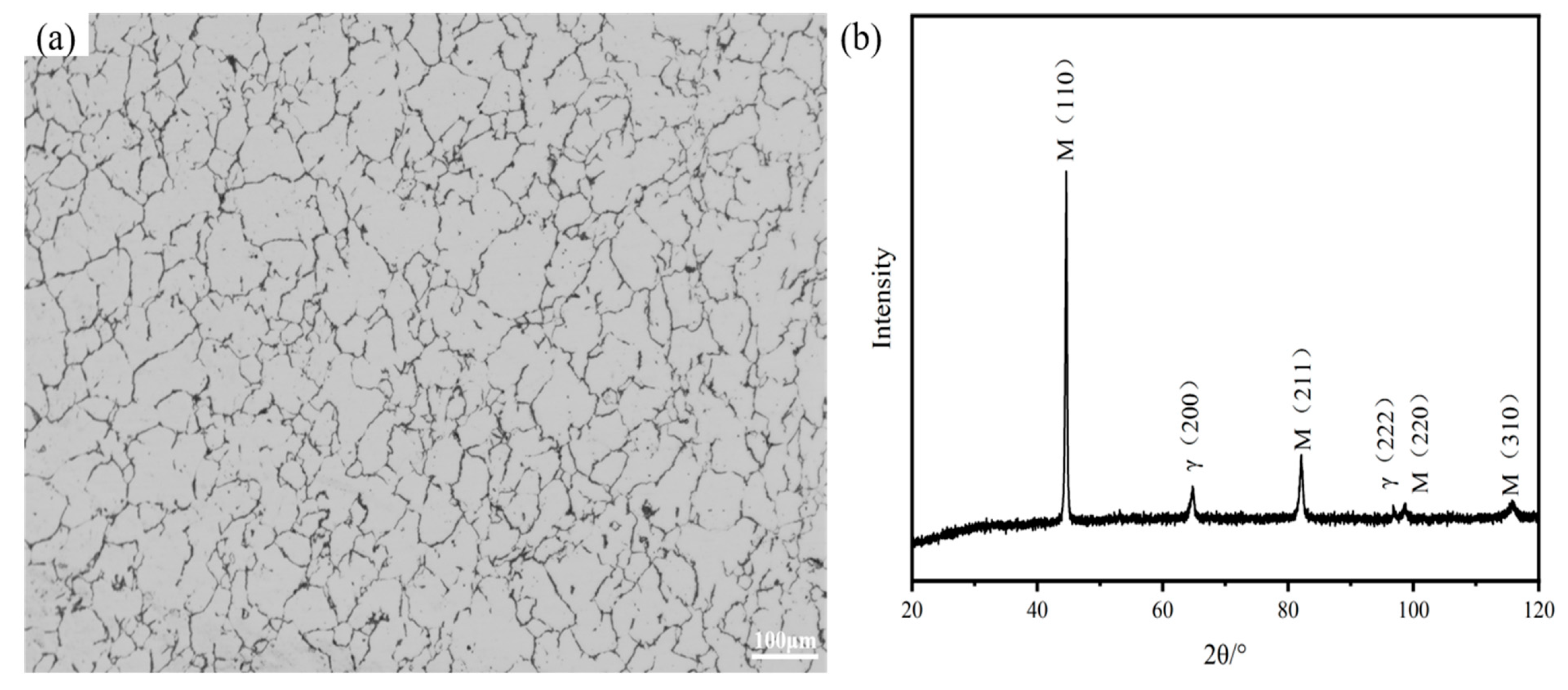
The specific composition of the material used in this study is shown in Table 1. The initial microstructure and grain morphology are depicted in Figure 1a. XRD phase analysis of the initial material is presented in Figure 1b, indicating that the primary phase consists of martensite.

2.2. Hot Deformation Test

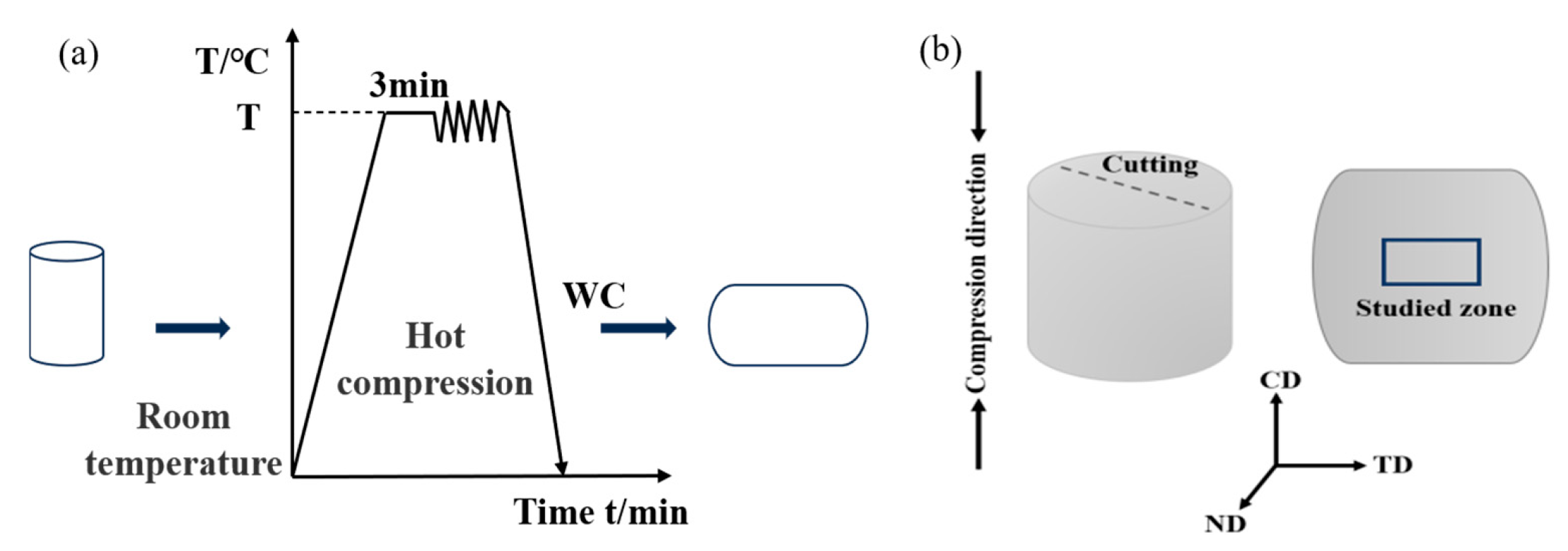
The material was processed into cylindrical specimens measuring Φ8 mm × 12 mm for thermal deformation experiments. Before commencing the experiment, 0.1 mm thick tantalum sheets were placed at both ends of the specimen to minimize friction and ensure the uniformity of heat conduction. Additionally, graphite was applied to the indenter. Using a Gleeble-3500 thermal simulation testing machine, specimens were heated at a rate of 10 °C·s−1 to different deformation temperatures of 890 °C, 980 °C, 1050 °C, and 1130 °C. After holding isothermally for a period, uniaxial compression was performed at different strain rates. To ensure the reliability and reproducibility of the data, each compression test was repeated three times under identical deformation conditions. Specimens were immediately water-quenched after deformation. Figure 2a illustrates the thermal compression process schedule. Deformed specimens were sectioned along the compression axis for microstructural examination, as shown in Figure 2b.

2.3. Spheroidizing Annealing Process

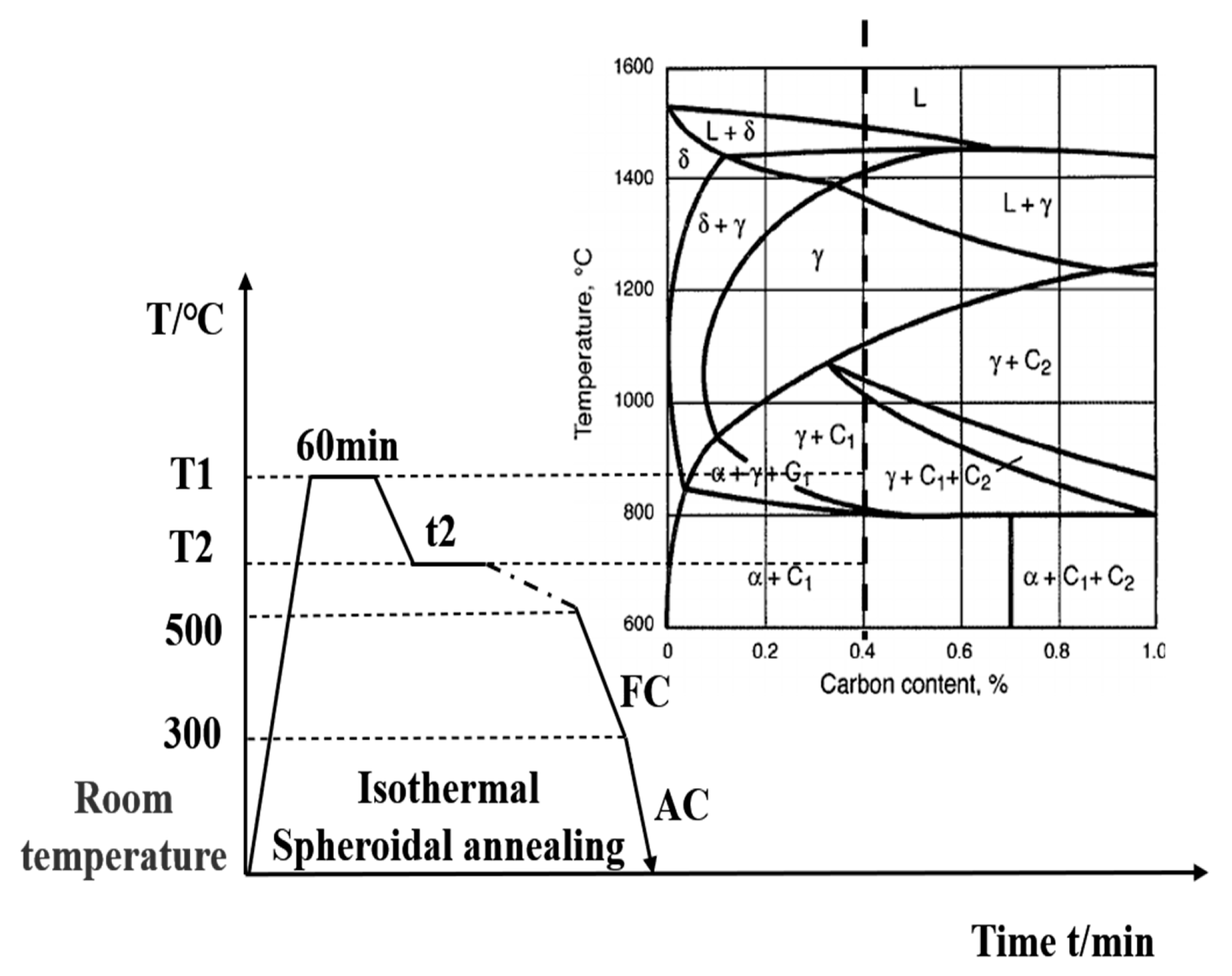
The experiment employed an isothermal spheroidizing annealing treatment. To balance computational efficiency with result representativeness, when constructing the thermodynamic model, we referred to the median value of the composition range for this grade of steel and approximated the carbon content as 0.40 wt.%. The material was heated at a rate of 10 °C·s−1 to a temperature slightly above Ac1 (850 °C), held for 1 h, then cooled at 10 °C·s−1 to 700 °C. After a 4 h soak at this temperature, it was slowly cooled at 20 °C·h−1 to 500 °C, furnace-cooled to 300 °C, and finally air-cooled. A schematic diagram of the heat treatment cycle is shown in Figure 3.

2.4. Characterization

After polishing, the specimen surface was etched with aqua regia (HCl:HNO3 = 3:1) or with a solution of 5 g FeCl3, 25 mL HCl, and 25 mL ethanol. The microstructure of the specimens was examined using an LSM-800 (Carl Zeiss AG, Oberkochen, Germany)OM and SEM. EBSD analysis was performed on the compressed specimens. During SEN data acquisition, the accelerating voltage was set to 20 kV. During EBSD data acquisition, the scanning step size was set to 0.45 μm and the accelerating voltage to 15 kV. The microstructural evolution during the recovery and recrystallization process was observed and analyzed using Channel 5 software.
This experiment used the Wilson VH1102 (ITW Test & Measurement (Shanghai) Co., Ltd., Shanghai, China) microhardness tester to measure Vickers hardness. The load was 200 g, with a dwell time of 10 s. Test points were spaced at 0.1 mm intervals. Twelve points were sampled from each specimen to minimize experimental error, and the average value was taken as the final test data.

3. Results and Discussion

3.1. Stress–Strain Curve of 4Cr13 Steel

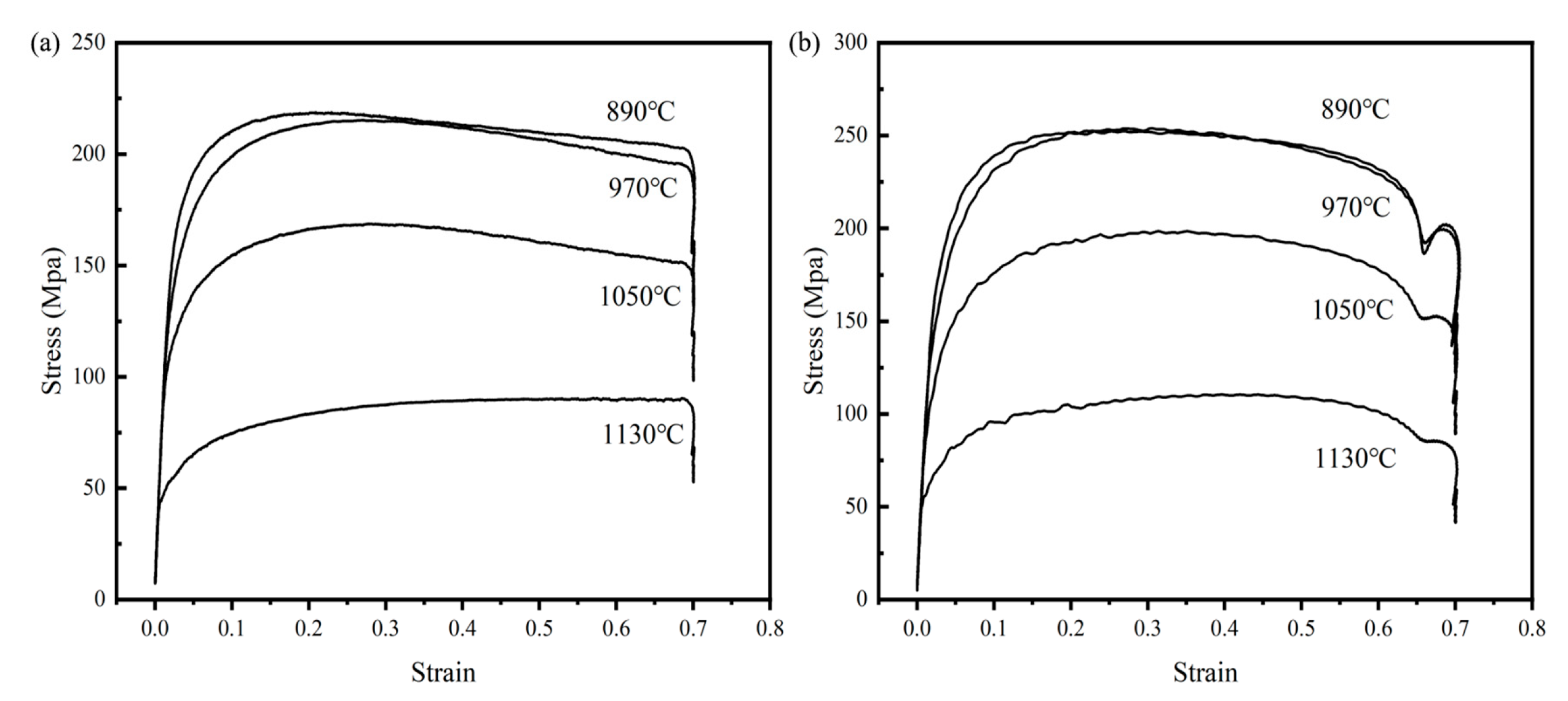
Figure 4 shows the stress–strain curves plotted from data obtained for 4Cr13 steel under different deformation parameters. The figure reveals that the stress–strain curves of 4Cr13 steel exhibit typical dynamic recrystallization characteristics. At the relatively high strain rate of 10 s−1, the terminal portion of the stress–strain curve displays a rapid decline followed by a rise. This phenomenon arises from the competing effects of dynamic softening and work hardening mechanisms.

3.2. The Effect of Hot Deformation Parameters on Material Microstructure

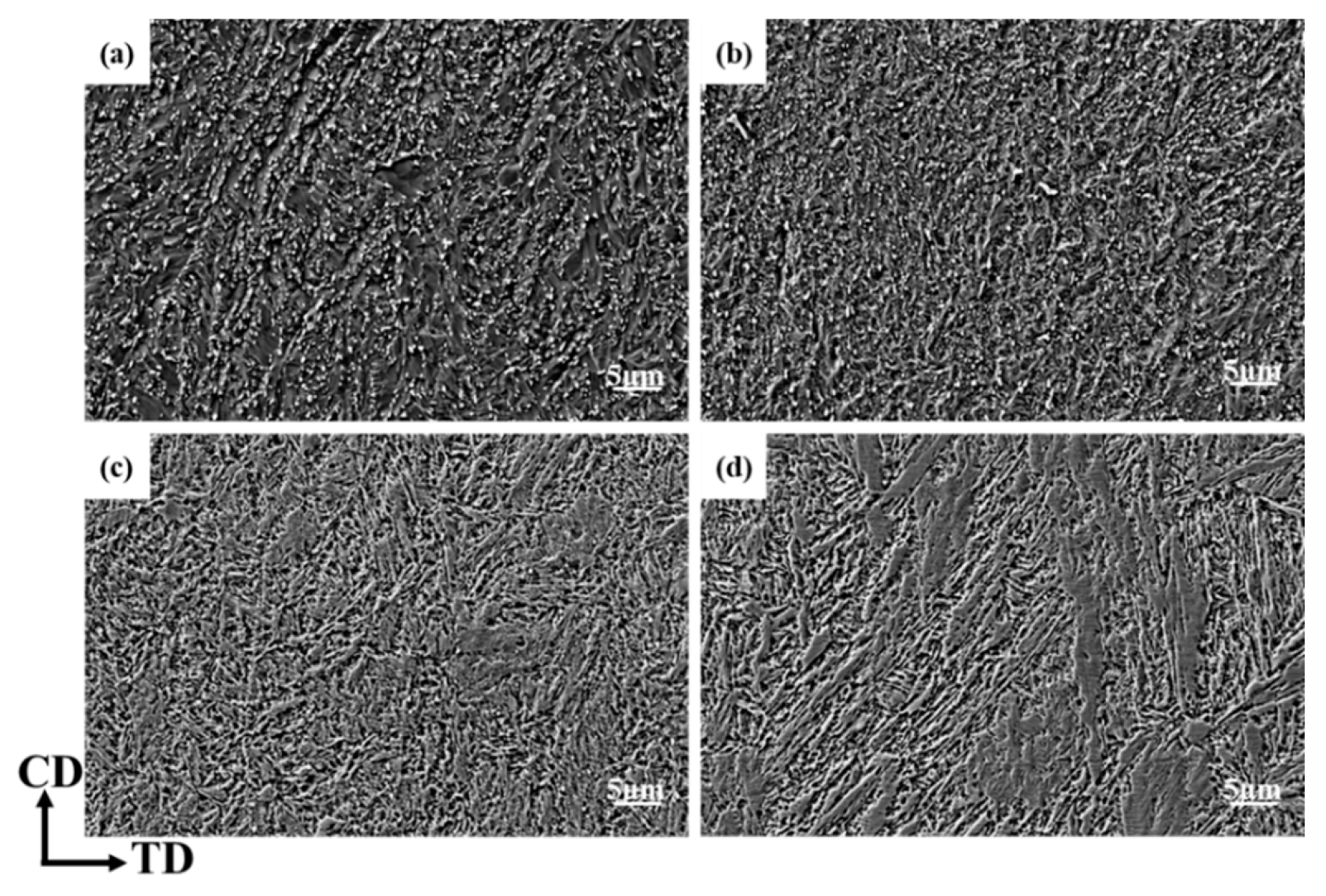
Figure 5 presents SEM images of the 4Cr13 steel samples deformed at a constant strain rate of 1 s−1 and various temperatures. The images reveal that with increasing deformation temperature, the carbide content gradually decreases while the martensite laths coarsen. At 890 °C, the microstructure contains a high density of carbides. Following deformation, the carbides exhibit a relatively uniform and dense distribution. Owing to the low deformation temperature, small-sized carbides are retained; however, the microstructure at this stage is not entirely martensitic.
As the deformation temperature increases to 970 °C, the fine carbides begin to dissolve into the matrix, leading to a reduction in their overall population. At 1050 °C, only a minor fraction of fine carbides remains. The dissolution of some coarse carbides also occurs at this stage, accompanied by the onset of martensite coarsening. At 1130 °C, complete carbide dissolution into the matrix is observed, resulting in a microstructure consisting primarily of coarse martensite.
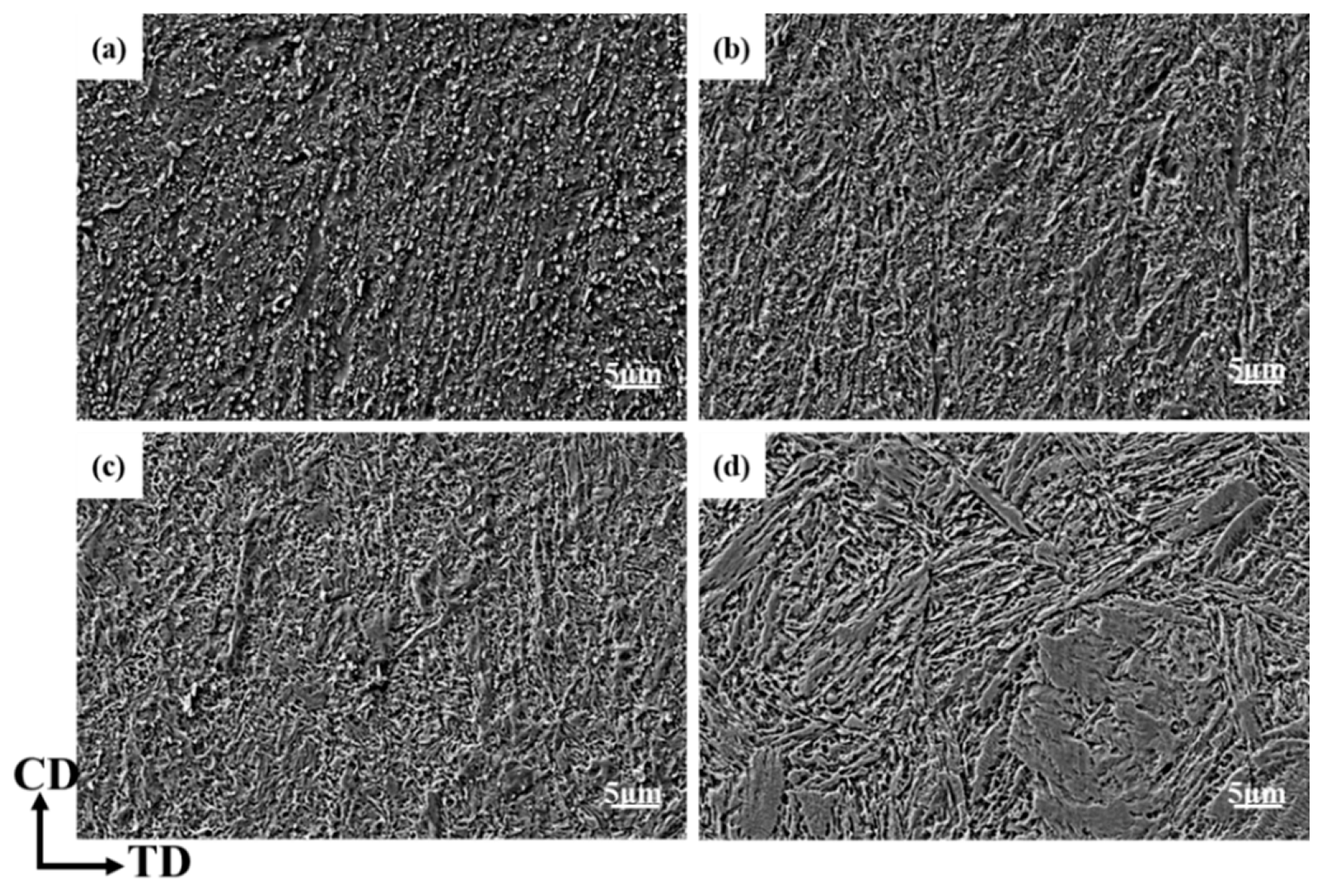
Figure 6 presents SEM images of samples deformed at various temperatures under a strain rate of 10 s−1. The overall microstructural evolution trend is consistent with that observed at a strain rate of 1 s−1. However, at the higher strain rate, a greater number of long, chain-like carbides are present. This phenomenon occurs because the faster strain rate reduces the time at elevated temperatures, inhibiting the dissolution of some elongated carbides and resulting in their preservation within the microstructure. The accelerated strain rate also stores more strain energy, providing a greater driving force for the martensitic transformation. Consequently, the martensite laths form a finer and denser structure.
The thermal deformation process of 4Cr13 steel comprises three primary stages. The first stage is plastic deformation, during which austenitized grains undergo compression, storing a significant amount of strain energy. The second stage is recrystallization, where new, strain-free grains with low dislocation density nucleate and grow from the deformed matrix under the influence of elevated temperature. The third stage involves the growth of these recrystallized grains. However, if deformation continues, these new grains may themselves undergo deformation and fragmentation, re-initiating the cycle of recrystallization [20,21]. Following deformation, water quenching is applied to induce phase transformation. When the material is held above the Ac1 temperature, the microstructure transforms to the γ phase. Subsequent cooling at a rate exceeding the critical value then transforms the austenite into martensite.
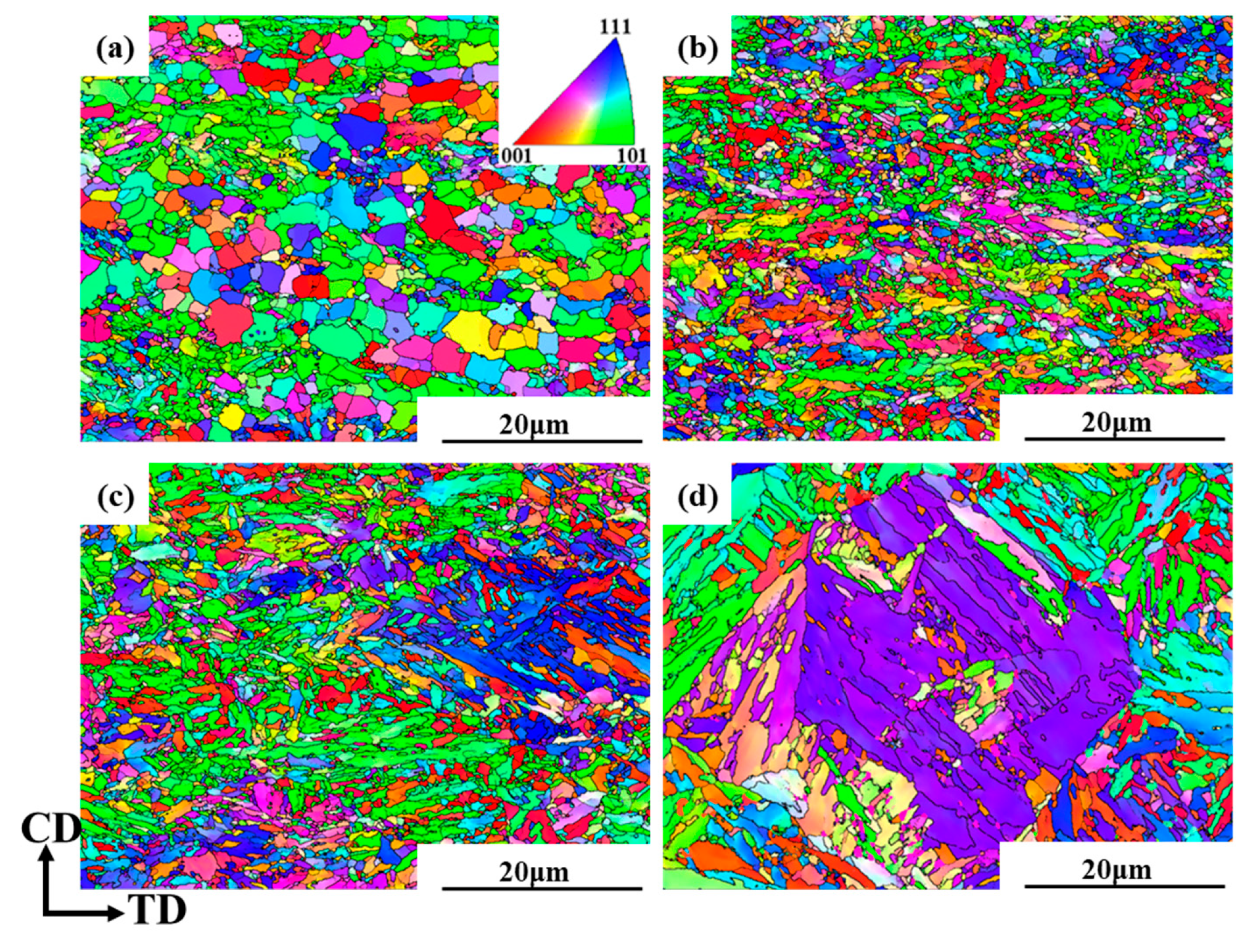
To further investigate the microstructural evolution of materials during thermal deformation, samples were subjected to electrolytic polishing, and EBSD data were acquired in the central region of the specimens. Figure 7 presents inverse pole figure (IPF) maps for a strain rate of 1 s−1 at different deformation temperatures, where colors correspond to specific crystallographic orientations. These maps reveal grain contours not visible in electron micrographs and illustrate the orientation distribution within the thermally deformed microstructure. At a constant strain rate, both grain size and morphology change with increasing temperature. At 890 °C, the grain orientations are relatively uniform, with a predominant concentration along the <101> direction. Fine, dynamically recrystallized (DRX) grains form around the deformed grains. As the temperature rises, these recrystallized grains grow, and larger equiaxed grains begin to consume smaller ones. Subsequent rapid cooling transforms part of the microstructure into martensite. This martensitic transformation disrupts the integrity of the recrystallized γ phase, breaking the grains into a fine martensitic structure and reducing the overall grain size [22]. When the deformation temperature reaches 1050 °C, the recrystallization process is complete, and the austenite grains continue to coarsen. The martensite that forms within these prior austenite grains retains a close orientation relationship with them. At 1130 °C, the high temperature promotes excessive growth of the austenite grains, which reach sizes up to 20 μm. Upon cooling, the new martensite that forms within these coarse prior austenite grains again follows their orientations.
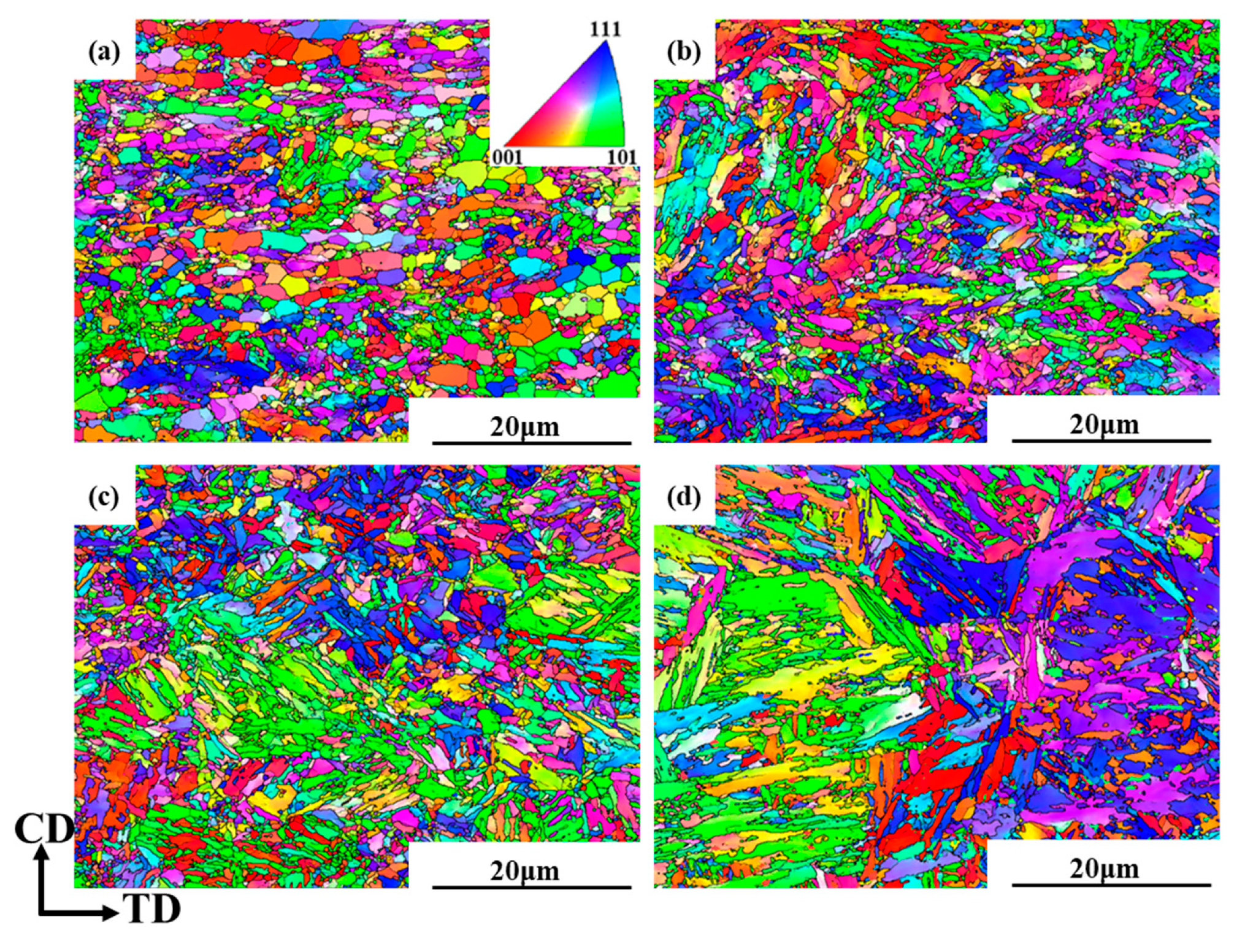
Figure 8 presents the IPF maps obtained at different deformation temperatures for a strain rate of 10 s−1. At this faster deformation rate, the overall microstructural evolution trend resembles that observed at 1 s−1. However, the high strain rate results in a shorter deformation time, leaving insufficient time for grain recrystallization. Consequently, at the same deformation temperature, grains in the microstructure deformed at the higher strain rate exhibit a higher degree of deformation and a lower degree of recrystallization. At a deformation temperature of 890 °C, the microstructure exhibits more recrystallized equiaxed grains that are smaller in size but more numerous. This occurs because the high strain rate provides greater strain energy storage, and the increased number of deformed grains offers more nucleation sites for recrystallization [23].
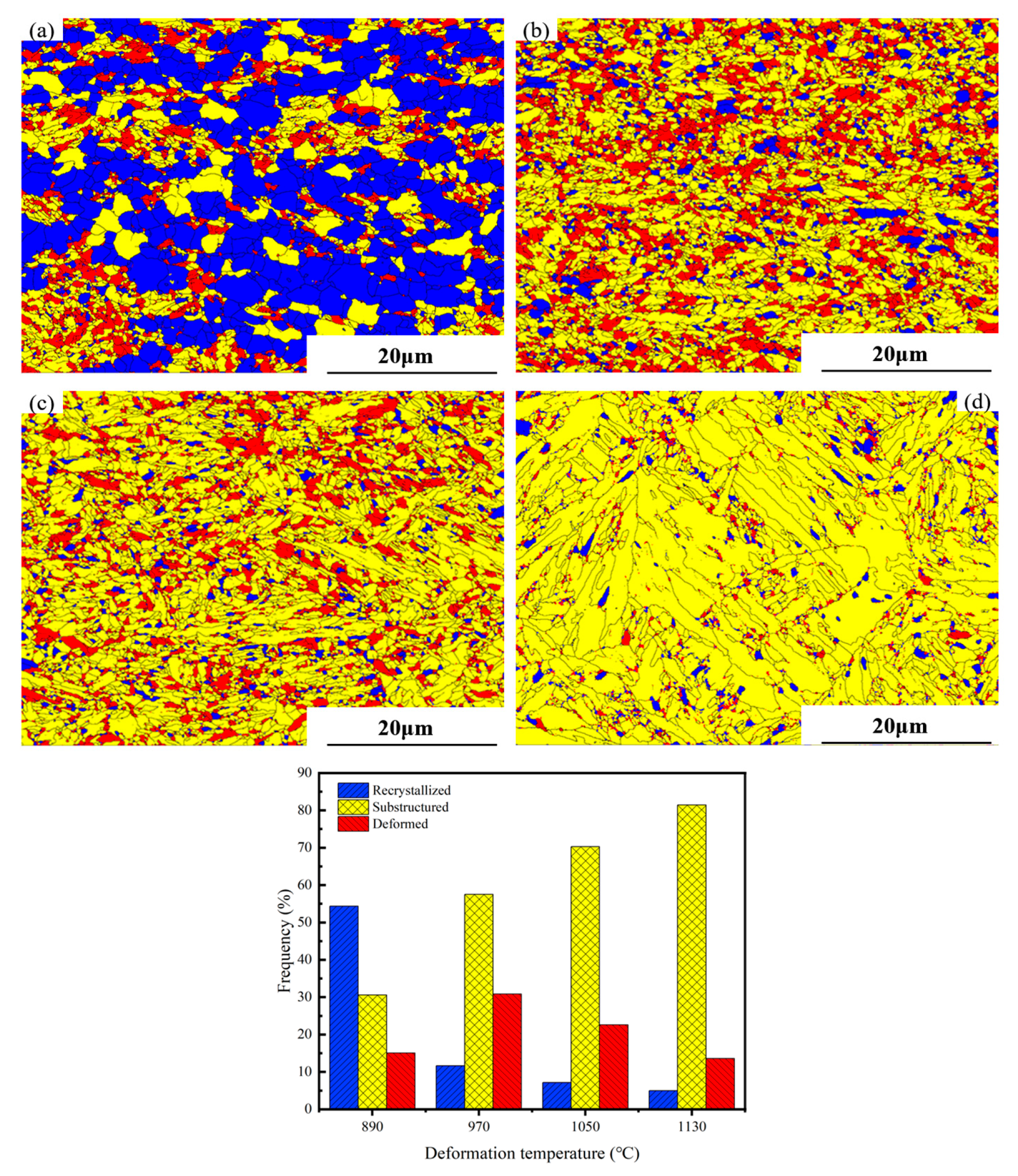
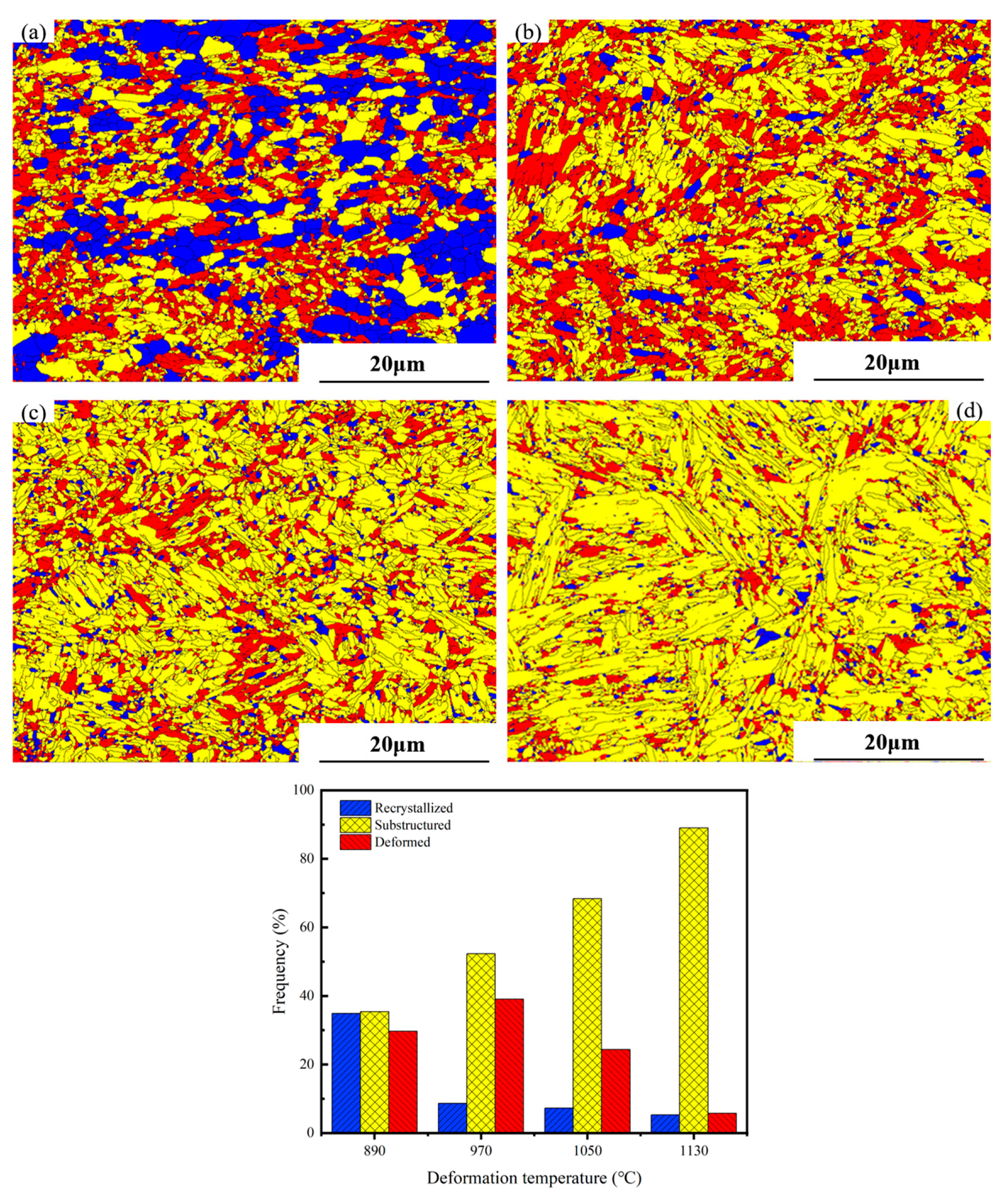
Figure 9 and Figure 10 present recrystallization distribution maps. Grains with an average intragranular orientation difference exceeding 2° are classified as deformed grains (shown in red). Grains with an average intragranular orientation difference below 2°, but where the misorientation between any two subgrains exceeds 2°, are classified as sub-structural grains (yellow). Recrystallized grains (blue) are defined as those for which both the average intragranular orientation difference and the misorientation between any two subgrains are less than 2°. However, for 4Cr13 steel, the cooling process also involves a martensitic phase transformation. Since martensitic transformation is a non-diffusive, shear-type transformation, the resulting microstructure exhibits small-angle orientation differences. Consequently, these regions may be misidentified as yellow sub-structural grains during the EBSD analysis.
Figure 9 displays the distribution of recrystallized grains at different deformation temperatures for a strain rate of 1 s−1. The map indicates that at 890 °C, a significant fraction of blue recrystallized grains persists in the microstructure, which is attributed to an incomplete martensitic transformation. At this temperature, red deformed grains and some recovery grains are also present. At a deformation temperature of 970 °C, the proportion of blue recrystallized grains decreases, while the fraction of yellow recovery grains and martensite increases. The martensitic transformation influences the microstructure by increasing the density of deformation features, leading to a rise in the proportion of red deformed grains. Subsequently, as the deformation temperature rises further, the proportions of both the blue recrystallized and the red deformed microstructures gradually decrease. The extent of the martensitic transformation increases progressively; however, the martensitic laths become coarser. The undistorted blue regions within grains gradually fragment and become distributed at grain boundary junctions throughout the microstructure. These regions primarily consist of retained austenite resulting from the incomplete martensitic transformation.
Figure 10 presents the distribution of recrystallized grains at different deformation temperatures for a strain rate of 10 s−1. As seen in the figure, with increasing deformation temperature, the fraction of blue, undistorted recrystallized grains gradually decreases, while the fraction of yellow recovery subgrains and martensite gradually increases. The composition and evolution trend of the red-colored deformed microstructure are consistent with those observed at a strain rate of 1 s−1. Compared to slow deformation, the recrystallized grains derived from the original austenite are significantly smaller after rapid deformation at 10 s−1 than after slow deformation. Furthermore, recrystallization is delayed. This is partly because rapid deformation causes more severe grain fragmentation, and since recrystallization is a thermally activated diffusion process, grain growth requires boundary migration. The higher dislocation density in rapidly deformed grains increases the pinning forces on boundaries, making them more difficult to migrate. Additionally, the faster deformation rate results in a shorter residence time at elevated temperatures, leaving less time for the material to undergo recovery and recrystallization. This ultimately leads to a lower overall degree of recrystallization. Furthermore, the substantial proliferation of dislocations induced by rapid deformation results in a significantly higher proportion of deformed microstructure.
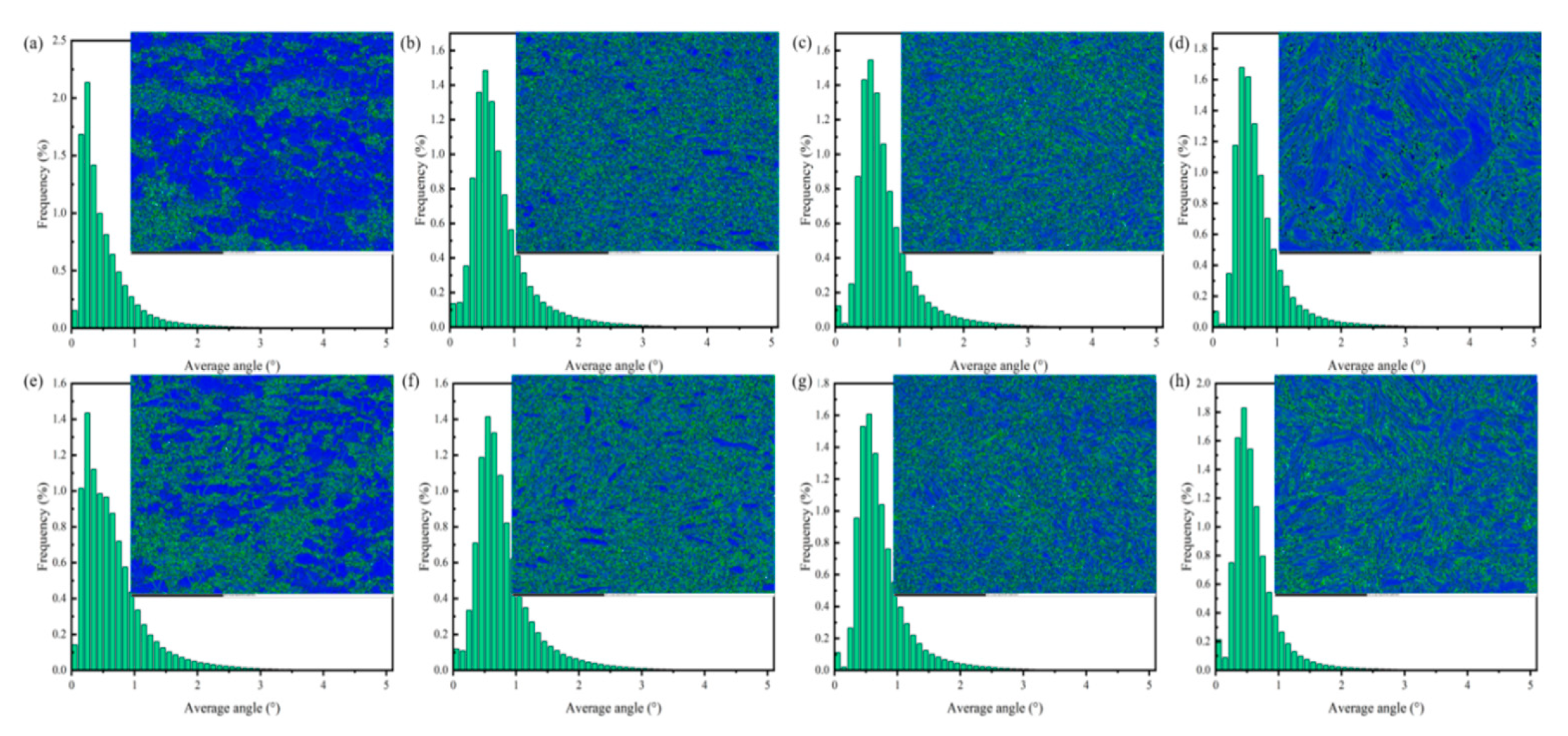
The average orientation difference, or kernel average misorientation (KAM), map was obtained by processing EBSD images using Channel 5 software. The KAM map reflects the level of local deformation and stress concentration within the alloy’s microstructure. Furthermore, KAM values can be used to estimate the geometrically necessary dislocation (GND) density (ρGND), which serves as an indicator of the homogenization degree of plastic deformation, as detailed in Equation (1) [24].
ρ G N D = 2 K A M a v e μ b
where μ is the measurement step in EBSD testing, b is the Burgers vector, and KAMave is the average local orientation difference within the selected region.
Given that the density of GNDs is proportional to the KAM value, regions with elevated KAM values correspond to higher GND densities [25,26]. Figure 11 presents KAM maps of the microstructures following different thermomechanical processing parameters. Areas in blue represent the lowest strain distortion, whereas green areas indicate intermediate levels. A greater prevalence of green regions signifies a higher overall dislocation density in that area. At a constant strain rate, the dislocation density initially increases with temperature before decreasing at 1130 °C. At 890 °C, the incomplete martensitic transformation and the presence of retained recrystallized grains result in a high dislocation density that is primarily confined to the deformed grains. With increasing deformation temperature, martensitic transformation proceeds under the influence of the deformed microstructure, resulting in a heightened overall dislocation density. Upon a further temperature increase to 1130 °C, recrystallization advances during the high-temperature holding stage. This process converts the deformed microstructure into equiaxed, distortion-free grains, thereby reducing the dislocation density, which at this stage originates mainly from the martensitic transformation itself. Furthermore, at a constant deformation temperature, the microstructure deformed at 10 s−1 exhibits a higher dislocation density than that deformed at 1 s−1. The KAMave was calculated to quantify this trend, and the results are presented in Table 2.

3.3. The Effect of Thermal Deformation on Spheroidizing Annealing Structure

To investigate the microstructural evolution and effect on carbide precipitation during spheroidizing annealing, thermally deformed specimens were subsequently annealed. In this study, we selected samples with a deformation temperature of 1130 °C and a deformation rate of 10 s−1 for spheroidizing annealing.
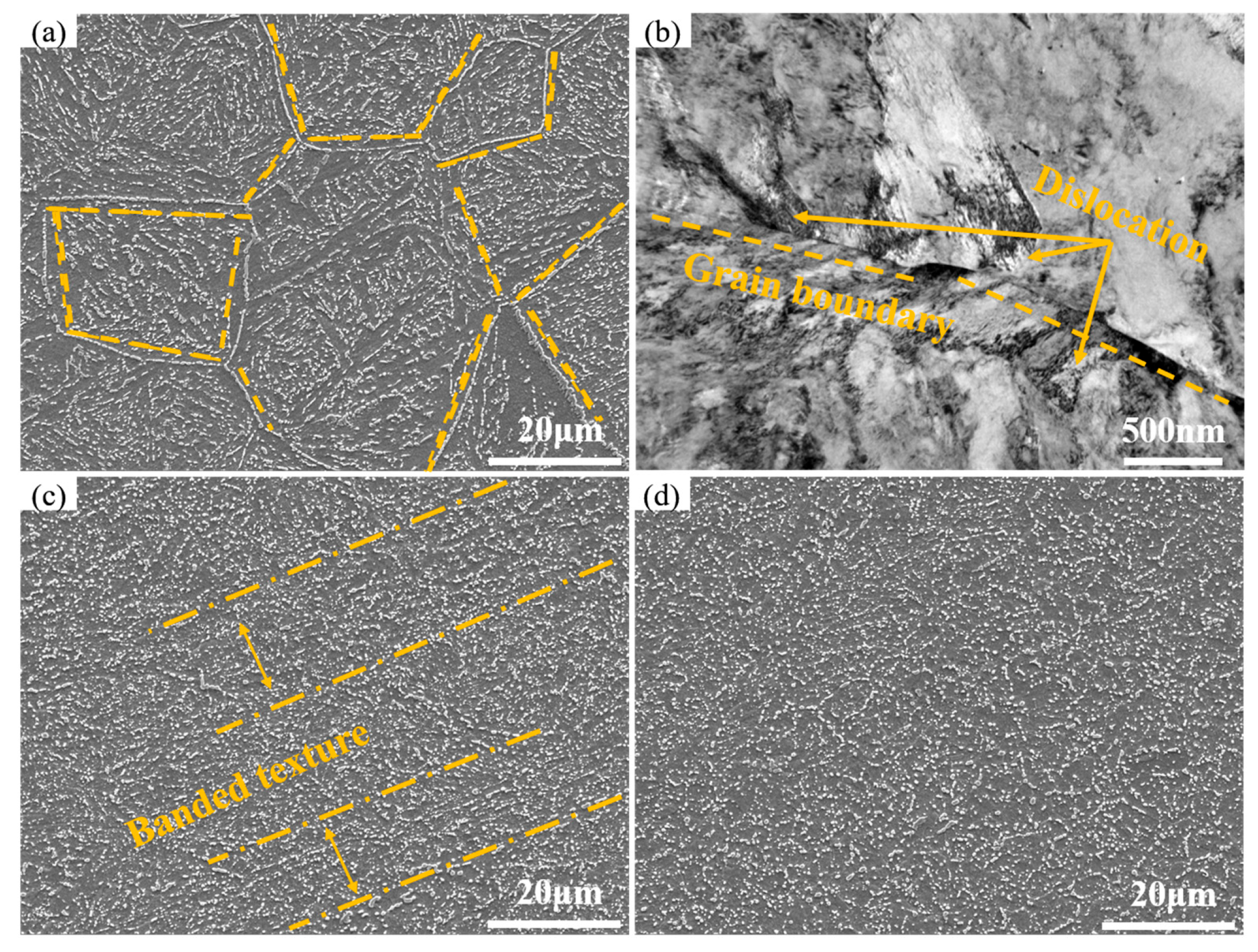
Figure 12 shows the microstructure of a thermally deformed specimen after spheroidizing annealing. Following spheroidizing annealing, carbides in the high-temperature deformed specimen precipitate not only along the boundaries of martensite laths but also more predominantly at prior austenite grain boundaries. Within the grains, carbides with a morphology resembling lamellar martensite exhibit distinct directionality. At the grain boundaries, elongated, chain-like carbides precipitate, while precipitation-free zones form adjacent to the boundaries, as shown in Figure 12a. Figure 12c shows that after spheroidizing annealing, the banded deformation structure is retained, and the precipitated carbides exhibit a dense, banded distribution. However, in the recrystallized region, the precipitated carbides do not exhibit distinct directional characteristics, as shown in Figure 12d.
Plastic deformation leaves non-equilibrium vacancies in the alloy. Supersaturated vacancies interact with solute atoms to form supersaturated vacancy–solute complexes. Since vacancies annihilate at grain boundaries, reducing vacancy concentration toward equilibrium, a vacancy concentration gradient forms within grains. Driven by this concentration difference, vacancy–solute complexes diffuse toward grain boundaries, inducing non-equilibrium grain boundary segregation of solute elements [27].
During high-temperature deformation, recovery and partial recrystallization occur, which are inevitably accompanied by grain boundary migration. On one hand, grain boundary migration entrains solute atoms, enriching them at grain boundaries and increasing the tendency for carbide precipitation at these locations. Simultaneously, since solute diffusion rates are slower than grain boundary migration rates, some solute elements lag behind the migrating boundaries. This results in concentration gradients of solute elements near and at the grain boundaries. These solute elements preferentially precipitate along grain boundaries after spheroidizing annealing, facilitated by diffusion pathways provided by martensite lath boundaries. This leads to precipitation-free zones at and near grain boundaries, as shown in Figure 12a. Although grain boundary migration also occurs during static recrystallization, the absence of high-density dislocations induced by deformation limits diffusion pathways for solute transport. Consequently, solute segregation at grain boundaries is minimal; although some segregation occurs, no distinct precipitation-free zones form. Figure 12b shows a TEM image of the dislocation structure at a grain boundary. Additionally, the driving force for grain boundary migration in static recrystallization is relatively weak. Combined with the solute entrainment phenomenon during grain boundary migration, the migration rate is slow. Consequently, any resulting element concentration gradients are rapidly re-equilibrated, leading to the absence of distinct precipitation-free zones as observed in deformed microstructures.
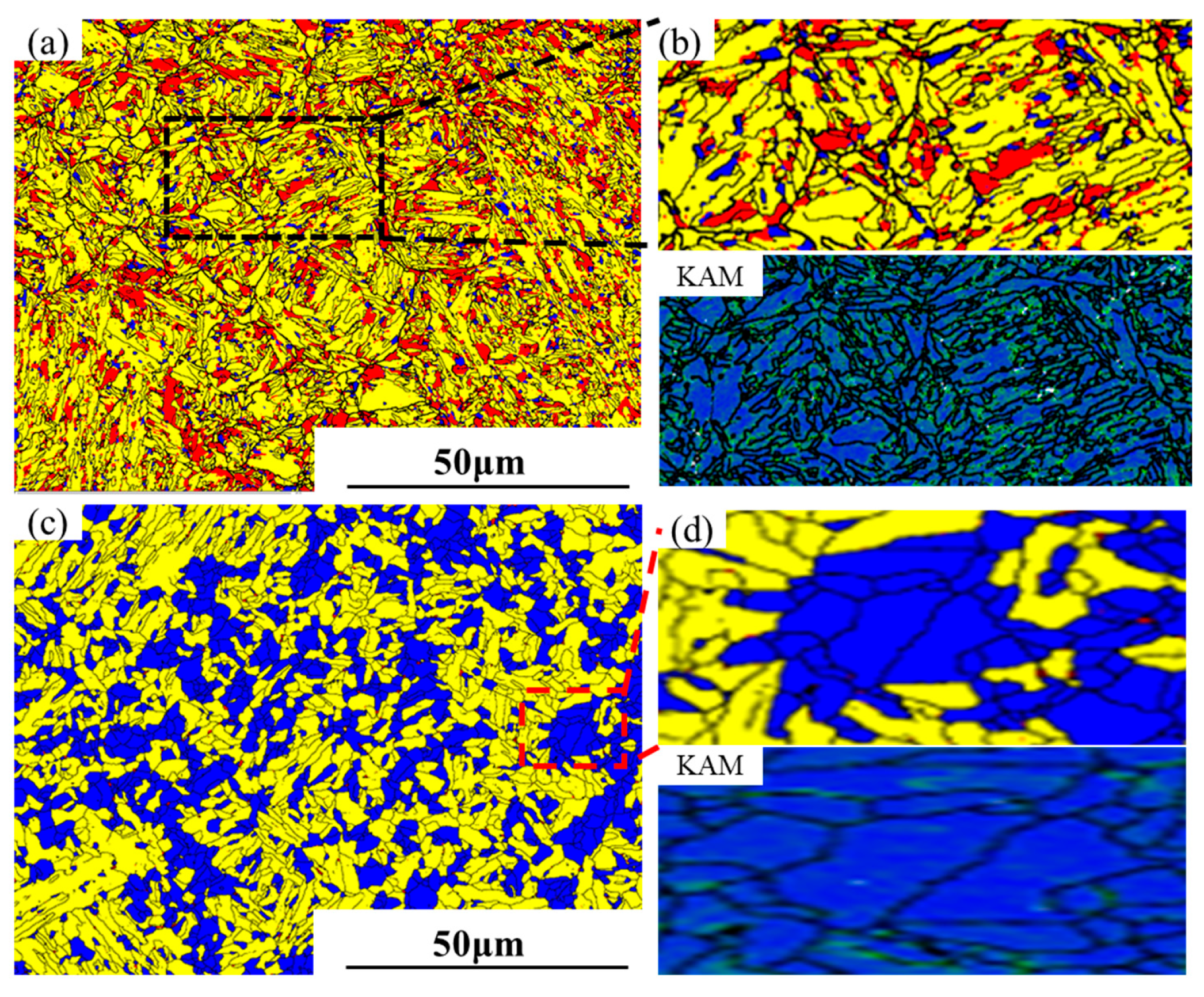
Following the spheroidizing annealing of thermally deformed materials, it was observed that deformation also influences microstructural inheritance. In the undeformed condition, retained austenite located in martensite voids exhibits limited growth during spheroidizing annealing, ultimately forming small spheroidized austenite grains. In contrast, residual austenite within the thermally deformed microstructure follows a different growth mechanism. After spheroidizing annealing, it forms larger, new, distortion-free equiaxed grains, as shown in Figure 13. This occurs because the thermally deformed microstructure retains strain energy due to incomplete recrystallization; this stored strain energy drives the static recrystallization of the residual austenite during subsequent annealing [28,29]. Figure 13b presents the KAM map following hot compression. It reveals significant lattice distortion, with higher misorientation and denser dislocation arrays at the grain boundaries, indicating substantial strain accumulation. The stored strain energy provides the driving force for grain boundary migration during recovery. Static recrystallization occurs preferentially in these high-energy regions, while recrystallized grains subsequently coarsen. The KAM map of the structure after spheroidizing annealing (Figure 13d) shows a significant reduction in dislocation density. The newly formed, static recrystallized microstructure is no longer constrained by the inheritance effect of the prior martensitic structure. Consequently, the prior deformation mitigates the influence of microstructural inheritance.

3.4. The Effect of Hot Deformation Parameters on the Material Hardness

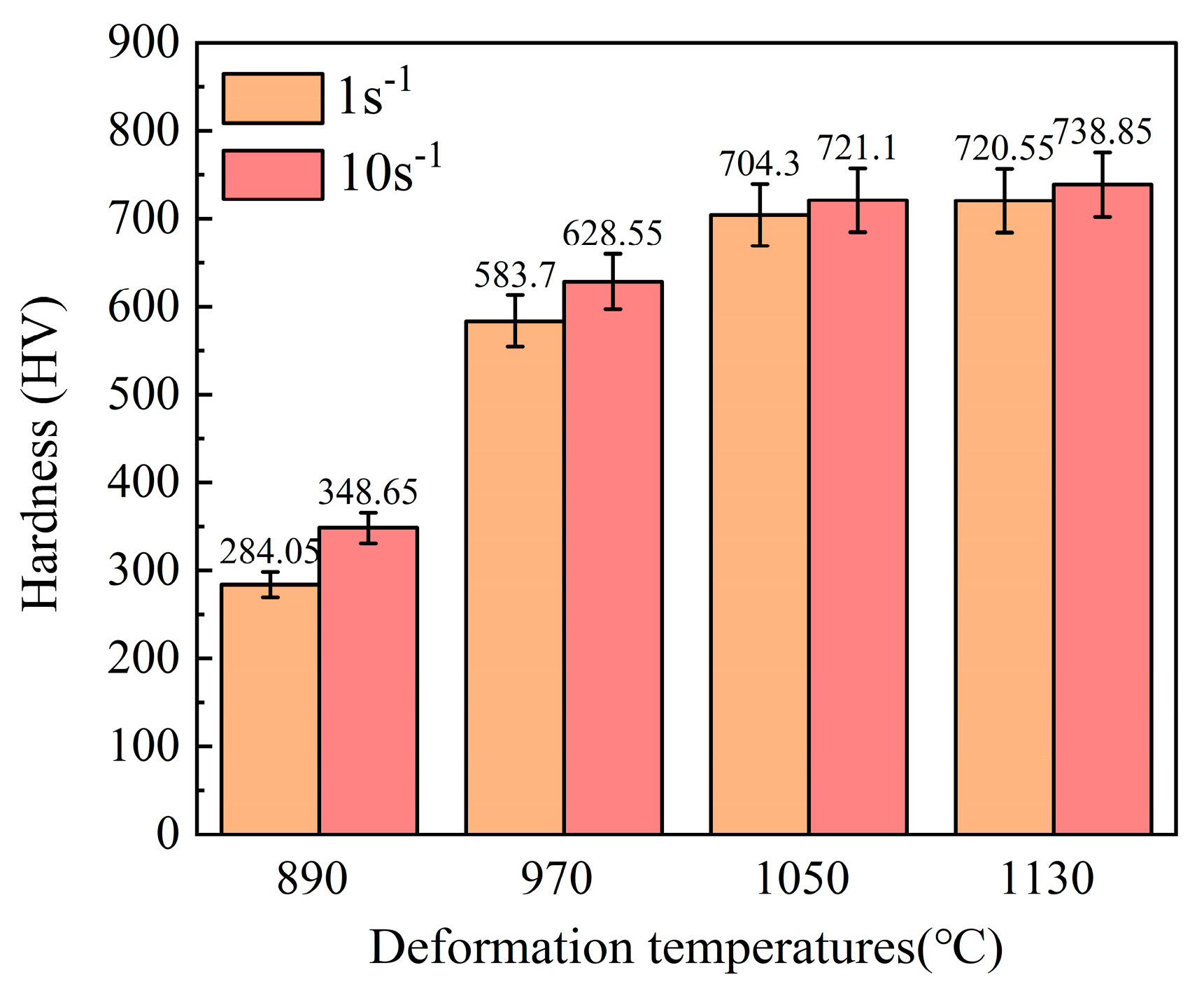
Figure 14 illustrates the variation in microhardness with deformation temperature at constant strain levels and strain rates. The microhardness for both strain rate conditions increases with rising deformation temperature. This trend is attributed to the gradual dissolution of carbides into the matrix as temperature increases. The consequent rise in the concentration of alloying elements in the matrix elevates the martensite start temperature (Ms point), promoting a more complete martensitic transformation and, thus, higher hardness [30]. Furthermore, the complete dissolution of alloying elements enhances solid solution strengthening in the fully austenitized microstructure [31]. This effect increases lattice distortion, which further contributes to the enhancement of material hardness.
Compared to a deformation rate of 1 s−1, materials exhibit higher hardness at a deformation rate of 10 s−1. This is partly because rapid deformation stores greater strain energy within the material, resulting in higher dislocation density. Additionally, the shorter holding time during the high-temperature isothermal stage prevents the dynamic softening mechanism of thermal activation from fully developing, leading to more pronounced work hardening. Furthermore, the stored strain energy promotes martensitic transformation, further enhancing microstructural hardness.

4. Conclusions

This paper employs a process of heat treatment following hot deformation to regulate the microstructure of 4Cr13 steel, exploring the impact of hot deformation on the material’s structure. The main conclusions are as follows:
(1)
As the deformation temperature increases, the number of carbides within the microstructure decreases, and the recrystallization process deepens. Simultaneously, the grain orientation reverts to a disordered state.
(2)
The effect of deformation rate on carbide content primarily stems from differing dwell times at elevated temperatures. Faster deformation rates yield denser microstructures with higher carbide concentrations. Moreover, accelerated deformation increases dislocation density, resulting in higher microhardness compared to materials deformed at the same temperature but at slower rates.
(3)
The introduction of thermal deformation enables the storage of significant strain energy within the material. This stored energy provides the driving force for static recovery and recrystallization during annealing, promoting the formation of spheroidized, distortion-free equiaxed grains. This process mitigates the influence of the microstructural inheritance effect from the prior martensitic microstructure. Furthermore, it refines the microstructure, providing a more uniform preconditioned state for subsequent heat treatment. Consequently, the deformed specimens exhibit higher hardness and superior mechanical properties.

Author Contributions

J.L.: Conceptualization, Methodology, Validation, Software, Formal analysis, Investigation, Writing—original draft. Z.J.: Conceptualization, Methodology, Validation, Software, Formal analysis, Investigation, C.Z.: Conceptualization, Methodology, Supervision, Project administration. B.R.: Methodology, Investigation. Y.W.: Conceptualization, Writing—review and editing. Z.Z.: Writing—review and editing. L.Y.: Conceptualization. D.M.: Methodology, Investigation. All authors have read and agreed to the published version of the manuscript.

Funding

This work was supported by the Gansu Province joint research Fund project (24JRRA833), National Key Research and Development Program (2025YFE0105500), Major Special Projects of Science and Technology in Gansu Province (23ZDGA010), National Nature Science Foundation of China (No. 52265049), Lanzhou University of Technology Support plan for Distinguished Young Scholars (No. HLJQ2402), and Shaanxi University Youth Innovation Team—Application Innovation Team for Precise Shape and Property Control Technology of Key Aeronautical Structural Components.

Institutional Review Board Statement

Not applicable.

Informed Consent Statement

Not applicable.

Data Availability Statement

The original contributions presented in this study are included in the article. Further inquiries can be directed to the corresponding author.

Conflicts of Interest

The authors declare that they have no known competing financial interests or personal relationships that could have appeared to influence the work reported in this paper.

References

  1. Singh, S.; Sahai, S.; Verma, M.K. A Review on Plastic Moulding Manufacturing Process and Parameters. Int. J. Adv. Eng. Res. Sci. 2021, 8, 025–033. [Google Scholar] [CrossRef]
  2. Chen, Y.; Awasthi, K.A.; Wei, F.; Tan, Q.Y.; Li, J.H. Single-use plastics: Production, usage, disposal, and adverse impacts. Sci. Total Environ. 2021, 752, 141772. [Google Scholar] [CrossRef]
  3. He, B. Research on the Failure and Material Selection of Plastic Mold. Procedia Eng. 2011, 23, 46–52. [Google Scholar] [CrossRef]
  4. Gudić, S.; Nagode, A.; Šimić, K.K.; Vrsalović, L.; Jozić, S. Corrosion Behavior of Different Types of Stainless Steel in PBS Solution. Sustainability 2022, 14, 8935. [Google Scholar] [CrossRef]
  5. Ciceka, A.; Karab, F.; Kivakb, T.; Ekici, E. Evaluation of machinability of hardened and cryo-treated AISI H13 hot work tool steel with ceramic inserts. Int. J. Refract. Met. Hard Mater. 2013, 13, 461–469. [Google Scholar] [CrossRef]
  6. Su, S.; Song, R.; Chen, C.; Wang, J.Y.; Zhang, Y.C. The novel process of spheroidizing-critical annealing is used to optimize the properties of carburized steel and its effect on hardening mechanism of quenching and tempering. Mater. Sci. Eng. A 2019, 765, 138322. [Google Scholar] [CrossRef]
  7. Yugai, S.; Kleiner, L.; Shatsov, A.; Mitrokhovich, N. Structural heredity in low-carbon martensitic steels. Met. Sci. Heat Treat. 2004, 46, 539–544. [Google Scholar] [CrossRef]
  8. Qian, S.; Teng, H.; Zhao, H.; Hu, P.; Man, T.; Dong, H. Microstructural evolution of secondary carbides during spheroidized annealing and quenching and tempering in 60cr16moma martensitic stainless steel. J. Mater. Res. Technol. 2024, 28, 3207–3216. [Google Scholar] [CrossRef]
  9. Ren, Q.Q.; Baik, S.; An, D. The effects of heat-treatment parameters on the mechanical properties and microstructures of a low-carbon dual-phase steel. Mater. Sci. Eng. A 2023, 888, 145801. [Google Scholar] [CrossRef]
  10. Xu, N.; Wang, L.Y.; Hu, J.; Jia, Z.G.; Xue, W.L.; Xu, W. Effect of microstructural inheritance window on the mechanical properties of an intercritically annealed Q&P steel. J. Mater. Res. Technol. 2024, 32, 4400–4409. [Google Scholar] [CrossRef]
  11. Jia, Z.G.; Hu, J.; Xu, N.; Liu, C.; Wang, L.Y.; Wang, C.C.; Sun, W.H.; Xu, W. Revealing the Effect of Microstructural Inheritance in 1.5 GPa Hot-Rolled Ultrahigh Strength Q&P Steels. Metall. Mater. Trans. A 2021, 52, 3140–3151. [Google Scholar] [CrossRef]
  12. Wei, H.F.; Sun, B.; Gao, W.H.; Fu, Y.D. Microstructural inheritance of α-phase associated with ω-phase in Ti–20Nb alloy. Mater. Lett. 2025, 397, 138809. [Google Scholar] [CrossRef]
  13. Li, D.; Wei, Y.; Liu, C.; Hou, L. Hot deformation behaviors of fe–30mn–3si–3al twip steel during compression at elevated temperature and strain rate. Steel Res. Int. 2013, 84, 740–750. [Google Scholar] [CrossRef]
  14. Eskandari, M.; Mohtadi-Bonab, M.A.; Zarei-Hanzaki, S.A.; Karjalainen, A.J.A.; Pentti, L. Ebsd study of deformation microstructure of an as-homogenized austenitic mn steel after hot compression. Adv. Eng. Mater. 2018, 20, 1800327. [Google Scholar] [CrossRef]
  15. Romanovskiy, G.Y.; Filippov, G.A.; Chevskaya, O.N.; Mishetyan, A.R.; Filippov, V.G. Effect of deformation processing on mechanical properties and fracture resistance of low carbon martensitic steel. Metallurgist 2025, 8, 80–85. [Google Scholar] [CrossRef]
  16. Xue, C.H.; Dai, L.W.; Dai, J.R.; Wang, Z.Y.; Tian, W.C.; Xue, K.M. Effect of deformation on the mechanical property of reduced activation ferritic/martensitic steel refined by closed-dual equal channel angular pressing. Mater. Test. 2024, 66, 1776–1781. [Google Scholar] [CrossRef]
  17. Qian, L.; Zhan, L.; Zhou, B.; Zhang, X.; Liu, S.; Lv, Z. Effects of electroplastic rolling on mechanical properties and microstructure of low-carbon martensitic steel. Mater. Sci. Eng. A 2021, 812, 141144. [Google Scholar] [CrossRef]
  18. Zhang, Z.; Lan, P.; Wang, P.; Geng, H.; Tang, H.; Zhang, J. Semi-macrosegregation and carbide banding in high-carbon chromium bearing steels: Characteristics, evolution, and control. J. Mater. Res. Technol. 2023, 27, 3517–3530. [Google Scholar] [CrossRef]
  19. Han, H.; Zhao, X.; Zhao, X.; Wan, C.; Wang, W. Effect of proeutectoid carbide on heredity in microstructure-mechanical properties and fatigue life of GCr15 bearing steel. Res. Technol. 2017, 24, 208. [Google Scholar] [CrossRef]
  20. Lin, Y.C.; Chen, X.M. A critical review of experimental results and constitutive descriptions for metals and alloys in hot working. Mater. Des. 2011, 32, 1733–1759. [Google Scholar] [CrossRef]
  21. Ma, T.; Hao, X.C.; Wang, P. Effects of Orthogonal Heat Treatment on Microstructure and Mechanical Properties of GN9 Ferritic/Martensitic Steel. Chin. J. Mech. Eng. 2023, 36, 155. [Google Scholar] [CrossRef]
  22. Li, X.C.; Lu, G.Y.; Wang, Q.C. The Effects of Prior Austenite Grain Refinement on Strength and Toughness of High-Strength Low-Alloy Steel. Metals 2022, 12, 28. [Google Scholar] [CrossRef]
  23. Huang, K.; Logé, R.E. A review of dynamic recrystallization phenomena in metallic materials. Mater. Des. 2016, 11, 548–574. [Google Scholar] [CrossRef]
  24. Wang, K.; Wu, M.; Yan, Z.; Li, D.R.; Xin, R.L.; Liu, Q. Microstructure evolution and static recrystallization during hot rolling and annealing of an equiaxed-structure TC21 titanium alloy. J. Alloys Compd. 2018, 752, 14–22. [Google Scholar] [CrossRef]
  25. Calcagnotto, M.; Ponge, D.; Demir, E.; Raabe, D. Orientation gradients and geometrically necessary dislocations in ultrafine grained dual-phase steels studied by 2D and 3D EBSD. Mater. Sci. Eng. A 2010, 527, 2738–2746. [Google Scholar] [CrossRef]
  26. Chen, J.; Shi, H.L.; Lin, G.Y.; Zhang, R.Q.; Gui, K.X.; Zhou, C.; Shen, X.; Liu, H.Q. Investigation on deformation mechanisms of Zr-1Sn-0.3Nb-0.3Fe-0.1Cr alloy using in situ EBSD/SEM. Int. J. Refract. Met. Hard Mater. 2024, 120, 106603. [Google Scholar] [CrossRef]
  27. Mai, H.L.; Cui, X.Y.; Scheiber, D.; Romaner, L.; Ringer, S.P. The segregation of transition metals to iron grain boundaries and their effects on cohesion. Acta Mater. 2022, 231, 117902. [Google Scholar] [CrossRef]
  28. Wang, K.; Wu, W.; Yao, J.; Gao, N.; Wang, B.H.; Fan, Z.T.; Cao, H.; Liu, X.W. Non-equilibrium grain boundary segregation induced intermediate-temperature embrittlement of a titanium-niobium-stabilized ultra-pure 18 wt.% chromium ferritic stainless steel. Philos. Mag. 2025, 105, 1511–1527. [Google Scholar] [CrossRef]
  29. Ogawa, T.; Dannoshita, H.; Maruoka, K.; Ushioda, K. Microstructural Evolution During Cold Rolling and Subsequent Annealing in Low-Carbon Steel with Different Initial Microstructures. J. Mater. Eng. Perform. 2017, 26, 3821–3830. [Google Scholar] [CrossRef]
  30. Li, Z.H.; Tian, Y.; Cheng, J.W.; Zhou, J.H.; Jiang, Y.F.; Wu, Y.C.; Wang, Z.C.; Wang, X. Effect of Tempering Temperature on the Strength and Ductility of a Low-Activation Martensitic Steel. Steel Res. Int. 2025, 96, 74–83. [Google Scholar] [CrossRef]
  31. Lian, Y.; Ma, M.; Zhang, J.; Huang, J.F.; Gao, W.; Zhang, Z.J.; Zhao, C. Influence of Austenitizing Temperature on the Microstructure and Mechanical Properties of an Fe-Cr-Ni-Mo-Ti Maraging Stainless Steel. J. Mater. Eng. Perform. 2019, 28, 5466–5475. [Google Scholar] [CrossRef]
Figure 1. (a) Optical microscope (OM) image of the original microstructure; (b) XRD pattern of the original microstructure.
Coatings 16 00383 g001
Figure 2. (a) Schematic illustration of the hot compression process. (b) Microstructural observation region.
Coatings 16 00383 g002
Figure 3. Spheroidizing annealing process diagram.
Coatings 16 00383 g003
Figure 4. Stress–strain curves of 4Cr13 steel at different deformation rates during hot compression process: (a) strain rate 1 s−1; (b) strain rate 10 s−1.
Coatings 16 00383 g004
Figure 5. SEM images of microstructures at different deformation temperatures under a strain rate of 1 s−1: (a) 890 °C; (b) 970 °C; (c) 1050 °C; (d) 1130 °C.
Coatings 16 00383 g005
Figure 6. SEM images of microstructures at different temperatures under a strain rate of 10 s−1: (a) 890 °C; (b) 970 °C; (c) 1050 °C; (d) 1130 °C.
Coatings 16 00383 g006
Figure 7. IPF diagrams at different deformation temperatures for a strain rate of 1 s−1: (a) 890 °C; (b) 970 °C; (c) 1050 °C; (d) 1130 °C.
Coatings 16 00383 g007
Figure 8. IPF diagrams at different deformation temperatures for a strain rate of 10 s−1: (a) 890 °C; (b) 970 °C; (c) 1050 °C; (d) 1130 °C.
Coatings 16 00383 g008
Figure 9. Recrystallized grain distribution at different deformation temperatures with a strain rate of 1 s−1: (a) 890 °C; (b) 970 °C; (c) 1050 °C; (d) 1130 °C.
Coatings 16 00383 g009
Figure 10. Recrystallized grain distribution at different deformation temperatures with a strain rate of 10 s−1: (a) 890 °C; (b) 970 °C; (c) 1050 °C; (d) 1130 °C.
Coatings 16 00383 g010
Figure 11. KAM images of microstructures for samples with different deformation parameters: (ad)—1 s−1 at 890–1050 °C; (eh)—10 s−1 at 890–1050 °C.
Coatings 16 00383 g011
Figure 12. Microstructure of a deformed specimen after spheroidizing annealing: (a) carbide precipitation and segregation at grain boundaries; (b) TEM image of the dislocation structure at grain boundaries; (c) distribution of precipitated carbides in a banded structure; (d) a recovery and recrystallization structure after spheroidizing annealing.
Coatings 16 00383 g012
Figure 13. Mechanism of spheroidized reverse austenite formation in deformed microstructure: (a,b) EBSD maps of microstructure in thermally deformed samples at 1050 °C, 1 s−1; (c,d) EBSD maps of microstructure in thermally compressed samples after spheroidizing annealing.
Coatings 16 00383 g013
Figure 14. Microhardness versus temperature: (a) strain rate 1 s−1; (b) strain rate 10 s−1.
Coatings 16 00383 g014
Table 1. Chemical Composition of 4Cr13 Steel (wt.%).
CSiMnCrMoNiAlCoCuVFe
0.350.710.5014.20.050.250.020.030.030.34Bal.
Table 2. Average Values of Local Orientation Differences Within Materials.
Strain RateDeformation Temperature (℃)
(s−1)89097010501130
10.5611490.8177430.7968530.671414
100.7044590.8558520.8202040.758568
Disclaimer/Publisher’s Note: The statements, opinions and data contained in all publications are solely those of the individual author(s) and contributor(s) and not of MDPI and/or the editor(s). MDPI and/or the editor(s) disclaim responsibility for any injury to people or property resulting from any ideas, methods, instructions or products referred to in the content.