1. Introduction
With the continuous improvement of safety standards in modern society, flame retardant textiles are increasingly utilized within public spaces, modes of transportation, medical institutions, and home environments [
1]. Polyester/cotton blended fabrics have been widely applied in workwear, bedding, and decorative textiles due to their excellent wearing comfort, high level of strength and durability, and relatively low cost [
2,
3,
4]. However, polyester/cotton blended fabrics consist of polyester fibers and cotton fibers, both of which are flammable and exhibit different thermal degradation behaviors during combustion [
5,
6]. During combustion of polyester/cotton blends, polyester fibers melt into droplets that infiltrate the porous carbon scaffold that is formed by pyrolyzing cotton fibers [
7]. This phenomenon creates a synergistic “scaffold effect” [
8], where trapped molten polyester generates capillary channels within the char matrix, continuously supplying combustible fuel and concentrated heat to the flame front [
9]. Not only does this dual mechanism rapidly accelerate flame spread and intensify peak heat release rates, but it also extends total burning duration. Thus, it establishes a self-sustaining fire cycle that critically limits the practical application of these textiles [
10]. Therefore, developing a highly efficient flame retardant system that can simultaneously target polyester and cotton fibers is of great importance for improving the safety standards of fabrics blended with polyester/cotton.
Although traditional flame retardants—particularly halogen-based ones—are effective, they are increasingly restricted due to their release of toxic gases and smoke during combustion; this, in turn, poses potential threats to the surrounding environment and human health [
4,
11]. Thus, research has shifted towards developing eco-friendly flame retardants—such as phosphorus-based, nitrogen-based, and inorganic flame retardants [
12,
13,
14,
15]. In recent years, phosphorus/nitrogen (P/N) synergistic flame retardant systems have shown tremendous potential in enhancing textile flame retardancy due to their environmentally friendly and highly efficient characteristics [
16,
17,
18]. P/N synergistic flame retardant systems function through dual mechanisms in both condensed and gas phases to effectively improve material flame retardancy [
19]. Pan et al. employed a layer-by-layer assembly method—first treating polyester/cotton fabrics with polyethylenimine (PEI) and oxidized sodium alginate (OSA), then immersing the treated fabrics in hypophosphorous acid (HA) solution for crosslinking [
11]. The treated fabrics exhibited excellent performance in cone calorimeter tests, with peak heat release rate (pHRR) and total heat release (THR) being reduced by 77% and 75%, respectively. This was primarily attributed to the dense isolation char layer formed during combustion by the P/N synergistic flame retardant system, effectively blocking heat and oxygen. Another P/N flame retardant was obtained by the chemical reaction between phenylphosphonic acid (PPOA) and PEI, which resulted in the limiting oxygen index (LOI) value of the prepared fabric increasing from 18.8 to 29.8 [
20]. However, the breaking force was obviously impacted due to the acidity of PPOA which damaged the cotton fibers. In fact, flame retardant treatments often involve chemical reactions that alter the molecular architecture of fibers due to acid hydrolysis, phosphorylation crosslinking, and thermal oxidation—this is likely to lead to mechanical degradation, which can potentially limit the application of phosphorus containing flame retardants.
Polydopamine (PDA), as a bio-inspired material, possesses excellent adhesion, good film-forming properties, and abundant reactive functional groups [
21]. PDA is capable of forming uniform coatings on various substrates due to bio-adhesion [
22]. Additionally, PDA possesses a strong free radical scavenging ability and char-forming capacity, showing promising application prospects in fabric flame retardancy [
23,
24]. Although PDA inherently exhibits flame retardant properties, its surface deposition quantity on cotton fabrics often fails to meet requirements. Consequently, synergistic systems combining PDA with other flame retardants have gained increasing attention [
25,
26]. Qi et al. synthesized polyphosphoramide (PPA) through an environmentally friendly amine–ester exchange reaction at first, and then constructed a PDA-PPA coating on various fabrics [
27]. The treated polyester fabric exhibited excellent flame retardancy—with the LOI value increased to 26.0% and the pHRR and THR values reduced by 41.7% and 31.3%, respectively—achieving self-extinguishment without melt dripping in vertical burning tests. Fu et al. deposited dopamine on cotton surface through self-polymerization and then constructed a P/N/Si synergistic flame retardant system that promoted char formation [
28]. Notably, while PDA demonstrates protective effects on cellulose glycosidic bonds that enhance mechanical strength, the acidic P containing flame retardant coating was found to compromise this protective layer, ultimately degrading mechanical performance. This highlights the importance of balancing acidic conditions within PDA-based flame retardant system design. Although PDA provides abundant active sites, conventional dopamine self-polymerization processes suffer from prolonged deposition time and inefficient surface attachment due to aqueous-phase polymerization [
29,
30,
31]. Thus, these limitations were addressed through co-deposition strategies with amino compounds (PEI) to suppress dopamine self-polymerization and achieve more uniform coatings with reduced processing time. Therefore, it aims to not only leverage the chemical reactivity of PDA to enhance coating structural stability, but to also achieve breakthroughs in the mechanical performance of flame retardant polyester/cotton fabrics at the molecular level.
To address the environmental issues of traditional flame retardants, we provide an eco-friendly flame retardant system. A P/N synergistic flame retardant system was constructed on polyester/cotton fabric surfaces through co-deposition and direct immersion methods using PDA, PEI, and DPPC. The morphological characteristics, chemical structure, and performance of flame retardant coatings formed under different process conditions were investigated to both reveal and analyze their physicochemical structural changes. Flame retardant performance was evaluated through limiting oxygen index tests, horizontal burning tests, and cone calorimeter tests. The flame retardant mechanism was explored through both a char analysis and analysis of volatile thermal decomposition products in the gas phase. Additionally, tensile tests were conducted to compare the mechanical property changes before and after flame retardant treatment, providing theoretical and technical support for developing high-performance flame retardant textiles.
2. Materials and Methods
2.1. Materials
The experimental materials included: polyester/cotton fabric (polyester/cotton ratio = 80/20, areal density = 106 g/m2, Hebei Yongsheng Cotton Textile Mill, China); phosphorus oxychloride (POCl3, Analytical Reagent [AR], 99%, Anhui Zesheng Technology Co., Ltd., China); branched polyethyleneimine (PEI, Mw = 10,000, Anhui Zesheng Technology Co., Ltd., China); neopentyl glycol (C5H12O2, AR, 99%), dopamine hydrochloride (DA, AR, 98%), and tris(hydroxymethyl)aminomethane (Tris, AR, 99.5%) were purchased from Shanghai Macklin Biochemical Technology Co., Ltd., China, dichloromethane (CH2Cl2, AR, 99%); cyclohexane (C3H12, AR, 99%), absolute ethanol (C2H5OH, AR, 99%), sodium hydroxide (NaOH, AR, 97%), and hydrochloric acid (HCl, AR, 36–38%) were supplied by Beijing Tongguang Fine Chemicals Co., Ltd., China. All chemicals were used as received without further purification.
2.2. Synthesis of 2,2-Dimethyl-1,3-propanediyl bis (Phosphoryl Chloride) (DPPC)
The synthesis route of DPPC is illustrated in
Figure 1. In a four-necked flask, a measured amount of neopentyl glycol (10.42 g, 0.1 mol) and dichloromethane (200 mL) solvent was added. Under continuous mechanical stirring, the temperature was raised to 50 °C. Next, POCl
3 (15.33 g, 0.1 mol) was added dropwise for 1.5 h in an equimolar ratio to neopentyl glycol. Throughout the reaction, the setup was connected to a gas absorption tube containing the NaOH solution to neutralize the generated HCl gas. After the complete addition of POCl
3, the temperature further increased to 80 °C, and the reaction was maintained at this temperature for four hours until no visible gas evolution was observed in the NaOH absorption tube. Upon completion, the dichloromethane solvent was removed via rotary evaporation under reduced pressure to yield a crude product. Subsequent washing and drying steps were performed to obtain purified DPPC as a solid.
2.3. Preparation of Flame Retardant Polyester/Cotton Fabric
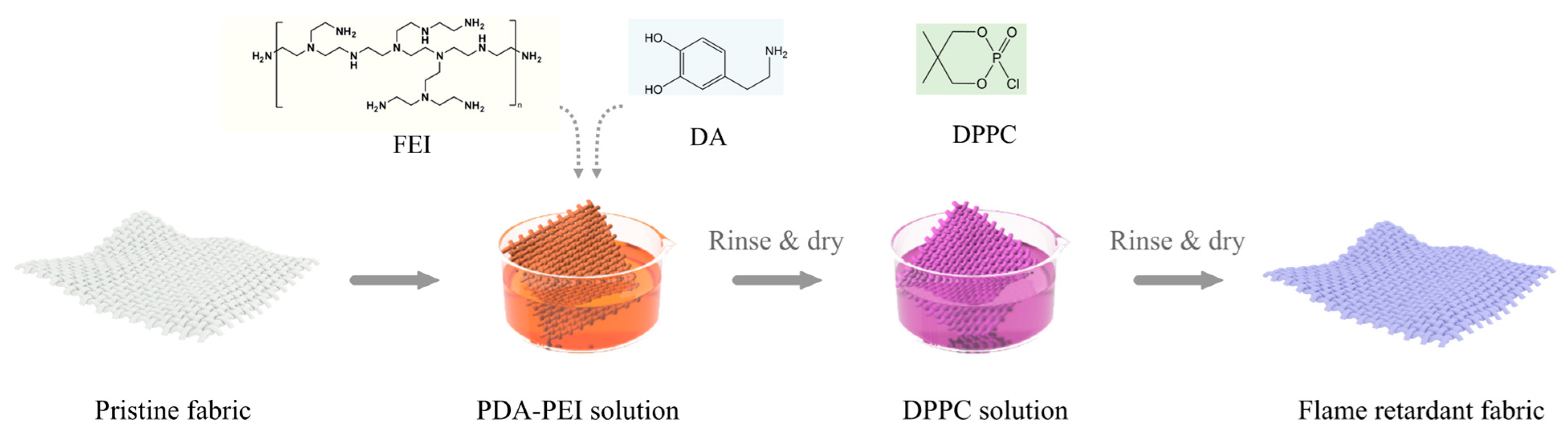
The preparation of PDA-PEI co-deposition solution involved the following steps: A 50 mmol/L Tris buffer solution was prepared, and its pH was adjusted to 8.5 using 1 mol/L HCl. Dopamine hydrochloride (DA) and PEI were weighed and dissolved uniformly in the Tris buffer to achieve final concentrations of 2 g/L for both components. Solutions of 2 g/L PDA and 2 g/L PEI were prepared following the same procedure. DPPC was weighed and fully dissolved via ultrasonication to prepare DPPC solutions with concentrations of 70 g/L. The fabrication process of PDA-PEI/DPPC flame retardant polyester/cotton fabric is illustrated in
Figure 2. First, the fabric was immersed in the PDA-PEI co-deposition solution within a beaker and subjected to co-deposition in a low-temperature water bath incubator. After 2 h, the fabric was rinsed with deionized water and dried at 60 °C. The dried fabric was then immersed in the DPPC solution for one hour at 40 °C, followed by rinsing with deionized water and drying at 60 °C to obtain yellow-brown PDA-PEI-2h/DPPC-70 fabric. To evaluate the individual contributions of PDA, PEI, and DPPC to flame retardancy, pristine polyester/cotton fabric was separately immersed in 2 g/L PDA solution, 2 g/L PEI solution, 2 g/L PDA and PEI solution, and 70 g/L DPPC solution under identical immersion, rinsing, and drying conditions—yielding the samples designated as PDA-2h, PEI-2h, PDA-PEI-2h/DPPC-0, and DPPC-70, respectively (
Table 1). Prior to the flame retardant treatment, all fabric samples were washed with ethanol and then dried to remove surface impurities. The untreated samples were labeled as Control.
2.4. Characterization and Testing of Flame Retardant Polyester/Cotton Fabric
Both the structural and compositional properties of flame retardant polyester/cotton fabric were comprehensively analyzed using multiple techniques. Nuclear magnetic resonance (NMR) spectroscopy (Avance 600, Bruker, Germany) was employed to characterize DPPC, with deuterated chloroform (CDCl3) as the solvent for both 1H NMR and 31P NMR measurements. Surface morphology and elemental distribution of the fabric before and after flame retardant treatment—on top of post-combustion residues—were examined by scanning electron microscopy (SEM, S4800, Hitachi, Japan) that was coupled with energy-dispersive spectroscopy (EDS) at an acceleration voltage of 3 kV, with samples gold-sputtered prior to imaging. X-ray photoelectron spectroscopy (XPS, Quantera II, ULVAC-PHI, Japan) that utilized an Al Kα source (1486.6 eV) provided key insights into surface elemental composition. Chemical structures were further investigated through Fourier-transform infrared spectroscopy (FTIR, Nicolet iS10, Thermo Scientific, USA; 4000–500 cm−1, 32 scans).
Thermal stability and decomposition behaviors were evaluated via thermogravimetric analysis (TGA, STA449F5, NETZSCH, Germany) under a nitrogen atmosphere (50 mL/min) with temperatures ramping from 30 °C to 700 °C at 10 °C/min. Volatile pyrolysis products released during heating were simultaneously analyzed using thermogravimetry-infrared spectroscopy (TG-IR), which coupled the TGA instrument with the FTIR system. Combustion performance was rigorously assessed through multiple standardized tests: limiting oxygen index (LOI, TTech-GBT2406-1, TTech, China; ISO 4589-2:2017), cone calorimetry (FTT0007, FTT, UK; ISO 5660-1:2015, 35 kW/m2 radiative heat flux), and horizontal flame testing (HFT, HFT-01, Moditech, China; FZ/T 01028-2016). Specimens for combustion tests were conditioned at 23 ± 2 °C and 50 ± 5% humidity using a constant climate chamber (LSHZ-300, TaiCang QiangLe, China), with dimensions tailored to each standard (e.g., 140 × 52 mm for LOI, 160 × 100 mm for HFT). Mechanical properties including warp- and weft-direction breaking strength and elongation were measured using an electronic universal testing machine (CMT-4104, MTS, USA) in accordance with GB/T 3923.1-2013. Prior to tensile testing, fabrics were equilibrated for 24 h under standard atmospheric conditions (20 ± 2 °C, 65 ± 5% humidity) in a forced-air drying oven (DHG-9245A, Yiheng, China).
3. Results
3.1. Chemical Structural Characterization of Synthesized Phosphorous Containing Flame Retardant
The structural characterization of DPPC was confirmed through comprehensive analyses including FTIR,
1H NMR, and
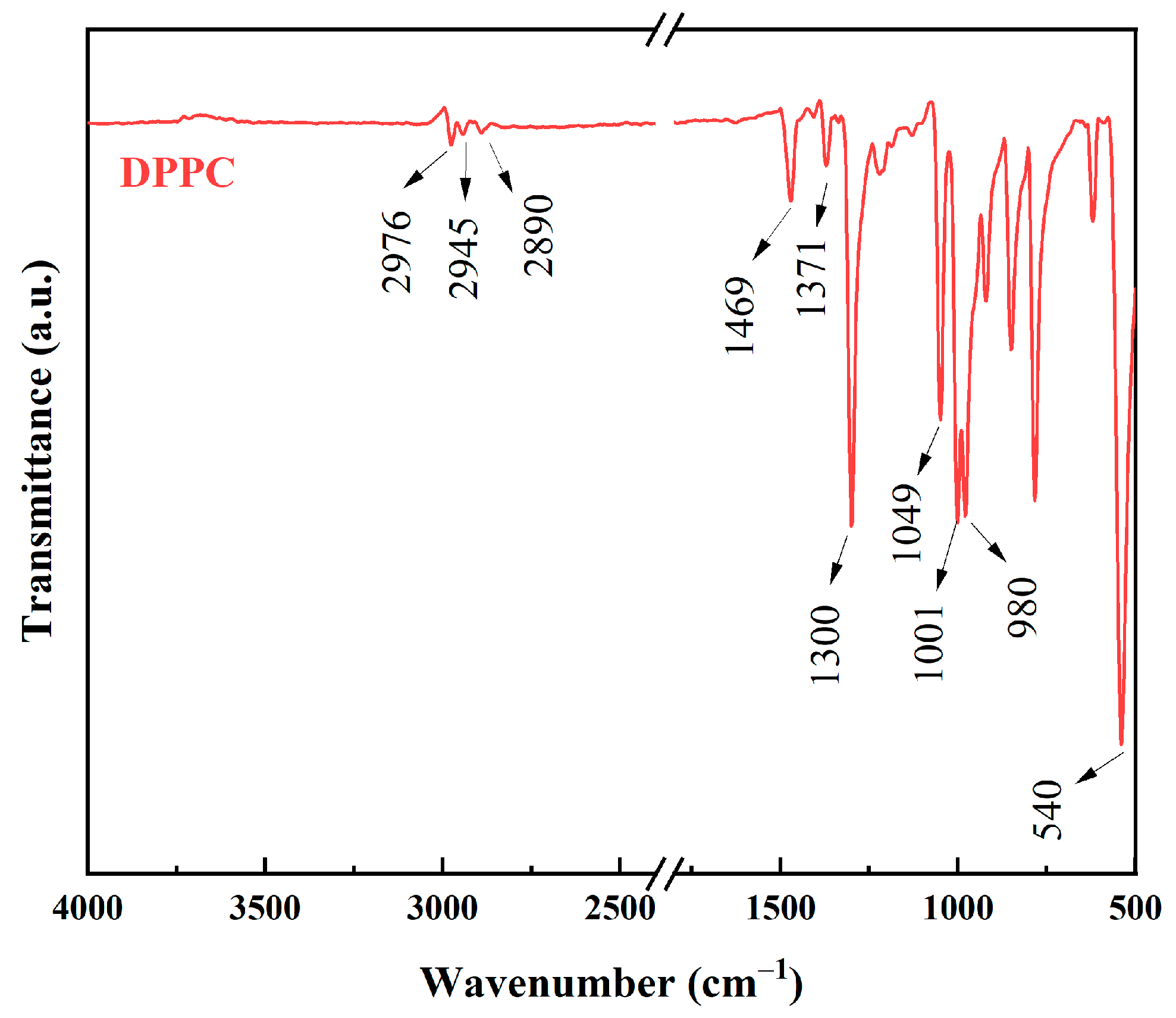
31P NMR spectroscopy. As shown in the FTIR spectrum (
Figure 3), the absorption bands at 2890, 2945, and 2976 cm
−1 were assigned to the asymmetric and symmetric C-H stretching vibrations of -CH
3 and -CH
2- groups, respectively. The peak at 1469 cm
−1 corresponded to the C-H in-plane bending vibration of methyl groups, while the absorption peak at 1371 cm
−1 originated from the skeletal vibration of the -C(CH
3)
2- moiety. The stretching vibration of the phosphorus-oxygen double bond (P=O) was observed at 1300 cm
−1 [
32]. The triplet peaks at 1049, 1001, and 980 cm
−1 were associated with both asymmetric and symmetric stretching modes of the P-O-C bonds. Notably, the strong absorption band at 549 cm
−1 was unambiguously attributed to the P-Cl stretching vibration [
33]. The
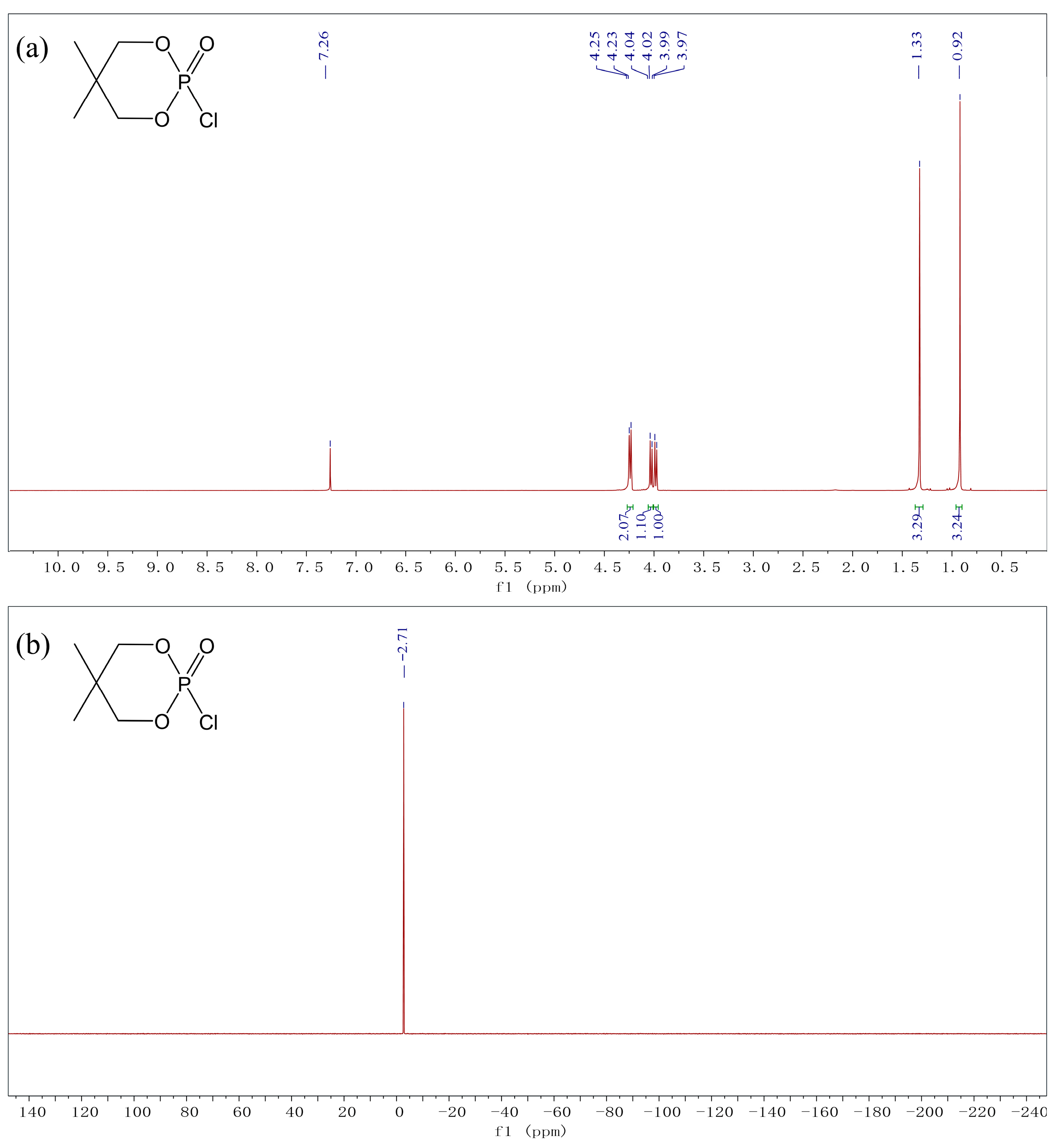
1H NMR spectrum (
Figure 4a) further confirmed the molecular structure: The signals at δ 4.24 (d,
J = 10.8 Hz, 2H) and δ 3.98–4.03 (dd,
J = 11.3 Hz, 2H) corresponded to two distinct methylene proton environments (C-CH
2-O), with their coupling constant differences reflecting steric effects around the phosphorus atom. The singlets at δ 1.33 (s, 3H) and δ 0.92 (s, 3H) were attributed to protons of the equivalent methyl groups on the central carbon and terminal methyl groups, respectively. The integration ratio (3H:3H:2H:2H) precisely matched the proton distribution in the target molecule. The
31P NMR spectrum (
Figure 4b) exhibited a single sharp resonance at −2.71 ppm, which indicates a unique chemical environment for the phosphorus atom and confirms the absence of synthetic byproducts. These results demonstrated fine consistency with the expected structure of DPPC. Collectively, the FTIR functional group identification,
1H NMR proton assignments, and
31P NMR phosphorus environment analysis provided mutually corroborative evidence for the synthesis flame retardant of DPPC.
3.2. Surface Morphology and Chemical Composition Analysis of Flame Retardant Polyester/Cotton Fabrics
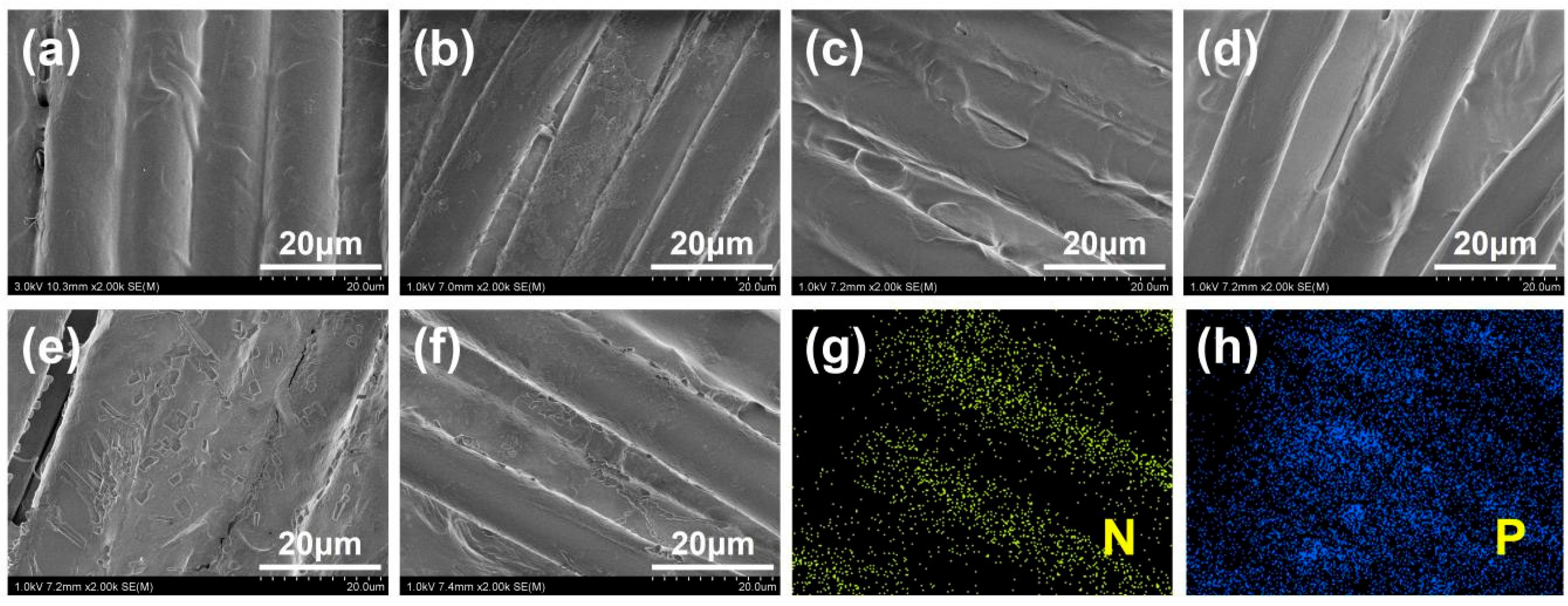
The surface morphologies of polyester/cotton fabrics before and after flame retardant treatment were characterized and shown in
Figure 5a–f. Untreated fabric exhibited a smooth surface, while the PDA-2h sample displayed a distinct nanoparticle deposition after a two-hour immersion in the PDA solution. The PEI-2h sample retained a smooth morphology. In contrast, for the PDA-PEI-2h/DPPC-0 sample prepared via co-deposition of PDA and PEI, the particle formation was suppressed due to PEI-mediated inhibition of PDA aggregation. The DPPC-70 sample treated solely with DPPC showed evident crystalline DPPC adhesion. The PDA-PEI-2h/DPPC-70 sample exhibited uniformly distributed submicron particles. Although the tiny gaps between the fibers in the treated fabric were somewhat filled, the overall porous network of the fabric was well preserved to ensure air and moisture permeability. As illustrated in
Figure 5g,h, EDS mapping confirmed homogeneous distribution of N and P elements on the PDA-PEI-2h/DPPC-70 fabric surface; this corroborated a successful deposition of PDA, PEI, and DPPC with a mass gain of 10.1 ± 0.4%. FTIR spectra of untreated and flame retardant treated fabrics are presented on
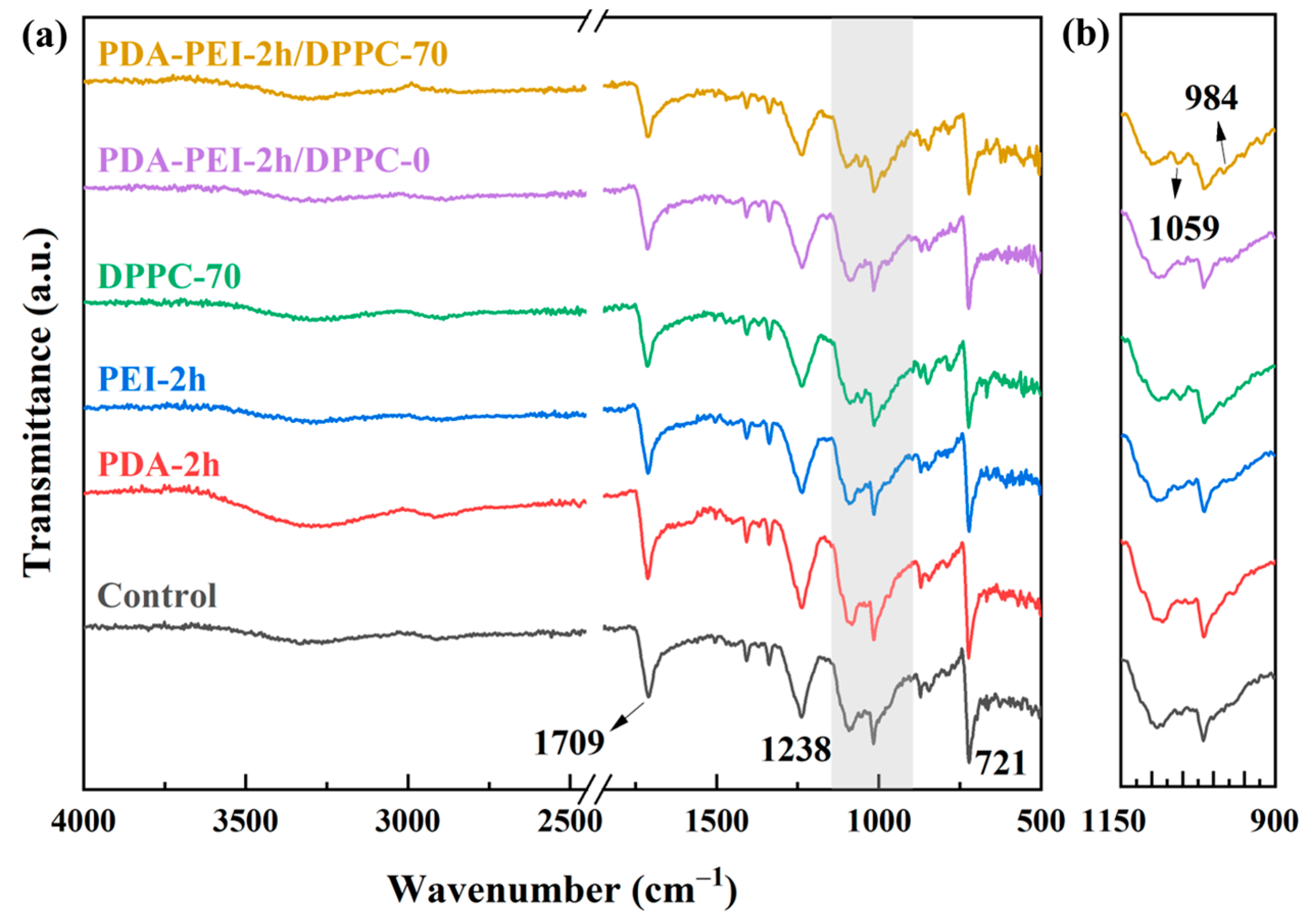
Figure 6. The characteristic absorption bands at 1709 cm
−1 (C=O stretching) and 1238 cm
−1 (C–O stretching) were observed in all samples. For DPPC-treated fabrics (DPPC-70 and PDA-PEI-2h/DPPC-70), the enhanced absorption intensity at 1059 cm
−1 likely resulted from overlapping contributions of P–O–C and C–O stretching vibrations. Notably, a new absorption peak emerged at 984 cm
−1 in the PDA-PEI/DPPC spectrum. This band is attributed to the overlapping contributions of the preserved P–O–C skeleton from the grafted DPPC moiety and the newly formed P–N bonds, providing strong evidence for the successful chemical anchoring of the flame retardant.
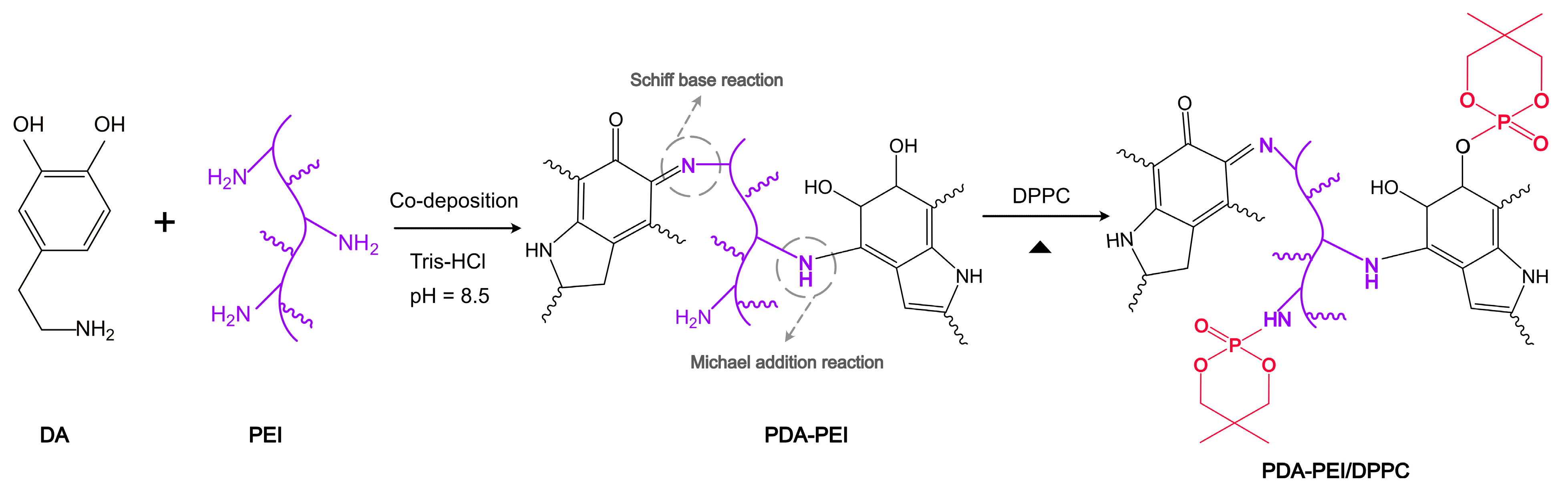
The synergistic interactions among components in the PDA-PEI/DPPC system are illustrated in
Figure 7. The co-deposition process involves two concurrent pathways: (1) oxidative self-polymerization of DA to form PDA; and (2) covalent conjugation between DA and PEI via Michael addition or Schiff base reactions. Initially, DA monomers undergo oxidation to form o-quinone intermediates, which subsequently cyclize into 5,6-dihydroxyindole (DHI); this is then followed by crosslinking to generate PDA nanoparticles [
34]. While pristine PDA solutions typically develop turbidity due to particle aggregation, the introduction of PEI maintained solution clarity by disrupting hydrogen bonding and π-π interactions among PDA oligomers, thereby promoting uniform coating formation on fabric surfaces [
29,
35]. DPPC, as a highly reactive phosphoryl chloride derivative, underwent nucleophilic substitution reactions. The P-Cl bonds in DPPC reacted efficiently with the abundant nucleophilic phenolic hydroxyl groups in PDA and amino groups in PEI, resulting in the formation of robust P-O and P-N covalent linkages. Eventually, a P–N synergistic flame retardant network on the textile substrate was established.
3.3. Thermal Stability of Flame Retardant Polyester/Cotton Fabrics
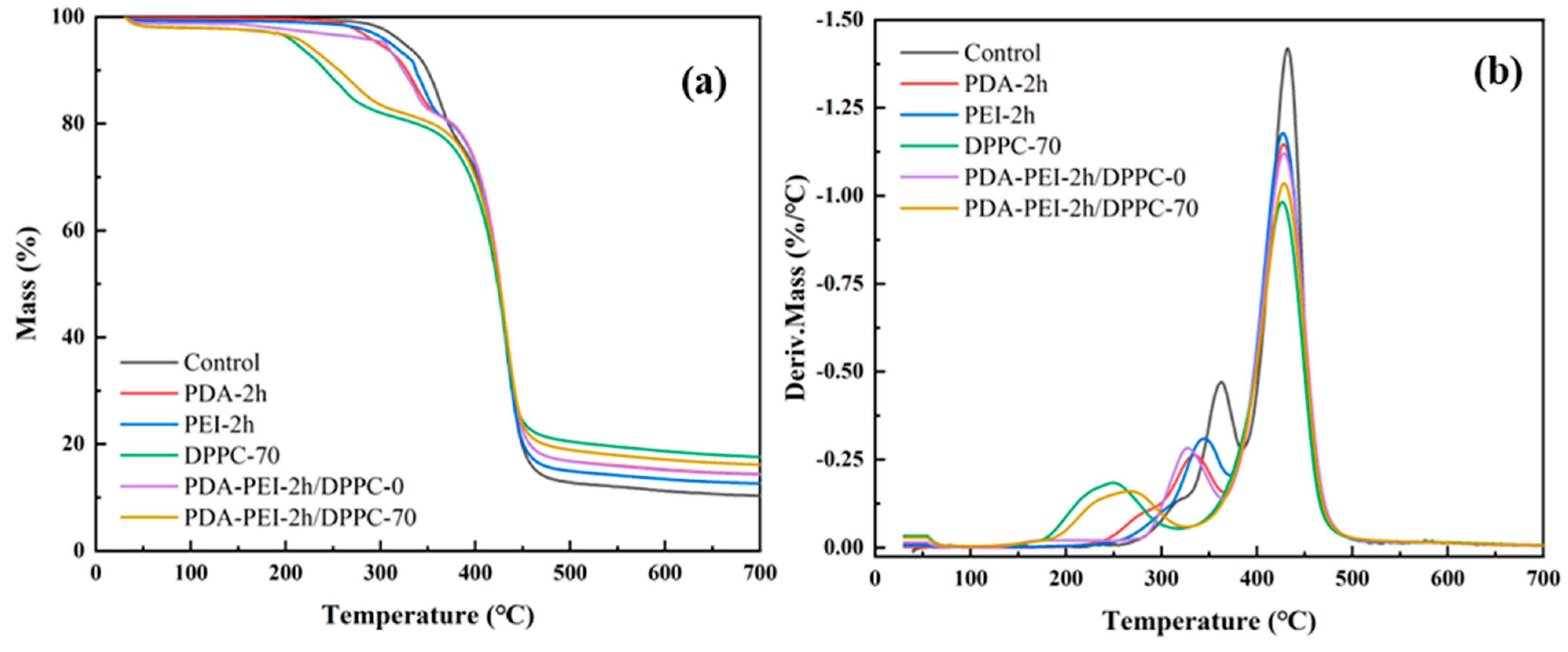
The thermal degradation behavior of pristine and fabricated fabrics, as evaluated through TGA under a nitrogen atmosphere (
Figure 8), consistently exhibited two distinct degradation stages across all samples—corresponding to the thermal decomposition of cotton and polyester components. For the untreated control fabric, the initial decomposition temperature of 324.8 °C (T
−5%, defined as the temperature at which 5% mass loss occurs) was relatively high. It was also accompanied by elevated maximum decomposition rates (R
max) for both stages, resulting in minimal char residue (10.3%) at 700 °C. This behavior was attributed to the cleavage of glycosidic bonds and dehydration in cotton at lower temperatures; additionally, this was followed by the thermal cracking of polyester molecular chains at higher temperatures, producing volatile compounds and leaving little residual char due to the absence of protective treatments.
Flame retardant treatments significantly altered these thermal degradation behaviors. Fabrics treated with nitrogen-containing coatings—PDA, PEI, and their combination (PDA-PEI)—demonstrated a marked reduction in T−5% and maximum decomposition temperatures (Tmax1 and Tmax2), alongside decreased Rmax values and increased char residue. Notably, the PDA coating yielded the most pronounced effect owing to an effective catalyzation of dehydration and charring of the cotton component. Relying solely on its amine network, PEI exhibited a milder catalytic influence, with moderate reductions in decomposition parameters and limited char enhancement. However, the PDA-PEI harnessed the synergistic interplay of catechol and amine functionalities and outperformed either alone by combining PDA’s dense crosslinking and PEI’s amines to create a more cohesive barrier, further slowing both stages and slightly boosting char beyond PDA (14.3%). Furthermore, phosphorus-based treatments (DPPC-70 and PDA-PEI-2h/DPPC-70) drove these effects even further through an in situ generation of phosphoric acids that aggressively catalyzed dehydration and charring. DPPC alone plunged the onset temperature by over 100 °C and dramatically cut mass-loss rates in both stages, raising char to nearly 18%. While the PDA-PEI-2h/DPPC-70 retained most of DPPC’s acid-catalyzed charring, it also gained additional structural integrity and radical-trapping from the organic PDA-PEI network, delivering the most balanced and robust suppression across both decomposition stages. Compared to the Control (Rmax1 = 0.47%/°C, Rmax2 = 1.42%/°C, char = 10.3%), the PDA-PEI-2h/DPPC-70 cut Rmax1 by around 66%, Rmax2 by around 27%, and boosted residual char by 56%. In sum, all coatings exhibited a decrease in initial thermal stability. This early decomposition is a characteristic behavior of effective phosphorus flame retardants, as they must degrade prior to the polymer matrix to release acidic catalytic species. Consequently, this process sacrificed initial stability to markedly slow down cellulose and polyester breakdown and promoted condensed-phase char formation. These findings highlight the superior thermal stability and flame-retardant potential of the hybrid coating, leveraging synergistic catalytic effects to optimize char promotion and decomposition control.
3.4. Flame Retardancy of Polyester/Cotton Fabrics
The flame retardancy of treated fabrics was systematically evaluated through horizontal flame tests, LOI, and cone calorimetry. The Control exhibited high flammability, with an LOI of 17.0%, which is consistent with its inherent combustibility. Nitrogen-containing treatments (PDA-2h, PEI-2h, and PDA-PEI-2h/DPPC-0) showed negligible improvements, with LOI values stagnating at around 17.6%. This minimal increase (≤5.9%) confirmed that nitrogen moieties alone fail to enhance char formation or alter combustion pathways significantly. Even the PDA-PEI combination displayed no synergy, underscoring the inefficacy of purely nitrogen-based systems in elevating oxygen tolerance. In stark contrast, phosphorus-modified systems demonstrated dramatic enhancements: DPPC-70 achieved an increase of 43.5% in LOI, while the LOI of PDA-PEI-2h/DPPC-70 was further improved to 24.6%. This highlights phosphorus’s dominance in condensed-phase char promotion, with nitrogen playing a secondary role in gas-phase dilution. HFT results, which primarily reflect the flame spread rate and basic flammability of materials, revealed a hierarchical flame-retardant performance of the prepared fabrics. The control ignited rapidly, with flame spread at 257.3 mm/min. Nitrogen treatments marginally reduced spread rates, while PDA-PEI-2h/DPPC-0 showed a slightly superior suppression (180.7 mm/min), suggesting weak gas-phase dilution synergy; however, none achieved self-extinction. Conversely, DPPC-70 reduced spread by 85.5% (37.2 mm/min), nearing self-extinction. Remarkably, PDA-PEI-2h/DPPC-70 eliminated flame propagation entirely, validating the critical role of P/N synergy. The performance of PDA-PEI-2h/DPPC-70surpassed DPPC-70 alone, as nitrogen-derived gases diluted combustible volatiles, while phosphorus fortified char integrity.
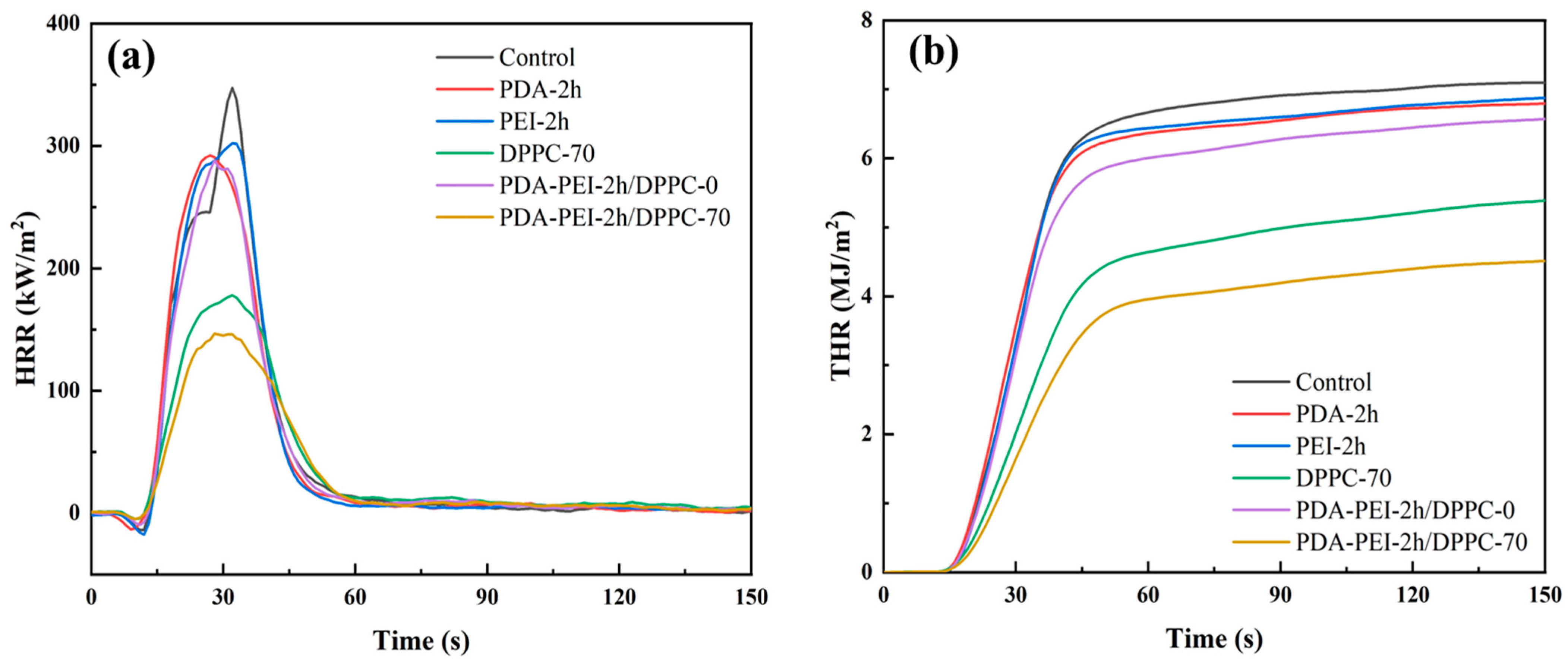
Cone calorimetry further elucidated the impact of coatings on heat release behavior. The control fabric’s pHRR reached 347.4 kW/m
2 with a THR of 7.15 MJ/m
2, which is indicative of vigorous combustion. Both PDA-2h and PEI-2h treatments modestly reduced pHRR and THR, confirming limited gas phase inhibition without significant char formation. The PDA-PEI combination achieved slightly improved reductions than the individual ones, which is consistent with its improved flame spread performance. DPPC alone delivered a substantial drop in pHRR to 178.1 kW/m
2 (−49%) and THR to 5.86 MJ/m
2 (−18%) by establishing a stable, heat-insulating char layer. The PDA-PEI-2h/DPPC-70 composite outperformed all systems, achieving pHRR and THR reductions of 57.7% and 32.6%, respectively—these readings underscore the powerful synergy between gas phase and condensed phase flame retardancy (
Figure 9,
Table 2). Finally, the fire growth rate index (FIGRA) analysis highlighted the coatings’ ability to impede fire development. The control exhibited a high FIGRA of 10.9 kWm
2/s, while PDA-2h, PEI-2h, and PDA-PEI-2h/DPPC-0 treatments only slightly lowered this parameter, which is reflective of their limited influence on sustained combustion. DPPC-70 and PDA-PEI-2h/DPPC-70 reduced FIGRA markedly to 5.6 kW/m
2/s and 5.2 kW/m
2/s, respectively, demonstrating the most significant mitigation of fire growth. These results confirm that although nitrogen-based additives impart some flame inhibition, the incorporation of a phosphorus-rich char-forming agent is crucial for realizing low heat release, self-extinguishment, and pronounced reductions in fire hazard—with the PDA-PEI-2h/DPPC-70 formulation delivering the most comprehensive and optimal flame retardant performance.
Table 2.
LOI, HFT, and cone calorimetry data of fabrics.
Table 2.
LOI, HFT, and cone calorimetry data of fabrics.
| Samples | LOI
(%) | Flame Spread Rate
(mm/min) | pHRR (kW/m2) | THR
(MJ/m2) | FIGRA
(kW/m2/s) |
|---|
| Control | 17.0 | 257.3 ± 31.0 | 347.4 | 7.15 | 10.9 |
| PDA-2h | 17.6 | 190.7 ± 27.9 | 292.2 | 6.99 | 10.8 |
| PEI-2h | 17.6 | 192.5 ± 20.6 | 302.0 | 6.95 | 9.4 |
| DPPC-70 | 24.4 | 37.2 ± 5.3 | 178.1 | 5.86 | 5.6 |
| PDA-PEI-2h-DPPC-0 | 17.6 | 180.7 ± 29.0 | 288.3 | 7.02 | 10.3 |
| PDA-PEI-2h/DPPC-70 | 24.6 | 0 | 146.7 | 4.82 | 5.2 |
3.5. Flame Retardant Mechanism of Polyester/Cotton Fabrics
The char residues of both untreated and flame retardant fabrics after cone calorimetry were analyzed to elucidate the condensed-phase mechanisms (
Figure 10). The Control fabric underwent a near-complete combustion with minimal residue, attributable to the “scaffold effect” of its polyester-cotton fiber composition. This effect manifested as a porous, molten char morphology with large cavities (
Figure 10a), which accelerated heat transfer and flammable gas release—factors exacerbating flame propagation as documented in prior studies [
9]. In contrast, PDA-PEI-2h/DPPC-70 retained clearly defined fiber networks within their char residue (
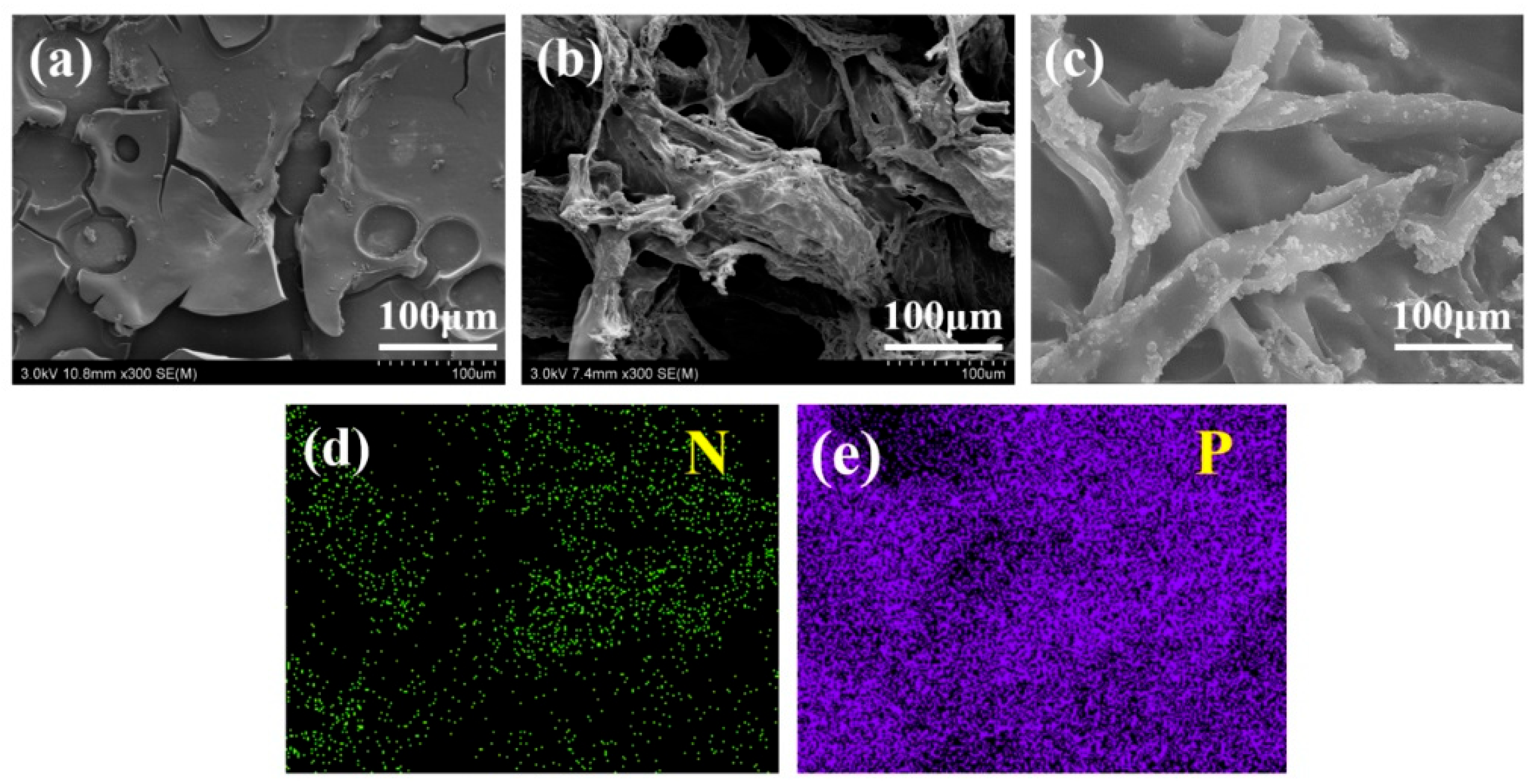
Figure 10b). Crucially, polyester fibers formed a continuous melt layer that fully encapsulated cotton fibers, thereby suppressing melt-dripping. Elemental mapping further revealed uniform nitrogen and phosphorus distribution throughout the PDA-PEI-2h/DPPC-70 char (
Figure 10d,e), confirming the effective retention of flame-retardant elements within the condensed phase. This retention correlates directly with the observed thermal stabilization and flame suppression mechanisms.
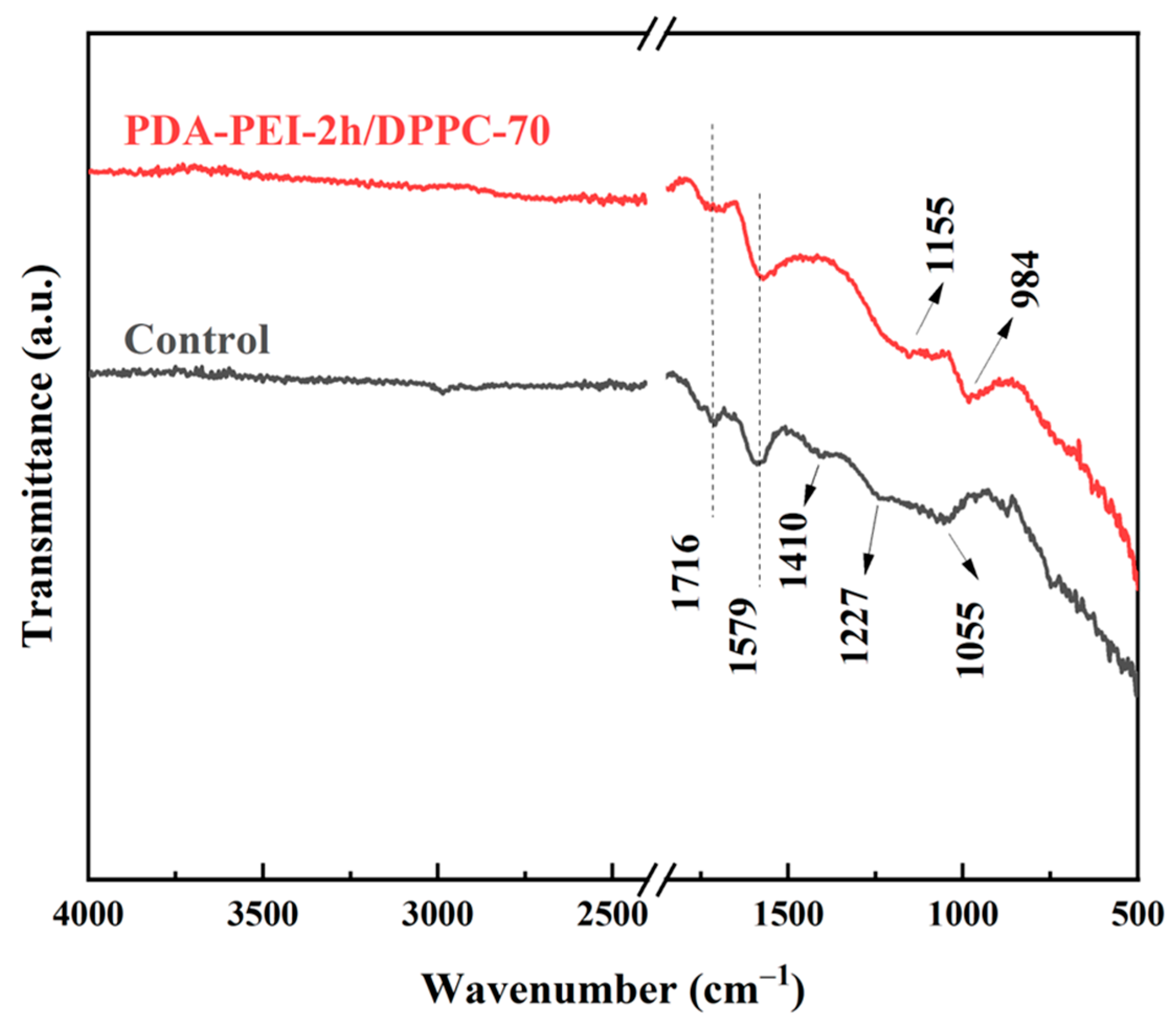
FTIR spectroscopy revealed fundamental chemical structure distinctions between Control and PDA-PEI-2h/DPPC-70 chars. As demonstrated in
Figure 11, the Control exhibited oxidative degradation signatures (C=O at 1716 cm
−1, aromatic C=C at 1579 cm
−1), while the PDA-PEI-2h/DPPC-70 displayed a P-N bond at 984 cm
−1 and overlapping C-O-C/C-O-P vibrations at 1155 cm
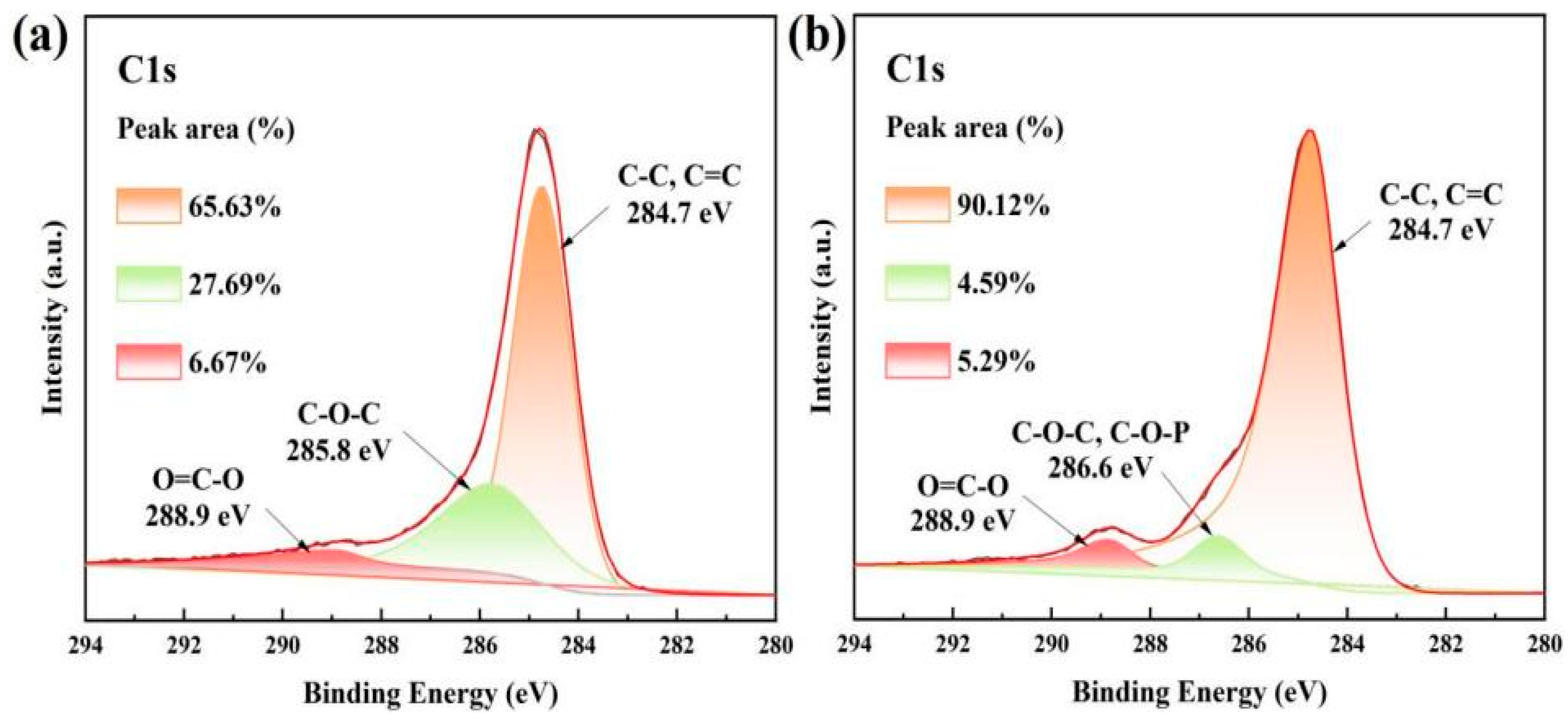
−1; this directly evidences condensed-phase phosphorus-nitrogen interactions in the condensed phase. Complementary XPS analyses (
Figure 12) quantitatively demonstrated enhanced stability in PDA-PEI-2h/DPPC-70 char, which comprised 90.12% stable C-C/C=C bonds versus 65.63% unstable oxygenated carbons in the Control. The 44.5% increase in graphitic carbon formation generated a dense barrier that impeded heat transfer, oxygen diffusion, and pyrolytic fuel release; this mechanistically explains the system’s self-extinguishing behavior and superior flame retardancy documented in combustion tests. The spectroscopic data collectively establishes a direct structure-property relationship between condensed-phase molecular architecture and fire suppression efficacy.
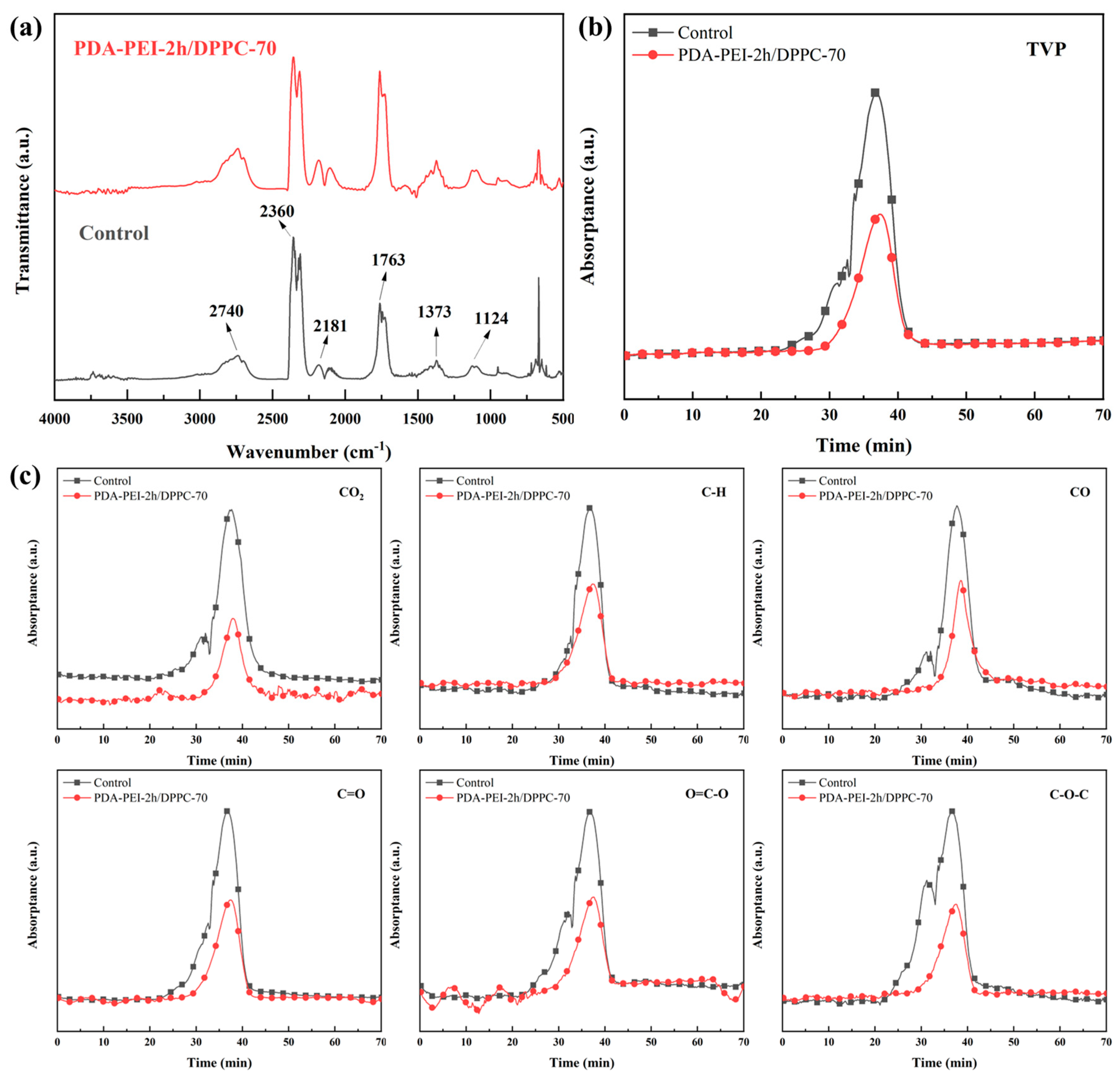
The volatile pyrolysis products of Control and PDA-PEI-2h/DPPC-70 fabrics were analyzed via TG-IR. The FTIR spectra of evolved gases at the maximum decomposition rate (T
max2) are shown in
Figure 13a. For PDA-PEI-2h/DPPC-70 fabric, characteristic peaks included C–H stretching vibrations (2740 cm
−1, aliphatic hydrocarbons), CO
2 (2360 cm
−1), CO (2181 cm
−1), C=O stretching (1763 cm
−1, carbonyl compounds), C–O stretching (1373 cm
−1, esters), and C–O–C stretching (1124 cm
−1, ethers). Compared with the PDA-PEI-2h/DPPC-70 fabric, the Control fabric exhibited no new peaks. As shown in
Figure 13b, the total volatile gas emissions significantly decreased by 42.7% for PDA-PEI-2h/DPPC-70 versus Control. To quantify changes in gas composition, the absorption intensities of key species were compared—including non-flammable CO
2 and flammable hydrocarbons (C-H), carbonyls (C=O), esters (O=C-O), ethers (C-O-C), and CO (
Figure 13c). The PDA-PEI-2h/DPPC-70 fabric showed markedly attenuated absorption intensities for all flammable gases, indicating a suppressed fuel release. Furthermore, CO
2 intensity also decreased, which was likely due to an incomplete combustion caused by a reduction in fuel availability. This dual reduction in flammable volatiles and combustion efficiency underpins the enhanced flame retardancy of the treated fabric, as evidenced by its lower pHRR (146.7 kW/m
2) and self-extinguishing behavior.
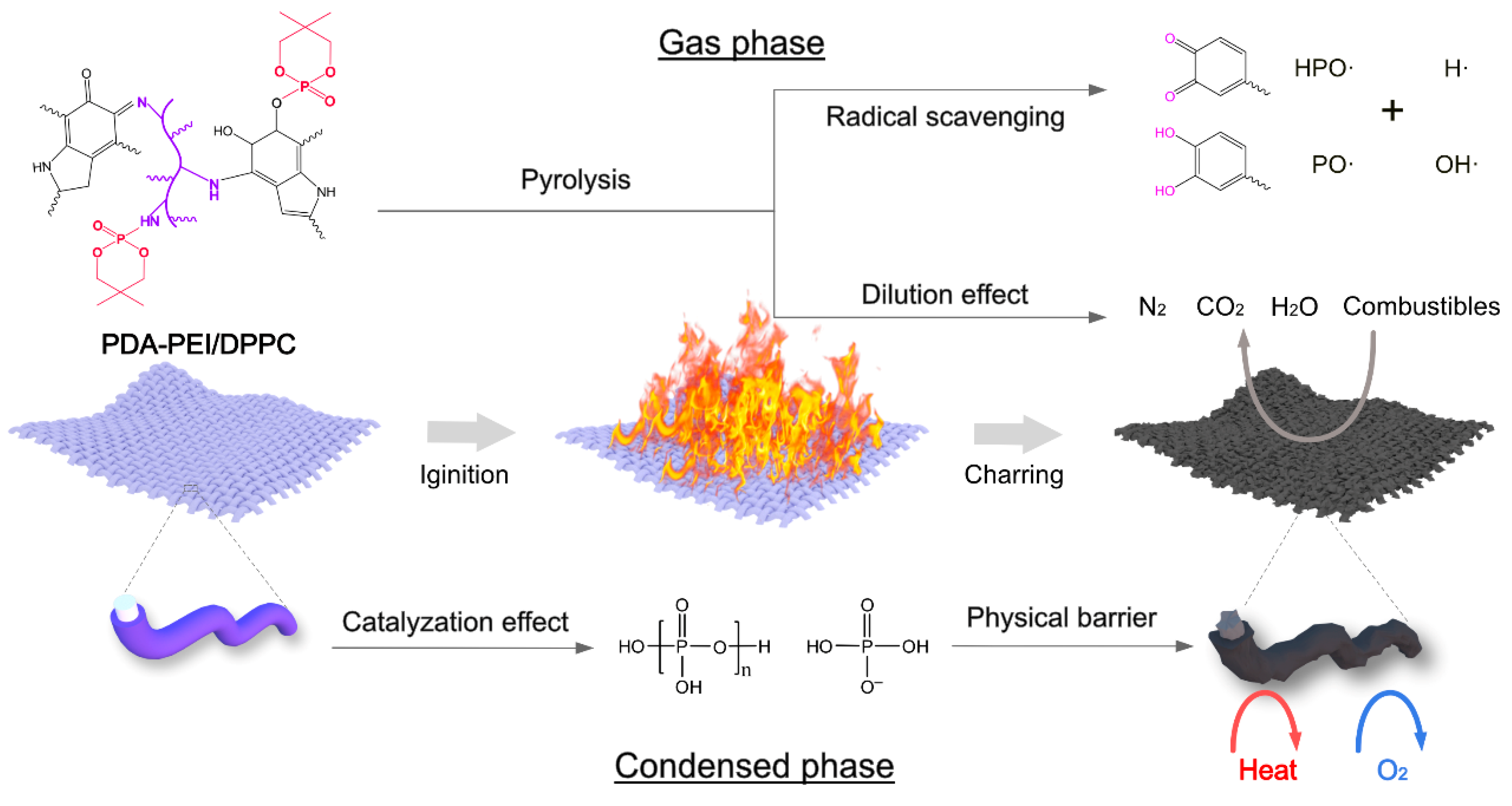
A comprehensive analysis of condensed-phase residues and volatile pyrolysis products illustrates the dual-phase flame retardant mechanism of PDA-PEI-2h/DPPC-70 polyester/cotton fabric, as systematically illustrated in
Figure 14. Upon thermal exposure, phosphoric acid and polyphosphoric acid released from the PDA-PEI/DPPC coating catalyzed cellulose dehydration and carbonization. The resulting continuous char layer, as a physical barrier, effectively impeded heat and oxygen transfer during combustion, thereby suppressing melt-dripping and hindering their thermal degradation. Concurrently, the decomposition of phosphoric structures in the flame retardant system generated phosphorus-containing active radicals (e.g., PO· and HPO·). These radicals scavenged and quenched high-energy H· and OH· radicals in the gas phase. Furthermore, PDA’s intrinsic semiquinone radicals directly quenched combustion chain-reaction radicals through electron transfer [
36,
37,
38,
39]. Therefore, terminating chain reactions resulted in suppressing combustion and exhibiting gas-phase chemical flame retardancy. During the combustion process, non-flammable gases (CO
2, H
2O, and N
2) were generated and released—leading to a diluted concentration of flammable gases in the gas phase, a diminished fuel supply, and a slowed combustion rate. In summary, the PDA-PEI/DPPC coating system exerts synergistic flame retardant effects through both condensed and gas-phase mechanisms.
3.6. Mechanical Properties of Flame Retardant Polyester/Cotton Fabric
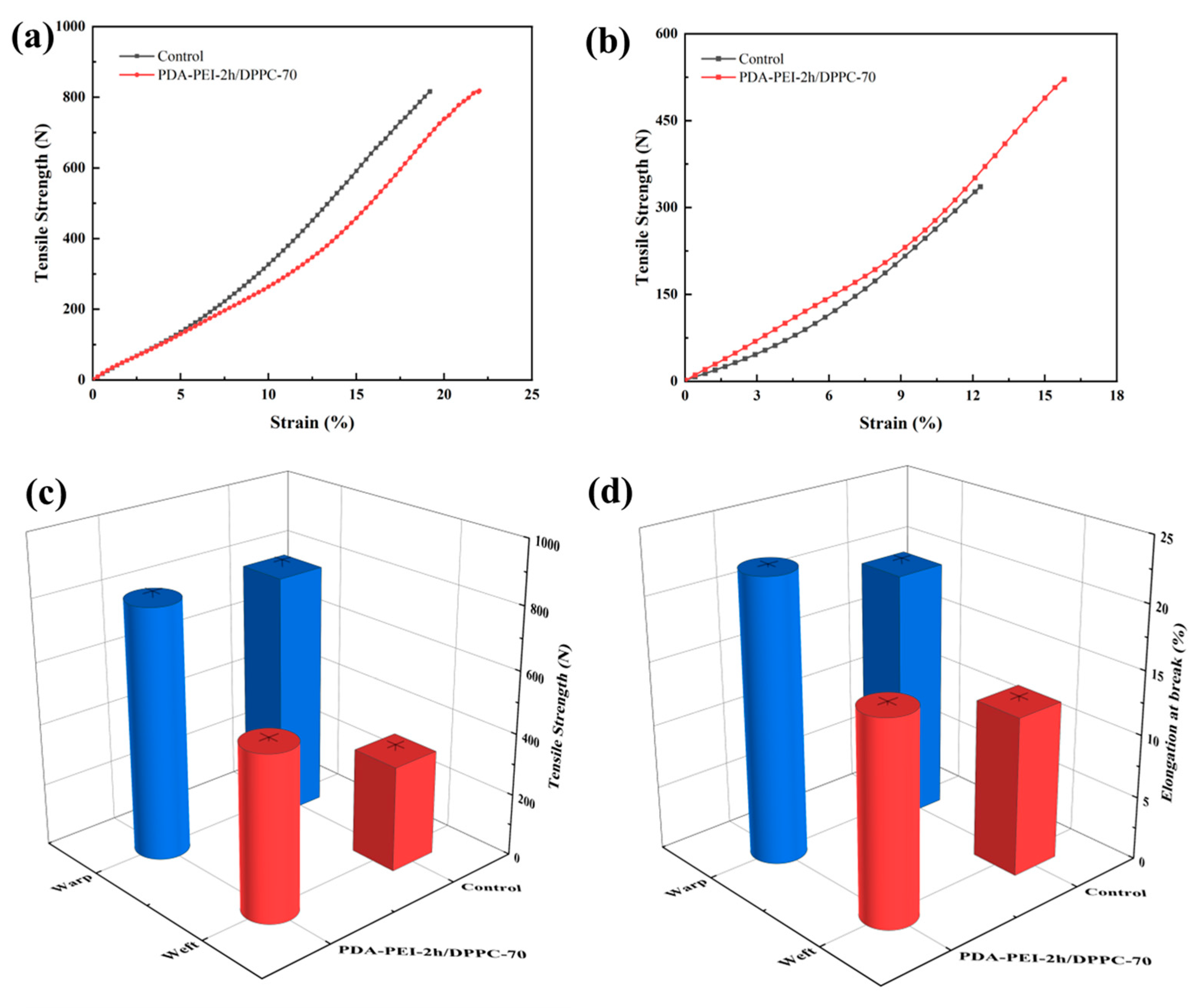
The mechanical properties of flame retardant polyester/cotton fabric was investigated. As shown in
Figure 15, the control polyester/cotton fabric exhibited a warp-direction breaking strength of 790.5 ± 23.5 N, a warp-direction elongation at break of 19.7 ± 0.5%, a weft-direction breaking strength of 339.5 ± 19.7 N, and a weft-direction elongation at break of 12.5 ± 0.4%. In comparison, the PDA-PEI-2h/DPPC-70 flame retardant polyester/cotton fabric showed a nearly unchanged warp-direction breaking strength, with a slight increase in warp-direction elongation at break. Notably, its weft-direction breaking strength increased to 526.4 ± 11.1 N (an enhancement of approximately 55.0%), and the weft-direction elongation at break improved to 15.9 ± 0.3%. This improvement in mechanical performance may be attributed to the bioadhesive properties of PDA and the highly crosslinked polymeric network formed by the co-deposition of PDA and PEI. The abundant catechol and amine groups within the coating facilitate strong interfacial adhesion and hydrogen bonding between the fibers. The PDA-PEI-2h/DPPC-70 flame retardant system creates an encapsulating coating on the fabric surface, thereby enhancing interfacial cohesion and improving the breaking strength and elongation at break of the polyester/cotton fabric.