Research on Application of High-Pressure Cyclic Grouting Technology in Soft Soil Layers
Abstract
1. Introduction
2. Research on Slurry Flow Dynamics Mechanism
2.1. Basic Theoretical Assumptions
- (1)
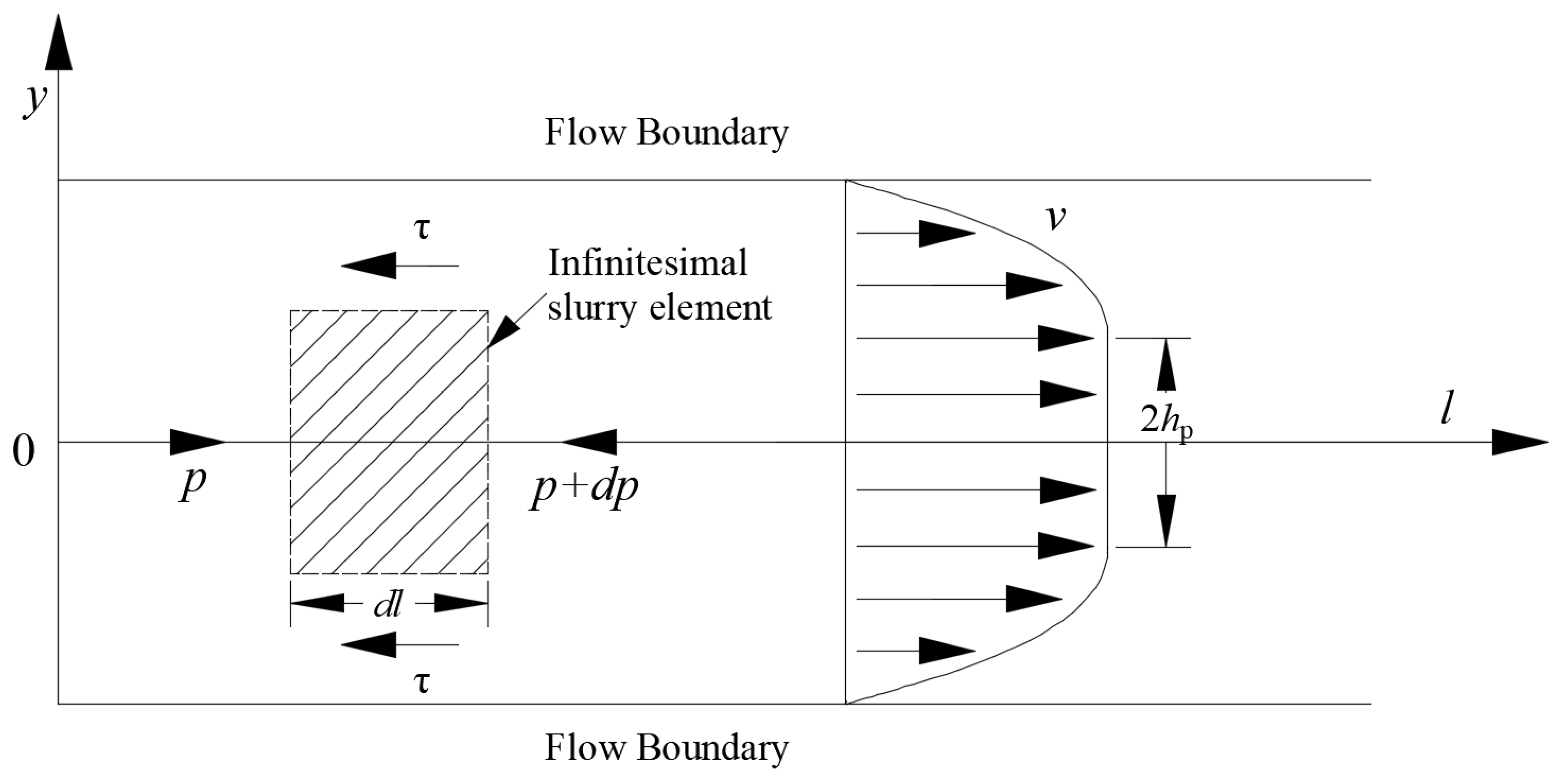
- The slurry is incompressible and flows in laminar form.
- (2)
- The reinforced surface soil can be regarded as an elastic body.
- (3)
- During the fracturing process outside the pre-embedded pipe, the opening is uniform and distributed annularly.
2.2. Steady-State Flow Pressure Field Analysis
2.3. Theoretical Model of Reinforcement Radius
3. Analysis of Influencing Factors on Grouting Pressure
3.1. Influence of Slurry Characteristics on Allowable Grouting Pressure and Flow Pressure Loss Ratio
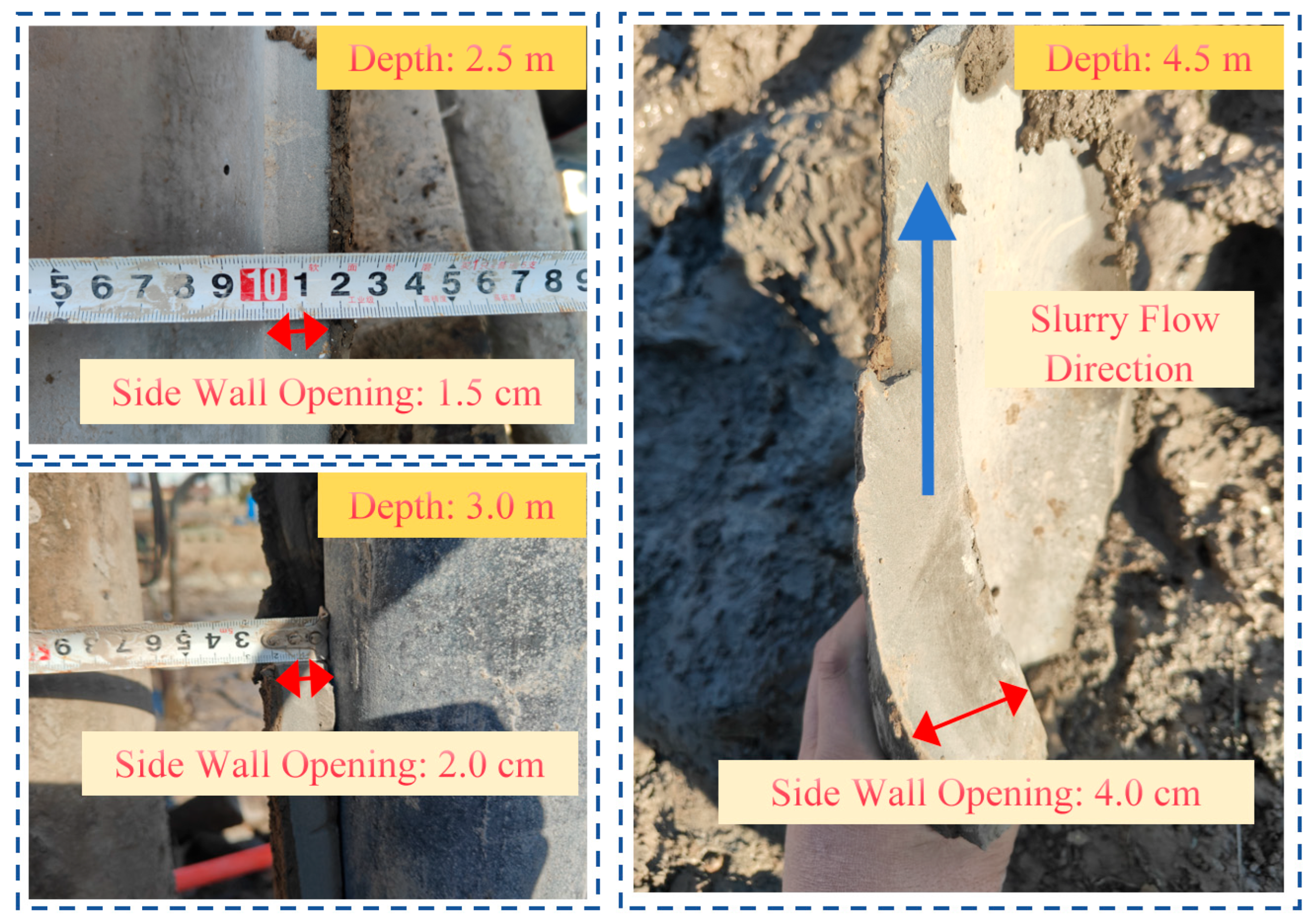
3.2. Influence of Side Wall Opening Variation of Grouting Pipe on Allowable Grouting Pressure and Flow Pressure Loss Ratio
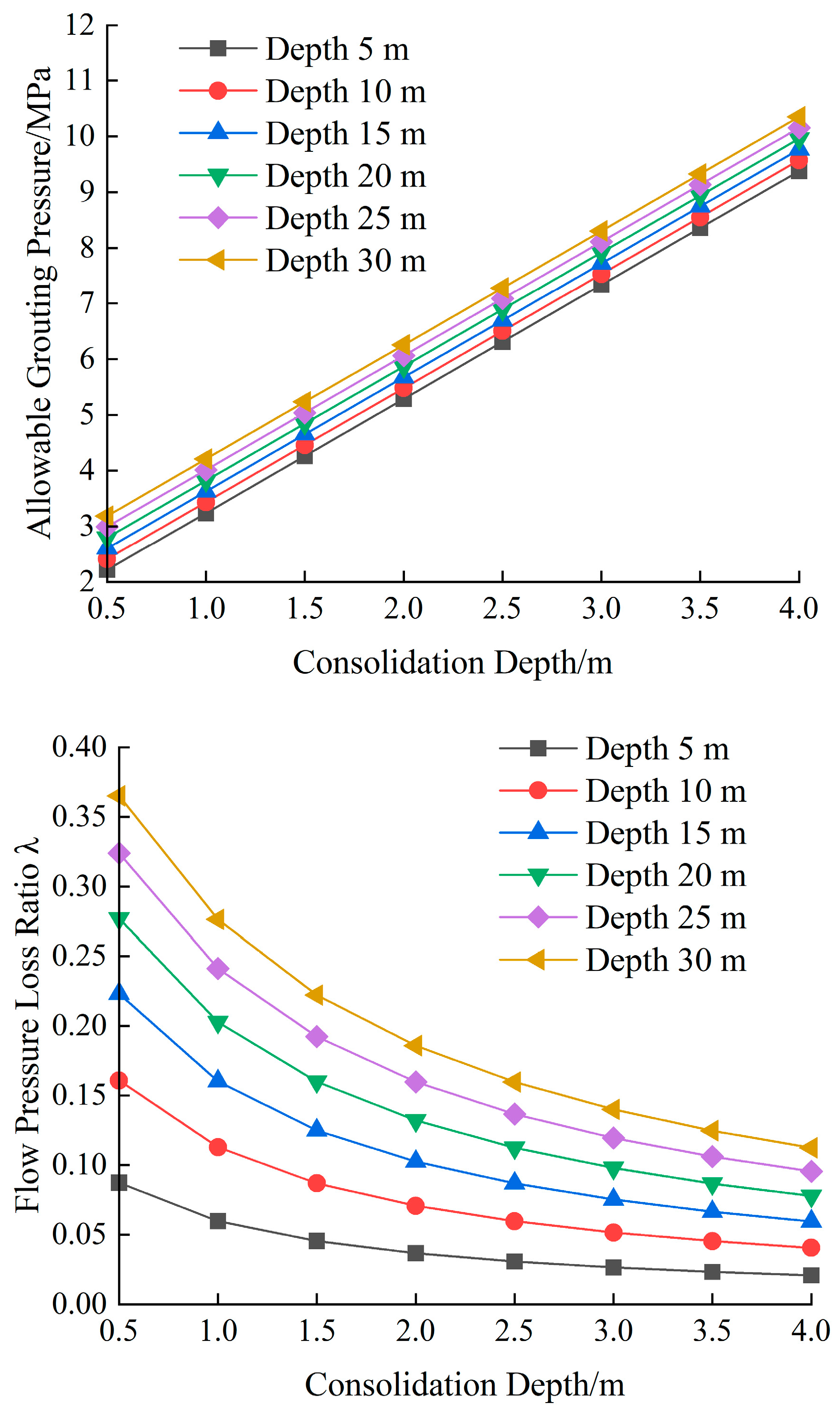
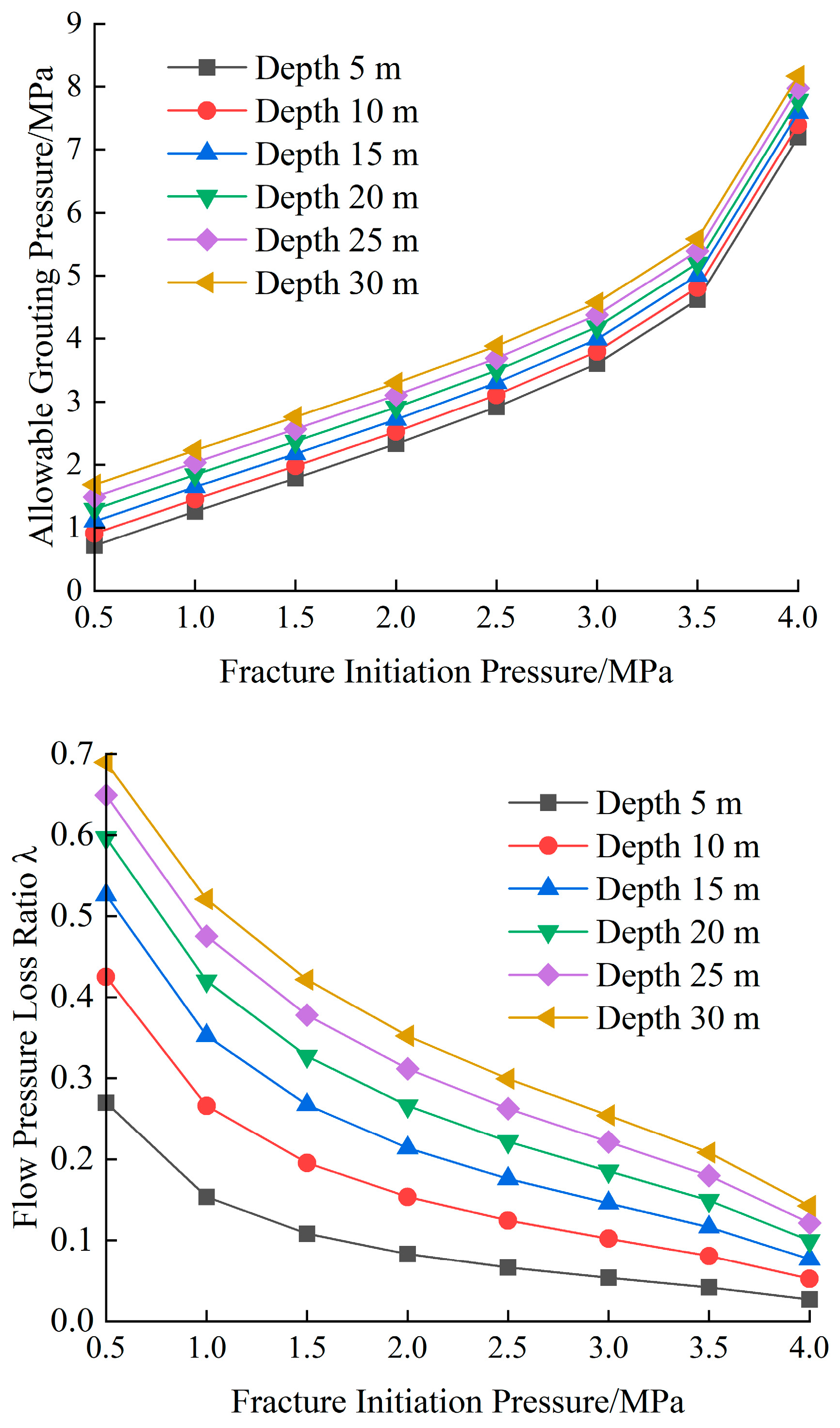
3.3. Influence of Surface Consolidation on Allowable Grouting Pressure and Flow Pressure Loss Ratio
4. Experimental Materials and Methods
4.1. Soil Characteristics
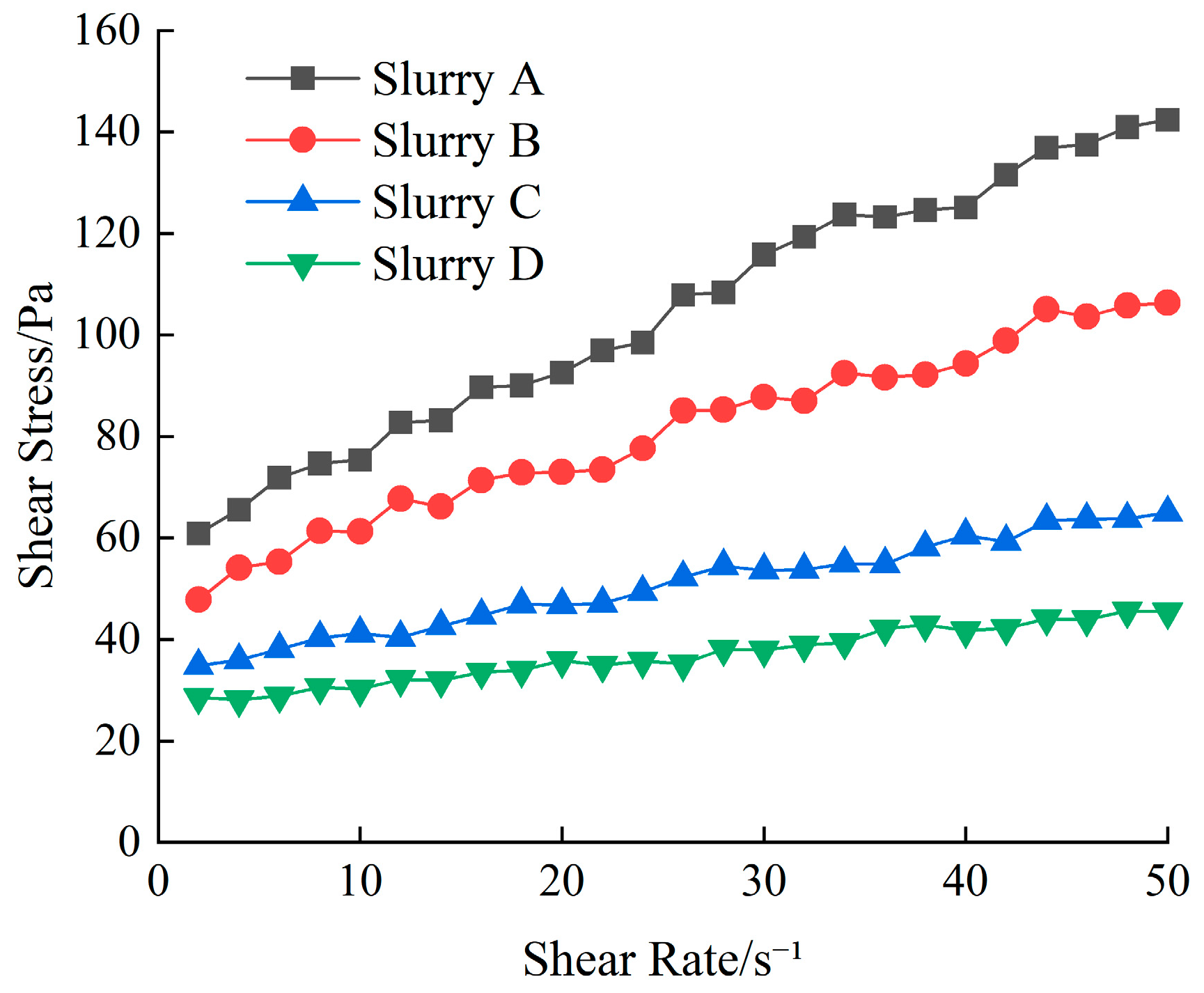
4.2. Grouting Material Characteristics
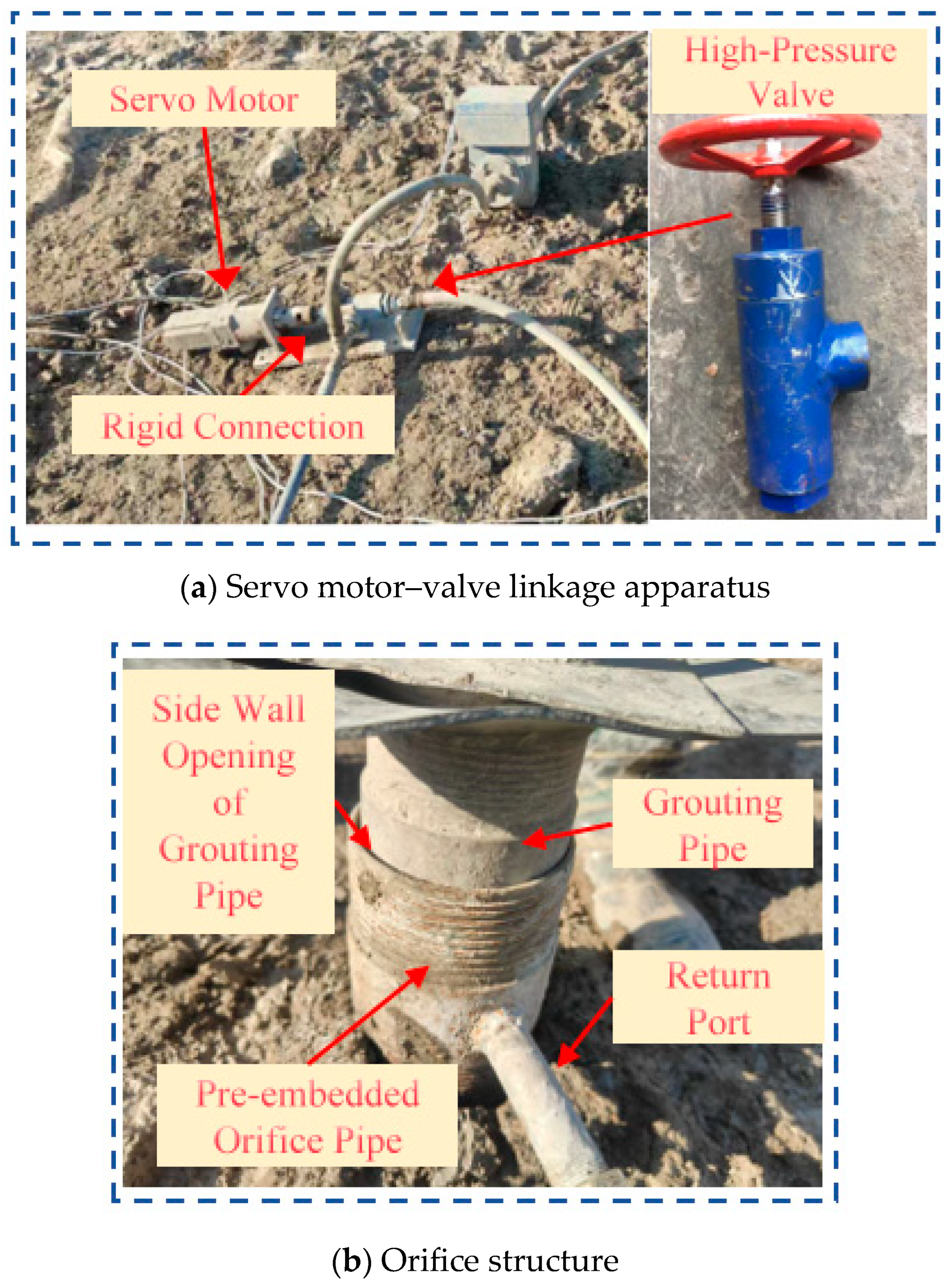
4.3. High-Pressure Cyclic Grouting System and Experimental Design
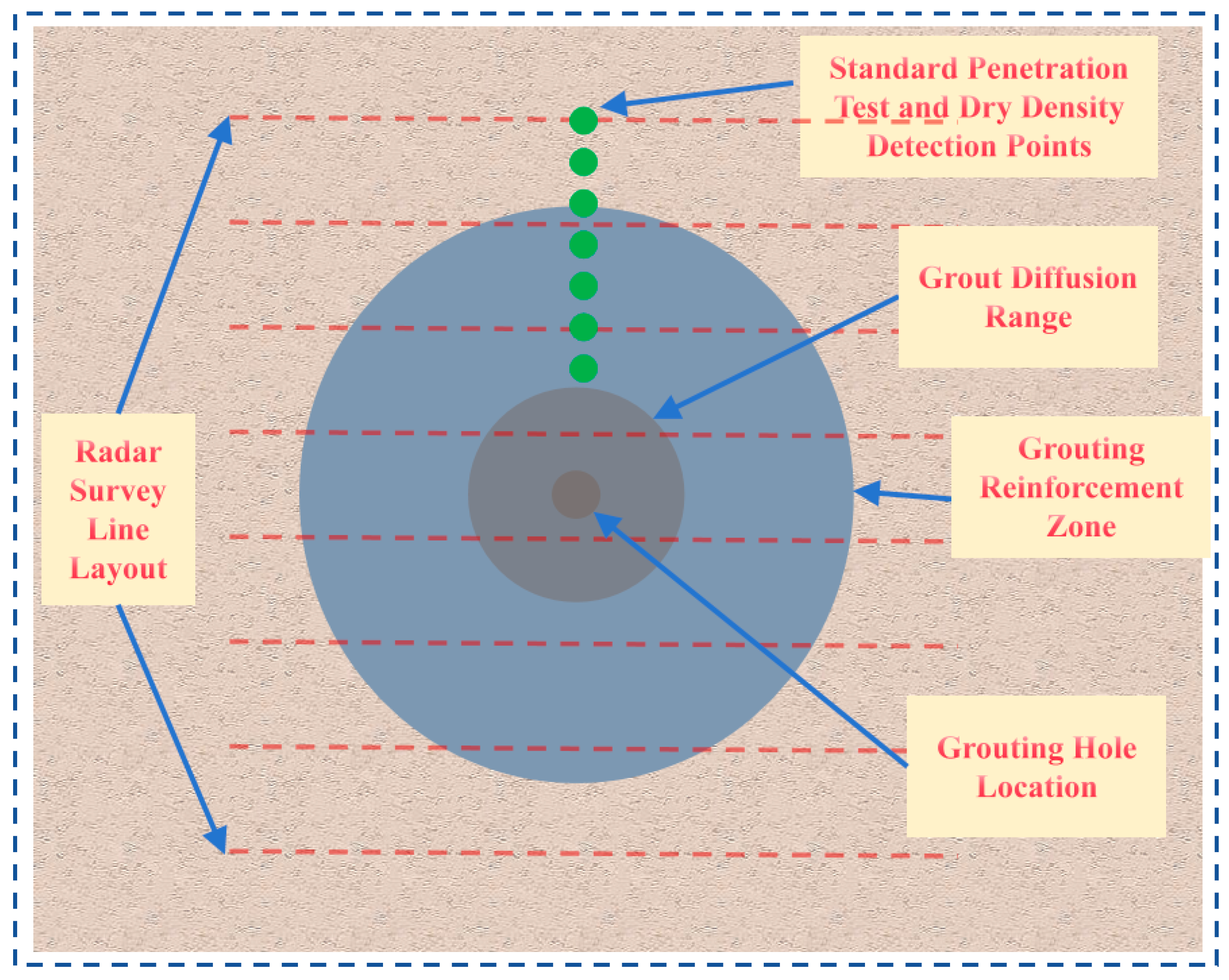
4.4. Post-Grouting Effect Evaluation and Detection Methods
5. Results and Discussions
5.1. Analysis of Grouting Results
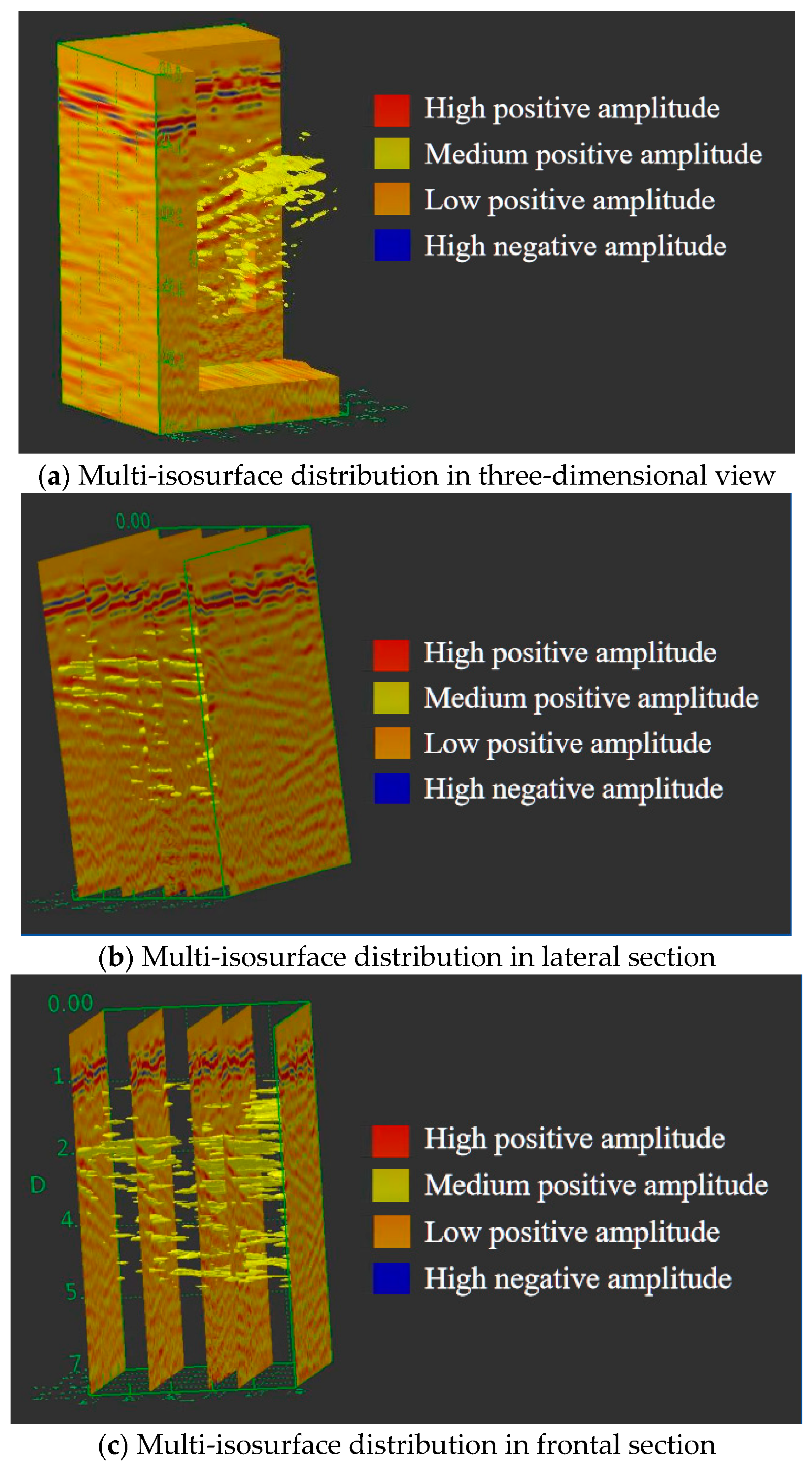
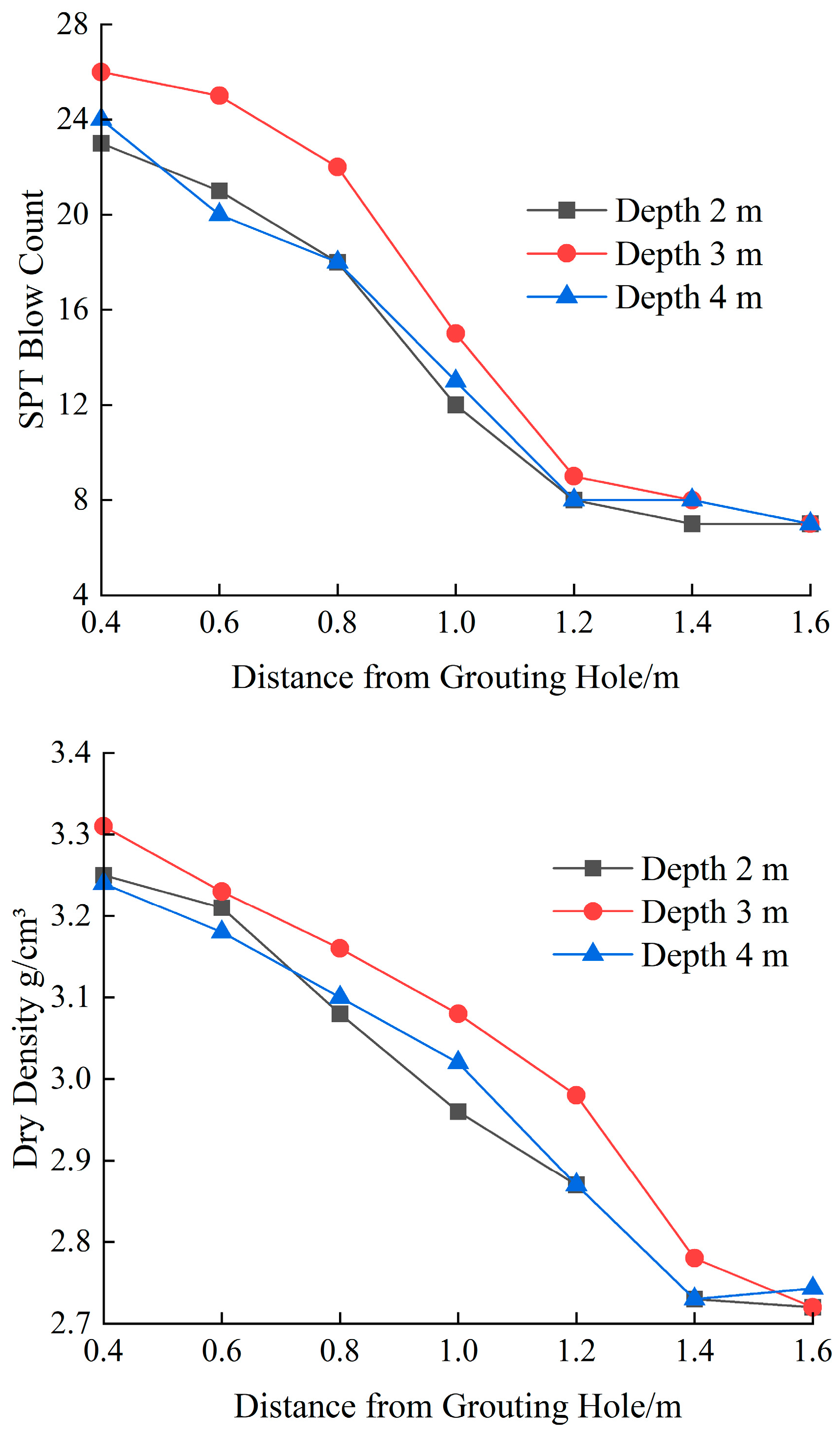
5.2. Evaluation of Grouting Effectiveness
5.3. Comparison of Theoretical and Experimental Results
5.4. Limitations and Future Research Directions
- (1)
- Simplification of constitutive relations and fluid–solid coupling
- (2)
- Long-term performance and durability
6. Conclusions
- (1)
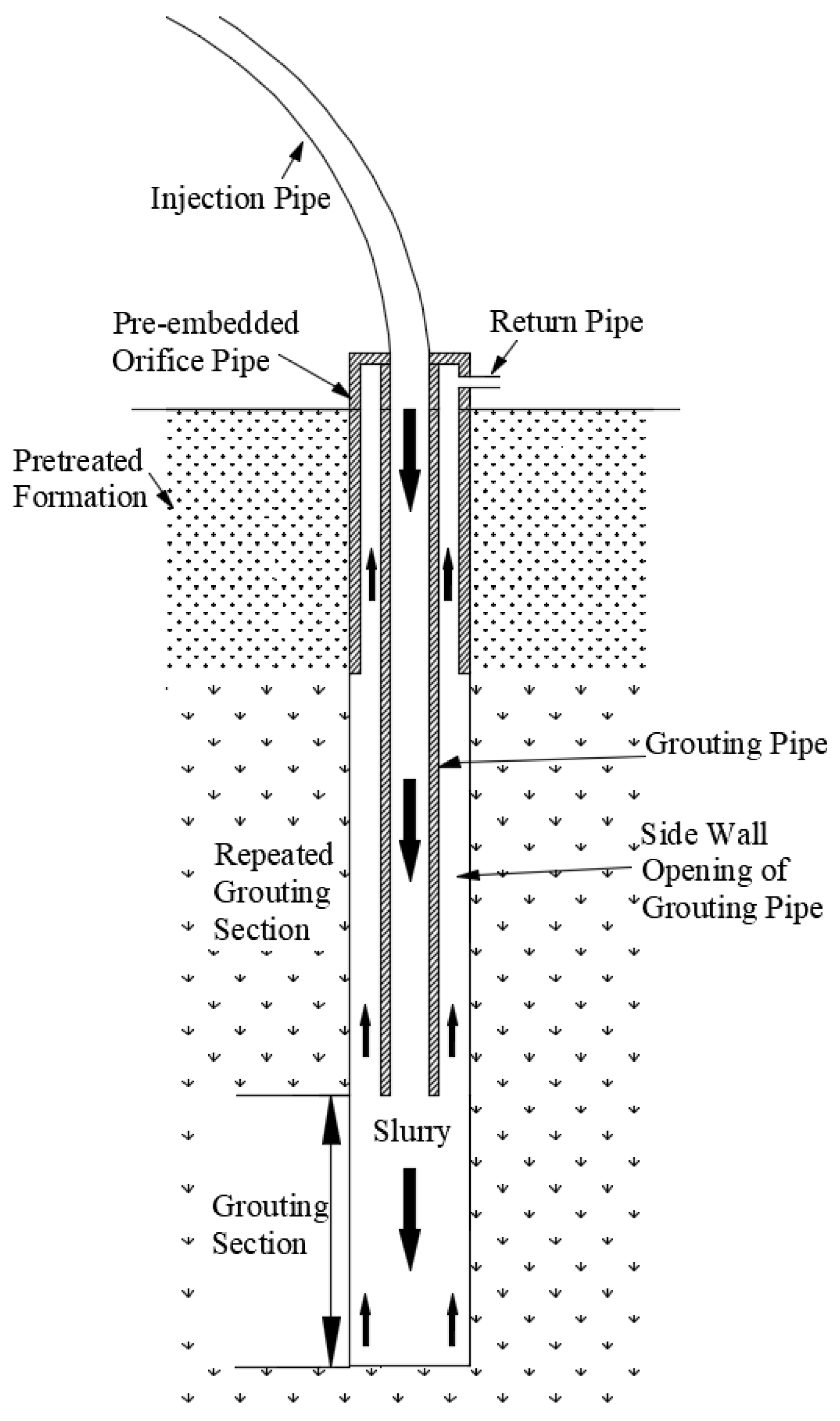
- A surface consolidation and top-down cyclic grouting process is proposed. A grouting pressure loss equation is established to quantitatively analyze the relationships between the allowable grouting pressure and the side wall opening of the grouting pipe, surface consolidation depth, surface consolidation strength, and slurry rheological parameters. Based on the strain–pressure curve, a prediction model for the reinforcement radius of compaction grouting is established.
- (2)
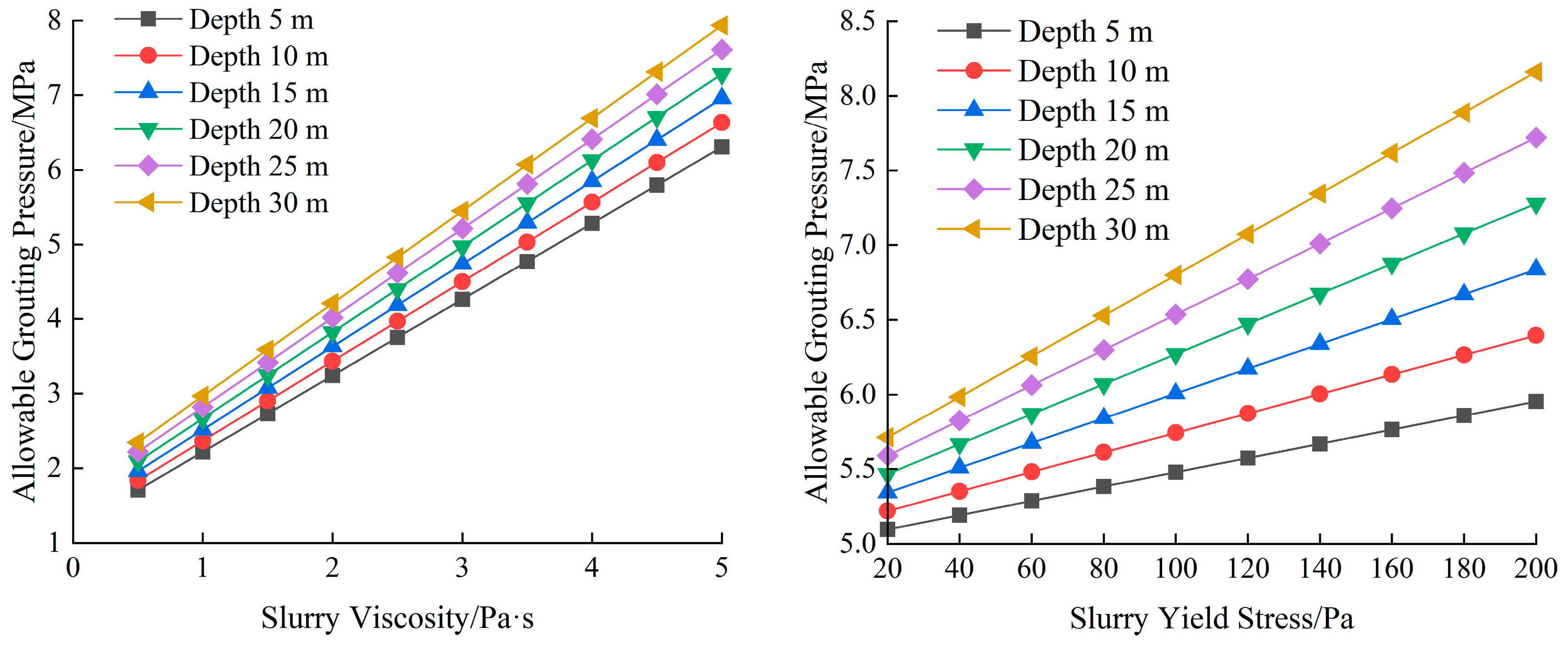
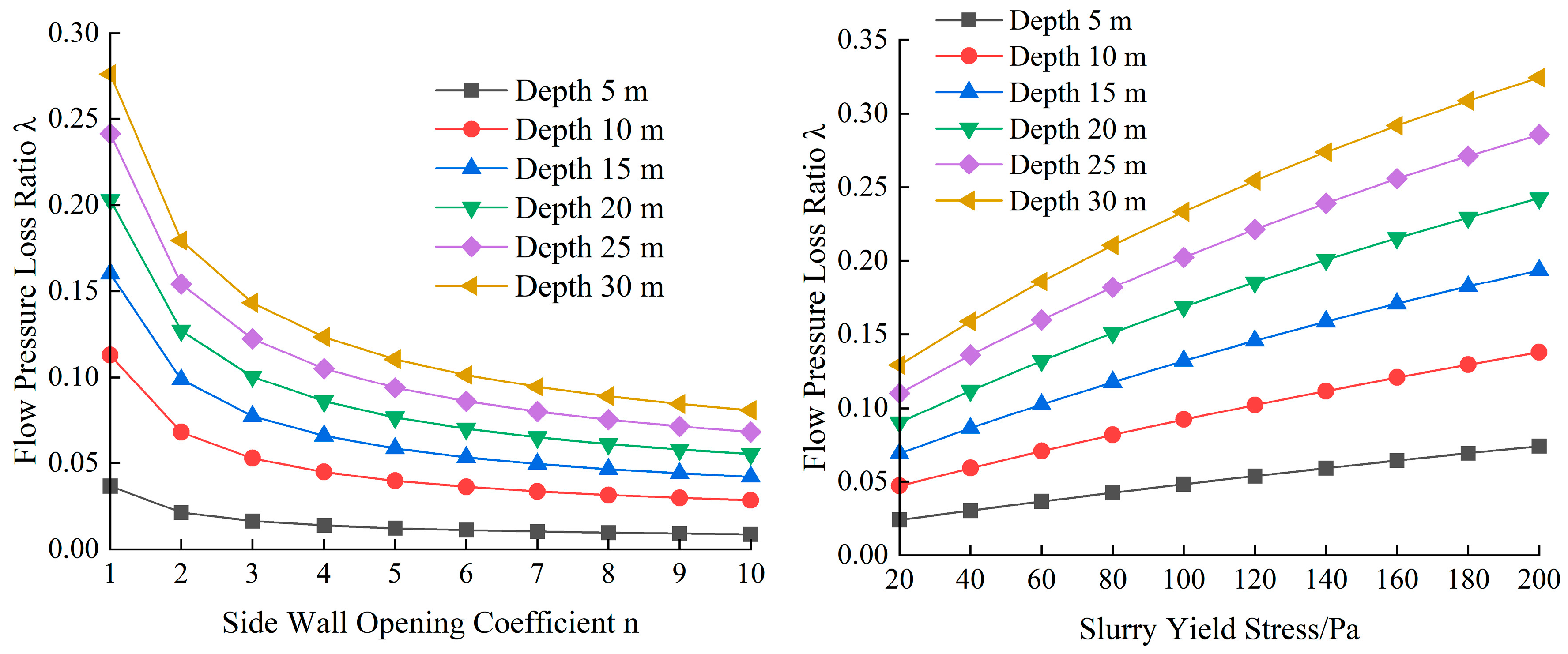
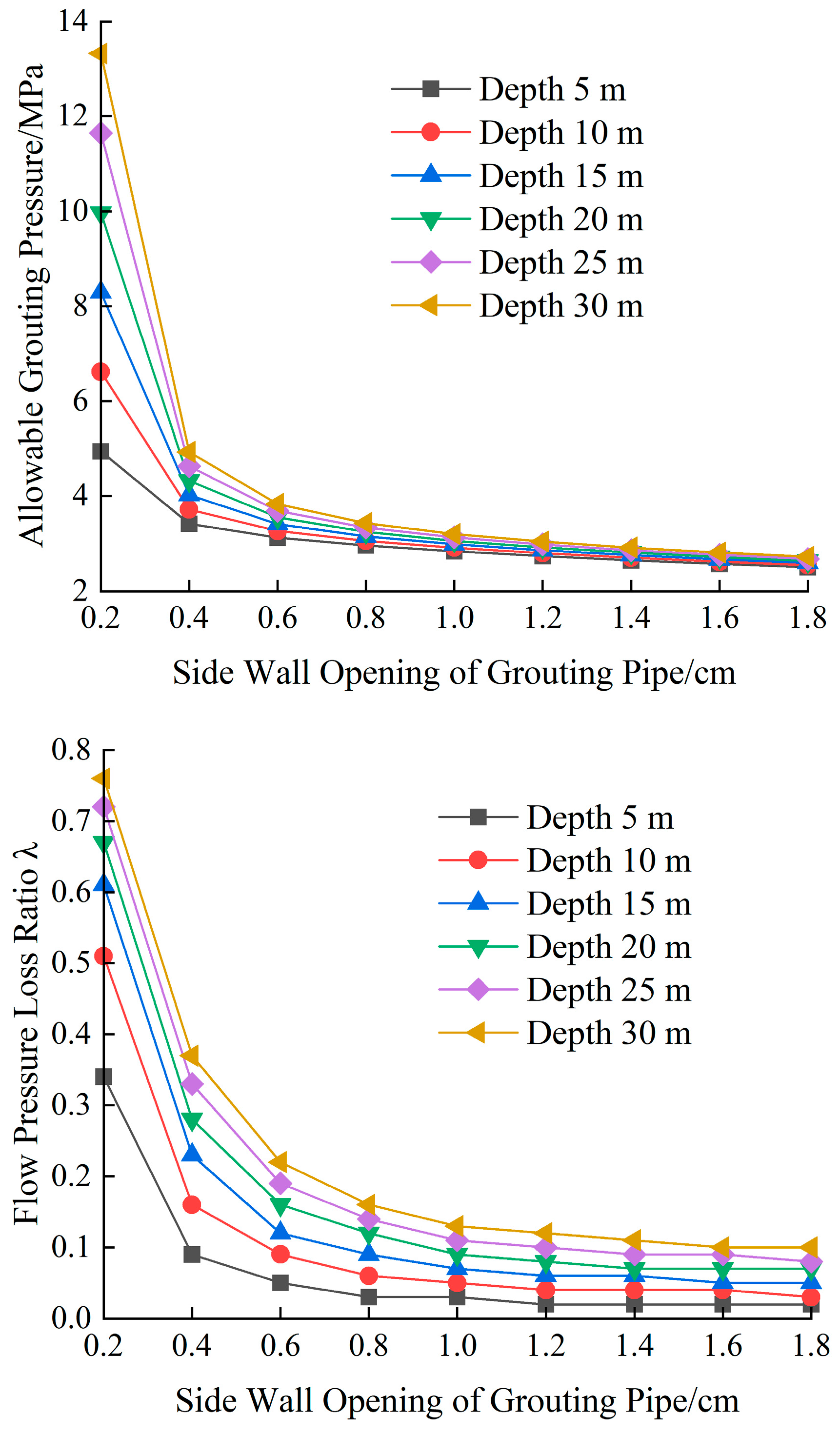
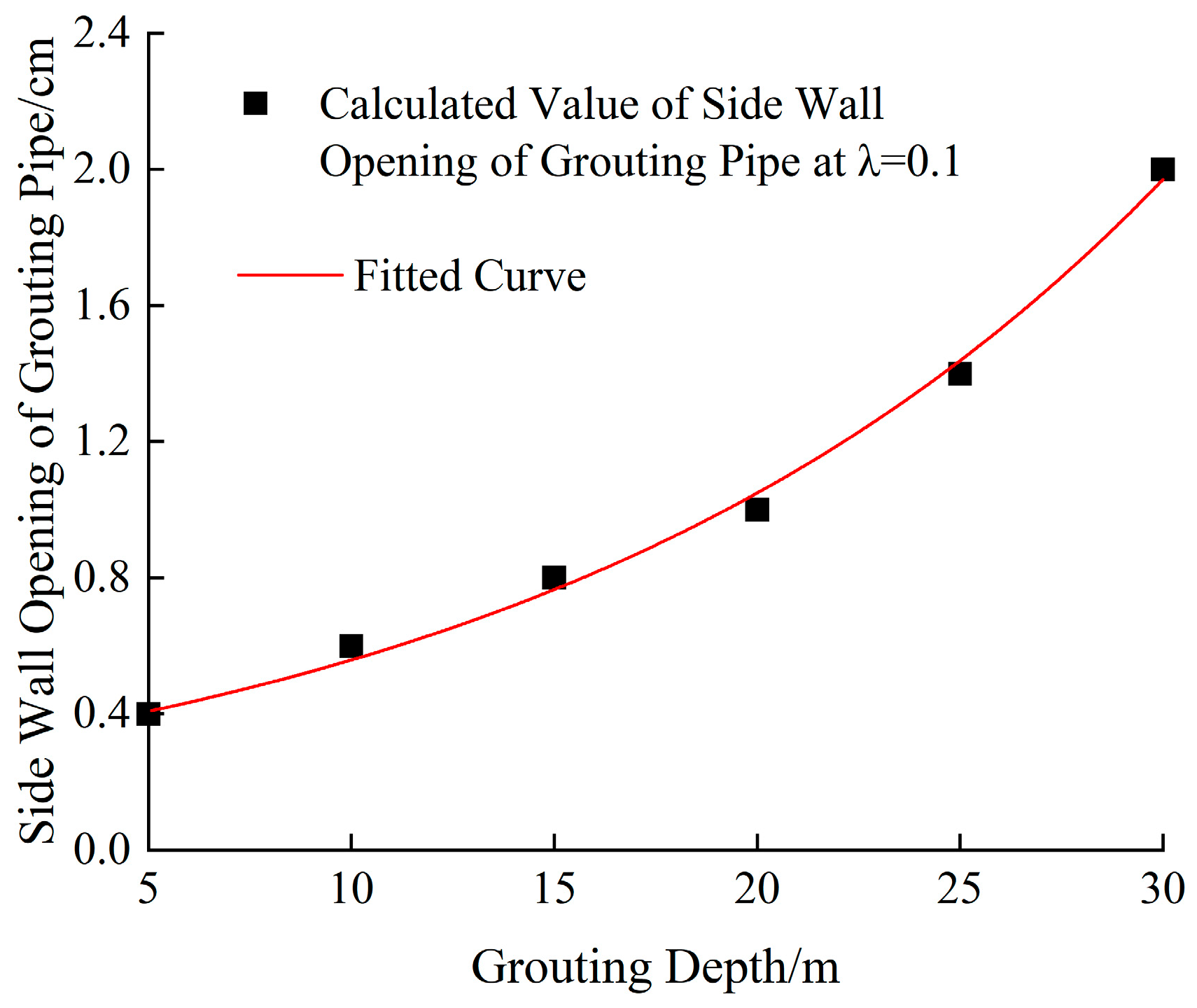
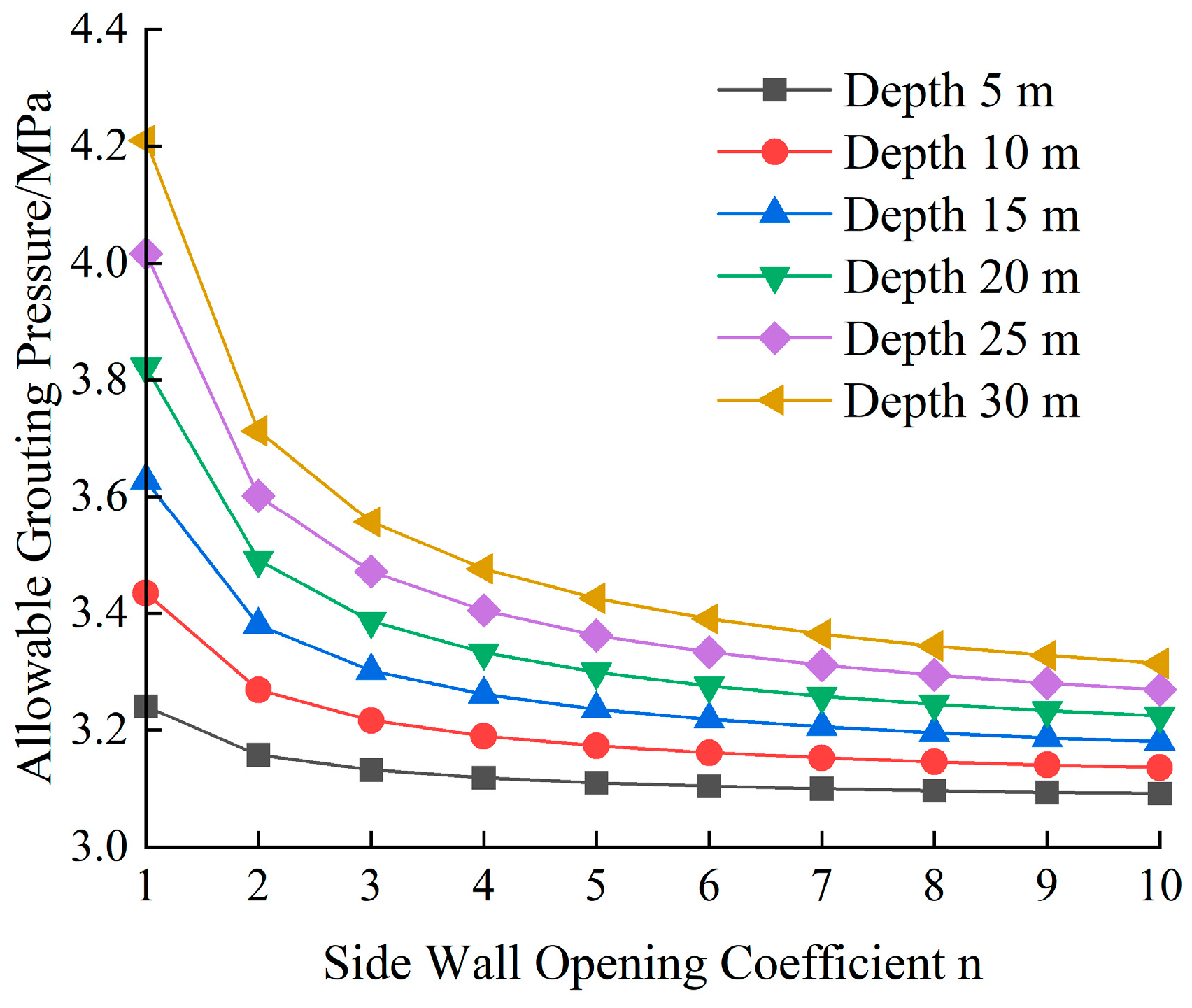
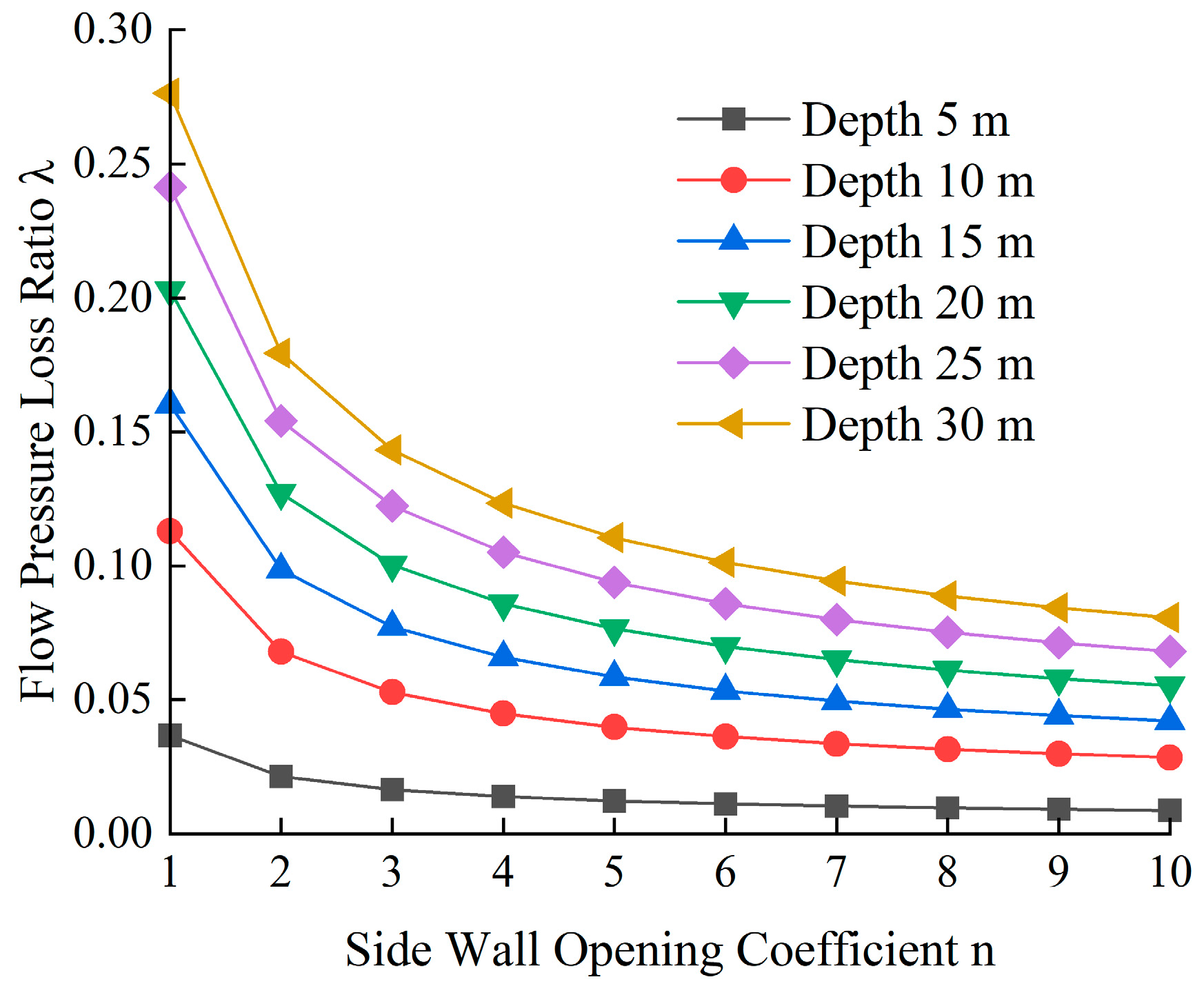
- Compared with yield stress, viscosity variation has a more significant effect on the allowable grouting pressure. The increase in the side wall opening of the grouting pipe causes the allowable grouting pressure to exhibit two-stage attenuation. The influence of the opening coefficient on the allowable grouting pressure becomes increasingly pronounced with increasing burial depth. Ignorance of the variation of the opening can result in a deviation in the allowable grouting pressure ranging from 4.6% to 21.2%. For every 20% increase in the surface consolidation depth, the allowable grouting pressure increases by 15% to 20%, while for every 20% increase in the fracture initiation pressure, it increases by 25% to 30%. The flow pressure loss ratio decreases with an increase in viscosity, increases with an increase in yield stress, and decreases significantly with an increase in the opening. To ensure the effectiveness of cyclic grouting, slurries with high viscosity and low yield stress may be adopted for deep grouting while simultaneously increasing the side wall opening of the grouting pipe.
- (3)
- Formation compression modulus parameters and slurry rheological parameters were obtained through confined compression tests and rheological tests, and comparative tests of layered grouting were conducted. The tests show that after 1.5 m surface consolidation pretreatment, the grouting pressure at the 4.5 m depth can be increased to 4.2 MPa with no slurry leakage on the ground. Within a 1.0 m radius, the core sample dry density is greater than 2.9 g/cm3, an increase of more than 8%; the standard penetration blow count is greater than 12, an increase of more than 30%; and radar analysis indicates uniform grouting reinforcement. Comprehensive results show that this grouting process greatly improves the bearable grouting pressure in the near-surface area and effectively improves the uniformity of grouting reinforcement.
Author Contributions
Funding
Institutional Review Board Statement
Informed Consent Statement
Data Availability Statement
Acknowledgments
Conflicts of Interest
References
- Zhang, G.J.; Zeng, L.X.; Chen, A.Z.; Yang, S.L.; Peng, C.L. Development and application demonstration of stemming slurry materials for high-pressure grouting in soft stratum. Chin. J. Geotech. Eng. 2012, 34, 1109–1116. (In Chinese) [Google Scholar]
- Zhang, G.J.; Xu, Y.C.; Chen, A.Z.; Peng, C.L.; Yang, S.L. A new grouting method suitable for efficient control of grouting in soft formations—Bottom-up, slurry sealing, high-pressure pulsating grouting. Water Resour. Hydropower Eng. 2012, 43, 38–41. (In Chinese) [Google Scholar]
- Zhang, G.J.; Liang, J.W.; Yang, D.S.; Pan, Y.; Peng, C.L. Mechanism of stemming slurry materials for pulsating grouting in soft strata. Chin. J. Geotech. Eng. 2016, 38, 210–218. (In Chinese) [Google Scholar]
- Hong, J.X. Application of static pressure grouting in foundation reinforcement of plant. West. China Explor. Eng. 1995, 4, 43–46. (In Chinese) [Google Scholar]
- Liu, A.; Ju, W.; Zhang, Z.; Meng, X.; Zhang, J. Key factors in hole-sealing and pressure-relief failure of hydraulic fracturing straddle packer in coal mine. Eng. Fail. Anal. 2023, 149, 107243. [Google Scholar] [CrossRef] [Scilit]
- Ouyang, J.W.; Zhang, G.J.; Liu, J. Diffusion mechanism of split grouting. Chin. J. Geotech. Eng. 2018, 40, 1328–1335. (In Chinese) [Google Scholar]
- Li, X.H.; Zhang, Q.S.; Zhang, X.; Lan, X.D.; Zuo, J.X. Grouting diffusion mechanism in heterogeneous fault-fracture zone. Adv. Eng. Sci. 2018, 50, 67–76. (In Chinese) [Google Scholar]
- Hu, Y.; Liu, W.; Shen, Z.; Ding, X.; Zhu, E.; Wang, X. Diffusion mechanism and sensitivity analysis of slurry while grouting in fractured aquifer with horizontal injection hole. Carbonates Evaporites 2020, 35, 49. [Google Scholar] [CrossRef] [Scilit]
- Tang, Y.Z.; Lei, J.S.; Ma, B.; Dai, K.; Li, S. Study on Clay Split Grouting with Different Homogeneity and Its Effect. Chin. J. Undergr. Space Eng. 2020, 16, 547–554. (In Chinese) [Google Scholar]
- Zhang, M.; Wang, X.H.; Wang, Y. Diffusion of Herschel–Bulkley slurry in fractures. Chin. J. Geotech. Eng. 2011, 33, 815–820. (In Chinese) [Google Scholar]
- Sun, F.; Zhang, D.L.; Chen, T.L. Fracture grouting mechanism in tunnels based on time-dependent behaviors of grout. Chin. J. Geotech. Eng. 2011, 33, 88–93. (In Chinese) [Google Scholar]
- Li, Z.M.; Liao, S.M.; Dai, Z.R. Theoretical study on synchronous grouting filling patern and pressure distribution of shield tunnel. Chin. J. Geotech. Eng. 2010, 32, 1752–1757. (In Chinese) [Google Scholar]
- Zhang, G.J.; Liu, J.; Hu, D.K.; Wang, J.Y. Rheological Properties of Plaster Slurry of Clay-cement and Its Influence on Grouting Engineering. J. Yangtze River Sci. Res. Inst. 2017, 34, 119–125. (In Chinese) [Google Scholar]
- Gao, H.; Qing, L.; Ma, G.; Zhang, D.; Wei, C. Numerical investigation into effects of rheological properties on grout flow in rock fracture using Herschel-Bulkley model. Eng. Geol. 2024, 329, 107402. [Google Scholar] [CrossRef] [Scilit]
- Tang, L.; Wang, Z.; Zhang, X.; Chen, X.; Luo, J.; Wang, Y. Influence of rheological parameters on cement slurry penetration characteristics of novel oscillating grouting technology. Constr. Build. Mater. 2023, 409, 133999. [Google Scholar] [CrossRef] [Scilit]
- Li, B.; Tang, M.; Wang, Y.; Zou, L. Analysis of Herschel–Bulkley fluids flow through rough-walled rock fractures. Tunn. Undergr. Space Technol. 2025, 162, 106636. [Google Scholar] [CrossRef] [Scilit]
- Ye, F.; Li, S.H.; Xia, T.H.; Su, E.J.; Han, X.B.; Zhang, C.F. Compaction-fracture diffusion model for backfill grouting of shield tunnels in low permeability strata. Chin. J. Geotech. Eng. 2023, 45, 2014–2022. (In Chinese) [Google Scholar]
- Zhang, L.Z.; Li, Z.P.; Zhang, Q.S.; Liu, R.T.; Zhang, X.; Yu, W.S. Split grouting mechanism based on nonlinear characteristics of compression process of soil. Chin. J. Rock Mech. Eng. 2016, 35, 1483–1493. (In Chinese) [Google Scholar]
- Wu, J.R.; Lin, Y.L.; He, D.; Ma, Y. Prediction on uplift displacement of tunnel induced by base grouting in soft clay. Tunn. Undergr. Space Technol. 2026, 168, 107129. [Google Scholar] [CrossRef] [Scilit]
- Liu, F.; Chen, W.; Liu, C.; Yang, Y.; Wang, J.; Liu, Y. The evolution of grouting pressure and ground deformation induced by synchronous grouting during shield tunneling in soft soil: An investigation based on scaled model test and CEL simulation. Can. Geotech. J. 2024, 62, 1–20. [Google Scholar] [CrossRef] [Scilit]
- Li, X.; Deng, Y.; Zheng, W.; Zhang, R. Investigation of implantable capsule grouting technology and its bearing characteristics in soft soil areas. J. Mar. Sci. Eng. 2025, 13, 1362. [Google Scholar] [CrossRef] [Scilit]
- Jin, H.; Wang, E.; Yuan, D.; Liu, X.; Wu, S. Optimization of synchronous grout properties and construction parameters for shield tunnels in soft soil. Sci. Rep. 2025, 15, 26341. [Google Scholar] [CrossRef] [Scilit]
- GB/T 50123-2019; Standard for Geotechnical Testing Method. China Architecture and Building Press: Beijing, China, 2019.
- ASTM C1749-24; Standard Guide for Measurement of the Rheological Properties of Hydraulic Cementitious Paste Using a Rotational Rheometer. ASTM International: West Conshohocken, PA, USA, 2024.
- ASTM D1586/D1586M-18; Standard Test Method for Standard Penetration Test (SPT) and Split-Barrel Sampling of Soils. ASTM International: West Conshohocken, PA, USA, 2018.
- Peng, M.; Wang, D.; Liu, L.; Shi, Z.; Shen, J.; Ma, F. Recent advances in the GPR detection of grouting defects behind shield tunnel segments. Remote Sens. 2021, 13, 4596. [Google Scholar] [CrossRef] [Scilit]
- Padura, A.B.; Sevilla, J.B.; Navarro, J.G.; Bustamante, E.Y.; Crego, E.P. Study of the soil consolidation using reinforced jet grouting by geophysical and geotechnical techniques: “La Normal” building complex (Granada). Constr. Build. Mater. 2009, 23, 1389–1400. [Google Scholar] [CrossRef] [Scilit]
- Annan, A.P. Electromagnetic principles of ground penetrating radar. In Ground Penetrating Radar: Theory and Applications; Jol, H.M., Ed.; Elsevier: Amsterdam, The Netherlands, 2009; pp. 1–40. [Google Scholar]
- Roscoe, K.H.; Burland, J.B. On the generalized stress-strain behaviour of wet clay. In Engineering Plasticity; Cambridge University Press: Cambridge, UK, 1968; pp. 535–609. [Google Scholar]
- Biot, M.A. General theory of three-dimensional consolidation. J. Appl. Phys. 1941, 12, 155–164. [Google Scholar] [CrossRef] [Scilit]



| Depth Position (m) | Initial Compression Modulus (MPa) | Parameter (m) |
|---|---|---|
| 2.0~2.5 | 3.4 | 3.4 |
| 2.5~3.0 | 3.5 | 3.1 |
| 3.0–3.5 | 3.6 | 3.2 |
| 3.5–4.0 | 3.5 | 3.1 |
| Mix Proportion | Fitted Equation | Yield Stress (Pa) | Plastic Viscosity (Pa·s) | Fitting Coefficient (R2) |
|---|---|---|---|---|
| A | τ = 1.71γ + 60.28 | 60.28 | 1.71 | 0.990 |
| B | τ = 1.17γ + 50.16 | 50.16 | 1.17 | 0.983 |
| C | τ = 0.63γ + 34.32 | 34.32 | 0.63 | 0.986 |
| D | τ = 0.38γ + 27.10 | 27.10 | 0.38 | 0.982 |
| Test No. | Grouting Depth (m) | Grouting Section Length (m) | Cumulative Injection Volume (m3) | Grouting Pressure (MPa) | Theoretical Allowable Grouting Pressure (MPa) | Borehole Condition |
|---|---|---|---|---|---|---|
| 1 | 1.5~2.5 | 1.0 | 0.68 | 3.8 | 4.41 | No abnormality |
| 2.5~3.5 | 1.0 | 0.65 | 3.9 | 4.43 | No abnormality | |
| 3.5~4.5 | 1.0 | 0.72 | 4.2 | 4.45 | No abnormality | |
| 2 | 1.5~2.5 | 1.0 | 0.046 | 0.13 | - | Slurry overflow along pipe wall |
| 2.5~3.5 | 1.0 | 0.051 | 0.21 | - | Slurry overflow along pipe wall |
| Grouting Depth (m) | Theoretical Reinforcement Radius (m) | Measured Reinforcement Radius (m) | Relative Error (%) |
|---|---|---|---|
| 1.5~2.5 | 0.94 | 1.0~1.2 | 14.55 |
| 2.5~3.5 | 0.91 | 1.0~1.2 | 17.27 |
| 3.5~4.5 | 0.96 | 1.0~1.2 | 12.73 |
Disclaimer/Publisher’s Note: The statements, opinions and data contained in all publications are solely those of the individual author(s) and contributor(s) and not of MDPI and/or the editor(s). MDPI and/or the editor(s) disclaim responsibility for any injury to people or property resulting from any ideas, methods, instructions or products referred to in the content. |
© 2026 by the authors. Licensee MDPI, Basel, Switzerland. This article is an open access article distributed under the terms and conditions of the Creative Commons Attribution (CC BY) license.
Share and Cite
Pei, X.; Huang, L.; Fu, P.; Xing, Z. Research on Application of High-Pressure Cyclic Grouting Technology in Soft Soil Layers. Coatings 2026, 16, 194. https://doi.org/10.3390/coatings16020194
Pei X, Huang L, Fu P, Xing Z. Research on Application of High-Pressure Cyclic Grouting Technology in Soft Soil Layers. Coatings. 2026; 16(2):194. https://doi.org/10.3390/coatings16020194
Chicago/Turabian StylePei, Xiaolong, Liwei Huang, Ping Fu, and Zhanqing Xing. 2026. "Research on Application of High-Pressure Cyclic Grouting Technology in Soft Soil Layers" Coatings 16, no. 2: 194. https://doi.org/10.3390/coatings16020194
APA StylePei, X., Huang, L., Fu, P., & Xing, Z. (2026). Research on Application of High-Pressure Cyclic Grouting Technology in Soft Soil Layers. Coatings, 16(2), 194. https://doi.org/10.3390/coatings16020194