Multi-Analytical Approach to Investigate the Polychrome Paintings on Flower Peking Opera Theatre in Bozhou, China

Abstract
1. Introduction
2. Materials and Methods
2.1. Materials
2.2. Analysis Methods
2.2.1. Polarized Light Microscopy (PLM)
- Wipe the slide with acetone;
- Using a stereomicroscope, place a small visible amount of sample with a clean tungsten needle on the slide (approximately 20–80 ng);
- Disperse the sample by adding anhydrous alcohol to the sample’s edge as needed;
- Grind the sample with a clean tungsten needle until anhydrous alcohol completely evaporates;
- Use forceps to move the coverslip onto the sample and place it on a heating table set at 90–100 °C;
- On the heating table, take a drop of dissolved fixative resin (MeltmountTM, nD = 1.662, Cargille, Cedar Grove, NJ, USA) and place it along one side of the coverslip until the resin has completely penetrated the coverslip.
2.2.2. X-Ray Fluorescence Spectrometer (XRF)
2.2.3. XRD
2.2.4. Micro-Raman Spectroscopy
2.2.5. FT-IR
2.2.6. EDS
2.2.7. The Herzberg Stain
2.2.8. Pyrolysis–Gas Chromatography–Mass Spectrometry (Py-GC/MS)
3. Results
3.1. Pigments
3.1.1. Red
3.1.2. Blue
3.1.3. Green
3.1.4. Black
3.1.5. White
3.2. White Prime
3.3. Ground Layer
3.3.1. Binder
3.3.2. Fibers
4. Discussion
Author Contributions
Funding
Institutional Review Board Statement
Informed Consent Statement
Data Availability Statement
Acknowledgments
Conflicts of Interest
References
- Wu, H. An Analysis of the Regional Distribution and Name Variation Patterns of Shan Shan Guildhalls in the Ming and Qing Dynasties. Master’s Thesis, Northwest University, Xi’an, China, 2003. [Google Scholar]
- Ren, X. Flower Peking Opera Theatre Preface. In Flower Peking Opera Theatre; Anhui People’s Publishing House: Anhui, China, 2013; pp. 2–3. (In Chinese) [Google Scholar]
- Lv, Y. The Characteristics and Contemporary Value of Woodcarving and Painting Art of “Hua Xi Lou” in Bozhou. J. Bengbu Univ. 2016, 5, 169–174. [Google Scholar] [CrossRef]
- Ren, X. Wood carving. In Flower Peking Opera Theatre; Anhui People’s Publishing House: Anhui, China, 2013; pp. 242–244. (In Chinese) [Google Scholar]
- Fan, P. Research on Architectural Decoration Patterns of Bozhou Flower Theater. Master’s Thesis, Northeast Forestry University, Harbin, China, 2020. [Google Scholar] [CrossRef]
- Crupi, V.; Fazio, B.; Fiocco, G.; Galli, G.; La Russa, M.F.; Licchelli, M.; Majolino, D.; Malagodi, M.; Ricca, M.; Ruffolo, S.A.; et al. Multi-Analytical Study of Roman Frescoes from Villa Dei Quintili (Rome, Italy). J. Archaeol. Sci. Rep. 2018, 21, 422–432. [Google Scholar] [CrossRef]
- He, J.; Zhou, W.; Hu, D.; Liu, S.; Otero, J.; Rodriguez-Navarro, C. A Multi-Analytical Approach for the Characterization of Materials, Manufacturing Process and Damage Mechanisms of Wall Paintings in Samye Temple, Tibet. Dye. Pigment. 2022, 207, 110704. [Google Scholar] [CrossRef]
- Vornicu, N.; Bibire, C.; Murariu, E.; Ivanov, D. Analysis of Mural Paintings Using in Situ Non-invasive XRF, FTIR Spectroscopy and Optical Microscopy. X-Ray Spectrom. 2013, 42, 380–387. [Google Scholar] [CrossRef]
- Abdel-Ghani, M. Multidisciplinary Study of a Qajar Lacquered Painting: Technology and Materials Characterization. Vib. Spectrosc. 2022, 119, 103355. [Google Scholar] [CrossRef]
- Liu, L.; He, J.; Ye, M.; Zhu, Z.; Zhong, Q.; Yang, J. Spectral Characterization of Pigment from the No. 1 Cave, Kizil Cave-Temple Complex. J. Spectrosc. 2019, 2019, 8502524. [Google Scholar] [CrossRef]
- Gong, Y.; Qiao, C.; Zhong, B.; Zhong, J.; Gong, D. Analysis and Characterization of Materials Used in Heritage Theatrical Figurines. Herit. Sci. 2020, 8, 13. [Google Scholar] [CrossRef]
- Dong, S.; Xiang, J.; Ji, J.; Wang, Y.; Zhang, G.; Fu, P.; Han, J.; Li, L. Multi-Method Analysis of Painting Materials in Murals of the North Mosque (Linqing, China). Coatings 2023, 13, 1298. [Google Scholar] [CrossRef]
- Kanth, A.P.; Singh, M.R. Spectroscopic and Chromatographic Investigation of the Wall Painted Surfaces of an 18th Century Indian Temple, New Delhi. Vib. Spectrosc. 2019, 104, 102947. [Google Scholar] [CrossRef]
- Herrera, L.K.; Montalbani, S.; Chiavari, G.; Cotte, M.; Solé, V.A.; Bueno, J.; Duran, A.; Justo, A.; Perez-Rodriguez, J.L. Advanced Combined Application of μ-X-Ray Diffraction/μ-X-Ray Fluorescence with Conventional Techniques for the Identification of Pictorial Materials from Baroque Andalusia Paintings. Talanta 2009, 80, 71–83. [Google Scholar] [CrossRef]
- Cotte, M.; Susini, J.; Solé, V.A.; Taniguchi, Y.; Chillida, J.; Checroun, E.; Walter, P. Applications of Synchrotron-Based Micro-Imaging Techniques to the Chemical Analysis of Ancient Paintings. J. Anal. At. Spectrom. 2008, 23, 820. [Google Scholar] [CrossRef]
- Skipper, L.K.; Baron, M.; Sancho, N.; Alkaseem, M. The Technical Examination of Nineteenth-Century Artists’ Pigments from John Opie’s Paintbox. Stud. Conserv. 2025, 70, 37–50. [Google Scholar] [CrossRef]
- Bruder, R.; Detalle, V.; Coupry, C. An Example of the Complementarity of Laser-induced Breakdown Spectroscopy and Raman Microscopy for Wall Painting Pigments Analysis. J. Raman Spectrosc. 2007, 38, 909–915. [Google Scholar] [CrossRef]
- Shen, J.; Li, L.; Zhang, D.; Dong, S.; Xiang, J.; Xu, N. A Multi-Analytical Approach to Investigate the Polychrome Clay Sculpture in Qinglian Temple of Jincheng, China. Materials 2022, 15, 5470. [Google Scholar] [CrossRef]
- Salvadó, N.; Butí, S.; Cotte, M.; Cinque, G.; Pradell, T. Shades of Green in 15th Century Paintings: Combined Microanalysis of the Materials Using Synchrotron Radiation XRD, FTIR and XRF. Appl. Phys. A 2013, 111, 47–57. [Google Scholar] [CrossRef]
- Ajò, D.; Casellato, U.; Fiorin, E.; Vigato, P.A. Ciro Ferri’s Frescoes: A Study of Painting Materials and Technique by SEM-EDS Microscopy, X-Ray Diffraction, Micro FT-IR and Photoluminescence Spectroscopy. J. Cult. Herit. 2004, 5, 333–348. [Google Scholar] [CrossRef]
- Li, T.; Ji, J.; Zhou, Z.; Shi, J. A Multi-Analytical Approach to Investigate Date-Unknown Paintings of Chinese Taoist Priests. Archaeol. Anthr. Sci. 2017, 9, 395–404. [Google Scholar] [CrossRef]
- Collings, T.; Milner, D. The Identification of Oriental Paper-Making Fibres. Pap. Conserv. 1978, 3, 51–79. [Google Scholar] [CrossRef]
- Khandekar, N.; Schilling, M. A Technical Examination of a Seventeenth-Century Polychrome Sculpture of St Gines de La Lara by Luisa Roldan. Stud. Conserv. 2001, 46, 23–34. [Google Scholar] [CrossRef]
- Shi, J.; Li, T. Technical Investigation of 15th and 19th Century Chinese Paper Currencies: Fiber Use and Pigment Identification. J. Raman Spectrosc. 2013, 44, 892–898. [Google Scholar] [CrossRef]
- Zhou, W. Research on the Production Technology and Material Analysis of Ancient Architecture Oil Decoration Color Painting. Master’s Thesis, Northwest University, Xi’an, China, 2009. [Google Scholar]
- Guo, H.; Huang, H.; Xie, R.; Lan, R. Research on the Protection and Restoration of Architectural Paintings in Baizhu Temple, Fuchuan, Guangxi. Cult. Relics Prot. Archaeol. Sci. 2003, 4, 31–36+69. [Google Scholar] [CrossRef]
- Burgio, L.; Clark, R.J.H. Library of FT-Raman Spectra of Pigments, Minerals, Pigment Media and Varnishes, and Supplement to Existing Library of Raman Spectra of Pigments with Visible Excitation. Spectrochim. Acta Part A Mol. Biomol. Spectrosc. 2001, 57, 1491–1521. [Google Scholar] [CrossRef] [PubMed]
- Cosano, D.; Esquivel, D.; Costa, C.M.; Jiménez-Sanchidrián, C.; Ruiz, J.R. Identification of Pigments in the Annunciation Sculptural Group (Cordoba, Spain) by Micro-Raman Spectroscopy. Spectrochim. Acta Part A Mol. Biomol. Spectrosc. 2019, 214, 139–145. [Google Scholar] [CrossRef] [PubMed]
- Pigments Analysis of an Egyptian Cartonnage by Means of XPS and Raman Spectroscopy|Applied Physics A. Available online: https://link.springer.com/article/10.1007/s00339-020-3386-y (accessed on 28 November 2025).
- Li, J.; Zhao, R. A Multi-Method Analysis of a Color Painting on Ancient Architecture from Anyuan Temple in Chengde, China. Coatings 2024, 14, 559. [Google Scholar] [CrossRef]
- Chang, J. Raman Spectroscopy Study of Pigments and Dyes in Ancient Murals. Ph.D. Thesis, Jilin University, Changchun, China, 2010. [Google Scholar]
- Zhou, G.X. Cinnabar in China and Its Development in Function. J. Dunhuang Res. 2010, 120, 51–59. [Google Scholar]
- Li, H.; Huang, J.; Yang, K.; Lu, Z.; Yan, S.; Su, H.; Liu, C.; Wang, X.; Ren, B. Operando Electrochemical X-Ray Diffraction and Raman Spectroscopic Studies Revealing the Alkali-Metal Ion Intercalation Mechanism in Prussian Blue Analogues. J. Phys. Chem. Lett. 2022, 13, 479–485. [Google Scholar] [CrossRef]
- Della Ventura, G.; Capitelli, F.; Sbroscia, M.; Sodo, A. A Raman Study of Chalcogen Species in Sodalite-group Minerals from the Volcanic Rocks of Latium (Italy). J. Raman Spectrosc. 2020, 51, 1513–1521. [Google Scholar] [CrossRef]
- Prieto, A.C.; Martínez, O.; Souto, J.; Avella, M.; Guedes, A. Study of a Tabernacle with a Remarkable Architectural Structure: In Situ Examination Using Raman Spectroscopy. J. Raman Spectrosc. 2013, 44, 1156–1162. [Google Scholar] [CrossRef]
- Jorge-Villar, S.E.; Edwards, H.G.M. Green and Blue Pigments in Roman Wall Paintings: A Challenge for Raman Spectroscopy. J. Raman Spectrosc. 2021, 52, 2190–2203. [Google Scholar] [CrossRef]
- Osticioli, I.; Mendes, N.F.C.; Nevin, A.; Gil, F.P.S.C.; Becucci, M.; Castellucci, E. Analysis of Natural and Artificial Ultramarine Blue Pigments Using Laser Induced Breakdown and Pulsed Raman Spectroscopy, Statistical Analysis and Light Microscopy. Spectrochim. Acta Part A Mol. Biomol. Spectrosc. 2009, 73, 525–531. [Google Scholar] [CrossRef]
- Favaro, M.; Guastoni, A.; Marini, F.; Bianchin, S.; Gambirasi, A. Characterization of Lapis Lazuli and Corresponding Purified Pigments for a Provenance Study of Ultramarine Pigments Used in Works of Art. Anal. Bioanal. Chem. 2012, 402, 2195–2208. [Google Scholar] [CrossRef] [PubMed]
- Bruni, S.; Cariati, F.; Casadio, F.; Toniolo, L. Spectrochemical Characterization by Micro-FTIR Spectroscopy of Blue Pigments in Different Polychrome Works of Art. Vib. Spectrosc. 1999, 20, 15–25. [Google Scholar] [CrossRef]
- Wang, J. A Study of Synthetic Ultramarine Pigments in the Dunhuang Caves. J. Dunhuang Res. 2000, 1, 76–81. [Google Scholar]
- Veneranda, M.; Irazola, M.; Díez, M.; Iturregui, A.; Aramendia, J.; Castro, K.; Madariaga, J.M. Raman Spectroscopic Study of the Degradation of a Middle Age Mural Painting: The Role of Agricultural Activities. J. Raman Spectrosc. 2014, 45, 1110–1118. [Google Scholar] [CrossRef]
- Li, L.; Huang, Y.; Wei, S. Analysis and Research on the Architectural Oil Decorations of the Wenyuan Pavilion at the Palace Museum. Museum 2023, 7, 128–136. [Google Scholar] [CrossRef]
- Jiang, J.; Wei, S.; Chen, B. Analysis and Research on the Cementing Materials Used in the Royal Architectural Paintings of the Qing Dynasty. J. Cult. Relics 2020, 5, 89–96. [Google Scholar]
- He, L.; Nie, M.; Giuseppe, C. Analysis of Oil Adhesives in Ancient Murals by Thermal Cracking Gas Chromatography Mass Spectrometry. J. Xi’an Jiaotong Univ. 2006, 40, 1134–1138. [Google Scholar]
- Zhang, X.; Zhao, D.; She, Y.; Hao, Z.; Yan, Y.; Chen, J. Exploring the complex organic matrix composition of oil painting cultural relics using FT-IR, Py GC/MS, and THM Py GC/MS micro damage analysis techniques. Cult. Relics Prot. Archaeol. Sci. 2024, 36, 54–64. [Google Scholar] [CrossRef]
- Wei, S.; Pintus, V.; Pitthard, V.; Schreiner, M.; Song, G. Analytical Characterization of Lacquer Objects Excavated from a Chu Tomb in China. J. Archaeol. Sci. 2011, 38, 2667–2674. [Google Scholar] [CrossRef]



| Sample ID | Color | Sampling Description | Location |
|---|---|---|---|
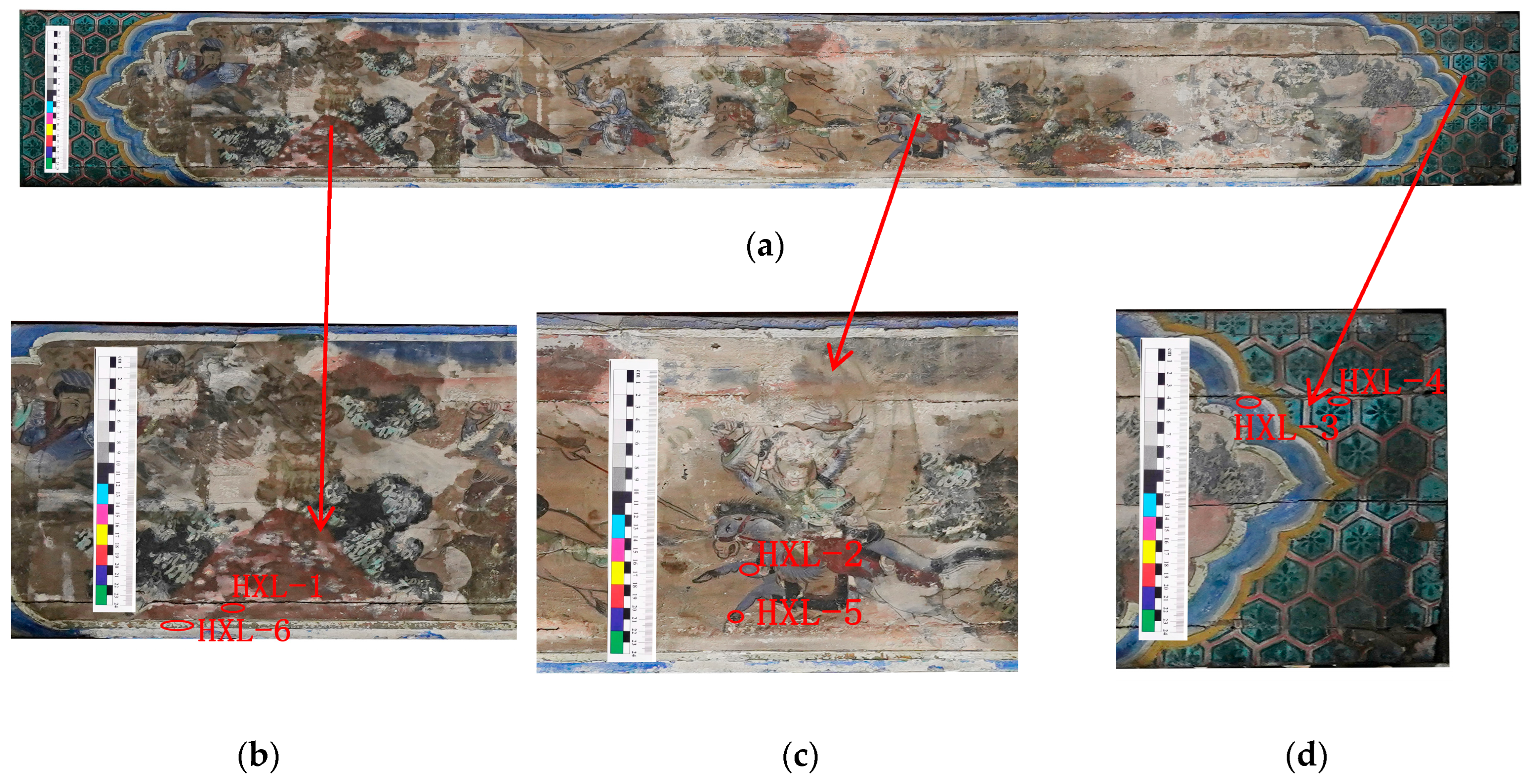
| HXL-1 | red | Sampled from damaged region Front-red; Back-visible ground layer | Figure 3b |
| HXL-2 | Dark blue | Sampled from damaged region Front-blue; Back-visible ground layer | Figure 3c |
| HXL-3 | Light blue | Sampled from damaged region Front-blue; Back-visible ground layer | Figure 3d |
| HXL-4 | Green | Sampled from damaged region Front-blue; Back-visible ground layer | Figure 3d |
| HXL-5 | Black | Sampled from damaged region Front-red; Back-visible ground layer | Figure 3c |
| HXL-6 | White | Sampled from damaged region Both sides-white | Figure 3b |
| Sample No. | Color | Raman Bands (cm−1) | Main Elements (%) (XRF) | Pigments |
|---|---|---|---|---|
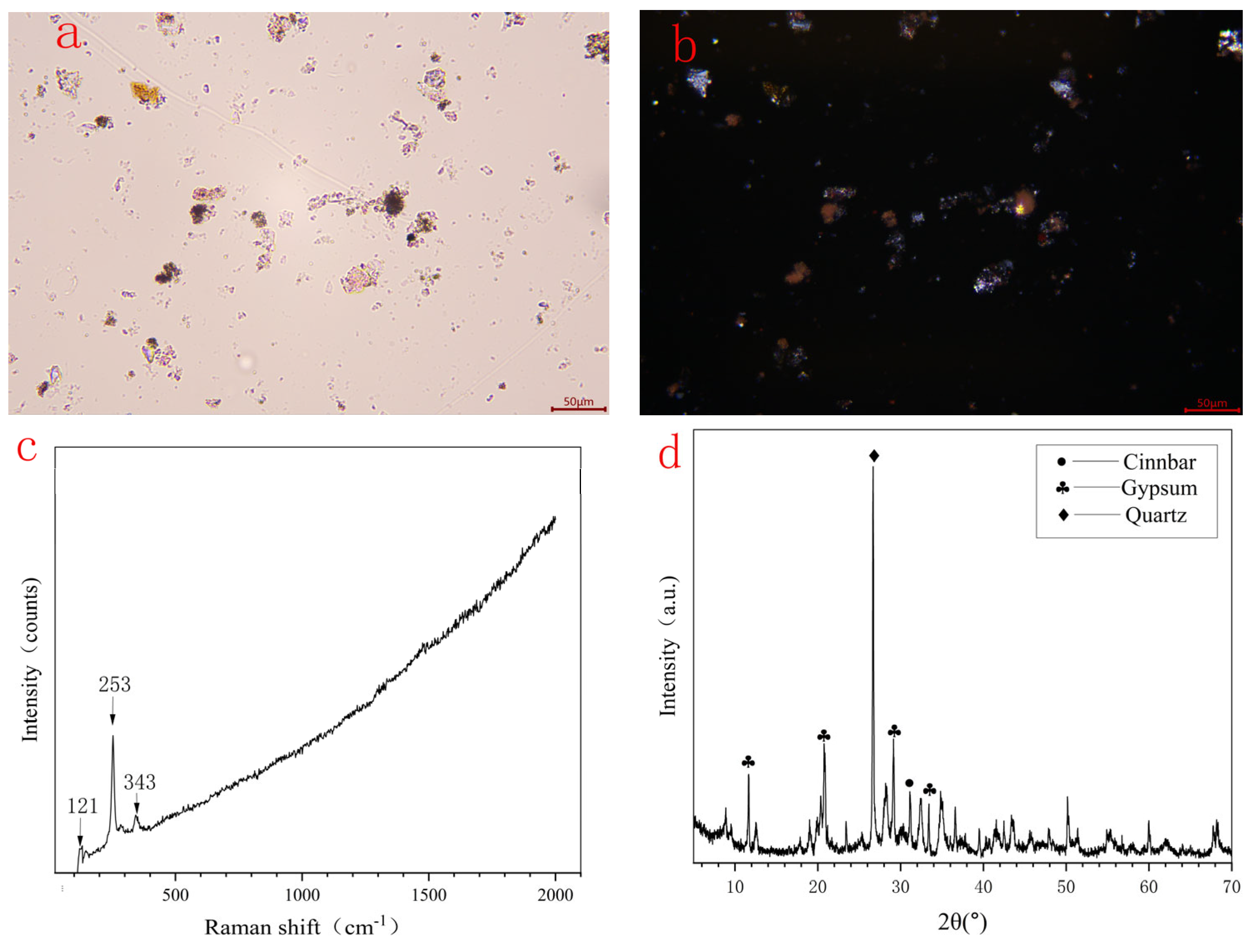
| HXL-1 | red | 121, 253, 343c | Pb (55.22), Hg (39.19), S (2.77) | Cinnabar (HgS) |
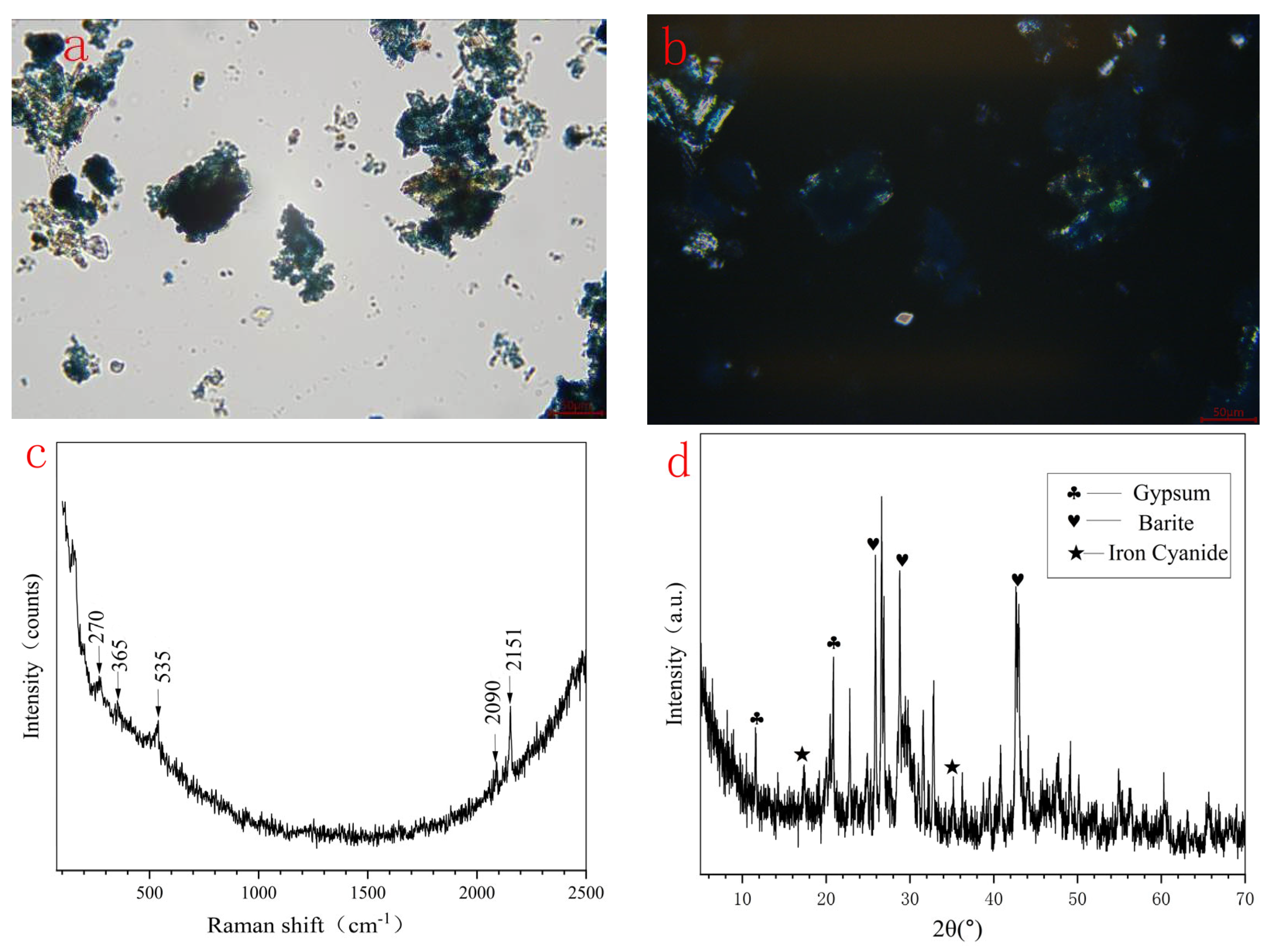
| HXL-2 | blue | 270, 365, 535, 2090, 2151 | Fe (68.08), Zn (2.65), Pb (1.23) | Prussian (Fe4[Fe(CN)6]3 |
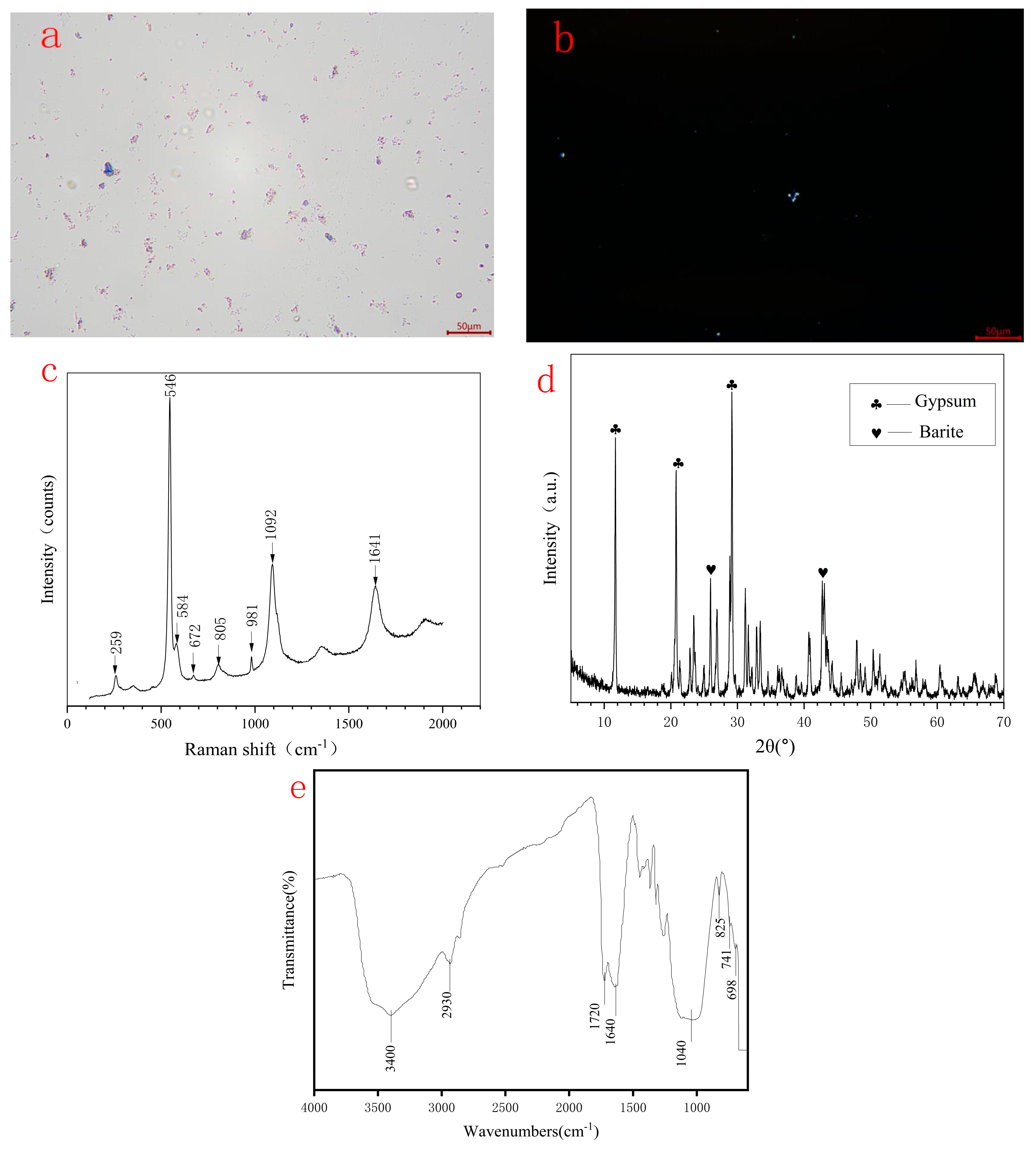
| HXL-3 | 259, 546, 584, 672, 805, 981, 1092, 1145, and 1641 | Si (38.52), Al (14.11), S (16.83), Na (16.06) | Ultramarine (Na6.88Al5.63Si6.35O24S2.4) | |
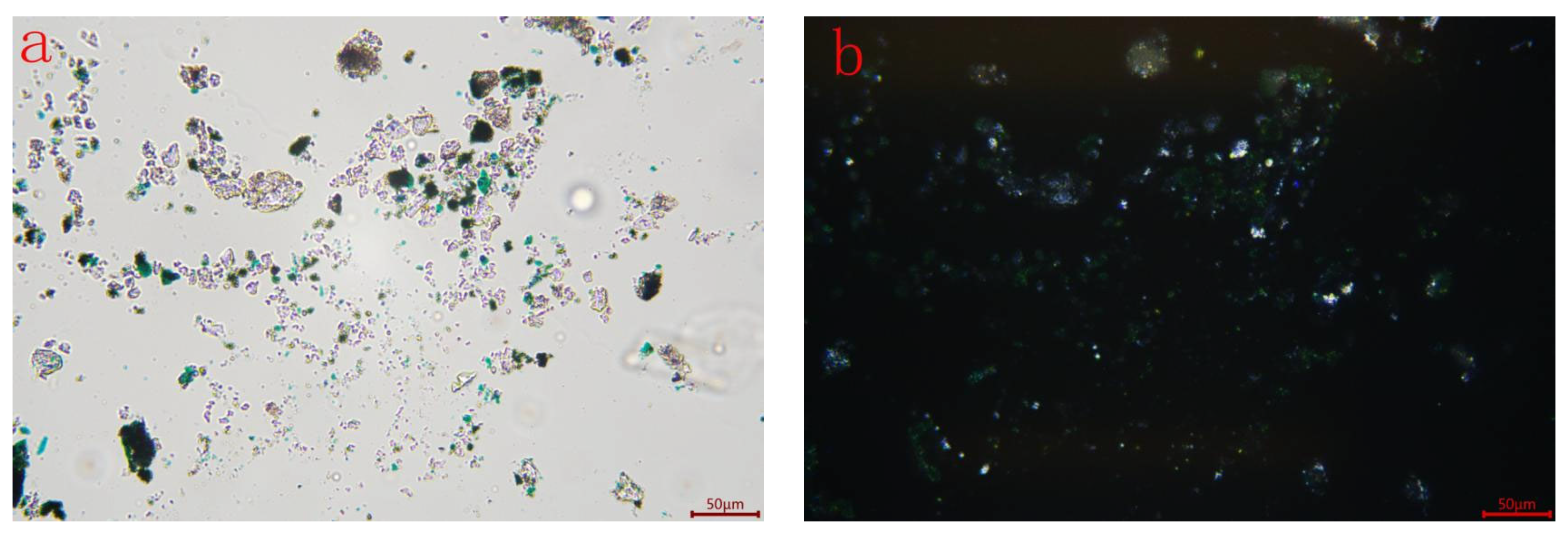
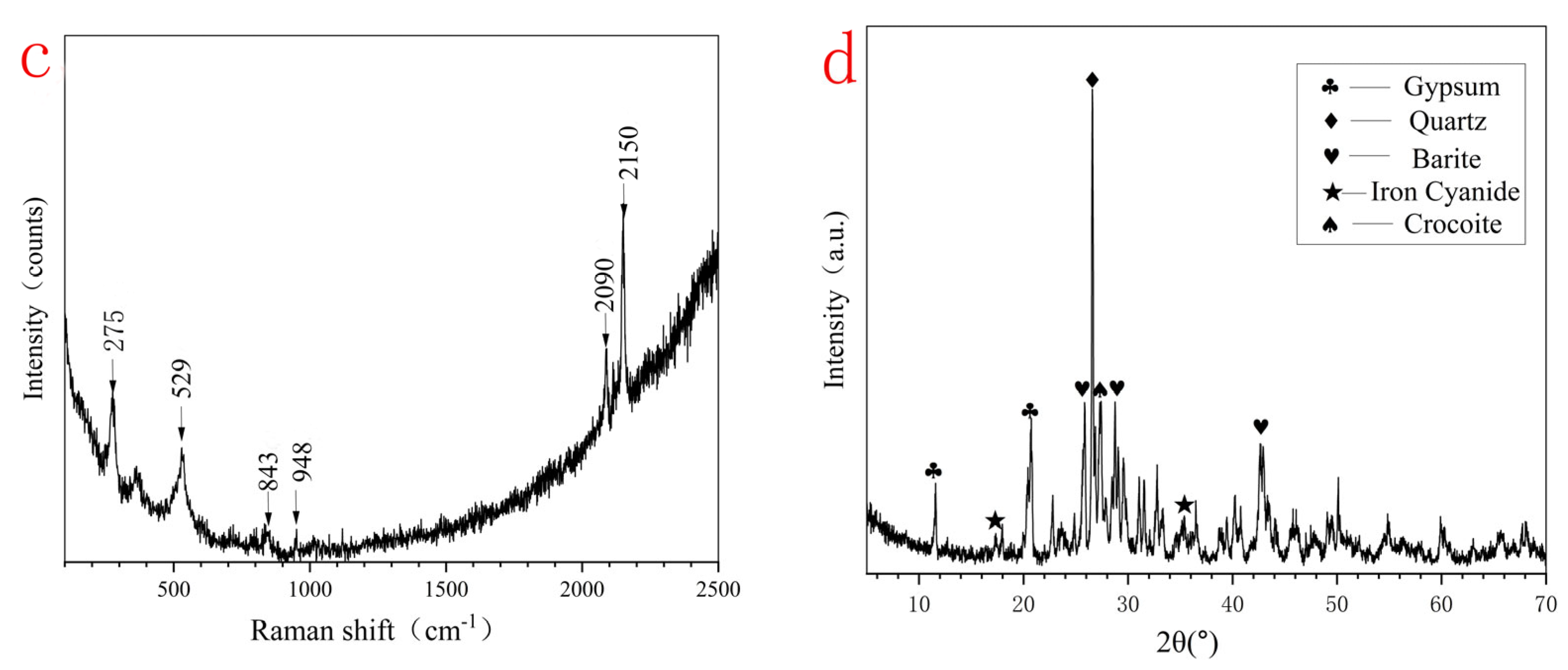
| HXL-4 | green | 275, 529, 843, 948, 2090, 2150 | Pb (10.69), Zn (9.71), Fe (4.74), Si (2.55), Cr (0.14) | Prussian (Fe4[Fe(CN)6]3 + chrome yellow (PbCrO4) |
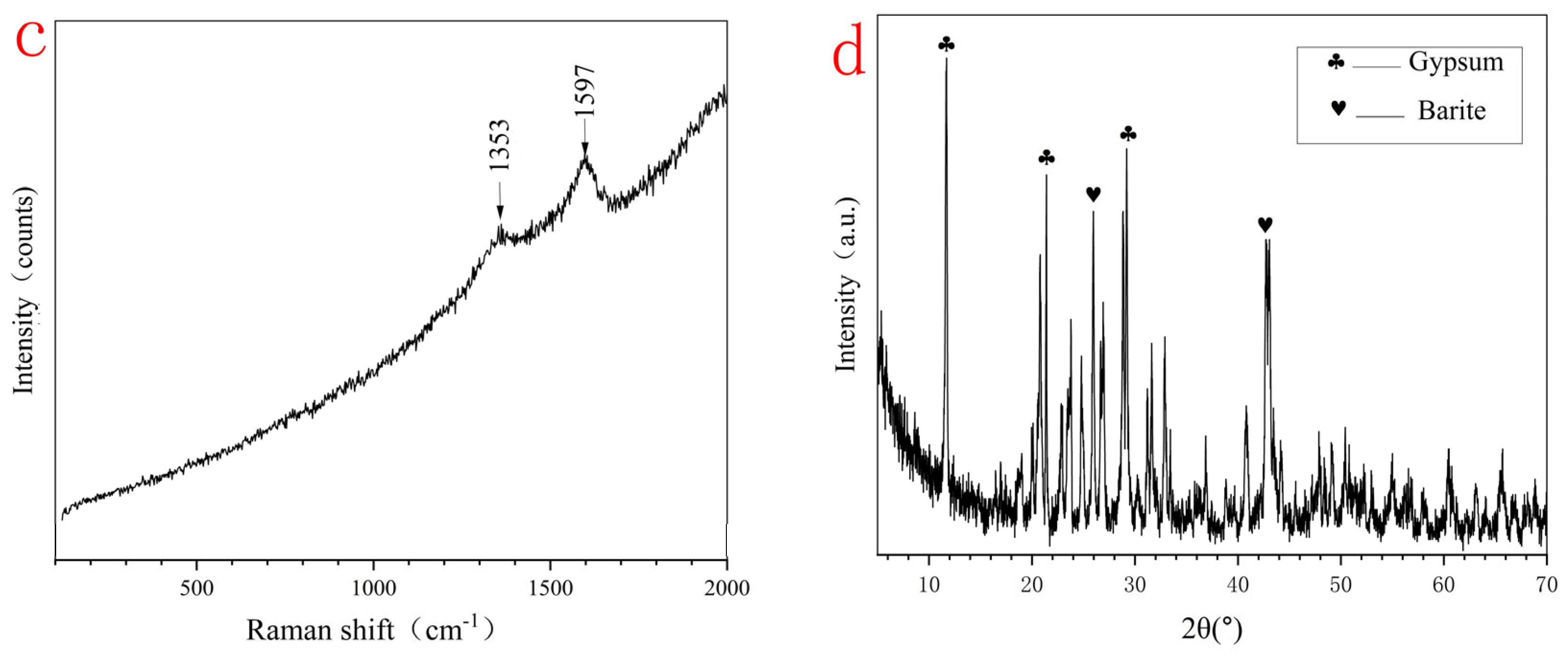
| HXL-5 | black | 1353, 1597 | Ba (3.91), S (3.76), Ca (0.43) | Carbon |
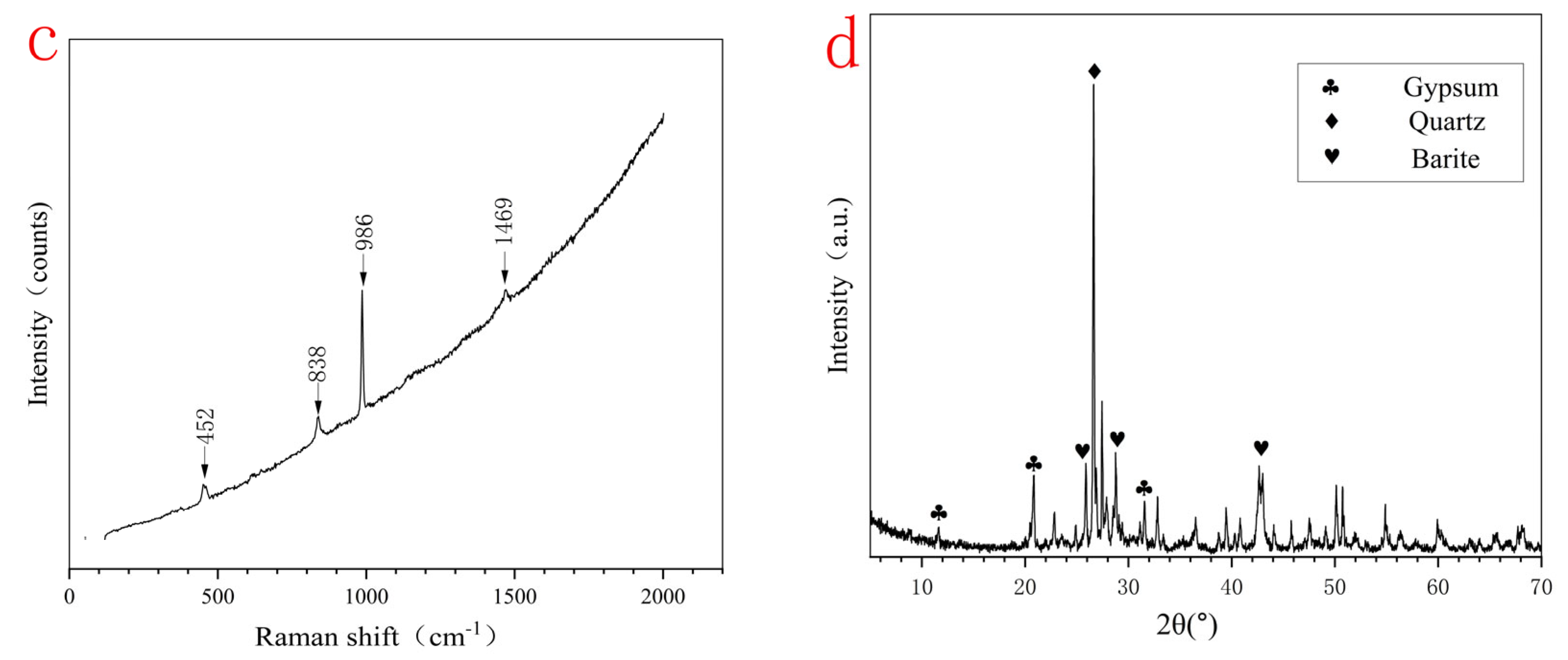
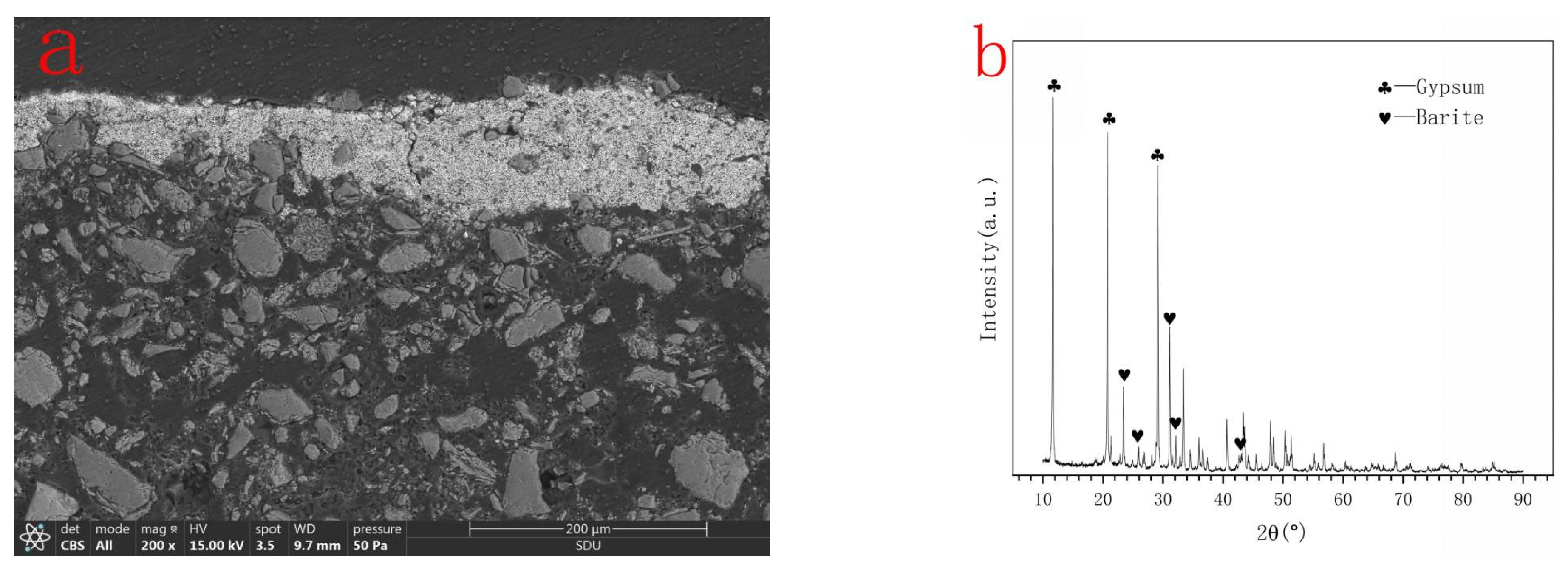
| HXL-6 | white | 452, 838, 986, and 1469 | S (22.59), Ca (14.41), Na (3.78), Al (1.38) | Gypsum (Ca(SO4)·(H2O)2) + Barite(BaSO4) |
| No. | Retention Time /min | m/z | Peak Area (%) | Compound | Molecular Formula |
|---|---|---|---|---|---|
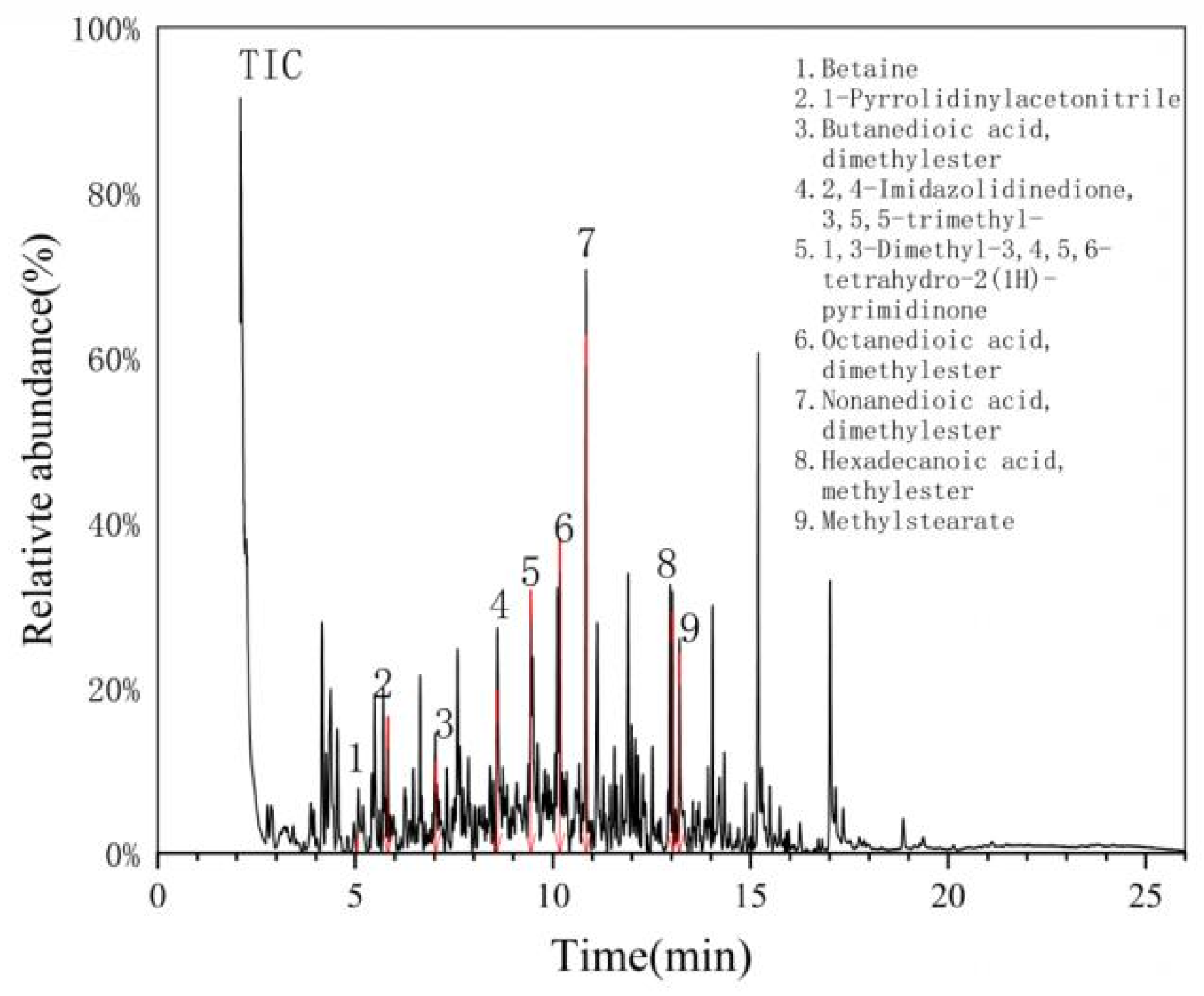
| 1 | 5.076 | 117 | 4.40 | Betaine | C5H11NO2 |
| 2 | 5.821 | 110 | 8.19 | 1-Pyrrolidinylacetonitrile | C6H10N2 |
| 3 | 7.015 | 146 | 14.19 | Butanedioic acid, dimethyl ester | C6H10O4 |
| 4 | 8.596 | 142 | 8.62 | 2,4-Imidazolidinedione, 3,5,5-trimethyl- | C6H10N2O2 |
| 5 | 9.44 | 128 | 23.77 | 1,3-Dimethyl-3,4,5,6-tetrahydro-2(1H)-pyrimidinone | C6H12N2O |
| 6 | 10.174 | 202 | 24.07 | Octanedioic acid, dimethyl ester | C10H18O4 |
| 7 | 10.832 | 216 | 27.04 | Nonanedioic acid, dimethyl ester | C11H20O4 |
| 8 | 13.002 | 270 | 7.24 | Hexadecanoic acid, methyl ester | C17H34O2 |
| 9 | 13.208 | 298 | 10.82 | Methyl stearate | C19H38O2 |
| Sample No. | Morphological Characteristics of Fibers | Fiber Identification |
|---|---|---|
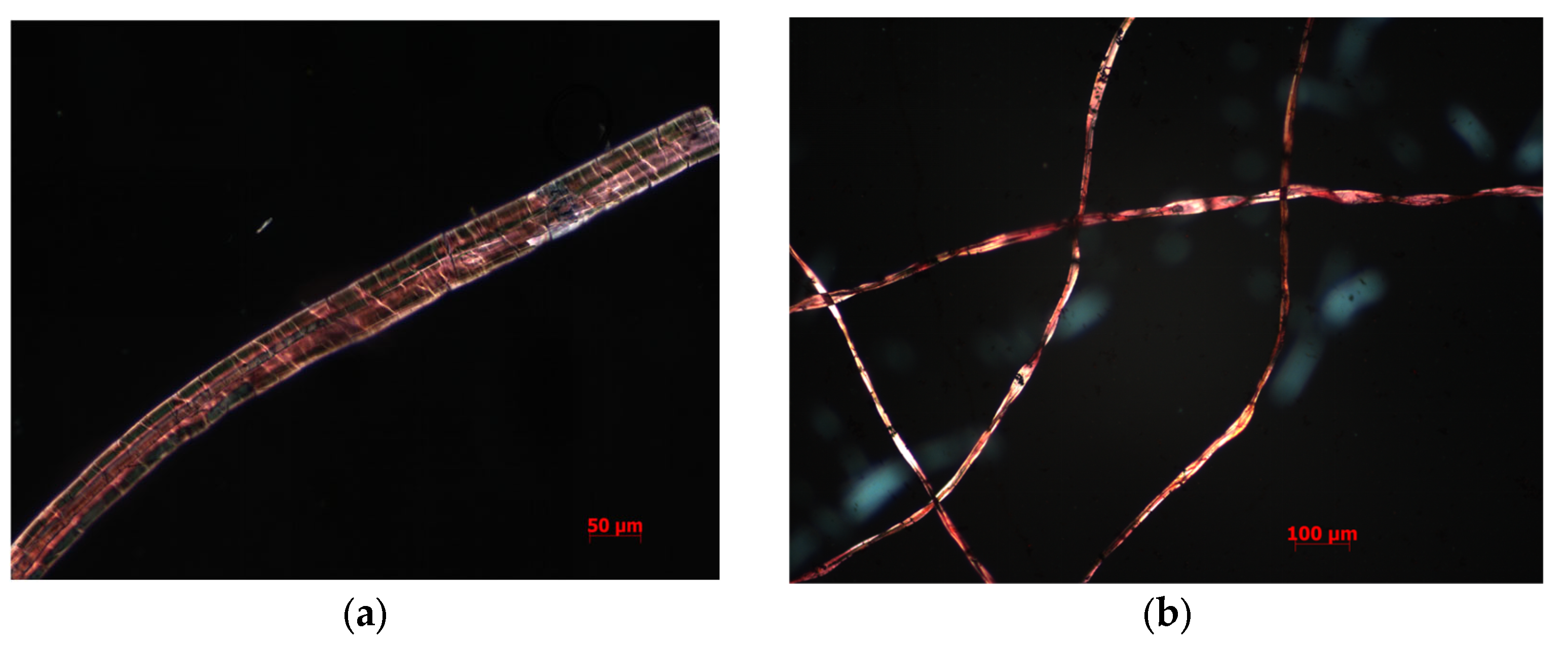
| HXL-1 | The fibers are relatively long (in comparison to wheat or rice stalks) and exhibit a deep wine-red color after staining. There are distinct transverse lines visible on the fiber walls, and the cell lumen diameter is relatively small with uneven cavities. At both ends of the fiber are parenchyma cells, the cell walls are pointed and very thin, showing deformation and bending. Additionally, some fibers were found to have semi-transparent membrane tissue connected to the thin-walled cells. | Cotton |
| HXL-3 | The fibers are cylindrical and exhibit a deep wine-red color after staining. They vary in thickness and have thicker cell walls along their length. Fine transverse striations can be observed on the cell walls. | Sisal hemp |
Disclaimer/Publisher’s Note: The statements, opinions and data contained in all publications are solely those of the individual author(s) and contributor(s) and not of MDPI and/or the editor(s). MDPI and/or the editor(s) disclaim responsibility for any injury to people or property resulting from any ideas, methods, instructions or products referred to in the content. |
© 2026 by the authors. Licensee MDPI, Basel, Switzerland. This article is an open access article distributed under the terms and conditions of the Creative Commons Attribution (CC BY) license.
Share and Cite
Liu, W.; Jia, F.; Zhao, T.; Huang, J.; Du, W.; Li, L. Multi-Analytical Approach to Investigate the Polychrome Paintings on Flower Peking Opera Theatre in Bozhou, China. Coatings 2026, 16, 115. https://doi.org/10.3390/coatings16010115
Liu W, Jia F, Zhao T, Huang J, Du W, Li L. Multi-Analytical Approach to Investigate the Polychrome Paintings on Flower Peking Opera Theatre in Bozhou, China. Coatings. 2026; 16(1):115. https://doi.org/10.3390/coatings16010115
Chicago/Turabian StyleLiu, Wei, Fang Jia, Ting Zhao, Jianhua Huang, Weisha Du, and Li Li. 2026. "Multi-Analytical Approach to Investigate the Polychrome Paintings on Flower Peking Opera Theatre in Bozhou, China" Coatings 16, no. 1: 115. https://doi.org/10.3390/coatings16010115
APA StyleLiu, W., Jia, F., Zhao, T., Huang, J., Du, W., & Li, L. (2026). Multi-Analytical Approach to Investigate the Polychrome Paintings on Flower Peking Opera Theatre in Bozhou, China. Coatings, 16(1), 115. https://doi.org/10.3390/coatings16010115