Article

High-Temperature Oxidation Behavior of TiAlCrSiNbY Coating on γ-TiAl Alloy

1
School of Civil Aviation, Northwestern Polytechnical University, Xi’an 710072, China
2
Xi’an Surface Material Protection Co., Ltd., Xi’an 710016, China
3
Northwest Institute for Non-Ferrous Metals Research, Xi’an 710200, China
*
Authors to whom correspondence should be addressed.
Coatings 2026, 16(1), 116; https://doi.org/10.3390/coatings16010116 (registering DOI)
Submission received: 1 December 2025 / Revised: 23 December 2025 / Accepted: 4 January 2026 / Published: 15 January 2026
(This article belongs to the Section Surface Characterization, Deposition and Modification)

Abstract

A TiAlCrSiNbY coating was fabricated on γ-TiAl alloy by arc ion plating. The coating exhibits a dense, crack-free microstructure with a thickness of 5 ± 0.5 μm and strong interfacial bonding with the substrate. The characteristic power law correlations between mass gain and oxidation time were obtained for the uncoated and the coated samples at 850 °C with rate exponents of 2.38 and 2.14, respectively. After oxidation at 850 °C for 200 h, a continuous and dense oxide layer primarily composed of α-Al2O3 with a low oxidation reaction rate was formed, and the mass gain of the coated sample was 1/9 times that of the uncoated sample. Additionally, the addition of Cr and Nb in the TiAlCrSiNbY coating can increase the activity of Al and promoted the formation of stable and dense Al2O3 oxide films, the presence of a strong high-temperature stability Ti5Si3 phase inhibited the affinity of Ti and O, which maintained structural integrity and enhanced high-temperature oxidation resistance.

1. Introduction

γ-TiAl alloy is a promising, lightweight, high-temperature structural material for application in the aerospace industry, due to its low density, high melting point, large elastic modulus, and high specific strength [1,2]. However, during the high-temperature oxidation process of γ-TiAl alloy, Gibbs free energy values corresponding to the formation of Al2O3 and TiO2 are marginally different. This thermodynamic characteristic makes it difficult to generate an Al2O3 protective coating on the surface of TiAl alloy. Instead, a mixed oxide film composed of Al2O3 and TiO2 is generally formed [3,4,5]. The inferior oxidation resistance of TiO2 is primarily ascribed to the volume shrinkage that occurs during the phase transition of α-rutile TiO2, the lattice distortion will occur at the interface of the mixed Al2O3 and TiO2 oxide layer. This structural incompatibility, coupled with volume changes, will cause internal defects such as pores and cracks in the mixed oxide layer, making the mixed oxide layer brittle and easy to break [6,7]. In addition, due to Al continuously diffusing to the surface to form Al2O3, this process will lead to the formation of an Al-depleted layer at the interface between the γ-TiAl and the mixed oxide layer. A large amount of oxygen will diffuse inward to form an oxygen-affected zone. The Al-depleted layer and the oxygen-affected zone are brittle in nature, which greatly weakens the bonding force between the oxide layer and the matrix and provides a hidden danger to the subsequent spallation of the oxide layer [8]. Consequently, the oxidation resistance of γ-TiAl alloy tends to deteriorate when the service temperature exceeds 800 °C, which imposes certain restrictions on its practical engineering applications [9,10].
The fabrication of high-temperature oxidation-resistant coatings on TiAl alloys is an efficient strategy to substantially enhance their stability and durability. Pack cementation aluminizing is one of the earliest applied surface modification technologies for improving high-temperature oxidation resistance. However, the high-temperature treatment process of pack cementation aluminizing easily leads to the formation of brittle Al-rich phases (such as TiAl3) at the interface between the coating and the γ-TiAl matrix, which reduces the interface bonding strength and oxidation resistance of the coating [11]. EB-PVD equipment needs to be equipped with a high-vacuum electron beam gun and a precise temperature control system, which is expensive and has strict requirements on the clamping posture of the workpiece [12,13]. Magnetron sputtering coatings have a dense and smooth surface, but their deposition rate is relatively slow, making them suitable only for the preparation of relatively thin coatings and unsuitable for coating complex-shaped components [14]. The arc ion plating has the advantages of high adhesion, good coating properties, high deposition rate, and low roughness, so the arc ion plating is suitable for preparing high-temperature oxidation-resistant coatings [15].
The high-temperature oxidation resistance coating of TiAl alloy can be designed by referring to the mature MCrAlY coating system of nickel-based superalloy. In order to avoid the serious mismatch and mutual diffusion between the coating and the substrate caused by the composition difference of MCrAlY and TiAl alloy, the M corresponding to the composition of the substrate in MCrAlY is replaced with Ti and Al of TiAl alloy. In addition, Nb can suppress the extension of TiO2 and boost the selective oxidation of Al, leading to the generation of a dense Al2O3 protective scale that enhances the resistance of TiAl alloys to high-temperature oxidation [16,17]. Si, which can refine the grain and improve the high-temperature oxidation resistance of TiAl alloy, is added [18].
In the present study, a TiAlCrSiNbY coating was fabricated on the surface of γ-TiAl alloy by arc ion plating. The microstructure, elemental distribution, and phase composition before and after coating oxidation was systematically investigated. This study presents a reference component for the long-term service performance of MCrAlY coatings deposited on TiAl alloy substrate, and provides significant insights for future investigations.

2. Materials and Methods

2.1. Substrate Material

The substrate material is the commercial as-cast TiAl4822 alloy (Ti-48Al-2Cr-2Nb), which is purchased from Xi’an Chaojing Technology Co., Ltd., Xi’an, China. Circular samples with sizes of φ30 × 3 mm were obtained by a wire electrical discharge machine. The samples were ground by 800#, 1200#, 1500#, and 2000# SiC paper, then polished by polishing liquid and ultrasonic waves, and cleaned by deionized water and ethanol solution successively.

2.2. The Preparation Process of Coatings

A TiAlCrSiNbY alloy target for coating deposition was prepared by a powder metallurgy technique, with its detailed chemical composition listed in Table 1. The TiAlCrSiNbY coating was fabricated by a large-scale multifunctional composite coating machine (MA1210-2450, Dalian Najing Technology Co., Ltd, Dalian, China). Prior to deposition, an ion plating chamber was evacuated to a background vacuum of 5 × 10⁻⁴ Pa. Then the surface of the samples was cleaned by ion bombardment for 10 min with a negative bias of 500 V. The target-to-substrate distance was 16–17 cm. The TiAlCrSiNbY coating was deposited with a TiAlCrSiNbY alloy target in an Ar atmosphere of 1–2 Pa. During deposition, the arc current was 80–100 A, the negative bias voltage was 200–300 V, and the deposition temperature was 300–400 °C. The time for depositing was 60 min.

2.3. Oxidation Test

Intermittent isothermal oxidation tests were carried out in static air at 850 °C in a muffle furnace (KSL-1800, Hefei Kejing MateTech Co., Ltd., Hefei, China). Specimens were cut into φ30 × 3 mm. Alumina crucibles were heated at 1100 °C for 6 h to a constant weight as pretreatment, after which specimens were placed in the alumina crucibles. The specimens were taken out of the furnace and cooled to room temperature at various intervals (5 h, 10 h, 15 h, 20 h, 40 h, 50 h, 100 h, 150 h, and 200 h) for mass measurement. The total oxidation time was 200 h. The oxidation behavior was evaluated by the mass gain of the samples. The total mass of the samples together with the crucible was recorded by the balance, thereby preventing the loss of reliability in the data caused by the detachment of the oxide layer during oxidation. The sensitivity of the balance (FA3204, Hengping, Shanghai, China) was 10−4 g. Three replica specimens were prepared for each group to reduce experimental errors.

2.4. Microstructure Characterization

The microstructural evolution of the TiAl alloy and the TiAlCrSiNbY coating before and after oxidation at 850 °C were characterized by scanning electron microscopy (SEM, VEGAIIXMU, Tescan, Brno, Czech Republic) coupled with an energy dispersive spectrometer (EDS, Xplore30, Oxford, UK). In addition, the coating thickness was measured by the cross-section SEM, five different areas were selected for the coated sample, and the average value was taken to reduce the experimental error. To further identify the microstructural evolution of oxidized coating, high-resolution transmission electron microscopy (TEM, FEI Talos f200x, FEI, Hillsboro, OR, USA) with an accelerating voltage of 200 kV was utilized. The phase compositions of the coating before and after oxidation were identified by X-ray diffraction (XRD, X Pert, PANalytical, Almelo, The Netherlands), with Cu Kα radiation generated at 40 kV and 40 mA, with a step size of 0.01°. The detection rate was 3°/min and the diffraction angle varied from 10° to 90°. The oxide composition on the surface of the test specimens was analyzed by X-ray photoelectron spectroscopy (XPS, ESCALAB 250Xi, Thermo Fisher, Waltham, MA, USA).

3. Results

3.1. Microstructure of TiAlCrSiNbY Coating

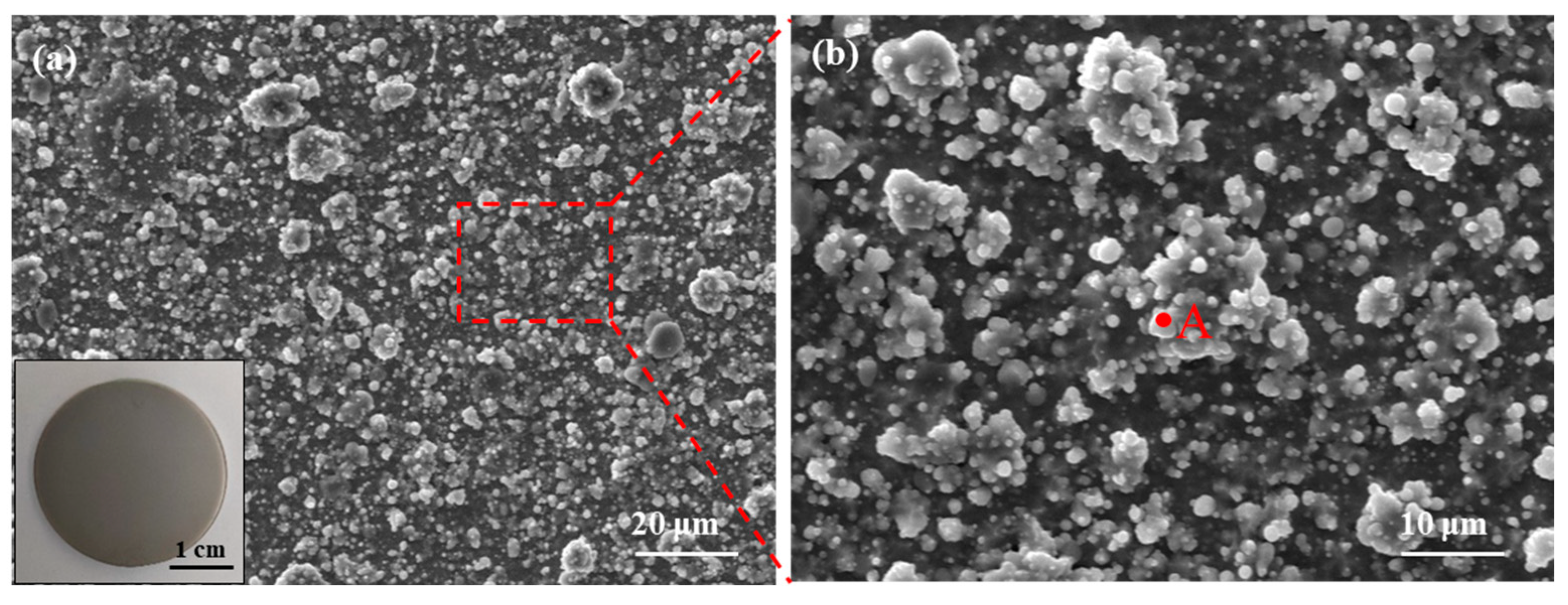
Figure 1 represents the surface morphology of the TiAlCrSiNbY coating. It can be observed that the gray coating completely covers the substrate surface, and the coating surface is continuous and uniform with no visible cracks or pores, exhibiting bulges characteristic of the arc ion plating process [19]. Combined with the EDS result (Table 2) of point A and the whole zone in Figure 1b, and the EDS results of other areas of the surface close to this area, due to the different sputtering rate of each element, the target and coating composition have slight deviation.
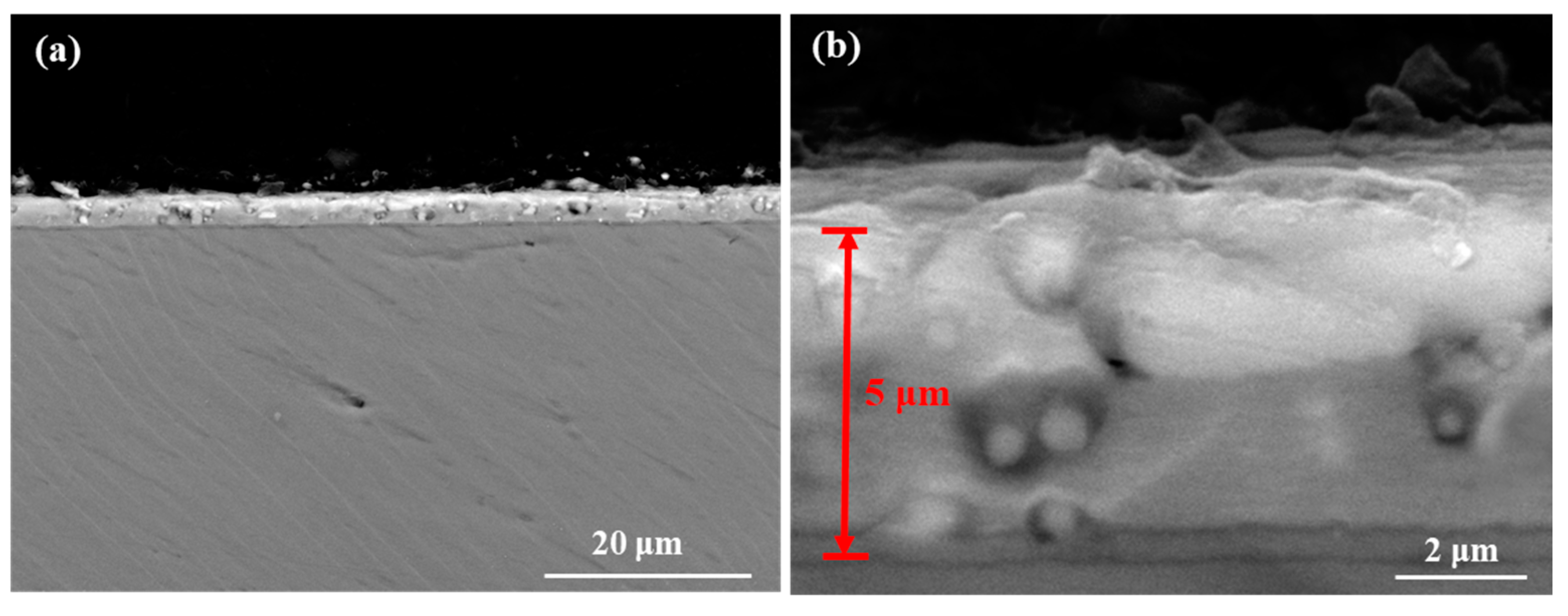
Figure 2 shows that a continuous TiAlCrSiNbY coating is formed. The coating/substrate interface is clear, and the pores and microcracks are hardly observed, which implies superior interfacial adhesion. Selecting five different areas of the sample to test its coating thickness, the average value was 5 ± 0.5 μm. The deposition rate of the TiAlCrSiNbY coating was about 5 ± 0.5 μm/h.

3.2. High-Temperature Oxidation Kinetics of Substrate and Coating

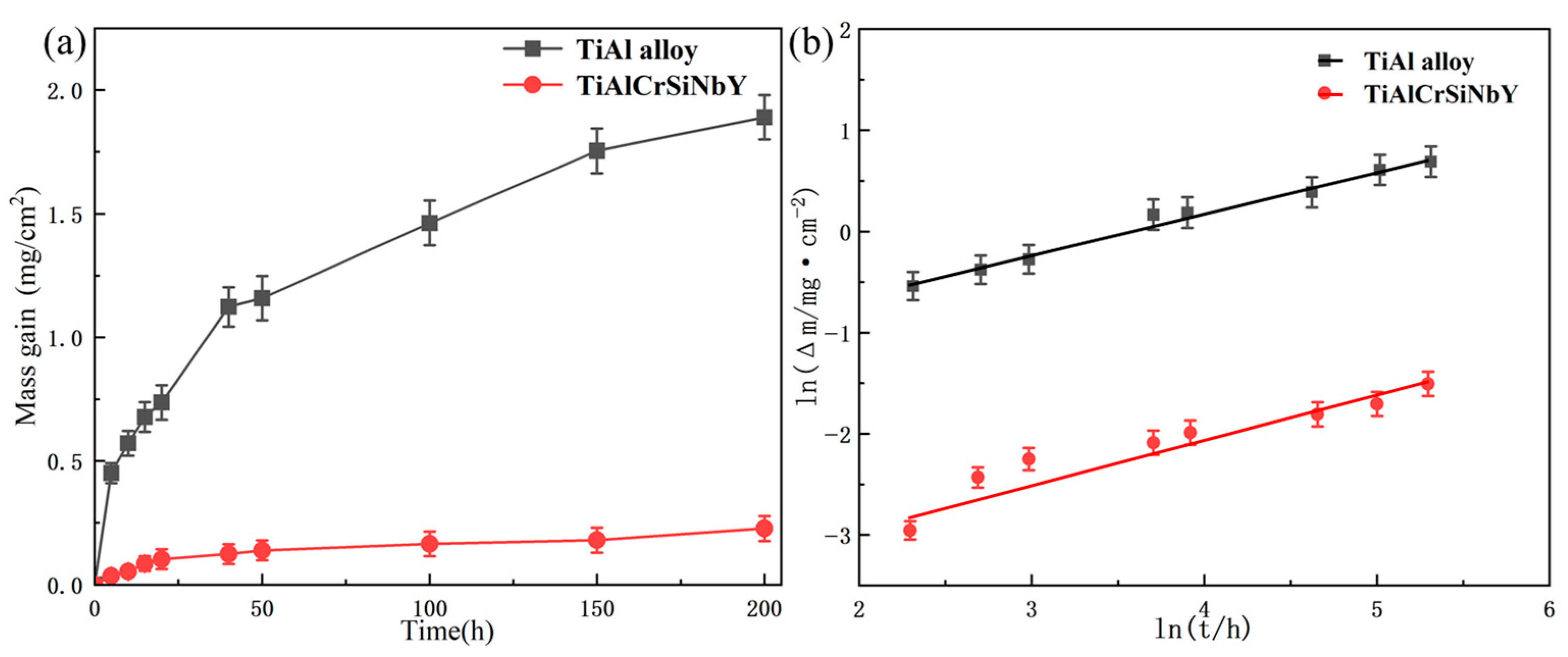
The oxidation kinetics curves of the uncoated and coated γ-TiAl alloy at 850 °C, as well as their corresponding fitting curves, are plotted in Figure 3. In the initial oxidation stage (0–10 h), the mass of the uncoated alloy climbs sharply to around 0.57 mg/cm2. With the oxidation time prolonged to 200 h, the mass gain continues to rise but at a much slower rate, finally reaching a total increment of 1.89 mg/cm2. The previous literature reported that the uncoated γ-TiAl4822 alloy showed a mass gain of 1.84 mg/cm2 after 288 h of oxidation at 850 °C, with a close oxidation mass gain [19]. Meanwhile, the mass gain trend of the γ-TiAl alloy is consistent with the previous literature [19,20,21]. Notably, these studies demonstrate that uncoated γ-TiAl alloys undergo significant mass gain after oxidation at 850 °C, reflecting the inherent poor high-temperature oxidation resistance of the substrate.
In contrast, the mass gain of the coated alloy only shows a noticeable increase within the first 10 h, and this increment is far lower than that of the uncoated sample. During high-temperature oxidation for 10 h to 100 h, the mass gain of the coated alloy tends to stabilize remarkably. After 200 h of oxidation, the final mass gain of the coated alloy is merely 0.22 mg cm−2, which is approximately 1/9 times of uncoated alloy. The previous literature reported that the oxidation mass gain of TiAlCrSiY coating prepared on γ-TiAl4822 alloy at 850 °C was about 1/5 to 1/6 that of the substrate [19]. This similarity stems from the consistent core design idea of the two coating systems: both take Ti and Al as the main matrix elements, which reduces the composition gradient between the coating and the γ-TiAl substrate, avoiding severe interdiffusion and brittle phase formation at the interface.
The kinetic law of oxidation weight gain and time can be expressed as follows:
m n =   k · t
ln m = 1 n ln t + 1 n ln k
where Δm is the specific mass gain (mg/cm2), t is the oxidation time (h), n is the oxidation rate exponent, and k is the oxidation rate constant [22]. The n and k can be calculated by the linear fitting analysis of the ln Δm-ln t plot in Figure 3b. The fitting results in terms of Equation (2) are listed in Table 3. Lower k values generally denote slower oxidation rates and the k of TiAlCrSiNbY coating is one order of magnitude lower than that of γ-TiAl alloy. The result corresponds to the mass gain data illustrated in Figure 3a, thereby confirming the superior high-temperature oxidation resistance of the coated alloy.
However, the oxidation resistance of the TiAlCrSiNbY coating does not show prominent advantages over aluminized, silicon-aluminizing coatings [23,24]. The main reason is not the structure of the TiAlCrSiNbY coating, but its exceptional thinness. Compared with the research results of other coatings with similar thickness [20,25], the power law correlation between the mass gain and oxidation times of these coatings and the TiAlCrSiNbY coating is equivalent. Coating thickness is the key parameter affecting oxidation resistance. In general, the thicker the coating, the better the high-temperature oxidation resistance. Therefore, increasing the thickness of the TiAlCrSiNbY coating is anticipated to enhance the oxidation resistance of γ-TiAl alloys, which will be explored in our subsequent research.

3.3. Microstructure and Composition of the Oxide Layer

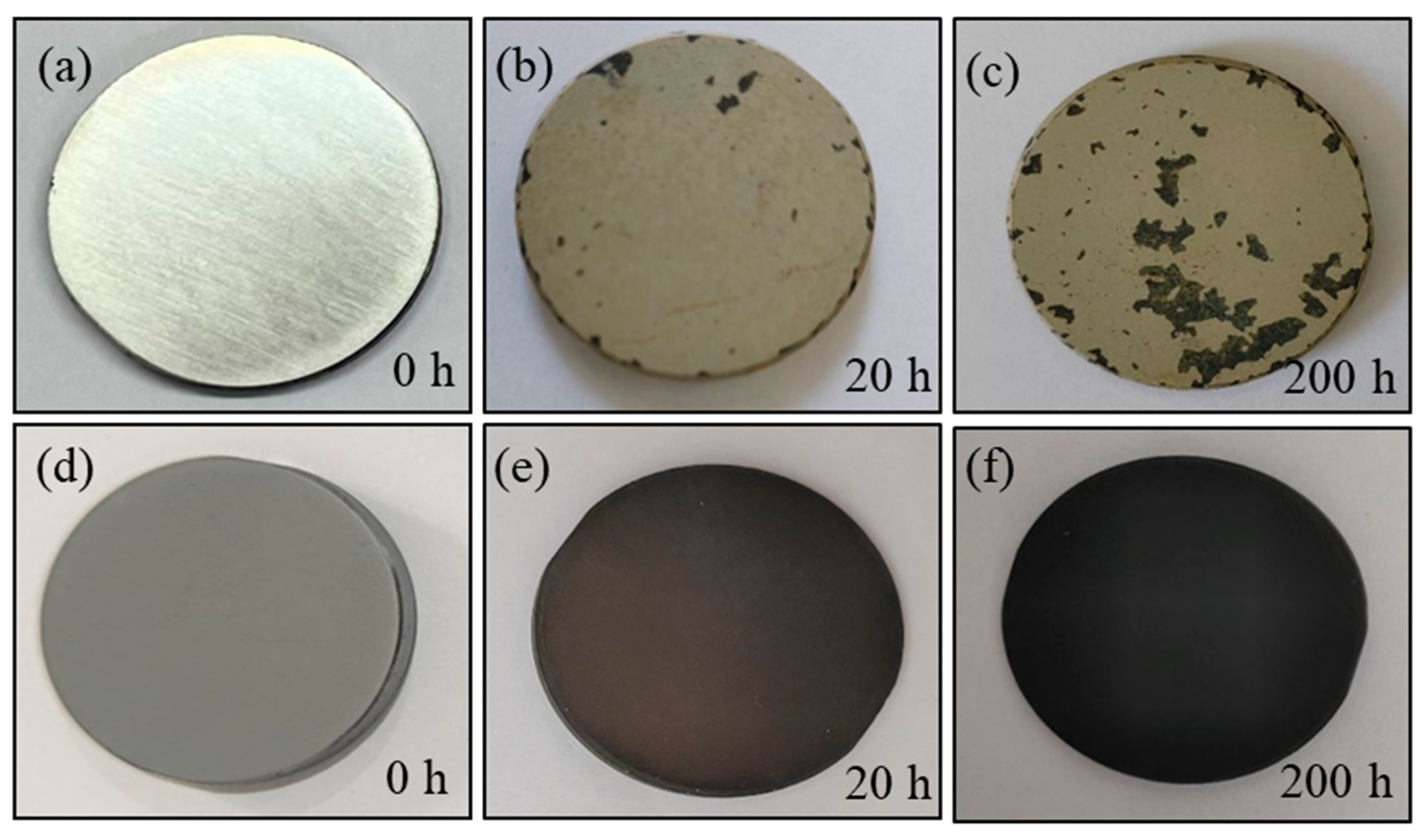
Figure 4 shows the macroscopic images of the γ-TiAl alloy and TiAlCrSiNbY coating before and after isothermal oxidation at 850 °C for 200 h. For γ-TiAl alloy, a gray oxide layer is observed and the oxide layer exhibits signs of degradation after 20 h. By 200 h, extensive spallation of the oxide layer occurs on the surface of the γ-TiAl alloy. For the TiAlCrSiNbY coating, its surface color gradually darkens from gray as oxidation time increases. After 200 h, the coating maintains structural integrity throughout, with no significant defects observed on the oxidized surface.
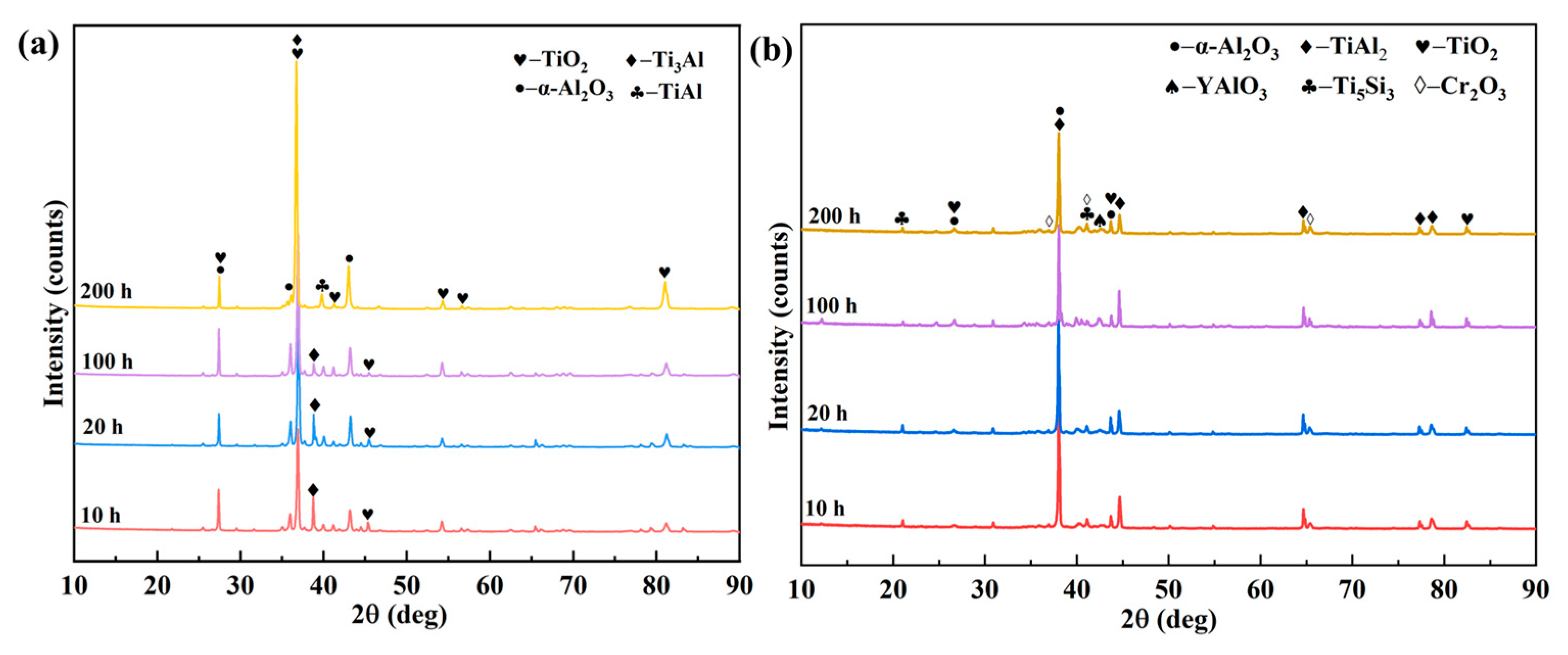
The XRD patterns of uncoated γ-TiAl alloys oxidized at 850 °C for varying durations are presented in Figure 5a. It can be concluded that the oxide layer formed on the surface of γ-TiAl alloy primarily consists of rutile-type TiO2 (JCPDS No. 01-073-1116) and a small amount of α-Al2O3 (JCPDS No. 01-082-1467), while the Ti3Al phase (JCPDS No. 03-065-7534) and TiAl phase (JCPDS No. 03-065-0428) belong to the substrate. By comparison, as shown in Figure 5b, the oxidized TiAlCrSiNbY coating is primarily composed of α-Al2O3 (JCPDS No. 01-082-1467), accompanied by trace phases including TiO2 (JCPDS No. 01-073-1116), Cr2O3 (JCPDS No. 072-3533), YAlO3 (JCPDS No. 01-089-7947), and Ti5Si3 (JCPDS No. 00-029-1361). Compared with the uncoated γ-TiAl alloys, the decreased intensity of TiO2 diffraction peak for coated alloys indicates that the TiAlCrSiNbY coating effectively suppresses the formation of TiO2.
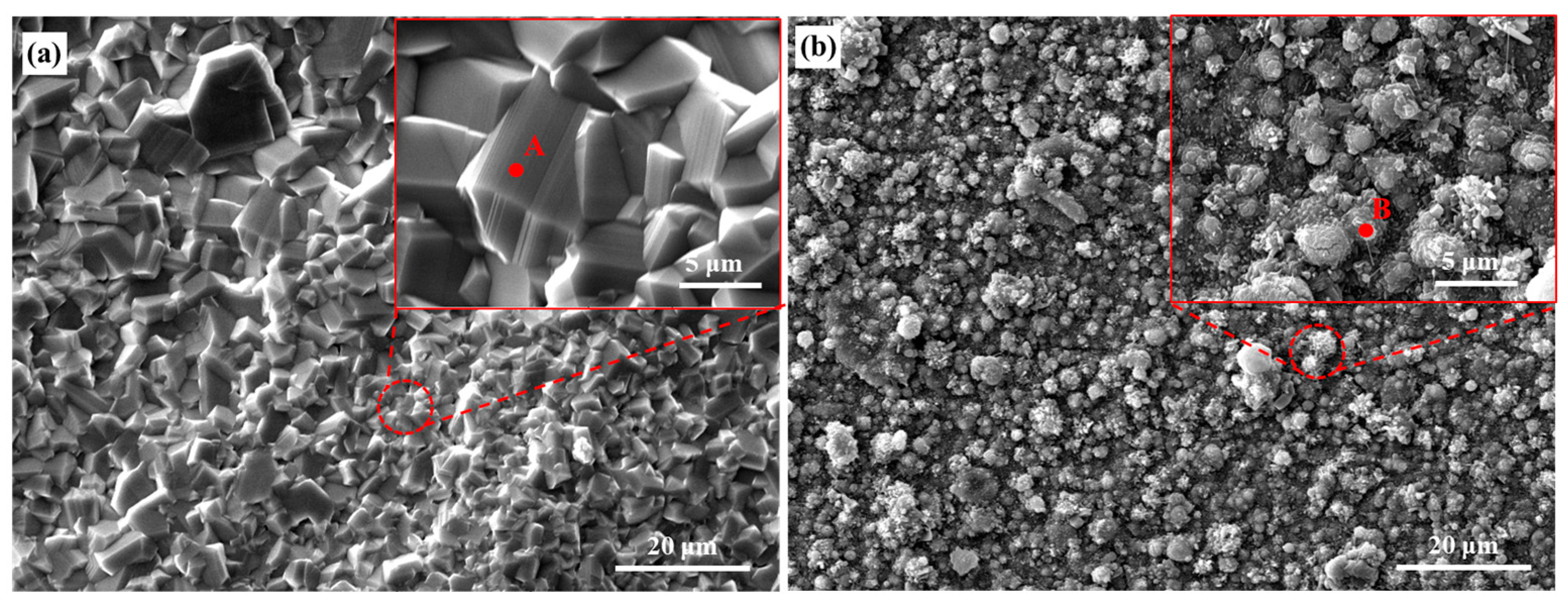
Figure 6 shows the SEM images of the oxide morphology on the surface of γ-TiAl alloy and TiAlCrSiNbY coating after oxidation for 200 h at 850 °C. As seen from Figure 6a, the surface of the γ-TiAl alloy is covered by irregular bulk oxides with sizes of 5–10 μm. Based on the elemental composition analysis in Table 4 and the XRD patterns in Figure 5a, it can be determined that the outer layer of the oxide coating on γ-TiAl alloy primarily consisted of rutile-type TiO2 with a small amount of Al2O3. The outermost layer consists of block-shaped TiO2, whose loose structure is not conducive to enhancing oxidation resistance. In contrast, oxidation does not induce notable changes to the surface morphology of the TiAlCrSiNbY coating, with only spherical bulges (2–4 μm in diameter) forming (see region B in Figure 6b). From EDS analysis, the spherical bulge primarily contains Al and O, confirming it is mainly composed of Al2O3. Compared with γ-TiAl alloy, the oxide layer on the surface of TiAlCrSiNbY coating exhibits smaller particle sizes and a relatively dense structure. Generally, the finer oxide layer can effectively hinder atom diffusion and improve the oxidation resistance of the coating.
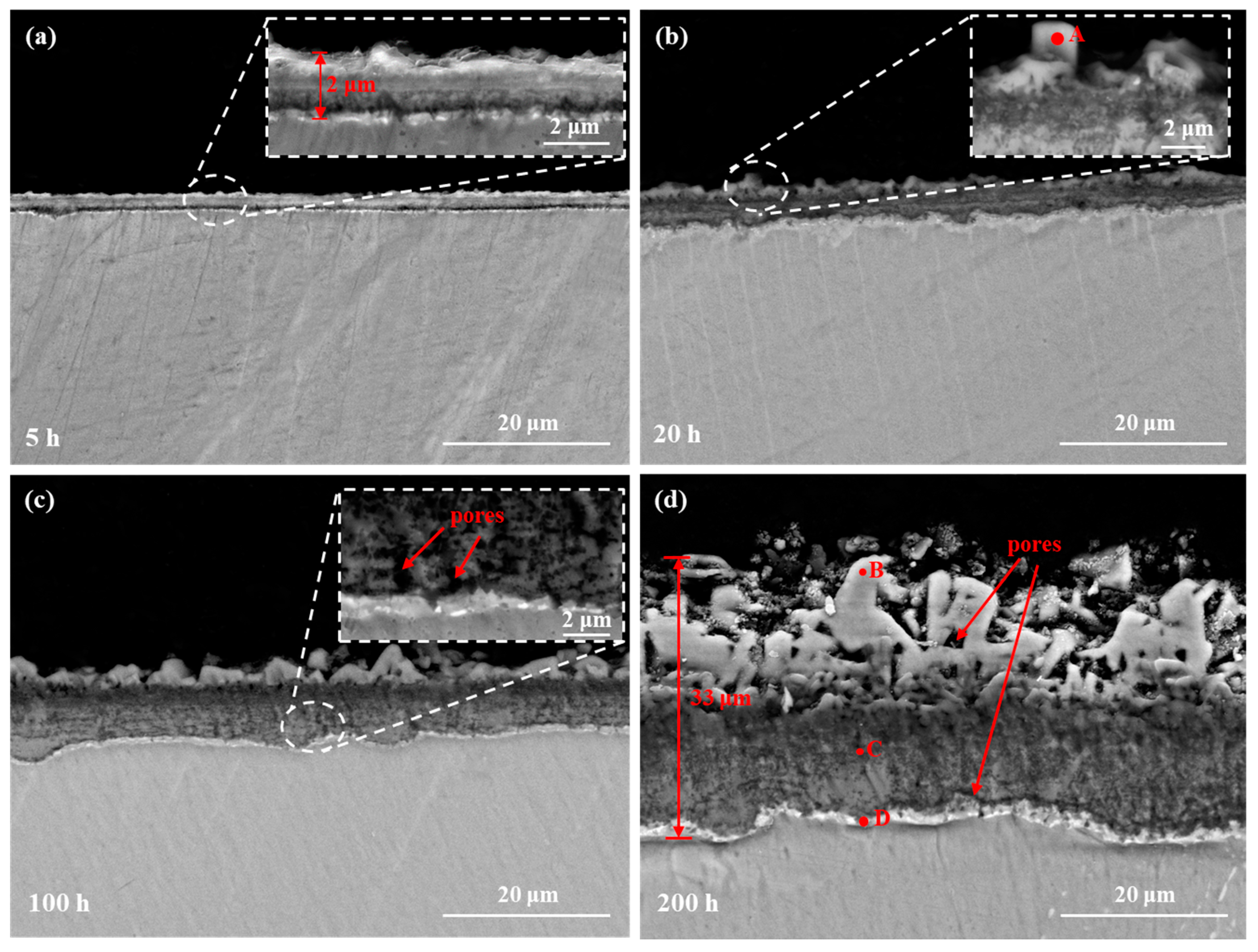
Figure 7 depicts the cross-sectional images of the γ-TiAl alloy after oxidation for 5 h to 200 h. A relatively dense dark gray oxide layer approximately 2 μm thick formed on the alloy surface after oxidation for 5 h in Figure 7a, which promotes the low-oxidation mass gain of the substrate. At 20 h, columnar oxides are observed on the outer layer. The EDS results in Table 5 confirm that the columnar oxides (see Figure 7b) are rich in Ti and O, indicating that Ti from the substrate diffuses outward to the surface. At 100 h, a three-layer oxide structure is formed, as shown in Figure 7c. The outer and intermediate layers are relatively porous, while the thin inner layer is relatively dense. However, the thin inner layer cannot prevent Ti and O diffusion.
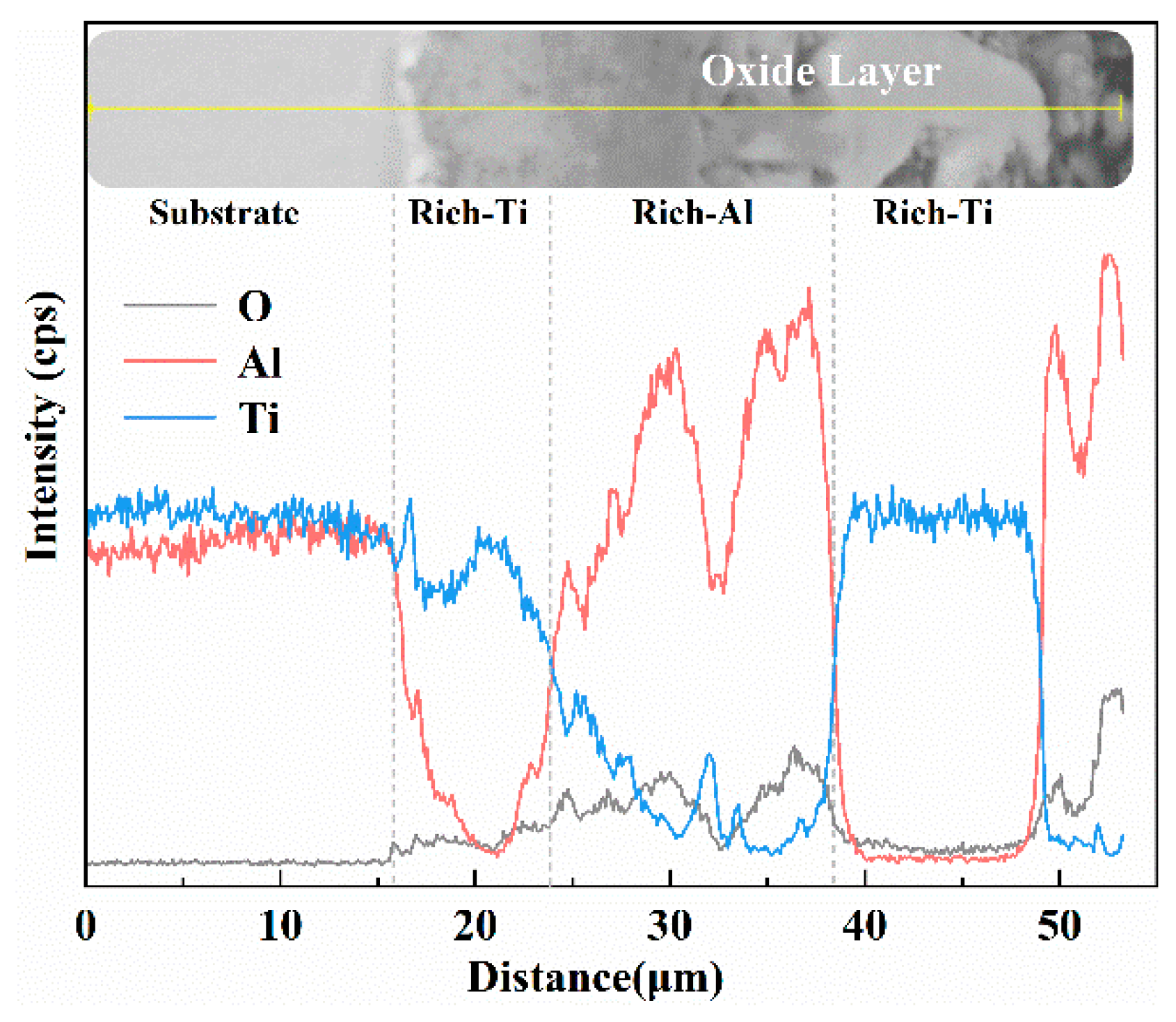
After 200 h of oxidation treatment, the oxide layer thickness has increased to approximately 33 μm, with a significant accumulation of loose oxides on the outer surface (see Figure 7d). Combined with the EDS line scan results (see Figure 7), the outer layer is predominantly TiO2, the intermediate layer is mainly composed of Al2O3, and the inner layer consists of a mixture of TiO2 and Al2O3. The results were consistent with those reported in ref. [26]. Specifically, the EDS results (Table 5) reveal that the Ti and Al contents at region D in Figure 7d are significantly lower than those in the substrate, while Cr and Nb contents reach 16.00 at.% and 5.28 at.%, respectively. This compositional variation indicates that during oxidation, Ti and Al continuously diffuse outward from near-surface layers, leading to relative enrichment of Cr and Nb. The result aligns with the Ti and Al line scan results in Figure 8. Regions rich in Cr and Nb appear as bright white in BSE images owing to their higher atomic numbers. Additionally, the presence of numerous pores at the interfaces of intermediate/outer layers and inner layers/substrates suggest that the three-layer oxide structure has failed to effectively hinder oxygen inward diffusion and substrate element outward diffusion.
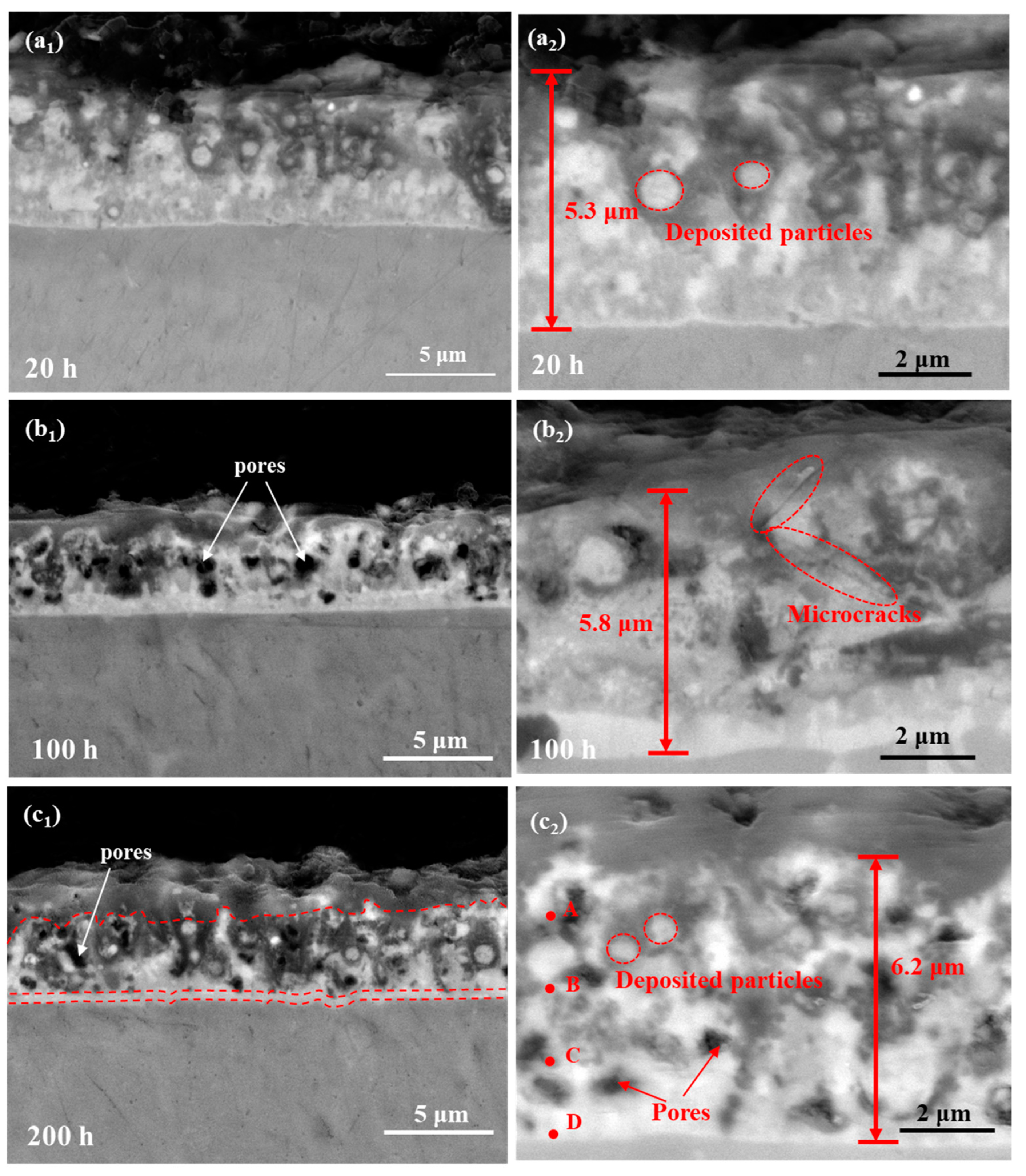
Figure 9 shows the cross-sectional images of the TiAlCrSiNbY coating after oxidation for 20 h to 200 h at 850 °C. As shown in Figure 9(a1,a2), the cross-section of the coating retains a continuous and dense overall structure with a thickness of 5.3 ± 0.5 μm, showing only a slight increase compared to the original deposited thickness (5 ± 0.5 μm). The interface between the coating and the γ-TiAl substrate is clear and tightly bonded without cracks or detachment. Notably, the coating contains a small number of inherent deposited particles derived from the arc ion plating process. These particles are characteristic structures left by transient gaps between particles during the rapid solidification of molten droplets during deposition, and no significant separation from the coating matrix. With the extension of oxidation time to 100 h, the coating thickness increases to 5.8 ± 0.5 μm (Figure 9(b1,b2)), and the growth rate remains at a low level. Due to the presence of oxygen atom diffusion channels between the deposited particles and the coating matrix inside the coating, a small number of scattered microcracks appear on the coating surface, but no penetrating defects are formed and the overall structure of the coating remains intact. At this stage, the interface between the coating and the substrate still maintains a dense state, effectively blocking the rapid penetration of oxygen atoms into the substrate. The final thickness of the coating reaches 6.2 ± 0.5 μm after oxidation for 200 h (Figure 9(c1,c2)), which is only about 1.2 μm higher than the initial deposited thickness, far lower than the 33 μm oxide layer thickness of the uncoated γ-TiAl alloy (Figure 7d). Combining the XRD results and the EDS results in Table 6, the cross-section of the coating can be clearly divided into an outer, dense Al2O3 oxide layer, an intermediate, mixed oxide layer, and an inner, incompletely oxidized TiAlCrSiNbY matrix (Figure 9(c1)). The coating still maintains a complete structural morphology without large-area spallation or failure, further confirming the high-temperature oxidation protection effect of the coating on the γ-TiAl alloy.
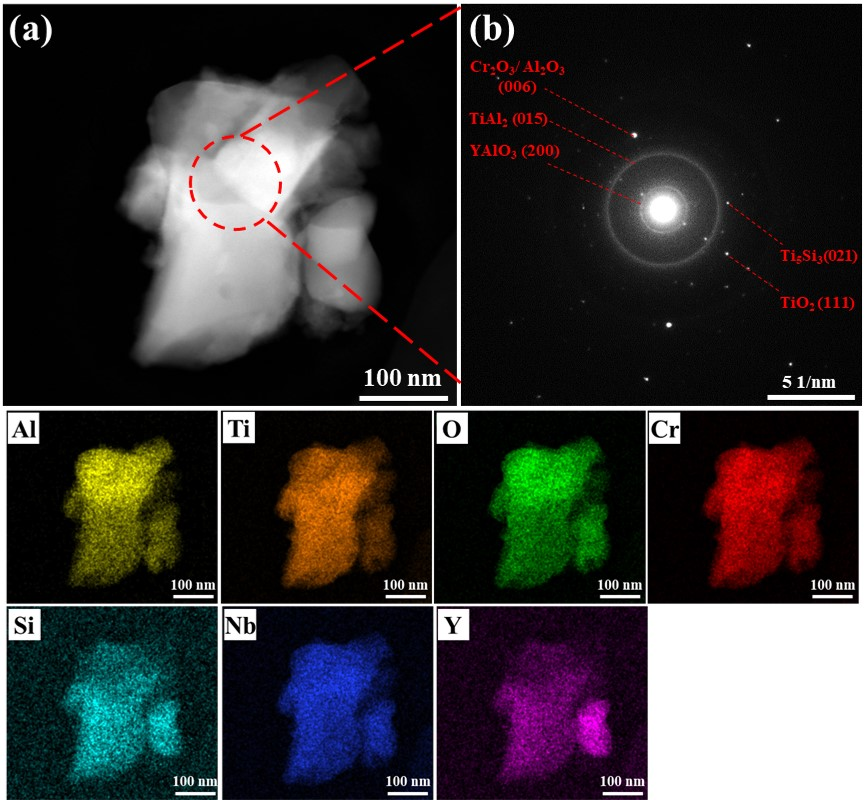
Furthermore, TEM analysis is performed on the exfoliated oxide layer after 200 h of oxidation. The diffraction spots of the oxide layer exhibit distinct polycrystalline ring characteristics (see Figure 10b), indicating that multiple elements from the coating are involved in oxidation. Analysis reveals that the polycrystalline rings contain Al2O3, TiO2, Cr2O3, YAlO3, Ti5Si3, and TiAl2, which is consistent with the XRD results (see Figure 5b). In addition, the EDS mapping results of the oxide scales revealed that the distribution of Al, Cr, and O were essentially consistent and Ti and Nb exhibited uniform content distributions, while Si was primarily concentrated in Ti-rich regions. This confirmed the existence of the aforementioned oxides and the Ti5Si3 phase.
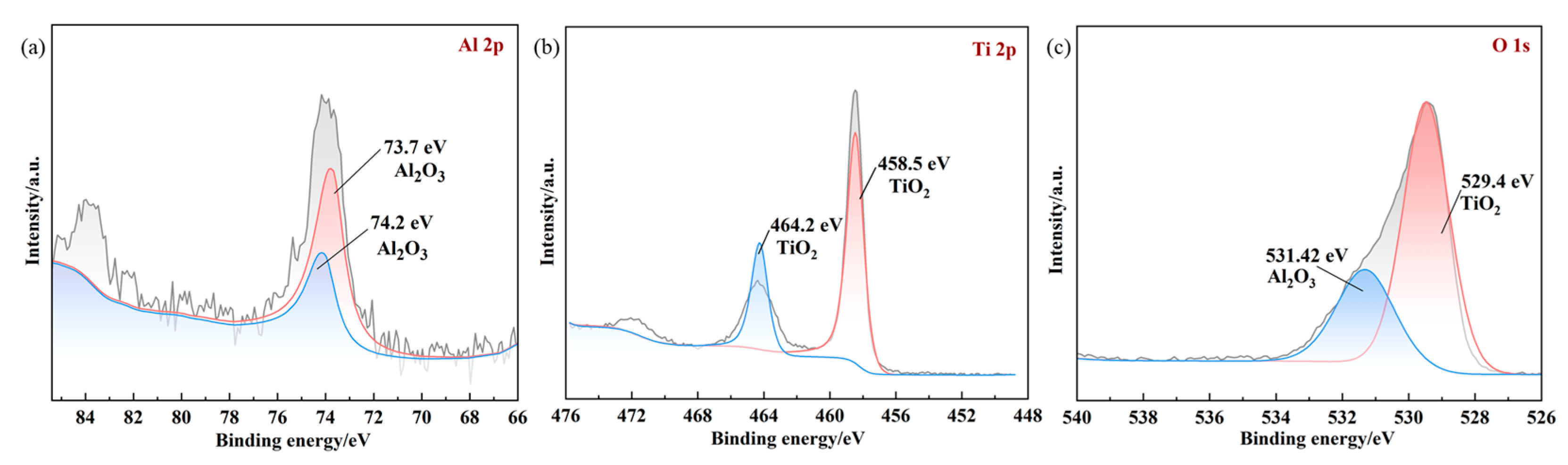
Figure 11 depicts the XPS spectra of the oxidized TiAl alloy after oxidation at 850 °C for 200 h. The binding energies of Al 2p are at 73.7 eV and 74.2 eV, which correspond to the Al3+ chemical valence state (see Figure 11a) [27]. The Ti 2p spectrum can be divided into two distinct peaks at binding energies of 458.5 eV and 464.2 eV, which are attributed to the Ti4+ in TiO2 (see Figure 11b) [28]. From Figure 11c, the O 1s spectrum of the oxidized TiAl alloy can be fitted by two peaks at 529.4 eV and 531.42 eV, the peak located at 529.4 eV can be assigned to O 1s in TiO2 [29], the second peak at 531.42 eV ascribes to O 1s in Al2O3 [30], and the peak area of the two intensities is close to 3:1, indicating that the oxide layer content is primarily composed of TiO2.
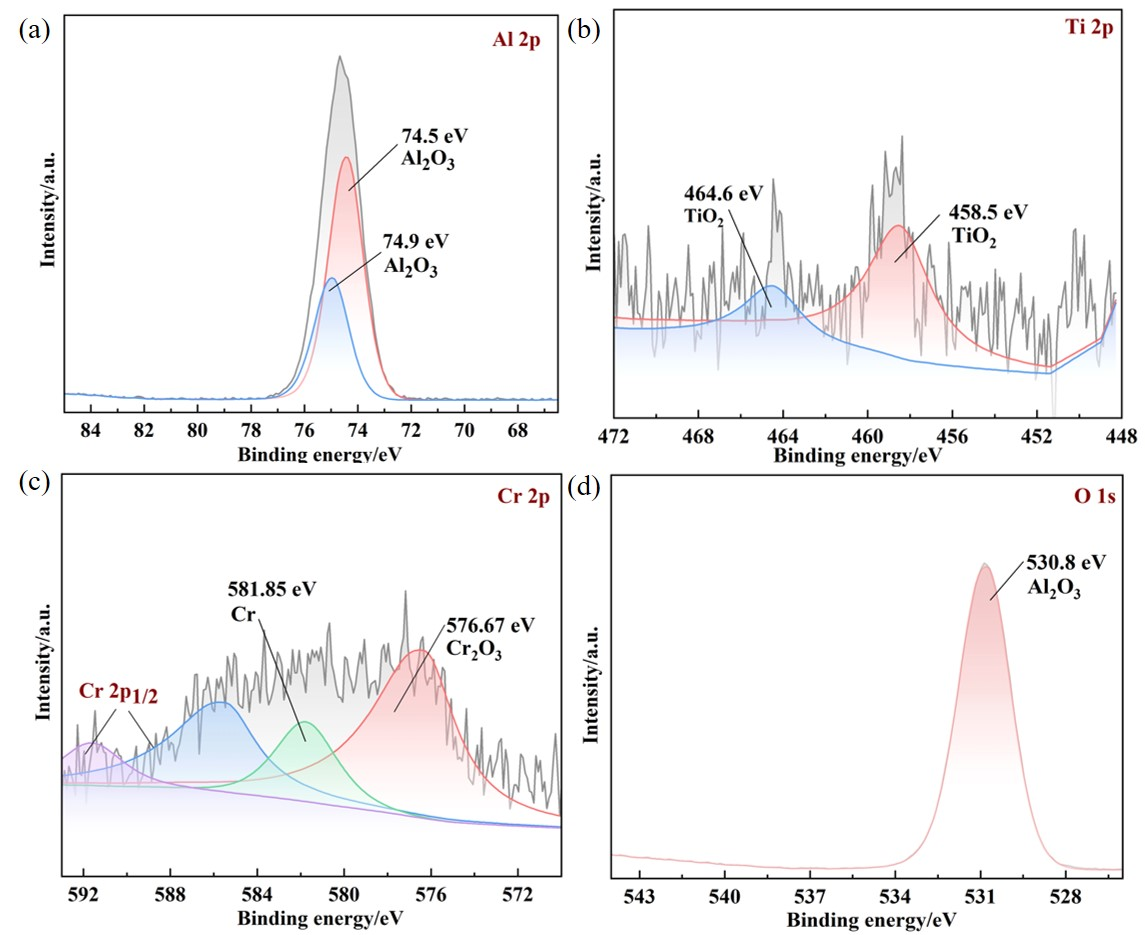
Figure 12 shows the XPS spectra obtained from the surface of the oxidized TiAlCrSiNbY coating after oxidation at 850 °C for 200 h. The Al 2p spectrum exhibited two peaks at 74.5 eV and 74.9 eV, corresponding to Al2O3 (see Figure 12a) [30,31]. As shown in Figure 12b, the doublet with Ti 2p3/2 and Ti 2p1/2 peaks at 458.5 and 464.6 eV corresponds to the Ti4+ in TiO2 [28]. The binding energy peak of Cr 2p at 576.67 eV corresponds to the Cr2O3 in Figure 12c [32]. In addition, Figure 12d shows the binding energy peaks of O 1s at 530.8 eV corresponding to Al2O3 [33], indicating that the oxide layer content is primarily composed of Al2O3. The results are basically consistent with XRD analysis.

4. Discussion

4.1. Oxidation Mechanism of γ-TiAl Alloy

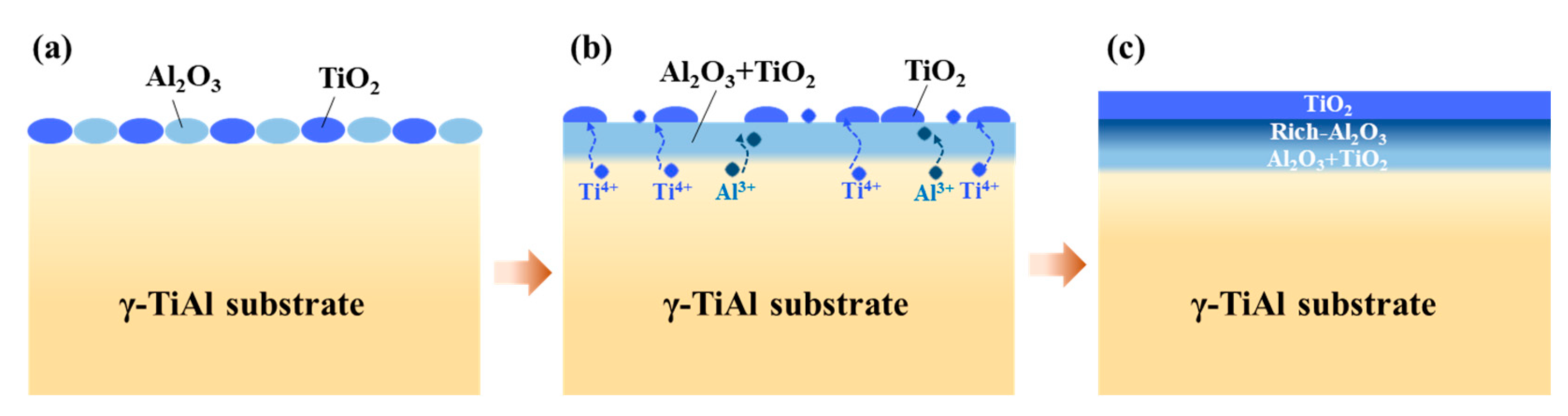
Figure 13 shows a schematic diagram of the microstructural evolution of γ-TiAl alloy during oxidation. At the initial stage of the oxidation (<20 h), the oxidation reaction and corresponding standard Gibbs free energy (ΔG) between the TiAl alloy and O are listed as follows [34]:
Ti s   +   O 2 g   =   TiO 2 s ,   G   =   944   +   0.18   T   ( kJ / mol )
4 / 3 Al s +   O 2 g =   2 / 3 Al 2 O 3 s ,   G   = 1125 + 0.22   T   ( kJ / mol )  
where T is absolute temperature.
Upon reaching saturation of O atom adsorption and dissolution at the TiAl alloy surface, Al2O3 nucleates and grows preferentially due to having lower Gibbs free energy than TiO2 at 850 °C, ultimately forming a thin Al2O3 oxide layer on the alloy surface [35]. Owing to the consumption Al in the substrate, the Ti content in its adjacent regions gradually increases, which provides a sufficient Ti source for the formation of TiO2. As shown in Figure 13a, a mixed oxide layer composed of Al2O3 and TiO2 inevitably forms on γ-TiAl substrate. In the intermediate stage of oxidation (20–100 h), a large number of Ti diffuse outward through the mixed oxide layer, the majority of the oxide layer surface is gradually dominated by TiO2, leading to the formation of a porous TiO2 layer on the outermost surface (see Figure 12b). In the later stage of oxidation (100–200 h), the titanium oxides aggregate with each other and gradually form blocky TiO2. The blocky TiO2 outer layer possesses a loose and porous structure, which fails to effectively inhibit the inward diffusion of O atoms. Ti contained in the middle of the oxide layer undergoes severe depletion due to continuous outward diffusion, leading to the formation of an Al-enriched region, which promotes the formation of an Al2O3 interlayer. However, driven by the Kirkendall effect, the rapid outward diffusion of Ti gives rise to the formation of a considerable number of pores in the Al2O3 interlayer. The porous Al2O3 interlayer cannot serve as a diffusion barrier to enhance oxidation resistance. Formation of the oxide layer is accompanied by the dissolution of diffusing oxygen in the underlying metal, leading to the formation of an inner oxide layer comprising a mixture of Al2O3 and TiO2, as shown in Figure 13c. Consequently, an oxide layer was formed consisting of an outer layer of TiO2, an intermediate layer of Al2O3, and an inner layer composed of a mixture of TiO2 and Al2O3.

4.2. Oxidation Mechanism of TiAlCrSiNbY Coating

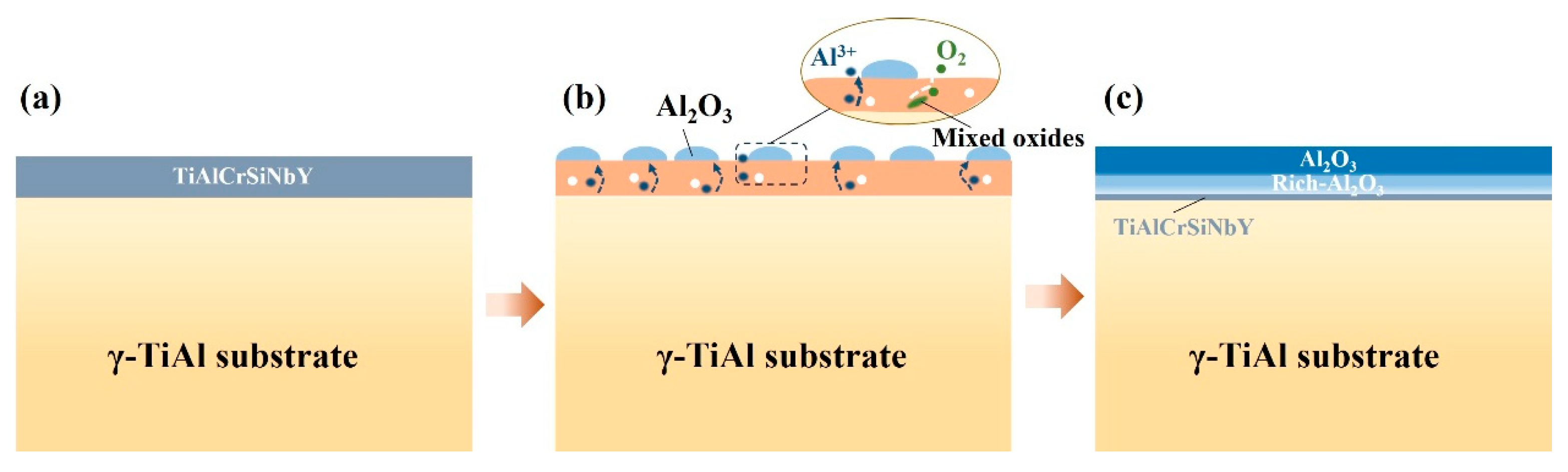
Since the Al content in γ-TiAl alloys does not exceed 60 at.%, it is insufficient to support the formation of a protective pure Al2O3 layer at 850 °C for 200 h. However, the TiAlCrSiNbY coating offers an opportunity of achieving this. As shown in Figure 14a, in the initial oxidation stage (<20 h) the coating surface rapidly reacts with oxygen to form a thin Al2O3 layer. Unlike the uncoated alloy, the high Al content and the synergistic effect of alloying elements ensure the continuous growth of the Al2O3 layer. In the intermediate stage (20–100 h), the oxide layer gradually evolves into a three-layer structure: an outer, dense Al2O3 layer, an intermediate, mixed oxide layer, and an inner, unoxidized coating matrix, which can suppress internal diffusion of O and the growth of the oxide scale and avoid the oxide layer peeling caused by excessive tensile stress due to the thickening of the oxide layer. In the late stage (100–200 h), the coating maintains structural integrity without significant spallation or thickening (6.2 μm, Figure 9(c1,c2)), which is far thinner than the 33 μm oxide layer of the uncoated alloy.
(1)
The roles of alloy elements in TiAlCrSiNbY coatings
Al is the core element for forming the protective oxide layer in the TiAlCrSiNbY coating. The XPS results (Figure 12a) show that two characteristic peaks are attributed to Al3+ in Al2O3 and the intense diffraction peak of α-Al2O3 in the XRD pattern, confirming the dominant role of Al2O3 in the oxide layer. The EDS analysis of the coating cross-section (Table 6, region A) shows that the outer oxide layer contains 33.3 at.% Al and 56.8 at.% O, with a molar ratio close to 2:3, further verifying the formation of Al2O3. Thermodynamically, α-Al2O3 has excellent stability at high temperatures and a low growth rate, which can effectively inhibit the inward diffusion of oxygen and outward diffusion of metal atoms.
Cr plays a dual role in promoting oxide layer formation and enhancing thermal stability. On one hand, Cr increases Al/Ti activity ratio in the coating. Previous studies have shown that adding 10 at.% Cr can significantly improve the Al/Ti activity ratio [36,37]. The Cr content in the TiAlCrSiNbY coating (10.5 at.%, Table 2) is within this effective range, which thermodynamically promotes the preferential oxidation of Al to form Al2O3, avoiding the premature failure of the protective layer due to Al depletion, which is the key reason for the coating’s low mass gain (0.22 mg/cm2 after 200 h) compared to the uncoated alloy. On the other hand, Cr itself oxidizes to form Cr2O3, which has good compatibility with Al2O3. The XRD pattern (Figure 5b) shows a weak diffraction peak of Cr2O3, and the TEM/SAED results (Figure 10b) confirm the presence of Cr2O3 polycrystalline rings. This mixed structure reduces the internal stress of the oxide layer and inhibits the formation of cracks, thereby improving the thermal stability of the coating.
The role of Nb is similar to that of Cr. Adding a small amount of Nb can increase the activity of Al, promote the formation of stable and dense Al2O3 oxide films, and reduce the proportion of harmful phases such as loose TiO2 [38,39]. The role of Y is to promote scale adherence between the alumina scale and the TiAlCrSiNbY coating [40,41]. In addition, the XRD patterns (Figure 5b) and TEM analysis results (Figure 10) of the oxidized TiAlCrSiNbY coating confirm the formation of Ti5Si3. The Ti5Si3 phase possesses a dense crystal structure and exhibits strong high-temperature stability, inhibiting the affinity of Ti and O [42]. It can effectively prevent the outward diffusion of Ti from the substrate, thereby maintaining the thermal stability of the coating.
(2)
Chemical compatibility between TiAlCrSiNbY coating and γ-TiAl substrate
The advantage of TiAlCrSiNbY coating as a high-temperature protective coating for γ-TiAl alloy is also reflected in its ability to eliminate chemical compatibility issues involved at elevated temperatures. For conventional high-temperature coatings such as NiCrAlY, inter-diffusion with the γ-TiAl substrate tends to be detrimental by forming brittle intermetallic phases and Kirkendall voids at the interface [43,44]. In contrast, the TiAlCrSiNbY coating is designed based on the substrate composition, replacing the “M” in the MCrAlY system with Ti and Al from the substrate. This composition design minimizes the element concentration gradient between the coating and the substrate, reducing inter-diffusion. The SEM cross-sectional images (Figure 9) show a clear and tight interface between the coating and the substrate, with no visible intermetallic compounds or voids after 200 h of oxidation. The EDS results (Table 6) show that the elemental composition of the coating–substrate interface region (region D) is continuous, confirming the absence of severe inter-diffusion. The high proportion of thermally stable Al2O3 in the oxide layer ensures the structural integrity of the coating under high-temperature conditions, and the low diffusion rate of elements guarantees long-term service stability.
In summary, the superior high-temperature oxidation resistance of the TiAlCrSiNbY coating originates from the following aspects. First, the dense structure of the coating itself and its good bonding with the substrate inhibit the rapid inward diffusion of oxygen atoms; second, although there are trace diffusion channels caused by deposited particles, the continuous Al2O3-based protective layer formed on the coating surface effectively blocks large-scale oxidation reactions; third, there is no obvious elemental inter-diffusion or brittle phase formation between the coating and the substrate, and the interface stability is significantly superior to that of the uncoated system.

5. Conclusions

The TiAlCrSiNbY coating was fabricated on the γ-TiAl alloy by arc ion plating. The microstructure, phase composition, and oxidation behavior at 850 °C were investigated and discussed. The main conclusions are as follows:
(1)
The TiAlCrSiNbY coating of approximately 5 μm thickness was successfully fabricated on the surface of γ-TiAl alloy. The coating exhibited a dense and crack-free microstructure and had a sound bonding with the substrate.
(2)
The oxidation kinetics curve of the TiAlCrSiNbY-coated sample at 850 °C was approximately parabolic. After oxidation for 200 h, the mass gain of the coated sample was 1/9 times that of the uncoated sample.
(3)
The oxidized γ-TiAl alloy exhibited a three-layer structure after oxidation at 850 °C for 200 h, consisting of a TiO2 outer layer, Al2O3 interlayer, and mixed TiO2 and Al2O3 inner layer, which resulted in poor oxidation resistance.
(4)
The addition of Cr and Nb in the TiAlCrSiNbY coating can increase the activity of Al and promote the formation of stable and dense Al2O3 oxide films, the presence of a strong high-temperature stability Ti5Si3 phase inhibited the affinity of Ti and O, maintaining structural integrity and enhancing high-temperature oxidation resistance.

Author Contributions

J.Q. contributed to methodology, investigation, and writing–original draft; F.X. contributed to investigation, methodology, and supervision; X.W. contributed to methodology and supervision; G.G. contributed to investigation and writing–review and editing; D.H. contributed to methodology and data curation. All authors have read and agreed to the published version of the manuscript.

Funding

This research received no external funding.

Institutional Review Board Statement

Not applicable.

Informed Consent Statement

Not applicable.

Data Availability Statement

Data are contained within the article.

Conflicts of Interest

Authors Jing Qu, Guangrui Gao and Dong Han were employed by the company Xi’an Surface Material Protection Co., Ltd. The remaining authors declare that the research was conducted in the absence of any commercial or financial relationships that could be construed as a potential conflict of interest.

References

  1. Usategui, L.; López-Ferreño, I.; Echániz, T.; Sainz-Menchón, M.; Musi, M.; Clemens, H.; López, G.A. Emissivity measurements conducted on intermetallic γ-TiAl-based alloys for aeronautical applications. J. Mater. Res. Technol. 2023, 27, 3170–3179. [Google Scholar] [CrossRef]
  2. Duan, B.H.; Yang, Y.C.; He, S.Y.; Feng, Q.S.; Mao, L.; Zhang, X.X.; Jiao, L.N.; Lu, X.G.; Chen, G.Y.; Li, C.H. History and development of γ-TiAl alloys and the effect of alloying elements on their phase transformations. J. Alloys Compd. 2022, 909, 164811. [Google Scholar] [CrossRef]
  3. Xu, C.; Zhu, M.H.; Guan, H.H.; Gao, C.L.; Jin, X.Y.; Du, J.C.; Xue, W.B. Improvement of steam oxidation resistance of the γ-TiAl alloy with microarc oxidation coatings at 900–1200 °C. Corros. Sci. 2022, 209, 110711. [Google Scholar] [CrossRef]
  4. Liang, J.Y.; Yan, H.J.; Ye, X.Y.; Fan, T.; Gui, Y.; Xie, B.; Li, X.B.; Wu, L.K.; Cao, F.H. A novel and facile solvothermal fluorination approach for boosting oxidation resistance of TiAl alloy. Corros. Sci. 2025, 253, 113017. [Google Scholar] [CrossRef]
  5. Zhang, X.; Wang, S.; Zheng, Z.; Wang, J.; Zheng, K.; Gao, P.; Zhang, X.; Luo, T. Effect of Yb on the microstructure and oxidation behavior of TiAl alloy. Intermetallics 2025, 182, 108787. [Google Scholar] [CrossRef]
  6. Gao, Z.; Hu, R.; Zou, H.; Zhou, M.; Luo, X. Insight into the ta alloying effects on the oxidation behavior and mechanism of cast TiAl alloy. Mater. Des. 2024, 241, 112941. [Google Scholar] [CrossRef]
  7. Yan, H.J.; Li, Y.Y.; Yin, R.Z.; Sun, Q.Q.; Liu, H.J.; Zeng, C.L.; Wu, L.K.; Cao, F.H. High temperature oxidation behavior of TiAl alloy with electrodeposited SiOC coating. Corros. Sci. 2023, 224, 111491. [Google Scholar] [CrossRef]
  8. Wu, X.H.; Huang, A.; Hu, D.; Loretto, M.H. Oxidation-induced embrittlement of TiAl alloys. Intermetallics 2009, 17, 540–552. [Google Scholar] [CrossRef]
  9. Mu, Y.X.; Liang, Y.F.; Sheng, J.Q.; Zhang, C.Y.; Guo, Z.; Yang, G.; Sun, T.L.; Wang, Y.S.; Lin, J.P. A novel approach to coating for improving the comprehensive high-temperature service performance of TiAl alloys. Acta Mater. 2025, 283, 120500. [Google Scholar] [CrossRef]
  10. Sun, Y.Y.; Miao, Q.; Liang, W.P.; Gupta, M.; Jia, F.L.; Xu, J.Y.; Yu, H.Y.; Zang, K. High temperature oxidation-resistant AlCoCrFeNi high entropy alloy coating on TiAl alloy: Role of pre-diffusion on oxidation resistance. Appl. Surf. Sci. 2025, 689, 162501. [Google Scholar] [CrossRef]
  11. Zhou, C.G.; Xu, H.B.; Gong, S.K.; Kim, K.Y. A study of aluminide coatings on TiAl alloys by the pack cementation method. Mater. Sci. Eng. A 2003, 341, 169–173. [Google Scholar] [CrossRef]
  12. Reinhold, B.; Klemens, K.; Maik, F.; Christoph, L. Oxidation resistance of γ-TiAl based alloy Ti–45Al–8Nb coated with intermetallic Ti–Al–Cr–Y layers and EB-PVD zirconia topcoats at 950 °C in air. Surf. Coat. Technol. 2013, 222, 128–134. [Google Scholar] [CrossRef]
  13. Reinhold, B.; Maik, F.; Wolfgang, B.; Christoph, L. Oxidation behaviour of gamma titanium aluminides with EB-PVD thermal barrier coatings exposed to air at 900 °C. Surf. Coat. Technol. 2007, 202, 676–680. [Google Scholar] [CrossRef]
  14. Wang, Q.M.; Mykhaylonka, R.; Renteria, A.F.; Zhang, J.L.; Leyens, C.; Kim, K.H. Improving the high-temperature oxidation resistance of a β-γ TiAl alloy by a Cr2AlC coating. Corros. Sci. 2010, 52, 3793–3802. [Google Scholar] [CrossRef]
  15. Kuang, J.J.; Jiang, Y.C.; Liu, H.B. Applications of arc plating technology in aviation industry. Plat. Finish. 2016, 38, 23–26. [Google Scholar]
  16. Zhao, P.X.; Li, X.B.; Xing, W.W.; Chen, B.; Ma, Y.C.; Liu, K. Cyclic oxidation behavior of Nb/Mn/Si alloying beta-gamma TiAl alloys. T. Nonferr. Metal. Soc. 2023, 33, 128–140. [Google Scholar] [CrossRef]
  17. Lin, J.P.; Zhao, L.L.; Li, G.Y.; Zhang, L.Q.; Song, X.P.; Ye, F.; Chen, G.L. Effect of Nb on oxidation behavior of high Nb containing TiAl alloys. Intermetallics 2010, 19, 131–136. [Google Scholar] [CrossRef]
  18. Chen, Y.I.; Gao, Y.X.; Chang, L.H. Mechanical properties, bonding characteristics, and oxidation behaviors of Nb–Si–N coatings. Surf. Coat. Technol. 2018, 350, 831–840. [Google Scholar] [CrossRef]
  19. Swadźba, R.; Bauer, P.P. Microstructure formation and high temperature oxidation behavior of Ti-Al-Cr-Y-Si coatings on TiAl. Appl. Surf. Sci. 2021, 562, 150191. [Google Scholar] [CrossRef]
  20. Jia, Z.H.; Song, X.L.; Su, Z.T.; Duan, Z.X. Enhancing the high-temperature oxidation resistance of TiAl alloy via a novel Al2O3/Ti5Si3 composite coating prepared through a modified pack cementation technique. Appl. Surf. Sci. 2025, 692, 162717. [Google Scholar] [CrossRef]
  21. Xiang, J.X.; Xie, F.Q.; Wu, X.Q. Aluminization of a Si–Y co-deposition coating to protect a Ti2AlNb based alloy from high temperature oxidation. Vacuum 2020, 174, 109190. [Google Scholar] [CrossRef]
  22. Swadźba, R.; Marugi, K.; Pyclik, Ł. STEM investigations of γ-TiAl produced by additive manufacturing after isothermal oxidation. Corros. Sci. 2020, 169, 108617. [Google Scholar] [CrossRef]
  23. Chaia, N.; Cury, P.L.; Rodrigues, G.; Coelho, G.C.; Nunes, C.A. Aluminide and silicide diffusion coatings by pack cementation for Nb-Ti-Al alloy. Surf. Coat. Technol. 2020, 389, 125675. [Google Scholar] [CrossRef]
  24. Wang, Q.; Wu, W.Y.; Jiang, M.Y.; Cao, F.H.; Wu, H.X.; Sun, D.B.; Yu, H.Y.; Wu, L.K. Improved oxidation performance of TiAl alloy by a novel Al–Si composite coating. Surf. Coat. Technol. 2020, 381, 125–126. [Google Scholar] [CrossRef]
  25. Braun, R.; Lange, A.; Hovsepian, P.E.; Ehiasarian, A.P.; Tietema, R.; Leyens, C. Oxidation behaviour of TiAlYN/CrN and CrAlYN/CrN nanoscale multilayer coatings with Al2O3 topcoat deposited on γ-TiAl alloys. Mater. High Temp. 2014, 24, 324–335. [Google Scholar] [CrossRef]
  26. Yoshiaki, S.; Hiroyuki, A. Oxidation behavior of binary Ti–Al alloys in high temperature air environment. Mater. Trans. 1993, 34, 236–242. [Google Scholar] [CrossRef]
  27. Liu, X.; Sun, H.; Jiang, X. Isothermal oxidation behaviour of TiAl alloys prepared by spark plasma sintering with the addition of Gd under water vapour at 900 °C. Intermetallics 2023, 153, 107796. [Google Scholar] [CrossRef]
  28. Han, J.; Cheng, Y.; Tu, W.; Zhan, T.Y.; Cheng, Y. The black and white coatings on Ti-6Al-4V alloy or pure titanium by plasma electrolytic oxidation in concentrated silicate electrolyte. Appl. Surf. Sci. 2018, 428, 684–697. [Google Scholar] [CrossRef]
  29. Lin, C.J.; Suo, G.Q.; Li, J.R.; Mu, R.R.; Habib, L.; Hou, X.J.; Ding, S.K.; Zhu, J.F. Enhanced weathering resistance of sandstone cultural relics using a composite coating of F-modified TiO2 nanoplates and SiO2 nanoparticles. Surf. Interfaces 2025, 72, 107182. [Google Scholar] [CrossRef]
  30. Kumar, S.; Patnaik, A.; Pradhan, A.K.; Kumar, V. Room temperature wear study of Al0.4 FeCrNiCox (x = 0, 0.25, 0.5, 1.0 mol) high-entropy alloys under oil lubricating conditions. J. Mater. Res. 2019, 34, 841–853. [Google Scholar] [CrossRef]
  31. Malinovschi, V.; Marin, A.; Negrea, D.; Andrei, V.; Coaca, E.; Mihailescu, C.N.; Cristian, P.L. Characterization of Al2O3/ZrO2 composite coatings deposited on Zr-2.5Nb alloy by plasma electrolytic oxidation. Appl. Surf. Sci. 2018, 451, 169–179. [Google Scholar] [CrossRef]
  32. Sheetal, K.D.; Saurav, K.; Ornov, M.; Gokul, M.P.; Vinod, K.; Byungmin, A. XPS study on passivation behavior of naturally formed oxide on AlFeCuCrMg1.5 high-entropy alloy. Chem. Phys. Lett. 2024, 841, 141171. [Google Scholar] [CrossRef]
  33. Wei, L.X.; Zhu, Y.W.; Jiang, K.D.; Zhao, C.Q. Preparation and characterization of jet electrodeposited Ni-W-Al2O3 coatings. J. Indian Chem. Soc. 2025, 102, 102079. [Google Scholar] [CrossRef]
  34. Wang, Y.P.; Li, S.Y.; Ma, T.F.; Wang, X.H.; Dong, D. Improving high temperature oxidation resistance of TiAl alloy via hierarchical Ti5Si3-Ti2AlC precipitation strategy. Corros. Sci. 2024, 228, 111834. [Google Scholar] [CrossRef]
  35. Maurice, V.; Despert, G.; Zanna, S. XPS study of the initial stages of oxidation of α2-Ti3Al and γ-TiAl intermetallic alloys. Acta Mater. 2007, 55, 3315–3325. [Google Scholar] [CrossRef]
  36. Zhou, C.G.; Yang, Y.; Gong, S.K.; Xu, H.B. Effect of Ti-Al-Cr coatings on the high temperature oxidation behavior of TiAl alloys. Mater. Sci. Eng. A 2001, 307, 182. [Google Scholar] [CrossRef]
  37. Nathan, S.J.; Michael, P.B.; Gopal, M.M. Thermodynamics of selected Ti-Al and Ti-Al-Cr alloys. Oxid. Met. 1999, 52, 537–556. [Google Scholar] [CrossRef]
  38. Ouyang, S.H.; Liu, B.; Li, J.B.; Xu, L.Y.; Liu, Y. Effect of Nb on high temperature oxidation behavior of powder metallurgy TiAl based alloy. Mater. Sci. Eng. Powder Metall. 2015, 20, 616–622. [Google Scholar]
  39. Dai, J.J.; Li, H.Y.; Zhang, H.X.; Yu, H.J.; Chen, C.Z.; Li, Y. Microstructure and high-temperature oxidation resistance of Ti-Al-Nb coatings on a Ti-6Al-4V alloy fabricated by laser surface alloying. Surf. Coat. Technol. 2018, 344, 479–488. [Google Scholar] [CrossRef]
  40. Lee, H.N.; Park, Z.M.; Oh, M.H.; Kim, K.Y.; Wee, D.M. Oxidation behavior and mechanical properties of yttrium-doped L12(Al,Cr)3Ti coating on TiAl alloys. Scr. Mater. 1999, 41, 1073. [Google Scholar] [CrossRef]
  41. Wu, Y.; Umakoshi, Y.; Li, X.W.; Narita, T. Isothermal Oxidation Behavior of Ti-50Al Alloy with Y Additions at 800 and 900 °C. Oxid. Met. 2006, 66, 321–348. [Google Scholar] [CrossRef]
  42. Liang, J.; Gao, Y.F.; Liu, Y.; Chen, S.Y.; Liu, C.S. Effect of different Si addition on oxidation resistance of titanium aluminum coating at 900 °C. J. Phys. Conf. Ser. 2022, 2263, 12006. [Google Scholar] [CrossRef]
  43. Tang, Z.L.; Wang, F.H.; Wu, W.T. Effect of MCrAIY overlay coatings on oxidation resistance of TiA1 intermetallics. Surf. Coat. Technol. 1998, 99, 248–252. [Google Scholar] [CrossRef]
  44. Kim, D.J.; Seo, D.Y.; Huang, X.; Yang, Q.; Kim, Y.W. Cyclic oxidation behavior of a beta gamma powder metallurgy TiAl–4Nb–3Mn alloy coated with a NiCrAlY coating. Surf. Coat. Technol. 2012, 206, 3048–3054. [Google Scholar] [CrossRef]
Figure 1. Surface morphology of TiAlCrSiNbY coating in SE mode: (a) low magnification and (b) high magnification.
Coatings 16 00116 g001
Figure 2. Cross section morphology of TiAlCrSiNbY coating in BSE mode: (a) low magnification and (b) high magnification.
Coatings 16 00116 g002
Figure 3. Oxidation kinetics curves of γ-TiAl alloy without and with the TiAlCrSiNbY coating at 850 °C for 200 h: (a) mass gain and (b) double-logarithmic plots of mass change against time between 10 h to 200 h.
Coatings 16 00116 g003
Figure 4. The macroscopic images of the (ac) γ-TiAl alloy and (df) TiAlCrSiNbY coatings at 850 °C for different times.
Coatings 16 00116 g004
Figure 5. The XRD patterns of (a) γ-TiAl alloy and (b) TiAlCrSiNbY coating at 850 °C for varying durations.
Coatings 16 00116 g005
Figure 6. SEM images of the surface morphology of (a) γ-TiAl alloy and (b) TiAlCrSiNbY coating after oxidation at 850 °C for 200 h.
Coatings 16 00116 g006
Figure 7. Cross-sectional images of the TiAl alloy after oxidizationed at 850 °C for up to (a) 5 h, (b) 20 h, (c) 100 h, (d) 200 h.
Coatings 16 00116 g007
Figure 8. The EDS line scan results of the TiAl alloy after oxidization at 850 °C for 200 h.
Coatings 16 00116 g008
Figure 9. Cross-sectional microstructure of the TiAlCrSiNbY coating after oxidization at 850 °C for up to (a1,a2) 20 h, (b1,b2) 100 h, (c1,c2) 200 h.
Coatings 16 00116 g009
Figure 10. The TEM (a) DF image, (b) SAED patterns, and the elemental mappings of the exfoliated oxide layer of the TiAlCrSiNbY coating after oxidation for 200 h at 850 °C.
Coatings 16 00116 g010
Figure 11. XPS survey spectrum. (a) Al 2p, (b) Ti 2p, and (c) O 1s peaks of the TiAl alloy after oxidation at 850 °C for 200 h.
Coatings 16 00116 g011
Figure 12. XPS spectra. (a) Al 2p, (b) Ti 2p, (c) Cr 2p, and (d) O 1s peaks of the TiAlCrSiNbY coating after oxidation at 850 °C for 200 h.
Coatings 16 00116 g012
Figure 13. Schematic diagram of the oxidation mechanism of a γ-TiAl substrate. (a) Initial stage, (b) intermediate stage, and (c) later stage.
Coatings 16 00116 g013
Figure 14. Schematic diagram of the oxidation mechanism of TiAlCrSiNbY coating. (a) Initial stage, (b) intermediate stage, and (c) later stage.
Coatings 16 00116 g014
Table 1. Element composition of TiAlCrSiNbY target (at.%).
TiAlCrSiNbY
at.%24.058.57.27.820.5
Table 2. The elemental composition of the TiAlCrSiNbY coating marked in Figure 1b.
Ti (at.%)Al (at.%)Cr (at.%)Si (at.%)Nb (at.%)Y (at.%)
Overall29.847.710.58.73.00.3
Point A28.649.511.37.82.60.2
Table 3. Oxidation kinetics fitting results of γ-TiAl alloy and TiAlCrSiNbY coating at 850 °C.
Mass Gain (mg·cm−2)nk (mgn·cm−2n·h−1)R2
γ-TiAl alloy1.892.382.88 × 10−20.993
TiAlCrSiNbY coating0.222.141.47 × 10−30.956
Table 4. Elemental composition of the marked regions A and B in Figure 6.
PointComposition (at.%)
OAlTiCrNbSiY
A59.52.538.0
B51.035.76.32.62.41.70.3
Table 5. Elemental composition of the marked regions A–D marked in Figure 7.
PointComposition (at.%)
OAlTiCrNb
A59.80.639.6
B61.50.338.2
C51.931.214.60.61.7
D11.737.729.316.05.3
Table 6. Chemical composition of the different regions in Figure 9(c2).
PointsChemical Composition (at.%)
OAlTiCrNbSiY
A56.833.35.12.21.41.10.1
B32.727.823.94.83.96.60.3
C48.224.717.15.21.82.80.2
D13.828.633.312.94.36.80.3
Disclaimer/Publisher’s Note: The statements, opinions and data contained in all publications are solely those of the individual author(s) and contributor(s) and not of MDPI and/or the editor(s). MDPI and/or the editor(s) disclaim responsibility for any injury to people or property resulting from any ideas, methods, instructions or products referred to in the content.