Article

Weathering and Restoration of Traditional Rammed-Earth Walls in Fujian, China

1
Department of History, Faculty of Arts and Humanities, University of Macau, E21-2022, Avenida da Universidade, Taipa, Macau 999078, China
2
Institute for Research on Portuguese Speaking Countries, City University of Macau, Avenida Padre Tomás Pereira, Taipa, Macau 999078, China
*
Author to whom correspondence should be addressed.
Coatings 2025, 15(12), 1491; https://doi.org/10.3390/coatings15121491
Submission received: 29 October 2025 / Revised: 1 December 2025 / Accepted: 10 December 2025 / Published: 17 December 2025

Abstract

Traditional rammed-earth buildings, a key component of Fujian’s architectural heritage, are increasingly vulnerable to environmental degradation and urban relocation. This study focuses on the weathering patterns and restoration strategies of the rammed-earth walls at Zishantang, a typical 19th-century residence in Yongtai County. Through SEM, EDS, XRD, and Raman spectroscopy, eight groups of samples were analyzed to evaluate microstructural deterioration under different forms of environmental exposure. Results show that walls lacking intact soot ash coatings (“Wu-yan-hui”) exhibit greater porosity, microcracking, and mineral loss—particularly on exposed facades. These findings highlight the protective role of traditional soot–lime coatings and suggest that orientation and exposure-specific conservation strategies are essential. This study provides a scientific basis for preserving the material authenticity and structural integrity of relocated rammed-earth heritage in humid subtropical climates.

1. Introduction

Earthen architecture (rammed-earth construction) constitutes an essential part of global cultural heritage but is highly vulnerable to environmental degradation. Rammed-earth structures, made by compacting layers of soil, are known for their low environmental impact and regional adaptability. However, they are particularly susceptible to damage from moisture, salts, and biological activity due to the inherent properties of clay-based materials [1,2,3]. The technique has a long history, originating independently in China and the Mediterranean, and has been adapted globally for its cost-efficiency and thermal properties.
The case of Zishantang (or Zishan Hall, also known as Gong’en House) presents a valuable example of a rammed-earth dwelling in Fujian Province, China, with a history spanning more than 160 years. As new water conservancy projects threaten to submerge the site, there is an urgent requirement to dismantle, relocate, and reconstruct the structure. This raises a pressing conservation challenge: how to accurately identify original rammed-earth materials to ensure safe relocation. This study tries to analyze the material composition and deterioration of Zishantang’s rammed-earth walls, formulating data-driven recommendations for relocation, restoration, and preservation.

1.1. Research Background

This research stems from the construction of the Longxiang Reservoir on the Dazhang River in Fuzhou, which will submerge Yuhu Village, including the historic Zishantang residence. As part of the relocation plan, traditional buildings face dismantling and reconstruction, raising urgent conservation challenges. Zishantang, built in 1862, is a well-preserved example of Qing dynasty rammed-earth architecture and is listed as a protected heritage site in Yongtai County. Fujian’s humid subtropical climate—with high humidity, heavy rainfall, and typhoons—has already caused significant weathering, threatening both the integrity of material and future relocation of the structure. With increasing national emphasis on village heritage and past relocation practices in China, studying rammed-earth architecture in this context is both timely and essential. This case highlights a broader, understudied issue: how to assess and mitigate microstructural deterioration of historic earthen structures before relocation. As large-scale infrastructure projects increasingly impact heritage sites, this study offers valuable insights into the vulnerabilities and preservation needs of rammed-earth architecture under climate and development pressures.

1.2. Literature Review

The relocation of historic buildings is increasingly recognized as an unavoidable intervention in heritage conservation. Since the 1990s, such relocations have become widespread in China due to urbanization and commercialization pressures [4]. These practices often challenge the notion of heritage authenticity [5], as relocation inevitably requires varying degrees of dismantling and reconstruction [6]. While traditional timber-framed buildings in Asia are generally resilient to this process [7], rammed-earth structures are significantly more vulnerable to irreversible damage during relocation. This emphasizes the urgency of applying microstructural diagnostic techniques to assess their condition and guide site-specific restoration planning.
Environmental stressors are among the most critical factors in the degradation of earthen architecture. Numerous studies have shown that water exposure—including rainfall, surface runoff, and groundwater—is the primary threat to the long-term stability of rammed earth, followed by solar radiation and chemical erosion [8]. Base scouring, for instance, is commonly observed at the mid-sections or basements of historic rammed-earth walls [9]. To combat such decay, scholars have explored stabilizing additives, including chemical agents and natural fibres [10]. Techniques such as incorporating waste carpet fibres [11] or bamboo fibres [12] have been proposed to improve the plasticity and compressive strength of rammed earth. Although these methods may not be directly applicable to heritage conservation in rural Chinese contexts, they provide valuable experimental insight into durability enhancement.
In regions such as Fujian, which experiences a humid subtropical climate, the combined effects of UV radiation, moisture, and salt crystallization have been shown to accelerate surface weathering and flaking of earthen materials [13,14,15]. Past research on Fujian Tulou—UNESCO-listed rammed-earth dwellings—has focused on architectural typology [16] and external wall erosion, largely driven by wind-driven rain splash and wet-dry cycles [17,18,19]. These findings underline the climatic vulnerability of rammed earth in coastal provinces and suggest that the regional context must be considered in any conservation approach. Newer methodologies even apply AI tools to damage assessment of Tulou timber elements [20], reflecting the evolving technology in conservation diagnostics. In addition to micro-analytical techniques, recent research has highlighted the role of non-destructive testing (NDT) methods in assessing the in situ mechanical behaviour and structural condition of earthen buildings, providing complementary diagnostic information that is essential for conservation and relocation planning [21].
In the past five years, the field has evolved from macro-level observations to multi-analytical approaches, including microstructural analyses that serve as complementary tools to structural evaluations. Methods such as SEM, EDS, XRD, and Raman spectroscopy are increasingly employed to assess decay patterns and material stability [22]. These techniques allow researchers to visualize porosity changes, mineralogical composition, and the behaviour of stabilizers at the micro-scale [23,24]. For instance, biopolymer-based stabilizers such as lignosulfonates and tannins are now analyzed using MIP, TGA-DTA, and SEM-EDS to evaluate their compatibility with earthen materials [24,25]. Although originally developed for bronze analysis, Raman spectroscopy has also proven useful for identifying carbonaceous coatings and oxides in earthen heritage contexts [26]. Importantly, these micro-analytical methods complement—rather than replace—macro-scale structural assessments, which remain essential for evaluating load-bearing capacity and relocation feasibility.
Recent research has contributed to a deeper understanding of microstructural deterioration in Chinese rammed-earth heritage exposed to climatic stress [13,27,28]. However, the effects of relocation—such as dismantling, transport, reconstruction, and renewed environmental exposure—remain insufficiently addressed. Only a limited number of studies have examined microstructural deterioration in relocated rammed-earth heritage, particularly in humid subtropical regions such as Fujian. This gap highlights the need for integrated diagnostic approaches and conservation strategies that consider both climatic vulnerability and the additional risks associated with relocation.
Advances in engineering and heritage science have also provided new frameworks relevant to rammed-earth research. For example, discrete element modelling (DEM) has been used to analyze particle contact behaviour and microcrack development in soil materials [27], offering theoretical insights into degradation processes in earthen structures. Numerical simulations examining the influence of surface coverings on wind-induced loads [28] indicate that treatments such as coatings or protective layers may significantly affect stress distribution and erosion patterns—an observation relevant to the function of traditional soot-based coatings on rammed-earth walls. In addition, recent work on multimodal artificial intelligence for heritage classification [13] suggests future potential for automated weathering assessment, damage detection, and digital monitoring of rammed-earth structures.

1.3. Research Purpose

The purpose of this study is to analyze the material composition and deterioration of the traditional rammed-earth walls in the Zishantang, and to formulate relocation and conservation recommendations based on the analytical data. By integrating scientific analysis of the decay of rammed-earth materials with practical conservation strategies for relocation, this research may contribute to the broader field of earthen heritage conservation. This article attempts to answer the following questions:
(1)
What are the key mineralogical and elemental components of the rammed-earth walls at Zishantang, and how do they reflect local construction materials and techniques?
(2)
How does environmental exposure—particularly varying orientations and indoor/outdoor conditions—influence the degree of microstructural degradation observed in different sections of the wall?
(3)
What role does the traditional soot ash coating (“Wu-yan-hui” a traditional soot–lime protective coating widely used on Fujian earthen buildings) play in mitigating weathering, and how effective is it as a sacrificial protective layer?
(4)
Based on scientific evidence, what relocation and restoration strategies can be developed to preserve the material and cultural authenticity of Zishantang during and after its displacement?
To further contextualize this study, it is essential to clarify the underlying problem and research structure. Rammed-earth architecture, though historically significant and environmentally sustainable, faces increasing risks from both environmental weathering and infrastructure-induced displacement. In the case of Zishantang—a Qing dynasty residence in Fujian Province threatened by submersion—there is a pressing need for scientific strategies to support its relocation and conservation. This study is significant for its use of advanced diagnostic tools, including SEM-EDS (Scanning Electron Microscopy coupled with Energy-Dispersive X-ray Spectroscopy), XRD, and Raman spectroscopy, to evaluate both material composition and deterioration patterns in situ. It introduces original data on traditional soot ash coatings and their role in mitigating decay, addressing a gap in the current literature that tends to overlook elite rammed-earth structures outside of the more commonly studied Tulou typology. This study is guided by three hypotheses: earthen materials reflect local construction practices; protective coatings serve as sacrificial weathering layers; and degradation varies with environmental exposure. While the focus is on samples from the eastern wall of Zishantang, findings offer broader implications despite limitations in spatial coverage and mechanical testing. This paper is structured to first present the sampling and analytical methods, then report the results, followed by a discussion of conservation implications, and finally concludes with strategic recommendations for earthen heritage relocation.

2. Materials and Methods

2.1. Research Subject: Rammed-Earth Walls of Qing Dynasty Dwellings Zishantang

Fuzhou City is situated at the mouth of the Min River in the central-eastern part of Fujian Province, along China’s southeastern coast (Figure 1). It lies between 25°15′ and 26°39′ north latitude and 118°08′ and 120°31′ east longitude. Bounded by the East China Sea to the east, it neighbours Nanping City and Sanming City to the west, Ningde City to the north, and Putian City to the south. Its land area totals 11,575 km2. Yongtai County is situated in the northwestern mountainous region.
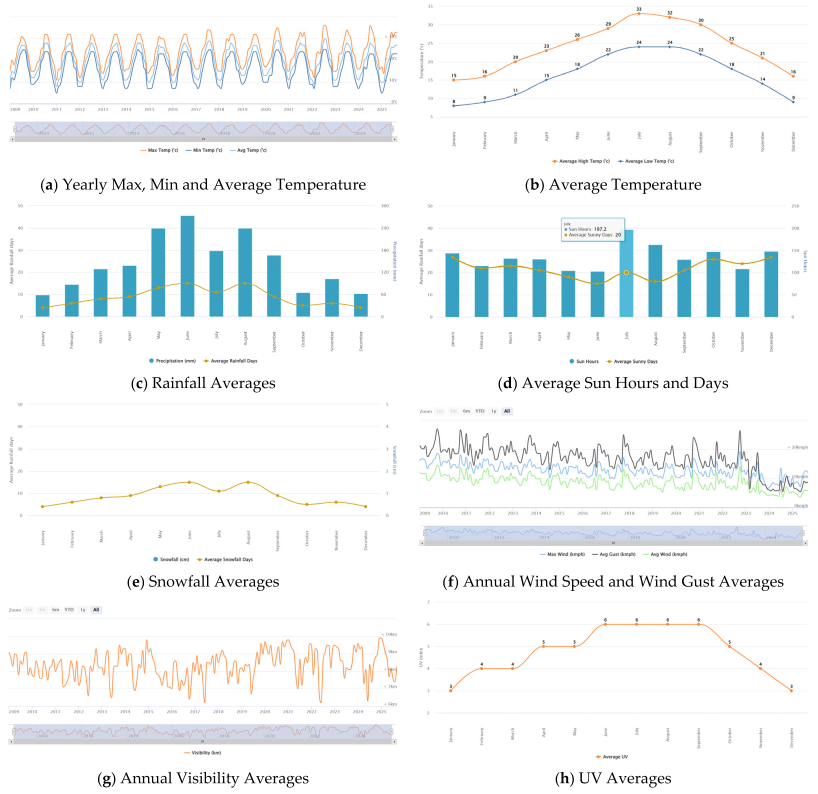
Fuzhou experiences a subtropical monsoon climate characterized by warm temperatures, abundant rainfall, and a synchronous distribution of heat and precipitation (Appendix A). Frosts are infrequent and snowfall is absent, with a long summer and short winter, boasting a frost-free period of 326 days. Annual average sunshine hours range from 1700 to 1980 h. The annual average temperature ranges from 20 to 25 °C, with extreme temperatures reaching a maximum of 42.3 °C and a minimum of −2.5 °C. Annual relative humidity averages approximately 77%. Prevailing winds are northeasterly, shifting predominantly to southerly during summer. The period from July to September is characterized by intense heat and concentrated typhoon activity, with an average of 5–6 typhoons affecting the region annually. Precipitation increases from southeast to northwest. Annual rainfall on coastal islands ranges from 900 to 1200 mm, while plains and plateaus reach 1200 to 1400 mm. Low-to-medium mountainous areas exceed 1600 mm, with localized areas surpassing 2000 mm. The heaviest rainfall occurs during the plum rains and typhoon rains from May to September, accounting for 47% to 83% of the annual total.

2.2. Research Sample Collection

Given the characteristics of rammed-earth structures, this study assessed their preservation status in real-world conditions through on-site sampling and laboratory analysis. To verify the impact of wind and rain erosion on rammed-earth walls under varying factors, such as orientation and indoor/outdoor conditions, samples were collected from the north and south sections of the rammed-earth wall on the eastern side of Zishantang (the courtyard gate). This wall is situated on the eastern flank of the building complex, with the Dazhangxi River channel approximately 50 metres to the east.
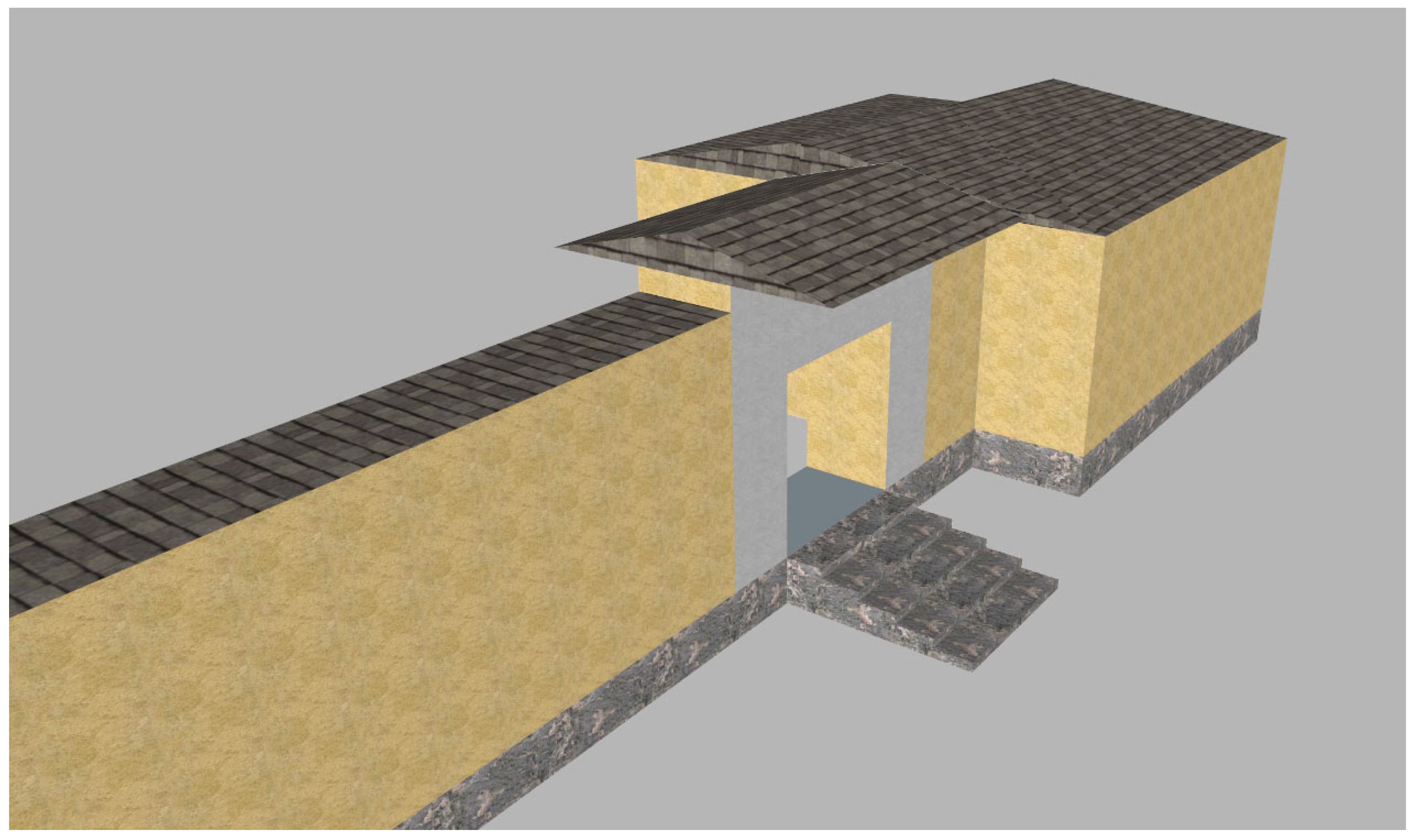
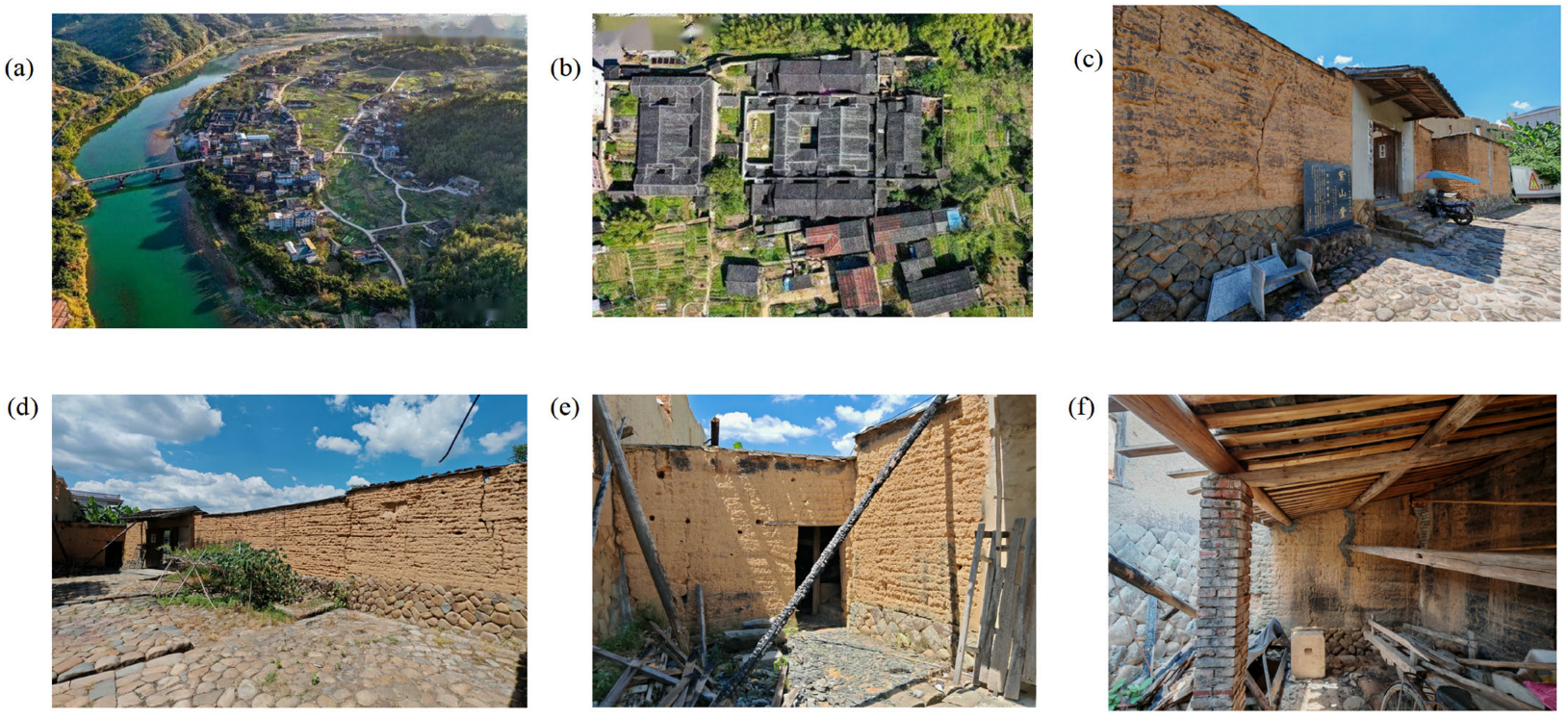
Based on on-site observations, it can be seen that: the wall is divided into northern and southern sections, separated by the courtyard entrance. The southern section of the wall runs north–south, with both its eastern and western sides exposed to the open air. Both flanking walls exhibit significant weathering. A section of the northern wall forms a relatively enclosed space with the roofed structure. The western side of this wall faces the building’s storage area, exhibiting minimal weather damage; the eastern side, however, is exposed to the open air and shows considerable weathering (Figure 2).
It is noteworthy that the surface of this rammed-earth wall may retain traces of a waterproof coating commonly found in local dwellings, known as ‘black soot ash’ (Wu-yan-hui, “烏煙灰” in Chinese, also termed ‘pot bottom ash’or Guo-di-hui, “鍋底灰” in Chinese). This term collectively refers to the combination of ‘Wu-yan’ and ‘Ma-jin-hui’, a distinctive exterior wall coating characteristic of areas surrounding Fuzhou in Fujian Province. ‘Wu Yan’ refers to soot deposited on pot bottoms and chimney linings after burning wood or bamboo. After collecting this soot, it is soaked in rice vinegar or distilled spirits before being mixed into prepared Ma-jin-hui. The mixture is then stirred with water, pounded, and left to cure before application to exterior walls [29]. Given the rainy climate around Fuzhou, traditional builders employed this ancient ‘wall paint’ to coat structures, providing excellent moisture resistance and waterproofing for rammed-earth walls [30]. Scholars hypothesize that the anti-damp properties of ‘soot ash’ may stem from its inherent oily constituents [31]. In contemporary restoration practice, ‘soot ash’ is employed not only for external wall waterproofing but also for roof tile surfaces [32]. Additionally, it possesses potential functions such as mitigating light pollution caused by glare and reducing thermal reflection that may disturb pedestrians or neighbours [33]. The degree of soot ash residue often indicates the severity of weathering.
For the sake of cultural heritage preservation, this study selected representative soil samples from the rammed-earth perimeter walls of ancient structures for laboratory testing. The soil samples utilized in this research were collected from Yuhu Village, Yongtai County, Fuzhou City, Fujian Province, at coordinates 25°47′05″ N, 118°34′55″ E. During the pretreatment process, the soil samples were air-dried and crushed to ensure homogeneity. Subsequently, the samples were sieved through a 2 mm mesh and placed in a desiccator. They were then compacted using the Ruishenbao PrepP-01 Fully Automatic Hydraulic Pelletizing Press (220 kN) to produce the experimental specimens (Figure 3 and Figure 4) [34].
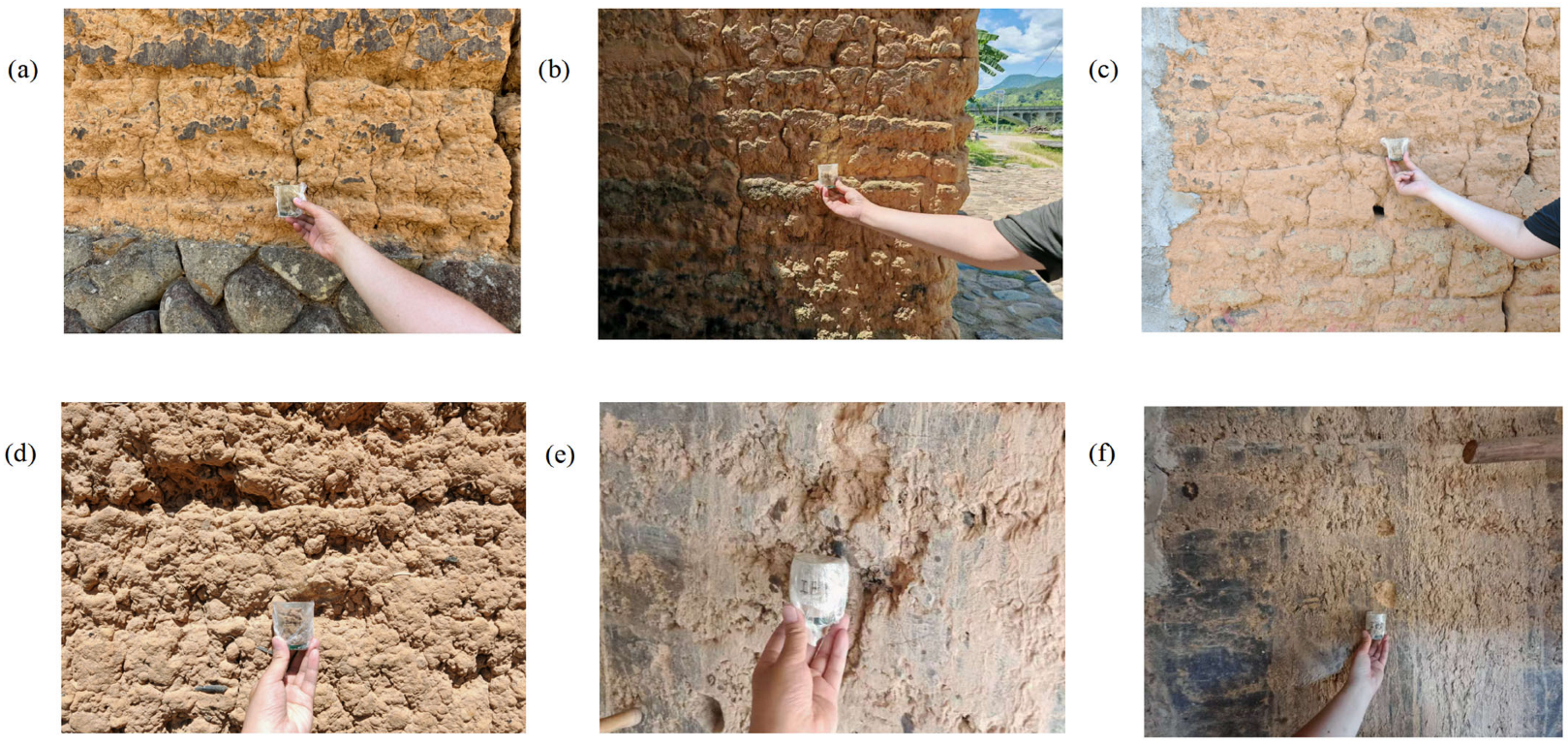
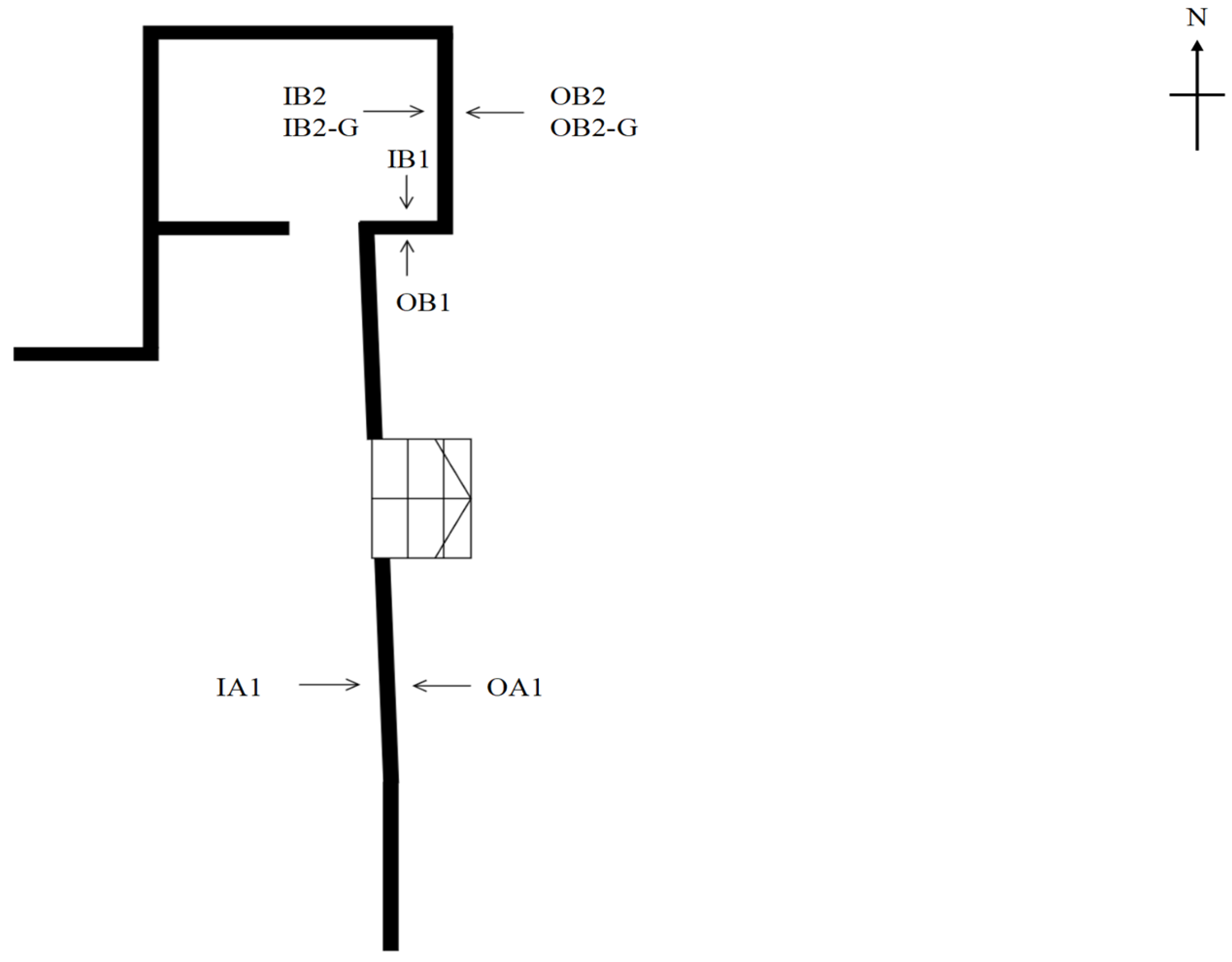
Samples were categorized based on their specific locations and exposure conditions to ensure systematic analysis. IA1 (southern wall section, west-facing, interior courtyard, open air), OA1 (southern wall section, east-facing, exterior courtyard, open air), IB1 (northern wall section, north-facing, interior courtyard, roofed), OB1 (northern wall section, facing south, courtyard exterior, open air), IB2 (northern wall section, facing west, courtyard interior, roofed), and OB2 (northern wall section, facing east, courtyard exterior, open air). All six samples were collected at a depth of 10 mm below the rammed-earth surface (Figure 5, Table 1).
To investigate the properties of potential waterproof coatings Wu-yan-hui, two control samples were also established. This study also established two control group samples. The wall surfaces of samples IB2 and OB2 exhibited Wall Black-grey surface coating, designated, respectively, as IB2-G (north wall section, west-facing, interior courtyard, roofed) and OB2-G (north wall section, east-facing, exterior courtyard, open-air). That means IB2 and IB2-G represent the surface and internal sides of the same wall sample; OB2 and OB2-G are similarly paired.

2.3. Research Method

Based on the site investigation findings and in accordance with the systematic sampling protocol, this study collected eight rammed-earth wall samples from representative locations (interior/exterior, south/north facing, indoor/outdoor, with/without protective coating). These samples were analyzed in the laboratory using a complementary suite of instruments: Scanning Electron Microscopy (SEM) for high-resolution imaging of the wall’s microstructure, coupled with SEM-EDS mapping and spot analysis for elemental composition analysis; X-ray Diffraction (XRD) for identifying mineral phases; and Raman spectroscopy for detecting specific compounds, particularly organic or carbonaceous components within traditional coatings.

2.3.1. Scanning Electron Microscope (SEM)

Scanning Electron Microscopy (SEM) was employed to examine the chemical composition and microstructural characteristics of eight rammed-earth samples, focusing on particle arrangement, surface cracks, and pore features. The analyses were conducted using a ZEISS Sigma 360 (Carl Zeiss AG, Oberkochen, Germany), with magnifications ranging from 500× to 10,000×. To balance image resolution and specimen preservation, the experimental parameters were carefully optimized.
The working distance was set to 6.5 mm to enhance secondary-electron collection efficiency and image sharpness, and an in-lens secondary electron detector was used for signal detection. The SEM images revealed the meso- and micro-scale structural conditions of the earthen materials. Furthermore, based on the principle that greater porosity, cracking, and crystal expansion correspond to higher average grayscale values, the microstructural features of all eight samples were quantitatively analyzed using ImageJ software (v1.50d, National Institutes of Health, Bethesda, MD, USA) and Origin 2022 (OriginLab Corporation, Northampton, MA, USA).

2.3.2. SEM-EDS Mapping and Point Analysis

Using the same SEM-based instrumentation, SEM mapping results can be employed to identify specific elemental regions within a sample, thereby characterizing the elemental composition of particular areas within experimental specimens. Furthermore, the SEM point analysis method can be utilized to determine the semi-quantitative distribution percentages of potential primary elements (such as Si, Ca, Na, Cl, Fe, etc.) on the surfaces of rammed-earth and waterproofing layers.

2.3.3. XRD Mineralogical Characterization

XRD test samples were collected from eight distinct rammed-earth wall sections, each sample measuring 10 mm in thickness and weighing approximately 10 g. The testing instrument employed was a SmartLab high-resolution X-ray diffractometer (Rigaku Co., Ltd., Akishima, Tokyo, Japan), with reference to the standard SY/T 5163-2018 [35]. XRD testing identifies primary minerals within rammed earth (such as quartz, feldspar, calcite, montmorillonite, etc.) through X-ray diffraction patterns, clarifying their crystal structures and relative abundances. Phase identification was conducted by XRD equipped with a Cu target (Cu-Kα). Measurements were collected in conventional scan mode over 5–90° (2θ) at a scan speed of 2°/min.
Mineral composition analysis was performed using JADE 9 software (produced by Materials Data Inc., Livermore, CA, USA), with diffraction peak diagrams generated using Origin software. For qualitative phase analysis, manual and computer-aided searches were conducted using powder diffraction databases, enabling the identification of matching phases from the database.

2.3.4. Raman Spectroscopy

Raman analysis/Raman imaging was performed with a confocal Raman microscope (CRM) (Alpha300R, WITec GmbH, Ulm, Germany) equipped with a TEM single-frequency laser (λ = 532 nm, laser power = 40 mW, WITec GmbH, Ulm, Germany). The laser light was focused through a 100× oil immersion objective (numerical aperture = 0.9) (Carl Zeiss AG, Oberkochen, Germany) onto the sample and the backscattered Raman signal directed through an optic multifibre (50 μm diameter) to a spectrometer (UHTS 300 WITec, Ulm, Germany) (300 g·mm−1 grating) and detected by the CCD camera (Andor DU401 BV, Belfast, North Ireland, UK). In the selected areas (e.g., 30 μm × 20 μm) on the sample, every 0.5 μm, a full wavenumber range (50–4000 cm−1) Raman spectrum was acquired with an integration time of 1 s. The Control Five (WITec GmbH, Ulm, Germany) acquisition software was used for the Raman measurements set up and Project Five (WITec GmbH, Ulm, Germany) to reconstruct Raman images based on the integral band of the ester group at 1734 cm−1 and the hydroxyl groups at 3400 cm−1.
In addition to their analytical roles, each method employed in this study directly contributes to restoration-oriented decision-making. SEM provides visual evidence of pore enlargement, particle detachment, and microcracking, which helps determine whether surface consolidation or material reinforcement is required. EDS elemental data identify surface depletion or salt-related enrichment, guiding decisions on cleaning, desalination, and material compatibility. XRD reveals mineralogical composition and alterations caused by weathering, supporting the selection of repair materials that match the original rammed-earth matrix. Raman spectroscopy confirms the presence and degradation state of the soot–lime coating (“Wu-yan-hui”), offering scientific evidence for its renewal as a waterproofing and sacrificial layer. Together, these methods establish a diagnostic framework that links material deterioration to targeted conservation strategies (Table 2).

3. Results

3.1. Comparison Results of Scanning Electron Microscope (SEM)

3.1.1. Scanning Electron Microscope (SEM) Morphology

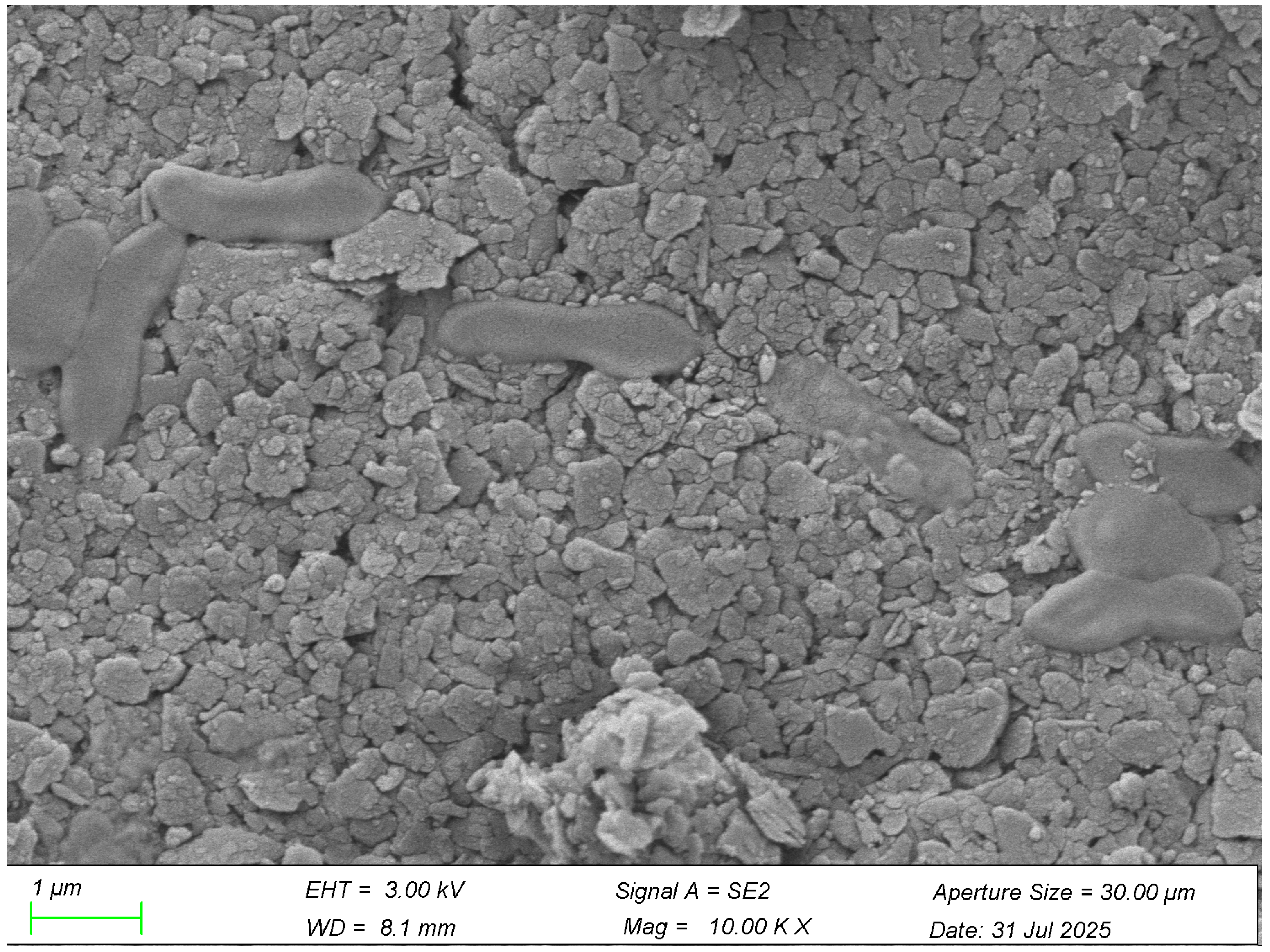
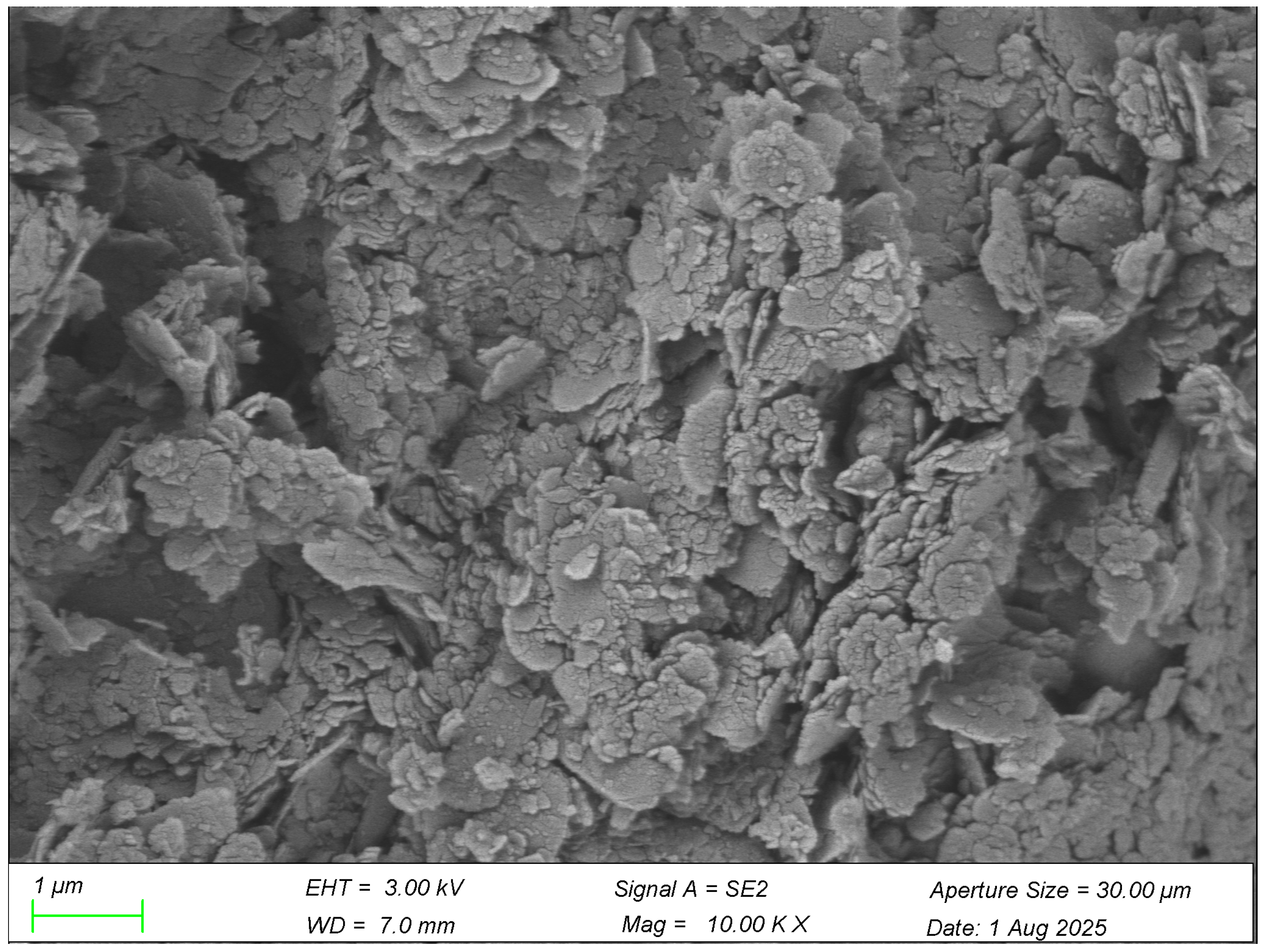
The SEM image of OA1 exhibits a typical clay structure (Figure 6). It reveals a densely packed granular matrix composed of irregular particles. The overall morphology is fragmented and granular, indicating extensive mechanical disintegration or prolonged weathering that results in a loose, particulate structure. Particles display irregular, angular to sub-angular morphologies with relatively sharp edges, suggesting a lack of significant rounding or dissolution. Some plate-like or flaky particles are also observed, which may correspond to mica-like phases, clay-layer fragments, or sintered residues from the coating layer. Several elongated, smooth features (1–2 µm wide) are present, clearly contrasting with the surrounding rough granular matrix. These objects lack crystalline boundaries and may correspond to micro-fragments of plant fibres or biological residues within the rammed earth; or exogenous contaminants such as traces of microbial biofilm, since the sample was taken from an outdoor surface.
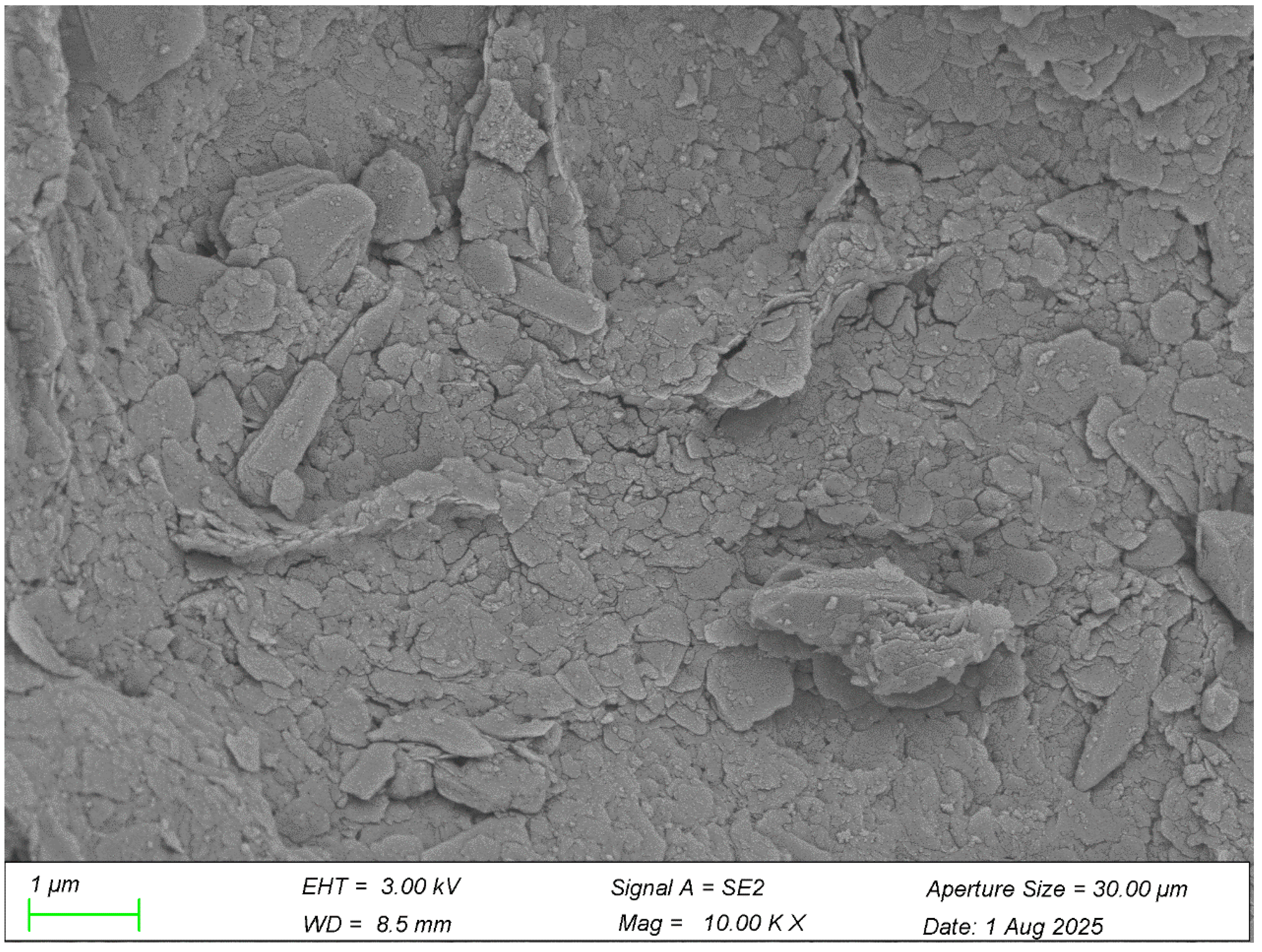
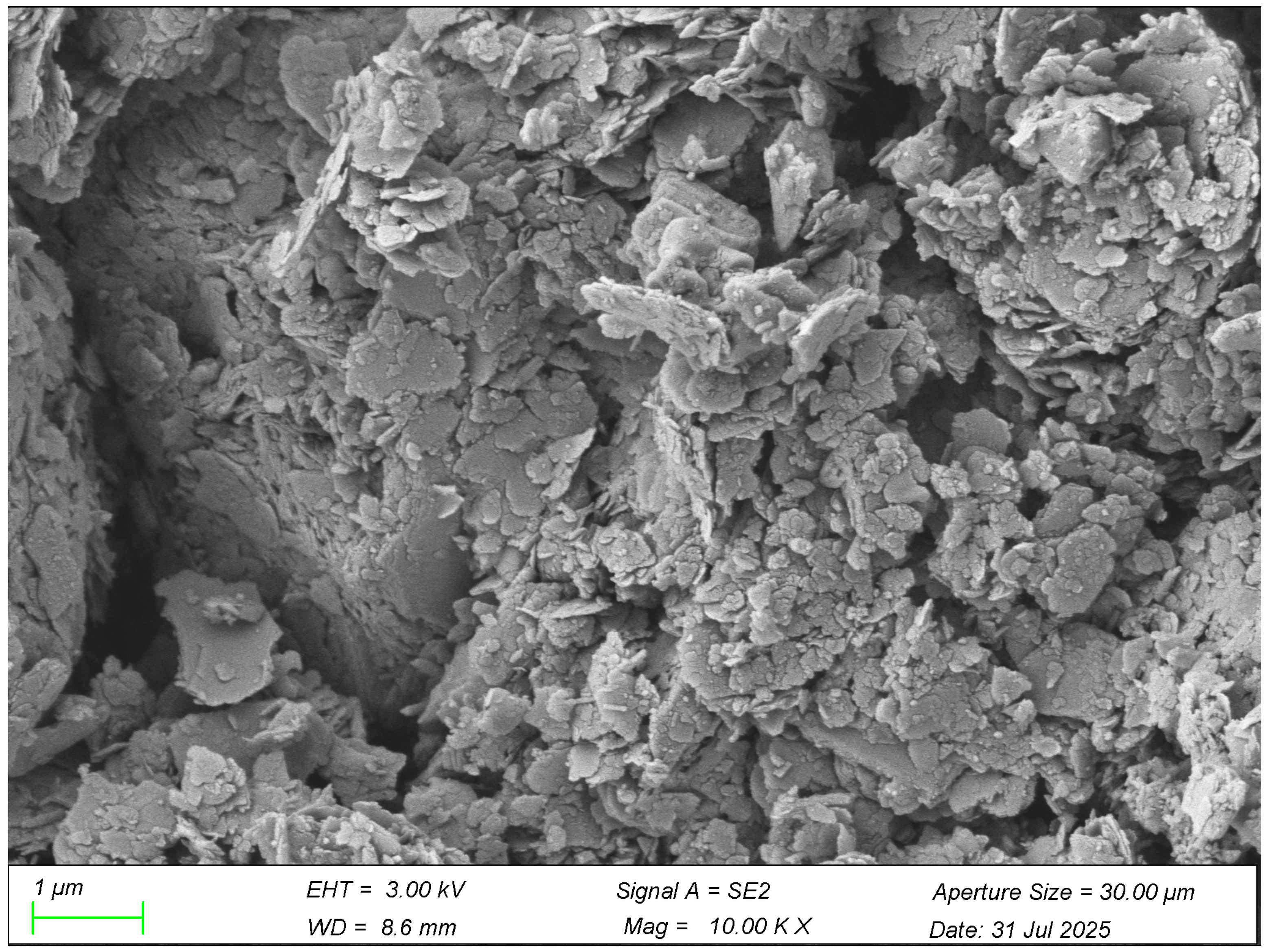
This SEM image reveals that rammed-earth sample IA1 exhibits a markedly dense and coarse microsurface morphology. (Figure 7). Numerous irregularly shaped particles of varying sizes are observable, some forming blocky aggregates with indistinct edges, indicating natural cementation following compaction and bonding. Localized microcracks and minute voids are distributed within the interstitial spaces between particles, suggesting structural loosening within the material due to stress release and moisture evaporation. Additionally, certain areas exhibit circular to sub-circular cavities, likely attributable to trapped air bubbles during early fabrication or the detachment of natural particles. The overall morphology suggests prolonged exposure to outdoor conditions, potentially involving weathering, thermal–humidity cycling, and alternating expansion–contraction processes, which collectively shaped this complex microstructure.
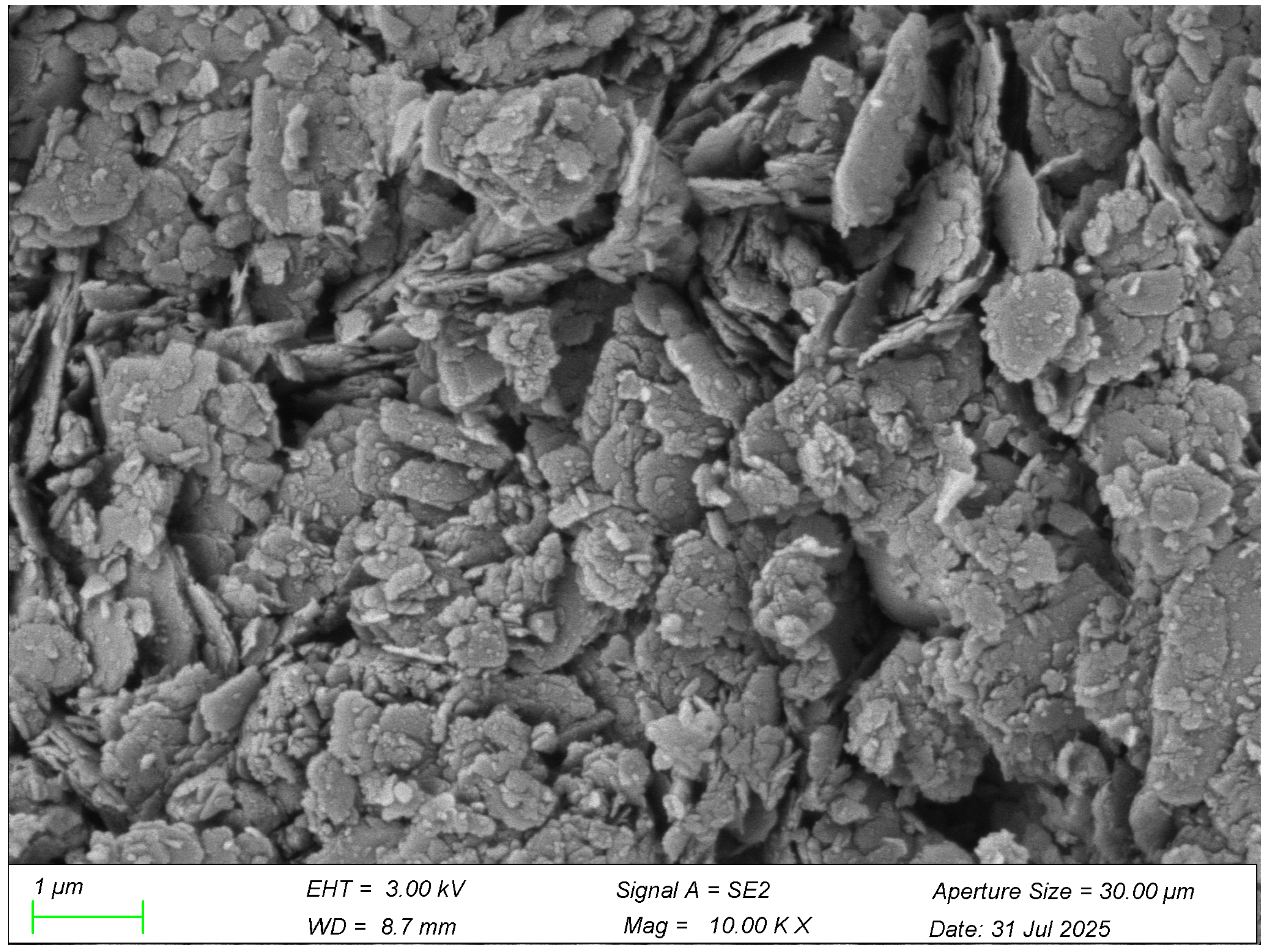
The SEM image of OB1 exhibits a relatively loose microstructure with high porosity (Figure 8). Numerous intergranular fissures and unfilled voids are discernible in the image, with some pores exhibiting irregular fissure-like shapes potentially associated with drying shrinkage, spalling, or environmental weathering. The particles themselves predominantly exhibit subangular to subcircular shapes with relatively smooth edges, suggesting possible hydrodynamic action or prolonged physical abrasion. Localized agglomeration of small-scale clasts is observable, though the material exhibits relatively low cohesion overall. A small quantity of flake-like or powdery structures persisting between residual particles is noted on the surface, potentially associated with inorganic binders or volatilisation residues. In summary, this sample likely originates from an exposed environment or near-surface location, having undergone intense physical and climatic weathering processes.
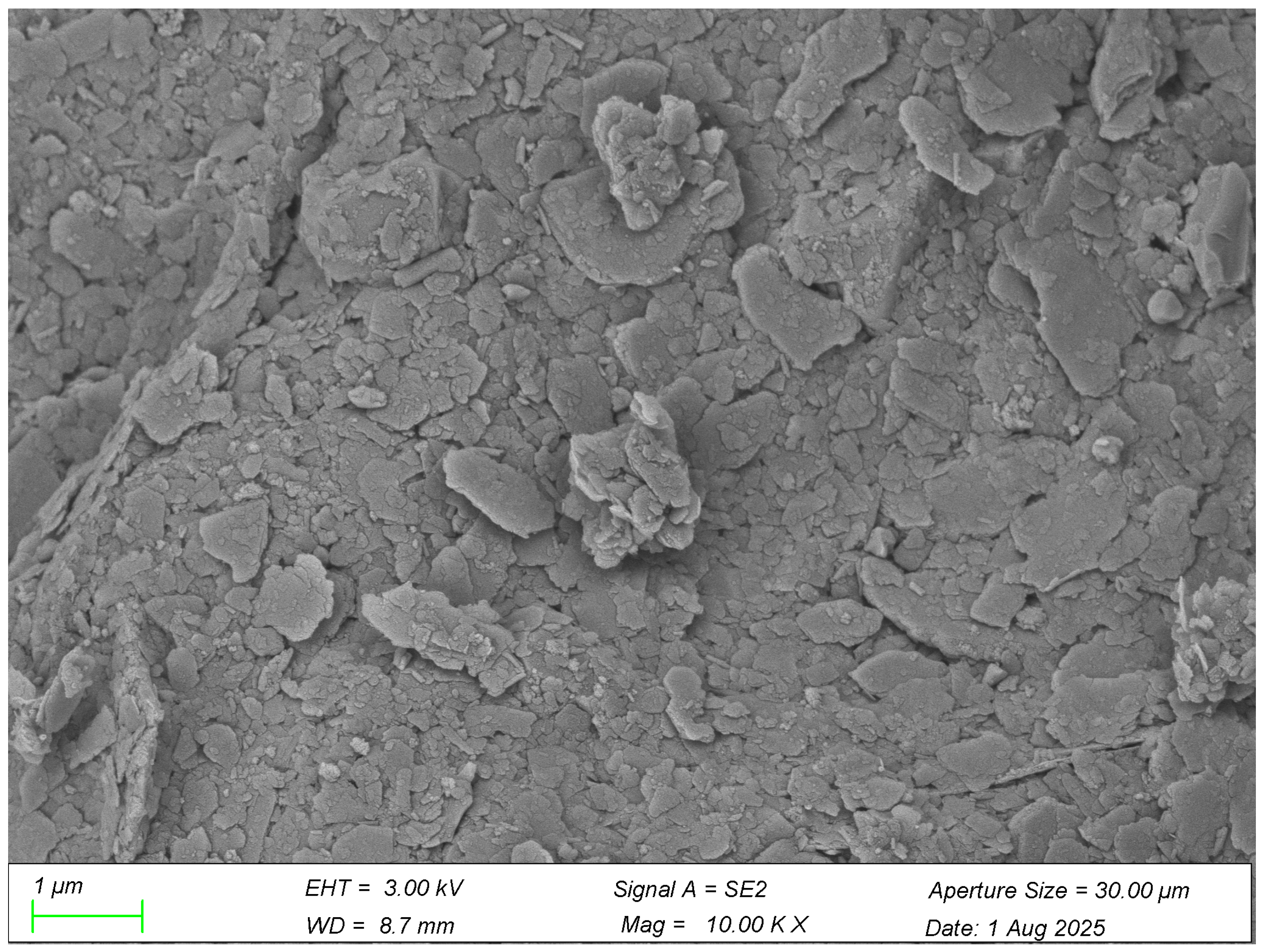
The image reveals a surface of the IB1 sample exhibiting a densely arranged micro-granular structure (Figure 9). The overall arrangement is relatively uniform yet not entirely compact, with minimal variation in particle size. Most particles present a near-circular or sub-circular outline. The edges of the particles are relatively smooth, suggesting the material may have undergone water washing or natural weathering. Minor micro-fractures and micro-pores exist between particles, with some voids exhibiting elliptical or irregular shapes, likely attributed to expansion and contraction under alternating wet and dry conditions. Small agglomerations of granular material were observed in certain areas, potentially representing residual binder or salt deposits. Overall, the sample exhibits a degree of cohesion and stability, with its microstructural characteristics consistent with the typical preservation state of rammed-earth materials in indoor or semi-sheltered environments.
The OB2 sample exhibits a microstructure displaying pronounced weathering characteristics (Figure 10). The image reveals numerous fragmented, irregular, and edge-damaged particles, indicating the material has undergone significant mechanical or climatic erosion. Extensive voids and fissures exist between the particles, with some fissures exhibiting distinct elongation directions, potentially related to the release of internal stresses caused by freeze–thaw cycles or thermal–humidity gradients. Furthermore, loose powdery areas within the matrix indicate localized structural instability. Compared to the IB1 sample, OB2 exhibits markedly inferior density and structural continuity, suggesting its origin near the surface with prolonged exposure to external conditions. Such morphological characteristics are typical of moderately to highly weathered rammed-earth materials, reflecting microstructural degradation towards the end of their service life.
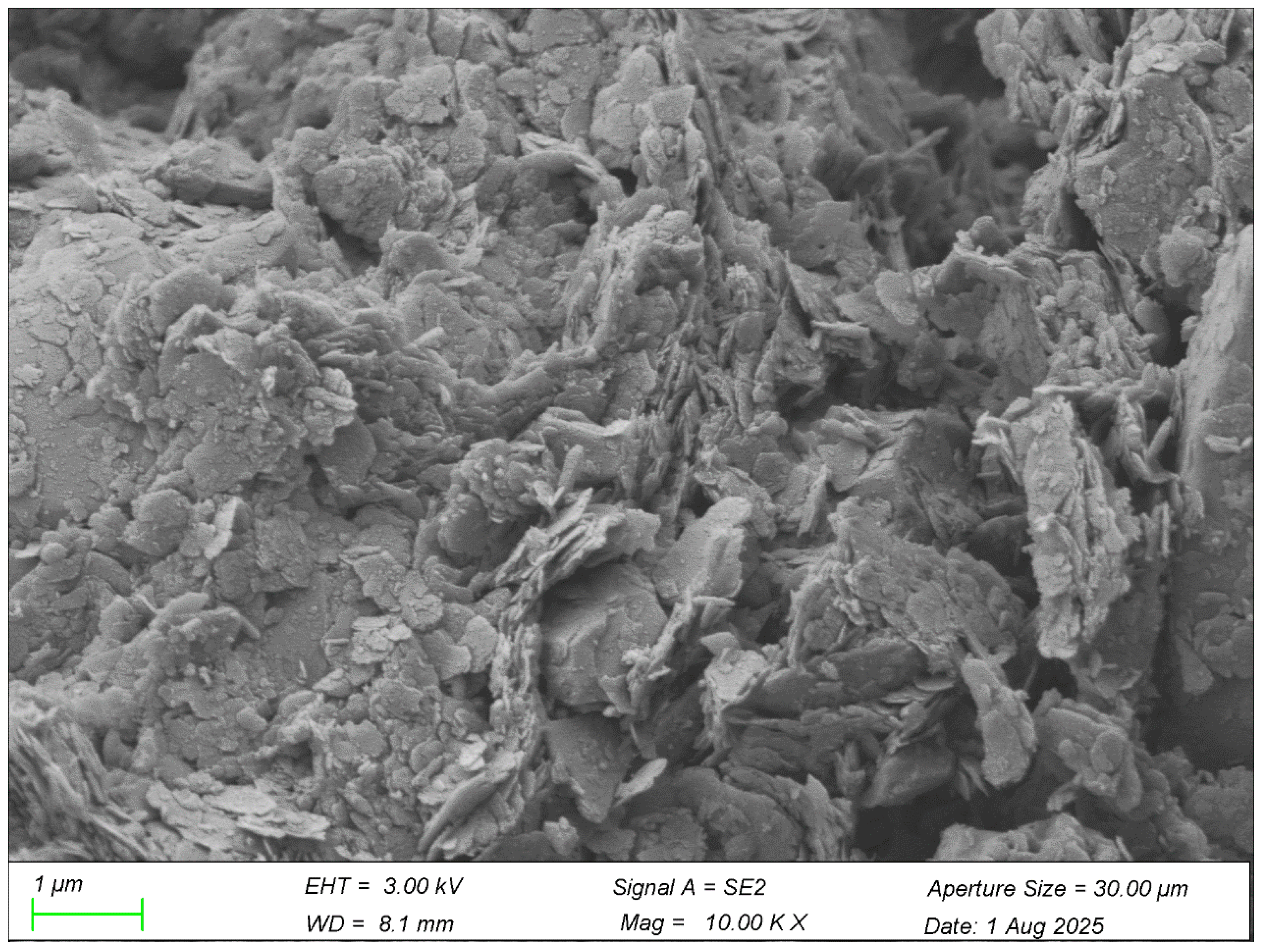
The microstructure of the IB2 sample exhibits a moderately dense granular texture (Figure 11). The image reveals little variation in particle size, with most grains appearing sub-circular to sub-angular. The edges of the particles are slightly blurred, possibly due to partial abrasion or the influence of internal cementation. The intergranular voids are slightly smaller than those in the OB2 sample, indicating better structural continuity and cohesion. Minor fissures are visible in localized areas, likely resulting from drying shrinkage. However, overall crack distribution is sparse, with no through-going damage observed. Compacted agglomerations are noted in certain image regions, suggesting these areas may have undergone effective compaction or localized organic cementation reinforcement. This sample likely originates from a relatively stable, protected internal wall or shaded surface, exhibiting moderate preservation in its microstructure.
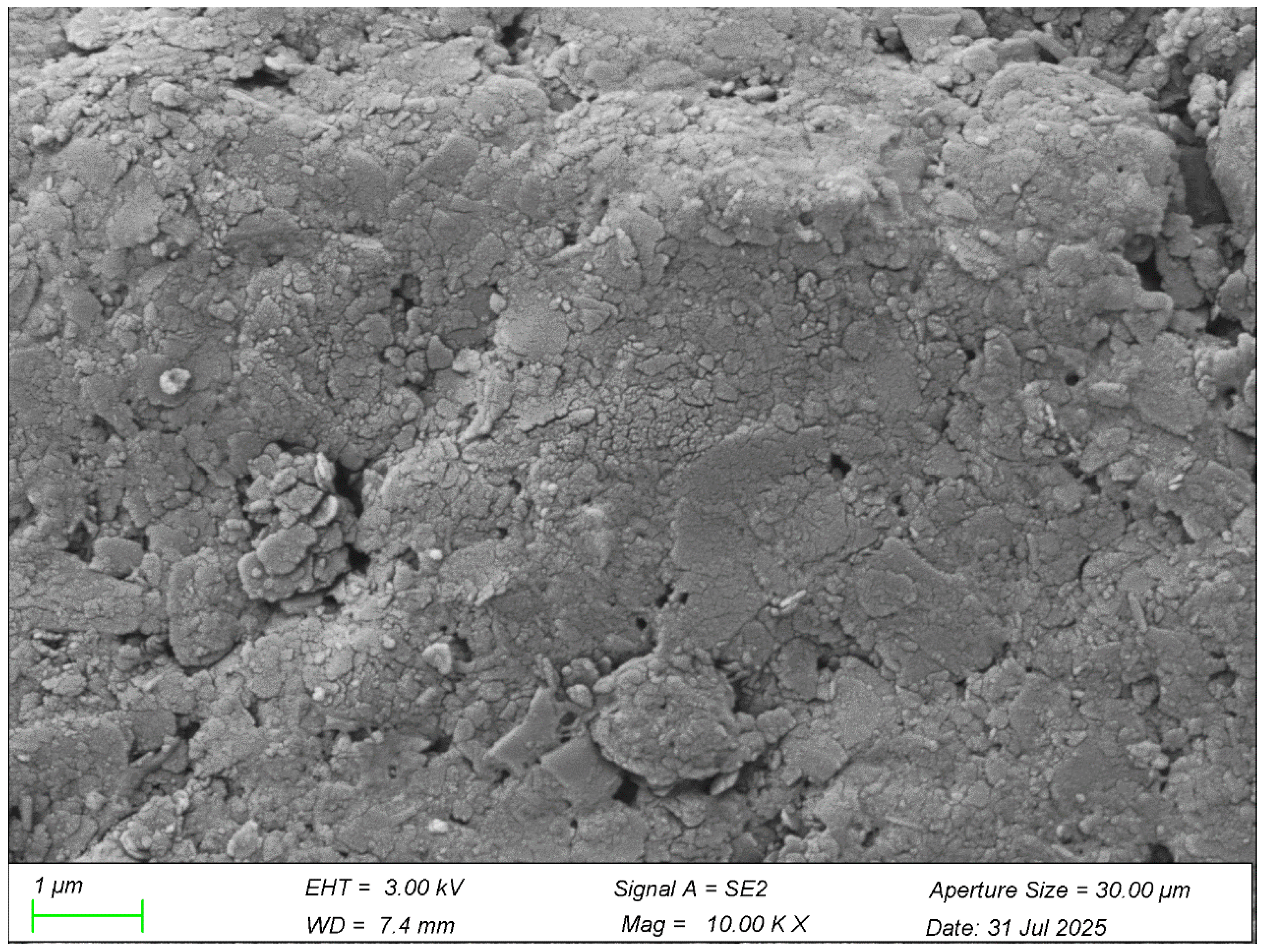
The OB2-G sample exhibits a surface microstructure markedly distinct from that of conventional rammed-earth samples (Figure 12). Imaging reveals a thin, dense layer of granular accumulation containing a high proportion of fine, irregularly shaped, powdery material with particle sizes ranging from several hundred nm to 1 µm, some exhibiting flaky or lamellar structures. This structure exhibits a tightly packed arrangement with markedly lower porosity than other uncoated samples, showing no discernible intergranular voids. The image also reveals minor particle fusion, likely associated with vitrification or cementation resulting from high-temperature smoke exposure or contact with fire sources. Fine cracking textures are visible in some surface areas, possibly caused by drying or thermal stress. Overall, this image may correspond to the structural characteristics of ‘black soot ash’ (i.e., a waterproof layer formed from soot, coke residue, mixed ash, etc.), supporting the judgement that it was used as an external coating.
The IB2-G sample exhibits distinct transitional characteristics between natural filler matrix and soot-type coating in its material morphology (Figure 13). The surface is covered by numerous non-granular particles spanning a broad size range (from several hundred nm to approximately 3 µm). Some particles display pronounced grain boundaries and fractured surfaces, presenting more pronounced mineral grain characteristics rather than the typical homogeneous carbonized particle layers.
While some particles exhibit flake-like or angular fracture edges, the majority form granular carriers lacking distinct vitrification or surface crusts. Certain areas display slight agglomeration and structures resembling inorganic binders, potentially indicating excessive fine ash or cementitious material without forming dense structures. In summary, IB2-G is more likely to be a granular layer of the original rammed-earth surface overlaid by ash/fine-grained material, rather than purely a “black soot ash” structure.

3.1.2. SEM-EDS Mapping Analysis

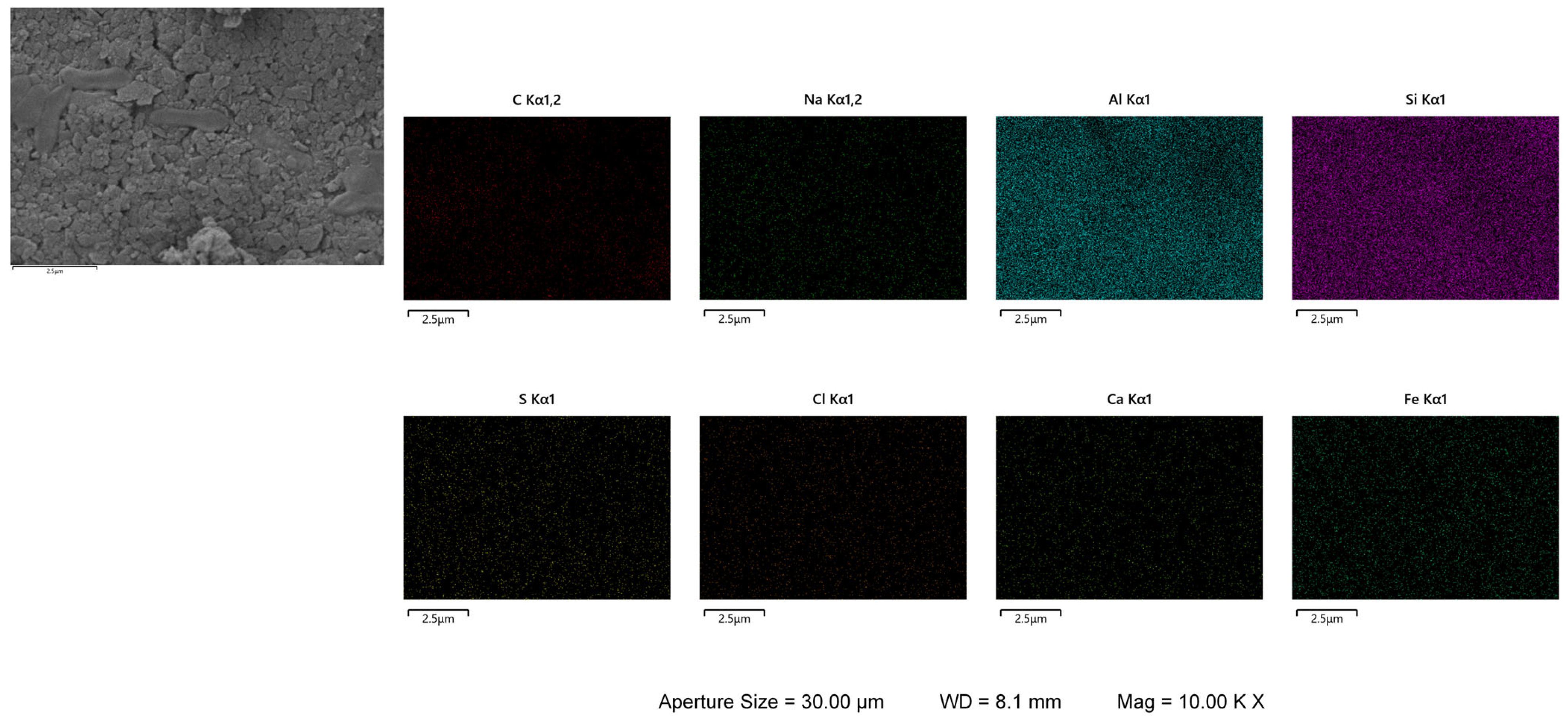
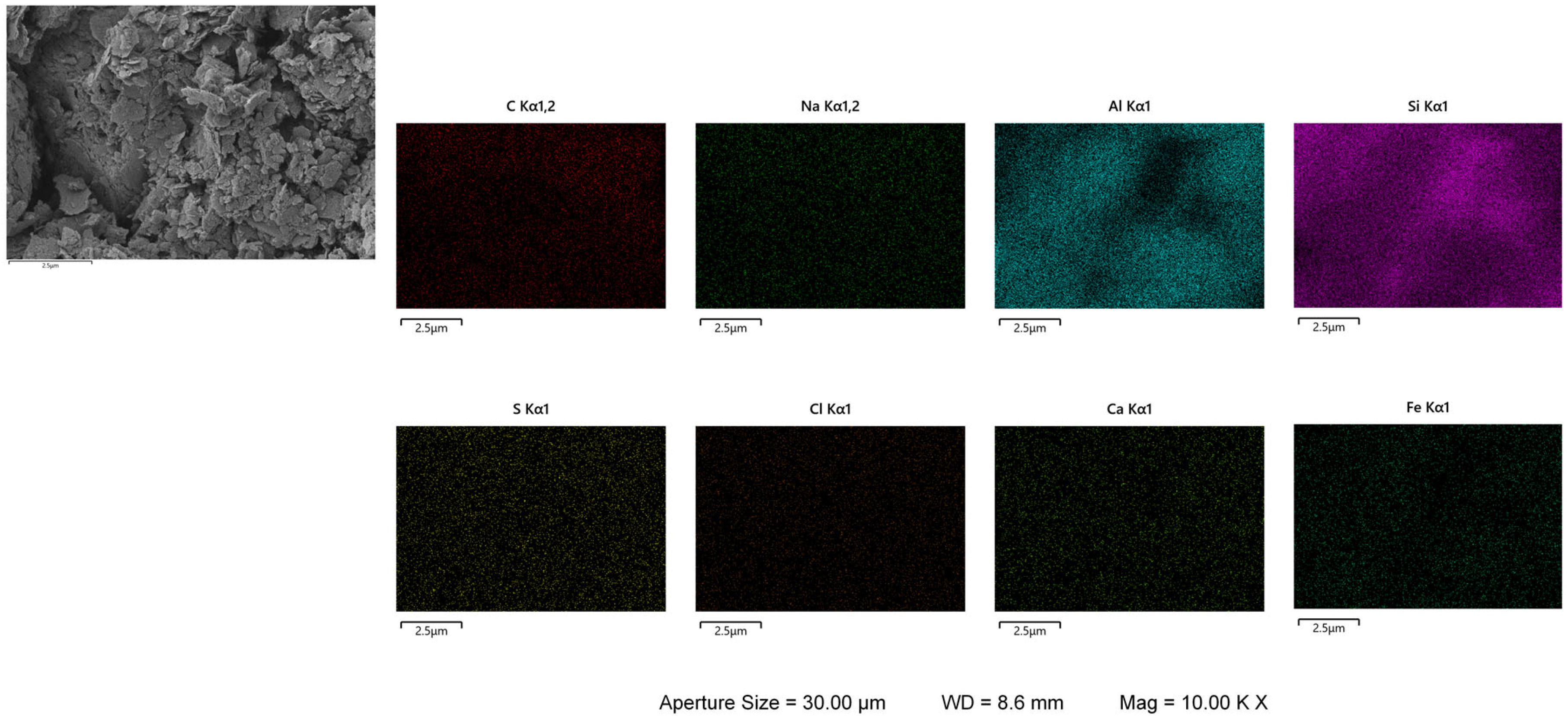
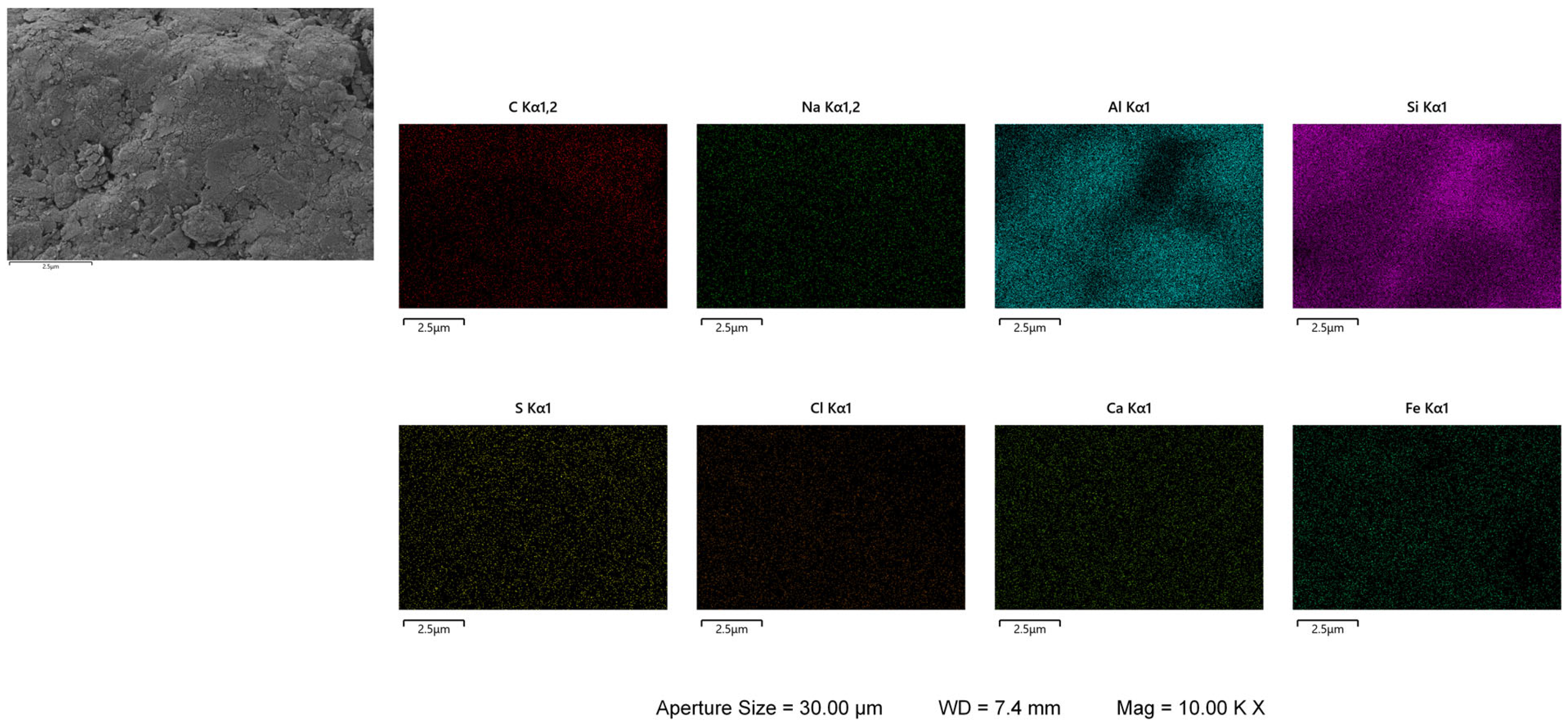
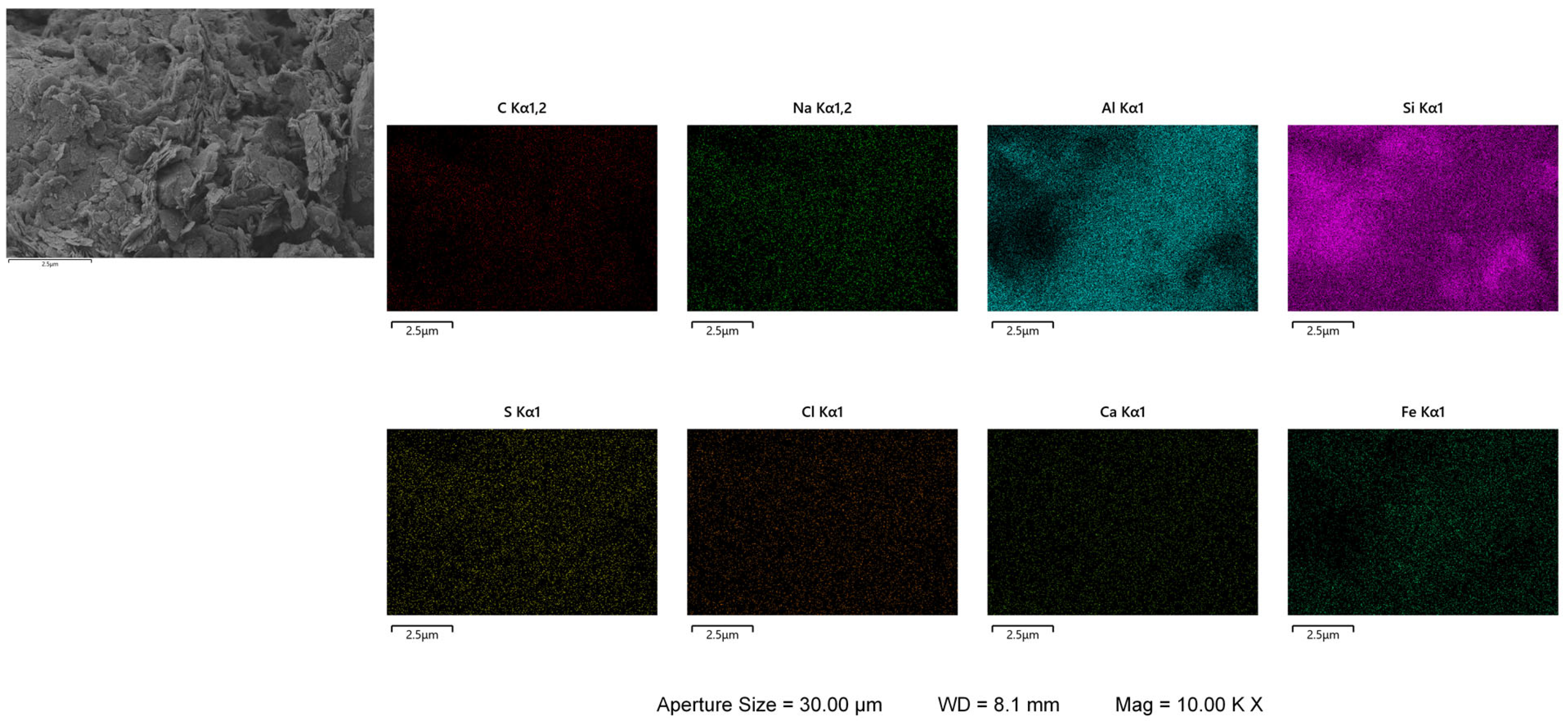
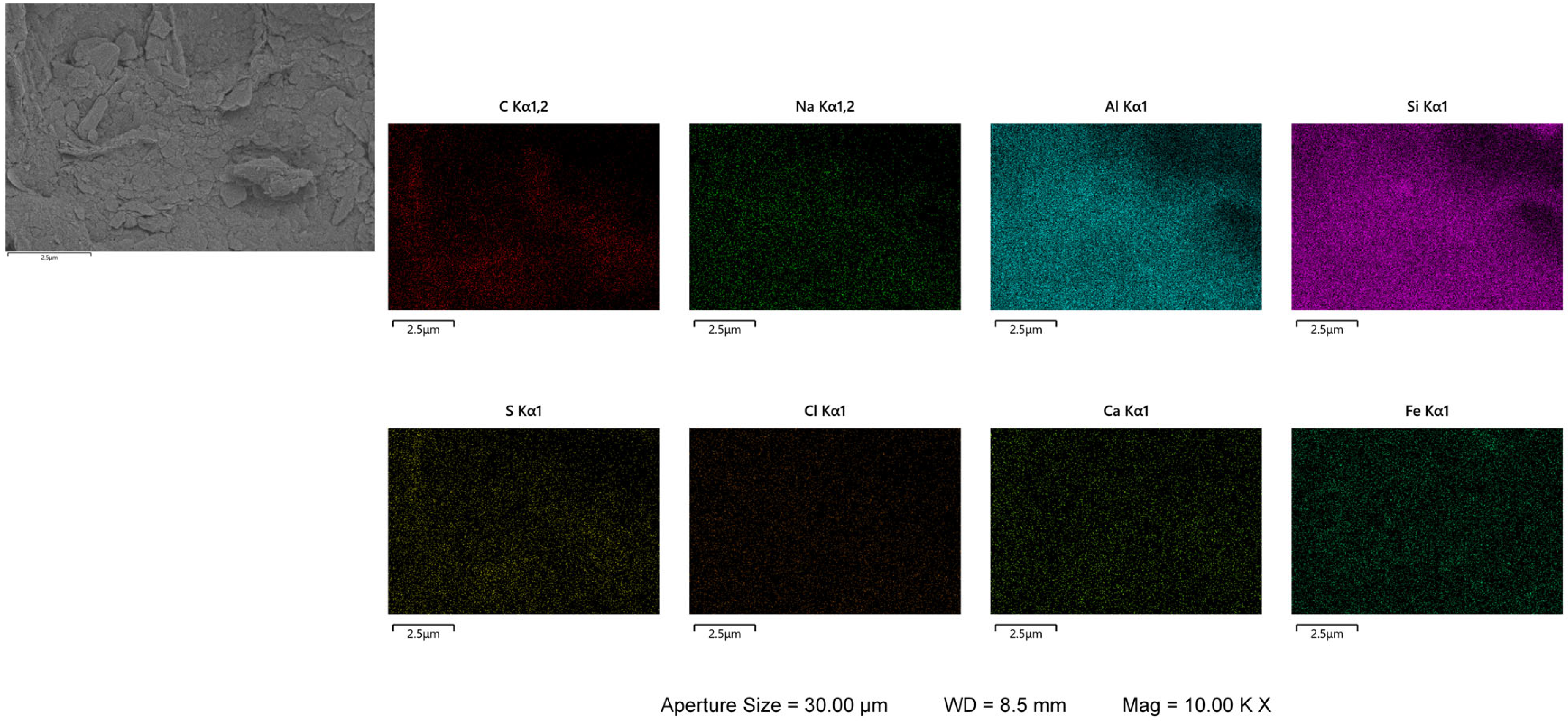
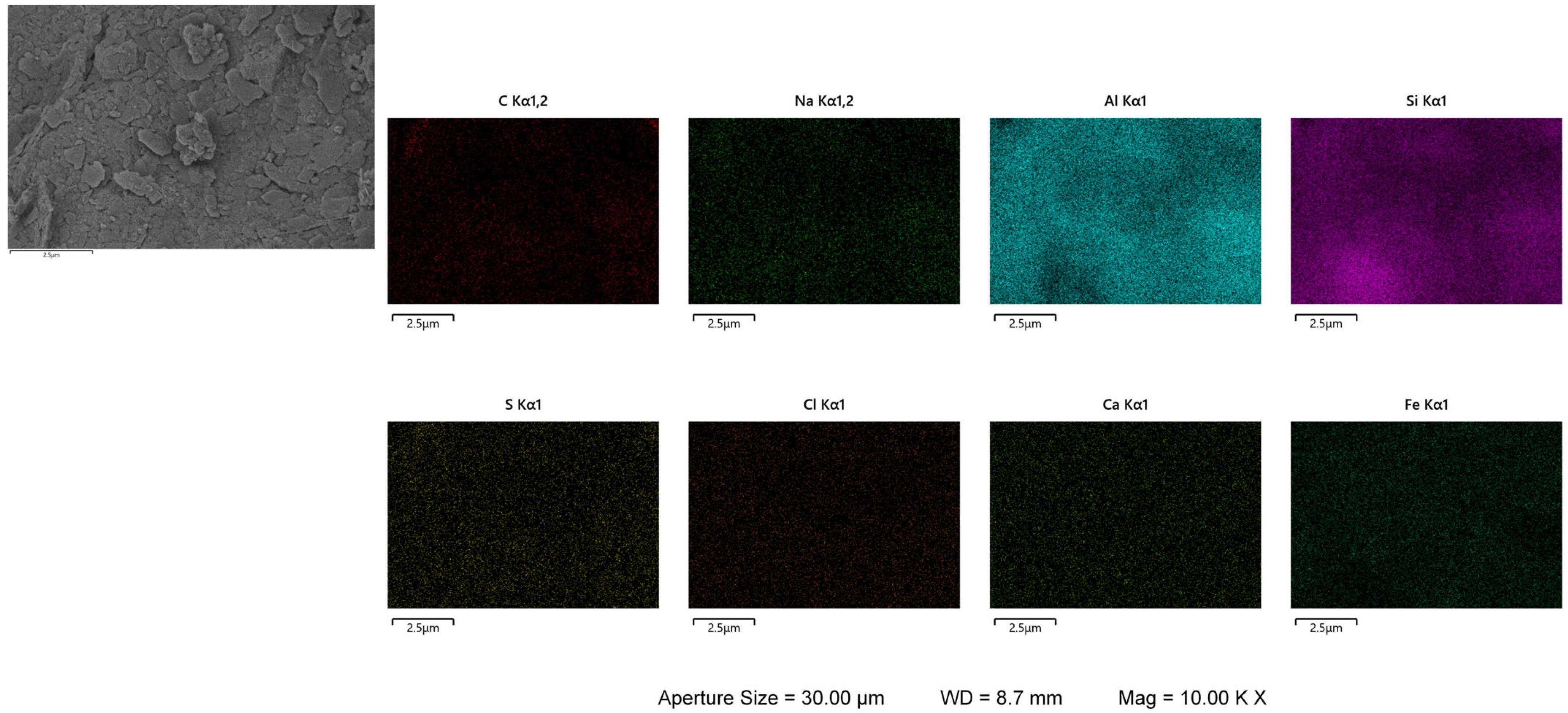
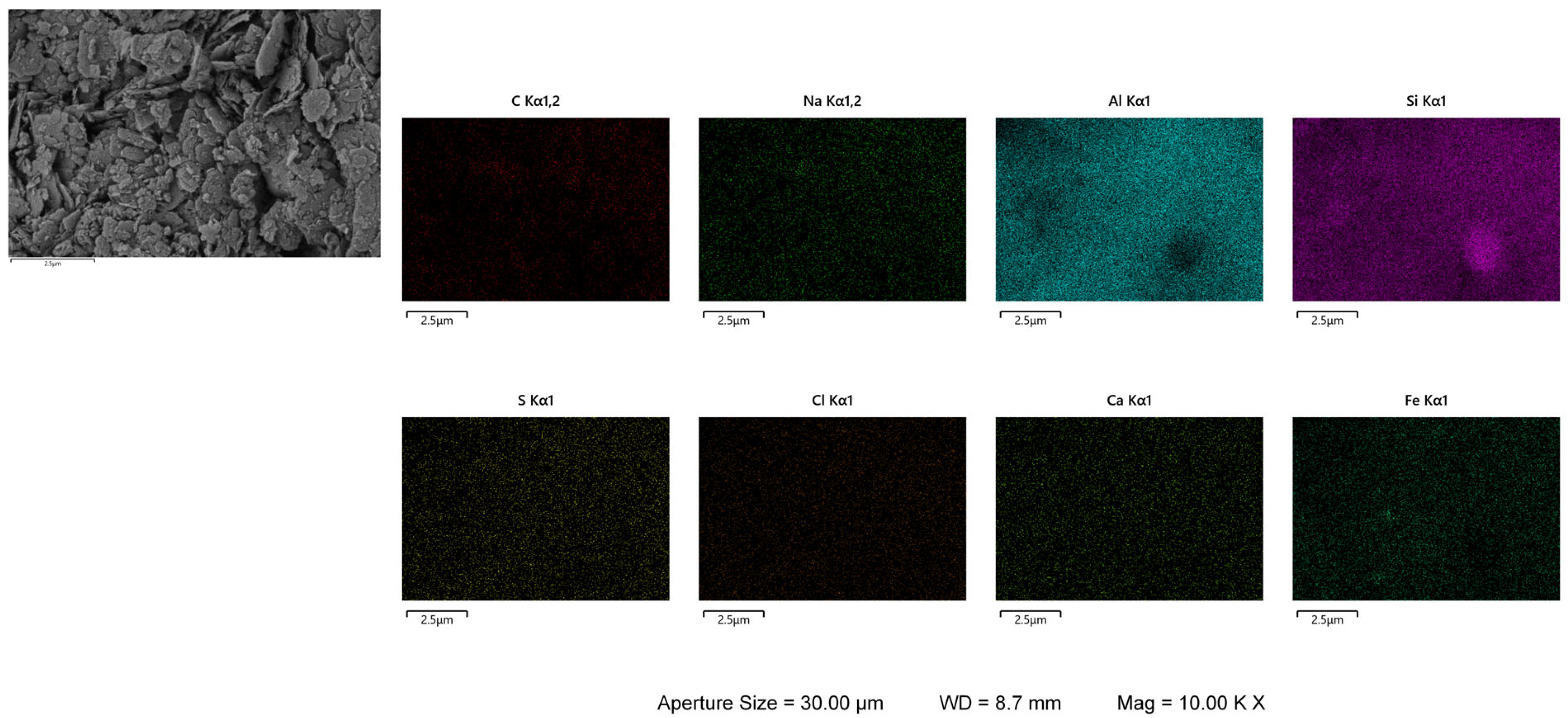
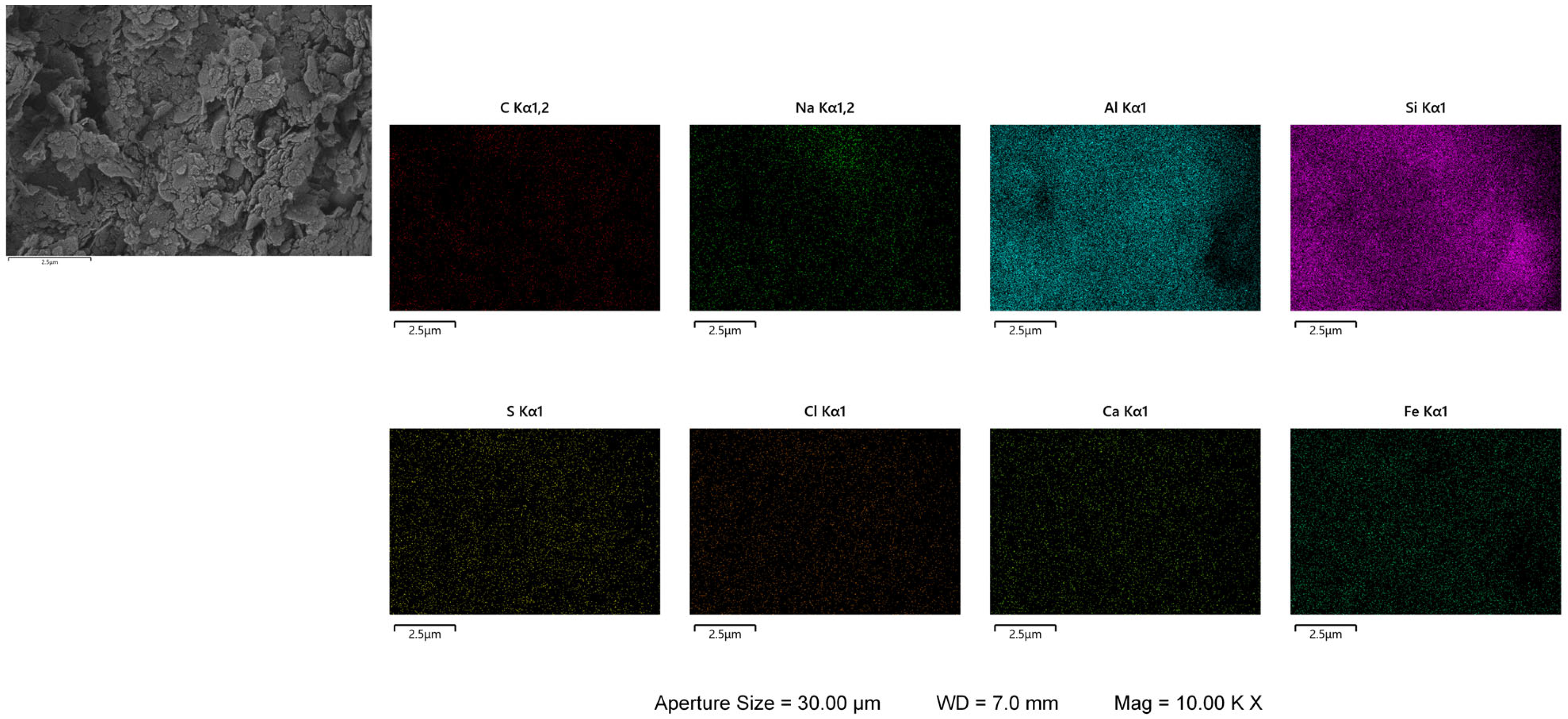
SEM–EDS mapping reveals that silicon (Si) and aluminum (Al) are the most widely distributed elements of the eight rammed-earth samples. It exhibits a stable microstructure and chemical composition dominated by silicate.
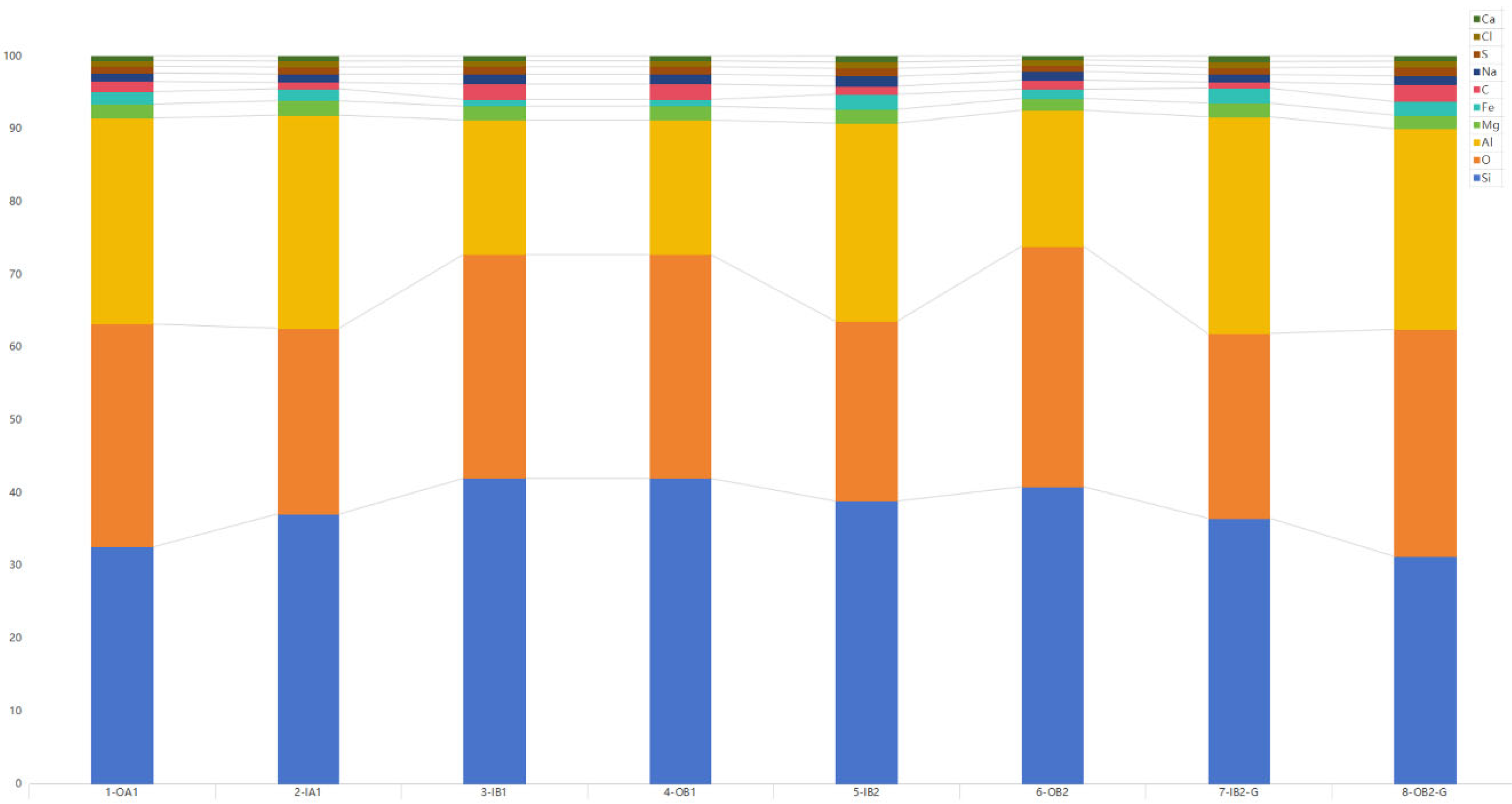
The SEM point analysis results indicate oxygen (O), silicon (Si), and aluminum (Al) constitute the primary elements (Figure 14, Figure 15, Figure 16, Figure 17, Figure 18, Figure 19, Figure 20 and Figure 21), collectively accounting for over 90% in most samples. This indicates that the core matrix of the rammed-earth material is primarily composed of quartz (SiO2) alongside orthoclase and aluminosilicate phases.

3.1.3. SEM-EDS Point Analysis

These data indicate that the compound composition of this rammed-earth sample is largely consistent with that of materials used in traditional rammed-earth techniques. The relative proportions of Al and Si elements widely distributed in the SEM mapping images broadly indicate that the chemical composition of the rammed-earth samples conform to Fuzhou’s ‘yellow soil’ (Figure 22). Yellow soils are distributed in forested mountainous areas within the western and northern regions of Fuzhou City, at elevations ranging from 1050 to 1500 m. Their distribution area is limited, accounting for merely 1.51% of the total land area within the region. These soils predominantly developed under humid bioclimatic conditions characterized by abundant rainfall and frequent cloud cover. However, the alternation between wet and dry periods is not markedly pronounced. It exhibits mild aluminum enrichment and pronounced humus accumulation processes, with a silica-to-alumina ratio of 2.0 to 3.0. Due to the soil’s consistently moist state, free magnesium hydration imparts a yellowish-brown hue to the subsoil layer [36].
Secondly, the presence of minor elements such as calcium (Ca), chlorine (Cl), and sulphur (S) suggests that some samples may contain lime or combustion products, consistent with the traditional Fuzhou practice of using ‘black soot ash’ (“Wu-yan-hui”).
These microstructural observations also provide direct guidance for restoration decisions. Samples with high porosity, loose particle bonding, and pronounced microcracking—such as OB1 and OB2—indicate weakened surface integrity and therefore require consolidation or reinforcement treatments. In contrast, interior samples with compact microstructures (e.g., IB1 and IB2) suggest that only preventive conservation is needed. The carbon-rich soot–lime coating observed in OB2-G and IB2-G demonstrates its protective effect; however, the partially degraded coating in OB2-G indicates the need for targeted renewal of this traditional waterproofing and sacrificial layer.
To consolidate the findings from the SEM, EDS, XRD, and Raman analyses, the following table summarizes the elemental composition, mineralogical data, Raman spectral features, and microstructural interpretation of the eight samples (Table 3).

3.2. XRD Mineralogical Characterization Analysis

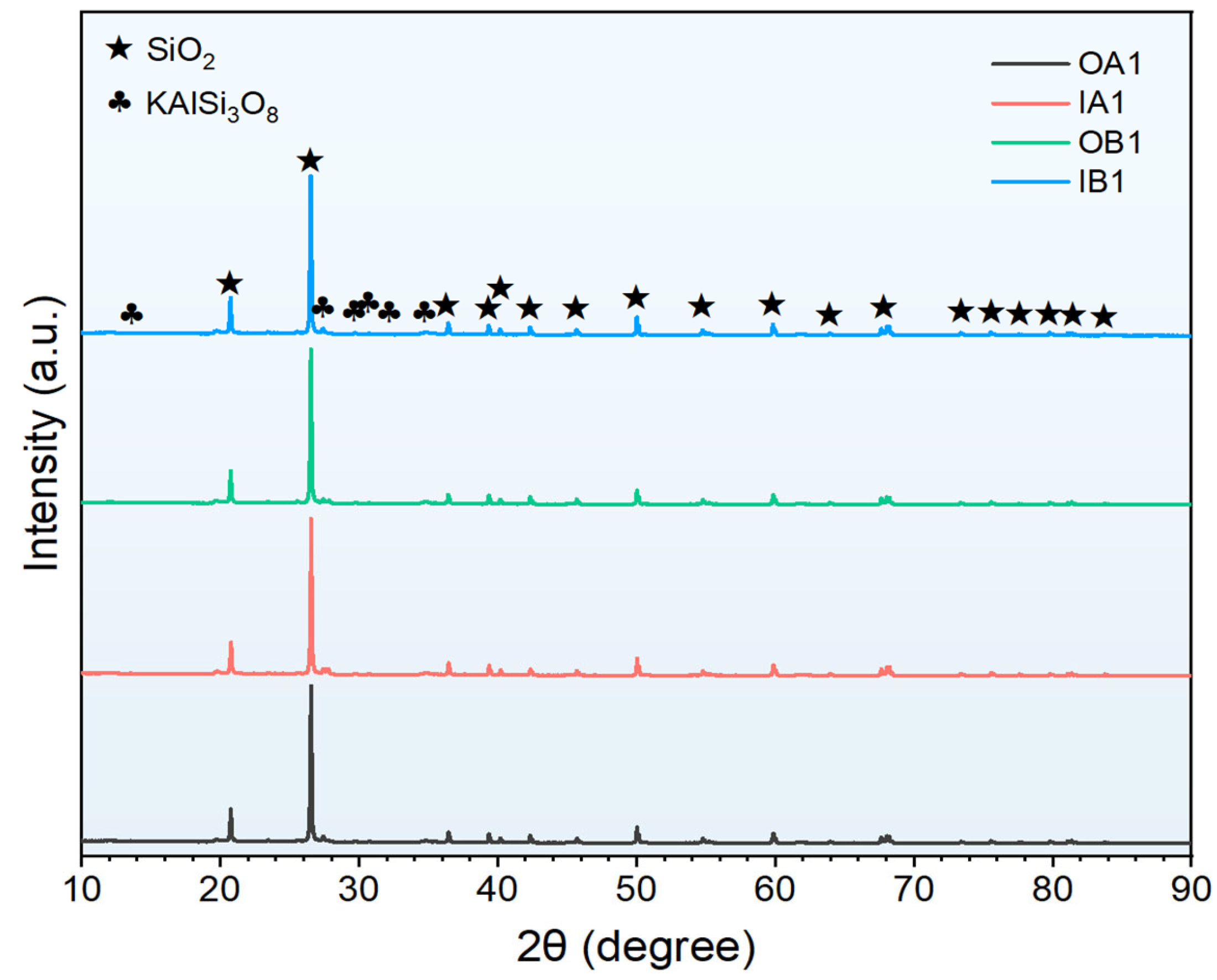
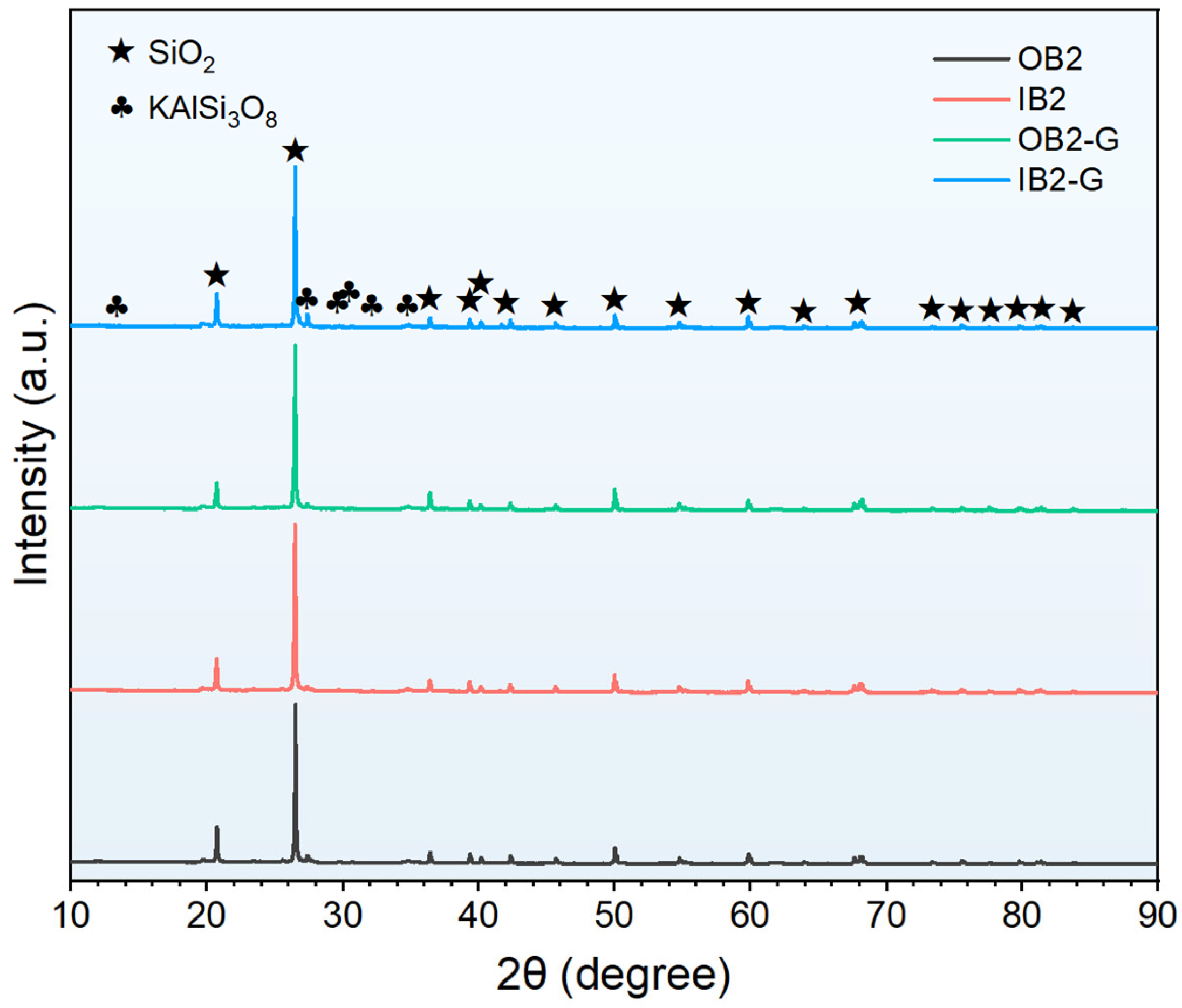
Analysis of the full mineral composition of the rammed-earth material (Figure 23 and Figure 24) reveals that the mineral composition of the soil mineral fraction in each sample shows no significant variation. The primary component is quartz (SiO2) and microcline (KAlSi3O8), among others. The XRD spectrum reveals pronounced intensity at the characteristic peak corresponding to quartz crystal faces. This characteristic of rammed earth, typical of silicate clay and sandy components, indicates that the rammed-earth structure was formed through natural soil compaction.
It is noteworthy that carbon compounds are generally not significant in XRD experimental results; hence, the composition of the ‘black soot ash’ (“Wu-yan-hui”) was not detected.

3.3. Raman Analysis

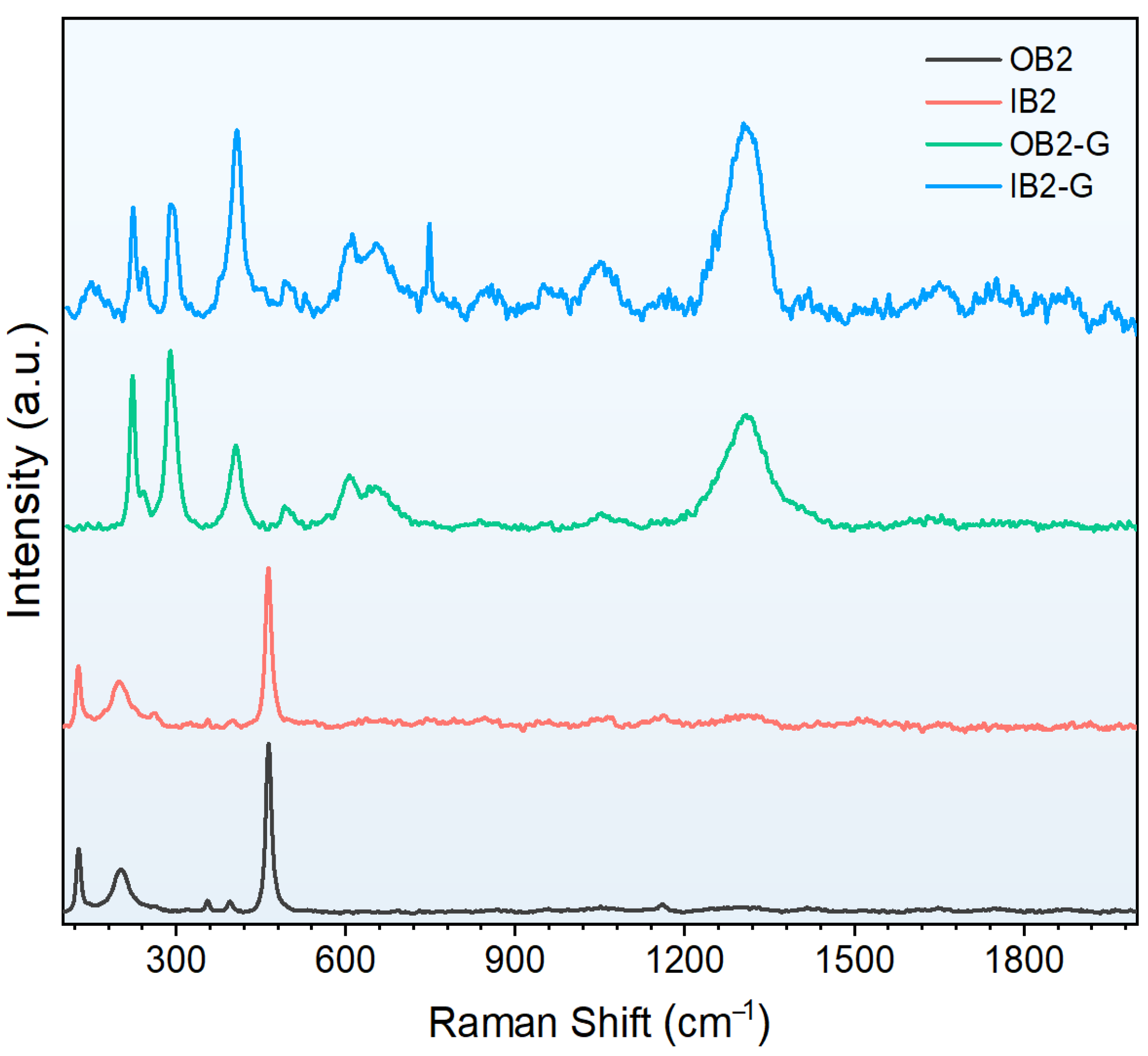
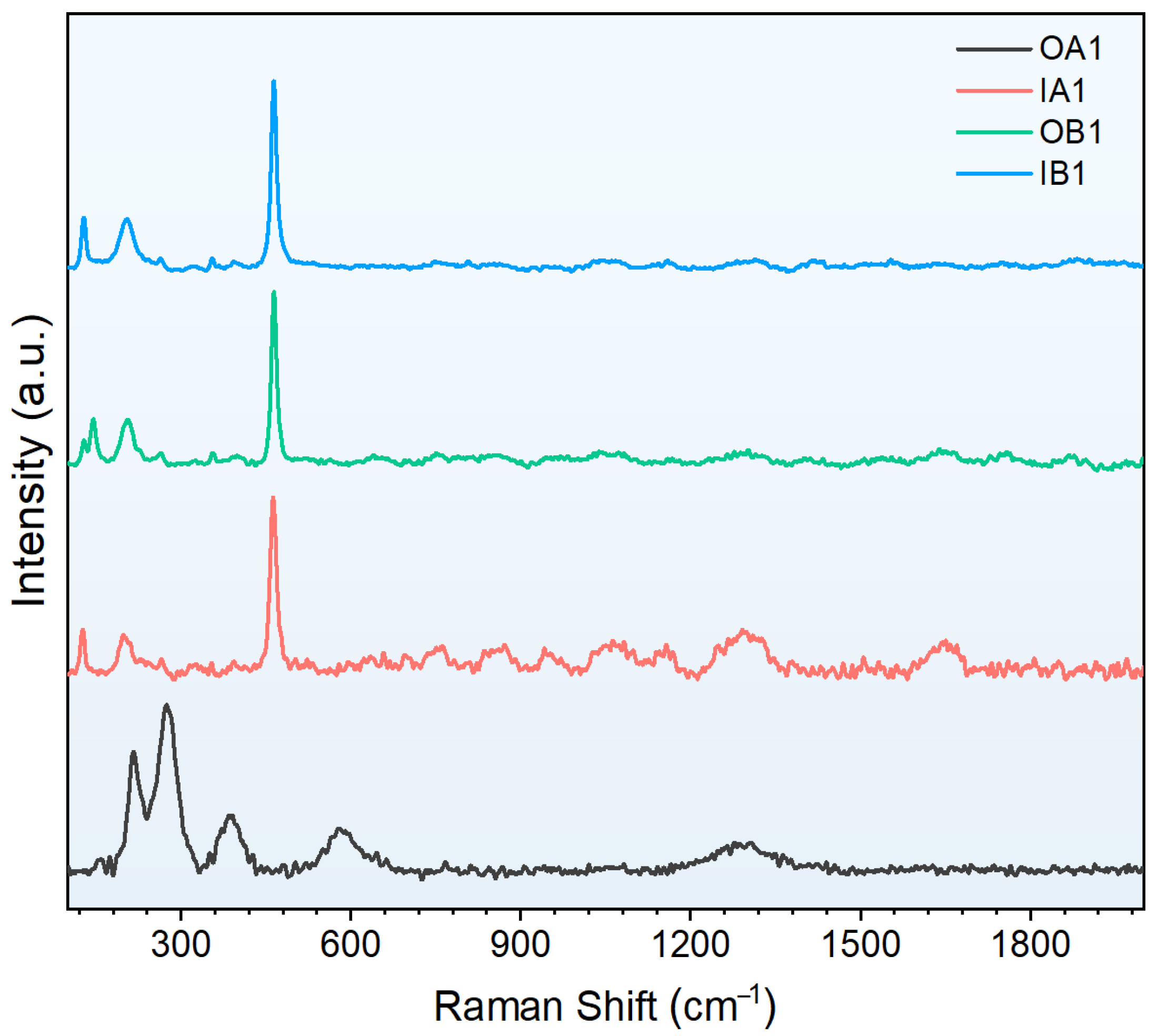
The Raman spectra of the samples clearly reveal the distinct presence of carbonaceous compounds and potential protective materials on both the interior and exterior surfaces. The rammed-earth surface samples from inside and outside (IB2-G and OB2-G) exhibit pronounced D-bands (~1350 cm−1), indicating the presence of substantial amorphous carbonaceous material (Figure 25). This suggests that the exterior surface of the rammed-earth wall has received a high-dose application of a carbon-rich waterproof coating (sacrificial layer). The characteristic disordered (D) carbon structure indicates the surface coating primarily consists of carbon-rich substances, such as soot, charcoal ash, or wood-derived combustion products. These materials are traditionally associated with ‘Wu-Yan-hui’, employed as a waterproofing agent in Fuzhou vernacular architecture. The D-bands peak more prominently in the IB2-G spectrum, revealing a higher carbon signal. This reflects that sacrificial layers applied to surfaces of rammed-earth walls with lower exposure or in more sheltered interior environments would be able to mitigate damage from coupled wind–rain weathering (Figure 25 and Figure 26).
In contrast, most internal samples from more typical rammed-earth walls exhibited faint but broadly similar peaks below 800 cm−1. Particularly near 470 cm−1 and 610 cm−1, these peaks may be tentatively attributed to bending modes of silicate or clay minerals. These data suggest the potential presence of composite silicate materials in multiple samples. Most prominent among these is the peak at ~465 cm−1, indicative of quartz (Si–O–Si) deformation vibrations. Their presence suggests partial exposure of underlying soil constituents (Figure 25 and Figure 26).
Comparative analysis reveals significantly reduced, and in some cases barely detectable, D and G peak intensities in interior wall samples (OB2 and IB2) compared to exterior counterparts. This attenuation highlights the localized application of the carbon-based layer (the sacrificial surface layer) on the wall surface and its limited penetration into the deeper structure of the rammed-earth wall. Furthermore, the contrast between the surface and interior of the samples confirms the functional purpose of the “Wu-yan-hui” as a surface protective treatment. It effectively isolates the interior core from environmental moisture and contaminants without readily altering its material composition.

4. Discussion: Materials, Damage Conditions and Conservation Strategies for Rammed-Earth Walls

4.1. Causes of Weathering of Rammed-Earth Walls

The analytical methods applied in this study—SEM, EDS, XRD, and Raman spectroscopy—provide a foundation for the restoration recommendations by linking microstructural deterioration patterns to specific interventions such as consolidation, coating renewal, and moisture protection. As a control group, this experiment analyzed surface coating samples from the rammed-earth walls of IB2-G (indoor) and OB2-G (outdoor). SEM morphological results indicate that both OB2-G and IB2-G surface layers exhibit dense protective layer imagery, suggesting the rammed-earth walls may indeed possess a sacrificial layer (i.e., the ‘Wu-yan-hui’ coating). Raman spectroscopy data revealed that samples subjected to intense external environmental exposure or those with minimal carbonaceous material on their surfaces exhibited distinct characteristics. Specifically, OB2-G displayed pronounced carbon signals, albeit to a lesser extent than IB2-G. This disparity likely stems from OB2-G’s outdoor positioning, which subjected it to heightened exposure. Consequently, its surface protective layer thinned due to weathering and erosion from wind and rain.
This further demonstrates that traditional coatings can mitigate coupled weathering erosion of earthen walls to some extent. This aligns with the concept of a sacrificial layer in conservation—the soot layer absorbs the impact of humidity fluctuations, thereby shielding the underlying earth. This supports the hypothesis that the ‘Wu-yan-hui’ was intentionally applied as a protective surface layer, incorporating materials with waterproofing or stabilizing properties—likely through a traditional formulation of carbonaceous substances and lime.
The combined data from the eight samples demonstrates that, despite being on the same side of the rammed-earth enclosure wall, variations in orientation and exposure resulted in differing degrees of damage severity. Therefore, in actual heritage restoration, appropriate refinements or even distinct conservation approaches should be adopted to achieve more tailored protective outcomes. Analysis clearly demonstrates that while the earthen walls of Zishantang have historically been robust, environmental erosion has severely compromised their surfaces. Nevertheless, traditional architectural choices—such as soot coatings and eaves—have significantly mitigated deeper-level deterioration. Recent studies have shown that traditional soot–ash coatings effectively reduce weathering-induced erosion by acting as sacrificial layers that slow the progression of deeper structural damage [37]. Additional research indicates that mineralogical shifts and pore enlargement detected through SEM–EDS and XRD are closely associated with root disturbance and environmental stresses [38]. Together, these findings align with the deterioration patterns observed at Zishantang, supporting the interpretation that both microstructural decay and partial mineral dissolution follow established degradation mechanisms and highlighting the need for targeted conservation strategies [39]. These findings support the interpretation that both microstructural deterioration and partial mineral dissolution at Zishantang follow documented degradation patterns and reinforce the need for tailored conservation strategies.
The microstructural deterioration observed through SEM and XRD—such as increased porosity, mineral phase weakening, and surface salt accumulation—offers direct implications for conservation strategies. For example, the thinning of the ‘Wu-yan-hui’ coating and evidence of carbon signal degradation in outdoor samples suggest that protective layers must be regularly maintained or reapplied in highly exposed zones. The identification of more severe weathering on east-facing walls indicates that orientation should inform restoration planning and prioritize reinforcement or shielding in the most vulnerable directions. Moreover, the reduction in carbonaceous material and visible mineral leaching supports the selective application of traditional coatings with stabilizing and hydrophobic properties. These findings confirm that microstructural analysis can guide material-specific interventions while remaining consistent with the architectural authenticity of the site. Similar strategies have been observed in the conservation of Fujian Tulou [19], where surface coatings rich in organic carbon and lime have been retained or reconstructed to delay moisture penetration [19]. Research on the rammed-earth walls of Pingyao has likewise emphasized orientation-sensitive conservation, with east-facing segments suffering greater erosion due to wind-driven rain. Compared to these examples, the Zishantang study integrates microdiagnostics and site-specific conservation strategies, thus offering a replicable model for other humid subtropical contexts. Furthermore, the soot ash (“Wu-yan-hui”) layer has been confirmed via Raman spectroscopy to contain disordered carbon structures that absorb environmental stressors, acting as a sacrificial barrier that prevents deeper deterioration while preserving the underlying material composition.
To improve practical conservation planning, future work should incorporate a quantitative damage assessment system, classifying weathering severity across different wall segments. By establishing a scoring rubric based on microstructural indicators—such as porosity increase, mineral depletion, and protective layer degradation—conservation teams could more precisely prioritize interventions. For instance, areas with severely degraded coatings or elevated salt accumulation might be assigned a higher risk level and require earlier or more intensive treatment. This structured approach supports more targeted resource allocation, ensuring that the most vulnerable elements receive attention first.

4.2. Recommendations for Relocation and Restoration

Prior to relocation, the walls should undergo surface consolidation to prevent deterioration. A consolidating agent should be applied to bind loose particles, ensuring stability during dismantling. Care must be taken to avoid leaving visible residues or altering the original surface. Given the confirmed role of the Wu-yan-hui sacrificial layer in moisture resistance, traditional waterproofing should be reapplied after relocation.
Where internal surfaces retain intact ash–plaster coatings, efforts should be made to preserve them. Protective sheeting may be necessary during dismantling to prevent abrasion. Reinstallation should maintain original orientation and composition. Damaged areas should be repaired using traditional methods and locally sourced materials in accordance with the principle of “restoring as original.”
All structural components should be carefully recorded and numbered before dismantling. This ensures accurate reassembly and preserves original orientation—particularly for interior vs. exterior walls. Authenticity requires that elements be returned to their original positions and contexts.
Post-relocation maintenance is essential. Surface coatings must be regularly inspected and reapplied as needed. In new environments, additional monitoring is required to detect and mitigate salt accumulation or new weathering agents.
To enhance the conservation framework, restoration strategies should align with international standards such as the ICOMOS Principles for the Preservation and Conservation of Built Heritage [40]. These standards promote minimal intervention and material authenticity. Lessons from similar heritage sites, like those in Yazd (Iran) and Aït Benhaddou (Morocco), further validate the use of sacrificial coatings and traditional materials in earthen architecture restoration (Table 4).

4.3. Limitations

This study is subject to several limitations that warrant attention. Firstly, there is an issue of insufficient sampling, as specimens were collected only from walls on one orientation of the building complex (the eastern side). Based on field observations, walls in different orientations of the complex may exhibit more complex conditions. Future research should increase sample collection and extend the scope of experiments to encompass all rammed-earth walls within the complex.
Secondly, certain quantitative data in this study are approximate values. For instance, SEM point analysis and XRD semi-quantitative analysis may exhibit deviations of several percentage points, particularly regarding amorphous component content. However, the overall trends are sufficiently clear, and minor numerical discrepancies will not impact decision-making.
Another limitation is the absence of mechanical testing (e.g., compressive strength of samples). This would allow for a more accurate assessment of structural degradation in future studies. This study relies on microscopic indicators as surrogate measures. Future research could explore compressive strength testing on small cores or employ in situ penetrometers to quantify strength. We plan to conduct simple penetrometer tests on blocks during demolition to assess whether any require additional reinforcement.

5. Conclusions

This study examined the weathering patterns and restoration strategies of traditional rammed-earth walls at Zishantang, revealing significant deterioration, particularly on exposed facades. Walls lacking intact soot–lime coatings (“Wu-yan-hui”) exhibited increased porosity, microcracking, and mineral loss. In contrast, sections protected by these traditional coatings showed less degradation, highlighting their effectiveness in mitigating environmental exposure. The findings emphasize that wall orientation and exposure to environmental factors, such as humidity, rainfall, and wind, are critical to understanding weathering patterns and ensuring targeted conservation efforts.
The conservation implications of these findings are significant for the preservation of rammed-earth heritage sites. To effectively protect such structures, conservation strategies should focus on safeguarding the most vulnerable facades, with orientation-specific coatings or materials that mimic the protective effects of traditional soot–lime coatings. These strategies should incorporate both microstructural analysis and long-term environmental monitoring to ensure sustainable conservation outcomes. Additionally, the study underscores the importance of preserving the material authenticity and structural integrity of rammed-earth buildings in the face of urban relocation and environmental degradation.
Future research should build on these findings by experimentally testing traditional coatings, such as “Wu-yan-hui,” under simulated ageing conditions to verify their performance in real-world conservation scenarios. Expanding the research to other rammed-earth structures in humid subtropical climates, like Fujian Tulou or Pingyao, will allow for the refinement of conservation strategies and provide a broader understanding of the challenges and solutions for preserving this unique architectural heritage. Furthermore, although this study focuses primarily on microstructural and mineralogical analyses, the assessment of the structural integrity of rammed-earth buildings typically requires physical and mechanical tests—such as compressive strength, elastic modulus, and in situ evaluation methods. Due to heritage-preservation constraints and the need to avoid invasive sampling, such tests could not be conducted in the present investigation. Future research should incorporate small-scale mechanical tests and non-destructive testing (NDT) techniques, including ultrasonic pulse velocity or surface hardness measurements, to complement the microstructural findings and provide a more comprehensive evaluation of structural performance, particularly in the context of relocation. Future work should also integrate mechanical performance testing—such as in situ non-destructive evaluation or small-scale strength measurements—to complement the microstructural results and improve structural assessments related to relocation feasibility.

Author Contributions

Conceptualization, C.K.N.L.; methodology, C.K.N.L.; software, C.K.N.L.; validation, C.K.N.L.; formal analysis, C.K.N.L. and J.S.; investigation, C.K.N.L.; resources, C.K.N.L.; data curation, C.K.N.L.; writing—original draft preparation, C.K.N.L.; writing—review and editing, C.K.N.L. and J.S.; visualization, C.K.N.L.; supervision, C.K.N.L.; project administration, C.K.N.L.; funding acquisition, C.K.N.L. All authors have read and agreed to the published version of the manuscript.

Funding

This research received no external funding.

Institutional Review Board Statement

Not applicable.

Informed Consent Statement

Not applicable.

Data Availability Statement

The raw data supporting the conclusions of this article will be made available by the authors on request.

Acknowledgments

We extend our heartfelt gratitude to Huaxia JIN, for permitting the collection of samples from Zishantang. We would like to express our gratitude to Xuanhao CAI from the School of Architecture and Urban & Rural Planning at Fuzhou University and Jiawen LU of Xiamen University for their assistance during this fieldwork. We would like to express our gratitude to Yile CHEN, Liang ZHENG and Wallace KWAH for their invaluable advice on the experimental methodology employed in this research. Finally, we also would like to extend thanks to Lili Cao from Scientific Compass (www.shiyanjia.com) for providing technical analysis support.

Conflicts of Interest

The authors declare no conflicts of interest. The funders had no role in the design of the study; in the collection, analyses, or interpretation of data; in the writing of the manuscript; or in the decision to publish the results.

Appendix A

Average monthly temperature and precipitation in Yongtai County, Fuzhou, Fujian Province, China. Source: World Weather Online, available online: https://www.worldweatheronline.com/yongtai-weather-averages/fujian/cn.aspx (accessed on 21 October 2025).
Coatings 15 01491 i001

References

  1. Jaquin, P.A.; Augarde, C.E.; Gerrard, C.M. Chronological Description of the Spatial Development of Rammed Earth Techniques. Int. J. Archit. Herit. 2008, 2, 377–400. [Google Scholar] [CrossRef]
  2. Xie, L.; Wang, D.; Zhao, H.; Gao, J.; Gallo, T. Architectural Energetics for Rammed-Earth Compaction in the Context of Neolithic to Early Bronze Age Urban Sites in Middle Yellow River Valley, China. J. Archaeol. Sci. 2021, 126, 105303. [Google Scholar] [CrossRef]
  3. Moriset, S.; Rakotomamonjy, B.; Gandreau, D. Can Earthen Architectural Heritage Save Us? Built Herit. 2021, 5, 19. [Google Scholar] [CrossRef] [PubMed]
  4. Tao, R.; Chen, P.; Aoki, N. Conceptual Changes and Controversies in Rural Historical Building Relocation in China under the Heritage Adaptive Reuse Discourse. Built Herit. 2025, 9, 6. [Google Scholar] [CrossRef]
  5. González Martínez, P. From Verifiable Authenticity to Verisimilar Interventions: Xintiandi, Fuxing SOHO, and the Alternatives to Built Heritage Conservation in Shanghai. Int. J. Herit. Stud. 2019, 25, 1055–1072. [Google Scholar] [CrossRef]
  6. Gregory, J. Reconsidering Relocated Buildings: ICOMOS, Authenticity and Mass Relocation 1. Int. J. Herit. Stud. 2008, 14, 112–130. [Google Scholar] [CrossRef]
  7. An, D.W. Sustainability and Variability of Korean Wooden Architectural Heritage: The Relocation and Alteration. Sustainability 2018, 10, 1742. [Google Scholar] [CrossRef]
  8. Gallipoli, D.; Bruno, A.W.; Bui, Q.-B.; Fabbri, A.; Faria, P.; Oliveira, D.V.; Ouellet-Plamondon, C.; Silva, R.A. Durability of Earth Materials: Weathering Agents, Testing Procedures and Stabilisation Methods. In Testing and Characterisation of Earth-Based Building Materials and Elements: State-of-the-Art Report of the RILEM TC 274-TCE; Fabbri, A., Morel, J.-C., Aubert, J.-E., Bui, Q.-B., Gallipoli, D., Reddy, B.V.V., Eds.; Springer International Publishing: Cham, Switzerland, 2022; pp. 211–241. ISBN 978-3-030-83297-1. [Google Scholar]
  9. Bai, X.; He, B.; Feng, Y.; Wang, Y.; Li, H.; Bai, X.; Ma, F.; Han, P.; Lu, Y.; Ren, Y. Basal Scouring in Historical Rammed Earth Sites: Formation and Height Prediction. npj Herit. Sci. 2025, 13, 6. [Google Scholar] [CrossRef]
  10. Ávila, F.; Puertas, E.; Gallego, R. Characterization of the Mechanical and Physical Properties of Stabilized Rammed Earth: A Review. Constr. Build. Mater. 2022, 325, 126693. [Google Scholar] [CrossRef]
  11. Komaei, A.; Mosaddegh, A.; Hemmati, M.; Fahimifar, A. Stabilization of Rammed Earth with Waste Materials for Sustainable Construction under Rainfall Conditions: With Consideration of Life Cycle Assessment (LCA). Dev. Built Environ. 2025, 23, 100701. [Google Scholar] [CrossRef]
  12. Luo, Y.; Ye, C.; Zhong, H.; Ni, P.; Li, W.; Zeng, Z. Pullout Capacity at the Bamboo Reinforcement-Compacted Earth Interface. Geosynth. Int. 2024, 32, 382–393. [Google Scholar] [CrossRef]
  13. Luo, Y.; Yang, M.; Ni, P.; Peng, X.; Yuan, X. Degradation of Rammed Earth under Wind-Driven Rain: The Case of Fujian Tulou, China. Constr. Build. Mater. 2020, 261, 119989. [Google Scholar] [CrossRef]
  14. Zhang, Y.; Ye, W.M.; Chen, B.; Chen, Y.G.; Ye, B. Desiccation of NaCl-Contaminated Soil of Earthen Heritages in the Site of Yar City, Northwest China. Appl. Clay Sci. 2016, 124–125, 1–10. [Google Scholar] [CrossRef]
  15. Zhang, Q.; Guo, Q.; Zhang, H.; Wang, Y.; Li, P.; Zhang, B.; Tang, C. Surface Weathering Process of Earthen Heritage under Dry-Wet Cycles: A Case Study of Suoyang City, China. J. Rock Mech. Geotech. Eng. 2024, 17, 5224–5239. [Google Scholar] [CrossRef]
  16. Lin, X.; Zhang, Y.; Wu, Y.; Yang, Y. Assessment of Architectural Typologies and Comparative Analysis of Defensive Rammed Earth Dwellings in the Fujian Region, China. Buildings 2024, 14, 3652. [Google Scholar] [CrossRef]
  17. Luo, Y.; Yin, B.; Peng, X.; Xu, Y.; Zhang, L. Wind-Rain Erosion of Fujian Tulou Hakka Earth Buildings. Sustain. Cities Soc. 2019, 50, 101666. [Google Scholar] [CrossRef]
  18. Hua, C.; Peng, X.; Wu, R.; Shao, K. Study on wind-driven and rain-induced erosion damage prediction of rammed earth walls in Fujian Tulou. J. Nat. Resour. 2012, 6, 1068–1074. [Google Scholar]
  19. Luo, Y.; Zhou, P.; Ni, P.; Peng, X.; Ye, J. Degradation of Rammed Earth under Soluble Salts Attack and Drying-Wetting Cycles: The Case of Fujian Tulou, China. Appl. Clay Sci. 2021, 212, 106202. [Google Scholar] [CrossRef]
  20. Fan, J.; Chen, Y.; Zheng, L. Artificial Intelligence for Routine Heritage Monitoring and Sustainable Planning of the Conservation of Historic Districts: A Case Study on Fujian Earthen Houses (Tulou). Buildings 2024, 14, 1915. [Google Scholar] [CrossRef]
  21. Baera, C.; Gruin, A.; Enache, F.; Bolborea, B.; Chendes, R.V.; Ciobanu, A.; Varga, L.; Sandu, I.; Corbu, O. Opportunities regarding the innovative conservation of the romanian vernacular urbanistic heritage. Int. J. Conserv. Sci. 2023, 14, 913–936. [Google Scholar] [CrossRef]
  22. Du, Y.; Dong, W.; Cui, K.; Chen, W.; Yang, W. Research Progress on the Development Mechanism and Exploratory Protection of the Scaling off on Earthen Sites in NW China. Sci. China Technol. Sci. 2023, 66, 2183–2196. [Google Scholar] [CrossRef]
  23. Wang, Y.; Bai, X.; Li, H.; Zuo, J.; Li, D.; Han, P.; He, B. Research on Microstructure and Porosity Calculation of Rammed Soil Modified by Lime-Based Materials: The Case of Rammed Earth of Pingyao City Wall, a World Heritage Site. Environ. Earth Sci. 2024, 83, 652. [Google Scholar] [CrossRef]
  24. Losini, A.E.; Grillet, A.-C.; Woloszyn, M.; Lavrik, L.; Moletti, C.; Dotelli, G.; Caruso, M. Mechanical and Microstructural Characterization of Rammed Earth Stabilized with Five Biopolymers. Materials 2022, 15, 3136. [Google Scholar] [CrossRef] [PubMed]
  25. Parracha, J.L.; Silva, A.S.; Cotrim, M.; Faria, P. Mineralogical and Microstructural Characterisation of Rammed Earth and Earthen Mortars from 12th Century Paderne Castle. J. Cult. Herit. 2020, 42, 226–239. [Google Scholar] [CrossRef]
  26. Zhang, L.; Zheng, L.; Chen, Y.; Zheng, R.; Huang, L.; Zhang, J.; Yan, B.; Chen, Z. Corrosion Analysis of Bronze Arrowheads from the Minyue Kingdom Imperial City Ruins. Coatings 2025, 15, 339. [Google Scholar] [CrossRef]
  27. Bai, X.; He, B.; Zhang, D.; Wang, Y.; Li, H.; Bai, X.; Ma, F.; Han, P. Unveiling the deterioration formation process of the rammed earth city wall site of the Ancient City of Pingyao, a World Heritage Site: Occurrence, characterizations, and historic environmental implications. Archaeol. Anthropol. Sci. 2024, 16, 156. [Google Scholar] [CrossRef]
  28. Zuo, J.; Bai, X.; Li, D.; Wang, Y.; Wang, X.; Ma, F.; Han, P. Electrochemical Impedance Spectroscopy Investigation and Results Interpretation of Rammed Earth from Pingyao Ancient City Walls (UNESCO World Heritage Site) Under freeze-Thaw Cycles. Int. J. Archit. Herit. 2025, 1–15. [Google Scholar] [CrossRef]
  29. Qiu, S. Construction techniques of ancient building walls in Fuzhou. Cult. Relics Apprais. Apprec. 2024, 19, 130–133. [Google Scholar] [CrossRef]
  30. The Largest Single Ancient Building in Fuzhou’s Urban Area Will Be Renovated: The Chen Family Mansion “Moves”-Famous City Protection, by Fuzhou Historical and Cultural City Management Committee. Available online: https://www.fuzhou.gov.cn/zgfzzt/lswhmcgwh/zwgk/ztzl/bhqy/202112/t20211220_4272871.htm (accessed on 5 August 2025).
  31. Qiu, R.; Guan, R. A comparison of architectural features of Fuzhou Chaibancuo and courtyard-style mansions. Huazhong Archit. 2025, 1, 135–140. [Google Scholar] [CrossRef]
  32. He, Q. Research on Survey and Design in the Conservation Engineering of Cultural Relics and Buildings. Constr. Budget. 2024, 6, 25–27. [Google Scholar] [CrossRef]
  33. Fuzhou Residential Construction Technology; China Architecture & Building Press: Beijing, China, 2016; ISBN 978-7-112-19378-3.
  34. Ding, Y.; Guan, R.; Chen, L.; Wang, J.; Zhang, Y.; Fu, Y.; Zhang, C. Durability Analysis of Brick-Faced Clay-Core Walls in Traditional Residential Architecture in Quanzhou, China. Coatings 2025, 15, 909. [Google Scholar] [CrossRef]
  35. SY/T 5163-2018; Analysis Method for Clay Minerals and Ordinary Non-Clay Minerals in Sedimentary Rocks by X-Ray Diffraction. Petroleum Industry Press: Beijing, China, 2018.
  36. Fuzhou City Annals (Volume 1). Available online: https://data.fjdsfzw.org.cn/2016-09-18/content_462.html (accessed on 10 August 2025).
  37. Wang, K.; Cao, J.; Ye, J.; Qiu, Z.; Wang, X. Discrete element analysis of geosynthetic-reinforced pile-supported embankments. Constr. Build. Mater. 2024, 449, 138448. [Google Scholar] [CrossRef]
  38. Wang, Y.; Song, J.; Zhang, J.; Huang, Y.; Yang, S. Analysis of Rammed Earth Wall Erosion in Traditional Village Dwellings in Zhuhai City. Coatings 2025, 15, 526. [Google Scholar] [CrossRef]
  39. Zheng, Y.; Song, J.; Zhang, X.; Hu, Y.; Chen, R.; Yang, S. Experimental Study on the Anti-Erosion of the Exterior Walls of Ancient Rammed-Earth Houses in Yangjiatang Village, Lishui. Coatings 2025, 15, 1173. [Google Scholar] [CrossRef]
  40. Al-Barzngy, M.Y.M.; Khayat, M. Post-conflict safeguarding of built heritage: Content analysis of the ICOMOS Heritage at Risk Journal, 2000–2019. Sustainability 2023, 15, 12364. [Google Scholar] [CrossRef]
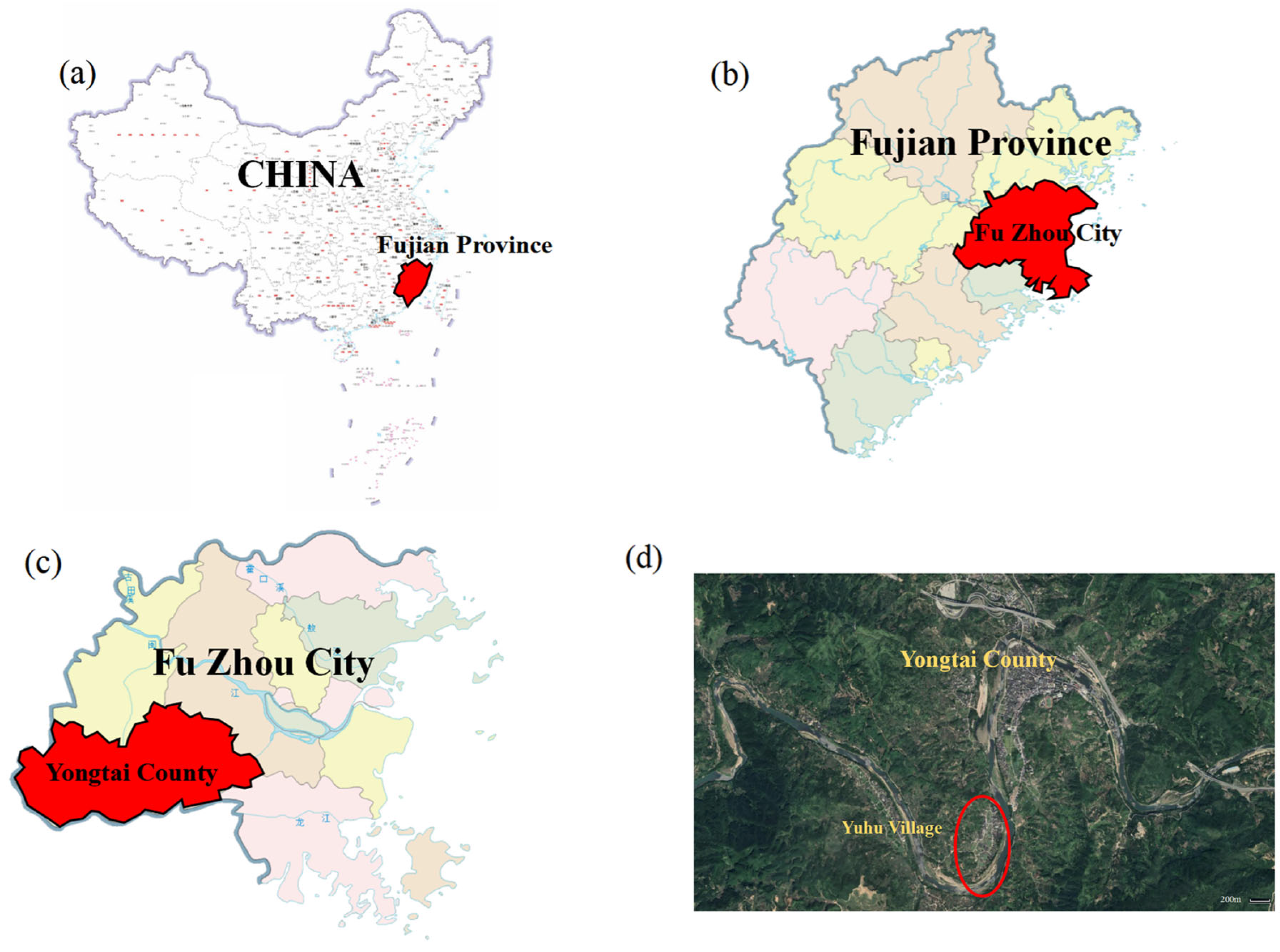
Figure 1. Geographical Location Diagram of Yuhu Village in Fuzhou. (a) The location of Fujian Province in China; (b) the location of Fuzhou in Fujian Province; (c) the location of Yongtai County in Fuzhou City; (d) the geographical scope of Yuhu Village. (Image source: redrawn by authors based on Google Maps, accessed on 21 October 2025).
Coatings 15 01491 g001
Figure 2. Wall model structure at the sample collection location. (Image source: drawn by the author).
Coatings 15 01491 g002
Figure 3. Photographs relating to Zishantang in Yuhu Village. (a) Aerial view of Yuhu Village, Fuzhou City. (b) Aerial view of the Zishantang complex. (c) The external appearance of the eastern wall of Zishantang. (d) The exterior appearance of the interior wall on the eastern side of Zishantang. (e) The building is on the northern section of the eastern wall of Zishantang. (f) Internal structure of the building within the northern section of the eastern wall of Zishantang. (Image source: Photographed and edited by the author).
Coatings 15 01491 g003
Figure 4. Wall sections and sampling locations for six rammed-earth samples: IA1, OA1, IB1, OB1, IB2, OB2, IB2-G and OB2-G. (Image source: drawn by the author).
Coatings 15 01491 g004
Figure 5. Wall sections and sampling locations for six rammed-earth samples: (a) IA1, (b) OA1, (c) IB1, (d) OB1, (e) IB2, and (f) OB2. (Image source: photographed by the author).
Coatings 15 01491 g005
Figure 6. SEM morphology image of sample OA1.
Coatings 15 01491 g006
Figure 7. SEM morphology image of sample IA1.
Coatings 15 01491 g007
Figure 8. SEM morphology image of sample OB1.
Coatings 15 01491 g008
Figure 9. SEM morphology image of sample IB1.
Coatings 15 01491 g009
Figure 10. SEM morphology image of sample OB2.
Coatings 15 01491 g010
Figure 11. SEM morphology image of sample IB2.
Coatings 15 01491 g011
Figure 12. SEM morphology image of sample OB2-G.
Coatings 15 01491 g012
Figure 13. SEM morphology image of sample IB2-G.
Coatings 15 01491 g013
Figure 14. SEM Mapping Image of Sample OA1.
Coatings 15 01491 g014
Figure 15. SEM Mapping Image of Sample IA1.
Coatings 15 01491 g015
Figure 16. SEM Mapping Image of Sample OB1.
Coatings 15 01491 g016
Figure 17. SEM Mapping Image of Sample IB1.
Coatings 15 01491 g017
Figure 18. SEM Mapping Image of Sample OB2.
Coatings 15 01491 g018
Figure 19. SEM Mapping Image of Sample IB2.
Coatings 15 01491 g019
Figure 20. SEM Mapping Image of Sample OB2-G.
Coatings 15 01491 g020
Figure 21. SEM Mapping Image of Sample IB2-G.
Coatings 15 01491 g021
Figure 22. SEM Spot analysis results.
Coatings 15 01491 g022
Figure 23. XRD analysis results for samples OA1, IA1, OB1, and IB1.
Coatings 15 01491 g023
Figure 24. XRD analysis results for samples OB2, IB2, OB2-G and IB2-G.
Coatings 15 01491 g024
Figure 25. Raman analysis results for samples OB2, IB2, OB2-G and IB2-G.
Coatings 15 01491 g025
Figure 26. Raman analysis results for samples OA1, IA1, OB1, and IB1.
Coatings 15 01491 g026
Table 1. Summary of Sampling Locations and Conditions.
Sample IDWall PositionOrientationExposure ConditionCoating ConditionNotes (from Your Manuscript)
IB1Interior Section 1East-facing wallLow exposure (sheltered)No coatingCut at 10 mm depth; reference interior material condition
OB1Exterior Section 1East-facing wallHigh exposure (wind–rain)No coatingExhibits significant surface weathering
IB2Interior Section 2East-facing wallLow exposureNo coatingPaired comparison sample with IB2-G
OB2Exterior Section 2East-facing wallHigh exposureNo coatingPaired comparison sample with OB2-G
IB2-GInterior Section 2East-facing wallLow exposureWith soot–lime coating (“Wu-yan-hui”)Shows transitional microstructure; coating partially preserved
OB2-GExterior Section 2East-facing wallVery high exposureWith soot–lime coating (“Wu-yan-hui”)Surface microstructure markedly different due to coating; sacrificial layer thinning
Table 2. Analytical Methods, Purposes, and Material Insights.
MethodPurpose in This StudyWhat It Reveals About the Material (Based on Your Results)
SEM (Scanning Electron Microscopy)Visualize microstructure, pore development, particle bonding, and deterioration morphology.Exposed samples (e.g., OB1, OB2) show increased porosity, loose particle packing, and microcracks.
Interior samples (IB1, IB2) show denser, more compact structure.
Soot-coated samples (OB2-G, IB2-G) display better-preserved surface microstructure and coating-induced densification.
EDS (Energy Dispersive X-ray Spectroscopy)Quantify elemental composition and detect weathering-related elemental loss or enrichment.Consistent O–Si–Al patterns across samples indicate typical silicate earth composition.
Exposed samples show minor surface depletion of Si/Al relative to interior samples.
Coated samples exhibit carbon-rich surface layers, confirming soot–lime film.
XRD (X-ray Diffraction)Identify mineral phases and detect changes due to weathering.Dominant minerals include quartz, feldspar (microcline/orthoclase), and clay minerals.
Weathered exterior samples show weakened peaks, indicating surface mineral degradation.
Coated samples’ XRD signals are partially masked by the carbonized soot layer.
Raman SpectroscopyDetect carbon-based soot components and characterize coating composition.
  • Soot-coated samples (IB2-G, OB2-G) show clear D-band (~1350 cm−1) and G-band (~1580 cm−1), confirming the presence of the traditional soot–lime coating (“Wu-yan-hui”).
  • Exterior soot-coated sample OB2-G has weaker carbon peaks, indicating weathering and thinning of the coating.
  • Uncoated samples primarily have silicate mineral peaks (~460–610 cm−1).
Table 3. Summary of Elemental Composition, Mineral Phases, Raman Features, and Microstructural Interpretation of Samples.
SampleElemental Composition (O/Si/Al)Dominant Minerals (XRD)Raman Peaks (cm−1)Interpretation
OA1O: High, Si: High, Al: ModerateQuartz, Microcline~465, ~610High porosity, loose matrix, indicative of weathering or weak compaction
IA1O: High, Si: High, Al: ModerateQuartz, Orthoclase~465Dense structure, minor cracks, moderately weathered indoor wall
OB1O: High, Si: High, Al: ModerateQuartz, Chlorite~465, weak < 800 cm−1Loose matrix, erosion signs, exposed to weathering
IB1O: High, Si: High, Al: ModerateQuartz, Microcline~465, ~610Stable microstructure, compact particles, indoor location
OB2O: High, Si: High, Al: ModerateQuartz, Minor aluminosilicates~465, weak D-bandSeverely weathered, surface cracking, stress from freeze–thaw cycles
IB2O: High, Si: High, Al: ModerateQuartz, Kaolinite~465Moderate weathering, compacted, interior wall
OB2-GO: High, Si: High, Al: ModerateQuartz (XRD muted by coating)~1350 (D), ~1580 (G)Thick carbon-rich soot coating, protective “Wu-yan-hui” sacrificial layer
IB2-GO: High, Si: High, Al: ModerateQuartz (XRD muted by coating)~1350 (D), ~1580 (G)Well-preserved soot coating, better carbon signal than OB2-G (less exposed)
Table 4. Summary of Major Damage Types, Their Causes, and Corresponding Conservation Strategies.
Damage TypeObserved Causes or FeaturesConservation Strategy
Surface erosion and flakingProlonged wind-rain exposure, especially on east-facing wallsApply or reapply traditional soot ash (“Wu-yan-hui”) coating as sacrificial layer
Microcracks and increased porosityDry–wet cycles, thermal stress, ageingSurface consolidation using lime-based consolidants before relocation
Salt accumulation and efflorescenceEnvironmental humidity, capillary actionConduct desalination treatments where necessary; regular maintenance of surface coatings
Loss of soot–ash protective coatingWeathering, rain exposure, neglectReconstruct coating using traditional carbon–lime mix post-relocation
Orientation-dependent damageUneven environmental exposure (e.g., wind, rainfall)Prioritize reinforcement and shielding for vulnerable directions
Risk during dismantling or transportStructural fragility, microcrackingNumbering and documentation of wall segments; protective wrapping; gentle dismantling
Disclaimer/Publisher’s Note: The statements, opinions and data contained in all publications are solely those of the individual author(s) and contributor(s) and not of MDPI and/or the editor(s). MDPI and/or the editor(s) disclaim responsibility for any injury to people or property resulting from any ideas, methods, instructions or products referred to in the content.