Article

Sonochemical Modification of ZrO2 Nanoparticles with Thiamine Hydrochloride for the Development of Films with PLA for the Adsorption of Hexavalent Chromium


by
Carlos Rodrigo Muñiz-Valdez
1,
Nelly Abigaíl Rodríguez-Rosales
2,
Juan Carlos Ortiz-Cuellar
1,
Jesús Fernando Martínez-Villafañe
1,
Josué Gómez-Casas
1,
Gregorio Cadenas-Pliego
3,
Christian Javier Cabello-Alvarado
3,4,*,
Marlene Andrade-Guel
1,* and
Jesús Salvador Galindo-Valdés
1,*
1
Faculty of Engineering, Autonomous University of Coahuila, Blvd. Fundadores km 13 University City, Arteaga 25350, Mexico
2
Departamento de Metal Mecánica, Tecnológico Nacional de México/I.T. Saltillo, Saltillo 25280, Mexico
3
Center for Research in Applied Chemistry, Saltillo 25294, Mexico
4
SECIHTI-CIQA, Av. Insurgentes Sur 1562, Col. Crédito Constructor, Mexico City 03940, Mexico
*
Authors to whom correspondence should be addressed.
Coatings 2025, 15(12), 1484; https://doi.org/10.3390/coatings15121484
Submission received: 30 October 2025 / Revised: 12 December 2025 / Accepted: 15 December 2025 / Published: 16 December 2025
(This article belongs to the Special Issue New Trends in Films and Surfaces for Wastewater Treatment)

Abstract

Industrial wastewater can be reused in other everyday processes to help combat water scarcity worldwide. One contaminant in industrial wastewater is hexavalent chromium, which is highly toxic and can cause kidney, liver, and respiratory problems, making its removal vital. In this study, PLA-based films containing modified zirconia nanoparticles were developed via a solution-mixing process for hexavalent chromium adsorption. Obtaining the films involved two stages: the first was the chemical modification of ZrO2 nanoparticles with thiamine hydrochloride (vitamin B1) using fixed-frequency ultrasound at an output of 750 W and 50% amplitude for 60 min. The second stage involved preparing the films by mixing them in the solution using an ultrasonic bath. The nanoparticle concentrations were 0.25, 0.5, and 1 wt%. The results obtained from characterization using Fourier-transform infrared spectroscopy (FT-IR) revealed the characteristic bands of PLA and the characteristic peak of the Zr-O bond corresponding to the ZrO2 nanoparticles. Thermogravimetric analysis (TGA) showed that the ZrO2 nanoparticles provided thermal stability to the PLA polymer. X-ray diffraction (XRD) showed a broad peak of amorphous PLA at 16.8° and signals corresponding to the crystalline phase of ZrO2. The morphology of a cross-section of the films was observed using scanning electron microscopy (SEM), revealing a rough surface with pores. Finally, hexavalent chromium adsorption tests were carried out, measuring the adsorption efficiency under the parameters of pH, concentration, and contact time. The PLAZrO2 sample achieved an adsorption efficiency of 83% at pH 2.

1. Introduction

Industrial wastewater is characterized by heavy metals such as copper (Cu), lead (Pb), cadmium (Cd), arsenic (As), mercury (Hg), iron (Fe), and chromium (Cr). They come from industries such as chemicals, food, paper, pesticide and biocide production, petroleum and petrochemicals, pharmaceuticals, and metallurgy [1].
Chromium is a highly toxic heavy metal for animals and humans. It is generally found in industrial wastewater since its use cannot be easily replaced due to unique properties such as anti-corrosion, color, toxicity, thermal resistivity, and a high melting point [2,3]. There are different methods for removing chromium from wastewater, such as chemical precipitation, reverse osmosis, coagulation, and adsorption. Adsorption technology is simple, cheap, has the capacity to regenerate, and can be scaled to an industrial level [4,5,6].
Some adsorbent materials are montmorillonite [7], polymers [8,9], polysaccharides [10], and polyaniline [11]. In recent years, the use of nanoparticles in the adsorption of heavy metals has increased. Several works have been reported about the use of carbon-based nanoparticles [12], ceramics [13], and metallic nanoparticles [14] to efficiently remove heavy metals due to their properties, such as surface area, size, photocatalytic property which allows degrading components, and mechanical properties, among others.
The properties of nanoparticles can be enhanced by superfinely modifying these materials so that they can interact chemically or physically with other types of organic or inorganic molecules. For example, carbon black has been modified with thiamine hydrochloride to eliminate uremic toxins by achieving physical interactions and removing molecules such as urea and creatinine [15]. Recent studies have suggested that by modifying nanoparticles or developing nanocomposites, better results can be obtained for decontaminating water that contains heavy metals [16].
On the other hand, there are membranes of different types of synthetic polymers used for water filtration, but currently, the care of the environment is of great importance; because of this, the use of biodegradable polymers has had a great area of interest worldwide [17]. PLA is a thermoplastic polymer derived from lactic acid (LA) that can be used in the manufacturing of textiles. The production of 90% of LA in the global market is by lactic acid bacteria (LAB), which can stereoselectively produce L or D-LA [18].
There is a wide variety of techniques for obtaining nanocomposites, among which the most commonly used are in situ polymerization, melt mixing, and solution mixing. In the solution-mixing technique, the particles are dispersed in a liquid, generally with the help of ultrasonic waves, and subsequently mixed with a solution of dissolved polymer; subsequently, the solvent is evaporated; finally, a sample powder or film is recovered. This technique tends to disperse the nanoparticles effectively and homogenize them in the medium where they are found [19].
The combination of two adsorbent materials, such as nanoparticle-reinforced polymers, can increase the percentage of heavy metal removal. Bao et al. studied the adsorption of hexavalent chromium on PANI/ZnO; this compound was shown to be efficient and reusable, and also with photocatalytic properties [20]. Kumar et al. prepared an alginate compound with ZrO2 for the adsorption of Cr(VI), managing to remove 73% of the heavy metal, and this adsorbent can be reused up to three cycles [21].
In this work, films based on PLA and ZrO2 nanoparticles pre-modified with thiamine hydrochloride were prepared. The films were prepared using short sonochemical process times. The films were characterized by FT-IR, TGA, XRD, and SEM. This is the first study to evaluate hexavalent chromium adsorption on PLA-based films with modified ZrO2 nanoparticles.

2. Materials and Methods

2.1. Materials

NatureWorks (Minneapolis, MN, USA)provided polylactic acid (PLA) resin Ingeo biopolymer 6260D with a melt index of 65 g/10 min. Zirconia ZrO2 nanoparticles (<100 nm) from Sigma Aldrich (St. Louis, MO, USA), chloroform, thiamine hydrochloride from Faga Lab (Sinaloa, México), and distilled water with a pH of 7 were used as a solvent to obtain the aqueous solutions.

2.2. Modification of ZrO2 Nanoparticles with Thiamine Hydrochloride by Sonochemistry

The modification of ZrO2 nanoparticles with thiamine hydrochloride was carried out following the protocol of Sanchéz-Huerta et al., 2025 [15].

2.3. Preparation of Films PLA/ZrO2

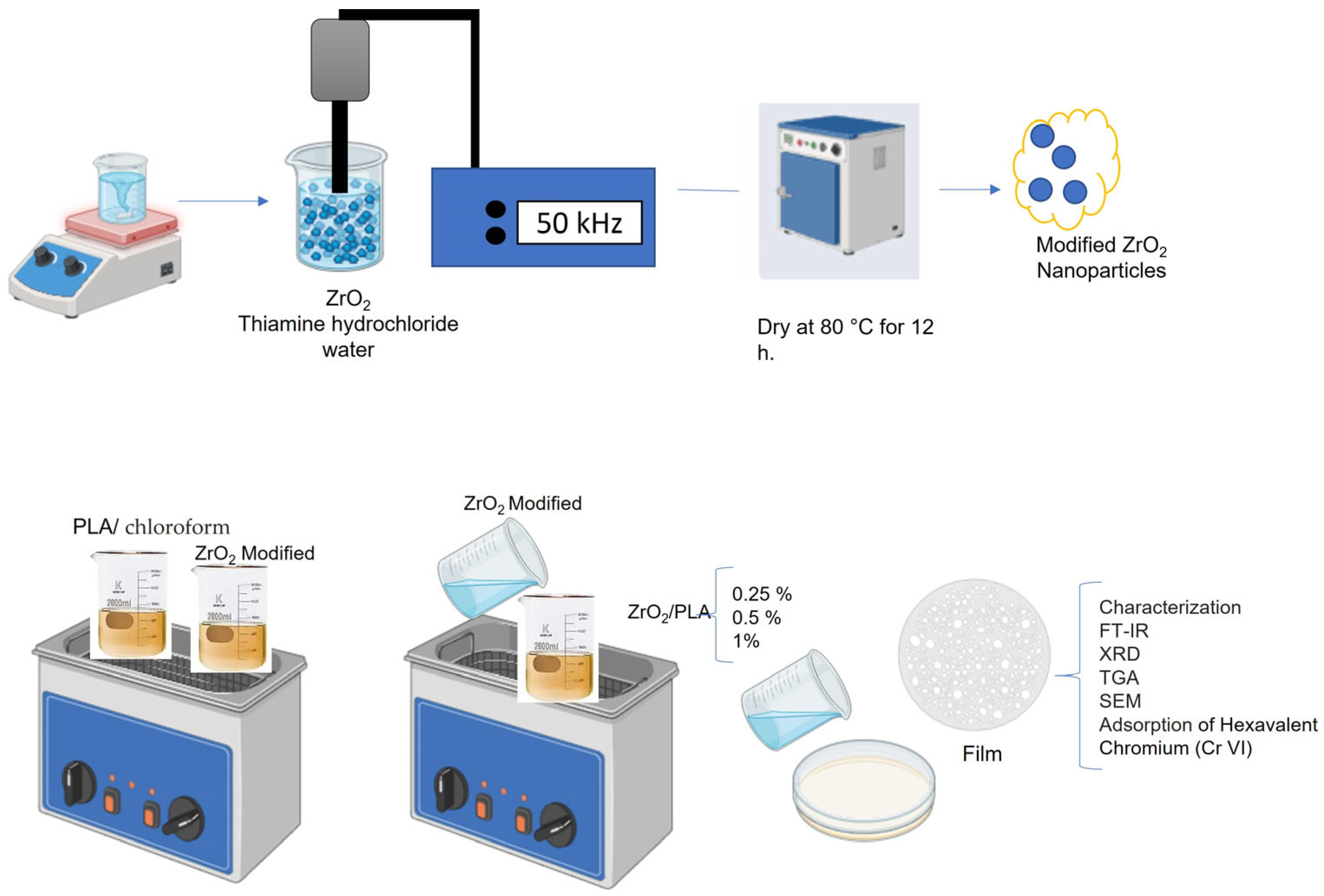
PLA and modified ZrO2 films were prepared by solution mixing (Figure 1). The established concentration of ZrO2 nanoparticles was dispersed in 10 mL of chloroform in a Branson ultrasonic bath for 5 min. The PLA pellets were then dispersed in chloroform for 10 min. The ZrO2 nanoparticles solution was added to the polysulfone solution and subjected to 15 min of ultrasonication. After this time, the solution was allowed to dry at room temperature for 12 h.

2.4. Characterization

Fourier-transform infrared spectroscopy (FTIR) characterization was performed using a Magna Nicolet 550 spectrometer (Waltham, MA, USA) with a resolution of 16 cm−1 and 100 scans, in the infrared range from 400 to 4000 cm−1.
X-ray diffraction (XRD) patterns were obtained using a Bruker D8 Advance eco diffractometer (Bruker, Billerica, MA, USA), with a scanning range of 20 to 80° (2θ) and a scanning speed of 0.02% per second. K-alpha copper radiation with a wavelength of 1.54 Å and a D-teX Ultra detector (Bruker, Billerica, MA, USA) were used, operating at an intensity of 35 kV and a voltage of 25 mA.
The thermogravimetric analysis (TGA) was carried out under the ASTM E-1131 standard, using a Q500 thermal analyzer from TA Instruments (New Castle, DE, USA). The TGA thermal curve of the samples was obtained. The instrumental conditions were as follows: a heating rate of 10 °C/min and a sample mass of 10 mg.
Scanning electron microscopy (SEM) analyses were conducted on a JEOL-JSM-7401 instrument (Thermo Scientific, MA, USA) with an acceleration voltage of 5 keV.

2.5. Adsorption of Hexavalent Chromium (Cr VI)

A stock solution of Cr VI at 50–100 mg/L was prepared by dissolving the appropriate amount of K2Cr2O7 in distilled water. The initial pH was adjusted to 2 by adding an aqueous solution 0.1 M HCl; this pH adjustment was carried out as reported in the literature where the adsorption capacity of Cr VI aliquots of the solutions were analyzed by UV-Vis spectroscopy to determine the absorbance at 540 nm and subsequently estimate the Cr VI ions concentration using the Nesslerizations method according to the standard methods for water analysis [22]. All experiments were performed in triplicate.
%   a d s o r p t i o n   e f f i c i e n c y = C i C e C i × 100
The adsorption efficiency percentage was calculated according to Equation (1) where Ci and Ce are the initial and equilibrium Cr VI (mg) concentrations. V and m are the volume of Cr VI solution and the amount of adsorbent (g).
q e = C i C e V m
The adsorption capacity of the films PLAZrO2 was calculated with Equation (2) at equilibrium where V is the volume in L of solution and m is the amount of mass in mg of absorbent.

3. Results and Discussions

3.1. Fourier-Transform Infrared Spectroscopy (FTIR)

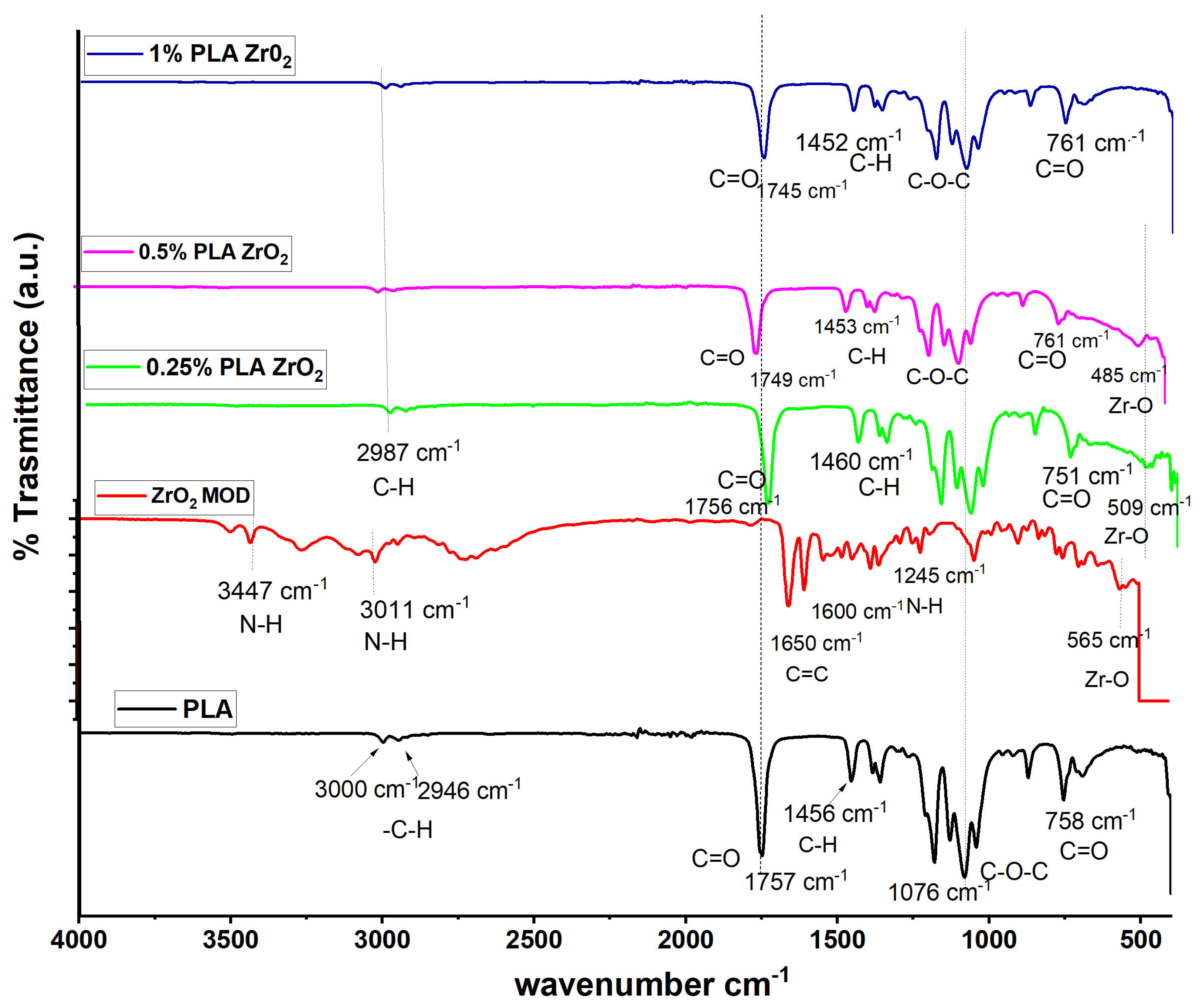
In Figure 2, the spectrum of the PLA pure films is shown, where the characteristic adsorption bands were observed: 2946 cm−1, 3000 cm−1 CH asymmetric and CH symmetric groups, respectively, 1757 cm−1 C = O carbonyl group, 1456 cm−1 CH3 bending at 1117 cm−1 C–O–C asymmetric stretching ether group, 1056 cm−1 corresponding to the C-O-C bond and C = O bending at 758 cm−1 [23,24]. In the PLAZrO2 0.25% and PLAZrO2 0.5% films, the characteristic peaks of the PLA polymer matrix are shown, and additionally, the band is characteristic of the Zr-O bond at 485–565 cm−1. However, in the PLAZrO2 1% sample, this signal is not observed because it is uniformly dispersed; this has already been reported by other authors [25,26].

3.2. X-Ray Diffraction (XRD)

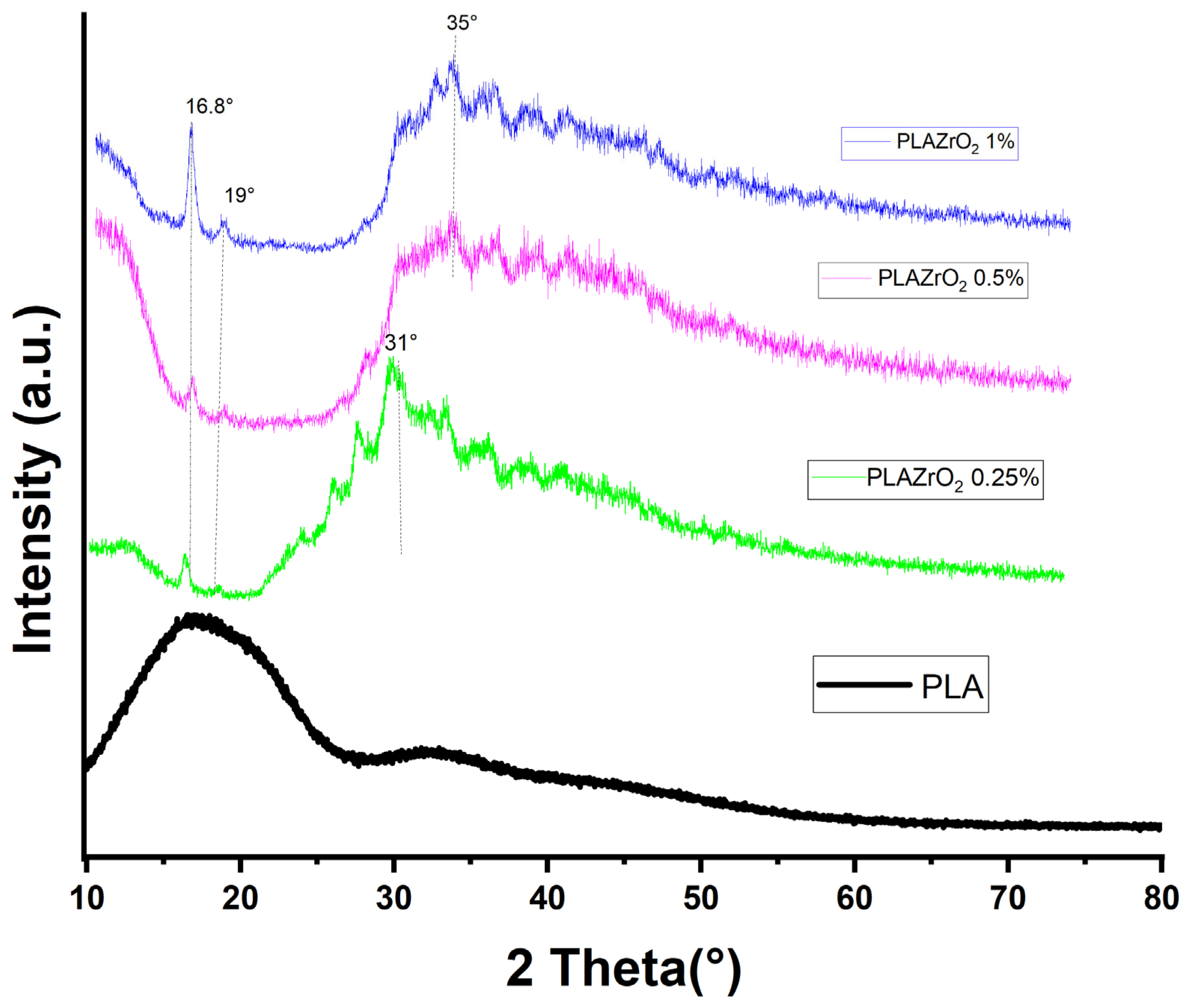
The diffraction patterns of the films are presented in Figure 3. The PLA film presents an amorphous peak centered at 18° [27,28]. The PLAZrO2 0.25% film presents two sharp peaks of low intensity at 16.8°, assigned to the α crystalline phase, which confirms that PLA does not have a polymorphic crystal transition [29], and at 19°, corresponding to the PLA structure, it also presents peaks at 27, 28, and 31°, characteristic of ZrO2 [30]. The PLAZrO2 0.5% and PLAZrO2 1% films present similar peaks at 16.8° and 19°, and a peak centered at 35°, corresponding to the ZrO2 nanoparticles added to the film.

3.3. Thermogravimetric Analysis (TGA)

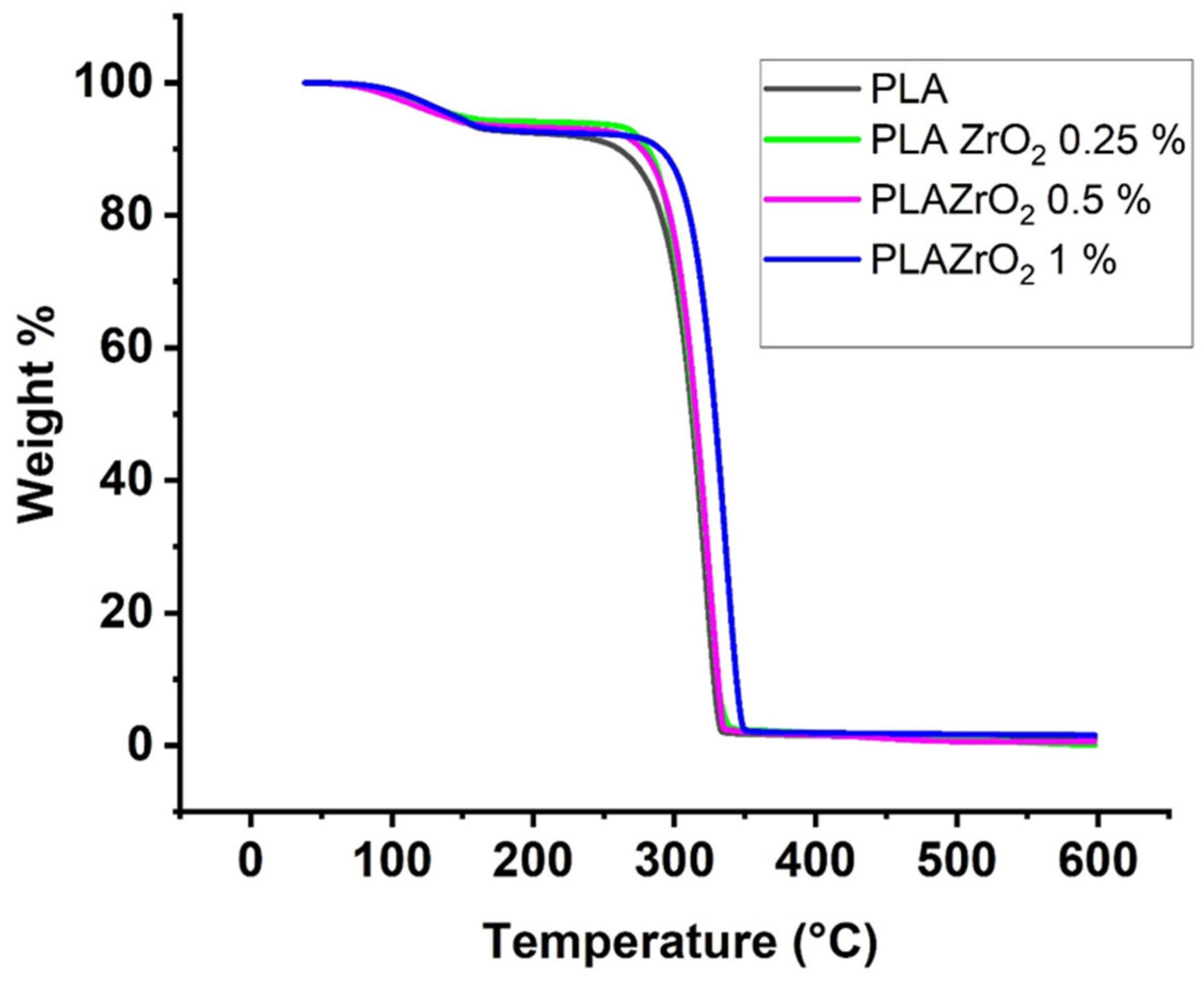
Figure 4 shows the thermogravimetric analysis of pure PLA films, where a first weight loss is observed from room temperature to 150 °C, which is attributed to chemically adsorbed water. A second part is observed starting at 265 °C and stabilizing at 334 °C; this weight loss is due to the intramolecular transesterification reaction, which agrees with what was reported [31]. The PLAZrO2 0.25 and 0.5% films also show a first loss from room temperature to 150 °C, which may be due to humidity or the solvent used, and a second loss from 270 °C to 333 °C corresponding to the realization of the polymeric matrix. On the other hand, the PLAZrO2 1% film shows the second loss from 284 °C to 350 °C. At higher concentrations of ZrO2 nanoparticles, greater thermal stability is observed, where greater compatibility with the polymer matrix is observed; this has already been observed with TiO2/ZnO nanoparticles and nanoclays [18,24].

3.4. Scanning Electron Microscopy (SEM)

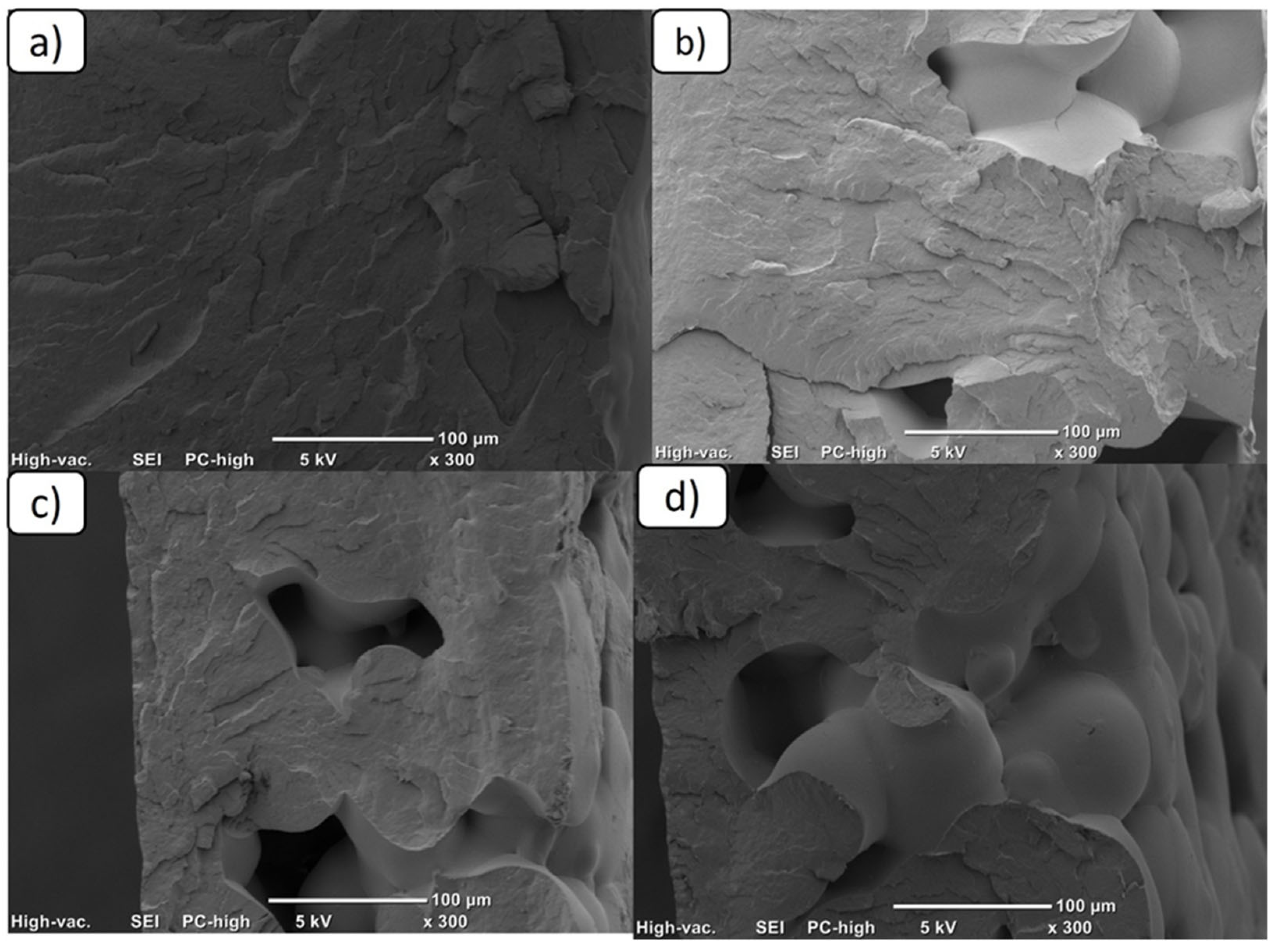
The morphological characteristics of the films in a PLA cross-section are observed in Figure 5a where no pores are observed; it is a rough surface without the presence of particles on the surface. On the other hand, in Figure 5b, which corresponds to the PLAZrO2 0.25% film, small pores and a rough surface are observed; similarly, in (c) PLAZrO2 0.5% and (d) PLAZrO2 1%, a rough surface is observed in the images, and as the concentration increases, more pores are observed. The pores present in b, c, and d have a diameter of 30–60 µm. All micrographs were obtained with the same magnification of 100 µm.
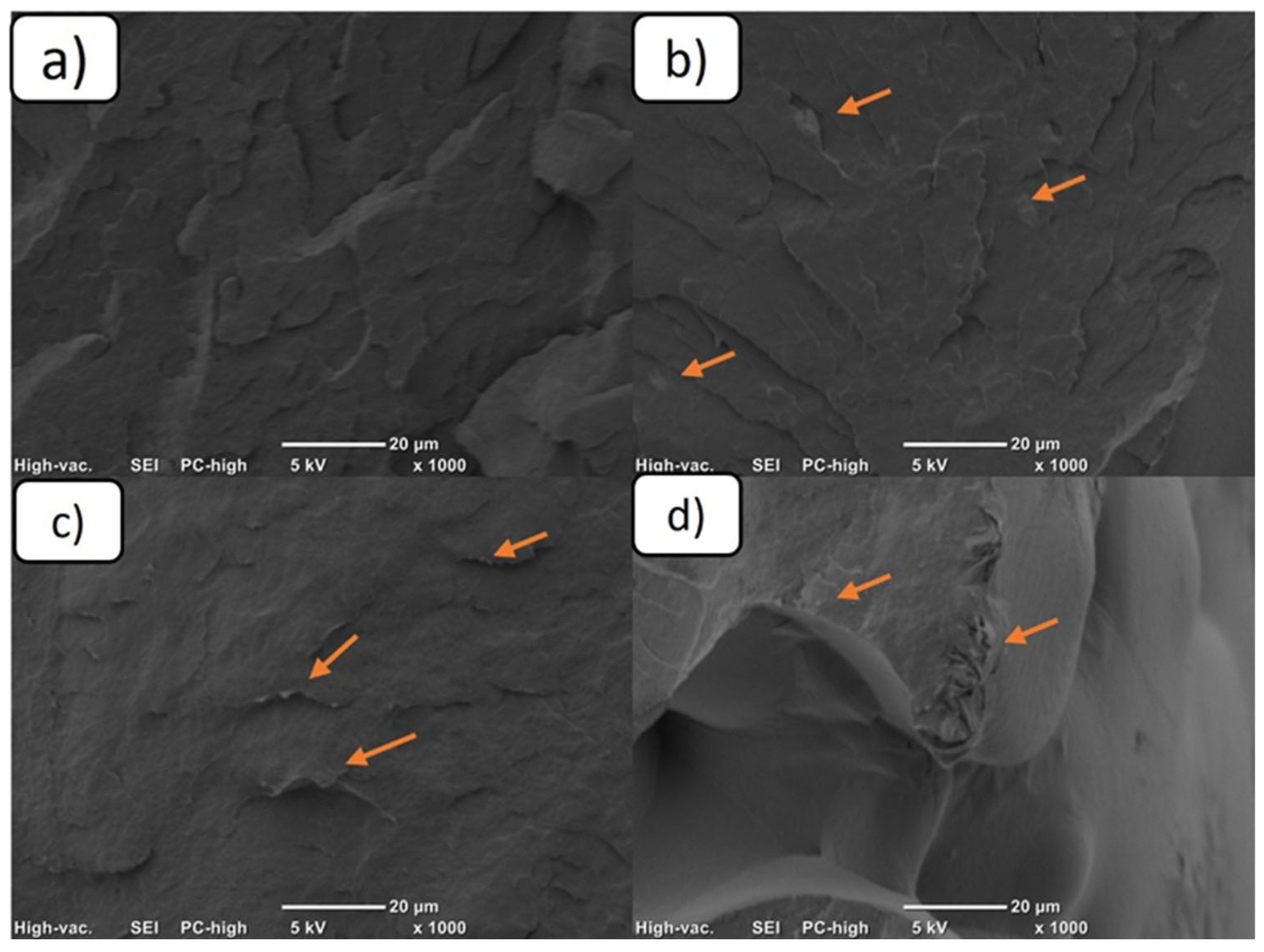
Figure 6 shows the micrographs at 20 µm; it is a cross-section at higher magnification. In pure PLA, a rough surface is observed without the presence of nanoparticles. In Figure 6b, at least three irregularly shaped ZrO2 agglomerates are observed; no smaller pores are observed, indicating that the nanoparticles are embedded in the PLA matrix [32]. Figure 6c also shows agglomerates distributed along the surface of the PLA matrix. In the case of 1% PLAZrO2, micrometric-sized pores are observed, where nanoparticles are observed around the pore.

3.5. Adsorption of Hexavalent Chromium Cr VI onto Films

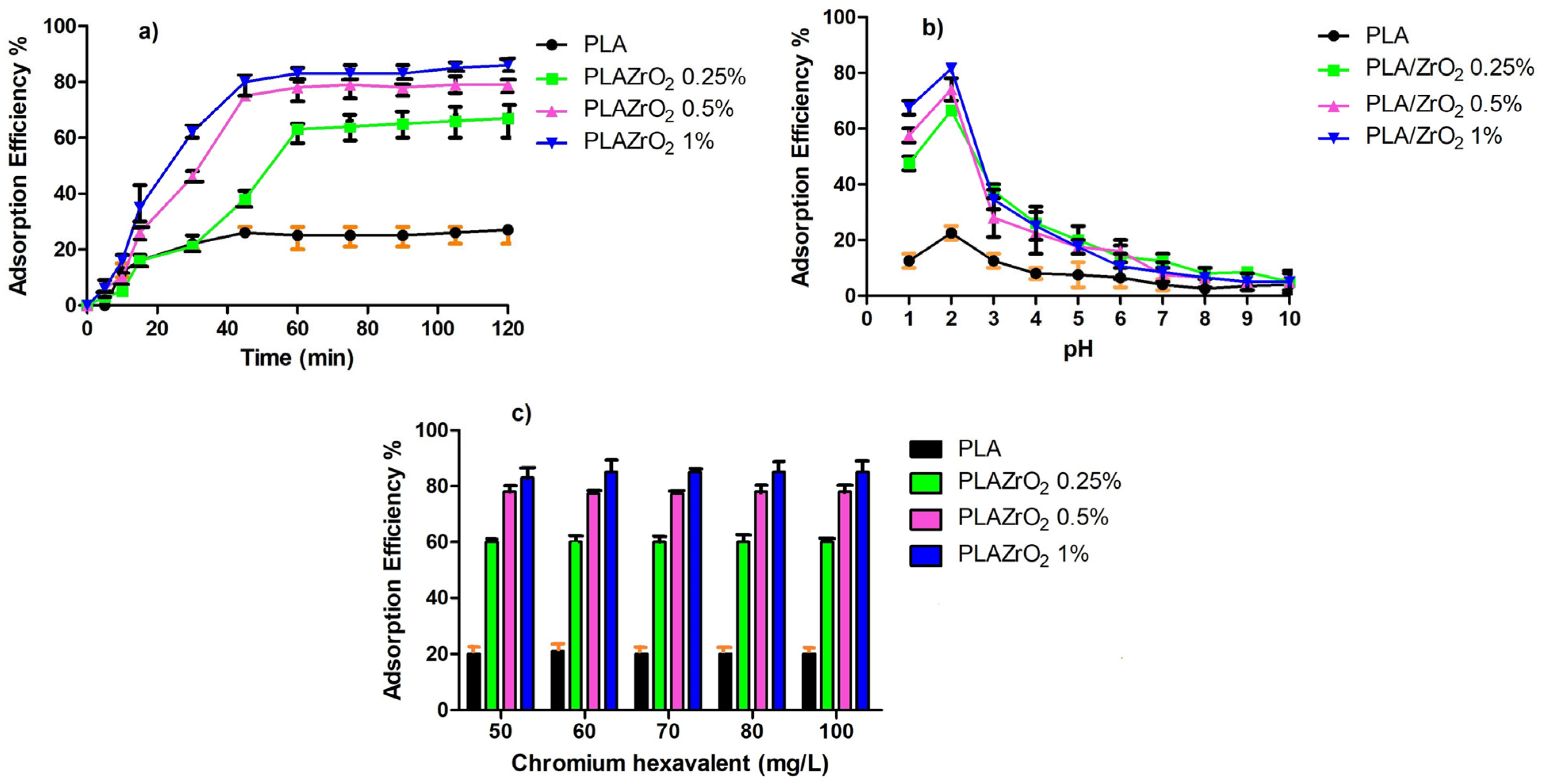
The pH of the aqueous solution is a crucial parameter that significantly influences the adsorption process. The experiments in this stage were carried out under conditions of constant temperature (25 °C), stirring speed (300 rpm), and contact time of 120 min. Figure 7b shows the effect of pH on adsorption efficiency. At an acidic pH of 2, the adsorption efficiency increases, whereas at pH 8 and 10, a drastic decrease is observed. This result is consistent with the findings of Zhang et al. [33], who investigated the adsorption of hexavalent chromium under acidic conditions. However, the effectiveness decreases from pH > 3.
Figure 7a shows the effect of contact time on adsorption. The total contact time was 120 min, and aliquots were taken every 10 min. From 30 min onward, an increase in adsorption efficiency was observed. It is also observed that at higher concentrations the adsorption efficiency increases. The PLAZrO2 1% presented 83% adsorption efficiency at 120 min. Despite the small quantity of nanoparticles, excellent adsorption is achieved in a short time. The synergy of the polymer with the nanoparticles represents an option to increase the adsorption of the material. In Figure 7c, the effect of the concentration of chromium VI is determined, where, despite increasing the concentration, the adsorption efficiency remains the same; this behavior has already been reported by Nameni et al. [34].
PLAZrO2 films showed good results in the adsorption of hexavalent chromium, achieving over 80% adsorption efficiency. The pH was first evaluated to determine the optimum for maximum adsorption. Once this parameter was established, the concentration was assessed, as adsorbent materials have a concentration limit beyond which adsorption ceases because the adsorbent sites are occupied. Contact time is another important parameter, as industrial processes must optimize the time required for contaminant removal.

3.6. Adsorption Mechanisms

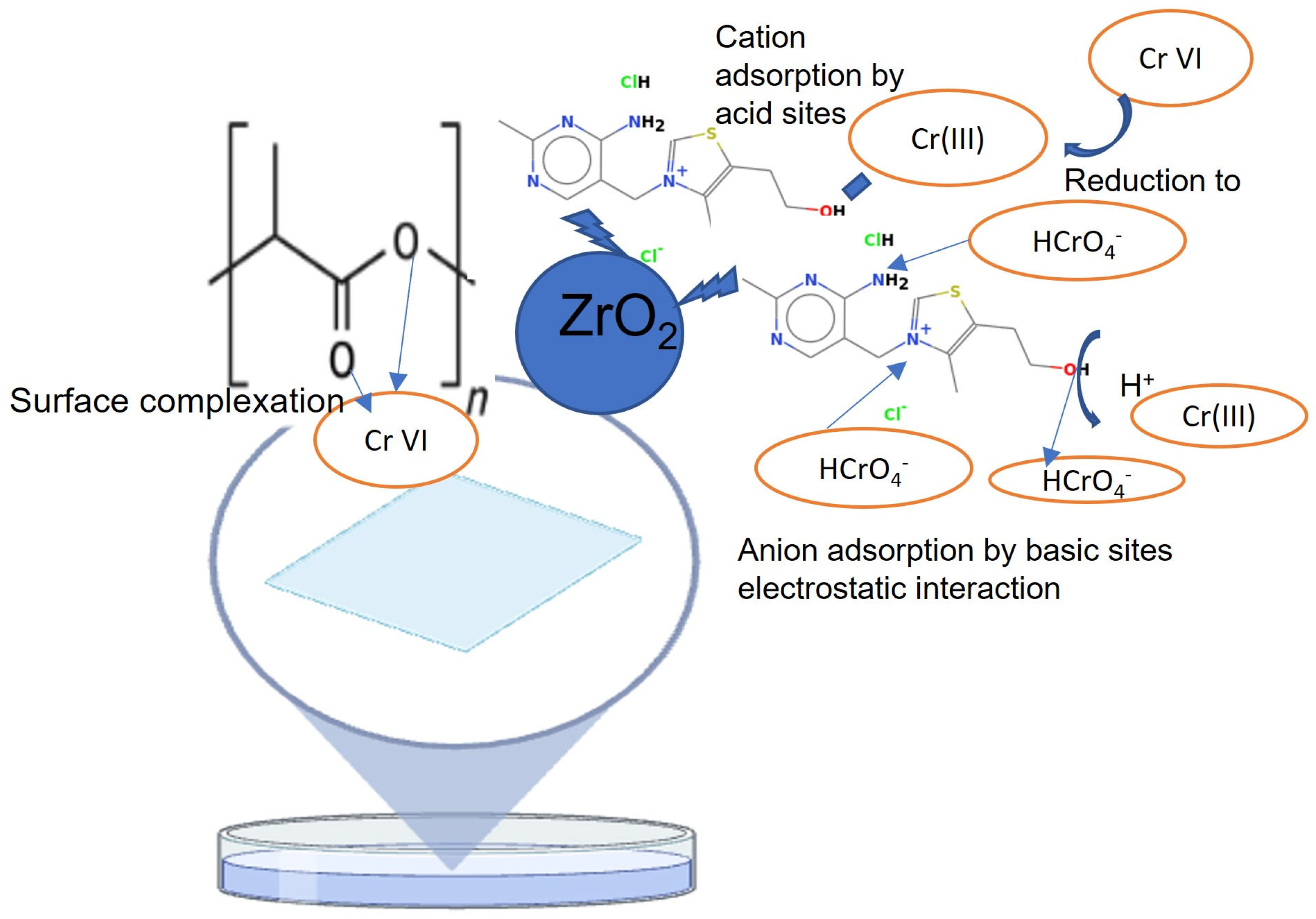
Figure 8 shows the possible adsorption mechanism of PLAZrO2 films. The pH effect indicates that at acidic pH, an electrostatic interaction occurs between Cr VI and the PLAZrO2 film, while at pH values above 8, an electrostatic repulsion is observed between the Cr VI ions and the PLAZrO2 film. The functional groups added to the ZrO2 nanoparticles through chemical modification with thiamine hydrochloride aid in the adsorption of Cr VI. A ph acid N- functional group becomes positively charged due to loss of two electrons, while O-functional groups are likely to deprotonate to form negative species. Due to this, N-functional groups may have electrostatic interaction with HCrO4 while some NH2 groups still play to role of reduction in Cr(VI) to Cr(III); consequently, O-functional groups interact with Cr(III). Finally, O-functional groups interact with Cr+3. Furthermore, a complex can form between Cr VI and PLA functional groups such as C=O, OH, and O–C=O.
This new adsorbent material offers several advantages, including the biodegradability of the polymer used, the film preparation method, and the chemical modification process, which utilizes an alternative energy source such as ultrasound. It also employs a renewable reagent, thiamine hydrochloride, as a modifier. This methodology aligns with the principles of green chemistry. Due to its biodegradability and environmentally friendly method, this new material shows promise for contaminant removal.

4. Conclusions

In this work, a new film based on PLA and modified ZrO2 nanoparticles was developed using sonochemistry as an alternative energy source for film modification and preparation. The films were characterized by FT-IR spectroscopy, revealing the characteristic signals of PLA and ZrO2. X-ray diffraction patterns showed sharper peaks corresponding to PLA and characteristic peaks of ZrO2. Thermogravimetric analysis revealed increased thermal stability in the films. The films exhibit a degree of roughness and micrometer-sized pores. The three films, including the target pure PLA, were evaluated for hexavalent chromium adsorption, achieving an 83% adsorption efficiency for the film with 1% PLAZrO2. The adsorption mechanism is based on electrostatic interactions in an acidic medium and hydrogen bonding, which occurs due to the incorporation of amino groups on the surface of the nanoparticles embedded in the PLA matrix. It is also possible to form a complex with the functional groups of PLA and hexavalent chromium.
As a future perspective, the adsorption efficiency will be evaluated with other heavy metals and with dyes to see its viability and selectivity for use in the treatment of wastewater, which contains different contaminants, both organic and inorganic as well as biological.

Author Contributions

Conceptualization, C.R.M.-V., G.C.-P., C.J.C.-A. and M.A.-G.; Methodology, C.R.M.-V., N.A.R.-R., C.J.C.-A., M.A.-G. and J.S.G.-V.; Software, J.F.M.-V. and J.G.-C.; Validation, J.G.-C., C.J.C.-A. and J.S.G.-V.; Formal analysis, J.C.O.-C.; Investigation, C.J.C.-A. and M.A.-G.; Resources, J.F.M.-V. and G.C.-P.; Data curation, J.F.M.-V., M.A.-G. and J.S.G.-V.; Writing—original draft, M.A.-G.; Writing—review & editing, M.A.-G. and J.S.G.-V.; Supervision, N.A.R.-R.; Project administration, J.C.O.-C. All authors have read and agreed to the published version of the manuscript.

Funding

This research received no external funding.

Institutional Review Board Statement

Not applicable.

Informed Consent Statement

Not applicable.

Data Availability Statement

The original contributions presented in this study are included in the article. Further inquiries can be directed to the corresponding authors.

Acknowledgments

The authors are also grateful to Jesus Angel Cepeda Garza, María Guadalupe Méndez Padilla, Jesus Gilberto Rodriguez Velazquez, Myrna Salinas Hernández, Maricela Garcia Zamora, and Julieta Sánchez Salazar for their technical support. To the project of “Investigadores por Mexico” CONAHCYT No. 562 entitled: Innovation and development of functional technical textiles based on advanced materials. The authors kindly acknowledge the scholarship postdoctoral (387368) provided by CONAHCYT-México. The authors thank Laboratorio Nacional de Materiales Grafenicos No. 321244.

Conflicts of Interest

The authors declare no conflicts of interest.

References

  1. Dutta, D.; Arya, S.; Kumar, S. Industrial wastewater treatment: Current trends, bottlenecks, and best practices. Chemosphere 2021, 285, 131245. [Google Scholar] [CrossRef]
  2. Gore, C.T.; Omwoma, S.; Chen, W.; Song, Y.F. Interweaved LDH/PAN nanocomposite films: Application in the design of effective hexavalent chromium adsorption technology. Chem. Eng. J. 2016, 284, 794–801. [Google Scholar] [CrossRef]
  3. Ji, Z.; Zhang, Y.; Hu, G.; Hong, S.; Su, Z.; Zhang, Q.; Jia, G. Hexavalent chromium and cellular senescence: A comprehensive analysis from chromate-exposed occupational population and chromate-inhaled mouse model. J. Hazard. Mater. 2025, 493, 138387. [Google Scholar] [CrossRef] [PubMed]
  4. Gopal Reddi, M.R.; Gomathi, T.; Saranya, M.; Sudha, P.N. Adsorption and kinetic studies on the removal of chromium and copper onto chitosan-g-maleic anhydride-g-ethylene dimethacrylate. Int. J. Biol. Macromol. 2017, 104, 1578–1585. [Google Scholar] [CrossRef] [PubMed]
  5. Li, N.; Tian, Y.; Zhao, J.; Zhang, J.; Zhang, J.; Zuo, W.; Ding, Y. Efficient removal of chromium from water by Mn3O4@ZnO/Mn3O4 composite under simulated sunlight irradiation: Synergy of photocatalytic reduction and adsorption. Appl. Catal. B 2017, 214, 126–136. [Google Scholar] [CrossRef]
  6. Pakade, V.E.; Tavengwa, N.T.; Madikizela, L.M. Recent advances in hexavalent chromium removal from aqueous solutions by adsorptive methods. RSC Adv. 2019, 9, 26142–26164. [Google Scholar] [CrossRef]
  7. Hu, B.; Luo, H. Adsorption of hexavalent chromium onto montmorillonite modified with hydroxyaluminum and cetyltrimethylammonium bromide. Appl. Surf. Sci. 2010, 257, 769–775. [Google Scholar] [CrossRef]
  8. Krishnani, K.K.; Srinives, S.; Mohapatra, B.C.; Boddu, V.M.; Hao, J.; Meng, X.; Mulchandani, A. Hexavalent chromium removal mechanism using conducting polymers. J. Hazard. Mater. 2013, 252, 99–106. [Google Scholar] [CrossRef]
  9. Yuan, X.; Li, J.; Luo, L.; Zhong, Z.; Xie, X. Advances in sorptive removal of hexavalent chromium (Cr (VI)) in aqueous solutions using polymeric materials. Polymers 2023, 15, 388. [Google Scholar] [CrossRef]
  10. González-López, M.E.; Laureano-Anzaldo, C.M.; Pérez-Fonseca, A.A.; Arellano, M.; Robledo-Ortíz, J.R. Chemically modified polysaccharides for hexavalent chromium adsorption. Sep. Purif. Rev. 2021, 50, 333–362. [Google Scholar] [CrossRef]
  11. Qiu, B.; Xu, C.; Sun, D.; Wang, Q.; Gu, H.; Zhang, X.; Wei, S. Polyaniline coating with various substrates for hexavalent chromium removal. Appl. Surf. Sci. 2015, 334, 7–14. [Google Scholar] [CrossRef]
  12. Amaku, J.F.; Olisah, C.; Adeola, A.O.; Iwuozor, K.O.; Akpomie, K.G.; Conradie, J.; Adegoke, K.A.; Oyedotun, K.O.; Ighaloi, J.O. Multiwalled carbon nanotubes versus metal-organic frameworks: A review of their hexavalent chromium adsorption performance. Int. J. Environ. Anal. Chem. 2024, 104, 6027–6049. [Google Scholar] [CrossRef]
  13. Naimi-Joubani, M.; Shirzad-Siboni, M.; Yang, J.K.; Gholami, M.; Farzadkia, M. Photocatalytic reduction of hexavalent chromium with illuminated ZnO/TiO2 composite. J. Ind. Eng. Chem. 2015, 22, 317–323. [Google Scholar] [CrossRef]
  14. Mikhaylov, V.I.; Krivoshapkina, E.F.; Trigub, A.L.; Stalugin, V.V.; Krivoshapkin, P.V. Detection and adsorption of Cr (VI) ions by mesoporous Fe–Alumina films. ACS Sustain. Chem. Eng. 2018, 6, 9283–9292. [Google Scholar] [CrossRef]
  15. Sanchéz-Huerta, R.; Andrade-Guel, M.; Cabello-Alvarado, C.; Ávila-Orta, C.; Cadenas-Pliego, G.; Bartolo-Pérez, P.; Nery-Flores, S. Incorporation of thiamine hydrochloride in carbon black nanoparticles to improve the adsorption of uremic toxins and their hemolytic behavior. J. Indian Chem. Soc. 2025, 102, 102213. [Google Scholar] [CrossRef]
  16. Kandel, D.R.; Poudel, M.B.; Radoor, S.; Chang, S.; Lee, J. Decoration of dandelion-like manganese-doped iron oxide microflowers on plasma-treated biochar for alleviation of heavy metal pollution in water. Chemosphere 2024, 357, 141757. [Google Scholar] [CrossRef]
  17. Chang, S.; Kandel, D.R.; Lee, U.; Tran, H.M.; Lee, J. Improving separation efficiency of various micropollutants from water by polymer-enhanced ultrafiltration using oxidized alginate featuring less viscous and lower filtration resistance. J. Environ. Chem. Eng. 2024, 12, 114753. [Google Scholar] [CrossRef]
  18. Andrade-Guel, M.; Cabello-Alvarado, C.; Romero-Huitzil, R.L.; Rodríguez-Fernández, O.S.; Ávila-Orta, C.A.; Cadenas-Pliego, G.; Medellín-Banda, D.I.; Gallardo-Vega, C.; Cepeda-Garza, J. Nanocomposite PLA/C20A nanoclay by ultrasound-assisted melt extrusion for adsorption of uremic toxins and methylene blue dye. Nanomaterials 2021, 11, 2477. [Google Scholar] [CrossRef]
  19. Cabello-Alvarado, C.J.; Andrade-Guel, M.L.; Medellín-Banda, D.I.; Melo-Lopez, L.; Avila-Orta, C.A. Polymer Composites: Smart Synthetic Fibers Approach in Energy and Environmental Care. In Handbook of Nanomaterials and Nanocomposites for Energy and Environmental Applications; Springer International Publishing: Cham, Switzerland, 2020; pp. 1–26. [Google Scholar]
  20. Bao, C.; Chen, M.; Jin, X.; Hu, D.; Huang, Q. Efficient and stable photocatalytic reduction of aqueous hexavalent chromium ions by polyaniline surface-hybridized ZnO nanosheets. J. Mol. Liq. 2019, 279, 133–145. [Google Scholar] [CrossRef]
  21. Kumar, R.; Kim, S.J.; Kim, K.H.; Lee, S.H.; Park, H.S.; Jeon, B.H. Removal of hazardous hexavalent chromium from aqueous phase using zirconium oxide-immobilized alginate beads. Appl. Geochem. 2018, 88, 113–121. [Google Scholar] [CrossRef]
  22. Gilcreas, F.W. Standard methods for the examination of water and waste water. Am. J. Public Health Nations Health 1966, 56, 387–388. [Google Scholar] [CrossRef] [PubMed]
  23. Srinivasan, N.; Kumar, S.A.; Keerthana, P.; Stanley, S.; Kumar, A. Schiff’s base (SB) modified zirconium dioxide reinforced PLA bio-composite film for industrial packaging applications. Comp. Commun. 2021, 25, 100750. [Google Scholar]
  24. Andrade-Guel, M.; Cabello-Alvarado, C.J.; Cadenas-Pliego, G.; Ávila-Orta, C.A. PLA-ZnO/TiO2 nanocomposite obtained by ultrasound-assisted melt-extrusion for adsorption of methylene blue. Nanomaterials 2022, 12, 4248. [Google Scholar] [CrossRef] [PubMed]
  25. Lu, R.; Sameen, D.E.; Qin, W.; Wu, D.; Dai, J.; Li, S.; Liu, Y. Development of polylactic acid films with selenium microparticles and its application for food packaging. Coatings 2020, 10, 280. [Google Scholar] [CrossRef]
  26. De Azevedo Gonç, R.C.; Da Silva, E.O. Effect of the addiction of metal oxide nanoparticles on the physical, chemical and thermal properties of PVA based nanocomposites. Mater. Sci. Appl. 2018, 9, 473–488. [Google Scholar] [CrossRef]
  27. Gorrasi, G.; Pantani, R. Effect of PLA grades and morphologies on hydrolytic degradation at composting temperature: Assessment of structural modification and kinetic parameters. Polym. Degrad. Stab. 2013, 98, 1006–1014. [Google Scholar] [CrossRef]
  28. Siriprom, W.; Sangwaranatee, N.; Chantarasunthon, K.; Teanchai, K.; Chamchoi, N. Characterization and analyzation of the poly (L-lactic acid)(PLA) films. Mater. Today Proc. 2018, 5, 14803–14806. [Google Scholar] [CrossRef]
  29. Maiza, M.; Benaniba, M.T.; Quintard, G.; Massardier-Nageotte, V. Biobased additive plasticizing Polylactic acid (PLA). Polimeros 2015, 25, 581–590. [Google Scholar] [CrossRef]
  30. Guel, M.L.A.; Jiménez, L.D.; Hernández, D.A.C. Ultrasound-assisted sol-gel synthesis of ZrO2. Ultrason. Sonochem. 2017, 35, 514–517. [Google Scholar] [CrossRef]
  31. Sangeetha, V.H.; Valapa, R.B.; Nayak, S.K.; Varghese, T.O. Investigation on the influence of EVA content on the mechanical and thermal characteristics of poly (lactic acid) blends. J. Polym. Environ. 2018, 26, 1–14. [Google Scholar] [CrossRef]
  32. Topuz, M.; Dikici, B.; Kasapoglu, A.E.; Zhao, X.; Niinomi, M. Systematic characterization and enhanced corrosion resistance of novel β-type Ti-30Zr-5Mo biomedical alloys with halloysite nanotubes (HNTs) and zirconia (ZrO2)-reinforced polylactic acid (PLA) matrix coatings. Mater. Today Commun. 2024, 40, 110110. [Google Scholar] [CrossRef]
  33. Zhang, X.; Zhang, Y.; Li, D.; Wang, J.; Ding, Y.; Wang, Y.; Feng, L.; Hu, Y. Aging properties of polyethylene and polylactic acid microplastics and their adsorption behavior of Cd (II) and Cr (VI) in aquatic environments. Chemosphere 2024, 363, 142833. [Google Scholar] [CrossRef]
  34. Nameni, M.; Alavi Moghadam, M.R.; Arami, M. Adsorption of hexavalent chromium from aqueous solutions by wheat bran. Int. J. Environ. Sci. Technol. 2008, 5, 161–168. [Google Scholar] [CrossRef]
Figure 1. The schematic diagram of the experimental setup.
Coatings 15 01484 g001
Figure 2. FT-IR spectra of PLA, ZrO2 mod, PLAZrO2 0.25%, PLAZrO2 0.5%, PLAZrO2 1%.
Coatings 15 01484 g002
Figure 3. X-ray diffraction (XRD) patterns of PLA of PLAZrO2 films at different concentrations.
Coatings 15 01484 g003
Figure 4. Thermogravimetric analyses of PLA of PLAZrO2 films at different concentrations.
Coatings 15 01484 g004
Figure 5. SEM micrograph at 300X of (a) PLA, (b) PLAZrO2 0.25% (c) PLAZrO2 0.5% (d) PLAZrO2 1%.
Coatings 15 01484 g005
Figure 6. SEM micrograph at 1000 X of (a) PLA (b) PLAZrO2 0.25% (c) PLAZrO2 0.5% (d) PLAZrO2 1%. The arrows marks the location where the nanoparticles are observed.
Coatings 15 01484 g006
Figure 7. (a) Effect of contact time on adsorption process efficiency (Ci = 100 mg/L, pH 2 T = 25 °C). (b) Effect of pH on Cr(VI) adsorption efficiency % (Ci = 100 mg/L, pH 2, T = 25 °C). (c) Effect of chromium concentration on Cr(VI) on adsorption efficiency % (Ci = 50–100 mg/L, pH 2, T = 25 °C).
Coatings 15 01484 g007
Figure 8. The adsorption mechanisms of Cr(VI) onto PLAZrO2 film.
Coatings 15 01484 g008
Disclaimer/Publisher’s Note: The statements, opinions and data contained in all publications are solely those of the individual author(s) and contributor(s) and not of MDPI and/or the editor(s). MDPI and/or the editor(s) disclaim responsibility for any injury to people or property resulting from any ideas, methods, instructions or products referred to in the content.