
Collaborative Optimization Design of Fluidity-Mechanical Properties of Grouting Material and Micro-Mechanism for Semi-Flexible Pavement

 ,
,
Abstract
1. Introduction
2. Materials and Methods
2.1. Raw Materials
2.1.1. Cement

| Test Parameters | Apparent Density/(g·cm−3) | Standard Consistency/% | Initial Setting Time/min | Final Setting Time/min | Soundness |
|---|---|---|---|---|---|
| Test results | 3.095 | 28 | 190 | 372 | Up to Standard |
| Technical requirements | × | × | ≥40 | ≤600 | × |
2.1.2. Grouting Sand
| Sieve Sizes/mm | Cumulative Passing/% | |
|---|---|---|
| Test Values | Requirements | |
| 1.18 | 100 | 100 |
| 0.6 | 100 | ≥80 |
| 0.075 | ≤2 | ≤2 |
2.1.3. Fly Ash
| Test Items | Test Results | Technical Requirements |
|---|---|---|
| Fineness, % | 16 | ≤18 |
| Loss on lgnition, % | 2.62 | ≤5% |
| Al2O3 content, % | 36.8 | ≥30 |
| SiO2 content, % | 45.1 | ≤50 |
| Moisture content, m2/g | 0.40 | ≤1.0% |
| Chloride ion content, % | 0.015 | ≤0.02 |
| SO3 content, % | 1.2 | ≤3 |
| CaO content, % | 4.5 | ≤10 |
| Alkali content, % | 0.75 | ≤1.5 |
| Fe2O3 content, % | 0.85 | 0.8–1.0 |
| Free CaO content, % | 0.85 | ≤1.0 |
| Density, g/cm3 | 2.1 | ≤2.6 |
| Bulk density, g/cm3 | 1.10 | 0.63–1.38 |
2.1.4. Silica Fume
| Test Items | Test Results | Technical Requirements |
|---|---|---|
| SiO2 content, % | 96.1 | >85 |
| Loss on lgnition, % | 2.3 | ≤6.0 |
| Specific Surface Area, m2/g | 19 | ≥15 |
| Chloride ion content, % | 0.07 | ≤0.3 |
| Fe2O3 content, % | 0.12 | ≤0.4 |
| Al2O3 content, % | 0.19 | ≤0.5 |
| Na2O content, % | 0.02 | ≤0.05 |
| K2O content, % | 0.01 | ≤0.02 |
| TiO2 content, % | 0.015 | ≤0.05 |
2.1.5. Glass Microsphere
| Test Items | Test Results | Technical Requirements |
|---|---|---|
| 200-mesh sieve residue | 8.3 | <10 |
| Bulk density, g/cm3 | 0.65 | 0.6–0.75 |
| SiO2 content, % | 52.5 | <52 |
| Fe2O3 content, % | 3.5 | <4 |
| Al2O3 content, % | 22.5 | <22 |
| CaO content, % | 11.5 | <12 |
2.1.6. Water-Reducing Agent
| Technical Parameters | Test Results | Technical Requirements |
|---|---|---|
| Chloride ion content, % | 0.020 | ≤0.6 |
| Total alkali content, % | 0.71 | ≤10.0 |
| Solid content, % | 23.22 | ≥20 |
| Density, g·cm−3 | 1.056 | 1.050 ± 0.020 |
| PH | 4.03 | 3~5 |
| Na2SO3 content, % | 0.48 | ≤5.0 |
2.2. Test Methods
2.3. Research Methods
2.4. Curing, Grouting Process, and Statistical Analysis
3. Results and Discussion
3.1. Ratio Optimization of Basic Cement-Based Grouting Material
3.2. Ratio Optimization of Mineral Grouting Material
3.3. Ratio Optimization of Polymer Additives
3.3.1. Determination of Polymer Additive Dosage
3.3.2. Interface Bonding Strength Test Between Grouting and Asphalt Materials
3.3.3. Evaluation of Grouting Fullness
3.4. Microstructure Test of Grouting Materials
4. Conclusions and Perspectives
- (I)
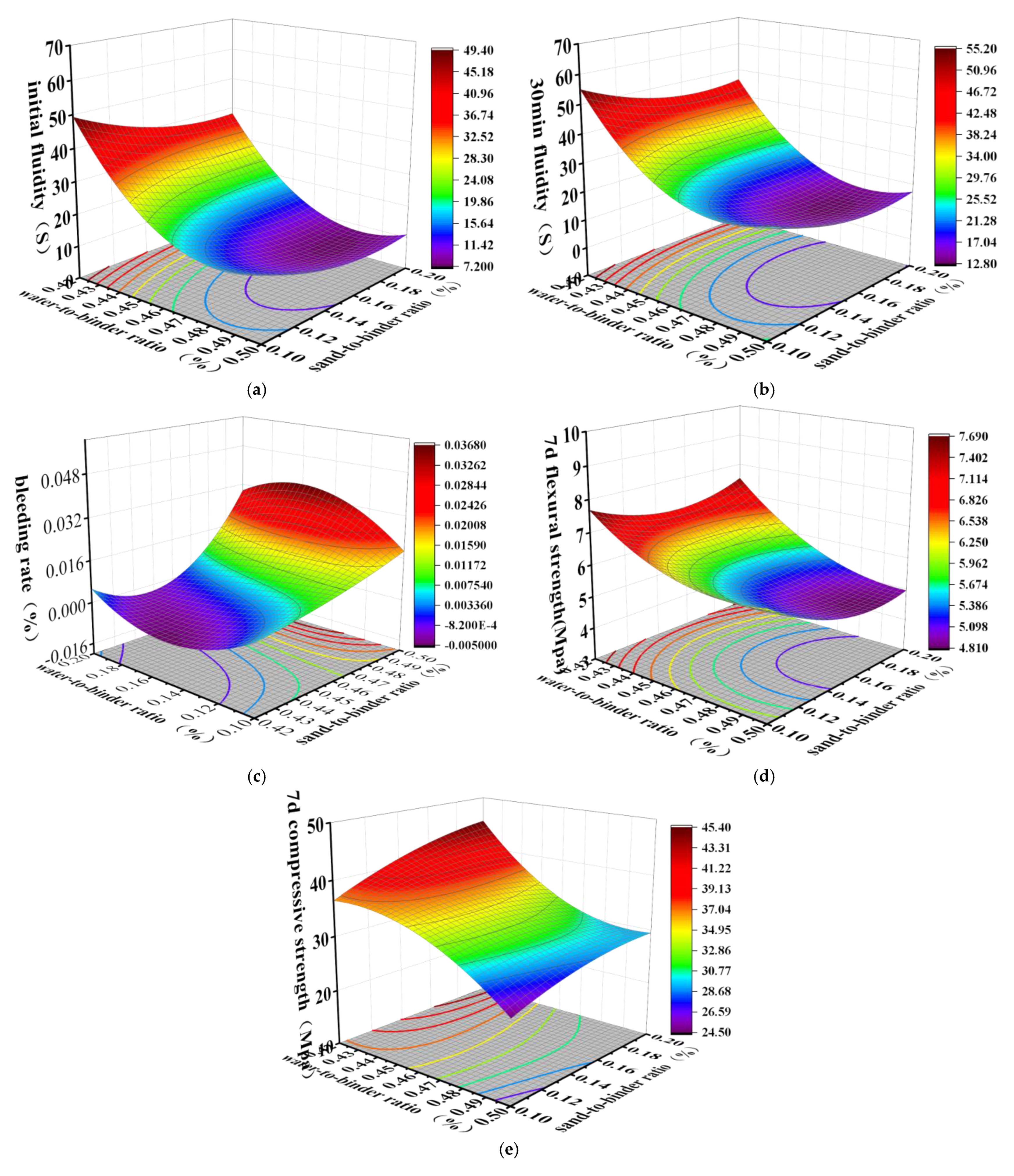
- The RSM model effectively captured the interactions between W/B and S/B, identifying an optimal base mix of W/B = 0.46 and S/B = 0.15. This ratio achieves a critical balance between flowability for construction and early-age strength for performance, addressing a common dilemma in grout design.
- (II)
- The incorporation of 9% fly ash, 6% silica fume, and 3% microspheres created a superior mineral-optimized grout. Silica fume was the most influential factor, primarily enhancing strength through pozzolanic activity. The synergistic combination of these solid wastes demonstrates a viable path towards more sustainable and high-performance infrastructure materials.
- (III)
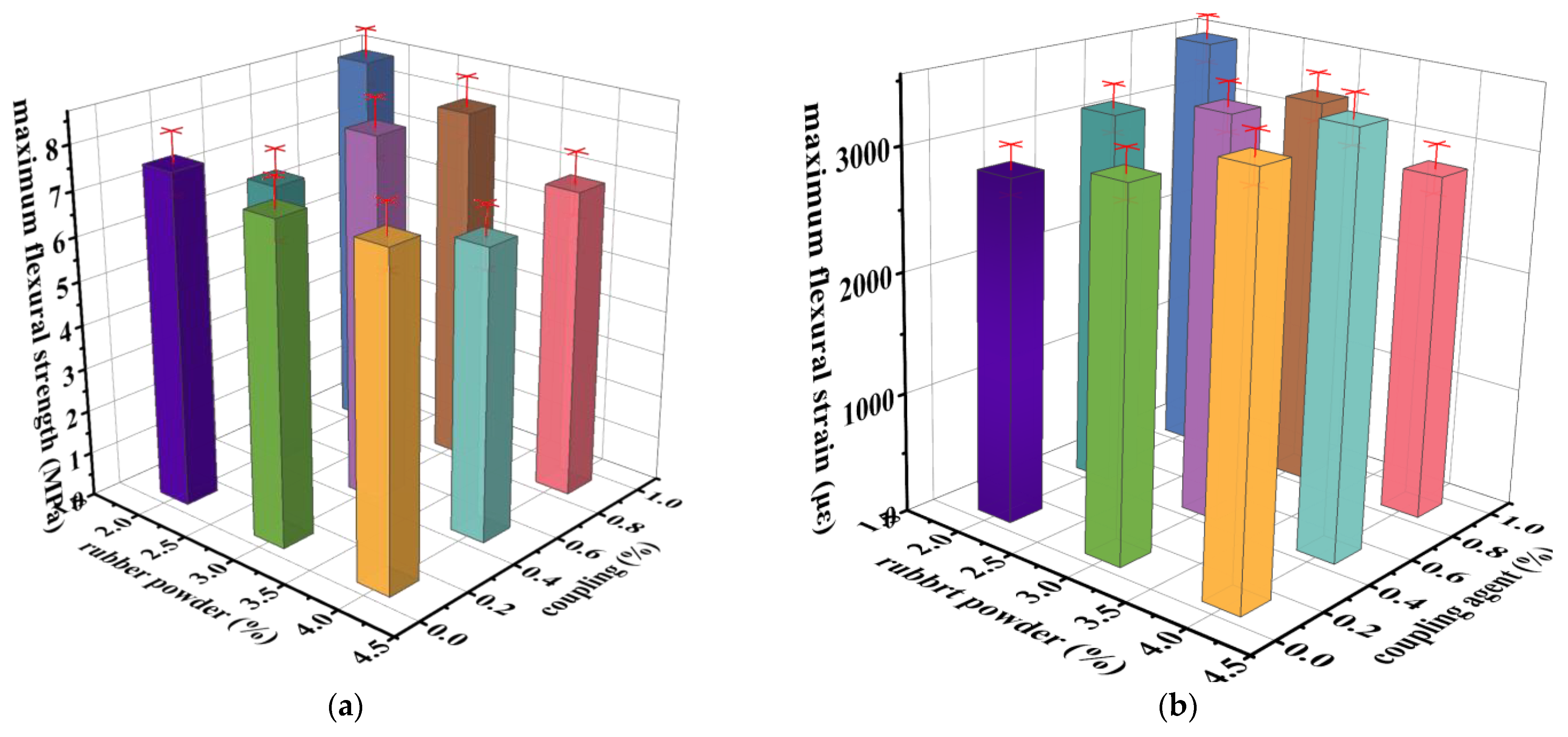
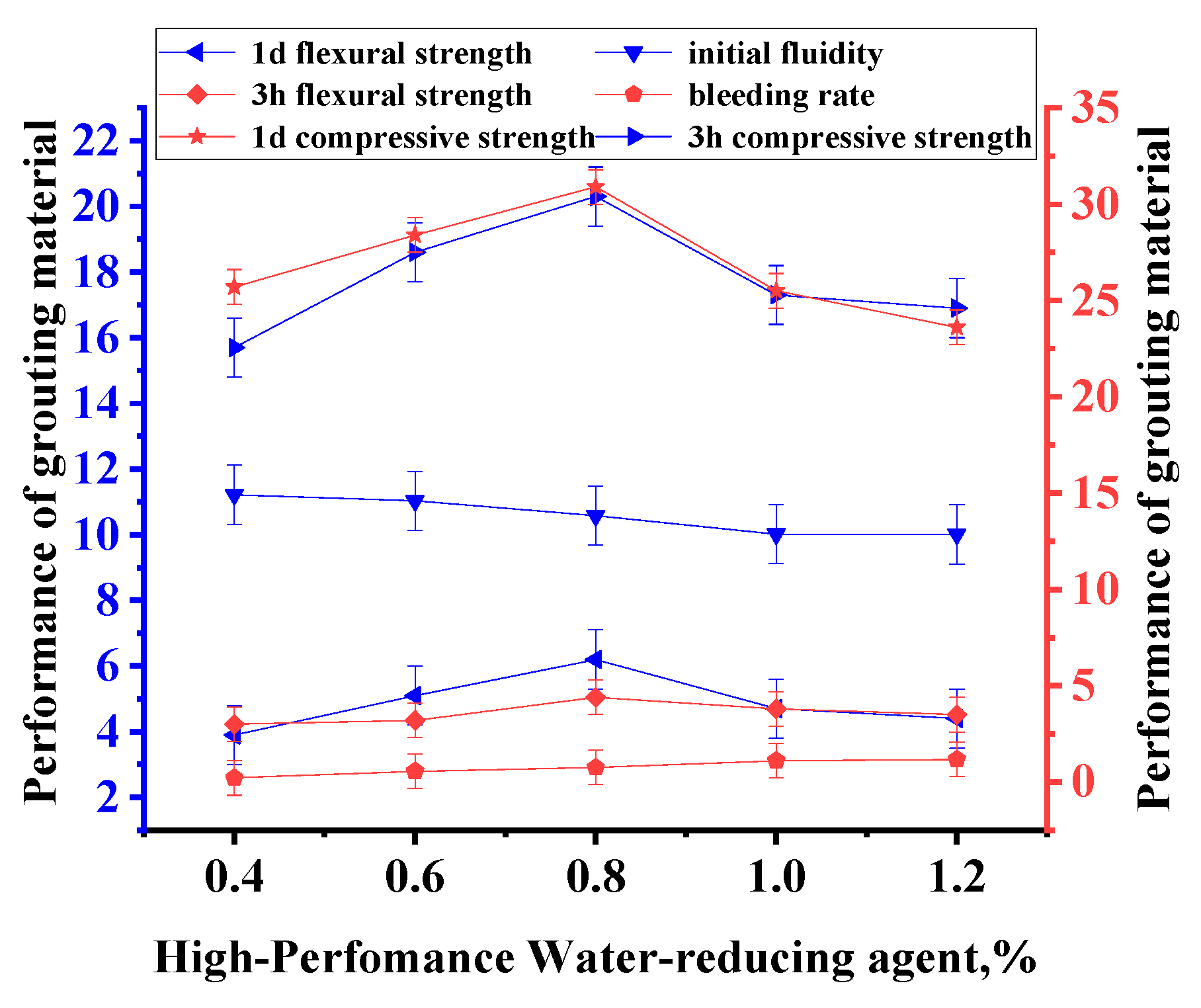
- Polymer additives effectively tailored the properties: 0.8% water-reducer secured early strength, while the combination of 2% rubber powder and 0.9% coupling agent synergistically improved both low-temperature crack resistance and interfacial bonding with asphalt.
- (IV)
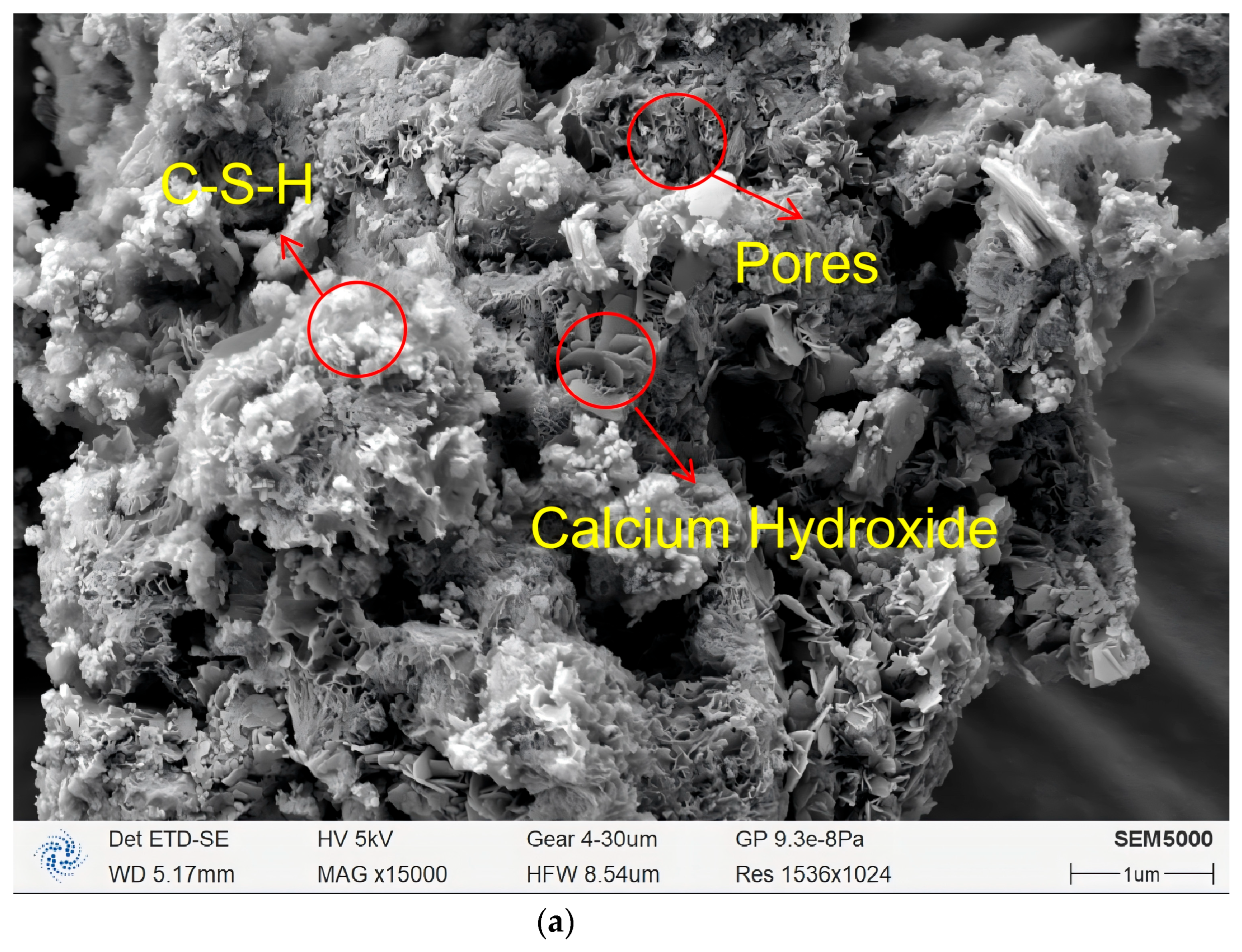
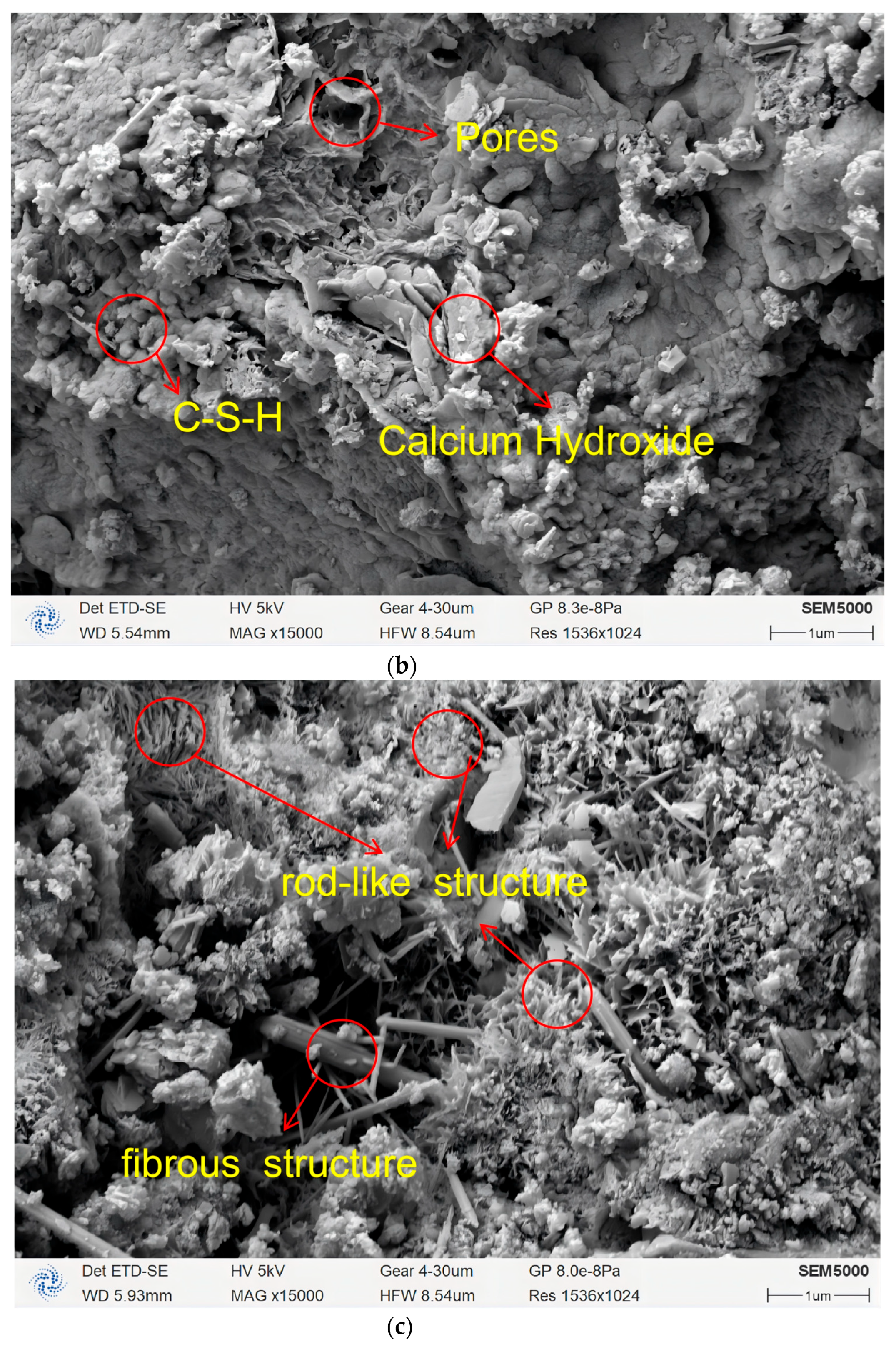
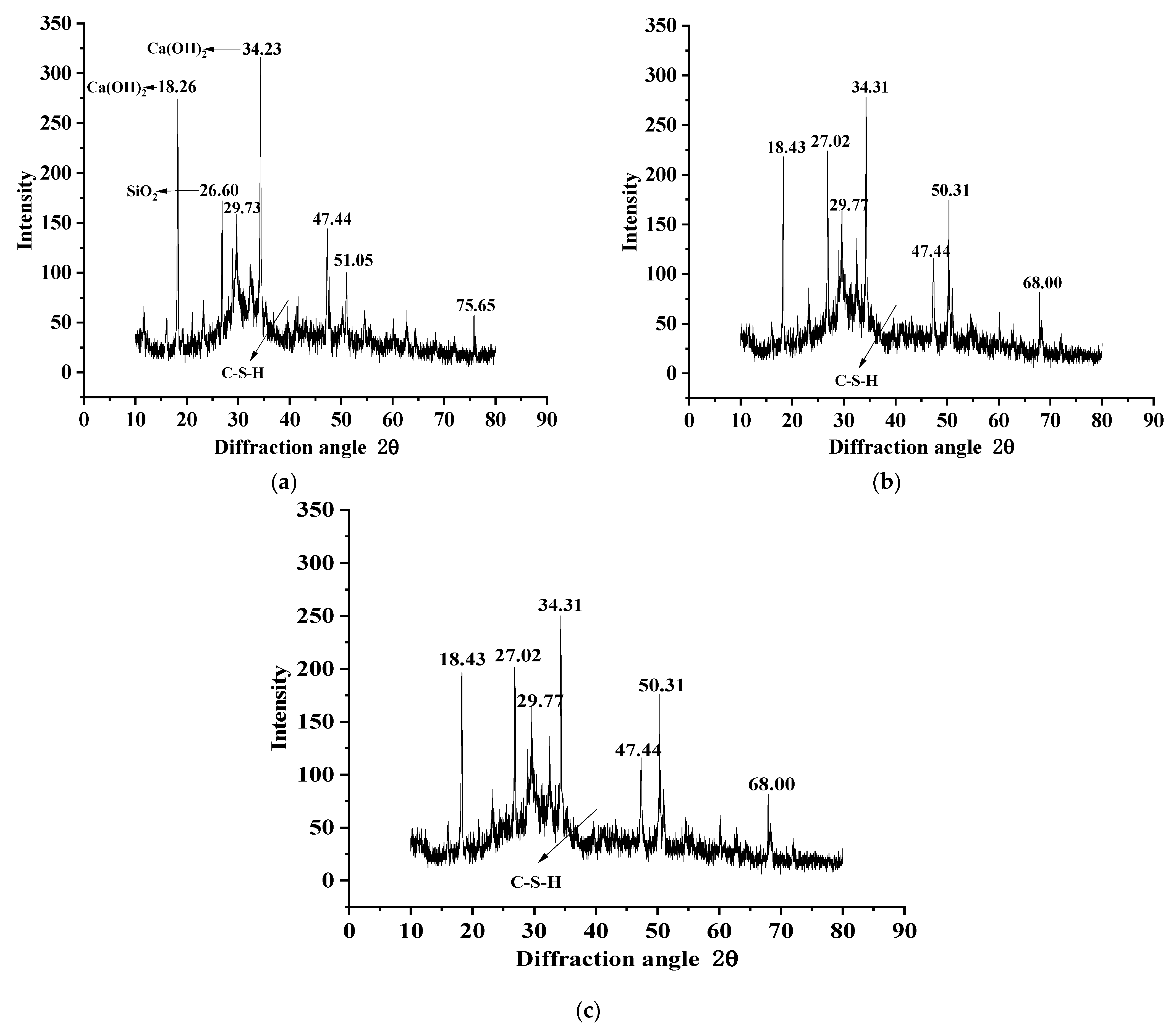
- Microstructural analysis (SEM/XRD) conclusively linked the macro-properties to underlying mechanisms, including pore structure refinement, promoted C-S-H gel formation, consumption of CH, and the formation of flexible polymeric bridges at the interface.
4.1. Broader Impact and Practical Applications
4.2. Limitations and Future Research
Author Contributions
Funding
Data Availability Statement
Conflicts of Interest
References
- Cai, X.; Huang, W.; Wu, K. Study of the Self-Healing Performance of Semi-Flexible Pavement Materials Grouted with Engineered Cementitious Composites Mortar based on a Non-Standard Test. Materials 2019, 12, 3488. [Google Scholar] [CrossRef] [PubMed]
- Chinh, M.T.D.; Tuan, M.N. Investigating the qualities of grouting material used modifiers in the semi-flexible pavement. IOP Conf. Ser. Mater. Sci. Eng. 2023, 1289, 012059. [Google Scholar]
- Raza, S.M.; Sharma, K.S. Optimizing porous asphalt mix design for permeability and air voids using response surface methodology and artificial neural networks. Constr. Build. Mater. 2024, 442, 137513. [Google Scholar] [CrossRef]
- Albusaisi, K.M.; Al-Busaltan, S.F.; Kadhim, M.A. Characterizing the Mechanical Properties of Sustainable Modified Cementitious Grout for Semi-Flexible Mixture. IOP Conf. Ser. Earth Environ. Sci. 2021, 856, 012047. [Google Scholar] [CrossRef]
- Xu, Y.; Jiang, Y.; Xue, J.; Tong, X.; Cheng, Y. High-Performance Semi-Flexible Pavement Coating Material with the Microscopic Interface Optimization. Coatings 2020, 10, 268. [Google Scholar] [CrossRef]
- Fang, B.; Xu, T.; Shi, S. Laboratory Study on Cement Slurry Formulation and Its Strength Mechanism for Semi-Flexible Pavement. J. Test. Eval. 2016, 44, 907–913. [Google Scholar] [CrossRef]
- Liu, W.; Jiang, Y.; Zhao, Z.; Lei, F.; Li, H.; Jiao, X.; Wang, H. Optimal development of the new type of ultra-fine fly ash semi flexible pavement grouting material: Rheological, mechanical, pore distribution, and hydration characteristics. Constr. Build. Mater. 2024, 438, 137103. [Google Scholar] [CrossRef]
- Khan, M.N.; Khan, M.I.; Khan, J.H.; Ahmad, S.; Azfar, R.W. Exploring waste marble dust as an additive in cementitious grouts for semi-flexible pavement applications: Analysis and optimization using RSM. Constr. Build. Mater. 2024, 411, 134554. [Google Scholar] [CrossRef]
- Zhang, S.; He, Y.; Li, J.; Liu, L.; Cui, X. Preparation of potassium methylsilicate modified one-part alkali-activated slag grouting material and its effect on adhesion properties of semi-flexible pavement. Constr. Build. Mater. 2023, 366, 130139. [Google Scholar] [CrossRef]
- Tagba, M.; Li, S.; Jiang, M.; Gao, X.; Benmalek, M.L.; Boukour, S.; Liu, C. Performance Evaluation of Cementitious Composites Containing Granulated Rubber Wastes, Silica Fume, and Blast Furnace Slag. Crystals 2021, 11, 632. [Google Scholar] [CrossRef]
- Strzałkowski, J.; Stolarska, A.; Kożuch, D.; Dmitruk, J. Hygrothermal and strength properties of cement mortars containing cenospheres. Cem. Concr. Res. 2023, 174, 107325. [Google Scholar] [CrossRef]
- Arshad, M.T.; Ahmad, S.; Khitab, A.; Hanif, A. Synergistic Use of Fly Ash and Silica Fume to Produce High-Strength Self-Compacting Cementitious Composites. Crystals 2021, 11, 915. [Google Scholar] [CrossRef]
- Sun, Y.-Z.; Cheng, Y.-Y.; Ding, M.; Sun, C.-Z. Mix Proportion Design and Performance Study of Semi-Flexible Pavement Materials. Concrete 2019, 09, 124–131. [Google Scholar]
- Krishnaraj, L.; Ravichandran, P. Investigation on grinding impact of fly ash particles and its characterization analysis in cement mortar composites. Ain. Shams. Eng. J. 2019, 10, 267–274. [Google Scholar] [CrossRef]
- Zhang, J.; Cai, J.; Pei, J.; Li, R.; Chen, X. Formulation and performance comparison of grouting materials for semi-flexible pavement. Constr. Build. Mater. 2016, 115, 582–592. [Google Scholar] [CrossRef]
- Memon, F.A.; Nuruddin, M.F.; Shafiq, N. Effect of silica fume on the fresh and hardened properties of fly ash-based self-compacting eopolymer concrete. Int. J. Miner. Metall. Mater. 2013, 20, 205–213. [Google Scholar] [CrossRef]
- Cheng, P.; Ma, G.; Li, Y. Preparation and Performance Improvement Mechanism Investigation of High-Performance Cementitious Grout Material for Semi-Flexible Pavement. Polymers 2023, 15, 2631. [Google Scholar] [CrossRef]
- Huang, Z.; Liang, T.; Huang, B.; Zhou, Y.; Ye, J. Ultra-lightweight high ductility cement composite incorporated with low PE fiber and rubber powder. Constr. Build. Mater. 2021, 312, 125430. [Google Scholar] [CrossRef]
- Ekprasert, J.; Nakhonthong, N.; Sata, V.; Chainakun, P. Investigating the effects of superplasticizer and recycled plastics on the compressive strength of cementitious composites using neural networks. Heliyon 2023, 9, e21798. [Google Scholar] [CrossRef] [PubMed]
- Leong, G.W.; Mo, K.H.; Ibrahim, Z.; Radwan, M.K.; Ling, T.C.; Sinoh, S.S. Lightweight cementitious composites incorporating fly ash cenospheres and perlite microspheres. Constr. Build. Mater. 2023, 404, 133226. [Google Scholar] [CrossRef]
- Hanif, A.; Lu, Z.; Cheng, Y.; Diao, S.; Li, Z. Effects of Different Lightweight Functional Fillers for Use in Cementitious Composites. Int. J. Concr. Struct. Mater. 2017, 11, 99–113. [Google Scholar] [CrossRef]
- Yi, J.-Y.; Mao, Q.-Y.; Wang, D.-S.; Yu, J.; Nan, X.-F. Development and Performance Evaluation of Cement Paste for Semi-Flexible Concrete Pavement. J. Shenyang Jianzhu Univ. 2019, 35, 892–898. [Google Scholar]
- Sun, Y.; Cheng, Y.; Ding, M.; Yuan, X.; Wang, J. Research on Properties of High-Performance Cement Mortar for Semiflexible Pavement. Adv. Mater. Sci. Eng. 2018, 2018, 4613074. [Google Scholar] [CrossRef]
- Khan, M.I.; Sutanto, M.H.; Napiah, M.B.; Zahid, M.; Usman, A. Optimization of Cementitious Grouts for Semi-Flexible Pavement Surfaces Using Response Surface Methodology. IOP Conf. Ser. Earth Environ. Sci. 2020, 498, 012004. [Google Scholar] [CrossRef]
- GB 175-2007; Common Portland Cement. Standardization Administration of China: Beijing, China, 2007.
- GB/T 14684-2011; Sand for Construction. Standardization Administration of China: Beijing, China, 2011.
- CJJ/T 218-2014; Technical Specification for Grouting Semi-flexible Pavement of Urban Road. Ministry of Housing and Urban-Rural Development of the People’s Republic of China: Beijing, China, 2014.
- GB/T 1596-2017; Fly Ash Used for Cement and Concrete. Standardization Administration of China: Beijing, China, 2017.
- GB/T 27690-2011; Silica Fume for Cement Mortar and Concrete. Standardization Administration of China: Beijing, China, 2011.
- GB/T 8077-2012; Methods for Testing Uniformity of Concrete Admixture. Standardization Administration of China: Beijing, China, 2012.
- JTG 3420-2020; Testing Methods of Cement and Concrete for Highway Engineering. Ministry of Transport of the People’s Republic of China: Beijing, China, 2020.
- JTG E20-2011; Standard Test Methods of Bitumen and Bituminous Mixtures for Highway Engineering. Ministry of Transport of the People’s Republic of China: Beijing, China, 2011.
- Chang, X.-F.; Wang, Q.-D.; Hu, J.-L.; Sun, Y.; Chen, S.-J.; Gu, X.-F.; Chen, G. Preparation and Application of New Polyhydroxy Ammonium Shale Hydration Inhibitor. Processes 2023, 11, 3102. [Google Scholar] [CrossRef]


| Technique | Parameters |
|---|---|
| XRD | Cu-Kα radiation (λ = 0.15406 nm), Voltage: 40 kV, Current: 40 mA, Scanning rate: 2°/min, 2θ range: 0.5–60° |
| SEM | Coating: Au, Resolution: 1.0 nm @ 15 kV, Accelerating Voltage: 20–30 kV, Magnification: 15,000× |
| Water-to-Binder Ratio | Sand-to-Binder Ratio | Initial Fluidity/s | 30 min Fluidity/s | 3 h Bleeding Rate/% | 7 d Flexural Strength/MPa | 7 d Compressive Strength/MPa |
|---|---|---|---|---|---|---|
| 0.42 | 0.1 | 45.18 | 50.22 | 0.001 | 7.95 | 36.90 |
| 0.46 | 0.15 | 11.36 | 16.38 | 0.008 | 5.60 | 35.30 |
| 0.42 | 0.2 | 38.15 | 42.55 | 0.060 | 7.70 | 45.83 |
| 0.50 | 0.1 | 15.36 | 21.22 | 0.014 | 6.20 | 25.60 |
| 0.46 | 0.15 | 15.53 | 20.35 | 0.001 | 5.45 | 30.58 |
| 0.46 | 0.15 | 11.57 | 17.43 | 0.001 | 4.90 | 35.90 |
| 0.46 | 0.15 | 13.32 | 19.64 | 0.003 | 5.83 | 35.05 |
| 0.50 | 0.2 | 11.44 | 17.74 | 0.024 | 4.85 | 34.50 |
| 0.40 | 0.15 | 60.80 | 69.96 | 0.001 | 7.80 | 45.40 |
| 0.46 | 0.22 | 12.18 | 22.11 | 0.001 | 6.00 | 29.91 |
| 0.46 | 0.08 | 32.00 | 39.33 | 0.017 | 6.90 | 32.53 |
| 0.46 | 0.15 | 10.88 | 14.58 | 0.006 | 4.90 | 37.00 |
| 0.52 | 0.15 | 19.78 | 26.35 | 0.059 | 5.36 | 24.93 |
| Term | Y1 | Y2 | Y3 | Y4 | Y5 |
|---|---|---|---|---|---|
| Model | <0.0001 | <0.0001 | 0.02227 | 0.0004 | 0.0020 |
| XI | <0.0001 | <0.0001 | 0.0030 | 0.0001 | 0.0001 |
| X2 | 0.0044 | 0.0173 | 0.1968 | 0.0274 | 0.4349 |
| X1X2 | 0.6557 | — | 0.4999 | 0.1764 | 0.3980 |
| X12 | <0.0001 | <0.0001 | 0.0197 | 0.0020 | 0.5168 |
| X22 | 0.0186 | 0.0152 | 0.8027 | 0.0035 | 0.1479 |
| X12X2 | — | — | 0.1868 | — | 0.0312 |
| X1X22 | — | — | 0.0907 | — | — |
| Lack of fitting | 0.0615 | 0.0674 | 0.0643 | 0.7411 | 0.6743 |
| Term | Y1 | Y2 | Y3 | Y4 | Y5 |
|---|---|---|---|---|---|
| Model | 54.38 | 45.19 | 7.17 | 21.42 | 15.60 |
| XI | 146.93 | 94.67 | 29.11 | 60.55 | 78.73 |
| X2 | 17.02 | 8.95 | 2.22 | 7.71 | 0.6998 |
| X1X2 | 0.2166 | — | 0.5282 | 2.26 | 0.8278 |
| X12 | 104.76 | 73.21 | 11.42 | 22.78 | 0.4743 |
| X22 | 9.31 | 9.47 | 0.0694 | 18.53 | 2.76 |
| X12X2 | — | — | 2.34 | — | 7.84 |
| X1X22 | — | — | 4.38 | — | — |
| Lack of fitting | 5.78 | 5.31 | 6.43 | 0.4332 | — |
| Property | Initial Fluidity/s | 30 min Fluidity/s | 3 h Bleeding Rate/% | 7 d Flexural Strength/MPa | 7 d Compressive Strength/MPa |
|---|---|---|---|---|---|
| Predicted value | 12.53 | 17.68 | 0.0038 | 5.37 | 34.77 |
| Measured value | 11.57 | 17.43 | 0.0010 | 4.90 | 35.90 |
| Technical requirement | 10~14 | <18 | <0.01 | ≥2 | ≥15 |
| No. | Fly Ash (A) | Silica Fume (B) | Microspheres (C) |
|---|---|---|---|
| 1 | 1 | 1 | 1 |
| 2 | 1 | 2 | 2 |
| 3 | 1 | 3 | 3 |
| 4 | 2 | 1 | 2 |
| 5 | 2 | 2 | 3 |
| 6 | 2 | 3 | 1 |
| 7 | 3 | 1 | 3 |
| 8 | 3 | 2 | 1 |
| 9 | 3 | 3 | 2 |
| No. | Initial Fluidity/s | 30 min Fluidity/s | 3 h Bleeding Rate/% | Flexural Strength/MPa | Compressive Strength/MPa |
|---|---|---|---|---|---|
| 1 | 13.03 | 15.94 | 0.025 | 6.2 | 38.2 |
| 2 | 17.88 | 23.31 | 0.010 | 4.2 | 32.3 |
| 3 | 25.26 | 34.35 | 0.002 | 6.2 | 37.9 |
| 4 | 11.06 | 12.91 | 0.011 | 5.3 | 24.9 |
| 5 | 20.22 | 28.38 | 0.009 | 5.7 | 36.3 |
| 6 | 24.32 | 32.15 | 0.001 | 6.4 | 42.7 |
| 7 | 10.44 | 12.91 | 0.008 | 4.4 | 35.4 |
| 8 | 11.40 | 17.41 | 0.003 | 4.9 | 36.1 |
| 9 | 27.28 | 36.38 | 0.001 | 5.0 | 37.8 |
| Response Variable | Primary Influence Factor (Largest R) | Influence Order (R Value) | Optimal Level Combination |
|---|---|---|---|
| Initial Fluidity | B (Silica Fume) | B > C > A | A~1~B~2~C~2~ |
| 30 min Fluidity | B (Silica Fume) | B > C > A | A~1~B~3~C~3~ |
| 3 h Bleeding Rate | B (Silica Fume) | B > A > C | A~1~B~1~C~1~ |
| 7 d Flexural Strength | B (Silica Fume) | B > C > A | A~2~B~3~C~3~ |
| 7 d Compressive Strength | B (Silica Fume) | B > C > A | A~3~B~3~C~3~ |
| Technical Indexes | Measured Value | Technical Requirement | |
|---|---|---|---|
| Initial fluidity/s | 10.08 | 10–14 | |
| 30 min fluidity/s | 14.58 | 10–18 | |
| 3 h Free bleeding rate/% | 0.76 | ≤1 | |
| Compressive strength/MPa | 3 h | 20.3 | ≥10 |
| 1 d | 30.9 | ≥15 | |
| 28 d | 63.6 | ≥25 | |
| 28-day flexural strength/MPa | 9.9 | ≥2.5 | |
| 28-day drying shrinkage/% | 0.08 | ≤0.3 | |
| Grouting Material Type | Interface Bonding Strength/MPa |
|---|---|
| Basic Grouting Material | 2.15 |
| Mineral-optimized grouting material | 2.13 |
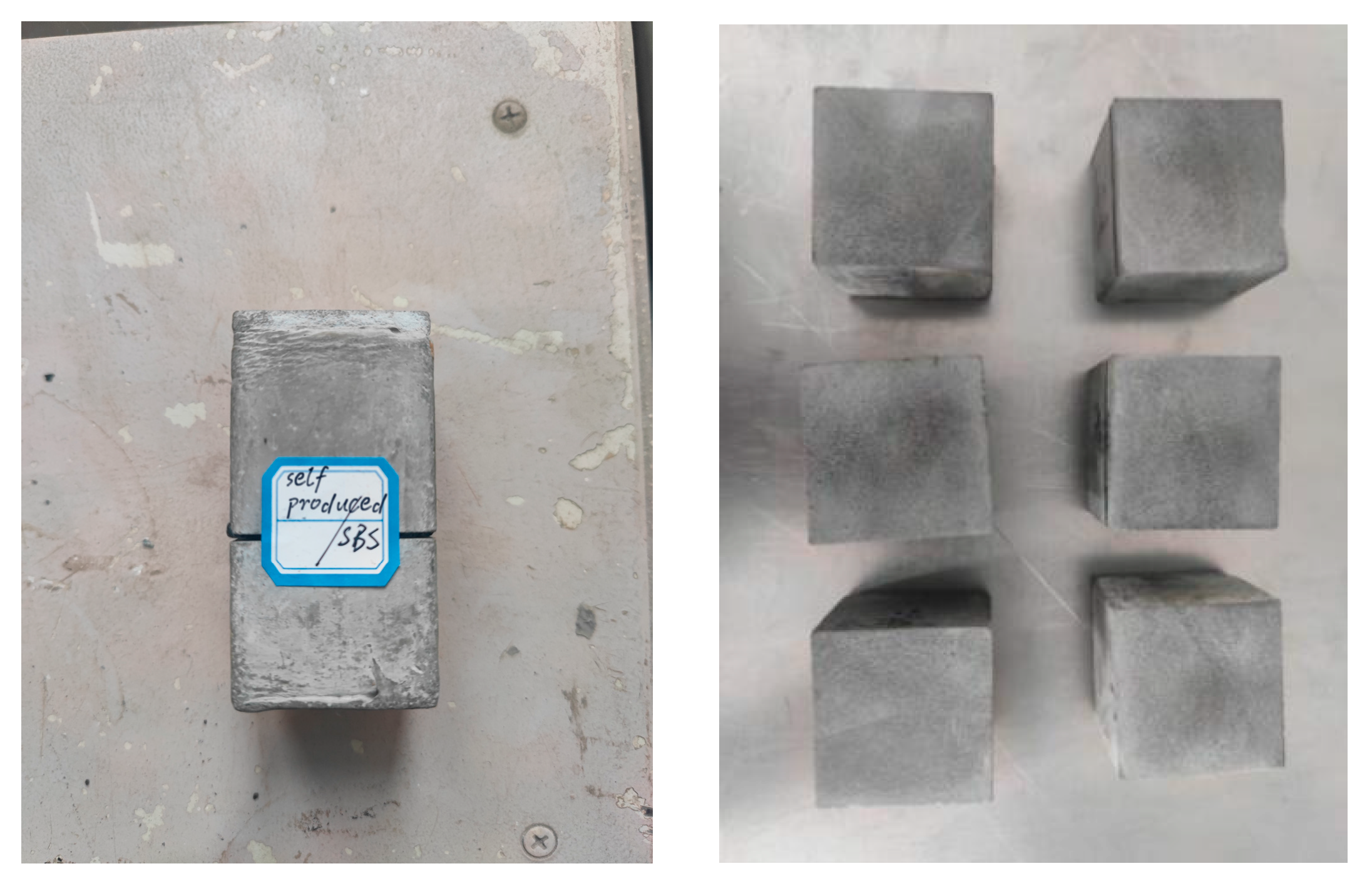
| Polymer-enhanced grouting material | 2.48 |
| Grouting Material Type | Grouting Fullness (%) |
|---|---|
| Basic Grouting Material | 98.4 |
| Mineral-optimized grouting material | 98.8 |
| Polymer-enhanced grouting material | 99.5 |
Disclaimer/Publisher’s Note: The statements, opinions and data contained in all publications are solely those of the individual author(s) and contributor(s) and not of MDPI and/or the editor(s). MDPI and/or the editor(s) disclaim responsibility for any injury to people or property resulting from any ideas, methods, instructions or products referred to in the content. |
© 2025 by the authors. Licensee MDPI, Basel, Switzerland. This article is an open access article distributed under the terms and conditions of the Creative Commons Attribution (CC BY) license (https://creativecommons.org/licenses/by/4.0/).
Share and Cite
Wu, P.; Lin, J.; Li, P.; Jin, Z.; Guan, F.; Wang, C.; Zhang, Y. Collaborative Optimization Design of Fluidity-Mechanical Properties of Grouting Material and Micro-Mechanism for Semi-Flexible Pavement. Coatings 2025, 15, 1466. https://doi.org/10.3390/coatings15121466
Wu P, Lin J, Li P, Jin Z, Guan F, Wang C, Zhang Y. Collaborative Optimization Design of Fluidity-Mechanical Properties of Grouting Material and Micro-Mechanism for Semi-Flexible Pavement. Coatings. 2025; 15(12):1466. https://doi.org/10.3390/coatings15121466
Chicago/Turabian StyleWu, Ping, Junjie Lin, Ping Li, Zucan Jin, Fuyang Guan, Chaofan Wang, and Yiduo Zhang. 2025. "Collaborative Optimization Design of Fluidity-Mechanical Properties of Grouting Material and Micro-Mechanism for Semi-Flexible Pavement" Coatings 15, no. 12: 1466. https://doi.org/10.3390/coatings15121466
APA StyleWu, P., Lin, J., Li, P., Jin, Z., Guan, F., Wang, C., & Zhang, Y. (2025). Collaborative Optimization Design of Fluidity-Mechanical Properties of Grouting Material and Micro-Mechanism for Semi-Flexible Pavement. Coatings, 15(12), 1466. https://doi.org/10.3390/coatings15121466