Article

Evaluation of the Inhibitory Efficiency of Yohimbine on Corrosion of OLC52 Carbon Steel and Aluminum in Acidic Acetic/Acetate Media


by
George-Daniel Dima
1,
Mircea Laurențiu Dan
1,*,
Nataliia Rudenko
2 and
Nicolae Vaszilcsin
1
1
Laboratory of Electrochemistry, Corrosion and Electrochemical Engineering, Faculty of Chemical Engineering, Biotechnologies and Environmental Protection, University Politehnica Timisoara, 6 Pârvan, 300223 Timisoara, Romania
2
Innovation and Technology Transfer Center, University Politehnica Timisoara, 300006 Timisoara, Romania
*
Author to whom correspondence should be addressed.
Coatings 2025, 15(12), 1458; https://doi.org/10.3390/coatings15121458
Submission received: 10 October 2025 / Revised: 3 December 2025 / Accepted: 8 December 2025 / Published: 10 December 2025

Abstract

The present study assesses the effectiveness of the indole-type alkaloid Yohimbine (YHB) as a green corrosion inhibitor for OLC52 carbon steel and Al in 0.25/0.25 mol L−1 acetic acid/potassium acetate solutions relevant for de-icing applications. Electrochemical techniques, including cyclic and linear sweep voltammetry, chronoamperometry, and electrochemical impedance spectroscopy have been combined with the evaluation of adsorption isotherms and molecular modeling calculations. YHB significantly decreases the corrosion rate for both metals, attaining inhibitory efficiencies of up to 95% for OLC52 and 91% for Al at 298 K, while maintaining high protection efficiency even at higher temperatures. The Langmuir adsorption model and the values of G a d s o between −31 and −41 kJ mol−1 indicate a spontaneous adsorption process defined by a mixed physicochemical mechanism, resulting in the formation of a compact protective film. Quantum molecular descriptors support the ability of YHB molecules to interact with metal surfaces via donor–acceptor interactions and electrostatic interactions. The findings demonstrate the potential of YHB as an environmentally friendly inhibitor for the protection of ferrous and non-ferrous alloys in mildly acidic acetic/acetate media used in de-icing solutions.

1. Introduction

Metal corrosion is an unavoidable phenomenon that negatively impacts the economy and technological systems, impacting infrastructure elements in sectors such as construction, aerospace, and petrochemicals, resulting in losses of 3%–4% of worldwide GDP [1,2]. Corrosion prevention is a critical concern, with the best-known methods being cathodic protection and metal coatings; nonetheless, the related costs are considerable and not universally applicable to all metal designs. In contrast, organic inhibitors represent a more cost-effective approach to anti-corrosion protection, as they reduce direct corrosive attacks on the metal through the adsorption of the organic component at the metal/aggressive solution interface, thereby forming a protective film [3,4].
Research interest in green corrosion inhibitors has notably increased owing to their biodegradability, low environmental toxicity, and plant-derived origins [5]. Natural extracts consist of organic compounds that exhibit corrosion-inhibiting effects, including flavonoids, terpenoids, polyphenols, and alkaloids [6,7]. They exhibit a structure containing heteroatoms such as nitrogen, sulfur, or oxygen, or contain conjugated double bond systems. Due to their presence, adsorption occurs at the metal surface, hence reducing the anodic or cathodic processes at that surface [8]. A considerable proportion of natural substances or plant extracts cited in the literature, utilized in harsh acidic or saline solutions, demonstrate IE values exceeding 80%–90% [9].
Alkaloids are organic compounds characterized by the presence of nitrogen atoms in their structure, which have physiological effects on animal beings. Their heterocyclic structure, characterized by aromatic properties and the presence of nitrogen, enhances interaction with metallic substrates. The literature indicates that natural extracts containing alkaloids have been successfully identified as efficient corrosion inhibitors for steel in acidic environments, achieving IE of over 90% [10,11]. Synthetically derived compounds with a similar indolic structure have demonstrated effectiveness as inhibitors in acidic environments of HCl and H2SO4 [12].
Yohimbine (YHB), a natural alkaloid characterized by an indolic structure, is a primary constituent of the bark of the Pausinystalia johimbe tree and is also found in certain species of Rauwolfia [13]. Structurally, the presence of the indole nucleus, hydroxyl groups, and nitrogen atoms indicates the potential for adsorption on metal surfaces, implying a mixed adsorption mechanism [8]. As of now, no scientific articles have evaluated the efficacy of YHB as a corrosion inhibitor.
The significance of the acetic/acetate medium is practically substantial, since acetates and formates are widely utilized as anti-icing and de-icing agents in airport infrastructure and aircraft, providing a less corrosive alternative to chlorinated salts [14]. Commercial treatments, including potassium acetate-based solutions (e.g., Provifrost® KA ECO - Proviron Industries N.V., Hemiksen, Belgium), incorporate corrosion inhibitors to protect the treated metal structures [15]. Exposure of aluminum to CH3COOK inhibitor solutions has shown substantial reductions in corrosion current values. Furthermore, research on metal coatings utilized in aeronautics indicates that the underlying metal structures can be protected when inhibitors are efficiently included into defroster formulations [16,17]. In parallel with the experimental studies, numerical approaches have also been developed for the analysis of corrosion and erosion–corrosion phenomena, particularly in systems with high-speed water jets and complex geometries. For example, Gok et al. reviewed the use of CFD modeling and finite element analysis (FEA) to describe erosion-induced corrosion formation in water jets [18].
Examining the corrosion inhibition mechanism of natural compounds like YHB in acetic/acetate media is fundamentally significant for advancing research on alkaloids as potential green corrosion inhibitors and practically important for identifying applications in the protection of metal structures within the aeronautical industry.
The integration of voltammetric and electrochemical impedance spectroscopy investigations with molecular modeling is essential for elucidating adsorption mechanisms and providing a first evaluation of the capacity of the examined compounds to prevent metal corrosion [19]. Techniques such as DFT provide relevant molecular descriptors, including the energy of the highest occupied molecular orbital (EHOMO), the energy of the lowest unoccupied molecular orbital (ELUMO), electronegativity, hardness, and softness, which clarify the relationship between the structure and inhibitory properties of the studied organic compound [20].
This study aims to assess the inhibitory efficacy of YHB on the corrosion of OLC52 carbon steel and aluminum in 0.25/0.25 mol L−1 acetic acid/potassium acetate solutions, utilizing electrochemical techniques such as cyclic voltammetry, linear voltammetry, chronoamperometry, and electrochemical impedance spectroscopy, in conjunction with theoretical molecular modeling calculations. The findings would enable the integration of natural alkaloids as environmentally sustainable corrosion inhibitors and their application in the protection of metallic components across many sectors.

2. Materials and Methods

2.1. Materials

YHB has C21H26N2O3 as its chemical formula and is named according to IUPAC methyl(1S,15R,18S,19R,20S)-18-hydroxy-1,3,11,12,14,15,16,17,18,19,20,21-dodecahydroyohimban-19-carboxylate hydrochloride. YHB is an indole alkaloid derived from the root of the Pausinystalia johimbe tree [21]. It is commercially available as standard yohimbine hydrochloride with a concentration of ≥98% HPLC, produced by Sigma-Aldrich® (St. Louis, MO, USA). Figure 1 illustrates the chemical structure of YHB.
Yohimbine hydrochloride exhibits significant stability in neutral or mildly acidic aqueous environments (pH = 5–6), while in strongly acidic conditions it undergoes hydrolytic degradation. Light influences degradation through photooxidation resulting in the formation of 3,14-dehydroyohimbine. The stability is enhanced by storage in airtight ferrite containers [22].
Electrochemical measurements were conducted using a BioLogic SP150 potentiostat (BioLogic Science Instruments, Seyssinet-Pariset, France) connected to a thermostatic electrochemical cell, which used a three-electrode assembly. This assembly consisted of a working electrode made from the corroded material (OLC52 and Al p = 99%) with active surface areas of 0.65 cm2 and 0.785 cm2, respectively, alongside two graphite counter electrodes and a Ag/AgCl reference electrode. The chemical composition of the utilized steel is presented in Table 1.
The corrosive environment (BS) solution utilized in the experiments comprised a solution of 0.25 mol L−1 acetic acid and 0.25 mol L−1 potassium acetate. To assess the influence of the YHB concentration on the corrosion process of the studied metals, various concentrations of inhibitor were added into the BS solution, namely 10−6, 10−5, 10−4, 2.5 · 10−4, 5 · 10−4 mol L−1 YHB; the pH of the test solutions maintained at 4.75, consistent with that of the corrosive media employed. The reactants used were acetic acid (glacial), 100%, Suprapure® (Merck, Rahway, NJ, USA), potassium acetate, ACS reagent, ≥99.0% (Sigma-Aldrich) and the corrosion inhibitor was YHB, in the form of yohimbine hydrochloride ≥ 98% (HPLC), powder, produced by Merck. The solutions were prepared by dissolving in BS a quantity of YHB corresponding to a concentration of 10−2 mol L−1 (stock solution), followed by successive dilutions, in order to prepare the test solutions.

2.2. Electrochemical Methods

The electrochemical measurements were conducted utilizing the BioLogic SP-150 potentiostat, which features EC-Lab v.10.23 software. Platinum electrodes were employed for cyclic voltammetry studies, as well as electrodes made from corroded materials (OLC52 and Al). The Pt electrode was polarized at scan rates of 100, 50, and 10 mV s−1, whilst the OLC52 and Al were polarized at 100 mV s−1. The utilized potential ranges were −1 to 2.25 V for Pt and OLC52, and −1 to 1.5 V for Al.
Electrochemical investigations, including linear sweep voltammetry, chronoamperometry, chronopotentiometry, and electrochemical impedance spectroscopy, are utilized to determine characteristics such as corrosion currents, corrosion rates, and inhibition efficiency (IE). The data obtained were then utilized for the graphical representations of the isotherms and the Arrhenius diagrams. The electrochemical measurements were conducted at controlled temperatures, utilizing a Julabo F5 thermostat bath, which maintains a temperature stability of ±0.1 K. Prior to each electrochemical measurement, the working electrode underwent sequential grinding treatments using Si-C sanding paper of grits of 120, 240, 600, 1200, 2400, and 4000. Thereafter, the working electrode was subjected to ultrasonication, alcohol washing, and drying. Prior to each measurement, the cell containing 100 mL of test solution was deaerated by purging N2 for 10 min to minimize the amount of dissolved oxygen. Prior to initiating linear voltammetry measurements, the working electrode underwent a chronopotentiometry technique for 3600 s to stabilize the potential. Each experimental measurement was plotted three times to ensure reproducibility, and the standard deviation of the three determinations is reported for each parameter.
The linear sweep voltammograms obtained at a corrosion rate of 1 mV s−1, in the potential range of −250 mV to +250 mV versus EOCP, were logarithmically converted to obtain the cathodic and anodic Tafel slopes, which were then used to determine the corrosion current density and the corrosion rate. The convergence of these slopes yields data on the icorr corrosion current and the Ecorr corrosion potential, with these results derived from the corrosion module integrated within the EC-Lab potentiostat program.
The IE was calculated from the corrosion currents utilizing Equation (1), both in the presence and absence of YHB [23].
I E = i c o r r i c o r r i n h i b i c o r r × 100 %
where
IE—inhibitory efficacy of YHB [%];
i c o r r , i c o r r i n h i b —the corrosion current in the case of the uninhibited process, respectively, in the presence of the YHB inhibitor [A m−2].
The corrosion mechanism at the OLC52 interfaces, specifically in the Al/acetic acetate solution, was examined using electrochemical impedance spectroscopy (EIS) performed at open circuit potential (EOCP) values, across frequencies ranging from 100 kHz to 10 mHz, with an alternating current oscillation amplitude of 10 mV rms. The spectra were plotted at 60 points, logarithmically distributed with 10 points each decade, to be fitted into an equivalent electrical circuit using a complex nonlinear least squares method, namely the Levenberg–Marquardt algorithm using ZView 4.0 software (Scribner Associates, Inc., Southern Pines, NC, USA) [24,25].

2.3. Molecular Modeling

The voltametric experiments were completed using theoretical molecular modeling calculations conducted with Hyperchem 8.0 software (Hypercube Inc., Boulder, CO, USA, Scientific Software). The YHB molecule was modeled in both a vacuum and aqueous environment utilizing Density Functional Theory with the B3LYP functional and a 6-31G* basis set. This method facilitated the plotting of the frontier orbitals, specifically the highest occupied molecular orbital (HOMO), the lowest unoccupied molecular orbital (LUMO), and the computation of molecular descriptors, including EHOMO, ELUMO, the HOMO–LUMO energy gap (∆E), absolute electronegativity (χ), chemical hardness (η), chemical softness (σ), and dipole moment (μ) for the YHB molecule [26].
The ionization energy and electron affinity were obtained from the energy levels of the Frontier orbitals using Equations (2) and (3), respectively. [27].
I = −EHOMO
A = −ELUMO
The interaction of YHB with a prospective metallic surface has been clarified using the descriptors “χ, η, and σ.” Chemical hardness (“η”) assesses the resistance of YHB molecules to charge transfer, reflecting their durability, whereas chemical softness (“σ”) provides insights on electron exchange with the metal surface [28]. These are obtained via ionization energy and electron affinity as per Equations (4)–(6).
χ = I + A 2
η = I A 2
σ = 1 η
The mechanism by which the YHB molecule may inhibit further attacks from the corrosive media on the metal surface is illustrated by the molecular surface and molecular volume. The former is obtained using the QSAR properties module of Hyperchem software. Acquiring structure–property connections offers both a supplement to voltammetric experiments and a means to evaluate the inhibition mechanism [29].

3. Results

3.1. Cyclic Voltammetry

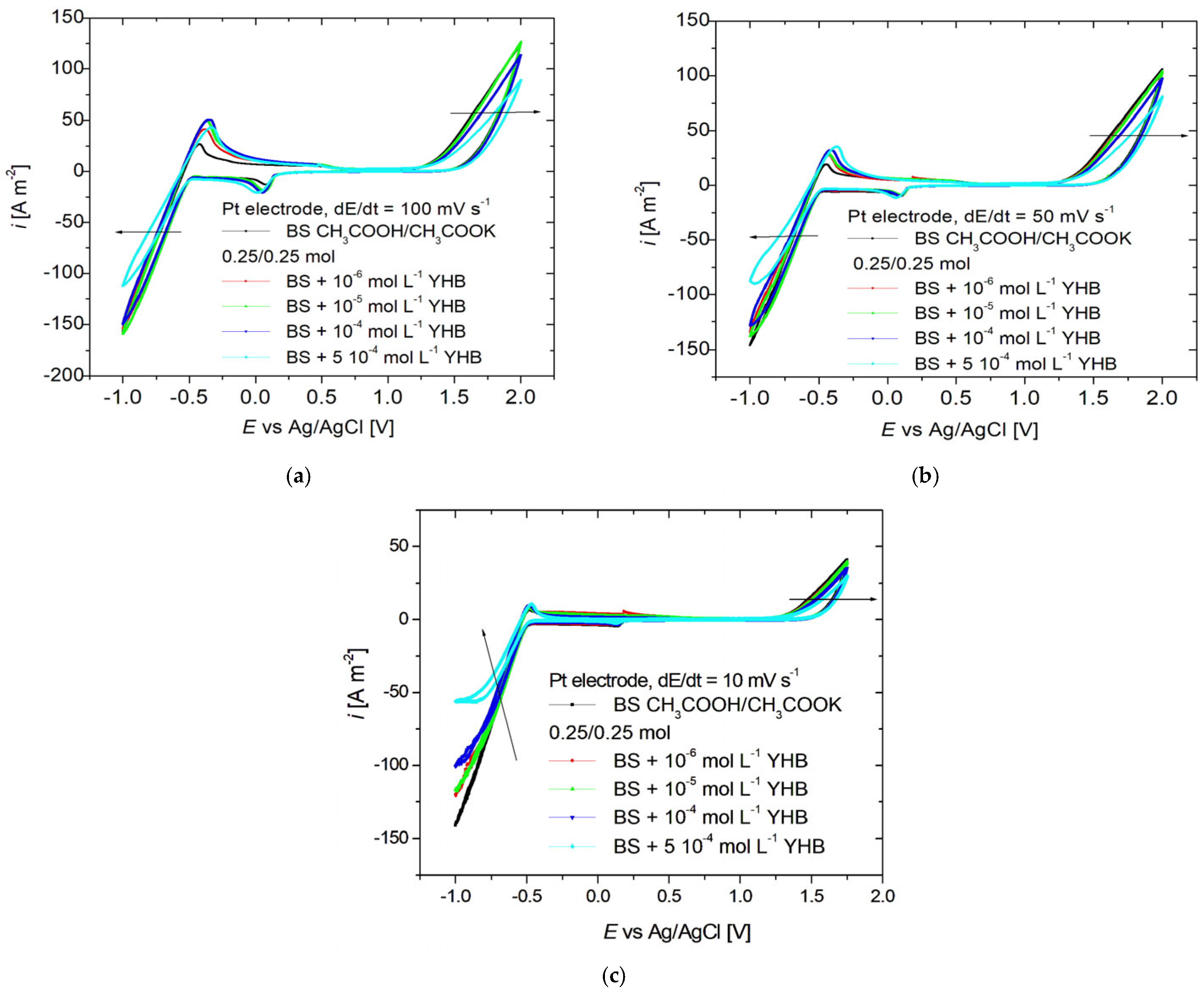
To investigate the electrochemical behavior of YHB, particularly its stability, in the potential domain between the oxygen release process and hydrogen, cyclic voltamograms were plotted on the electrodes of Pt, carbon steel OLC52 and Al, in the BS, respectively, in the presence of inhibitor concentrations 10−6, 10−5, 10−4, 5 · 10−4 mol L−1. Figure 2a–c show the cyclic voltamograms plotted on the Pt electrode, at the scanning rates of 100, 50, and 10 mV s−1, respectively.
They have the specific shape of voltamograms in acetic acetate medium. In the absence of YHB, starting with potential values above +1.4 V vs. Ag/AgCl, on the anode branch there is a peak associated with oxygen release, followed in the reverse branch by the peak corresponding to the reduction in Pt oxides formed on the surface (around 0 V vs. Ag/AgCl), ultimately culminating in the hydrogen evolution process.
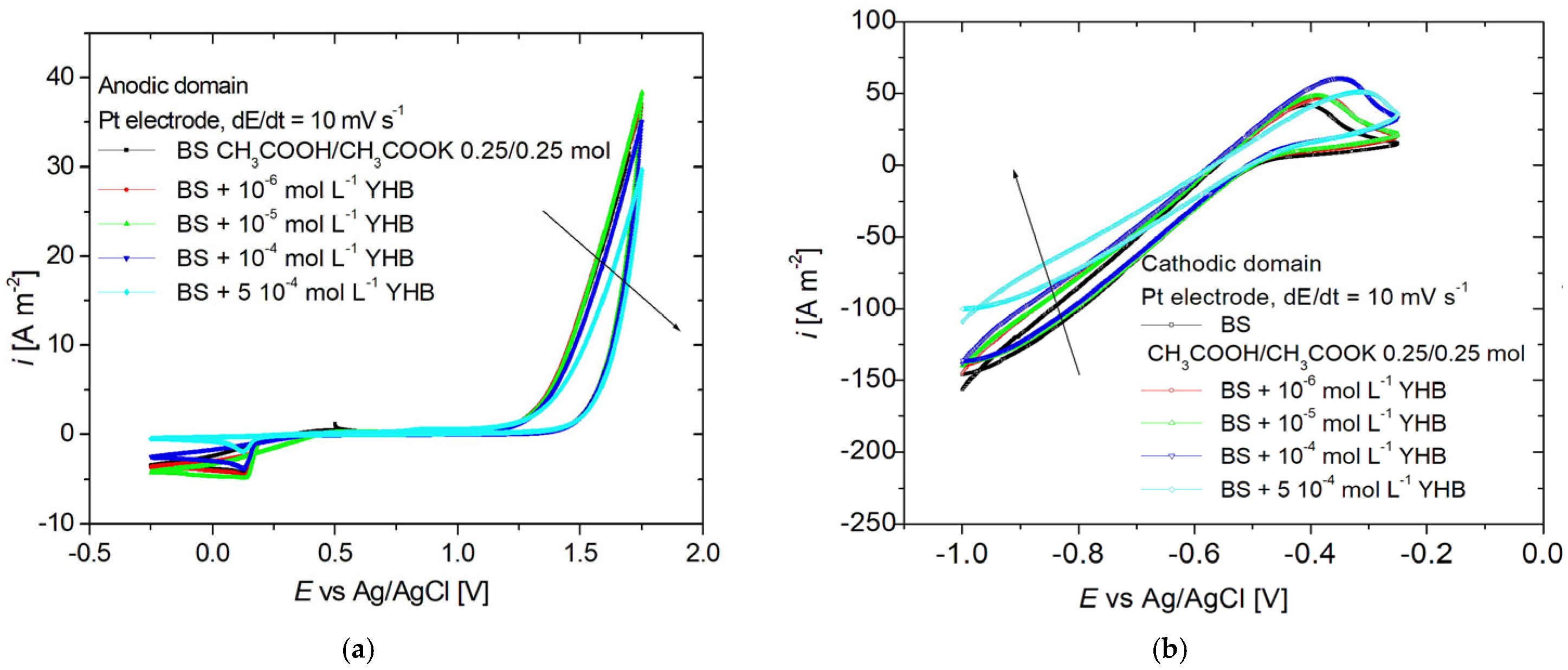
Increasing YHB concentration gradually decreases both anode and cathode current densities, indicating YHB adsorption at the electrode interface and reduced charge transfer. The scanning rate significantly affects the allure and intensity of the curves; particularly, at 100 mV s−1, distinct peaks are observed, whereas at 10 mV s−1, the curves become flattened, indicating a quasi-equilibrium condition and the predominance of diffusional control. To highlight the inhibition of both branches, cyclic voltammograms are presented separately for the anodic (Figure 3a) and cathodic (Figure 3b) domains. In the presence of YHB, the currents in both regions decrease, consistent with the formation of a stable adsorbed organic film.
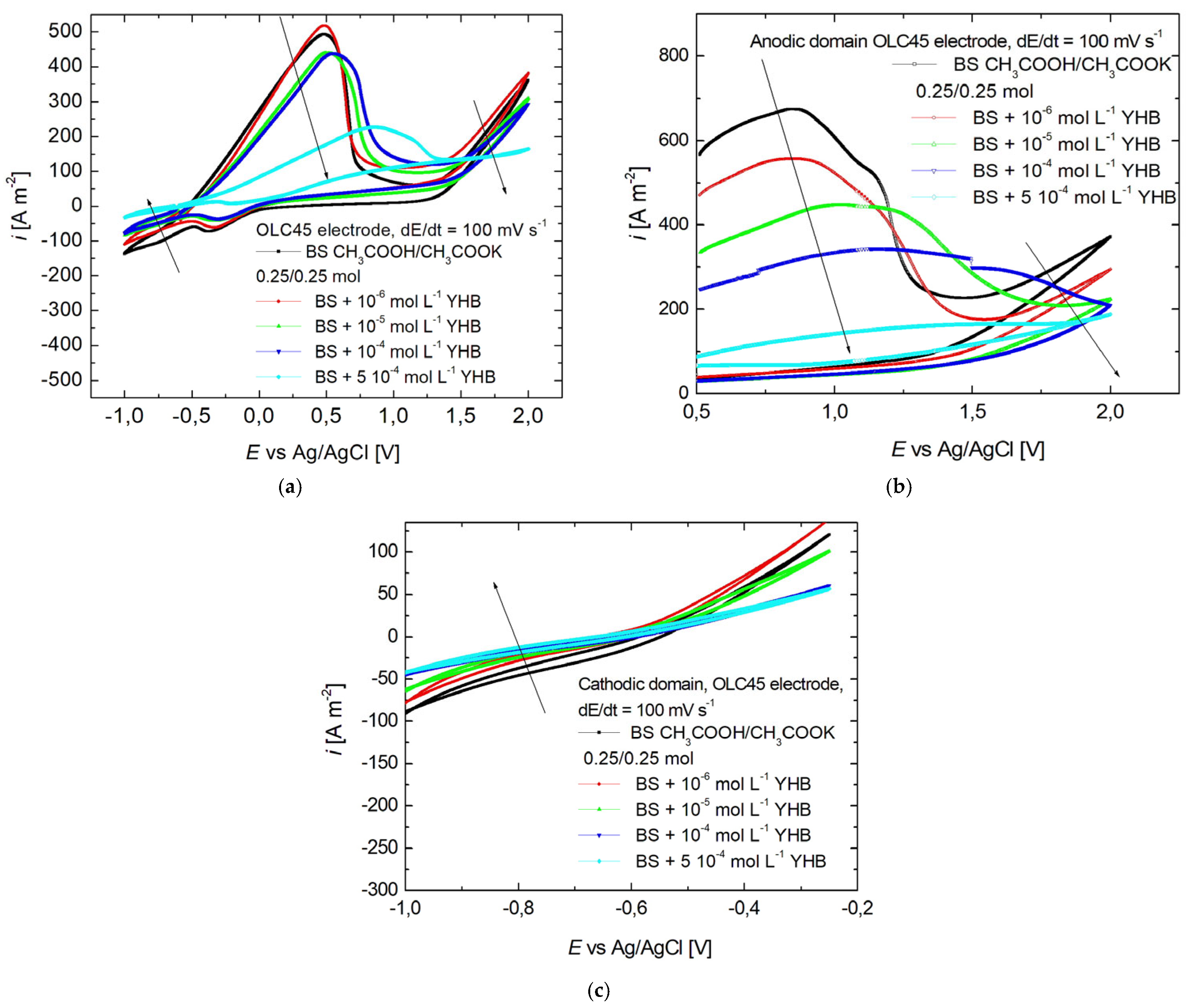
The voltammograms obtained from the OLC52 carbon steel at a scan rate of 100 mV s−1, as illustrated in Figure 4a–c, demonstrate greater currents compared to those observed with platinum, signifying the dissolution process of iron Fe → Fe2+ and the subsequent formation of iron oxides. Compared to Pt, cyclic voltamograms for OLC52 show much higher current values associated with iron dissolution and oxide formation. The presence of YHB significantly reduces them, indicating the effective obstruction of active dissolution sites on the steel surface.
In the anodic branch, as illustrated in Figure 4b, it is observed that the droplets become indistinct and the oxygen release potentials shift towards more positive values with increasing inhibitor concentration, indicating the inhibition of metal dissolution due to the adsorption of the inhibitor.
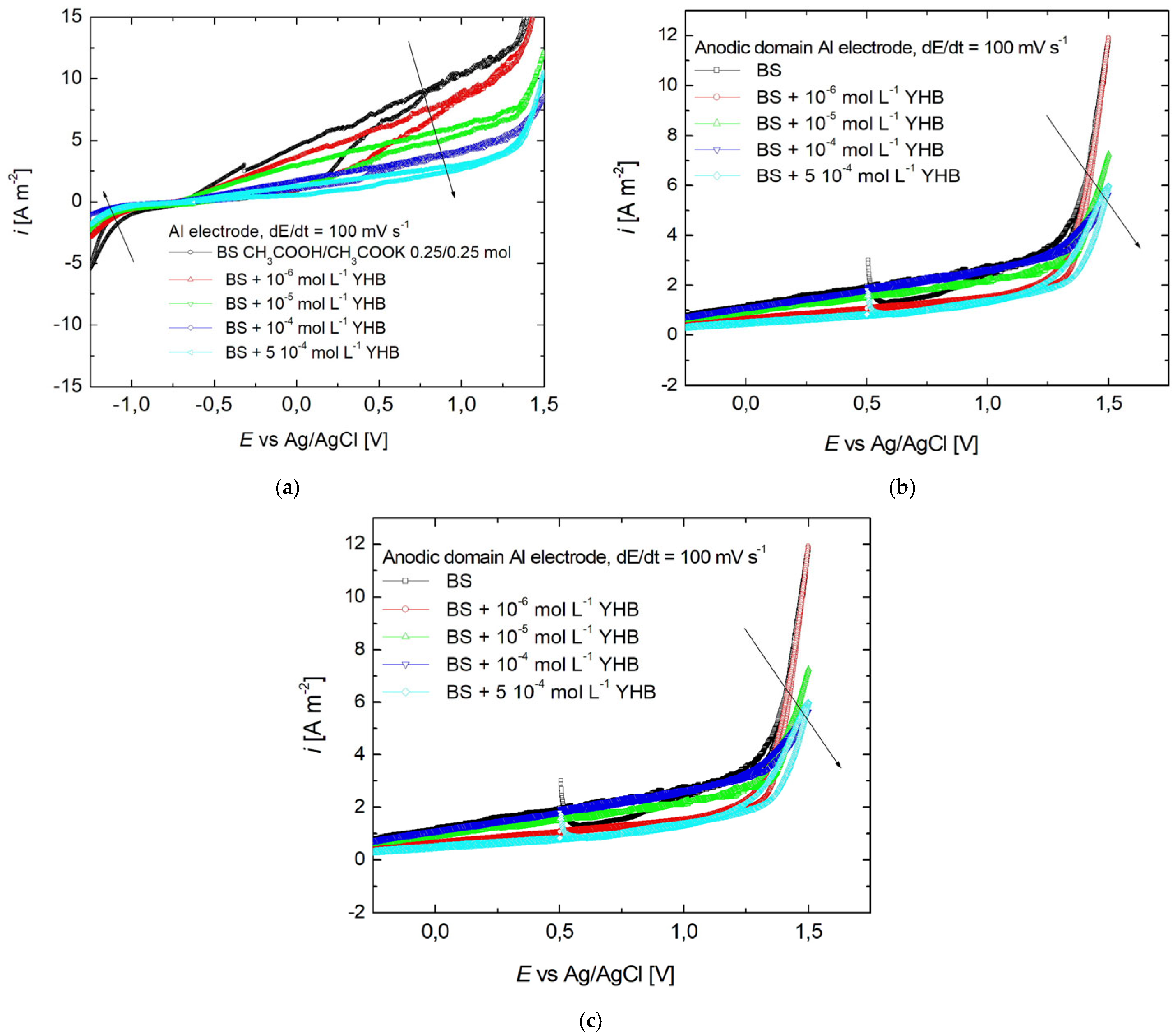
In the cathodic branch (Figure 4c), the shift in the specific potential of hydrogen evolution indicates that YHB acts as a mixed inhibitor, attributable to the heteroatoms (O, N) in its structure, the presence of the benzene ring, and the ether groups, which reduce the electrochemical activity of the steel [30]. The voltammograms obtained from the aluminum electrode are illustrated in Figure 5a–c, at a polarization rate of 100 mV s−1, displaying characteristics typical of passivatable metals. During anodic polarization in an acidic environment, the increase in the current density value is due to the active dissolution and the destruction of its native oxide layer and not to the formation of a stable Al2O3 layer. Aluminum does not passivate in acidic conditions, where pitting corrosion occurs immediately after anodic polarization [31].
During the cathodic scan, the reduction in H+ and the release of hydrogen are observed. In the presence of YHB, the anode and cathode characteristics shift, and the current–potential diagrams become smoother, reflecting the adsorption of YHB, the consolidation of the oxide layer and the change in electrode kinetics. The YHB molecule adsorbs onto the aluminum oxide layer, enhancing the passive film, which consequently reduces the current density. At high inhibitor concentrations, an effective surface coating is apparent, yielding an organic film that impedes the incursion of corrosive ions (acetate and protons) towards the metallic substrate.
In all cases, the evolution of the electrochemical response towards a lower reactivity with the increase in the concentration of YHB is consistent with its molecular structure, which contains conjugated rings and heteroatoms of nitrogen and oxygen. This facilitates the adsorption of the organic substance onto metal surfaces via potential donor–acceptor interactions and hydrogen bonding [32]. The cyclic voltammograms indicate that YHB exhibits mixed inhibitory activity, influencing both anodic and cathodic processes, and remains stable within the working potential range. This phenomenon is specific to inhibitors that act by blocking the active sites at the metal–solution interface, rather than by a shift from a purely anodic to a purely cathodic control.

3.2. Linear Sweep Voltammetry

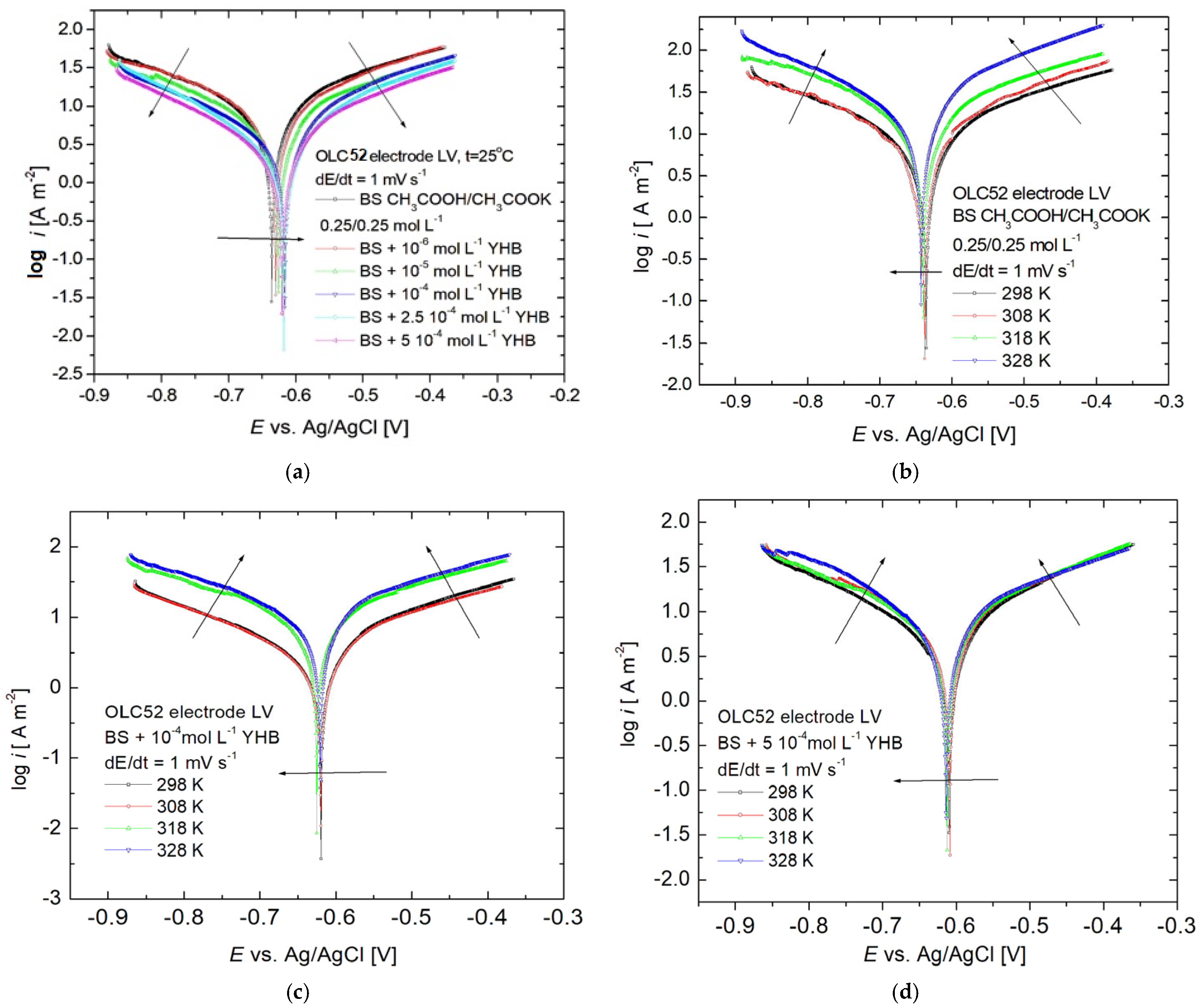
The Tafel diagrams were acquired following nitrogen bubbling for 10 min to eliminate dissolved oxygen ions and avert side reactions, followed by potential stabilization by chronopotentiometry until a stationary state was reached. Figure 6a illustrates the Tafel diagrams for the CH3COOH/CH3COOK 0.25/0.25 mol L−1 solution, both in the absence and presence of varying concentrations of YHB, at a polarization rate of 1 mV s−1.
The BS solution reveals higher corrosion currents and a notable current density at both anodic and cathodic potentials, indicating an active process of iron dissolution and hydrogen evolution. The addition of YHB results in a shift in the Tafel curves towards reduced current densities, with significant decreases in the cathodic slope (bc) and anodic slope (ba), suggesting the concurrent inhibition of both anodic and cathodic processes, thereby characterizing YHB as a mixed inhibitor.
The electrochemical measurements in Table 2 indicate a progressive reduction in the icorr corrosion current from 764.4 μA cm−2 to 38.2 μA cm−2 at a concentration of 5 · 10−4, yielding an IE of 95%. The reduced shifts in corrosion potential, correlated with the simultaneous reduction in anode and cathodic currents substantiate the classification of YHB as a mixed-type inhibitor, which is in agreement with the results of cyclic voltammetry and EIS.
The shift in the Ecorr corrosion potential towards more positive values indicates a minor predominance of anodic inhibition without a substantial modification in the overall process. The reduction in Tafel slopes and the corrosion rate vcorr indicates the establishment of a stable adsorbed coating on the surface of OLC52 steel, which limits charge transfer processes. Figure 6b depicts the effect of temperatures ranging from 298 to 328 on the BS solution. Figure 6c,d, representing solutions with concentrations of 10−4 and 5 · 10−4 mol L−1, exhibit a much reduced rise in temperature currents, therefore confirming the inhibitor’s continued efficacy at higher temperatures. Table 2 illustrates that at 328 K, icorr decreases from 1349 μA cm−2 (BS) to 67.7 μA cm−2 (5 · 10−4 mol L−1), while maintaining an IE of 95%, indicating the resilience of the YHB protective layer with regard to temperature.
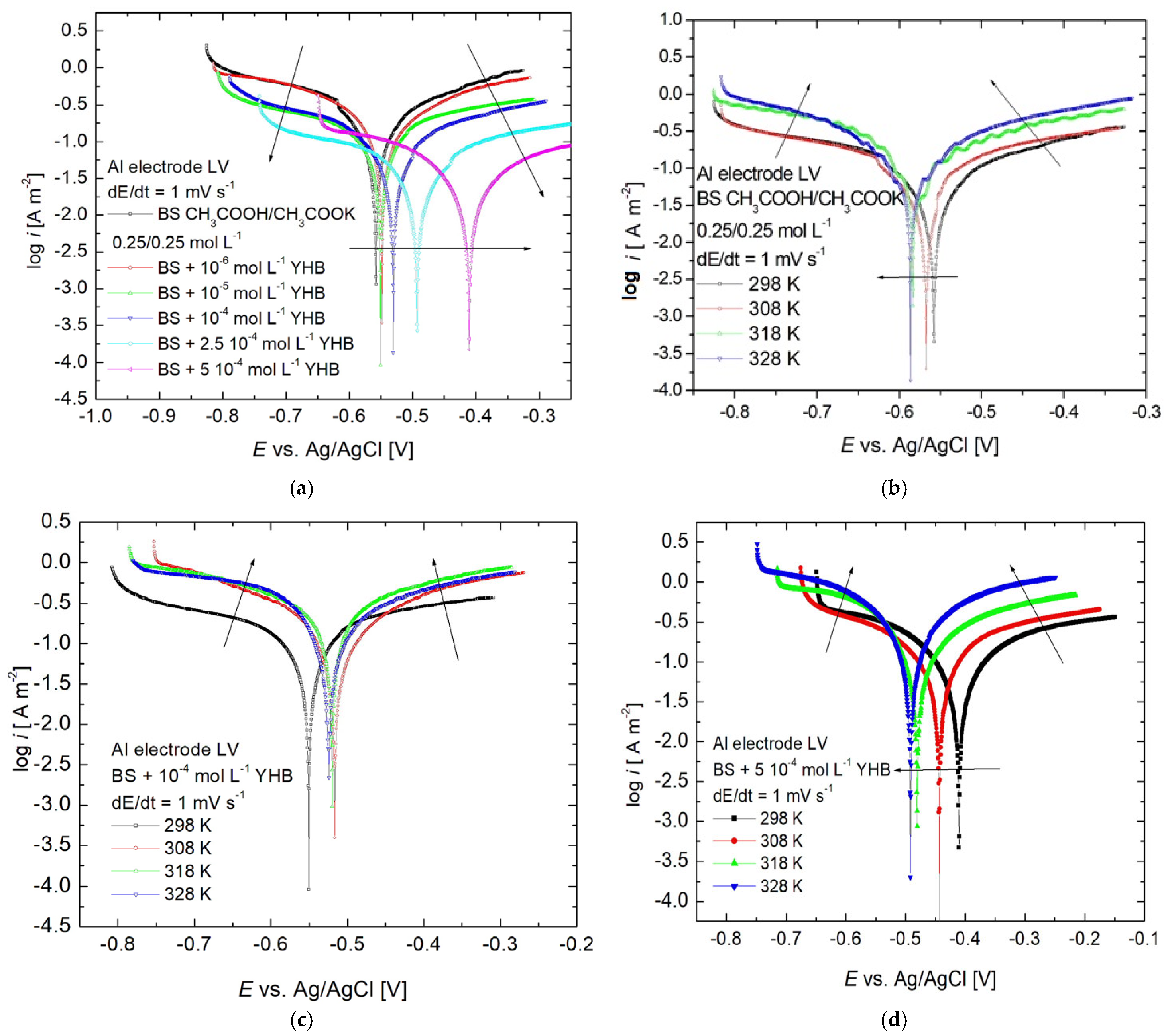
Figure 7a illustrates the Tafel curves obtained for the Al electrode in a 0.25/0.25 mol L−1 acetic/acetate solution at 298 K, with varying concentrations of YHB. The corrosion current in BS is 32.9 μA cm−2, with an Ecorr of −556 mV versus Ag/AgCl, indicating the active dissolving of aluminum and localized perforation of the oxide layer. The addition of YHB, as illustrated in Table 3, reveals a gradual decrease in icorr and a change in the Ecorr potential towards more positive values, indicative of the predominant inhibition of the anodic process. At the final concentration of 5 · 10−4 M, icorr decreases to 2.8 μA cm−2, yielding an IE of 91.5%. The corrosion rate, vcorr, is markedly decreased from 0.358 mm y−1 to 0.03 mm y−1. The Tafel curves illustrated in Figure 7b–d demonstrate that although the corrosion current density (icorr) shows a marginal rise with temperature, the IE remains higher (83%–91%) at 328 K. This observation corroborates the adsorptive nature of the YHB molecules, which adhere to the aluminum oxide surface, thereby obstructing the subsequent attack of acetate ions on the passive layer. YHB effectively inhibits corrosion in the acetic/acetate environment of OLC52 and Al steel, significantly diminishing Tafel currents and demonstrating excellent efficiency at higher working temperatures, therefore confirming the formation of a thermally and electrochemically resistant protective coating.

3.3. Arrhenius and Eyring Plots

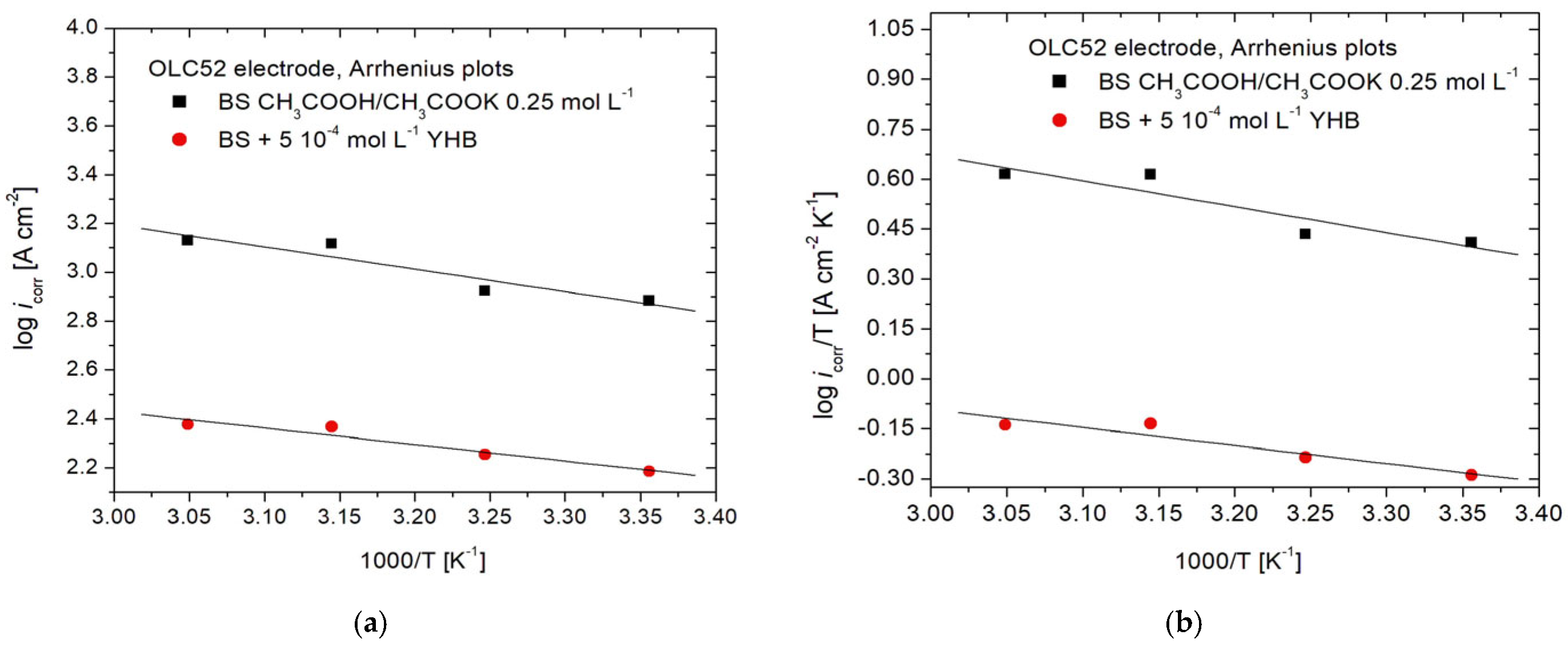
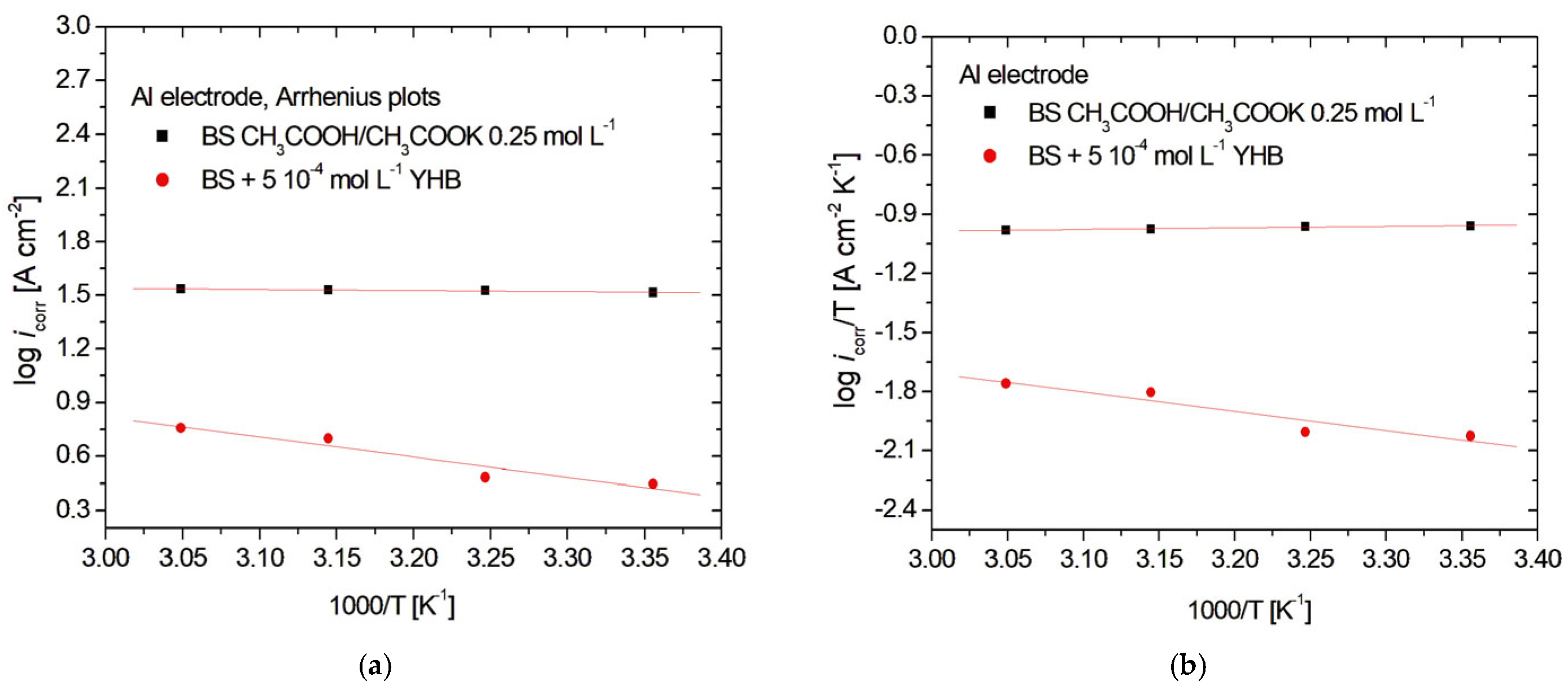
To determine the activation energy (Ea), enthalpy (ΔHa), and activation entropy (ΔSa), the slopes derived from the Arrhenius and Eyring representations (logicorr and log(icorr/T)) as a function of 1000/T were utilized. The relationship between corrosion current density and temperature is shown by Equation (7) [33].
i c o r r = A e E a / R T
where
i c o r r —corrosion current density [A m−2], A —preexponential factor, Ea—apparent activation energy [J mol−1], R—universal gas constant (8.314 J mol−1 K−1), T—absolute temperature [K].
To better understand the corrosion process, we applied the logarithm of the Eyring transition-state theory expression (Equation (8)), which delineates the electrochemical reaction rate [34]:
log i c o r r T = log R N h + Δ S a 2.303 R Δ H a 2.303 R T
where
N—Avogadro number (6.022 × 10²³ mol−1), h—Planck constant (6.626 × 10⁻³⁴ J·s), ΔHa—apparent activation enthalpy (J mol−1), ΔSa—apparent activation entropy (J mol−1 K−1).
The apparent entropy of activation may be determined from the slope of the graphic representation of the log(icorr/T) function shown versus 1000/T [33,34]. The Arrhenius and Eyring diagrams for OLC52 and Al (Figure 8 and Figure 9) were represented using current densities obtained from linear voltammetry within a temperature range of 298 to 328 K, both in the absence and presence of 5 · 10−4 mol L−1 YHB.
For OLC52, the data in Table 4 indicates that the values of apparent activation energy are appropriate, which indicates that the corrosion mechanism remains unchanged. The presence of the YHB inhibitor slightly slows down the process, attributable to the adsorption of the inhibitor. The marginal reduction in ΔHa and the increase in the ΔSa value suggest an enhancement in order at the interface, signifying the development of a thermodynamically favorable compact adsorptive layer with an oriented distribution of YHB molecules.
The results presented in Table 5 concerning aluminum corrosion indicate an increase in activation energy from 1.16 to 21.30 kJ mol−1, underscoring an increased energy barrier for the dissolution process attributed to enhanced passivation and the development of an organic oxide inhibitory layer. The negative apparent activation enthalpy ΔHa = −1.44 kJ mol−1, in the absence of the inhibitor, signifies that the corrosion process of aluminum in the working corrosion media is marginally exoergic, releasing a minor quantity of energy as Al3+ ions enter the solution. In contrast, the presence of YHB results in a positive apparent activation enthalpy assumes a positive value (18.7 kJ mol−1), indicating the establishment of a persistent inhibitory layer that diminishes the accessibility of corrosive ions to the metal surface. The rise in order at the interface, indicated by the ΔSa value, signifies the systematic spatial arrangement of the adsorbed YHB molecules. These activation parameters also provide useful information about the adsorption mechanism. The positive values of ΔHa and the increase in Ea in the presence of YHB show an endoenergetic process associated with the formation of a protective layer. The negative values of ΔSa reflect an orderly arrangement of inhibitor molecules at the interface, consistent with a mixed mechanism of physical and chemical adsorption, according to the thermodynamic models reported for organic inhibitors.

3.4. Adsorption Isotherms

To assess the nature and intensity of the interactions between YHB molecules and the investigated metal surfaces, various adsorption models were examined—Langmuir, Freundlich, Temkin, Frumkin, Flory–Huggins, El-Awady, Dubinin–Radushkevich, Volmer, and Hill de Boer—utilizing experimental icorr data obtained from linear voltammetry studies, at the range of concentrations used in electrochemical tests (10−6 ÷ 5 · 10−4 M) [35]. The isotherms mentioned are based on different types of assumptions from a physical–chemical point of view. The Freundlich equation describes adsorption on sites that are not equivalent. The Temkin and Frumkin isotherms take into account that the adsorption takes place on the most favorable places on the metal surface, namely the adsorbate–adsorbate and adsorbate–surface interactions. The Flory–Huggins addresses the number of water molecules substituted by an inhibitor molecule. The El-Awady model discusses the potential for the formation of a multimolecular layer at the metal/electrolyte interface. The Dubinin–Radushkevich pertains to adsorption on heterogeneous surfaces, characterized by a Gaussian distribution of site energies, typically correlated with a physical adsorption mechanism. In contrast, the Volmer and Hill-De-Boer models address single-layer adsorption at low surface coverage, with the latter incorporating lateral interactions among the adsorbed molecules [35].
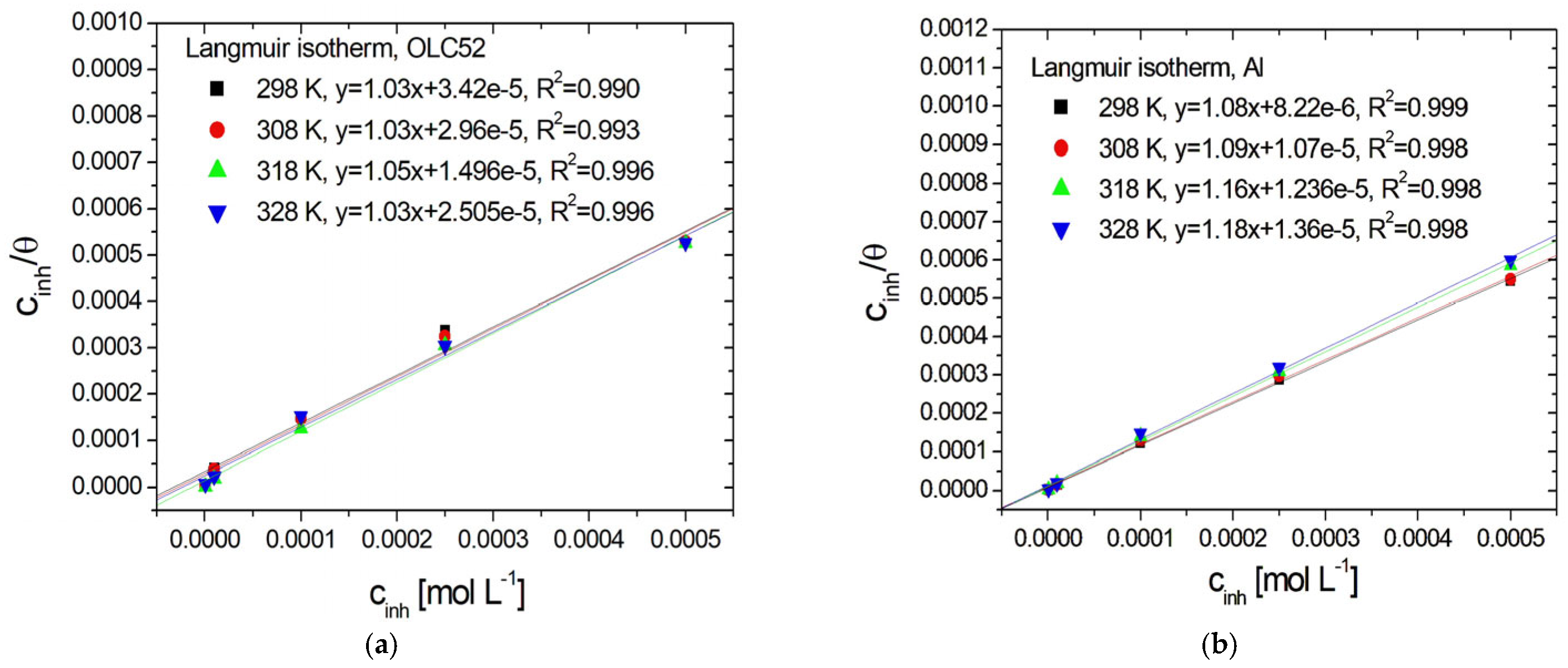
Upon analyzing the correlation values (R2) of the linear models, as the goodness of fit criteria, it was determined that the Langmuir isotherm (Figure 10a,b) most accurately represents the adsorption of YHB on carbon steel OLC52 and aluminum in an acetic/acetate medium at temperatures ranging from 298 to 328 K.
The surface coverage θ was determined from the corrosion current densities obtained by the Tafel slope method using Equation (9):
θ = i c o r r , B S i c o r r ,   i n h i c o r r , B S
where i c o r r , B S and i c o r r ,   i n h are the corrosion current densities in the absence, respectively, in the presence of YHB. The θ values were subsequently used for the construction of the linear representations of the isotherms.
The Langmuir model asserts the formation of a perfect adsorption monolayer, characterized by minimal lateral interactions between inhibitor molecules, as illustrated by the linearized form (Equation (10)) [35]:
c i n h θ = 1 K a d s + c i n h
where cinh represents the concentration of the inhibitor (mol L−1), θ —the degree of coverage of the metal surface, K a d s —adsorption equilibrium constant [35].
The graphical representations in Figure 10 indicate a significant correlation between the experimental and theoretical values (R2 = 0.99–0.996), and the slope values are appropriate for the unit, affirming the validity of the Langmuir model for the examined scenarios. The adsorption constants Kads were ascertained from the y-intercepts of the lines (1/Kads), and the standard free energy of adsorption was determined using Equation (11) [35,36].
G a d s o = R T l n ( 55.55 K a d s )
where R—universal gas constant (8.314 J mol−1 K−1), and T—absolute temperature (K).
The results of isotherms fitting and the values of G a d s o for the two metals studied are presented in Table 6.
The analysis of the data in Table 6 reveals that the Kads constants indicate spontaneous and stable adsorption. Additionally, the standard free energy of adsorption ( G a d s o ) values, ranging from −35 to −41 kJ mol−1, suggest that the inhibitor’s adsorption at the metal interface is mixed (physicochemical) with a tendency for chemisorption. Although the distinction related to physiosorption and chemisorption is based on the interval between −20 to −40 kJ ( G a d s o is an empirical one [37], this criterion remains widely accepted in the recent literature [38,39].
In comparison to the other metals, the Kads values for aluminum are 3–4 times more than those for OLC52, indicating more robust interactions between YHB and aluminum oxides. The values of ∆G°ads for both metals grow increasingly negative with rising temperature, indicating enhanced thermal stability of the organic inhibitor layer. In addition, the RMS values of the residues for the fits corresponding to the Langmuir isotherms are very low, usually of the order of 10−5 and are randomly distributed around 0 for all working temperatures, in the case of both metals studied, which confirms the absence of significant deviations from linearity and supports the application of the Langmuir model for the studied systems.

3.5. Chronoampherometry Studies

Chronoamperometry is a technique that entails measuring the variation in current density over time at a fixed potential value. This outlines the development and stability of the inhibitory layer at the electrode interface. Chronoamperometric tests were conducted on OLC52 and Al working electrodes in a CH3COOH/CH3COOK 0.25/0.25 mol L−1 supporting electrolyte solution, including varying concentrations of YHB. Prior to conducting the chronoamperometric measurements, it was necessary to observe the open circuit potential (OCP) for 3600 s to stabilize the system.
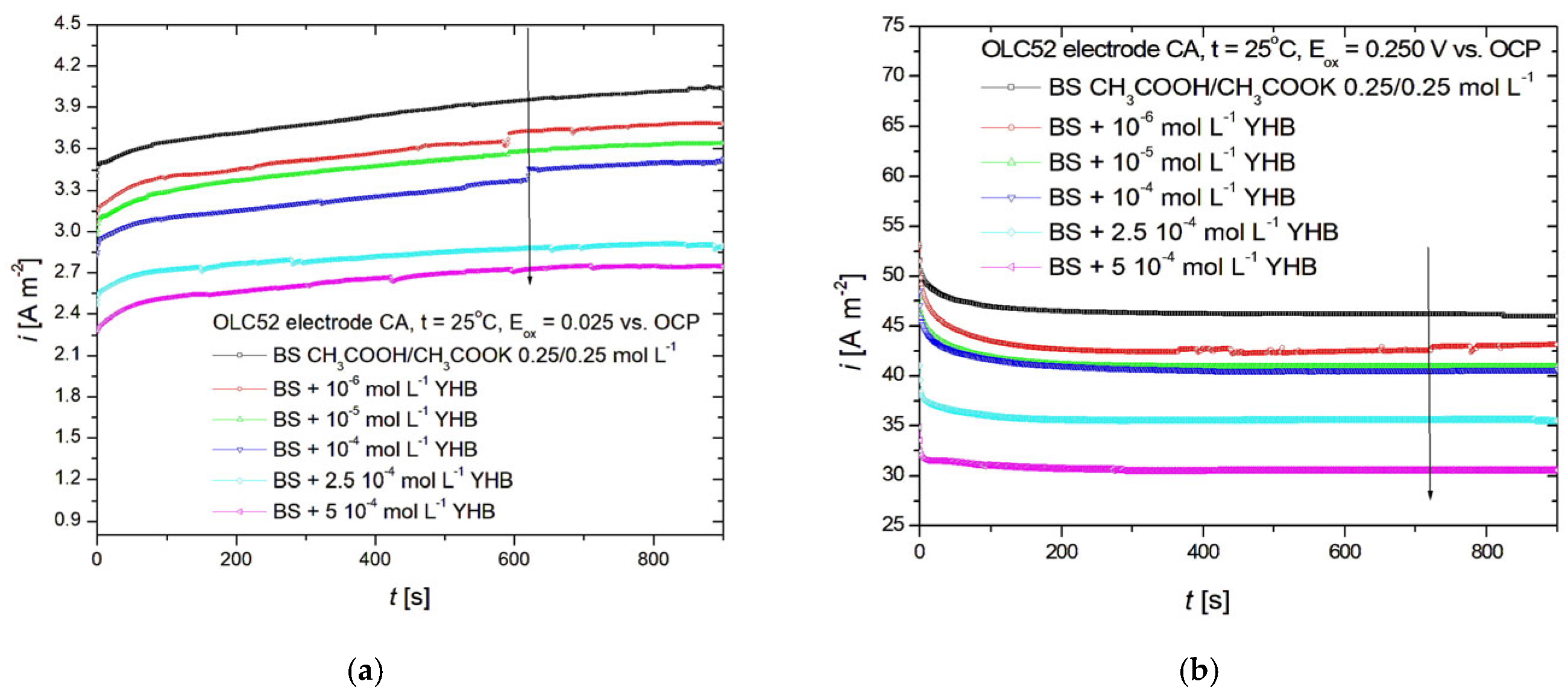
For OLC52 (Figure 11), increased YHB concentrations result in chronoamperometric responses characterized by diminished and more stable currents. At 25 mV from EOCP, the curves exhibit an initial increase, followed by stabilization, which indicates the gradual formation of an adsorbed layer of YHB. At 250 mV versus EOCP, the current decreases from about 50 A m−2 in BS to about 30 A m−2 in the presence of YHB, in conjunction with the existence of a compact protective coating that slows anodic dissolution. In the presence of YHB, the current density diminishes to around 30 A m−2, indicating a decrease in the corrosion rate due to the formation of a compact protective coating.
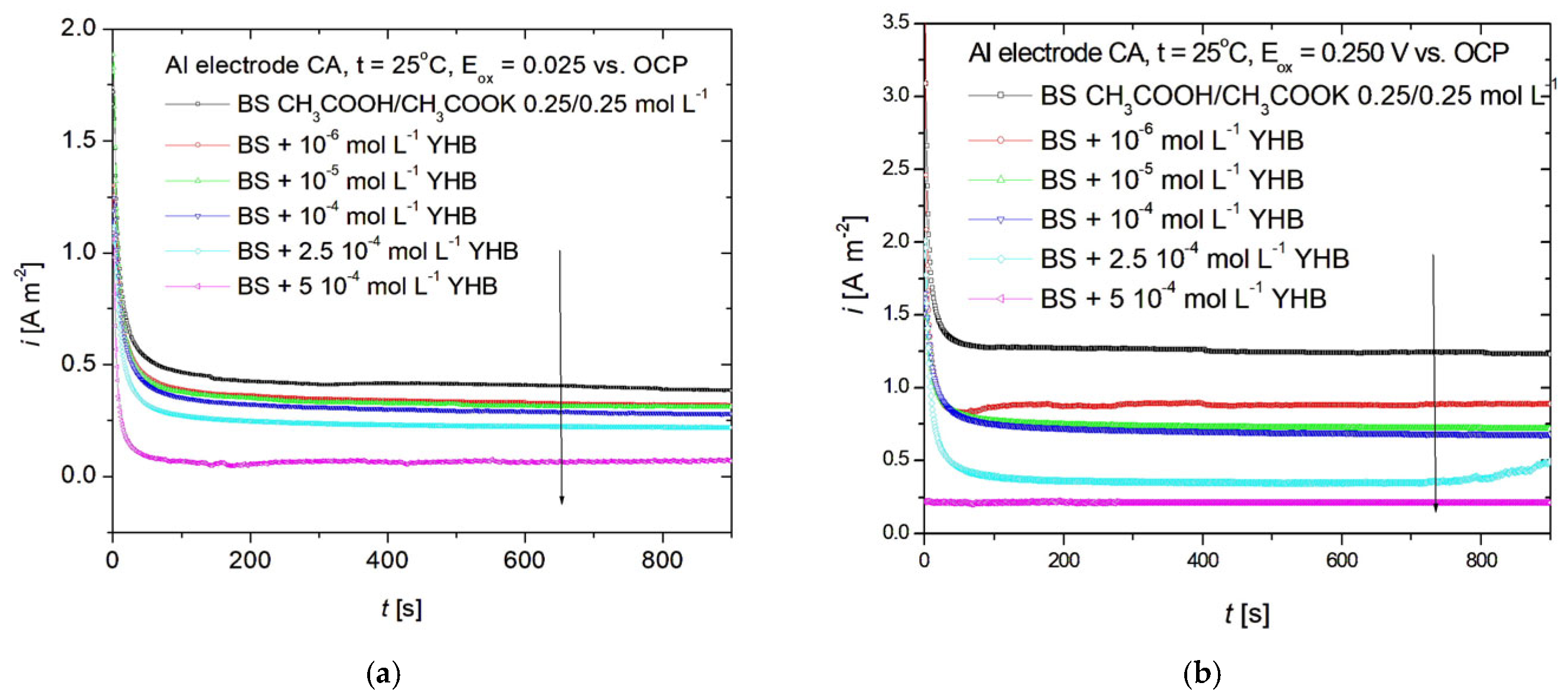
In the case of aluminum (Figure 12a,b), we observe a similar increase, albeit with decreasing current density values (1–3 A m−2). At 25 mV versus EOCP the current density remains nearly constant (around 0.5 A m−2) in the first minutes, which indicates that the aluminum is in an active state of dissolution, not in the formation of a stable passivating oxide layer. At 250 mV versus open circuit potential, in the absence of the inhibitor, a small increase in current is seen due to the dissolution of the Al2O3 film. The addition of YHB considerably reduces the current values, indicating the formation of a stable oxide coating that limits charge transfer.
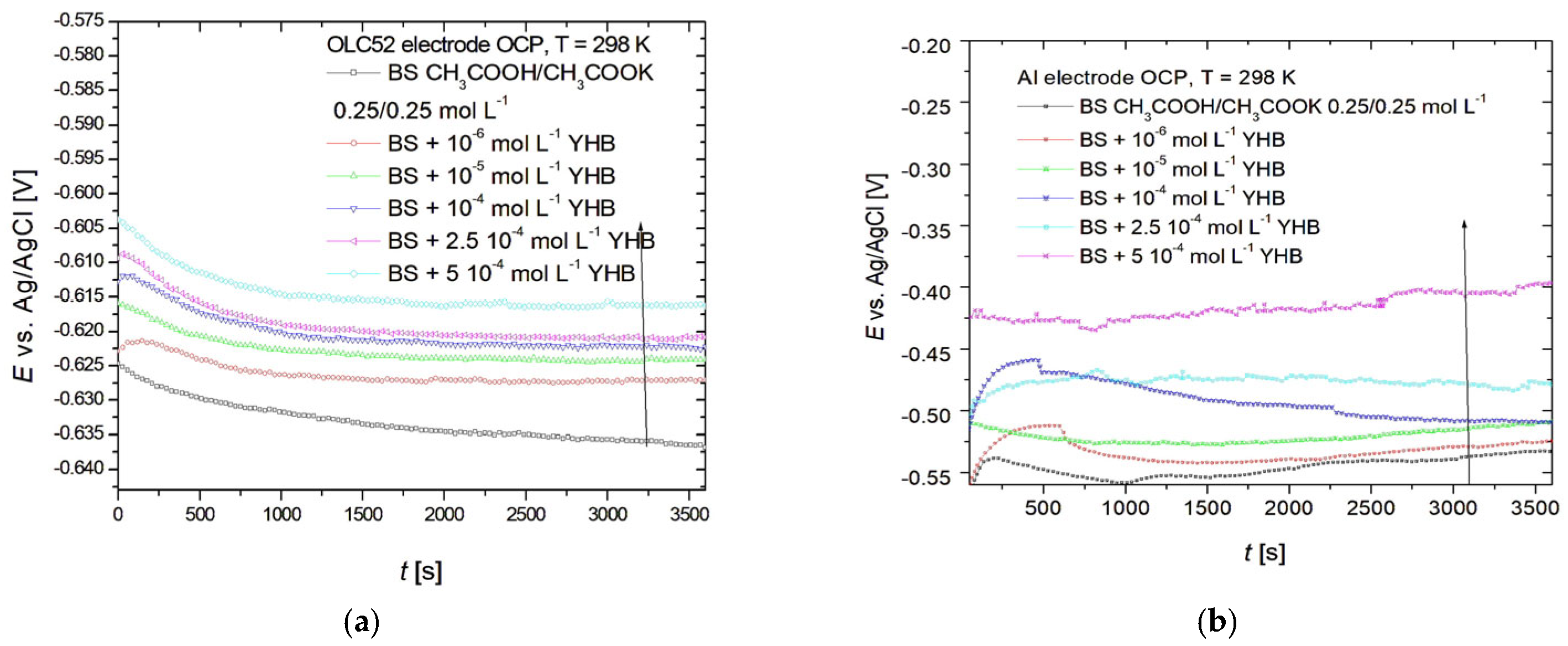
The increasing value of the open circuit potential (Figure 13) in both scenarios confirms that by adjusting the EOCP potential to more positive values, the surface of OLC52 is protected from corrosion, while in the case of aluminum, YHB effectively adsorbs to the aluminum oxide layer, thereby stabilizing the protective film. This behavior aligns with the values obtained from the Langmuir isotherms, indicating a pronounced tendency for adsorption and the establishment of chemical bonds with the metal surface.
The experimental data in Table 7 indicate that YHB acts as an effective corrosion inhibitor for both metals examined. For OLC52, the data at both working potentials confirm a significant reduction in anodic currents (from 4.2 to 2.4 A m−2 at 25 mV/EOCP and from 48 to 32 A m−2 at 250 mV/EOCP), as the inhibitor concentration increases, emphasizing the limitation of anodic and cathodic processes through a partial chemical adsorption. For Al, the current at 250 mV/EOCP decreases from 1.4 to 0.15 A m−2 at 250 mV/EOCP and from 0.6 to 0.1 A m−2 at 25 mV/EOCP, showing that adsorbed YHB molecules hinder metal dissolution and transiently stabilize the oxide layer.

3.6. Electrochemical Impedance Spectroscopy Studies
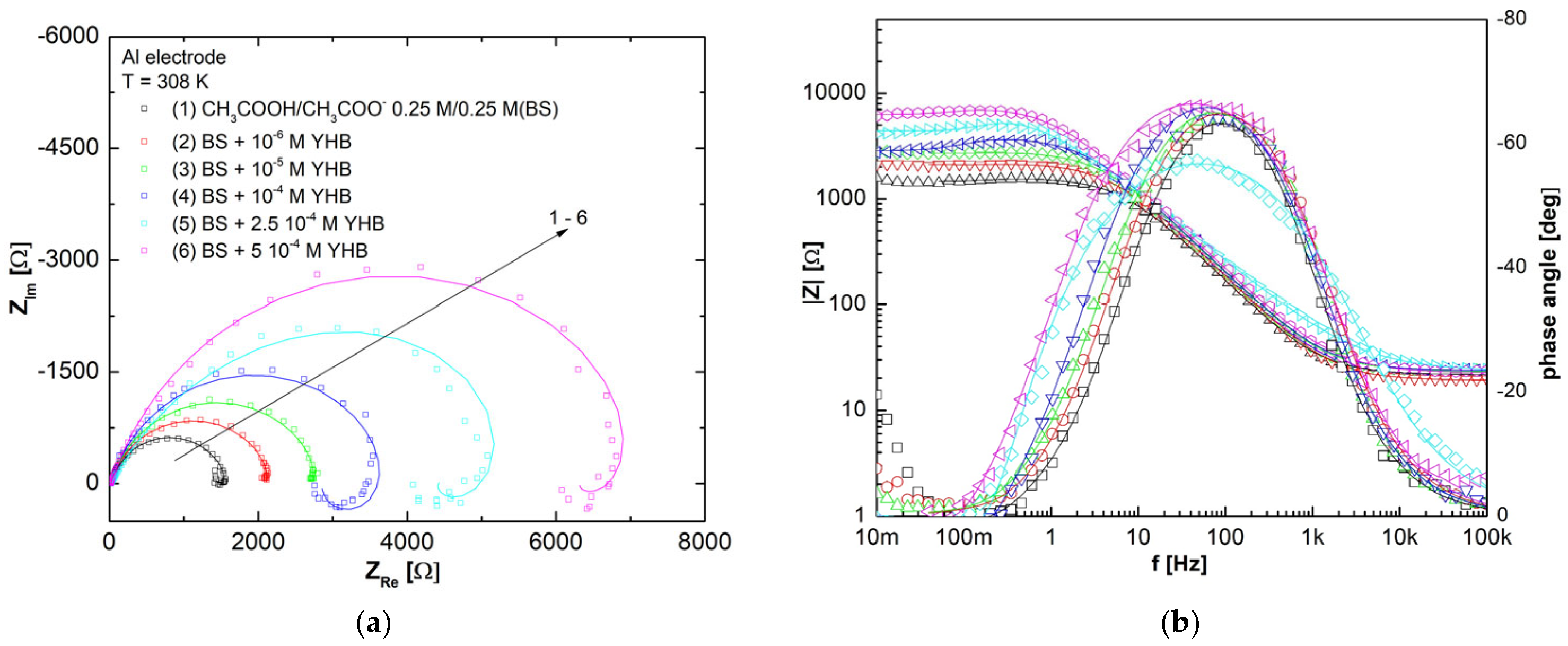
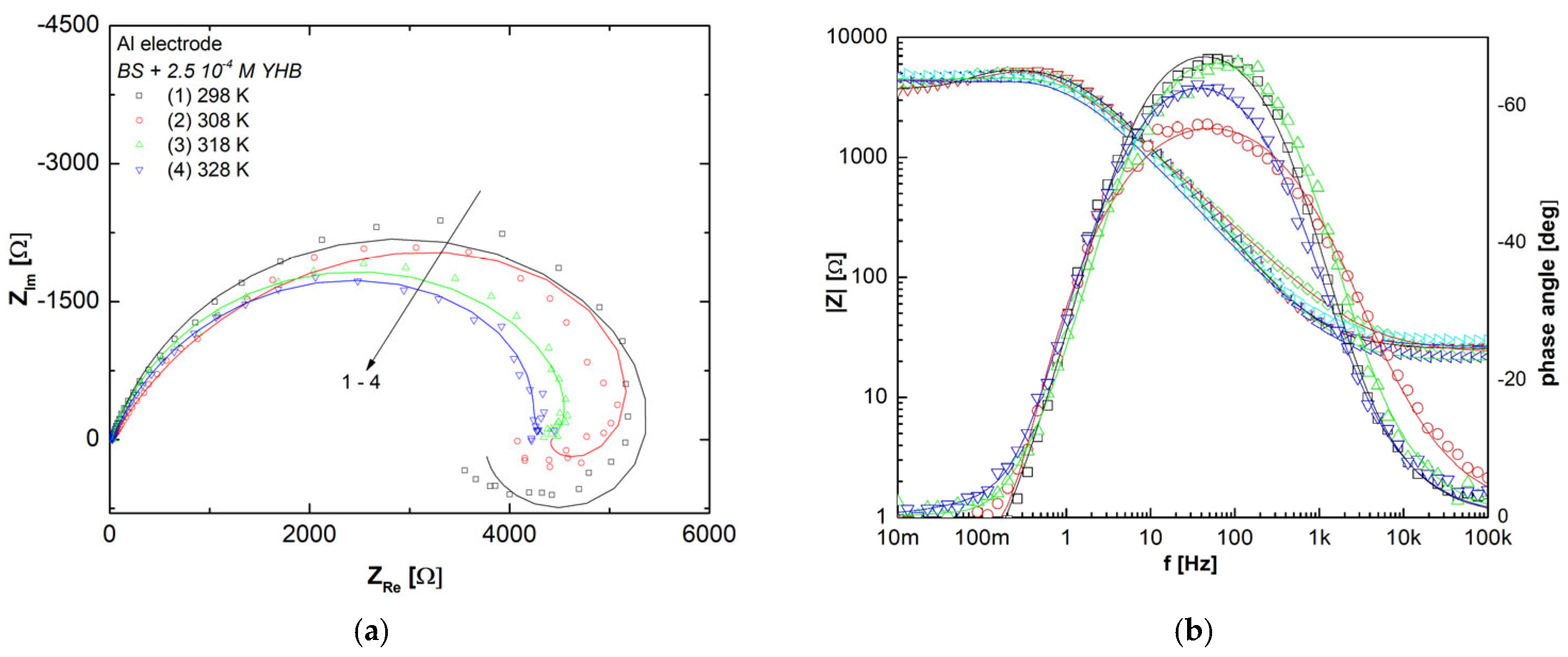
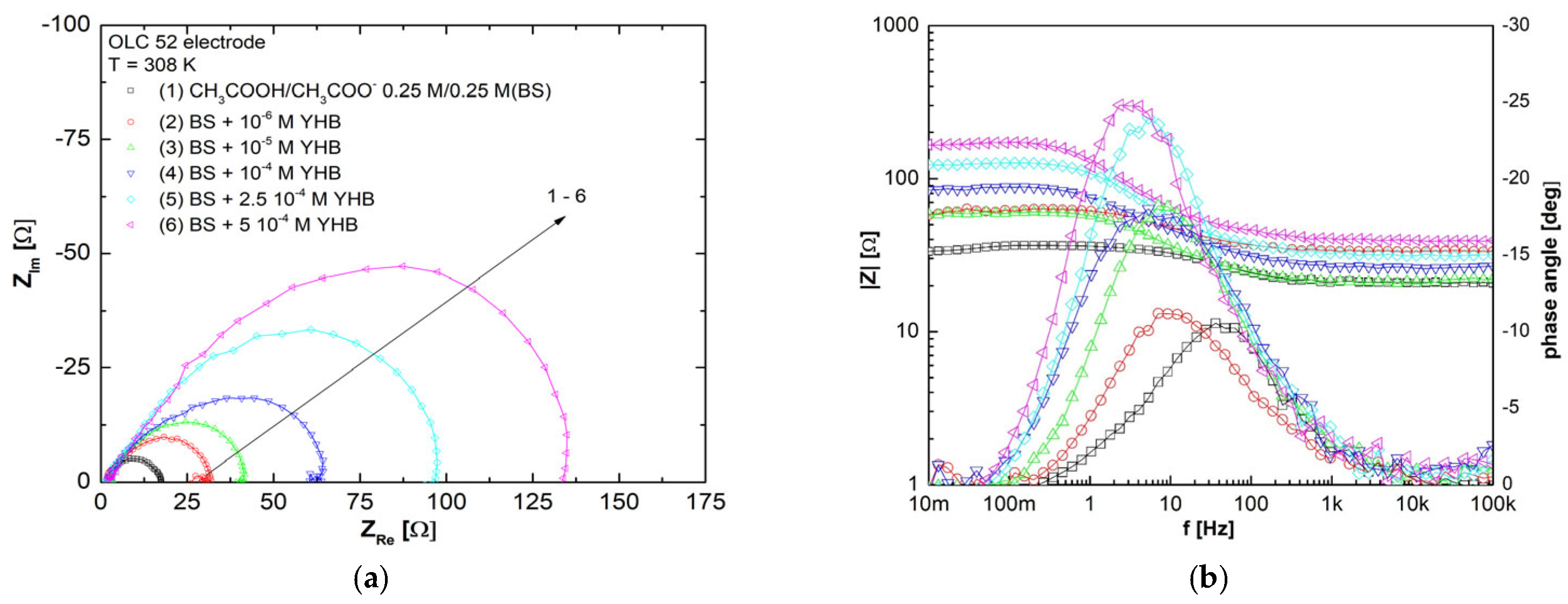
Figure 14a,b present EIS spectra depicted as Nyquist and Bode plots illustrating OLC52 corrosion in CH3COOH/CH3COO test solutions in the absence and presence of YHB different concentrations used in experimental studies, at the same temperature value, 35 °C.
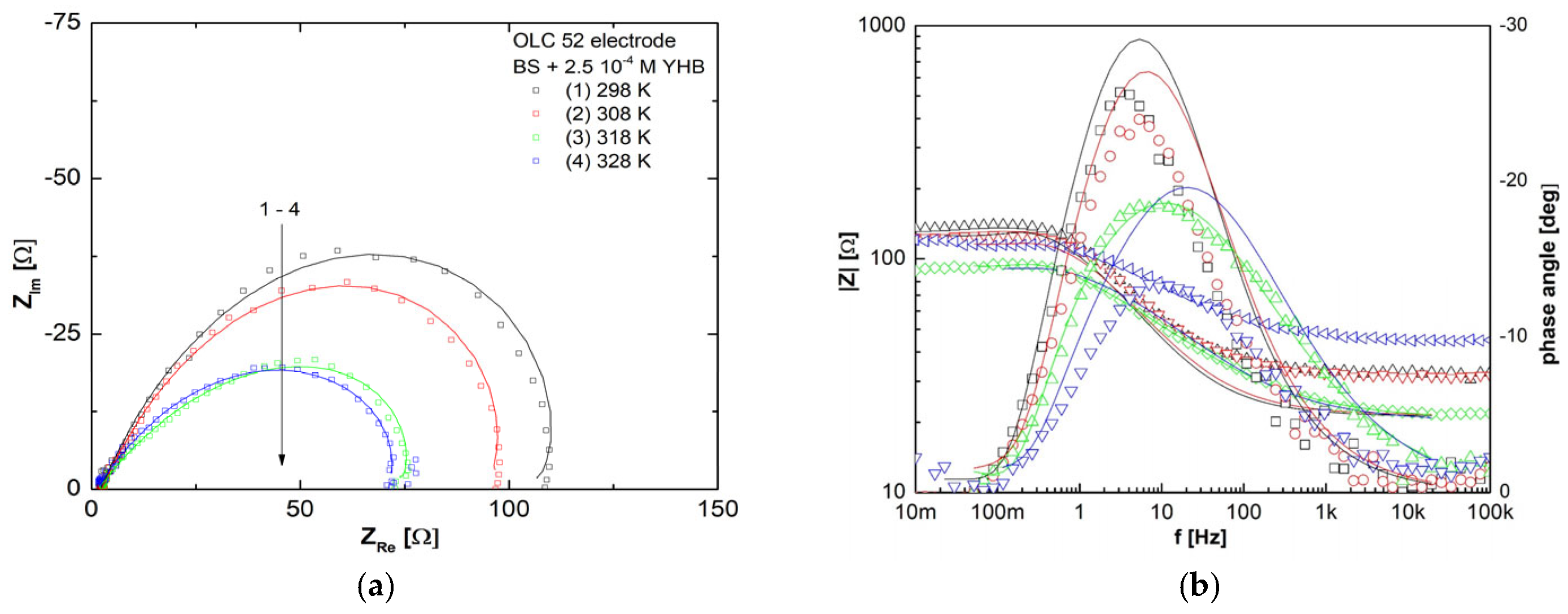
Also, in Figure 15a,b are shown EIS spectra (Nyquist and Bode plots) for the case of corrosion studied at same inhibitor concentration (2.5 · 10−4 M YHB) added in BS at four temperatures values between 25 °C and 55 °C. The continuous lines were generated by fitting, using a Randles circuit, while open symbols indicate experimental data.
Figure 16 and Figure 17 present the spectra acquired for the measurements conducted on an aluminum electrode at the same working conditions.
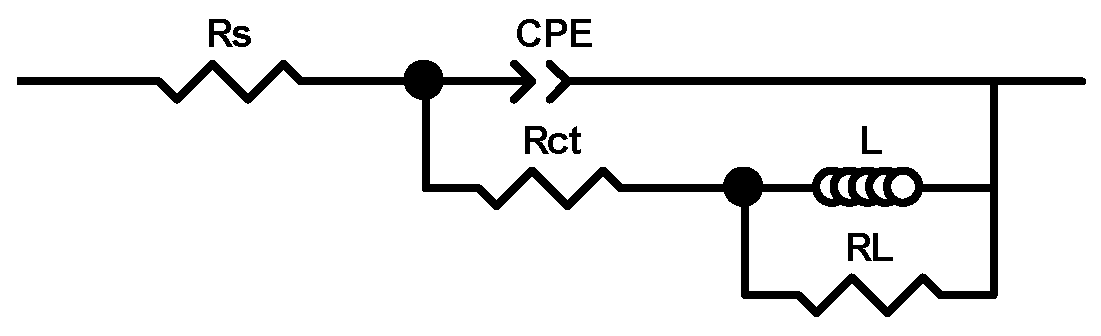
The equivalent electrical circuit (EEC) shown in Figure 18 comprises a solution resistance Rs in series with a parallel connection of a constant phase element (CPE), which account for the double layer capacity and a series connection between a charge transfer resistance Rct and magnetic coil (inductor) element. This is a typical electrical circuit for adsorption process of inhibitors on metal surfaces, where chemical species, ions or other molecules are physically adsorbed at the metallic interface of the electrochemical double layer, exhibiting a specific electrical charge motion [40,41].
Figure 16. (a) Nyquist and (b) Bode plots of aluminum electrode in CH3COOH/CH3COO test solutions, in the absence and presence of different concentrations of YHB, at 35 °C (open symbols show experimental values and continuous lines were obtained by fitting).
Coatings 15 01458 g016
Figure 17. (a) Nyquist and (b) Bode plots of aluminum electrode in CH3COOH/CH3COO test solutions, 2.5 · 10−4 M YHB concentration, at different temperature values.
Coatings 15 01458 g017
Figure 18. Electrical equivalent circuit (EEC) for modeling OLC 52, an Al corrosion processes, in CH3COOH/CH3COO test solutions.
Coatings 15 01458 g018
The experimental diagrams show a deformed semicircle which describes the charge transfer process followed by a second semicircle at low frequencies which defines the inductance response (more visible in aluminum corrosion case), typical for adsorption ion mechanism. Inductive loops at low frequencies are frequently attributed to adsorption phenomena at the metal/electrolyte interface; however, recent studies indicate that this kind of behavior can occur from non-steady-state conditions during electrochemical impedance spectroscopy measurements. Wang et al. [42] demonstrated that after attaining a steady open circuit potential, differences exist between the impedance spectra acquired from measurements conducted in opposing frequency directions (from high frequency to low frequency and vice versa). This sort of non-stationarity can provide a pseudo-inductive behavior, particularly in systems where superficial film development occurs. Klotz [43] demonstrated that the inductive signals displayed in the Nyquist spectra originate from charging processes associated with the modification of interfacial resistance; thus, the observed inductive loops may indicate, alongside the effects of inhibitor adsorption, additional intricate interfacial dynamics.
The resistance Rs component represents the uncompensated solution resistance. In the EEC utilized for simulating the OLC52 corrosion process, the ideal capacitor characterized by double layer capacity (Cdl) is substituted by a constant phase element (CPE) since it more accurately reflects the behavior of real electrochemical systems, particularly of depressed loops in EIS spectra.
The impedance of the constant phase element is delineated in Equation (12) [42].
Z C P E = 1 / T ( j ω ) n
where T is a parameter proportional to the capacitance of the double layer and n, ranging from 0 to 1, describes the deviation from the ideal capacitive behavior [44,45]. For the OLC52 electrode, the CPE-n exponents obtained by fitting the EIS data (Table 8 and Table 9) decrease from 0.73 in BS to 0.61 at the highest YHB concentration and from 0.65 to 0.52 as the temperature increases from 298 to 328 K, in the case of the fixed inhibitor concentration (2.5 · 10−4 M). For the Al electrode, n varies between 0.84 and 0.78 in the concentration series shown in Table 10 and between 0.82 and 0.76 in the temperature series. These deviations from the ideal value n = 1 quantitatively describe the depression of capacitive semicircles in Nyquist diagrams, indicating an unideal capacitive behavior associated with surface heterogeneity and the formation of adsorbed films. The capacitance of the electrochemical double layer (Cdl) was determined using Equation (13) [45].
C d l = T 1 / n 1 R s 1 R c t n 1 n
The IE values of YHB compound were determined using the charge transfer resistance (Rct) values from Table 8 and Table 9 for OLC 52 and Table 10 and Table 11 for aluminum, following Equation (14), where R0ct and Rict are the charge transfer resistance in BS, respectively, without and with different YHB concentrations.
I E   % = 1 R c t 0 1 R c t i   1 R c t 0 × 100
The semicircle diameter correlates with the Rct value, which significantly increases with YHB concentration, suggesting that charge transfer is impeded in its presence. The typical frequency of the charge transfer process shifts to lower values as YHB concentration increases, further substantiating this observation. In the intermediate frequency range, the curves |Z| vs. f for OLC52 in Figure 14b exhibit slopes approximately between −0.6 and −0.7, and the phase angle has a single wide maximum of about 60–70°, in accordance with the values of the CPE exponent of 0.73–0.61 in Table 8 and Table 9. In the case of the Al electrode (Figure 16b and Figure 17b), the slopes in the intermediate frequency range are appropriate from −0.8 to −0.9, and the phase angle maximums reach about 70–80°. The quantitative characteristics of the Bode diagrams confirm the existence of a response time dominated by charge transfer and the formation of a more capacitive protective surface film in the presence of YHB. In the process illustrated by the EEC in Figure 18, the Rct value is directly proportional to the corrosion resistance of OLC52 samples in CH3COOH/CH3COO test solutions [46]. The data from Table 8 and Table 10 unequivocally demonstrates that Rct rises with higher concentrations of YHB in test solutions, corroborating the results from linear polarization tests. The chi-square values around 10−3 demonstrate a strong correlation between the EIS experimental data and the values derived from the EEC model. It should be underlined that moderate discrepancies between inhibitory efficiencies determined by Tafel/PDP measurements and those obtained by EIS are frequently reported in the literature. In this case, the IE values for Al obtained from Rct (88%) and from icorr corrosion currents of the Tafel slope method fall within this typical experimental scatter, which indicates that the results of the EIS and Tafel are consistent and mutually reinforcing.

3.7. Molecular Modeling

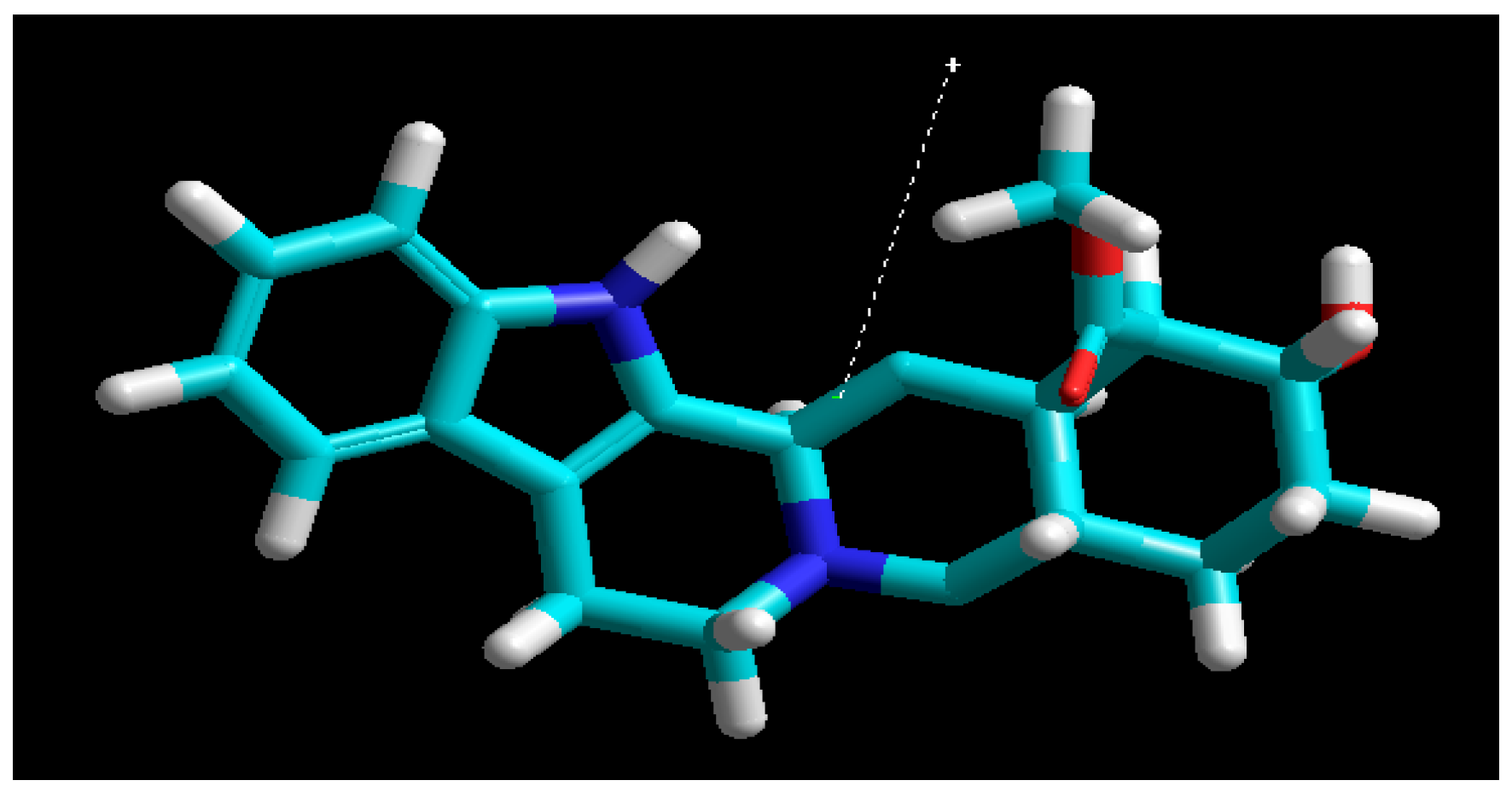
Theoretical molecular modeling calculations were conducted to comprehend the behavior of YHB molecules at the metal/aggressive solution interface and to correlate the electronic structure with the experimentally determined IE. Figure 19 illustrates the optimal configuration of the YHB molecules used in the experimental tests. The arrow, marked with the orientation from negative to positive, signifies the direction of the dipole moment, while the atoms are depicted as follows: red for oxygen, cyan for carbon, blue for nitrogen, and white for hydrogen.
For quantum calculations, the Density Functional Theory—DFT—was used, implemented in the Hyperchem 8.0 software, utilizing the B3LYP function with the 6-31G* base set. The geometry optimization was performed for the neutral molecule of YHB in its ground state—total charge = 0, spin multiplicity = 1, closed-shell singlet, using the default convergence criteria from Hyperchem, namely the following: the SCF procedure was iterated until the total energy variation between successive cycles became less than 10−6 u.a and the optimization was continued until the mean square gradient decreased below 0.01 kcal mol−1 Å−1. The descriptors of the investigated molecule are presented in Table 12. These include the energies of the Frontier orbitals, EHOMO, ELUMO, energy difference ΔE, dipole moment μ, electronegativity χ, chemical hardness η, chemical softness σ, molecular volume V, and surface area of molecule S [47].
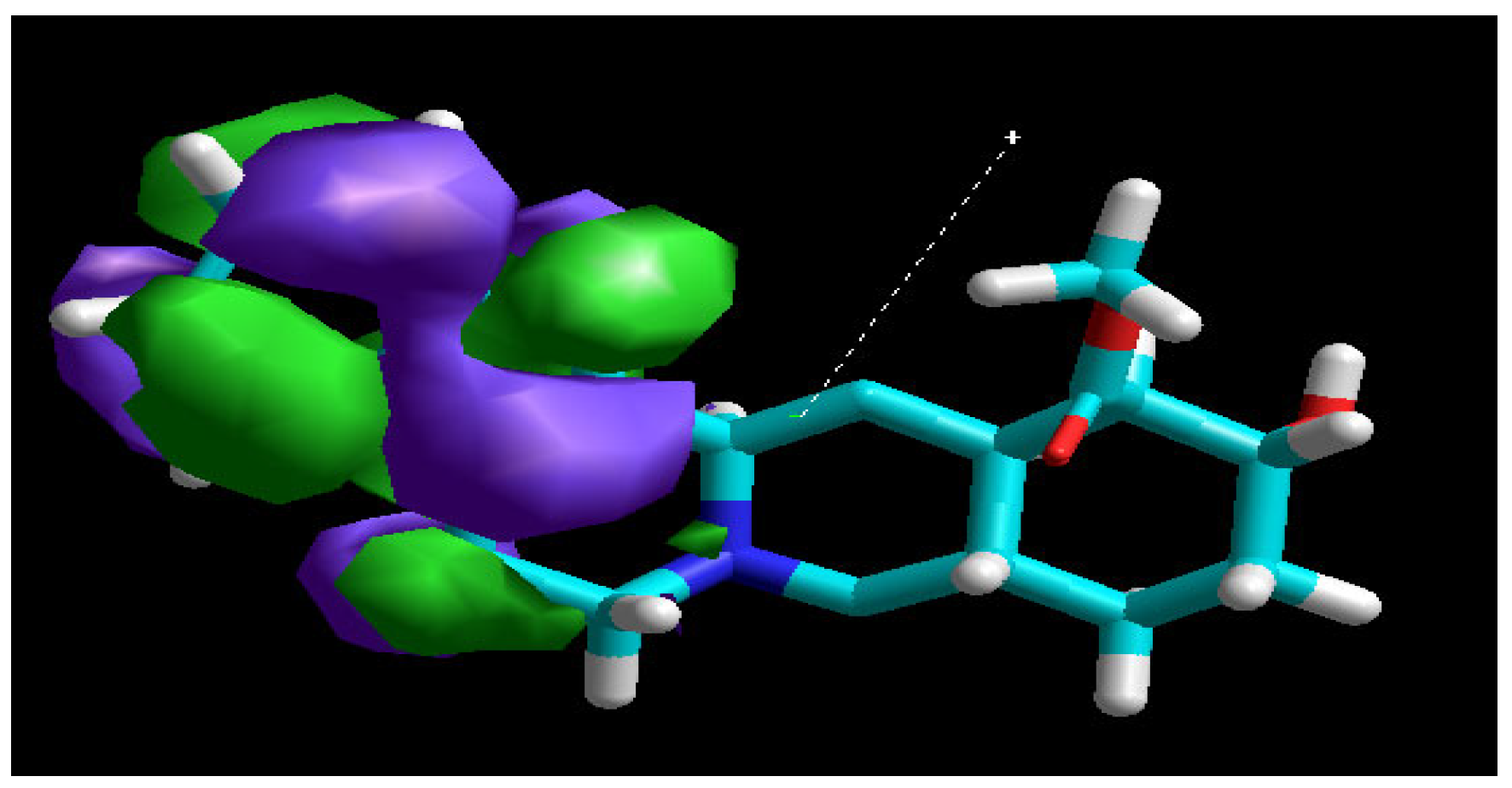
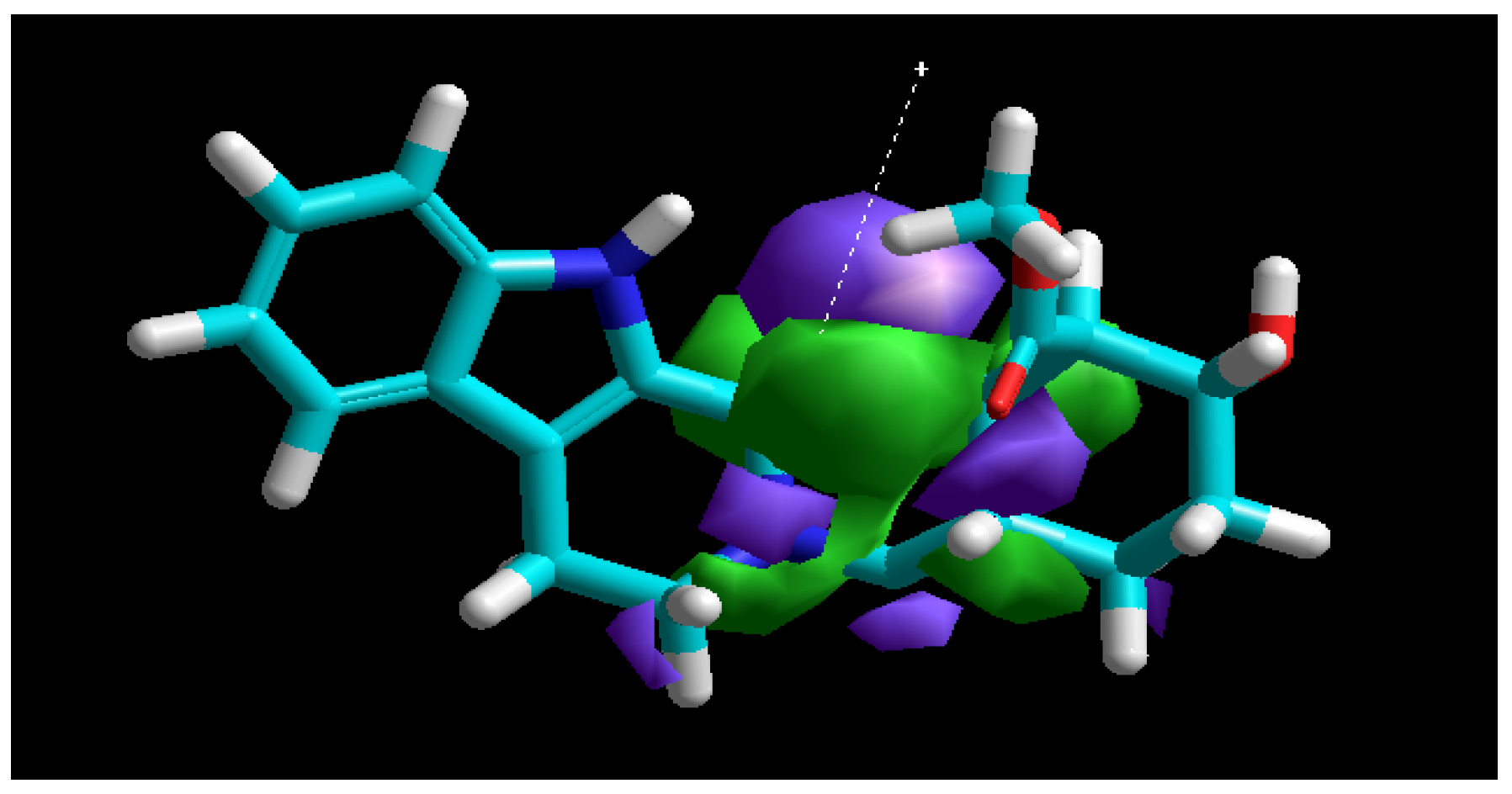
Figure 20 and Figure 21 show the distribution of the HOMOs and LUMOs. The HOMO is located mostly on the rings that present aromaticity, respectively, nitrogen atoms, illustrating areas with significant electron-donating potential, while the LUMO is aligned with the hydroxy and carbonyl groups, where electron acceptance occurs [48].
The EHOMO value of −8.38 eV indicates a substantial stability of YHB and a moderate ability to interact with the metal surface by electron donation, whereas the ELUMO value of −0.60 eV suggests the potential to accept electrons from the vacant orbitals of the analyzed metals. The energy difference ΔE = 7.78 eV corroborates the modest reactivity and stability of the adsorbed layer [49]. The dipole moment value μ = 2.84 D signifies adequate polarity for electrostatic and covalent interactions, while the values χ = 3.89 eV, η = 4.49 eV, and σ = 0.22 eV−1 underscore a moderately “soft” molecule, elucidating the mixed physicochemical adsorption observed experimentally [50]. The geometric parameters of the YHB molecule indicate a volume of V = 994.73 Å3 and a surface area of S = 581.72 Å2, suggesting effective metal surface coating. The V/S ratio of 1.71 Å further implies the formation of a compact film that efficiently inhibits corrosion on the examined samples [51].

3.8. Surface Morphology

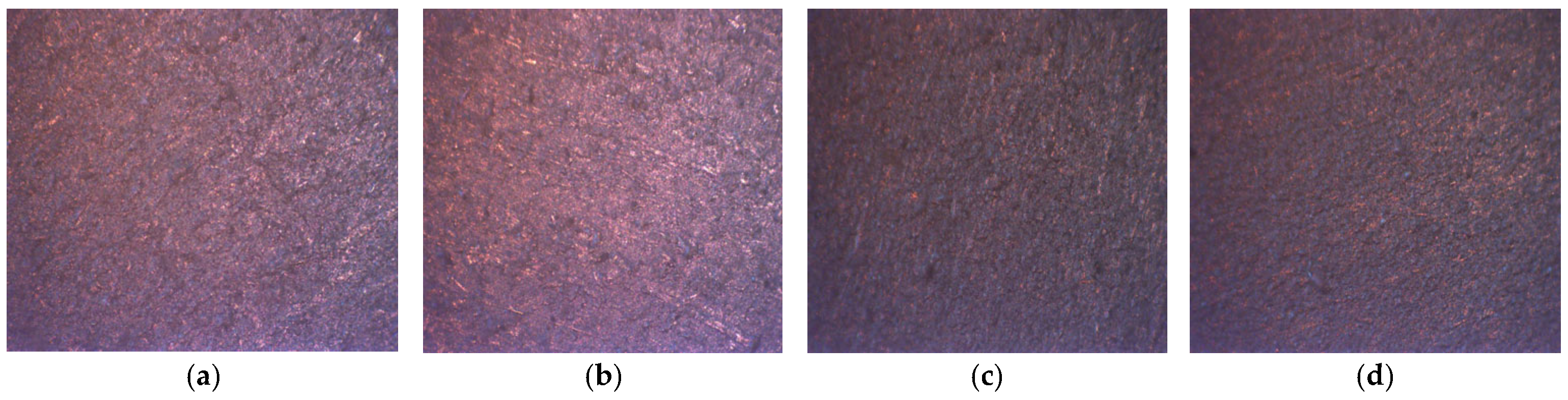
To correlate the electrochemical results with the morphological changes at the metal surface, 3D optical microscopy investigations were conducted on the OLC52 and Al samples after a 240 h immersion in the test solutions. The examinations were conducted with the Olympus LEXT OLS 4000 confocal microscope at a 50× magnification. Image analysis was conducted with IDS uEye Cockpit software, version 4.20 (IDS Imaging Development Systems GmbH, Obersulm, Germany).
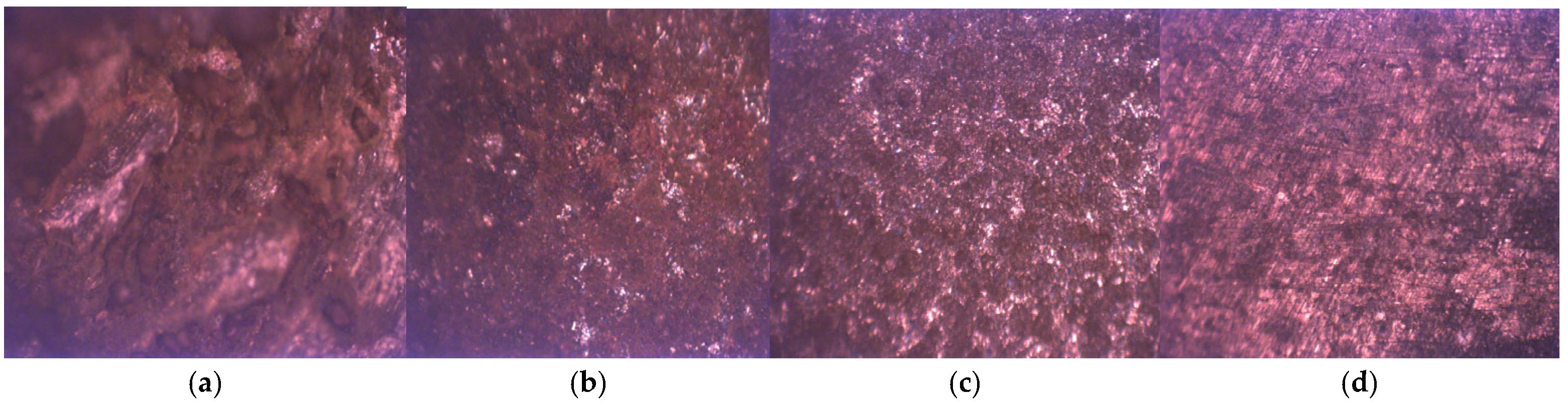
The working samples were immersed in the (BS) and in solutions with YHB concentrations of 10−6, 10−5, and 10−4 mol L−1. Figure 22 and Figure 23 depict images acquired from the Al and OLC samples, respectively, after 240 h of exposure. The exposed sample surface without the inhibitor, as shown in Figure 22a, displays a rough and irregular shape characterized by significant flaws indicative of localized corrosion and anodic dissolution processes. With the decreased concentration of the inhibitor, as seen in Figure 22b, a noticeable decrease in roughness is evident due to the initiation of YHB molecule adsorption. At moderate and high concentrations, a gradual uniformity of the surface is evident due to the development of a persistent protective coating that diminishes electrochemical activity. The pattern seen for Al parallels that of OLC52 steel (Figure 23), exhibiting a steady decrease in roughness and attack zones with rising inhibitor concentration. The morphological examination verifies the enhanced efficacy of the YHB inhibitor, demonstrating a notable decrease in roughness corresponding to the inhibitor concentration, hence corroborating the electrochemical investigations.

4. Conclusions

This study performed the evaluation of the inhibitory efficacy of YHB on the corrosion process of carbon steel type OLC52 and Al in an electrolyte support solution of acetic acid/acetate of concentration 0.25/0.25 mol L−1, using an electrochemical, thermodynamic, and theoretical approach. The results obtained from the study showed that YHB acts as an effective ecological corrosion inhibitor for both materials studied.
From the electrochemical investigations of cyclic voltammetry it was highlighted that YHB manifests electrochemical stability in the potential frame between the hydrogen and oxygen release potentials. Linear voltammetry and chronoamperometry show a systematic decrease in icorr and a shift in the Ecorr to more positive values, as the YHB concentration increases. The corrosion rate decreased significantly in both metals studied, reaching an IE of 95% for OLC52 and 91% for Al at 298 K.
From the thermodynamic analysis, it was highlighted that the activation energy decreased slightly for OLC52 (from 17.5 to 16.99 kJ mol−1) and increased for Al (from 1.16 to 21.3 kJ mol−1), suggesting the formation of a passivating layer of oxidic nature. From the positive values of enthalpy ΔHa and negative values of entropy, an endothermic adsorption process is suggested, which involves the formation of an orderly layer of adsorbed molecules.
The modeling of the adsorption isotherms demonstrated that the Langmuir model shows the best fit based on R2 greater than 0.99 for both cases studied, indicating a monolayer adsorption, and the ∆G°ads values between −35 and −41 kJ mol−1 confirm the hypothesis of a spontaneous, predominantly chemical process, due to donor–acceptor interactions between the N and O heteroatoms of the YHB molecule and the vacant orbitals of the metal.
The EIS spectra confirmed that an equivalent circuit (Rs-CPE-Rct-L) adequately describes both systems studied. The increase in YHB concentration led to a higher Rct charge transfer resistance and a decrease in Cdl double layer capacitance, which confirms the progressive formation of a protective film on the metal surface.
Quantum molecular modeling calculations have shown that YHB has EHOMO = −8.38 eV and ELUMO = −0.60 eV and a gap ΔE = 7.78 eV. The dipole moment of 2.84 D and the presence of nitrogen functional groups suggest the mixed mechanism of physical and chemical adsorption.
The morphological analysis of the metallic surfaces revealed significant differences between the samples in the electrolyte support solution and those protected by YHB. Microscopic images showed that in the absence of the inhibitor, the surfaces show pronounced corrosion, characterized by pores and localized attack zones. In the presence of YHB, these defects are considerably reduced, the surface being covered by an adherent protective film in accordance with the results from electrochemical and thermodynamic analyses.
In conclusion, YHB exhibits an effective inhibitory behavior, by reducing the corrosion rate by more than 90% under moderate conditions, providing an environmentally friendly alternative for the protection of iron and aluminum alloys in slightly acidic environments.

Author Contributions

Conceptualization, M.L.D., G.-D.D. and N.V.; methodology, M.L.D., N.R. and N.V.; validation, M.L.D. and N.V.; formal analysis, G.-D.D., N.V., M.L.D. and N.R.; investigation G.-D.D., M.L.D. and N.R.; writing—original draft preparation, G.-D.D., M.L.D. and N.R.; writing—review and editing, M.L.D.; visualization, M.L.D. and N.R.; supervision, M.L.D. and N.V.; funding acquisition, M.L.D. All authors have read and agreed to the published version of the manuscript.

Funding

This work was supported by University Politehnica Timisoara.

Data Availability Statement

Data will be available by request.

Conflicts of Interest

The original contributions presented in this study are included in the article. Further inquiries can be directed to the corresponding author.

References

  1. Dalbouha, A.; Rais, Z. Metal Corrosion: In-depth Analysis, Economic Impacts and Inhibition Strategies for Enhanced Infrastructure Durability. J. Appl. Sci. Environ. Stud. 2022, 5, 13–21. [Google Scholar] [CrossRef]
  2. Angst, U.M. A Critical Review of the Science and Engineering of Cathodic Protection of Steel in Soil and Concrete. Corrosion 2019, 75, 1420–1433. [Google Scholar] [CrossRef] [PubMed]
  3. Desai, P.; Pawar, C.; Avhad, M.; More, A. Corrosion Inhibitors for Carbon Steel: A Review. Vietnam J. Chem. 2022, 61, 15–42. [Google Scholar] [CrossRef]
  4. Wang, X.; Liu, J.; Jin, M.; Yan, Y.; Tang, J.; Jin, Z. A Review of Organic Corrosion Inhibitors for Resistance under Chloride Attacks in Reinforced Concrete: Background, Mechanisms and Evaluation Methods. Constr. Build. Mater. 2024, 433, 136583. [Google Scholar] [CrossRef]
  5. Zakeri, A.; Bahmani, E.; Rouh Aghdam, A.S. Plant extracts as sustainable and green corrosion inhibitors for protection of ferrous metals in corrosive media: A mini review. Corros. Commun. 2022, 5, 25–38. [Google Scholar] [CrossRef]
  6. Mungwari, C.P.; Obadele, B.A.; King’ondu, C.K. Phytochemicals as Green and Sustainable Corrosion Inhibitors for Mild Steel and Aluminium: Review. Results Surf. Interfaces 2025, 18, 100374. [Google Scholar] [CrossRef]
  7. Lebrini, M. Alkaloids from Plant Extracts as Corrosion Inhibitors for Metal Alloys. In Alkaloids—Recent Advances and Applications; IntechOpen: London, UK, 2024. [Google Scholar] [CrossRef]
  8. Huong, D.Q.; Huong, N.T.L.; Nguyet, T.T.A.; Duong, T.; Tuan, D.; Thong, N.M.; Nam, P.C. Pivotal Role of Heteroatoms in Improving the Corrosion Inhibition Ability of Thiourea Derivatives. ACS Omega 2020, 5, 27655–27666. [Google Scholar] [CrossRef]
  9. Sheydaei, M. The Use of Plant Extracts as Green Corrosion Inhibitors: A Review. Surfaces 2024, 7, 380–403. [Google Scholar] [CrossRef]
  10. Aryal, B.; Raut, B.K.; Bhattarai, S.; Bhandari, S.; Tandan, P.; Gyawali, K.; Sharma, K.; Ranabhat, D.; Thapa, R.; Aryal, D.; et al. Potential Therapeutic Applications of Plant-Derived Alkaloids against Inflammatory and Neurodegenerative Diseases. Evid. Based Complement. Alternat. Med. 2022, 7299778. [Google Scholar] [CrossRef]
  11. Lebrini, M.; Robert, F.; Roos, C. Alkaloids Extract from Palicourea guianensis Plant as Corrosion Inhibitor for C38 Steel in 1 M Hydrochloric Acid Medium. Int. J. Electrochem. Sci. 2011, 6, 847–859. [Google Scholar] [CrossRef]
  12. Salama, E.E.; Alrashdi, S.; Boraei, A.T.A.; Eid, S.; Gomaa, I.; Gad, E.S.; Elhenawy, A.A.; Nady, H. Utilizing Some Indole Derivatives to Control Mild Steel Corrosion in Acidic Environments: Electrochemical and Theoretical Methods. Molecules 2025, 30, 1235. [Google Scholar] [CrossRef] [PubMed]
  13. Nowacka, A.; Śniegocka, M.; Śniegocki, M.; Ziółkowska, E.; Bożiłow, D.; Smuczyński, W. Multifaced Nature of Yohimbine—A Promising Therapeutic Potential or a Risk? Int. J. Mol. Sci. 2024, 25, 12856. [Google Scholar] [CrossRef]
  14. Fay, L.; Shi, X. Environmental Impacts of Chemicals for Snow and Ice Control: State of the Knowledge. Water Air Soil. Pollut. 2012, 223, 2751–2770. [Google Scholar] [CrossRef]
  15. Proviron Industries, N.V. Provifrost KA ECO (Potassium Acetate) Safety Data Sheet; Version 0.2, 17 January 2013 (rev. 2 April 2015). 2015. Available online: https://www.premierdeicers.co.uk/downloads/MSDS%20Provifrost%20KA%20ECO%20%28eng%29.pdf (accessed on 2 December 2025).
  16. Huttunen-Saarivirta, E.; Kuokkala, V.-T.; Kokkonen, J.; Paajanen, H. Corrosion Behaviour of Aircraft Coating Systems in Acetate- and Formate-Based De-Icing Chemicals. Mater. Corros. 2009, 60, 173–191. [Google Scholar] [CrossRef]
  17. Xiuzhou, L.; Wei, Z.; Feng, Y.; Han, Y.; Qiang, P.; Yongjun, M.; Yuhao, W.; Baojie, D. Corrosion Electrochemical Behavior of 2024 Aluminum Alloy in Potassium Acetate Deicing Fluid. J. Braz. Chem. Soc. 2023, 34, 1109–1118. [Google Scholar] [CrossRef]
  18. Gök, K.; Ada, H.D.; Kilicaslan, N.; Gök, A. A Review of CFD Modeling of Erosion-Induced Corrosion Formation in Water Jets Using FEA. J. Mech. Mater. Mech. Res. 2023, 6, 14–22. [Google Scholar] [CrossRef]
  19. Gece, G. The use of quantum chemical methods in corrosion inhibitor studies. Corros. Sci. 2008, 50, 2981–2992. [Google Scholar] [CrossRef]
  20. Ebenso, E.E.; Kabanda, M.M.; Arslan, T.; Saracoglu, M.; Kandemirli, F.; Murulana, L.C.; Singh, A.K.; Shukla, S.K.; Hammouti, B.; Khaled, K.F. Quantum chemical investigations on quinoline derivatives as effective corrosion inhibitors for mild steel in acidic medium. Int. J. Electrochem. Sci. 2012, 7, 5643–5676. [Google Scholar] [CrossRef]
  21. Abu Dayyih, W.; Mallah, E.; Awad, R.; Mansoor, K.; Arafat, T.; Al-Akayleh, F.; Alkhawaja, B. Determination of hydrolysis parameters of yohimbine HCl at neutral and slightly acidic medium. J. Pharm. Pharm. Sci. 2015, 7, 134–137. [Google Scholar]
  22. Nesmerak, K.; Lener, T.; Gubova, H.; Valaskova, L.; Sticha, M. Yohimbine stability: Analysis of its several decades-old pharmaceutical products and forced degradation study. Monatsh Chem. 2025, 156, 1027–1035. [Google Scholar] [CrossRef]
  23. Kadhum, A.A.H.; Mohamad, A.B.; Hammed, L.A.; Al-Amiery, A.A.; San, N.H.; Musa, A.Y. Inhibition of Mild Steel Corrosion in Hydrochloric Acid Solution by New Coumarin. Materials 2014, 7, 4335–4348. [Google Scholar] [CrossRef] [PubMed]
  24. Duca, D.-A.; Dan, M.L.; Vaszilcsin, N. Recycling of Expired Ceftamil Drug as Additive in the Copper and Nickel Electrodeposition from Acid Baths. Int. J. Environ. Res. Public Health 2021, 18, 9476. [Google Scholar] [CrossRef] [PubMed]
  25. Dan, M.L.; Rudenko, N.; Vaszilcsin, C.G.; Dima, G.-D. Sustainable Use of Expired Metoprolol as Corrosion Inhibitor for Carbon Steel in Saline Solution. Coatings 2025, 15, 742. [Google Scholar] [CrossRef]
  26. Joshi, B.D.; Srivastava, A.; Tandon, P.; Jain, S. Molecular structure, vibrational spectra and HOMO, LUMO analysis of yohimbine hydrochloride by density functional theory and ab initio Hartree–Fock calculations. Spectrochim. Acta A Mol. Biomol. Spectrosc. 2011, 82, 270–278. [Google Scholar] [CrossRef]
  27. Geerlings, P.; De Proft, F.; Langenaeker, W. Conceptual Density Functional Theory. Chem. Rev. 2003, 103, 1793–1874. [Google Scholar] [CrossRef]
  28. Geerlings, P.; De Proft, F. Chemical Reactivity as Described by Quantum Chemical Methods. Int. J. Mol. Sci. 2002, 3, 276–309. [Google Scholar] [CrossRef]
  29. El Sayed, H.; El Ashry, E.; El Nemr, A. Quantitative structure-activity relationships of some pyridine derivatives as corrosion inhibitors of steel in acidic medium. J. Mol. Model. 2012, 18, 1173–1188. [Google Scholar] [CrossRef]
  30. Ebenso, E.E.; Isabirye, D.A.; Eddy, N.O. Adsorption and Quantum Chemical Studies on the Inhibition Potentials of Some Thiosemicarbazides for the Corrosion of Mild Steel in Acidic Medium. Int. J. Mol. Sci. 2010, 11, 2473–2498. [Google Scholar] [CrossRef]
  31. Michailidou, E.; Visser, P.; Mol, J.M.C.; Kosari, A.; Terryn, H.A.; Baert, K.; Gonzalez Garcia, Y. The effect of pH on the corrosion protection of aluminum alloys in lithium-carbonate-containing NaCl solutions. Corr. Sci. 2023, 210, 110851. [Google Scholar] [CrossRef]
  32. Yang, H.-M. Role of Organic and Eco-Friendly Inhibitors on the Corrosion Mitigation of Steel in Acidic Environments—A State-of-Art Review. Molecules 2021, 26, 3473. [Google Scholar] [CrossRef]
  33. Benhiba, F.; Lotfi, N.; Ourrak, K.; Benzekri, Z.; Zarrok, H.; Guenbour, A.; Boukhris, S.; Souizi, A.; El Hezzat, M.; Warad, I.; et al. Corrosion inhibition study of 2-(2,4-dichlorophenyl)-6-nitro-1,4-dihydroquinoxaline for carbon steel in hydrochloric acid solution. J. Mater. Environ. Sci. 2017, 8, 3834–3843. [Google Scholar]
  34. Hassan, R.M.; Zaafarany, I.A. Kinetics of Corrosion Inhibition of Aluminum in Acidic Media by Water-Soluble Natural Polymeric Pectates as Anionic Polyelectrolyte Inhibitors. Materials 2013, 6, 2436–2451. [Google Scholar] [CrossRef]
  35. Vaszilcsin, C.G.; Putz, M.V.; Kellenberger, A.; Dan, M.L. On the evaluation of metal-corrosion inhibitor interactions by adsorption isotherms. J. Mol. Struct. 2023, 1286, 135643. [Google Scholar] [CrossRef]
  36. Ituen, E.; Akaranta, O.; James, A.O. Evaluation of Performance of Corrosion Inhibitors Using Adsorption Isotherm Models: An Overview. Chem. Sci. Int. J. 2017, 18, 1–34. [Google Scholar] [CrossRef]
  37. Kokalj, A. Corrosion inhibitors: Physisorbed or chemisorbed? Corros. Sci. 2021, 196, 109939. [Google Scholar] [CrossRef]
  38. Li, M.; Liu, F.; Mou, F.; Guo, Z.; Wang, W.; Zeng, Y.; Sim, L.B.; Chen, B. Corrosion Inhibitor for Mild Steel in Mixed HCl and H2SO4 Medium: A Study of 1,10-Phenanthroline Derivatives. ACS Omega 2025, 10, 24628–24641. [Google Scholar] [CrossRef] [PubMed]
  39. Azgaou, K.; Hisssou, R.; Chkirate, K.; Benmessaoud, M.; Hefnawy, M.; El Gamal, A.; Elmsellem, H.; Guo, L.; Essassi, E.M.; El Hajjaji, S.; et al. Corrosion Inhibition and Adsorption Properties of N-{2-[2-(5-Methyl-1H-pyrazol-3-yl)acetamido]phenyl}benzamide Monohydrate on C38 Steel in 1 M HCl: Insights from Electrochemical Analysis, DFT, and MD Simulations. ACS Omega 2025, 10, 6244–6257. [Google Scholar] [CrossRef]
  40. Hernández, H.H.; Reynoso, A.M.R.; Juan, C.; González, T.; Morán, C.O.G. Electrochemical Impedance Spectroscopy (EIS): A Review Study of Basic Aspects of the Corrosion Mechanism Applied to Steels. In Electrochemical Impedance Spectroscopy; IntechOpen: London, UK, 2020. [Google Scholar] [CrossRef]
  41. Feliu, S., Jr. Electrochemical Impedance Spectroscopy for the Measurement of the Corrosion Rate of Magnesium Alloys: Brief Review and Challenges. Metals 2020, 10, 775. [Google Scholar] [CrossRef]
  42. Wang, L.; Snihirova, D.; Havigh, M.D.; Deng, M.; Lamaka, S.V.; Terryn, H.; Zheludkevich, M.L. Non-stationarity in electrochemical impedance measurement of Mg-based materials in aqueous media. Electrochim. Acta 2023, 468, 143140. [Google Scholar] [CrossRef]
  43. Klotz, D. Negative capacitance or inductive loop?–A general assessment of a common low frequency impedance feature. Electrochem. Commun. 2019, 98, 58–62. [Google Scholar] [CrossRef]
  44. Duca, D.A.; Dan, M.L.; Vaszilcsin, N. Expired domestic drug—Paracetamol—As corrosion inhibitor for carbon steel in acid media. IOP Conf. Ser. Mater. Sci. Eng. 2018, 416, 012118. [Google Scholar] [CrossRef]
  45. Kellenberger, A.; Duca, D.A.; Dan, M.L.; Medeleanu, M. Recycling unused midazolam drug as efficient corrosion inhibitor for copper in nitric acid solution. Materials 2022, 15, 2918. [Google Scholar] [CrossRef] [PubMed]
  46. Sun, F.; Peng, X.; Bai, X.; Chen, Z.; Xie, R.; He, B.; Han, P. EIS analysis of the electrochemical characteristics of the metal–water interface under the effect of temperature. RSC Adv. 2022, 12, 16979–16990. [Google Scholar] [CrossRef] [PubMed]
  47. Abbasi, M.; Ramezani, F.; Elyasi, M.; Sadeghi-Aliabadi, H.; Amanlou, M. A; study on quantitative structure–activity relationship and molecular docking of metalloproteinase inhibitors based on L-tyrosine scaffold. DARU J. Pharm. Sci. 2015, 23, 29. [Google Scholar] [CrossRef]
  48. Vengatesh, G.; Sundaravadivelu, M. Quantum chemical, experimental, theoretical spectral (FT-IR and NMR) studies and molecular docking investigation of 4,8,9,10-tetraaryl-1,3-diazaadamantan-6-ones. Res. Chem. Intermed. 2019, 45, 4395–4415. [Google Scholar] [CrossRef]
  49. Esmaeilzadeh Khabazi, M.; Najafi Chermahini, A. DFT Study on Corrosion Inhibition by Tetrazole Derivatives: Investigation of the Substitution Effect. ACS Omega 2023, 8, 9978–9994. [Google Scholar] [CrossRef]
  50. Alamiery, A.A.; Wan Isahak, W.N.R.; Takriff, M.S. Inhibition of Mild Steel Corrosion by 4-benzyl-1-(4-oxo-4-phenylbutanoyl)thiosemicarbazide: Gravimetrical, Adsorption and Theoretical Studies. Lubricants 2021, 9, 93. [Google Scholar] [CrossRef]
  51. Elmi, S.; Foroughi, M.M.; Dehdab, M.; Shahidi Zandi, M. Computational evaluation of corrosion inhibition of four quinoline derivatives on carbon steel in aqueous phase. Iran. J. Chem. Chem. Eng. 2019, 38, 145–158. [Google Scholar]
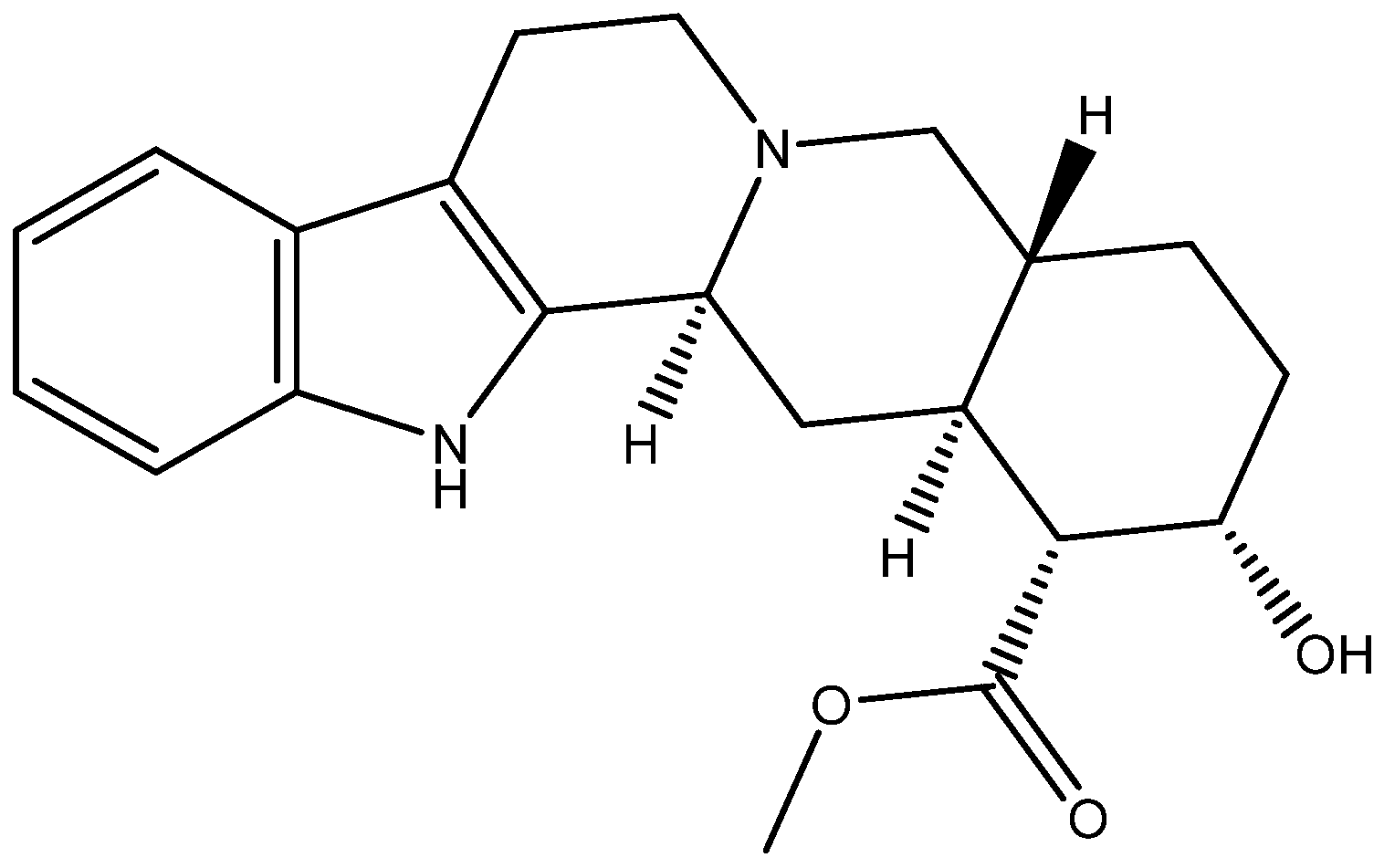
Figure 1. Chemical structure of YHB.
Coatings 15 01458 g001
Figure 2. Cyclic voltammograms on Pt electrode in the presence and absence of various concentrations of YHB at the scan rates (a) 100 mV s−1, (b) 50 mV s−1, (c) 10 mV s−1.
Coatings 15 01458 g002
Figure 3. Anodic (a) and cathodic (b) domains plotted at 10 mV s−1.
Coatings 15 01458 g003
Figure 4. Cyclic voltammograms on OLC52 electrode in CH3COOH/CH3COOK 0.25/0.25 mol L−1 solution in the absence and presence of YHB at concentrations 10−6 M, 10−5 M, 10−4 M, 5 · 10−4 M, polarization rate 100 mV s−1: (a) whole representation, (b) anodic domain, (c) cathodic domain.
Coatings 15 01458 g004
Figure 5. Cyclic voltammograms on Al electrode in CH3COOH/CH3COOK 0.25/0.25 mol L−1 solution in the absence and presence of YHB at concentrations 10−6 M, 10−5 M, 10−4 M, 5 · 10−4 M, polarization rate 100 mV s−1: (a) whole representation, (b) anodic domain, (c) cathodic domain.
Coatings 15 01458 g005
Figure 6. Tafel diagrams on the OLC52 electrode in test solutions at polarization rate of 1 mV s−1: (a) concentration influence, (b) temperature influence for BS, (c) BS + 10−4 mol L−1, (d) BS + 5 · 10−4 mol L−1.
Coatings 15 01458 g006
Figure 7. Tafel diagrams on the Al electrode in test solutions at polarization rate of 1 mV s−1: (a) concentration influence, (b) temperature influence for BS, (c) BS + 10−4 mol L−1, (d) BS + 5 · 10−4 mol L−1.
Coatings 15 01458 g007
Figure 8. Arrhenius and transition-state plots for OLC52 carbon steel in CH3COOH/CH3COOK 0.25/0.25 mol·L−1 solutions, in the absence and presence of 5 · 10−4 mol·L−1 YHB: (a) log icorr vs. 1000/T (Arrhenius plot) and (b) log (icorr/T) vs. 1000/T (transition-state plot).
Coatings 15 01458 g008
Figure 9. Arrhenius and transition-state plots for Al in CH3COOH/CH3COOK 0.25/0.25 mol·L−1 solutions, in the absence and presence of 5 · 10−4 mol·L−1 YHB: (a) log icorr vs. 1000/T (Arrhenius plot) and (b) log (icorr/T) vs. 1000/T (transition-state plot).
Coatings 15 01458 g009
Figure 10. Langmuir adsorption isotherms for YHB on (a) OLC52 and (b) Al in CH3COOH/CH3COOK 0.25/0.25 mol·L−1 at 298–328 K.
Coatings 15 01458 g010
Figure 11. Chronoamperograms recorded on the OLC52 electrode in CH3COOH/CH3COOK 0.25/0.25 mol·L−1 solution containing different concentrations of YHB at potentials of (a) 25 mV vs. OCP and (b) 250 mV vs. OCP.
Coatings 15 01458 g011
Figure 12. Chronoamperograms recorded on the Al electrode in CH3COOH/CH3COOK 0.25/0.25 mol·L−1 solution containing different concentrations of YHB at potentials of (a) 25 mV vs. OCP and (b) 250 mV vs. OCP.
Coatings 15 01458 g012
Figure 13. Open circuit potential (OCP) evolution in time for (a) OLC52 and (b) Al electrodes in CH3COOH/CH3COOK 0.25/0.25 mol·L−1 solution with and without YHB.
Coatings 15 01458 g013
Figure 14. (a) Nyquist and (b) Bode plots of carbon steel electrode (OLC52) in CH3COOH/CH3COO test solutions, in the absence and presence of different concentrations of YHB, at 35 °C (Open symbols show experimental values and continuous lines were obtained by fitting).
Coatings 15 01458 g014
Figure 15. (a) Nyquist and (b) Bode plots of carbon steel electrode (OLC 52) in CH3COOH/CH3COO test solutions, 2.5 · 10−4 M YHB concentration, at different temperature values.
Coatings 15 01458 g015
Figure 19. Optimized structure of the YHB molecule.
Coatings 15 01458 g019
Figure 20. The structure of the highest energy occupied molecular orbital (HOMO).
Coatings 15 01458 g020
Figure 21. The structure of the lowest energy unoccupied molecular orbital (LUMO).
Coatings 15 01458 g021
Figure 22. Optical microscopy images of the aluminum surface (50× magnification) after 240 h of immersion in the following: (a) the base solution CH3COOH/CH3COOK 0.25/0.25 mol L−1; (b) BS + 10−6 YHB; (c) BS + 10−5 YHB; (d) BS + 10−4 YHB.
Coatings 15 01458 g022
Figure 23. Optical microscopy images of the OLC52 surface (50× magnification) after 240 h of immersion in the following: (a) the base solution CH3COOH/CH3COOK 0.25/0.25 mol L−1; (b) BS + 10−6 YHB; (c) BS + 10−5 YHB; (d) BS + 10−4 YHB.
Coatings 15 01458 g023
Table 1. Chemical composition of OLC52 steel.
Fe (%)C (%)P (%)S (%)Mn (%)Si (%)
97.600.200.0500.0501.600.050
Table 2. Tafel parameters characteristic of OLC52 carbon steel corrosion process in test solutions.
MetalT [K]YHB
conc.
icorrEcorr-bcbavcorrIEθ
[μA cm−2][mV][mV dec−1][mV dec−1][mm y−1][%]
OLC52298BS764.4 ± 15.27−635.6 ± 2.01286.3 ± 5.31236.2 ± 3.08.89 ± 0.180--
10−6 M637. ± 7.91−633.0 ± 1.14237.8 ± 9.8223.4 ± 8.57.41 ± 0.09216.60.17
10−5 M576.6 ± 1.69−625.1 ± 2.56200.1 ± 6.6150.3 ± 4.96.71 ± 0.02124.60.25
10−4 M256.9 ± 2.90−619.4 ± 2.08194.1 ± 4.1148.2 ± 3.02.99 ± 0.33966.40.66
2.5∙ 10−4 M198.8 ± 19.4−621.4 ± 1.29171.9 ± 10.3125.8 ± 4.42.31 ± 0.22674.00.74
5∙ 10−4 M38.2 ± 3.18−618.4 ± 3.1815.4 ± 1.712.1 ± 2.20.44 ± 0.03995.00.95
308BS 837.6 ± 33.71−640.1 ± 0.96295.4 ± 14.3239.3 ± 0.69.74 ± 0.388--
10−6 M644.3 ± 34.69−633.8 ± 1.98270.3 ± 13.8237.5 ± 2.67.49 ± 0.39123.10.23
10−5 M617.6 ± 25.68−625.5 ± 2.94203.8 ± 2.8154.9 ± 2.37.18 ± 0.29726.30.26
10−4 M265.7 ± 8.80−618.9 ± 0.34203.3 ± 19.7145.5 ± 2.62.49 ± 0.24668.30.68
2.5 ∙ 10−4 M193.0 ± 16.45−621.7 ± 1.67198.9 ± 6.4140.7 ± 5.62.24 ± 0.19377.00.77
5 ∙ 10−4 M45.9 ± 0.96−609.2 ± 2.5424.6 ± 0.717.7 ± 1.40.53 ± 0.01194.50.95
318BS1307.8 ± 12.16−637.1 ± 1.08273.9 ± 1.6230.7 ± 4.315.20 ± 0.146--
10−6 M781.4 ± 4.97−631.8 ± 0.73251.3 ± 7.3298.7 ± 4.09.08 ± 0.05340.20.40
10−5 M651.9 ± 35.30−632.5 ± 1.66277.5 ± 0.9228.3 ± 0.57.58 ± 0.32650.20.50
10−4 M273.5 ± 8.27−621.6 ± 2.21256.1 ± 2.9191.9 ± 3.73.18 ± 0.09679.10.79
2.5 ∙ 10−4M240.8 ± 8.40−619.9 ± 1.96210.1 ± 1.5140.9 ± 5.92.80 ± 0.10081.60.82
5 ∙ 10−4 M65.9 ± 4.99−612.9 ± 0.1225.5 ± 1.225.7 ± 1.00.77 ± 0.05695.00.95
328BS 1349.8 ± 8.04−636.8 ± 1.73276.5 ± 10.3254.4 ± 14.615.70 ± 0.050--
10−6 M1172.3 ± 27.24−637.6 ± 1.53225.6 ± 3.3196.8 ± 6.013.63 ± 0.31613.20.13
10−5 M792.5 ± 14.93−628.9 ± 1.72213.6 ± 2.3180.6 ± 3.09.22 ± 0.17441.30.41
10−4 M460.3 ± 22.17−625.8 ± 1.10158 ± 6.1133.9 ± 4.55.35 ± 0.25965.90.66
2.5∙ 10−4 M241.9 ± 2.92−618.7 ± 2.28188.7 ± 4.3127.4 ± 1.52.81 ± 0.03482.10.82
5∙ 10−4 M67.7 ± 10.13−614.3 ± 1.7327.6 ± 4.323.9 ± 2.00.79 ± 0.11795.00.95
Table 3. Tafel parameters characteristic of Al carbon steel corrosion process in test solutions.
MetalT [K]YHB
conc.
icorrEcorr-bcbavcorrIEθ
[μA cm−2][mV][mV dec−1][mV dec−1][mm y−1][%]
Al298BS32.9 ± 0.60−556 ± 3.83534.9 ± 6.10649 ± 5.300.358 ± 0.0070.00.00
10−6 M19.9 ± 0.44−549 ± 2.90328.5 ± 5.30364.8 ± 3.500.217 ± 0.00539.30.39
10−5 M13.5 ± 0.66−546 ± 1.53173.2 ± 1.20292.5 ± 6.300.146 ± 0.00859.00.59
10−4 M6.2 ± 0.21−526 ± 1.29169.5 ± 2.80205.7 ± 5.500.067 ± 0.00281.20.81
2.5∙ 10−4 M4.3 ± 0.51−493 ± 1.20123.8 ± 4.20127.1 ± 1.300.047 ± 0.00586.90.87
5∙ 10−4 M2.8 ± 0.17−410 ± 0.8847 ± 1.1052.3 ± 2.700.03 ± 0.00291.50.91
308BS 33.7 ± 3.06−561 ± 3.02554 ± 3.00704 ± 17.30.367 ± 0.0330.00.00
10−6 M21.9 ± 0.48−550 ± 3.54337 ± 1.90392 ± 5.500.238 ± 0.00535.00.35
10−5 M13.5 ± 0.95−551 ± 3.39503 ± 4.10404.2 ± 10.50.147 ± 0.01059.90.60
10−4 M7.6 ± 0.04−510 ± 2.00276 ± 0.80238 ± 3.400.082 ± 0.00177.60.78
2.5∙ 10−4 M5.4 ± 0.41−509 ± 2.25145 ± 1.00129 ± 1.800.059 ± 0.00583.90.84
5∙ 10−4 M3.0 ± 0.03−447 ± 1.7972.7 ± 6.9068.2 ± 3.100.033 ± 0.00191.00.91
318BS33.8 ± 0.73−567 ± 3.51598 ± 2.90641 ± 3.000.368 ± 0.0080.00.00
10−6 M24.5 ± 0.11−546 ± 1.00379 ± 6.30452 ± 2.800.267 ± 0.00127.50.28
10−5 M17.0 ± 0.12−546 ± 1.84269.8 ± 2.10311 ± 4.700.225 ± 0.02449.70.50
10−4 M9.8 ± 0.72−522 ± 1.39116.7 ± 1.7694.5 ± 0.300.106 ± 0.00871.10.71
2.5∙ 10−4 M6.5 ± 0.27−501 ± 1.2574 ± 3.7093 ± 4.500.071 ± 0.00380.70.81
5∙ 10−4 M5.0 ± 0.13−488 ± 2.0073.5 ± 2.4068.4 ± 2.000.054 ± 0.00285.20.85
328BS34.4 ± 0.95−570 ± 2.89557 ± 9.00718 ± 2.100.375 ± 0.0100.00.00
10−6 M25.4 ± 0.46−517 ± 1.13383.1 ± 5.30501.5 ± 2.70.277 ± 0.00526.10.26
10−5 M17.1 ± 0.91−552 ± 2.91337 ± 2.40280 ± 5.200.186 ± 0.01050.40.50
10−4 M11.0 ± 0.40−524 ± 0.46126 ± 6.00179 ± 4.600.12 ± 0.00568.00.68
2.5∙ 10−4 M7.5 ± 0.69−515 ± 2.22126 ± 2.40176 ± 1.100.081 ± 0.00878.20.78
5 ∙ 10−4 M5.7 ± 0.04−491 ± 1.6593.3 ± 1.2097.3 ± 0.400.062 ± 0.00183.40.83
Table 4. Thermodynamic activation parameters for OLC52 corrosion in CH3COOH/CH3COOK 0.25/0.25 mol·L−1.
ElectrodeSolutionEa
[kJ mol−1]
ΔHa
[kJ mol−1]
ΔSa
[J mol−1 K−1]
OLC52BS (blank)17.5014.906−139.97
BS + 5∙ 10−4 mol L−1 YHB16.9914.394−166.31
Table 5. Thermodynamic activation parameters for Al corrosion in CH3COOH/CH3COOK 0.25/0.25 mol·L−1.
ElectrodeSolutionEa
[kJ mol−1]
ΔHa
[kJ mol−1]
ΔSa
[J mol−1 K−1]
AlBS (blank)1.16−1.44−220.71
BS + 5 ∙ 10−4 mol L−1 YHB21.3018.70−174.10
Table 6. Values of the adsorption equilibrium constant ( K ads ), standard free energy of adsorption ( Δ G ads o ), and correlation coefficient ( R 2 ) for the adsorption of the inhibitor on OLC52 and Al electrodes at different temperatures.
ElectrodeT [K]Kads G a d s o [kJ mol−1]R2 RMS   Residual   c inh / θ
OLC522982.92∙ 104−35.430.9902.72 ∙ 10−5
3083.38∙ 104−36.990.9932.25 ∙ 10−5
3186.68∙ 104−39.990.9961.59 ∙ 10−5
3283.99∙ 104−39.850.9961.84∙ 10−5
Al2981.22∙ 105−38.960.9996.12 ∙ 10−6
3089.35∙ 104−39.600.9989.20 ∙ 10−6
3188.09∙ 104−40.500.9988.09 ∙ 10−6
3287.35 ∙ 104−41.510.9981.03 ∙ 10−5
RMS residual—root mean square of the Langmuir isotherm fit residuals.
Table 7. Chronoamperometric and chronopotentiometric data characteristic of carbon steel OLC52 and Al corrosion process in test solutions.
MetalYHB
Concentration
EOCPEox
25 mv/EOCP250 mv/EOCP
icorr
[mV]/Ref[A m−2]
OLC52BS−6354.248
10−6 M−6333.847
10−5 M−6253.544
10−4 M−6213.242
2.5 ∙ 10−4 M−6192.937
5 ∙ 10−4 M−6182.432
AlBS−5600.61.4
10−6 M−5350.550.9
10−5 M−5150.420.8
10−4 M−5020.40.75
2.5 ∙ 10−4 M−4820.250.4
5 ∙ 10−4 M−4190.10.15
Table 8. Impedance parameters for carbon steel electrode corrosion at 35 °C in CH3COOH/CH3COO test solutions in the absence and presence of varying concentrations of YHB calculated by fitting the experimental data.
YHB Conc.
(M)
RS
(Ω)
CPE-T
(F cm−2 sn−1) · 103
nRct
(Ω cm2)
χ2L
(H cm2)
RL
(Ω cm2)
Cdl·104
(µF cm−2)
E (%)θ
BS1.85 (0.17%)1.73 (2.51%)0.73 (1.10%)19.42 (0.69%)0.56 × 10−31.07 (2.83)7.831 (5.13)2.08
10−61.65 (0.28%)2.55 (3.78%)0.66 (1.13%)29.17 (0.71%)1.99 × 10−32.38 (1.19)4.548 (0.89)1.5033.40.33
10−51.90 (0.17%)2.93 (2.32%)0.64 (0.74%)40.49 (0.71%)0.41 × 10−32.81 (0.83)7.775 (0.65)1.6352.00.52
10−41.58 (0.35%)3.00 (2.55%)0.64 (0.93%)61.36 (0.69%)2.03 × 10−320.9 (0.87)13.22 (0.67)1.5068.40.68
2.5∙ 10−41.98 (0.43%)3.12 (3.04%)0.63 (1.00%)91.58 (1.00%)1.91 × 10−316.5 (0.99)25.29 (0.94)1.6778.80.79
5 ∙ 10−42.36 (0.59%)3.21 (3.22%)0.61 (1.15%)169.8 (0.97%)3.93 × 10−349.2 (0.82)51.29 (0.95)1.5188.60.87
Table 9. Impedance parameters for carbon steel electrode corrosion at test temperatures in CH3COOH/CH3COO solutions in the absence and presence of varying concentrations of YHB calculated by fitting the experimental data.
T
(K)
RS
(Ω)
CPE-T
(F cm−2 sn−1) · 103
nRct
(Ω cm2)
χ2L
(L cm2)
RL
(Ω cm2)
Cdl·104
(µF cm−2)
2982.19 (0.55%)2.05 (3.51%)0.65 (1.21%)107.7 (1.16%)3.88 × 10−326.85 (1.25)31.05 (1.08)1.11
3081.98 (0.43%)3.12 (3.04%)0.63 (1.03%)91.58 (1.00%)1.91 × 10−316.5 (0.99)25.29 (0.94)1.67
3181.58 (0.56%)3.25 (3.22%)0.57 (0.27%)79.18 (1.11%)1.13 × 10−318.44 (0.77)26.79 (0.80)0.84
3281.18 (0.51%)3.42 (3.35%)0.52 (1.12%)75.42 (1.32%)0.87 × 10−37.36 (1.44)14.26 (0.96)0.83
Table 10. Impedance parameters for aluminum electrode corrosion at 35 °C in CH3COOH/CH3COO test solutions in the absence and presence of varying concentrations of YHB calculated by fitting the experimental data.
YHB Conc.
(M)
RS
(Ω)
CPE-T
(F cm−2 sn−1) · 105
nRct
(Ω cm2)
χ2L
(L cm2)
RL
(Ω cm2)
Cdl·106
(µF cm−2)
E (%)θ
BS2.79 (0.46%)2.63 (1.48%)0.84 (0.26%)1044 (0.90%)2.04 × 10−3100.7 (2.34)141 (1.01)4.47
10−62.05 (0.43%)2.57 (1.25%)0.83 (0.22%)1700 (0.94%)1.28 × 10−3525.6 (3.47)307 (1.66)4.0338.60.39
10−54.17 (0.54%)2.53 (1.53%)0.83 (0.28%)2518 (0.93%)2.08 × 10−3973.5 (4.78)638 (2.19)3.6858.50.59
10−44.68 (0.70%)2.47 (1.74%)0.82 (0.32%)3629 (1.01%)3.48 × 10−31449 (0.49)1037 (0.41)3.3171.20.71
2.5∙ 10−44.46 (1.09%)2.38 (2.00%)0.79 (0.43%)4962 (1.09%)5.27 × 10−31651 (0.68)1149 (0.64)3.0479.00.79
5 ∙ 10−43.36 (0.77%)2.26 (1.58%)0.78 (0.31%)7314 (1.09%)4.38 × 10−32148 (1.46)1387 (0.77)2.7287.70.88
Table 11. Impedance parameters for aluminum electrode corrosion at different temperature values in CH3COOH/CH3COO test solutions with 2.5 · 10−4 M YHB concentration calculated by fitting the experimental data.
T
(K)
RS
(Ω)
CPE-T
(F cm−2 sn−1) · 103
nRct
(Ω cm2)
χ2L
(L cm2)
RL
(Ω cm2)
Cdl·104
(µF cm−2)
2986.47 (0.70%)2.11 (1.60%)0.82 (0.31%)5291 (1.12%)3.34 × 10−33499 (2.04)2093 (3.11)4.03
3084.46 (1.09%)2.38 (2.00%)0.79 (0.43%)4962 (1.09%)5.27 × 10−31651 (2.81)1649 (4.38)3.04
3181.25 (0.67%)2.97 (1.55%)0.78 (0.29%)4465 (0.83%)3.41 × 10−3470 (2.42)974 (2.65)2.47
3287.39 (0.39%)3.93 (0.99%)0.76 (0.20%)4228 (0.46%)1.05 × 10−3371 (1.02)669 (2.54)1.97
Table 12. Molecular descriptors and their values for the YHB molecule.
Molecular DescriptorValue
EHOMO (eV)−8.38
ELUMO (eV)−0.60
ΔE (eV)7.78
µ (Debye)2.84
χ (eV)3.89
η (eV)4.49
σ (eV−1)0.22
V [Å3]994.73
S [Å2]581.72
V/S [Å]1.71
Disclaimer/Publisher’s Note: The statements, opinions and data contained in all publications are solely those of the individual author(s) and contributor(s) and not of MDPI and/or the editor(s). MDPI and/or the editor(s) disclaim responsibility for any injury to people or property resulting from any ideas, methods, instructions or products referred to in the content.