Article

Study on the Degradation, Wear Resistance and Osteogenic Properties of Zinc–Copper Alloys Modified with Zinc Phosphate Coating


1
First Clinical Medical College, Shandong University of Traditional Chinese Medicine, Jinan 250014, China
2
Key Laboratory of Materials Surface Science and Technology, Jiangsu Province Higher Education Institutes (Changzhou University), Changzhou 213164, China
3
School of Mechanical Engineering, Yangzhou University, Yangzhou 225127, China
4
Department of Orthopaedics, Affiliated Hospital of Shandong University of Traditional Chinese Medicine, Jinan 250014, China
*
Authors to whom correspondence should be addressed.
Coatings 2025, 15(12), 1447; https://doi.org/10.3390/coatings15121447
Submission received: 26 October 2025 / Revised: 1 December 2025 / Accepted: 3 December 2025 / Published: 8 December 2025

Abstract

The repair of large segmental bone defects remains a major clinical challenge. Traditional bone repair materials often suffer from mismatched degradation rates, insufficient mechanical strength, or limited bioactivity. Biodegradable zinc alloys have emerged as potential alternatives due to their suitable degradation rate and good biocompatibility, though their bioactivity requires further enhancement. In this study, a zinc phosphate (ZnP) coating was applied on the surface of zinc–copper (Zn–Cu) alloy via a phosphate chemical conversion method, and the corrosion resistance, wear resistance, and osteogenic properties of the coating were systematically evaluated. Results showed that the ZnP coating prepared at pH = 2.5 exhibited a dense structure and high crystallinity, reducing the corrosion rate to 0.010 μm/year and increasing the ultimate tensile strength to 117.03 ± 0.78 MPa, significantly improving the wear and corrosion resistance of the alloy. In vivo experiments demonstrated that the material markedly promoted new bone formation and osseointegration. Micro-computed tomography (Micro-CT) revealed that key indicators such as bone volume fraction (approximately 50.26%) and trabecular number (approximately 161.31/mm3) were superior to those of the β-tricalcium phosphate (β-TCP) group and the control group. Histological analysis confirmed its excellent osteogenic activity and mineralization capacity. Biosafety assessments indicated no systemic toxic reactions. The ZnP-coated Zn-1Cu alloy showed promising application in treatment of bone defect.

1. Introduction

Bone is a dense connective tissue composed of cellular components, extracellular matrix (ECM), and inorganic minerals, possessing strong regenerative capacity. However, under certain special circumstances such as improper initial fracture treatment, high-energy injuries, or bone tumors, large segmental bone defects often fail to heal spontaneously. This not only affects patients’ quality of life but also imposes additional treatment costs on both patients and the healthcare system [1,2]. Clinically, bone defects require treatment with implantable fillers. Traditional bone repair materials include autogenous bone, allograft, xenograft, and artificial bone materials. Autogenous bone is the “gold standard” for treating bone defects, offering excellent osteoconductivity, osteoinductivity, osteogenic activity, and few adverse reactions. However, limitations such as insufficient bone volume, donor site morbidity, and the need for secondary surgery restrict its application [3,4].
Various artificial bone materials are commonly used in clinical practice, such as calcium phosphate in the form of hydroxyapatite (HA), β-tricalcium phosphate (β-TCP), calcium sulfate (CaSO4), bioactive glass, and enamel matrix derivative (EMD) [5]. However, hydroxyapatite (HA) degrades slowly in vivo, and its long-term residue may hinder subsequent treatments (e.g., joint replacement) or trigger inflammatory reactions. Moreover, pure HA has poor mechanical properties and often needs to be combined with materials like β-TCP to form biphasic calcium phosphate (BCP) to enhance mechanical strength [6]. β-TCP and CaSO4 may degrade too rapidly, preventing newly formed bone from adequately filling the defect area and compromising long-term repair outcomes [7]. EMD has limited application scope and is difficult to use in load-bearing sites or large-volume bone defects. These numerous shortcomings result in suboptimal transplantation outcomes for the aforementioned artificial bone materials, thereby limiting their clinical application.
In recent years, with in-depth research on biodegradable metallic materials, zinc alloys have emerged as ideal candidates due to their moderate degradation rate, osteogenic properties, and biocompatibility [8]. Zinc, an essential trace element in the human body, can induce A20 protein, thereby inhibiting NF-κB activation and reducing the production of inflammatory cytokines. It also enhances T-cell function and participates in immune regulation [9]. Animal studies have demonstrated that Zn2+ stimulates bone formation by activating pathways such as PI3K-Akt, while suppressing osteoclast activity by inhibiting the GRB2-ERK pathway, playing an indispensable role in bone metabolism [10]. More importantly, compared to magnesium, zinc not only ensures a moderate degradation rate but also does not produce hydrogen gas during degradation.
Copper, as another important trace element, influences specific genes and acts as a cofactor or repair agent for many enzymes, widely participating in various biological processes. Qu et al. [11] prepared Zn-1Cu alloy and found that its yield strength (YS) and ultimate tensile strength (UTS) were significantly higher than those of pure zinc, meeting the mechanical requirements for orthopedic implants. However, increasing Cu content led to an increased corrosion rate, with Zn-1Cu corroding significantly faster than pure zinc, potentially affecting long-term implant stability. Other studies have also indicated that zinc alloys may initially exhibit a burst release of ions, causing cytotoxicity and hindering early osseointegration [12].
Surface modification techniques can significantly adjust and enhance material surface activity. For instance, Ye et al. [13] developed a 3D-printed porous magnesium scaffold coated with strontium-doped octacalcium phosphate (SrOCP), which not only decelerated the degradation rate but also promoted angiogenesis and osteogenesis through the sustained release of bioactive ions (Mg2+, Sr2+, Ca2+, Zn2+). This approach underscores the critical role of bioactive coatings in modulating the degradation kinetics and biological performance of biodegradable metals, providing a valuable reference for the design of Zn-based implant systems. These techniques include applying coatings or altering the mechanical and chemical properties of materials. Zinc phosphate (ZnP) coatings, characterized by high corrosion resistance, controllable structure, and bioactivity, play multiple roles in biomedical zinc alloys: optimizing degradation behavior, promoting bone regeneration, and inhibiting infection and thrombosis [14]. ZnP coatings significantly enhance cellular responses by modulating surface chemistry and topography. Micro–nano composite structures promote the adhesion, spreading, and differentiation of osteoprogenitor cells (e.g., increasing ALP activity by 30%) while suppressing the release of inflammatory factors [15]. Additionally, the coating acts as a barrier, slowing the degradation of the zinc substrate and avoiding cytotoxicity caused by excessively high local Zn2+ concentrations. Wu et al. [16] found that zinc phosphate coatings degraded gradually over 14 days, releasing Zn2+ in a controlled manner (reduced by over 50% compared to pure zinc), thus avoiding cytotoxicity; sodium zinc phosphate degraded even more slowly, making it suitable for long-term osseointegration. This study proposes a novel strategy for treating bone defects by preparing a ZnP coating on the surface of Zn-1Cu alloy via phosphate chemical conversion. It investigates the mechanisms by which the ZnP coating influences the degradation behavior, wear resistance, and osteogenic promotion of the zinc alloy. Through systematic in vitro and in vivo experiments, the potential of this material as a bone defect implant is explored.

2. Experimental Details

2.1. Coating Fabrication

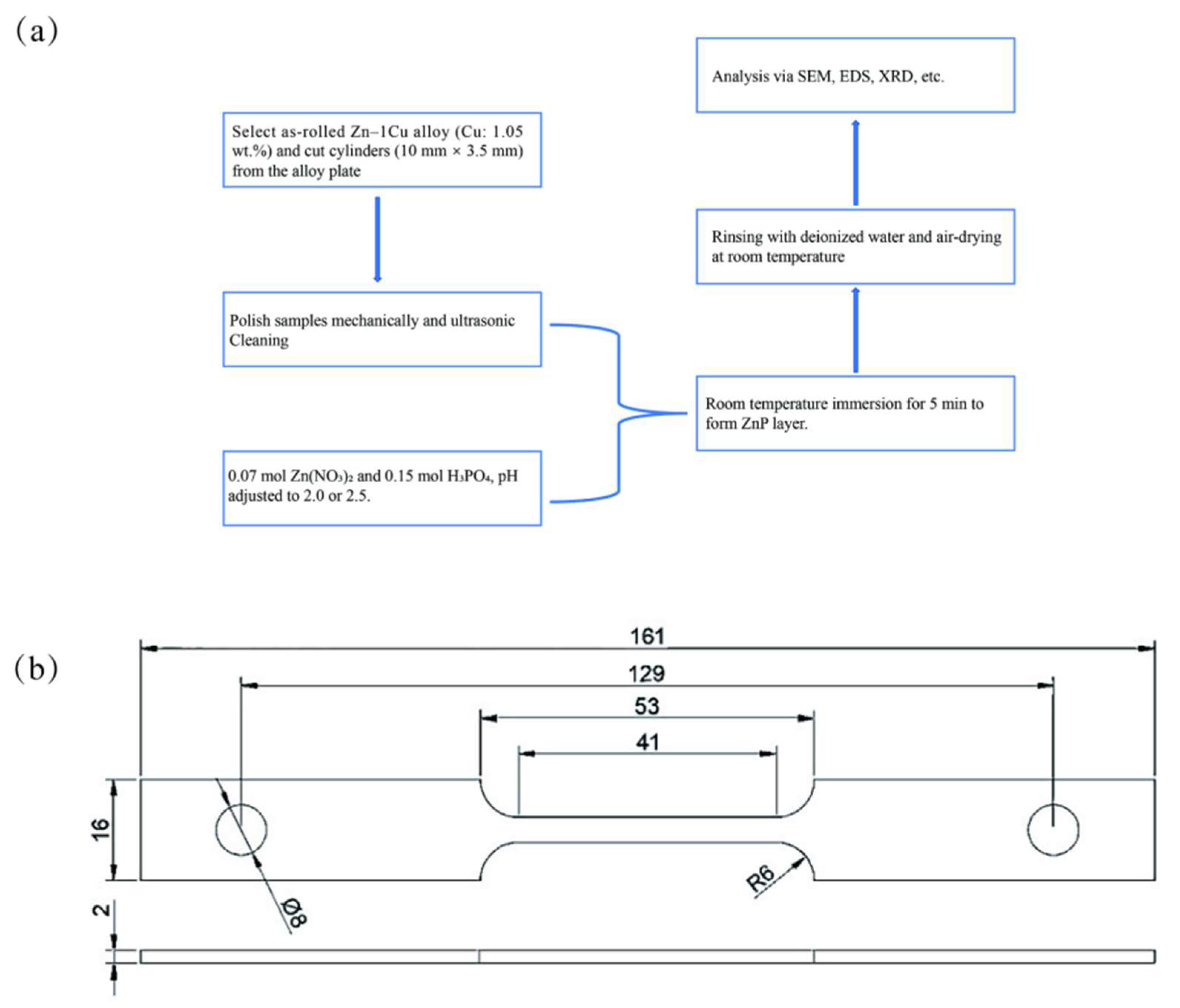
The as-rolled Zn-1Cu (Cu: 1.05 wt.%) alloy was selected as the starting material, and cylinders measuring 10 mm × 3.5 mm were cut from the plate. The alloy samples were polished with #1500 sandpaper, ultrasonically cleaned in acetone for 5 min, and then immersed in 50 mL of coating solution at room temperature for 5 min. Subsequently, the samples were rinsed with deionized water, air-dried, and then characterized. The coating solution consisted of 0.07 mol Zn(NO3)2 and 0.15 mol H3PO4, with the pH adjusted to 2 and 2.5, respectively. The experiment was conducted at room temperature. The detailed preparation workflow is schematically illustrated in Figure 1a.

2.2. Microstructural Characterization

The microstructure of the coating was analyzed using scanning electron microscopy (SEM, JSM-6510) (SEM, JSM-6510, JEOL Ltd., Tokyo, Japan), while its elemental composition was determined by energy dispersive spectroscopy (EDS, OXFORD INCA, Oxford Instruments, Abingdon, UK). The phase composition of the coating was further characterized through X-ray diffraction (XRD, X'Pert PRO MPD, Malvern Panalytical, Malvern, UK).

2.3. Electrochemical Test

Electrochemical tests were conducted using a PARSTAT 4000A workstation (Ametek Scientific Instruments, Berwyn, PA, USA), where the sample served as the working electrode, a saturated calomel electrode (SCE) as the reference electrode, and a platinum sheet electrode as the counter electrode. The prepared samples were encapsulated in epoxy resin with one end exposed. The exposed surface was ground, polished, and rinsed with alcohol, while the opposite end was connected to the electrochemical workstation via a copper wire. The electrolyte used for electrochemical testing was Hank’s solution maintained at 37 °C. The testing protocol began with open circuit potential (OCP) measurement for 1800 s, followed by potentiodynamic polarization (Tafel) tests. The polarization scans were performed relative to the OCP, with a starting potential of −0.25 V, a final potential of 0.35 V, and a scan rate of 0.5 mV/s. Three parallel samples were tested for each alloy type.

2.4. Immersion Test

The prepared samples were immersed in Hank’s solution at 37 °C with an immersion ratio of 1.25 cm2/mL. The immersion solution was replaced daily at scheduled intervals, and its pH was measured with a pH meter before each replacement. After 18 days of immersion, the samples were removed, dried, and the surface morphology was examined using scanning electron microscopy (SEM), while the composition of the corrosion products on the alloy surface was analyzed by energy dispersive spectroscopy (EDS). The corrosion products formed during immersion were removed by cleaning the samples with a chromic acid solution (200 g/L CrO3 and 10 g/L AgNO3), followed by rinsing with alcohol, drying, and weighing for record.

2.5. Slow Strain Rate Tensile Test (SSRT)

The specimen dimensions used in this study are shown in Figure 1b. The tests were conducted in Hank’s solution. SSRT was performed on a universal testing machine (Instron 5969, Instron, Norwood, MA, USA) at an initial strain rate of 10−5/s. Prior to testing, the tensile specimens were mechanically polished up to 5000 grit to eliminate surface defects.

2.6. Friction and Wear Test

In the friction and wear test, a ball-on-disk tribometer was employed for the experiments. The specific procedures were as follows: a silicon nitride (Si3N4) ceramic ball with a diameter of 6 mm was used as the counterpart, under a constant load of 5 N. During the test, the maximum sliding speed reached 12.5 cm/s with a reciprocating frequency of 2 Hz. Three independent tests were conducted for each coated sample to ensure data reproducibility. After the test, the morphology of the worn coating was examined using SEM.

2.7. In Vivo Tests

Fifteen male SD rats, aged 6 weeks and averaging 310 ± 30 g, were used to establish a bone defect model. The rats were randomly assigned to three groups: a control group, β-TCP group, and ZnP-coated Zn-1Cu alloy group (ZnP group), with five rats in each group. All animal experiments were approved by the Ethics Committee of the Affiliated Hospital of Shandong University of Traditional Chinese Medicine (approval number: SDSZYYAWE20250430001) and all procedures adhered to the National Institutes of Health Guidelines for the Care and Use of Laboratory Animals. The experimental rats were maintained in a 12/12 h light/dark cycle and acclimatized for 7 days prior to the experiment.

2.7.1. Surgical Procedure

Prior to implantation surgery, ketamine (10 mg/kg) (Shanghai Ziyuan Pharmaceutical Co., Ltd., Shanghai, China) and 2% serazine (10 mg/kg) (Shanghai Ziyuan Pharmaceutical Co., Ltd., Shanghai, China) were administered via intraperitoneal injection for anesthesia. Following successful induction of anesthesia, the surgical area on the right hind limb of the rat was shaved and disinfected using iodophor. The patella was palpated after securing the knee joint in maximum flexion. A longitudinal incision measuring 10–15 mm was made along the lateral aspect of the patella, and the tissue was meticulously separated layer by layer to dislocate the patella, thereby fully exposing the lateral femoral condyle. A cylindrical defect with a diameter of Ø3 × 4 mm was created along the condyle line using a ring drill to establish a single penetrating cortical bone defect model of the lateral femoral condyle in rats. The bone blocks were rinsed with normal saline following the removal of debris. Subsequently, Ø3 × 4 mm ZnP-coated Zn-1Cu alloy or β-TCP was implanted into the bone defect using sterile forceps. The incision was repeatedly irrigated with normal saline and iodophor solution, and hemostasis was achieved. After repositioning the patella, the joint capsule and ligaments were repaired and sutured layer by layer to ensure that all rats could move normally postoperatively. The rats were sacrificed six weeks after the procedure, and abdominal aortic blood and femurs were collected. The entire surgical process was conducted under sterile conditions.

2.7.2. Micro-Computed Tomography (Micro-CT) Analysis

Following the collection of rat femurs, the specimens were fixed in 10% neutral formaldehyde for more than one week. After fixation, the samples were washed and scanned using a micro-CT scanner (medium-resolution mode, isotropic voxel size: 15 μm; mCT80, Scanco Medical AG, Bassersdorf, Switzerland). Each femoral specimen was scanned within a range of 1 mm around the implant, and new bone formation surrounding the implant was analyzed following three-dimensional reconstruction. The primary analytical indices included bone volume fraction (bone volume/total volume, BV/TV), trabecular number (Tb.N), trabecular separation (Tb.Sp), and bone junction density (Conn.D.). The sample size was set at five.

2.7.3. Histological Evaluation

Femoral specimens were fixed in 4% paraformaldehyde for 2 days, rinsed with water, dehydrated using a gradient of ethanol concentrations, washed with xylene, and embedded in polymethyl methacrylate (PMMA). They were then sectioned along the horizontal plane of the femur, parallel to the implant, using a diamond slicing machine (Leica SP-160, Wetzlar, Germany) to produce 3–4 sections, each 200 μm thick. Femoral sections were subsequently ground to a thickness of 100 μm. The tissue sections were stained with Magenta-methylene blue, Van Gieson, and Toluidine blue. Qualitative histological observations were performed using an optical microscope (Nikon Eclipse E200, Tokyo, Japan).

2.7.4. In Vivo Biocompatibility Evaluation

The overall condition of the rats was assessed daily following the surgery, focusing on parameters such as body temperature, body weight, and wound healing. Blood samples, along with key internal organs including the heart, liver, spleen, lung, and kidneys, were collected six weeks post-operation. The concentrations of calcium (Ca), phosphorus (P), and zinc (Zn) in serum were measured using inductively coupled plasma mass spectrometry (ICP-MS). The organ tissues were prepared into sections, stained with hematoxylin-eosin (H&E), and the pathological conditions were observed under an optical microscope. Blood biochemical tests were performed for each group, measuring seven indicators: alkaline phosphatase (ALP), aspartate aminotransferase (AST), γ-glutamyl transferase (γ-GT), total bilirubin (TBIL), direct bilirubin (DBIL), creatinine (CR), and uric acid (UA).

2.8. Data Analysis

Data processing was performed using GraphPad Prism 10.1.2 statistical software for statistical analysis. Measurement data were presented as mean ± standard deviation (x ± SD). Two independent sample t-tests were employed to compare the two groups. One-way analysis of variance was utilized to assess mean differences among multiple groups, with a p value < 0.05 deemed statistically significant.

3. Results

3.1. Microstructural Analysis

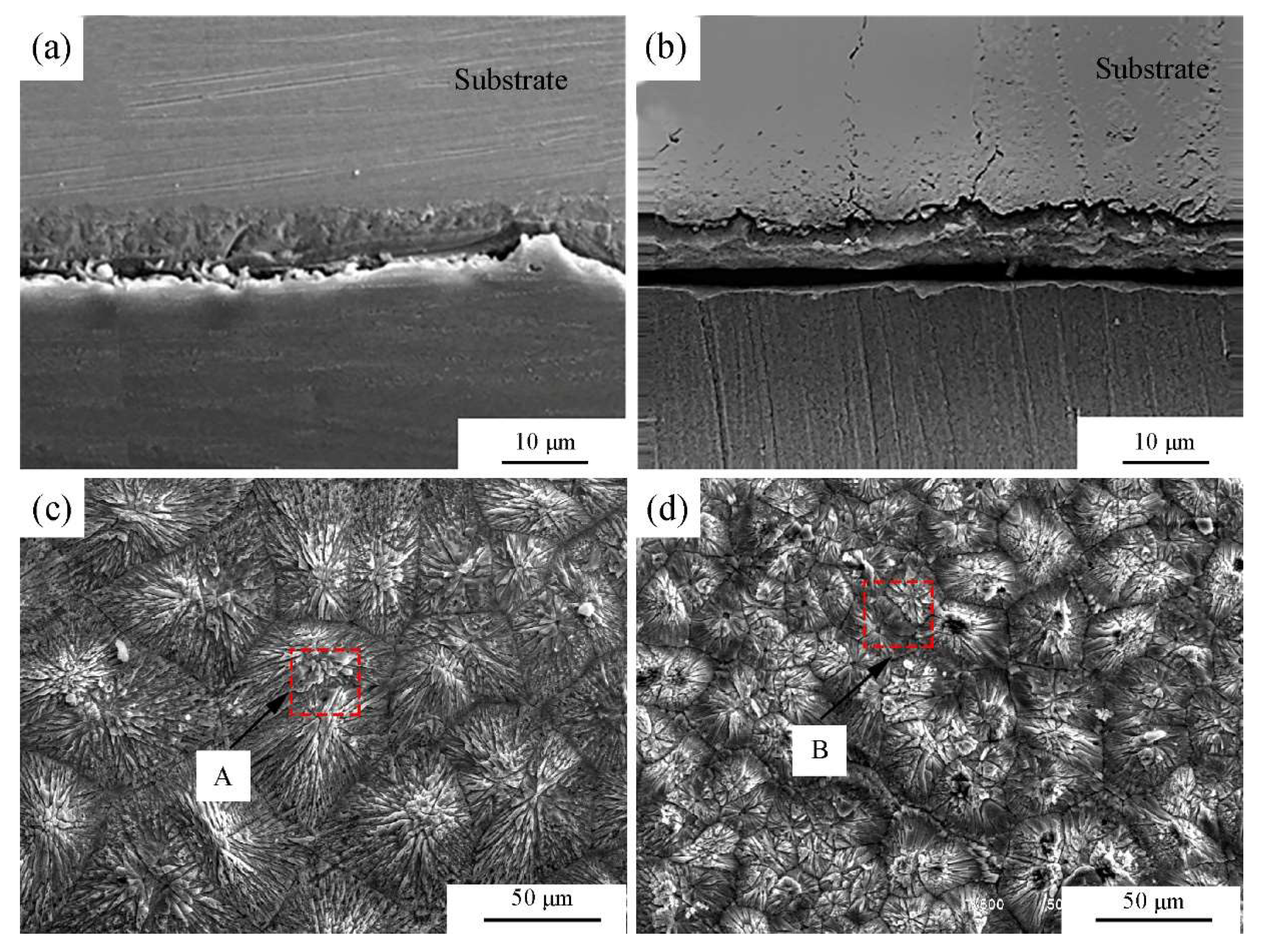
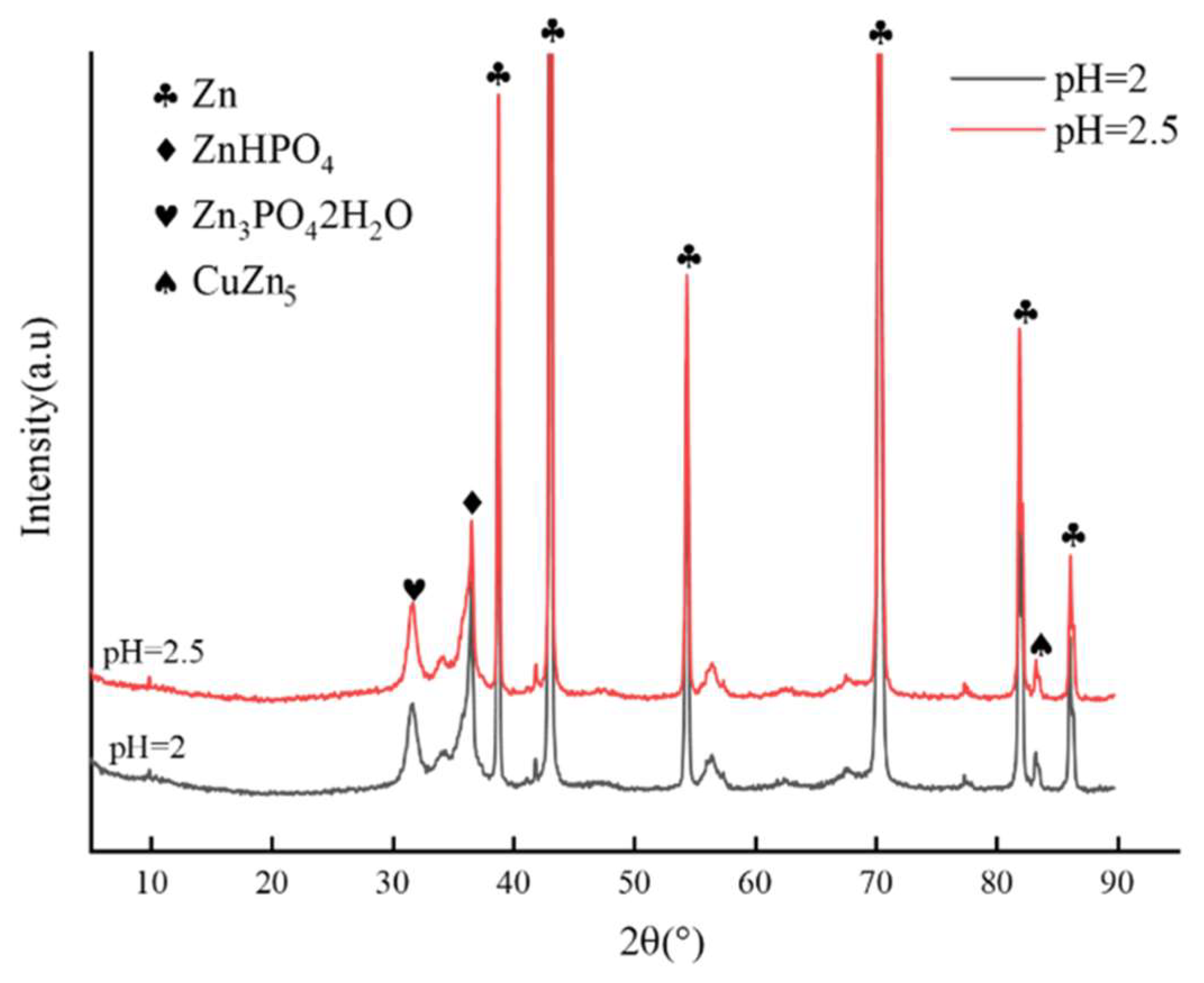
Figure 2a,b shows the cross-sectional microstructure of the coating. Observing the cross-sectional morphology, the coating thickness is similar, approximately around 8 μm, and the bonding interfaces between the coating and the substrate in both samples are relatively clear, indicating good adhesion of the coating to the substrate. However, there are cracks and uneven areas on the coating surface, which may affect its protective performance. For the coating at pH = 2, the interface between the coating and the substrate is relatively clear, but the coating surface exhibits some unevenness and cracks. The unevenness of the coating surface is due to the uneven thickness of the coating, suggesting that there may be certain defects in the coating. In contrast, the surface of the coating at pH = 2.5 is relatively smoother, indicating that under pH = 2.5 conditions, the coating formation process is more stable, reducing the occurrence of cracks, though some fine cracks and uneven areas still remain. Figure 2c,d shows the surface microstructure of the coatings. Observation of the surface morphology reveals a distinct dendritic or needle-like structure of the coating. At pH = 2, ZnP crystals formed in a highly acidic environment exhibit dense, uniformly distributed, and relatively large structures, approximately 100 μm in size. Due to the dense growth of the crystals, the coating surface appears relatively rough. In contrast, the surface of the coating at pH = 2.5 is relatively flatter, with less pronounced dendritic or needle-like structures. This is because the increase in pH slows down the growth rate of ZnP crystals, resulting in a smoother coating. At a lower pH (pH = 2), the faster growth rate of ZnP crystals leads to larger dendritic or needle-like structures and a rougher coating surface. At a higher pH (pH = 2.5), the slower crystal growth results in smaller-sized crystals and a smoother coating surface. Under lower pH conditions, the crystals are larger and more densely distributed, while at higher pH values, the crystals are smaller and more uniformly dispersed. Table 1 shows the EDS results of the coatings. There are mainly Zn, Cu, P, O elements in the coatings. The content of Cu decreased obviously compared with the substrate. Figure 3 shows the XRD patterns of two coatings. It can be observed that the main components present in the coating samples are Zn, ZnHPO4, Zn3(PO4)2·2H2O, and CuZn5. Based on the peak intensities, the ZnP coating formed under pH = 2.5 condition exhibits higher crystallinity, stronger peak intensities, and sharper peak shapes, indicating that an increase in pH favors the formation of higher-quality ZnP coatings. In contrast, the coating formed under pH = 2 condition is of relatively lower quality, which may be attributed to the influence of decreased pH on the coating formation process.

3.2. Electrochemical Corrosion

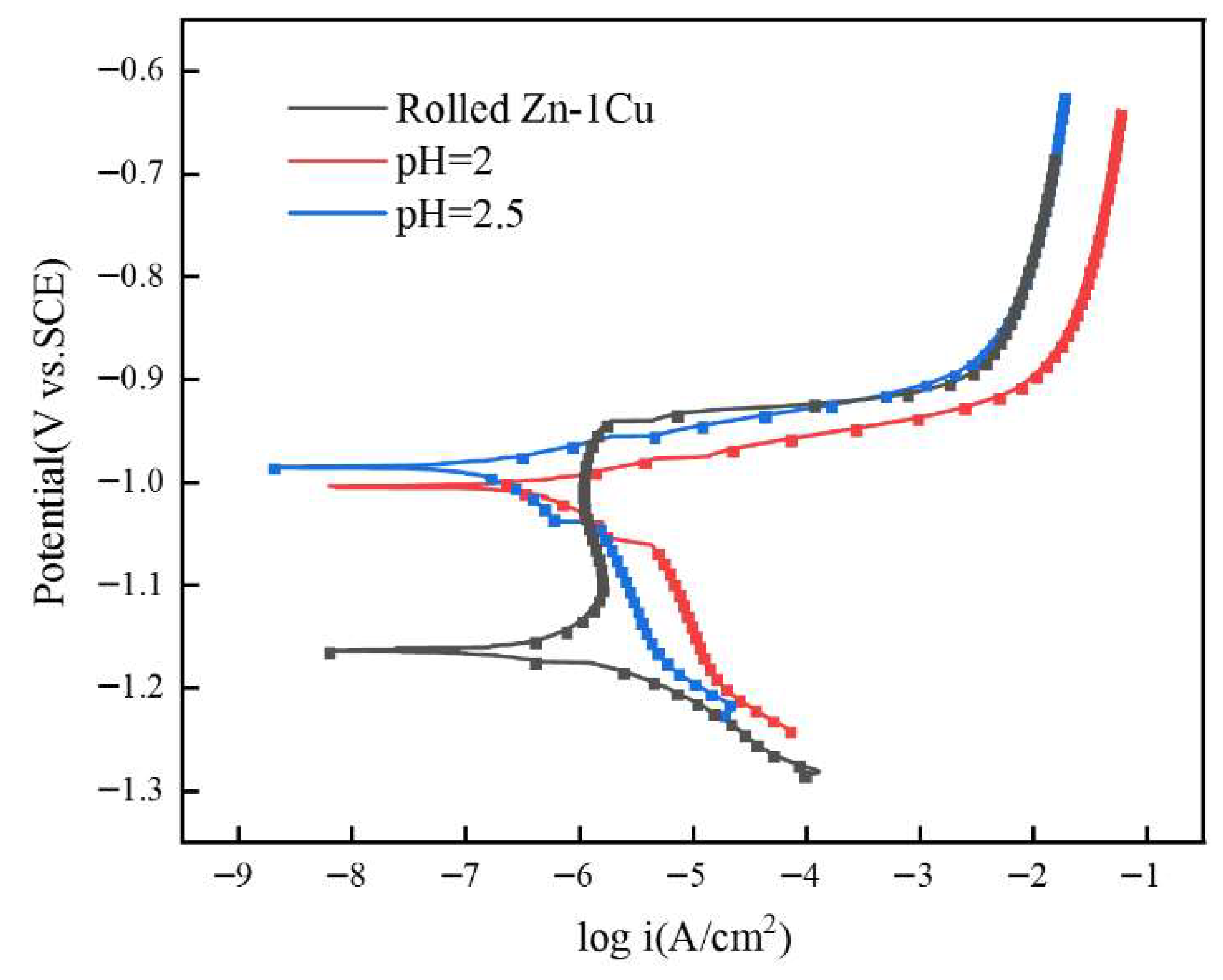
Figure 4 shows the potentiodynamic polarization curves of the samples in Hank’s solution. The corrosion current density (icorr), corrosion potential (Ecorr), and corrosion rate results obtained by Tafel extrapolation are presented in Table 2. It can be observed that compared to the uncoated sample, the Tafel curve of the ZnP-coated sample exhibits a positive shift in Ecorr, while the icorr and calculated corrosion rate (CR) show a significant positive deviation. These results indicate that the overall corrosion resistance of the ZnP-coated sample is superior to that of the uncoated sample.

3.3. Immersion Test Analysis

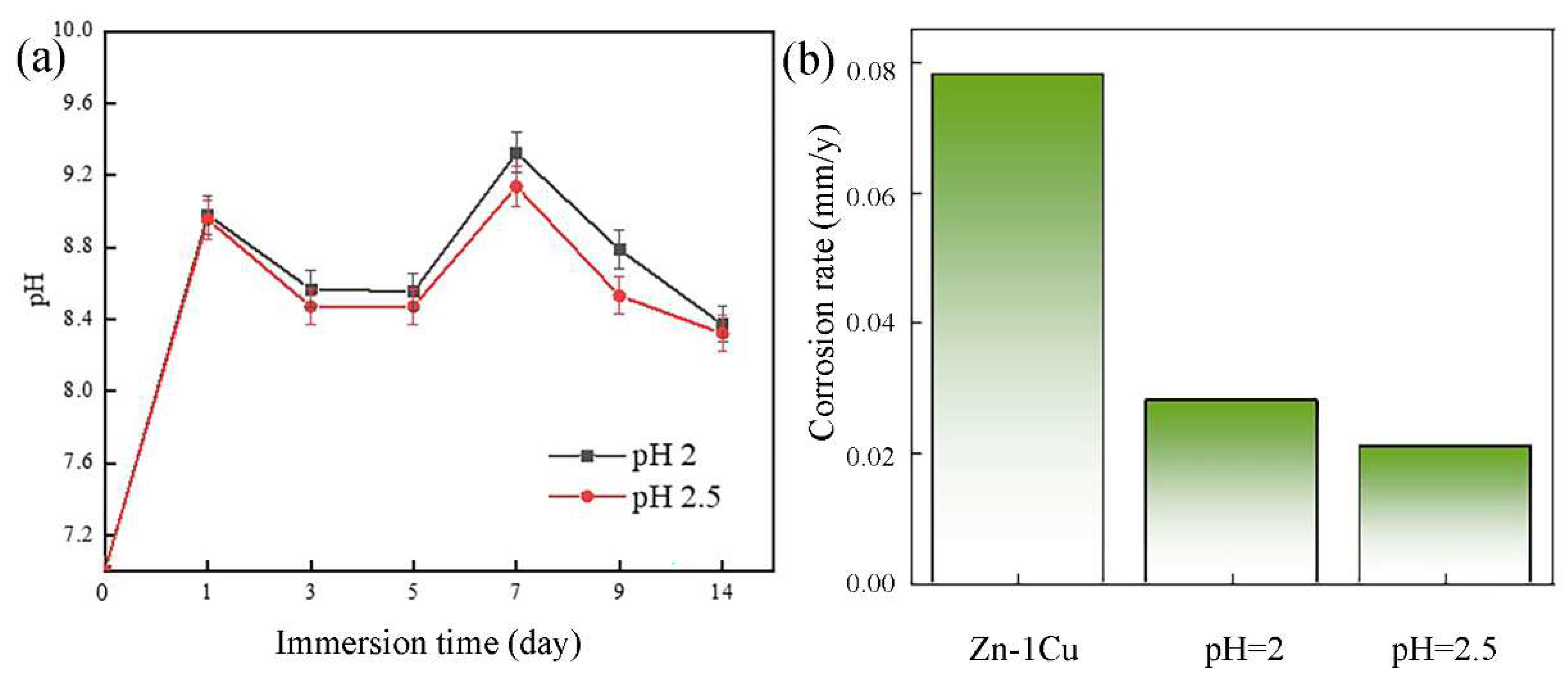
Figure 5a shows the pH variation in the ZnP-coated samples immersed in Hank’s solution for 14 days. In the initial immersion stage, the sample released Zn2+ and OH, causing a rapid increase in the solution pH. Over time, as the coating degraded and corrosion products formed, the pH gradually decreased. After 3 days, the solution pH stabilized. In the later stages of immersion, degradation of corrosion products led to a pH increase. Throughout the entire immersion period, the pH value of the pH = 2 coating sample remained stable and consistently lower than that of the pH = 2.5 sample. When the coated sample was immersed in the solution, its surface immediately reacted with the solution, resulting in an increase in the alkalinity of the solution. The corrosion rate of the coated sample after 14 days of immersion in Hank’s solution is significantly reduced compared to the uncoated sample (Figure 5b). However, due to the high porosity of the coating, the protective effect is limited, with the corrosion rate being approximately 30% to 50% of that of the uncoated sample. Under the pH = 2 condition, the reaction kinetics are accelerated, but the highly acidic environment leads to an excessively high dissolution rate of Zn-1Cu, resulting in a loose and porous phosphating layer. Additionally, the presence of microcracks and pores in the coating allows corrosive media (such as Cl) to easily penetrate to the substrate, increasing the risk of localized corrosion. A slightly higher pH value (pH = 2.5) slightly slows down the reaction rate, promoting more uniform crystal growth. This leads to a relatively denser structure of the phosphating film, reduced porosity, and higher coating quality with fewer defects.
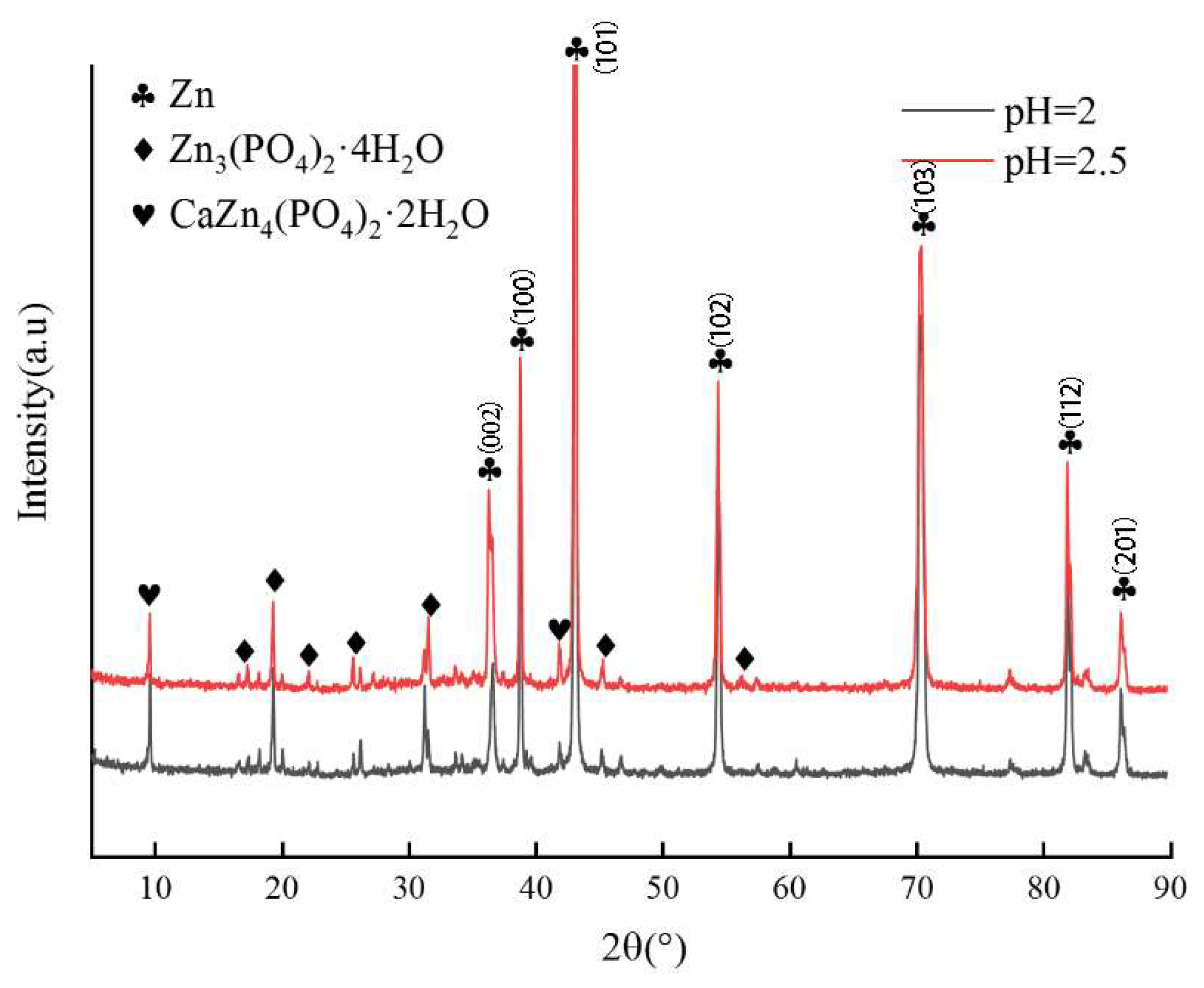
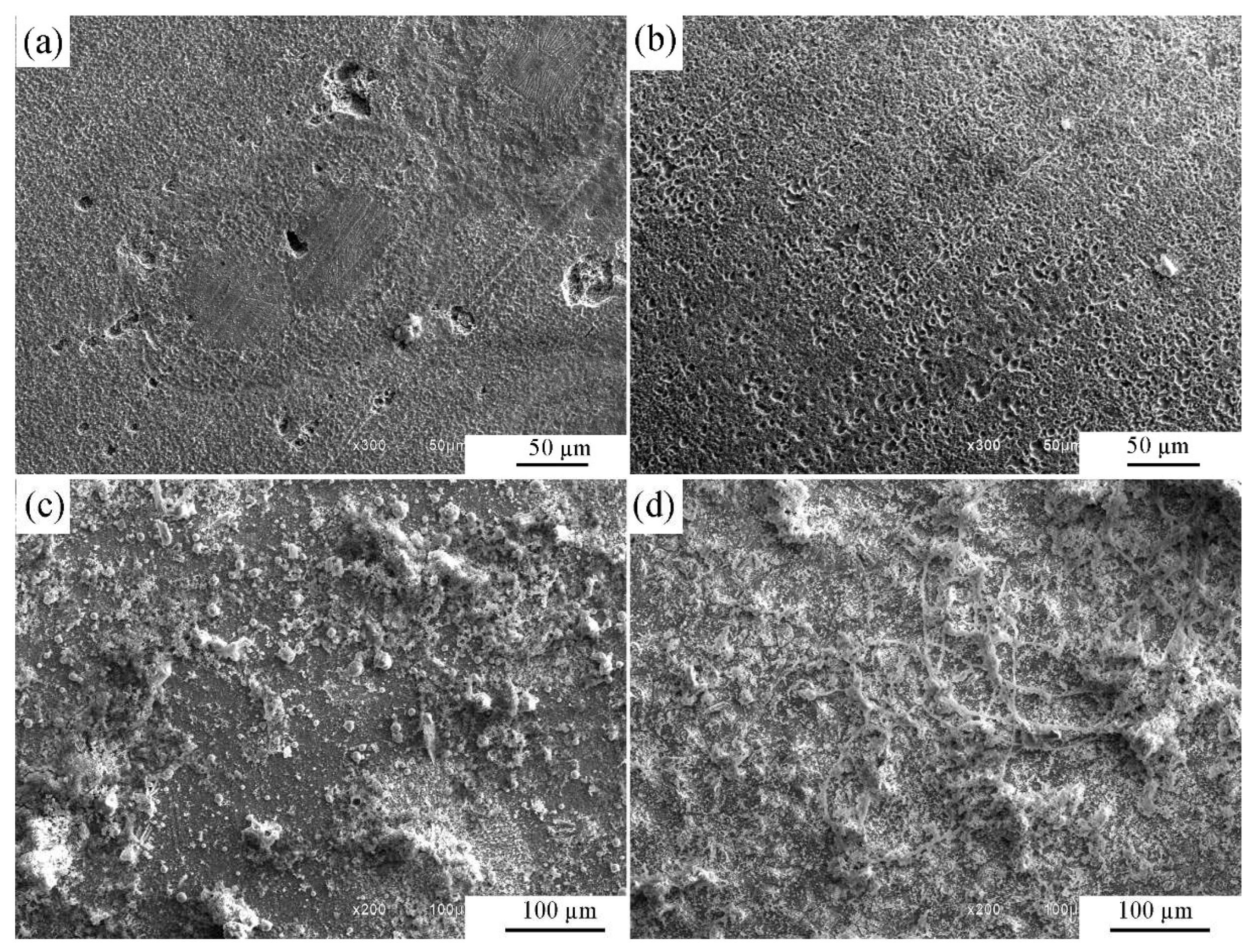
Figure 6a,b presents the microscopic surface morphology of coatings after removal of corrosion products, following 14 days of immersion in Hank’s solution at different pH values (pH = 2 and pH = 2.5). The coating at pH = 2 exhibits distinct corrosion traces and an uneven surface morphology, with visible large corrosion pits and irregular surface structures. In contrast, the coating at pH = 2.5 shows relatively milder corrosion. The surface appears comparatively flat, with fewer and smaller corrosion pits. Figure 6c,d show the microscopic surface morphology of coatings immersed in Hank’s solution for 14 days. The coating surface becomes significantly rougher, with obvious deposition of corrosion products. These corrosion products exhibit irregular granular and agglomerated morphologies, indicating that severe corrosion occurred in the strongly acidic environment at pH = 2. The integrity of the coating was compromised, with visible corrosion traces and spalling phenomena. In contrast, under the pH = 2.5 condition, the surface roughness of the coating is lower, and the deposition of corrosion products is relatively less. Some fine granular corrosion products can be observed on the surface, but overall, the surface remains relatively smooth and evenly distributed. Figure 7 shows the XRD patterns of the coating after 14 days of immersion. Under acidic conditions (pH = 2 and 2.5), unstable zinc phosphate hydrates such as Zn3(PO4)2·4H2O form in the coating. The low pH likely inhibits the adsorption or reaction of Ca2+, resulting in reduced formation of CaZn2(PO4)2·2H2O and an increased proportion of Zn3(PO4)2·4H2O. Furthermore, the acidic environment may accelerate coating dissolution, leading to broadening of XRD peaks or reduced intensity, indicating decreased crystallinity.

3.4. Slow Strain Rate Tensile Test Analysis

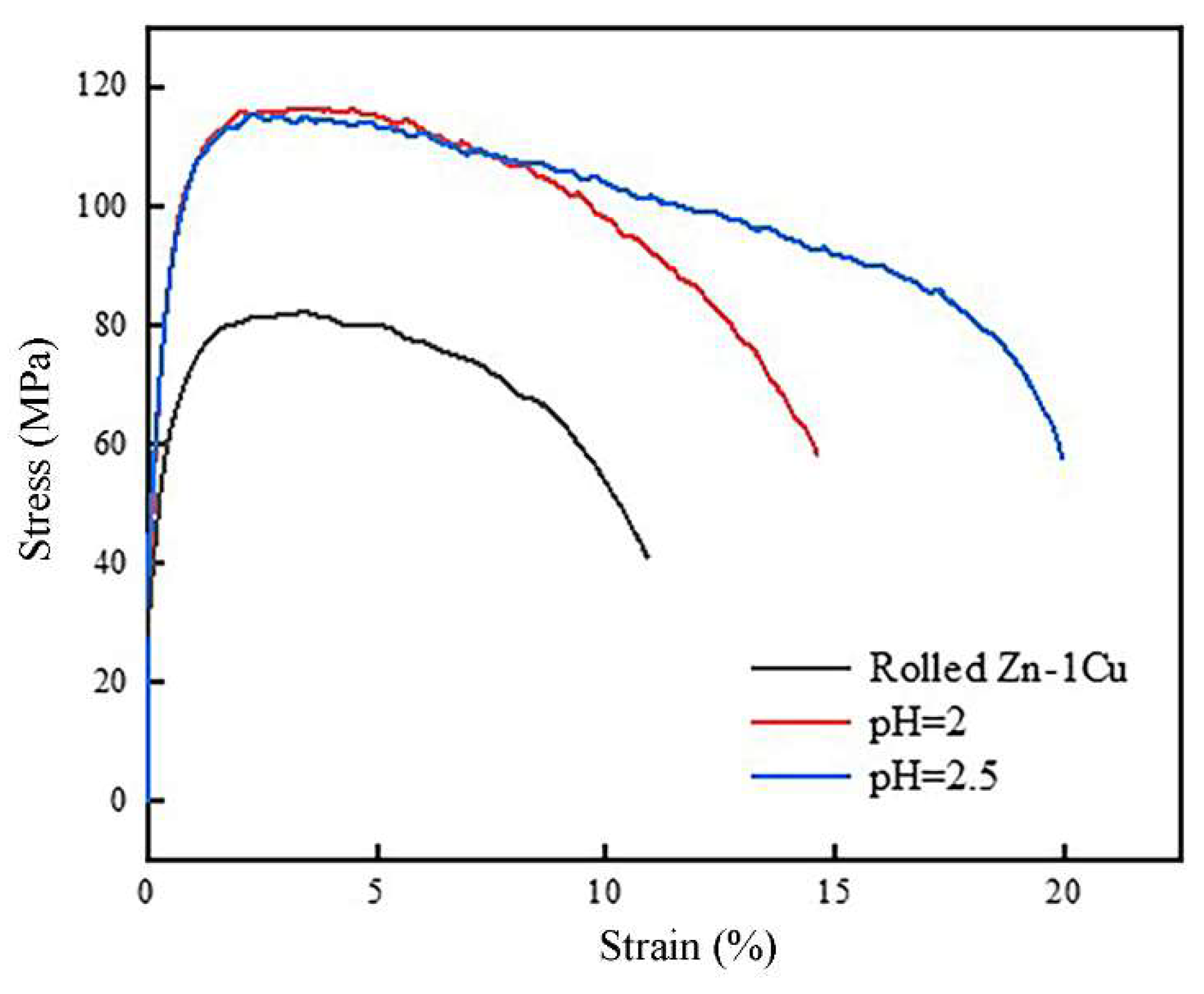
Figure 8 shows the stress–strain curves of the as-rolled Zn-1Cu alloy with ZnP coating during slow strain rate testing (SSRT) in Hank’s solution, and Table 3 presents the corresponding mechanical properties after testing. It can be observed from the figure that both the strength and elongation of the Zn-1Cu alloy improved after coating application. During SSRT, the ZnP coating formed at pH = 2 exhibited weaker bonding strength and accelerated corrosion due to more defects such as pores and microcracks resulting from its faster deposition rate. These factors led to only a marginal improvement in mechanical performance. In contrast, the coating formed at pH = 2.5 possessed a denser structure, greater uniformity, and lower hydrophilicity, which delayed medium penetration and corrosion progression. This coating maintained higher fracture toughness, and its more stable corrosion products effectively mitigated Cl attack and hydrogen embrittlement. As a result, the coating at pH = 2.5 retained higher tensile strength and elongation during SSRT.

3.5. Friction and Wear Test Analysis

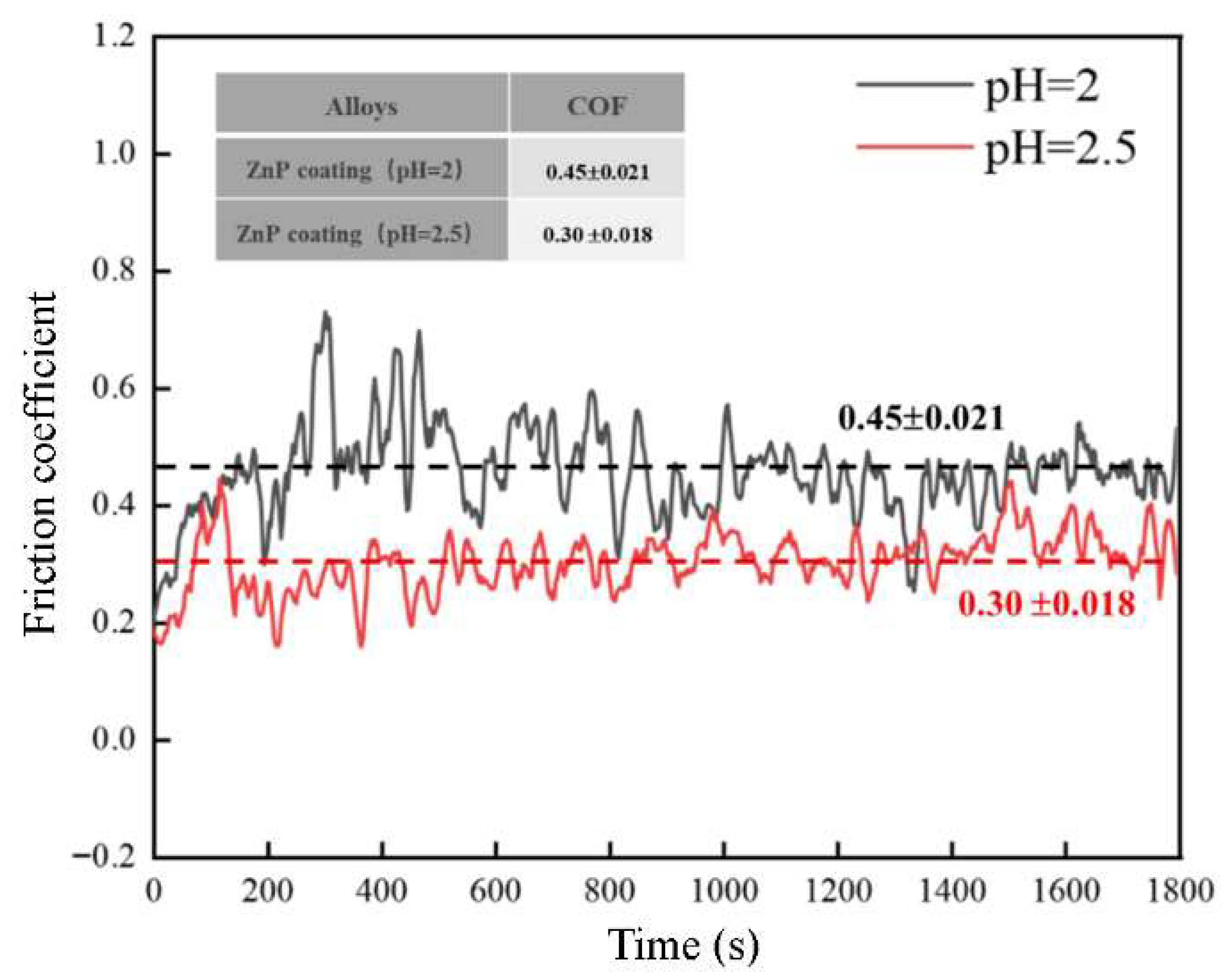
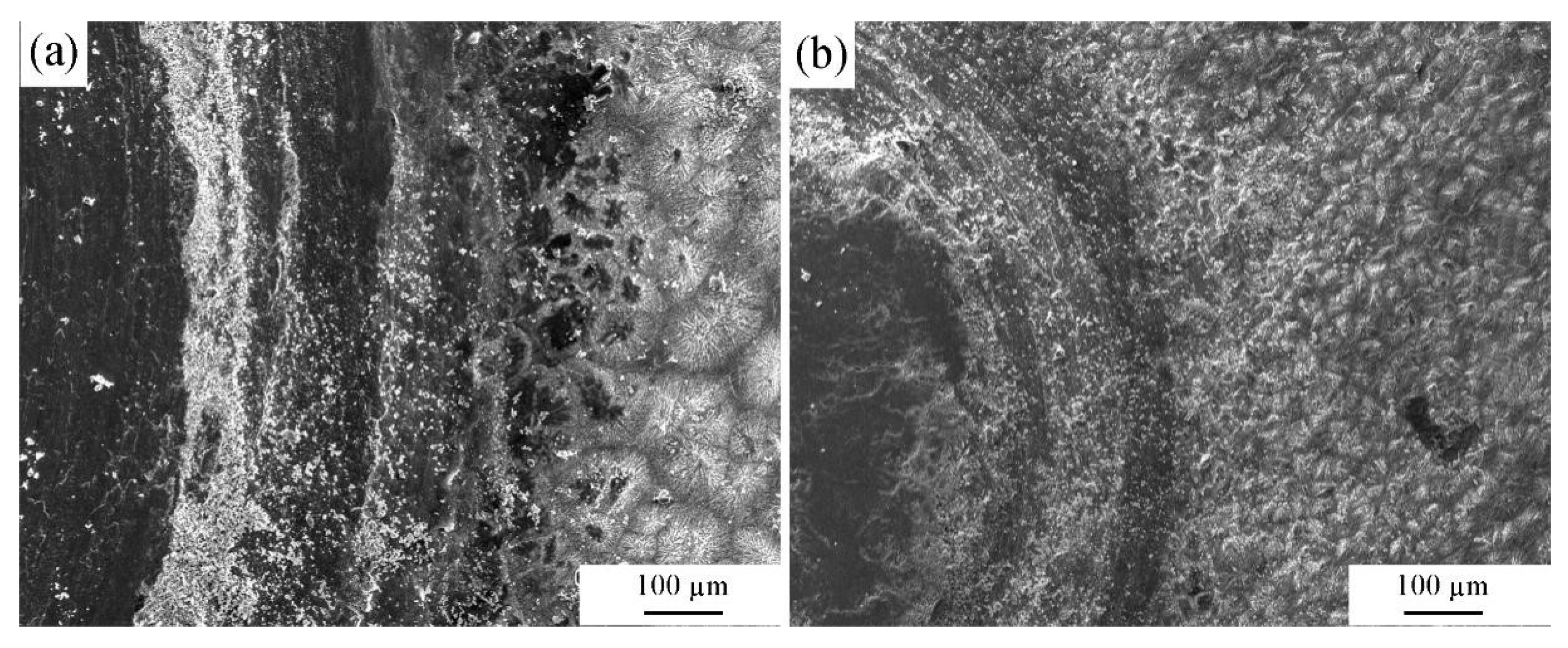
Figure 9 shows the relationship between the sliding distance and the friction coefficient of the coated samples. The friction coefficients of both samples exhibit certain fluctuations during the sliding process. Compared to the sample at pH = 2, the friction coefficient curve of the ZnP coating at pH = 2.5 is lower. The friction coefficient of the samples gradually increases at the beginning of the sliding process and then fluctuates within a certain range. The friction coefficient of the pH = 2 sample changes drastically, while the friction coefficient curve of the pH = 2.5 sample is relatively stable, with fluctuations gradually diminishing over time. Figure 10 shows the microscopic morphologies of the coatings after friction. The friction wear tracks exhibit typical wear characteristics, with many grooves parallel to the sliding direction present in the tracks. The surface roughness inside the wear scar is relatively high, and there are numerous micro-pits and protrusions, which are caused by the peeling and wear of the coating material during the friction process. In some areas, obvious material transfer phenomena can be observed, resulting in an uneven surface morphology. The friction tracks of the coating sample at pH = 2 are deeper and uneven, with significant morphological changes (Figure 10a). There is a considerable amount of wear debris in the field of view, and the particle size is large, indicating poor wear resistance of the coating, which is prone to deformation and peeling during the friction process. In contrast, the friction tracks of the coating sample at pH = 2.5 are shallower and more uniform, with minimal morphological changes (Figure 10b), showing only signs of delamination and less wear debris, accompanied by a small amount of oxides. The coating remains relatively stable during the friction process, demonstrating better wear resistance.

3.6. Micro-CT Results

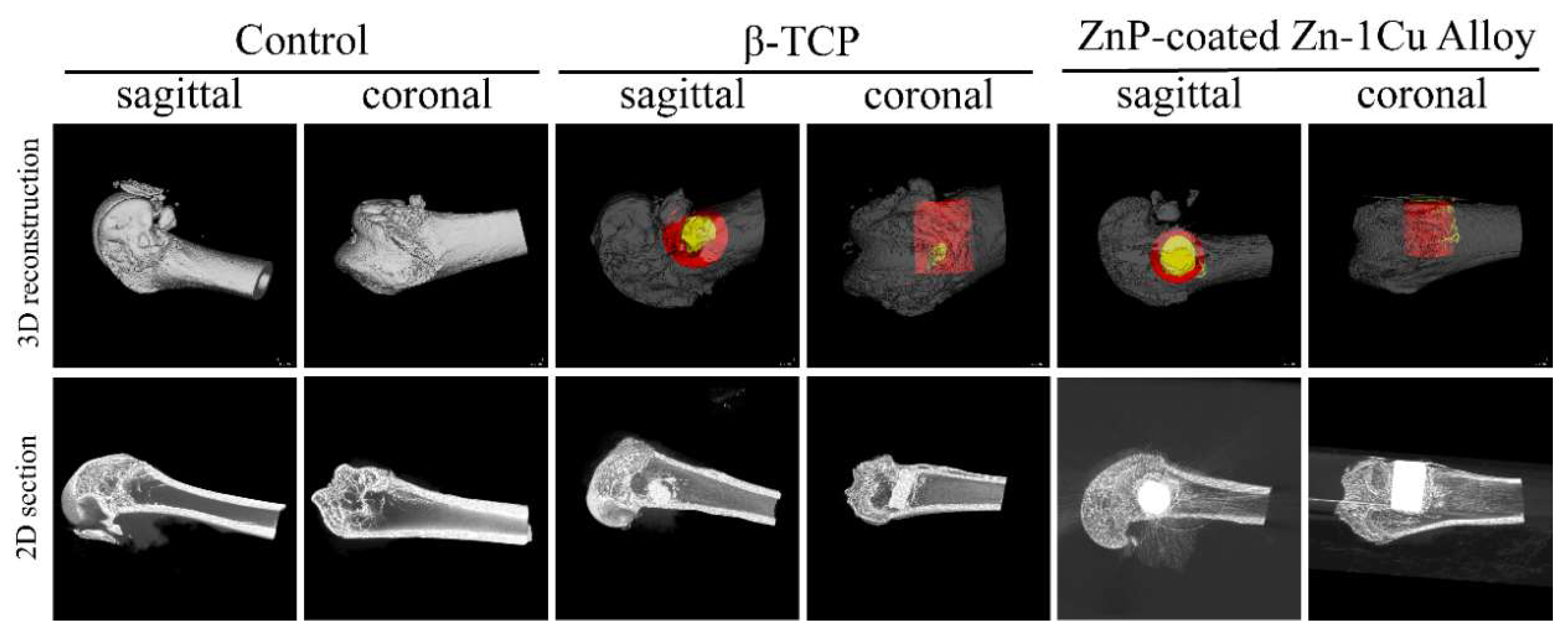
To systematically evaluate the osteogenic properties of the ZnP-coated Zn-1Cu alloy in vivo, we performed micro-CT scanning and three-dimensional reconstruction analysis on rat femur samples 6 weeks after surgery (Figure 11). Qualitative observations indicated that at 6 weeks post-operation, the control group exhibited uneven cortical bone and limited new bone formation in the area of the bone defect; In β-TCP group, some new bone grew into the pores of the material, but the degree of osseointegration was average. However, the ZnP group showed more significant new bone formation, and there was a continuous bone bridge at the interface between the implant and the host bone, showing excellent osseointegration ability.
The coronal and sagittal sections further elucidated the details of new bone growth and implant degradation. In the ZnP group, new trabeculae extended along the periphery of the bone defect, establishing direct contact with the implant surface and creating a robust bone-implant interface. The implant exhibited a distinct contour and maintained its structural integrity, with only minor signs of erosion observed at the edges. This indicates that degradation is initiated uniformly from the surface, and no macroscopic cracks compromising the structural integrity are present. In contrast, the β-TCP materials demonstrated partial and rapid absorption. In the control group, the defect center remained predominantly filled with fibrous tissue, with only a limited amount of new bone formation occurring at the periphery.
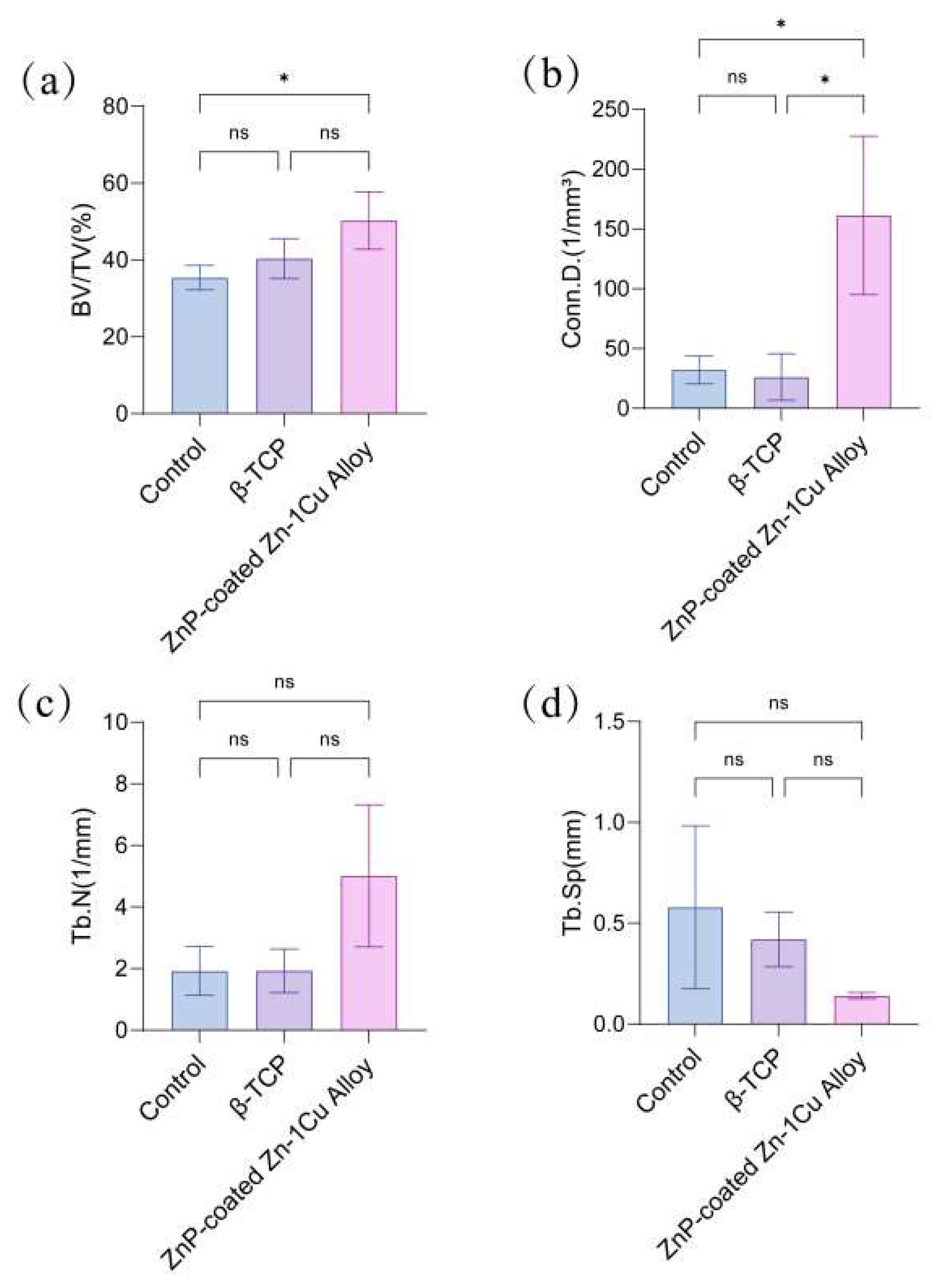
The quantitative analysis further corroborated the aforementioned observations (Figure 12). The bone volume fraction (BV/TV) in the ZnP group (approximately 50.26%) was significantly greater than that in the control group (p < 0.05) and β-TCP group. Additionally, the number of trabeculae (Tb.N) and connection density (Conn.D) significantly increased in the ZnP group, while the trabecular separation degree (Tb.Sp) significantly decreased. These findings suggest that the new bone structure was denser and more uniform. Overall, the results demonstrated that the ZnP coating significantly enhanced the osteogenic activity of the Zn-1Cu alloy by modulating the release behavior of Zn2+ and Cu2+, thereby promoting early bone healing and facilitating long-term bone integration.

3.7. Histological Analysis

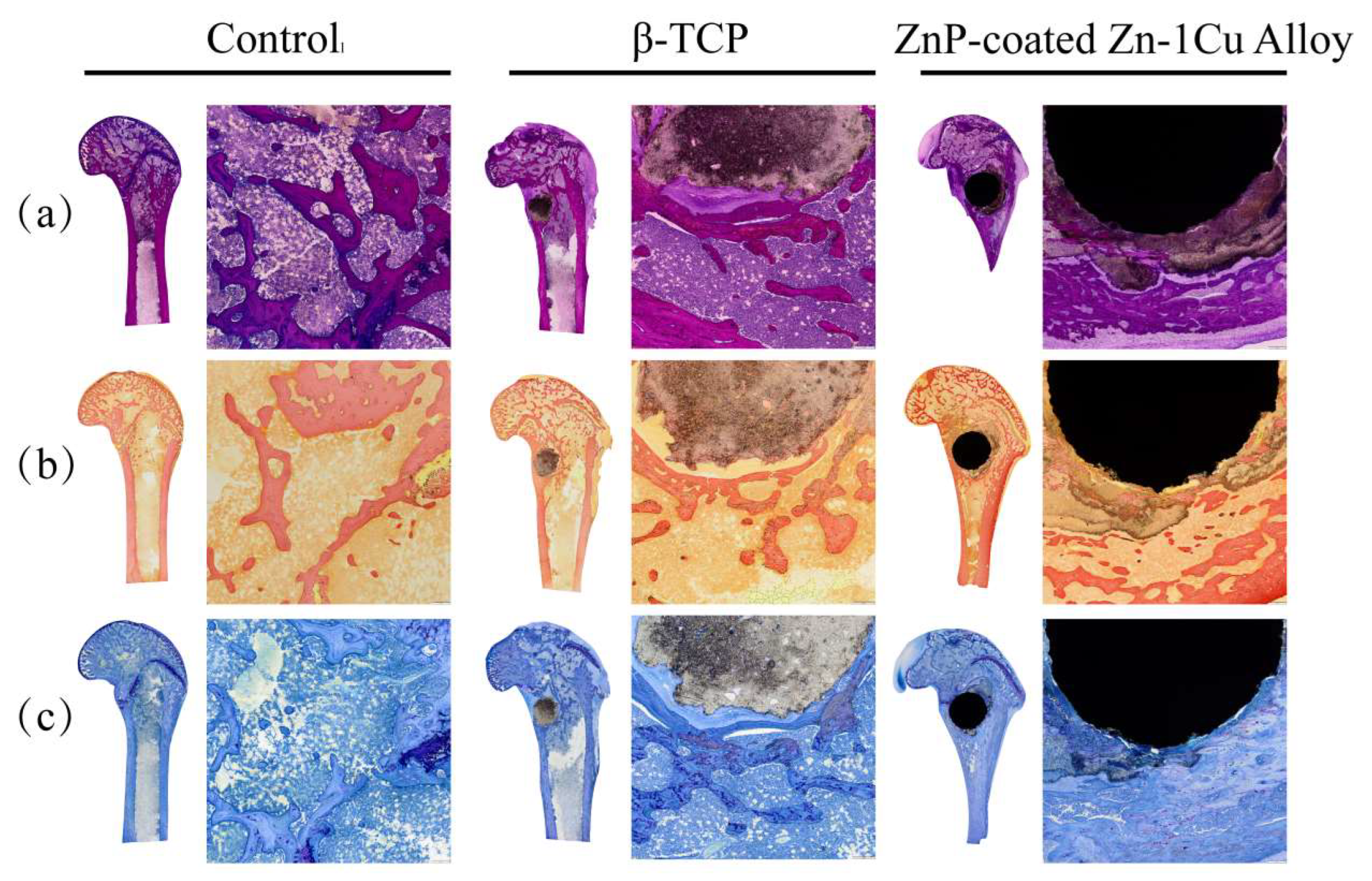
To systematically assess the osseointegration and degradation behavior of ZnP-coated Zn-1Cu alloy in vivo, we performed a comprehensive histological analysis of femoral samples collected six weeks post-operation. The sections were stained with Magenta-methylene blue, Van Gieson, and toluidine blue, and the results are presented in Figure 13. Each staining method revealed differences among the various groups regarding new bone formation, mineralization maturity, and tissue response from distinct perspectives.
Magenta-methylene blue staining (Figure 13a) revealed that the new bone tissue appeared deep red, whereas the original mineralized bone tissue exhibited a relatively lighter hue. Six weeks postoperatively, the defect area in the control group was predominantly filled with fibrous tissue, with only a few sparse new bone trabeculae present. In the β-TCP group, partial degradation of the material was evident, and new bone infiltrated the original pores. However, fibrous tissue septa frequently existed between the bone tissue and the material interface, indicating incomplete bone integration. In contrast, the ZnP group demonstrated the most pronounced osteogenic activity, characterized by substantial new bone formation. Furthermore, the new bone made direct contact with the surface of the implant, establishing a robust bone-implant interface, which suggests excellent early bone integration capability.
Van Gieson staining (Figure 13b) distinctly highlighted the bone tissue, with mature nascent bone appearing orange-red and unmineralized osteoid exhibiting a yellow hue. In the control group, only a minimal number of orange-red areas were observed. Although new bone formation was evident in the β-TCP group, osteoblasts were sparsely distributed, resulting in a discontinuous osteogenic zone. In contrast, the ZnP group displayed a marked advantage, forming a continuous and substantial orange-red osteogenic band at the implant-bone interface, which was abundant in osteoblasts. This finding directly demonstrated the potent osteogenic induction activity of this material.
Toluidine blue staining (Figure 13c) was used to evaluate the mineralization maturity of newly formed bone. Well-mineralized bone tissue exhibited dark blue coloration, whereas incompletely mineralized osteoid tissue appeared light blue. A substantial region of deep blue was observed in the defect area of the ZnP group, signifying favorable mineralization and maturation of the new bone. Although blue signals were evident in the β-TCP group, the proportion of dark blue areas was minimal, and the staining intensity was relatively low. This observation suggests that the degree of mineralization of the new bone was delayed. In the control group, almost no deep blue staining was detected, indicating that the level of mineralized water was the lowest.
In all tissue sections from the ZnP group, the implants remained structurally intact six weeks post-operation, exhibiting only minor signs of degradation at the edges. No significant infiltration of inflammatory cells or formation of dense fibrous encapsulation was observed surrounding the implant. This crucial finding directly confirmed the favorable biocompatibility and controllable degradation properties of the material.
In conclusion, the histological analysis results corroborate multiple perspectives that the ZnP-coated Zn-1Cu alloy effectively promotes early new bone formation, accelerates the healing of bone defects, and facilitates optimal bone integration. These findings align closely with the micro-CT analysis results and collectively underscore the significant potential of this material as a degradable bone implant.

3.8. In Vivo Biocompatibility Assessment

To thoroughly assess the in vivo biosafety of the ZnP-coated Zn-1Cu alloy, we performed a systematic analysis on rats six weeks post-operation. Metabolism of metal ions was evaluated by measuring serum ion concentrations. Blood biochemical analyses were conducted to assess liver and kidney function along with the overall physiological state. Additionally, potential organ damage was investigated by histopathological examination of the major organs.
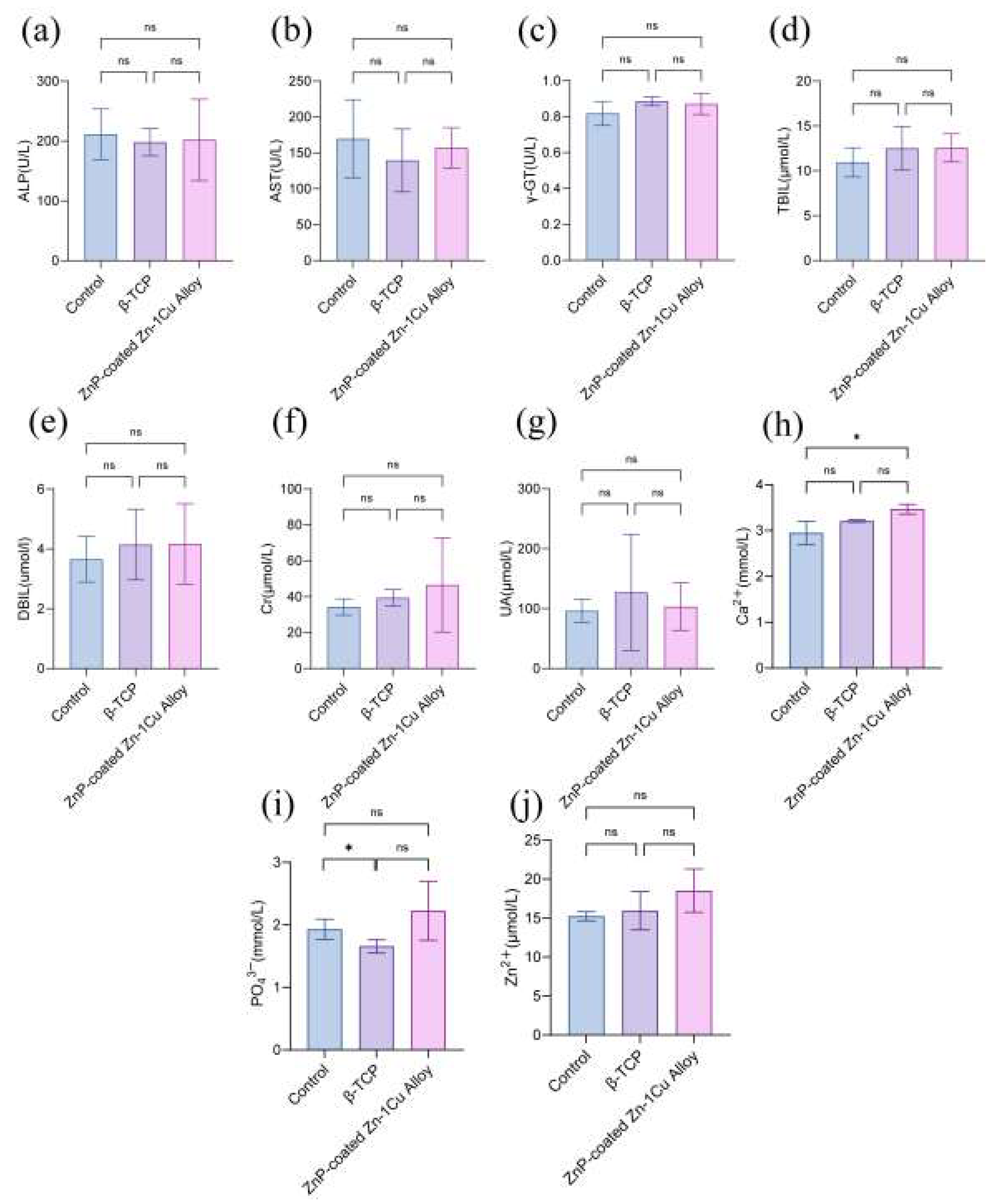
Serum ion concentrations were analyzed using inductively coupled plasma mass spectrometry (ICP-MS). These results indicated that the concentrations of Ca2+, PO43−, and Zn2+ in the serum of rats in the ZnP group did not differ significantly from those in the control and β-TCP groups. Furthermore, the ion concentrations across all groups remained within the normal physiological range (Figure 14h–j).
Blood biochemical analysis was used to assess key indicators of liver and kidney function (Figure 14a–g). All indicators in the ZnP coating group, including alkaline phosphatase (ALP), aspartate aminotransferase (AST), γ-glutamyl transferase (γ-GT), total bilirubin (TBIL), direct bilirubin (DBIL), creatinine (CR), and uric acid (UA), exhibited no statistically significant differences when compared with the other two groups (p > 0.05). These findings suggested that the implanted material did not induce any observable adverse effects on the major organ functions of the experimental animals.
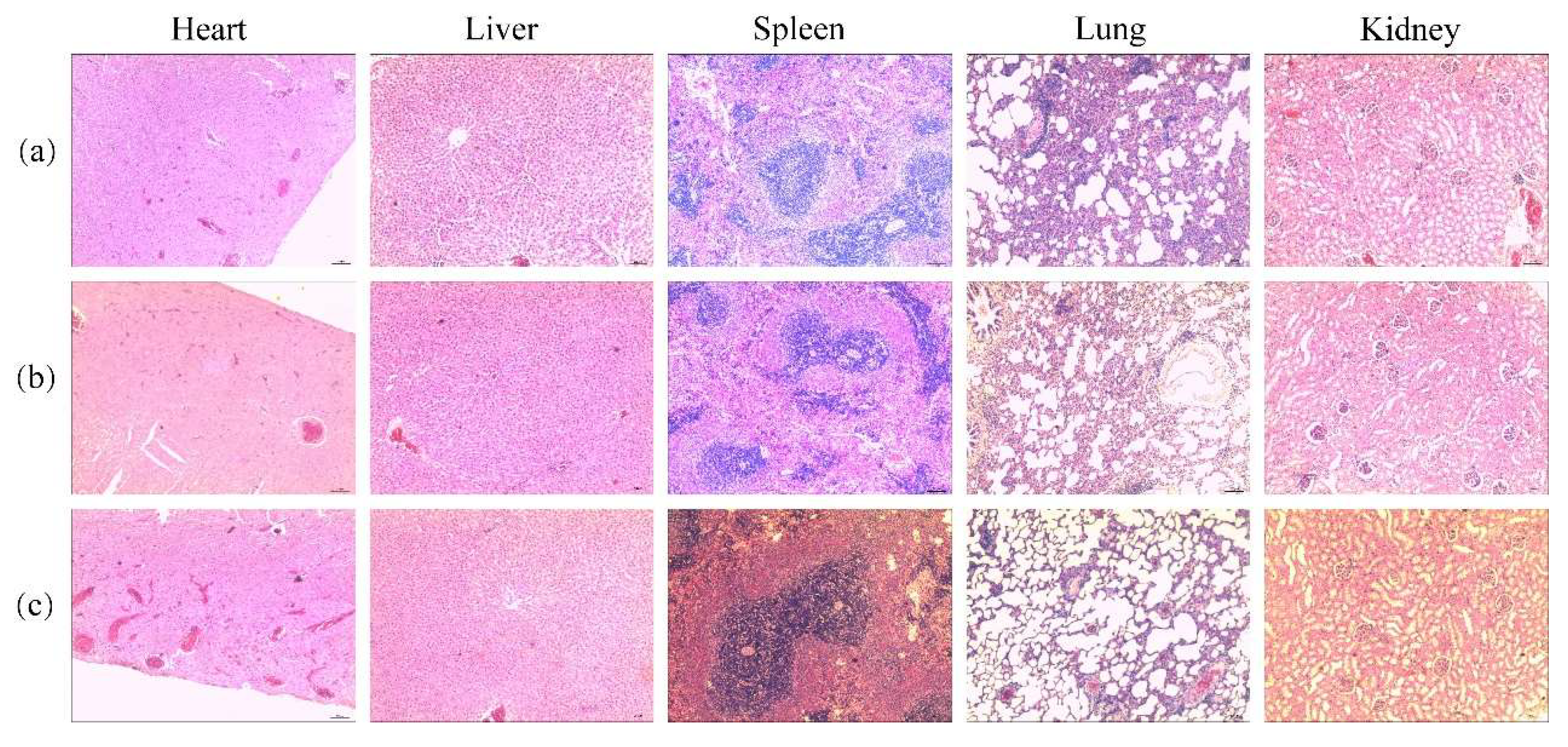
The results presented in Figure 15 indicate that no significant pathological changes were observed in the heart, spleen, kidneys, or liver of the rats at six weeks post-implantation. In the ZnP group, hepatocytes exhibited slight flocculent deformation. This alteration may be attributed to the mild and transient physiological stress on the liver caused by metal ions released during the degradation of the implanted ZnP-coated Zn-1Cu alloy, leading to reversible changes in hepatocytes primarily characterized by cellular edema. Given the low intensity and short duration of the stimulus, along with the absence of a robust inflammatory and fibrotic repair response, and the maintenance of normal liver function and blood parameters, this minor morphological change is interpreted as a benign and self-repairing response during the adaptation process rather than a pathological injury. Deep red staining of the lungs signifies the presence of histiocytes, while deep purple staining indicates lymphocytes. The red areas represent red blood cells and hemorrhage. In the ZnP group, there was no significant expansion of the alveolar cavity, nor was there any edema or thickening of the alveolar wall or surface serosa. In contrast, the other groups exhibited mild infiltration and hemorrhage of inflammatory cells and histiocytes within the lung interstitium; however, no evident necrosis or cell shedding was noted in the bronchial mucosal epithelium across all groups. The hyperplasia of lymphoid tissue surrounding the bronchi and the formation of lymphoid follicles may be attributed to the surgical stress response in rats, which led to the development of mild interstitial pneumonia. Nonetheless, this manifestation was somewhat less severe in the ZnP group, indicating that it was not a result of the degradation products of the ZnP-coated Zn-1Cu alloy.
These results indicate that the ZnP-coated Zn-1Cu alloy did not elicit local or systemic toxic reactions during the in vivo degradation process. Serum ion concentrations, blood biochemical indicators, routine blood analyses, and histopathological evaluations collectively demonstrated favorable biological safety.

4. Discussion

4.1. Effects of the ZnP Coating on the Degradation Resistance and Stress Corrosion of Zn-1Cu Alloy

The overall corrosion resistance of the ZnP coating is superior to that of the uncoated sample. PH exerts a significant influence on the formation mechanism of the zinc phosphate coating. Under strongly acidic conditions (such as pH = 2), the degree of ionization of H3PO4 increases, resulting in a substantial presence of H2PO4 ions in the solution. Consequently, the reaction between Zn2+ and H2PO4 to form ZnHPO4 is significantly promoted. The reaction can be represented as follows: Zn2+ + H2PO4 → ZnHPO4 + H+. This reaction proceeds rapidly, leading to dense yet uneven crystal nucleation and the frequent formation of coarse dendritic structures, which are often accompanied by microcracks and pores. In slightly higher pH conditions (for example, pH = 2.5), the ionization equilibrium of H3PO4 shifts toward the production of HPO42−. This shift favors the formation of a more crystalline and stable Zn3(PO4)2·2H2O, as described by the reaction: 3Zn2+ + 2HPO42− + 2H2O → Zn3(PO4)2·2H2O↓. Consequently, this process results in slower and more orderly crystal growth, thereby yielding a denser and less defective coating structure. As a result, the coating produced at pH = 2.5 demonstrates superior barrier performance and enhanced corrosion resistance. The reaction can be represented as follows: Zn2+ + H2PO4 → ZnHPO4 + H+. This reaction proceeds rapidly, leading to dense yet uneven crystal nucleation and the frequent formation of coarse dendritic structures, which are often accompanied by microcracks and pores. In slightly higher pH conditions (for example, pH = 2.5), the ionization equilibrium of H3PO4 shifts toward the production of HPO42−. This shift favors the formation of a more crystalline and stable Zn3(PO4)2·2H2O, as described by the reaction: 3Zn2+ + 2HPO42− + 2H2O → Zn3(PO4)2·2H2O↓. Consequently, this process results in slower and more orderly crystal growth, thereby yielding a denser and less defective coating structure. As a result, the coating produced at pH = 2.5 demonstrates superior barrier performance and enhanced corrosion resistance. Two possible reasons may explain this phenomenon: (1) The ZnP coating forms a dense phosphate or oxide film (such as Zn3(PO4)2) through chemical conversion, which physically isolates the corrosive medium. Esmaeilnejad et al. [17] found that the zinc alloy with a calcium zinc phosphate coating exhibited a 12-fold improvement in corrosion resistance compared to the uncoated zinc alloy. (2) Sacrificial anode protection: The electrode potential of the ZnP coating is more negative than that of the substrate, causing it to preferentially undergo oxidation (Zn → Zn2+ + 2e), thereby protecting the Zn-1Cu substrate [18]. This mechanism may manifest as relatively rapid corrosion of the coating itself in the short term, while the corrosion of the substrate is suppressed. The higher corrosion current observed in the coated sample during the very early stages (e.g., the initial phase of polarization testing) is due to the preferential reaction of the coating as a sacrificial anode or its incomplete passivation. By consuming itself, the coating protects the substrate. In the long term, the coating achieves effective protection of the substrate through the formation of a passive film and its sacrificial effect [19]. The pH value of the precursor solution plays a critical role in determining the microstructure and, consequently, the corrosion resistance of the ZnP coating on the rolled Zn-1Cu alloy. Guan et al. [20] studied the strontium-Zinc-phosphate hybrid coating on Zn-Cu alloy. The hybrid coating was dense and homogeneous, exhibiting a micellar crystalline microstructure. This led to a markedly reduced corrosion rate and a shift towards a more uniform corrosion morphology. Our results clearly demonstrate that the coating fabricated from the solution with pH = 2.5 exhibits superior corrosion protection compared to the one from pH = 2. The primary reason for this enhanced performance is the markedly denser and more uniform microstructure of the coating formed at pH = 2.5. As observed, this coating possessed fewer defects and voids. A compact coating structure acts as a more effective barrier, hindering the ingress of corrosive species from the Hank’s solution to the underlying alloy substrate [21]. Conversely, the porous and inhomogeneous coating obtained at pH = 2 provided numerous pathways for the solution to penetrate, leading to a diminished protective capability. This microstructural difference is directly reflected in the electrochemical polarization results. The lower corrosion rate of 0.010 mm/year for the pH = 2.5 coating, compared to 0.016 mm/year for the pH = 2 coating, quantitatively confirms the enhancement in corrosion resistance. The formation of a more defective coating at lower pH can be attributed to a more rapid and less controlled reaction kinetics during the coating process, which can lead to the incorporation of more imperfections and a less cohesive layer. Su et al. [22] found that ZnP coating could significantly decrease the Zn2+ release from the substrate, resulting in a lower Zn2+ concentration and a less alkaline environment. The improved quality at pH = 2.5 suggests that a moderately higher pH facilitates a more controlled deposition mechanism, resulting in a coherent and protective ZnP layer that significantly improves the durability of the Zn-1Cu alloy in a physiological environment.
Stress corrosion is closely related to the surface morphology of the samples [23]. It is well known that the stress corrosion occurred from the defects of the surface, such as the micropores. Li et al. [24] found a slip-anodic dissolution mechanism in the pure Zn SCC deformation. In the Zn-Cu alloy, the micro galvanic effect between the Zn substrate and the CnZn5 phase will promote the anodic dissolution. For the pH = 2.5 ZnP-coated Zn-1Cu alloy, the coating was dense with few micropores; therefore, it exhibited the best stress corrosion resistance.

4.2. Effects of the ZnP Coating on the Osteogenic Properties of Zn-1Cu Alloy

The primary finding of this study was that the ZnP-coated Zn-1Cu alloy demonstrated exceptional osteogenic performance and biocompatibility in vivo. Micro-CT and histological analyses revealed that, in comparison to the control group and the widely utilized β-TCP material in clinical applications, the ZnP group significantly enhanced new bone formation and accelerated defect repair. At 6 weeks postoperatively, the bone volume fraction surrounding the implant (BV/TV), connection density (Conn.D.), and bone structural quality (Tb.N, Tb.Sp) were significantly higher than those observed in the control group. Additionally, a robust bone integration interface was established between the implant and the host bone. This remarkable osteogenic activity can be ascribed to the multifaceted regulatory effects of the ZnP coating. The ZnP coating markedly improves cellular response, bone integration, and antibacterial properties by modulating surface chemistry and topological structure [25,26]. Zhao et al. [27] demonstrated that calcium-zinc phosphate coating with a layered micro–nano structure (Ca-Zn-P coating) effectively induced macrophage polarization toward the M2 phenotype, inhibited the secretion of pro-inflammatory factors such as TNF-α and IL-6, and enhanced the expression of the anti-inflammatory factor IL-10. This favorable immune microenvironment subsequently upregulates the expression of osteogenesis-related genes by modulating signaling pathways, including PI3K-Akt and Wnt, thereby synergistically promoting bone regeneration. Although the ZnP coating in this study did not incorporate Ca2+, its surface morphology and crystal structure positively influenced the local immune microenvironment through a similar topological signaling mechanism, which is closely associated with the excellent osteogenic performance observed.
Conversely, controllable degradation of the coating facilitated the sustainable and gradual release of Zn2+ and Cu2+ ions. Zn2+ promotes osteogenic differentiation and inhibits osteoclast activity by activating pathways such as PI3K-Akt [10]. In contrast, Cu2+ is known for its osteogenic, angiogenic, and antibacterial properties [28,29]. Hernandez-Escobar et al. [30] demonstrated that ZnP coating effectively regulated the degradation rate of the substrate because of its uniform sheet-like structure, which mitigated the abrupt release of Zn2+ and consequently prevented cytotoxicity associated with excessive local ion concentrations, while preserving physiological pH stability throughout the in vitro degradation process and significantly improving cell viability. These findings suggest that the ZnP coating functions not only as a physical barrier to impede alloy corrosion, but also creates a more favorable microenvironment for cells by modulating the release kinetics of Zn2+. This modulation promotes the adhesion, proliferation, and differentiation of osteoblast-related cells. Consequently, the enhancement of the osteogenic performance of the Zn-1Cu alloy attributed to the ZnP coating is primarily due to its optimization of ion release kinetics and its beneficial influence on cellular behavior. Qian et al. [31] confirmed the significant impact of the ZNP-based hybrid coating (HEDP and Zn-ZA/ZnP) on osteoblast activity and systematically assessed its effects on MC3T3-E1 osteoblast precursor cells. In vitro experiments indicated that this coating markedly enhanced alkaline phosphatase (ALP) activity, promoted calcium nodule formation, and upregulated the expression of osteogenesis-related genes including ALP, OPN, and Runx2. These findings demonstrate that ZnP-based coatings not only improve biocompatibility through the regulation of ion release but also directly activate the differentiation and mineralization processes of osteoblasts, thereby effectively facilitating bone integration and defect repair. The exceptional bone regeneration efficacy of our ZnP-coated Zn-1Cu alloy, as measured by Micro-CT, is highly competitive when compared to other advanced bone repair strategies. For example, Choudhury et al. [32] recently reported a cutting-edge NIR-responsive, deployable, and self-fitting 4D-printed scaffold that achieved a BV/TV of approximately 48.5% in a rat cranial defect model after 8 weeks. In contrast, our material attained a comparable BV/TV of 50.26% within a shorter 6-week period in a more challenging femoral condyle defect model, demonstrating significant promise. While 4D printing technology excels at producing patient-specific, conformable constructs for minimally invasive surgery, our surface-engineered Zn-1Cu alloy offers a robust and bioactive implant with inherent mechanical strength suitable for load-bearing applications. This comparison highlights the potential of our ZnP coating strategy as a highly effective alternative or complementary approach to advanced polymer-based scaffolds in the realm of bone defect repair. The histological analysis results of this study indicated effective mineralization of the new bone, with no evident fibrous encapsulation or infiltration of inflammatory cells. This finding demonstrates the favorable biocompatibility and biological activity of the material.
In vivo biosafety evaluation is a critical component of the assessment of degradable implants. Our findings revealed that after six weeks of implantation, the ZnP-coated Zn-1Cu alloy did not elicit any systemic toxic reactions. The concentrations of Zn2+, Cu2+, and PO43− in the serum remained within the normal physiological range, and no significant differences were observed in blood biochemical indicators when compared to the control group. During the observation period of this study, histological examination revealed local and mild flocculent degeneration of hepatocytes in the livers of rats implanted with ZnP-coated Zn-1Cu alloy. We propose that this phenomenon reflects a temporary and reversible adaptive response of the organism during the early stages of implant degradation, rather than indicative of progressive toxic damage. Numerous long-term in vivo studies have robustly demonstrated that as implantation time extends and the body’s homeostatic mechanisms become fully activated, these early changes do not progress to organic damage in internal organs [8,33]. These results clearly indicate that throughout the experimental period, the metal ions released due to material degradation were effectively eliminated by the body’s metabolic system, preventing accumulation and subsequent damage to the functions of vital organs. Yang et al. [34] indicated that the ZNP-doped micro-arc oxidation coating applied to the surface of AZ31B magnesium alloy significantly improves the corrosion resistance of the material. This enhancement effectively regulates the degradation rate, thereby reducing the release of Mg2+ and OH ions, which helps to mitigate the toxic effects associated with high alkalinity and elevated ion concentrations in cells. In a study conducted by Zhao et al. [35], the partial conversion of ZnO nanorods into a hybrid nanostructure comprising ZnP effectively reduced the release rate of Zn2+ and diminished the levels of reactive oxygen species (ROS). This process maintains antibacterial performance while decreasing cytotoxicity linked to excessive Zn2+, thereby significantly enhancing biological safety. These findings align closely with the biological safety exhibited by the ZnP coating in this study, further reinforcing the multiple advantages of ZnP coating in regulating ion release, promoting bone integration, and adapting to the in vivo physiological environment.
This study had several limitations. First, animal experiments were conducted solely in healthy rat models, which do not adequately replicate the bone repair environment under pathological conditions such as osteoporosis or infection. Second, while the bone volume fraction in the ZnP group was superior to that of the β-TCP positive control group, the difference was not statistically significant (p > 0.05). This lack of significance may be attributed to the relatively brief six-week observation period, which did not capture the entire bone repair process. We anticipate that bone integration will continue to improve with an extended implantation duration. Furthermore, the potential accumulation of Cu in specific organs, such as the liver, following long-term implantation, necessitates further longitudinal studies.

5. Future Perspectives

Based on the promising findings of this study, the ZnP-coated Zn-1Cu alloy demonstrates significant potential as a degradable bone implant material. To facilitate its clinical application, future research will be systematically directed toward the following areas:
(1) Conduct animal experiments over a duration of 12 weeks to observe the complete degradation process of the implant: We anticipate that with an extended implantation period, the sustained and regulated release of ions from the material will facilitate the maturation and stability of bone integration, thereby allowing the full advantages of bone to be realized. At various time points, the concentrations of Zn2+, Cu2+, and PO43− in the blood were measured using an inductively coupled plasma mass spectrometry (ICP-MS) system to assess the body’s metabolic capacity. At the conclusion of the experiment, key internal organs—including the heart, liver, spleen, lungs, and kidneys—were harvested. The accumulation of metal ions in these tissues was quantitatively assessed through ICP-MS analysis of homogenates. Concurrently, histopathological examinations were conducted on the aforementioned organs to determine whether early adaptive responses, such as mild hepatocyte degeneration, were reversible. Over an extended observation period, the bone regeneration capacity, degradation behavior, and long-term biological safety of the ZnP-coated Zn-1Cu alloy were systematically evaluated.
(2) Develop osteoporosis or infection defect models in ovariectomized rats to assess the osteogenic efficacy of the materials under clinically relevant pathological conditions.
(3) In weight-bearing bone defects of large animal models, such as rabbits and goats, evaluate the mechanical integrity, degradation behavior, and bone healing effects of the implants to more accurately simulate the physiological and mechanical environment of humans.
(4) Future research will investigate the convergence of advanced surface engineering and additive manufacturing to develop next-generation smart implants. The sol–gel method provides a versatile platform for depositing multifunctional secondary coatings on our ZnP layer, which may facilitate controlled drug delivery [36]. Additionally, the emerging paradigm of 4D printing, exemplified by NIR-responsive and self-fitting scaffolds, inspires the fabrication of patient-specific Zn-based alloy implants that can be deployed minimally invasively and conform to complex bone defects [32]. Choudhury et al. [37] developed a 4D-printed magnetic nanocomposite scaffold that exhibits controlled shape recovery under an alternating magnetic field, thereby demonstrating its potential as a deployable bone repair construct. Mirasadi et al. [38] emphasize in their systematic review that the incorporation of magnetic fillers, such as Fe3O4, into smart material matrices facilitates remote, contactless actuation and promotes osteogenesis and vascularization, ultimately enhancing bone regeneration. By integrating the osteogenic and degradation-regulating properties of the ZnP coating with the shape-adaptive and remotely controllable features of 4D-printed smart composites, we can progress toward a new class of intelligent, multifunctional bone repair devices.

6. Conclusions

In this study, ZnP coatings were applied to the surface of a Zn-1Cu alloy using a phosphate chemical conversion method. Through systematic in vitro and in vivo experiments, we thoroughly investigated the mechanisms by which ZnP coatings affect the degradation behavior, wear resistance, and osteogenic promotion of the zinc alloy. Additionally, we validated the potential of this material for use as a bone-defect repair material. The primary conclusions are as follows.
(1) The ZnP coating significantly enhanced the surface properties of the alloy. The coating synthesized at pH = 2.5 exhibits a denser structure and greater crystallinity, primarily consisting of Zn3(PO4)2·2H2O and ZnHPO4. This composition effectively improved the wear and corrosion resistance of the alloy, resulted in a lower and more stable friction coefficient, and significantly decreased the corrosion rate.
(2) The ZnP coating modulated the release behavior of Zn2+ and Cu2+, thereby preventing cytotoxicity associated with an initial burst release of ions. In addition, it facilitates osteogenic differentiation and angiogenesis through the continuous and controlled release of ions.
(3) In vivo experiments revealed that the ZnP-coated Zn-1Cu alloy significantly enhanced new bone formation and integration in a rat femoral defect model. Micro-CT and histological analyses indicated that its osteogenic performance surpassed that of the β-TCP and control groups.
(4) The biosafety assessment demonstrated that the material did not induce systemic toxic reactions. The serum ion concentration, blood biochemical indicators, and histopathological results of the major organ tissues remained within the normal range, suggesting good biocompatibility.
In conclusion, the ZnP-coated Zn-1Cu alloy exhibited exceptional wear resistance, controllable degradation, remarkable osteogenic activity, and biological safety. This alloy is a highly promising degradable material for bone repair, particularly in load-bearing areas where bone defects occur.

Author Contributions

P.D.: Data curation, Formal analysis, Methodology, Writing—original draft. J.H.: Formal analysis, Validation and Investigation. S.H.: Supervision, Software and Methodology. Y.L.: Validation and Visualization. H.C.: Supervision and Investigation. G.H.: Validation. J.C.: Methodology, Supervision, Validation and Resources. B.Y.: Methodology, Funding acquisition, Writing—review and editing, Project administration, and Resources. All authors have read and agreed to the published version of the manuscript.

Funding

The Natural Science Foundation of Shandong Province (No. ZR2022MH021), Science and Technology Co-construction Project of the National Integrated Reform Demonstration Zone for Traditional Chinese Medicine (GZY-KGS-SD-2024-086), the Clinical Medical Science and Technology Innovation Program of the Jinan Science and Technology Bureau (202430051), Shandong Provincial Traditional Chinese Medicine Science and Technology Project (No. M20241846) and Postgraduate Quality Enhancement and Innovation Project of Shandong University of Traditional Chinese Medicine (YJSTZCX2025162).

Institutional Review Board Statement

The animal study protocol was approved by the Institutional Ethics Committee of the Affiliated Hospital of Shandong University of Traditional Chinese Medicine (protocol code: SDSZYYAWE20250430001; date of approval: 30 April 2025).

Informed Consent Statement

Not applicable.

Data Availability Statement

Data are contained within the article. Further inquiries can be directed to the corresponding authors.

Conflicts of Interest

The authors declare no conflicts of interest.

References

  1. Ho-Shui-Ling, A.; Bolander, J.; Rustom, L.E.; Johnson, A.W.; Luyten, F.P.; Picart, C. Bone Regeneration Strategies: Engineered Scaffolds, Bioactive Molecules and Stem Cells Current Stage and Future Perspectives. Biomaterials 2018, 180, 143–162. [Google Scholar] [CrossRef]
  2. Hak, D.J.; Fitzpatrick, D.; Bishop, J.A.; Marsh, J.L.; Tilp, S.; Schnettler, R.; Simpson, H.; Alt, V. Delayed Union and Nonunions: Epidemiology, Clinical Issues, and Financial Aspects. Injury 2014, 45, S3–S7. [Google Scholar] [CrossRef]
  3. Kim, H.; Kar, A.K.; Kaja, A.; Lim, E.J.; Choi, W.; Son, W.S.; Oh, J.-K.; Sakong, S.; Cho, J.-W. More Weighted Cancellous Bone Can Be Harvested from the Proximal Tibia with Less Donor Site Pain than Anterior Iliac Crest Corticocancellous Bone Harvesting: Retrospective Review. J. Orthop. Surg. Res. 2021, 16, 220. [Google Scholar] [CrossRef] [PubMed]
  4. Bhatt, R.A.; Rozental, T.D. Bone Graft Substitutes. Hand Clin. 2012, 28, 457–468. [Google Scholar] [CrossRef] [PubMed]
  5. Van der Stok, J.; Van Lieshout, E.M.M.; El-Massoudi, Y.; Van Kralingen, G.H.; Patka, P. Bone Substitutes in the Netherlands—A Systematic Literature Review. Acta Biomater. 2011, 7, 739–750. [Google Scholar] [CrossRef] [PubMed]
  6. Putnis, S.; Neri, T.; Klasan, A.; Coolican, M. The Outcome of Biphasic Calcium Phosphate Bone Substitute in a Medial Opening Wedge High Tibial Osteotomy. J. Mater. Sci. Mater. Med. 2020, 31, 53. [Google Scholar] [CrossRef]
  7. Fujioka-Kobayashi, M.; Katagiri, H.; Lang, N.P.; Imber, J.-C.; Schaller, B.; Saulacic, N. Addition of Synthetic Biomaterials to Deproteinized Bovine Bone Mineral (DBBM) for Bone Augmentation-a Preclinical In Vivo Study. Int. J. Mol. Sci. 2022, 23, 10516. [Google Scholar] [CrossRef]
  8. Zhang, Z.; Jia, B.; Yang, H.; Han, Y.; Wu, Q.; Dai, K.; Zheng, Y. Biodegradable ZnLiCa Ternary Alloys for Critical-Sized Bone Defect Regeneration at Load-Bearing Sites: In Vitro and in Vivo Studies. Bioact. Mater. 2021, 6, 3999–4013. [Google Scholar] [CrossRef]
  9. Prasad, A.S. Clinical, Immunological, Anti-Inflammatory and Antioxidant Roles of Zinc. Exp. Gerontol. 2008, 43, 370–377. [Google Scholar] [CrossRef]
  10. Xu, J.; Bao, G.; Jia, B.; Wang, M.; Wen, P.; Kan, T.; Zhang, S.; Liu, A.; Tang, H.; Yang, H.; et al. An Adaptive Biodegradable Zinc Alloy with Bidirectional Regulation of Bone Homeostasis for Treating Fractures and Aged Bone Defects. Bioact. Mater. 2024, 38, 207–224. [Google Scholar] [CrossRef]
  11. Qu, X.; Yang, H.; Jia, B.; Yu, Z.; Zheng, Y.; Dai, K. Biodegradable Zn-Cu Alloys Show Antibacterial Activity against MRSA Bone Infection by Inhibiting Pathogen Adhesion and Biofilm Formation. Acta Biomater. 2020, 117, 400–417. [Google Scholar] [CrossRef]
  12. Zhang, Z.; Liu, A.; Fan, J.; Wang, M.; Dai, J.; Jin, X.; Deng, H.; Wang, X.; Liang, Y.; Li, H.; et al. A Drug-Loaded Composite Coating to Improve Osteogenic and Antibacterial Properties of Zn-1Mg Porous Scaffolds as Biodegradable Bone Implants. Bioact. Mater. 2023, 27, 488–504. [Google Scholar] [CrossRef]
  13. Ye, J.; Miao, B.; Xiong, Y.; Guan, Y.; Lu, Y.; Jia, Z.; Wu, Y.; Sun, X.; Guan, C.; He, R.; et al. 3D Printed Porous Magnesium Metal Scaffolds with Bioactive Coating for Bone Defect Repair: Enhancing Angiogenesis and Osteogenesis. J. Nanobiotechnol. 2025, 23, 160. [Google Scholar] [CrossRef]
  14. Du, C.; Zuo, K.; Ma, Z.; Zhao, M.; Li, Y.; Tian, S.; Lu, Y.; Xiao, G. Effect of Substrates Performance on the Microstructure and Properties of Phosphate Chemical Conversion Coatings on Metal Surfaces. Molecules 2022, 27, 6434. [Google Scholar] [CrossRef] [PubMed]
  15. Wang, Y.-K.; Yu, X.; Cohen, D.M.; Wozniak, M.A.; Yang, M.T.; Gao, L.; Eyckmans, J.; Chen, C.S. Bone Morphogenetic Protein-2-Induced Signaling and Osteogenesis Is Regulated by Cell Shape, RhoA/ROCK, and Cytoskeletal Tension. Stem Cells Dev. 2012, 21, 1176–1186. [Google Scholar] [CrossRef] [PubMed]
  16. Wu, G.-L.; Yen, C.-E.; Lin, Y.-S.; Yeh, M.-L. Evaluation of Biodegradability and Biocompatibility of Pure Zinc Coated with Zinc Phosphate for Cardiovascular Stent Applications. J. Med. Biol. Eng. 2023, 43, 732–740. [Google Scholar] [CrossRef]
  17. Esmaeilnejad, A.; Yarmand, B. Improving Biocompatibility and Corrosion Behavior of Biodegradable Zinc Implant Using a Calcium Zinc Phosphate Layer Sealed by Hydroxyapatite/Polylactic Acid. Surf. Coat. Technol. 2025, 516, 132760. [Google Scholar] [CrossRef]
  18. Ge, H.; Feng, X.; Liu, D.; Zhang, Y. Recent Advances and Perspectives for Zn-Based Batteries: Zn Anode and Electrolyte. Nano Res. Energy 2023, 2, e9120039. [Google Scholar] [CrossRef]
  19. Mei, S.; Yang, J.; Xu, B.; Chen, J.; Zhou, C. Effect of Heat Treatment on Chemical Plating of Ni-Cr-P on 65Mn Alloy Steel. Int. J. Inf. Retr. Res. 2024, 14, 1–24. [Google Scholar] [CrossRef]
  20. Guan, Z.; Qian, J.; Qin, H.; Hou, J.; Zhou, Y.; Xie, Z.; Yu, F.; Chen, Y.; Wan, G.; Zeng, H. Osteogenerative and Corrosion-Decelerating Teriparatide-Mediated Strontium–Zinc Phosphate Hybrid Coating on Biodegradable Zinc–Copper Alloy for Orthopaedic Applications. Mater. Today Commun. 2024, 39, 109010. [Google Scholar] [CrossRef]
  21. Chen, J.; Lu, S.; Tan, L.; Etim, I.P.; Yang, K. Comparative Study on Effects of Different Coatings on Biodegradable and Wear Properties of Mg-2Zn-1Gd-0.5Zr Alloy. Surf. Coat. Technol. 2018, 352, 273–284. [Google Scholar] [CrossRef]
  22. Su, Y.; Wang, K.; Gao, J.; Yang, Y.; Qin, Y.-X.; Zheng, Y.; Zhu, D. Enhanced Cytocompatibility and Antibacterial Property of Zinc Phosphate Coating on Biodegradable Zinc Materials. Acta Biomater. 2019, 98, 174–185. [Google Scholar] [CrossRef]
  23. Winzer, N.; Atrens, A.; Song, G.; Ghali, E.; Dietzel, W.; Kainer, K.U.; Hort, N.; Blawert, C. A Critical Review of the Stress Corrosion Cracking (SCC) of Magnesium Alloys. Adv. Eng. Mater. 2005, 7, 659–693. [Google Scholar] [CrossRef]
  24. Li, G.-N.; Zhu, S.-M.; Nie, J.-F.; Zheng, Y.; Sun, Z. Investigating the Stress Corrosion Cracking of a Biodegradable Zn-0.8 wt%Li Alloy in Simulated Body Fluid. Bioact. Mater. 2021, 6, 1468–1478. [Google Scholar] [CrossRef] [PubMed]
  25. Biemond, J.E.; Eufrásio, T.S.; Hannink, G.; Verdonschot, N.; Buma, P. Assessment of Bone Ingrowth Potential of Biomimetic Hydroxyapatite and Brushite Coated Porous E-Beam Structures. J. Mater. Sci. Mater. Med. 2011, 22, 917–925. [Google Scholar] [CrossRef]
  26. Zuo, K.; Li, A.; Si, T.; Lei, W.; Liu, Y.; Zhang, L.; Zhang, T.; Xiao, G.; Lu, Y.; Li, N. Structural Optimization of Sr/Zn-Phosphate Conversion Coatings Triggered by Ions Preloading on Micro/Nanostructured Titanium Surfaces for Bacterial Infection Control and Enhanced Osteogenesis. J. Nanobiotechnol. 2025, 23, 361. [Google Scholar] [CrossRef] [PubMed]
  27. Zhao, D.-W.; Du, C.-M.; Zuo, K.-Q.; Zhao, Y.-X.; Xu, X.-Q.; Li, Y.-B.; Tian, S.; Yang, H.-R.; Lu, Y.-P.; Cheng, L.; et al. Calcium-Zinc Phosphate Chemical Conversion Coating Facilitates the Osteointegration of Biodegradable Zinc Alloy Implants by Orchestrating Macrophage Phenotype. Adv. Healthc. Mater. 2023, 12, e2202537. [Google Scholar] [CrossRef]
  28. Li, Y.; Lu, Y.; Qiu, B.; Ze, Y.; Li, P.; Du, Y.; Gong, P.; Lin, J.; Yao, Y. Copper-Containing Titanium Alloys Promote Angiogenesis in Irradiated Bone through Releasing Copper Ions and Regulating Immune Microenvironment. Biomater. Adv. 2022, 139, 213010. [Google Scholar] [CrossRef]
  29. Qiu, Y.; Liu, H.; Han, C.; Yan, Z.; Lu, Y.; Ren, L.; Wang, Q.; Zhou, Q.; Xue, L. The Effect of Copper Content in Ti-Cu Alloy with Bone Regeneration Ability on the Phenotypic Transformation of Macrophages. Colloids Surf. B Biointerfaces 2025, 252, 114641. [Google Scholar] [CrossRef]
  30. Hernández-Escobar, D.; Pajares-Chamorro, N.; Chatzistavrou, X.; Hankenson, K.D.; Hammer, N.D.; Boehlert, C.J. Tailored Coatings for Enhanced Performance of Zinc-Magnesium Alloys in Absorbable Implants. ACS Biomater. Sci. Eng. 2024, 10, 338–354. [Google Scholar]
  31. Qian, J.; Qin, H.; Zeng, P.; Hou, J.; Mo, X.; Shen, G.; Zeng, H.; Zhang, W.; Chen, Y.; Wan, G. Metal-Organic Zn-Zoledronic Acid and 1-Hydroxyethylidene-1,1-Diphosphonic Acid Nanostick-Mediated Zinc Phosphate Hybrid Coating on Biodegradable Zn for Osteoporotic Fracture Healing Implants. Acta Biomater. 2023, 166, 685–704. [Google Scholar] [CrossRef]
  32. Choudhury, S.; Joshi, A.; Agrawal, A.; Nain, A.; Bagde, A.; Patel, A.; Syed, Z.Q.; Asthana, S.; Chatterjee, K. NIR-Responsive Deployable and Self-Fitting 4D-Printed Bone Tissue Scaffold. ACS Appl. Mater. Interfaces 2024, 16, 49135–49147. [Google Scholar]
  33. Shao, X.; Wang, X.; Xu, F.; Dai, T.; Zhou, J.G.; Liu, J.; Song, K.; Tian, L.; Liu, B.; Liu, Y. In Vivo Biocompatibility and Degradability of a Zn–Mg–Fe Alloy Osteosynthesis System. Bioact. Mater. 2022, 7, 154–166. [Google Scholar] [CrossRef] [PubMed]
  34. Yang, C.; Cui, S.; Fu, R.K.Y.; Sheng, L.; Wen, M.; Xu, D.; Zhao, Y.; Zheng, Y.; Chu, P.K.; Wu, Z. Optimization of the in Vitro Biodegradability, Cytocompatibility, and Wear Resistance of the AZ31B Alloy by Micro-Arc Oxidation Coatings Doped with Zinc Phosphate. J. Mater. Sci. Technol. 2024, 179, 224–239. [Google Scholar] [CrossRef]
  35. Zhao, F.; Gao, A.; Liao, Q.; Li, Y.; Ullah, I.; Zhao, Y.; Ren, X.; Tong, L.; Li, X.; Zheng, Y.; et al. Balancing the Anti-bacterial and Pro-osteogenic Properties of Ti-based Implants by Partial Conversion of ZnO Nanorods into Hybrid Zinc Phosphate Nanostructures. Adv. Funct. Mater. 2024, 34, 2311812. [Google Scholar] [CrossRef]
  36. Gheonea, R.; Crasmareanu, E.C.; Plesu, N.; Sauca, S.; Simulescu, V.; Ilia, G. New Hybrid Materials Synthesized with Different Dyes by Sol-Gel Method. Adv. Mater. Sci. Eng. 2017, 2017, 4537039. [Google Scholar] [CrossRef]
  37. Choudhury, S.; Joshi, A.; Dasgupta, D.; Ghosh, A.; Asthana, S.; Chatterjee, K. 4D Printed Biocompatible Magnetic Nanocomposites toward Deployable Constructs. Mater. Adv. 2024, 5, 3345–3356. [Google Scholar] [CrossRef]
  38. Mirasadi, K.; Yousefi, M.A.; Jin, L.; Rahmatabadi, D.; Baniassadi, M.; Liao, W.-H.; Bodaghi, M.; Baghani, M. 4D Printing of Magnetically Responsive Shape Memory Polymers: Toward Sustainable Solutions in Soft Robotics, Wearables, and Biomedical Devices. Adv. Sci. 2025, e13091. [Google Scholar] [CrossRef]
Figure 1. (a) Schematic illustration of the sample preparation and coating fabrication process. (b) The specimen dimensions used in slow strain rate tensile test.
Coatings 15 01447 g001
Figure 2. Microstructures of the coatings, (a,b) cross-section morphologies of the pH = 2 and pH = 2.5 Zn-P coating, (c,d) surface morphologies of the pH = 2 and pH = 2.5 Zn-P coatings. Letters A and B indicate the specific locations where Energy Dispersive Spectroscopy (EDS) analysis was conducted, with the corresponding compositional results provided in Table 1.
Coatings 15 01447 g002
Figure 3. XRD patterns of the two kinds of Zn-P coatings.
Coatings 15 01447 g003
Figure 4. Potentiodynamic polarization curves of the samples in Hank’s solution.
Coatings 15 01447 g004
Figure 5. (a) pH change in the Hank’s solution during the immersion period, (b) the corrosion rate of the samples after 14 days immersion.
Coatings 15 01447 g005
Figure 6. Microstructures of the coatings after immersion, (a,b) without corrosion products of the pH = 2 and pH = 2.5 Zn-P coating, (c,d) with corrosion products of the pH = 2 and pH = 2.5 Zn-P coatings.
Coatings 15 01447 g006
Figure 7. XRD patterns of the samples after 14 days immersion in Hank’s solution.
Coatings 15 01447 g007
Figure 8. The stress–strain curves of the coated samples during slow strain rate testing in Hank’s solution.
Coatings 15 01447 g008
Figure 9. Illustrates the relationship between sliding distance and the coefficient of friction for the coating prepared under pH = 2 and pH = 2.5 conditions. The coating synthesized at pH = 2.5 exhibits a significantly lower and more stable coefficient of friction, underscoring its superior wear resistance.
Coatings 15 01447 g009
Figure 10. Microscopic morphologies of the coatings after friction and wear test. (a) Worn surface morphology of the coating prepared at pH = 2.0; (b) Worn surface morphology of the coating prepared at pH = 2.5.
Coatings 15 01447 g010
Figure 11. Sagittal, coronal, and three-dimensional reconstructions, along with two-dimensional sections, were used to assess bone defect repair in vivo. The quantity of new bone (red) progressively increased and became significantly greater over time, whereas that of the implant (yellow) gradually degraded. The void space (including marrow cavity and unresorbed material pores) or pre-existing cortical bone is represented in shades of gray.
Coatings 15 01447 g011
Figure 12. Quantitative analysis of osteogenic indicators encompasses (a) BV/TV, (b) Conn.D., (c) Tb.N, and (d) Tb.Sp. (* indicates p < 0.05, ns indicates p > 0.05).
Coatings 15 01447 g012
Figure 13. Microstructural analysis results for the control group (left), β-TCP group (middle), and ZnP group (right). Within each group of stained images, panoramic and magnified views of the bone defects were sequentially arranged from left to right. (a) Magenta-methylene blue staining, (b) Van Gieson staining, and (c) toluidine blue staining.
Coatings 15 01447 g013
Figure 14. Blood biochemistry and serum ion concentration: (a) ALP; (b) AST; (c) gamma GT; (d) TBIL; (e) DBIL; (f) Cr; (g) UA; (h) Ca2+; (i) PO43−; (j) Zn2+. (* indicates p < 0.05, ns indicates p > 0.05).
Coatings 15 01447 g014
Figure 15. Histological sections of major organs (heart, liver, spleen, lung, kidney) were obtained after 6 weeks of material implantation and stained with H&E. (a) the control group, (b) β-TCP group, and (c) ZnP group.
Coatings 15 01447 g015
Table 1. EDS results of the areas marked by arrows in Figure 2.
AreasChemical Composition (wt.%)
ZnCuPO
A23.080.3513.7662.81
B22.390.3715.0262.22
Table 2. Tafel fitting results of the potentiodynamic polarization curves.
Ecorr (V)icorr (μA/cm2)CR (μm/Year)
pH = 2−0.96 ± 0.0260.26 ± 0.0210.016 ± 0.025
pH = 2.5−0.91 ± 0.0240.15 ± 0.0110.010 ± 0.009
Rolled Zn-1Cu−0.98 ± 0.0360.72 ± 0.04210.64 ± 0.017
Table 3. Mechanical properties of coated samples from slow strain rate tensile tests in Hank’s solution.
AlloysUTS (MPa)YS (MPa)EL (%)
pH = 2100.08 ± 1.4194.59 ± 1.2214.89 ± 0.42
pH = 2.5117.03 ± 0.78100.23 ± 0.4920.61 ± 0.22
Rolled Zn-1Cu82.83 ± 1.5854.06 ± 1.2710.89 ± 0.29
Disclaimer/Publisher’s Note: The statements, opinions and data contained in all publications are solely those of the individual author(s) and contributor(s) and not of MDPI and/or the editor(s). MDPI and/or the editor(s) disclaim responsibility for any injury to people or property resulting from any ideas, methods, instructions or products referred to in the content.