Article

Smartphones as Portable Tools for Reliable Color Determination of Metal Coatings Using a Colorimetric Calibration Card


1
Department of Chemistry “Ugo Schiff”, University of Florence, Via della Lastruccia, 3, 50019 Sesto Fiorentino, FI, Italy
2
National Interuniversity Consortium of Materials Science and Technology (INSTM), Via G. Giusti, 9, 50121 Firenze, FI, Italy
3
Design Campus, University of Florence, Via Sandro Pertini, 93, 50041 Calenzano, FI, Italy
4
Center for Colloid and Surface Science (CSGI), Via della Lastruccia, 3, 50019 Sesto Fiorentino, FI, Italy
*
Author to whom correspondence should be addressed.
Coatings 2025, 15(12), 1411; https://doi.org/10.3390/coatings15121411

Submission received: 31 October 2025 / Revised: 25 November 2025 / Accepted: 28 November 2025 / Published: 2 December 2025

Abstract

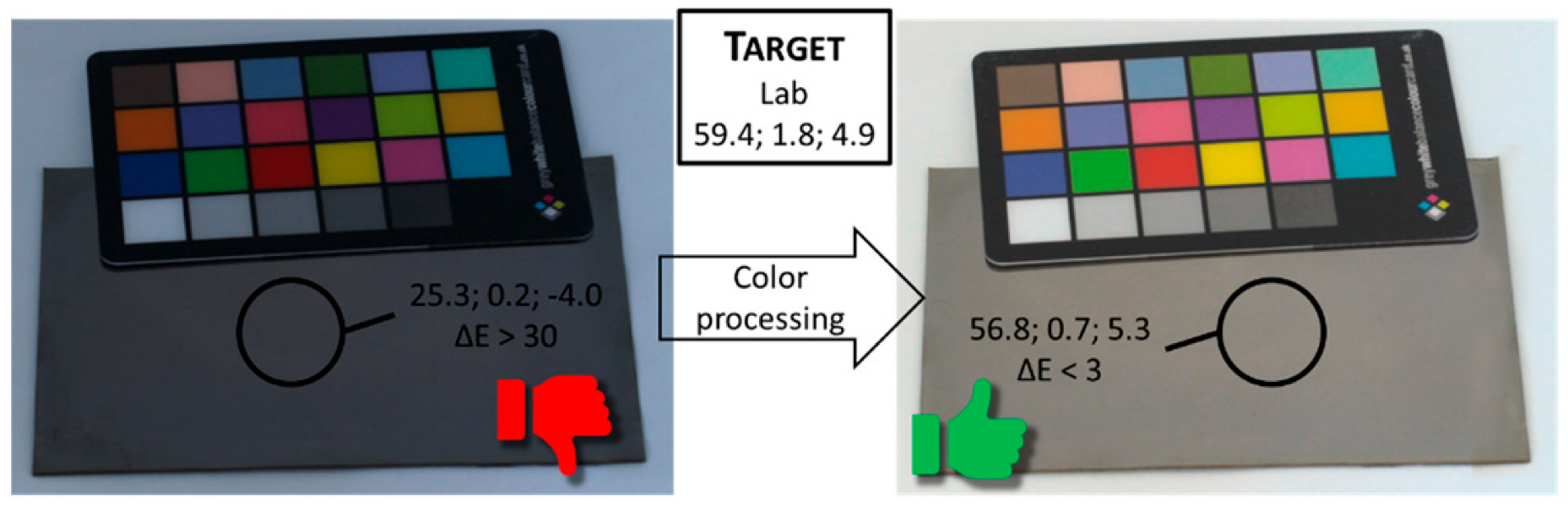
The use of smartphones and digital cameras as color measurement tools is reported. Initially, a careful mathematical analysis of the intrinsic limitations of using an 8-bit RGB color space was conducted, determining the ΔE in terms of sensitivity and conversion error to the CIELab space. Metal coatings were subsequently analyzed under extremely different lighting conditions, obtaining equally different colors. The use of a colorimetric reference card, captured alongside the samples, enabled the minimization of these differences. The possibility of obtaining quantitative results using portable and widely available devices, such as smartphones, even in outdoor environments with uncontrollable lighting conditions provides a valuable analytical tool across various fields, including industrial, decorative, medical, and food applications, especially in the characterization of coatings. Eight-bit RGB devices limit sensitivity in the worst case to ∆E = 1.5. ∆E > 20, as measured by spectrophotometer and smartphone, which was reduced to ∆E < 5 after the proposed processing.

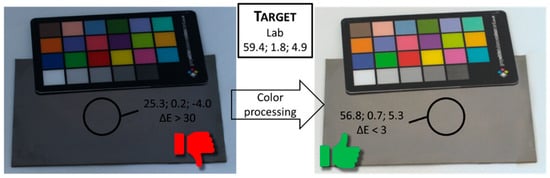
Graphical Abstract

1. Introduction

Color is an extremely important parameter for the appearance and quality of many products, especially in the electroplating, textile, food, and product design industries. In textile industries, for instance, it is evaluated during various production steps: when selecting the raw product, during dye preparation, and during final quality control [1,2]. In electroplating, instead, the measurement is crucial as color is closely related to surface quality. Problems such as the presence of surface defects or changes in the efficiency of an electroplating bath are reflected in the color parameters. For this reason, the color of the metal finish is constantly evaluated and compared with reference standards to determine whether it passes or does not pass the product’s quality control [3]. In analytical chemistry, colorimetric sensors are often used as an easy and portable tool for quick and semiquantitative analyses [4,5].
Color measurement is particularly developed in computer vision for the automatic inspection and quality assessment of food and groceries [6,7,8,9]. In product design, color is a characteristic linked to the personality and the perception of a product [10], and it is a fundamental element in a design approach called CMF Design—Color, Material, and Finishes [11]. When choosing colors, designers usually use color charts such as the one provided by Pantone®, which provides color correspondences that can be used in digital drawing software.
Depending on the application, color can be measured using different instruments: tristimulus colorimeters that use three color filters, or spectrophotometers, which are equipped with a spectral power analyzer. With these instruments, it is possible to associate values that uniquely define every color. With the CIELab color space, an international standard for color measurements adopted by the CIE (Commission Internationale de l’Éclaraige) in 1976, it is possible to associate three colorimetric coordinates (L*, a*, and b*) to a color. L* represents brightness, ranging from 0 to 100; a* indicates the green–red color component; while b* represents the blue–yellow color component [12,13].
The CIELab color space is commonly used in industry, particularly when evaluating the perceptual difference between two colors. With this color space, the Euclidean distance between two points is defined as the difference ΔE*ab between two arbitrary colors (Equation (1)) [14].
E a b = L 1 L 2 2 + a 1 a 2 2 + b 1 b 2 2
A practical classification of the color perception limit has been proposed by K. Schlapfer [15]: not visible (ΔE*ab < 0.2); very small (0.2 < ΔE*ab < 1); small (ΔE*ab < 3); medium (3 < ΔE*ab < 6); and large (ΔE*ab > 6). Typically, ΔE*ab < 3 is used as a tolerance value.
The instruments used for high-precision analyses and accurate color assessments are spectrophotometers; however, the use of this type of instrumentation typically requires highly trained staff and necessitates transporting the samples to a laboratory for the analysis, which prevents field measurements and extends the time needed for testing, ultimately leading to higher costs [16]. Furthermore, the samples must have a simple geometry and a measurement area large enough to be analyzed with these instruments.
This is why researchers have worked towards the realization of fast and affordable color assessment tools. In particular, the familiar use of smartphone cameras has enabled the development of applications that allow for the measuring of concentration of certain substances in solution: in fact, smartphone cameras consist of arrays of multiple sensors with colored filters in front of them to measure the intensity of red, green, and blue (RGB) light in a way very similar to colorimeters [17].
Concentrations of substances such as pesticides, heavy metals, antibiotics, and microbes can be obtained by evaluating the coloring of the solution [18,19,20,21]. By taking a photograph of the solution, it is possible to compare the obtained color with the reference values that correlate to certain concentrations. This is especially relevant for the medical field, where applications have been developed to assess the pH of solutions or the presence of proteins and glucose in urine, typically using test strips and a smartphone. Then, with a dedicated app, it is possible to compare the colors obtained on a strip with reference colors to achieve a rapid and preliminary result, and this entire operation can be performed autonomously by the patient [22,23,24,25].
The use of smartphone cameras as colorimetric sensors, combined with a user-friendly application, allows even an untrained person to carry out a reliable analysis [26]. By simply taking a photograph, the color information obtained from the picture is transformed into numerical values that can be appropriately processed; this process is fast, low-cost, and independent of the user’s surroundings [27,28].
In contrast to scientific instruments such as spectrophotometers and colorimeters, the use of smartphones and apps does not provide direct control over lighting, angle, or the shooting distance of the photograph. Additionally, the presence of light sources with different temperatures (i.e., colors) has an effect on the results, as well as chromatic aberrations and distortions [29]. In applications where an approximate color assessment is sufficient, these issues are addressed using compensation algorithms or by using various light sources [30,31]. If the measurement environment allows it, lighting chambers and standard lights can be used, as in the case of optical systems for automatic fruit and vegetable sorting [32,33,34]. Color temperature is a physical quantity associated with the hue of light and it is measured in kelvin. It is defined as the temperature that an ideal black body must have so that the light radiation emitted by the latter has the closest possible chromatic appearance to that of the light radiation under examination. Typical color temperatures of some of the most common light sources are 2400 K (incandescent lamps), 5500 K (daylight), and 15,000 K (clear blue sky).
Another tool used in digital photography is the colorimetric reference, which is used to perform color calibration of an image. The reference is a card composed of colored patches designed to simulate the colors found in nature, including skin tones, foliage, and sky, as well as primary colors and greyscale tones [35]. After taking a photograph including the reference card in the shot, it is necessary to use an image editing software so that the colors of the image can be calibrated, using the colors of the card as a reference. There are several commercial colorimetric references available to any user, and they range in cost: the most common are the X-Rite Color Checker reference and the Gray White Balance Color Card reference. Each colorimetric reference is associated with software that enables the processing of the photographs, automatically locating the color target [36,37,38]. This system can be a good compromise to carry out accurate and fast color measurements in environments and situations that do not allow the use of standardized lighting.
Although smartphones and digital cameras are now widespread and affordable, their use is influenced by several factors that impact the photo quality, including gamma correction and in-device image processing [39]. On the other hand, the use of spectrophotometers and colorimeters in industries, in addition to requiring specific training for operators, is not always possible: for instance, particularly in electroplating industries, samples with unconventional geometries are often produced, on which it is difficult to carry out colorimetric measurements.
In this study we describe an innovative procedure where instruments such as digital cameras and smartphones are used for color assessment and we report on a method that minimizes the impact of shooting conditions, such as the type of illuminant and equipment used.

2. Materials and Methods

2.1. Color Reference

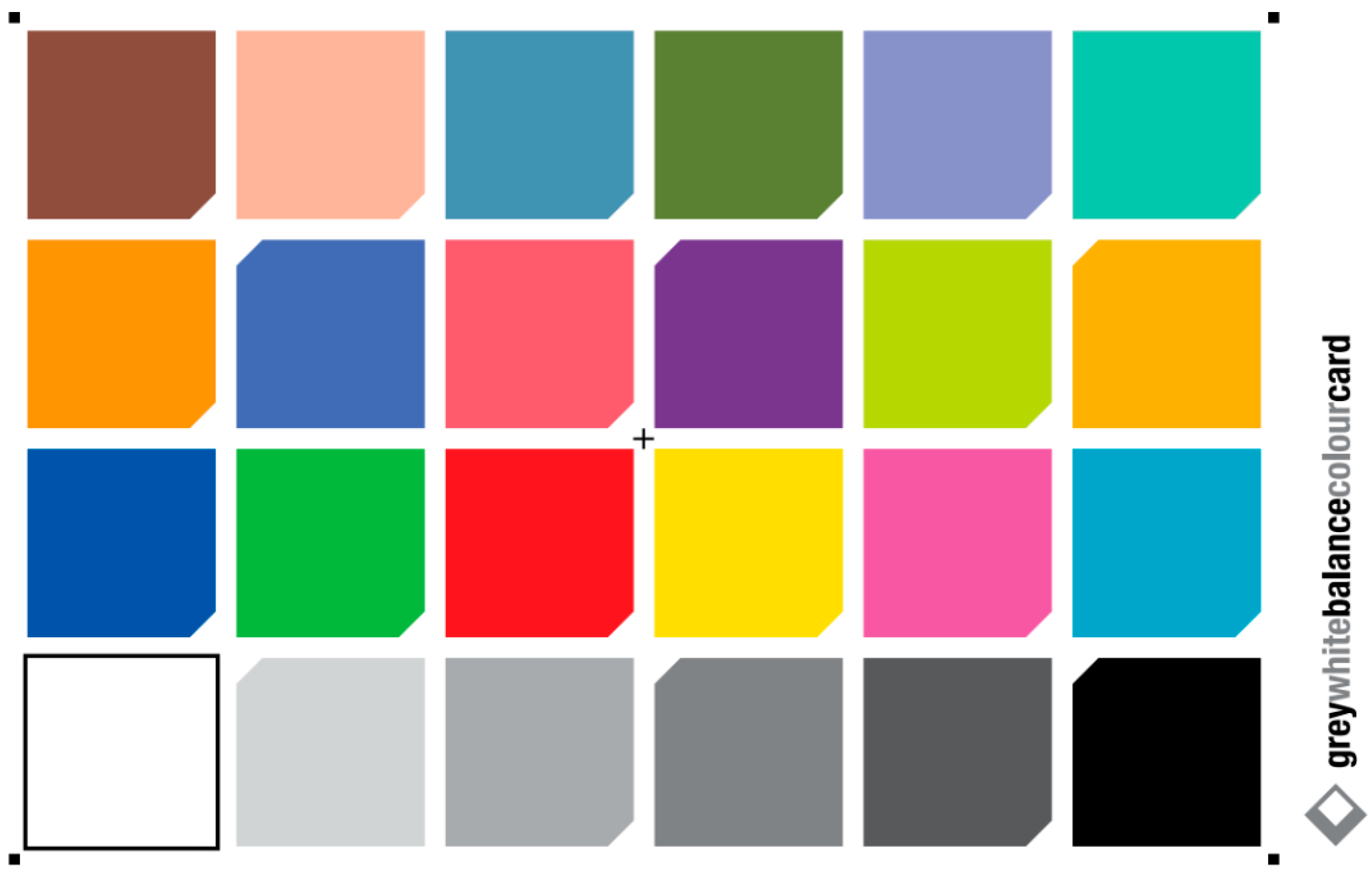
The color reference used in this work is the Colour Card 24 (CC24) (Gray White Balance Color Card, gwbcolourcard.uk (accessed on 30 October 2025)) [36], which is made up of 24 colored patches (Figure 1). The first two rows of the card contain natural and secondary colors, the third row contains RGB (Red, Green, Blue) and CYM (Cyan, Yellow, and Magenta) colors, and the last row contains grayscale shades.
The colorimetric coordinates of each color reference square were measured using the commercial CM-700/d spectrophotometer (Konica Minolta, Tokyo, Japan), which employs its own black and white internal standards for calibration. The instrument acquires reflectance spectra between 400 nm and 700 nm (with a resolution of 10 nm) using an array of silicon photodiodes. The reflectivity is automatically normalized and, to obtain consistent measurements, the spectrophotometer also has the option of including (SCI) or excluding (SCE) the specular component. The measurements were taken using the CIELab color space and the colorimetric coordinates (L*, a*, and b*) were obtained from the diffuse reflectance spectrum using illuminant D65, observer 10°, and an incidence angle θ = 8°. The measurements of the color reference opaque patches were carried out with an aperture of 6 mm while measuring an area of 3 mm. For each measured color, 5 acquisitions were collected and the average values of L*, a*, and b* were obtained, with a standard deviation of 0.02 each.

2.2. Sample Preparation

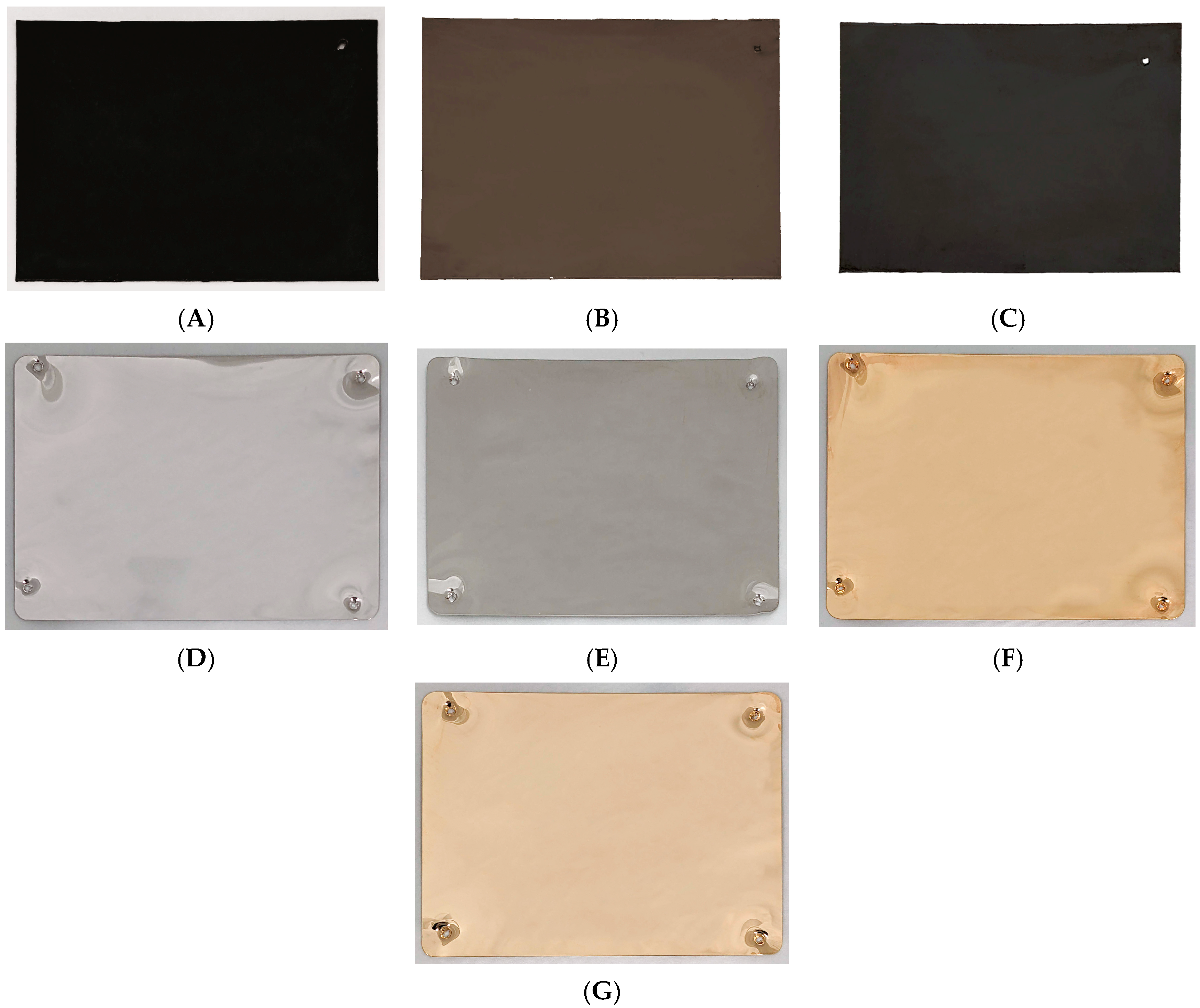
The method was applied to 7 industrial samples with different metal finishes. The samples were kindly prepared by the electroplating company Oroplac srl (Florence, Italy) using 7.5 × 10 cm2 brass substrates and carrying out the electrodeposition by using a conventional industrial process. The finishes that we analyzed (see Figure 2), identified also by their commercial names, are grouped according to the following sets, typical of the decorative plating industry:
  • Dark black finishes (Auroblack, sample A; Black Gold NR, sample B; Oro Nero 8550, sample C);
  • Silvery gray finishes (Rh WO2S, sample D; PdFe 720, sample E);
  • Golden yellow finishes (AuFe 8693, sample F; Au 1N 9812, sample G).
The color of each metal finish was measured with the spectrophotometer using the configuration described above.

2.3. Color Acquisition

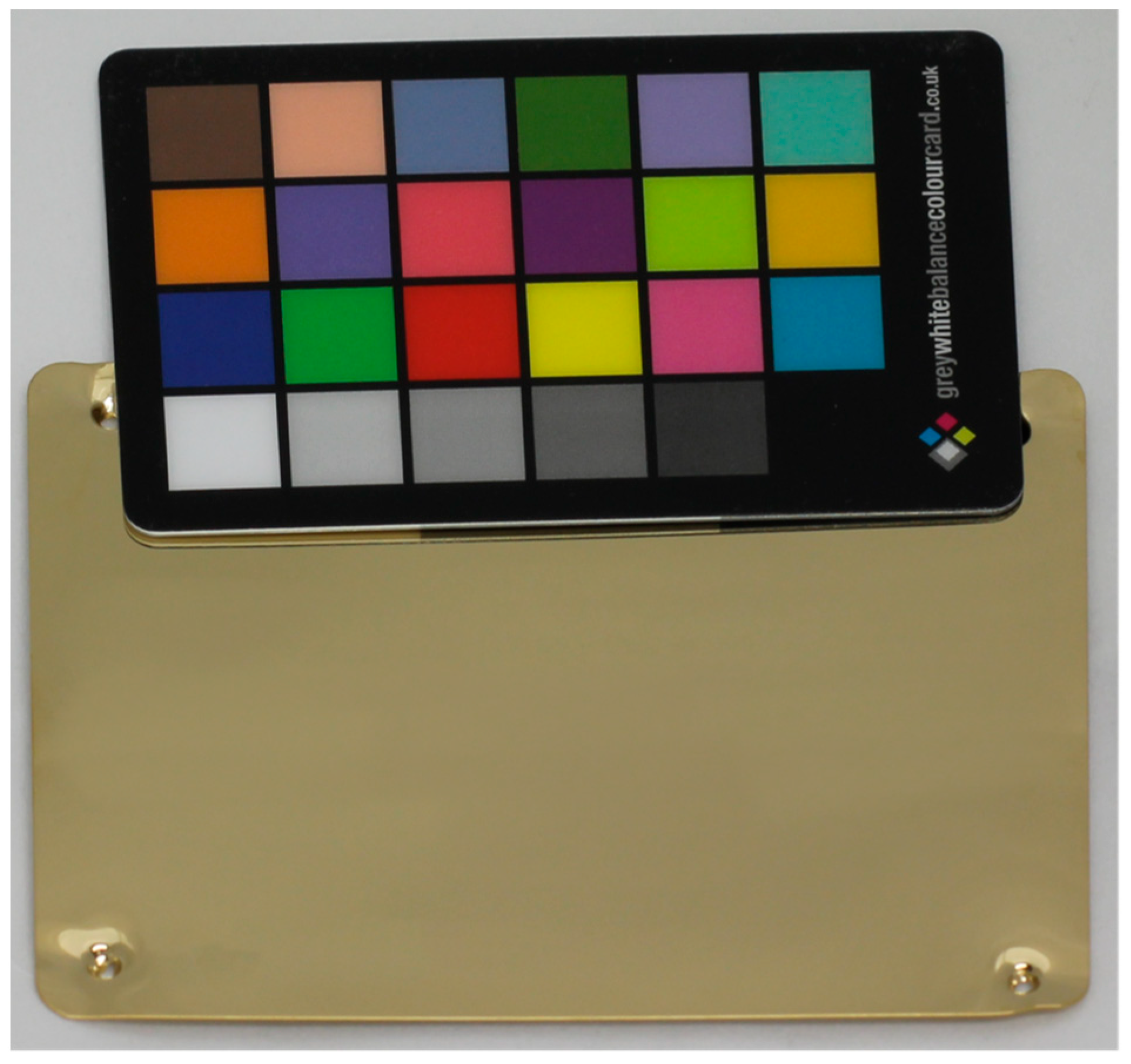
A photo was taken for each metal sample and placed in a softbox lighting chamber (Shooting Tent Light Cube Kit, NEEWER, eu.neewer.com (accessed on 30 October 2025)), together with the CC24 (example in Figure 3). The lighting chamber was used to prevent reflections of the surroundings in the photos due to the mirrored surface of the samples. The pictures were taken using either a Canon 600D Digital single-lens reflex (DSLR) (Tokyo, Japan) camera using a 50 mm f/1.4 lens or a Huawei P9 Lite smartphone (Shenzhen, China), both equipped with a CMOS sensor; for both the devices, the shooting modes were set to automatic in order to make the shooting process as quick and flexible as possible. The samples were positioned at an angle of 45° and at a distance of 50 cm in the case of DSLR (minimal focus distance) or 20 cm in the case of the smartphone camera (this distance was chosen to obtain approximately the same magnification of the sample with respect to DSLR). Photographs were saved as files in different formats. For the DSLR, images were saved as JPEG and CR2 (Canon’s proprietary RAW format) files. For the smartphone, images were saved as JPEG and DNG (Adobe RAW open format) files. The pictures were taken under three different illuminants: sunlight (5000–6000 K), shadow (9000–10,000 K), and fluorescent light (4000–5000 K). In this way, the possible influences of the illuminants and the digital formats of the photograph were investigated.
Considering that 2 devices, each using 2 formats, and 3 different illuminants were used, 12 photographs were captured for each of the 7 samples, together with the colorimetric reference, for a total of 84 pictures.
Photoshop 2021 (v. 22.4.1, Adobe, San Jose, CA, USA) was used to extract the colorimetric coordinates of the CC24 colors and the metal finishes from the captured original images (OIs). Before measuring the L*a*b* coordinates of the pixels, an area was selected, over which the pixels colors were averaged. Within this area, the color coordinates were measured. This was performed for every image, under all lighting conditions and in any file format, to minimize the noise of the images. The measured values were compared with the values obtained from the spectrophotometer by calculating the ΔE*ab (ΔE_OI). Then the calibration procedure was performed on the original files of all the pictures.
Color calibration of the images was performed using Darktable software (v. 4.2.1, www.darktable.org (accessed on 30 October 2025)) [40]. Preliminary calibration tests were also performed with Color Checker Camera Calibration (v. 2.2.0, X-Rite, Grand Rapids, MI, USA), Adobe Photoshop 2021 (v. 22.4.1, Adobe, San Jose, CA, USA), and Adobe DNG Profile Editor (v. 1.0.0.47 beta, Adobe, San Jose, CA, USA), which are commonly used by most professional photographers. However, the results were not satisfactory, probably because they were based on a preloaded color checker that was not identical to the CC24 used. In Darktable, on the other hand, it was possible to use a custom color checker. The average colors were then measured again in Photoshop for the processed images (PIs) (i.e., calibrated) as performed for the unprocessed images (i.e., not calibrated); the results were compared with the quantities recorded with the spectrophotometer by calculating the ΔE*ab (ΔE_PI).

3. Results and Discussion

3.1. Eight-Bit RGB Color Space

We initially evaluated whether the 8-bit RGB color space, which is used by photography devices, was adequate for our purposes. Three considerations were made: (i) the size of the color space; (ii) the conversion error between the two colors spaces considering the 8-bit depth; and (iii) the sensitivity of the 8-bit RGB color space.
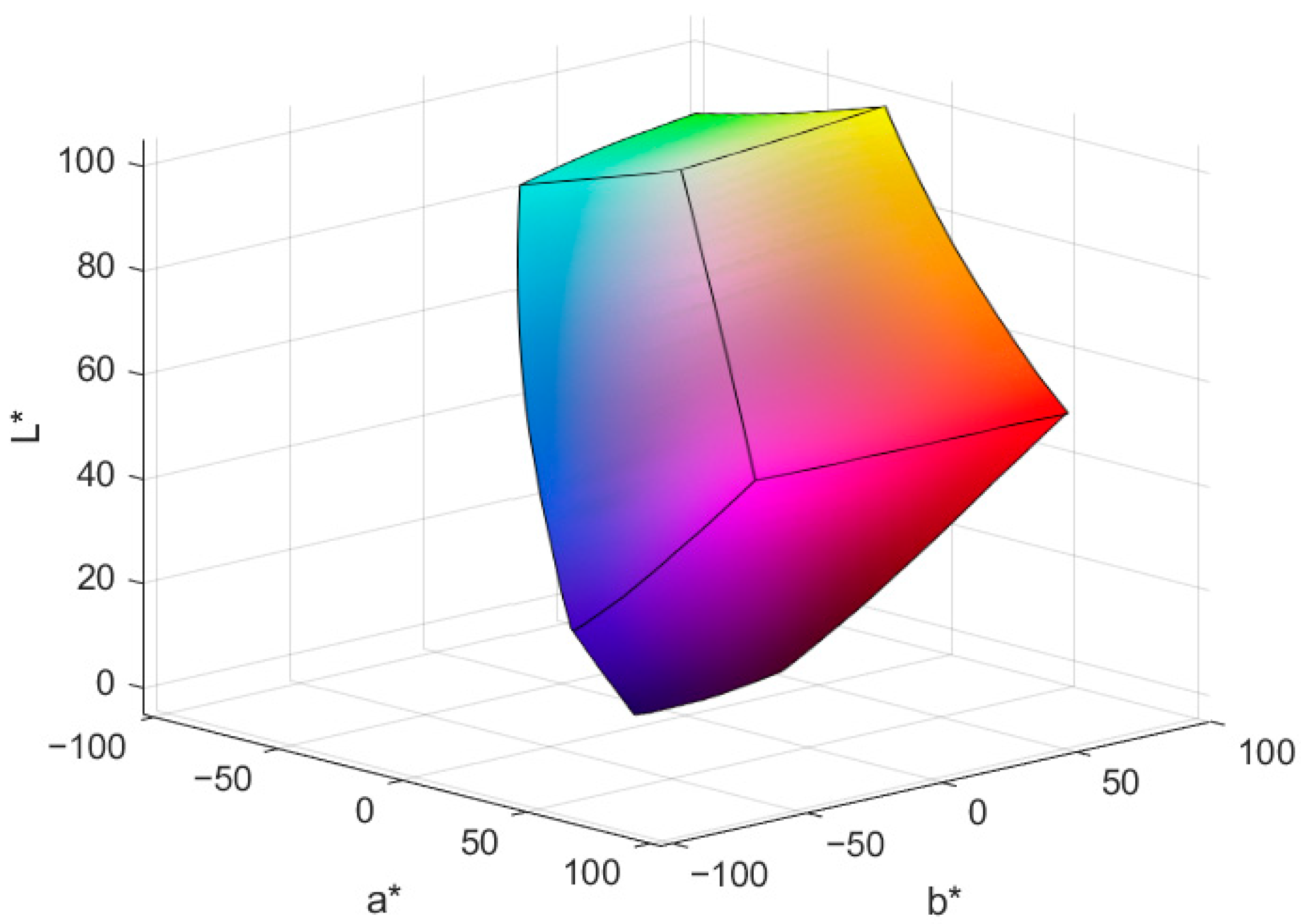
In an 8-bit-depth color space each pixel may assume 28 = 256 values for each variable (R, G, and B), corresponding to a total of 16,777,216 possible colors. The values that each variable may assume are all the natural numbers between 0 and 255: 0 ≤ R ≤ 255; 0 ≤ G ≤ 255; 0 ≤ B ≤ 255. The RGB space is smaller than the Lab one. A representation of RGB space inside the Lab space is reported in Figure 4. The limits of RGB space converted in the Lab space are the following: 0 ≤ L* ≤ 100; −86.18 ≤ a* ≤ 98.23; −107.86 ≤ b* ≤ 94.48. These limits are large enough for many applications, but before using the RGB space, we had to ensure that our samples fell within these ranges.
The conversion from Lab to RGB space might cause a rounding error due to the depth (i.e., resolution) of the RGB space. A benchmark color, measured in the Lab space, corresponds to a rational number in RGB space. Since the RGB colors accept only integers, the values must be rounded. These values can be reconverted in the Lab space, without any approximation, to evaluate the ΔEConv, which is the ΔE*ab due to the conversion.
For example:
  • True color of the sample: L* = 59.57; a* = 1.67; b* = 4.42.
  • Conversion in 8-bit RGB: R = 149.8713; G = 142.1971; B = 135.7984.
  • Rounding: R = 150; G = 142; B = 136.
  • Back conversion: L* = 59.5329; a* = 1.8655; b* = 4.2529.
  • ΔEConv = 0.26.
Finally, due to the 8-bit color space, the RBG acquisition devices have a sensitivity of 1 with respect to the measured value of each component. With reference to the previous example, a well-calibrated device should record the following: R = 150 ± 1; G = 142 ± 1; B = 136 ± 1. This uncertainty leads to a sensitivity error and consequently to a ΔE respect to the true value, called ΔESens. The RGB space is not equally distributed in the Lab space, as can be seen in Figure 4; for this reason, for [R, G, B] = [149, 142, 136], we have ΔESens = 0.412, while for [R, G, B] = [151, 142, 136], we have ΔESens = 0.413, even though the red value changed by the same amount from the benchmark in both cases. We defined E S e n s M a x as the maximum value that ΔESens can take by varying the RGB values by only one unit. Considering the entire RGB space, E S e n s M a x could be as high as 1.42.
These are the limitations that must be kept in mind when using 8-bit RGB devices to make color measurements. These results already allow us to state that, even when a correct analysis of the samples is carried out, the error associated with the measurement using digital cameras or smartphones is certainly higher than that associated with the use of a spectrophotometer; nevertheless, this does not preclude the use of cameras or smartphones when high speeds, portability, and costs are preferable at the expense of accuracy.

3.2. Colorimetric Reference

Table 1 contains the L*, a*, and b* coordinates of the color reference patches measured using the spectrophotometer.
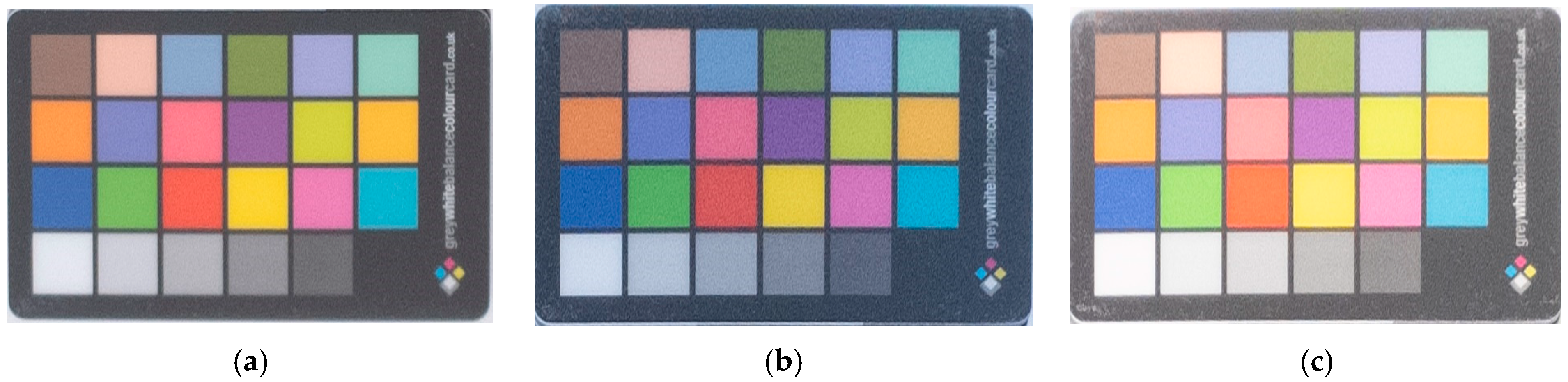
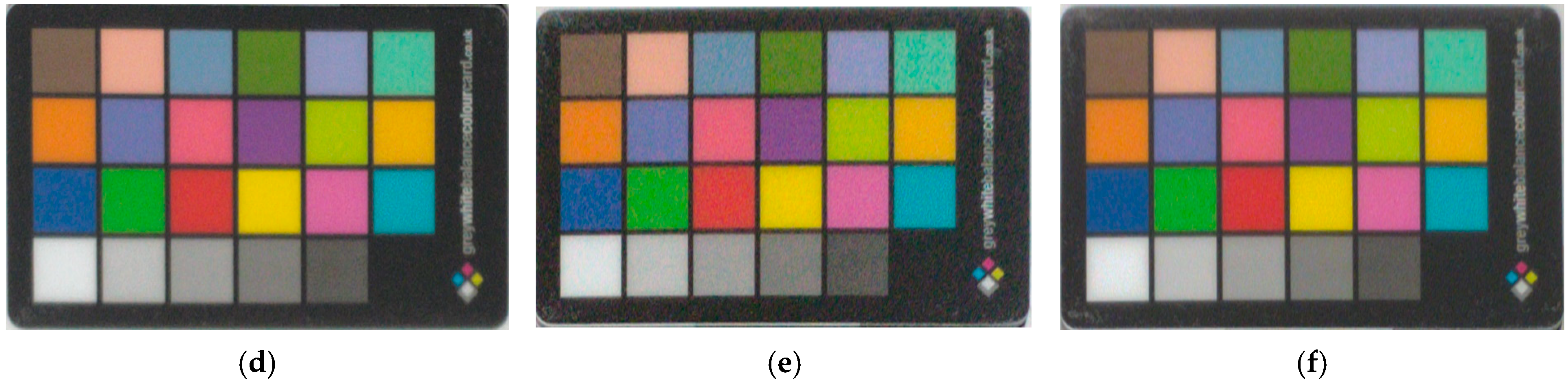
The photographs were calibrated using Darktable v. 4.2.1 software following the instructions described by Rigacci [41]. After taking the photograph under specific lighting conditions, a color profile was selected to optimize the visual fidelity and color representation of the picture. Prior to the calibration of the images, the program file related to the color coordinates of the color reference patches was modified. The colorimetric coordinates of the CC24 measured on the spectrophotometer were used as inputs for the software. The original image was uploaded to Darktable, and the default settings that the program applied to the image were first removed. Once they were removed, the image was saved in floating-point image format (.PFM). Afterwards, using Darktable-chart, a mask was applied to the reference so that the software could recognize the 24 colored patches. In this way, a specific color profile could be exported for that image. The color profile was then applied to the original image in Darktable, thus calibrating the colors of the image. The color coordinates of the reference patches were then measured on the processed image using Photoshop (Table S1). By way of example, the original and processed images taken in RAW format with a smartphone camera under different light conditions are compared in Figure 5. Visually, it is clear that the processed images are very similar to each other.
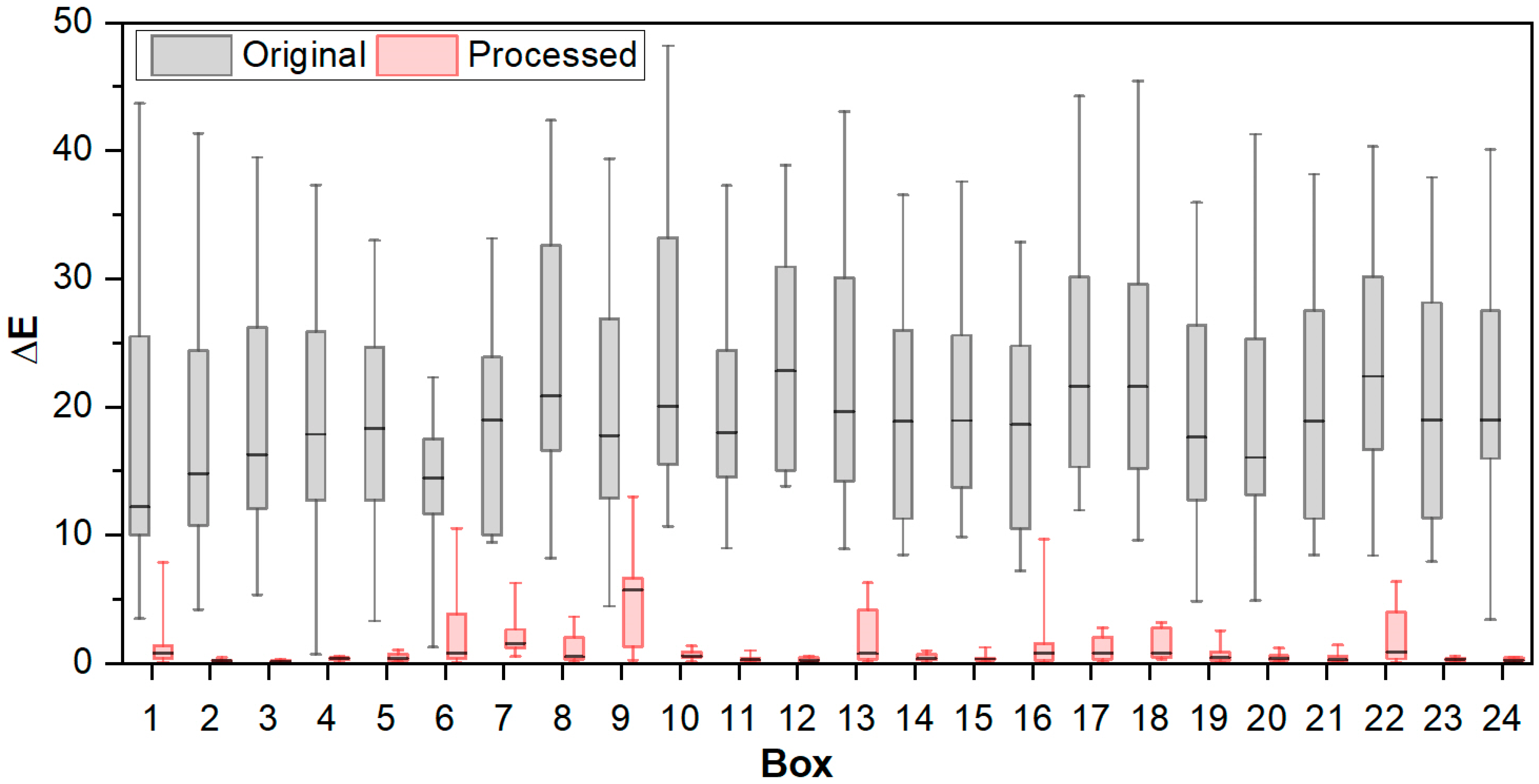
The colorimetric coordinates of the 24 colored patches measured in the original image and in the processed image were compared with the values measured with the spectrophotometer, which were calculated as ΔE_OI and ΔE_PI, respectively. The results for all the patches in the photos, considering different acquisition devices, illuminants, and file formats, are summarized with a box plot in Figure 6. The ΔE_OI of the patches were all very high, being mostly in the 10–20 range, with extremes of over 40. Following the calibration process, the ΔE_PI strongly decreased and, for the most part, values lower than 2 were obtained. Outliers were sporadically found, the causes of which have not yet been identified, which caused ΔE values to rise above 5.
The ΔE*ab calculated with the coordinates of the processed images were in most cases less than 2, so the variation was small but perceptible according to Schlapfer’s classification. This means that Darktable software allowed the color coordinates of the original image to be well approximated to those measured by the spectrophotometer.

3.3. Color Determination of Metal Samples

After evaluating the theoretical error associated with the use of the RGB color space and having verified that the calibration process allowed us to obtain satisfactory results for the reference colorimetric images captured by our devices, we carried out color measurement of the metal samples. The colorimetric coordinates of the seven metal finishes were measured using the spectrophotometer, which served as the benchmark (Table 2). The error expected from ΔEConv and E S e n s M a x combined was around 1 for all the samples.
The samples were photographed in the lighting chamber together with the colorimetric reference, as reported in Figure 3. Once all the images were obtained, colorimetric coordinates were measured using Photoshop.
The pictures were calibrated following the procedure previously described using Darktable. For each image, a color profile was created with Darktable-chart by identifying CC24 and was then applied to the image using Darktable software (Table S2).
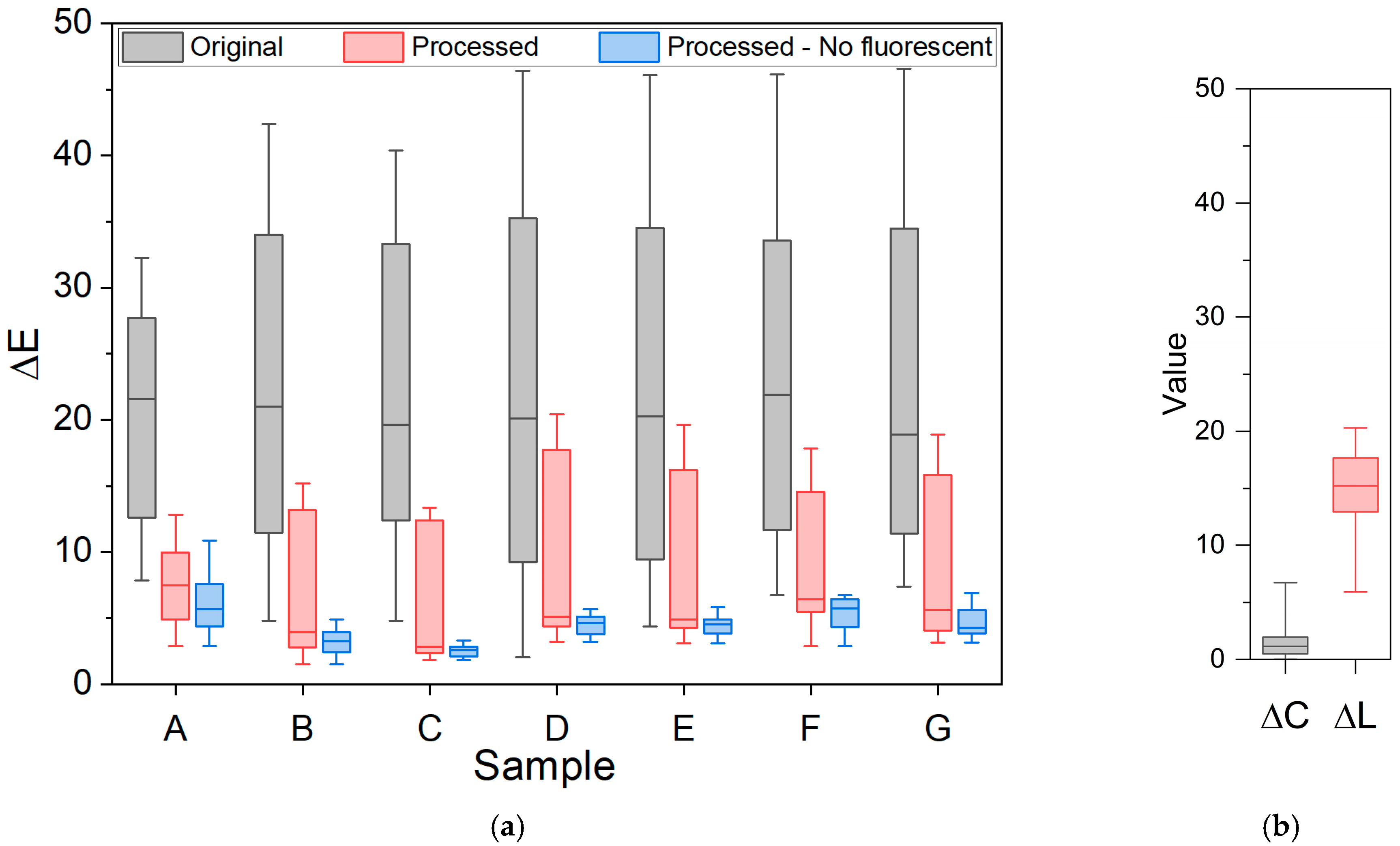
The colorimetric coordinates of the seven samples measured on the original image and measured on the processed image were compared with the values measured with the spectrophotometer, which were calculated as ΔE_OI and ΔE_PI, respectively. The results for all the samples in the photos, considering different acquisition devices, illuminants, and file formats, are summarized with a box plot in Figure 7a. The ΔE_OI of the samples were very high, being mostly in the 10–30 range, similarly to what had happened in the case of the patches. Following the calibration process, the ΔE_PI decreased considerably, but unfortunately the good results that we had seen in the case of the patches were not achieved: in fact, the ΔE_PI of most of the samples fell in the 5–15 range. It was noted that many of the data producing high ΔE*ab values were from images captured using a fluorescent lamp as the illuminant. In particular, the brightness coordinate was the variable that differed the most from the true value, while the chroma difference was in line with the results of the other illuminants (Figure 7b). The lightness difference, ΔL*, and chroma difference, ΔC*ab, are defined in Equations (2) and (3) according to [14].
L = L 1 L 2
C a b = a 1 2 + b 1 2 a 2 2 + b 2 2
Excluding this illuminant, most of the samples had a ΔE_PI of about 5 (Figure 7a). This value is not optimal but, considering that the colorimetric reference had a deviation of around 2 and the minimum theoretical calculated error (ΔEConv + E S e n s M a x ) was around 1, this value was probably the best we could obtain through the RGB acquisition devices used. These results are probably not suitable for high-precision analysis in R&D applications and precise color management, but they may find applications in production quality control and visual inspections, as well as in outdoor measurement where lighting conditions cannot be strictly controlled, quickly providing a quantitative value with a commonly used device such as a smartphone camera. As regards the illuminant, the causes that led to the high deviation of the sample illuminated by fluorescent lamp are still not fully clear. One hypothesis involves the sum of several factors: the mirror finish of the metal samples, absent in the colorimetric reference, and the efficiency of the light chamber in making this source rather diffuse due to the greater proximity of the lamp (compared to the sun and shade illuminants). Another hypothesis relies on the fact that this light source did not have a continuous spectrum but instead a banded one, producing a metamerism effect which was averaged on the colorimetric reference (taking multiple colors into consideration) but not on the sample.
It is important to note that the quantum efficiency (QE) of the RGB channels in image sensors can significantly influence color reproduction. CMOS sensors, such as the one employed in our study, exhibit spectral response characteristics that differ from traditional CCD sensors. The QE of CMOS devices is typically channel-dependent, with variations in sensitivity across the red, green, and blue ranges. These differences may introduce systematic shifts in color accuracy, especially when comparing results obtained with different sensor technologies [42].
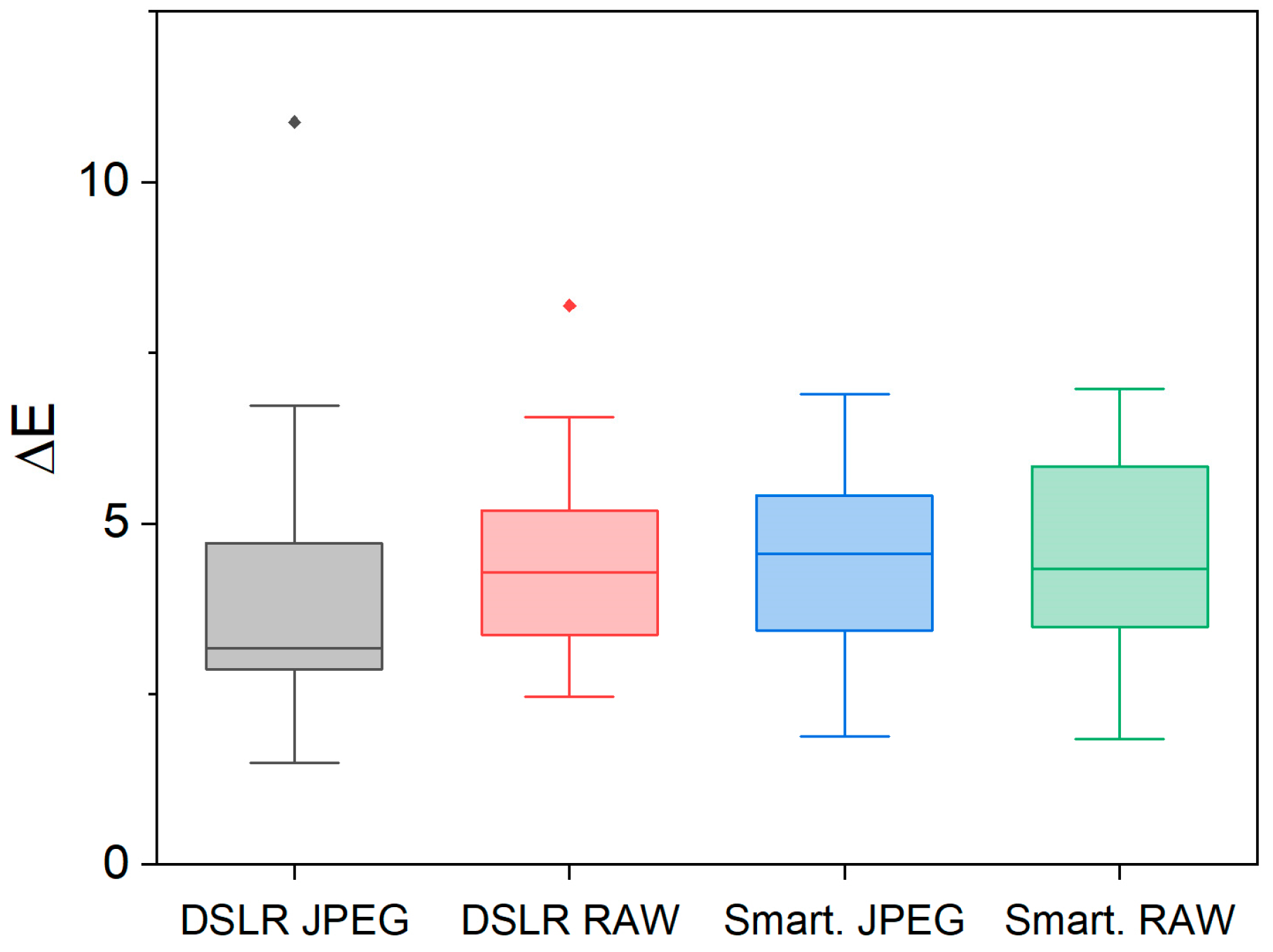
The comparison between the different acquisition devices and formats does not seem to lead to a clear advantage of using one instead of the other (Figure 8). One of the most significant differences between the smartphone and the camera was the size and the resolution of the sensor. In this case, no small details were photographed, which could have been affected by the resolution of the photograph. We did not find significant advantages even with the use of an uncompressed format (RAW) compared to a compressed one (JPEG), most probably because the measured color was averaged over an area containing a large number of pixels. Consequently, there do not seem to be advantages related to the type of image format.

4. Conclusions

This study evaluates the feasibility of using smartphones and digital cameras as color assessment tools that can be utilized by any user in any environment. Taking a picture of a colorimetric reference alongside the sample allows the colors in the image to be successfully calibrated using an internal reference within the frame. The method used succeeds in adequately balancing the colors of the colorimetric reference, as shown by the calculation of ΔE*ab, independently from the type of illuminant, device, and photo storage format. Color differences with ∆E < 1.5 could not be identified due to the limited sensitivity of 8-bit RGB devices. This method reduced color differences (∆E) measured between the spectrophotometer and smartphone from more than 20 to less than 5. The method does not yet allow for colorimetric coordinates that lead to a low ΔE*ab, according to the Schlapfer scale, compared with values measured by a spectrophotometer. This result may be due to the nature of the investigated objects (reflective metallic surfaces), as well as the inherent instrumental limitation of using an 8-bit RGB device. Nonetheless, this method could be useful for quickly obtaining semi-quantitative numerical values that aid in quality control and visual inspection in industrial processes. Furthermore, the format in which the photographs are stored and the type of the device did not affect the results. With this method, it seems possible to minimize the effects that the different illuminants used will have on the resulting colors, with great benefits for color comparison and analytical purposes.

Supplementary Materials

The following supporting information can be downloaded at https://www.mdpi.com/article/10.3390/coatings15121411/s1, Table S1. Original and processed images of the colorimetric reference, subdivided by illuminant type and image saving format. All images were calibrated with Darktable; Table S2. Original and processed colorimetric values of the samples with the metal finishes.

Author Contributions

Conceptualization, W.G.; methodology, W.G.; validation, W.G.; formal analysis, W.G. and A.M.; investigation, A.M.; resources, M.M. and M.B.; data curation, W.G. and A.M.; writing—original draft preparation, W.G. and A.M.; writing—review and editing, W.G., A.M., M.M., and M.B.; visualization, W.G. and A.M.; supervision, W.G.; project administration, M.M. and M.B.; funding acquisition, M.M. and M.B. All authors have read and agreed to the published version of the manuscript.

Funding

The authors acknowledge the Italian Ministry of University and Research (MUR) funded by the European Union—NextGenerationEU for the National Recovery and Resilience Plan (NRRP), Mission 4 Component 2 Investment 1.3—Call for tender No. 341 of 15 March 2022 of—Project code PE_00000004, CUP B83C22004890007, Project title “3A-ITALY—Made-in-Italy circolare e sos-tenibile”.

Institutional Review Board Statement

Not applicable.

Informed Consent Statement

Not applicable.

Data Availability Statement

The dataset used and analyzed in this study is available from the corresponding author.

Acknowledgments

The authors acknowledge Oroplac srl for making their production facilities available for the realization of the samples presented in this manuscript.

Conflicts of Interest

The authors declare no conflicts of interest.

References

  1. Keist, C.N. Quality Control and Quality Assurance in the Apparel Industry; Elsevier Ltd.: Amsterdam, The Netherlands, 2015; ISBN 9781782422327. [Google Scholar]
  2. Raluca, B. A Review of Color Measurments in the Textile Industry. Ann. Univ. Oradea Fascicle Text. Leatherwork 2016, 17, 19–24. [Google Scholar]
  3. Giurlani, W.; Gambinossi, F.; Salvietti, E.; Passaponti, M.; Innocenti, M. Color Measurements in Electroplating Industry: Implications for Product Quality Control. ECS Trans. 2017, 80, 757–766. [Google Scholar] [CrossRef]
  4. Capitán-Vallvey, L.F.; López-Ruiz, N.; Martínez-Olmos, A.; Erenas, M.M.; Palma, A.J. Recent developments in computer vision-based analytical chemistry: A tutorial review. Anal. Chim. Acta 2015, 899, 23–56. [Google Scholar] [CrossRef]
  5. Calabria, D.; Caliceti, C.; Zangheri, M.; Mirasoli, M.; Simoni, P.; Roda, A. Smartphone–based enzymatic biosensor for oral fluid L-lactate detection in one minute using confined multilayer paper reflectometry. Biosens. Bioelectron. 2017, 94, 124–130. [Google Scholar] [CrossRef] [PubMed]
  6. Goñi, S.M.; Salvadori, V.O. Color measurement: Comparison of colorimeter vs. computer vision system. J. Food Meas. Charact. 2017, 11, 538–547. [Google Scholar] [CrossRef]
  7. Cubero, S.; Aleixos, N.; Moltó, E.; Gómez-Sanchis, J.; Blasco, J. Advances in Machine Vision Applications for Automatic Inspection and Quality Evaluation of Fruits and Vegetables. Food Bioprocess Technol. 2011, 4, 487–504. [Google Scholar] [CrossRef]
  8. Scroccarello, A.; Della Pelle, F.; Rojas, D.; Ferraro, G.; Fratini, E.; Gaggiotti, S.; Cichelli, A.; Compagnone, D. Metal nanoparticles based lab-on-paper for phenolic compounds evaluation with no sample pretreatment. Application to extra virgin olive oil samples. Anal. Chim. Acta 2021, 1183, 338971. [Google Scholar] [CrossRef]
  9. Patel, K.K.; Kar, A.; Jha, S.N.; Khan, M.A. Machine vision system: A tool for quality inspection of food and agricultural products. J. Food Sci. Technol. 2012, 49, 123–141. [Google Scholar] [CrossRef]
  10. Ashby, M.F. Materials and Product Design, 3rd ed.; GRANTA Teaching Resources: Cambridge, UK, 2012. [Google Scholar]
  11. Castelli, C.T. Umbrella Diagram: 1981–2021, five decades of forecasts and CMF design. Color Cult. Sci. J. 2021, 13, 84–90. [Google Scholar] [CrossRef]
  12. Grum, F.; Witzel, R.F.; Stensby, P. Evaluation of Whiteness. J. Opt. Soc. Am. 1974, 64, 210–215. [Google Scholar] [CrossRef]
  13. Wrolstad, R.E.; Smith, D.E. Color Analysis. In Food Analysis; Springer: Cham, Switzerland, 2017; pp. 545–555. [Google Scholar] [CrossRef]
  14. UNE EN ISO/CIE 11664-4:2020; Colorimetry—Part 4: CIE 1976 L*a*b* Colour Space. CIE—Commission Internationale de l’Eclairage: Vienna, Austria, 2007.
  15. Schlapfer, K. Farbmeytik in der Reproduktionstechnik und im Mehrfarbendruck; UGRA: Gallen, Switzerland, 1993. [Google Scholar]
  16. Nollet, L.M.L.; Toldrà, F. Handbook of Dairy Foods Analysis; CRC Press: Boca Raton, FL, USA, 2013; ISBN 9780333227794. [Google Scholar]
  17. Tominaga, S.; Nishi, S.; Ohtera, R. Measurement and Estimation of Spectral Sensitivity Functions for Mobile Phone Cameras. Sensors 2021, 21, 4985. [Google Scholar] [CrossRef] [PubMed]
  18. Umapathi, R.; Sonwal, S.; Lee, M.J.; Mohana Rani, G.; Lee, E.-S.; Jeon, T.-J.; Kang, S.-M.; Oh, M.-H.; Huh, Y.S. Colorimetric based on-site sensing strategies for the rapid detection of pesticides in agricultural foods: New horizons, perspectives, and challenges. Coord. Chem. Rev. 2021, 446, 214061. [Google Scholar] [CrossRef]
  19. Chen, Z.; Zhang, Z.; Qi, J.; You, J.; Ma, J.; Chen, L. Colorimetric detection of heavy metal ions with various chromogenic materials: Strategies and applications. J. Hazard. Mater. 2023, 441, 129889. [Google Scholar] [CrossRef]
  20. Abedalwafa, M.A.; Li, Y.; Ni, C.; Wang, L. Colorimetric sensor arrays for the detection and identification of antibiotics. Anal. Methods 2019, 11, 2836–2854. [Google Scholar] [CrossRef]
  21. Vafabakhsh, M.; Dadmehr, M.; Kazemi Noureini, S.; Es’haghi, Z.; Malekkiani, M.; Hosseini, M. Paper-based colorimetric detection of COVID-19 using aptasenor based on biomimetic peroxidase like activity of ChF/ZnO/CNT nano-hybrid. Spectrochim. Acta A Mol. Biomol. Spectrosc. 2023, 301, 122980. [Google Scholar] [CrossRef]
  22. Balbach, S.; Jiang, N.; Moreddu, R.; Dong, X.; Kurz, W.; Wang, C.; Dong, J.; Yin, Y.; Butt, H.; Brischwein, M.; et al. Smartphone-based colorimetric detection system for portable health tracking. Anal. Methods 2021, 13, 4361–4369. [Google Scholar] [CrossRef]
  23. Solmaz, M.E.; Mutlu, A.Y.; Alankus, G.; Kılıç, V.; Bayram, A.; Horzum, N. Quantifying colorimetric tests using a smartphone app based on machine learning classifiers. Sens. Actuators B Chem. 2018, 255, 1967–1973. [Google Scholar] [CrossRef]
  24. Kap, Ö.; Kılıç, V.; Hardy, J.G.; Horzum, N. Smartphone-based colorimetric detection systems for glucose monitoring in the diagnosis and management of diabetes. Analyst 2021, 146, 2784–2806. [Google Scholar] [CrossRef]
  25. Park, H.; Koh, Y.G.; Lee, W. Smartphone-based colorimetric analysis of structural colors from pH-responsive photonic gel. Sens. Actuators B Chem. 2021, 345, 130359. [Google Scholar] [CrossRef]
  26. Serhan, M.; Sprowls, M.; Jackemeyer, D.; Long, M.; Perez, I.D.; Maret, W.; Chen, F.; Tao, N.; Forzani, E. Total iron measurement in human serum with a smartphone. IEEE J. Transl. Eng. Health Med. 2020, 8, 2800309. [Google Scholar] [CrossRef] [PubMed]
  27. Akkaynak, D.; Treibitz, T.; Xiao, B.; Gürkan, U.A.; Allen, J.J.; Demirci, U.; Hanlon, R.T. Use of commercial off-the-shelf digital cameras for scientific data acquisition and scene-specific color calibration. J. Opt. Soc. Am. A 2014, 31, 312. [Google Scholar] [CrossRef]
  28. Iqbal, Z.; Eriksson, M. Classification and quantitative optical analysis of liquid and solid samples using a mobile phone as illumination source and detector. Sens. Actuators B Chem. 2013, 185, 354–362. [Google Scholar] [CrossRef]
  29. Pohanka, M. Small camera as a handheld colorimetric tool in the analytical chemistry. Chem. Pap. 2017, 71, 1553–1561. [Google Scholar] [CrossRef]
  30. Tang, C.; Chen, D.; Wang, X.; Ni, X.; Liu, Y.; Liu, Y.; Mao, X.; Wang, S. A fine recognition method of strawberry ripeness combining Mask R-CNN and region segmentation. Front. Plant Sci. 2023, 14, 1211830. [Google Scholar] [CrossRef] [PubMed]
  31. Liu, J.; Pi, J.; Xia, L. A novel and high precision tomato maturity recognition algorithm based on multi-level deep residual network. Multimed. Tools Appl. 2020, 79, 9403–9417. [Google Scholar] [CrossRef]
  32. Fan, Y.; Li, J.; Guo, Y.; Xie, L.; Zhang, G. Digital image colorimetry on smartphone for chemical analysis: A review. Meas. J. Int. Meas. Confed. 2021, 171, 108829. [Google Scholar] [CrossRef]
  33. Bello, T.B.; Costa, A.G.; da Silva, T.R.; Paes, J.L.; de Oliveira, M.V.M. Tomato quality based on colorimetric characteristics of digital images. Rev. Bras. Eng. Agríc. E Ambient. 2020, 24, 567–572. [Google Scholar] [CrossRef]
  34. Balabanov, P.V.; Divin, A.G.; Egorov, A.S.; Yudaev, V.A. Mechatronic system for fruit and vegetables sorting. IOP Conf. Ser. Mater. Sci. Eng. 2020, 734, 012128. [Google Scholar] [CrossRef]
  35. Trémea, A.; Schettini, R.; Tominaga, S. Computational Color Imaging, Proceedings of the 5th International Workshop, CCIW 2015, Saint Etienne, France, 24–26 March 2015; Lecture Notes in Computer Science; Image Processing, Computer Vision, Pattern Recognition, and Graphics (LNIP); Springer: Cham, Switzerland, 2015; Volume 9016, pp. 225–235. [Google Scholar] [CrossRef]
  36. User Guide of Gray White Balance Colour Card. Available online: https://gwbcolourcard.uk/assets/userguide.pdf (accessed on 27 November 2025).
  37. X-Rite User Manual-ColorChecker Passport. Available online: https://www.xrite.com/-/media/xrite/files/manuals_and_userguides/c/o/colorcheckerpassport_user_manual_en.pdf (accessed on 27 November 2025).
  38. Pascale, D. RGB Coordinates of the Macbeth ColorChecker; The BabelColor Company: Montreal, QC, Canada, 2006; pp. 1–16. [Google Scholar]
  39. Soda, Y.; Bakker, E. Quantification of Colorimetric Data for Paper-Based Analytical Devices. ACS Sens. 2019, 4, 3093–3101. [Google Scholar] [CrossRef]
  40. Darktable Darktable 4.2 User Manual. Available online: https://docs.darktable.org/usermanual/4.2/en/darktable_user_manual.pdf (accessed on 27 November 2025).
  41. Rigacci, N. The Gray Ehite Balance Colour Card: An X-Rite Clone. Available online: https://www.rigacci.org/wiki/doku.php/doc/appunti/software/colorchecker_clones (accessed on 27 November 2025).
  42. Hoenk, M.E.; Jewell, A.D.; Kyne, G.; Hennessy, J.; Jones, T.; Shapiro, C.; Bush, N.; Nikzad, S.; Morris, D.; Lawrie, K.; et al. Surface Passivation by Quantum Exclusion: On the Quantum Efficiency and Stability of Delta-Doped CCDs and CMOS Image Sensors in Space. Sensors 2023, 23, 9857. [Google Scholar] [CrossRef]
Figure 1. Colorimetric reference color card 24 (CC24) produced by Gray White Balance Color Card [36].
Coatings 15 01411 g001
Figure 2. Metal finishes analyzed in this study: (A) Auroblack; (B) Black Gold NR; (C) Oro Nero 8550; (D) Rh WO2S; (E) PdFe 720; (F) AuFe 8693; (G) Au 1N 9812.
Coatings 15 01411 g002
Figure 3. Example of a picture of a sample together with the GBWCC. The photo represents sample G, taken under sunlight with DSLR in jpeg format.
Coatings 15 01411 g003
Figure 4. RGB space representation in the Lab color space.
Coatings 15 01411 g004
Figure 5. CC24 colorimetric reference photos taken in RAW format with a smartphone camera under different illuminants before processing, (a) sunlight, (b) shadow, (c) fluorescent light; and after being processed in Darktable, (d) sunlight, (e) shadow, (f) fluorescent light.
Coatings 15 01411 g005aCoatings 15 01411 g005b
Figure 6. Box plot of the calculated ΔE for the 24 patches of the colorimetric reference considering different acquisition devices, illuminants, and file formats. The box is drawn from the first to the third quartile, the whiskers represent the min to max range, and the horizontal line inside the box denotes the median value of the data. ΔE_OI are represented in black and ΔE_PI in red.
Coatings 15 01411 g006
Figure 7. (a) Box plot of the calculated ΔE for the 7 samples (A–G) with mirror finish considering different acquisition devices, illuminants, and file formats. ΔE_OI are represented in black and ΔE_PI in red, ΔE_PI excluding the fluorescent lamp sample in blue; (b) ΔC and ΔL were calculated for the sample illuminated with the fluorescent lamp. The main contribution to ΔE was lightness and not chroma. The box is drawn from the first to the third quartile, the whiskers represent the min to max range, and the horizontal line inside the box denotes the median value of the data.
Coatings 15 01411 g007
Figure 8. Box plot of the calculated ΔE for the 4 combinations of acquisition devices and formats of the samples, excluding the fluorescent lamp illuminant. The box is drawn from the first to the third quartile, the whiskers represent the min to max range without outliers marked as points, the horizontal line inside the box denotes the median value of the data.
Coatings 15 01411 g008
Table 1. Color coordinates of the 24 patches of the CC24 color reference measured with the Konica Minolta CM 700 d spectrophotometer.
Patch NumberColorL* (D65)a* (D65)b* (D65)Patch NumberColorL* (D65)a* (D65)b* (D65)
1 87.94−0.99−0.0413 60.9328.1554.69
2 75.60−0.481.2814 50.676.37−25.98
3 64.67−0.231.8315 55.5843.619.48
4 52.720.052.4016 40.1426.48−24.01
5 38.690.202.3517 73.17−19.1567.30
6 20.74−0.25−0.2518 71.8510.1468.58
7 37.811.19−34.6019 44.175.9112.19
8 60.42−40.6346.5820 71.9516.0018.43
9 45.3452.2334.6521 58.62−5.23−15.72
10 80.11−2.1279.3622 50.25−18.2337.78
11 55.8240.49−9.4423 61.974.01−19.33
12 59.01−30.36−18.1424 70.33−27.618.86
Table 2. Color coordinates of the metal samples measured with the spectrophotometer in terms of L*, a*, and b* coordinates. The R, G, and B values obtained by converting the Lab color space to RGB are also reported, as well as the ΔEConv and E S e n s M a x values.
SampleL*a*b*RGBΔEConv E S e n s M a x
A34.463.4311.519379630.370.79
B67.001.509.871731621450.600.71
C59.571.674.421501431360.260.74
D89.960.912.352302252220.400.68
E85.710.724.192192132070.190.69
F85.966.5331.082482091570.210.66
G85.413.6422.942372101700.400.67
Disclaimer/Publisher’s Note: The statements, opinions and data contained in all publications are solely those of the individual author(s) and contributor(s) and not of MDPI and/or the editor(s). MDPI and/or the editor(s) disclaim responsibility for any injury to people or property resulting from any ideas, methods, instructions or products referred to in the content.