Article

Dual-Function Hybrid Coatings Based on Polytetrafluoroethylene and Cu2O for Anti-Biocorrosion and Anti-Wear Applications

1
School of Life Sciences, Qingdao Agricultural University, Qingdao 266109, China
2
State Key Laboratory of Solid Lubrication, Lanzhou Institute of Chemical Physics, Chinese Academy of Sciences, Lanzhou 730000, China
3
Key Laboratory of Science and Technology on Wear and Protection of Materials, Lanzhou Institute of Chemical Physics, Chinese Academy of Sciences, Lanzhou 730000, China
4
Qingdao Center of Resource Chemistry & New Materials, Qingdao 266071, China
*
Authors to whom correspondence should be addressed.
Coatings 2024, 14(5), 592; https://doi.org/10.3390/coatings14050592

Submission received: 11 April 2024 / Revised: 26 April 2024 / Accepted: 1 May 2024 / Published: 9 May 2024

Abstract

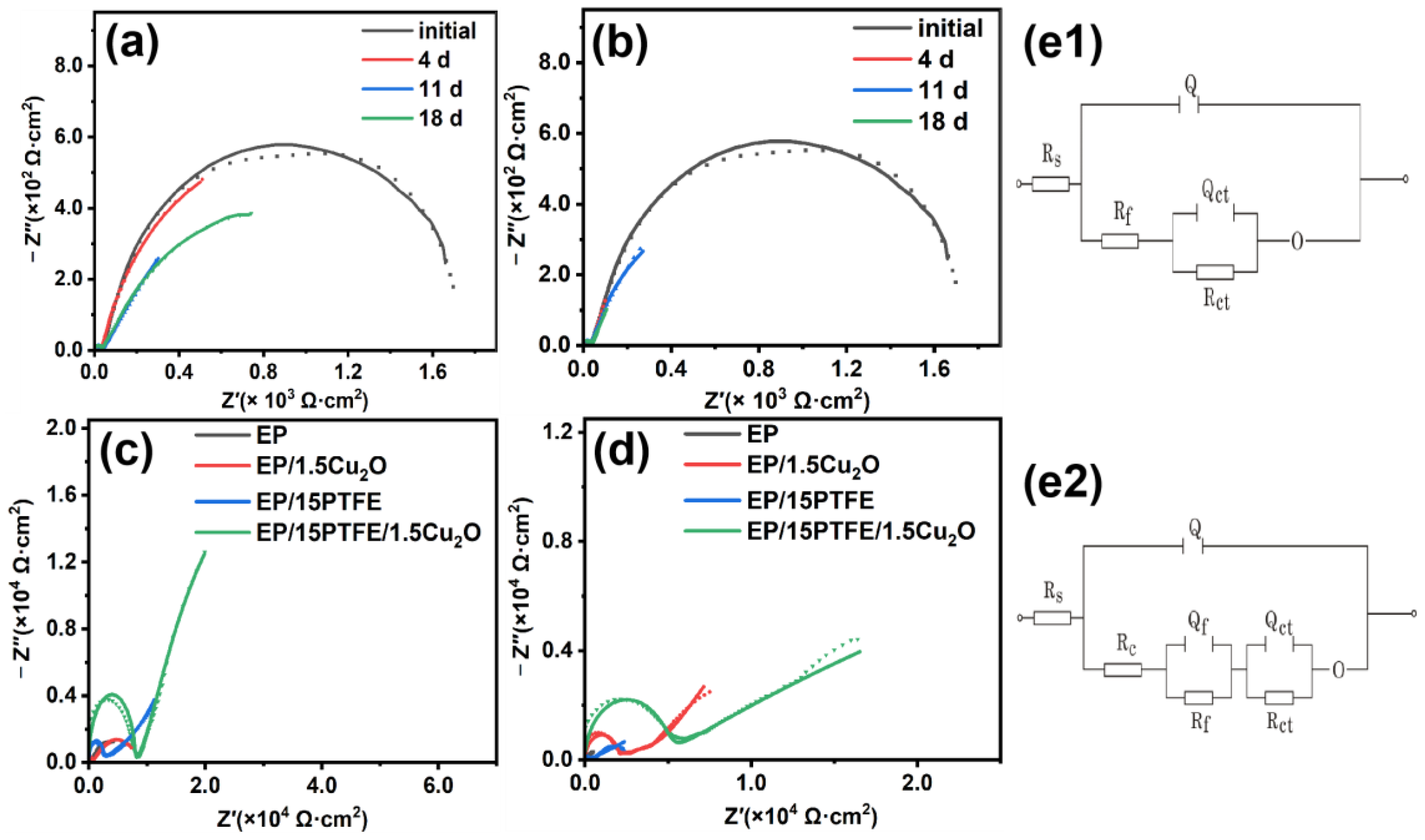
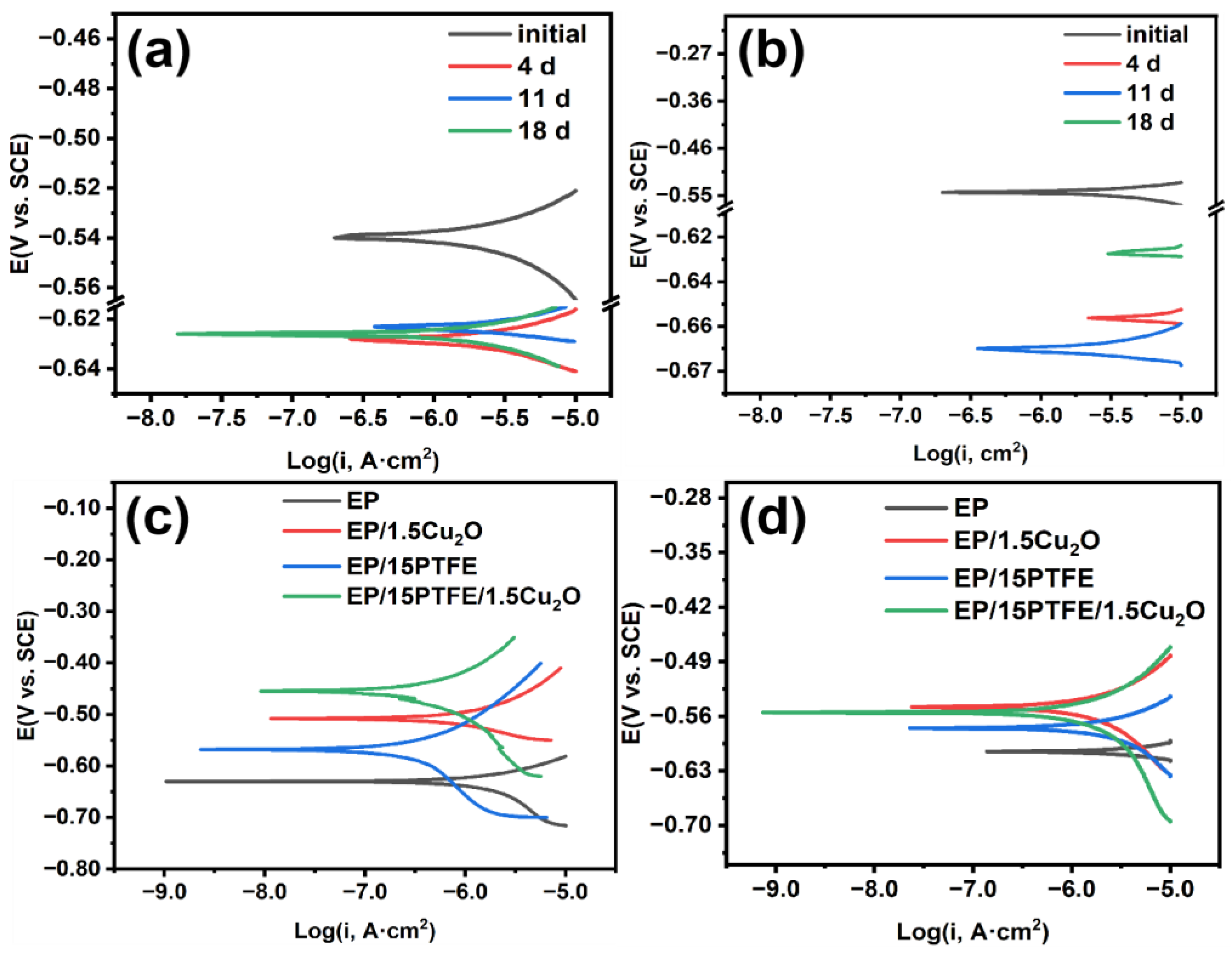
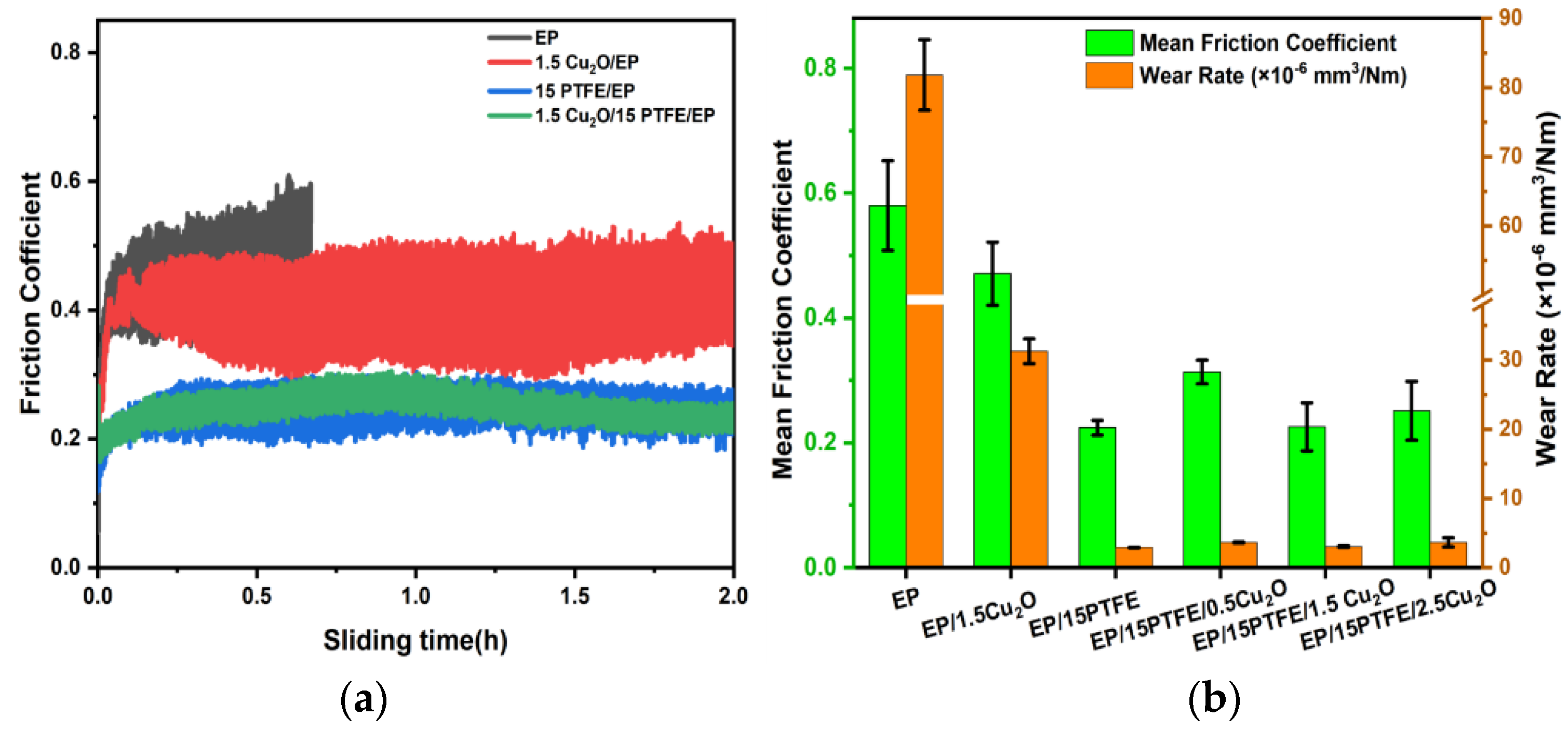
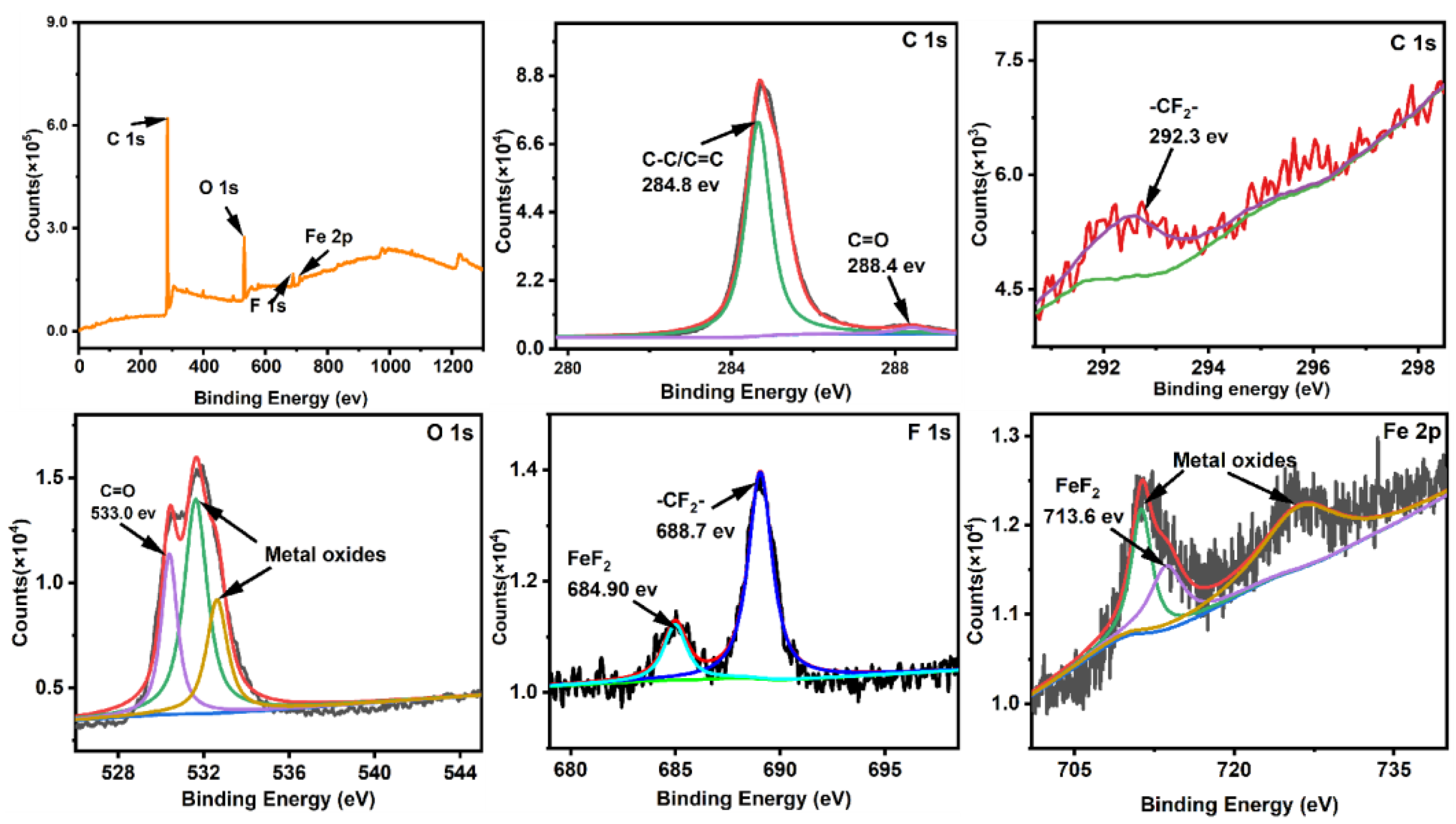
Corrosion and wear issues of motion components exposed to water-based corrosion mediums, e.g., naval vessels and oil extraction equipment, pose challenges for the lifespan and reliability of the motion systems. In this work, epoxy-based coatings modified with polytetrafluoroethylene (PTFE) and cuprous oxide (Cu2O) nanoparticles were prepared. The anti-corrosion performance of the coatings was comparatively investigated by electrical impedance spectroscopy and Tafel tests in sterile and sulphate-reducing bacteria (SRB) mediums. Moreover, the tribological behaviors of the coatings were examined under water lubrication conditions. Our results demonstrate that the epoxy coatings lower significantly the corrosion current density icorr and the charge transfer resistance of the electrical double layer Rct of the carbon steel substrate. Interestingly, the hybrid coatings filled with both PTFE and Cu2O exhibit excellent anti-corrosion and anti-wear performance. After being immersed in the SRB medium for 18 days, the icorr of the pure EP coating and hybrid coatings are 1.10 × 10⁻⁷ Amp/cm2 and 0.3 × 10⁻⁷ Amp/cm2, and the Rct values are 1.04 × 10³ Ω·cm2 and 3.87 × 10³ Ω·cm2, respectively. A solid tribofilm forms on the stainless steel counterface sliding against the hybrid coating, which is surmised to be essential for the low friction coefficients and wear. The present work paves a route for formulating the dual-function coatings of anti-biocorrosion and anti-wear.
Keywords: sulphate-reducing bacteria; biocorrosion; wear; anti-wear sulphate-reducing bacteria; biocorrosion; wear; anti-wear