Article

One-Dimensional CdS/SrTiO3/Carbon Fiber Core–Shell Photocatalysts for Enhanced Photocatalytic Hydrogen Evolution

1
National Engineering Laboratory for Modern Silk, College of Textile and Clothing Engineering, Soochow University, Suzhou 215123, China
2
School of Social Development and Public Administration, Suzhou University of Science and Technology, Suzhou 215009, China
3
School of Textile and Clothing and Arts and Media, Suzhou Institute of Trade and Commerce, Suzhou 215009, China
4
School of Textile Science and Engineering, Xi’an Polytechnic University, Xi’an 710048, China
*
Author to whom correspondence should be addressed.
Coatings 2022, 12(9), 1235; https://doi.org/10.3390/coatings12091235

Submission received: 2 August 2022 / Revised: 22 August 2022 / Accepted: 22 August 2022 / Published: 24 August 2022

Abstract

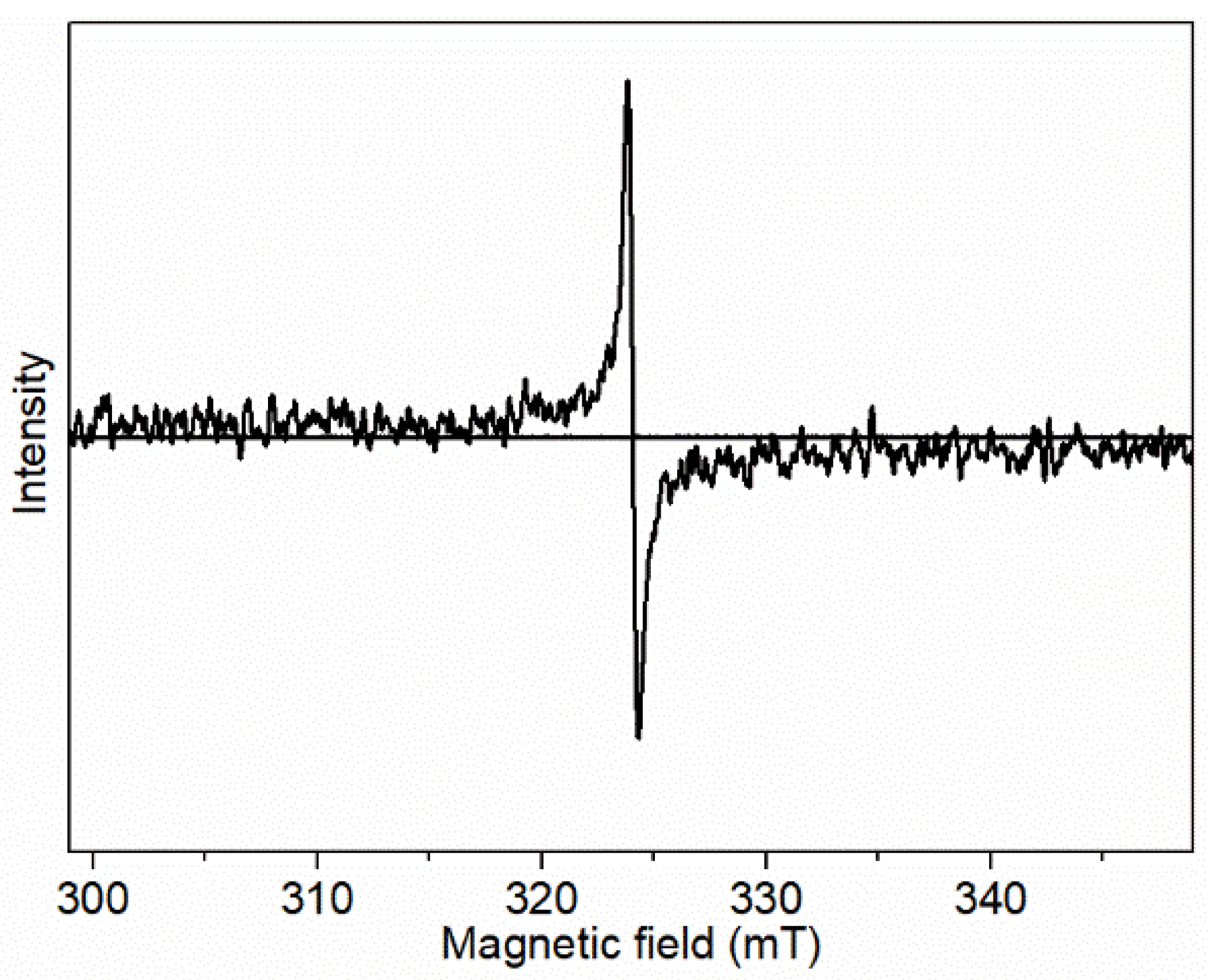
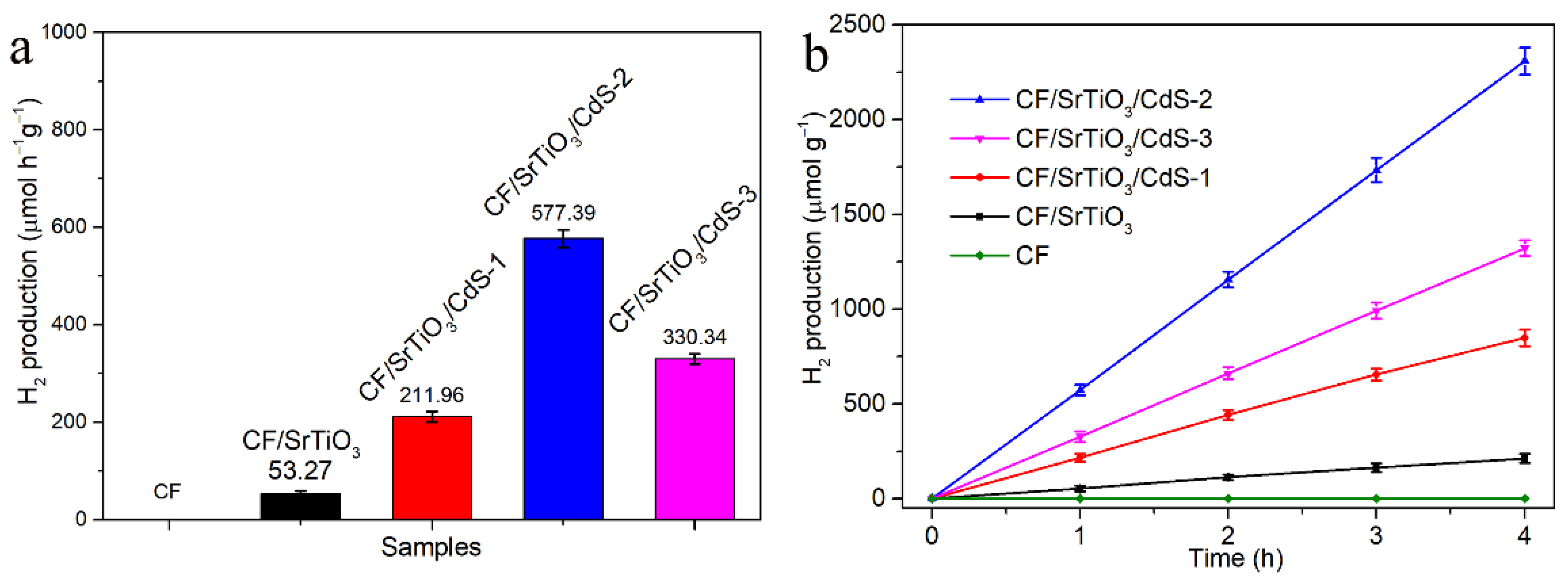
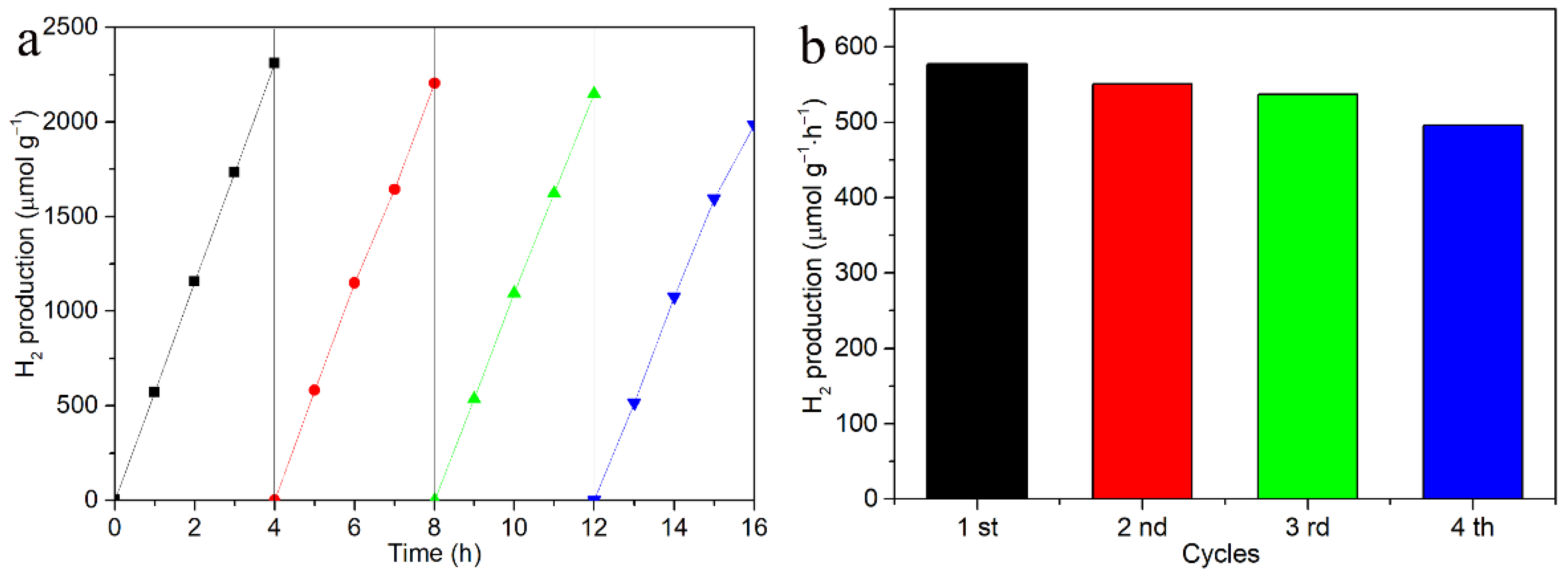
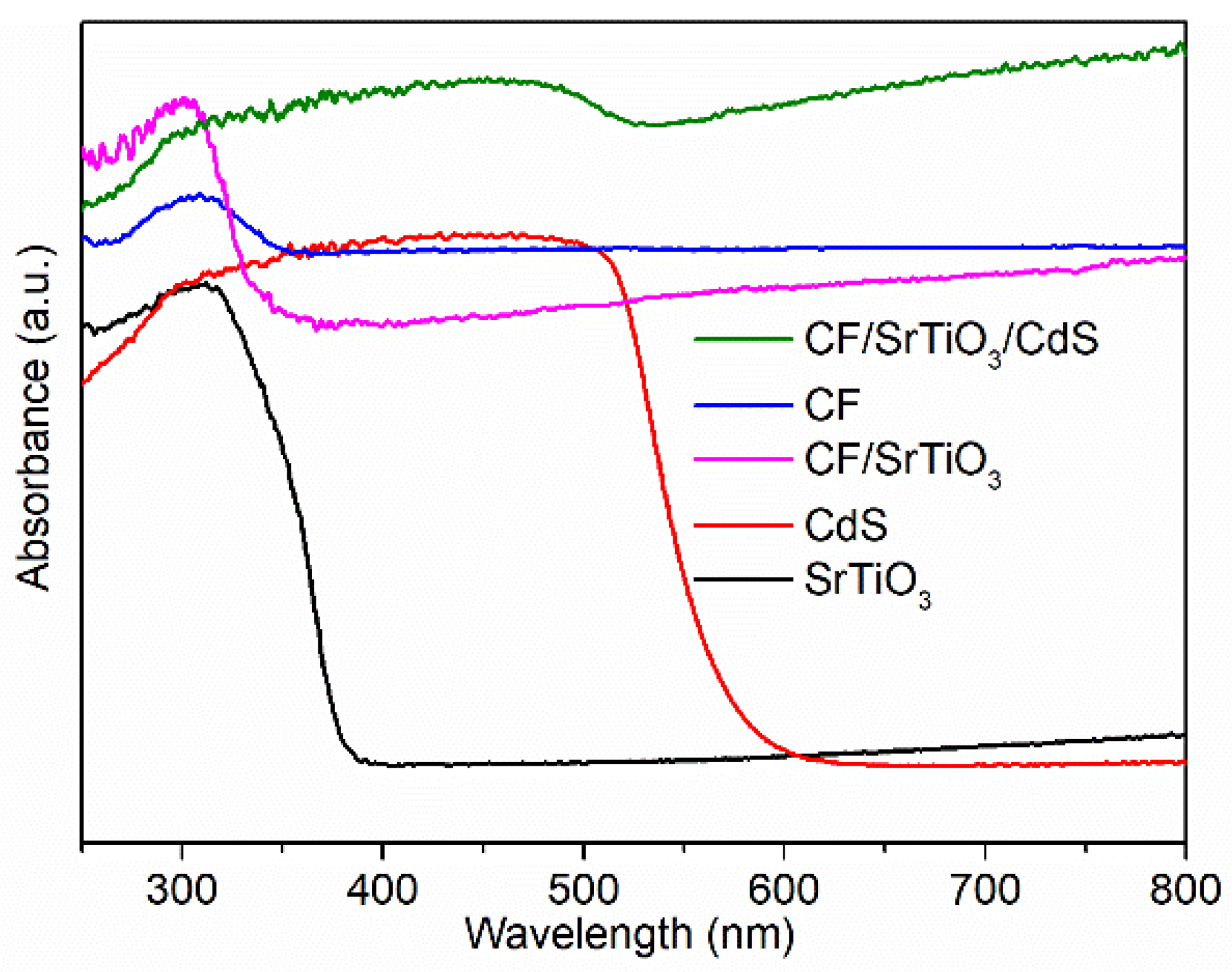
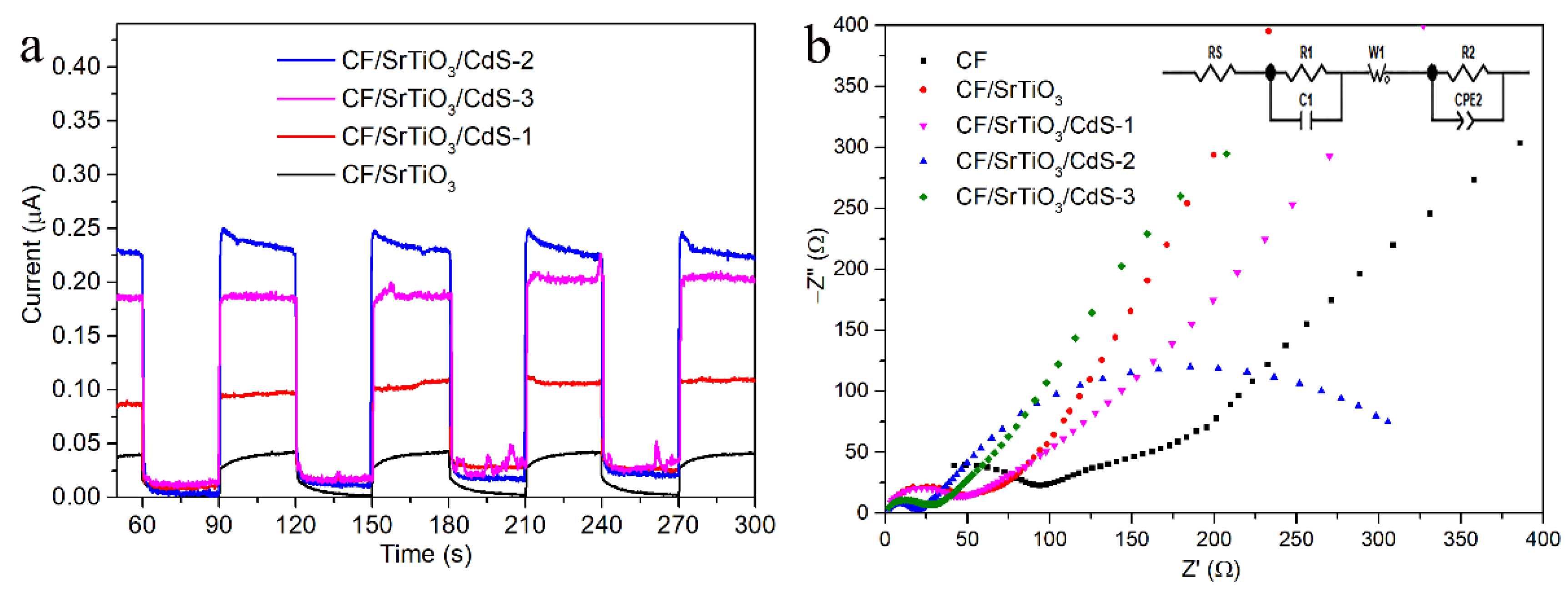
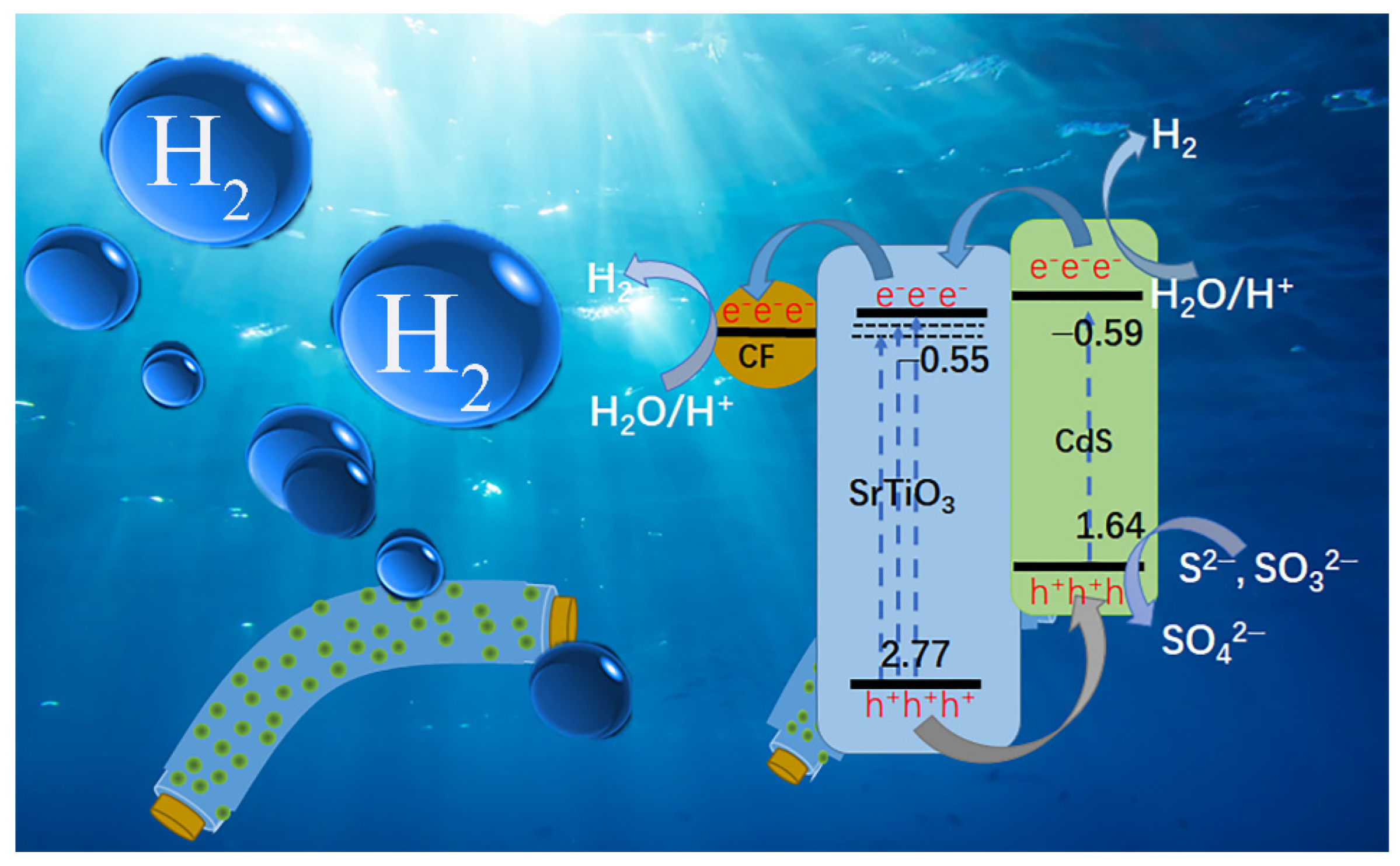
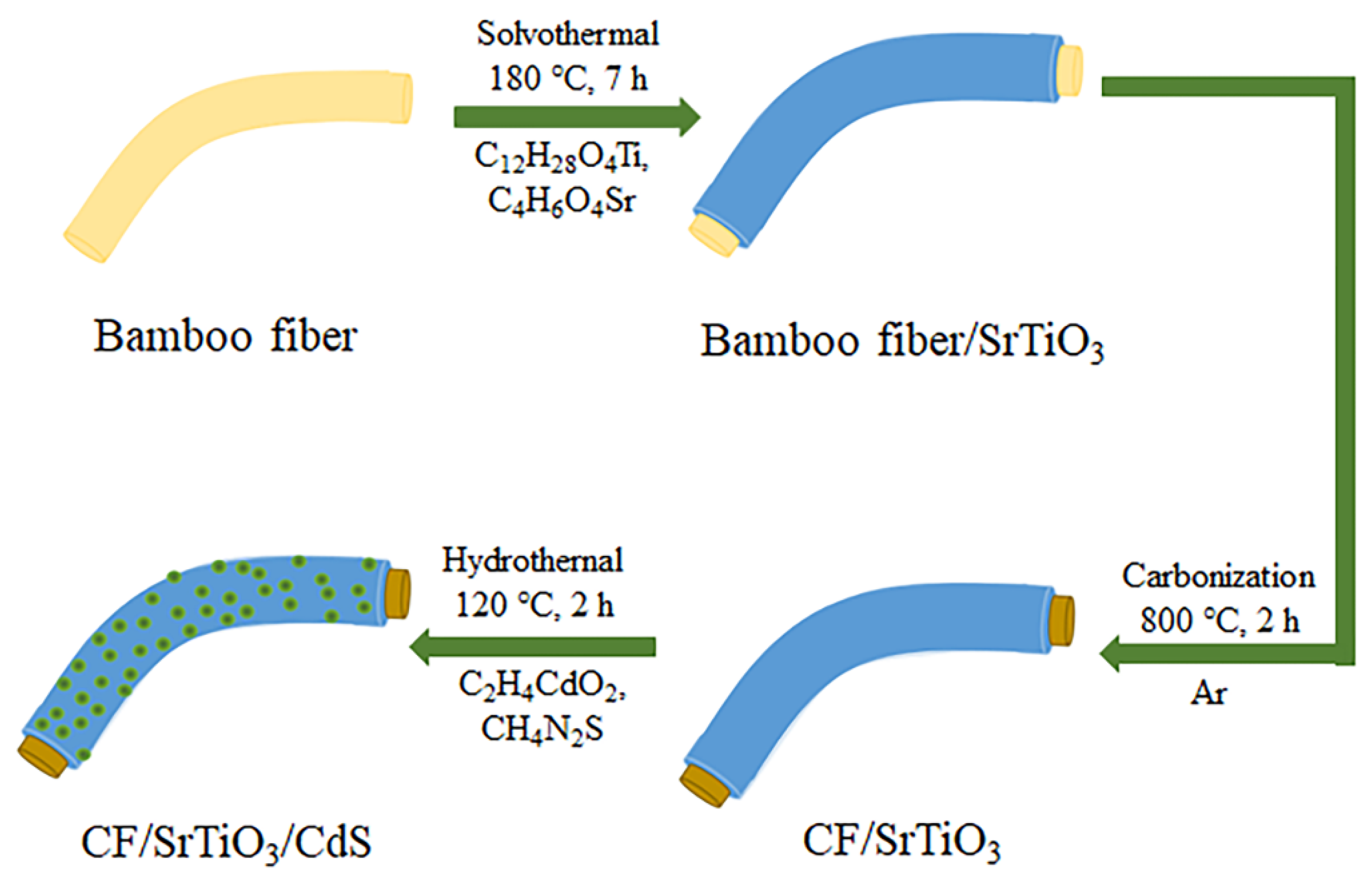
The photocatalytic hydrogen production efficiency of a single SrTiO3 photocatalytic catalyst is often low, which is mainly due to the serious combination of electrons and holes produced by photocatalysis as well as the mismatch of the redox capacity and light absorption range. Construction of semiconductor heterojunctions can solve these problems. CdS has a narrow band gap, which can effectively utilize visible light, and it has a band structure matched with that of SrTiO3. Therefore, CdS is considered as an ideal candidate for constructing heterojunctions with SrTiO3. In this paper, bamboo pulp fibers were used as the substrate, and SrTiO3 was coated on the substrate through the solvothermal process. CF/SrTiO3 rich in oxygen vacancies was formed by high temperature carbonization, and heterojunctions were formed by loading CdS on the surface of the CF/SrTiO3 composite material through the hydrothermal method, thus obtaining one-dimensional CF/SrTiO3/CdS core–shell photocatalysts. The structure and photocatalytic hydrogen production performance of the CF/SrTiO3/CdS core–shell photocatalysts were mainly studied. The photocatalytic hydrogen production experiment showed that the hydrogen production rate of the CF/SrTiO3/CdS-2 sample under the optimized process was as high as 577.39 μmol/g·h, which was about 11 times that of the CF/SrTiO3 sample. In this composite photocatalytic material system, the loading of the CdS nanospheres could enhance the visible light absorption capacity of the composite catalyst, promote the rapid separation and high-speed migration of photocarriers, and significantly improve the photocatalytic activity.
Keywords: SrTiO3; photocatalytic; hydrogen production; carbon fiber; oxygen vacancy; CdS SrTiO3; photocatalytic; hydrogen production; carbon fiber; oxygen vacancy; CdS