Abstract
WHO estimates that the global number of tobacco users exceeds 1.3 billion people. Few studies have examined the effect of locally made smokeless tobacco (ST) products on the color changes of material used in dental prosthetics. Bearing the recent advances in CAD/CAM ceramic restorations material in mind, this study aimed to assess ST influence on mean color change (∆E*) values among selected CAD/CAM ceramic types: multilayer zirconia (Ceramill Zolid PS), zirconia-reinforced lithium silicate ceramic (Vita Suprinity), and feldspathic (Vita TriLuxe) restorative materials. The color changes of the ceramics were compared to VITA classical and VITA 3D-MASTER shade guides. Sixty CAD/CAM ceramic specimens (20 samples each) were fabricated from Ceramill Zolid PS, Vita TriLuxe Forte, and VITA Suprinity. Specimens were prepared and divided into two groups according to the ST type and immersed for two weeks. Basic VITA classical and VITA 3D-MASTER colors were recorded at a baseline of one week and two weeks. The highest ∆E* values were recorded in the black ST for Vita Suprinity (4.77) in the first week, followed by Vita TriLuxe (4.07) in the second week. For white ST, Vita TriLuxe (4.87), and Vita Suprinity (4.42) showed extensive color change after two weeks and one week, respectively. The color change was least in zirconia for black and white ST after one week. CAD/CAM ceramic materials showed no significant difference after 1 and 2 weeks for the tested ST types. The effects of ST on CAD/CAM ceramic material (∆E* values) were high but did not reach clinically unacceptable values. Zirconia showed the least amount of color change among all the tested materials.
1. Introduction
Tobacco is considered a major contributing factor in the mortality of more than half its users. Global tobacco demand has surged in the past decade. WHO estimates that the number of tobacco users now exceeds 1.3 billion people. In several areas of the world, the use of smokeless tobacco (ST) has cultural overtones even though its use is a preventable cause of oral cavity diseases, pre-cancerous and cancerous diseases, and death [1]. ST refers to locally prepared smokeless tobacco [2,3,4,5], with a typical snuff-dipping form including species-specific tobacco leaves such as Nicotiana rustica and Nicotiana glauca [2]. ST is largely manufactured by powdering the tobacco along with ash, flavors, oils, calcium oxide, and black pepper [6]. ST is classified based on composition and color, including gray, white, and black powder [3]. ST is prevalent in southern regions of Saudi Arabia (Najran and Jazan), where it is consumed orally or nasally [2,3]. Globally, more than 28 types of ST are used orally, and two types are nasally inhaled [7].
The prepared ST products are habitually positioned in the mouth (vestibule) for a long duration [2,5]. Chewable tobacco forms include loose-leaf (loosely arranged, cured with air, and sweetened), plug (admixture of heavy tobacco with sugar/licorice and compressed), and twist (burley left which are cured with air/fire and formed into a rope by twisting) [8]. ST products contain several elements that have deletrious effects on the systemic health of an individual [4]. In the Jazan region of Saudi Arabia, ST use is observed individuals as young as 13–17 years of age [2,5]. Similar to cigarette-smoker (CS), tobacco users exhibit brown discoloration of their frontal teeth (area of the positioning of ST) [9].
Ceramic prosthesis materials have evolved over the past decade with Zirconia-based, glass-based, and feldspathic proving popular with patients [10,11]. Porcelain-based prostheses are largely zirconia-based [12,13]. Their superior quality is attributed to their better mechanical strength [13,14,15], and optimal biocompatibility [16,17,18]. Newer machining systems have been built for modern materials such as the feldspathic VITABLOCS Vita TriLuxe Forte. These have improved the mechanical properties (strength) [19]. Monochromatic blocks of the material are available in shades of several layers which allow differential gradient and augment translucency [19,20,21]. Vita Suprinity (zirconia-reinforced lithium silicate ceramic) with zirconia particles has greater mechanical resistance to fissures’ propagation [21]. The small size of the silicate crystals allows for the high content of the glass, improving translucency [22].
A benchmark for clinical success of an aesthetic prostheses material is color stability. Therefore, assessment of color changes using color measuring devices, such as spectrophotometers has become common. Color measuring devices can accurately record colors and express these numerically [23]. Object color is measured through assessment of its chromaticity by the Commission Internationale de l’Eclairage L*a*b* (CIELab) system. The measurements are made in regular 3D space quantities. L*measures the brightness or lightness of the color, a* deals with the red-green content, and b* assesses the yellow-blue content [24,25]. Using L*a*b*, the mean color changes (ΔE*) values can be calculated [26,27]. Calculation of the mean color change can reveal whether the shade change is detectable by the human eye [26]. Color differences greater than 4.2 units as clinically unacceptable [28,29,30,31].
Extensive research has examined the color changes and stability of different aesthetic ceramic materials with respect to commonly consumed beverages. Reports suggest that tea can severely affect color stability [15,32]. Data from several studies show that coffee or/and Arabic coffee (Qahwa) has a substantial effect on color changes in restorative materials [16,29]. Aerated beverages have also been implicated in undermining the color stability of ceramic materials [31,33]. Red wine and coffee produced the greatest levels of color change in composite resin materials compared to the CAD/CAM ceramic restorative materials [34].
The existing body of research has concluded that smokers have a higher prevalence of tooth discoloration than non-smokers [9]. This also translates to the color changes in restorations due to smoking [35]. Cigarette smoke causes significant tooth discoloration and induces a color mismatch between dental hard tissues and restorations. The combination of cigarette smoke with staining beverages (red wine and coffee) decreases luminosity and increases pigmentation and color changes in composite resin restorations [36]. Cigarette smoking shows higher color and surface changes and results in clinically unacceptable ΔE* [37]. These changes can occur in the space of a few weeks bringing about a color mismatch between restoration and dental hard tissues [38].
Research has shown that smokeless tobacco can trigger surface changes in restorations [39]. However, the effects of smokeless tobacco on CAD/CAM prosthetic materials have been seldom studied and the extent of color changes remains unclear. This paper explores the effects of smokeless tobacco on the color stability of multilayer zirconia (Ceramill Zolid PS), zirconia-reinforced lithium silicate (Vita Suprinity), and the feldspathic (Vita Triluxe Forte) CAD/CAM ceramic materials. The null hypothesis was that smokeless tobacco caused no significant difference in the mean color change values in the different CAD/CAM ceramic materials.
2. Materials and Methods
2.1. Study Design
We assessed the effect of smokeless tobacco on the mean color changes (ΔE*) of CAD/CAM ceramic specimens using the VITA classical (Lumin Vacuum) and VITA 3D-MASTER shade guides. A total of 60 CAD/CAM ceramic specimens were fabricated for this study.
2.2. Specimens Fabrication and Grouping
Three types of CAD/CAM ceramic materials were selected: a multilayer zirconia ceramic “Ceramill Zolid PS” (Amann Girrbach, Herrschaftswiesen, Germany), feldspathic ceramic “VITABLOCS Vita Triluxe Forte”, and zirconia-reinforced lithium silicate ceramic “VITA Suprinity” blocks (VITA Zahnfabrik, Bad Säckingen, Germany). The same operator prepared the specimens according to the manufacturer’s instructions using a CAD/CAM machine to control the specimen’s sizes. The size and the dimensions of the CAD/CAM ceramic specimens were a standardized thickness (2 ± 0.025 and 14 ± 0.025, and 12 ± 0.025 mm). The design of the specimen was formulated with CAD software based on these measurements. CAM milling machine (Aman Girrbach, Germany) was employed to mill the formulated product based on the established protocol. The pre-sintered zirconia and VITA Suprinity specimens were crystallized and sintered following the manufacturer’s recommendations. All specimens were kept ready for ST application. The specimens of each CAD/CAM type of all-ceramic material were divided equally and randomly based on material colors like black or white. Lighter color (B1) shades were used in this study.
2.3. Color Measurement
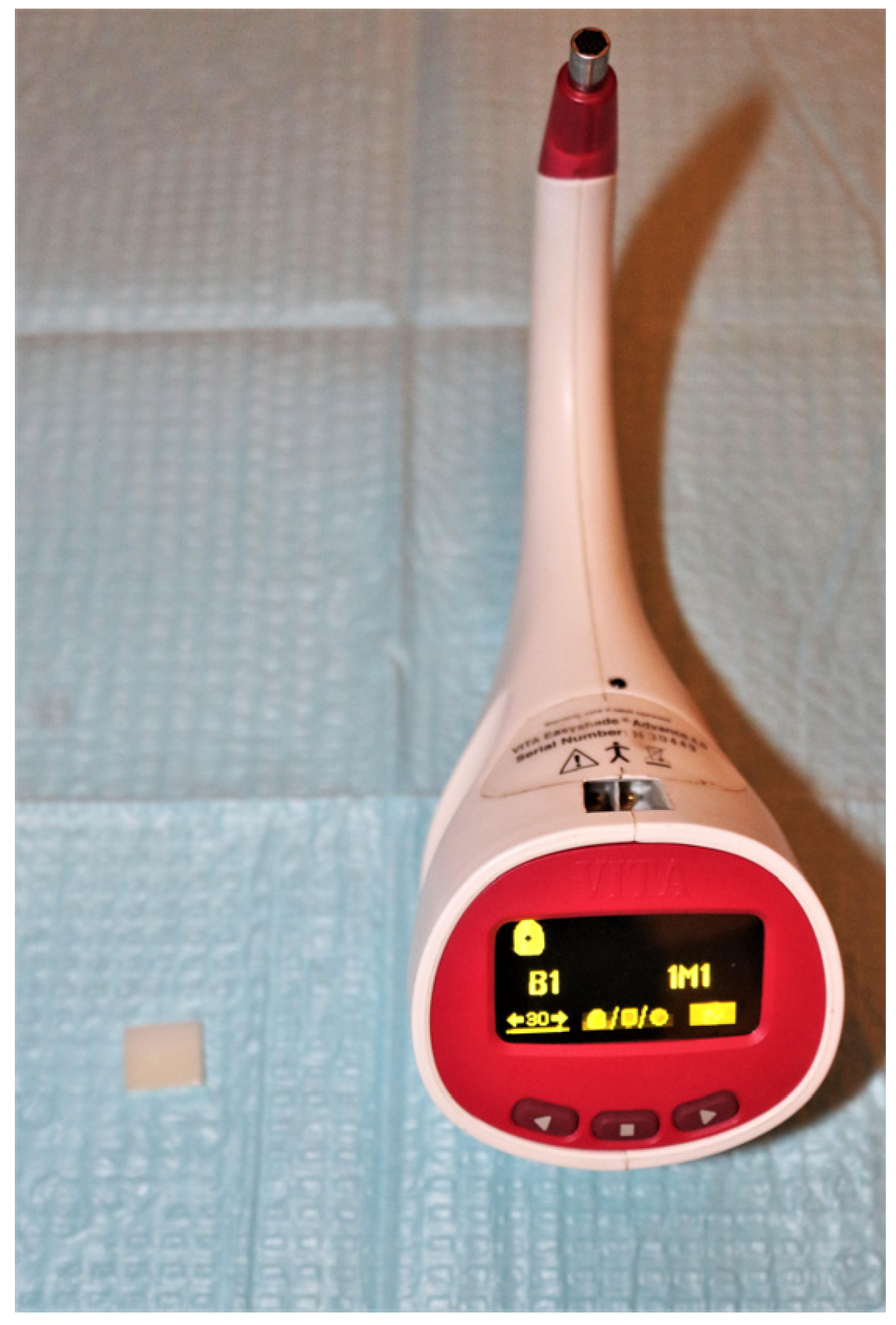
The color of CAD/CAM ceramic specimens was assessed by setting the specimen on a white background for both black and white groups of ST. Color measurements were recorded using the ‘VITA Easyshade’ spectrophotometer (VITA Easyshade, V, Bad Säckingen, Germany). CIELab values are a numerical representation of 3D dimensions of color. Spectrophotometers measure the L*, a*, and b* values, where L is the axis of lightness, a is the green-red value, and b is the blue-yellow value representing axes of chromaticity. These three coordinates are obtained from the light reflected from the object. ΔE* is the mean color change. These measurements had been previously used in studies assessing shades of CAD/CAM ceramic materials. Readings of L*, a*, and b* were performed two times for each specimen center, and the mean values were registered. The specimens were measured for color change relative to baseline measurements. VITA Easyshade’s spectrophotometer produced a screenshot measuring VITA classical shade guides and VITA 3D-MASTER Tooth guides (Figure 1); these readings was considered as baseline reading before immersion and staining in ST.
Figure 1.
Spectrophotometer used in this study and with Vita Classical and 3D Master shades reading.
2.4. Specimens Immersion in ST and Aging
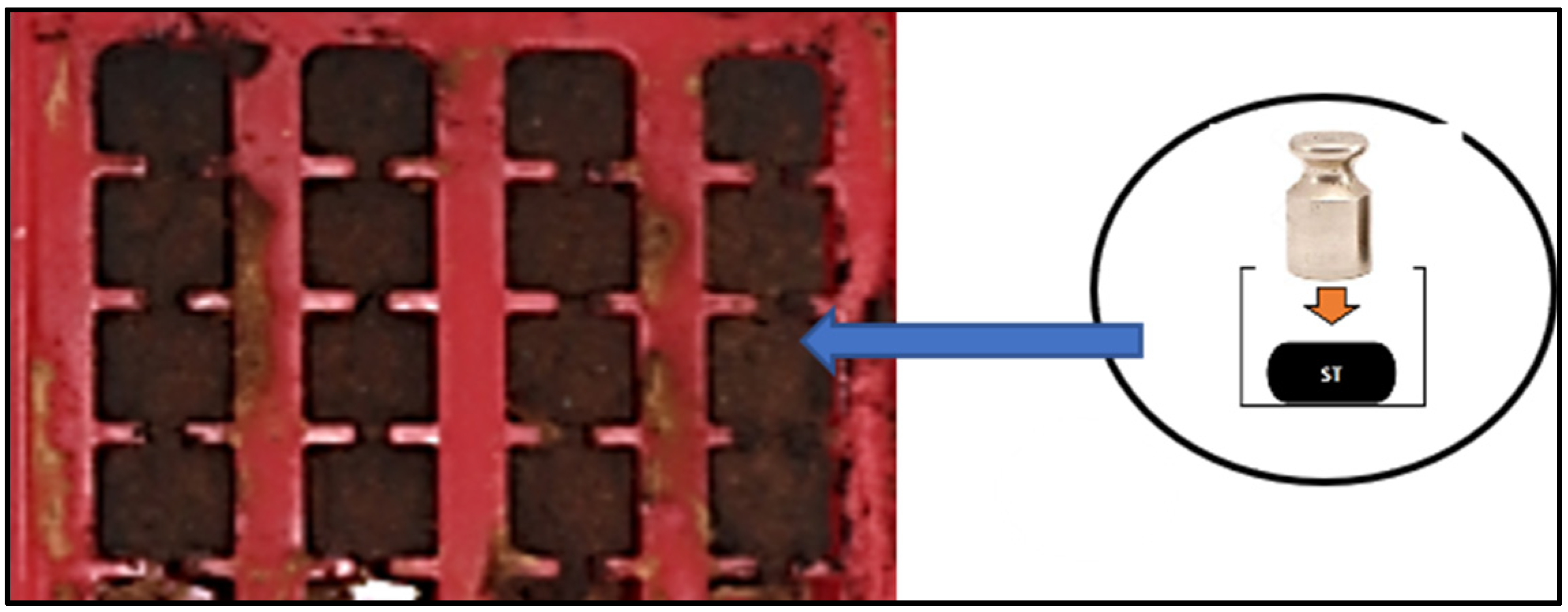
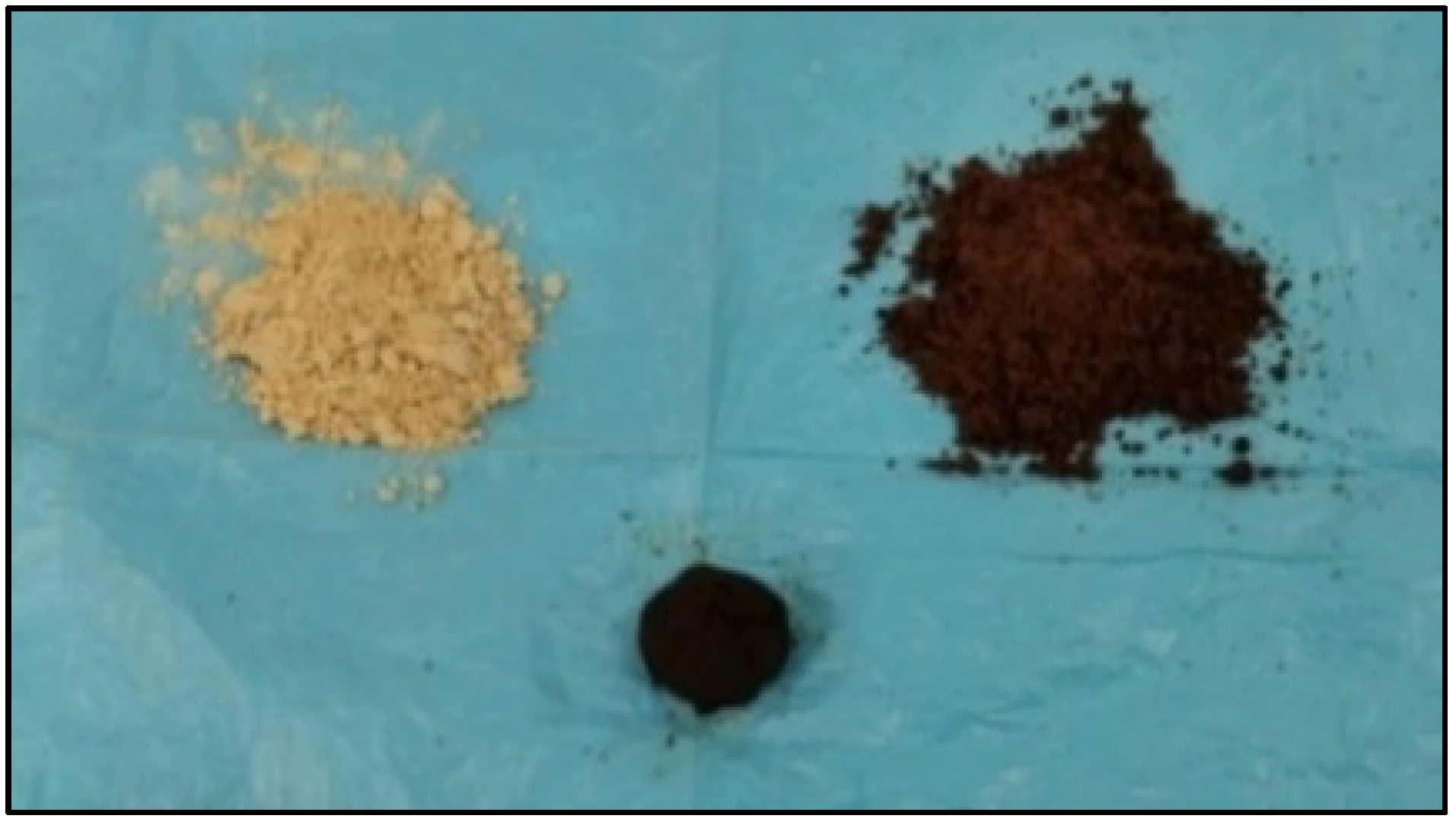
All specimens were immersed and stained in smokeless tobacco for two weeks, as reported earlier [33,34,39]. The ST sample was mixed with water to a thick consistency (Figure 2). The specimens were immersed for 10 min, and with a constant weight bearing down to ensure the specimens remained immersed for 10 min (the actual using time for ST) to simulate the force generated during dipping of ST (Figure 3). The ST preparations or blouse were replaced twice daily according to the actual usage [5,30].
Figure 2.
Types of smokeless tobacco powder used in this study. Raw powder and formed bulla can be seen.
Figure 3.
The specimens during force application on black smokeless tobacco.
An aging process was accomplished for all specimens during this staining and immersion time. After immersion, all CAD/CAM ceramic specimens were dipped in distilled water following removal from the ST staining materials and moved up and down several times to ensure they were completely dressed. Then, specimens were dried with white tissue paper and left to air dry. All color change measurements for L, a, and b were calculated and registered again by the same operator at time intervals of 1 and 2 weeks, with the same settings, and with a white background. ΔE* values for both staining types of ST and the three tested CAD/CAM materials were calculated as described earlier in the literature [28,29,30,31].
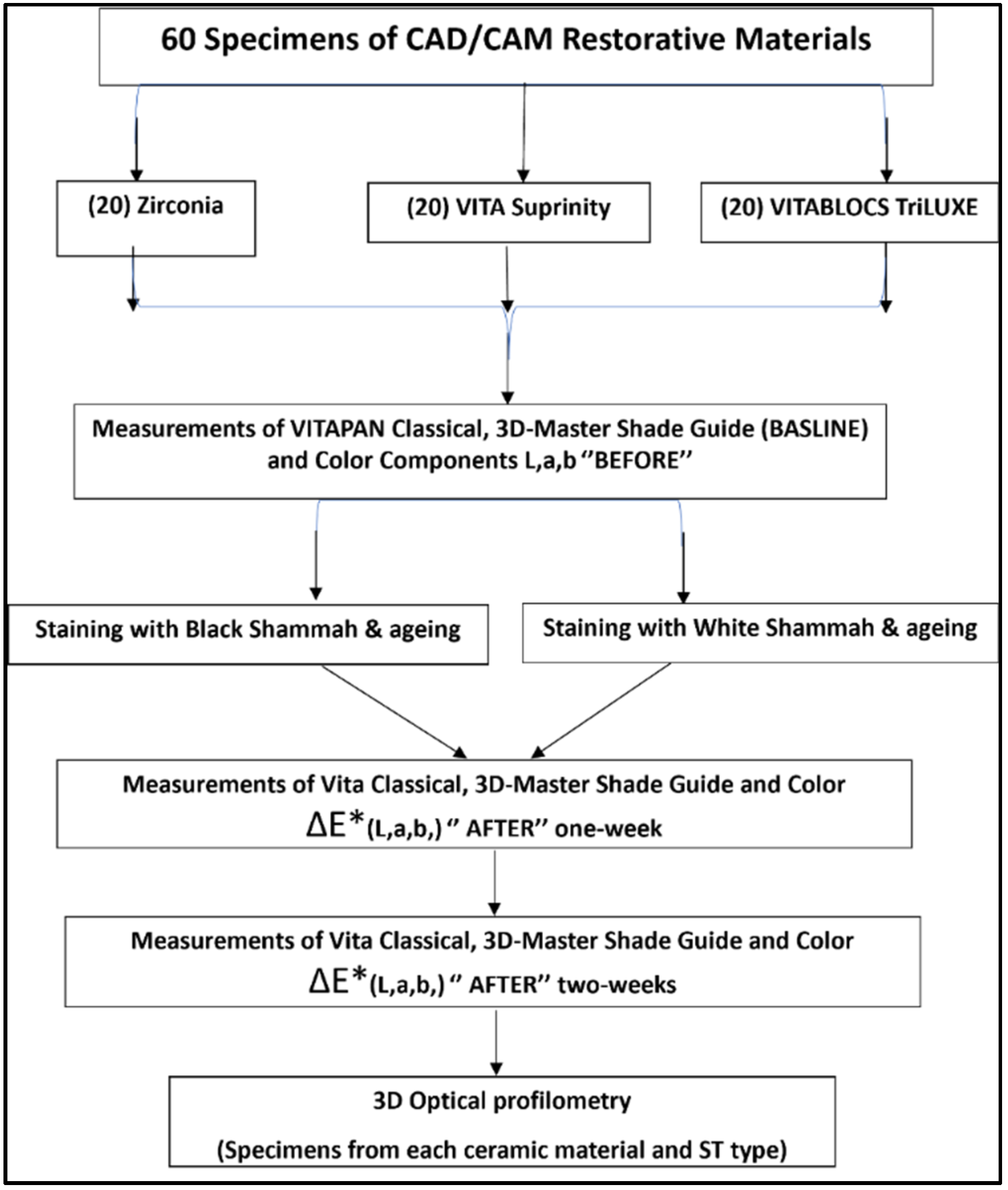
The average color changes (ΔE*) values were recorded after 1 and 2 weeks for the different materials and surface staining using the following equation: ΔE* = ((L1* − L2*)2 + (a1* − a2*)2 + (b1* − b2*)2)) × ½. Additionally, measurements were also recorded for VITA classical and VITA 3D-MASTER shade guide and recorded as values after staining immersions at one week and two weeks. Figure 4 displays a flow chart of the study design and specimen’s distribution.
Figure 4.
Flow chart demonstrating the study design, specimen distribution, and color measurement steps.
2.5. Surface Roughness Test
The surface roughness (Ra) test was performed after immersion in ST for two weeks. The ΔE* values and Vita Classical shade guide changes were recorded. The images and cauterizations were performed by 3D non-contact surface metrology and interferometry (Bruker Contour GTK, Bruker Nano Surfaces Division, Tucson, AZ, USA) in the material laboratory at King Saud University. Samples were measured through vertical scan interferometry using a 5× Michelson magnification lens with a field of view of 1.5 × 1.5 mm2, a Gaussian regression filter, a scan speed of 1×, and a threshold of 4. Specimens were secured on the profilometer machine and manually adjusted to record the replica on the monitor screen. The microscope ran Vision 64 (Bruker) software for controlling device location, performing data analyses, and delivering graphical output. Three specimens from each Smokeless tobacco group (black and white), and tested ceramic CAD/CAM materials (zirconia, Vita Triluxe, and VITA Suprinity) were taken for Ra test. The measurements were taken at the center of each sample accordingly to determine Ra values in µm. Each sample was scanned three times, and the averages were taken. Ra measurements were performed following the ISO 11562 recommendations for standardization.
2.6. Statistical Analysis
The mean and average color change values (ΔE*) of different types of CAD/CAM ceramic specimens were recorded. These values were evaluated by comparing the ΔE* of each CAD/CAM ceramic material (zirconia, VITA Suprinity, Vita TriLuxe) between different types of ST (black and white) and time intervals (one week or two weeks) using ANOVA in SPSS v22.0 software (Chicago, IL, USA). The differences between groups and within the different groups were compared. Student t-test was used to detect the significance in ΔE* values between different CAD/CAM ceramic materials regarding at different time intervals and among black and white ST specimens. p-values < 0.05 were considered significant. ΔE* values were compared against the clinically acceptable threshold which is 3.7 to 4.2 units [28,33]. Frequencies and percentages were compared before and after staining for immersion types, ceramic types of the VITA classical shade guides, and VITA 3D-MASTER Tooth guides.
3. Results
None of the specimens were lost or misplaced during the laboratory and color measurements workflow and chemical wear. The mean color change (∆E*) values for all the tested CAD/CAM ceramic material after staining in the ST (black and white) are summarized in Table 1. The ceramic specimens dipped in the black ST exhibited the highest ΔE00 values Vita Suprinity (4.77) in the first week, followed by Vita TriLuxe (4.07) in the second week. The lowest ΔE* was recorded for the zircon after one week. The same was recorded for the white ST staining materials. The highest values were found for Vita TriLuxe (4.87) and Vita Suprinity (4.42) at the two weeks and one-week time points, while the lowest was for Zircon (2.81) at one week. ANOVA and post hoc pairwise tests showed no significant differences between the groups or within the group. The student t-test showed no significant differences between CAD/CAM ceramic materials at 1 and 2-weeks concerning ST type (Table 2). There were no significant differences between and within the groups between the first and second weeks (Table 3). By two-way repeated measure by ANOVA, there was a significant difference between CAD/CAM ceramic materials at the first week (p = 0.012) (Table 4).
Table 1.
Mean color change (ΔE*) and SD values after staining in black and white ST for CAD/CAM ceramic materials (n = 60).
Table 2.
Student t-test for ΔE* of different ceramic materials, concerning first- and second-week interval and ST type.
Table 3.
ΔE* between ceramic materials, time intervals, and type of ST.
Table 4.
Two-way repeated measure ANOVA results of ceramic materials and ST types.
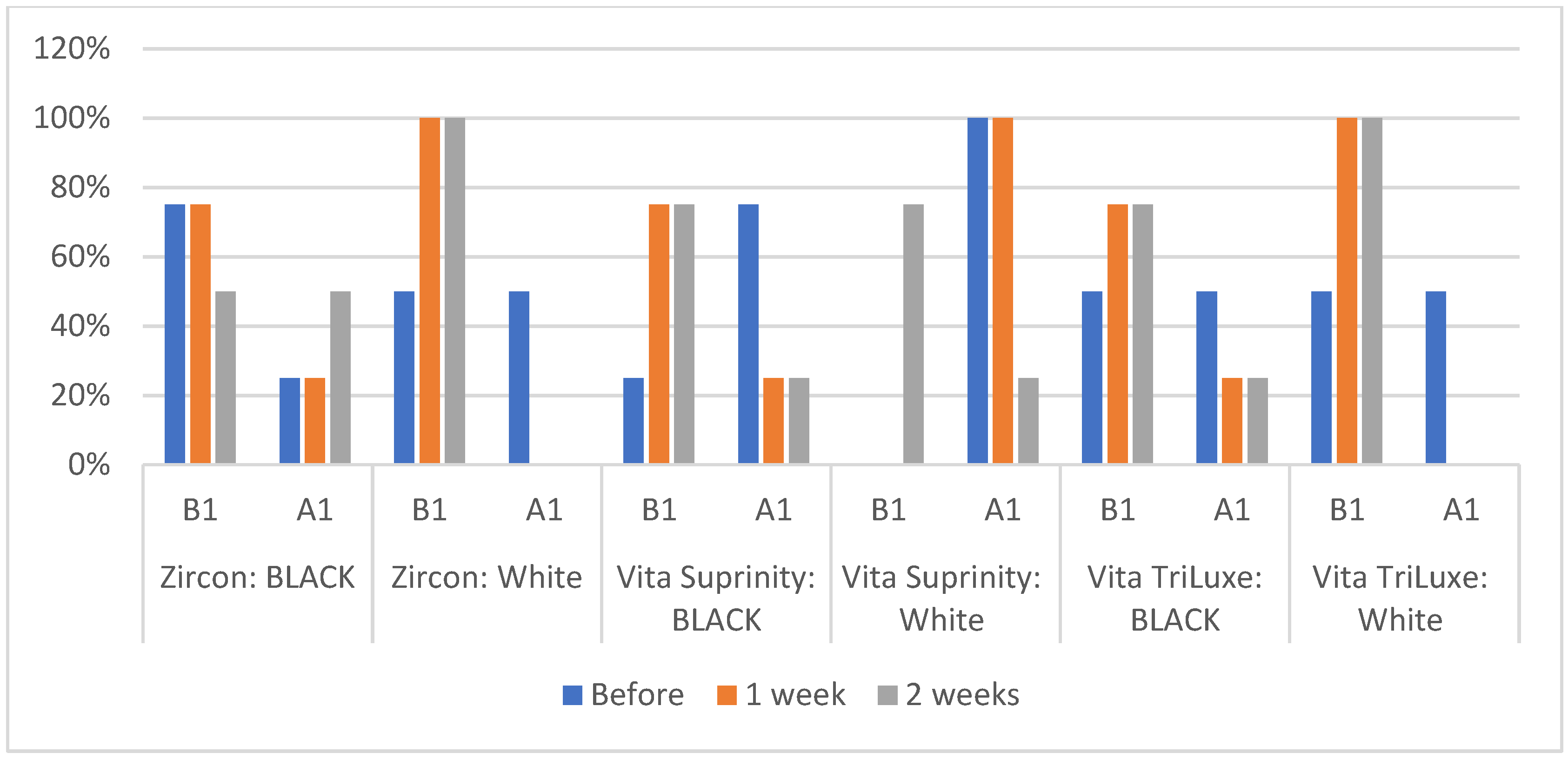
Figure 5 illustrates that the Vita Pan classical shade guide shows no color changes during the one and two weeks for black ST in Zirconia and VITABLOCS TriLuxe with a percentage of 50% or 75% for each. In contrast, white ST showed slight color changes towards a darker color (D2 and B2 in 25% only after the first and the second week for zirconia materials). For the three tested CAD/CAM ceramic materials staining with white ST, no color changes, and all specimens remain the same lighter color (A1, B1), with percentage reaching either 50% for each or 100% of the same color during the follow-up period. Concerning the 3D Master Shade guide, most of the materials remained unchanged from 2R2.5 and 2M1, except that some specimens changed into 2L1.5. The same until the end of the reading, except White ST 2R2 changes into 2M1 (data not shown).
Figure 5.
Comparison of color changes between basic colors of VITABAN Classical shade guide and the tested specimens after staining with ST at different time intervals.
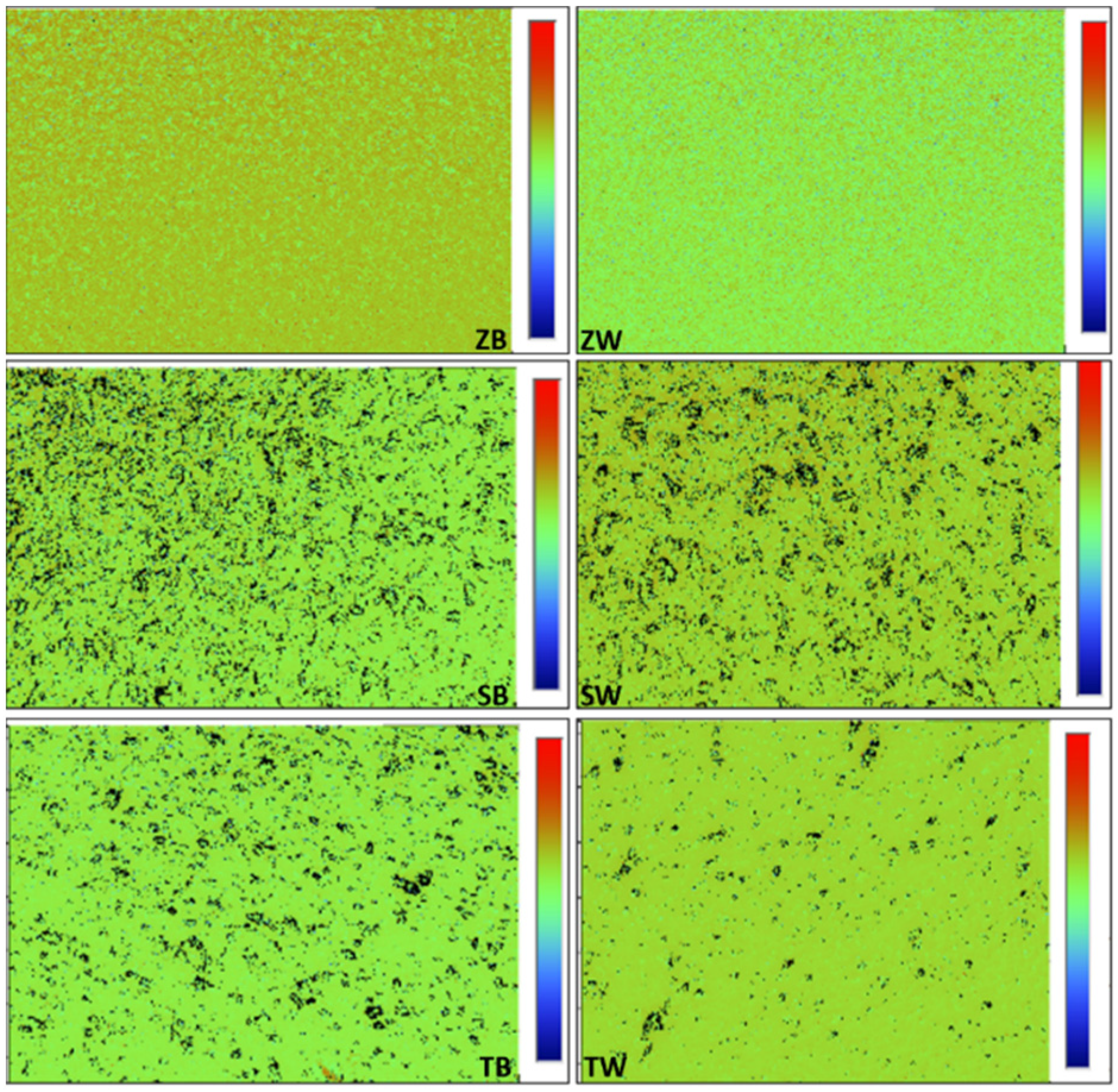
The 3D images of Ra graphical output representing the roughness differences between black and white ST groups in relation to the tested CAD/CAM restorative materials are presented in Figure 6. Zirconia samples recorded the highest Ra value with 0.28 and 0.36 μm in black and white ST, respectively. While Ra for Vita TriLuxe samples was the lowest with 0.18 and 0.09 μm for black and white ST, the recorded Ra values for Vita Suprinity were 0.30 and 0.09 μm for the tested ST.
Figure 6.
The 3D images of Ra graphical output of CAD/CAM restorative materials surface representing groups after the designated treatments: zirconia with black ST (ZB), zirconia with white ST (ZW), Vita Suprinity with black ST (SW), Vita Suprinity with white ST (SB), Vita Triluxe with black ST (TB), and Vita Triluxe with white ST (TW).
4. Discussion
Color stability is vital to achieving optimum esthetics in a restoration. Discoloration of a restoration over time due to staining beverages or habits may engender patient dissatisfaction. To date, there remains little research exploring the color stability of CAD/CAM prosthetic or restorative ceramics on exposure to smokeless tobacco. This preliminary laboratory study assesses the effects of smokeless tobacco (ST) on the average color stainability (ΔE00) values of multilayer zirconia (Ceramill Zolid PS), zirconia-reinforced lithium silicate ceramic (Vita Suprinity), and the feldspathic (Vita Triluxe Forte) CAD/CAM ceramic materials.
Our findings indicate that smokeless tobacco increased the overall ΔE00 values in all tested CAD/CAM ceramic materials. The greatest changes in color were observed with zirconia-reinforced lithium silicate ceramic (Vita Suprinity), and the feldspathic (Vita Triluxe Forte) materials. Zirconia specimens showed the least amount of color change. However, these changes did not approach statistical significance. Therefore, the null hypothesis was accepted since there were no significant differences in the mean color change (ΔE*) values between the tested CAD/CAM materials at 1-week and 2-weeks intervals. However, a clinically relevant finding is that the ΔE* values for zirconia-reinforced lithium silicate and feldspathic ceramic were above the acceptable value (4.2 units) after exposure to black and white ST. Color differences are perceived differently based on ambient light [35]. Visual and instrumental analysis results may not always be in unity [36,37]. For these reasons, an average difference of up to 3.7–4.2 units is widely considered acceptable in the literature [40].
The results of our study show that the mean color change observed was clinically acceptable in most specimens (ΔE00 less than 4.2). The color change may be a result of the surface deposition of several ingredients that make up smokeless tobacco. These elements include deposited lead, cadmium, arsenic, and other inorganic particles that brought about color changes to the ceramic surface [41,42]. The color of a restorative material is determined by intrinsic and extrinsic effects. Changes in the surface will lead to shifts in the transmission of light through the material and altered reflection of light. This affects the scattering of light, resulting in variations in the visual perception of the color.
The shade of a ceramic material is a result of its chemical structure, variation in the matrix or the matrix/load interphase, and physical-chemical reactions (intrinsic factors) in the deep portions of the CAD/CAM ceramic material [43]. Dietary habits and coloring agents (extrinsic influences) [44], the characteristics of the inorganic particles, the surface topography, and the type of glazing or sintering (superficial changes encouraging surface degradation and preferring the diffusion) can also influence color [38,43,44,45]. Storage time in different types of liquid beverages had resulted in more CAD/CAM ceramic materials discolorations, which hurts the color stability of those materials [27]. Aydin et al. investigated the color changes in composite, hybrid ceramic, and zirconia-reinforced lithium silicate CAD/CAM after 30-days of immersion in popular beverages. Red wine and coffee produced the greatest levels in the CAD/CAM ceramic restorative materials [34].
Tobacco habits such as cigarette smoking (CS) and tobacco smoking (TS) can cause significant tooth discoloration and induce color variations in restorative materials. Minimizing or lowering the deposits from CS and TS could reduce their impact on staining the hard tissues [9,46]. Similar to the results of the present study, Willeres et al. found that all experimental external and internal tobacco environments resulted in high mean color change values [41]. ∆E* values obtained after staining with ST were above the clinical color acceptability of most specimens from these two materials [47]. Consistent with previous research, we found marginal changes in the ΔE* values due to external staining with smokeless tobacco [41,42].
In contrast with these studies, Prajapati et al. reported that cigarette and tobacco-extract smoking did not affect the ∆E00 values in the color of the restorative materials (Vita VMK Master, IPS e.max, and Zirconia) [48]. These results are inconsistent with our findings.
Zirconia specimens showed the lowest ΔE* values recorded. This color stability could be because zirconia in its final state is highly surface stable. It remains stable after transformation to cubic and tetragonal zirconia even at elevated temperatures [49]. CAD/CAM zirconia ceramic materials show no statistically significant changes in the external roughness on exposure to acids [49]. It can be stained by instant coffee and aerated sweetened beverages such as Coca-Cola due to the higher yellow colorant content in coffee [27].
The elements of smokeless tobacco can produce a surface alteration of restorative materials [27,39,42]. Unlike ceramics, tooth structure and resins show increased mean color change values [46]. Our results are consistent with the data reported by Wasilewski et al. and Mathias et al. [50,51] where ST use was accompanied by modifications to saliva quality, poor dental and oral health [38], and modified the surface roughness of the restorative materials [32,38,39].
Surface roughness can affect the opacity and translucency of the ceramic, altering the appearance and affecting the color. The color stability in ceramics is due to the glaze layer which serves to minimize staining on the external surfaces and can be highly polished thus, discouraging adherence. From Table 1 and Table 2, it is clear that feldspathic ceramic (Vita TriLuxe) samples exhibited the highest ∆E* values, followed by zirconia-reinforced lithium silicate ceramic (Vita Suprinity). Multilayer zirconia had the lowest mean color change. These values are mirrored by the Ra values recorded by 3D optical profilometer images seen in Figure 6. The highest effect was on feldspathic ceramic and the lowest was on zirconia. Surface changes of CAD/CAM dental restorations may also be a consequence of an augmented plaque biofilm [39,44,50]. Al Moaleem et al. observed that khat chewing significantly affects bacterial biodiversity in oral biofilms, resulting in increased discoloration and staining [44]. Smokeless tobacco and khat extracts significantly affect surface parameters and color of ceramics and natural teeth [52,53]. Feldspathic metal-ceramic showed greater degrees of darker color changes with khat according to the Vita Pan classical shade guide [50]. 48 This could be due to the type of staining materials (Khat vs. ST), and the type of examined ceramic (metal-ceramic Vs CAD/CAM ceramic materials).
Extended uninterrupted habits such as khat/tobacco chewing can increase their capacity to stain restorations through glacial changes to the ceramic surface over time [42]. 38 Al-Anesi et al. examined the effect of khat extract on the color of composite materials in vitro and reported that khat shows clinically acceptable and perceptible ΔE* values with [54].
We detected no significant differences in the ΔE* values between ceramic materials and ST types at different time intervals on comparing the color changes using VITA classical shade guides (Lumin Vacuum) and VITA Tooth guides 3D-MASTER after immersion. A few specimens exhibited darker colors (D2 and B2) from the original lighter color (A1 and B1) in the Vita Classical shade guide. This is in keeping with a previous study on color change by Alhamzah et al., who reported that zirconia CAD/CAM ceramic materials presented with a whiter shade after immersion in chlorohexidine mouth wash [55].
Our findings corroborate previous work by Alanida-Roman et al. who demonstrated that exposure to smoke and tobacco products leads to a reduction in the luminosity and a darker color in the specimens. Tea-staining or bleaching processes are directed to decrease L* (brightness or whiteness) values of teeth and shift into redness and darker color clinically [56].
For stable aesthetic clinical outcomes, it is vital that the clinician be cognizant of the staining susceptibility when selecting a restorative material. Choosing the appropriate material and surface finishing procedures will provide optimum color stability of restorations. This may be crucial for patients with a history of staining habits such as smokers and smokeless tobacco users who require cosmetic results that mimics. Long-term patient satisfaction may ultimately hinge on adequate patient education on the staining potential of the restorative material. Patients should be made aware of the consequences of staining habits and regular consumption of staining beverages.
A possible limitation of our study is that in vitro designs cannot truly simulate the oral cavity. In the oral cavity, the saliva and tongue can periodically act as cleaning mechanisms, thus reducing the duration of contact tobacco elements have with the restoration’s surface. Further research on the effects of various types of smokeless tobacco is required to confirm and validate these findings. Future in vivo studies on this topic can examine the effect of frequency and duration of tobacco habits on the color stability of restorative ceramics. Further data can help drive research into next-generation restorative materials with enhanced color stability.
5. Conclusions
This study examined the effects of smokeless tobacco on CAD/CAM ceramic materials. Though we did not find statistically significant changes in the three materials, marginal changes in mean color values were observed. The highest mean color changes were observed in the zirconia-reinforced lithium silicate ceramic (Vita Suprinity) and feldspathic ceramic (Vita TriLuxe). Multilayer zirconia showed the least amount of color change among all the tested materials. It is conceivable that the time, duration, and frequency of use of smokeless tobacco may have an effect on the color changes in CAD/CAM ceramics. Overall, this study strengthens the idea that tobacco in any form can cause color changes in restorative materials. The insights gained from this study may be of assistance for future studies exploring the color stability of CAD/CAM ceramics.
Author Contributions
Conceptualization, M.M.A.M., H.A.A. (Hafiz A. Adawi) and J.A.K.; methodology, S.B. and H.M.M.; software, R.M.A.H., R.K. and S.B.; validation, A.K., H.A.A. (Hafiz A. Adawi) and A.M.A.; formal analysis, H.A.A. (Hassan A. Alhazmi), A.H.H. and J.A.K.; investigation, M.M.A.M., K.F.A. and A.M.A.; resources, R.M.A.H., H.A.A. (Hassan A. Alhazmi) and K.F.A.; data curation, A.K., F.A.A. and S.P.; writing—original draft preparation, M.M.A.M., H.A.A. (Hafiz A. Adawi), K.F.A., H.A.A. (Hafiz A. Adawi), F.A.A., R.M.A.H. and R.K.; writing—review and editing, H.M.M., A.K., A.M.A., A.H.H., J.A.K., S.B. and S.P.; visualization, H.M.M., S.B. and A.H.H.; supervision, F.A.A., A.K. and R.K.; project administration, M.M.A.M. and S.P. All authors have read and agreed to the published version of the manuscript.
Funding
This research received no external funding.
Institutional Review Board Statement
Not applicable.
Informed Consent Statement
Not applicable.
Acknowledgments
The publication of the article was supported by Taif University Researchers Supporting Program (project number: TURSP-2020/153), Taif University, Saudi Arabia.
Conflicts of Interest
The authors declare no conflict of interest.
References
- WHO Study Group on Tobacco Product Regulation. Report on the Scientific Basis of Tobacco Product Regulation; WHO Technical Report Series 1001; WHO: Geneva, Sitzerland, 2015. [Google Scholar]
- Alsanosy, R.M. Smokeless tobacco (shammah) in Saudi Arabia: A review of its pattern of use, prevalence, and potential role in oral cancer. Asian Pac. J. Cancer Prev. 2014, 15, 6477–6483. [Google Scholar] [CrossRef] [PubMed] [Green Version]
- Al Agili, D.E.; Park, H.-K. The prevalence and determinants of tobacco use among adolescents in Saudi Arabia. J. Sch. Health 2012, 82, 131–138. [Google Scholar] [CrossRef] [PubMed]
- Bakdash, A. Shammah (Smokeless Tobacco) and Public Health. Asian Pac. J. Cancer Prev. 2017, 18, 1183–1190. [Google Scholar] [CrossRef]
- Al-Tayar, B.; Tin-Oo, M.M.; Sinor, M.Z.; Alakhali, M.S. Prevalence and association of smokeless tobacco use with the development of periodontal pocket among adult males in Dawan Valley, Yemen: A cross-sectional study. Tob. Induc. Dis. 2015, 13, 35. [Google Scholar] [CrossRef] [PubMed] [Green Version]
- Scheifele, C.; Nassar, A.; Reichart, P.A. Prevalence of oral cancer and potentially malignant lesions among shammah users in Yemen. Oral Oncol. 2007, 43, 42–50. [Google Scholar] [CrossRef]
- Rodu, B.; Jansson, C. Smokeless tobacco and oral cancer: A review of the risks and determinants. Crit. Rev. Oral Biol. Med. 2004, 15, 252–263. [Google Scholar] [CrossRef]
- Hoffmann, D.; Hecht, S.S. Nicotine-derived N-nitrosamines and tobacco-related cancer: Current status and future directions. Cancer Res. 1985, 45, 935–944. [Google Scholar]
- Alkhatib, M.N.; Holt, R.D.; Bedi, R. Smoking and tooth discolouration: Findings from a national cross-sectional study. BMC Public Health 2005, 5, 27. [Google Scholar] [CrossRef] [Green Version]
- Powers, J.M.; Sakaguchi, R.L.; Craig, R.G. Craig’s Restorative Dental Materials; Sakaguchi, R.L., Powers, J.M., Eds.; Elsevier: Amsterdam, The Netherlands, 2012; ISBN 978-0-323-08108-5. [Google Scholar]
- Kumar, P.; Sahoo, S.; Singh, K.; Suvarna, S.; Agnihotri, Y. Color stability of aesthetic restorative materials after exposure to commonly consumed beverages: A systematic review of literature. Eur. J. Prosthodont. 2014, 2, 15. [Google Scholar] [CrossRef]
- Fehmer, V.; Mühlemann, S.; Hämmerle, C.H.F.; Sailer, I. Criteria for the selection of restoration materials. Quintessence Int. 2014, 45, 723–730. [Google Scholar] [CrossRef]
- Liu, M.-C.; Aquilino, S.; Gratton, D.; Ou, K.-L.; Lin, C.-C. Relative Translucency and Surface Roughness of Four Yttrium-stabilized Tetragonal Zirconia Polycrystalline-based Dental Restorations. J. Exp. Clin. Med. 2013, 5, 22–24. [Google Scholar] [CrossRef]
- Arena, A.; Prete, F.; Rambaldi, E.; Bignozzi, M.C.; Monaco, C.; Di Fiore, A.; Chevalier, J. Nanostructured Zirconia-Based Ceramics and Composites in Dentistry: A State-of-the-Art Review. Nanomaterials 2019, 9, 1393. [Google Scholar] [CrossRef] [PubMed] [Green Version]
- Haralur, S.B.; Raqe, S. Alqahtani, N.; Alhassan Mujayri, F. Effect of Hydrothermal Aging and Beverages on Color Stability of Lithium Disilicate and Zirconia Based Ceramics. Medicina 2019, 55, 749. [Google Scholar] [CrossRef] [PubMed] [Green Version]
- Abu-Obaid, A.; AlMawash, A.; Alyabis, N.; Alzaaqi, N. An in vitro evaluation of the effect of polishing on the stainability of different CAD/CAM ceramic materials. Saudi Dent. J. 2020, 32, 135–141. [Google Scholar] [CrossRef] [PubMed]
- Saridag, S.; Tak, Ö.; Alniacik, G. Basic properties and types of zirconia: An overview. World J. Stomatol. 2013, 2, 40–47. [Google Scholar] [CrossRef]
- Wang, L.; Liu, Y.; Si, W.; Feng, H.; Tao, Y.; Ma, Z. Friction and wear behaviors of dental ceramics against natural tooth enamel. J. Eur. Ceram. Soc. 2012, 32, 2599–2606. [Google Scholar] [CrossRef]
- Gracis, S.; Thompson, V.P.; Ferencz, J.L.; Silva, N.R.F.A.; Bonfante, E.A. A new classification system for all-ceramic and ceramic-like restorative materials. Int. J. Prosthodont. 2015, 28, 227–235. [Google Scholar] [CrossRef] [Green Version]
- Giti, R.; Haghdoost, S.; Ansarifard, E. Effect of different coloring techniques and surface treatment methods on the surface roughness of monolithic zirconia. Dent. Res. J. 2020, 17, 152–161. [Google Scholar] [CrossRef]
- Nasr, E.; Makhlouf, A.-C.; Zebouni, E.; Makzoumé, J. All-ceramic Computer-aided Design and Computer-aided Manufacturing Restorations: Evolution of Structures and Criteria for Clinical Application. J. Contemp. Dent. Pract. 2019, 20, 516–523. [Google Scholar]
- Awad, D.; Stawarczyk, B.; Liebermann, A.; Ilie, N. Translucency of esthetic dental restorative CAD/CAM materials and composite resins with respect to thickness and surface roughness. J. Prosthet. Dent. 2015, 113, 534–540. [Google Scholar] [CrossRef]
- AlGhazali, N.; Burnside, G.; Smith, R.W.; Preston, A.J.; Jarad, F.D. Performance assessment of Vita Easy Shade spectrophotometer on colour measurement of aesthetic dental materials. Eur. J. Prosthodont. Restor. Dent. 2011, 19, 168–174. [Google Scholar]
- ISO 11664-42008 (CIE S 014-4/E2007); CIE Standard Colorimetry. Part 4: CIE 1976 L*a*b* Colour Space. ISO: Geneva, Switzerland, 2008; p. 8.
- International Organization for Standardization. ISO/TR 28642:2011 Dentistry—Guidance on Colour Measurement; ISO: Geneva, Switzerland, 2011. [Google Scholar]
- Rosentritt, M.; Sawaljanow, A.; Behr, M.; Kolbeck, C.; Preis, V. Effect of tooth brush abrasion and thermo-mechanical loading on direct and indirect veneer restorations. Clin. Oral Investig. 2015, 19, 53–60. [Google Scholar] [CrossRef]
- Kanat-Ertürk, B. Color Stability of CAD/CAM Ceramics Prepared with Different Surface Finishing Procedures. J. Prosthodont. 2020, 29, 166–172. [Google Scholar] [CrossRef] [PubMed]
- Alghazali, N.; Burnside, G.; Moallem, M.; Smith, P.; Preston, A.; Jarad, F.D. Assessment of perceptibility and acceptability of color difference of denture teeth. J. Dent. 2012, 40 (Suppl. 1), e10–e17. [Google Scholar] [CrossRef]
- Alghazali, N.; Hakami, A.; AlAjlan, G.; Alotaibi, R.; Alabdulwahab, F.; AlQuraishi, L.; Abdalkadeer, H.; Al Moaleem, M. Influence of the Arabic-Coffee on the Overall Color of Glazed or Polished Porcelain Veneers—In vitro Study. Open Dent. J. 2019, 13, 364–370. [Google Scholar] [CrossRef]
- Al Moaleem, M.M.; AlSanosy, R.; Ahmari, N.M.A.; Shariff, M.; Alshadidi, A.A.; Alhazmi, H.A.; Khalid, A. Effects of Khat on Surface Roughness and Color of Feldspathic and Zirconia Porcelain Materials under Simulated Oral Cavity Conditions. Medicina 2020, 56, 234. [Google Scholar] [CrossRef]
- Abdalkadeer, H.K.; Almarshedy, S.M.; Al Ahmari, N.M.; Al Moaleem, A.M.; Aldosari, A.A.; Al Ghazali, N.A. Influence of the Coca-Cola Drinks on the Overall Color of Glazed or Polished Porcelain Veneers Fabricated from Different Materials and Thicknesses: An In Vitro Study. J. Contemp. Dent. Pract. 2020, 21, 56–61. [Google Scholar] [CrossRef] [PubMed]
- Türker, S.B.; Koçak, A.; Aktepe, E. Effect of five staining solutions on the colour stability of two acrylics and three composite resins based provisional restorations. Eur. J. Prosthodont. Restor. Dent. 2006, 14, 2–6. [Google Scholar]
- Sarıkaya, I.; Yerliyurt, K.; Hayran, Y. Effect of surface finishing on the colour stability and translucency of dental ceramics. BMC Oral Health 2018, 18, 40. [Google Scholar] [CrossRef]
- Aydın, N.; Karaoğlanoğlu, S.; Oktay, E.A.; Kılıçarslan, M.A. Investigating the color changes on resin-based CAD/CAM Blocks. J. Esthet. Restor. Dent. 2020, 32, 251–256. [Google Scholar] [CrossRef]
- Dagg, H.; O’Connell, B.; Claffey, N.; Byrne, D.; Gorman, C. The influence of some different factors on the accuracy of shade selection. J. Oral Rehabil. 2004, 31, 900–904. [Google Scholar] [CrossRef] [PubMed]
- Knispel, G. Factors affecting the process of color matching restorative materials to natural teeth. Quintessence Int. 1991, 22, 525–531. [Google Scholar]
- Sproull, R.C. Color matching in dentistry. Part II. Practical applications of the organization of color. 1973. J. Prosthet. Dent. 2001, 86, 458–464. [Google Scholar] [CrossRef] [PubMed]
- Alandia-Roman, C.C.; Cruvinel, D.R.; Sousa, A.B.S.; Pires-de-Souza, F.C.P.; Panzeri, H. Effect of cigarette smoke on color stability and surface roughness of dental composites. J. Dent. 2013, 41 (Suppl. 3), e73–e79. [Google Scholar] [CrossRef]
- Thompson, S.; Griffin, G.; Meyer, N.; Pelaez, L.T.C. Effect of Smokeless Tobacco on Surface Roughness of Dental Restorations. US Army Med. Dep. J. 2017, 2, 80–87. [Google Scholar]
- Johnston, W.M.; Kao, E.C. Assessment of appearance match by visual observation and clinical colorimetry. J. Dent. Res. 1989, 68, 819–822. [Google Scholar] [CrossRef]
- Willers, S.; Gerhardsson, L.; Lundh, T. Environmental tobacco smoke (ETS) exposure in children with asthma-relation between lead and cadmium, and cotinine concentrations in urine. Respir. Med. 2005, 99, 1521–1527. [Google Scholar] [CrossRef] [PubMed] [Green Version]
- Brima, E.I. Determination of Metal Levels in Shamma (Smokeless Tobacco) with Inductively Coupled Plasma Mass Spectrometry (ICP-MS) in Najran, Saudi Arabia. Asian Pac. J. Cancer Prev. 2016, 17, 4761–4767. [Google Scholar] [CrossRef]
- Dietschi, D.; Campanile, G.; Holz, J.; Meyer, J.M. Comparison of the color stability of ten new-generation composites: An in vitro study. Dent. Mater. 1994, 10, 353–362. [Google Scholar] [CrossRef]
- Al Moaleem, M.M.; Porwal, A.; Al Ahmari, N.M.; Shariff, M.; Homeida, H.; Khalid, A. Khat Chewing Induces a Floral Shift in Dental Material-Associated Microbiota: A Preliminary Study. Med. Sci. Monit. 2020, 26, e918219. [Google Scholar] [CrossRef]
- Nasim, I.; Neelakantan, P.; Sujeer, R.; Subbarao, C.V. Color stability of microfilled, microhybrid and nanocomposite resins--an in vitro study. J. Dent. 2010, 38 (Suppl. 2), e137–e142. [Google Scholar] [CrossRef] [PubMed]
- Zanetti, F.; Zhao, X.; Pan, J.; Peitsch, M.C.; Hoeng, J.; Ren, Y. Effects of cigarette smoke and tobacco heating aerosol on color stability of dental enamel, dentin, and composite resin restorations. Quintessence Int. 2019, 50, 156–166. [Google Scholar] [CrossRef] [PubMed]
- Bai, X.-D.; Yan, Y.-Z.; Li, Q. Spectrophotometric evaluation of color errors generated in the visual color duplication procedure for current ceramic veneers. J. Dent. Sci. 2021, 16, 145–153. [Google Scholar] [CrossRef]
- Prajapati, A.M.; Sanyal, P.K.; Guru, R.; Vaswani, P.; Tewary, S.; Sushma, R. Effect of Tobacco Extract, Cigarette Smoke, and Carbonated Beverage on Surface Roughness and Color Stability of Three different Restorative Materials: An in vitro Study. Int. J. Prev. Clin. Dent. Res. 2017, 4, 9–18. [Google Scholar] [CrossRef]
- Alnasser, M.; Finkelman, M.; Papathanasiou, A.; Suzuki, M.; Ghaffari, R.; Ali, A. Effect of acidic pH on surface roughness of esthetic dental materials. J. Prosthet. Dent. 2019, 122, 567.e1–567.e8. [Google Scholar] [CrossRef]
- Wasilewski, M.D.S.; Takahashi, M.K.; Kirsten, G.A.; de Souza, E.M. Effect of cigarette smoke and whiskey on the color stability of dental composites. Am. J. Dent. 2010, 23, 4–8. [Google Scholar]
- Mathias, P.; Rossi, T.A.; Cavalcanti, A.N.; Lima, M.J.P.; Fontes, C.M.; Nogueira-Filho, G.d.R. Cigarette smoke combined with staining beverages decreases luminosity and increases pigmentation in composite resin restorations. Compend. Contin. Educ. Dent. 2011, 32, 66–70. [Google Scholar] [PubMed]
- Al-moaleem, M.M.; Homeida, H.E.; Dafalla, O.M.; Alamir, O.H.A.; Dahas, Z.A.H.; Alqasemi, W.I.Q.; Al-sanabani, F.A. Evaluation of Color Changes and Surface Topography of Different Feldspathic Ceramic Materials After Khat, Catha edulis Extract Immersion. Biosci. Biotechnol. Res. Commun. 2020, 13, 160–168. [Google Scholar] [CrossRef]
- Noman, N.A.; Aladimi, A.A.; Alkadasi, B.A.; Alraawi, M.A.; Al-Iryani, G.M.; Shaabi, F.I.; Khalid, A.; Moaleem, M.M. Al Social Habits and Other Risk Factors that Cause Tooth Loss: An Associative Study Conducted in Taiz Governorate, Yemen. J. Contemp. Dent. Pract. 2019, 20, 428–433. [Google Scholar]
- Alanesi, W.; Madfa, A.; Dubais, M.; Albahari, A. Effects of Khat Extract and Other Staining Media on Color Change of Composite Resins Subjected to Various Polishing Methods. Oral Biol. Dent. 2019, 7, 1–9. [Google Scholar] [CrossRef]
- Alhamzah, N.; Alruwili, S.; Albounni, R.; Alsaffan, A. Effect Of Chlorohexidine Mouthwash on Color Stabilityof Ceramic Materials (E-Max, Zerconia). Int. J. Dev. Res. 2017, 07, 13098–13100. [Google Scholar]
- Antonios, K.; Antoniadou, M.; Margaritis, V.; Afrodite, K. Comparison of Different Bleaching Protocols Efficacy on Artificially Tea-Stained Teeth up to 24 Months Post-Treatment. Adv. Dent. Oral Health 2020, 13, 555869. [Google Scholar] [CrossRef]
Publisher’s Note: MDPI stays neutral with regard to jurisdictional claims in published maps and institutional affiliations. |
© 2022 by the authors. Licensee MDPI, Basel, Switzerland. This article is an open access article distributed under the terms and conditions of the Creative Commons Attribution (CC BY) license (https://creativecommons.org/licenses/by/4.0/).