Rationales for Antibiotic Treatment Versus Direct Surgical Resection in Various Strata of Diabetic Foot Osteomyelitis—Literature Review and Expert Opinions

 ,
, 
Abstract
1. Introduction
2. Results
2.1. Literature Review
2.2. Online Questionnaires Administered via REDCap™
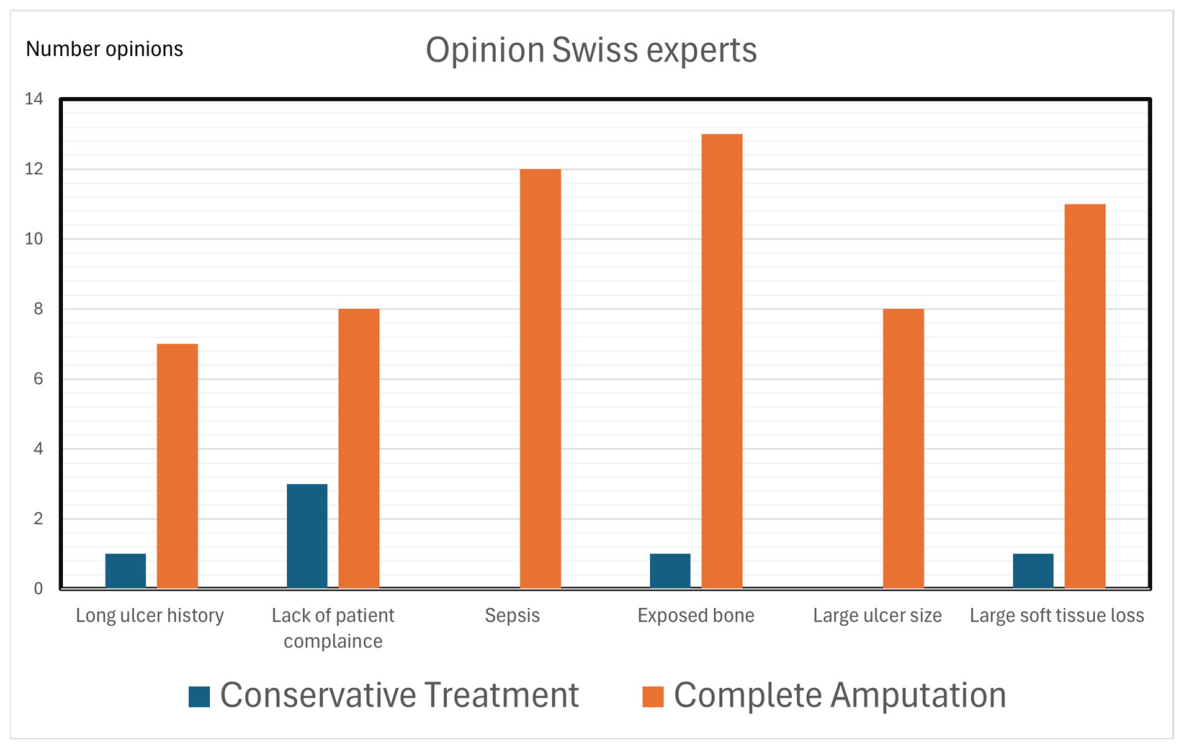
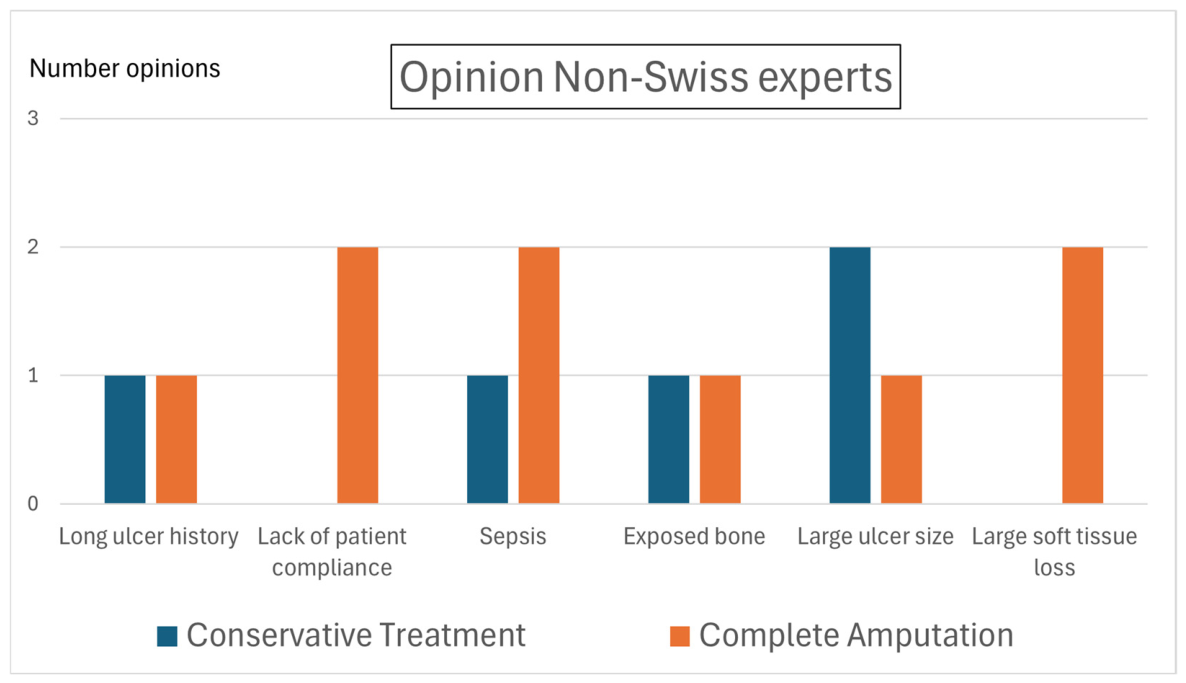
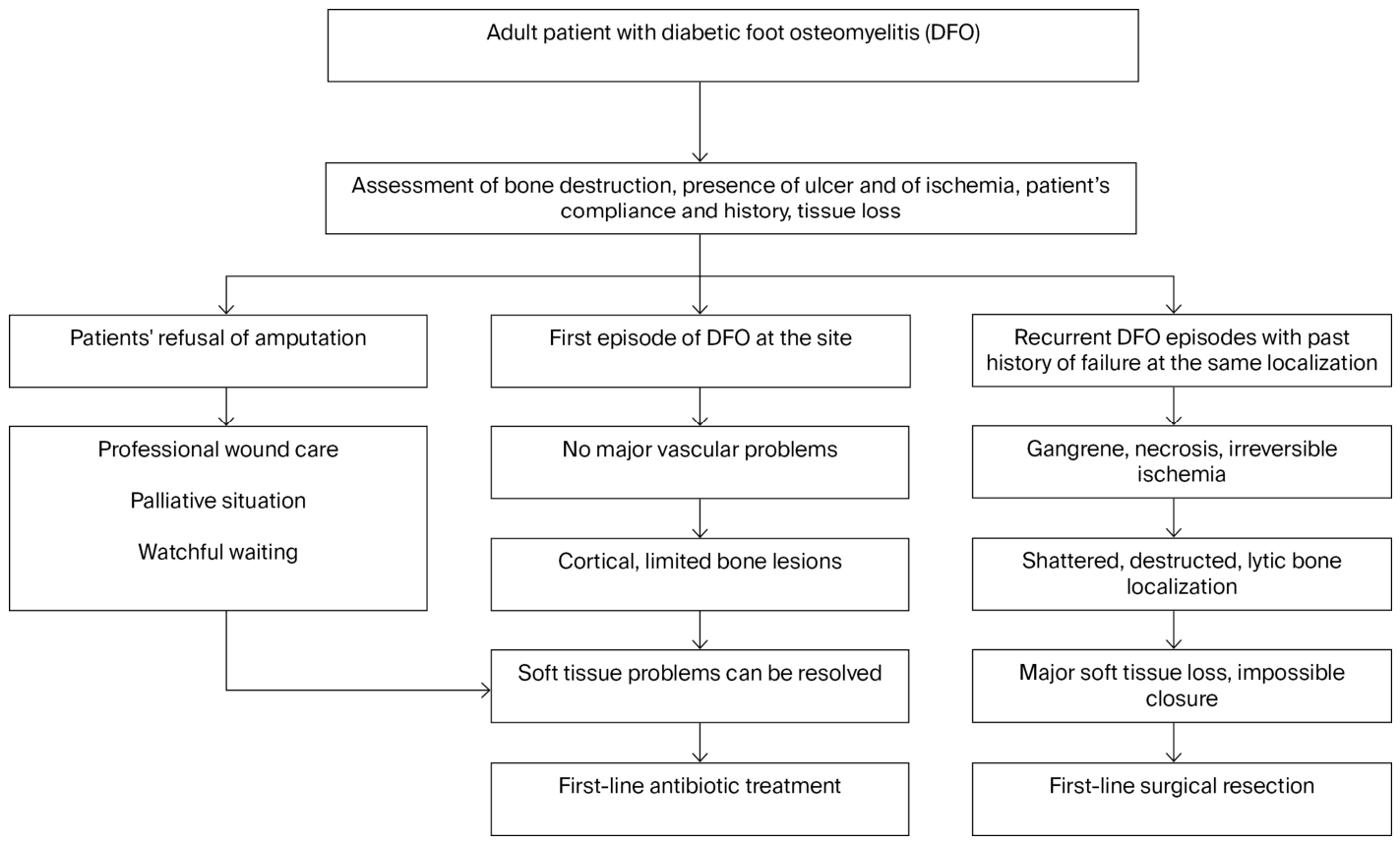
2.3. Summary of the External Experts’ Opinions, Including Figures
2.4. Patients’ Wishes
2.5. Factors in Internist’s Decision
2.6. Surgical Factors in Decision
2.7. Presence of Exposed Bone
2.8. Other Aspects of the Decision
3. Discussion
4. Materials and Methods
4.1. Setting
4.2. Literature Review
4.3. Questionnaires
4.4. Statistical Analyses
Supplementary Materials
Author Contributions
Funding
Institutional Review Board Statement
Informed Consent Statement
Data Availability Statement
Acknowledgments
Conflicts of Interest
Abbreviations
| DFO | Diabetic foot osteomyelitis. |
References
- Lipsky, B.A.; Berendt, A.R.; Cornia, P.B.; Pile, J.C.; Peters, E.J.G.; Armstrong, D.A.; Deery, H.G.; Embil, J.M.; Joseph, W.S.; Karchmer, A.W.; et al. 2012 Infectious Diseases Society of America clinical practice guideline for the diagnosis and treatment of diabetic foot infections. Clin. Infect. Dis. 2012, 54, e132–e173. [Google Scholar] [CrossRef] [Scilit]
- Lavery, L.A.; Peters, E.J.; Armstrong, D.G.; Wendel, C.S.; Murdoch, D.P.; Lipsky, B.A. Risk factors for developing osteomyelitis in patients with diabetic foot wounds. Diabetes Res. Clin. Pract. 2009, 83, 347–352. [Google Scholar] [CrossRef] [Scilit] [PubMed]
- Truong, D.H.; Bedimo, R.; Malone, M.; Wukich, D.K.; Öz, O.; Killeen, A.L.; Lavery, L.A. Meta-Analysis: Outcomes of Surgical and Medical Management of Diabetic Foot Osteomyelitis. Open Forum Infect. Dis. 2022, 9, ofac407. [Google Scholar] [CrossRef] [Scilit] [PubMed]
- Cortes-Penfield, N.W.; Armstrong, D.G.; Brennan, M.B.; Fayfman, M.; Ryder, J.H.; Tan, T.W.; Schechter, M.C. Evaluation and Management of Diabetes-related Foot Infections. Clin. Infect. Dis. 2023, 77, e1–e13. [Google Scholar] [CrossRef] [Scilit] [PubMed]
- Aragón-Sánchez, J.; Lipsky, B.A. Modern management of diabetic foot osteomyelitis. The when, how and why of conservative approaches. Expert Rev. Anti-Infect. Ther. 2018, 16, 35–50. [Google Scholar] [CrossRef] [Scilit] [PubMed]
- Senneville, E.; Robineau, O. Treatment options for diabetic foot osteomyelitis. Expert Opin. Pharmacother. 2017, 18, 759–765. [Google Scholar] [CrossRef] [Scilit] [PubMed]
- Zhou, S.; Schmidt, B.M.; Henig, O.; Kaye, K.S. Deferring Amputation in Diabetic Foot Osteomyelitis: Doing More Harm Than Good? Open Forum Infect. Dis. 2021, 8, ofab184. [Google Scholar] [CrossRef] [Scilit] [PubMed]
- Tardáguila-García, A.; Sanz-Corbalán, I.; García-Alamino, J.M.; Ahluwalia, R.; Uccioli, L.; Lázaro-Martínez, J.L. Medical Versus Surgical Treatment for the Management of Diabetic Foot Osteomyelitis: A Systematic Review. J. Clin. Med. 2021, 10, 1237. [Google Scholar] [CrossRef] [Scilit] [PubMed]
- Miller, W.; Berg, C.; Wilson, M.L.; Heard, S.; Knepper, B.; Young, H. Risk Factors for Below-the-Knee Amputation in Diabetic Foot Osteomyelitis After Minor Amputation. J. Am. Podiatr. Med. Assoc. 2019, 109, 91–97. [Google Scholar] [CrossRef] [Scilit] [PubMed]
- Lavery, L.A.; Reyes, M.C.; Najafi, B.; Coye, T.L.; Chung, J.; Siah, M.C.; Tarricone, A.N. The infected diabetic foot: Incidence and risk factors for dehiscence after surgery for diabetic foot infections. Wound Repair Regen. 2025, 33, e13235. [Google Scholar] [CrossRef] [Scilit] [PubMed]
- Senneville, É.; Albalawi, Z.; van Asten, S.A.; Abbas, Z.G.; Allison, G.; Aragón-Sánchez, J.; Embil, J.M.; Lavery, L.A.; Alhasan, M.; Öz, O.; et al. IWGDF/IDSA guidelines on the diagnosis and treatment of diabetes-related foot infections (IWGDF/IDSA 2023). Clin. Infect. Dis. 2024, 40, ciad527. [Google Scholar] [CrossRef] [Scilit] [PubMed]
- Saltoğlu, N.; Sürme, S.; Ezιrmιk, E.; Kadanalι, A.; Kurt, A.F.; Özdemir, M.Ş.; Ak, O.; Altay, F.A.; Acar, A.; Çakar, Z.S.; et al. The Effects of Antimicrobial Resistance and the Compatibility of Initial Antibiotic Treatment on Clinical Outcomes in Patients with Diabetic Foot Infection. Int. J. Low. Extrem. Wounds 2023, 22, 283–290. [Google Scholar] [CrossRef] [Scilit] [PubMed]
- Soldevila-Boixader, L.; Murillo, O.; Waibel, F.W.A.; Huber, T.; Schöni, M.; Lalji, R.; Uçkay, I. The Epidemiology of Antibiotic-Related Adverse Events in the Treatment of Diabetic Foot Infections: A Narrative Review of the Literature. Antibiotics 2023, 12, 774. [Google Scholar] [CrossRef] [Scilit] [PubMed]
- Tardáguila-García, A.; Sanz-Corbalán, I.; Molines-Barroso, R.J.; Álvaro-Afonso, F.J.; García-Álvarez, Y.; Lázaro-Martínez, J.L. Complications associated with the approach to metatarsal head resection in diabetic foot osteomyelitis. Int. Wound J. 2019, 16, 467–472. [Google Scholar] [CrossRef] [Scilit] [PubMed]
- Efejuku, T.; Chokshi, S.N.; Jupiter, D.; Chen, J.; Panchbhavi, V.K. Retrospective Study Analyzing Risk Factors of Foot and Ankle Amputation in Patients with Diabetes Diagnosed with Osteomyelitis. Foot Ankle Orthop. 2022, 7, 2473011421s00185. [Google Scholar] [CrossRef] [Scilit]
- Faglia, E.; Giacomo Clerici, G.; Caminiti, M.; Curci, V.; Somalvico, F. Influence of osteomyelitis location in the foot of diabetic patients with transtibial amputation. Foot Ankle Int. 2013, 34, 222–227. [Google Scholar] [CrossRef] [Scilit] [PubMed]
- Carmena-Pantoja, M.; Álvaro-Afonso, F.J.; García-Morales, E.; García-Álvarez, Y.; Tardáguila-García, A.; Lázaro-Martínez, J.L. The Influence of Arterial Calcification on Clinical Outcomes in Patients with Diabetic Foot Ulcer Complicated by Osteomyelitis Treated by Surgery. Int. J. Low. Extrem. Wounds 2023, 22, 480–488. [Google Scholar] [CrossRef] [Scilit] [PubMed]
- Zeun, P.; Gooday, C.; Nunney, I.; Dhatariya, K. Predictors of Outcomes in Diabetic Foot Osteomyelitis Treated Initially with Conservative (Nonsurgical) Medical Management: A Retrospective Study. Int. J. Low. Extrem. Wounds 2016, 15, 19–25. [Google Scholar] [CrossRef] [Scilit] [PubMed]
- Mauler, F.; Wanivenhaus, F.; Böni, T.; Berli, M.C. Nonsurgical Treatment of Osteomyelitis of the Hallux Sesamoids: A Case Series and Literature Review. J. Foot Ankle Surg. 2017, 56, 666–669. [Google Scholar] [CrossRef] [Scilit] [PubMed]
- Aragón-Sánchez, J.; Lázaro-Martínez, J.L.; Alvaro-Afonso, F.J.; Molinés-Barroso, R. Conservative Surgery of Diabetic Forefoot Osteomyelitis: How Can I Operate on This Patient Without Amputation? Int. J. Low. Extrem. Wounds 2015, 14, 108–131. [Google Scholar] [PubMed]
- Allahabadi, S.; Haroun, K.B.; Musher, D.M.; Lipsky, B.A.; Barshes, N.R. Consensus on surgical aspects of managing osteomyelitis in the diabetic foot. Diabet. Foot Ankle 2016, 7, 30079. [Google Scholar] [CrossRef] [Scilit] [PubMed]
- Tardáguila-García, A.; García-Álvarez, Y.; García-Morales, E.; López-Moral, M.; Sanz-Corbalán, I.; Lázaro-Martínez, J.L. Long-Term Complications after Surgical or Medical Treatment of Predominantly Forefoot Diabetic Foot Osteomyelitis: 1 Year Follow Up. J. Clin. Med. 2021, 10, 1943. [Google Scholar] [CrossRef] [Scilit] [PubMed]
- Zingg, M.; Lacraz, A.; Robert-Ebadi, H.; Kressmann, B.; Glauser, F.; Waibel, F.W.A.; Berli, M.C.; Uçkay, I. Transcutaneous Oxygen Pressure Values Often Fail to Predict Stump Failures after Foot or Limb Amputation in Chronically Ischemic Patients. Clin. Surg. 2019, 4, 2366. [Google Scholar]
- Tone, A.; Nguyen, S.; Devemy, F.; Topolinski, H.; Valette, M.; Cazaubiel, M.; Fayard, A.; Beltrand, É.; Lemaire, C.; Senneville, É. Six-week versus twelve-week antibiotic therapy for nonsurgically treated diabetic foot osteomyelitis: A multicenter open-label controlled randomized study. Diabetes Care 2015, 38, 302–307. [Google Scholar] [CrossRef] [Scilit] [PubMed]
- Crisologo, P.A.; Malone, M.; La Fontaine, J.; Öz, O.; Bhavan, K.; Nichols, A.; Lavery, L.A. Are Surrogate Markers for Diabetic Foot Osteomyelitis Remission Reliable? J. Am. Podiatr. Med. Assoc. 2021, 111, 20147. [Google Scholar] [CrossRef] [Scilit] [PubMed]
- Lipsky, B.A. Treating diabetic foot osteomyelitis primarily with surgery or antibiotics: Have we answered the question? Diabetes Care 2014, 37, 593–595. [Google Scholar] [CrossRef] [Scilit] [PubMed]
- Lázaro-Martínez, J.L.; García-Álvarez, Y.; Tardáguila-García, A.; García-Morales, E. Optimal management of diabetic foot osteomyelitis: Challenges and solutions. Diabetes Metab. Syndr. Obes. 2019, 12, 947–959. [Google Scholar] [CrossRef] [Scilit] [PubMed]
- Hassanin, A.; Feeney, E.; Varman, R.; Kellegher, E.; Gahan, T.; O’Donoghue, A.; Dowdall, J.; Hurley, H.; Barry, M.C.; Elmallah, A. Predictors of Successful Antibiotic Treatment of Osteomyelitis in Diabetic Forefoot Infection. Acta Diabetol. 2025, 62, 661–670. [Google Scholar] [CrossRef] [Scilit] [PubMed]
- Kmari-El-Ghazouany, S.; Tardáguila-García, A.; López-Moral, M.; García-Madrid, M.; García-Álvarez, Y.; Lázaro-Martínez, J.L. Comparative Analysis of Bone Resection Versus Bone Curettage in Diabetic Foot Osteomyelitis. Int. J. Low. Extrem. Wounds 2023, 24, 143–148. [Google Scholar] [CrossRef] [Scilit] [PubMed]
- Moosa, S.R.; Allan, A.H.; Younes, A.N.; Bakri, F.G.; Younes, N.A. Percutaneous Partial Bone Excision in the Management of Diabetic Toe Osteomyelitis. Foot Ankle Int. 2023, 44, 836–844. [Google Scholar] [CrossRef] [Scilit] [PubMed]
- Schmidt, B.M.; Keeney-Bonthrone, T.P.; Hawes, A.M.; Karmakar, M.; Frydrych, L.M.; Cinti, S.K.; Pop-Busui, R.; Delano, M.J. Comorbid status in patients with osteomyelitis is associated with long-term incidence of extremity amputation. BMJ Open Diabetes Res. Care 2023, 11, e003611. [Google Scholar] [CrossRef] [Scilit] [PubMed]
- Sanz-Corbalán, I.; Tardáguila-García, A.; García-Álvarez, Y.; López-Moral, M.; Álvaro-Afonso, F.J.; Lázaro-Martínez, J.L. Evaluation of Adherence to the Oral Antibiotic Treatment in Patients with Diabetic Foot Infection. Int. J. Low. Extrem. Wounds 2024, 23, 397–402. [Google Scholar] [CrossRef] [Scilit] [PubMed]
- Riopelle, A.; LeDuc, R.; Wesolowski, M.; Schiff, A.P.; Pinzur, M.S. Risk of Complications with the Total Contact Cast in Diabetic Foot Disorders. Foot Ankle Spec. 2021, 14, 25–31. [Google Scholar] [CrossRef] [Scilit] [PubMed]
- Jing, C.; Ralph, J.E.; Lim, J.; Cathey, J.M.; O’Neill, C.N.; Anastasio, A.T. Novel Treatments for Diabetic Foot Osteomyelitis: A Narrative Review. Microorganisms 2025, 13, 1639. [Google Scholar] [CrossRef] [Scilit] [PubMed]
- Polyzou, E.; Gavatha, M.; Efthymiou, D.; Papageorgiou, D.; Ntalaki, E.; Stavropoulos, N.A.; Akinosoglou, K. Managing Bone Infections Beyond Systemic Antibiotics: A Scoping Review. Pathogens 2026, 15, 201. [Google Scholar] [CrossRef] [Scilit] [PubMed]
- Tai, K.M.; Mooteeram, J.; Metaoy, S.; Pillai, A. Antibiotic-Loaded Hydroxyapatite Ceramic in the Management of Diabetic Foot Osteomyelitis: An Investigation of Factors That Determine Patient Outcomes. BioMed 2025, 5, 11. [Google Scholar] [CrossRef] [Scilit]
- Uddin, A.; Russell, D.A.; Game, F.; Santos, D.; Siddle, H.J. Variation in Systemic Antibiotic Treatment for Diabetic Foot Osteomyelitis in England and Wales: A Multi-Centre Case Review. J. Clin. Med. 2024, 13, 3083. [Google Scholar] [CrossRef] [Scilit] [PubMed]
- Kearney, T.P.; Hunt, N.A.; Lavery, L.A. Safety and effectiveness of flexor tenotomies to heal toe ulcers in persons with diabetes. Diabetes Res. Clin. Pract. 2010, 89, 224–226. [Google Scholar] [CrossRef] [Scilit] [PubMed]
- Reimer, H.; Ketfi, M.; Boulmont, M. Diabetic foot: Is preventive surgery possible? Zentralbl. Chir. 1999, 124, 33–35. [Google Scholar] [PubMed]
- Feldman, V.; Segal, D.; Atzmon, R.; Ron, I.; Nyska, M.; Ohana, N.; Palmanovich, E. Amputation versus Primary Nonoperative Management of Chronic Osteomyelitis Involving a Pedal Digit in Diabetic Patients. J. Am. Podiatr. Med. Assoc. 2021, 111, 19155. [Google Scholar] [CrossRef] [Scilit] [PubMed]
- Lesens, O.; Desbiez, F.; Theïs, C.; Ferry, T.; Bensalem, M.; Laurichesse, H.; Tauveron, I.; Beytout, J.; Aragón-Sánchez, J.; Working Group on Diabetic Osteomyelitis. Staphylococcus aureus-Related Diabetic Osteomyelitis: Medical or Surgical Management? A French and Spanish Retrospective Cohort. Int. J. Low. Extrem. Wounds 2015, 14, 284–290. [Google Scholar] [PubMed]
- Lázaro-Martínez, J.L.; Aragón-Sánchez, J.; García-Morales, E. Antibiotics versus conservative surgery for treating diabetic foot osteomyelitis: A randomized comparative trial. Diabetes Care 2014, 37, 789–795. [Google Scholar] [CrossRef] [Scilit] [PubMed]
- Peter-Riesch, B.; Czock, A.; Uçkay, I.; Interdisciplinary Expert Group on the Diabetic Foot. Swiss interdisciplinary guidance on good practices for acute and complicated diabetic foot syndromes. Swiss. Med. Wkly. 2021, 151, w30045. [Google Scholar] [CrossRef] [Scilit] [PubMed]
- Da Ros, R.; Assaloni, R.; Michelli, A.; Brunato, B.; Miranda, C. Antibiotic and Surgical Treatment of Diabetic Foot Osteomyelitis: The Histopathological Evidence. Antibiotics 2024, 13, 1142. [Google Scholar] [CrossRef] [Scilit] [PubMed]
- Pitocco, D.; Spanu, T.; Di Leo, M.; Vitiello, R.; Rizzi, A.; Tartaglione, L.; Fiori, B.; Caputo, S.; Tinelli, G.; Zaccardi, F.; et al. Diabetic foot infections: A comprehensive overview. Eur. Rev. Med. Pharmacol. Sci. 2019, 23, 26–37. [Google Scholar] [CrossRef] [Scilit] [PubMed]
- Șen, P.; Demirdal, T.; Emir, B. Meta-analysis of risk factors for amputation in diabetic foot infections. Diabetes/Metab. Res. Rev. 2019, 35, e3165. [Google Scholar] [CrossRef] [Scilit] [PubMed]
- Murphy-Lavoie, H.; Ramsey, A.; Nguyen, M.; Vadakekut, E.S. Diabetic Foot Infections. In StatPearls [Internet]; StatPearls Publishing: Treasure Island, FL, USA, 2026. [Google Scholar]
- Lipsky, B.A.; Uçkay, I. Treating Diabetic Foot Osteomyelitis: A Practical State-of-the-Art Update. Medicina 2021, 57, 339. [Google Scholar] [CrossRef] [Scilit] [PubMed]
- Lin, C.; Liu, J.; Sun, H. Risk factors for lower extremity amputation in patients with diabetic foot ulcers: A meta-analysis. PLoS ONE 2020, 15, e0239236. [Google Scholar] [CrossRef] [Scilit] [PubMed]
- Julien, G.; François, M.; Vernet-Garnier, V.; Bajolet, O.; Lebrun, D.; Hentzien, M.; Ohl, X.; Diallo, S.; Bani-Sadr, F. Short duration of post-amputation antibiotic therapy in diabetic foot patients with total resection of osteomyelitis. Médecine Mal. Infect. 2020, 50, 433–435. [Google Scholar] [CrossRef] [Scilit] [PubMed]
- Lee, J.H.; Yoon, J.S.; Lee, H.W.; Won, K.C.; Moon, J.S.; Chung, S.M.; Lee, Y.Y. Risk factors affecting amputation in diabetic foot. Yeungnam. Univ. J. Med. 2020, 37, 314–320. [Google Scholar] [CrossRef] [Scilit] [PubMed]
- Uçkay, I.; Gariani, K.; Pataky, Z.; Lipsky, B.A. Diabetic foot infections: State-of-the-art. Diabetes Obes. Metab. 2014, 16, 305–316. [Google Scholar] [CrossRef] [Scilit] [PubMed]
- Barwell, N.D.; Devers, M.C.; Kennon, B.; Hopkinson, H.E.; McDougall, C.; Young, M.J.; Robertson, H.M.A.; Stang, D.; Dancer, S.J.; Seaton, A.; et al. Diabetic foot infection: Antibiotic therapy and good practice recommendations. Int. J. Clin. Pract. 2017, 71, 10. [Google Scholar] [CrossRef] [Scilit] [PubMed]
- Chastain, C.A.; Klopfenstein, N.; Serezani, C.H.; Aronoff, D.M. A Clinical Review of Diabetic Foot Infections. Clin. Podiatr. Med. Surg. 2019, 36, 381–395. [Google Scholar] [CrossRef] [Scilit] [PubMed]
- Aicale, R.; Cipollaro, L.; Esposito, S.; Maffulli, N. An evidence based narrative review on treatment of diabetic foot osteomyelitis. Surgeon 2020, 18, 311–320. [Google Scholar] [CrossRef] [Scilit] [PubMed]
- Berendt, A.R.; Peters, E.J.; Bakker, K.; Embil, J.M.; Eneroth, M.; Hinchliffe, R.J.; Jeffcoate, W.J.; Lipsky, B.A.; Senneville, E.; The, J.; et al. Diabetic foot osteomyelitis: A progress report on diagnosis and a systematic review of treatment. Diabetes/Metab. Res. Rev. 2008, 24, S145–S161. [Google Scholar] [CrossRef] [Scilit] [PubMed]
- van Asten, S.A.V.; Mithani, M.; Peters, E.J.G.; La Fontaine, J.; Kim, P.J.; Lavery, L.A. Complications during the treatment of diabetic foot osteomyelitis. Diabetes Res. Clin. Pract. 2018, 135, 58–64. [Google Scholar] [CrossRef] [Scilit] [PubMed]
- Lipsky, B.A.; Berendt, A.R.; Deery, H.G.; Embil, J.M.; Joseph, W.S.; Karchmer, A.W.; LeFrock, J.L.; Lew, D.P.; Mader, J.T.; Norden, C.; et al. Diagnosis and treatment of diabetic foot infections. Clin. Infect. Dis. 2004, 39, 885–910. [Google Scholar] [CrossRef] [Scilit] [PubMed]
- Ahluwalia, R.; Lázaro-Martínez, J.L.; Reichert, I.; Maffulli, N. Advances in pharmacotherapy for diabetic foot osteomyelitis. Expert Opin. Pharmacother. 2021, 22, 2281–2291. [Google Scholar] [CrossRef] [Scilit] [PubMed]
- Ertuğrul, B.; Uçkay, I.; Schöni, M.; Peter-Riesch, B.; Lipsky, B.A. Management of diabetic foot infections in the light of recent literature and new international guidelines. Expert Rev. Anti-Infect. Ther. 2020, 18, 293–305. [Google Scholar] [CrossRef] [Scilit] [PubMed]
- Ammar, A.S.; Khalid, R.; Malik, U.; Zeb, M.; Abbas, H.M.; Khattak, S.B. Predictors of lower limb amputations in patients with diabetic foot ulcers presenting to a tertiary care hospital of Pakistan. J. Pak. Med. Assoc. 2021, 71, 2163–2166. [Google Scholar] [CrossRef] [Scilit] [PubMed]
- Zhang, J.; Chen, D.; Li, X.; Ding, M.; Xu, J.; Wang, M.; Chang, B. The association between estimated glomerular filtration rate and prognosis in patients with diabetic foot osteomyelitis. Int. Wound J. 2022, 19, 1650–1657. [Google Scholar] [CrossRef] [Scilit] [PubMed]
- Eckardt, A.; Kraus, O.; Küstner, E.; Neufang, A.; Schmiedt, W.; Meurer, A.; Schöllner, C.; Schadmand-Fischer, S. Die interdisziplinäre Therapie des diabetischen Fusssyndroms [Interdisciplinary treatment of diabetic foot syndrome]. Orthopäde 2003, 32, 190–198. [Google Scholar] [PubMed]
- Kraus, O.; Neufang, A.; Eckardt, A.; Küstner, E.; Beyer, J.; Kann, P. Interdisziplinäre Diagnostik und Therapie des ischämisch-osteomyelitischen diabetischen Fusssyndroms [Interdisciplinary diagnosis and therapy of ischemic-osteomyelitic diabetic foot syndrome]. Med. Klein. 2002, 97, 244–255. [Google Scholar]
- Thole, H.; Lelgemann, M.; Ollenschläger, G.; Kopp, I. Nationale VersorgungsLeitlinien. Typ-2-Diabetes. Fußkomplikationen, Kurzfassung, 2008. Available online: https://www.leitlinien.de/themen/diabetes/archiv/pdf/diabetes-fusskomplikationen/dm2-fuss-report-1-2.pdf (accessed on 7 July 2026).
- Uçkay, I.; Aragón-Sánchez, J.; Lew, D.; Lipsky, B.A. Diabetic foot infections: What have we learned in the last 30 years? Int. J. Infect. Dis. 2015, 40, 81–91. [Google Scholar] [CrossRef] [Scilit] [PubMed]
- Pittet, D.; Wyssa, B.; Herter-Clavel, C.; Kursteiner, K.; Vaucher, J.; Lew, P.D. Outcome of diabetic foot infections treated conservatively: A retrospective cohort study with long-term follow-up. Arch. Intern. Med. 1999, 159, 851–856. [Google Scholar] [PubMed]
- Shank, C.F.; Feibel, J.B. Osteomyelitis in the diabetic foot: Diagnosis and management. Foot Ankle Clin. 2006, 11, 775–789. [Google Scholar] [CrossRef] [Scilit] [PubMed]
- Game, F.L. Osteomyelitis in the diabetic foot: Diagnosis and management. Med. Clin. N. Am. 2013, 97, 947–956. [Google Scholar] [CrossRef] [Scilit] [PubMed]
- Henke, P.K.; Blackburn, S.A.; Wainess, R.W.; Cowan, J.; Terando, A.; Proctor, M.; Wakefield, T.W.; Upchurch, G.R., Jr.; Stanley, J.C.; Greenfield, L.J. Osteomyelitis of the foot and toe in adults is a surgical disease: Conservative management worsens lower extremity salvage. Ann. Surg. 2005, 241, 885–892. [Google Scholar] [PubMed]
- Game, F.L.; Jeffcoate, W.J. Primarily non-surgical management of osteomyelitis of the foot in diabetes. Diabetologia 2008, 51, 962–967. [Google Scholar] [CrossRef] [Scilit] [PubMed]
- Tan, J.S.; Friedman, N.M.; Hazelton-Miller, C.; Flanagan, J.P.; File, T.M., Jr. Can Aggressive Treatment of Diabetic Foot Infections Reduce the Need for Above-Ankle Amputation? Clin. Infect. Dis. 1996, 23, 286–291. [Google Scholar] [CrossRef] [Scilit] [PubMed]
- Murdoch, D.P.; Armstrong, D.G.; Dacus, J.B.; Laughlin, T.J.; Morgan, C.B.; Lavery, L.A. The natural history of great toe amputations. J. Foot Ankle Surg. 1997, 36, 204–208. [Google Scholar] [CrossRef] [Scilit] [PubMed]
- Wukich, D.K.; Hobizal, K.B.; Brooks, M.M. Severity of diabetic foot infection and rate of limb salvage. Foot Ankle Int. 2013, 34, 351–358. [Google Scholar] [CrossRef] [Scilit] [PubMed]
- Sagray, B.A.; Malhotra, S.; Steinberg, J.S. Current therapies for diabetic foot infections and osteomyelitis. Clin. Podiatr. Med. Surg. 2014, 31, 57–70. [Google Scholar] [CrossRef] [Scilit] [PubMed]
- Boulton, A.J.M.; Armstrong, D.G.; Hardman, M.J.; Malone, M.; Embil, J.M.; Attinger, C.E.; Lipsky, B.A.; Aragón-Sánchez, J.; Li, H.K.; Schultz, G.; et al. Diagnosis and Management of Diabetic Foot Infections; American Diabetes Association: Arlington, VA, USA, 2020. [Google Scholar]
- Faglia, E.; Clerici, G.; Caminiti, M.; Quarantiello, A.; Gino, M.; Morabito, A. The role of early surgical debridement and revascularization in patients with diabetes and deep foot space abscess: Retrospective review of 106 patients with diabetes. J. Foot Ankle Surg. 2006, 45, 220–226. [Google Scholar] [CrossRef] [Scilit] [PubMed]
- Noor, S.; Khan, R.U.; Ahmad, J. Understanding Diabetic Foot Infection and its Management. Diabetol. Metab. Syndr. 2017, 11, 149–156. [Google Scholar] [CrossRef] [Scilit] [PubMed]
- Wukich, D.K.; Hobizal, K.B.; Sambenedetto, T.L.; Kirby, K.; Rosario, B.L. Outcomes of Osteomyelitis in Patients Hospitalized with Diabetic Foot Infections. Foot Ankle Int. 2016, 37, 1285–1291. [Google Scholar] [CrossRef] [Scilit] [PubMed]
- Barshes, N.R.; Mindru, C.; Ashong, C.; Rodriguez-Barradas, M.; Trautner, B.W. Treatment Failure and Leg Amputation Among Patients with Foot Osteomyelitis. Int. J. Low. Extrem. Wounds 2016, 15, 303–312. [Google Scholar] [CrossRef] [Scilit] [PubMed]
- Wang, L.; Li, Q.; Chen, X.; Wang, Z. Clinical characteristics and risk factors of lower extremity amputation in patients with diabetic foot. Pak. J. Med. Sci. 2022, 38, 2253–2258. [Google Scholar] [CrossRef] [Scilit] [PubMed]
- Yapıcı, O.; Berk, H.; Öztoprak, N.; Seyman, D.; Tahmaz, A.; Merdin, A. Can Ratio of Neutrophil-to-Lymphocyte Count and Erythrocyte Sedimentation Rate in Diabetic Foot Infection Predict Osteomyelitis and/or Amputation? Hematol. Rep. 2017, 9, 6981. [Google Scholar] [CrossRef] [Scilit] [PubMed]
- Waibel, F.W.A.; Schöni, M.; Kronberger, L.; Flury, A.; Berli, M.C.; Lipsky, B.A.; Uçkay, I.; Jud, L. Treatment Failures in Diabetic Foot Osteomyelitis Associated with Concomitant Charcot Arthropathy: The Role of Underlying Arteriopathy. Int. J. Infect. Dis. 2022, 114, 15–20. [Google Scholar] [CrossRef] [Scilit] [PubMed]
- Ulcay, A.; Karakaş, A.; Mutluoğlu, M.; Uzun, G.; Turhan, V.; Ay, H. Antibiotherapy with and without bone debridement in diabetic foot osteomyelitis: A retrospective cohort study. Pak. J. Med. Sci. 2014, 30, 28–31. [Google Scholar] [CrossRef] [Scilit] [PubMed]
- Bamberger, D.M.; Daus, G.P.; Gerding, D.N. Osteomyelitis in the feet of diabetic patients. Long-term results, prognostic factors, and the role of antimicrobial and surgical therapy. Am. J. Med. 1987, 83, 653–660. [Google Scholar] [PubMed]
- Barshes, N.R.; Clark, N.J.; Bidare, D.; Dudenhoeffer, J.H.; Mindru, C.; Rodriguez-Barradas, M.C. Polymicrobial Foot Infection Patterns Are Common and Associated with Treatment Failure. Open Forum Infect. Dis. 2022, 9, ofac475. [Google Scholar] [CrossRef] [Scilit] [PubMed]
- Lázaro-Martínez, J.L.; Tardáguila-García, A.; García-Klepzig, J.L. Diagnostic and therapeutic update on diabetic foot osteomyelitis. Endocrinol. Diabetes Nutr. 2017, 64, 100–108. [Google Scholar] [CrossRef] [Scilit]
- Acharya, S.; Soliman, M.; Egun, A.; Rajbhandari, S.M. Conservative management of diabetic foot osteomyelitis. Diabetes Res. Clin. Pract. 2013, 101, e18–e20. [Google Scholar] [CrossRef] [Scilit] [PubMed]
- Carro, G.V.; de Jesus, F.M.; Ricci, A. Diabetic Foot Osteomyelitis: Is it all the Same? Int. J. Low. Extrem. Wounds 2025, 24, 879–886. [Google Scholar] [CrossRef] [Scilit] [PubMed]
- Aragón-Sánchez, J.; Lázaro-Martínez, J.L. Impact of perioperative glycaemia and glycated haemoglobin on the outcomes of the surgical treatment of diabetic foot osteomyelitis. Diabetes Res. Clin. Pract. 2011, 94, e83–e85. [Google Scholar] [CrossRef] [Scilit] [PubMed]
- Aragón-Sánchez, J. Clinical-pathological characterization of diabetic foot infections: Grading the severity of osteomyelitis. Int. J. Low. Extrem. Wounds 2012, 11, 107–112. [Google Scholar] [PubMed]
- Aragón-Sánchez, J.; Cabrera-Galván, J.J.; Quintana-Marrero, Y.; Hernández-Herrero, M.J.; Lázaro-Martínez, J.L.; García-Morales, E.; Beneit-Montesinos, J.V.; Armstrong, D.G. Outcomes of surgical treatment of diabetic foot osteomyelitis: A series of 185 patients with histopathological confirmation of bone involvement. Diabetologia 2008, 51, 1962–1970. [Google Scholar] [CrossRef] [Scilit] [PubMed]
- Winkler, E.; Schöni, M.; Krähenbühl, N.; Uçkay, I.; Waibel, F.W.A. Foot Osteomyelitis Location and Rates of Primary or Secondary Major Amputations in Patients with Diabetes. Foot Ankle Int. 2022, 43, 957–967. [Google Scholar] [CrossRef] [Scilit] [PubMed]
- Aragón-Sánchez, J.; Lázaro-Martínez, J.L.; Cecilia-Matilla, A.; Quintana-Marrero, Y.; Hernández-Herrero, M.J. Limb salvage for spreading midfoot osteomyelitis following diabetic foot surgery. J. Tissue Viability 2012, 21, 64–70. [Google Scholar] [CrossRef] [Scilit] [PubMed]
- Barberán, J.; Granizo, J.J.; Aguilar, L.; Alguacil, R.; Sainz, F.; Menéndez, M.A.; Giménez, M.J.; Martínez, D.; Prieto, J. Predictive model of short-term amputation during hospitalization of patients due to acute diabetic foot infections. Enferm. Infecc. Microbiol. Clin. 2010, 28, 680–684. [Google Scholar] [CrossRef] [Scilit] [PubMed]
- Tardáguila-García, A.; García-Álvarez, Y.; Sanz-Corbalán, I.; Álvaro-Afonso, F.J.; Molines-Barroso, R.J.; Lázaro-Martínez, J.L. Role of inflammatory markers in the healing time of diabetic foot osteomyelitis treated by surgery or antibiotics. J. Wound Care 2020, 29, 5–10. [Google Scholar] [CrossRef] [Scilit] [PubMed]
- Gemechu, F.W.; Seemant, F.; Curley, C.A. Diabetic foot infections. Am. Fam. Physician 2013, 88, 177–184. [Google Scholar] [PubMed]
- Hill, S.L.; Holtzman, G.I.; Buse, R. The effects of peripheral vascular disease with osteomyelitis in the diabetic foot. Am. J. Surg. 1999, 177, 282–286. [Google Scholar] [CrossRef] [Scilit] [PubMed]
- Cuttica, D.J.; Philbin, T.M. Surgery for diabetic foot infections. Foot Ankle Clin. 2010, 15, 465–476. [Google Scholar] [CrossRef] [Scilit] [PubMed]
- Edmonds, M. The treatment of diabetic foot infections: Focus on ertapenem. Vasc. Health Risk Manag. 2009, 5, 949–963. [Google Scholar] [CrossRef] [Scilit] [PubMed]
- Ramanujam, C.L.; Stapleton, J.J.; Zgonis, T. Diabetic Charcot neuroarthropathy of the foot and ankle with osteomyelitis. Clin. Podiatr. Med. Surg. 2014, 31, 487–492. [Google Scholar] [CrossRef] [Scilit] [PubMed]
- Richard, J.L.; Lavigne, J.P.; Got, I.; Hartemann, A.; Malgrange, D.; Tsirtsikolou, D.; Baleydier, A.; Senneville, E. Management of patients hospitalized for diabetic foot infection: Results of the French OPIDIA study. Diabetes Metab. 2011, 37, 208–215. [Google Scholar] [CrossRef] [Scilit] [PubMed]
- Aragón-Sánchez, J.; Lázaro-Martínez, J.L.; Campillo-Vilorio, N.; Quintana-Marrero, Y.; Hernández-Herrero, M.J. Controversies regarding radiological changes and variables predicting amputation in a surgical series of diabetic foot osteomyelitis. Foot Ankle Surg. 2012, 18, 233–236. [Google Scholar] [CrossRef] [Scilit] [PubMed]
- Frykberg, R.G.; Wittmayer, B.; Zgonis, T. Surgical management of diabetic foot infections and osteomyelitis. Clin. Podiatr. Med. Surg. 2007, 24, 469–482. [Google Scholar] [CrossRef] [Scilit] [PubMed]
- Mansoor, Z.; Modaweb, A. Predicting Amputation in Patients with Diabetic Foot Ulcers: A Systematic Review. Cureus 2022, 14, e27245. [Google Scholar] [CrossRef] [Scilit] [PubMed]
- Arias, M.; Hassan-Reshat, S.; Newsholme, W. Retrospective analysis of diabetic foot osteomyelitis management and outcome at a tertiary care hospital in the UK. PLoS ONE 2019, 14, e0216701. [Google Scholar] [CrossRef] [Scilit] [PubMed]
- Gong, H.; Ren, Y.; Li, Z.; Zha, P.; Bista, R.; Li, Y.; Chen, D.; Gao, Y.; Chen, L.; Ran, X.; et al. Clinical characteristics and risk factors of lower extremity amputation in the diabetic inpatients with foot ulcers. Front. Endocrinol. 2023, 14, 1144806. [Google Scholar] [CrossRef] [Scilit] [PubMed]
- Kim, S.Y.; Kim, T.H.; Choi, J.Y.; Kwon, Y.J.; Choi, D.H.; Kim, K.C.; Kim, M.J.; Hwang, H.K.; Lee, K.B. Predictors for Amputation in Patients with Diabetic Foot Wound. Vasc. Spec. Int. 2018, 34, 109–116. [Google Scholar] [CrossRef] [Scilit] [PubMed]
- Primadhi, R.A.; Septrina, R.; Hapsari, P.; Kusumawati, M. Amputation in diabetic foot ulcer: A treatment dilemma. World J. Orthop. 2023, 14, 312–318. [Google Scholar] [CrossRef] [Scilit] [PubMed]
- Aragón-Sánchez, J.; Víquez-Molina, G.; López-Valverde, M.; Aragón-Hernández, J.; Rojas-Bonilla, J.M.; Murillo-Vargas, C. Clinical, microbiological and inflammatory markers of severe diabetic foot infections. Diabet. Med. 2021, 38, e14648. [Google Scholar] [CrossRef] [Scilit] [PubMed]
- Peters, E.J.G.; Lipsky, B.A.; Senneville, É.; Abbas, Z.G.; Aragón-Sánchez, J.; Diggle, M.; Embil, J.M.; Kono, S.; Lavery, L.A.; Malone, M.; et al. Interventions in the management of infection in the foot in diabetes: A systematic review. Diabetes/Metab. Res. Rev. 2020, 36, e3282. [Google Scholar] [CrossRef] [Scilit] [PubMed]
- Armstrong, D.G.; Tan, T.W.; Boulton, A.J.M.; Bus, S.A. Diabetic Foot Ulcers: A Review. JAMA 2023, 330, 62–75. [Google Scholar] [CrossRef] [Scilit] [PubMed]
- Lipsky, B.A.; Senneville, É.; Abbas, Z.G.; Aragón-Sánchez, J.; Diggle, M.; Embil, J.M.; Kono, S.; Lavery, L.A.; Malone, M.; van Asten, S.A.; et al. Guidelines on the diagnosis and treatment of foot infection in persons with diabetes (IWGDF 2019 update). Diabetes/Metab. Res. Rev. 2020, 36, e3280. [Google Scholar] [CrossRef] [Scilit] [PubMed]
- Senneville, E.; Yazdanpanah, Y.; Cazaubiel, M.; Cordonnier, M.; Valette, M.; Beltrand, E.; Khazarjian, A.; Maulin, L.; Alfandari, S.; Caillaux, M.; et al. Rifampicin-ofloxacin oral regimen for the treatment of mild to moderate diabetic foot osteomyelitis. J. Antimicrob. Chemother. 2001, 48, 927–930. [Google Scholar] [CrossRef] [Scilit] [PubMed]
- Valabhji, J.; Oliver, N.; Samarasinghe, D.; Mali, T.; Gibbs, R.G.; Gedroyc, W.M. Conservative management of diabetic forefoot ulceration complicated by underlying osteomyelitis: The benefits of magnetic resonance imaging. Diabet. Med. 2009, 26, 1127–1134. [Google Scholar] [CrossRef] [Scilit] [PubMed]
- Senneville, E.; Lombart, A.; Beltrand, E.; Valette, M.; Legout, L.; Cazaubiel, M.; Yazdanpanah, Y.; Fontaine, P. Outcome of diabetic foot osteomyelitis treated nonsurgically: A retrospective cohort study. Diabetes Care 2008, 31, 637–642. [Google Scholar] [PubMed]
- Nguyen, S.; Wallard, P.; Robineau, O.; Topolinski, H.; Beltrand, E.; Benkanoun, A.; Baranski, D.; Descamps, D.; Senneville, E. Conservative surgical treatment for metatarsal osteomyelitis in diabetic foot: Experience of two French centres. Diabetes/Metab. Res. Rev. 2022, 38, e3534. [Google Scholar] [CrossRef] [Scilit] [PubMed]
- Aragón-Sánchez, J.; Víquez-Molina, G.; López-Valverde, M.E.; Rojas-Bonilla, J.M. Severe diabetic foot infections without systemic inflammatory response syndrome: Prospective validation of a new category. Wound Repair Regen. 2022, 30, 553–559. [Google Scholar] [CrossRef] [Scilit] [PubMed]
- Embil, J.M.; Rose, G.; Trepman, E.; Math, M.C.; Duerksen, F.; Simonsen, J.N.; Nicolle, L.E. Oral antimicrobial therapy for diabetic foot osteomyelitis. Foot Ankle Int. 2006, 27, 771–779. [Google Scholar] [CrossRef] [Scilit] [PubMed]
- Yammine, K.; El-Alam, A.; Assi, C. Outcomes of partial and total calcanectomies for the treatment of diabetic heel ulcers complicated with osteomyelitis. A systematic review and meta-analysis. Foot Ankle Surg. 2021, 27, 598–605. [Google Scholar] [CrossRef] [Scilit] [PubMed]
- Al Wahbi, A. Operative versus non-operative treatment in diabetic dry toe gangrene. Diabetol. Metab. Syndr. 2019, 13, 959–963. [Google Scholar] [CrossRef] [Scilit] [PubMed]
- Lindbloom, B.J.; James, E.R.; McGarvey, W.C. Osteomyelitis of the foot and ankle: Diagnosis, epidemiology, and treatment. Foot Ankle Clin. 2014, 19, 569–588. [Google Scholar] [PubMed]
- Mutluoğlu, M.; Lipsky, B.A. Diabetic foot osteomyelitis. Can. Med. Assoc. J. 2016, 188, e535. [Google Scholar] [CrossRef] [Scilit] [PubMed]
- Aragón-Sánchez, J. Seminar review: A review of the basis of surgical treatment of diabetic foot infections. Int. J. Low. Extrem. Wounds 2011, 10, 33–65. [Google Scholar] [CrossRef] [Scilit] [PubMed]
- Ashong, C.N.; Raheem, S.A.; Hunter, A.S.; Mindru, C.; Barshes, N.R. Methicillin-Resistant Staphylococcus aureus in Foot Osteomyelitis. Surg. Infect. 2017, 18, 143–148. [Google Scholar] [CrossRef] [Scilit] [PubMed]
- Aliakbar, A.H.; Alsaadi, M.A.; Barrak, A.A.Z. Evaluation of the Surgical and Pharmacological Treatment of Diabetic Foot Infection: A Retrospective Study. Open Access Maced. J. Med. Sci. 2019, 7, 1499–1504. [Google Scholar] [CrossRef] [Scilit] [PubMed]
- Hinojosa, C.A.; Boyer-Duck, E.; Anaya-Ayala, J.E.; Nunez-Salgado, A.; Laparra-Escareno, H.; Torres-Machorro, A.; Lizola, R. Impact of the bacteriology of diabetic foot ulcers in limb loss. Wound Repair Regen. 2016, 24, 923–927. [Google Scholar] [CrossRef] [Scilit] [PubMed]
- Widatalla, A.H.; Mahadi, S.E.; Shawer, M.A.; Mahmoud, S.M.; Abdelmageed, A.E.; Ahmed, M.E. Diabetic foot infections with osteomyelitis: Efficacy of combined surgical and medical treatment. Diabet. Foot Ankle 2012, 3, 18809. [Google Scholar] [CrossRef] [Scilit] [PubMed]
- Dalla Paola, L.; Carone, A.; Baglioni, M.; Boscarino, G.; Vasilache, L. Extension and grading of osteomyelitis are not related to limb salvage in Charcot neuropathic osteoarthropathy: A cohort prospective study. J. Diabetes Its Complicat. 2016, 30, 608–612. [Google Scholar] [CrossRef] [Scilit] [PubMed]
- Aragón-Sánchez, J. Treatment of diabetic foot osteomyelitis: A surgical critique. Int. J. Low. Extrem. Wounds 2010, 9, 37–59. [Google Scholar] [CrossRef] [Scilit] [PubMed]
- Capobianco, C.M.; Stapleton, J.J.; Zgonis, T. Surgical management of diabetic foot and ankle infections. Foot Ankle Spec. 2010, 3, 223–230. [Google Scholar] [CrossRef] [Scilit] [PubMed]
- Apelqvist, J. Diagnostics and treatment of the diabetic foot. Endocrine 2012, 41, 384–397. [Google Scholar] [CrossRef] [Scilit] [PubMed]
- Eneroth, M.; Larsson, J.; Apelqvist, J. Deep foot infections in patients with diabetes and foot ulcer: An entity with different characteristics, treatments, and prognosis. J. Diabetes Its Complicat. 1999, 13, 254–263. [Google Scholar]
- Hartemann-Heurtier, A.; Senneville, E. Diabetic foot osteomyelitis. Diabetes Metab. 2008, 34, 87–95. [Google Scholar] [CrossRef] [Scilit] [PubMed]
- Ha Van, G.; Siney, H.; Danan, J.P.; Sachon, C.; Grimaldi, A. Treatment of osteomyelitis in the diabetic foot. Contribution of conservative surgery. Diabetes Care 1996, 19, 1257–1260. [Google Scholar] [CrossRef] [Scilit] [PubMed]
- Aragón-Sánchez, J.; Lázaro-Martínez, J.L.; Quintana-Marrero, Y.; Hernández-Herrero, M.J.; García-Morales, E.; Cabrera-Galván, J.J.; Beneit-Montesinos, J.V. Are diabetic foot ulcers complicated by MRSA osteomyelitis associated with worse prognosis? Outcomes of a surgical series. Diabet. Med. 2009, 26, 552–555. [Google Scholar] [CrossRef] [Scilit] [PubMed]
- Jeffcoate, W.J.; Lipsky, B.A. Controversies in diagnosing and managing osteomyelitis of the foot in diabetes. Clin. Infect. Dis. 2004, 39, S115–S122. [Google Scholar] [CrossRef] [Scilit] [PubMed]
- Tice, A.D.; Hoaglund, P.A.; Shoultz, D.A. Outcomes of osteomyelitis among patients treated with outpatient parenteral antimicrobial therapy. Am. J. Med. 2003, 114, 723–728. [Google Scholar] [CrossRef] [Scilit] [PubMed]
- Lipsky, B.A.; Peters, E.J.; Senneville, E.; Berendt, A.R.; Embil, J.M.; Lavery, L.A.; Urbančič-Rovan, V.; Jeffcoate, W.J. Expert opinion on the management of infections in the diabetic foot. Diabetes/Metab. Res. Rev. 2012, 28, 163–178. [Google Scholar] [CrossRef] [Scilit] [PubMed]
- Blanes Mompo, J.I.; Representatives of Spanish Society of Surgeons (ACS); Representatives of Spanish Society of Angiology and Vascular Surgery (SEACV); Representatives of Spanish Society of Emergency Medicine (SEMES); Spanish Internal Medicine Society (SEMI); Representatives of Spanish Society of Critical Care Medicine and Coronary Units (SEMICYUC); Representatives of Spanish Society of Chemotherapy (SEQ). Consensus document on treatment of infections in diabetic foot. Rev. Esp. Quimioter. 2011, 24, 173–270. [Google Scholar]



| 118 Articles | Ischemia | Gangrene, Necrosis | Frail Patient | Sepsis | Soft Tissue | Bone Destruct. | Bone Exposed | Ulcer Size | Past Resection | Infection Hindfoot |
|---|---|---|---|---|---|---|---|---|---|---|
| Conservative | 5 | 3 | 9 | 7 | 6 | 1 | 0 | 1 | 2 | 1 |
| Surgery | 51 | 44 | 36 | 35 | 25 | 21 | 13 | 13 | 10 | 13 |
| Ranking | 1. | 2. | 3. | 4. | 5. | 6. | 8. | 10. | 10. | 12. |
| Proportions | 91% | 94% | 80% | 83% | 81% | 95% | 100% | 93% | 83% | 93% |
Disclaimer/Publisher’s Note: The statements, opinions and data contained in all publications are solely those of the individual author(s) and contributor(s) and not of MDPI and/or the editor(s). MDPI and/or the editor(s) disclaim responsibility for any injury to people or property resulting from any ideas, methods, instructions or products referred to in the content. |
© 2026 by the authors. Licensee MDPI, Basel, Switzerland. This article is an open access article distributed under the terms and conditions of the Creative Commons Attribution (CC BY) license.
Share and Cite
Gloor, I.; Faulhaber, S.; Schöni, M.; Waibel, F.W.A.; Aragón-Sánchez, J.; Lipsky, B.A.; Farshad, M.; Uçkay, I. Rationales for Antibiotic Treatment Versus Direct Surgical Resection in Various Strata of Diabetic Foot Osteomyelitis—Literature Review and Expert Opinions. Antibiotics 2026, 15, 797. https://doi.org/10.3390/antibiotics15080797
Gloor I, Faulhaber S, Schöni M, Waibel FWA, Aragón-Sánchez J, Lipsky BA, Farshad M, Uçkay I. Rationales for Antibiotic Treatment Versus Direct Surgical Resection in Various Strata of Diabetic Foot Osteomyelitis—Literature Review and Expert Opinions. Antibiotics. 2026; 15(8):797. https://doi.org/10.3390/antibiotics15080797
Chicago/Turabian StyleGloor, Isabel, Senta Faulhaber, Madlaina Schöni, Felix W. A. Waibel, Javier Aragón-Sánchez, Benjamin A. Lipsky, Mazda Farshad, and Ilker Uçkay. 2026. "Rationales for Antibiotic Treatment Versus Direct Surgical Resection in Various Strata of Diabetic Foot Osteomyelitis—Literature Review and Expert Opinions" Antibiotics 15, no. 8: 797. https://doi.org/10.3390/antibiotics15080797
APA StyleGloor, I., Faulhaber, S., Schöni, M., Waibel, F. W. A., Aragón-Sánchez, J., Lipsky, B. A., Farshad, M., & Uçkay, I. (2026). Rationales for Antibiotic Treatment Versus Direct Surgical Resection in Various Strata of Diabetic Foot Osteomyelitis—Literature Review and Expert Opinions. Antibiotics, 15(8), 797. https://doi.org/10.3390/antibiotics15080797