Interkingdom Biofilms in Chronic Wounds: The Collaboration of Candida albicans and Staphylococcus aureus Against Conventional Wound Antiseptics in a Wound-like Leucocyte-Rich Human Plasma Biofilm Model (lhBIOM)


Abstract
1. Introduction
2. Results
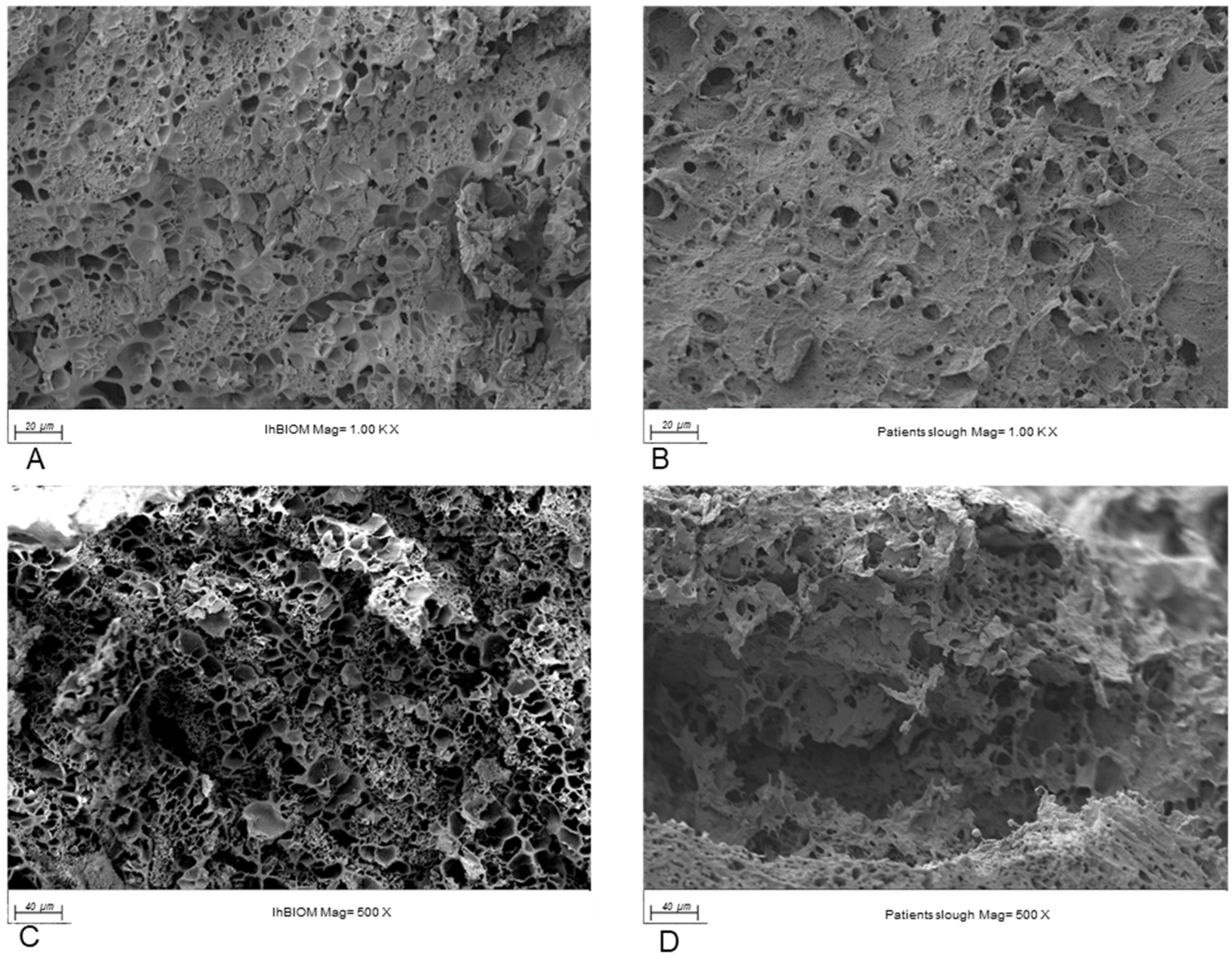
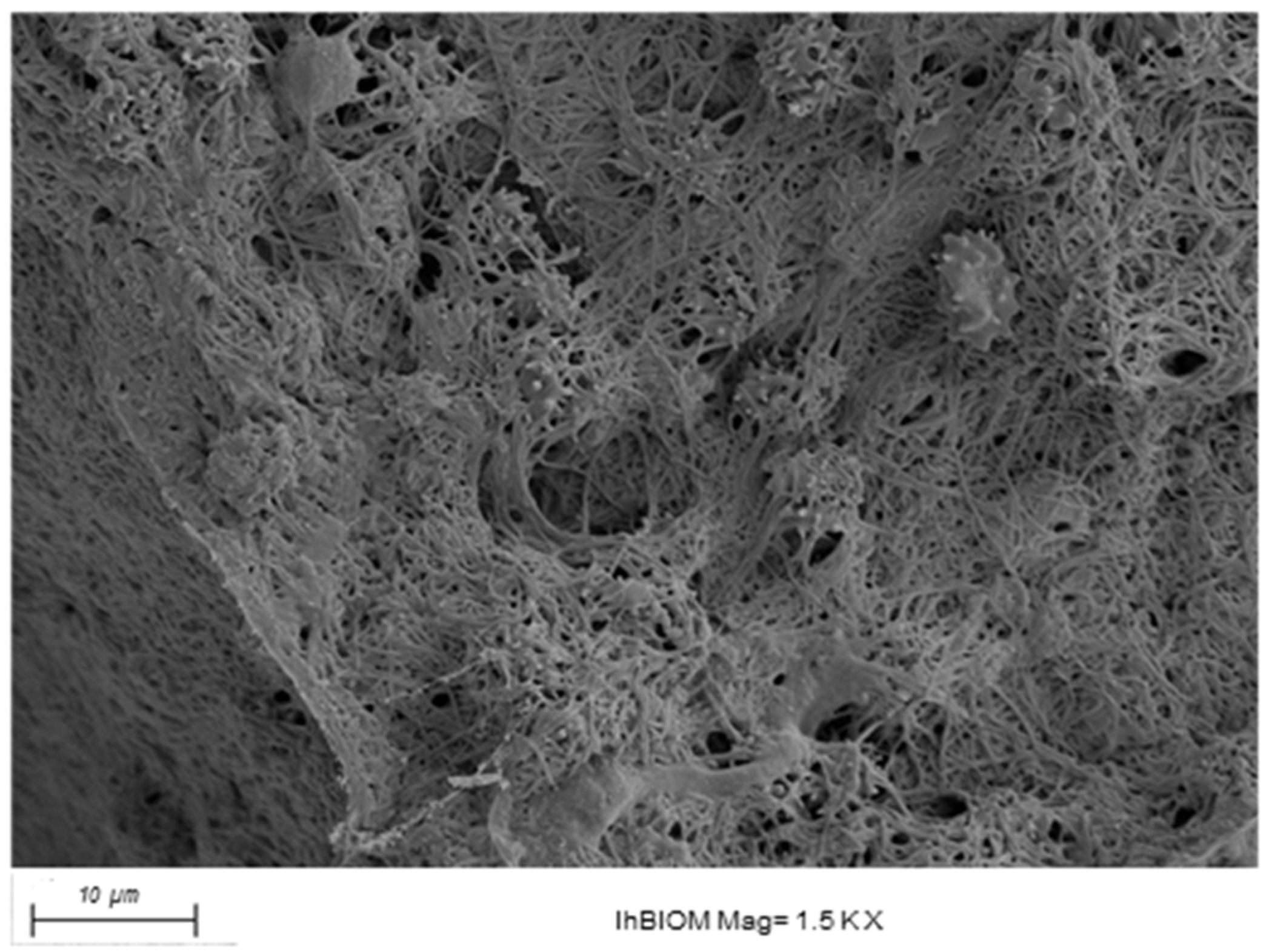
2.1. Comparison of Scanning Electron Microscopy Images from lhBIOM and Patients’ Slough
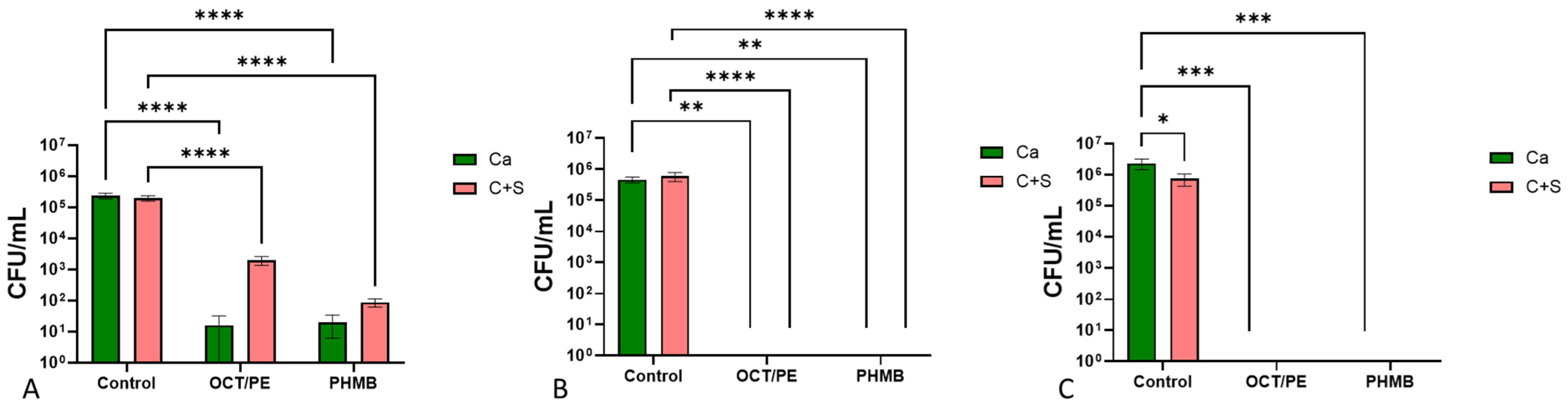
2.2. Evaluation of Antiseptic Efficacy in Mono- and Duo-Species Wound Biofilms
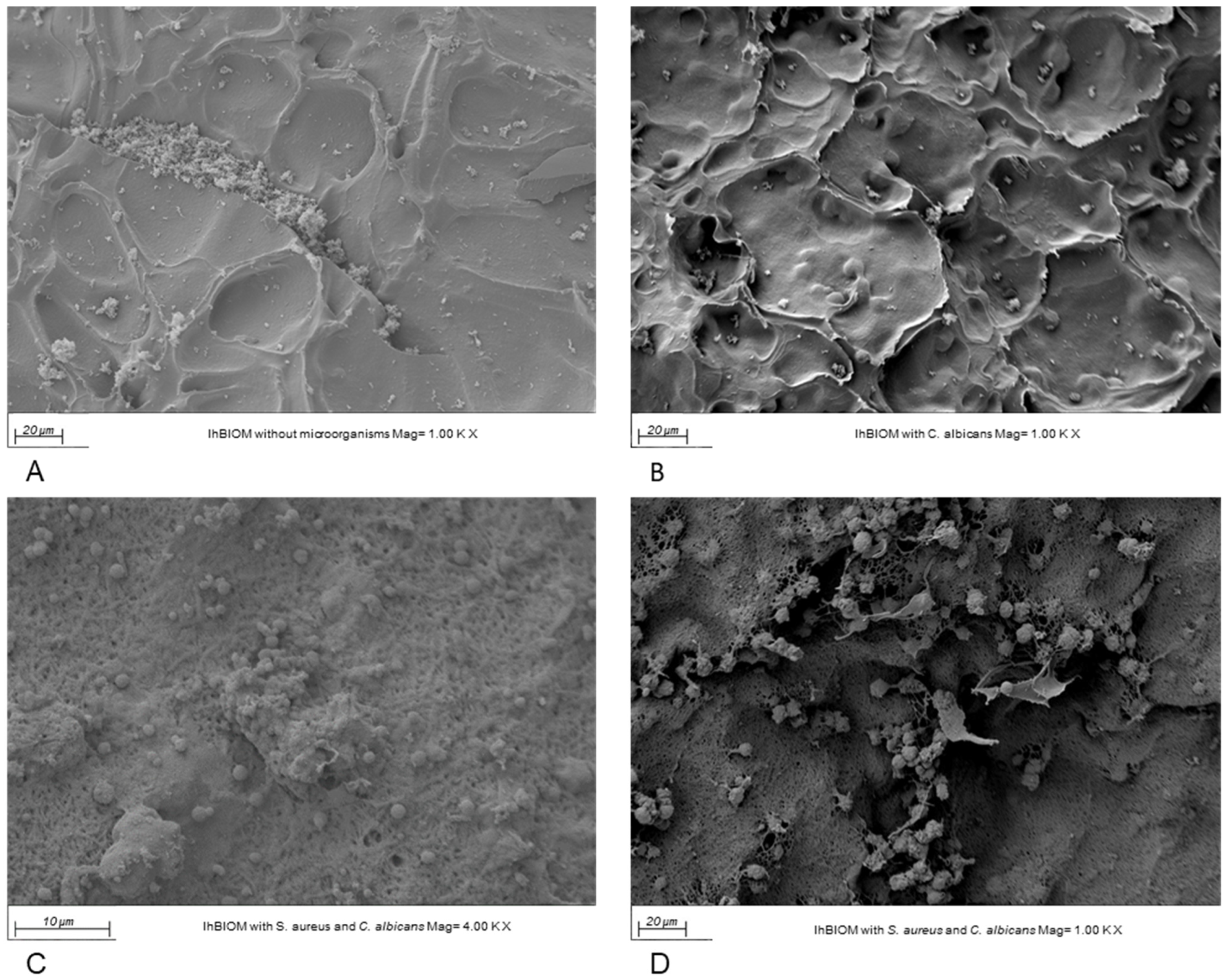
2.3. Confocal Laser-Scanning Microscopy of Interkingdom Biofilms
2.3.1. C. albicans Single-Species Biofilm
2.3.2. S. aureus Single-Species Biofilm
2.3.3. C. albicans and S. aureus Co-Biofilm
3. Discussion
4. Methods
4.1. Preparation of an Interkingdom Leucocyte-Rich Human-Plasma Biofilm Model (lhBIOM)
4.2. Preparation for Scanning Electron Microscopy (SEM)
4.3. Quantitative Suspension Method (QSM)
4.4. Visualization of the Interkingdom Biofilm by Using Confocal Laser-Scanning Microscopy (CLSM)
4.5. Statistical Analysis
5. Conclusions
Author Contributions
Funding
Institutional Review Board Statement
Informed Consent Statement
Data Availability Statement
Acknowledgments
Conflicts of Interest
References
- Dissemond, J.; Bültemann, A.; Gerber, V.; Jäger, B.; Münter, C.; Kröger, K. Definitionen für die Wundbehandlung. Hautarzt 2016, 67, 265–266. [Google Scholar] [CrossRef] [Scilit] [PubMed]
- Weidenhagen, R.; Koeppel, T.A. Chronische Wunden. In Chirurgie Basisweiterbildung; Jauch, K.-W., Mutschler, W., Hoffmann, J., Kanz, K.-G., Eds.; Springer: Berlin/Heidelberg, Germany, 2022; pp. 369–378. ISBN 978-3-662-63365-6. [Google Scholar]
- Hurlow, J.; Blanz, E.; Gaddy, J.A. Clinical investigation of biofilm in non-healing wounds by high resolution microscopy techniques. J. Wound Care 2016, 25, S11–S22. [Google Scholar] [CrossRef] [Scilit] [PubMed]
- Ge, Y.; Wang, Q. Current research on fungi in chronic wounds. Front. Mol. Biosci. 2023, 9, 1057766. [Google Scholar] [CrossRef] [Scilit] [PubMed]
- Liegenfeld, S.C.; Stenzel, S.; Rembe, J.-D.; Dittmer, M.; Ramos, P.; Stuermer, E.K. Pathogenic and Non-Pathogenic Microbes in the Wound Microbiome—How to Flip the Switch. Microbiol. Res. 2025, 16, 39. [Google Scholar] [CrossRef] [Scilit]
- Flemming, H.-C.; Wingender, J. The biofilm matrix. Nat. Rev. Microbiol. 2010, 8, 623–633. [Google Scholar] [CrossRef] [Scilit] [PubMed]
- Flemming, H.-C.; Wingender, J.; Szewzyk, U.; Steinberg, P.; Rice, S.A.; Kjelleberg, S. Biofilms: An emergent form of bacterial life. Nat. Rev. Microbiol. 2016, 14, 563–575. [Google Scholar] [CrossRef] [Scilit] [PubMed]
- Raziyeva, K.; Kim, Y.; Zharkinbekov, Z.; Kassymbek, K.; Jimi, S.; Saparov, A. Immunology of Acute and Chronic Wound Healing. Biomolecules 2021, 11, 700. [Google Scholar] [CrossRef] [Scilit] [PubMed]
- Idrees, M.; Sawant, S.; Karodia, N.; Rahman, A. Staphylococcus aureus Biofilm: Morphology, Genetics, Pathogenesis and Treatment Strategies. Int. J. Environ. Res. Public Health 2021, 18, 7602. [Google Scholar] [CrossRef] [Scilit] [PubMed]
- Sittek, L.-M.; Hunold, J.; Runkel, F.E.; Schlupp, P. Comprehensive analysis of Staphylococcus aureus supernatants in different culture media to mimic chronic wound conditions in vitro. The Microbe 2024, 4, 100161. [Google Scholar] [CrossRef] [Scilit]
- Short, B.; Bakri, A.; Baz, A.; Williams, C.; Brown, J.; Ramage, G. There Is More to Wounds than Bacteria: Fungal Biofilms in Chronic Wounds. Curr. Clin. Microbiol. Rep. 2023, 10, 9–16. [Google Scholar] [CrossRef] [Scilit]
- Allkja, J.; Short, B.; Bilal, Z.; Brown, J.L.; Williams, C.; Ramage, G. Prevalence and Influence of Fungal Biofilm in Wound Infections. In Fungal Biofilms; Springer Series on Biofilms; Ramage, G., Andes, D., Eds.; Springer Nature: Cham, Switzerland, 2025; p. 15. [Google Scholar] [CrossRef] [Scilit]
- Molasy, B.; Wrzosek, M. The wound microbiome in chronic wounds: A biomarker and therapeutic target. J. Appl. Microbiol. 2026, 137, lxag025. [Google Scholar] [CrossRef] [Scilit] [PubMed]
- Kalan, L.; Loesche, M.; Hodkinson, B.P.; Heilmann, K.; Ruthel, G.; Gardner, S.E.; Grice, E.A. Redefining the Chronic-Wound Microbiome: Fungal Communities Are Prevalent, Dynamic, and Associated with Delayed Healing. mBio 2016, 7, e01058-16. [Google Scholar] [CrossRef] [Scilit] [PubMed]
- Gow, N.A.R.; van de Veerdonk, F.L.; Brown, A.J.P.; Netea, M.G. Candida albicans morphogenesis and host defence: Discriminating invasion from colonization. Nat. Rev. Microbiol. 2012, 10, 112–122. [Google Scholar] [CrossRef] [Scilit] [PubMed]
- Morad, H.O.J.; Wild, A.-M.; Wiehr, S.; Davies, G.; Maurer, A.; Pichler, B.J.; Thornton, C.R. Pre-clinical Imaging of Invasive Candidiasis Using ImmunoPET/MR. Front. Microbiol. 2018, 9, 1996. [Google Scholar] [CrossRef] [Scilit] [PubMed]
- Talapko, J.; Juzbašić, M.; Matijević, T.; Pustijanac, E.; Bekić, S.; Kotris, I.; Škrlec, I. Candida albicans-The Virulence Factors and Clinical Manifestations of Infection. J. Fungi 2021, 7, 79. [Google Scholar] [CrossRef] [Scilit] [PubMed]
- Molero, G.; Díez-Orejas, R.; Navarro-García, F.; Monteoliva, L.; Pla, J.; Gil, C.; Sánchez-Pérez, M.; Nombela, C. Candida albicans: Genetics, dimorphism and pathogenicity. Int. Microbiol. 1998, 1, 95–106. [Google Scholar] [CrossRef] [Scilit] [PubMed]
- Sudbery, P.; Gow, N.; Berman, J. The distinct morphogenic states of Candida albicans. Trends Microbiol. 2004, 12, 317–324. [Google Scholar] [CrossRef] [Scilit] [PubMed]
- Maza, P.K.; Bonfim-Melo, A.; Padovan, A.C.B.; Mortara, R.A.; Orikaza, C.M.; Ramos, L.M.D.; Moura, T.R.; Soriani, F.M.; Almeida, R.S.; Suzuki, E.; et al. Candida albicans: The Ability to Invade Epithelial Cells and Survive under Oxidative Stress Is Unlinked to Hyphal Length. Front. Microbiol. 2017, 8, 1235. [Google Scholar] [CrossRef] [Scilit] [PubMed]
- Moyes, D.L.; Wilson, D.; Richardson, J.P.; Mogavero, S.; Tang, S.X.; Wernecke, J.; Höfs, S.; Gratacap, R.L.; Robbins, J.; Runglall, M.; et al. Candidalysin is a fungal peptide toxin critical for mucosal infection. Nature 2016, 532, 64–68. [Google Scholar] [CrossRef] [Scilit] [PubMed]
- Hernandez-Cuellar, E.; Guerrero-Barrera, A.L.; Avelar-Gonzalez, F.J.; Díaz, J.M.; de Santiago, A.S.; Chávez-Reyes, J.; Poblano-Sánchez, E. Characterization of Candida albicans and Staphylococcus aureus polymicrobial biofilm on different surfaces. Rev. Iberoam. Micol. 2022, 39, 36–43. [Google Scholar] [CrossRef] [Scilit] [PubMed]
- Eichelberger, K.R.; Cassat, J.E. Metabolic Adaptations During Staphylococcus aureus and Candida albicans Co-Infection. Front. Immunol. 2021, 12, 797550. [Google Scholar] [CrossRef] [Scilit] [PubMed]
- Dissemond, J.; Rembe, J.-D.; Assenheimer, B.; Barysch-Bonderer, M.; Gerber, V.; Kottner, J.; Kurz, P.; Motzkus, M.; Panfil, E.-M.; Probst, S.; et al. Systematik, Diagnostik und Therapie von Wundinfektionen chronischer Wunden: Ein Positionspapier von WundDACH. J. Dtsch. Dermatol. Ges. 2025, 23, 565–575. [Google Scholar] [CrossRef] [Scilit]
- Halimi, A.; Baba Ahmed-Kazi Tani, Z.Z.; Aissaoui, M. A comprehensive review of Candida spp./bacteria interactions within polymicrobial biofilms: Resistance and therapeutic strategies. Diagn. Microbiol. Infect. Dis. 2026, 114, 117251. [Google Scholar] [CrossRef] [Scilit] [PubMed]
- Dumville, J.C.; Lipsky, B.A.; Hoey, C.; Cruciani, M.; Fiscon, M.; Xia, J. Topical antimicrobial agents for treating foot ulcers in people with diabetes. Cochrane Database Syst. Rev. 2017, 6, CD011038. [Google Scholar] [CrossRef] [Scilit] [PubMed]
- DGfW. Lokaltherapie Schwerheilender und/oder Chronischer Wunden Aufgrund von Peripherer Arterieller Verschlusskrankheit, Diabetes mellitus oder Chronischer Venöser Insuffizienz: Leitlinien der Deutsche Gesellschaft für Wundheilung und Wundbehandlung e.V. AWMF-Register-Nr.: 091/001. [Leitlinien], Version 2.2. 2023. Available online: https://register.awmf.org/assets/guidelines/091-001l_S3_Lokaltherapie-schwerheilender-chronischer-Wunden_2023-11.pdf (accessed on 28 May 2026).
- Rembe, J.-D.; Huelsboemer, L.; Plattfaut, I.; Besser, M.; Stuermer, E.K. Antimicrobial Hypochlorous Wound Irrigation Solutions Demonstrate Lower Anti-biofilm Efficacy Against Bacterial Biofilm in a Complex in-vitro Human Plasma Biofilm Model (hpBIOM) Than Common Wound Antimicrobials. Front. Microbiol. 2020, 11, 564513. [Google Scholar] [CrossRef] [Scilit] [PubMed]
- Dittmer, M.; Brill, F.H.H.; Kampe, A.; Geffken, M.; Rembe, J.-D.; Moll, R.; Alio, I.; Streit, W.R.; Debus, E.S.; Smeets, R.; et al. Quantitative Insights and Visualization of Antimicrobial Tolerance in Mixed-Species Biofilms. Biomedicines 2023, 11, 2640. [Google Scholar] [CrossRef] [Scilit] [PubMed]
- EN 13727:2012+A2:2015; Chemical Disinfectants and Antiseptics—Quantitative Suspension Test for the Evaluation of Bactericidal Activity in the Medical Area—Test Method and Requirements (Phase 2, Step 1). CEN: Brussels, Belgium, 2015. Available online: https://nobelcert.com/DataFiles/FreeUpload/EN%2013727-2012%20plus%20A2-2015.pdf (accessed on 27 June 2026).
- Perlroth, J.; Choi, B.; Spellberg, B. Nosocomial fungal infections: Epidemiology, diagnosis, and treatment. Med. Mycol. 2007, 45, 321–346. [Google Scholar] [CrossRef] [Scilit] [PubMed]
- Bassetti, M.; Mikulska, M.; Viscoli, C. Bench-to-bedside review: Therapeutic management of invasive candidiasis in the intensive care unit. Crit. Care 2010, 14, 244. [Google Scholar] [CrossRef] [Scilit] [PubMed]
- Tan, C.T.; Xu, X.; Qiao, Y.; Wang, Y. A peptidoglycan storm caused by β-lactam antibiotic’s action on host microbiota drives Candida albicans infection. Nat. Commun. 2021, 12, 2560. [Google Scholar] [CrossRef] [Scilit] [PubMed]
- Misic, A.M.; Gardner, S.E.; Grice, E.A. The Wound Microbiome: Modern Approaches to Examining the Role of Microorganisms in Impaired Chronic Wound Healing. Adv. Wound Care 2014, 3, 502–510. [Google Scholar] [CrossRef] [Scilit] [PubMed]
- Brackman, G.; Coenye, T. In Vitro and In Vivo Biofilm Wound Models and Their Application. Adv. Exp. Med. Biol. 2015, 897, 15–32. [Google Scholar] [CrossRef] [Scilit] [PubMed]
- Shukla, S.K.; Sharma, A.K.; Gupta, V.; Kalonia, A.; Shaw, P. Challenges with Wound Infection Models in Drug Development. Curr. Drug Targets 2020, 21, 1301–1312. [Google Scholar] [CrossRef] [Scilit] [PubMed]
- Hübner, N.-O.; Matthes, R.; Koban, I.; Rändler, C.; Müller, G.; Bender, C.; Kindel, E.; Kocher, T.; Kramer, A. Efficacy of chlorhexidine, polihexanide and tissue-tolerable plasma against Pseudomonas aeruginosa biofilms grown on polystyrene and silicone materials. Skin. Pharmacol. Physiol. 2010, 23, 28–34. [Google Scholar] [CrossRef] [Scilit] [PubMed]
- Werthén, M.; Henriksson, L.; Jensen, P.Ø.; Sternberg, C.; Givskov, M.; Bjarnsholt, T. An in vitro model of bacterial infections in wounds and other soft tissues. APMIS 2010, 118, 156–164. [Google Scholar] [CrossRef] [Scilit] [PubMed]
- Secor, P.R.; James, G.A.; Fleckman, P.; Olerud, J.E.; McInnerney, K.; Stewart, P.S. Staphylococcus aureus Biofilm and Planktonic cultures differentially impact gene expression, mapk phosphorylation, and cytokine production in human keratinocytes. BMC Microbiol. 2011, 11, 143. [Google Scholar] [CrossRef] [Scilit] [PubMed]
- de Breij, A.; Haisma, E.M.; Rietveld, M.; El Ghalbzouri, A.; van den Broek, P.J.; Dijkshoorn, L.; Nibbering, P.H. Three-dimensional human skin equivalent as a tool to study Acinetobacter baumannii colonization. Antimicrob. Agents Chemother. 2012, 56, 2459–2464. [Google Scholar] [CrossRef] [Scilit] [PubMed]
- Kong, E.F.; Tsui, C.; Kucharíková, S.; Andes, D.; van Dijck, P.; Jabra-Rizk, M.A. Commensal Protection of Staphylococcus aureus against Antimicrobials by Candida albicans Biofilm Matrix. mBio 2016, 7, e01365-16. [Google Scholar] [CrossRef] [Scilit] [PubMed]
- Krause, J.; Geginat, G.; Tammer, I. Prostaglandin E2 from Candida albicans Stimulates the Growth of Staphylococcus aureus in Mixed Biofilms. PLoS ONE 2015, 10, e0135404. [Google Scholar] [CrossRef] [Scilit] [PubMed]
- Schlecht, L.M.; Peters, B.M.; Krom, B.P.; Freiberg, J.A.; Hänsch, G.M.; Filler, S.G.; Jabra-Rizk, M.A.; Shirtliff, M.E. Systemic Staphylococcus aureus infection mediated by Candida albicans hyphal invasion of mucosal tissue. Microbiology 2014, 161, 168–181. [Google Scholar] [CrossRef] [Scilit] [PubMed]
- Basso, V.; D’Enfert, C.; Znaidi, S.; Bachellier-Bassi, S. From Genes to Networks: The Regulatory Circuitry Controlling Candida albicans Morphogenesis. Curr. Top. Microbiol. Immunol. 2019, 422, 61–99. [Google Scholar] [CrossRef] [Scilit] [PubMed]
- Chow, E.W.L.; Pang, L.M.; Wang, Y. From Jekyll to Hyde: The Yeast-Hyphal Transition of Candida albicans. Pathogens 2021, 10, 859. [Google Scholar] [CrossRef] [Scilit] [PubMed]
- Xu, X.-L.; Lee, R.T.H.; Fang, H.-M.; Wang, Y.-M.; Li, R.; Zou, H.; Zhu, Y.; Wang, Y. Bacterial peptidoglycan triggers Candida albicans hyphal growth by directly activating the adenylyl cyclase Cyr1p. Cell Host Microbe 2008, 4, 28–39. [Google Scholar] [CrossRef] [Scilit] [PubMed]
- Ng, A.W.R.; Li, L.; Ng, E.W.L.; Li, C.; Qiao, Y. Molecular Docking Reveals Critical Residues in Candida albicans Cyr1 for Peptidoglycan Recognition and Hyphal Growth. ACS Infect. Dis. 2023, 9, 1362–1371. [Google Scholar] [CrossRef] [Scilit] [PubMed]
- Hopke, A.; Scherer, A.; Kreuzburg, S.; Abers, M.S.; Zerbe, C.S.; Dinauer, M.C.; Mansour, M.K.; Irimia, D. Neutrophil swarming delays the growth of clusters of pathogenic fungi. Nat. Commun. 2020, 11, 2031. [Google Scholar] [CrossRef] [Scilit] [PubMed]
- Alonzo, F.; Torres, V.J. The bicomponent pore-forming leucocidins of Staphylococcus aureus. Microbiol. Mol. Biol. Rev. 2014, 78, 199–230. [Google Scholar] [CrossRef] [Scilit] [PubMed]
- Fang, T.; Xiong, J.; Wang, L.; Feng, Z.; Hang, S.; Yu, J.; Li, W.; Feng, Y.; Lu, H.; Jiang, Y. Unexpected Inhibitory Effect of Octenidine Dihydrochloride on Candida albicans Filamentation by Impairing Ergosterol Biosynthesis and Disrupting Cell Membrane Integrity. Antibiotics 2023, 12, 1675. [Google Scholar] [CrossRef] [Scilit] [PubMed]
- Mayer, D.O.; Tettelbach, W.H.; Ciprandi, G.; Downie, F.; Hampton, J.; Hodgson, H.; Lazaro-Martinez, J.L.; Probst, A.; Schultz, G.; Stürmer, E.K.; et al. Best practice for wound debridement. J. Wound Care 2024, 33, S1–S32. [Google Scholar] [CrossRef] [Scilit] [PubMed]
- Mayer, D.; Atkin, L.; Dowsett, C.; Goncalves, V.; Kalan, L.; Pastar, I.; Melin, M.M.; Moodley, P.; Stuermer, E.K. Continuous integral debridement: Optimising wound bed preparation through the cleanse, debride, cleanse and dress cycle. J. Wound Care 2026, 35, S1–S16. [Google Scholar] [CrossRef] [Scilit] [PubMed]
- Stuermer, E.K.; Besser, M.; Brill, F.; Geffken, M.; Plattfaut, I.; Severing, A.L.; Wiencke, V.; Rembe, J.D.; Naumova, E.A.; Kampe, A.; et al. Comparative analysis of biofilm models to determine the efficacy of antimicrobials. Int. J. Hyg. Environ. Health 2021, 234, 113744. [Google Scholar] [CrossRef] [Scilit] [PubMed]
- Alio, I.; Moll, R.; Hoffmann, T.; Mamat, U.; Schaible, U.E.; Pappenfort, K.; Alawi, M.; Schie, M.; Thünauer, R.; Stamm, J.; et al. Stenotrophomonas maltophilia affects the gene expression profiles of the major pathogens Pseudomonas aeruginosa and Staphylococcus aureus in an in vitro multispecies biofilm model. Microbiol. Spectr. 2023, 11, e0085923. [Google Scholar] [CrossRef] [Scilit] [PubMed]




Disclaimer/Publisher’s Note: The statements, opinions and data contained in all publications are solely those of the individual author(s) and contributor(s) and not of MDPI and/or the editor(s). MDPI and/or the editor(s) disclaim responsibility for any injury to people or property resulting from any ideas, methods, instructions or products referred to in the content. |
© 2026 by the authors. Licensee MDPI, Basel, Switzerland. This article is an open access article distributed under the terms and conditions of the Creative Commons Attribution (CC BY) license.
Share and Cite
Dittmer, M.; Liegenfeld, S.C.; Krueger, N.; Geffken, M.; Delle Coste, A.; Schoeller, C.; Alio, I.; Streit, W.R.; Stuermer, E.K. Interkingdom Biofilms in Chronic Wounds: The Collaboration of Candida albicans and Staphylococcus aureus Against Conventional Wound Antiseptics in a Wound-like Leucocyte-Rich Human Plasma Biofilm Model (lhBIOM). Antibiotics 2026, 15, 739. https://doi.org/10.3390/antibiotics15080739
Dittmer M, Liegenfeld SC, Krueger N, Geffken M, Delle Coste A, Schoeller C, Alio I, Streit WR, Stuermer EK. Interkingdom Biofilms in Chronic Wounds: The Collaboration of Candida albicans and Staphylococcus aureus Against Conventional Wound Antiseptics in a Wound-like Leucocyte-Rich Human Plasma Biofilm Model (lhBIOM). Antibiotics. 2026; 15(8):739. https://doi.org/10.3390/antibiotics15080739
Chicago/Turabian StyleDittmer, Mandy, Sophie C. Liegenfeld, Nicolas Krueger, Maria Geffken, Arianna Delle Coste, Caroline Schoeller, Ifey Alio, Wolfgang R. Streit, and Ewa K. Stuermer. 2026. "Interkingdom Biofilms in Chronic Wounds: The Collaboration of Candida albicans and Staphylococcus aureus Against Conventional Wound Antiseptics in a Wound-like Leucocyte-Rich Human Plasma Biofilm Model (lhBIOM)" Antibiotics 15, no. 8: 739. https://doi.org/10.3390/antibiotics15080739
APA StyleDittmer, M., Liegenfeld, S. C., Krueger, N., Geffken, M., Delle Coste, A., Schoeller, C., Alio, I., Streit, W. R., & Stuermer, E. K. (2026). Interkingdom Biofilms in Chronic Wounds: The Collaboration of Candida albicans and Staphylococcus aureus Against Conventional Wound Antiseptics in a Wound-like Leucocyte-Rich Human Plasma Biofilm Model (lhBIOM). Antibiotics, 15(8), 739. https://doi.org/10.3390/antibiotics15080739