Perspectives and Challenges of Healthcare Professionals, Patients, and Caregivers Regarding Utilizing Antibiotics and Implementing Antibiotic Stewardship in Healthcare Facilities in Low- and Middle-Income Countries: A Systematic Review of Qualitative Studies

 , , , , ,
Abstract
1. Introduction
2. Results
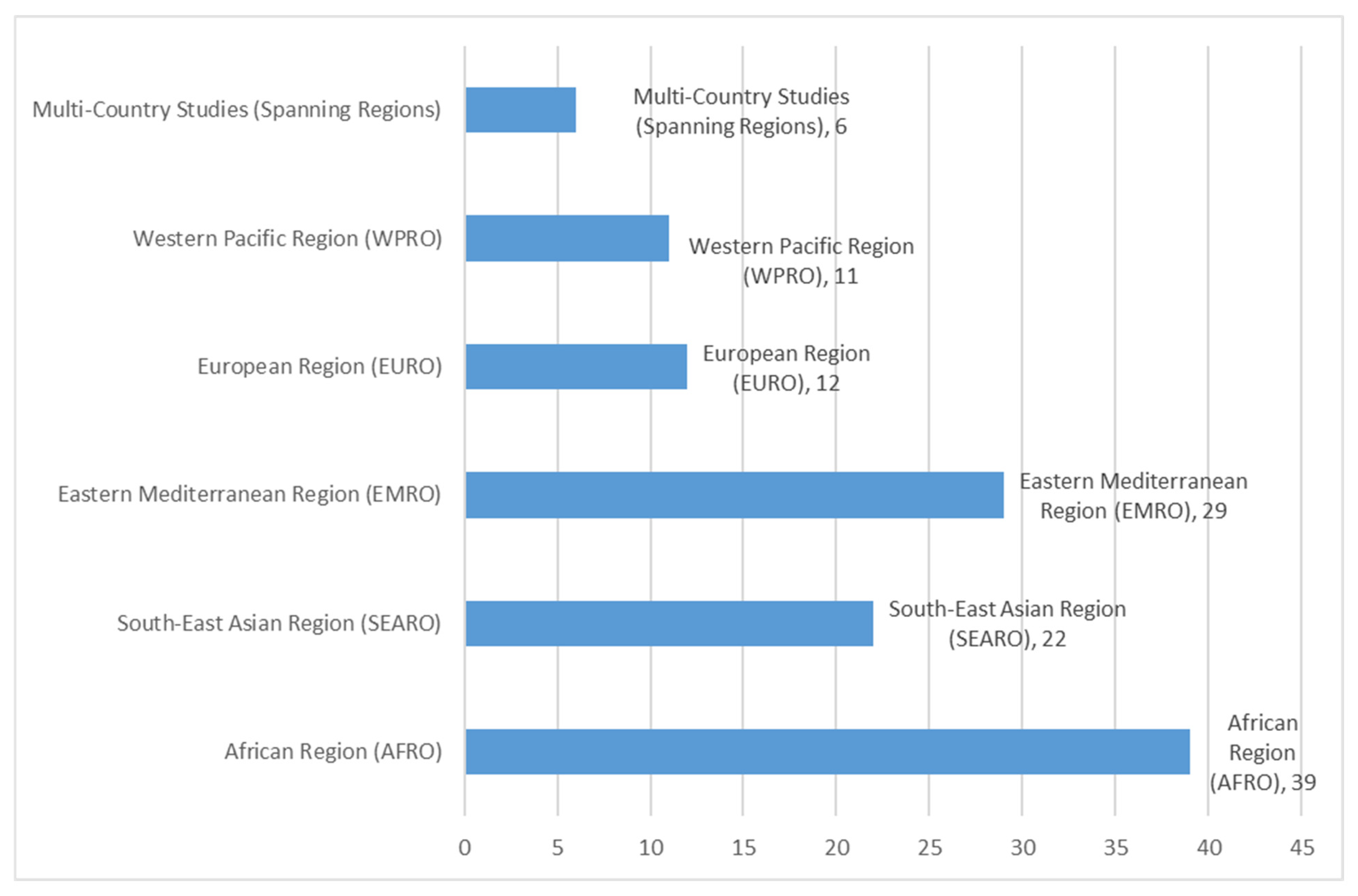
2.1. Characteristics of Studies
2.2. Quality Assessment of Included Studies
2.3. Thematic Analysis
2.3.1. Antibiotic Use as a Pragmatic Response to Systemic and Structural Constraints
2.3.2. Financial, Commercial, Socioeconomic, and Cultural Drivers of Misuse
2.3.3. The Disconnect Between Knowledge, Sociocultural Norms, and Practice
2.3.4. Fragmented Stewardship: Organizational Gaps, Role Ambiguity, and Professional Tensions
2.3.5. Informal and Market-Driven Antibiotic Use Beyond Formal Stewardship Systems
3. Discussion
4. Materials and Methods
4.1. Protocol Registration
4.2. Eligibility Criteria
4.3. Search Strategy and Data Source/Collection
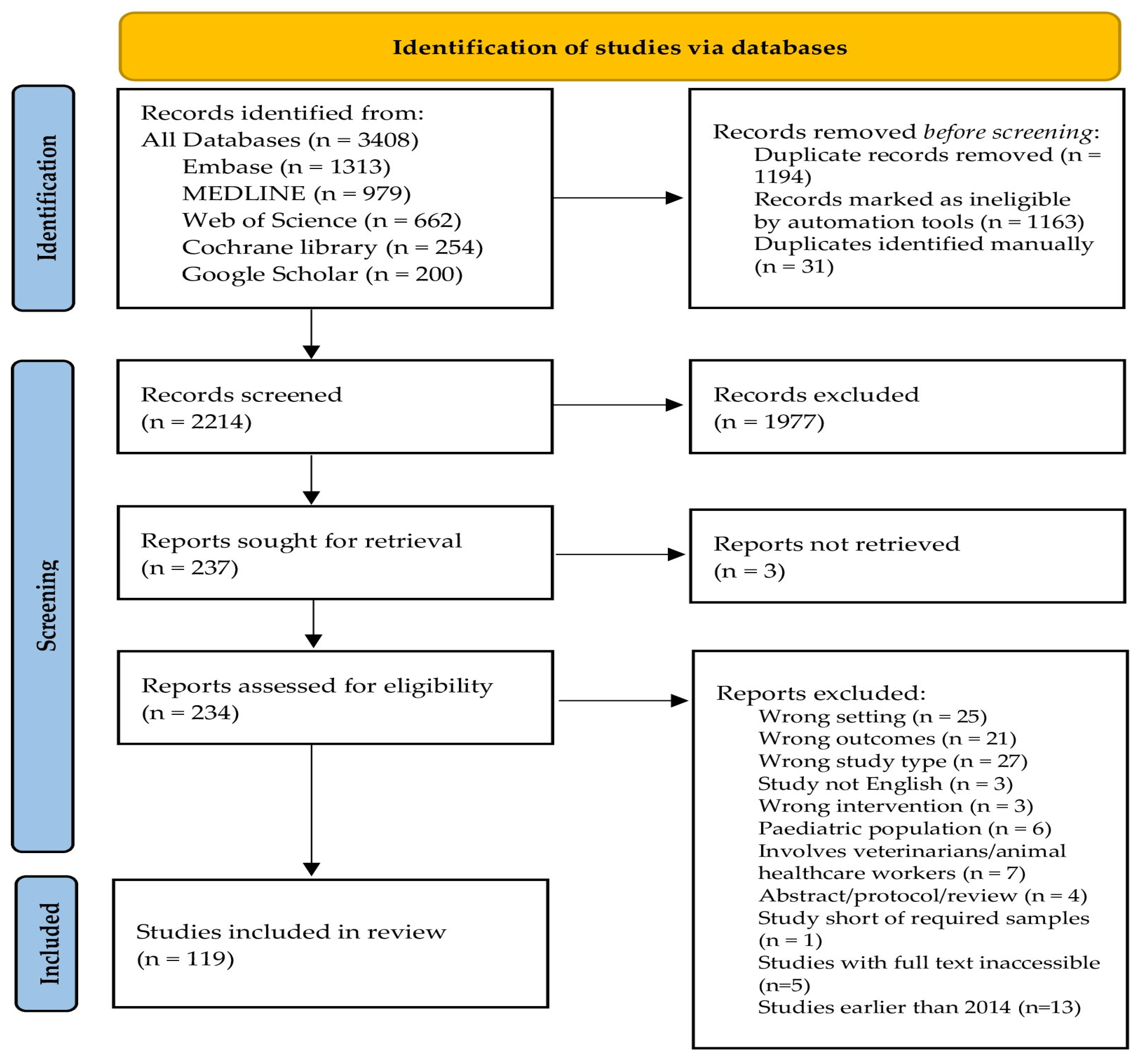
4.4. Study Selection and Screening Process
4.5. Outcomes and Data Synthesis
4.6. Data Extraction Process
4.7. Quality Assessment
4.8. Thematic Analysis and Synthesis
4.9. Data Tabulation and Visualization
5. Conclusions
6. Strengths and Limitations
Supplementary Materials
Author Contributions
Funding
Institutional Review Board Statement
Informed Consent Statement
Data Availability Statement
Acknowledgments
Conflicts of Interest
References
- Boss, G. Antibiotics: The Medical Marvels that Transformed Healthcare. J. Antimicrob. Agents 2023, 9, 300. Available online: https://www.hilarispublisher.com/open-access/antibiotics-the-medical-marvels-that-transformed-healthcare-100517.html (accessed on 16 March 2026).
- Hutchings, M.I.; Truman, A.W.; Wilkinson, B. Antibiotics: Past, present and future. Curr. Opin. Microbiol. 2019, 51, 72–80. [Google Scholar] [CrossRef]
- Ahmed, S.K.; Hussein, S.; Qurbani, K.; Ibrahim, R.H.; Fareeq, A.; Mahmood, K.A.; Mohamed, M.G. Antimicrobial resistance: Impacts, challenges, and future prospects. J. Med. Surg. Public Health 2024, 2, 100081. [Google Scholar] [CrossRef]
- Rahman, S.; Kesselheim, A.S.; Hollis, A. Persistence of resistance: A panel data analysis of the effect of antibiotic usage on the prevalence of resistance. J. Antibiot. 2023, 76, 270–278. [Google Scholar] [CrossRef]
- Alhomoud, F.; Aljamea, Z.; Almahasnah, R.; Alkhalifah, K.; Basalelah, L.; Alhomoud, F.K. Self-medication and self-prescription with antibiotics in the Middle East—do they really happen? A systematic review of the prevalence, possible reasons, and outcomes. Int. J. Infect. Dis. 2017, 57, 3–12. [Google Scholar] [CrossRef]
- Morgan, D.J.; Okeke, I.N.; Laxminarayan, R.; Perencevich, E.N.; Weisenberg, S. Non-prescription antimicrobial use worldwide: A systematic review. Lancet Infect. Dis. 2011, 11, 692–701. [Google Scholar] [CrossRef] [PubMed] [PubMed Central]
- Nwobodo, D.C.; Ugwu, M.C.; Anie, C.O.; Al-Ouqaili, M.T.S.; Ikem, J.C.; Chigozie, U.V.; Saki, M. Antibiotic resistance: The challenges and some emerging strategies for tackling a global menace. J. Clin. Lab. Anal. 2022, 36, e24655. [Google Scholar] [CrossRef]
- Al-Worafi, Y.M. (Ed.) Index. In Clinical Case Studies on Medication Safety; Academic Press: Cambridge, MA, USA, 2023; pp. 499–504. [Google Scholar] [CrossRef]
- Al-Khalaifah, H.; Rahman, M.H.; Al-Surrayai, T.; Al-Dhumair, A.; Al-Hasan, M. A One-Health Perspective of Antimicrobial Resistance (AMR): Human, Animals and Environmental Health. Life 2025, 15, 1598. [Google Scholar] [CrossRef] [PubMed]
- Manyi-Loh, C.; Mamphweli, S.; Meyer, E.; Okoh, A. Antibiotic Use in Agriculture and Its Consequential Resistance in Environmental Sources: Potential Public Health Implications. Molecules 2018, 23, 795. [Google Scholar] [CrossRef]
- Alem, K.; Dagnew, M.; Gizachew, M.; Gelaw, B.; Moges, F. Environmental Antimicrobial Resistance: Key Drivers, Hotspots, Innovative Strategies, and Challenges in the Fight Against Superbugs. Microbiologyopen 2025, 14, e70067. [Google Scholar] [CrossRef]
- Mendoza, A.M.B.; Maliñana, S.A.A.; Maravillas, S.I.D.; Moniva, K.C.; Jazul, J.P. Relationship of self-medication and antimicrobial resistance (AMR) in low- and middle-income countries (LMICs): A scoping review. J. Public Health Emerg. 2025, 9, 6. [Google Scholar] [CrossRef]
- Pierce, J.; Apisarnthanarak, A.; Schellack, N.; Cornistein, W.; Al Maani, A.; Adnan, S.; Stevens, M.P. Global Antimicrobial Stewardship with a Focus on Low- and Middle-Income Countries: A position statement for the international society for infectious diseases. Int. J. Infect. Dis. 2020, 96, 621–629. [Google Scholar] [CrossRef]
- Barlam, T.F.; Cosgrove, S.E.; Abbo, L.M.; MacDougall, C.; Schuetz, A.N.; Septimus, E.J.; Srinivasan, A.; Dellit, T.H.; Falck-Ytter, Y.T.; Fishman, N.O.; et al. Implementing an Antibiotic Stewardship Program: Guidelines by the Infectious Diseases Society of America and the Society for Healthcare Epidemiology of America. Clin. Infect. Dis. 2016, 62, e51–e77. Available online: https://academic.oup.com/cid/article/62/10/e51/2462846 (accessed on 20 December 2025). [CrossRef]
- Cox, J.; Vlieghe, E.; Mendelson, M.; Wertheim, H.; Ndegwa, L.; Villegas, M.; Gould, I.; Hara, G.L. Antibiotic stewardship in low- and middle-income countries: The same but different? Clin. Microbiol. Infect. 2017, 23, 812–818. [Google Scholar] [CrossRef]
- Moon, S.M.; Kim, B.; Bin Kim, H. Quantitative and qualitative evaluation of antimicrobial usage: The first step for antimicrobial stewardship. Korean J. Intern. Med. 2024, 39, 383–398. [Google Scholar] [CrossRef]
- Kwok, C.S.; Muntean, E.-A.; Mallen, C.D.; Borovac, J.A. Data Collection Theory in Healthcare Research: The Minimum Dataset in Quantitative Studies. Clin. Pr. 2022, 12, 832–844. [Google Scholar] [CrossRef]
- Pyo, J.; Lee, W.; Choi, E.Y.; Jang, S.G.; Ock, M. Qualitative Research in Healthcare: Necessity and Characteristics. J. Prev. Med. Public Health 2023, 56, 12–20. [Google Scholar] [CrossRef] [PubMed]
- Renjith, V.; Yesodharan, R.; Noronha, J.A.; Ladd, E.; George, A. Qualitative Methods in Health Care Research. Int. J. Prev. Med. 2021, 12, 20. [Google Scholar] [CrossRef] [PubMed]
- Bertagnolio, S.; Dobreva, Z.; Centner, C.M.; Olaru, I.D.; Donà, D.; Burzo, S.; Huttner, B.D.; Chaillon, A.; Gebreselassie, N.; Wi, T.; et al. WHO global research priorities for antimicrobial resistance in human health. Lancet Microbe 2024, 5, 100902. [Google Scholar] [CrossRef]
- Abdelaziz, A.I.; Tawfik, A.G.; Rabie, K.A.; Omran, M.; Hussein, M.; Abou-Ali, A.; Ahmed, A.-S.F. Quality of Community Pharmacy Practice in Antibiotic Self-Medication Encounters: A Simulated Patient Study in Upper Egypt. Antibiotics 2019, 8, 35. [Google Scholar] [CrossRef] [PubMed]
- Jalil, M.H.A.; Hijazeen, R.; Abu-Mahfouz, F.K.; Abu Hammour, K.; Matalqah, M.H.; Albadaineh, J.S.K.; AlOmoush, S.K.; Al-Iede, M. Vancomycin prescribing and therapeutic drug monitoring: Challenges of real clinical practice. PLoS ONE 2023, 18, e0285717. [Google Scholar] [CrossRef]
- ABU Mhadi, A.; Ong, S.C.; Abed, Y. Exploring medicines use patterns and practices among the public in the Gaza strip, Palestine: A qualitative study. J. Res. Pharm. 2023, 27, 469–480. [Google Scholar] [CrossRef]
- Ackers, L.; Ackers-Johnson, G.; Seekles, M.; Odur, J.; Opio, S. Opportunities and Challenges for Improving Anti-Microbial Stewardship in Low- and Middle-Income Countries; Lessons Learnt from the Maternal Sepsis Intervention in Western Uganda. Antibiotics 2020, 9, 315. [Google Scholar] [CrossRef] [PubMed]
- Afari-Asiedu, S.; Hulscher, M.; Abdulai, M.A.; Boamah-Kaali, E.; Wertheim, H.F.L.; Asante, K.P. Stakeholders’ perspectives on training over the counter medicine sellers and Community-based Health Planning and Services facilities to dispense antibiotics in Ghana. J. Pharm. Policy Pr. 2021, 14, 62. [Google Scholar] [CrossRef]
- Aika, I.N.; Enato, E. Health care systems administrators perspectives on antimicrobial stewardship and infection prevention and control programs across three healthcare levels: A qualitative study. Antimicrob. Resist. Infect. Control 2022, 11, 157. [Google Scholar] [CrossRef]
- Akhtar, A.; Khan, A.H.; Zainal, H.; Hassali, M.A.A.; Ali, I.; Ming, L.C. Physicians’ Perspective on Prescribing Patterns and Knowledge on Antimicrobial Use and Resistance in Penang, Malaysia: A Qualitative Study. Front. Public Health 2020, 8, 601961. [Google Scholar] [CrossRef] [PubMed]
- Alemkere, G.; Tadeg, H.; Getahun, W.; Shewarega, W.; Agalu, A.; Joshi, M.P.; Konduri, N. Optimizing prophylactic antibiotic use among surgery patients in Ethiopian hospitals. J. Infect. Public Heal. 2023, 16, 82–89. [Google Scholar] [CrossRef]
- Älgå, A.; Herzog, K.K.; Alrawashdeh, M.; Wong, S.; Khankeh, H.; Lundborg, C.S. “Reality rarely looks like the guidelines”: A qualitative study of the challenges hospital-based physicians encounter in war wound management. Scand. J. Trauma Resusc. Emerg. Med. 2018, 26, 52. [Google Scholar] [CrossRef] [PubMed]
- Alghamdi, S.; Berrou, I.; Bajnaid, E.; Aslanpour, Z.; Haseeb, A.; Hammad, M.A.; Shebl, N. Antimicrobial Stewardship Program Implementation in a Saudi Medical City: An Exploratory Case Study. Antibiotics 2021, 10, 280. [Google Scholar] [CrossRef]
- Alkadhimi, A.; Dawood, O.T.; Hassali, M.A. Dispensing of antibiotics in community pharmacy in Iraq: A qualitative study. Pharm. Pract. 2020, 18, 2095. [Google Scholar] [CrossRef]
- Al Meslamani, A.Z.; Abdel-Qader, D.H.; Ziad, N.; Al Mazrouei, N.; El-Shara, A.A.; El Sharu, H.; Ali, E.M.; Al Zahawi, R.H.; Ebaed, S.B.M.; Ibrahim, O.M. Antibiotic prescribing errors generated by the use of an electronic prescribing system in the emergency department: A mixed-method study. J. Pharm. Pharmacogn. Res. 2022, 10, 104–112. [Google Scholar] [CrossRef]
- Amin, M.E.K.; Amine, A.; Newegy, M.S. Perspectives of pharmacy staff on dispensing subtherapeutic doses of antibiotics: A theory informed qualitative study. Pharm. Weekbl. 2017, 39, 1110–1118. [Google Scholar] [CrossRef]
- Anwar, M.; Raziq, A.; Shoaib, M.; Baloch, N.S.; Raza, S.; Sajjad, B.; Sadaf, N.; Iqbal, Z.; Ishaq, R.; Haider, S.; et al. Exploring Nurses’ Perception of Antibiotic Use and Resistance: A Qualitative Inquiry. J. Multidiscip. Heal. 2021, 14, 1599–1608. [Google Scholar] [CrossRef] [PubMed]
- Asante, K.P.; Boamah, E.A.; Abdulai, M.A.; Buabeng, K.O.; Mahama, E.; Dzabeng, F.; Gavor, E.; Annan, E.A.; Owusu-Agyei, S.; Gyansa-Lutterodt, M.; et al. Knowledge of antibiotic resistance and antibiotic prescription practices among prescribers in the Brong Ahafo Region of Ghana; a cross-sectional study. BMC Health Serv. Res. 2017, 17, 422. [Google Scholar] [CrossRef]
- Atif, M.; Asghar, S.; Mushtaq, I.; Malik, I. Community pharmacists as antibiotic stewards: A qualitative study exploring the current status of Antibiotic Stewardship Program in Bahawalpur, Pakistan. J. Infect. Public Health 2020, 13, 118–124. [Google Scholar] [CrossRef] [PubMed]
- Atif, M.; Asghar, S.; Mushtaq, I.; Malik, I.; Amin, A.; Babar, Z.-U.; Scahill, S. What drives inappropriate use of antibiotics? A mixed methods study from Bahawalpur, Pakistan. Infect. Drug Resist. 2019, 12, 687–699. [Google Scholar] [CrossRef] [PubMed]
- Atif, M.; Ihsan, B.; Malik, I.; Ahmad, N.; Saleem, Z.; Sehar, A.; Babar, Z.-U. Antibiotic stewardship program in Pakistan: A multicenter qualitative study exploring medical doctors’ knowledge, perception and practices. BMC Infect. Dis. 2021, 21, 374. [Google Scholar] [CrossRef]
- Bahnassi, A. A qualitative analysis of pharmacists’ attitudes and practices regarding the sale of antibiotics without prescription in Syria. J. Taibah Univ. Med. Sci. 2015, 10, 227–233. [Google Scholar] [CrossRef]
- Bahta, M.; Weldemariam, D.G.; Tesfamariam, S.; Tesfamariam, E.H.; Russom, M. Determinants of dispensing antibiotics without prescription in Eritrea: A mixed-method qualitative study on pharmacy professionals’ perspective. BMJ Open 2021, 11, e049000. [Google Scholar] [CrossRef]
- Bajwa, M.; Afzal, S.; Sheikh, S.A.; Saleem, Z. Drug Inspector as an antibiotic steward: Challenges and recommendations to implement national action plan of Pakistan on antimicrobial resistance. Expert Rev. Anti-Infect. Ther. 2024, 22, 907–920. [Google Scholar] [CrossRef]
- Barker, A.K.; Brown, K.; Ahsan, M.; Sengupta, S.; Safdar, N. What drives inappropriate antibiotic dispensing? A mixed-methods study of pharmacy employee perspectives in Haryana, India. BMJ Open 2017, 7, e013190. [Google Scholar] [CrossRef]
- Baubie, K.; Shaughnessy, C.; Kostiuk, L.; Joseph, M.V.; Safdar, N.; Singh, S.K.; Siraj, D.; Sethi, A.; Keating, J. Evaluating antibiotic stewardship in a tertiary care hospital in Kerala, India: A qualitative interview study. BMJ Open 2019, 9, e026193. [Google Scholar] [CrossRef]
- Belachew, S.A.; Hall, L.; A Selvey, L. “Handing out non-prescribed antibiotics is storing up trouble for the next generation!” Unpacking multistakeholder views of drivers and potential solutions in Ethiopia. BMC Heal. Serv. Res. 2023, 23, 830. [Google Scholar] [CrossRef]
- Broom, A.; Doron, A. Antimicrobial Resistance, Politics, and Practice in India. Qual. Heal. Res. 2020, 30, 1684–1696. [Google Scholar] [CrossRef] [PubMed]
- Broom, J.; Broom, A.; Kenny, K.; Chittem, M. Antimicrobial overuse in India: A symptom of broader societal issues including resource limitations and financial pressures. Glob. Public Health 2020, 16, 1079–1087. [Google Scholar] [CrossRef] [PubMed]
- Cantarero-Arevalo, L.; Nørgaard, L.S.; Sporrong, S.K.; Jacobsen, R.; Almarsdóttir, A.B.; Hansen, J.M.; Titkov, D.; Rachina, S.; Panfilova, E.; Merkulova, V.; et al. A Qualitative Analysis of the Culture of Antibiotic Use for Upper Respiratory Tract Infections Among Patients in Northwest Russia. Front. Pharmacol. 2022, 13, 800695. [Google Scholar] [CrossRef] [PubMed]
- Chansamouth, V.; Douangnouvong, A.; Thammavongsa, P.; Sombandith, X.; Keomany, S.; Rattana, S.; Newton, P.N.; Day, N.P.; Turner, P.; Mayxay, M.; et al. Understanding hospital antimicrobial prescribing decisions and determinants of uptake of new local antimicrobial prescribing guidelines in Laos. Wellcome Open Res. 2024, 9, 183. [Google Scholar] [CrossRef]
- E Chukwu, E.; Abuh, D.; E Idigbe, I.; A Osuolale, K.; Chuka-Ebene, V.; Awoderu, O.; Audu, A.R.; Ogunsola, F.T. Implementation of antimicrobial stewardship programs: A study of prescribers’ perspective of facilitators and barriers. PLoS ONE 2024, 19, e0297472. [Google Scholar] [CrossRef]
- Darj, E.; Newaz, S.; Zaman, M.H. Pharmacists’ perception of their challenges at work, focusing on antimicrobial resistance: A qualitative study from Bangladesh. Glob. Health Action 2019, 12, 1735126. [Google Scholar] [CrossRef]
- Di, K.N.; Tay, S.T.; Ponnampalavanar, S.S.L.S.; Pham, D.T.; Wong, L.P. Physician’s Perspectives on Factors Influencing Antibiotic Resistance: A Qualitative Study in Vietnam. Healthcare 2022, 11, 126. [Google Scholar] [CrossRef]
- Dillip, A.; Embrey, M.; Shekalaghe, E.; Ross-Degnan, D.; Vialle-Valentin, C.; Kimatta, S.; Liana, J.; Rutta, E.; Valimba, R.; Chalker, J. What motivates antibiotic dispensing in accredited drug dispensing outlets in Tanzania? A qualitative study. Antimicrob. Resist. Infect. Control. 2015, 4, 30. [Google Scholar] [CrossRef]
- Dohou, A.M.; Buda, V.O.; Anagonou, S.; Van Bambeke, F.; Van Hees, T.; Dossou, F.M.; Dalleur, O. Healthcare Professionals’ Knowledge and Beliefs on Antibiotic Prophylaxis in Cesarean Section: A Mixed-Methods Study in Benin. Antibiotics 2022, 11, 872. [Google Scholar] [CrossRef] [PubMed]
- Dooling, K.L.; Kandeel, A.; Hicks, L.A.; El-Shoubary, W.; Fawzi, K.; Kandeel, Y.; Etman, A.; Lohiniva, A.L.; Talaat, M. Understanding Antibiotic Use in Minya District, Egypt: Physician and Pharmacist Prescribing and the Factors Influencing Their Practices. Antibiotics 2014, 3, 233–243. [Google Scholar] [CrossRef] [PubMed]
- Do, N.T.T.; Vu, H.T.L.; Nguyen, C.T.K.; Punpuing, S.; Khan, W.A.; Gyapong, M.; Asante, K.P.; Munguambe, K.; Gómez-Olivé, F.X.; John-Langba, J.; et al. Community-based antibiotic access and use in six low-income and middle-income countries: A mixed-method approach. Lancet Glob. Health 2021, 9, e610–e619. [Google Scholar] [CrossRef] [PubMed]
- Edessa, D.; Kumsa, F.A.; Dinsa, G.; Oljira, L. Drug providers’ perspectives on antibiotic misuse practices in eastern Ethiopia: A qualitative study. BMJ Open 2024, 14, e085352. [Google Scholar] [CrossRef]
- Eibs, T.; Koscalova, A.; Nair, M.; Grohma, P.; Kohler, G.; Bakhit, R.G.; Thurashvili, M.; Lasry, E.; Bauer, S.W.; Jimenez, C. Qualitative study of antibiotic prescription patterns and associated drivers in Sudan, Guinea-Bissau, Central African Republic and Democratic Republic of Congo. BMJ Open 2020, 10, e036530. [Google Scholar] [CrossRef]
- Esfandiari, A.; Salari, H.; Rashidian, A.; Asl, H.M.; Foroushani, A.R.; Sari, A.A. Eliminating Healthcare-Associated Infections in Iran: A Qualitative Study to Explore Stakeholders’ Views. Int. J. Health Policy Manag. 2017, 7, 27–34. [Google Scholar] [CrossRef]
- Farooqui, M.; Iqbal, Z.; Sadiq, A.; Raziq, A.; Alshammari, M.S.; Iqbal, Q.; Haider, S.; Saleem, F. Hospital Pharmacists’ Viewpoint on Quality Use of Antibiotics and Resistance: A Qualitative Exploration from a Tertiary Care Hospital of Quetta City, Pakistan. Antibiotics 2023, 12, 1343. [Google Scholar] [CrossRef]
- Foster, E.K.; Bandawe, C.R. How much do patients in Blantyre, Malawi know about antibiotics and other prescription only medicines? Malawi Med. J. 2014, 26, 12–15. [Google Scholar]
- Gautham, M.; Spicer, N.; Chatterjee, S.; Goodman, C. What are the challenges for antibiotic stewardship at the community level? An analysis of the drivers of antibiotic provision by informal healthcare providers in rural India. Soc. Sci. Med. 2021, 275, 113813. [Google Scholar] [CrossRef]
- Gebretekle, G.B.; Mariam, D.H.; Abebe, W.; Amogne, W.; Tenna, A.; Fenta, T.G.; Libman, M.; Yansouni, C.P.; Semret, M. Opportunities and barriers to implementing antibiotic stewardship in low and middle-income countries: Lessons from a mixed-methods study in a tertiary care hospital in Ethiopia. PLoS ONE 2018, 13, e0208447. [Google Scholar] [CrossRef] [PubMed] [PubMed Central]
- Gebretekle, G.B.; Serbessa, M.K. Exploration of over the counter sales of antibiotics in community pharmacies of Addis Ababa, Ethiopia: Pharmacy professionals’ perspective. Antimicrob. Resist. Infect. Control. 2016, 5, 2. [Google Scholar] [CrossRef] [PubMed]
- Ghiga, I.; Pitchforth, E.; Lundborg, C.S.; Machowska, A. Family doctors’ roles and perceptions on antibiotic consumption and antibiotic resistance in Romania: A qualitative study. BMC Prim. Care 2023, 24, 93. [Google Scholar] [CrossRef] [PubMed]
- Ghiga, I.; Lundborg, C.S. ‘Struggling to be a defender of health’—A qualitative study on the pharmacists’ perceptions of their role in antibiotic consumption and antibiotic resistance in Romania. J. Pharm. Policy Pract. 2016, 9, 1–10. [Google Scholar] [CrossRef]
- Green, D.L.; Keenan, K.; Fredricks, K.J.; I Huque, S.; Mushi, M.F.; Kansiime, C.; Asiimwe, B.; Kiiru, J.; E Mshana, S.; Neema, S.; et al. The role of multidimensional poverty in antibiotic misuse: A mixed-methods study of self-medication and non-adherence in Kenya, Tanzania, and Uganda. Lancet Glob. Health 2022, 11, e59–e68. [Google Scholar] [CrossRef] [PubMed]
- Hayat, K.; Rosenthal, M.; Gillani, A.H.; Zhai, P.; Aziz, M.M.; Ji, W.; Chang, J.; Hu, H.; Fang, Y. Perspective of Pakistani Physicians towards Hospital Antimicrobial Stewardship Programs: A Multisite Exploratory Qualitative Study. Int. J. Environ. Res. Public Health 2019, 16, 1565. [Google Scholar] [CrossRef] [PubMed]
- Horter, S.; Achar, J.; Gray, N.; Parpieva, N.; Tigay, Z.; Singh, J.; Stringer, B. Patient and health-care worker perspectives on the short-course regimen for treatment of drug-resistant tuberculosis in Karakalpakstan, Uzbekistan. PLoS ONE 2020, 15, e0242359. [Google Scholar] [CrossRef]
- Horter, S.; Stringer, B.; Greig, J.; Amangeldiev, A.; Tillashaikhov, M.N.; Parpieva, N.; Tigay, Z.; du Cros, P. Where there is hope: A qualitative study examining patients’ adherence to multi-drug resistant tuberculosis treatment in Karakalpakstan, Uzbekistan. BMC Infect. Dis. 2016, 16, 362. [Google Scholar] [CrossRef]
- Hosoglu, S.; Classen, A.Y.; Akturk, Z. Antibiotic prescription in primary care from the perspective of family physicians: A qualitative study. J. Infect. Dev. Ctries. 2021, 15, 1117–1123. [Google Scholar] [CrossRef]
- Hoxha, I.; Malaj, A.; Kraja, B.; Bino, S.; Oluka, M.; Marković-Peković, V.; Godman, B. Are pharmacists’ good knowledge and awareness on antibiotics taken for granted? The situation in Albania and future implications across countries. J. Glob. Antimicrob. Resist. 2018, 13, 240–245. [Google Scholar] [CrossRef]
- Huong, V.T.L.; Ngan, T.T.D.; Thao, H.P.; Tu, N.T.C.; Quan, T.A.; Nadjm, B.; Kesteman, T.; Van Kinh, N.; van Doorn, H.R. Improving antimicrobial use through antimicrobial stewardship in a lower-middle income setting: A mixed-methods study in a network of acute-care hospitals in Vietnam. J. Glob. Antimicrob. Resist. 2021, 27, 212–221. [Google Scholar] [CrossRef]
- Inchara, M.; Reddy, M.M.; Ramya, N. ’Perceptions’ and ‘practices’ to antibiotic usage among diabetic patients receiving care from a rural tertiary care center. J. Educ. Heal. Promot. 2022, 11, 181. [Google Scholar] [CrossRef] [PubMed]
- Intahphuak, S.; Lorga, T.; Tipwareerom, W. Community Health Nurses’ Perspective on the Introduced Rational Drug Use Policy in Primary Care Settings in Thailand: A Descriptive Qualitative Study. Trop. Med. Infect. Dis. 2022, 7, 304. [Google Scholar] [CrossRef] [PubMed]
- Jakupi, A.; Raka, D.; Kaae, S.; Sporrong, S.K. Culture of antibiotic use in Kosovo—An interview study with patients and health professionals. Pharm. Pract. 2019, 17, 1540. [Google Scholar] [CrossRef]
- Kaae, S.; Ghazaryan, L.; Pagava, K.; Korinteli, I.; Makalkina, L.; Zhetimkarinova, G.; Ikhambayeva, A.; Tentiuc, E.; Ratchina, S.; Zakharenkova, P.; et al. The antibiotic knowledge, attitudes and behaviors of patients, doctors and pharmacists in the WHO Eastern European region – a qualitative, comparative analysis of the culture of antibiotic use in Armenia, Georgia, Kazakhstan, Moldova, Russia and Tajikistan. Res. Soc. Adm. Pharm. 2020, 16, 238–248. [Google Scholar] [CrossRef]
- Kaae, S.; Malaj, A.; Hoxha, I. Antibiotic knowledge, attitudes and behaviours of Albanian health care professionals and patients–a qualitative interview study. J. Pharm. Policy Pract. 2017, 10, 13. [Google Scholar] [CrossRef] [PubMed]
- Kagoya, E.K.; Van Royen, K.; Waako, P.; Van Royen, P.; Iramiot, J.S.; Obakiro, S.B.; Kostyanev, T.; Anthierens, S. Experiences and views of healthcare professionals on the prescription of antibiotics in Eastern Uganda: A qualitative study. J. Glob. Antimicrob. Resist. 2021, 25, 66–71. [Google Scholar] [CrossRef]
- Kandeel, A.; El-Shoubary, W.; Hicks, L.A.; Fattah, M.A.; Dooling, K.L.; Lohiniva, A.L.; Ragab, O.; Galal, R.; Talaat, M. Patient Attitudes and Beliefs and Provider Practices Regarding Antibiotic Use for Acute Respiratory Tract Infections in Minya, Egypt. Antibiotics 2014, 3, 632–644. [Google Scholar] [CrossRef]
- Khan, F.U.; Khan, F.U.; Hayat, K.; Ahmad, T.; Khan, A.; Chang, J.; Malik, U.R.; Khan, Z.; Lambojon, K.; Fang, Y. Knowledge, Attitude, and Practice on Antibiotics and Its Resistance: A Two-Phase Mixed-Methods Online Study among Pakistani Community Pharmacists to Promote Rational Antibiotic Use. Int. J. Environ. Res. Public Health 2021, 18, 1320. [Google Scholar] [CrossRef]
- Khan, F.U.; Mallhi, T.H.; Khan, F.U.; Hayat, K.; Rehman, A.; Shah, S.; Khan, Z.; Khan, Y.H.; Ahmad, T.; Gudi, S.K.; et al. Evaluation of Consumers Perspective on the Consumption of Antibiotics, Antibiotic Resistance, and Recommendations to Improve the Rational use of Antibiotics: An Exploratory Qualitative Study From Post-Conflicted Region of Pakistan. Front. Pharmacol. 2022, 13, 881243. [Google Scholar] [CrossRef]
- Khan, F.; Chaudhary, B.; Sultan, A.; Ahmad, M.; Alvi, Y.; Shah, M.S.; Khan, H.M. Qualitative Thematic Analysis of Knowledge and Practices of Surgical Antimicrobial Prophylaxis at a Tertiary Care Teaching Hospital. Surg. Infect. 2021, 22, 434–441. [Google Scholar] [CrossRef]
- Khan, M.S.; Bory, S.; Rego, S.; Suy, S.; Durrance-Bagale, A.; Sultana, Z.; Chhorn, S.; Phou, S.; Prien, C.; Heng, S.; et al. Is enhancing the professionalism of healthcare providers critical to tackling antimicrobial resistance in low- and middle-income countries? Hum. Resour. Health 2020, 18, 10. [Google Scholar] [CrossRef]
- Khare, S.; Pathak, A.; Lundborg, C.S.; Diwan, V.; Atkins, S. Understanding Internal and External Drivers Influencing the Prescribing Behaviour of Informal Healthcare Providers with Emphasis on Antibiotics in Rural India: A Qualitative Study. Antibiotics 2022, 11, 459. [Google Scholar] [CrossRef]
- Kotwani, A.; Gandra, S. Strengthening antimicrobial stewardship activities in secondary and primary public healthcare facilities in India: Insights from a qualitative study with stakeholders. Indian J. Med. Microbiol. 2023, 41, 59–63. [Google Scholar] [CrossRef] [PubMed]
- Kotwani, A.; Joshi, J.; Lamkang, A.S. Over-the-Counter Sale of Antibiotics in India: A Qualitative Study of Providers’ Perspectives across Two States. Antibiotics 2021, 10, 1123. [Google Scholar] [CrossRef]
- Kpokiri, E.E.; Taylor, D.G.; Smith, F.J. Development of Antimicrobial Stewardship Programmes in Low and Middle-Income Countries: A Mixed-Methods Study in Nigerian Hospitals. Antibiotics 2020, 9, 204. [Google Scholar] [CrossRef] [PubMed]
- Kuijpers, L.M.F.; Gryseels, C.; Uk, S.; Chung, P.; Bory, S.; Sreng, B.; Parry, A.; Jacobs, J.; Grietens, K.P. Enteric Fever in Cambodia: Community Perceptions and Practices Concerning Disease Transmission and Treatment. Am. J. Trop. Med. Hyg. 2018, 99, 1369–1377. [Google Scholar] [CrossRef] [PubMed]
- Kukula, V.A.; Odopey, S.; Arthur, E.; Odonkor, G.; Awini, E.; Adjei, A.; Salami, O.; Nkeramahame, J.; Horgan, P.; Olliaro, P.; et al. Understanding Health Worker and Community Antibiotic Prescription-Adherence Practices for Acute Febrile Illness: A Nested Qualitative Study in the Shai-Osudoku District of Ghana and the Development of a Training-and-Communication Intervention. Clin. Infect. Dis. 2023, 77, S182–S190. [Google Scholar] [CrossRef]
- Lai, W.M.; Islahudin, F.H.; Khan, R.A.; Chong, W.W. Pharmacists’ Perspectives of Their Roles in Antimicrobial Stewardship: A Qualitative Study among Hospital Pharmacists in Malaysia. Antibiotics 2022, 11, 219. [Google Scholar] [CrossRef]
- Legba, B.B.; Dougnon, V.; Koudokpon, H.; Mero, S.; Elovainio, R.; Parry, M.; Bankole, H.; Haukka, K. Assessment of blood cultures and antibiotic susceptibility testing for bacterial sepsis diagnosis and utilization of results by clinicians in Benin: A qualitative study. Front. Public Health 2023, 10, 1088590. [Google Scholar] [CrossRef]
- Legenza, L.; Barnett, S.; Rose, W.; Safdar, N.; Emmerling, T.; Peh, K.H.; Coetzee, R. Clostridium difficile infection perceptions and practices: A multicenter qualitative study in South Africa. Antimicrob. Resist. Infect. Control. 2018, 7, 125. [Google Scholar] [CrossRef]
- Limato, R.; Broom, A.; Nelwan, E.J.; Hamers, R.L. A qualitative study of barriers to antimicrobial stewardship in Indonesian hospitals: Governance, competing interests, cost, and structural vulnerability. Antimicrob. Resist. Infect. Control. 2022, 11, 85. [Google Scholar] [CrossRef]
- Maki, G.; Smith, I.; Paulin, S.; Kaljee, L.; Kasambara, W.; Mlotha, J.; Chuki, P.; Rupali, P.; Singh, D.R.; Bajracharya, D.C.; et al. Feasibility Study of the World Health Organization Health Care Facility-Based Antimicrobial Stewardship Toolkit for Low- and Middle-Income Countries. Antibiotics 2020, 9, 556. [Google Scholar] [CrossRef]
- Malazarte, J.; Manila, L.D.; Javier, D.; Parba, R.M.; Cruz, S.D.; Sabado, A.A.; Carandang, R.R. Hospital pharmacists’ expertise and cooperation towards antimicrobial stewardship in the Philippines: A qualitative study. Pharm. Sci. Asia 2024, 51, 74–84. [Google Scholar] [CrossRef]
- Manderson, L. Prescribing, care and resistance: Antibiotic use in urban South Africa. Humanit. Soc. Sci. Commun. 2020, 7, 77. [Google Scholar] [CrossRef]
- Mao, S.; Soputhy, C.; Lay, S.; Jacobs, J.; Ku, G.M.; Chau, D.; Chhea, C.; Ir, P. The barriers and facilitators of implementing a national laboratory-based AMR surveillance system in Cambodia: Key informants’ perspectives and assessments of microbiology laboratories. Front. Public Health 2023, 11, 1332423. [Google Scholar] [CrossRef] [PubMed]
- Marasini, S.; Sharma, S.; Joshi, A.; Kunwar, S.; Mahato, R.K.; Shrestha, A.; Karmacharya, B. Exploring knowledge, perceptions, and practices of antimicrobials, and their resistance among medicine dispensers and community members in Kavrepalanchok District of Nepal. PLoS ONE 2024, 19, e0297282. [Google Scholar] [CrossRef]
- Mathew, P.; Ranjalkar, J.; Chandy, S.J. Challenges in Implementing Antimicrobial Stewardship Programmes at Secondary Level Hospitals in India: An Exploratory Study. Front. Public Health 2020, 8. [Google Scholar] [CrossRef] [PubMed]
- Matin, M.A.; Khan, W.A.; Karim, M.M.; Ahmed, S.; John-Langba, J.; Sankoh, O.A.; Gyapong, M.; Kinsman, J.; Wertheim, H. What influences antibiotic sales in rural Bangladesh? A drug dispensers’ perspective. J. Pharm. Policy Pract. 2020, 13, 20. [Google Scholar] [CrossRef]
- Mattingly, A.S.; Starr, N.; Bitew, S.; Forrester, J.A.; Negussie, T.; Merrell, S.B.; Weiser, T.G. Qualitative outcomes of Clean Cut: Implementation lessons from reducing surgical infections in Ethiopia. BMC Health Serv. Res. 2019, 19, 579. [Google Scholar] [CrossRef]
- Mbugua, S.M.; Njoroge, G.; Kijogi, C.; Kamita, M.; Kimani, R.; Mwaura, P.; Aidi, B.W.; Gitaka, J. Exploring perspectives on antimicrobial stewardship: A qualitative study of health managers in Kenya. Glob. Health Res. Policy 2020, 5, 49. [Google Scholar] [CrossRef] [PubMed]
- McKnight, J.; Maina, M.; Zosi, M.; Kimemia, G.; Onyango, T.; Schultsz, C.; English, M.; Tosas-Auguet, O. Evaluating hospital performance in antibiotic stewardship to guide action at national and local levels in a lower-middle income setting. Glob. Health Action 2019, 12, 1761657. [Google Scholar] [CrossRef]
- Mmari, E.E.; Pallangyo, E.S.; Ali, A.; Kaale, D.A.; Mawalla, I.H.; Abeid, M.S. Perceptions of surgeons on surgical antibiotic prophylaxis use at an urban tertiary hospital in Tanzania. PLoS ONE 2021, 16, e0256134. [Google Scholar] [CrossRef]
- Mohr, E.; Snyman, L.; Mbakaz, Z.; Caldwell, J.; DeAzevedo, V.; Kock, Y.; Duran, L.T.; Venables, E. “Life continues”: Patient, health care and community care workers perspectives on self-administered treatment for rifampicin-resistant tuberculosis in Khayelitsha, South Africa. PLoS ONE 2018, 13, e0203888. [Google Scholar] [CrossRef]
- Mula, C.T.; Human, N.; Middleton, L. An exploration of workarounds and their perceived impact on antibiotic stewardship in the adult medical wards of a referral hospital in Malawi: A qualitative study. BMC Health Serv. Res. 2019, 19, 64. [Google Scholar] [CrossRef]
- Mula, C.T.; Middleton, L.; Muula, A.; Solomon, V.; Varga, C. Nurses’ role in antibiotic stewardship at medical wards of a referral hospital in Malawi: Understanding reality and identifying barriers. Int. J. Afr. Nurs. Sci. 2021, 15. [Google Scholar] [CrossRef]
- Mula, C. The examination of nurses’ adherence to the ‘five rights’ of antibiotic administration and factors influencing their practices: A mixed methods case study at a tertiary hospital, Malawi. Malawi Med. J. 2019, 31, 126–132. [Google Scholar] [CrossRef]
- Mussie, K.M.; Yimer, S.A.; Manyazewal, T.; Gradmann, C. Exploring local realities: Perceptions and experiences of healthcare workers on the management and control of drug-resistant tuberculosis in Addis Ababa, Ethiopia. PLoS ONE 2019, 14, e0224277. [Google Scholar] [CrossRef]
- Nair, M.; Tripathi, S.; Mazumdar, S.; Mahajan, R.; Harshana, A.; Pereira, A.; Jimenez, C.; Halder, D.; Burza, S. “Without antibiotics, I cannot treat”: A qualitative study of antibiotic use in Paschim Bardhaman district of West Bengal, India. PLoS ONE 2019, 14, e0219002. [Google Scholar] [CrossRef] [PubMed]
- Nepal, A.; Hendrie, D.; Selvey, L.A.; Robinson, S. Factors influencing the inappropriate use of antibiotics in the Rupandehi district of Nepal. Int. J. Heal. Plan. Manag. 2020, 36, 42–59. [Google Scholar] [CrossRef]
- Nguyen, H.H.; Ho, D.P.; Vu, T.L.H.; Tran, K.T.; Tran, T.D.; Nguyen, T.K.C.; van Doorn, H.R.; Nadjm, B.; Kinsman, J.; Wertheim, H. “I can make more from selling medicine when breaking the rules” – understanding the antibiotic supply network in a rural community in Viet Nam. BMC Public Health 2019, 19, 1560. [Google Scholar] [CrossRef]
- Niaz, Q.; Godman, B.; Campbell, S.; Kibuule, D. Compliance to prescribing guidelines among public health care facilities in Namibia; findings and implications. Pharm. Weekbl. 2020, 42, 1227–1236. [Google Scholar] [CrossRef]
- Nokhodian, Z.; Boroumandfar, Z.; Rostami, S.; Ataei, B. Overuse of Antibiotics: Who is to Blame? A Qualitative Study. Int. J. Prev. Med. 2023, 14, 133. [Google Scholar] [CrossRef]
- Okwera, A.; Mafigiri, D.; Guwatudde, D.; Whalen, C.; Joloba, M. Level of understanding of co-trimoxazole use among HIV infected, recurrent pulmonary tuberculosis suspects at a national referral tuberculosis clinic in Kampala, Uganda: A qualitative analysis. Afr. Health Sci. 2015, 15, 49–57. [Google Scholar] [CrossRef]
- Om, C.; Daily, F.; Vlieghe, E.; McLaughlin, J.C.; McLaws, M.-L. “If it’s a broad spectrum, it can shoot better”: Inappropriate antibiotic prescribing in Cambodia. Antimicrob. Resist. Infect. Control. 2016, 5, 58. [Google Scholar] [CrossRef] [PubMed]
- Rachina, S.; Zakharenkova, P.; Kozlov, R.; Palagin, I.; Mamchich, D.; Strelkova, D. The Antibiotic Knowledge, Attitudes, and Behaviors of Patients Purchasing Antibiotics without Prescription: Results of National Survey. Adv. Public Health 2023, 2023, 1–11. [Google Scholar] [CrossRef]
- Ravi, N.; Laha, A.; Hmar, L.; Chatterjee, S.; Goswami, J.; Goel, G.; Dhar, K.; Ghosh, T.; Chatterjee, S.; Datta, S.S.; et al. Exploring the Prescribing Behaviours and the Mind of Antibiotic Prescribers is Critical for a Successful Antibiotic Stewardship Programme: Results of a Survey from Eastern India. Indian J. Med. Microbiol. 2017, 35, 299–301. [Google Scholar] [CrossRef] [PubMed]
- Awareness Amongst Service Providers and Patients Regarding the Use and Dispense of Antibiotics a Cross-City Analysis in Pakistan—Professional Publication. Available online: https://professionalpublication.com/awareness-amongst-service-providers-and-patients-regarding-the-use-and-dispense-of-antibiotics-a-cross-city-analysis-in-pakistan/ (accessed on 3 January 2026).
- Rolfe, R.; Kwobah, C.; Muro, F.; Ruwanpathirana, A.; Lyamuya, F.; Bodinayake, C.; Nagahawatte, A.; Piyasiri, B.; Sheng, T.; Bollinger, J.; et al. Barriers to implementing antimicrobial stewardship programs in three low- and middle-income country tertiary care settings: Findings from a multi-site qualitative study. Antimicrob. Resist. Infect. Control. 2021, 10, 1–11. [Google Scholar] [CrossRef]
- Rout, J.A. Exploring the Role of the Intensive Care Nurse in the Antimicrobial Stewardship Team at a Private Hospital, eThekwini, South Africa. Ph.D. Thesis, University of KwaZulu-Natal, Howard College, Durban, South Africa, 2015. Available online: http://hdl.handle.net/10413/14311 (accessed on 3 January 2026).
- Rout, J.; Brysiewicz, P. Perceived barriers to the development of the antimicrobial stewardship role of the nurse in intensive care: Views of healthcare professionals. South. Afr. J. Crit. Care 2020, 36, 51–56. [Google Scholar] [CrossRef]
- Royce, S.; Khann, S.; Yadav, R.P.; Mao, E.T.; Cattamanchi, A.; Sam, S.; Handley, M.A. Identifying multidrug resistance in previously treated tuberculosis patients: A mixed-methods study in Cambodia. Int. J. Tuberc. Lung Dis. 2014, 18, 1299–1306. [Google Scholar] [CrossRef][Green Version]
- Saleem, Z.; Hassali, M.A.; Godman, B.; Hashmi, F.K.; Saleem, F. Antimicrobial prescribing and determinants of antimicrobial resistance: A qualitative study among physicians in Pakistan. Pharm. Weekbl. 2019, 41, 1348–1358. [Google Scholar] [CrossRef]
- Saleem, Z.; Hassali, M.A.; Hashmi, F.K.; Godman, B.; Saleem, F. Antimicrobial dispensing practices and determinants of antimicrobial resistance: A qualitative study among community pharmacists in Pakistan. Fam. Med. Community Health 2019, 7, e000138. [Google Scholar] [CrossRef] [PubMed]
- Saleh, D.; Abu-Farha, R.; Mukattash, T.L.; Barakat, M.; Alefishat, E. Views of Community Pharmacists on Antimicrobial Resistance and Antimicrobial Stewardship in Jordan: A Qualitative Study. Antibiotics 2021, 10, 384. [Google Scholar] [CrossRef] [PubMed]
- Salem, M.R.; Youssef, M.R.L.; Shalaby, S.F.; Mahmoud, A.T.; Ismail, M.; Ibrahim, S.K. Perspectives on Antibiotic Stewardship Programs among Health Care Providers at Two University Hospitals in Egypt. Int. J. Environ. Res. Public Health 2023, 20, 3777. [Google Scholar] [CrossRef] [PubMed]
- Salim, A.M.; Elgizoli, B. Exploring the reasons why pharmacists dispense antibiotics without prescriptions in Khartoum state, Sudan. Int. J. Pharm. Pract. 2016, 25, 59–65. [Google Scholar] [CrossRef]
- Sami, R.; Salehi, K.; Sadegh, R.; Solgi, H.; Atashi, V. Barriers to rational antibiotic prescription in Iran: A descriptive qualitative study. Antimicrob. Resist. Infect. Control. 2022, 11, 1–10. [Google Scholar] [CrossRef]
- Sneddon, J.; Thompson, W.; Kpobi, L.N.A.; Ade, D.A.; Sefah, I.A.; Afriyie, D.; Goldthorpe, J.; Turner, R.; Nawaz, S.; Wilson, S.; et al. Exploring the Use of Antibiotics for Dental Patients in a Middle-Income Country: Interviews with Clinicians in Two Ghanaian Hospitals. Antibiotics 2022, 11, 1081. [Google Scholar] [CrossRef]
- Stringer, B.; Lowton, K.; Tillashaikhov, M.; Parpieva, N.; Ulmasova, D.; du Cros, P.; Hasker, E.; Sergeeva, N. ’They prefer hidden treatment’: Anti-tuberculosis drug-taking practices and drug regulation in Karakalpakstan. Int. J. Tuberc. Lung Dis. 2016, 20, 1084–1090. [Google Scholar] [CrossRef]
- Sultana, R.; Mohim, I.A.; Rahim, M.; Rahim, M.; Islam, M.S. Physicians’ Antibiotics Prescribing Patterns for Common Diseases and Knowledge on Antimicrobial Resistance: A descriptive cross-sectional study. Asia Pac. J. Health Manag. 2023, 18. [Google Scholar] [CrossRef]
- Torres, N.F.; Solomon, V.P.; Middleton, L.E. Patterns of self-medication with antibiotics in Maputo City: A qualitative study. Antimicrob. Resist. Infect. Control. 2019, 8, 1–12. [Google Scholar] [CrossRef]
- Torres, N.F.; Solomon, V.P.; Middleton, L.E. “Antibiotics heal all diseases”; the factors influencing the pratices of self-medication with antibiotics in Maputo City, Mozambique. J. Public Heal. 2021, 31, 73–84. [Google Scholar] [CrossRef]
- Torres, N.F.; Solomon, V.P.; Middleton, L.E. Pharmacists’ practices for non-prescribed antibiotic dispensing in Mozambique. Pharm. Pract. 2020, 18, 1965. [Google Scholar] [CrossRef]
- Urbiztondo, I.; De Oliveira, S.M.; Hernández-Flores, N.; Caballero, L.; Suarez, M.A.; Bjerrum, L.; Cordoba, G. General Practitioners’ Views on the Acceptability and Applicability of Using Quality Indicators as an Intervention to Reduce Unnecessary Prescription of Antibiotics in Four South American Countries. Antibiotics 2018, 7, 57. [Google Scholar] [CrossRef] [PubMed]
- van Gulik, N.; Hutchinson, A.; Considine, J.; Driscoll, A.; Malathum, K.; Botti, M. Perceived roles and barriers to nurses’ engagement in antimicrobial stewardship: A Thai qualitative case study. Infect. Dis. Health 2021, 26, 218–227. [Google Scholar] [CrossRef] [PubMed]
- van Hecke, O.; Butler, C.; Mendelson, M.; Tonkin-Crine, S. Introducing new point-of-care tests for common infections in publicly funded clinics in South Africa: A qualitative study with primary care clinicians. BMJ Open 2019, 9, e029260. [Google Scholar] [CrossRef]
- Rachina, S.; Zakharenkova, P.; Kozlov, R.; Palagin, I.; Shishkina, K.; Strelkova, D.; Mamchich, D. The antibiotic knowledge, attitudes and behaviours of patients purchasing antibiotics with prescription in Russia: A qualitative, comparative analysis. JAC-Antimicrob. Resist. 2024, 6, dlae041. [Google Scholar] [CrossRef]
- Christensen, I.; Haug, J.B.; Berild, D.; Bjørnholt, J.V.; Skodvin, B.; Jelsness-Jørgensen, L.-P. Factors Affecting Antibiotic Prescription among Hospital Physicians in a Low-Antimicrobial-Resistance Country: A Qualitative Study. Antibiotics 2022, 11, 98. [Google Scholar] [CrossRef]
- Rodrigues, C.F. Self-medication with antibiotics in Maputo, Mozambique: Practices, rationales and relationships. Palgrave Commun. 2020, 6, 6. [Google Scholar] [CrossRef]
- Rout, J.; Brysiewicz, P. Exploring the Role of the ICU Nurse in the Antimicrobial Stewardship Team at a Private Hospital in KwaZulu-Natal, South Africa. S. Afr. J. Crit. Care 2018, 33, 46–50. Available online: https://www.scielo.org.za/scielo.php?script=sci_arttext&pid=S1562-82642017000200004 (accessed on 14 December 2025). [CrossRef][Green Version]
- Otaigbe, I.I.; Elikwu, C.J. Drivers of inappropriate antibiotic use in low- and middle-income countries. JAC-Antimicrob. Resist. 2023, 5, dlad062. [Google Scholar] [CrossRef]
- Mulchandani, R.; Tiseo, K.; Nandi, A.; Klein, E.; Gandra, S.; Laxminarayan, R.; Van Boeckel, T. Global trends in inappropriate use of antibiotics, 2000–2021: Scoping review and prevalence estimates. BMJ Public Health 2025, 3, e002411. [Google Scholar] [CrossRef]
- Hays, J.P.; Ruiz-Alvarez, M.J.; Roson-Calero, N.; Amin, R.; Murugaiyan, J.; van Dongen, M.B.M. The Global AMR Insights Ambassador Network Perspectives on the Ethics of Antibiotic Overuse and on the Implementation of (New) Antibiotics. Infect. Dis. Ther. 2022, 11, 1315–1326. [Google Scholar] [CrossRef]
- Bourgois, P.; Holmes, S.M.; Sue, K.; Quesada, J. Structural Vulnerability: Operationalizing the Concept to Address Health Disparities in Clinical Care. Acad. Med. 2017, 92, 299–307. [Google Scholar] [CrossRef]
- Quesada, J.; Hart, L.K.; Bourgois, P. Structural Vulnerability and Health: Latino Migrant Laborers in the United States. Med. Anthr. 2011, 30, 339–362. [Google Scholar] [CrossRef]
- Almukhlifi, Y.; Alsulami, M.; Alharbi, A.; Howsawi, T.; Hussain, A.; Alfageeh, R.; Alzahrani, A.; Alshareef, E.; Salah, A.; Radey, R.; et al. Strengthening hospital resilience to earthquakes: A public health review of seismic risk reduction programs in the Middle East. Int. J. Emerg. Med. 2025, 18, 203. [Google Scholar] [CrossRef] [PubMed]
- Willis, L.D.; Chandler, C. Quick fix for care, productivity, hygiene and inequality: Reframing the entrenched problem of antibiotic overuse. BMJ Glob. Health 2019, 4, e001590. [Google Scholar] [CrossRef] [PubMed]
- Sartelli, M.; Hardcastle, T.C.; Catena, F.; Chichom-Mefire, A.; Coccolini, F.; Dhingra, S.; Haque, M.; Hodonou, A.; Iskandar, K.; Labricciosa, F.M.; et al. Antibiotic Use in Low and Middle-Income Countries and the Challenges of Antimicrobial Resistance in Surgery. Antibiotics 2020, 9, 497. [Google Scholar] [CrossRef]
- Fleming, K.A.; Horton, S.; Wilson, M.L.; Atun, R.; DeStigter, K.; Flanigan, J.; Sayed, S.; Adam, P.; Aguilar, B.; Andronikou, S.; et al. The Lancet Commission on diagnostics: Transforming access to diagnostics. Lancet 2021, 398, 1997–2050. [Google Scholar] [CrossRef] [PubMed]
- Lambert, M.; van Dijk, L.; Benko, R.; Llor, C.; Lykkegaard, J.; Mantel-Teeuwisse, A.K.; Pont, L.; Taxis, K. The role of the community pharmacist in antibiotic use – a commentary on current status and future perspectives. Explor. Res. Clin. Soc. Pharm. 2025, 20, 100652. [Google Scholar] [CrossRef]
- Madaras-Kelly, K.J.; Hannah, E.L.; Bateman, K.; Samore, M.H. Experience with a Clinical Decision Support System in Community Pharmacies to Recommend Narrow-Spectrum Antimicrobials, Nonantimicrobial Prescriptions, and OTC Products to Decrease Broad-Spectrum Antimicrobial Use. J. Manag. Care Pharm. 2006, 12, 390–397. [Google Scholar] [CrossRef]
- Kruk, E.M.; Gage, A.D.; Arsenault, C.; Jordan, K.; Leslie, H.H.; Roder-DeWan, S.; Adeyi, O.; Barker, P.; Daelmans, B.; Doubova, S.V.; et al. High-quality health systems in the Sustainable Development Goals era: Time for a revolution. Lancet Glob. Health 2018, 6, e1196–e1252. [Google Scholar] [CrossRef] [PubMed]
- Witter, S.; Palmer, N.; Jouhaud, R.; Zaidi, S.; Carillon, S.; English, R.; Loffreda, G.; Venables, E.; Habib, S.S.; Tan, J.; et al. Understanding the political economy of reforming global health initiatives–Insights from global and country levels. Glob. Health 2025, 21, 1–22. [Google Scholar] [CrossRef]
- Stacherl, B.; Renner, A.-T.; Weber, D. Financial incentives and antibiotic prescribing patterns: Evidence from dispensing physicians in a public healthcare system. Soc. Sci. Med. 2023, 321, 115791. [Google Scholar] [CrossRef] [PubMed]
- Yoshikawa, Y.; Feldhaus, I.; Özçelik, E.; Hashiguchi, T.C.O.; Cecchini, M. Financial strategies targeting healthcare providers to promote the prudent use of antibiotics: A systematic review of the evidence. Int. J. Antimicrob. Agents 2021, 58, 106446. [Google Scholar] [CrossRef] [PubMed]
- Hussain, I.; Rasool, M.F.; Ullah, J.; Nafees, M.; Khan, I.; Kadirhaz, M.; Xu, M.; Tang, C.; Dong, Y.; Zhao, W.; et al. Exploring the association between multi-dimensional poverty and antibiotic resistance: Findings from a mixed-methods study in Pakistan. Lancet Reg. Health Southeast Asia 2025, 41, 100656. [Google Scholar] [CrossRef]
- Su, E.; Liew, D.F.; Donnelly, J.; A Elliott, R. Medicines stewardship. Aust. Prescr. 2023, 46, 24–28. [Google Scholar] [CrossRef]
- Moehring, R.W.; Gauthier, T.P. Antimicrobial Stewards Must Aim for Balance in “Going Beyond the 9 to 5”. Open Forum Infect. Dis. 2025, 12. [Google Scholar] [CrossRef]
- File, T.M.; Srinivasan, A.; Bartlett, J.G. Antimicrobial Stewardship: Importance for Patient and Public Health. Clin. Infect. Dis. 2014, 59, S93–S96. [Google Scholar] [CrossRef]
- Wojcik, G.; Afseth, J.; Fagan, R.; Thomson, F.; Ring, N. Patient and public understanding of antimicrobial resistance: A systematic review and meta-ethnography. JAC-Antimicrob. Resist. 2024, 6, dlae117. [Google Scholar] [CrossRef]
- Touboul-Lundgren, P.; Jensen, S.; Drai, J.; Lindbæk, M. Identification of cultural determinants of antibiotic use cited in primary care in Europe: A mixed research synthesis study of integrated design “Culture is all around us”. BMC Public Health 2015, 15, 1–9. [Google Scholar] [CrossRef]
- Shim, J.K. Cultural Health Capital. J. Heal. Soc. Behav. 2010, 51, 1–15. [Google Scholar] [CrossRef]
- Ali, T.M.; Habib, A.M.; Nazir, Z.M.; Ali, M.M.; Haque, A. Healthcare challenges in LMICs: Addressing antibiotic resistance threats, a call for comprehensive global solutions: An editorial. Int. J. Surg. 2024, 110, 3085–3087. [Google Scholar] [CrossRef]
- Lee, S.E.; Lee, J.W. Effects of Hierarchical Unit Culture and Power Distance Orientation on Nurses’ Silence Behavior: The Roles of Perceived Futility and Hospital Management Support for Patient Safety. J. Nurs. Manag. 2024, 2024, 6564570. [Google Scholar] [CrossRef]
- Filipe, S.; Santos-Costa, P.; Bastos, C.; Castilho, A. Nurses’ Engagement in Antimicrobial Stewardship Programmes: A Mapping Review of Influencing Factors Based on Irvine’s Theory. Nurs. Rep. 2025, 15, 216. [Google Scholar] [CrossRef]
- Bonacaro, A.; Solfrizzo, F.G.; Regano, D.; Negrello, F.; Domeniconi, C.; Volpon, A.; Taurchini, S.; Toselli, P.; Baesti, C. Antimicrobial Stewardship in Healthcare: Exploring the Role of Nurses in Promoting Change, Identifying Barrier Elements and Facilitators—A Meta-Synthesis. Healthcare 2024, 12, 2122. [Google Scholar] [CrossRef] [PubMed]
- Jacobs, T.G.; Robertson, J.; van den Ham, H.A.; Iwamoto, K.; Bak Pedersen, H.; Mantel-Teeuwisse, A.K. Assessing the impact of law enforcement to reduce over-the-counter (OTC) sales of antibiotics in low- and middle-income countries; a systematic literature review. BMC Health Serv. Res. 2019, 19, 536. [Google Scholar] [CrossRef]
- Fulone, I.; Cadogan, C.; Barberato-Filho, S.; Bergamaschi, C.C.; Mazzei, L.G.; Lopes, L.P.; Silva, M.T.; Lopes, L.C. Pharmaceutical policies: Effects of policies regulating drug marketing. Cochrane Database Syst. Rev. 2023, 2023, CD013780. [Google Scholar] [CrossRef] [PubMed] [PubMed Central]
- Wagnild, J.M.; Owusu, S.A.; Mariwah, S.; Kolo, V.I.; Vandi, A.; Namanya, D.B.; Kuwana, R.; Jayeola, B.; Hampshire, K. Logics of acquiring medicines from informal retailers in four African countries. Glob. Heal. Action 2025, 18, 2574764. [Google Scholar] [CrossRef] [PubMed]
- CORDIS | European Commission. Accessing Medicines in Africa and South Asia | FP7. Available online: https://cordis.europa.eu/project/id/242262/reporting (accessed on 20 December 2025).
- Foxlee, N.D.; Townell, N.; Heney, C.; McIver, L.; Lau, C.L. Strategies Used for Implementing and Promoting Adherence to Antibiotic Guidelines in Low- and Lower-Middle-Income Countries: A Systematic Review. Trop. Med. Infect. Dis. 2021, 6, 166. [Google Scholar] [CrossRef] [PubMed]
- Rechel, B.; Blackburn, C.M.; Spencer, N.J.; Rechel, B. Regulatory barriers to equity in a health system in transition: A qualitative study in Bulgaria. BMC Health Serv. Res. 2011, 11, 219. [Google Scholar] [CrossRef]
- Page, M.J.; McKenzie, J.E.; Bossuyt, P.M.; Boutron, I.; Hoffmann, T.C.; Mulrow, C.D.; Shamseer, L.; Tetzlaff, J.M.; Akl, E.A.; Brennan, S.E.; et al. The PRISMA 2020 statement: An updated guideline for reporting systematic reviews. BMJ 2021, 372, 71. [Google Scholar] [CrossRef]
- PROSPERO. Available online: https://www.crd.york.ac.uk/PROSPERO/myprospero (accessed on 24 October 2025).
- Sandelowski, M.; Docherty, S.; Emden, C. Qualitative Metasynthesis: Issues and Techniques. Res. Nurs. Health 1997, 20, 365–371. [Google Scholar] [CrossRef]
- Kung, J. Polyglot Search Translator. J. Can. Heal. Libr. Assoc. 2022, 43, 35–39. [Google Scholar] [CrossRef]
- Screening for Systematic Reviews. Covidence. Available online: https://www.covidence.org/resource/screening-for-systematic-reviews/ (accessed on 27 October 2025).
- CASP—Critical Appraisal Skills Programme. CASP Checklists—Critical Appraisal Skills Programme. Available online: https://casp-uk.net/casp-tools-checklists/ (accessed on 27 October 2025).
- Park, A.; Steel, D.; Maine, E. Evidence-based Medicine and Mechanistic Evidence: The Case of the Failed Rollout of Efavirenz in Zimbabwe. J. Med. Philos. A Forum Bioeth. Philos. Med. 2023, 48, 348–358. [Google Scholar] [CrossRef]
- Ahmed, S.K.; Mohammed, R.A.; Nashwan, A.J.; Ibrahim, R.H.; Abdalla, A.Q.; Ameen, B.M.M.; Khdhir, R.M. Using thematic analysis in qualitative research. J. Med. Surg. Public Health 2025, 6, 100198. [Google Scholar] [CrossRef]



| No. | Author and Year | Study Setting | Study Title | Number of Participants | Category of Participants | Study Design |
|---|---|---|---|---|---|---|
| 1 | Abdelaziz et al., 2019 [21] | Egypt (community pharmacies) | “Quality of Community Pharmacy Practice in Antibiotic Self-Medication Encounters: A Simulated Patient Study in Upper Egypt” | 150 | Community pharmacists | Qualitative |
| 2 | Abdel Jalil et al., 2023 [22] | Jordan (teaching hospitals) | “Vancomycin prescribing and therapeutic drug monitoring: Challenges of real clinical practice” | 34 | Physicians, pharmacists, and nurses | Qualitative |
| 3 | Abu Mhadi et al., 2023 [23] | Palestine (primary healthcare clinic) | “Exploring medicines use patterns and practices among the public in the Gaza strip, Palestine: A qualitative study” | 26 | Patients and relatives | Qualitative |
| 4 | Ackers et al., 2020 [24] | Uganda (referral hospital) | “Opportunities and Challenges for Improving Anti-Microbial Stewardship in Low- and Middle-Income Countries; Lessons Learnt from the Maternal Sepsis Intervention in Western Uganda” | 25 | Nurses, midwives, intern doctors, laboratory technicians and pharmacists | Qualitative |
| 5 | Afari-Asiedu et al., 2021 [25] | Ghana | “Stakeholders’ perspectives on training over the counter medicine sellers and Community-based” | 10 | Health services personnel, including the municipal director of health services, disease control officer, and public health nurses | Qualitative |
| 6 | Aika and Enato, 2022 [26] | Nigeria (primary and public healthcare facilities) | “Health care systems administrators perspectives on antimicrobial stewardship and infection prevention and control programs across three healthcare levels: a qualitative study” | 14 | Hospital managers | Qualitative |
| 7 | Akhtar et al., 2020 [27] | Malaysia (tertiary care public hospital) | “Physicians’ Perspective on Prescribing Patterns and Knowledge on Antimicrobial Use and Resistance in Penang, Malaysia: A Qualitative Study” | 12 | Physicians | Qualitative |
| 8 | Alemkere et al., 2023 [28] | Ethiopia (hospitals) | “Optimizing prophylactic antibiotic use among surgery patients in Ethiopian hospitals” | 48 | Hospital staff | Mixed methods |
| 9 | Älgå et al., 2018 [29] | Jordan (hospital) | ““Reality rarely looks like the guidelines”: a qualitative study of the challenges hospital-based physicians encounter in war wound management” | 11 | Physicians | Qualitative |
| 10 | Älgå et al., 2018 [29] | Jordan (hospital) | “Perceptions of Healthcare-Associated Infection and Antibiotic Resistance among Physicians Treating Syrian Patients with War-Related Injuries” | 10 | Physicians | Qualitative |
| 11 | Alghamdi et al., 2021 [30] | Saudi Arabia (hospital) | “Antimicrobial Stewardship Program Implementation in a Saudi Medical City: An Exploratory Case Study” | 5 | Core members of the ASP team (infectious disease consultant, antimicrobial lead pharmacist, clinical pharmacists, consultant clinical microbiologist and infection control consultant) | Mixed methods |
| 12 | Alkadhimi et al., 2021 [31] | Iraq (community pharmacies) | “Dispensing of antibiotics in community pharmacy in Iraq: a qualitative study.” | 20 | Community pharmacists | Qualitative |
| 13 | Al Meslamani et al., 2022 [32] | Jordan (hospital) | “Antibiotic prescribing errors generated by the use of an electronic prescribing system in the emergency department: A mixed-method study” | 15 | Emergency department physicians | Mixed methods |
| 14 | Amin et al., 2017 [33] | Egypt (community pharmacies) | “Perspectives of pharmacy staff on dispensing subtherapeutic doses of antibiotics: a theory informed qualitative study” | 9 | Pharmacists and pharmacy assistants | Qualitative |
| 15 | Anwar et al., 2021 [34] | Pakistan (provincial hospital) | “Exploring Nurses’ Perception of Antibiotic Use and Resistance: A Qualitative Inquiry” | 15 | Nurses | Qualitative |
| 16 | Asante et al., 2017 [35] | Ghana (public and private health facilities) | “Knowledge of antibiotic resistance and antibiotic prescription practices among prescribers in the Brong Ahafo Region of Ghana; a cross-sectional study” | 33 | Prescribers | Mixed methods |
| 17 | Atif et al., 2020 [36] | Pakistan (community pharmacies) | “Community pharmacists as antibiotic stewards: A qualitative study exploring the current status of Antibiotic Stewardship Program in Bahawalpur, Pakistan” | 15 | Community pharmacists | Qualitative |
| 18 | Atif et al., 2019 [37] | Pakistan (community pharmacies) | “What drives inappropriate use of antibiotics? A mixed methods study from Bahawalpur, Pakistan” | 16 | Clients of pharmacies | Mixed methods |
| 19 | Atif et al., 2021 [38] | Pakistan (tertiary care public hospitals) | “Antibiotic stewardship program in Pakistan: a multicenter qualitative study exploring medical doctors’ knowledge, perception and practices” | 17 | Medical doctors | Qualitative |
| 20 | Bahnassi [39] | Syria (community pharmacies) | “A qualitative analysis of pharmacists’ attitudes and practices regarding the sale of antibiotics without prescription in Syria” | 147 | Pharmacists | Qualitative |
| 21 | Bahta et al., 2021 [40] | Eritrea (drug retail outlets) | “Determinants of dispensing antibiotics without prescription in Eritrea: a mixed-method qualitative study on pharmacy professionals’ perspective” | 30 | Pharmacy professionals | Mixed methods |
| 22 | Bajwa et al., 2024 [41] | Pakistan (drug inspectors offices) | “Drug Inspector as an antibiotic steward: challenges and recommendations” | 17 | Drug inspectors | Qualitative |
| 23 | Barker et al., 2017 [42] | India (village pharmacies) | “What drives inappropriate antibiotic dispensing? A mixed-methods study of pharmacy employee perspectives in Haryana, India” | 24 | Village pharmacy staff | Mixed methods |
| 24 | Baubie et al., 2019 [43] | India (hospital) | “Evaluating antibiotic stewardship in a tertiary care hospital in Kerala, India: a qualitative interview study” | 45 | Hospital faculty and staff | Qualitative |
| 25 | Belachew et al., 2023 [44] | Ethiopia (community drug retail outlets) | ““Handing out non-prescribed antibiotics is storing up trouble for the next generation!” Unpacking multi-stakeholder views of drivers and potential solutions in Ethiopia” | 23 | Pharmacy professionals | Qualitative |
| 26 | Broom and Doron, 2020 [45] | India (public and private hospitals) | “Antimicrobial Resistance, Politics, and Practice in India” | 24 | Doctors | Qualitative |
| 27 | Broom et al., 2021 [46] | India (hospitals and pharmacies) | “Antimicrobial overuse in India: A symptom of broader societal issues including resource limitations and financial pressures” | 30 | Doctors and community pharmacists | Qualitative |
| 28 | Cantarero-Arevalo et al., 2022 [47] | Russia (hospitals) | “A Qualitative Analysis of the Culture of Antibiotic Use for Upper Respiratory Tract Infections Among Patients in Northwest Russia” | 55 | Patients | Qualitative |
| 29 | Chansamouth et al., 2024 [48] | Laos (hospital) | “Understanding hospital antimicrobial prescribing decisions and determinants of uptake of new local antimicrobial prescribing guidelines in Laos” | 16 | Antibiotic prescribers | Qualitative |
| 30 | Chukwu et al., 2024 [49] | Nigeria (healthcare facilities) | “Implementation of antimicrobial stewardship programs: A study of prescribers’ perspective of facilitators and barriers” | 25 | Antibiotic prescribers | Mixed methods |
| 31 | Darj et al., 2020 [50] | Bangladesh (pharmacies) | “Pharmacists’ perception of their challenges at work, focusing on antimicrobial resistance: a qualitative study from Bangladesh” | 24 | Retail pharmacists | Qualitative |
| 32 | Di et al., 2022 [51] | Vietnam (hospitals) | “Physician’s Perspectives on Factors Influencing Antibiotic Resistance: A Qualitative Study in Vietnam” | 34 | Physicians | Qualitative |
| 33 | Dillip et al., 2015 [52] | Tanzania (drug-dispensing outlets) | “What motivates antibiotic dispensing in accredited drug dispensing outlets in Tanzania? A qualitative study” | 84 | Drug-dispensing outlet owners and dispensers | Qualitative |
| 34 | Dohou et al., 2022 [53] | Benin (hospitals) | “Healthcare Professionals’ Knowledge and Beliefs on Antibiotic Prophylaxis in Cesarean Section: A Mixed-Methods Study in Benin” | 19 | Doctors and nurses | Qualitative |
| 35 | Dooling et al., 2014 [54] | Egypt (hospitals and pharmacies) | “Understanding Antibiotic Use in Minya District, Egypt: Physician and Pharmacist Prescribing and the Factors Influencing Their Practices” | 40 | Physicians and pharmacists | Mixed methods |
| 36 | Do et al., 2021 [55] | Mozambique, Ghana, South Africa, Bangladesh, Vietnam, and Thailand | “Community-based antibiotic access and use in six low-income and middle-income countries: a mixed-method approach” | 259 | Antibiotic suppliers and community members | Mixed methods |
| 37 | Edessa et al., 2024 [56] | Ethiopia (pharmacies) | “Drug providers’ perspectives on antibiotic misuse practices in eastern Ethiopia” | 15 | Drug providers | Qualitative |
| 38 | Eibs et al., 2020 [57] | Guinea-Bissau, Central African Republic (CAR), Democratic Republic of Congo (DRC) and Sudan (hospitals) | “Qualitative study of antibiotic prescription patterns and associated drivers in Sudan, Guinea-Bissau, Central African Republic and Democratic Republic of Congo” | 384 | Prescribers and community members | Qualitative |
| 39 | Esfandiari et al., 2018 [58] | Iran (ministry of health offices, medical universities and hospitals) | “Eliminating Healthcare-Associated Infections in Iran: A Qualitative Study to Explore Stakeholders’ Views” | 24 | Healthcare workers, technical officers and policymakers | Qualitative |
| 40 | Farooqui et al., 2023 [59] | Pakistan (tertiary care hospital) | “Hospital Pharmacists’ Viewpoint on Quality Use of Antibiotics and Resistance: A Qualitative Exploration from a Tertiary Care Hospital of Quetta City, Pakistan” | 12 | Pharmacists | Qualitative |
| 41 | Foster and Bandawe, 2014 [60] | Malawi (pharmacies) | “How much do patients in Blantyre, Malawi know about antibiotics and other prescription only medicines?” | 54 | Patients | Mixed methods |
| 42 | Gautham et al., 2021 [61] | India (various settings including pharmacies) | “What are the challenges for antibiotic stewardship at the community level? An analysis of the drivers of antibiotic provision by informal healthcare providers in rural India” | 47 | Pharmaceutical sales representatives, managers and wholesalers/retailers; medically qualified private and public doctors, and health and regulatory officials and community members | Mixed methods |
| 43 | Gebretekle et al., 2018 [62] | Ethiopia (specialized hospitals) | “Opportunities and barriers to implementing antibiotic stewardship in low and middle-income countries: Lessons from a mixed-methods study in a tertiary care hospital in Ethiopia” | 35 | Physicians and pharmacists | Mixed methods |
| 44 | Gebretekle and Serbessa, 2016 [63] | Ethiopia (community pharmacies) | “Exploration of over the counter sales of antibiotics in community pharmacies of Addis Ababa, Ethiopia: pharmacy professionals’ perspective” | 5 | Pharmacy professionals | Qualitative |
| 45 | Ghiga et al., 2023 [64] | Romania (online) | “Family doctors’ roles and perceptions on antibiotic consumption and antibiotic resistance in Romania: a qualitative study” | 12 | Doctors | Qualitative |
| 46 | Ghiga and Lundborg, 2016 [65] | Romania (pharmacies) | “‘Struggling to be a defender of health’—a qualitative study on the pharmacists’ perceptions of their role in antibiotic consumption and antibiotic resistance in Romania” | 18 | Pharmacists | Qualitative |
| 47 | Green et al., 2023 [66] | Kenya, Tanzania, Uganda (healthcare facilities) | “The role of multidimensional poverty in antibiotic misuse: a mixed-methods study of self-medication and non-adherence in Kenya, Tanzania, and Uganda” | 126 | Patients and Community members | Mixed methods |
| 48 | Hayat et al., 2019 [67] | Pakistan (tertiary care public hospitals) | “Perspective of Pakistani Physicians towards Hospital Antimicrobial Stewardship Programs: A Multisite Exploratory Qualitative Study” | 22 | Physicians | Qualitative |
| 49 | Horter et al., 2020 [68] | Uzbekistan (healthcare facility) | “Patient and health-care worker perspectives on the short-course regimen for treatment of drug-resistant tuberculosis in Karakalpakstan, Uzbekistan” | 44 | Patients and healthcare workers | Qualitative |
| 50 | Horter et al., 2016 [69] | Uzbekistan (healthcare facility) | “Where there is hope: a qualitative study examining patients’ adherence to multi-drug resistant tuberculosis treatment in Karakalpakstan, Uzbekistan” | 52 | Patients and healthcare workers | Qualitative |
| 51 | Hosoglu et al., 2021 [70] | Turkey (medical center and outpatient clinic) | “Antibiotic prescription in primary care from the perspective of family physicians: a qualitative study” | 14 | Family physicians | Qualitative |
| 52 | Hoxha et al., 2018 [71] | Albania (pharmacies) | “Are pharmacists’ good knowledge and awareness on antibiotics taken for granted? The situation in Albania future implications across countries” | 370 | Community pharmacists | Qualitative |
| 53 | Huong et al., 2021 [72] | Vietnam (acute-care hospitals) | “Improving antimicrobial use through antimicrobial stewardship in a lower-middle income setting: a mixed-methods study in a network of acute-care hospitals in Vietnam” | 40 | Hospital staff on AMR and AMS programs | Mixed methods |
| 54 | Inchara et al., 2022 [73] | India (rural tertiary care center) | “‘Perceptions’ and ‘practices’ to antibiotic usage among diabetic patients receiving care from a rural tertiary care center: A mixed-methods study” | 5 | Patients | Mixed methods |
| 55 | Intahphuak et al., 2022 [74] | Thailand (community primary care centers) | “Community Health Nurses’ Perspective on the Introduced Rational Drug Use Policy in Primary Care Settings in Thailand: A Descriptive Qualitative Study” | 12 | Community health nurses | Qualitative |
| 56 | Jakupi et al., 2019 [75] | Kosovo (health facilities, pharmacies and cafes) | “Culture of antibiotic use in Kosovo—an interview study with patients and health professionals” | 16 | Patients, community pharmacists and physicians | Qualitative |
| 57 | Kaae et al., 2020 [76] | Russia federation (hospitals, medical universities and polyclinics) | “The antibiotic knowledge, attitudes and behaviors of patients, doctors and pharmacists in the WHO Eastern European region—a qualitative, comparative analysis of the culture of antibiotic use in Armenia, Georgia, Kazakhstan, Moldova, Russia and Tajikistan” | 80 | Patients, doctors and pharmacists | Qualitative |
| 58 | Kaae et al., 2017 [77] | Albania (hospitals and pharmacies) | “Antibiotic knowledge, attitudes and behaviors of Albanian healthcare professionals and patients—a qualitative interview study” | 16 | Patients, community pharmacists, and physicians | Qualitative |
| 59 | Kagoya et al., 2021 [78] | Uganda (regional referral hospitals) | “Experiences and views of healthcare professionals on the prescription of antibiotics in Eastern Uganda: A qualitative study” | 16 | Doctors, nurses and clinical officers | Mixed methods |
| 60 | Kandeel et al., 2014 [79] | Egypt (pharmacies, healthcare facilities, and at the community level) | “Patient Attitudes and Beliefs and Provider Practices Regarding Antibiotic Use for Acute Respiratory Tract Infections in Minya, Egypt” | 160 | Healthcare providers and patients | Mixed methods |
| 61 | Khan et al., 2021 [80] | Pakistan (community pharmacies) | “Knowledge, Attitude, and Practice on Antibiotics and Its Resistance: A Two-Phase Mixed-Methods Online Study among Pakistani Community Pharmacists to Promote Rational Antibiotic Use” | 21 | Community pharmacists | Mixed methods |
| 62 | Khan et al., 2022 [81] | Pakistan (community pharmacies) | “Evaluation of Consumers Perspective on the Consumption of Antibiotics, Antibiotic Resistance, and Recommendations to Improve the Rational use of Antibiotics: An Exploratory Qualitative Study From Post-Conflicted Region of Pakistan” | 20 | Clients of pharmacies | Qualitative |
| 63 | Khan et al., 2021 [82] | India (medical college hospital) | “Qualitative Thematic Analysis of Knowledge and Practices of Surgical Antimicrobial Prophylaxis at a Tertiary Care Teaching Hospital” | 184 | Medical consultants and surgeons | Mixed methods |
| 64 | Khan et al., 2020 [83] | Pakistan and Cambodia | “Is enhancing the professionalism of healthcare providers critical to tackling antimicrobial resistance in low- and middle-income countries?” | 85 | Healthcare providers, policymakers, and pharmaceutical industry representatives | Qualitative |
| 65 | Khare et al., 2022 [84] | India (rural areas in Ujjain District, Madhya Pradesh) | “Understanding Internal and External Drivers Influencing the Prescribing Behaviour of Informal Healthcare Providers with Emphasis on Antibiotics in Rural India” | 48 | Informal healthcare providers | Qualitative |
| 66 | Kotwani and Gandra, 2023 [85] | India (secondary and primary public healthcare facilities) | “Strengthening antimicrobial stewardship activities in secondary and primary public healthcare facilities in India” | Not indicated | Doctors, public health special specialists, health directors | Qualitative |
| 67 | Kotwani et al., 2021 [86] | India (pharmacies) | “Over-the-Counter Sale of Antibiotics in India: A Qualitative Study of Providers’ Perspectives across Two States” | 22 | Pharmacists and informal dispensers | Qualitative |
| 68 | Kpokiri et al., 2020 [87] | Nigeria (hospitals) | “Development of Antimicrobial Stewardship Programmes in Low and Middle-Income Countries: A Mixed-Methods Study in Nigerian Hospitals” | 17 | Physicians | Mixed methods |
| 69 | Kuijpers et al., 2018 [88] | Cambodia (hospitals, pharmacies, and at the community level) | “Enteric Fever in Cambodia: Community Perceptions and Practices Concerning Disease Transmission and Treatment” | 39 | Patients | Qualitative |
| 70 | Kukula et al., 2023 [89] | Ghana (public health facilities) | “Understanding Health Worker and Community Antibiotic Prescription-Adherence Practices for Acute Febrile Illness: A Nested Qualitative Study in the Shai-Osudoku District of Ghana and the Development of a Training-and-Communication Intervention” | 105 | Health workers and community members | Qualitative |
| 71 | Lai et al., 2022 [90] | Malaysia (public hospitals) | “Pharmacists’ Perspectives of Their Roles in Antimicrobial Stewardship: A Qualitative Study among Hospital Pharmacists in Malaysia” | 16 | Hospital pharmacists | Qualitative |
| 72 | Legba et al., 2023 [91] | Benin (laboratories, hospitals, pharmacies, unattached maternity wards) | “Assessment of blood cultures and antibiotic susceptibility testing for bacterial sepsis diagnosis and utilization of results by clinicians in Benin: A qualitative study” | 159 | Laboratory staff, physicians and pharmacists | Qualitative |
| 73 | Legenza et al., 2018 [92] | South Africa (secondary hospitals) | “Clostridium difficile infection perceptions and practices: a multicenter qualitative study in South Africa” | 36 | Physicians, nurses, pharmacists | Qualitative |
| 74 | Limato et al., 2022 [93] | Indonesia (hospitals) | “A qualitative study of barriers to antimicrobial stewardship in Indonesian hospitals: governance, competing interests, cost, and structural vulnerability” | 51 | Physicians, surgeons, clinical microbiologists, clinical pharmacists, hospital AMS team leaders, hospital managers, medical students, and national AMR stakeholders | Qualitative |
| 75 | Maki et al., 2020 [94] | Bhutan (healthcare facilities) | “Feasibility Study of the World Health Organization Health Care Facility-Based Antimicrobial Stewardship Toolkit for Low- and Middle-Income Countries” | 98 | Administrators, physicians, nurses, pharmacists, and laboratory personnel | Qualitative |
| 76 | Malazarte et al., 2024 [95] | Philippines (hospitals) | “Hospital pharmacists’ expertise and cooperation towards antimicrobial stewardship in the Philippines: A qualitative study” | 19 | Hospital pharmacists | Qualitative |
| 77 | Manderson, 2020 [96] | South Africa (clinics, private medical centers and government health facilities) | “Prescribing, care and resistance: antibiotic use in urban South Africa” | 102 | Doctors, nurses, pharmacists, patients, advocates of antibiotic guardianship | Qualitative |
| 78 | Mao et al., 2023 [97] | Cambodia (hospital and national reference laboratory) | “The barriers and facilitators of implementing a national laboratory-based AMR surveillance system in Cambodia: key informants’ perspectives and assessments of microbiology laboratories” | 25 | Surveillance personnel and high-level management | Mixed methods |
| 79 | Marasini et al., 2024 [98] | Nepal (community pharmacies and health outreach centers) | “Exploring knowledge, perceptions, and practices of antimicrobials, and their resistance among medicine dispensers and community members in Kavrepalanchok District of Nepal” | 25 | Medicine dispensers and community members | Qualitative |
| 80 | Mathew et al., 2020 [99] | India (Hospitals) | “Challenges in Implementing Antimicrobial Stewardship Programmes at Secondary Level Hospitals in India: An Exploratory Study” | 5 | Doctors, pharmacologists, pharmacists and intensivists | Qualitative |
| 81 | Matin et al., 2020 [100] | Bangladesh (Public and private drug outlets) | “What influences antibiotic sales in rural Bangladesh? A drug dispensers’ perspective” | 16 | Drug dispensers | Mixed methods |
| 82 | Mattingly et al., 2019 [101] | Ethiopia (Hospitals) | “Qualitative outcomes of Clean Cut: implementation lessons from reducing surgical infections in Ethiopia” | 20 | Surgeons, anesthetists, operating room nurses, operating room ward nurses, operating room managers, quality improvement personnel, and hospital administrators | Qualitative |
| 83 | Mbugua et al., 2020 [102] | Kenya (Referral hospitals) | “Exploring perspectives on antimicrobial stewardship: a qualitative study of health managers in Kenya” | 8 | Medical superintendents, nurse managers, hospital pharmacists and pharmacist manager | Qualitative |
| 84 | McKnight et al., 2020 [103] | Kenya (Public hospitals) | “Evaluating hospital performance in antibiotic stewardship to guide action at national and local levels in a lower-middle income setting” | 31 | Hospital managers, frontline HCWs including consultants, medical officers, nursing officers, pharmacists, and laboratory technicians | Mixed methods |
| 85 | Mmari et al., 2021 [104] | Tanzania (Tertiary hospital) | “Perceptions of surgeons on surgical antibiotic prophylaxis use at an urban tertiary hospital in Tanzania” | 14 | Surgeons, obstetrician and gynecologists | Qualitative |
| 86 | Mohr et al., 2018 [105] | South Africa (Primary healthcare facilities) | ““Life continues”: Patient, health care and community care workers perspectives on self-administered treatment for rifampicin-resistant tuberculosis in Khayelitsha, South Africa” | 9 | Patients | Concurrent mixed-method study |
| 87 | Mula et al., 2019 [106] | Malawi (Tertiary hospital) | “An exploration of workarounds and their perceived impact on antibiotic stewardship in the adult medical wards of a referral hospital in Malawi: a qualitative study” | 33 | Medical doctors, pharmacists, laboratory technologists and nurses | Qualitative |
| 88 | Mula et al., 2021 [107] | Malawi (Referral hospital) | “Nurses’ role in antibiotic stewardship at medical wards of a referral hospital in Malawi: Understanding reality and identifying barriers” | 43 | Pharmacists, laboratory technologists, medical doctors and nurses | Qualitative |
| 89 | Mula et al., 2019 [108] | Malawi (Tertiary hospital) | “The examination of nurses’ adherence to the ‘five rights’ of antibiotic administration and factors influencing their practices: a mixed methods case study at a tertiary hospital, Malawi” | 13 | Nurses | Mixed methods |
| 90 | Mussie et al., 2019 [109] | Ethiopia (Public healthcare facilities) | “Exploring local realities: Perceptions and experiences of healthcare workers on the management and control of drug-resistant tuberculosis in Addis Ababa, Ethiopia” | 18 | Clinical nurses, health officers, and medical laboratory technicians | Qualitative |
| 91 | Nair et al., 2019 [110] | India (Primary health centers and hospitals) | ““Without antibiotics, I cannot treat”: A qualitative study of antibiotic use in Paschim Bardhaman district of West Bengal, India” | 28 | Allopathic doctors, informal health providers, nurses, pharmacy shopkeepers, patients | Qualitative |
| 92 | Nepal et al., 2020 [111] | Nepal (Public and private health facilities) | “Factors influencing the inappropriate use of antibiotics in the Rupandehi district of Nepal” | 17 | Physicians, health workers, dispensers, district policymakers | Qualitative |
| 93 | Nguyen et al., 2019 [112] | Vietnam (Public hospital pharmacy, community health center, private dispensaries traditional medicine center, private clinics) | ““I can make more from selling medicine when breaking the rules”—understanding the antibiotic supply network in a rural community in Vietnam” | 81 | Drug suppliers | Qualitative |
| 94 | Niaz et al., 2020 [113] | Namibia (Public healthcare facilities) | “Compliance to prescribing guidelines among public health care facilities in Namibia; findings and implications” | 37 | Prescribers | Mixed methods |
| 95 | Nokhodian et al., 2024 [114] | Iran (Hospitals and communities setting) | “Overuse of Antibiotics: Who is to Blame? A Qualitative Study” | 13 | Clinicians | Qualitative |
| 96 | Okwera et al., 2015 [115] | Uganda (national referral tuberculosis treatment center and national referral and teaching hospital) | “Level of understanding of co-trimoxazole use among HIV infected, recurrent pulmonary tuberculosis suspects at a national referral tuberculosis clinic in Kampala, Uganda: a qualitative analysis” | 30 | Patients | Qualitative |
| 97 | Om et al., 2016 [116] | Cambodia (public hospitals) | ““If it’s a broad spectrum, it can shoot better”: inappropriate antibiotic prescribing in Cambodia” | 103 | Physicians | Qualitative |
| 98 | Rachina et al., 2023 [117] | Russia (social networks, pharmacies, polyclinics, and hospitals) | “The Antibiotic Knowledge, Attitudes, and Behaviors of Patients Purchasing Antibiotics without Prescription: Results of National Survey” | 149 | Patients | Qualitative |
| 99 | Ravi et al., 2017 [118] | India (oncology hospital and center) | “Exploring the Prescribing Behaviours and the Mind of Antibiotic Prescribers is Critical for a Successful Antibiotic Stewardship Programme: Results of a Survey from Eastern India” | 5 | Consultants | Mixed methods |
| 100 | Raza et al., 2024 [119] | Pakistan (public and private hospitals) | “Awareness amongst service providers and patients regarding the use and dispense of antibiotics a cross-city analysis in Pakistan” | 14 | Healthcare providers and patients | Qualitative |
| 101 | Rolfe et al., 2021 [120] | Sri Lanka, Kenya, Tanzania (tertiary care hospitals) | “Barriers to implementing antimicrobial stewardship programs in three low- and middle-income country tertiary care settings: findings from a multi-site qualitative study” | 45 | Physicians | Qualitative |
| 102 | Rout, 2015 [121] | South Africa (20-bed ICU, private hospital, KwaZulu-Natal) | “Exploring the role of the ICU nurse in the antimicrobial stewardship team at a private hospital in KwaZulu-Natal, South Africa” | 15 | ICU nurses, nursing managers, anesthetists, physicians, surgeons), microbiologist, pharmacist | Qualitative |
| 103 | Rout and Brysiewicz, 2020 [122] | South Africa (private hospital) | “Perceived barriers to the development of the antimicrobial stewardship role of the nurse in intensive care: Views of healthcare professionals” | 16 | ICU nurses, nursing managers, anesthetists, physicians, surgeons), microbiologist, pharmacist | Qualitative |
| 104 | Royce et al., 2014 [123] | Cambodia (Ministry of Health, partner organizations, referral hospital, and health centers | “Identification of multidrug resistance in previously treated tuberculosis patients: a mixed methods study in Cambodia” | 26 | Doctors or clinical officers, nurses, laboratory staff, and TB officers | Mixed method |
| 105 | Saleem et al., 2019 [124] | Pakistan (office, residence, clinic, hospital) | “Antimicrobial prescribing and determinants of antimicrobial resistance: a qualitative study among physicians in Pakistan” | 15 | Physicians | Qualitative |
| 106 | Saleem et al., 2019 [125] | Pakistan (office, residence, clinic, hospital) | “Antimicrobial dispensing practices and determinants of antimicrobial resistance: a qualitative study among community pharmacists in Pakistan” | 12 | Community pharmacists | Qualitative |
| 107 | Saleh et al., 2021 [126] | Jordan (community pharmacies) | “Views of Community Pharmacists on Antimicrobial Resistance and Antimicrobial Stewardship in Jordan: A Qualitative Study” | 20 | Community pharmacists | Qualitative |
| 108 | Salem et al., 2023 [127] | Egypt (university hospitals) | “Perspectives on Antibiotic Stewardship Programs among Health Care Providers at Two University Hospitals in Egypt” | 43 | Physicians and pharmacists | Qualitative |
| 109 | Salim and Elgizoli, 2017 [128] | Sudan (community pharmacies) | “Exploring the reasons why pharmacists dispense antibiotics without prescriptions in Khartoum state, Sudan” | 30 | Community pharmacists | Qualitative |
| 110 | Sami et al., 2022 [129] | Iran (university hospital) | “Barriers to rational antibiotic prescription in Iran: a descriptive qualitative study” | 36 | Physicians | Qualitative |
| 111 | Sneddon et al., 2022 [130] | Ghana (hospitals) | “Exploring the Use of Antibiotics for Dental Patients in a Middle-Income Country: Interviews with Clinicians in Two Ghanaian Hospitals” | 12 | Dentists, pharmacists, pharmacy technicians, dental surgery assistant, physician assistant | Qualitative |
| 112 | Stringer et al., 2016 [131] | Uzbekistan (health facility) | “‘They prefer hidden treatment’: anti-tuberculosis drug-taking practices and drug regulation in Karakalpakstan” | 24 | Patients and practitioners | Qualitative |
| 113 | Sultana et al., 2023 [132] | Bangladesh (healthcare-providing centers) | “Physicians’ Antibiotics Prescribing Patterns for Common Diseases and Knowledge on Antimicrobial Resistance: A Descriptive Cross-Sectional Study” | 33 | Patients and caregivers, allied health personnel, health policy makes | Mixed methods |
| 114 | Torres et al., 2019 [133] | Mozambique (pharmacies) | “Patterns of self-medication with antibiotics in Maputo City: a qualitative study” | 49 | Pharmacy customers and pharmacists | Qualitative |
| 115 | Torres et al., 2023 [134] | Mozambique (pharmacies) | ““Antibiotics heal all diseases”; the factors influencing the practices of self-medication with antibiotics in Maputo City, Mozambique” | 32 | Community and pharmacy customers | Qualitative |
| 116 | Torres et al., 2020 [135] | Mozambique (pharmacies) | “Pharmacists’ practices for non-prescribed antibiotic dispensing in Mozambique” | 17 | Pharmacists | Qualitative |
| 117 | Ubiztondo et al., 2018 [136] | Argentina, Bolivia, Paraguay, Uruguay (primary healthcare centers) | “General Practitioners’ Views on the Acceptability and Applicability of Using Quality Indicators as an Intervention to Reduce Unnecessary Prescription of Antibiotics in Four South American Countries” | 82 | General practitioners | Qualitative |
| 118 | van Gulik et al., 2021 [137] | Thailand (university public hospital) | “Perceived roles and barriers to nurses’ engagement in antimicrobial stewardship: A Thai qualitative case study” | 15 | Directors, managers, physicians and nurses | Qualitative |
| 119 | Van Hecke et al., 2019 [138] | South Africa (primary care clinics) | “Introducing new point-of-care tests for common infections in publicly funded clinics in South Africa: a qualitative study with primary care clinicians” | 23 | Nurses and doctors | Qualitative |
| No. | Author, Year | Aim Clarity | Method Appropriateness | Research Design | Sampling Design/Recruitment strategy | Data Collection | Reflexivity | Ethical Issues | Data Analysis | Findings | Research Value | Score (/10) |
|---|---|---|---|---|---|---|---|---|---|---|---|---|
| 1 | Abdelaziz et al., 2019 [21] | 1 | 0 | 1 | 0.5 | 1 | 0 | 1 | 0.5 | 1 | 1 | 7 |
| 2 | Abdel Jalil et al., 2023 [22] | 1 | 1 | 1 | 0.5 | 1 | 0.5 | 1 | 0.5 | 1 | 1 | 8.5 |
| 3 | Abu Mhadi et al., 2023 [23] | 1 | 1 | 1 | 0.5 | 1 | 0.5 | 1 | 0.5 | 1 | 1 | 8.5 |
| 4 | Ackers et al., 2020 [24] | 1 | 1 | 1 | 1 | 1 | 0.5 | 1 | 0.5 | 1 | 1 | 9 |
| 5 | Afari-Asiedu et al., 2021 [25] | 1 | 1 | 1 | 0.5 | 1 | 0 | 1 | 0.5 | 1 | 1 | 8 |
| 6 | Aika and Enato, 2022 [26] | 1 | 1 | 1 | 0.5 | 1 | 0.5 | 1 | 0.5 | 1 | 1 | 8.5 |
| 7 | Akhtar et al., 2020 [27] | 1 | 0.5 | 1 | 0.5 | 1 | 0.5 | 1 | 0.5 | 1 | 1 | 8 |
| 8 | Alemkere et al., 2023 [28] | 1 | 1 | 1 | 1 | 1 | 0.5 | 1 | 1 | 1 | 1 | 9.5 |
| 9 | Älgå et al., 2018 [29] | 1 | 1 | 1 | 1 | 1 | 0.5 | 1 | 1 | 1 | 1 | 9.5 |
| 10 | Älgå et al., 2018 [29] | 1 | 1 | 1 | 1 | 1 | 0.5 | 1 | 0.5 | 1 | 1 | 9 |
| 11 | Alghamdi et al., 2021 [30] | 1 | 1 | 1 | 0.5 | 1 | 0 | 1 | 0.5 | 1 | 1 | 8 |
| 12 | Alkadhimi et al., 2021 [31] | 1 | 0.5 | 1 | 0.5 | 1 | 0.5 | 1 | 0.5 | 0.5 | 1 | 7.5 |
| 13 | Al Meslamani et al., 2022 [32] | 1 | 1 | 1 | 1 | 1 | 0.5 | 1 | 1 | 1 | 1 | 9.5 |
| 14 | Amin et al., 2017 [33] | 1 | 1 | 1 | 0.5 | 1 | 0.5 | 1 | 1 | 1 | 1 | 9 |
| 15 | Anwar et al., 2021 [34] | 1 | 1 | 1 | 1 | 1 | 0.5 | 1 | 1 | 1 | 1 | 9.5 |
| 16 | Asante et al., 2017 [35] | 1 | 1 | 1 | 0.5 | 1 | 0.5 | 1 | 1 | 1 | 1 | 9 |
| 17 | Atif et al., 2020 [36] | 1 | 1 | 1 | 0.5 | 1 | 0.5 | 1 | 1 | 1 | 1 | 9 |
| 18 | Atif et al., 2019 [37] | 1 | 1 | 1 | 1 | 1 | 0.5 | 1 | 1 | 1 | 1 | 9.5 |
| 19 | Atif et al., 2021 [38] | 1 | 1 | 1 | 0.5 | 0.5 | 0 | 1 | 0.5 | 1 | 0.5 | 7 |
| 20 | Bahnassi [39] | 1 | 1 | 1 | 1 | 1 | 0.5 | 1 | 1 | 1 | 1 | 9.5 |
| 21 | Bahta et al., 2021 [40] | 1 | 1 | 1 | 0.5 | 1 | 0.5 | 1 | 1 | 1 | 1 | 9 |
| 22 | Bajwa et al., 2024 [41] | 1 | 1 | 1 | 0.5 | 1 | 0.5 | 1 | 1 | 1 | 1 | 9 |
| 23 | Barker et al., 2017 [42] | 1 | 1 | 1 | 0.5 | 1 | 0 | 1 | 0.5 | 1 | 1 | 8 |
| 24 | Baubie et al., 2019 [43] | 1 | 1 | 1 | 1 | 1 | 0.5 | 1 | 1 | 1 | 1 | 9.5 |
| 25 | Belachew et al., 2023 [44] | 1 | 1 | 1 | 0.5 | 1 | 0.5 | 1 | 1 | 1 | 1 | 9 |
| 26 | Broom and Doron, 2020 [45] | 1 | 1 | 1 | 0.5 | 1 | 0.5 | 1 | 1 | 1 | 1 | 9 |
| 27 | Broom et al., 2021 [46] | 1 | 1 | 0.5 | 0.5 | 0.5 | 0.5 | 1 | 0.5 | 1 | 1 | 7.5 |
| 28 | Cantarero-Arevalo et al., 2022 [47] | 1 | 1 | 1 | 1 | 1 | 0.5 | 1 | 1 | 1 | 1 | 9.5 |
| 29 | Chansamouth et al., 2024 [48] | 1 | 1 | 1 | 1 | 1 | 1 | 1 | 1 | 1 | 1 | 10 |
| 30 | Chukwu et al., 2024 [49] | 1 | 1 | 1 | 0.5 | 1 | 0.5 | 1 | 0.5 | 1 | 1 | 8.5 |
| 31 | Darj et al., 2020 [50] | 1 | 1 | 1 | 0.5 | 1 | 0.5 | 1 | 1 | 1 | 1 | 9 |
| 32 | Di et al., 2022 [51] | 1 | 1 | 1 | 0.5 | 1 | 0.5 | 1 | 0.5 | 1 | 1 | 8.5 |
| 33 | Dillip et al., 2015 [52] | 1 | 1 | 1 | 1 | 1 | 0.5 | 1 | 0.5 | 1 | 1 | 9 |
| 34 | Dohou et al., 2022 [53] | 1 | 1 | 1 | 0.5 | 1 | 0.5 | 0.5 | 1 | 1 | 1 | 8.5 |
| 35 | Dooling et al., 2014 [54] | 1 | 1 | 1 | 1 | 1 | 0.5 | 1 | 0.5 | 1 | 1 | 9 |
| 36 | Do et al., 2021 [55] | 1 | 1 | 1 | 1 | 1 | 0.5 | 1 | 0.5 | 1 | 1 | 9 |
| 37 | Edessa et al., 2024 [56] | 1 | 1 | 1 | 1 | 1 | 0.5 | 1 | 0.5 | 1 | 1 | 9 |
| 38 | Eibs et al., 2020 [57] | 1 | 1 | 1 | 1 | 0.5 | 0.5 | 1 | 0.5 | 1 | 1 | 8.5 |
| 39 | Esfandiari et al., 2018 [58] | 1 | 1 | 1 | 1 | 1 | 0.5 | 1 | 1 | 1 | 1 | 9.5 |
| 40 | Farooqui et al., 2023 [59] | 1 | 1 | 1 | 1 | 1 | 0.5 | 1 | 1 | 1 | 1 | 9.5 |
| 41 | Foster and Bandawe, 2014 [60] | 1 | 0.5 | 0.5 | 0.5 | 0.5 | 0 | 1 | 0 | 0.5 | 1 | 5.5 |
| 42 | Gautham et al., 2021 [61] | 1 | 1 | 1 | 1 | 1 | 0.5 | 1 | 1 | 1 | 1 | 9.5 |
| 43 | Gebretekle et al., 2018 [62] | 1 | 1 | 1 | 0.5 | 1 | 0.5 | 1 | 0.5 | 1 | 1 | 8.5 |
| 44 | Gebretekle and Serbessa, 2016 [63] | 1 | 1 | 1 | 0.5 | 1 | 0.5 | 0.5 | 1 | 1 | 1 | 8.5 |
| 45 | Ghiga et al., 2023 [64] | 1 | 1 | 1 | 0.5 | 1 | 0.5 | 1 | 1 | 1 | 1 | 9 |
| 46 | Ghiga and Lundborg, 2016 [65] | 1 | 1 | 1 | 0.5 | 1 | 0.5 | 1 | 1 | 1 | 1 | 9 |
| 47 | Green et al., 2023 [66] | 1 | 1 | 1 | 0.5 | 1 | 0.5 | 1 | 1 | 1 | 1 | 9 |
| 48 | Hayat et al., 2019 [67] | 1 | 1 | 1 | 1 | 1 | 0.5 | 1 | 1 | 1 | 1 | 9.5 |
| 49 | Horter et al., 2020 [68] | 1 | 1 | 1 | 1 | 1 | 0.5 | 1 | 1 | 1 | 1 | 9.5 |
| 50 | Horter et al., 2016 [69] | 1 | 1 | 1 | 0.5 | 1 | 0.5 | 1 | 1 | 1 | 1 | 9 |
| 51 | Hosoglu et al., 2021 [70] | 1 | 1 | 1 | 0.5 | 1 | 0.5 | 1 | 0.5 | 1 | 1 | 8.5 |
| 52 | Hoxha et al., 2018 [71] | 1 | 0.5 | 1 | 1 | 1 | 0.5 | 0.5 | 0.5 | 1 | 1 | 8.5 |
| 55 | Huong et al., 2021 [72] | 1 | 1 | 1 | 0.5 | 1 | 0.5 | 1 | 1 | 1 | 1 | 9 |
| 54 | Inchara et al., 2022 [73] | 1 | 1 | 1 | 1 | 1 | 0.5 | 1 | 1 | 1 | 1 | 9.5 |
| 55 | Intahphuak et al., 2022 [74] | 1 | 1 | 1 | 0.5 | 1 | 0.5 | 1 | 0.5 | 1 | 1 | 8.5 |
| 56 | Jakupi et al., 2019 [75] | 1 | 1 | 1 | 0.5 | 0.5 | 0.5 | 1 | 0.5 | 1 | 1 | 8 |
| 57 | Kaae et al., 2020 [76] | 1 | 1 | 1 | 0.5 | 1 | 0.5 | 1 | 1 | 1 | 1 | 9 |
| 58 | Kaae et al., 2017 [77] | 1 | 1 | 1 | 0.5 | 0.5 | 0.5 | 0.5 | 1 | 1 | 1 | 8 |
| 59 | Kagoya et al., 2021 [78] | 1 | 1 | 1 | 0.5 | 1 | 0.5 | 1 | 1 | 1 | 1 | 9 |
| 60 | Kandeel et al., 2014 [79] | 1 | 1 | 1 | 0.5 | 0.5 | 0 | 1 | 0.5 | 1 | 1 | 7.5 |
| 61 | Khan et al., 2021 [80] | 1 | 1 | 1 | 0.5 | 1 | 0 | 1 | 0.5 | 1 | 1 | 8 |
| 62 | Khan et al., 2022 [81] | 1 | 1 | 1 | 0.5 | 1 | 0.5 | 1 | 0.5 | 1 | 1 | 8.5 |
| 63 | Khan et al., 2021 [82] | 1 | 1 | 1 | 1 | 1 | 0 | 0.5 | 1 | 1 | 1 | 8.5 |
| 64 | Khan et al., 2020 [83] | 1 | 1 | 1 | 1 | 1 | 0.5 | 1 | 1 | 1 | 1 | 9.5 |
| 65 | Khare et al., 2022 [84] | 1 | 1 | 1 | 0.5 | 1 | 0.5 | 1 | 1 | 1 | 1 | 9 |
| 66 | Kotwani and Gandra, 2023 [85] | 1 | 1 | 1 | 0.5 | 0.5 | 0 | 0.5 | 0.5 | 1 | 1 | 7 |
| 67 | Kotwani et al., 2021 [86] | 1 | 1 | 1 | 0.5 | 1 | 0.5 | 1 | 1 | 1 | 1 | 9 |
| 68 | Kpokiri et al., 2020 [87] | 1 | 1 | 1 | 1 | 1 | 0.5 | 1 | 0.5 | 1 | 1 | 9 |
| 69 | Kuijpers et al., 2018 [88] | 1 | 1 | 1 | 1 | 1 | 0.5 | 1 | 1 | 1 | 1 | 9.5 |
| 70 | Kukula et al., 2023 [89] | 1 | 1 | 1 | 1 | 1 | 0.5 | 1 | 1 | 1 | 1 | 9.5 |
| 71 | Lai et al., 2022 [90] | 1 | 1 | 1 | 1 | 1 | 0.5 | 1 | 1 | 1 | 1 | 9.5 |
| 72 | Legba et al., 2023 [91] | 1 | 1 | 0.5 | 1 | 1 | 0.5 | 0.5 | 0.5 | 0.5 | 1 | 7.5 |
| 73 | Legenza et al., 2018 [92] | 1 | 1 | 1 | 0.5 | 1 | 0.5 | 1 | 1 | 1 | 1 | 9 |
| 74 | Limato et al., 2022 [93] | 1 | 1 | 1 | 1 | 1 | 0.5 | 1 | 1 | 1 | 1 | 9.5 |
| 75 | Maki et al., 2020 [94] | 1 | 1 | 1 | 1 | 1 | 0.5 | 1 | 0.5 | 1 | 1 | 9 |
| 76 | Malazarte et al., 2024 [95] | 1 | 1 | 1 | 0.5 | 1 | 0.5 | 1 | 1 | 1 | 1 | 9 |
| 77 | Manderson, 2020 [96] | 1 | 1 | 1 | 1 | 1 | 0.5 | 1 | 1 | 1 | 1 | 9.5 |
| 78 | Mao et al., 2023 [97] | 1 | 1 | 1 | 1 | 1 | 0.5 | 1 | 1 | 1 | 1 | 9.5 |
| 79 | Marasini et al., 2024 [98] | 1 | 1 | 1 | 1 | 1 | 0.5 | 1 | 1 | 1 | 1 | 9.5 |
| 80 | Mathew et al., 2020 [99] | 1 | 1 | 1 | 0.5 | 1 | 0.5 | 1 | 0.5 | 1 | 1 | 8.5 |
| 81 | Matin et al., 2020 [100] | 1 | 1 | 1 | 1 | 1 | 0.5 | 1 | 1 | 1 | 1 | 9.5 |
| 82 | Mattingly et al., 2019 [101] | 1 | 1 | 1 | 1 | 1 | 0.5 | 1 | 1 | 1 | 1 | 9.5 |
| 83 | Mbugua et al., 2020 [102] | 1 | 1 | 1 | 0.5 | 1 | 0.5 | 1 | 1 | 1 | 1 | 9 |
| 84 | McKnight et al., 2020 [103] | 1 | 1 | 1 | 1 | 1 | 0.5 | 1 | 1 | 1 | 1 | 9.5 |
| 85 | Mmari et al., 2021 [104] | 1 | 1 | 1 | 0.5 | 1 | 0.5 | 1 | 1 | 1 | 1 | 9 |
| 86 | Mohr et al., 2018 [105] | 1 | 1 | 1 | 0.5 | 1 | 1 | 1 | 0.5 | 1 | 1 | 9 |
| 87 | Mula et al., 2019 [106] | 1 | 1 | 1 | 1 | 1 | 0.5 | 1 | 1 | 1 | 1 | 9.5 |
| 88 | Mula et al., 2021 [107] | 1 | 1 | 1 | 1 | 1 | 1 | 1 | 1 | 1 | 1 | 10 |
| 89 | Mula et al., 2019 [108] | 1 | 1 | 1 | 1 | 1 | 0.5 | 1 | 1 | 1 | 1 | 9.5 |
| 90 | Mussie et al., 2019 [109] | 1 | 1 | 1 | 0.5 | 1 | 0.5 | 1 | 1 | 1 | 1 | 9 |
| 91 | Nair et al., 2019 [110] | 1 | 1 | 1 | 0.5 | 1 | 0.5 | 1 | 0.5 | 1 | 1 | 8.5 |
| 92 | Nepal et al., 2020 [111] | 1 | 1 | 1 | 1 | 1 | 0.5 | 1 | 1 | 1 | 1 | 9.5 |
| 93 | Nguyen et al., 2019 [112] | 1 | 1 | 1 | 0.5 | 1 | 0.5 | 1 | 1 | 1 | 1 | 9 |
| 94 | Niaz et al., 2020 [113] | 1 | 1 | 1 | 1 | 1 | 0.5 | 1 | 1 | 1 | 1 | 9.5 |
| 95 | Nokhodian et al., 2024 [114] | 1 | 1 | 1 | 0.5 | 1 | 0.5 | 1 | 0.5 | 1 | 1 | 8.5 |
| 96 | Okwera et al., 2015 [115] | 1 | 1 | 1 | 1 | 1 | 0.5 | 1 | 1 | 1 | 1 | 9.5 |
| 97 | Om et al., 2016 [116] | 1 | 1 | 1 | 0.5 | 1 | 0 | 1 | 0.5 | 1 | 1 | 8 |
| 98 | Rachina et al., 2023 [117] | 1 | 1 | 1 | 1 | 1 | 0.5 | 1 | 1 | 1 | 1 | 9.5 |
| 99 | Ravi et al., 2017 [118] | 1 | 1 | 1 | 0.5 | 1 | 0.5 | 1 | 0.5 | 1 | 1 | 8.5 |
| 100 | Raza et al., 2024 [119] | 1 | 1 | 0.5 | 0.5 | 1 | 0 | 0.5 | 0.5 | 1 | 1 | 7 |
| 101 | Rolfe et al., 2021 [120] | 1 | 1 | 1 | 0.5 | 1 | 0 | 0.5 | 1 | 1 | 1 | 8 |
| 102 | Rout, 2015 [121] | 1 | 1 | 1 | 0.5 | 1 | 0.5 | 1 | 1 | 1 | 1 | 9 |
| 103 | Rout and Brysiewicz, 2020 [122] | 1 | 1 | 1 | 1 | 0.5 | 1 | 1 | 1 | 1 | 1 | 9.5 |
| 104 | Royce et al., 2014 [123] | 1 | 1 | 1 | 0.5 | 1 | 0.5 | 1 | 1 | 1 | 1 | 9 |
| 105 | Saleem et al., 2019 [124] | 1 | 1 | 1 | 1 | 1 | 0.5 | 1 | 1 | 1 | 1 | 9.5 |
| 106 | Saleem et al., 2019 [125] | 1 | 1 | 1 | 1 | 1 | 0.5 | 1 | 1 | 1 | 1 | 9.5 |
| 107 | Saleh et al., 2021 [126] | 1 | 1 | 1 | 0.5 | 1 | 0.5 | 1 | 0.5 | 1 | 1 | 8.5 |
| 108 | Salem et al., 2023 [127] | 1 | 1 | 0.5 | 0.5 | 0.5 | 0.5 | 1 | 0.5 | 0.5 | 0.5 | 6.5 |
| 109 | Salim and Elgizoli, 2017 [128] | 1 | 1 | 1 | 0.5 | 1 | 0.5 | 1 | 0.5 | 1 | 1 | 8.5 |
| 110 | Sami et al., 2022 [129] | 1 | 1 | 1 | 0.5 | 1 | 0.5 | 1 | 0.5 | 1 | 1 | 8.5 |
| 111 | Sneddon et al., 2022 [130] | 1 | 1 | 1 | 1 | 1 | 0.5 | 1 | 1 | 1 | 1 | 9.5 |
| 112 | Stringer et al., 2016 [131] | 1 | 1 | 1 | 0.5 | 1 | 0.5 | 1 | 1 | 1 | 1 | 9 |
| 113 | Sultana et al., 2023 [132] | 1 | 1 | 1 | 1 | 1 | 0.5 | 1 | 1 | 1 | 1 | 9.5 |
| 114 | Torres et al., 2019 [133] | 1 | 1 | 1 | 1 | 1 | 0.5 | 1 | 1 | 1 | 1 | 9.5 |
| 115 | Torres et al., 2023 [134] | 1 | 1 | 0.5 | 0.5 | 1 | 0.5 | 1 | 0.5 | 1 | 1 | 8 |
| 116 | Torres et al., 2020 [135] | 1 | 1 | 1 | 1 | 1 | 1 | 1 | 1 | 1 | 1 | 10 |
| 117 | Ubiztondo et al., 2018 [136] | 1 | 1 | 1 | 1 | 1 | 0.5 | 1 | 0.5 | 1 | 1 | 9 |
| 118 | van Gulik et al., 2021 [137] | 1 | 1 | 1 | 1 | 1 | 0.5 | 1 | 0.5 | 1 | 1 | 9 |
| 119 | Van Hecke et al., 2019 [138] | 1 | 1 | 1 | 0.5 | 1 | 1 | 1 | 1 | 1 | 1 | 9.5 |
| Theme | Key Sub-Themes | Supporting Codes from Data | Studies from Dataset |
|---|---|---|---|
| Financial, Commercial, Socioeconomic, and Cultural Drivers of Misuse | Poverty-driven self-medication; patient pressure; informal markets; cultural trust in antibiotics | Patient demand, financial incentives, poverty, self-medication, cultural beliefs, trust in antibiotics | Atif et al., 2019 [37]; Green et al., 2023 [66]; Nguyen et al., 2019 [112]; Gautham et al., 2021 [61] |
| The Disconnect Between Knowledge, Sociocultural Norms and Practice | Knowledge gaps; guideline non-adherence; misconceptions about resistance; “strong medicine” belief | Knowledge gaps, misinterpretation of resistance, guidelines not followed, antibiotics seen as “strong medicine” | Älgå et al., 2018 [29]; Om et al., 2016 [116]; Khan et al., 2021 [80]; Kaae et al., 2020 [76] |
| Antibiotic Use as a Pragmatic Response to Systemic and Structural Constraints | Weak regulation; lack of diagnostics; resource constraints; commercial influences | Weak regulation enforcement, lack of diagnostic tools, resource limitations, pharmaceutical influence | Limato et al., 2022 [93]; Legba et al., 2023 [91]; Rolfe et al., 2021 [120]; Kotwani & Gandra, 2023 [85] |
| Fragmented Stewardship: Organizational Gaps, Role Ambiguity, and Professional Tensions | Role ambiguity; underutilized cadres; inter-professional conflicts; lack of training | Role ambiguity, nurses’ underutilized role, prescriber–pharmacist conflicts, lack of stewardship training | Mula et al., 2021 [107]; van Gulik et al., 2021 [137]; Rout, 2015 [121]; Aika & Enato, 2022 [26] |
| Informal and Market-Driven Antibiotic Use Beyond Formal Stewardship Systems | Informal sector dominance; OTC norms; parallel supply chains; profit-driven dispensing | Over-the-counter sale norms, informal provider practices, financial incentives, weak regulation enforcement | Alkadhimi et al., 2021 [31]; Barker et al., 2017 [42]; Kotwani et al., 2021 [86]; Bahta et al., 2021 [40] |
Disclaimer/Publisher’s Note: The statements, opinions and data contained in all publications are solely those of the individual author(s) and contributor(s) and not of MDPI and/or the editor(s). MDPI and/or the editor(s) disclaim responsibility for any injury to people or property resulting from any ideas, methods, instructions or products referred to in the content. |
© 2026 by the authors. Licensee MDPI, Basel, Switzerland. This article is an open access article distributed under the terms and conditions of the Creative Commons Attribution (CC BY) license.
Share and Cite
Shobayo, B.I.; Lundborg, C.S.; Nordenstedt, H.; Saleh, H.; Babawarun, T.; Oyewole, E.A.; Fallah, M.P.; Sharma, M. Perspectives and Challenges of Healthcare Professionals, Patients, and Caregivers Regarding Utilizing Antibiotics and Implementing Antibiotic Stewardship in Healthcare Facilities in Low- and Middle-Income Countries: A Systematic Review of Qualitative Studies. Antibiotics 2026, 15, 468. https://doi.org/10.3390/antibiotics15050468
Shobayo BI, Lundborg CS, Nordenstedt H, Saleh H, Babawarun T, Oyewole EA, Fallah MP, Sharma M. Perspectives and Challenges of Healthcare Professionals, Patients, and Caregivers Regarding Utilizing Antibiotics and Implementing Antibiotic Stewardship in Healthcare Facilities in Low- and Middle-Income Countries: A Systematic Review of Qualitative Studies. Antibiotics. 2026; 15(5):468. https://doi.org/10.3390/antibiotics15050468
Chicago/Turabian StyleShobayo, Bode Ireti, Cecilia Stålsby Lundborg, Helena Nordenstedt, Hager Saleh, Tolulope Babawarun, Elizabeth Abisola Oyewole, Mosoka Papa Fallah, and Megha Sharma. 2026. "Perspectives and Challenges of Healthcare Professionals, Patients, and Caregivers Regarding Utilizing Antibiotics and Implementing Antibiotic Stewardship in Healthcare Facilities in Low- and Middle-Income Countries: A Systematic Review of Qualitative Studies" Antibiotics 15, no. 5: 468. https://doi.org/10.3390/antibiotics15050468
APA StyleShobayo, B. I., Lundborg, C. S., Nordenstedt, H., Saleh, H., Babawarun, T., Oyewole, E. A., Fallah, M. P., & Sharma, M. (2026). Perspectives and Challenges of Healthcare Professionals, Patients, and Caregivers Regarding Utilizing Antibiotics and Implementing Antibiotic Stewardship in Healthcare Facilities in Low- and Middle-Income Countries: A Systematic Review of Qualitative Studies. Antibiotics, 15(5), 468. https://doi.org/10.3390/antibiotics15050468