
Clinically Significant Carbapenemases in Gram-Negative Pathogens: Molecular Diversity and Advances in β-Lactamase Inhibitor Therapy



Abstract
1. Introduction
2. Materials and Methods
3. Classification and Genetic Diversity of Carbapenemases
3.1. Class A Serine Carbapenemases
3.1.1. SME and IMI/Nmc-A
3.1.2. KPC
3.2. Class B Metallo-β-Lactamases with Carbapenem-Hydrolyzing Activity
3.2.1. IMP
3.2.2. NDM
3.2.3. VIM
3.3. Carbapenem-Hydrolyzing Class D Serine β-Lactamases (Selected OXA Families)
4. Next-Generation β-Lactam/β-Lactamase Inhibitor Combinations
4.1. Ceftazidime-Avibactam (CAZ-AVI)
4.2. Meropenem-Vaborbactam (MER-VAB)
4.3. Imipenem-Cilastatin-Relebactam (IMI-REL)
4.4. Sulbactam-Durlobactam (SUL-DUR)
4.5. Cefepime-Enmetazobactam (CFP-ENM)
4.6. Aztreonam-Avibactam (ATM-AVI)
4.7. Investigational BL/BLI Combinations in Clinical Development
5. Comparative Inhibitor Spectra: Key Gaps in Coverage
6. Conclusions
Author Contributions
Funding
Institutional Review Board Statement
Informed Consent Statement
Data Availability Statement
Acknowledgments
Conflicts of Interest
Abbreviations
| ABC | Acinetobacter baumannii-calcoaceticus complex |
| AI | Artificial intelligence |
| AP | Acute pyelonephritis |
| ATM | Aztreonam |
| ATM-AVI | Aztreonam-Avibactam |
| AVI | Avibactam |
| BAT | Best available therapy |
| BL/BLI | β-lactam/β-lactamase inhibitor |
| BLI | β-lactamase inhibitor |
| BPPL | Bacterial Priority Pathogens List |
| BSI | Bloodstream infection |
| C | Chromosomal |
| CARB | Carbapenem |
| CAZ | Ceftazidime |
| CAZ-AVI | Ceftazidime-Avibactam |
| CDC | Centers for Disease Control and Prevention |
| CEP | Cephalosporins |
| CFP | Cefepime |
| CFP-ENM | Cefepime-Enmetazobactam |
| CI | Confidence interval |
| cIAI | Complicated intra-abdominal infection |
| CLAV | Clavulanate |
| CP | Carbapenemase-producing |
| CRAB | Carbapenem-resistant Acinetobacter baumannii |
| CRE | Carbapenem-resistant Enterobacterales |
| CR-GNB | Carbapenem-resistant Gram-negative bacteria |
| CRKP | Carbapenem-resistant Klebsiella pneumoniae |
| CRPA | Carbapenem-resistant Pseudomonas aeruginosa |
| cUTI | Complicated urinary tract infection |
| DBO | Diazabicyclooctane |
| DHP-I | Dehydropeptidase-I inhibitor |
| DUR | Durlobactam |
| EDTA | Ethylenediaminetetraacetic acid |
| EMA | European Medicines Agency |
| ENM | Enmetazobactam |
| ESBL | Extended-spectrum β-lactamase |
| ETP | Ertapenem |
| FDA | Food and Drug Administration |
| HABP | Hospital-acquired bacterial pneumonia |
| ICU | Intensive care unit |
| IMI | Imipenem |
| IMI/Nmc-A | Imipenemase/non-metallo-carbapenemase A |
| IMI-REL | Imipenem-Cilastatin-Relebactam |
| IMP | Imipenemase metallo-β-lactamase |
| IS | Insertion sequence |
| KPC | Klebsiella pneumoniae carbapenemase |
| MBL | Metallo-β-lactamase |
| MDR | Multidrug-resistant |
| MER | Meropenem |
| MER-VAB | Meropenem-Vaborbactam |
| MET | Metronidazole |
| MIC | Minimum inhibitory concentration |
| MRSA | Methicillin-resistant Staphylococcus aureus |
| NAC | Nacubactam |
| NCBI | National Center for Biotechnology Information |
| NDM | New Delhi metallo-β-lactamase |
| OR | Odds ratio |
| OX | Oxacillin |
| OXA | Oxacillinase |
| P | Plasmid |
| PBP2/3 | Penicillin-binding protein 2/3 |
| PCN | Penicillin |
| REL | Relebactam |
| RR | Relative risk |
| SME | Serratia marcescens enzyme |
| SUL | Sulbactam |
| SUL-DUR | Sulbactam-Durlobactam |
| TAN | Taniborbactam |
| TAZO | Tazobactam |
| TOC | Test of cure |
| VAB | Vaborbactam |
| VABP | Ventilator-associated bacterial pneumonia |
| VIM | Verona integron-encoded metallo-β-lactamase |
| XDR | Extensively drug-resistant |
| XER | Xeruborbactam |
| ZID | Zidebactam |
| WHO | World Health Organization |
References
- Sati, H.; Carrara, E.; Savoldi, A.; Hansen, P.; Garlasco, J.; Campagnaro, E.; Boccia, S.; Castillo-Polo, J.A.; Magrini, E.; Garcia-Vello, P.; et al. The WHO Bacterial Priority Pathogens List 2024: A prioritization study to guide research, development, and public health strategies against antimicrobial resistance. Lancet Infect. Dis. 2025, 25, 1033–1043. [Google Scholar] [CrossRef] [PubMed]
- Papp-Wallace, K.M.; Endimiani, A.; Taracila, M.A.; Bonomo, R.A. Carbapenems: Past, present, and future. Antimicrob. Agents Chemother. 2011, 55, 4943–4960. [Google Scholar] [CrossRef]
- Moellering, R.C., Jr.; Eliopoulos, G.M.; Sentochnik, D.E. The carbapenems: New broad spectrum beta-lactam antibiotics. J. Antimicrob. Chemother. 1989, 24, 1–7. [Google Scholar] [CrossRef]
- Bradley, J.S.; Garau, J.; Lode, H.; Rolston, K.V.; Wilson, S.E.; Quinn, J.P. Carbapenems in clinical practice: A guide to their use in serious infection. Int. J. Antimicrob. Agents. 1999, 11, 93–100. [Google Scholar] [CrossRef] [PubMed]
- Paterson, D.L. Recommendation for treatment of severe infections caused by Enterobacteriaceae producing extended-spectrum beta-lactamases (ESBLs). Clin. Microbiol. Infect. 2000, 6, 460–463. [Google Scholar] [CrossRef] [PubMed]
- Paterson, D.L.; Bonomo, R.A. Extended-spectrum beta-lactamases: A clinical update. Clin. Microbiol. Rev. 2005, 18, 657–686. [Google Scholar] [CrossRef] [PubMed]
- Iovleva, A.; Doi, Y. Carbapenem-Resistant Enterobacteriaceae. Clin. Lab. Med. 2017, 37, 303–315. [Google Scholar] [CrossRef]
- Tompkins, K.; van Duin, D. Treatment for carbapenem-resistant Enterobacterales infections: Recent advances and future directions. Eur. J. Clin. Microbiol. Infect. Dis. 2021, 40, 2053–2068. [Google Scholar] [CrossRef]
- Hansen, G.T. Continuous Evolution: Perspective on the Epidemiology of Carbapenemase Resistance Among Enterobacterales and Other Gram-Negative Bacteria. Infect. Dis. Ther. 2021, 10, 75–92. [Google Scholar] [CrossRef]
- Nordmann, P.; Dortet, L.; Poirel, L. Carbapenem resistance in Enterobacteriaceae: Here is the storm! Trends Mol. Med. 2012, 18, 263–272. [Google Scholar] [CrossRef]
- Ruppé, É.; Woerther, P.L.; Barbier, F. Mechanisms of antimicrobial resistance in Gram-negative bacilli. Ann. Intensive Care 2015, 5, 61. [Google Scholar] [CrossRef]
- Diene, S.M.; Rolain, J.M. Carbapenemase genes and genetic platforms in Gram-negative bacilli: Enterobacteriaceae, Pseudomonas and Acinetobacter species. Clin. Microbiol. Infect. 2014, 20, 831–838. [Google Scholar] [CrossRef]
- Eichenberger, E.M.; Thaden, J.T. Epidemiology and Mechanisms of Resistance of Extensively Drug Resistant Gram-Negative Bacteria. Antibiotics 2019, 8, 37. [Google Scholar] [CrossRef]
- Queenan, A.M.; Bush, K. Carbapenemases: The versatile beta-lactamases. Clin. Microbiol. Rev. 2007, 20, 440–458. [Google Scholar] [CrossRef]
- Potter, R.F.; D’Souza, A.W.; Dantas, G. The rapid spread of carbapenem-resistant Enterobacteriaceae. Drug Resist. Updates 2016, 29, 30–46. [Google Scholar] [CrossRef] [PubMed]
- Davin-Regli, A.; Pagès, J.M.; Vergalli, J. The contribution of porins to enterobacterial drug resistance. J. Antimicrob. Chemother. 2024, 79, 2460–2470. [Google Scholar] [CrossRef]
- Findlay, J.; Nordmann, P.; Jayol, A.; Seth-Smith, H.M.B.; Egli, A.; Poirel, L. Carbapenem resistance in a Klebsiella quasipneumoniae isolate resulting from production of CTX-M-33 and OmpK36 porin deficiency. Antimicrob. Agents Chemother. 2025, 6, e0121425. [Google Scholar] [CrossRef] [PubMed]
- Hamzaoui, Z.; Ocampo-Sosa, A.; Fernandez Martinez, M.; Landolsi, S.; Ferjani, S.; Maamar, E.; Saidani, M.; Slim, A.; Martinez-Martinez, L.; Boutiba-Ben Boubaker, I. Role of association of OmpK35 and OmpK36 alteration and blaESBL and/or blaAmpC genes in conferring carbapenem resistance among non-carbapenemase-producing Klebsiella pneumoniae. Int. J. Antimicrob. Agents. 2018, 52, 898–905. [Google Scholar] [CrossRef]
- Ye, Y.; Xu, L.; Han, Y.; Chen, Z.; Liu, C.; Ming, L. Mechanism for carbapenem resistance of clinical Enterobacteriaceae isolates. Exp. Ther. Med. 2018, 15, 1143–1149. [Google Scholar] [CrossRef]
- Quale, J.; Bratu, S.; Gupta, J.; Landman, D. Interplay of efflux system, ampC, and oprD expression in carbapenem resistance of Pseudomonas aeruginosa clinical isolates. Antimicrob. Agents Chemother. 2006, 50, 1633–1641. [Google Scholar] [CrossRef]
- Pan, Y.P.; Xu, Y.H.; Wang, Z.X.; Fang, Y.P.; Shen, J.L. Overexpression of MexAB-OprM efflux pump in carbapenem-resistant Pseudomonas aeruginosa. Arch. Microbiol. 2016, 198, 565–571. [Google Scholar] [CrossRef]
- Su, Y.; Zou, G.; Huang, X.; Bi, J.; Meng, L.; Zhao, W.; Li, T. Molecular characterization and resistance mechanisms of ertapenem-non-susceptible carbapenem-resistant Klebsiella pneumoniae co-harboring ESBLs or AmpC enzymes with porin loss or efflux pump overexpression. J. Bacteriol. 2025, 207, e0014825. [Google Scholar] [CrossRef] [PubMed]
- Rahmat Ullah, S.; Irum, S.; Mahnoor, I.; Ismatullah, H.; Mumtaz, M.; Andleeb, S.; Rahman, A.; Jamal, M. Exploring the resistome, virulome, and mobilome of multidrug-resistant Klebsiella pneumoniae isolates: Deciphering the molecular basis of carbapenem resistance. BMC Genom. 2024, 25, 408. [Google Scholar] [CrossRef]
- Martínez-Martínez, L.; Pascual, A.; Hernández-Allés, S.; Alvarez-Díaz, D.; Suárez, A.I.; Tran, J.; Benedí, V.J.; Jacoby, G.A. Roles of beta-lactamases and porins in activities of carbapenems and cephalosporins against Klebsiella pneumoniae. Antimicrob. Agents Chemother. 1999, 43, 1669–1673. [Google Scholar] [CrossRef]
- Brink, A.J. Epidemiology of carbapenem-resistant Gram-negative infections globally. Curr. Opin. Infect. Dis. 2019, 32, 609–616. [Google Scholar] [CrossRef]
- Zhou, R.; Fang, X.; Zhang, J.; Zheng, X.; Shangguan, S.; Chen, S.; Shen, Y.; Liu, Z.; Li, J.; Zhang, R.; et al. Impact of carbapenem resistance on mortality in patients infected with Enterobacteriaceae: A systematic review and meta-analysis. BMJ Open 2021, 11, e054971. [Google Scholar] [CrossRef]
- Zha, L.; Li, S.; Guo, J.; Hu, Y.; Pan, L.; Wang, H.; Zhou, Y.; Xu, Q.; Lu, Z.; Kong, X.; et al. Global and regional burden of bloodstream infections caused by carbapenem-resistant Gram-negative bacteria in 2019: A systematic analysis from the MICROBE database. Int. J. Infect. Dis. 2025, 153, 107769. [Google Scholar] [CrossRef]
- Li, D.; Huang, X.; Rao, H.; Yu, H.; Long, S.; Li, Y.; Zhang, J. Klebsiella pneumoniae bacteremia mortality: A systematic review and meta-analysis. Front. Cell. Infect. Microbiol. 2023, 13, 1157010. [Google Scholar] [CrossRef] [PubMed]
- Kuloglu, T.O.; Unuvar, G.K.; Cevahir, F.; Kilic, A.U.; Alp, E. Risk factors and mortality rates of carbapenem-resistant Gram-negative bacterial infections in intensive care units. J. Intensive Med. 2024, 4, 347–354. [Google Scholar] [CrossRef] [PubMed]
- Imai, S.; Inoue, N.; Nagai, H. Economic and clinical burden from carbapenem-resistant bacterial infections and factors contributing: A retrospective study using electronic medical records in Japan. BMC Infect. Dis. 2022, 22, 581. [Google Scholar] [CrossRef]
- Palacios-Baena, Z.R.; Giannella, M.; Manissero, D.; Rodríguez-Baño, J.; Viale, P.; Lopes, S.; Wilson, K.; McCool, R.; Longshaw, C. Risk factors for carbapenem-resistant Gram-negative bacterial infections: A systematic review. Clin. Microbiol. Infect. 2021, 27, 228–235. [Google Scholar] [CrossRef] [PubMed]
- Baek, M.S.; Kim, J.H.; Park, J.H.; Kim, T.W.; Jung, H.I.; Kwon, Y.S. Comparison of mortality rates in patients with carbapenem-resistant Enterobacterales bacteremia according to carbapenemase production: A multicenter propensity-score matched study. Sci. Rep. 2024, 14, 597. [Google Scholar] [CrossRef]
- Rankin, D.A.; Stahl, A.; Sabour, S.; Khan, M.A.; Armstrong, T.; Huang, J.Y.; Baggs, J.; Walters, M.S. Changes in Carbapenemase-Producing Carbapenem-Resistant Enterobacterales, 2019 to 2023. Ann. Intern. Med. 2025, 178, 1818–1821. [Google Scholar] [CrossRef]
- Hammoudi Halat, D.; Ayoub Moubareck, C. The Intriguing Carbapenemases of Pseudomonas aeruginosa: Current Status, Genetic Profile, and Global Epidemiology. Yale J. Biol. Med. 2022, 95, 507–515. [Google Scholar] [PubMed]
- Jayathilaka, N.; Shehana, S.; Nakkawita, D.; Senaratne, T. Prevalence and molecular epidemiology of carbapenem resistance in Asia: A systematic review and meta-analysis. Syst. Rev. 2025, 14, 123. [Google Scholar] [CrossRef] [PubMed]
- Kanj, S.S.; Kantecki, M.; Arhin, F.F.; Gheorghe, M. Epidemiology and outcomes associated with MBL-producing Enterobacterales: A systematic literature review. Int. J. Antimicrob. Agents 2025, 65, 107449. [Google Scholar] [CrossRef]
- Bonomo, R.A.; Burd, E.M.; Conly, J.; Limbago, B.M.; Poirel, L.; Segre, J.A.; Westblade, L.F. Carbapenemase-Producing Organisms: A Global Scourge. Clin. Infect. Dis. 2018, 66, 1290–1297. [Google Scholar] [CrossRef]
- Bush, K.; Jacoby, G.A.; Medeiros, A.A. A functional classification scheme for beta-lactamases and its correlation with molecular structure. Antimicrob. Agents Chemother. 1995, 39, 1211–1233. [Google Scholar] [CrossRef]
- Bush, K.; Jacoby, G.A. Updated functional classification of beta-lactamases. Antimicrob. Agents Chemother. 2010, 54, 969–976. [Google Scholar] [CrossRef]
- Pitout, J.D.; Nordmann, P.; Poirel, L. Carbapenemase-Producing Klebsiella pneumoniae, a Key Pathogen Set for Global Nosocomial Dominance. Antimicrob. Agents Chemother. 2015, 59, 5873–5884. [Google Scholar] [CrossRef]
- Naas, T.; Dortet, L.; Iorga, B.I. Structural and Functional Aspects of Class A Carbapenemases. Curr. Drug Targets 2016, 17, 1006–1028. [Google Scholar] [CrossRef]
- Bush, K.; Bradford, P.A. Epidemiology of β-Lactamase-Producing Pathogen. Clin. Microbiol. Rev. 2020, 33, e00047-19. [Google Scholar] [CrossRef]
- Bonnin, R.A.; Jousset, A.B.; Emeraud, C.; Oueslati, S.; Dortet, L.; Naas, T. Genetic Diversity, Biochemical Properties, and Detection Methods of Minor Carbapenemases in Enterobacterales. Front. Med. 2021, 7, 616490. [Google Scholar] [CrossRef]
- Kocer, K.; Göpel, L.; Gisch, S.; Tueffers, L.; Hauswaldt, S.; Rupp, J.; Boutin, S.; Nurjadi, D. Detection of a novel SME-6 Carbapenemase in Serratia ureilytica in Germany. J. Antimicrob. Chemother. 2025, 80, 1682–1686. [Google Scholar] [CrossRef]
- Queenan, A.M.; Torres-Viera, C.; Gold, H.S.; Carmeli, Y.; Eliopoulos, G.M.; Moellering, R.C., Jr.; Quinn, J.P.; Hindler, J.; Medeiros, A.A.; Bush, K. SME-type carbapenem-hydrolyzing class A beta-lactamases from geographically diverse Serratia marcescens strains. Antimicrob. Agents Chemother. 2000, 44, 3035–3039. [Google Scholar] [CrossRef] [PubMed]
- Yigit, H.; Queenan, A.M.; Anderson, G.J.; Domenech-Sanchez, A.; Biddle, J.W.; Steward, C.D.; Alberti, S.; Bush, K.; Tenover, F.C. Novel carbapenem-hydrolyzing beta-lactamase, KPC-1, from a carbapenem-resistant strain of Klebsiella pneumoniae. Antimicrob. Agents Chemother. 2001, 45, 1151–1161. [Google Scholar] [CrossRef] [PubMed]
- Nordmann, P.; Cuzon, G.; Naas, T. The real threat of Klebsiella pneumoniae carbapenemase-producing bacteria. Lancet Infect. Dis. 2009, 9, 228–236. [Google Scholar] [CrossRef]
- Papp-Wallace, K.M.; Bethel, C.R.; Distler, A.M.; Kasuboski, C.; Taracila, M.; Bonomo, R.A. Inhibitor resistance in the KPC-2 beta-lactamase, a preeminent property of this class A beta-lactamase. Antimicrob. Agents Chemother. 2010, 54, 890–897. [Google Scholar] [CrossRef] [PubMed]
- Kazmierczak, K.M.; Karlowsky, J.A.; de Jonge, B.L.M.; Stone, G.G.; Sahm, D.F. Epidemiology of Carbapenem Resistance Determinants Identified in Meropenem-Nonsusceptible Enterobacterales Collected as Part of a Global Surveillance Program, 2012 to 2017. Antimicrob. Agents Chemother. 2021, 65, e0200020. [Google Scholar] [CrossRef]
- Watanabe, M.; Iyobe, S.; Inoue, M.; Mitsuhashi, S. Transferable imipenem resistance in Pseudomonas aeruginosa. Antimicrob. Agents Chemother. 1991, 35, 147–151. [Google Scholar] [CrossRef]
- Tavares, R.D.S.; Tacão, M.; Henriques, I. Integrons are key players in the spread of beta-lactamase-encoding genes. Int. J. Antimicrob. Agents 2025, 65, 107421. [Google Scholar] [CrossRef]
- Kazmierczak, K.M.; Rabine, S.; Hackel, M.; McLaughlin, R.E.; Biedenbach, D.J.; Bouchillon, S.K.; Sahm, D.F.; Bradford, P.A. Multiyear, Multinational Survey of the Incidence and Global Distribution of Metallo-β-Lactamase-Producing Enterobacteriaceae and Pseudomonas aeruginosa. Antimicrob. Agents Chemother. 2015, 60, 1067–1078. [Google Scholar] [CrossRef] [PubMed]
- Vezina, B.; Morampalli, B.R.; Nguyen, H.A.; Gomez-Simmonds, A.; Peleg, A.Y.; Macesic, N. The rise and global spread of IMP carbapenemases (1996–2023): A genomic epidemiology study. Nat. Commun. 2025, 17, 183. [Google Scholar] [CrossRef]
- Nordmann, P.; Poirel, L.; Walsh, T.R.; Livermore, D.M. The emerging NDM carbapenemases. Trends Microbiol. 2011, 19, 588–595. [Google Scholar] [CrossRef]
- Yong, D.; Toleman, M.A.; Giske, C.G.; Cho, H.S.; Sundman, K.; Lee, K.; Walsh, T.R. Characterization of a new metallo-beta-lactamase gene, blaNDM-1, and a novel erythromycin esterase gene carried on a unique genetic structure in Klebsiella pneumoniae sequence type 14 from India. Antimicrob. Agents Chemother. 2009, 53, 5046–5054. [Google Scholar] [CrossRef]
- Lauretti, L.; Riccio, M.L.; Mazzariol, A.; Cornaglia, G.; Amicosante, G.; Fontana, R.; Rossolini, G.M. Cloning and characterization of blaVIM, a new integron-borne metallo-beta-lactamase gene from a Pseudomonas aeruginosa clinical isolate. Antimicrob. Agents Chemother. 1999, 43, 1584–1590. [Google Scholar] [CrossRef]
- Poirel, L.; Naas, T.; Nicolas, D.; Collet, L.; Bellais, S.; Cavallo, J.D.; Nordmann, P. Characterization of VIM-2, a carbapenem-hydrolyzing metallo-beta-lactamase and its plasmid- and integron-borne gene from a Pseudomonas aeruginosa clinical isolate in France. Antimicrob. Agents Chemother. 2000, 44, 891–897. [Google Scholar] [CrossRef]
- Zhai, J.; Yan, R.; Cao, X.; Liu, C.; Li, F.; Shen, H.; Xu, X. Epidemiological insights into global metallo-β-lactamases-producing pseudomonas aeruginosa: A comprehensive analysis based on NCBI database. J. Glob. Antimicrob. Resist. 2025, 44, 455–463. [Google Scholar] [CrossRef] [PubMed]
- Evans, B.A.; Amyes, S.G. OXA β-lactamases. Clin. Microbiol. Rev. 2014, 27, 241–263. [Google Scholar] [CrossRef] [PubMed]
- Paton, R.; Miles, R.S.; Hood, J.; Amyes, S.G.; Miles, R.S.; Amyes, S.G. ARI 1: Beta-lactamase-mediated imipenem resistance in Acinetobacter baumannii. Int. J. Antimicrob. Agents 1993, 2, 81–87. [Google Scholar] [CrossRef]
- Donald, H.M.; Scaife, W.; Amyes, S.G.; Young, H.K. Sequence analysis of ARI-1, a novel OXA beta-lactamase, responsible for imipenem resistance in Acinetobacter baumannii 6B92. Antimicrob. Agents Chemother. 2000, 44, 196–199. [Google Scholar] [CrossRef]
- Poirel, L.; Naas, T.; Nordmann, P. Diversity, epidemiology, and genetics of class D β-lactamases. Antimicrob. Agents Chemother. 2010, 54, 24–38. [Google Scholar] [CrossRef] [PubMed]
- Smith, C.A.; Antunes, N.T.; Stewart, N.K.; Toth, M.; Kumarasiri, M.; Chang, M.; Mobashery, S.; Vakulenko, S.B. Structural basis for carbapenemase activity of the OXA-23 β-lactamase from Acinetobacter baumannii. Chem. Biol. 2013, 20, 1107–1115. [Google Scholar] [CrossRef] [PubMed]
- Bou, G.; Oliver, A.; Martínez-Beltrán, J. OXA-24, a novel class D beta-lactamase with carbapenemase activity in an Acinetobacter baumannii clinical strain. Antimicrob. Agents Chemother. 2000, 44, 1556–1561. [Google Scholar] [CrossRef] [PubMed]
- Héritier, C.; Poirel, L.; Fournier, P.E.; Claverie, J.M.; Raoult, D.; Nordmann, P. Characterization of the naturally occurring oxacillinase of Acinetobacter baumannii. Antimicrob. Agents Chemother. 2005, 49, 4174–4179. [Google Scholar] [CrossRef] [PubMed]
- Poirel, L.; Nordmann, P. Carbapenem resistance in Acinetobacter baumannii: Mechanisms and epidemiology. Clin. Microbiol. Infect. 2006, 12, 826–836. [Google Scholar] [CrossRef]
- Poirel, L.; Marqué, S.; Héritier, C.; Segonds, C.; Chabanon, G.; Nordmann, P. OXA-58, a novel class D {beta}-lactamase involved in resistance to carbapenems in Acinetobacter baumannii. Antimicrob. Agents Chemother. 2005, 49, 202–208. [Google Scholar] [CrossRef]
- Poirel, L.; Héritier, C.; Tolün, V.; Nordmann, P. Emergence of oxacillinase-mediated resistance to imipenem in Klebsiella pneumoniae. Antimicrob. Agents Chemother. 2004, 48, 15–22. [Google Scholar] [CrossRef]
- Poirel, L.; Bonnin, R.A.; Nordmann, P. Genetic features of the widespread plasmid coding for the carbapenemase OXA-48. Antimicrob. Agents Chemother. 2012, 56, 559–562. [Google Scholar] [CrossRef]
- Pitout, J.D.D.; Peirano, G.; Kock, M.M.; Strydom, K.A.; Matsumura, Y. The Global Ascendency of OXA-48-Type Carbapenemases. Clin. Microbiol. Rev. 2019, 33, e00102-19. [Google Scholar] [CrossRef]
- He, Y.; Lei, J.; Pan, X.; Huang, X.; Zhao, Y. The hydrolytic water molecule of Class A β-lactamase relies on the acyl-enzyme intermediate ES* for proper coordination and catalysis. Sci. Rep. 2020, 10, 10205. [Google Scholar] [CrossRef]
- Yang, Y.J.; Wu, P.J.; Livermore, D.M. Biochemical characterization of a beta-lactamase that hydrolyzes penems and carbapenems from two Serratia marcescens isolates. Antimicrob. Agents Chemother. 1990, 34, 755–758. [Google Scholar] [CrossRef]
- Naas, T.; Vandel, L.; Sougakoff, W.; Livermore, D.M.; Nordmann, P. Cloning and sequence analysis of the gene for a carbapenem-hydrolyzing class A beta-lactamase, Sme-1, from Serratia marcescens S6. Antimicrob. Agents Chemother. 1994, 38, 1262–1270. [Google Scholar] [CrossRef]
- Robert, M.; Leterrier-Plong, M.; Bouard, L.; Chantereau-Jansen, C.; Dortet, L.; Emeraud, C.; Takoudju, E.M. First report of SME-carbapenemase-producing Serratia marcescens in France. J. Antimicrob. Chemother. 2025, 80, 1457–1461. [Google Scholar] [CrossRef] [PubMed]
- Creighton, J.; Anderson, T.; Howard, J. Serratia marcescens enzyme SME-2 isolated from sputum in New Zealand. JAC Antimicrob. Resist. 2023, 5, dlad126. [Google Scholar] [CrossRef]
- Vega, J.; Rodriguez, C.H.; Viscardi, I.; Vay, C.; Torres, S.; Tabares, E.; Famiglietti, A.; Nastro, M. First nosocomial outbreak of SME-4-producing Serratia marcescens in South America. Rev. Argent. Microbiol. 2023, 55, 251–254. [Google Scholar] [CrossRef] [PubMed]
- Rasmussen, B.A.; Bush, K.; Keeney, D.; Yang, Y.; Hare, R.; O’Gara, C.; Medeiros, A.A. Characterization of IMI-1 beta-lactamase, a class A carbapenem-hydrolyzing enzyme from Enterobacter cloacae. Antimicrob. Agents Chemother. 1996, 40, 2080–2086. [Google Scholar] [CrossRef] [PubMed]
- Rojo-Bezares, B.; Martín, C.; López, M.; Torres, C.; Sáenz, Y. First detection of blaIMI-2 gene in a clinical Escherichia coli strain. Antimicrob. Agents Chemother. 2012, 56, 1146–1147. [Google Scholar] [CrossRef]
- Hopkins, K.L.; Findlay, J.; Doumith, M.; Mather, B.; Meunier, D.; D’Arcy, S.; Pike, R.; Mustafa, N.; Howe, R.; Wootton, M.; et al. IMI-2 carbapenemase in a clinical Klebsiella variicola isolated in the UK. J. Antimicrob. Chemother. 2017, 72, 2129–2131. [Google Scholar] [CrossRef]
- Mezzatesta, M.L.; Gona, F.; Stefani, S. Enterobacter cloacae complex: Clinical impact and emerging antibiotic resistance. Future Microbiol. 2012, 7, 887–902. [Google Scholar] [CrossRef]
- Boyd, D.A.; Mataseje, L.F.; Davidson, R.; Delport, J.A.; Fuller, J.; Hoang, L.; Lefebvre, B.; Levett, P.N.; Roscoe, D.L.; Willey, B.M.; et al. Enterobacter cloacae Complex Isolates Harboring blaNMC-A or blaIMI-Type Class A Carbapenemase Genes on Novel Chromosomal Integrative Elements and Plasmids. Antimicrob. Agents Chemother. 2017, 61, e02578-16. [Google Scholar] [CrossRef]
- Antonelli, A.; D’Andrea, M.M.; Di Pilato, V.; Viaggi, B.; Torricelli, F.; Rossolini, G.M. Characterization of a Novel Putative Xer-Dependent Integrative Mobile Element Carrying the blaNMC-A Carbapenemase Gene, Inserted into the Chromosome of Members of the Enterobacter cloacae Complex. Antimicrob. Agents Chemother. 2015, 59, 6620–6624. [Google Scholar] [CrossRef]
- Aubron, C.; Poirel, L.; Ash, R.J.; Nordmann, P. Carbapenemase-producing Enterobacteriaceae, U.S. rivers. Emerg. Infect. Dis. 2005, 11, 260–264. [Google Scholar] [CrossRef] [PubMed]
- Spahr, Y.; Endimiani, A.; Perreten, V. Genomic comparative analysis of Enterobacter asburiae harbouring a conjugative blaIMI-6-plasmid isolated from a public garden in Switzerland. Eur. J. Clin. Microbiol. Infect. Dis. 2025, 44, 1739–1744. [Google Scholar] [CrossRef] [PubMed]
- Gutiérrez, R.; Elizondo-Álvarez, T.; Ramírez-Cardoce, M.; Duarte-Martínez, F.; Cordero-Laurent, E.; Segura-Retana, E.; Cascante-Serrano, D.; Walters-Mais, R.; Melano, R.G.; Jiménez-Pearson, M.A. First identification and whole-genome characterization of human-associated Enterobacter roggenkampii and Enterobacter sichuanensis carrying blaIMI-4 carbapenemase in Costa Rica. J. Glob. Antimicrob. Resist. 2025, 43, 68–75. [Google Scholar] [CrossRef]
- Zaragozá González, R.; Iglesias Llorente, L.; Fernández-Paniagua, E.Á.; Alonso Acero, L.; Monserrat Blázquez, T.; Horcajada, I.; Florén Zabala, L.F. Nosocomial cluster of patients infected with imipenemase-1-producing Enterobacter ludwigii. J. Med. Microbiol. 2024, 73, 001919. [Google Scholar] [CrossRef]
- Schechner, V.; Levytskyi, K.; Shalom, O.; Yalek, A.; Adler, A. A hospital-wide outbreak of IMI-17-producing Enterobacter ludwigii in an Israeli hospital. Antimicrob. Resist. Infect. Control 2021, 10, 166. [Google Scholar] [CrossRef] [PubMed]
- Piedra-Carrasco, N.; Fàbrega, A.; Calero-Cáceres, W.; Cornejo-Sánchez, T.; Brown-Jaque, M.; Mir-Cros, A.; Muniesa, M.; González-López, J.J. Carbapenemase-producing Enterobacteriaceae recovered from a Spanish river ecosystem. PLoS ONE 2017, 12, e0175246. [Google Scholar] [CrossRef]
- Martel, N.; Conquet, G.; Sababadichetty, L.; Benavides, J.A.; Godreuil, S.; Miltgen, G.; Dupont, C. Neglected class A carbapenemases: Systematic review of IMI/NmcA and FRI from a One Health perspective. Sci. Total Environ. 2025, 959, 178300. [Google Scholar] [CrossRef]
- Che, J.; Wang, Z.; Song, Y.; Guan, H.; Yuan, M.; Chen, X.; Zhao, X.; Xiao, Y.; Zhang, Y.; Sha, D.; et al. Emergence of blaIMI-2- and blaIMI-16-Producing Enterobacter asburiae in the Aquaculture Environment of Jiangsu, China. Microbiol. Spectr. 2023, 11, e0285322. [Google Scholar] [CrossRef]
- Gomi, R.; Matsumura, Y.; Tanaka, M.; Ihara, M.; Sugie, Y.; Matsuda, T.; Yamamoto, M. Emergence of rare carbapenemases (FRI, GES-5, IMI, SFC and SFH-1) in Enterobacterales isolated from surface waters in Japan. Antimicrob. Chemother. 2022, 77, 1237–1246. [Google Scholar] [CrossRef] [PubMed]
- Laurens, C.; Jean-Pierre, H.; Licznar-Fajardo, P.; Hantova, S.; Godreuil, S.; Martinez, O.; Jumas-Bilak, E. Transmission of IMI-2 carbapenemase-producing Enterobacteriaceae from river water to human. J. Glob. Antimicrob. Resist. 2018, 15, 88–92. [Google Scholar] [CrossRef]
- Monnet, D.L.; Archibald, L.K.; Phillips, L.; Tenover, F.C.; McGowan, J.E., Jr.; Gaynes, R.P. Antimicrobial use and resistance in eight US hospitals: Complexities of analysis and modeling. Intensive Care Antimicrobial Resistance Epidemiology Project and National Nosocomial Infections Surveillance System Hospitals. Infect. Control Hosp. Epidemiol. 1998, 19, 388–394. [Google Scholar] [CrossRef]
- Ding, L.; Shen, S.; Chen, J.; Tian, Z.; Shi, Q.; Han, R.; Guo, Y.; Hu, F. Klebsiella pneumoniae carbapenemase variants: The new threat to global public health. Clin. Microbiol. Rev. 2023, 36, e0000823. [Google Scholar] [CrossRef]
- Falagas, M.E.; Asimotou, C.M.; Zidrou, M.; Kontogiannis, D.S.; Filippou, C. Global Epidemiology and Antimicrobial Resistance of Klebsiella Pneumoniae Carbapenemase (KPC)-Producing Gram-Negative Clinical Isolates: A Review. Microorganisms 2025, 13, 1697. [Google Scholar] [CrossRef]
- Hobson, C.A.; Pierrat, G.; Tenaillon, O.; Bonacorsi, S.; Bercot, B.; Jaouen, E.; Jacquier, H.; Birgy, A. Klebsiella pneumoniae Carbapenemase Variants Resistant to Ceftazidime-Avibactam: An Evolutionary Overview. Antimicrob. Agents Chemother. 2022, 66, e0044722. [Google Scholar] [CrossRef]
- Brandt, C.; Viehweger, A.; Singh, A.; Pletz, M.W.; Wibberg, D.; Kalinowski, J.; Lerch, S.; Müller, B.; Makarewicz, O. Assessing genetic diversity and similarity of 435 KPC-carrying plasmids. Sci. Rep. 2019, 9, 11223. [Google Scholar] [CrossRef]
- Munoz-Price, L.S.; Poirel, L.; Bonomo, R.A.; Schwaber, M.J.; Daikos, G.L.; Cormican, M.; Cornaglia, G.; Garau, J.; Gniadkowski, M.; Hayden, M.K.; et al. Clinical epidemiology of the global expansion of Klebsiella pneumoniae carbapenemases. Lancet Infect. Dis. 2013, 13, 785–796. [Google Scholar] [CrossRef]
- Castanheira, M.; Deshpande, L.M.; Mendes, R.E.; Canton, R.; Sader, H.S.; Jones, R.N. Variations in the Occurrence of Resistance Phenotypes and Carbapenemase Genes Among Enterobacteriaceae Isolates in 20 Years of the SENTRY Antimicrobial Surveillance Program. Open Forum Infect. Dis. 2019, 6, S23–S33. [Google Scholar] [CrossRef] [PubMed]
- Budia-Silva, M.; Kostyanev, T.; Ayala-Montaño, S.; Bravo-Ferrer Acosta, J.; Garcia-Castillo, M.; Cantón, R.; Goossens, H.; Rodriguez-Baño, J.; Grundmann, H.; Reuter, S. International and regional spread of carbapenem-resistant Klebsiella pneumoniae in Europe. Nat. Commun. 2024, 15, 5092. [Google Scholar] [CrossRef] [PubMed]
- Castanheira, M.; Deshpande, L.M.; Mendes, R.E.; Doyle, T.B.; Sader, H.S. Prevalence of carbapenemase genes among carbapenem-nonsusceptible Enterobacterales collected in US hospitals in a five-year period and activity of ceftazidime/avibactam and comparator agents. JAC Antimicrob. Resist. 2022, 4, dlac098. [Google Scholar] [CrossRef]
- Devinney, K.; Burton, N.; Alroy, K.A.; Crawley, A.; Da Costa-Carter, C.A.; Kratz, M.M.; Lin, Y.; Montfort-Gardeazabal, J.; Portier, T.; Santiago, C.; et al. Notes from the Field: Increase in New Delhi Metallo-β-Lactamase-Producing Carbapenem-Resistant Enterobacterales—New York City, 2019–2024. MMWR Morb. Mortal. Wkly. Rep. 2025, 74, 401–403. [Google Scholar] [CrossRef]
- Quesille-Villalobos, A.M.; Solar, C.; Martínez, J.R.W.; Rivas, L.; Quiroz, V.; González, A.M.; Riquelme-Neira, R.; Ugalde, J.A.; Peters, A.; Ortega-Recalde, O.; et al. Multispecies emergence of dual blaKPC/NDM carbapenemase-producing Enterobacterales recovered from invasive infections in Chile. Antimicrob. Agents Chemother. 2025, 69, e0120524. [Google Scholar] [CrossRef]
- Huang, J.; Zhang, S.; Zhao, Z.; Chen, M.; Cao, Y.; Li, B. Acquisition of a Stable and Transferable blaNDM-5-Positive Plasmid With Low Fitness Cost Leading to Ceftazidime/Avibactam Resistance in KPC-2-Producing Klebsiella pneumoniae During Treatment. Front. Cell. Infect. Microbiol. 2021, 11, 658070. [Google Scholar] [CrossRef]
- Xu, J.; Zhao, Z.; Ge, Y.; He, F. Unravelling the genome sequence of NDM-1 and KPC-2 co-producing Klebsiella pneumoniae ST11 isolated from a bloodstream infection. J. Glob. Antimicrob. Resist. 2020, 20, 339–341. [Google Scholar] [CrossRef] [PubMed]
- Sun, Q.; Dai, Y.; Chen, J.; Yu, K.; Wang, Y.; Zhang, Y.; Kong, Y.; Cheng, J. Coexistence of two blaKPC-2 genes in a blaNDM-1-carrying multidrug-resistant ST15 Klebsiella pneumoniae isolate recovered from cerebrospinal fluid in China. J. Glob. Antimicrob. Resist. 2022, 29, 232–235. [Google Scholar] [CrossRef] [PubMed]
- Gao, H.; Liu, Y.; Wang, R.; Wang, Q.; Jin, L.; Wang, H. The transferability and evolution of NDM-1 and KPC-2 co-producing Klebsiella pneumoniae from clinical setting. EBioMedicine 2020, 51, 102599. [Google Scholar] [CrossRef]
- Li, J.; Wu, W.; Wu, H.; Huang, J.; Li, Z.; Wang, J.; Zhou, Z.; Wu, M.; Wu, X.; Zhao, Y.; et al. Rapid emergence, transmission, and evolution of KPC and NDM coproducing carbapenem-resistant Klebsiella pneumoniae. Microbiol. Res. 2025, 293, 128049. [Google Scholar] [CrossRef] [PubMed]
- Xia, Y.; Zhou, P.; Gao, H.; Wu, X.; Zhou, Y.; Han, W.; Wan, C.; Wu, Q.; Ding, J.; Yu, F. Co-Production of KPC-2 and NDM-5 in a Carbapenem-Resistant Klebsiella Pneumoniae Clinical Isolate: Genetic Insights and Risks. Infect. Drug Resist. 2025, 18, 3329–3341. [Google Scholar] [CrossRef]
- Chatzidimitriou, M.; Voulgaridis, A.; Tsolakidou, P.; Chatzopoulou, F.; Chonianakis, I.; Vagdatli, E.; Kachrimanidou, M.; Vyzantiadis, T.A. Significant Prevalence of Dual KPC/NDM Carbapenemase-Producing Klebsiella pneumoniae in an ICU Cohort in Thessaloniki (2023), Including an ST512 Isolate Co-Harboring blaNDM-1 and blaKPC-3. Antibiotics 2025, 14, 994. [Google Scholar] [CrossRef]
- Boattini, M.; Bastos, P.; Costa, C.; Bianco, G. Carriage and infections by multi-carbapenemases producing Enterobacterales. Diagn. Microbiol. Infect. Dis. 2025, 113, 117035. [Google Scholar] [CrossRef]
- Mohamed, E.R.; Ali, M.Y.; Waly, N.G.F.M.; Halby, H.M.; El-Baky, R.M.A. The Inc FII Plasmid and its Contribution in the Transmission of blaNDM-1 and blaKPC-2 in Klebsiella pneumoniae in Egypt. Antibiotics 2019, 8, 266. [Google Scholar]
- Rodrigues, Y.C.; Lobato, A.R.F.; Quaresma, A.J.P.G.; Guerra, L.M.G.D.; Brasiliense, D.M. The Spread of NDM-1 and NDM-7-Producing Klebsiella pneumoniae Is Driven by Multiclonal Expansion of High-Risk Clones in Healthcare Institutions in the State of Pará, Brazilian Amazon Region. Antibiotics 2021, 10, 1527. [Google Scholar] [CrossRef]
- Cejas, D.; Magariños, F.; Elena, A.; Ferrara, M.; Ormazábal, C.; Yernazian, M.V.; Gutkind, G.; Radice, M. Emergence and clonal expansion of Klebsiella pneumoniae ST307, simultaneously producing KPC-3 and NDM-1. Rev. Argent. Microbiol. 2022, 54, 288–292. [Google Scholar] [CrossRef] [PubMed]
- Gomez, S.A.; Martino, F.; Sanz, M.B.; Escalante, J.; de Mendieta, J.M.; Lucero, C.; Ceriana, P.; Pasteran, F.; Corso, A.; Ramirez, M.S.; et al. Plasmid diversity in Klebsiella pneumoniae ST307 co-producing KPC plus NDM recovered during the COVID-19 pandemic. Infect. Genet. Evol. 2025, 133, 105795. [Google Scholar] [CrossRef]
- Şanlı, K.; Öncel, B. Analysis of rectal carbapenem-resistant Enterobactericeae colonization results first report in Istanbul/Turkiye: Klebsiella pneumoniae co-producing blaKPC + blaNDM + blaOXA-48 in a single strain. BMC Infect. Dis. 2025, 25, 773. [Google Scholar] [CrossRef]
- Halder, G.; Chaudhuri, B.N.; Veeraraghavan, B.; Denny, P.; Dutta, P.; Chakraborty, M.; Khan, U.R.; Ganguly, S.S.; Mandal, S.; Upadhyaya, Y.P.; et al. Antimicrobial resistance and phylogenetic lineages of KPC-2-producing blood-borne Klebsiella pneumoniae subsp. pneumoniae from Kolkata, India during 2015-2024: Emergence of Klebsiella pneumoniae subsp. pneumoniae with blaKPC-2, blaNDM, and blaOXA-48-like triple carbapenemases. Microbiol. Spectr. 2025, 13, e0012625. [Google Scholar]
- Laraki, N.; Franceschini, N.; Rossolini, G.M.; Santucci, P.; Meunier, C.; de Pauw, E.; Amicosante, G.; Frère, J.M.; Galleni, M. Biochemical characterization of the Pseudomonas aeruginosa 101/1477 metallo-beta-lactamase IMP-1 produced by Escherichia coli. Antimicrob. Agents Chemother. 1999, 43, 902–906. [Google Scholar] [CrossRef]
- Osano, E.; Arakawa, Y.; Wacharotayankun, R.; Ohta, M.; Horii, T.; Ito, H.; Yoshimura, F.; Kato, N. Molecular characterization of an enterobacterial metallo beta-lactamase found in a clinical isolate of Serratia marcescens that shows imipenem resistance. Antimicrob. Agents Chemother. 1994, 38, 71–78. [Google Scholar] [CrossRef]
- Arakawa, Y.; Murakami, M.; Suzuki, K.; Ito, H.; Wacharotayankun, R.; Ohsuka, S.; Kato, N.; Ohta, M. A novel integron-like element carrying the metallo-beta-lactamase gene blaIMP. Antimicrob. Agents Chemother. 1995, 39, 1612–1615. [Google Scholar] [CrossRef] [PubMed]
- Tada, T.; Miyoshi-Akiyama, T.; Shimada, K.; Shimojima, M.; Kirikae, T. IMP-43 and IMP-44 metallo-β-lactamases with increased carbapenemase activities in multidrug-resistant Pseudomonas aeruginosa. Antimicrob. Agents Chemother. 2013, 57, 4427–4432. [Google Scholar] [CrossRef]
- Oelschlaeger, P.; Pleiss, J. Hydroxyl groups in the betabeta sandwich of metallo-beta-lactamases favor enzyme activity: Tyr218 and Ser262 pull down the lid. J. Mol. Biol. 2007, 366, 316–329. [Google Scholar] [CrossRef]
- Cheng, Z.; Bethel, C.R.; Thomas, P.W.; Shurina, B.A.; Alao, J.P.; Thomas, C.A.; Yang, K.; Marshall, S.H.; Zhang, H.; Sturgill, A.M.; et al. Carbapenem Use Is Driving the Evolution of Imipenemase 1 Variants. Antimicrob. Agents Chemother. 2021, 65, e01714-20. [Google Scholar] [CrossRef]
- Matsumura, Y.; Peirano, G.; Motyl, M.R.; Adams, M.D.; Chen, L.; Kreiswirth, B.; DeVinney, R.; Pitout, J.D. Global Molecular Epidemiology of IMP-Producing Enterobacteriaceae. Antimicrob. Agents Chemother. 2017, 61, e02729-16. [Google Scholar] [CrossRef]
- Pagani, L.; Colinon, C.; Migliavacca, R.; Labonia, M.; Docquier, J.D.; Nucleo, E.; Spalla, M.; Li Bergoli, M.; Rossolini, G.M. Nosocomial outbreak caused by multidrug-resistant Pseudomonas aeruginosa producing IMP-13 metallo-beta-lactamase. J. Clin. Microbiol. 2005, 43, 3824–3828. [Google Scholar] [CrossRef]
- Gual-de-Torrella, A.; López-Causape, C.; Alejo-Cancho, I.; Rojo-Molinero, E.; Sanchez-García, G.; Cortés-Lara, S.; Rodríguez Moral, M.B.; Berdonces-Gonzalez, P.; Lopez de Goikoetxea, M.J.; Oliver, A. Molecular characterization of a suspected IMP-type carbapenemase-producing Pseudomonas aeruginosa outbreak reveals two simultaneous outbreaks in a tertiary-care hospital. Infect. Control Hosp. Epidemiol. 2023, 44, 1801–1808. [Google Scholar] [CrossRef] [PubMed]
- Freire, M.P.; de Oliveira Garcia, D.; Cury, A.P.; Spadão, F.; Di Gioia, T.S.; Francisco, G.R.; Bueno, M.F.; Tomaz, M.; de Paula, F.J.; de Faro, L.B.; et al. Outbreak of IMP-producing carbapenem-resistant Enterobacter gergoviae among kidney transplant recipients. J. Antimicrob. Chemother. 2016, 71, 2577–2585. [Google Scholar] [CrossRef] [PubMed]
- Freire, M.P.; Camargo, C.H.; Bubach, L.; Yamada, A.Y.; Spadão, F.; Lopes, C.A.; Sacchi, C.T.; Campos, K.R.; Santos, M.B.N.; Junior, J.O.R.; et al. Recurrent Outbreak of Carbapenem-Resistant IMP-1-Producing Pseudomonas aeruginosa in Kidney Transplant Recipients: The Impact of Prolonged Patient Colonization. Transpl. Infect. Dis. 2025, 27, e14414. [Google Scholar] [CrossRef] [PubMed]
- Ghaith, D.M.; Zafer, M.M.; Ismail, D.K.; Al-Agamy, M.H.; Bohol, M.F.F.; Al-Qahtani, A.; Al-Ahdal, M.N.; Elnagdy, S.M.; Mostafa, I.Y. First reported nosocomial outbreak of Serratia marcescens harboring blaIMP-4 and blaVIM-2 in a neonatal intensive care unit in Cairo, Egypt. Infect. Drug Resist. 2018, 11, 2211–2217. [Google Scholar] [CrossRef]
- Sidjabat, H.E.; Townell, N.; Nimmo, G.R.; George, N.M.; Robson, J.; Vohra, R.; Davis, L.; Heney, C.; Paterson, D.L. Dominance of IMP-4-producing Enterobacter cloacae among carbapenemase-producing Enterobacteriaceae in Australia. Antimicrob. Agents Chemother. 2015, 59, 4059–4066. [Google Scholar] [CrossRef]
- Nordmann, P.; Poirel, L. The difficult-to-control spread of carbapenemase producers among Enterobacteriaceae worldwide. Clin. Microbiol. Infect. 2014, 20, 821–830. [Google Scholar] [CrossRef]
- Poirel, L.; Dortet, L.; Bernabeu, S.; Nordmann, P. Genetic features of blaNDM-1-positive Enterobacteriaceae. Antimicrob. Agents Chemother. 2011, 55, 5403–5407. [Google Scholar] [CrossRef]
- Johnson, A.P.; Woodford, N. Global spread of antibiotic resistance: The example of New Delhi metallo-β-lactamase (NDM)-mediated carbapenem resistance. J. Med. Microbiol. 2013, 62, 499–513. [Google Scholar] [CrossRef] [PubMed]
- Nordmann, P.; Boulanger, A.E.; Poirel, L. NDM-4 metallo-β-lactamase with increased carbapenemase activity from Escherichia coli. Antimicrob. Agents Chemother. 2012, 56, 2184–2186. [Google Scholar] [CrossRef]
- Cuzon, G.; Bonnin, R.A.; Nordmann, P. First identification of novel NDM carbapenemase, NDM-7, in Escherichia coli in France. PLoS ONE 2013, 8, e61322. [Google Scholar] [CrossRef]
- Göttig, S.; Hamprecht, A.G.; Christ, S.; Kempf, V.A.; Wichelhaus, T.A. Detection of NDM-7 in Germany, a new variant of the New Delhi metallo-β-lactamase with increased carbapenemase activity. J. Antimicrob. Chemother. 2013, 68, 1737–1740. [Google Scholar] [CrossRef]
- Rahman, M.; Shukla, S.K.; Prasad, K.N.; Ovejero, C.M.; Pati, B.K.; Tripathi, A.; Singh, A.; Srivastava, A.K.; Gonzalez-Zorn, B. Prevalence and molecular characterisation of New Delhi metallo-β-lactamases NDM-1, NDM-5, NDM-6 and NDM-7 in multidrug-resistant Enterobacteriaceae from India. Int. J. Antimicrob. Agents 2014, 44, 30–37. [Google Scholar] [CrossRef]
- Stewart, A.C.; Bethel, C.R.; VanPelt, J.; Bergstrom, A.; Cheng, Z.; Miller, C.G.; Williams, C.; Poth, R.; Morris, M.; Lahey, O.; et al. Clinical Variants of New Delhi Metallo-β-Lactamase Are Evolving To Overcome Zinc Scarcity. ACS Infect. Dis. 2017, 3, 927–940. [Google Scholar] [CrossRef]
- Ayesha Ashraf, A.; Arshad, M.; Sajid, N.; Rasool, N.; Abbas, M.; Nazeer, U.; Khalid, M.; Imran, M. Dinuclear Zn-Catalytic System as Brønsted Base and Lewis Acid for Enantioselectivity in Same Chiral Environment. ACS Omega 2024, 9, 6074–6092. [Google Scholar] [CrossRef] [PubMed]
- Grabein, B.; Arhin, F.F.; Daikos, G.L.; Moore, L.S.P.; Balaji, V.; Baillon-Plot, N. Navigating the Current Treatment Landscape of Metallo-β-Lactamase-Producing Gram-Negative Infections: What are the Limitations? Infect. Dis. Ther. 2024, 13, 2423–2447. [Google Scholar] [CrossRef] [PubMed]
- Hu, Y.; Yang, Y.; Feng, Y.; Fang, Q.; Wang, C.; Zhao, F.; McNally, A.; Zong, Z. Prevalence and clonal diversity of carbapenem-resistant Klebsiella pneumoniae causing neonatal infections: A systematic review of 128 articles across 30 countries. PLoS Med. 2023, 20, e1004233. [Google Scholar] [CrossRef]
- Walsh, T.R.; Weeks, J.; Livermore, D.M.; Toleman, M.A. Dissemination of NDM-1 positive bacteria in the New Delhi environment and its implications for human health: An environmental point prevalence study. Lancet Infect. Dis. 2011, 11, 355–362. [Google Scholar] [CrossRef]
- Lamba, M.; Gupta, S.; Shukla, R.; Graham, D.W.; Sreekrishnan, T.R.; Ahammad, S.Z. Carbapenem resistance exposures via wastewaters across New Delhi. Environ. Int. 2018, 119, 302–308. [Google Scholar] [CrossRef]
- Das, S. The crisis of carbapenemase-mediated carbapenem resistance across the human-animal-environmental interface in India. Infect. Dis. Now 2023, 53, 104628. [Google Scholar] [CrossRef]
- Matsumura, Y.; Peirano, G.; Devinney, R.; Bradford, P.A.; Motyl, M.R.; Adams, M.D.; Chen, L.; Kreiswirth, B.; Pitout, J.D.D. Genomic epidemiology of global VIM-producing Enterobacteriaceae. J. Antimicrob. Chemother. 2017, 72, 2249–2258. [Google Scholar] [CrossRef] [PubMed]
- Estabrook, M.; Muyldermans, A.; Sahm, D.; Pierard, D.; Stone, G.; Utt, E. Epidemiology of Resistance Determinants Identified in Meropenem-Nonsusceptible Enterobacterales Collected as Part of a Global Surveillance Study, 2018 to 2019. Antimicrob. Agents Chemother. 2023, 67, e0140622. [Google Scholar] [CrossRef] [PubMed]
- Walsh, T.R.; Toleman, M.A.; Poirel, L.; Nordmann, P. Metallo-beta-lactamases: The quiet before the storm? Clin. Microbiol. Rev. 2005, 18, 306–325. [Google Scholar] [CrossRef]
- Tenover, F.C.; Nicolau, D.P.; Gill, C.M. Carbapenemase-producing Pseudomonas aeruginosa -an emerging challenge. Emerg. Microbes Infect. 2022, 11, 811–814. [Google Scholar] [CrossRef] [PubMed]
- Querin, B.; Danjean, M.; Jolivet, S.; Couturier, J.; Oubbéa, S.; Jouans, C.; Lazare, C.; Montagne, T.; Chamming’s, A.; Luce, S.; et al. Protracted outbreaks of VIM-producing Pseudomonas aeruginosa in a surgical intensive care unit in France, January 2018 to June 2024. Antimicrob. Resist. Infect. Control 2025, 14, 95. [Google Scholar] [CrossRef]
- Velcani, F.; Kuo, I.C.; Shanks, R.M.Q.; Chodosh, J.; Garg, P.; Amescua, G.; Zegans, M.E. Association of Artificial Tears with Ocular and Systemic Infection: Carbapenem-resistant Pseudomonas aeruginosa (VIM-GES-CRPA) Outbreak. Ophthalmology 2023, 130, 1118–1120. [Google Scholar] [CrossRef]
- Vega, A.D.; DeRonde, K.; Jimenez, A.; Piazza, M.; Vu, C.; Martinez, O.; Rojas, L.J.; Marshall, S.; Yasmin, M.; Bonomo, R.A.; et al. Difficult-to-treat (DTR) Pseudomonas aeruginosa harboring Verona-Integron metallo-β-lactamase (blaVIM): Infection management and molecular analysis. Antimicrob. Agents Chemother. 2024, 68, e0147423. [Google Scholar] [CrossRef]
- Rankin, D.A.; Walters, M.S.; Caicedo, L.; Gable, P.; Moulton-Meissner, H.A.; Chan, A.; Burks, A.; Edwards, K.; McAllister, G.; Kent, A.; et al. Concurrent transmission of multiple carbapenemases in a long-term acute-care hospital. Infect. Control Hosp. Epidemiol. 2024, 45, 292–301. [Google Scholar] [CrossRef]
- Moretti, M.; Vanstokstraeten, R.; Crombé, F.; Barbé, K.; Wybo, I.; Allard, S.D.; Jonckheer, J.; De Geyter, D. Five-year VIM-producing Pseudomonas aeruginosa outbreak in four Belgian ICUs, an investigation report (2019–2023). Am. J. Infect. Control 2024, 52, 1425–1431. [Google Scholar] [CrossRef]
- Anantharajah, A.; Goormaghtigh, F.; Nguvuyla Mantu, E.; Güler, B.; Bearzatto, B.; Momal, A.; Werion, A.; Hantson, P.; Kabamba-Mukadi, B.; Van Bambeke, F.; et al. Long-term intensive care unit outbreak of carbapenemase-producing organisms associated with contaminated sink drains. J. Hosp. Infect. 2024, 143, 38–47. [Google Scholar] [CrossRef]
- Cabal, A.; Hörtenhuber, A.; Salaheddin, Y.; Stöger, A.; Springer, B.; Bletz, S.; Mellmann, A.; Hyden, P.; Hartl, R.; Weinberger, J.; et al. Three prolonged outbreaks of metallo-β-lactamase-producing Pseudomonas aeruginosa in an Upper Austrian hospital, 2017–2023. Microbiol. Spectr. 2024, 12, e0074024. [Google Scholar] [CrossRef]
- Fraenkel, C.J.; Starlander, G.; Tano, E.; Sütterlin, S.; Melhus, Å. The First Swedish Outbreak with VIM-2-Producing Pseudomonas aeruginosa, Occurring between 2006 and 2007, Was Probably Due to Contaminated Hospital Sinks. Microorganisms 2023, 11, 974. [Google Scholar] [CrossRef]
- Catho, G.; Martischang, R.; Boroli, F.; Chraïti, M.N.; Martin, Y.; Koyluk Tomsuk, Z.; Renzi, G.; Schrenzel, J.; Pugin, J.; Nordmann, P.; et al. Outbreak of Pseudomonas aeruginosa producing VIM carbapenemase in an intensive care unit and its termination by implementation of waterless patient care. Crit. Care 2021, 25, 301. [Google Scholar] [CrossRef] [PubMed]
- Pirzadian, J.; Persoon, M.C.; Severin, J.A.; Klaassen, C.H.W.; de Greeff, S.C.; Mennen, M.G.; Schoffelen, A.F.; Wielders, C.C.H.; Witteveen, S.; van Santen-Verheuvel, M.; et al. National surveillance pilot study unveils a multicenter, clonal outbreak of VIM-2-producing Pseudomonas aeruginosa ST111 in the Netherlands between 2015 and 2017. Sci. Rep. 2021, 11, 21015. [Google Scholar] [CrossRef] [PubMed]
- Yao, Y.; Falgenhauer, L.; Falgenhauer, J.; Hauri, A.M.; Heinmüller, P.; Domann, E.; Chakraborty, T.; Imirzalioglu, C. Carbapenem-Resistant Citrobacter spp. as an Emerging Concern in the Hospital-Setting: Results From a Genome-Based Regional Surveillance Study. Front. Cell. Infect. Microbiol. 2021, 11, 744431. [Google Scholar] [CrossRef] [PubMed]
- Babiker, A.; Evans, D.R.; Griffith, M.P.; McElheny, C.L.; Hassan, M.; Clarke, L.G.; Mettus, R.T.; Harrison, L.H.; Doi, Y.; Shields, R.K.; et al. Clinical and Genomic Epidemiology of Carbapenem-Nonsusceptible Citrobacter spp. at a Tertiary Health Care Center over 2 Decades. J. Clin. Microbiol. 2020, 58, e00275-20. [Google Scholar] [CrossRef]
- Nobrega, D.; Peirano, G.; Matsumura, Y.; Pitout, J.D.D. Molecular Epidemiology of Global Carbapenemase-Producing Citrobacter spp. (2015–2017). Microbiol. Spectr. 2023, 11, e0414422. [Google Scholar] [CrossRef] [PubMed]
- Bonnet, R.; Marchandin, H.; Chanal, C.; Sirot, D.; Labia, R.; De Champs, C.; Jumas-Bilak, E.; Sirot, J. Chromosome-encoded class D beta-lactamase OXA-23 in Proteus mirabilis. Antimicrob. Agents Chemother. 2002, 46, 2004–2006. [Google Scholar] [CrossRef] [PubMed]
- Österblad, M.; Karah, N.; Halkilahti, J.; Sarkkinen, H.; Uhlin, B.E.; Jalava, J. Rare Detection of the Acinetobacter Class D Carbapenemase blaOXA-23 Gene in Proteus mirabilis. Antimicrob. Agents Chemother. 2016, 60, 3243–3245. [Google Scholar] [CrossRef]
- Lombes, A.; Bonnin, R.A.; Laurent, F.; Guet-Revillet, H.; Bille, E.; Cattoir, V.; Fangous, M.S.; Le Brun, C.; Fihman, V.; Janvier, F.; et al. High Prevalence of OXA-23 Carbapenemase-Producing Proteus mirabilis among Amoxicillin-Clavulanate-Resistant Isolates in France. Antimicrob. Agents Chemother. 2022, 66, e0198321. [Google Scholar] [CrossRef]
- Shahid, M.; Ahmad, N.; Saeed, N.K.; Shadab, M.; Joji, R.M.; Al-Mahmeed, A.; Bindayna, K.M.; Tabbara, K.S.; Dar, F.K. Clinical carbapenem-resistant Klebsiella pneumoniae isolates simultaneously harboring blaNDM-1, blaOXA types and qnrS genes from the Kingdom of Bahrain: Resistance profile and genetic environment. Front. Cell. Infect. Microbiol. 2022, 12, 1033305. [Google Scholar] [CrossRef]
- Mugnier, P.D.; Poirel, L.; Naas, T.; Nordmann, P. Worldwide dissemination of the blaOXA-23 carbapenemase gene of Acinetobacter baumannii. Emerg. Infect. Dis. 2010, 16, 35–40. [Google Scholar] [CrossRef]
- Walther-Rasmussen, J.; Høiby, N. OXA-type carbapenemases. J. Antimicrob. Chemother. 2006, 57, 373–383. [Google Scholar] [CrossRef]
- Afzal-Shah, M.; Woodford, N.; Livermore, D.M. Characterization of OXA-25, OXA-26, and OXA-27, molecular class D beta-lactamases associated with carbapenem resistance in clinical isolates of Acinetobacter baumannii. Antimicrob. Agents Chemother. 2001, 45, 583–588. [Google Scholar] [CrossRef]
- Jia, W.; Li, C.; Zhang, H.; Li, G.; Liu, X.; Wei, J. Prevalence of Genes of OXA-23 Carbapenemase and AdeABC Efflux Pump Associated with Multidrug Resistance of Acinetobacter baumannii Isolates in the ICU of a Comprehensive Hospital of Northwestern China. Int. J. Environ. Res. Public Health 2015, 12, 10079–10092. [Google Scholar] [CrossRef]
- Fonseca, E.L.; Scheidegger, E.; Freitas, F.S.; Cipriano, R.; Vicente, A.C. Carbapenem-resistant Acinetobacter baumannii from Brazil: Role of carO alleles expression and blaOXA-23 gene. BMC Microbiol. 2013, 13, 245. [Google Scholar] [CrossRef] [PubMed]
- Héritier, C.; Poirel, L.; Lambert, T.; Nordmann, P. Contribution of acquired carbapenem-hydrolyzing oxacillinases to carbapenem resistance in Acinetobacter baumannii. Antimicrob. Agents Chemother. 2005, 49, 3198–3202. [Google Scholar] [CrossRef]
- Quinteira, S.; Grosso, F.; Ramos, H.; Peixe, L. Molecular epidemiology of imipenem-resistant Acinetobacter haemolyticus and Acinetobacter baumannii isolates carrying plasmid-mediated OXA-40 from a Portuguese hospital. Antimicrob. Agents Chemother. 2007, 51, 3465–3466. [Google Scholar] [CrossRef]
- Sevillano, E.; Gallego, L.; García-Lobo, J.M. First detection of the OXA-40 carbapenemase in P. aeruginosa isolates, located on a plasmid also found in A. baumannii. Pathol. Biol. 2009, 57, 493–495. [Google Scholar] [CrossRef]
- Gupta, N.; Angadi, K.; Jadhav, S. Molecular Characterization of Carbapenem-Resistant Acinetobacter baumannii with Special Reference to Carbapenemases: A Systematic Review. Infect. Drug Resist. 2022, 15, 7631–7650. [Google Scholar] [CrossRef]
- Mitchell, J.M.; Leonard, D.A. Common clinical substitutions enhance the carbapenemase activity of OXA-51-like class D β-lactamases from Acinetobacter spp. Antimicrob. Agents Chemother. 2014, 58, 7015–7016. [Google Scholar] [CrossRef]
- Takebayashi, Y.; Findlay, J.; Heesom, K.J.; Warburton, P.J.; Avison, M.B.; Evans, B.A. Variability in carbapenemase activity of intrinsic OxaAb (OXA-51-like) β-lactamase enzymes in Acinetobacter baumannii. J. Antimicrob. Chemother. 2021, 76, 587–595. [Google Scholar] [CrossRef]
- Lee, Y.T.; Kuo, S.C.; Chiang, M.C.; Yang, S.P.; Chen, C.P.; Chen, T.L.; Fung, C.P. Emergence of carbapenem-resistant non-baumannii species of Acinetobacter harboring a blaOXA-51-like gene that is intrinsic to A. baumannii. Antimicrob. Agents Chemother. 2012, 56, 1124–1127. [Google Scholar] [CrossRef] [PubMed]
- Leski, T.A.; Bangura, U.; Jimmy, D.H.; Ansumana, R.; Lizewski, S.E.; Li, R.W.; Stenger, D.A.; Taitt, C.R.; Vora, G.J. Identification of blaOXA-51-like, blaOXA-58, blaDIM-1, and blaVIM carbapenemase genes in hospital Enterobacteriaceae isolates from Sierra Leone. J. Clin. Microbiol. 2013, 51, 2435–2438. [Google Scholar] [CrossRef] [PubMed]
- Turton, J.F.; Ward, M.E.; Woodford, N.; Kaufmann, M.E.; Pike, R.; Livermore, D.M.; Pitt, T.L. The role of ISAba1 in expression of OXA carbapenemase genes in Acinetobacter baumannii. FEMS Microbiol. Lett. 2006, 258, 72–77. [Google Scholar] [CrossRef] [PubMed]
- Pagano, M.; Martins, A.F.; Barth, A.L. Mobile genetic elements related to carbapenem resistance in Acinetobacter baumannii. Braz. J. Microbiol. 2016, 47, 785–792. [Google Scholar] [CrossRef]
- Corvec, S.; Poirel, L.; Naas, T.; Drugeon, H.; Nordmann, P. Genetics and expression of the carbapenem-hydrolyzing oxacillinase gene blaOXA-23 in Acinetobacter baumannii. Antimicrob. Agents Chemother. 2007, 51, 1530–1533. [Google Scholar] [CrossRef] [PubMed]
- Kobs, V.C.; Ferreira, J.A.; Bobrowicz, T.A.; Ferreira, L.E.; Deglmann, R.C.; Westphal, G.A.; França, P.H. The role of the genetic elements blaoxa and IS Aba 1 in the Acinetobacter calcoaceticus-Acinetobacter baumannii complex in carbapenem resistance in the hospital setting. Rev. Soc. Bras. Med. Trop. 2016, 49, 433–440. [Google Scholar] [CrossRef] [PubMed]
- Poirel, L.; Nordmann, P. Genetic structures at the origin of acquisition and expression of the carbapenem-hydrolyzing oxacillinase gene blaOXA-58 in Acinetobacter baumannii. Antimicrob. Agents Chemother. 2006, 50, 1442–1448. [Google Scholar] [CrossRef]
- Suzuki, Y.; Endo, S.; Nakano, R.; Nakano, A.; Saito, K.; Kakuta, R.; Kakuta, N.; Horiuchi, S.; Yano, H.; Kaku, M. Emergence of IMP-34- and OXA-58-Producing Carbapenem-Resistant Acinetobacter colistiniresistens. Antimicrob. Agents Chemother. 2019, 63, e02633-18. [Google Scholar] [CrossRef]
- Bocanegra-Ibarias, P.; Duran-Bedolla, J.; Silva-Sánchez, J.; Garza-Ramos, U.; Sánchez-Pérez, A.; Garza-Gonzáles, E.; Morfín-Otero, R.; Barrios-Camacho, H. Identification of Providencia spp. clinical isolates co-producing carbapenemases IMP-27, OXA-24, and OXA-58 in Mexico. Diagn. Microbiol. Infect. Dis. 2024, 109, 116246. [Google Scholar] [CrossRef]
- Li, Y.; Qiu, Y.; Fang, C.; Dai, X.; Zhang, L. Coexistence of blaOXA-58 and blaNDM-1 on a Novel Plasmid of GR59 from an Acinetobacter towneri Isolate. Antimicrob. Agents Chemother. 2022, 66, e0020622. [Google Scholar] [CrossRef]
- Chen, Y.; Guo, P.; Huang, H.; Huang, Y.; Wu, Z.; Liao, K. Detection of co-harboring OXA-58 and NDM-1 carbapenemase producing genes resided on a same plasmid from an Acinetobacter pittii clinical isolate in China. Iran. J. Basic Med. Sci. 2019, 22, 106–111. [Google Scholar]
- Tian, C.; Song, J.; Ren, L.; Huang, D.; Wang, S.; Fu, L.; Zhao, Y.; Bai, Y.; Fan, X.; Ma, T.; et al. Complete genetic characterization of carbapenem-resistant Acinetobacter johnsonii, co-producing NDM-1, OXA-58, and PER-1 in a patient source. Front. Cell. Infect. Microbiol. 2023, 13, 1227063. [Google Scholar] [CrossRef]
- Rodrigues, D.C.S.; Silveira, M.C.; Pribul, B.R.; Karam, B.R.S.; Picão, R.C.; Kraychete, G.B.; Pereira, F.M.; de Lima, R.M.; de Souza, A.K.G.; Leão, R.S.; et al. Genomic study of Acinetobacter baumannii strains co-harboring blaOXA-58 and blaNDM-1 reveals a large multidrug-resistant plasmid encoding these carbapenemases in Brazil. Front. Microbiol. 2024, 15, 1439373. [Google Scholar] [CrossRef]
- Gutiérrez, K.; Vásquez-Mendoza, A.; Rodríguez, C. An outbreak of severe or lethal infections by a multidrug-resistant Acinetobacter baumannii ST126 strain carrying a plasmid with blaNDM-1 and blaOXA-58 carbapenemases. Diagn. Microbiol. Infect. Dis. 2024, 110, 116428. [Google Scholar] [CrossRef]
- Hirvonen, V.H.A.; Spencer, J.; van der Kamp, M.W. Antimicrobial Resistance Conferred by OXA-48 β-Lactamases: Towards a Detailed Mechanistic Understanding. Antimicrob. Agents Chemother. 2021, 65, e00184-21. [Google Scholar] [CrossRef] [PubMed]
- Nicolas-Chanoine, M.H.; Mayer, N.; Guyot, K.; Dumont, E.; Pagès, J.M. Interplay Between Membrane Permeability and Enzymatic Barrier Leads to Antibiotic-Dependent Resistance in Klebsiella pneumoniae. Front. Microbiol. 2018, 9, 1422. [Google Scholar] [CrossRef]
- Meekes, L.M.; Heikema, A.P.; Tompa, M.; Astorga Alsina, A.L.; Hiltemann, S.D.; Stubbs, A.P.; Dekker, L.J.M.; Foudraine, D.E.; Strepis, N.; Pitout, J.D.D.; et al. Proteogenomic analysis demonstrates increased blaOXA-48 copy numbers and OmpK36 loss as contributors to carbapenem resistance in Klebsiella pneumoniae. Antimicrob. Agents Chemother. 2025, 69, e0010725. [Google Scholar] [CrossRef]
- Potron, A.; Poirel, L.; Nordmann, P. Derepressed transfer properties leading to the efficient spread of the plasmid encoding carbapenemase OXA-48. Antimicrob. Agents Chemother. 2014, 58, 467–471. [Google Scholar] [CrossRef]
- Potron, A.; Poirel, L.; Rondinaud, E.; Nordmann, P. Intercontinental spread of OXA-48 beta-lactamase-producing Enterobacteriaceae over a 11-year period, 2001 to 2011. Euro Surveill. 2013, 18, 20549. [Google Scholar] [CrossRef]
- Karlowsky, J.A.; Lob, S.H.; Kazmierczak, K.M.; Badal, R.E.; Young, K.; Motyl, M.R.; Sahm, D.F. In Vitro Activity of Imipenem against Carbapenemase-Positive Enterobacteriaceae Isolates Collected by the SMART Global Surveillance Program from 2008 to 2014. J. Clin. Microbiol. 2017, 55, 1638–1649. [Google Scholar] [CrossRef] [PubMed][Green Version]
- Kazmierczak, K.M.; Bradford, P.A.; Stone, G.G.; de Jonge, B.L.M.; Sahm, D.F. In Vitro Activity of Ceftazidime-Avibactam and Aztreonam-Avibactam against OXA-48-Carrying Enterobacteriaceae Isolated as Part of the International Network for Optimal Resistance Monitoring (INFORM) Global Surveillance Program from 2012 to 2015. Antimicrob. Agents Chemother. 2018, 62, e00592-18. [Google Scholar] [CrossRef]
- Hayden, D.A.; White, B.P.; Bennett, K.K. Review of Ceftazidime-Avibactam, Meropenem-Vaborbactam, and Imipenem/Cilastatin-Relebactam to Target Klebsiella pneumoniae Carbapenemase-Producing Enterobacterales. J. Pharm. Technol. 2020, 36, 202–210. [Google Scholar] [CrossRef]
- Zhanel, G.G.; Lawson, C.D.; Adam, H.; Schweizer, F.; Zelenitsky, S.; Lagacé-Wiens, P.R.; Denisuik, A.; Rubinstein, E.; Gin, A.S.; Hoban, D.J.; et al. Ceftazidime-avibactam: A novel cephalosporin/β-lactamase inhibitor combination. Drugs 2013, 73, 159–177. [Google Scholar] [CrossRef]
- Ehmann, D.E.; Jahić, H.; Ross, P.L.; Gu, R.F.; Hu, J.; Kern, G.; Walkup, G.K.; Fisher, S.L. Avibactam is a covalent, reversible, non-β-lactam β-lactamase inhibitor. Proc. Natl. Acad. Sci. USA 2012, 109, 11663–11668. [Google Scholar] [CrossRef] [PubMed]
- Ehmann, D.E.; Jahic, H.; Ross, P.L.; Gu, R.F.; Hu, J.; Durand-Réville, T.F.; Lahiri, S.; Thresher, J.; Livchak, S.; Gao, N.; et al. Kinetics of avibactam inhibition against Class A, C, and D β-lactamases. J. Biol. Chem. 2013, 288, 27960–27971. [Google Scholar] [CrossRef]
- Wang, Y.; Wang, J.; Wang, R.; Cai, Y. Resistance to ceftazidime-avibactam and underlying mechanisms. J. Glob. Antimicrob. Resist. 2020, 22, 18–27. [Google Scholar] [CrossRef]
- Wang, Y.; Sholeh, M.; Yang, L.; Shakourzadeh, M.Z.; Beig, M.; Azizian, K. Global trends of ceftazidime-avibactam resistance in gram-negative bacteria: Systematic review and meta-analysis. Antimicrob. Resist. Infect. Control. 2025, 14, 10. [Google Scholar] [CrossRef]
- Hecker, S.J.; Reddy, K.R.; Totrov, M.; Hirst, G.C.; Lomovskaya, O.; Griffith, D.C.; King, P.; Tsivkovski, R.; Sun, D.; Sabet, M.; et al. Discovery of a Cyclic Boronic Acid β-Lactamase Inhibitor (RPX7009) with Utility vs Class A Serine Carbapenemases. J. Med. Chem. 2015, 58, 3682–3692. [Google Scholar] [CrossRef]
- Cho, J.C.; Zmarlicka, M.T.; Shaeer, K.M.; Pardo, J. Meropenem/Vaborbactam, the First Carbapenem/β-Lactamase Inhibitor Combination. Ann. Pharmacother. 2018, 52, 769–779. [Google Scholar] [CrossRef]
- Hackel, M.A.; Lomovskaya, O.; Dudley, M.N.; Karlowsky, J.A.; Sahm, D.F. In Vitro Activity of Meropenem-Vaborbactam against Clinical Isolates of KPC-Positive Enterobacteriaceae. Antimicrob. Agents Chemother. 2017, 62, e01904-17. [Google Scholar] [CrossRef]
- Wunderink, R.G.; Giamarellos-Bourboulis, E.J.; Rahav, G.; Mathers, A.J.; Bassetti, M.; Vazquez, J.; Cornely, O.A.; Solomkin, J.; Bhowmick, T.; Bishara, J.; et al. Effect and Safety of Meropenem-Vaborbactam versus Best-Available Therapy in Patients with Carbapenem-Resistant Enterobacteriaceae Infections: The TANGO II Randomized Clinical Trial. Infect. Dis. Ther. 2018, 7, 439–455. [Google Scholar] [CrossRef] [PubMed]
- Lomovskaya, O.; Sun, D.; Rubio-Aparicio, D.; Nelson, K.; Tsivkovski, R.; Griffith, D.C.; Dudley, M.N. Vaborbactam: Spectrum of Beta-Lactamase Inhibition and Impact of Resistance Mechanisms on Activity in Enterobacteriaceae. Antimicrob. Agents Chemother. 2017, 61, e01443-17. [Google Scholar] [CrossRef] [PubMed]
- Smith, J.R.; Rybak, J.M.; Claeys, K.C. Imipenem-Cilastatin-Relebactam: A Novel β-Lactam-β-Lactamase Inhibitor Combination for the Treatment of Multidrug-Resistant Gram-Negative Infections. Pharmacotherapy 2020, 40, 343–356. [Google Scholar] [CrossRef] [PubMed]
- Zhanel, G.G.; Lawrence, C.K.; Adam, H.; Schweizer, F.; Zelenitsky, S.; Zhanel, M.; Lagacé-Wiens, P.R.S.; Walkty, A.; Denisuik, A.; Golden, A.; et al. Imipenem-Relebactam and Meropenem-Vaborbactam: Two Novel Carbapenem-β-Lactamase Inhibitor Combinations. Drugs 2018, 78, 65–98. [Google Scholar] [CrossRef]
- Livermore, D.M.; Warner, M.; Mushtaq, S. Activity of MK-7655 combined with imipenem against Enterobacteriaceae and Pseudomonas aeruginosa. J. Antimicrob. Chemother. 2013, 68, 2286–2290. [Google Scholar] [CrossRef]
- Campanella, T.A.; Gallagher, J.C. A Clinical Review and Critical Evaluation of Imipenem-Relebactam: Evidence to Date. Infect. Drug Resist. 2020, 13, 4297–4308. [Google Scholar] [CrossRef] [PubMed]
- Findlay, J.; Rens, C.; Poirel, L.; Nordmann, P. In Vitro Mechanisms of Resistance Development to Imipenem-Relebactam in KPC-Producing Klebsiella pneumoniae. Antimicrob. Agents Chemother. 2022, 66, e0091822. [Google Scholar] [CrossRef] [PubMed]
- Gaibani, P.; Bianco, G.; Amadesi, S.; Boattini, M.; Ambretti, S.; Costa, C. Increased blaKPC Copy Number and OmpK35 and OmpK36 Porins Disruption Mediated Resistance to Imipenem/Relebactam and Meropenem/Vaborbactam in a KPC-Producing Klebsiella pneumoniae Clinical Isolate. Antimicrob. Agents Chemother. 2022, 66, e0019122. [Google Scholar] [CrossRef] [PubMed]
- McLeod, S.M.; O’Donnell, J.P.; Narayanan, N.; Mills, J.P.; Kaye, K.S. Sulbactam-durlobactam: A β-lactam/β-lactamase inhibitor combination targeting Acinetobacter baumannii. Future Microbiol. 2024, 19, 563–576. [Google Scholar] [CrossRef]
- Keam, S.J. Sulbactam/Durlobactam: First Approval. Drugs 2023, 83, 1245–1252. [Google Scholar] [CrossRef]
- Fouad, A.; Nicolau, D.P.; Gill, C.M. In vitro synergy of the combination of sulbactam-durlobactam and cefepime at clinically relevant concentrations against A. baumannii, P. aeruginosa and Enterobacterales. J. Antimicrob. Chemother. 2023, 78, 2801–2809. [Google Scholar] [CrossRef]
- Durand-Réville, T.F.; Guler, S.; Comita-Prevoir, J.; Chen, B.; Bifulco, N.; Huynh, H.; Lahiri, S.; Shapiro, A.B.; McLeod, S.M.; Carter, N.M.; et al. ETX2514 is a broad-spectrum β-lactamase inhibitor for the treatment of drug-resistant Gram-negative bacteria including Acinetobacter baumannii. Nat. Microbiol. 2017, 2, 17104. [Google Scholar] [CrossRef]
- Kaye, K.S.; Shorr, A.F.; Wunderink, R.G.; Du, B.; Poirier, G.E.; Rana, K.; Miller, A.; Lewis, D.; O’Donnell, J.; Chen, L.; et al. Efficacy and safety of sulbactam-durlobactam versus colistin for the treatment of patients with serious infections caused by Acinetobacter baumannii-calcoaceticus complex: A multicentre, randomised, active-controlled, phase 3, non-inferiority clinical trial (ATTACK). Lancet Infect. Dis. 2023, 23, 1072–1084. [Google Scholar]
- Bhowmick, T.; Canton, R.; Pea, F.; Quevedo, J.; Santerre Henriksen, A.; Timsit, J.F.; Kaye, K.S. Cefepime-enmetazobactam: First approved cefepime-β-lactamase inhibitor combination for multi-drug resistant Enterobacterales. Future Microbiol. 2025, 20, 277–286. [Google Scholar] [CrossRef]
- Keam, S.J. Cefepime/Enmetazobactam: First Approval. Drugs 2024, 84, 737–744. [Google Scholar] [CrossRef]
- Papp-Wallace, K.M.; Bethel, C.R.; Caillon, J.; Barnes, M.D.; Potel, G.; Bajaksouzian, S.; Rutter, J.D.; Reghal, A.; Shapiro, S.; Taracila, M.A.; et al. Beyond Piperacillin-Tazobactam: Cefepime and AAI101 as a Potent β-Lactam-β-Lactamase Inhibitor Combination. Antimicrob. Agents Chemother. 2019, 63, e00105-19. [Google Scholar] [CrossRef] [PubMed]
- Darlow, C.A.; Hope, W.; Dubey, V. Cefepime/Enmetazobactam: A microbiological, pharmacokinetic, pharmacodynamic, and clinical evaluation. Expert Opin. Drug Metab. Toxicol. 2025, 21, 115–123. [Google Scholar] [CrossRef] [PubMed]
- Bonnin, R.A.; Jeannot, K.; Santerre Henriksen, A.; Quevedo, J.; Dortet, L. In vitro activity of cefepime-enmetazobactam on carbapenem-resistant Gram negatives. Clin. Microbiol. Infect. 2025, 31, 240–249. [Google Scholar] [CrossRef]
- Morrissey, I.; Magnet, S.; Hawser, S.; Shapiro, S.; Knechtle, P. In Vitro Activity of Cefepime-Enmetazobactam against Gram-Negative Isolates Collected from U.S. and European Hospitals during 2014–2015. Antimicrob. Agents Chemother. 2019, 63, e00514-19. [Google Scholar] [CrossRef] [PubMed]
- Boattini, M.; Gaibani, P.; Comini, S.; Costa, C.; Cavallo, R.; Broccolo, F.; Bianco, G. In vitro activity and resistance mechanisms of novel antimicrobial agents against metallo-β-lactamase producers. Eur. J. Clin. Microbiol. Infect. Dis. 2025, 44, 1041–1068. [Google Scholar] [CrossRef]
- Sader, H.S.; Mendes, R.E.; Pfaller, M.A.; Shortridge, D.; Flamm, R.K.; Castanheira, M. Antimicrobial Activities of Aztreonam-Avibactam and Comparator Agents against Contemporary (2016) Clinical Enterobacteriaceae Isolates. Antimicrob. Agents Chemother. 2017, 62, e01856-17. [Google Scholar] [CrossRef]
- Karlowsky, J.A.; Kazmierczak, K.M.; de Jonge, B.L.M.; Hackel, M.A.; Sahm, D.F.; Bradford, P.A. In Vitro Activity of Aztreonam-Avibactam against Enterobacteriaceae and Pseudomonas aeruginosa Isolated by Clinical Laboratories in 40 Countries from 2012 to 2015. Antimicrob. Agents Chemother. 2017, 61, e00472-17. [Google Scholar] [CrossRef]
- Papp-Wallace, K.M.; Sader, H.S.; Maher, J.M.; Kimbrough, J.H.; Castanheira, M. Aztreonam-avibactam Demonstrates Potent Activity Against Carbapenem-resistant Enterobacterales Collected From US Medical Centers Over a 6-year Period (2017–2022). Open Forum Infect. Dis. 2025, 12, ofaf250. [Google Scholar] [CrossRef]
- Carmeli, Y.; Cisneros, J.M.; Paul, M.; Daikos, G.L.; Wang, M.; Torre-Cisneros, J.; Singer, G.; Titov, I.; Gumenchuk, I.; Zhao, Y.; et al. Aztreonam-avibactam versus meropenem for the treatment of serious infections caused by Gram-negative bacteria (REVISIT): A descriptive, multinational, open-label, phase 3, randomised trial. Lancet Infect. Dis. 2025, 25, 218–230. [Google Scholar] [CrossRef]
- Livermore, D.M.; Mushtaq, S.; Vickers, A.; Woodford, N. Activity of aztreonam/avibactam against metallo-β-lactamase-producing Enterobacterales from the UK: Impact of penicillin-binding protein-3 inserts and CMY-42 β-lactamase in Escherichia coli. Int. J. Antimicrob. Agents 2023, 61, 106776. [Google Scholar] [CrossRef]
- Krajnc, A.; Brem, J.; Hinchliffe, P.; Calvopiña, K.; Panduwawala, T.D.; Lang, P.A.; Kamps, J.J.A.G.; Tyrrell, J.M.; Widlake, E.; Saward, B.G.; et al. Bicyclic Boronate VNRX-5133 Inhibits Metallo- and Serine-β-Lactamases. J. Med. Chem. 2019, 62, 8544–8556. [Google Scholar] [CrossRef]
- Hamrick, J.C.; Docquier, J.D.; Uehara, T.; Myers, C.L.; Six, D.A.; Chatwin, C.L.; John, K.J.; Vernacchio, S.F.; Cusick, S.M.; Trout, R.E.L.; et al. VNRX-5133 (Taniborbactam), a Broad-Spectrum Inhibitor of Serine- and Metallo-β-Lactamases, Restores Activity of Cefepime in Enterobacterales and Pseudomonas aeruginosa. Antimicrob. Agents Chemother. 2020, 64, e01963-19. [Google Scholar] [CrossRef]
- Zhanel, G.G.; Mansour, C.; Mikolayanko, S.; Lawrence, C.K.; Zelenitsky, S.; Ramirez, D.; Schweizer, F.; Bay, D.; Adam, H.; Lagacé-Wiens, P.; et al. Cefepime-Taniborbactam: A Novel Cephalosporin/β-Lactamase Inhibitor Combination. Drugs 2024, 84, 1219–1250. [Google Scholar] [CrossRef]
- Wagenlehner, F.M.; Gasink, L.B.; McGovern, P.C.; Moeck, G.; McLeroth, P.; Dorr, M.; Dane, A.; Henkel, T. CERTAIN-1 Study Team. Cefepime-Taniborbactam in Complicated Urinary Tract Infection. N. Engl. J. Med. 2024, 390, 611–622. [Google Scholar] [CrossRef]
- Karlowsky, J.A.; Wise, M.G.; Hackel, M.A.; Six, D.A.; Uehara, T.; Daigle, D.M.; Pevear, D.C.; Moeck, G.; Sahm, D.F. Cefepime-taniborbactam activity against antimicrobial-resistant clinical isolates of Enterobacterales and Pseudomonas aeruginosa: GEARS global surveillance programme 2018–22. J. Antimicrob. Chemother. 2024, 79, 3116–3131. [Google Scholar] [CrossRef] [PubMed]
- Mojica, M.F.; Zeiser, E.T.; Becka, S.A.; Six, D.A.; Moeck, G.; Papp-Wallace, K.M. Cefepime-taniborbactam demonstrates potent in vitro activity vs Enterobacterales with blaOXA-48. Microbiol. Spectr. 2024, 12, e0114424. [Google Scholar] [CrossRef] [PubMed]
- Drusin, S.I.; Le Terrier, C.; Poirel, L.; Bonomo, R.A.; Vila, A.J.; Moreno, D.M. Structural basis of metallo-β-lactamase resistance to taniborbactam. Antimicrob. Agents Chemother. 2024, 68, e0116823. [Google Scholar] [CrossRef]
- Livermore, D.M.; Mushtaq, S.; Warner, M.; Vickers, A.; Woodford, N. In vitro activity of cefepime/zidebactam (WCK 5222) against Gram-negative bacteria. J. Antimicrob. Chemother. 2017, 72, 1373–1385. [Google Scholar] [CrossRef] [PubMed]
- Sader, H.S.; Castanheira, M.; Huband, M.; Jones, R.N.; Flamm, R.K. WCK 5222 (Cefepime-Zidebactam) Antimicrobial Activity against Clinical Isolates of Gram-Negative Bacteria Collected Worldwide in 2015. Antimicrob. Agents Chemother. 2017, 61, e00072-17. [Google Scholar] [CrossRef]
- Sader, H.S.; Mendes, R.E.; Duncan, L.R.; Carvalhaes, C.G.; Castanheria, M. Antimicrobial activity of cefepime/zidebactam (WCK 5222), a β-lactam/β-lactam enhancer combination, against clinical isolates of Gram-negative bacteria collected worldwide (2018–19). J. Antimicrob. Chemother. 2022, 77, 2642–2649. [Google Scholar] [CrossRef] [PubMed]
- Moya, B.; Barcelo, I.M.; Bhagwat, S.; Patel, M.; Bou, G.; Papp-Wallace, K.M.; Bonomo, R.A.; Oliver, A. Potent β-Lactam Enhancer Activity of Zidebactam and WCK 5153 against Acinetobacter baumannii, Including Carbapenemase-Producing Clinical Isolates. Antimicrob. Agents Chemother. 2017, 61, e01238-17. [Google Scholar] [CrossRef] [PubMed]
- Bulfoni, M.; Tascini, C.; Grandesso, S.; Serino, F.; Gaibani, P. In vitro activity of Cefepime/Enmetazobactam and Cefepime/Zidebactam against OXA-48-producing Klebsiella pneumoniae clinical strains. New Microbiol. 2025, 48, 322–326. [Google Scholar]
- Dorazio, A.J.; Aitken, S.L.; Pierce, V.M.; Kline, E.G.; Squires, K.M.; Pogue, J.M.; Shields, R.K. First Report of Treatment-Emergent Resistance to Cefepime-Zidebactam in Pseudomonas aeruginosa. Clin. Infect. Dis. 2026, 82, 44–48. [Google Scholar] [CrossRef]
- Morinaka, A.; Tsutsumi, Y.; Yamada, K.; Takayama, Y.; Sakakibara, S.; Takata, T.; Abe, T.; Furuuchi, T.; Inamura, S.; Sakamaki, Y.; et al. In Vitro and In Vivo Activities of OP0595, a New Diazabicyclooctane, against CTX-M-15-Positive Escherichia coli and KPC-Positive Klebsiella pneumoniae. Antimicrob. Agents Chemother. 2016, 60, 3001–3006. [Google Scholar] [CrossRef]
- Igarashi, Y.; Takemura, W.; Liu, X.; Kojima, N.; Morita, T.; Chuang, V.T.G.; Enoki, Y.; Taguchi, K.; Matsumoto, K. Development of an optimized and practical pharmacokinetics/pharmacodynamics analysis method for aztreonam/nacubactam against carbapenemase-producing K. pneumoniae. J. Antimicrob. Chemother. 2023, 78, 991–999. [Google Scholar] [CrossRef] [PubMed]
- Bassetti, M.; Larosa, B.; Vena, A.; Giacobbe, D.R. Novel agents in development for the treatment of resistant Gram-negative infections. Expert Rev. Anti Infect. Ther. 2024, 22, 965–976. [Google Scholar] [CrossRef]
- Le Terrier, C.; Mlynarcik, P.; Sadek, M.; Nordmann, P.; Poirel, L. Relative inhibitory activities of newly developed diazabicyclooctanes, boronic acid derivatives, and penicillin-based sulfone β-lactamase inhibitors against broad-spectrum AmpC β-lactamases. Antimicrob. Agents Chemother. 2024, 68, e0077524. [Google Scholar] [CrossRef]
- Aoki, W.; Uwamino, Y.; Kubota, H.; Kamoshita, Y.; Inose, R.; Nagata, M.; Namkoong, H.; Matsushita, H. Evaluation of in vitro efficacy of aztreonam-nacubactam and cefepime-nacubactam against clinical isolates of Stenotrophomonas maltophilia. Antimicrob. Agents Chemother. 2025, 69, e0075525. [Google Scholar] [CrossRef]
- Fratoni, A.J.; Berry, A.V.; Liu, X.; Chen, X.; Wu, Y.; Nicolau, D.P.; Abdelraouf, K. Imipenem/funobactam (formerly XNW4107) in vivo pharmacodynamics against serine carbapenemase-producing Gram-negative bacteria: A novel modelling approach for time-dependent killing. J. Antimicrob. Chemother. 2023, 78, 2343–2353. [Google Scholar] [CrossRef]
- Katsarou, A.; Stathopoulos, P.; Tzvetanova, I.D.; Asimotou, C.M.; Falagas, M.E. β-Lactam/β-Lactamase Inhibitor Combination Antibiotics Under Development. Pathogens 2025, 14, 168. [Google Scholar] [CrossRef]
- Romanos, L.T.; Kontogiannis, D.S.; Tsiampali, C.; Tzvetanova, I.D.; Falagas, M.E. Antibiotics and non-traditional antimicrobial agents for Pseudomonas aeruginosa in clinical phases 1, 2, and 3 trials. Expert Opin. Investig. Drugs 2025, 34, 639–653. [Google Scholar] [CrossRef]
- Kontogiannis, D.S.; Romanos, L.T.; Tzvetanova, I.D.; Voulgaris, G.L.; Falagas, M.E. Antibiotics and non-traditional antimicrobial agents for carbapenem-resistant Acinetobacter baumannii in Phase 1, 2, and 3 clinical trials. Expert Opin. Investig. Drugs 2025, 34, 705–716. [Google Scholar] [CrossRef]
- Monogue, M.L.; Giovagnoli, S.; Bissantz, C.; Zampaloni, C.; Nicolau, D.P. In Vivo Efficacy of Meropenem with a Novel Non-β-Lactam-β-Lactamase Inhibitor, Nacubactam, against Gram-Negative Organisms Exhibiting Various Resistance Mechanisms in a Murine Complicated Urinary Tract Infection Model. Antimicrob. Agents Chemother. 2018, 62, e02596-17. [Google Scholar] [CrossRef] [PubMed]
- Mushtaq, S.; Vickers, A.; Woodford, N.; Haldimann, A.; Livermore, D.M. Activity of nacubactam (RG6080/OP0595) combinations against MBL-producing Enterobacteriaceae. J. Antimicrob. Chemother. 2019, 74, 953–960. [Google Scholar] [CrossRef] [PubMed]
- Takemoto, K.; Nakayama, R.; Fujimoto, K.; Suzuki, Y.; Takarabe, Y.; Honsho, M.; Kitahara, S.; Noguchi, Y.; Matsui, H.; Hirose, T.; et al. In vitro and in vivo activities of KSP-1007, a broad-spectrum inhibitor of serine- and metallo-β-lactamases, in combination with meropenem against carbapenem-resistant Gram-negative bacteria. Antimicrob. Agents Chemother. 2024, 68, e0160223. [Google Scholar] [CrossRef]
- Mushtaq, S.; Garello, P.; Vickers, A.; Woodford, N.; Livermore, D.M. Activity of ertapenem/zidebactam (WCK 6777) against problem Enterobacterales. J. Antimicrob. Chemother. 2022, 77, 2772–2778. [Google Scholar] [CrossRef] [PubMed]
- Sun, D.; Tsivkovski, R.; Pogliano, J.; Tsunemoto, H.; Nelson, K.; Rubio-Aparicio, D.; Lomovskaya, O. Intrinsic Antibacterial Activity of Xeruborbactam In Vitro: Assessing Spectrum and Mode of Action. Antimicrob. Agents Chemother. 2022, 66, e0087922. [Google Scholar] [CrossRef]
- Lomovskaya, O.; Tsivkovski, R.; Nelson, K.; Rubio-Aparicio, D.; Sun, D.; Totrov, M.; Dudley, M.N. Spectrum of Beta-Lactamase Inhibition by the Cyclic Boronate QPX7728, an Ultrabroad-Spectrum Beta-Lactamase Inhibitor of Serine and Metallo-Beta-Lactamases: Enhancement of Activity of Multiple Antibiotics against Isogenic Strains Expressing Single Beta-Lactamases. Antimicrob. Agents Chemother. 2020, 64, e00212-20. [Google Scholar]
- Lomovskaya, O.; Castanheira, M.; Lindley, J.; Rubio-Aparicio, D.; Nelson, K.; Tsivkovski, R.; Sun, D.; Totrov, M.; Loutit, J.; Dudley, M. In vitro potency of xeruborbactam in combination with multiple β-lactam antibiotics in comparison with other β-lactam/β-lactamase inhibitor (BLI) combinations against carbapenem-resistant and extended-spectrum β-lactamase-producing Enterobacterales. Antimicrob. Agents Chemother. 2023, 67, e0044023. [Google Scholar] [CrossRef]
- Le Terrier, C.; Freire, S.; Viguier, C.; Findlay, J.; Nordmann, P.; Poirel, L. Relative inhibitory activities of the broad-spectrum β-lactamase inhibitor xeruborbactam in comparison with taniborbactam against metallo-β-lactamases produced in Escherichia coli and Pseudomonas aeruginosa. Antimicrob. Agents Chemother. 2024, 68, e0157023. [Google Scholar] [CrossRef]
- Le Terrier, C.; Drusin, S.I.; Nordmann, P.; Pitout, J.; Peirano, G.; Vila, A.J.; Moreno, D.M.; Poirel, L. The emerging concern of IMP variants being resistant to the only IMP-type metallo-β-lactamase inhibitor, xeruborbactam. Antimicrob. Agents Chemother. 2025, 69, e0029725. [Google Scholar] [CrossRef]
- Davies, D.T.; Leiris, S.; Zalacain, M.; Sprynski, N.; Castandet, J.; Bousquet, J.; Lozano, C.; Llanos, A.; Alibaud, L.; Vasa, S.; et al. Discovery of ANT3310, a Novel Broad-Spectrum Serine β-Lactamase Inhibitor of the Diazabicyclooctane Class, Which Strongly Potentiates Meropenem Activity against Carbapenem-Resistant Enterobacterales and Acinetobacter baumannii. J. Med. Chem. 2020, 63, 15802–15820. [Google Scholar] [CrossRef] [PubMed]
- Zalacain, M.; Achard, P.; Llanos, A.; Morrissey, I.; Hawser, S.; Holden, K.; Toomey, E.; Davies, D.; Leiris, S.; Sable, C.; et al. Meropenem-ANT3310, a unique β-lactam-β-lactamase inhibitor combination with expanded antibacterial spectrum against Gram-negative pathogens including carbapenem-resistant Acinetobacter baumannii. Antimicrob. Agents Chemother. 2024, 68, e0112023. [Google Scholar] [CrossRef]
- Rodríguez-Pallares, S.; Outeda-García, M.; Lence, E.; Rodríguez-Coello, A.; González-Pinto, L.; Guijarro-Sánchez, P.; Báez-Barroso, G.A.; Blanco-Martín, T.; Vázquez-Ucha, J.C.; Llanos, A.; et al. Disarming carbapenemase-producing Acinetobacter baumannii: High potency of the novel therapeutic combination of meropenem and the innovative diazabicyclooctane β-lactamase inhibitor pilabactam (formerly ANT3310). Antimicrob. Agents Chemother. 2026, 19, e0169125. [Google Scholar] [CrossRef]
- Coleman, K. Diazabicyclooctanes (DBOs): A potent new class of non-β-lactam β-lactamase inhibitors. Curr. Opin. Microbiol. 2011, 14, 550–555. [Google Scholar] [CrossRef]
- Stachyra, T.; Levasseur, P.; Péchereau, M.C.; Girard, A.M.; Claudon, M.; Miossec, C.; Black, M.T. In vitro activity of the {beta}-lactamase inhibitor NXL104 against KPC-2 carbapenemase and Enterobacteriaceae expressing KPC carbapenemases. J. Antimicrob. Chemother. 2009, 64, 326–329. [Google Scholar] [CrossRef]
- Aktaş, Z.; Kayacan, C.; Oncul, O. In vitro activity of avibactam (NXL104) in combination with β-lactams against Gram-negative bacteria, including OXA-48 β-lactamase-producing Klebsiella pneumoniae. Int. J. Antimicrob. Agents 2012, 39, 86–89. [Google Scholar] [CrossRef] [PubMed]
- Mazuski, J.E.; Gasink, L.B.; Armstrong, J.; Broadhurst, H.; Stone, G.G.; Rank, D.; Llorens, L.; Newell, P.; Pachl, J. Efficacy and Safety of Ceftazidime-Avibactam Plus Metronidazole Versus Meropenem in the Treatment of Complicated Intra-abdominal Infection: Results From a Randomized, Controlled, Double-Blind, Phase 3 Program. Clin. Infect. Dis. 2016, 62, 1380–1389. [Google Scholar] [CrossRef] [PubMed]
- Wagenlehner, F.M.; Sobel, J.D.; Newell, P.; Armstrong, J.; Huang, X.; Stone, G.G.; Yates, K.; Gasink, L.B. Ceftazidime-avibactam Versus Doripenem for the Treatment of Complicated Urinary Tract Infections, Including Acute Pyelonephritis: RECAPTURE, a Phase 3 Randomized Trial Program. Clin. Infect. Dis. 2016, 63, 754–762. [Google Scholar] [CrossRef]
- Torres, A.; Zhong, N.; Pachl, J.; Timsit, J.F.; Kollef, M.; Chen, Z.; Song, J.; Taylor, D.; Laud, P.J.; Stone, G.G.; et al. Ceftazidime-avibactam versus meropenem in nosocomial pneumonia, including ventilator-associated pneumonia (REPROVE): A randomised, double-blind, phase 3 non-inferiority trial. Lancet Infect. Dis. 2018, 18, 285–295. [Google Scholar] [CrossRef]
- Xie, X.; Chen, J.; Qi, L.; Yuan, Y.; Long, J.; Wu, X.; Liu, Y.; Guo, J.; Wang, C.; Meng, X.; et al. Global epidemiology and resistance-related mutations of ceftazidime-avibactam-resistant Klebsiella pneumoniae strains. Front. Cell. Infect. Microbiol. 2025, 15, 1645042. [Google Scholar] [CrossRef]
- Shi, Q.; Yin, D.; Han, R.; Guo, Y.; Zheng, Y.; Wu, S.; Yang, Y.; Li, S.; Zhang, R.; Hu, F. Emergence and Recovery of Ceftazidime-avibactam Resistance in blaKPC-33-Harboring Klebsiella pneumoniae Sequence Type 11 Isolates in China. Clin. Infect. Dis. 2020, 71, S436–S439. [Google Scholar] [CrossRef] [PubMed]
- Di Bella, S.; Giacobbe, D.R.; Maraolo, A.E.; Viaggi, V.; Luzzati, R.; Bassetti, M.; Luzzaro, F.; Principe, L. Resistance to ceftazidime/avibactam in infections and colonisations by KPC-producing Enterobacterales: A systematic review of observational clinical studies. J. Glob. Antimicrob. Resist. 2021, 25, 268–281. [Google Scholar] [CrossRef] [PubMed]
- Liu, S.Y.; Chou, S.H.; Chuang, C.; Juan, C.H.; Ho, Y.C.; Ho, H.L.; Chen, L.; Lin, Y.T. Clinical and Microbiological characteristics of patients with ceftazidime/avibactam-resistant Klebsiella pneumoniae carbapenemase (KPC)-producing K. pneumoniae strains. Ann. Clin. Microbiol. Antimicrob. 2025, 24, 26. [Google Scholar] [CrossRef] [PubMed]
- Liao, Q.; Feng, Y.; Deng, J.; Zhang, W.; Wu, S.; Liu, Y.; Xie, Y.; Kang, M. A Novel Variant of KPC-179 Conferring Ceftazidime-Avibactam Resistance in a Carbapenem-Resistant Klebsiella pneumoniae Isolate. Infect. Drug Resist. 2024, 17, 5129–5135. [Google Scholar] [CrossRef]
- Liu, Z.; Lei, J.; Zhang, X.; Yin, J.; Zhang, Y.; Lei, K.; Geng, Y.; Huang, L.; Han, Q.; He, A. Evolution of ceftazidime-avibactam resistance driven by variation in blaKPC-2 to blaKPC-190 during treatment of ST11-K64 hypervirulent Klebsiella pneumoniae. Front. Cell. Infect. Microbiol. 2025, 15, 1607127. [Google Scholar] [CrossRef]
- Zhou, P.; Gao, H.; Li, M.; Wu, C.; Han, W.; Wan, C.; Shen, L.; Yuan, X.; Shi, J.; Huang, Y.; et al. Characterization of a novel KPC-2 variant, KPC-228, conferring resistance to ceftazidime-avibactam in an ST11-KL64 hypervirulent Klebsiella pneumoniae. Int. J. Antimicrob. Agents 2025, 65, 107411. [Google Scholar] [CrossRef]
- Mateo-Vargas, M.A.; Rodríguez-Pallares, S.; Arca-Suárez, J.; López-Cerero, L.; Rodríguez-Iglesias, M.; Galán-Sánchez, F. Emergence of KPC-8-producing K. pneumoniae infection without prior exposure to ceftazidime/avibactam: The threat of de novo infections by ceftazidime/avibactam-resistant KPC variants. Antimicrob. Agents Chemother. 2025, 69, e0149424. [Google Scholar] [CrossRef]
- Başaran, S.N.; Öksüz, L. Newly developed antibiotics against multidrug-resistant and carbapenem-resistant Gram-negative bacteria: Action and resistance mechanisms. Arch. Microbiol. 2025, 207, 110. [Google Scholar] [CrossRef]
- United States Food and Drug Administration. VABOMERE (Meropenem and Vaborbactam) for Injection. Available online: https://www.accessdata.fda.gov/drugsatfda_docs/label/2017/209776lbl.pdf (accessed on 26 February 2026).
- European Medicines Agency. Vaborem. 2018. Available online: https://www.ema.europa.eu/en/medicines/human/EPAR/vaborem (accessed on 26 February 2026).
- Kropp, H.; Sundelof, J.G.; Hajdu, R.; Kahan, F.M. Metabolism of thienamycin and related carbapenem antibiotics by the renal dipeptidase, dehydropeptidase. Antimicrob. Agents Chemother. 1982, 22, 62–70. [Google Scholar] [CrossRef]
- Graham, D.W.; Ashton, W.T.; Barash, L.; Brown, J.E.; Brown, R.D.; Canning, L.F.; Chen, A.; Springer, J.P.; Rogers, E.F. Inhibition of the mammalian beta-lactamase renal dipeptidase (dehydropeptidase-I) by (Z)-2-(acylamino)-3-substituted-propenoic acids. J. Med. Chem. 1987, 30, 1074–1090. [Google Scholar] [CrossRef]
- Haidar, G.; Clancy, C.J.; Chen, L.; Samanta, P.; Shields, R.K.; Kreiswirth, B.N.; Nguyen, M.H. Identifying Spectra of Activity and Therapeutic Niches for Ceftazidime-Avibactam and Imipenem-Relebactam against Carbapenem-Resistant Enterobacteriaceae. Antimicrob. Agents Chemother. 2017, 61, e00642-17. [Google Scholar] [CrossRef]
- Schmidt-Malan, S.M.; Mishra, A.J.; Mushtaq, A.; Brinkman, C.L.; Patel, R. In Vitro Activity of Imipenem-Relebactam and Ceftolozane-Tazobactam against Resistant Gram-Negative Bacilli. Antimicrob. Agents Chemother. 2018, 62, e00533-18. [Google Scholar] [CrossRef]
- Canver, M.C.; Satlin, M.J.; Westblade, L.F.; Kreiswirth, B.N.; Chen, L.; Robertson, A.; Fauntleroy, K.; La Spina, M.; Callan, K.; Jenkins, S.G. Activity of Imipenem-Relebactam and Comparator Agents against Genetically Characterized Isolates of Carbapenem-Resistant Enterobacteriaceae. Antimicrob. Agents Chemother. 2019, 63, e00672-19. [Google Scholar] [CrossRef] [PubMed]
- Castanheira, M.; Mendes, R.E.; Gales, A.C. Global Epidemiology and Mechanisms of Resistance of Acinetobacter baumannii-calcoaceticus Complex. Clin. Infect. Dis. 2023, 76, S166–S178. [Google Scholar] [CrossRef] [PubMed]
- Noguchi, J.K.; Gill, M.A. Sulbactam: A beta-lactamase inhibitor. Clin. Pharm. 1988, 7, 37–51. [Google Scholar]
- Shapiro, A.B. Kinetics of Sulbactam Hydrolysis by β-Lactamases, and Kinetics of β-Lactamase Inhibition by Sulbactam. Antimicrob. Agents Chemother. 2017, 61, e01612-17. [Google Scholar] [CrossRef] [PubMed]
- Penwell, W.F.; Shapiro, A.B.; Giacobbe, R.A.; Gu, R.F.; Gao, N.; Thresher, J.; McLaughlin, R.E.; Huband, M.D.; DeJonge, B.L.; Ehmann, D.E.; et al. Molecular mechanisms of sulbactam antibacterial activity and resistance determinants in Acinetobacter baumannii. Antimicrob. Agents Chemother. 2015, 59, 1680–1689. [Google Scholar] [CrossRef] [PubMed]
- Krizova, L.; Poirel, L.; Nordmann, P.; Nemec, A. TEM-1 β-lactamase as a source of resistance to sulbactam in clinical strains of Acinetobacter baumannii. J. Antimicrob. Chemother. 2013, 68, 2786–2791. [Google Scholar] [CrossRef]
- Kuo, S.C.; Lee, Y.T.; Yang Lauderdale, T.L.; Huang, W.C.; Chuang, M.F.; Chen, C.P.; Su, S.C.; Lee, K.R.; Chen, T.L. Contribution of Acinetobacter-derived cephalosporinase-30 to sulbactam resistance in Acinetobacter baumannii. Front. Microbiol. 2015, 6, 231. [Google Scholar] [CrossRef]
- Isler, B.; Harris, P.; Stewart, A.G.; Paterson, D.L. An update on cefepime and its future role in combination with novel β-lactamase inhibitors for MDR Enterobacterales and Pseudomonas aeruginosa. J. Antimicrob. Chemother. 2021, 76, 550–560. [Google Scholar] [CrossRef]
- Dutkiewicz, M.; Jousset, A.B.; de Swardt, H.; Rezzoug, I.; Bonnin, R.A.; Dortet, L.; Emeraud, C. In vitro susceptibility of cefepime-enmetazobactam, cefepime-taniborbactam and cefepime-zidebactam towards carbapenemase-producing Enterobacterales. J. Antimicrob. Chemother. 2026, 81, dkaf440. [Google Scholar] [CrossRef]
- Georgopapadakou, N.H.; Smith, S.A.; Sykes, R.B. Mode of action of azthreonam. Antimicrob. Agents Chemother. 1982, 21, 950–956. [Google Scholar] [CrossRef]
- Poeylaut-Palena, A.A.; Tomatis, P.E.; Karsisiotis, A.I.; Damblon, C.; Mata, E.G.; Vila, A.J. A minimalistic approach to identify substrate binding features in B1 Metallo-beta-lactamases. Bioorganic Med. Chem. Lett. 2007, 17, 5171–5174. [Google Scholar] [CrossRef]
- Yahav, D.; Giske, C.G.; Grāmatniece, A.; Abodakpi, H.; Tam, V.H.; Leibovici, L. New β-Lactam-β-Lactamase Inhibitor Combinations. Clin. Microbiol. Rev. 2020, 34, e00115-20. [Google Scholar] [CrossRef] [PubMed]
- Biedenbach, D.J.; Kazmierczak, K.; Bouchillon, S.K.; Sahm, D.F.; Bradford, P.A. In vitro activity of aztreonam-avibactam against a global collection of Gram-negative pathogens from 2012 and 2013. Antimicrob. Agents Chemother. 2015, 59, 4239–4248. [Google Scholar] [CrossRef] [PubMed]
- Sader, H.S.; Duncan, L.R.; Arends, S.J.R.; Carvalhaes, C.G.; Castanheira, M. Antimicrobial Activity of Aztreonam-Avibactam and Comparator Agents When Tested against a Large Collection of Contemporary Stenotrophomonas maltophilia Isolates from Medical Centers Worldwide. Antimicrob. Agents Chemother. 2020, 64, e01433-20. [Google Scholar] [CrossRef]
- Biagi, M.; Lamm, D.; Meyer, K.; Vialichka, A.; Jurkovic, M.; Patel, S.; Mendes, R.E.; Bulman, Z.P.; Wenzler, E. Activity of Aztreonam in Combination with Avibactam, Clavulanate, Relebactam, and Vaborbactam against Multidrug-Resistant Stenotrophomonas maltophilia. Antimicrob. Agents Chemother. 2020, 64, e00297-20. [Google Scholar] [CrossRef] [PubMed]
- Sader, H.S.; Mendes, R.E.; Ryan Arends, S.J.; Doyle, T.B.; Castanheira, M. Activity of Aztreonam-avibactam and other β-lactamase inhibitor combinations against Gram-negative bacteria isolated from patients hospitalized with pneumonia in United States medical centers (2020–2022). BMC Pulm. Med. 2025, 25, 38. [Google Scholar] [CrossRef]
- United States Food and Drug Administration. EMBLAVEO (Aztreonam and Avibactam) for Injection. Available online: https://www.accessdata.fda.gov/drugsatfda_docs/label/2025/217906Orig1s000lbl.pdf (accessed on 19 March 2026).
- Shirley, M. Aztreonam-Avibactam: A Review in the Treatment of Serious Bacterial Infections Caused by Aerobic Gram-Negative Organisms. Drugs 2026, 86, 79–91. [Google Scholar] [CrossRef]
- Mushtaq, S.; Vickers, A.; Ellaby, N.; Woodford, N.; Livermore, D.M. Selection and characterization of mutational resistance to aztreonam/avibactam in β-lactamase-producing Enterobacterales. J. Antimicrob. Chemother. 2021, 77, 98–111. [Google Scholar] [CrossRef]
- Yu, W.; Shen, P.; Chen, Y.; Zhou, K.; Chi, X.; Xiao, Y. Epidemiology and Genomic Characteristics of Bloodstream Infection Caused by Carbapenem-Resistant Klebsiella pneumoniae With Decreased Susceptibility to Aztreonam/Avibactam in China. Front. Cell. Infect. Microbiol. 2022, 12, 926209. [Google Scholar] [CrossRef]
- Mendes, R.E.; Doyle, T.B.; Streit, J.M.; Arhin, F.F.; Sader, H.S.; Castanheira, M. Investigation of mechanisms responsible for decreased susceptibility of aztreonam/avibactam activity in clinical isolates of Enterobacterales collected in Europe, Asia and Latin America in 2019. J. Antimicrob. Chemother. 2021, 76, 2833–2838. [Google Scholar] [CrossRef] [PubMed]
- Periasamy, H.; Joshi, P.; Palwe, S.; Shrivastava, R.; Bhagwat, S.; Patel, M. High prevalence of Escherichia coli clinical isolates in India harbouring four amino acid inserts in PBP3 adversely impacting activity of aztreonam/avibactam. J. Antimicrob. Chemother. 2020, 75, 1650–1651. [Google Scholar] [CrossRef] [PubMed]
- Alm, R.A.; Johnstone, M.R.; Lahiri, S.D. Characterization of Escherichia coli NDM isolates with decreased susceptibility to aztreonam/avibactam: Role of a novel insertion in PBP3. J. Antimicrob. Chemother. 2015, 70, 1420–1428. [Google Scholar] [CrossRef]
- Zhang, Y.; Kashikar, A.; Brown, C.A.; Denys, G.; Bush, K. Unusual Escherichia coli PBP 3 Insertion Sequence Identified from a Collection of Carbapenem-Resistant Enterobacteriaceae Tested In Vitro with a Combination of Ceftazidime-, Ceftaroline-, or Aztreonam-Avibactam. Antimicrob. Agents Chemother. 2017, 61, e00389-17. [Google Scholar] [CrossRef]
- Haidar, G.; Kline, E.G.; Kitsios, G.D.; Wang, X.; Kwak, E.J.; Newbrough, A.; Friday, K.; Hughes Kramer, K.; Shields, R.K. Emergence of high-level aztreonam-avibactam and cefiderocol resistance following treatment of an NDM-producing Escherichia coli bloodstream isolate exhibiting reduced susceptibility to both agents at baseline. JAC Antimicrob. Resist. 2024, 6, dlae141. [Google Scholar] [CrossRef]
- Tellapragada, C.; Razavi, M.; Peris, P.S.; Jonsson, P.; Vondracek, M.; Giske, C.G. Resistance to aztreonam-avibactam among clinical isolates of Escherichia coli is primarily mediated by altered penicillin-binding protein 3 and impermeability. Int. J. Antimicrob. Agents 2024, 64, 107256. [Google Scholar] [CrossRef] [PubMed]
- Ma, K.; Zong, Z. Resistance to aztreonam-avibactam due to CTX-M-15 in the presence of penicillin-binding protein 3 with extra amino acids in Escherichia coli. Front. Microbiol. 2022, 13, 1047109. [Google Scholar] [CrossRef]
- Ma, K.; Feng, Y.; McNally, A.; Zong, Z. Struggle To Survive: The Choir of Target Alteration, Hydrolyzing Enzyme, and Plasmid Expression as a Novel Aztreonam-Avibactam Resistance Mechanism. mSystems 2020, 5, e00821-20. [Google Scholar] [CrossRef]
- Moeck, G.; Gasink, L.B.; Mendes, R.E.; Woosley, L.N.; Dorr, M.; Chen, H.; Wagenlehner, F.M.; Henkel, T.; McGovern, P.C. Patient outcomes by baseline pathogen resistance phenotype and genotype in CERTAIN-1, a Phase 3 study of cefepime-taniborbactam versus meropenem in adults with complicated urinary tract infection. Antimicrob. Agents Chemother. 2024, 68, e0023624. [Google Scholar] [CrossRef] [PubMed]
- Livermore, D.M.; Mushtaq, S.; Warner, M.; Woodford, N. Activity of OP0595/β-lactam combinations against Gram-negative bacteria with extended-spectrum, AmpC and carbapenem-hydrolysing β-lactamases. J. Antimicrob. Chemother. 2015, 70, 3032–3041. [Google Scholar] [CrossRef] [PubMed]
- ClinicalTrials.gov [Internet]. Bethesda (MD): National Library of Medicine (US). Identifier NCT04979806, Study of Cefepime-zidebactam (FEP-ZID) in Complicated Urinary Tract Infection (cUTI) or Acute Pyelonephritis (AP) [Updated 30 September 2025]. Available online: https://clinicaltrials.gov/study/NCT04979806?term=cefepime-zidebactam&rank=5 (accessed on 9 April 2026).
- ClinicalTrials.gov [Internet]. Bethesda (MD): National Library of Medicine (US). Identifier NCT05887908, Efficacy and Safety of Cefepime/Nacubactam or Aztreonam/Nacubactam Compared to Imipenem/Cilastatin in Subjects with Complicated Urinary Tract Infections or Acute Uncomplicated Pyelonephritis (Integral-1) [Updated 24 December 2025]. Available online: https://clinicaltrials.gov/study/NCT05887908?term=cefepime-nacubactam&rank=1#study-overview (accessed on 9 April 2026).
- ClinicalTrials.gov [Internet]. Bethesda (MD): National Library of Medicine (US). Identifier NCT05905055, P3 Study to Assess Efficacy and Safety of Cefepime/Nacubactam and Aztreonam/Nacubactam Versus Best Available Therapy for Adults with Infection Due to Carbapenem Resistant Enterobacterales (Integral-2) [Updated 8 April 2026]. Available online: https://clinicaltrials.gov/study/NCT05905055?term=cefepime-nacubactam&rank=2 (accessed on 9 April 2026).
- Wong, D.; van Duin, D. Novel Beta-Lactamase Inhibitors: Unlocking Their Potential in Therapy. Drugs 2017, 77, 615–628. [Google Scholar] [CrossRef] [PubMed]



| Ambler Class (Catalytic Center) | Carbapenemase Family | Substrate Profile | Inhibitors | Predominant Host Species | Variants | References |
|---|---|---|---|---|---|---|
| A * (Serine) | SME | PCNs, CEPs (not extended-spectrum), CARBs, ATM (weak activity) | CLAV, TAZO, AVI; variable inhibition by newer BLIs (limited data) | Serratia marcescens (almost exclusively) | SME-1–5; SME- 6 (Serratia ureilytica) | [41,42,43,44,45] |
| IMI/Nmc-A | PCNs, CEPs (not extended-spectrum), CARBs | CLAV, AVI | Enterobacter cloacae complex | IMI-1–IMI-24, Nmc-A | [41,42,43] | |
| KPC | PCNs, CEPs, CARBs, ATM | AVI, VAB, REL; variable inhibition in vitro by classical BLIs (e.g., CLAV, TAZO, SUL), insufficient to restore clinical susceptibility | Klebsiella pneumoniae (primary host), Escherichia coli, & other Enterobacterales | 290 total; KPC-2 & KPC-3 most prevalent globally | [46,47,48,49] | |
| B1 ** (Zn1, Zn2) | IMP | Broad β-lactam hydrolysis including CARBs; no activity against ATM | EDTA & other metal chelators | Enterobacterales, Pseudomonas aeruginosa | 107 total; IMP-1 (Japan) & IMP-4 (Australia) common | [50,51,52,53] |
| NDM | Broad β-lactam hydrolysis including CARBs; no activity against ATM | EDTA & other metal chelators | K. pneumoniae, E. coli; Acinetobacter & Pseudomonas spp. | 96 total; NDM-1, NDM-4, NDM-5, NDM-7 most common | [36,42,54,55] | |
| VIM | Broad β-lactam hydrolysis including CARBs; no activity against ATM | EDTA & other metal chelators | P. aeruginosa, Enterobacterales (particularly K. pneumoniae, E. coli, Enterobacter spp.) | 94 total; VIM-1 & VIM-2 most frequently identified | [36,56,57,58] | |
| D # (Serine) | OXA-23 | OX, PCNs, CARBs (weak activity); kinetic variation across families | Poor inhibition by CLAV, SUL, TAZO & EDTA; AVI (variable activity) & often limited against many OXA types | Acinetobacter baumannii | 55 total; OXA-23 dominant | [59,60,61,62,63] |
| OXA-24/40 | OX, PCNs, CARBs (weak activity) | Poor inhibition by CLAV, SUL, TAZO & EDTA; AVI (variable activity) | A. baumannii | 15 total; OXA-24/40 & OXA-72 prevalent | [59,64] | |
| OXA-51 | OX, PCNs, CARBs (weak activity) | Poor inhibition by CLAV, SUL, TAZO & EDTA; AVI (variable activity) | A. baumannii | 398 total; OXA-66, OXA-65, & OXA-69 dominant | [59,65,66] | |
| OXA-58 | OX, PCNs, CARBs (weak activity) | Poor inhibition by CLAV, SUL, TAZO & EDTA; AVI (variable activity) | A. baumannii | 8 total; OXA-58 most widely reported; OXA-96 | [59,67] | |
| OXA-48 | OX, PCNs, CARBs (weak activity) | AVI | K. pneumoniae, E. coli, E. cloacae complex | 23 total; OXA-48, OXA-181, OXA-232 & OXA-244 clinically relevant | [59,68,69,70] |
| Drug Name | Novel BLI Structure | US FDA Status or Clinical Phase * (as of February 2026) | Mechanism of Action | Approved or Investigated Indications | Key Enzyme & Bacterial Targets | Limitations in Coverage Spectrum | Key Sources |
|---|---|---|---|---|---|---|---|
| Ceftazidime-Avibactam (Avycaz®) |  | Approved February 2015; expanded approval February 2018 | 3rd-generation cephalosporin (CAZ) & non-β-lactam/DBO BLI (AVI) | cUTI & cIAI (in combination w/MET) [initial approval]; HABP & VABP (expanded approval) | KPC, ESBL, AmpC, OXA-48 Enterobacterales, CR Pseudomonas aeruginosa strains | No activity against MBLs (NDM, VIM, IMP); low barrier to resistance, often treatment-selected | [198,199,200,201,202,203] |
| Meropenem-Vaborbactam (Vabomere®) |  | Approved August 2017 | Carbapenem (MER) & non-β-lactam/cyclic boronic acid BLI (VAB) | cUTIs including AP in adults | KPC, other class A serine BLs Enterobacterales | No activity against class D (OXA) and MBL producers; limited non-fermenter coverage (Pseudomonas & Acinetobacter spp.) | [198,204,205,206,207,208] |
| Imipenem/Cilastatin/Relebactam (Recarbrio®) |  | Approved July 2019 & June 2020 | Carbapenem (IMI), renal DHP-I inhibitor (Cilastin) & DBO BLI (REL) | cUTIs, cIAIs, HABP, and VABP | Class A serine BLs (ESBL, KPC) and Class C (AmpC) KPC-positive Enterobacterales, some CR P. aeruginosa | No activity against MBL (NDM, VIM, IMP) producers; limited/no activity against OXA-48-like CRE; emerging resistance due to porin loss, KPC allele mutations, and/or increased blaKPC copy number | [198,209,210,211,212,213,214] |
| Sulbactam-Durlobactam (Xacduro®) |  | Approved May 2023 | Non-β-lactam/β-lactamase inhibitor (SUL) & non-β-lactam/DBO BLI (DUR) | HABP & VABP caused by susceptible isolates of Acinetobacter baumannii-calcoaceticus complex in adults | Acinetobacter baumannii and other ABC species, including CR, MDR & XDR; limited activity against CR-GNBs | Durlobactam does not inhibit class B MBLs; not broadly active against Enterobacterales or Pseudomonas aeruginosa carbapenemases | [215,216,217,218,219] |
| Cefepime-Enmetazobactam (Exblifep®) | 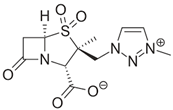 | Approved February 2024 (US FDA) & March 2024 (EMA) | 4th-generation cephalosporin (CFP) & non-β-lactam/penicillanic acid sulfone BLI (ENM); both agents are zwitterionic | cUTIs, including AP (FDA approval) cUTIs (+ AP), HABP/ VABP, & BSI (EMA approval) | CTX-M, TEM, & SHV ESBLs; other class A β-lactamases; some KPCs (not reliably susceptible) & OXA-48 (in vitro data only) ESBL-producing Enterobacterales | ENM has no inhibitory activity against class B MBLs; no additional coverage for P. aeruginosa and A. baumannii over CEF; spectrum gaps also include MRSA, enterococci & anaerobes | [220,221,222,223,224,225] |
| Aztreonam-Avibactam (Emblaveo™) | 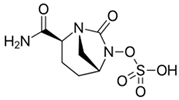 | Approved February 2025 | Monobactam (ATM) & non-β-lactam/DBO BLI (AVI) | Combined w/MET for cIAIs in adults w/limited or no alternative treatment options. cIAI, HABP, VABP & cUTI (EMA only, April 2024) | Class A (ESBL, KPC), Class B MBLs (inhibitory activity due to ATM partner), Class C (AmpC), & Class D (OXA-48-like) CRE (high in vitro activity); S. maltophilia; P. aeruginosa (less potent activity) | Limited Acinetobacter, Gram-positive & anaerobe coverage; emerging resistance, especially among E. coli isolates, due to PBP3 modifications | [197,201,226,227,228,229,230,231] |
| Cefepime-Taniborbactam (VNRX-5133) |  | Phase 3 (CERTAIN-1) completed 14 December 2021 | 4th-generation cephalosporin (CFP) & bicyclic boronic acid BLI (TAN) | cUTI + AP trial (adults) vs. comparator drug MER (NCT03840148 **) | Class A (ESBL, KPC), Class B (VIM, NDM), Class C (AmpC), Class D (OXA-48-like) Enterobacterales (CR, MDR) & P. aeruginosa (CR, MDR) | Not currently approved; IMP MBLs not inhibited by TAN; limited activity against Acinetobacter, Gram-positives, anaerobes; emergence of resistant variants NDM-9, NDM-30, & VIM-83 | [232,233,234,235,236,237,238] |
| Cefepime-Zidebactam (WCK 5222) |  | Phase 3 completed 25 November 2024 | 4th-generation cephalosporin (CFP) & DBO BLI with PBP2 binding (ZID) | cUTI + AP trial (adults) vs. comparator MER (NCT04979806) | ESBL, KPC, MBLs (IMP, VIM, NDM), AmpC, OXA-48 MDR Enterobacterales, P. aeruginosa including CR | Clinical results pending; limited activity against Acinetobacter spp.; reported treatment-emergent resistance in P. aeruginosa | [239,240,241,242,243,244] |
| Aztreonam-Nacubactam (OP0595/RG6080) |  | Phase 3 completed 26 November 2024 Phase 3 completed 1 September 2025 | Monobactam (ATM) & DBO BLI with PBP2 binding activity and enhancer effect (NAC) | cUTI + AP trial (adults) vs. Cefepime-nacubactam & MER (NCT05887908) CRE infections trial (adults) vs. Cefepime-nacubactam & BAT (NCT05905055) | MBLs (NDM, IMP), serine β-lactamases CRE, S. maltophilia | No regulatory approvals as of February 2026 | [245,246,247,248,249] |
| Cefepime-Nacubactam (OP0595/RG6080) | 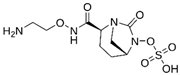 | Phase 3 completed 26 November 2024 Phase 3 completed 1 September 2025 | 4th-generation cephalosporin (CFP) & DBO BLI with PBP2 binding activity and enhancer effect (NAC) | cUTI + AP trial (adults) vs. Aztreonam-nacubactam & MER (NCT05887908) CRE infections trial (adults) vs. Aztreonam-nacubactam & BAT (NCT05905055) | KPC, OXA, MBLs, ESBL, AmpC CRE, Enterobacterales, P. aeruginosa, S. maltophilia | No regulatory approvals as of February 2026 | [245,247,248,249] |
| Imipenem-Cilastatin-Funobactam (XNW4107) |  | Phase 3, status unknown, estimated completion December 2025 | Carbapenem (IMI), renal DHP-I inhibitor (Cilastin) & DBO BLI that potentiates IMI (funobactam) | cUTI + AP trial (adults) vs. MER (NCT05204368) | KPC, some MBLs, OXA, ESBL CRE, MDR Enterobacterales, MDR P. aeruginosa | Clinical results pending; incomplete MBL coverage; limited activity against Acinetobacter | [250,251,252,253] |
| Meropenem-Nacubactam (OP0595/RG6080) |  | Phase 1 completed 10 August 2017 | Carbapenem (MER) & DBO BLI with PBP2 binding activity and enhancer effect (NAC) | Non-randomized, open-label trial; intrapulmonary lung penetration of NAC in healthy adults (NCT03182504); GNB infections | ESBL, KPC, class B NDM, AmpC, OXA-48 MDR Enterobacterales | Early clinical development; safety/efficacy not established | [245,248,254,255] |
| Meropenem-KSP-1007 |  | Phase 1 completed 1 October 2022 | Carbapenem (MER) & bicyclic boronic acid BLI (KSP-1007) | First-in-human, randomized, double-blind clinical trial (NCT05226923) to treat CR-GNB infections | Broad inhibition of Ambler class A, B, C & D enzymes: KPC, MBLs (NDM, VIM, IMP, except IMP-6), AmpC, & OXAs (including OXA-48, Acinetobacter OXAs) CRE, A. baumannii (plus OXA producers) & P. aeruginosa (2-fold MER MIC reductions observed) | Early clinical development; safety/efficacy not established | [256] |
| Ertapenem-Zidebactam (WCK 5222) |  | Phase 1 completed 3 November 2023 | Carbapenem (ETP) & DBO BLI with PBP2 binding (ZID) | Single-center trial (NCT05645757); bacterial infections | E. coli w/AmpC, ESBLs, KPC, MBLs, or OXA-48 (>90% inhibited) | Early clinical development; safety & PK studied but efficacy not established | [257] |
| Xeruborbactam (QPX7728) Combinations |  | Phase 1 trials in combination w/Ceftibuten (NCT06079775 completed 5 January 2025) & Cefiderocol (NCT06547554 completed 27 October 2025) | Oral dosage of 3rd-generation cephalosporin (ceftibuten) & bicyclic boronic acid BLI (XER) Siderophore cephalosporin (CFD) & bicyclic boronic acid BLI (XER) | Both Phase 1 trials studied the safety, tolerability, & PK | Potential Pan-BLI (ultrabroad spectrum); inhibits KPC, MBLs (NDM, VIM, IMP), class D OXA enzymes (e.g., OXA-48 in Enterobacterales and OXA-23/OXA-40 in A. baumannii) as well as other class A and class C β-lactamases | Early clinical development; safety & PK studied but efficacy not established; reported XER-resistant IMP variants (IMP-6, IMP-10, IMP-14, IMP-26) | [258,259,260,261,262] |
| Meropenem-ANT3310 |  | Phase 1 completed 19 August 2025 | Carbapenem (MER) & DBO serine-BLI (ANT3310) | Open-label, single-center trial to determine MER-ANT3310 penetration into the lung in healthy adults (NCT06916156) | KPC & OXA (including OXA-23, OXA-24/40, OXA-51, OXA-58); potentiates activity of MER against CR A. baumannii and Enterobacterales | Early clinical development; safety/efficacy not established | [263,264,265] |
Disclaimer/Publisher’s Note: The statements, opinions and data contained in all publications are solely those of the individual author(s) and contributor(s) and not of MDPI and/or the editor(s). MDPI and/or the editor(s) disclaim responsibility for any injury to people or property resulting from any ideas, methods, instructions or products referred to in the content. |
© 2026 by the authors. Licensee MDPI, Basel, Switzerland. This article is an open access article distributed under the terms and conditions of the Creative Commons Attribution (CC BY) license.
Share and Cite
Grossman, J.M.; Thompson, D.K. Clinically Significant Carbapenemases in Gram-Negative Pathogens: Molecular Diversity and Advances in β-Lactamase Inhibitor Therapy. Antibiotics 2026, 15, 413. https://doi.org/10.3390/antibiotics15040413
Grossman JM, Thompson DK. Clinically Significant Carbapenemases in Gram-Negative Pathogens: Molecular Diversity and Advances in β-Lactamase Inhibitor Therapy. Antibiotics. 2026; 15(4):413. https://doi.org/10.3390/antibiotics15040413
Chicago/Turabian StyleGrossman, Jessi M., and Dorothea K. Thompson. 2026. "Clinically Significant Carbapenemases in Gram-Negative Pathogens: Molecular Diversity and Advances in β-Lactamase Inhibitor Therapy" Antibiotics 15, no. 4: 413. https://doi.org/10.3390/antibiotics15040413
APA StyleGrossman, J. M., & Thompson, D. K. (2026). Clinically Significant Carbapenemases in Gram-Negative Pathogens: Molecular Diversity and Advances in β-Lactamase Inhibitor Therapy. Antibiotics, 15(4), 413. https://doi.org/10.3390/antibiotics15040413