Open-Label Prospective Randomized Comparative Study of the Efficacy and Safety of Gentamicin in Comparison to Other Antibiotics in the Management of Acute Appendicitis in Surgically Treated Patients

 , , , , ,
  and
and 
Abstract
1. Introduction
2. Results
2.1. Study Population
2.2. Efficacy of Antibiotic Therapy
2.2.1. Duration of Treatment and Hospitalization
2.2.2. Complications
2.2.3. CRP Value
2.3. Safety of Antibiotical Therapy
3. Discussion
4. Materials and Methods
4.1. Study Design and Population
4.2. Randomization and Treatment Allocation
4.3. Procedures
4.4. Laboratory Methods
4.5. Outcomes and Definitions
4.6. Statistical Analysis
4.7. Study Design and Registration
5. Conclusions
Author Contributions
Funding
Institutional Review Board Statement
Informed Consent Statement
Data Availability Statement
Conflicts of Interest
Abbreviations
| GTM+MZ | Gentamicin with metronidazole |
| ETP | Ertapenem |
| CXM+MZ | Cefuroxime with metronidazole |
| CRP | C-reactive protein |
| ANOVA | Analysis of variance |
| LMM | Linear mixed model |
| AAST | American Association for the surgery of Trauma |
| IAIs | Intra-abdominal infections |
| EUCAST | European Committee of Antimicrobial Susceptibility Testing |
| UMCL | University Medical Clinical Centre in Ljubljana |
| BMI | Body mass index |
| TIMP2 | Tissue inhibitor of metalloproteinases 2 |
| IGFBP7 | Insulin-like growth factor-binding protein 7 |
| NGAL | Neutrophil gelatinase-associated lipocalin |
| B2M | β-2-Microglobulin |
| AKI | Acute kidney injury |
| ED | Emergency Department |
| CD | Clinical Department |
| ICCB | Institute of Clinical Chemistry and Biochemistry |
| EM | Expectation-maximization |
Appendix A

| Section/Topic | No. | CONSORT 2025 Checklist Item Description | Reported on Page No. |
|---|---|---|---|
| Title and abstract | |||
| Title and structured abstract | 1a | Identification as a randomized trial. Described in the Section 4. | Page 12 |
| 1b | Structured summary of the trial design, methods, results, and conclusions. | Page 1 | |
| Open science | |||
| Trial registration | 2 | Name of trial registry, identifying number (with URL), and date of registration. Described in the Section 4. Study is listed on the ISRCTN registry with the study ID ISRCTN15780064. https://www.isrctn.com/search?q=ISRCTN15780064 (accessed on 29 October 2020). | Page 14 |
| Protocol and statistical analysis plan | 3 | Where the trial protocol and statistical analysis plan can be accessed. It can be accessed in the Section 4. The details are available from the authors, on request, in the Slovenian language. | Pages 12 to 14 |
| Data sharing | 4 | Where and how the individual de-identified participant data (including data dictionary), statistical code, and any other materials can be accessed. The data are available from the authors, on request, in the Slovenian language. | Page 15 |
| Funding and conflicts of interest | 5a | Sources of funding and other support (e.g., supply of drugs), and the role of funders in the design, conduct, analysis, and reporting of the trial. This study was partly funded by University Medical Centre Ljubljana Research Grants (20200024 and 20240054). The drugs are regularly used in hospital for the study indication. There was no influence of funding on any part of this study, | Page 16 |
| 5b | Financial and other conflicts of interest of the manuscript authors. No conflicts of interest. | Page 16 | |
| Introduction | |||
| Background and rationale | 6 | Scientific background and rationale. | Page 2 to 4 |
| Objectives | 7 | Specific objectives related to benefits and harms. | Page 15 |
| Methods | |||
| Patient and public involvement | 8 | Details of patient or public involvement in the design, conduct, and reporting of the trial. No patient or public involvement in the design; all patients were informed about the study and signed an informed consent form. | Page 12 |
| Trial design | 9 | Description of trial design including type of trial (e.g., parallel group, crossover), allocation ratio, and framework (e.g., superiority, equivalence, non-inferiority, exploratory). | Page 12 to 15 |
| Changes to trial protocol | 10 | Important changes to the trial after it commenced including any outcomes or analyses that were not pre-specified, with reason. No important changes in the design. | - |
| Trial setting | 11 | Settings (e.g., community, hospital) and locations (e.g., countries, sites) where the trial was conducted. | Pages 12 and 13 |
| Eligibility criteria | 12a | Eligibility criteria for participants. | Page 12 |
| 12b | If applicable, eligibility criteria for sites and for individuals delivering the interventions (e.g., surgeons, physiotherapists). | Not applicable | |
| Intervention and comparator | 13 | Intervention and comparator with sufficient details to allow replication. If relevant, it is where additional materials describing the intervention and comparator (e.g., intervention manual) can be accessed. No additional materials. | Pages 12 to 15 |
| Outcomes | 14 | Pre-specified primary and secondary outcomes, including the specific measurement variable (e.g., systolic blood pressure), analysis metric (e.g., change from baseline, final value, time to event), method of aggregation (e.g., median, proportion), and time-point for each outcome. | Pages 14 and 15 |
| Harms | 15 | How harms were defined and assessed (e.g., systematically, non-systematically). | Page 13 and 14 |
| Sample size | 16a | How sample size was determined, including all assumptions supporting the sample size calculation. | Page 14 |
| 16b | Explanation of any interim analyses and stopping guidelines. No interim analysis. | - | |
| Randomization: | |||
| Sequence generation | 17a | Who generated the random allocation sequence and the method used. Randomizing was made with Excel. We had 3 groups and 3 different antibiotics to determine. Statistics specified the number of subjects. | Page 13 |
| 17b | Type of randomisation and details of any restriction. Simple randomization using Excel—the function RAND. We randomized patients before starting the study so everyone who had been included was prescribed a specific antibiotic. Some of the patients were not meeting the including criteria and that is why there is a different number of patients in each study arm. | Page 13 | |
| Allocation concealment mechanism | 18 | Mechanism used to implement the random allocation sequence (e.g., central computer/telephone; sequentially numbered, opaque, sealed containers), describing any steps to conceal the sequence until interventions were assigned. We used a computer software program (Excel) that generates the random sequence. Random antibiotics were given to each subject. Paper medical records with already assigned treatments were prepared by investigators (NO) in advance in closed envelopes and the doctors in the ED used them sequentially. The recruiters were blinded to the assignment sequence. | Page 13 |
| Implementation | 19 | Whether the personnel who enrolled and those who assigned participants to the interventions had access to the random allocation sequence. The personnel who enrolled the patients had access to the random allocation sequence. | |
| Blinding | 20a | Who was blinded after assignment to interventions (e.g., participants, care providers, outcome assessors, data analysts). It was an open-label study. | Page 1, page 12. |
| 20b | If blinded, how blinding was achieved and a description of the similarity of interventions. | - | |
| Statistical methods | 21a | Statistical methods used to compare groups for primary and secondary outcomes, including harms. | Pages 14 and 15 |
| 21b | Definition of who is included in each analysis (e.g., all randomized participants), and in which group. | Pages 5 to 8 | |
| 21c | How missing data were handled in the analysis. | Pages 14 and 15 | |
| 21d | Methods for any additional analyses (e.g., subgroup and sensitivity analyses), distinguishing pre-specified from post hoc. Not performed. | - | |
| Results | |||
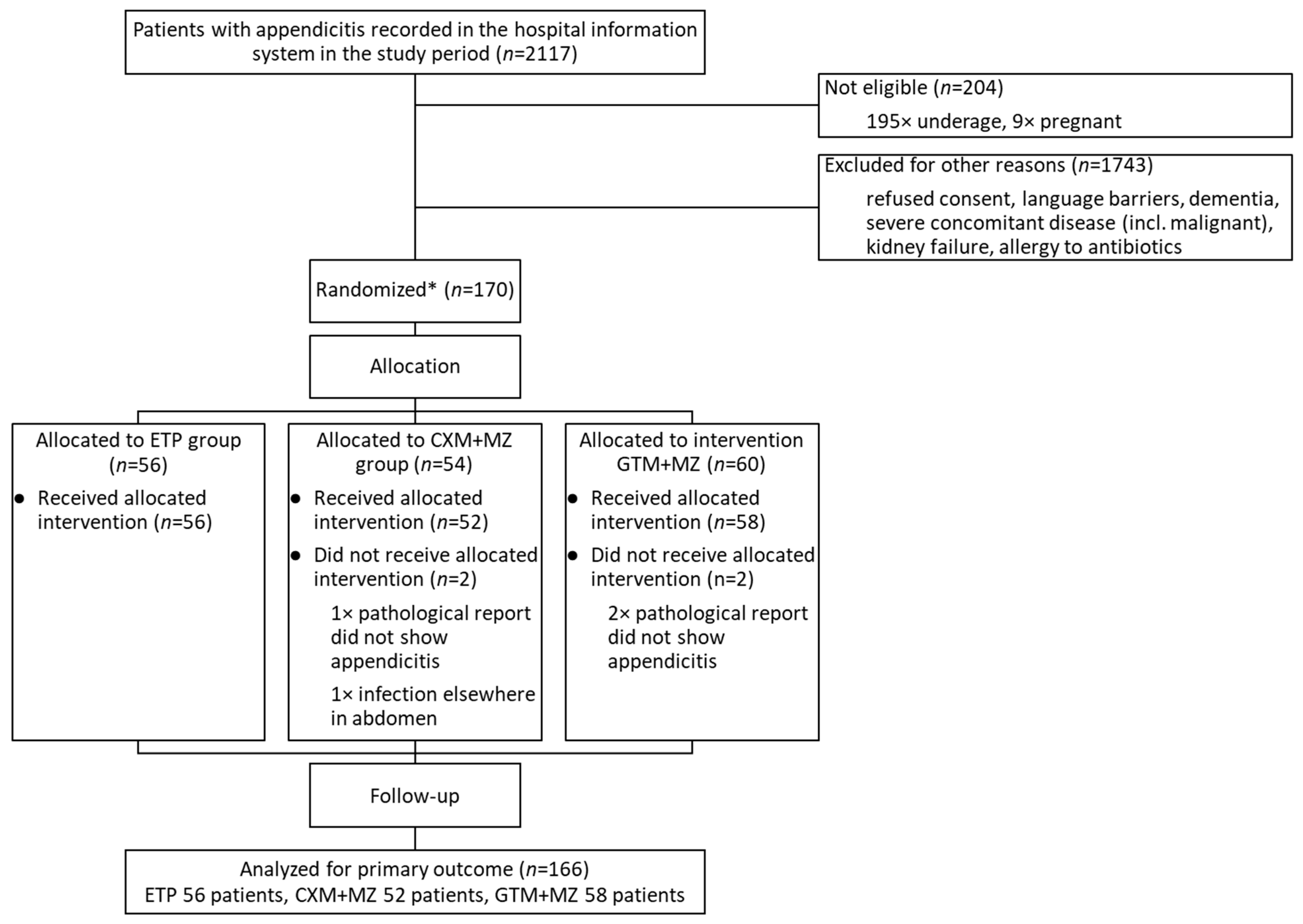
| Participant flow, including flow diagram | 22a | For each group, the numbers of participants who were randomly assigned, received intended intervention, and were analysed for the primary outcome. | Pages 4 and 5 |
| 22b | For each group, losses and exclusions after randomisation, together with reasons. | Page 4 | |
| Recruitment | 23a | Dates defining the periods of recruitment and follow-up for outcomes of benefits and harms. | Page 14 |
| 23b | If relevant, why the trial ended or was stopped. | Not relevant | |
| Intervention and comparator delivery | 24a | Intervention and comparator as they were actually administered (e.g., where appropriate, who delivered the intervention/comparator, how participants adhered, whether they were delivered as intended [fidelity]). All antibiotic therapy was given intravenously and recorded in medical records per protocol of the routine care. | - |
| 24b | Concomitant care received during the trial for each group. The patients received routine care. | - | |
| Baseline data | 25 | A table showing baseline demographic and clinical characteristics for each group. | Page 5 |
| Numbers analysed, outcomes and estimation | 26 | For each primary and secondary outcome, by group:
| Pages 4 to 10 |
| Harms | 27 | All harms or unintended events in each group. | Pages 7 to 10 |
| Ancillary analyses | 28 | Any other analyses performed, including subgroup and sensitivity analyses, distinguishing pre-specified from post hoc. No other analysis. | - |
| Discussion | |||
| Interpretation | 29 | Interpretation consistent with results, balancing benefits and harms, and considering other relevant evidence. | Pages 10 to 12 |
| Limitations | 30 | Trial limitations, addressing sources of potential bias, imprecision, generalisability, and, if relevant, multiplicity of analyses. | Pages 12 and 13 |
References
- Schuster, K.M.; Holena, D.N.; Salim, A.; Savage, S.; Crandall, M. American Association for the Surgery of Trauma emergency general surgery guideline summaries 2018: Acute appendicitis, acute cholecystitis, acute diverticulitis, acute pancreatitis, and small bowel obstruction. Trauma Surg. Acute Care Open 2019, 4, e000281. [Google Scholar] [CrossRef]
- Gomi, H.; Solomkin, J.S.; Schlossberg, D.; Okamoto, K.; Takada, T.; Strasberg, S.M.; Ukai, T.; Endo, I.; Iwashita, Y.; Hibi, T.; et al. Tokyo Guidelines 2018: Antimicrobial therapy for acute cholangitis and cholecystitis. J. Hepato-Biliary-Pancreat. Sci. 2018, 25, 3–16. [Google Scholar] [CrossRef] [PubMed]
- M Aghayev, R.; Jamalov, F.H.; Achundov, I.T.; Huseynov, S.G.; Jamalova, T.P. Antibacterial Prophylaxis in Emergency Surgery of Abdominal Infection. Euroasian J. Hepato-Gastroenterol. 2018, 8, 116–120. [Google Scholar] [CrossRef] [PubMed]
- Kirby, A.; Hobson, R.P.; Burke, D.; Cleveland, V.; Ford, G.; West, R.M. Appendicectomy for suspected uncomplicated appendicitis is associated with fewer complications than conservative antibiotic management: A meta-analysis of post-intervention complications. J. Infect. 2015, 70, 105–110. [Google Scholar] [CrossRef] [PubMed]
- Sartelli, M.; Baiocchi, G.L.; Di Saverio, S.; Ferrara, F.; Labricciosa, F.M.; Ansaloni, L.; Coccolini, F.; Vijayan, D.; Abbas, A.; Abongwa, H.K.; et al. Prospective Observational Study on acute Appendicitis Worldwide (POSAW). World J. Emerg. Surg. 2018, 13, 19. [Google Scholar] [CrossRef]
- Sartelli, M.; Chichom-Mefire, A.; Labricciosa, F.M.; Hardcastle, T.; Abu-Zidan, F.M.; Adesunkanmi, A.K.; Ansaloni, L.; Bala, M.; Balogh, Z.J.; Beltrán, M.A.; et al. The management of intra-abdominal infections from a global perspective: 2017 WSES guidelines for management of intra-abdominal infections. World J. Emerg. Surg. 2017, 12, 29. [Google Scholar] [CrossRef]
- Mui, L.M.; Ng, C.S.; Wong, S.K.; Lam, Y.H.; Fung, T.M.; Fok, K.L.; Chung, S.S.; Ng, E.K. Optimum duration of prophylactic antibiotics in acute non-perforated appendicitis. ANZ J. Surg. 2005, 75, 425–428. [Google Scholar] [CrossRef]
- Huston, J.M.; Barie, P.S.; Dellinger, E.P.; Forrester, J.D.; Duane, T.M.; Tessier, J.M.; Sawyer, R.G.; Cainzos, M.A.; Rasa, K.; Chipman, J.G.; et al. The Surgical Infection Society Guidelines on the Management of Intra-Abdominal Infection: 2024 Update. Surg. Infect. 2024, 25, 419–435. [Google Scholar] [CrossRef]
- Rattan, R.; Allen, C.J.; Sawyer, R.G.; Askari, R.; Banton, K.L.; Claridge, J.A.; Cocanour, C.S.; Coimbra, R.; Cook, C.H.; Cuschieri, J.; et al. Patients with Complicated Intra-Abdominal Infection Presenting with Sepsis Do Not Require Longer Duration of Antimicrobial Therapy. J. Am. Coll. Surg. 2016, 222, 440–446. [Google Scholar] [CrossRef]
- Montravers, P.; Dupont, H.; Leone, M.; Constantin, J.-M.; Mertes, P.-M.; Laterre, P.-F.; Misset, B.; Bru, J.-P.; Gauzit, R.; Sotto, A.; et al. Guidelines for management of intra-abdominal infections. Anaesth. Crit. Care Pain Med. 2015, 34, 117–130. [Google Scholar] [CrossRef]
- Sandhu, J.S.; Sehgal, A.; Gupta, O.; Singh, A. Aminoglycoside Nephrotoxicity Revisited. J. Indian Acad. Clin. Med. 2007, 8, 331–333. [Google Scholar]
- Klibanov, O.M.; Raasch, R.H.; Rublein, J.C. Single Versus Combined Antibiotic Therapy for Gram-Negative Infections. Ann. Pharmacother. 2004, 38, 332–337. [Google Scholar] [CrossRef] [PubMed]
- Kotra, L.P.; Haddad, J.; Mobashery, S. Aminoglycosides: Perspectives on Mechanisms of Action and Resistance and Strategies to Counter Resistance. Antimicrob. Agents Chemother. 2000, 44, 3249–3256. [Google Scholar] [CrossRef] [PubMed]
- Rougier, F.; Ducher, M.; Maurin, M.; Corvaisier, S.; Claude, D.; Jelliffe, R.; Maire, P. Aminoglycoside Dosages and Nephrotoxicity: Quantitative Relationships. Clin. Pharmacokinet. 2003, 42, 493–500. [Google Scholar] [CrossRef] [PubMed]
- Drusano, G.L.; Louie, A. Optimization of Aminoglycoside Therapy. Antimicrob. Agents Chemother. 2011, 55, 2528–2531. [Google Scholar] [CrossRef]
- LeBras, M.; Chow, I.; Mabasa, V.H.; Ensom, M.H.H. Systematic Review of Efficacy, Pharmacokinetics, and Administration of Intraventricular Aminoglycosides in Adults. Neurocrit. Care 2016, 25, 492–507. [Google Scholar] [CrossRef]
- Smyth, A.R.; Bhatt, J.; Nevitt, S.J. Once-daily versus multiple-daily dosing with intravenous aminoglycosides for cystic fibrosis. Cochrane Database Syst. Rev. 2017, 2017, CD002009. [Google Scholar] [CrossRef]
- European Committee on Antimicrobial Susceptibility Testing. Gentamicin: Rationale for EUCAST Clinical Breakpoints. Available online: https://www.eucast.org/fileadmin/eucast/pdf/rationale_documents/bacteria/Gentamicin_Rationale_Document_v_3.1_20240901.pdf (accessed on 5 December 2025).
- Salö, M.; Tiselius, C.; Rosemar, A.; Öst, E.; Sohlberg, S.; Andersson, R.E. Swedish national guidelines for diagnosis and management of acute appendicitis in adults and children. BJS Open 2025, 9, zrae165. [Google Scholar] [CrossRef]
- Berne, T.V.; Appleman, M.D.; Chenella, F.C.; Yellin, A.E.; Gill, M.A.; Heseltine, P.N.R. A Comparison of Aztreonam and Clindamycin versus Gentamicin and Clindamycin. Ann. Surg. 1987, 205, 133–137. [Google Scholar] [CrossRef]
- Berne, T.V.; Yellin, A.E.; Appleman, M.D.; Heseltine, P.N.; Gill, M.A. A clinical comparison of cefepime and metronidazole versus gentamicin and clindamycin in the antibiotic management of surgically treated advanced appendicitis. J. Gynecol. Obstet. 1994, 46, 352. [Google Scholar] [CrossRef]
- Berne, T.V.; Yellin, A.W.; Appleman, M.D.; Heseltine, P.N.R. Antibiotic management of surgically treated gangrenous or perforated appendicitis. Am. J. Surg. 1982, 144, 8–13. [Google Scholar] [CrossRef]
- Report from a Swedish Study Group. A randomized multicentre trial of pefloxacin plus metronidazole and gentamicin plus metronidazole in the treatment of severe intra-abdominal infections. Report from a Swedish Study Group. J. Antimicrob. Chemother. 1990, 26, 173–180. [Google Scholar] [CrossRef]
- Danziger, L.H.; Creger, R.J.; Shwed, J.A.; Stellato, T.A.; Hau, T. Randomized Trial of Imipenem-Cilastatin versus Gentamicin Plus Clindamycin in the Treatment of Polymicrobial Infections. Pharmacother. J. Hum. Pharmacol. Drug Ther. 1988, 8, 315–318. [Google Scholar] [CrossRef] [PubMed]
- Lau, W.Y.; Fan, S.T.; Chu, K.W.; Yip, W.C.; Yin, T.F.; Yeung, C.; Wong, K.K. Cefoxitin versus gentamicin and metronidazole in prevention of post-appendicectomy sepsis: A randomized, prospective trial. J. Antimicrob. Chemother. 1986, 18, 613–619. [Google Scholar] [CrossRef] [PubMed]
- Jauregui, L.E.; Appelbaum, P.C.; Fabian, T.C.; Hageage, G.; Strausbaugh, L.; Martin, L.F. A randomized clinical study of cefoperazone and sulbactam versus gentamicin and clindamycin in the treatment of intra-abdominal infections. J. Antimicrob. Chemother. 1990, 25, 423–433. [Google Scholar] [CrossRef]
- Huizinga, W.K.J.; Baker, L.W.; Kadwa, H.; Ende, J.v.D.; Francis, A.J.; Francis, G.M. Management of severe intra-abdominal sepsis: Single agent antibiotic therapy with cefotetan versus combination therapy with ampicillin, gentamicin and metronidazole. J. Br. Surg. 1988, 75, 1134–1138. [Google Scholar] [CrossRef]
- Torres, A.J.; Valladares, L.D.; Jover, J.; Sánchez-Pernaute, A.; Frías, J.; Carcas, A.; Coronel, P.; Ródenas, E.; Pérez-Balcabao, I.; Fernández-Roblas, R.; et al. Cefminox versus Metronidazole plus Gentamicin in Intra-abdominal Infections: A Prospective Randomized Controlled Clinical Trial. Infection 2000, 28, 318–322. [Google Scholar] [CrossRef] [PubMed]
- Hackford, A.W.; Tally, F.P.; Reinhold, R.B.; Barza, M.; Gorbach, S.L. Prospective Study Comparing Imipenem-Cilastatin with Clindamycin and Gentamicin for the Treatment of Serious Surgical Infections. Arch. Surg. 1988, 123, 322–326. [Google Scholar] [CrossRef]
- Greenberg, R.N.; Cayavee, P.; Danko, L.S.; Bowen, K.; Montazemi, R.; Kearney, P.A.; Johnson, S.B.; Strodel, W.E. Comparison of cefoperazone plus sulbactam with clindamycin plus gentamicin as treatment for intra-abdominal infections. J. Antimicrob. Chemother. 1994, 34, 391–401. [Google Scholar] [CrossRef]
- Stellato, T.A. Moxalactam vs Tobramycin-Clindamycin: A Randomized Trial in Secondary Peritonitis. Arch. Surg. 1988, 123, 714. [Google Scholar] [CrossRef]
- Wilson, S.E. Results of a Randomized, Multicenter Trial of Meropenem Versus Clindamycin/Tobramycin for the Treatment of Intra-Abdominal Infections. Clin. Infect. Dis. 1997, 24, S197–S206. [Google Scholar] [CrossRef]
- Condon, R.E.; Walker, A.P.; Sirinek, K.R.; White, P.W.; Fabian, T.C.; Nichols, R.L.; Wilson, S.E. Meropenem Versus Tobramycin Plus Clindamycin for Treatment of Intraabdominal Infections: Results of a Prospective, Randomized, Double-Blind Clinical Trial. Clin. Infect. Dis. 1995, 21, 544–550. [Google Scholar] [CrossRef] [PubMed]
- Williams, R.R.; Hotchkin, D. Aztreonam plus Clindamycin Versus Tobramycin plus Clindamycin in the Treatment of Intraabdominal Infections. Clin. Infect. Dis. 1991, 13, S629–S633. [Google Scholar] [CrossRef] [PubMed]
- Schentag, J.J.; Wels, P.B.; Reitberg, D.P.; Walczak, P.; Van Tyle, J.H.; Lascola, R.J. A randomized clinical trial of moxalactam alone versus tobramycin plus clindamycin in abdominal sepsis. Ann. Surg. 1983, 198, 35–41. [Google Scholar] [CrossRef] [PubMed]
- Poenaru, D.; De Santis, M.; Christou, N.V. Imipenem versus tobramycin--antianaerobe antibiotic therapy in intra-abdominal infections. Can. J. Surg. 1990, 33, 415–422. [Google Scholar]
- Sirinek, K.R.; Levine, B.A. A randomized trial of ticarcillin and clavulanate versus gentamicin and clindamycin in patients with complicated appendicitis. Surg. Gynecol. Obstet. 1991, 172, 30–35. [Google Scholar] [PubMed]
- Al-Aloul, M.; Miller, H.; Alapati, S.; Stockton, P.; Ledson, M.; Walshaw, M. Renal impairment in cystic fibrosis patients due to repeated intravenous aminoglycoside use. Pediatr. Pulmonol. 2005, 39, 15–20. [Google Scholar] [CrossRef]
- Povsic, M.K.; Beovic, B.; Ihan, A. Perioperative increase in neutrophil CD64 expression is an indicator for intra-abdominal infection after colorectal cancer surgery. Radiol. Oncol. 2017, 51, 211–220. [Google Scholar] [CrossRef]
- Hanberger, H.; Edlund, C.; Furebring, M.; Giske, C.G.; Melhus, Å.; Nilsson, L.E.; Petersson, J.; Sjölin, J.; Ternhag, A.; Werner, M.; et al. Rational use of aminoglycosides—Review and recommendations by the Swedish Reference Group for Antibiotics (SRGA). Scand. J. Infect. Dis. 2013, 45, 161–175. [Google Scholar] [CrossRef]
- Guerra, J.G.; Casalino, E.; Palomino, J.C.; Barboza, E.; del Castillo, M.; del Riego, M.G.; Huapaya, V.; de Mayolo, E.A. Imipenem/Cilastatin vs. Gentamicin/Clindamycin for the Treatment of Moderate to Severe Infections in Hospitalized Patients. Clin. Infect. Dis. 1985, 7, S463–S470. [Google Scholar] [CrossRef]
- Fink, M.P.; Helsmoortel, C.M.; Arous, E.J.; Doern, G.V.; Moriarty, K.P.; Fairchild, P.G.; Townsend, P.L. Comparison of the safety and efficacy of parenteral ticarcillin/clavulanate and clindamycin/gentamicin in serious intra-abdominal infections. J. Antimicrob. Chemother. 1989, 24, 147–156. [Google Scholar] [CrossRef] [PubMed]
- Birolini, D.; Moraes, M.F.; De Souza, O.S. Aztreonam plus Clindamycin vs. Tobramycin plus Clindamycin for the Treatment of Intraabdominal Infections. Clin. Infect. Dis. 1985, 7, S724–S728. [Google Scholar] [CrossRef] [PubMed]
- Gonzenbach, H.R.; Simmen, H.P.; Amgwerd, R. Imipenem (N-F-thienamycin) versus netilmicin plus clindamycin. A controlled and randomized comparison in intra-abdominal infections. Ann. Surg. 1987, 205, 271–275. [Google Scholar] [CrossRef] [PubMed]
- Dalgic, N.; Karadag, C.A.; Bayraktar, B.; Sancar, M.; Kara, O.; Pelit, S.; Celebi, S.; Kafadar, I.; Dokucu, A.I. Ertapenem versus Standard Triple Antibiotic Therapy for the Treatment of Perforated Appendicitis in Pediatric Patients: A Prospective Randomized Trial. Eur. J. Pediatr. Surg. 2013, 24, 410–418. [Google Scholar] [CrossRef]
- Pogorelić, Z.; Silov, N.; Jukić, M.; Baloević, S.E.; Peričić, T.P.; Jerončić, A. Ertapenem Monotherapy versus Gentamicin Plus Metronidazole for Perforated Appendicitis in Pediatric Patients. Surg. Infect. 2019, 20, 625–630. [Google Scholar] [CrossRef]
- Birolini, D.; Moraes, M.F.; de Souza, O.S. Comparison of aztreonam plus clindamycin with tobramycin plus clindamycin in the treatment of intra-abdominal infections. Chemotherapy 1989, 35, 49–57. [Google Scholar] [CrossRef]
- Solomkin, J.S.; Dellinger, E.P.; Christou, N.V.; Busuttil, R.W. Results of a Multicenter Trial Comparing Imipenem/Cilastatin to Tobramycin/Clindamycin for Intra-abdominal Infections. Ann. Surg. 1990, 212, 581–591. [Google Scholar] [CrossRef]
- Maller, R.; Isaksson, B.; Nilsson, L.; Sörén, L. A study of amikacin given once versus twice daily in serious infections. J. Antimicrob. Chemother. 1988, 22, 75–79. [Google Scholar] [CrossRef]
- Blaser, J.; König, C. Once-daily dosing of aminoglycosides. Eur. J. Clin. Microbiol. Infect. Dis. 1995, 14, 1029–1038. [Google Scholar] [CrossRef]
- Bailey, J.A.; Virgo, K.S.; DiPiro, J.T.; Nathens, A.B.; Sawyer, R.G.; Mazuski, J.E. Aminoglycosides for Intra-Abdominal Infection: Equal to the Challenge? Surg. Infect. 2002, 3, 315–335. [Google Scholar] [CrossRef]
- Koca, F.; Faqar-Uz-Zaman, S.F.; Reinheimer, C.; Hogardt, M.; Kempf, V.A.J.; Ziegler, P.; Schnitzbauer, A.A.; Wiegering, A.; Bechstein, W.O.; Malkomes, P. A Prospective Analysis of the Burden of Multi-Drug-Resistant Pathogens in Acute Appendicitis and Their Implication for Clinical Management. Antibiotics 2025, 14, 378. [Google Scholar] [CrossRef] [PubMed]
- Rybak, M.J.; Abate, B.J.; Kang, S.L.; Ruffing, M.J.; Lerner, S.A.; Drusano, G.L. Prospective Evaluation of the Effect of an Aminoglycoside Dosing Regimen on Rates of Observed Nephrotoxicity and Ototoxicity. Antimicrob. Agents Chemother. 1999, 43, 1549–1555. [Google Scholar] [CrossRef] [PubMed]
- Thy, M.; Timsit, J.-F.; De Montmollin, E. Aminoglycosides for the Treatment of Severe Infection Due to Resistant Gram-Negative Pathogens. Antibiotics 2023, 12, 860. [Google Scholar] [CrossRef] [PubMed]
- Nguyen, M.T.; Devarajan, P. Biomarkers for the early detection of acute kidney injury. Pediatr. Nephrol. 2008, 23, 2151–2157. [Google Scholar] [CrossRef]
- Rysz, J.; Gluba-Brzózka, A.; Franczyk, B.; Jabłonowski, Z.; Ciałkowska-Rysz, A. Novel Biomarkers in the Diagnosis of Chronic Kidney Disease and the Prediction of Its Outcome. Int. J. Mol. Sci. 2017, 18, 1702. [Google Scholar] [CrossRef]
- Guzzi, L.M.; Bergler, T.; Binnall, B.; Engelman, D.T.; Forni, L.; Germain, M.J.; Gluck, E.; Göcze, I.; Joannidis, M.; Koyner, J.L.; et al. Clinical use of [TIMP-2]•[IGFBP7] biomarker testing to assess risk of acute kidney injury in critical care: Guidance from an expert panel. Crit. Care 2019, 23, 225. [Google Scholar] [CrossRef]
- McWilliam, S.J.; Antoine, D.J.; Jorgensen, A.L.; Smyth, R.L.; Pirmohamed, M. Urinary Biomarkers of Aminoglycoside-Induced Nephrotoxicity in Cystic Fibrosis: Kidney Injury Molecule-1 and Neutrophil Gelatinase-Associated Lipocalin. Sci. Rep. 2018, 8, 5094. [Google Scholar] [CrossRef]
- Kashani, K.; Al-Khafaji, A.; Ardiles, T.; Artigas, A.; Bagshaw, S.M.; Bell, M.; Bihorac, A.; Birkhahn, R.; Cely, C.M.; Chawla, L.S.; et al. Discovery and validation of cell cycle arrest biomarkers in human acute kidney injury. Crit. Care 2013, 17, R25. [Google Scholar] [CrossRef]
- Gluhovschi, G.; Gadalean, F.; Gluhovschi, C.; Velciov, S.; Petrica, L.; Bob, F.; Bozdog, G.; Kaycsa, A. Urinary biomarkers in assessing the nephrotoxic potential of gentamicin in solitary kidney patients after 7 days of therapy. Ren. Fail. 2014, 36, 534–540. [Google Scholar] [CrossRef]
- Koyner, J.L.; Shaw, A.D.; Chawla, L.S.; Hoste, E.A.; Bihorac, A.; Kashani, K.; Haase, M.; Shi, J.; Kellum, J.A. Tissue Inhibitor Metalloproteinase-2 (TIMP-2)⋅IGF-Binding Protein-7 (IGFBP7) Levels Are Associated with Adverse Long-Term Outcomes in Patients with AKI. J. Am. Soc. Nephrol. 2015, 26, 1747–1754. [Google Scholar] [CrossRef]
- Erstad, B.L. Usefulness of the Biomarker TIMP-2•IGFBP7 for Acute Kidney Injury Assessment in Critically Ill Patients: A Narrative Review. Ann. Pharmacother. 2022, 56, 83–92. [Google Scholar] [CrossRef]
- Esmeijer, K.; Schoe, A.; Ruhaak, L.R.; Hoogeveen, E.K.; Soonawala, D.; Romijn, F.P.H.T.M.; Shirzada, M.R.; van Dissel, J.T.; Cobbaert, C.M.; de Fijter, J.W. The predictive value of TIMP-2 and IGFBP7 for kidney failure and 30-day mortality after elective cardiac surgery. Sci. Rep. 2021, 11, 1071. [Google Scholar] [CrossRef] [PubMed]
- Prins, J.M.; Büller, H.R.; Kuijper, E.J.; Tange, R.A.; Speelman, P. Once versus thrice daily gentamicin in patients with serious infections. Lancet 1993, 341, 335–339. [Google Scholar] [CrossRef] [PubMed]
- Hayward, R.S.; Harding, J.; Molloy, R.; Land, L.; Longcroft-Neal, K.; Moore, D.; Ross, J.D.C. Adverse effects of a single dose of gentamicin in adults: A systematic review. Br. J. Clin. Pharmacol. 2018, 84, 223–238. [Google Scholar] [CrossRef] [PubMed]
- Rozenblat, D.; Serret-Larmande, A.; Maillard, A.; Arrestier, R.; Benghanem, S.; Charpentier, J.; Darmon, M.; Das, V.; Dépret, F.; Donay, J.L.; et al. Impact of aminoglycosides on survival rate and renal outcomes in patients with urosepsis: A multicenter retrospective study. Ann. Intensive Care 2025, 15, 52. [Google Scholar] [CrossRef]
- Hovind, M.J.; Berdal, J.E.; Dalgard, O.; Lyngbakken, M.N. Empiric Antibiotic Therapy in Suspected Sepsis: Impact of Gentamicin-Based Regimens on Incident Renal Failure and Mortality. Open Forum Infect. Dis. 2025, 12, ofaf319. [Google Scholar] [CrossRef]
- Kekomäki, M.; Louhimo, I. Perforated Appendix and Antibiotics. Eur. J. Pediatr. Surg. 1981, 32, 310–314. [Google Scholar] [CrossRef]
- Kim, J.; Shin, W. How to Do Random Allocation (Randomization). Clin. Orthop. Surg. 2014, 6, 103. [Google Scholar] [CrossRef]
- Dindo, D.; Demartines, N.; Clavien, P.-A. Classification of Surgical Complications: A New Proposal with Evaluation in a Cohort of 6336 Patients and Results of a Survey. Ann. Surg. 2004, 240, 205–213. [Google Scholar] [CrossRef]
- Hopewell, S.; Chan, A.W.; Collins, G.S.; Hróbjartsson, A.; Moher, D.; Schulz, K.F.; Tunn, R.; Aggarwal, R.; Berkwits, M.; Berlin, J.A.; et al. CONSORT 2025 explanation and elaboration: Updated guideline for reporting randomized trials. BMJ 2025, 388, e081123. [Google Scholar] [CrossRef]


| Total (n = 166) | ETP (n = 56) | CXM+MZ (n = 52) | GTM+MZ (n = 58) | |
|---|---|---|---|---|
| Age Mean (median, range) | 42 (41, 18–82) | 41 (37, 18–82) | 42 (39, 18–81) | 44 (44, 19–81) |
| BMI | (n = 127) | (n = 42) | (n = 41) | (n = 44) |
| Mean (median, range) | 25.7 (25.0, 18.0–44.6) | 25.0 (24.6, 18.0–35.3) | 26.3 (24.5, 18.4–44.6) | 25.8 (25.6, 18.1–35.8) |
| Sex no. (%) male | 85 (51) | 30 | 28 | 27 |
| female | 81 (49) | 26 | 24 | 31 |
| Total No. (%) | ETP | CXM+MZ | GTM+MZ | |
|---|---|---|---|---|
| Nausea at home | 108 (66) | 38 | 31 | 39 |
| Loss of appetite | 62 (37) | 20 | 19 | 23 |
| History of pain in right lower quadrant | 158 (95) | 54 | 50 | 54 |
| Chronic disease | 56 (34) | 18 | 15 | 23 |
| Fever at home > 38 °C | 27 (17) | 7 | 6 | 14 |
| High body temperature at admission | 24 (14) | 6 | 7 | 11 |
| Pain in right lower quadrant at admission | 161 (97) | 56 | 49 | 56 |
| Histopathology report | ||||
| acute appendicitis | 41 | 17 | 11 | 12 |
| phlegmonous appendicitis | 16 | 4 | 6 | 6 |
| phlegmonous appendicitis with peritonitis | 105 | 33 | 33 | 39 |
| lymphoid hyperplasia | 3 | 2 | 1 | |
| Total | 166 | 56 | 52 * | 58 |
| Whole Sample | ETP | CXM+MZ | GTM+MZ | p (ANOVA) | p (Welch) | p (Kruskal-Wallis) | ||
|---|---|---|---|---|---|---|---|---|
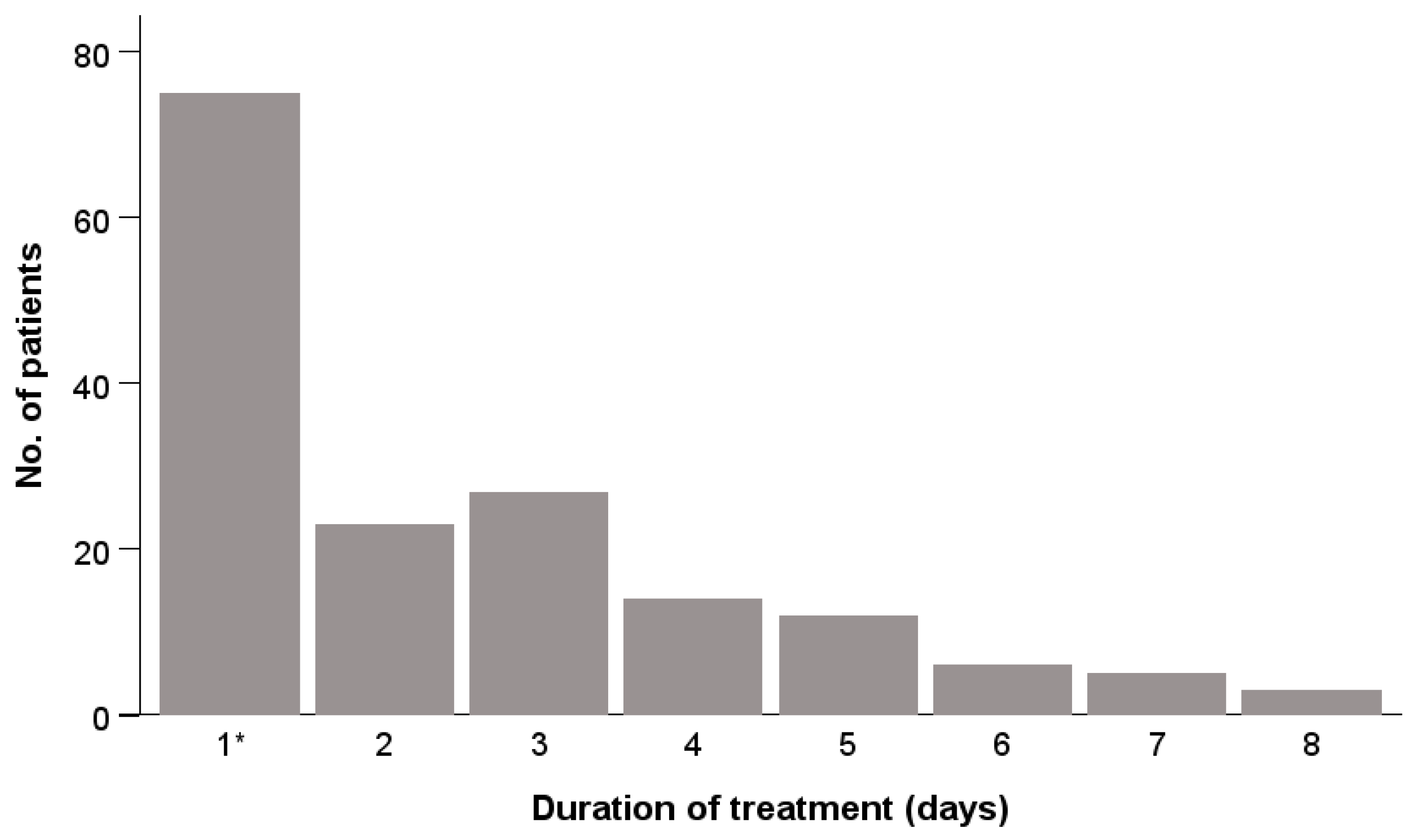
| Duration of treatment (days) | Mean (SD) | 2.5 (1.8) | 2.2 (1.5) | 2.4 (1.9) | 2.9 (2.0) | 0.090 | 0.093 | 0.084 |
| Median (range) | 2 (1–8) | 2 (1–7) | 1 (1–8) | 3 (1–8) | ||||
| Length of hospital stay (days) | Mean (SD) | 3.8 (2.4) | 3.4 (1.6) | 3.8 (1.7) | 4.3 (3.3) | 0.192 | 0.222 | 0.451 |
| Median (range) | 3 (2–18) | 3 (2–9) | 3 (2–9) | 3 (2–18) |
| ETP (n = 56) | CXM+MZ (n = 52) | GTM+MZ (n = 58) | Total (n = 166) | |
|---|---|---|---|---|
| Complications during hospitalization (p = 0.049) | ||||
| No | 55 (98%) | 52 (100%) | 53 (91%) | 160 (96%) |
| Clavien–Dindo class 1 | 1 (2%) | 0 (0%) | 4 (7%) | 5 (3%) |
| Clavien–Dindo class 2 | 0 (0%) | 0 (0%) | 1 (2%) | 1 (1%) |
| Proportion [95% confidence interval] | 1.8% (0.3–9.5%) | 0.0% (0.0–6.9%) | 8.6% (3.7–18.6%) | 3.6% (1.7–7.7%) |
| Infectious complications during hospitalization (p = 0.330) | ||||
| No | 56 (100%) | 52 (100%) | 56 (97%) | 164 (99%) |
| Yes | 0 (0%) | 0 (0%) | 2 (3%) | 2 (1%) |
| Proportion [95% confidence interval] | 0.0% (0.0–6.4%) | 0.0% (0.0–6.9%) | 3.6% (1.0–12.1%) | 1.2% (0.3–4.3%) |
| Complications within a month after surgery (p = 1.000) | ||||
| No | 55 (98%) | 51 (98%) | 56 (97%) | 162 (98%) |
| Clavien–Dindo class 1 | 1 (2%) | 0 (0%) | 1 (2%) | 2 (1%) |
| Clavien–Dindo class 2 | 0 (0%) | 1 (2%) | 1 (2%) | 2 (1%) |
| Proportion [95% confidence interval] | 1.8% (0.3–9.5%) | 1.9% (0.3–10.1%) | 3.4% (1.0–11.7%) | 2.4% (0.9–6.0%) |
| Infectious complications within a month after surgery (p = 0.763) | ||||
| No | 56 (100%) | 51 (98%) | 57 (98%) | 164 (99%) |
| Yes | 0 (0%) | 1 (2%) | 1 (2%) | 2 (1%) |
| Proportion [95% confidence interval] | 0.0% (0.0–6.4%) | 1.9% (0.3–10.1%) | 1.7% (0.3–9.1%) | 1.2% (0.3–4.3%) |
Disclaimer/Publisher’s Note: The statements, opinions and data contained in all publications are solely those of the individual author(s) and contributor(s) and not of MDPI and/or the editor(s). MDPI and/or the editor(s) disclaim responsibility for any injury to people or property resulting from any ideas, methods, instructions or products referred to in the content. |
© 2026 by the authors. Licensee MDPI, Basel, Switzerland. This article is an open access article distributed under the terms and conditions of the Creative Commons Attribution (CC BY) license.
Share and Cite
Obolnar, N.; Čebron, Ž.; Norčič, G.; Černe, D.; Jerin, A.; Čegovnik Primožič, U.; Vidmar, G.; Pintar Kaliterna, T.; Beović, B. Open-Label Prospective Randomized Comparative Study of the Efficacy and Safety of Gentamicin in Comparison to Other Antibiotics in the Management of Acute Appendicitis in Surgically Treated Patients. Antibiotics 2026, 15, 395. https://doi.org/10.3390/antibiotics15040395
Obolnar N, Čebron Ž, Norčič G, Černe D, Jerin A, Čegovnik Primožič U, Vidmar G, Pintar Kaliterna T, Beović B. Open-Label Prospective Randomized Comparative Study of the Efficacy and Safety of Gentamicin in Comparison to Other Antibiotics in the Management of Acute Appendicitis in Surgically Treated Patients. Antibiotics. 2026; 15(4):395. https://doi.org/10.3390/antibiotics15040395
Chicago/Turabian StyleObolnar, Nika, Žan Čebron, Gregor Norčič, Darko Černe, Aleš Jerin, Urška Čegovnik Primožič, Gaj Vidmar, Tadeja Pintar Kaliterna, and Bojana Beović. 2026. "Open-Label Prospective Randomized Comparative Study of the Efficacy and Safety of Gentamicin in Comparison to Other Antibiotics in the Management of Acute Appendicitis in Surgically Treated Patients" Antibiotics 15, no. 4: 395. https://doi.org/10.3390/antibiotics15040395
APA StyleObolnar, N., Čebron, Ž., Norčič, G., Černe, D., Jerin, A., Čegovnik Primožič, U., Vidmar, G., Pintar Kaliterna, T., & Beović, B. (2026). Open-Label Prospective Randomized Comparative Study of the Efficacy and Safety of Gentamicin in Comparison to Other Antibiotics in the Management of Acute Appendicitis in Surgically Treated Patients. Antibiotics, 15(4), 395. https://doi.org/10.3390/antibiotics15040395