Burn Infections and Sepsis: Challenges and Future Prospects of Antibacterial Therapy



Abstract
1. Introduction
- Box 1: Key controversies and evidence gaps in burn infection care
- Pathophysiology of Infection and Sepsis in Burns
2. Epidemiology and Temporal Microbiology of Burn Wounds
2.1. Global Burden
2.2. Temporal Microbiology of Burn Wounds
3. Major Burn Wound Pathogens and Antimicrobial Resistance
3.1. Staphylococcus aureus
3.2. Pseudomonas aeruginosa
3.3. Acinetobacter baumannii
3.4. Enterobacteriaceae
3.5. Fungi
3.6. Multidrug Resistance in Burn Infections

| Pathogen | Major Resistance Mechanisms | Antibiotics Commonly Resistant | Potential Active Agents |
|---|---|---|---|
| Staphylococcus aureus (MRSA) [52,53,54] |
|
|
|
| Pseudomonas aeruginosa [56,57,58,59] |
|
|
|
| Acinetobacter baumannii [60,61,62,63] |
|
|
|
| Klebsiella pneumoniae [65,66,67,68] |
|
|
|
| Escherichia coli [38,69,70,71,72] |
|
|
|
| Enterobacter species [38,73,74,75,76] |
|
|
|
| Candida species [24,77,78,79] |
| Fluconazole and other azoles (species-dependent) |
|
| Candida auris [26,80,81,82] |
|
|
|
4. Diagnostic Challenges and Emerging Diagnostics in Burn Infection
- Key Clinical Messages
- -
- Distinguishing infection from sterile burn inflammation remains a major diagnostic challenge because systemic inflammatory responses are common after burn injury.
- -
- Conventional microbiological cultures remain the diagnostic standard but may not reliably differentiate colonization from invasive infection.
- -
- Biomarkers such as procalcitonin and C-reactive protein may assist in monitoring but lack specificity in burn patients.
- -
- Emerging diagnostics, including rapid molecular testing, host-response biomarkers, and machine-learning approaches, may improve early infection detection in the future.
5. Pharmacokinetic/Pharmacodynamic Variability
5.1. Early Phase (Resuscitation)
5.2. Hypermetabolic Phase and Implications for Antimicrobial Dosing
5.3. Therapeutic Drug Monitoring
5.4. Limitations of Current Evidence
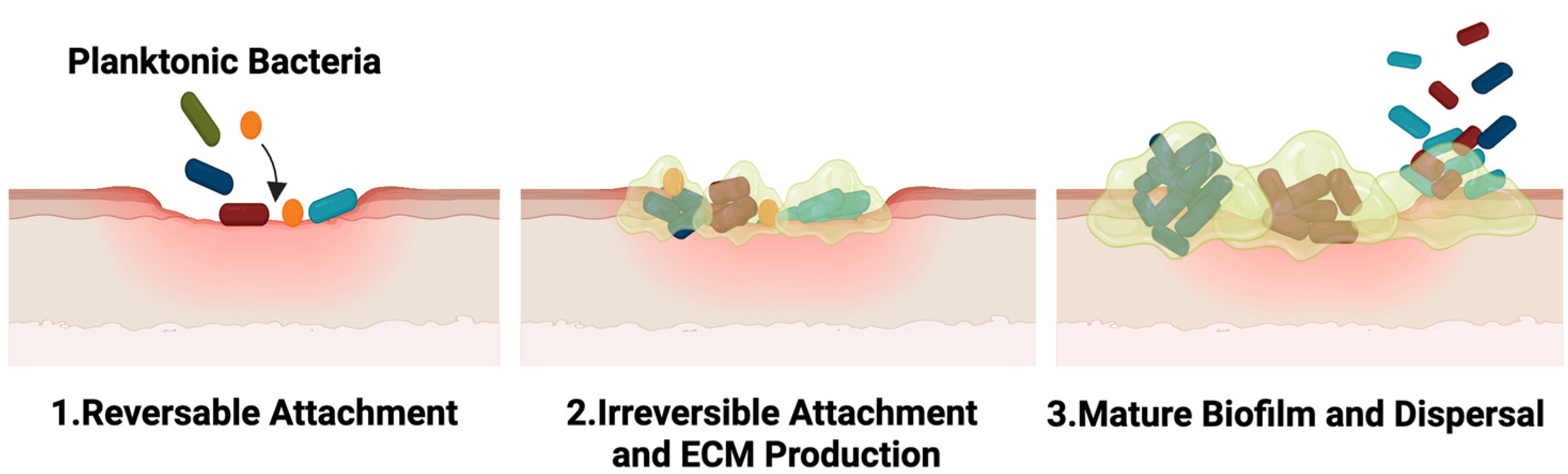
6. Biofilm Formation and Barriers to Antimicrobial Penetration
6.1. Impact on Antimicrobial Tolerance
6.2. Diagnostic Challenges in Biofilm-Associated Infections
6.3. Anti-Biofilm Treatment Strategies
7. Topical Antimicrobial Strategies in Burn Care
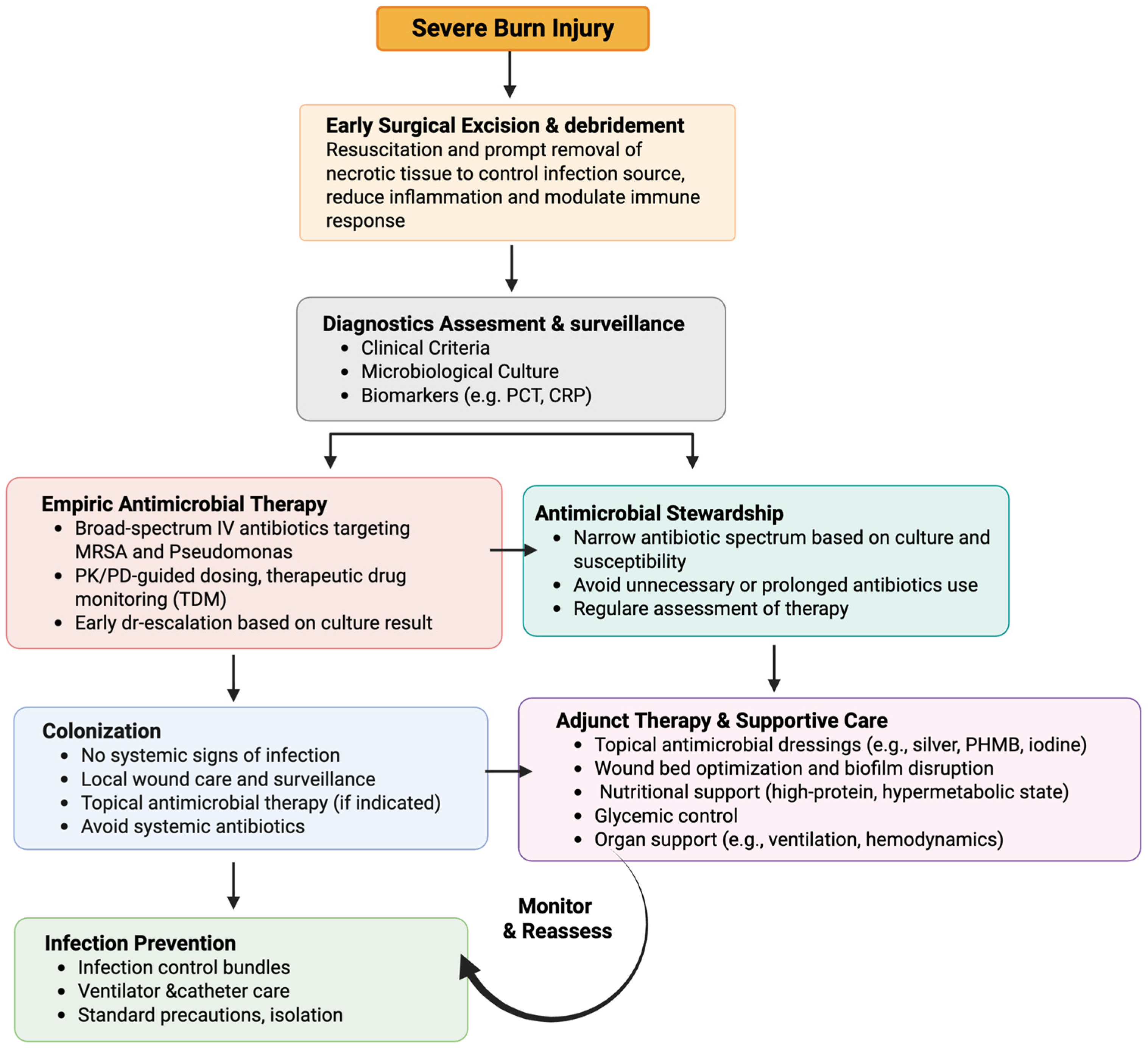
8. Current Approaches and Best Practices
8.1. Early Excision and Grafting
8.2. Empiric Antibiotic Therapy Guided by Local Antibiograms
8.3. Antimicrobial Stewardship and Avoidance of Unwarranted Use
8.4. Infection Prevention Bundles
8.5. Adjunctive Therapies
8.6. Ongoing Controversies and Evidence Gaps
- Key Clinical Messages
- -
- Early excision and wound closure remain the most effective strategies for preventing infection in severe burns.
- -
- Empiric antibiotic therapy should be guided by local resistance patterns and rapidly de-escalated once microbiological data become available.
- -
- Antimicrobial stewardship is essential to minimize resistance and avoid unnecessary antimicrobial exposure.
- -
- Strict infection prevention practices and multidisciplinary care remain central to modern burn management.
9. Emerging and Future Therapeutic Strategies
9.1. Phage Therapy
9.2. Enzybiotics
9.3. Antimicrobial Peptides
9.4. Nanotechnology-Based Antimicrobial Delivery
9.5. Anti-Virulence Therapies
9.6. Immunomodulatory Approaches
9.7. Development of Novel Antibiotics
9.8. Translational Outlook
10. Research Priorities and Implementation Needs
10.1. Epidemiology and Surveillance
10.2. Diagnostics and Biomarkers
10.3. Antimicrobial Resistance and Therapeutic Strategies
10.4. Global Implementation and Burn Care Capacity
11. Conclusions
Author Contributions
Funding
Institutional Review Board Statement
Informed Consent Statement
Data Availability Statement
Conflicts of Interest
References
- Burns. Available online: https://www.who.int/news-room/fact-sheets/detail/burns (accessed on 4 March 2026).
- Yakupu, A.; Zhang, J.; Dong, W.; Song, F.; Dong, J.; Lu, S. The epidemiological characteristic and trends of burns globally. BMC Public Health 2022, 22, 1596. [Google Scholar] [CrossRef]
- Price, K.; Lee, K.C.; Woolley, K.E.; Falk, H.; Peck, M.; Lilford, R.; Moiemen, N. Burn injury prevention in low- and middle- income countries: Scoping systematic review. Burn. Trauma 2021, 9, tkab037. [Google Scholar] [CrossRef]
- Jeschke, M.G.; van Baar, M.E.; Choudhry, M.A.; Chung, K.K.; Gibran, N.S.; Logsetty, S. Burn injury. Nat. Rev. Dis. Prim. 2020, 6, 11. [Google Scholar] [CrossRef] [PubMed]
- Maslova, E.; Eisaiankhongi, L.; Sjöberg, F.; McCarthy, R.R. Burns and biofilms: Priority pathogens and in vivo models. npj Biofilm. Microbiomes 2021, 7, 73. [Google Scholar] [CrossRef] [PubMed]
- Osuka, A.; Shigeno, A.; Matsuura, H.; Onishi, S.; Yoneda, K. Systemic immune response of burns from the acute to chronic phase. Acute Med. Surg. 2024, 11, e976. [Google Scholar] [CrossRef] [PubMed]
- Tejiram, S.; Shupp, J.W. Sepsis in surgical patients: Burn sepsis. Surgery 2024, 175, 1259–1261. [Google Scholar] [CrossRef]
- Liu, H.-F.; Zhang, F.; Lineaweaver, W.C. History and Advancement of Burn Treatments. Ann. Plast. Surg. 2017, 78, S2–S8. [Google Scholar] [CrossRef]
- Moins-Teisserenc, H.; Cordeiro, D.J.; Audigier, V.; Ressaire, Q.; Benyamina, M.; Lambert, J.; Maki, G.; Homyrda, L.; Toubert, A.; Legrand, M. Severe Altered Immune Status After Burn Injury Is Associated With Bacterial Infection and Septic Shock. Front. Immunol. 2021, 12, 586195. [Google Scholar] [CrossRef]
- Zhang, P.; Zou, B.; Liou, Y.-C.; Huang, C. The pathogenesis and diagnosis of sepsis post burn injury. Burn. Trauma 2021, 9, tkaa047. [Google Scholar] [CrossRef]
- Greenhalgh, D.G. Sepsis in the burn patient: A different problem than sepsis in the general population. Burn. Trauma 2017, 5, 23. [Google Scholar] [CrossRef]
- Church, D.; Elsayed, S.; Reid, O.; Winston, B.; Lindsay, R. Burn wound infections. Clin. Microbiol. Rev. 2006, 19, 403–434. [Google Scholar] [CrossRef]
- Lord, J.M.; Midwinter, M.J.; Chen, Y.-F.; Belli, A.; Brohi, K.; Kovacs, E.J.; Koenderman, L.; Kubes, P.; Lilford, R.J. The systemic immune response to trauma: An overview of pathophysiology and treatment. Lancet 2014, 384, 1455–1465. [Google Scholar] [CrossRef]
- Stanojcic, M.; Abdullahi, A.; Rehou, S.; Parousis, A.; Jeschke, M.G. Pathophysiological Response to Burn Injury in Adults. Ann. Surg. 2018, 267, 576–584. [Google Scholar] [CrossRef] [PubMed]
- Sopirala, M.M.; Weber, D.; Sood, G.; Yassin, M.; Palmieri, T.L.; Narasimhan, S.; Sheckter, C.; Caffrey, J.; Mandell, S.; Pisney, L.; et al. A research agenda for burn infection prevention: Identifying knowledge gaps and prioritizing future directions. Antimicrob. Steward. Healthc. Epidemiol. 2025, 5, e293. [Google Scholar] [CrossRef] [PubMed]
- Mater, M.E.; Yamani, A.E.; Aljuffri, A.A.; Binladen, S.A. Epidemiology of burn-related infections in the largest burn unit in Saudi Arabia. Saudi Med. J. 2020, 41, 726–732. [Google Scholar] [CrossRef]
- van Duin, D.; Strassle, P.D.; DiBiase, L.M.; Lachiewicz, A.M.; Rutala, W.A.; Eitas, T.; Maile, R.; Kanamori, H.; Weber, D.J.; Cairns, B.A.; et al. Timeline of health care-associated infections and pathogens after burn injuries. Am. J. Infect. Control. 2016, 44, 1511–1516. [Google Scholar] [CrossRef]
- Norbury, W.; Herndon, D.N.; Tanksley, J.; Jeschke, M.G.; Finnerty, C.C. Infection in Burns. Surg. Infect. 2016, 17, 250–255. [Google Scholar] [CrossRef] [PubMed]
- Azzopardi, E.A.; Azzopardi, E.; Camilleri, L.; Villapalos, J.; Boyce, D.E.; Dziewulski, P.; Dickson, W.A.; Whitaker, I.S. Gram negative wound infection in hospitalised adult burn patients--systematic review and metanalysis. PLoS ONE 2014, 9, e95042. [Google Scholar] [CrossRef]
- Macedo-Viñas, M.; Lucas, A. Evolution of Microbial Flora Colonizing Burn Wounds during Hospitalization in Uruguay. Biomedicines 2023, 11, 2900. [Google Scholar] [CrossRef] [PubMed]
- Hemmati, J.; Azizi, M.; Asghari, B.; Arabestani, M.R. Multidrug-Resistant Pathogens in Burn Wound, Prevention, Diagnosis, and Therapeutic Approaches (Conventional Antimicrobials and Nanoparticles). Can. J. Infect. Dis. Med. Microbiol. 2023, 2023, 8854311. [Google Scholar] [CrossRef]
- Barbian, H.J.; Lie, L.; Kittner, A.; Harrington, A.; Carson, J.; Frias, M.; Slade, D.H.; Kim, D.Y.; Black, S.; Parada, J.P.; et al. Candida auris Outbreak and Epidemiologic Response in Burn Intensive Care Unit, Illinois, USA, 2021–2023. Emerg. Infect. Dis. 2025, 31, 438–447. [Google Scholar] [CrossRef]
- Gur, I.; Zilbert, A.; Toledano, K.; Roimi, M.; Stern, A. Clinical impact of fungal colonization of burn wounds in patients hospitalized in the intensive care unit: A retrospective cohort study. Trauma Surg. Acute Care Open 2024, 9, e001325. [Google Scholar] [CrossRef]
- Pappas, P.G.; Kauffman, C.A.; Andes, D.R.; Clancy, C.J.; Marr, K.A.; Ostrosky-Zeichner, L.; Reboli, A.C.; Schuster, M.G.; Vazquez, J.A.; Walsh, T.J.; et al. Clinical Practice Guideline for the Management of Candidiasis: 2016 Update by the Infectious Diseases Society of America. Clin. Infect. Dis. 2016, 62, e1–e50. [Google Scholar] [CrossRef] [PubMed]
- Bongomin, F.; Gago, S.; Oladele, R.O.; Denning, D.W. Global and Multi-National Prevalence of Fungal Diseases—Estimate Precision. J. Fungi 2017, 3, 57. [Google Scholar] [CrossRef] [PubMed]
- Du, H.; Bing, J.; Hu, T.; Ennis, C.L.; Nobile, C.J.; Huang, G. Candida auris: Epidemiology, biology, antifungal resistance, and virulence. PLoS Pathog. 2020, 16, e1008921. [Google Scholar] [CrossRef] [PubMed]
- Maitz, J.; Merlino, J.; Rizzo, S.; McKew, G.; Maitz, P. Burn wound infections microbiome and novel approaches using therapeutic microorganisms in burn wound infection control. Adv. Drug. Deliv. Rev. 2023, 196, 114769. [Google Scholar] [CrossRef] [PubMed]
- Gong, Y.; Peng, Y.; Luo, X.; Zhang, C.; Shi, Y.; Zhang, Y.; Deng, J.; Peng, Y.; Luo, G.; Li, H. Different Infection Profiles and Antimicrobial Resistance Patterns Between Burn ICU and Common Wards. Front. Cell. Infect. Microbiol. 2021, 11, 681731. [Google Scholar] [CrossRef]
- Kalligeros, M.; Shehadeh, F.; Karageorgos, S.A.; Zacharioudakis, I.M.; Mylonakis, E. MRSA colonization and acquisition in the burn unit: A systematic review and meta-analysis. Burns 2019, 45, 1528–1536. [Google Scholar] [CrossRef]
- Botelho, J.; Grosso, F.; Peixe, L. Antibiotic resistance in Pseudomonas aeruginosa—Mechanisms, epidemiology and evolution. Drug. Resist. Updat. 2019, 44, 100640. [Google Scholar] [CrossRef]
- Pang, Z.; Raudonis, R.; Glick, B.R.; Lin, T.-J.; Cheng, Z. Antibiotic resistance in Pseudomonas aeruginosa: Mechanisms and alternative therapeutic strategies. Biotechnol. Adv. 2019, 37, 177–192. [Google Scholar] [CrossRef]
- Moradali, M.F.; Ghods, S.; Rehm, B.H.A. Pseudomonas aeruginosa Lifestyle: A Paradigm for Adaptation, Survival, and Persistence. Front. Cell. Infect. Microbiol. 2017, 7, 39. [Google Scholar] [CrossRef]
- Brandenburg, K.S.; Weaver, A.J.; Karna, S.L.R.; You, T.; Chen, P.; Stryk, S.V.; Qian, L.; Pineda, U.; Abercrombie, J.J.; Leung, K.P. Formation of Pseudomonas aeruginosa Biofilms in Full-thickness Scald Burn Wounds in Rats. Sci. Rep. 2019, 9, 13627. [Google Scholar] [CrossRef]
- Dou, Y.; Huan, J.; Guo, F.; Zhou, Z.; Shi, Y. Pseudomonas aeruginosa prevalence, antibiotic resistance and antimicrobial use in Chinese burn wards from 2007 to 2014. J. Int. Med. Res. 2017, 45, 1124–1137. [Google Scholar] [CrossRef]
- Wong, D.; Nielsen, T.B.; Bonomo, R.A.; Pantapalangkoor, P.; Luna, B.; Spellberg, B. Clinical and Pathophysiological Overview of Acinetobacter Infections: A Century of Challenges. Clin. Microbiol. Rev. 2017, 30, 409–447. [Google Scholar] [CrossRef] [PubMed]
- Tacconelli, E.; Carrara, E.; Savoldi, A.; Harbarth, S.; Mendelson, M.; Monnet, D.L.; Pulcini, C.; Kahlmeter, G.; Kluytmans, J.; Carmeli, Y.; et al. Discovery, research, and development of new antibiotics: The WHO priority list of antibiotic-resistant bacteria and tuberculosis. Lancet Infect. Dis. 2018, 18, 318–327. [Google Scholar] [CrossRef] [PubMed]
- Mada, P.K.; Alam, M.J. Investigation of Acinetobacter baumannii Outbreak in a Burn Unit Revealed a Surprising Environmental Source. Cureus 2023, 15, e42984. [Google Scholar] [CrossRef] [PubMed]
- Tamma, P.D.; Heil, E.L.; Justo, J.A.; Mathers, A.J.; Satlin, M.J.; Bonomo, R.A. Infectious Diseases Society of America 2024 Guidance on the Treatment of Antimicrobial-Resistant Gram-Negative Infections. Clin. Infect. Dis. 2024, ciae403. [Google Scholar] [CrossRef]
- Bush, K.; Bradford, P.A. β-Lactams and β-Lactamase Inhibitors: An Overview. Cold Spring Harb. Perspect. Med. 2016, 6, a025247. [Google Scholar] [CrossRef]
- Logan, L.K.; Weinstein, R.A. The Epidemiology of Carbapenem-Resistant Enterobacteriaceae: The Impact and Evolution of a Global Menace. J. Infect. Dis. 2017, 215, S28–S36. [Google Scholar] [CrossRef]
- González Guerrero, M.C.; Mondragón Eguiluz, J.A.; García Hernández, M.d.L.; Cerón González, G.; Colín Castro, C.A.; Cruz Arenas, E.; Guerrero Almeida, M.d.L.; Vanegas Rodríguez, E.S.; Franco Cendejas, R.; López Jácome, L.E. Fungal infections in burn patients: The rise of Fusarium as the most prevalent in a burn center in Mexico City. Med. Mycol. 2025, 63, myaf059. [Google Scholar] [CrossRef]
- Frederick, A.B.; Skidmore, S.H.; Lesher, A.P.; Kahn, S.A.; Mittal, R. Invasive Fungal Infection Increases Mortality Risk After Burn Injury. J. Burn. Care Res. 2025, 46, 940–946. [Google Scholar] [CrossRef]
- Jeffery-Smith, A.; Taori, S.K.; Schelenz, S.; Jeffery, K.; Johnson, E.M.; Borman, A.; Candida auris Incident Management Team; Manuel, R.; Brown, C.S. Candida auris: A Review of the Literature. Clin. Microbiol. Rev. 2018, 31, e00029-17. [Google Scholar] [CrossRef]
- Chowdhary, A.; Sharma, C.; Meis, J.F. Candida auris: A rapidly emerging cause of hospital-acquired multidrug-resistant fungal infections globally. PLoS Pathog. 2017, 13, e1006290. [Google Scholar] [CrossRef]
- Buriro, F.; Ishaque, S.; Saeed, A.; Qamar, M.A.; Batool, A. Prevalence of Multidrug-Resistant Organism in ICU Burns Patients at Tertiary Care Hospital. J. Burn. Care Res. 2023, 44, 949–954. [Google Scholar] [CrossRef]
- Alharthi, A.F.; Al Sulaiman, K.; Alotaibi, S.; Alqahtani, R.; Damfu, N.; Alharbi, A.; Alomair, S.; Alhaidal, H.A.; Aljuhani, O. Managing Infections in Burn Patients: Strategies and Considerations for Antimicrobial Dosing. Eur. Burn. J. 2025, 6, 53. [Google Scholar] [CrossRef]
- Roy, S.; Mukherjee, P.; Kundu, S.; Majumder, D.; Raychaudhuri, V.; Choudhury, L. Microbial infections in burn patients. Acute Crit. Care 2024, 39, 214–225. [Google Scholar] [CrossRef] [PubMed]
- Salm, F.; Deja, M.; Gastmeier, P.; Kola, A.; Hansen, S.; Behnke, M.; Gruhl, D.; Leistner, R. Prolonged outbreak of clonal MDR Pseudomonas aeruginosa on an intensive care unit: Contaminated sinks and contamination of ultra-filtrate bags as possible route of transmission? Antimicrob. Resist. Infect. Control. 2016, 5, 53. [Google Scholar] [CrossRef] [PubMed]
- Baang, J.H.; Axelrod, P.; Decker, B.K.; Hujer, A.M.; Dash, G.; Truant, A.R.; Bonomo, R.A.; Fekete, T. Longitudinal epidemiology of multidrug-resistant (MDR) Acinetobacter species in a tertiary care hospital. Am. J. Infect. Control. 2012, 40, 134–137. [Google Scholar] [CrossRef]
- Machado, E.; Sousa, J.C. New Antibiotics for Treating Infections Caused by Multidrug-Resistant Bacteria. Antibiotics 2025, 14, 997. [Google Scholar] [CrossRef]
- Girerd-Genessay, I.; Bénet, T.; Vanhems, P. Multidrug-Resistant Bacterial Outbreaks in Burn Units: A Synthesis of the Literature According to the ORION Statement. J. Burn. Care Res. 2016, 37, 172–180. [Google Scholar] [CrossRef] [PubMed]
- Turner, N.A.; Sharma-Kuinkel, B.K.; Maskarinec, S.A.; Eichenberger, E.M.; Shah, P.P.; Carugati, M.; Holland, T.L.; Fowler, V.G. Methicillin-resistant Staphylococcus aureus: An overview of basic and clinical research. Nat. Rev. Microbiol. 2019, 17, 203–218. [Google Scholar] [CrossRef]
- McGuinness, W.A.; Malachowa, N.; DeLeo, F.R. Vancomycin Resistance in Staphylococcus aureus. Yale J. Biol. Med. 2017, 90, 269–281. [Google Scholar]
- Liu, C.; Bayer, A.; Cosgrove, S.E.; Daum, R.S.; Fridkin, S.K.; Gorwitz, R.J.; Kaplan, S.L.; Karchmer, A.W.; Levine, D.P.; Murray, B.E.; et al. Clinical practice guidelines by the infectious diseases society of america for the treatment of methicillin-resistant Staphylococcus aureus infections in adults and children. Clin. Infect. Dis. 2011, 52, e18–e55. [Google Scholar] [CrossRef]
- Lee, A.S.; de Lencastre, H.; Garau, J.; Kluytmans, J.; Malhotra-Kumar, S.; Peschel, A.; Harbarth, S. Methicillin-resistant Staphylococcus aureus. Nat. Rev. Dis. Prim. 2018, 4, 18033. [Google Scholar] [CrossRef]
- Giovagnorio, F.; De Vito, A.; Madeddu, G.; Parisi, S.G.; Geremia, N. Resistance in Pseudomonas aeruginosa: A Narrative Review of Antibiogram Interpretation and Emerging Treatments. Antibiotics 2023, 12, 1621. [Google Scholar] [CrossRef]
- Lorusso, A.B.; Carrara, J.A.; Barroso, C.D.N.; Tuon, F.F.; Faoro, H. Role of Efflux Pumps on Antimicrobial Resistance in Pseudomonas aeruginosa. Int. J. Mol. Sci. 2022, 23, 15779. [Google Scholar] [CrossRef]
- Amisano, F.; Mercuri, P.; Fanara, S.; Verlaine, O.; Motte, P.; Frère, J.M.; Hanikenne, M.; Galleni, M. Outer membrane permeability of Pseudomonas aeruginosa through β-lactams: New evidence on the role of OprD and OpdP porins in antibiotic resistance. Microbiol. Spectr. 2025, 13, e00495-24. [Google Scholar] [CrossRef] [PubMed]
- Kimbrough, J.H.; Karr, M.H.; Nguyen, S.T.; DeJonge, B.L.M.; Longshaw, C.; Takemura, M.; Yamano, Y.; Castanheira, M.; Mendes, R.E. Activity of cefiderocol against Pseudomonas aeruginosa from the USA and Europe (2020–2023) with difficult-to-treat resistance phenotype, including those nonsusceptible to recently developed β-lactam/β-lactamase inhibitor combinations: Results from the SENTRY antimicrobial surveillance program. Microbiol. Spectr. 2025, 13, e02079-25. [Google Scholar] [CrossRef] [PubMed]
- Antunes, L.C.S.; Visca, P.; Towner, K.J. Acinetobacter baumannii: Evolution of a global pathogen. Pathog. Dis. 2014, 71, 292–301. [Google Scholar] [CrossRef]
- Poirel, L.; Nordmann, P. Carbapenem resistance in Acinetobacter baumannii: Mechanisms and epidemiology. Clin. Microbiol. Infect. 2006, 12, 826–836. [Google Scholar] [CrossRef] [PubMed]
- Ababneh, Q.; Alawneh, D.; Jaradat, Z.; Al-Zoubi, E.; Atoom, A.; Aldaken, N.; Al-Rousan, E.; Alshari, Y.; Saadoun, I. Biofilm Formation in Clinical Acinetobacter baumannii Is Influenced by Isolate Source and Is Inversely Correlated With Antibiotic Resistance. BioMed. Res. Int. 2026, 2026, 9348199. [Google Scholar] [CrossRef]
- Tamma, P.D.; Aitken, S.L.; Bonomo, R.A.; Mathers, A.J.; van Duin, D.; Clancy, C.J. Infectious Diseases Society of America 2023 Guidance on the Treatment of Antimicrobial Resistant Gram-Negative Infections. Clin. Infect. Dis. 2023, ciad428. [Google Scholar] [CrossRef]
- Lee, C.-R.; Lee, J.H.; Park, M.; Park, K.S.; Bae, I.K.; Kim, Y.B.; Cha, C.-J.; Jeong, B.C.; Lee, S.H. Biology of Acinetobacter baumannii: Pathogenesis, Antibiotic Resistance Mechanisms, and Prospective Treatment Options. Front. Cell. Infect. Microbiol. 2017, 7, 55. [Google Scholar] [CrossRef] [PubMed]
- Han, R.; Shi, Q.; Wu, S.; Yin, D.; Peng, M.; Dong, D.; Zheng, Y.; Guo, Y.; Zhang, R.; Hu, F.; et al. Dissemination of Carbapenemases (KPC, NDM, OXA-48, IMP, and VIM) Among Carbapenem-Resistant Enterobacteriaceae Isolated From Adult and Children Patients in China. Front. Cell. Infect. Microbiol. 2020, 10, 314. [Google Scholar] [CrossRef]
- Bianco, G.; Boattini, M.; Comini, S.; Casale, R.; Iannaccone, M.; Cavallo, R.; Costa, C. Occurrence of multi-carbapenemases producers among carbapenemase-producing Enterobacterales and in vitro activity of combinations including cefiderocol, ceftazidime-avibactam, meropenem-vaborbactam, and aztreonam in the COVID-19 era. Eur. J. Clin. Microbiol. Infect. Dis. 2022, 41, 573–580. [Google Scholar] [CrossRef]
- Karaiskos, I.; Galani, I.; Daikos, G.L.; Giamarellou, H. Breaking Through Resistance: A Comparative Review of New Beta-Lactamase Inhibitors (Avibactam, Vaborbactam, Relebactam) Against Multidrug-Resistant Superbugs. Antibiotics 2025, 14, 528. [Google Scholar] [CrossRef]
- Sadek, M.; Bosch Duran, J.; Poirel, L.; Nordmann, P. Impact of Minor Carbapenemases on Susceptibility to Novel β-Lactam/β-Lactamase Inhibitor Combinations and Cefiderocol in Enterobacterales. Antimicrob. Agents Chemother. 2023, 67, e00078-23. [Google Scholar] [CrossRef]
- Bush, K.; Bradford, P.A. Epidemiology of β-Lactamase-Producing Pathogens. Clin. Microbiol. Rev. 2020, 33, e00047-19. [Google Scholar] [CrossRef]
- Bush, K.; Bradford, P.A. Interplay between β-lactamases and new β-lactamase inhibitors. Nat. Rev. Microbiol. 2019, 17, 295–306. [Google Scholar] [CrossRef] [PubMed]
- Hooper, D.C.; Jacoby, G.A. Mechanisms of drug resistance: Quinolone resistance. Ann. N. Y Acad. Sci. 2015, 1354, 12–31. [Google Scholar] [CrossRef] [PubMed]
- Pitout, J.D.D.; Peirano, G.; Kock, M.M.; Strydom, K.-A.; Matsumura, Y. The Global Ascendency of OXA-48-Type Carbapenemases. Clin. Microbiol. Rev. 2019, 33, e00102-19. [Google Scholar] [CrossRef]
- Caliskan-Aydogan, O.; Alocilja, E.C. A Review of Carbapenem Resistance in Enterobacterales and Its Detection Techniques. Microorganisms 2023, 11, 1491. [Google Scholar] [CrossRef] [PubMed]
- Tamma, P.D.; Doi, Y.; Bonomo, R.A.; Johnson, J.K.; Simner, P.J. Antibacterial Resistance Leadership Group A Primer on AmpC β-Lactamases: Necessary Knowledge for an Increasingly Multidrug-resistant World. Clin. Infect. Dis. 2019, 69, 1446–1455. [Google Scholar] [CrossRef]
- Tebano, G.; Zaghi, I.; Cricca, M.; Cristini, F. Antibiotic Treatment of Infections Caused by AmpC-Producing Enterobacterales. Pharmacy 2024, 12, 142. [Google Scholar] [CrossRef] [PubMed]
- Onorato, L.; de Luca, I.; Salvati, A.; Monari, C.; Coppola, N. Piperacillin/tazobactam vs. cefepime or carbapenems for the treatment of bloodstream infections due to bacteria producing chromosomal AmpC beta-lactamase: A systematic review and meta-analysis. Infection 2025, 53, 1141–1153. [Google Scholar] [CrossRef] [PubMed]
- Cowen, L.E.; Sanglard, D.; Howard, S.J.; Rogers, P.D.; Perlin, D.S. Mechanisms of Antifungal Drug Resistance. Cold Spring Harb. Perspect. Med. 2014, 5, a019752. [Google Scholar] [CrossRef]
- Gulati, M.; Nobile, C.J. Candida albicans biofilms: Development, regulation, and molecular mechanisms. Microbes Infect. 2016, 18, 310–321. [Google Scholar] [CrossRef]
- Arastehfar, A.; Gabaldón, T.; Garcia-Rubio, R.; Jenks, J.D.; Hoenigl, M.; Salzer, H.J.F.; Ilkit, M.; Lass-Flörl, C.; Perlin, D.S. Drug-Resistant Fungi: An Emerging Challenge Threatening Our Limited Antifungal Armamentarium. Antibiotics 2020, 9, 877. [Google Scholar] [CrossRef]
- Lockhart, S.R. Candida auris and multidrug resistance: Defining the new normal. Fungal Genet. Biol. 2019, 131, 103243. [Google Scholar] [CrossRef]
- Kean, R.; Ramage, G. Combined Antifungal Resistance and Biofilm Tolerance: The Global Threat of Candida auris. mSphere 2019, 4, e00458-19. [Google Scholar] [CrossRef]
- Cortegiani, A.; Misseri, G.; Fasciana, T.; Giammanco, A.; Giarratano, A.; Chowdhary, A. Epidemiology, clinical characteristics, resistance, and treatment of infections by Candida auris. J. Intensive Care 2018, 6, 69. [Google Scholar] [CrossRef] [PubMed]
- Yan, J.; Hill, W.F.; Rehou, S.; Pinto, R.; Shahrokhi, S.; Jeschke, M.G. Sepsis criteria versus clinical diagnosis of sepsis in burn patients: A validation of current sepsis scores. Surgery 2018, 164, 1241–1245. [Google Scholar] [CrossRef]
- Stanojcic, M.; Vinaik, R.; Jeschke, M.G. Status and Challenges of Predicting and Diagnosing Sepsis in Burn Patients. Surg. Infect. 2018, 19, 168–175. [Google Scholar] [CrossRef]
- Thomas, R.E.; Thomas, B.C. Reducing Biofilm Infections in Burn Patients’ Wounds and Biofilms on Surfaces in Hospitals, Medical Facilities and Medical Equipment to Improve Burn Care: A Systematic Review. Int. J. Environ. Res. Public Health 2021, 18, 13195. [Google Scholar] [CrossRef]
- Muthukumar, V.; Arumugam, P.K.; Bamal, R. Role of systemic antibiotic prophylaxis in acute burns: A retrospective analysis from a tertiary care center. Burns 2020, 46, 1060–1065. [Google Scholar] [CrossRef]
- Moghadam, M.T.; Barani, A.; Vaziri, S.S.; Karkan, M.F.; Moghadam, Z.T.; Mobayen, M.; Mobayen, M. Antibiotic resistance in bacterial infections of burn wounds: Challenges, mortality, and solutions. Iran. J. Burn. Wound Res. 2025, 1, 188–195. [Google Scholar]
- Meza-Escobar, L.E.; Rehou, S.; Jeschke, M.G. Sepsis Definitions in Burns. Surg. Infect. 2021, 22, 28–36. [Google Scholar] [CrossRef]
- Kelly, E.J.; Oliver, M.A.; Carney, B.C.; Shupp, J.W. Infection and Burn Injury. Eur. Burn. J. 2022, 3, 165–179. [Google Scholar] [CrossRef] [PubMed]
- Deldar, R.; D’Arpa, P.; Moffatt, L.; Leung, K.; Shupp, J. Cerium Nitrate Treatment in the Management of Burns. Adv. Wound Care 2022, 11, 443–454. [Google Scholar] [CrossRef] [PubMed]
- Ritchie, J.; Pomonis, J.; Westgate, S. Models and methods to support the development of novel burn wound antimicrobial treatments. Wounds UK 2023, 19. Available online: https://wounds-uk.com/journal-articles/models-and-methods-to-support-the-development-of-novel-burn-wound-antimicrobial-treatments/ (accessed on 6 April 2026).
- Evans, L.; Rhodes, A.; Alhazzani, W.; Antonelli, M.; Coopersmith, C.M.; French, C.; Machado, F.R.; Mcintyre, L.; Ostermann, M.; Prescott, H.C.; et al. Surviving sepsis campaign: International guidelines for management of sepsis and septic shock 2021. Intensive Care Med. 2021, 47, 1181–1247. [Google Scholar] [CrossRef]
- Almuhanna, Y. Microbial Biofilms as Barriers to Chronic Wound Healing: Diagnostic Challenges and Therapeutic Advances. J. Clin. Med. 2025, 14, 8121. [Google Scholar] [CrossRef]
- Pharmacokinetics and Pharmacodynamics of Antimicrobial Agents in Burn Patients—Kaitlin A. Pruskowski. 2021. Available online: https://journals.sagepub.com/doi/full/10.1089/sur.2020.375 (accessed on 4 March 2026).
- Guilhaumou, R.; Benaboud, S.; Bennis, Y.; Dahyot-Fizelier, C.; Dailly, E.; Gandia, P.; Goutelle, S.; Lefeuvre, S.; Mongardon, N.; Roger, C.; et al. Optimization of the treatment with beta-lactam antibiotics in critically ill patients-guidelines from the French Society of Pharmacology and Therapeutics (Société Française de Pharmacologie et Thérapeutique-SFPT) and the French Society of Anaesthesia and Intensive Care Medicine (Société Française d’Anesthésie et Réanimation-SFAR). Crit. Care 2019, 23, 104. [Google Scholar] [CrossRef]
- Tebano, G.; la Martire, G.; Raumer, L.; Cricca, M.; Melandri, D.; Pea, F.; Cristini, F. Which Are the Best Regimens of Broad-Spectrum Beta-Lactam Antibiotics in Burn Patients? A Systematic Review of Evidence from Pharmacology Studies. Antibiotics 2023, 12, 1737. [Google Scholar] [CrossRef]
- Roberts, J.A.; Abdul-Aziz, M.H.; Lipman, J.; Mouton, J.W.; Vinks, A.A.; Felton, T.W.; Hope, W.W.; Farkas, A.; Neely, M.N.; Schentag, J.J.; et al. Individualised antibiotic dosing for patients who are critically ill: Challenges and potential solutions. Lancet Infect. Dis. 2014, 14, 498–509. [Google Scholar] [CrossRef] [PubMed]
- Machado, A.S.; Oliveira, M.S.; Sanches, C.; da Silva Junior, C.V.; Gomez, D.S.; Gemperli, R.; Santos, S.R.C.J.; Levin, A.S. Clinical Outcome and Antimicrobial Therapeutic Drug Monitoring for the Treatment of Infections in Acute Burn Patients. Clin. Ther. 2017, 39, 1649–1657.e3. [Google Scholar] [CrossRef] [PubMed]
- Pai Mangalore, R.; Ashok, A.; Lee, S.J.; Romero, L.; Peel, T.N.; Udy, A.A.; Peleg, A.Y. Beta-Lactam Antibiotic Therapeutic Drug Monitoring in Critically Ill Patients: A Systematic Review and Meta-Analysis. Clin. Infect. Dis. 2022, 75, 1848–1860. [Google Scholar] [CrossRef] [PubMed]
- Flemming, H.-C.; Wingender, J.; Szewzyk, U.; Steinberg, P.; Rice, S.A.; Kjelleberg, S. Biofilms: An emergent form of bacterial life. Nat. Rev. Microbiol. 2016, 14, 563–575. [Google Scholar] [CrossRef]
- Rutherford, S.T.; Bassler, B.L. Bacterial Quorum Sensing: Its Role in Virulence and Possibilities for Its Control. Cold Spring Harb. Perspect. Med. 2012, 2, a012427. [Google Scholar] [CrossRef]
- Mukherjee, S.; Bassler, B.L. Bacterial quorum sensing in complex and dynamically changing environments. Nat. Rev. Microbiol. 2019, 17, 371–382. [Google Scholar] [CrossRef]
- Uruén, C.; Chopo-Escuin, G.; Tommassen, J.; Mainar-Jaime, R.C.; Arenas, J. Biofilms as Promoters of Bacterial Antibiotic Resistance and Tolerance. Antibiotics 2020, 10, 3. [Google Scholar] [CrossRef]
- Sharma, A.; Katoch, P.; Shrivastava, R. Bacterial biofilm conundrum: Insight into the frontiers of antibiotic resistance and state-of-the-art anti-biofilm interventions. Front. Cell. Infect. Microbiol. 2026, 16, 9866. [Google Scholar] [CrossRef] [PubMed]
- Kunnath, A.P.; Suodha Suoodh, M.; Chellappan, D.K.; Chellian, J.; Palaniveloo, K. Bacterial Persister Cells and Development of Antibiotic Resistance in Chronic Infections: An Update. Br. J. Biomed. Sci. 2024, 81, 12958. [Google Scholar] [CrossRef]
- Mayer, P.; Smith, A.C.; Hurlow, J.; Morrow, B.R.; Bohn, G.A.; Bowler, P.G. Assessing Biofilm at the Bedside: Exploring Reliable Accessible Biofilm Detection Methods. Diagnostics 2024, 14, 2116. [Google Scholar] [CrossRef]
- Anju, V.T.; Busi, S.; Imchen, M.; Kumavath, R.; Mohan, M.S.; Salim, S.A.; Subhaswaraj, P.; Dyavaiah, M. Polymicrobial Infections and Biofilms: Clinical Significance and Eradication Strategies. Antibiotics 2022, 11, 1731. [Google Scholar] [CrossRef]
- Goswami, A.G.; Basu, S.; Banerjee, T.; Shukla, V.K. Biofilm and wound healing: From bench to bedside. Eur. J. Med. Res. 2023, 28, 157. [Google Scholar] [CrossRef]
- Rennie, M.Y.; Lindvere-Teene, L.; Tapang, K.; Linden, R. Point-of-care fluorescence imaging predicts the presence of pathogenic bacteria in wounds: A clinical study. J. Wound Care 2017, 26, 452–460. [Google Scholar] [CrossRef]
- Oropallo, A.R.; Andersen, C.; Abdo, R.; Hurlow, J.; Kelso, M.; Melin, M.; Serena, T.E. Guidelines for Point-of-Care Fluorescence Imaging for Detection of Wound Bacterial Burden Based on Delphi Consensus. Diagnostics 2021, 11, 1219. [Google Scholar] [CrossRef]
- Malone, M.; Bjarnsholt, T.; McBain, A.J.; James, G.A.; Stoodley, P.; Leaper, D.; Tachi, M.; Schultz, G.; Swanson, T.; Wolcott, R.D. The prevalence of biofilms in chronic wounds: A systematic review and meta-analysis of published data. J. Wound Care 2017, 26, 20–25. [Google Scholar] [CrossRef]
- Sen, C.K.; Roy, S.; Mathew-Steiner, S.S.; Gordillo, G.M. Biofilm Management in Wound Care. Plast. Reconstr. Surg. 2021, 148, 275e–288e. [Google Scholar] [CrossRef] [PubMed]
- Olofsson, A.-C.; Hermansson, M.; Elwing, H. N-acetyl-L-cysteine affects growth, extracellular polysaccharide production, and bacterial biofilm formation on solid surfaces. Appl. Environ. Microbiol. 2003, 69, 4814–4822. [Google Scholar] [CrossRef] [PubMed]
- Vuotto, C.; Donelli, G. Novel Treatment Strategies for Biofilm-Based Infections. Drugs 2019, 79, 1635–1655. [Google Scholar] [CrossRef] [PubMed]
- Ramundo, J.; Gray, M. Enzymatic wound debridement. J. Wound Ostomy Cont. Nurs. 2008, 35, 273–280. [Google Scholar] [CrossRef] [PubMed]
- Salehi, S.H.; Momeni, M.; Vahdani, M.; Moradi, M. Clinical Value of Debriding Enzymes as an Adjunct to Standard Early Surgical Excision in Human Burns: A Systematic Review. J. Burn. Care Res. 2020, 41, 1224–1230. [Google Scholar] [CrossRef] [PubMed]
- Beraja, G.E.; Gruzmark, F.; Pastar, I.; Lev-Tov, H. What’s New in Wound Healing: Treatment Advances and Microbial Insights. Am. J. Clin. Dermatol. 2025, 26, 677–694. [Google Scholar] [CrossRef]
- Sherman, R.A.; Hall, M.J.; Thomas, S. Medicinal maggots: An ancient remedy for some contemporary afflictions. Annu. Rev. Entomol. 2000, 45, 55–81. [Google Scholar] [CrossRef] [PubMed]
- Nigam, Y.; Morgan, C. Does maggot therapy promote wound healing? The clinical and cellular evidence. J. Eur. Acad. Dermatol. Venereol. 2016, 30, 776–782. [Google Scholar] [CrossRef] [PubMed]
- Salisbury, A.-M.; Mullin, M.; Chen, R.; Percival, S.L. Antibiofilm Efficacy of Polihexanide, Octenidine and Sodium Hypochlorite/Hypochlorous Acid Based Wound Irrigation Solutions against Staphylococcus aureus, Pseudomonas aeruginosa and a Multispecies Biofilm. In Advances in Microbiology, Infectious Diseases and Public Health; Springer: Berlin/Heidelberg, Germany, 2022; Volume 1369. [Google Scholar] [CrossRef]
- Ding, X.; Tang, Q.; Xu, Z.; Xu, Y.; Zhang, H.; Zheng, D.; Wang, S.; Tan, Q.; Maitz, J.; Maitz, P.K.; et al. Challenges and innovations in treating chronic and acute wound infections: From basic science to clinical practice. Burn. Trauma 2022, 10, tkac014. [Google Scholar] [CrossRef]
- Greenhalgh, D.G. Management of Burns. N. Engl. J. Med. 2019, 380, 2349–2359. [Google Scholar] [CrossRef]
- Cancio, L.C. Topical Antimicrobial Agents for Burn Wound Care: History and Current Status. Surg. Infect. 2021, 22, 3–11. [Google Scholar] [CrossRef]
- Ozhathil, D.K.; Wolf, S.E. Prevention and treatment of burn wound infections: The role of topical antimicrobials. Expert. Rev. Anti Infect. Ther. 2022, 20, 881–896. [Google Scholar] [CrossRef]
- Radzikowska-Büchner, E.; Łopuszyńska, I.; Flieger, W.; Tobiasz, M.; Maciejewski, R.; Flieger, J. An Overview of Recent Developments in the Management of Burn Injuries. Int. J. Mol. Sci. 2023, 24, 16357. [Google Scholar] [CrossRef]
- Garcia Garcia, J.A.; Gonzalez Chavez, A.M.; Orozco Grados, J.D.J. Topical Antimicrobial Agents for the Prevention of Burn-Wound Infection. What Do International Guidelines Recommend? A Systematic Review. World J. Plast. Surg. 2022, 11, 3–12. [Google Scholar] [CrossRef]
- Moreira, S.S.; de Camargo, M.C.; Caetano, R.; Alves, M.R.; Itria, A.; Pereira, T.V.; Lopes, L.C. Efficacy and costs of nanocrystalline silver dressings versus 1% silver sulfadiazine dressings to treat burns in adults in the outpatient setting: A randomized clinical trial. Burns 2022, 48, 568–576. [Google Scholar] [CrossRef]
- Bigliardi, P.L.; Alsagoff, S.A.L.; El-Kafrawi, H.Y.; Pyon, J.-K.; Wa, C.T.C.; Villa, M.A. Povidone iodine in wound healing: A review of current concepts and practices. Int. J. Surg. 2017, 44, 260–268. [Google Scholar] [CrossRef]
- Alves, P.J.; Barreto, R.T.; Barrois, B.M.; Gryson, L.G.; Meaume, S.; Monstrey, S.J. Update on the role of antiseptics in the management of chronic wounds with critical colonisation and/or biofilm. Int. Wound J. 2021, 18, 342–358. [Google Scholar] [CrossRef] [PubMed]
- Ji, S.; Xiao, S.; Xia, Z. Consensus on the treatment of second-degree burn wounds (2024 edition). Burn. Trauma 2024, 12, tkad061. [Google Scholar] [CrossRef] [PubMed]
- Ross, J.A.; Allan, N.; Olson, M.; Schatz, C.; Nation, P.N.; Gawaziuk, J.P.; Sethi, J.; Liu, S.; Logsetty, S. Comparison of the efficacy of silver-based antimicrobial burn dressings in a porcine model of burn wounds. Burns 2020, 46, 1632–1640. [Google Scholar] [CrossRef]
- Larson, D.; Neelon, J.; Karna, S.L.R.; Nuutila, K. Local Treatment of Wound Infections: A Review of Clinical Trials from 2013 to 2024. Adv. Wound Care 2025, 14, 14–32. [Google Scholar] [CrossRef]
- Truong, W.R.; Hidayat, L.; Bolaris, M.A.; Nguyen, L.; Yamaki, J. The antibiogram: Key considerations for its development and utilization. JAC Antimicrob. Resist. 2021, 3, dlab060. [Google Scholar] [CrossRef] [PubMed]
- Vinaik, R.; Barayan, D.; Shahrokhi, S.; Jeschke, M.G. Management and prevention of drug resistant infections in burn patients. Expert. Rev. Anti-Infect. Ther. 2019, 17, 607–619. [Google Scholar] [CrossRef]
- De Waele, J.J.; Schouten, J.; Beovic, B.; Tabah, A.; Leone, M. Antimicrobial de-escalation as part of antimicrobial stewardship in intensive care: No simple answers to simple questions-a viewpoint of experts. Intensive Care Med. 2020, 46, 236–244. [Google Scholar] [CrossRef] [PubMed]
- Kohama, Y.; Kosugi, M.; Arakawa, M.; Hidaka, S. Evaluating the impact of de-escalating antimicrobial therapy in burn patients: A retrospective cohort study. Pharmazie 2022, 77, 311–315. [Google Scholar] [CrossRef] [PubMed]
- Ramos, G.; Cornistein, W.; Cerino, G.T.; Nacif, G. Systemic antimicrobial prophylaxis in burn patients: Systematic review. J. Hosp. Infect. 2017, 97, 105–114. [Google Scholar] [CrossRef]
- Sen, S.; Johnston, C.; Greenhalgh, D.; Palmieri, T. Ventilator-Associated Pneumonia Prevention Bundle Significantly Reduces the Risk of Ventilator-Associated Pneumonia in Critically Ill Burn Patients. J. Burn. Care Res. 2016, 37, 166–171. [Google Scholar] [CrossRef]
- CDC. Intravascular Catheter-related Infection (BSI) Prevention Guidelines. Available online: https://www.cdc.gov/infection-control/hcp/intravascular-catheter-related-infection/index.html (accessed on 4 March 2026).
- Klompas, M.; Branson, R.; Cawcutt, K.; Crist, M.; Eichenwald, E.C.; Greene, L.R.; Lee, G.; Maragakis, L.L.; Powell, K.; Priebe, G.P.; et al. Strategies to prevent ventilator-associated pneumonia, ventilator-associated events, and nonventilator hospital-acquired pneumonia in acute-care hospitals: 2022 Update. Infect. Control. Hosp. Epidemiol. 2022, 43, 687–713. [Google Scholar] [CrossRef] [PubMed]
- D’Abbondanza, J.A.; Shahrokhi, S. Burn Infection and Burn Sepsis. Surg. Infect. 2021, 22, 58–64. [Google Scholar] [CrossRef]
- Lachiewicz, A.M.; Hauck, C.G.; Weber, D.J.; Cairns, B.A.; van Duin, D. Bacterial Infections After Burn Injuries: Impact of Multidrug Resistance. Clin. Infect. Dis. 2017, 65, 2130–2136. [Google Scholar] [CrossRef]
- Jarczak, D.; Kluge, S.; Nierhaus, A. Use of Intravenous Immunoglobulins in Sepsis Therapy-A Clinical View. Int. J. Mol. Sci. 2020, 21, 5543. [Google Scholar] [CrossRef]
- Akatsuka, M.; Masuda, Y.; Tatsumi, H.; Sonoda, T. Efficacy of Intravenous Immunoglobulin Therapy for Patients With Sepsis and Low Immunoglobulin G Levels: A Single-Center Retrospective Study. Clin. Ther. 2022, 44, 295–303. [Google Scholar] [CrossRef]
- Leaper, D. Appropriate use of silver dressings in wounds: International consensus document. Int. Wound J. 2012, 9, 461–464. [Google Scholar] [CrossRef]
- Lin, D.-Z.; Kao, Y.-C.; Chen, C.; Wang, H.-J.; Chiu, W.-K. Negative pressure wound therapy for burn patients: A meta-analysis and systematic review. Int. Wound J. 2021, 18, 112–123. [Google Scholar] [CrossRef] [PubMed]
- Schooley, R.T.; Biswas, B.; Gill, J.J.; Hernandez-Morales, A.; Lancaster, J.; Lessor, L.; Barr, J.J.; Reed, S.L.; Rohwer, F.; Benler, S.; et al. Development and Use of Personalized Bacteriophage-Based Therapeutic Cocktails To Treat a Patient with a Disseminated Resistant Acinetobacter baumannii Infection. Antimicrob. Agents Chemother. 2017, 61, e00954-17. [Google Scholar] [CrossRef] [PubMed]
- Morgan, C.J.; Atkins, H.; Wolfe, A.J.; Brubaker, L.; Aslam, S.; Putonti, C.; Doud, M.B.; Burnett, L.A. Phage Therapy for Urinary Tract Infections: Progress and Challenges Ahead. Int. Urogynecol J. 2025, 36, 1343–1353. [Google Scholar] [CrossRef]
- McVay, C.S.; Velásquez, M.; Fralick, J.A. Phage Therapy of Pseudomonas aeruginosa Infection in a Mouse Burn Wound Model. Antimicrob. Agents Chemother. 2007, 51, 1934–1938. [Google Scholar] [CrossRef]
- Waters, E.M.; Neill, D.R.; Kaman, B.; Sahota, J.S.; Clokie, M.R.J.; Winstanley, C.; Kadioglu, A. Phage therapy is highly effective against chronic lung infections with Pseudomonas aeruginosa. Thorax 2017, 72, 666–667. [Google Scholar] [CrossRef]
- Schmelcher, M.; Loessner, M.J. Bacteriophage endolysins: Applications for food safety. Curr. Opin. Biotechnol. 2016, 37, 76–87. [Google Scholar] [CrossRef]
- Jun, S.Y.; Jang, I.J.; Yoon, S.; Jang, K.; Yu, K.-S.; Cho, J.Y.; Seong, M.-W.; Jung, G.M.; Yoon, S.J.; Kang, S.H. Pharmacokinetics and Tolerance of the Phage Endolysin-Based Candidate Drug SAL200 after a Single Intravenous Administration among Healthy Volunteers. Antimicrob. Agents Chemother. 2017, 61, e02629-16. [Google Scholar] [CrossRef]
- Pires, D.P.; Oliveira, H.; Melo, L.D.R.; Sillankorva, S.; Azeredo, J. Bacteriophage-encoded depolymerases: Their diversity and biotechnological applications. Appl. Microbiol. Biotechnol. 2016, 100, 2141–2151. [Google Scholar] [CrossRef]
- Mookherjee, N.; Anderson, M.A.; Haagsman, H.P.; Davidson, D.J. Antimicrobial host defence peptides: Functions and clinical potential. Nat. Rev. Drug. Discov. 2020, 19, 311–332. [Google Scholar] [CrossRef]
- Huan, Y.; Kong, Q.; Mou, H.; Yi, H. Antimicrobial Peptides: Classification, Design, Application and Research Progress in Multiple Fields. Front. Microbiol. 2020, 11, 582779. [Google Scholar] [CrossRef] [PubMed]
- Magana, M.; Pushpanathan, M.; Santos, A.L.; Leanse, L.; Fernandez, M.; Ioannidis, A.; Giulianotti, M.A.; Apidianakis, Y.; Bradfute, S.; Ferguson, A.L.; et al. The value of antimicrobial peptides in the age of resistance. Lancet Infect. Dis. 2020, 20, e216–e230. [Google Scholar] [CrossRef]
- Mahlapuu, M.; Håkansson, J.; Ringstad, L.; Björn, C. Antimicrobial Peptides: An Emerging Category of Therapeutic Agents. Front. Cell. Infect. Microbiol. 2016, 6, 194. [Google Scholar] [CrossRef]
- Marciano, C.L.; Félix de Lima, J.V.; do Couto Rosa, M.S.; do Nascimento, R.A.; Ferraz, A.d.O.; da Silva, I.C.; Chrysostomo-Massaro, T.N.; da Rosa-Garzon, N.G.; Cabral, H. A Comprehensive Overview of Antimicrobial Peptides: Broad-Spectrum Activity, Computational Approaches, and Applications. Antibiotics 2025, 14, 1115. [Google Scholar] [CrossRef]
- Adnan, S.B.; Maarof, M.; Fauzi, M.B.; Md Fadilah, N.I. Antimicrobial Peptides in Wound Healing and Skin Regeneration: Dual Roles in Immunity and Microbial Defense. Int. J. Mol. Sci. 2025, 26, 5920. [Google Scholar] [CrossRef]
- Zheng, S.; Tu, Y.; Li, B.; Qu, G.; Li, A.; Peng, X.; Li, S.; Shao, C. Antimicrobial peptide biological activity, delivery systems and clinical translation status and challenges. J. Transl. Med. 2025, 23, 292. [Google Scholar] [CrossRef]
- Zhang, K.; Lui, V.C.H.; Chen, Y.; Lok, C.N.; Wong, K.K.Y. Delayed application of silver nanoparticles reveals the role of early inflammation in burn wound healing. Sci. Rep. 2020, 10, 6338. [Google Scholar] [CrossRef] [PubMed]
- Khalil, M.A.; El Maghraby, G.M.; Sonbol, F.I.; Allam, N.G.; Ateya, P.S.; Ali, S.S. Enhanced Efficacy of Some Antibiotics in Presence of Silver Nanoparticles Against Multidrug Resistant Pseudomonas aeruginosa Recovered From Burn Wound Infections. Front. Microbiol. 2021, 12, 648560. [Google Scholar] [CrossRef] [PubMed]
- Haidari, H.; Melguizo-Rodríguez, L.; Cowin, A.J.; Kopecki, Z. Therapeutic potential of antimicrobial peptides for treatment of wound infection. Am. J. Physiol. Cell. Physiol. 2023, 324, C29–C38. [Google Scholar] [CrossRef] [PubMed]
- Kim, M.-H. Nanoparticle-based Therapies for Wound Biofilm Infection: Opportunities and Challenges. IEEE Trans. Nanobiosci. 2016, 15, 294–304. [Google Scholar] [CrossRef]
- Rampioni, G.; Leoni, L.; Williams, P. The art of antibacterial warfare: Deception through interference with quorum sensing-mediated communication. Bioorg. Chem. 2014, 55, 60–68. [Google Scholar] [CrossRef]
- Maura, D.; Ballok, A.E.; Rahme, L.G. Considerations and caveats in anti-virulence drug development. Curr. Opin. Microbiol. 2016, 33, 41–46. [Google Scholar] [CrossRef]
- Rezzoagli, C.; Granato, E.T.; Kümmerli, R. Harnessing bacterial interactions to manage infections: A review on the opportunistic pathogen Pseudomonas aeruginosa as a case example. J. Med. Microbiol. 2020, 69, 147–161. [Google Scholar] [CrossRef]
- Dickey, S.W.; Cheung, G.Y.C.; Otto, M. Different drugs for bad bugs: Antivirulence strategies in the age of antibiotic resistance. Nat. Rev. Drug. Discov. 2017, 16, 457–471. [Google Scholar] [CrossRef] [PubMed]
- Hazeldine, J.; Hampson, P.; Lord, J.M. The impact of trauma on neutrophil function. Injury 2014, 45, 1824–1833. [Google Scholar] [CrossRef] [PubMed]
- Hotchkiss, R.S.; Monneret, G.; Payen, D. Immunosuppression in sepsis: A novel understanding of the disorder and a new therapeutic approach. Lancet Infect. Dis. 2013, 13, 260–268. [Google Scholar] [CrossRef] [PubMed]
- Imai, Y.; Meyer, K.J.; Iinishi, A.; Favre-Godal, Q.; Green, R.; Manuse, S.; Caboni, M.; Mori, M.; Niles, S.; Ghiglieri, M.; et al. A new antibiotic selectively kills Gram-negative pathogens. Nature 2019, 576, 459–464. [Google Scholar] [CrossRef]
- Culp, E.J.; Waglechner, N.; Wang, W.; Fiebig-Comyn, A.A.; Hsu, Y.-P.; Koteva, K.; Sychantha, D.; Coombes, B.K.; Van Nieuwenhze, M.S.; Brun, Y.V.; et al. Evolution-guided discovery of antibiotics that inhibit peptidoglycan remodelling. Nature 2020, 578, 582–587. [Google Scholar] [CrossRef]
- Stokes, J.M.; Yang, K.; Swanson, K.; Jin, W.; Cubillos-Ruiz, A.; Donghia, N.M.; MacNair, C.R.; French, S.; Carfrae, L.A.; Bloom-Ackerman, Z.; et al. A deep learning approach to antibiotic discovery. Cell 2020, 180, 688–702.e13. [Google Scholar] [CrossRef]
- Pruitt, B.A.; McManus, A.T. Opportunistic infections in severely burned patients. Am. J. Med. 1984, 76, 146–154. [Google Scholar] [CrossRef]
- Greenhalgh, D.G.; Kiley, J.L. Diagnosis and Treatment of Infections in the Burn Patient. Eur. Burn. J. 2024, 5, 296–308. [Google Scholar] [CrossRef]
- Mann, E.A.; Baun, M.M.; Meininger, J.C.; Wade, C.E. Comparison of mortality associated with sepsis in the burn, trauma, and general intensive care unit patient: A systematic review of the literature. Shock 2012, 37, 4–16. [Google Scholar] [CrossRef]
- Peck, M.D. Epidemiology of burns throughout the world. Part I: Distribution and risk factors. Burns 2011, 37, 1087–1100. [Google Scholar] [CrossRef] [PubMed]
- Costerton, J.W.; Stewart, P.S.; Greenberg, E.P. Bacterial biofilms: A common cause of persistent infections. Science 1999, 284, 1318–1322. [Google Scholar] [CrossRef] [PubMed]
- Høiby, N.; Ciofu, O.; Johansen, H.K.; Song, Z.; Moser, C.; Jensen, P.Ø.; Molin, S.; Givskov, M.; Tolker-Nielsen, T.; Bjarnsholt, T. The clinical impact of bacterial biofilms. Int. J. Oral. Sci. 2011, 3, 55–65. [Google Scholar] [CrossRef] [PubMed]
- Harrison-Balestra, C.; Cazzaniga, A.L.; Davis, S.C.; Mertz, P.M. A wound-isolated Pseudomonas aeruginosa grows a biofilm in vitro within 10 hours and is visualized by light microscopy. Dermatol. Surg. 2003, 29, 631–635. [Google Scholar] [CrossRef]
- Burke, J.F.; Yannas, I.V.; Quinby, W.C.; Bondoc, C.C.; Jung, W.K. Successful use of a physiologically acceptable artificial skin in the treatment of extensive burn injury. Ann. Surg. 1981, 194, 413–428. [Google Scholar] [CrossRef]
- Paul, C.N. Skin substitutes in burn care. Wounds 2008, 20, 203–205. [Google Scholar] [PubMed]
- Janzekovic, Z. A new concept in the early excision and immediate grafting of burns. J. Trauma 1970, 10, 1103–1108. [Google Scholar] [CrossRef]
- Fox, C.L. Silver sulfadiazine--a new topical therapy for Pseudomonas in burns. Therapy of Pseudomonas infection in burns. Arch. Surg. 1968, 96, 184–188. [Google Scholar] [CrossRef]
- Spronk, I.; Legemate, C.; Oen, I.; van Loey, N.; Polinder, S.; van Baar, M. Health related quality of life in adults after burn injuries: A systematic review. PLoS ONE 2018, 13, e0197507. [Google Scholar] [CrossRef]
- Aziz, Z.; Abdul Rasool Hassan, B. The effects of honey compared to silver sulfadiazine for the treatment of burns: A systematic review of randomized controlled trials. Burns 2017, 43, 50–57. [Google Scholar] [CrossRef] [PubMed]
- Weber, J.; McManus, A. Nursing Committee of the International Society for Burn Injuries Infection control in burn patients. Burns 2004, 30, A16–A24. [Google Scholar] [CrossRef] [PubMed]
- Martinez-Sobalvarro, J.V.; Júnior, A.A.P.; Pereira, L.B.; Baldoni, A.O.; Ceron, C.S.; Dos Reis, T.M. Antimicrobial stewardship for surgical antibiotic prophylaxis and surgical site infections: A systematic review. Int. J. Clin. Pharm. 2022, 44, 301–319. [Google Scholar] [CrossRef] [PubMed]


| Domain | Burn Wound Infection | Burn-Associated Sepsis |
|---|---|---|
| Inflammatory baseline [6,10,27] | Local inflammation common in colonized wounds | Systemic inflammation persists independent of infection |
| Diagnostic specificity [83,84] | Surface cultures often reflect colonization | SIRS criteria overlap with sterile burn response |
| Microbial burden [5,85] | High local bioburden with biofilm formation | Hematogenous dissemination and secondary infections |
| Antimicrobial penetration [86,87] | Limited penetration into eschar and biofilm | Altered PK/PD reduces systemic drug exposure |
| Pathogen profile [10,27] | Early Gram-positive organisms progressing to Gram-negative bacteria and fungi | Predominantly MDR Gram-negative pathogens |
| Therapeutic strategy [88,89,90] | Topical agents and surgical debridement central | Early empiric systemic therapy with rapid de-escalation |
| Resistance pressure [85,91] | Repeated topical/systemic exposure selects MDR | Broad empiric therapy accelerates resistance |
| Diagnostic Method | Principle | Advantages | Limitations in Burn Patients |
|---|---|---|---|
| Wound surface culture | Microbial growth from wound swabs | Widely available; simple | Often reflects colonization rather than invasive infection |
| Quantitative tissue biopsy [10,12] | Microbial quantification (>105 CFU/g) | Gold standard for invasive burn infection | Invasive; not routinely performed |
| Blood culture [92] | Detection of bloodstream pathogens | Confirms systemic infection | Slow turnaround (48–72 h) |
| Biomarkers (PCT, CRP) [84] | Systemic inflammatory markers | Useful for monitoring infection trends | Elevated after burn injury even without infection |
| Host immune markers (HLA-DR, cytokine panels) [9] | Immune dysfunction signatures | Potential to distinguish sterile inflammation vs. infection | Currently investigational |
| Molecular diagnostics (PCR panels) [27] | Rapid pathogen and resistance gene detection | Faster than culture | Cost and limited availability |
| Metagenomic sequencing [93] | Culture-independent pathogen detection | Detects polymicrobial infections | Expensive and not routine |
Disclaimer/Publisher’s Note: The statements, opinions and data contained in all publications are solely those of the individual author(s) and contributor(s) and not of MDPI and/or the editor(s). MDPI and/or the editor(s) disclaim responsibility for any injury to people or property resulting from any ideas, methods, instructions or products referred to in the content. |
© 2026 by the authors. Licensee MDPI, Basel, Switzerland. This article is an open access article distributed under the terms and conditions of the Creative Commons Attribution (CC BY) license.
Share and Cite
Dadashizadeh, G.; Elloso, M.; Jeschke, M.G. Burn Infections and Sepsis: Challenges and Future Prospects of Antibacterial Therapy. Antibiotics 2026, 15, 383. https://doi.org/10.3390/antibiotics15040383
Dadashizadeh G, Elloso M, Jeschke MG. Burn Infections and Sepsis: Challenges and Future Prospects of Antibacterial Therapy. Antibiotics. 2026; 15(4):383. https://doi.org/10.3390/antibiotics15040383
Chicago/Turabian StyleDadashizadeh, Ghazaleh, Margarita Elloso, and Marc G. Jeschke. 2026. "Burn Infections and Sepsis: Challenges and Future Prospects of Antibacterial Therapy" Antibiotics 15, no. 4: 383. https://doi.org/10.3390/antibiotics15040383
APA StyleDadashizadeh, G., Elloso, M., & Jeschke, M. G. (2026). Burn Infections and Sepsis: Challenges and Future Prospects of Antibacterial Therapy. Antibiotics, 15(4), 383. https://doi.org/10.3390/antibiotics15040383