
Iron(III)–Tropolone Complex as a Topical Agent Against Drug-Resistant MRSA Skin Infections

 , , , , , ,
Abstract
1. Introduction
2. Results and Discussion
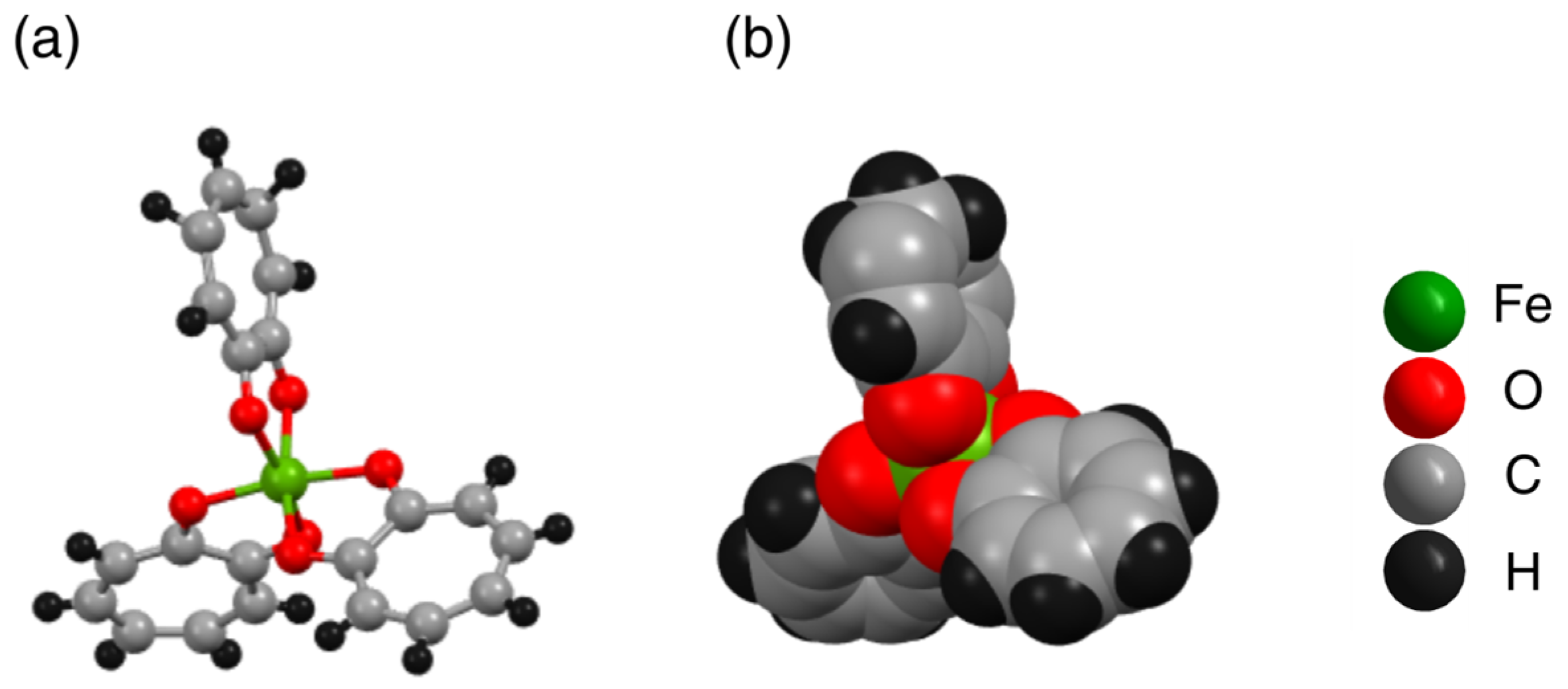
2.1. Synthesis and Characterization of Fe(tropo)3
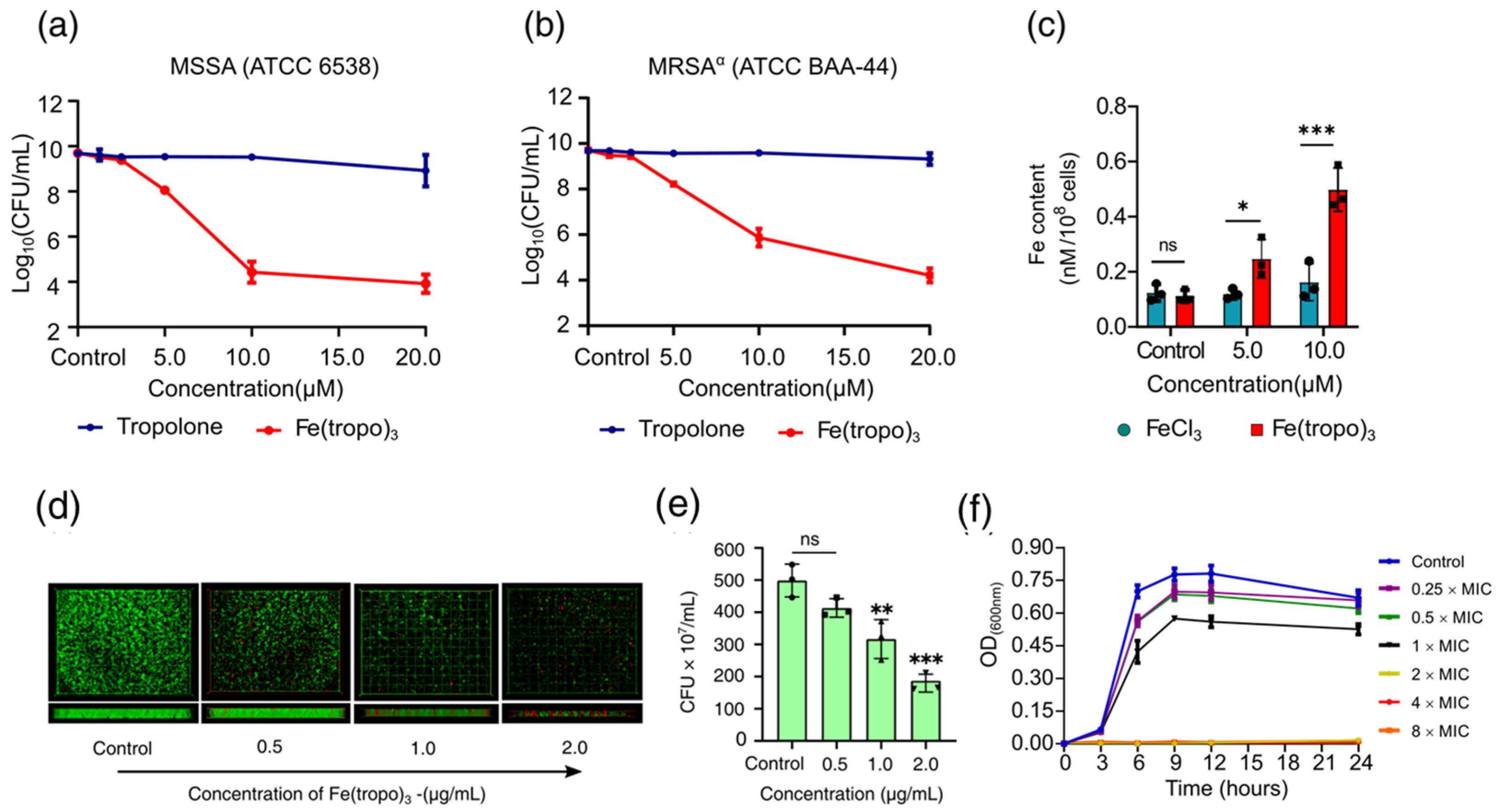
2.2. In Vitro Antibacterial Activity Against Different Strains of SA Bacteria
2.3. Cellular Uptake Studies
2.4. Anti-Biofilm Activity Against MRSAα Derived Biofilms
2.5. The Time–Kill Assay
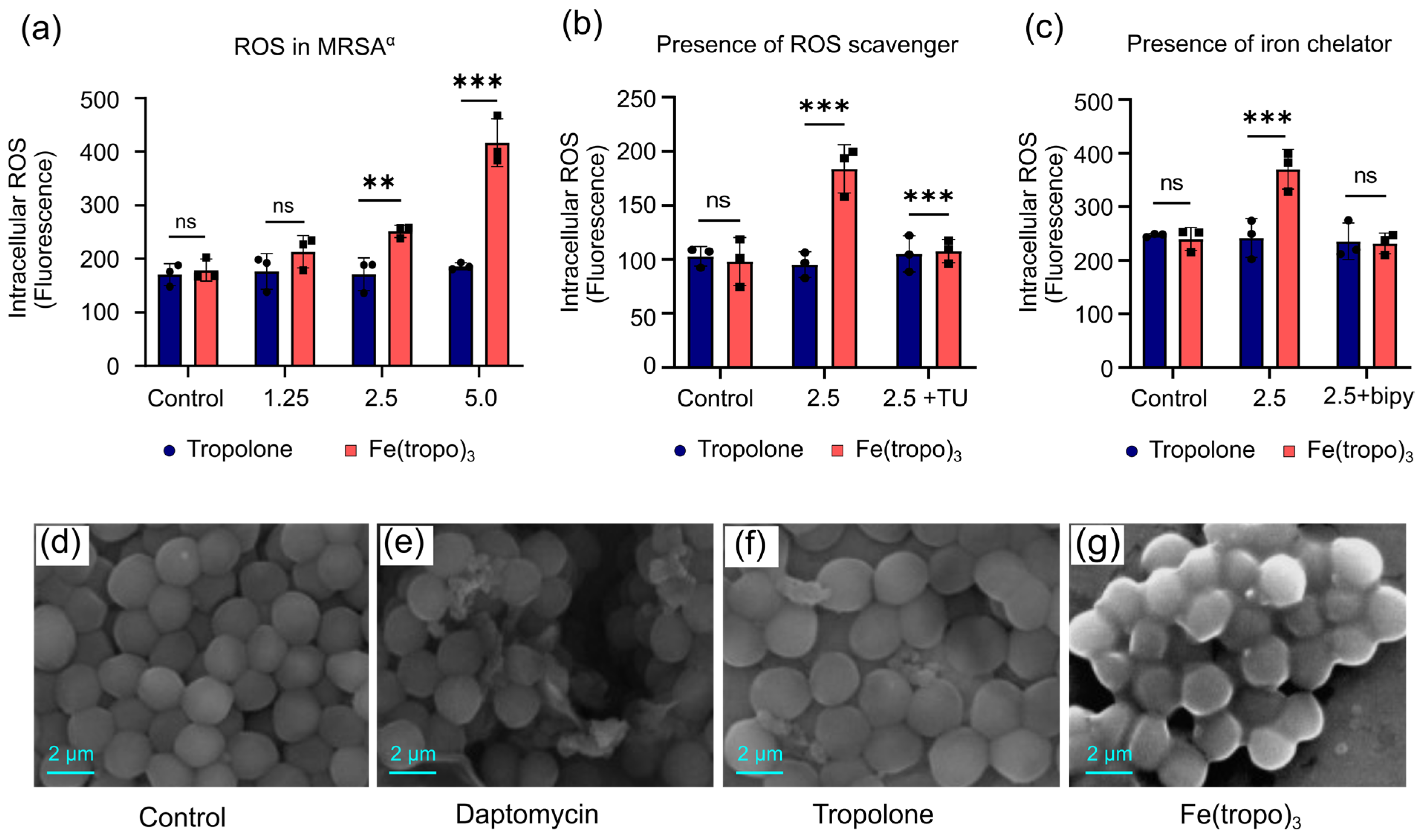
2.6. Measurements of Intracellular Generation of Reactive Oxygen Species
2.7. Scanning Electron Microscopic Imaging of Bacterial Cells
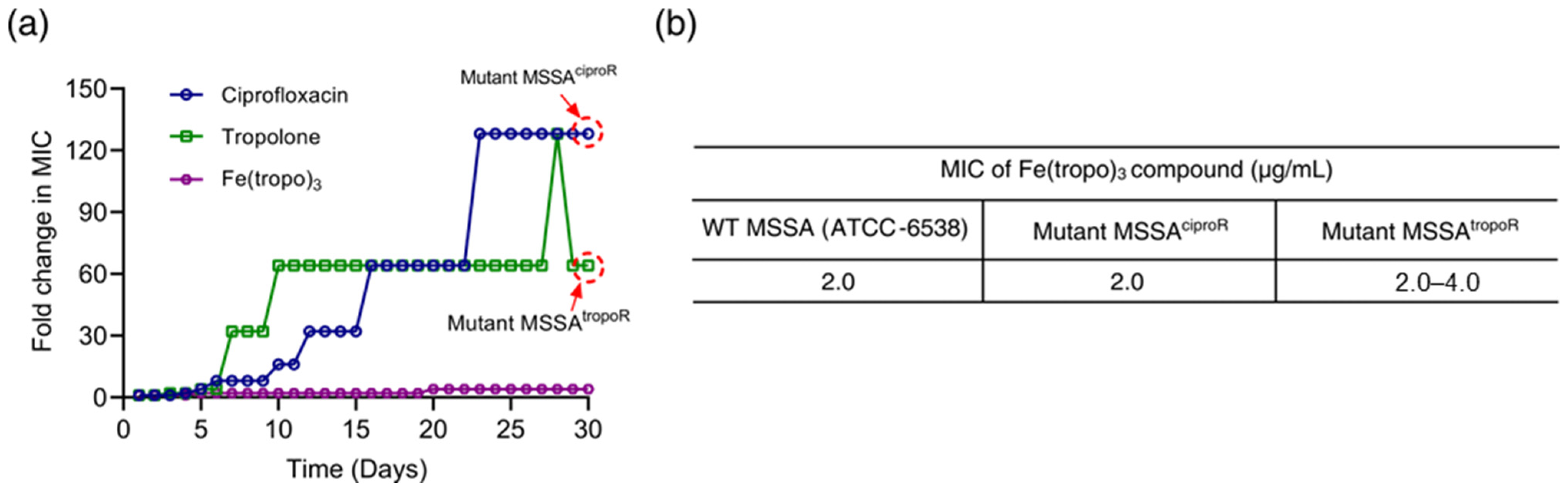
2.8. In Vitro Evaluation of Resistance Development
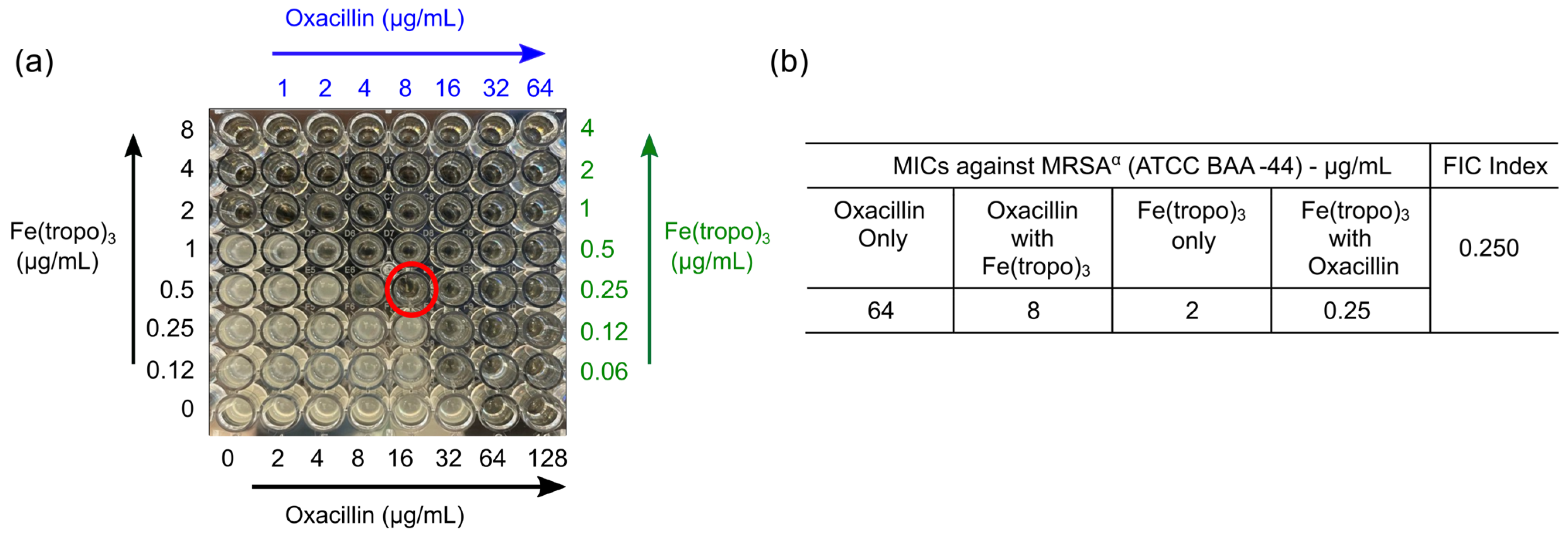
2.9. Checkerboard Assays
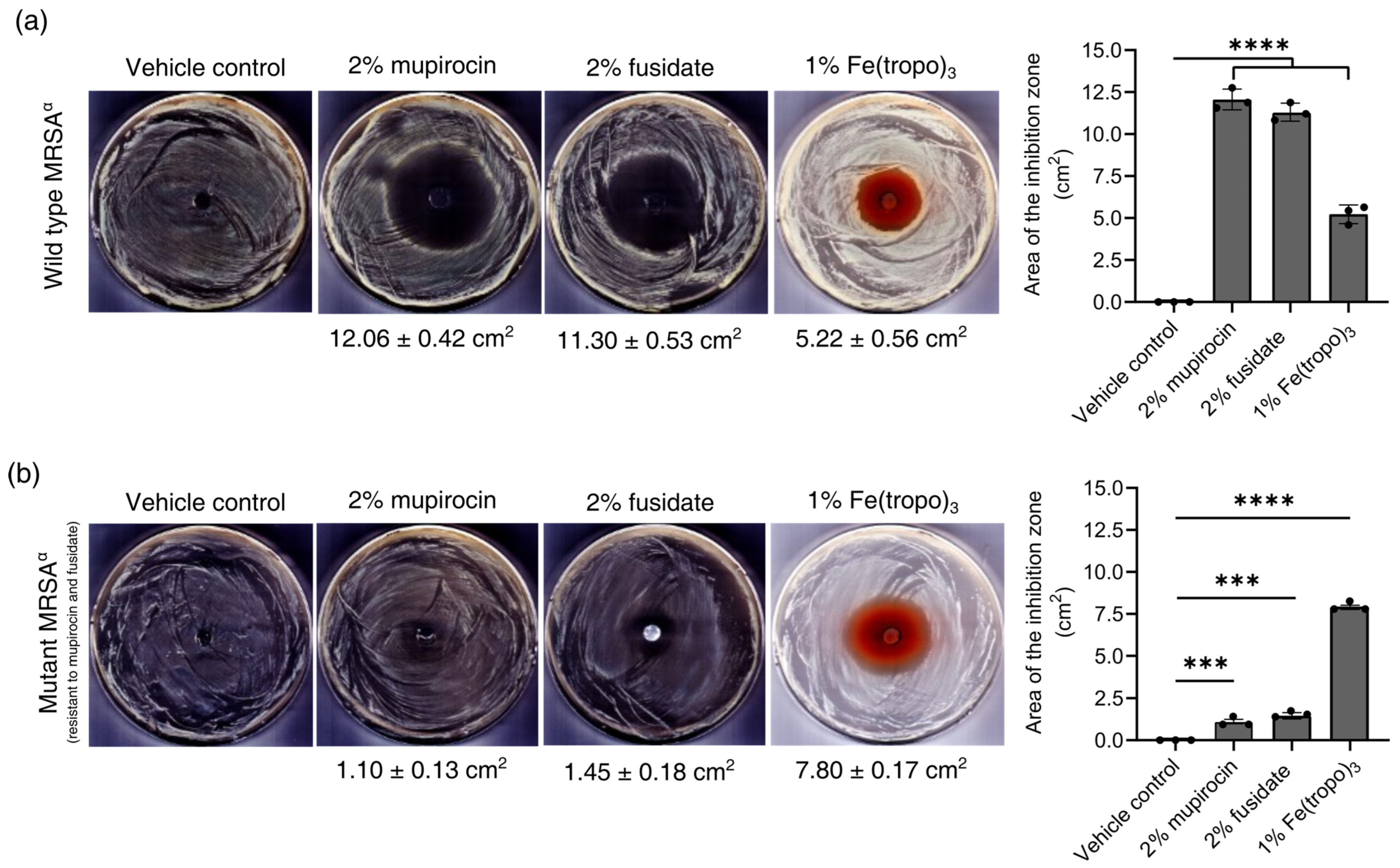
2.10. In Vitro Antimicrobial Effects of Mupirocin, Fusidate, and Fe(tropo)3 in Ointment Form
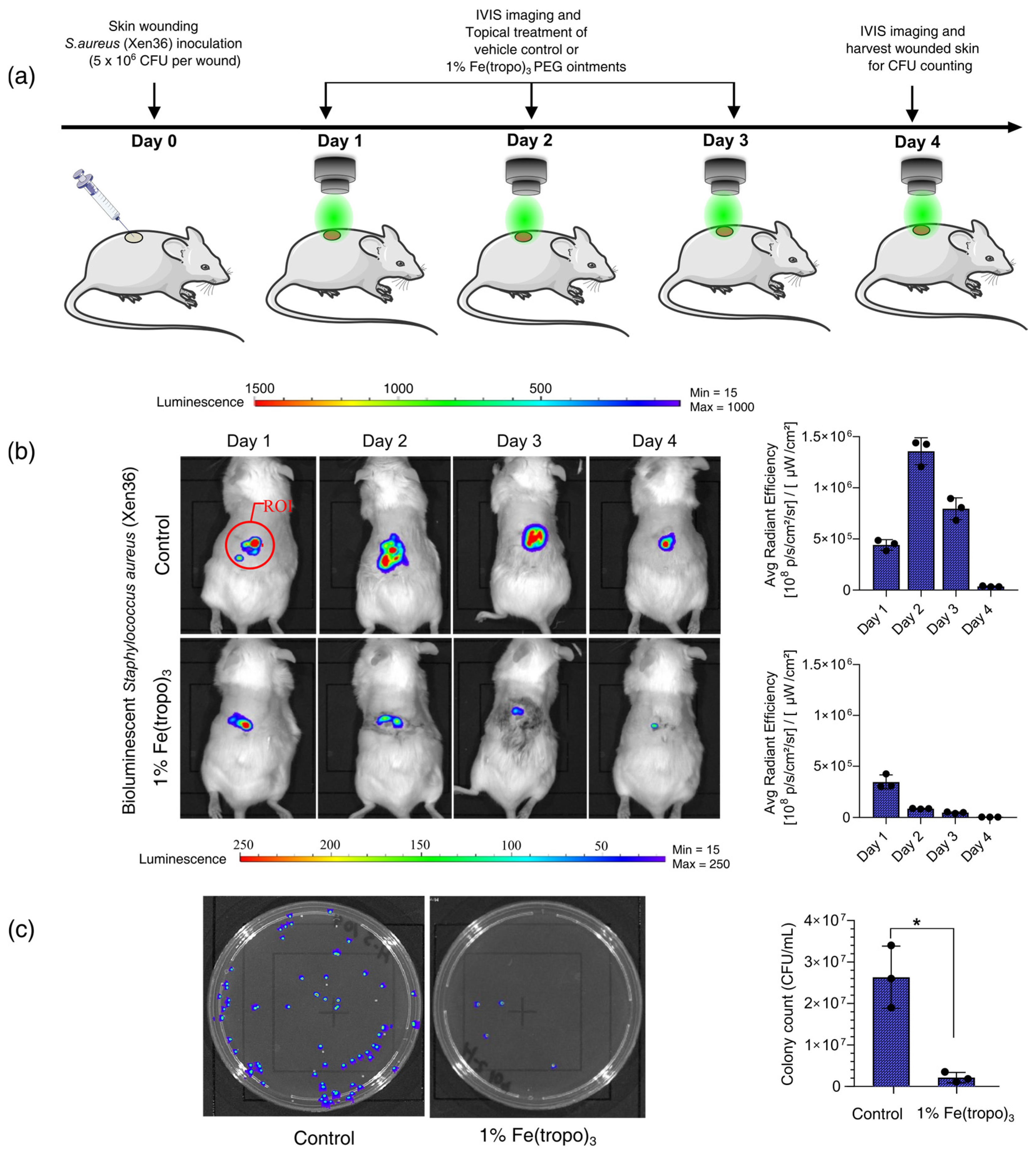
2.11. In Vivo Validation of Therapeutic Efficacy of 1% Fe(tropo)3 Ointment in a Murine Model with Excisional Wound Infection by S. aureus
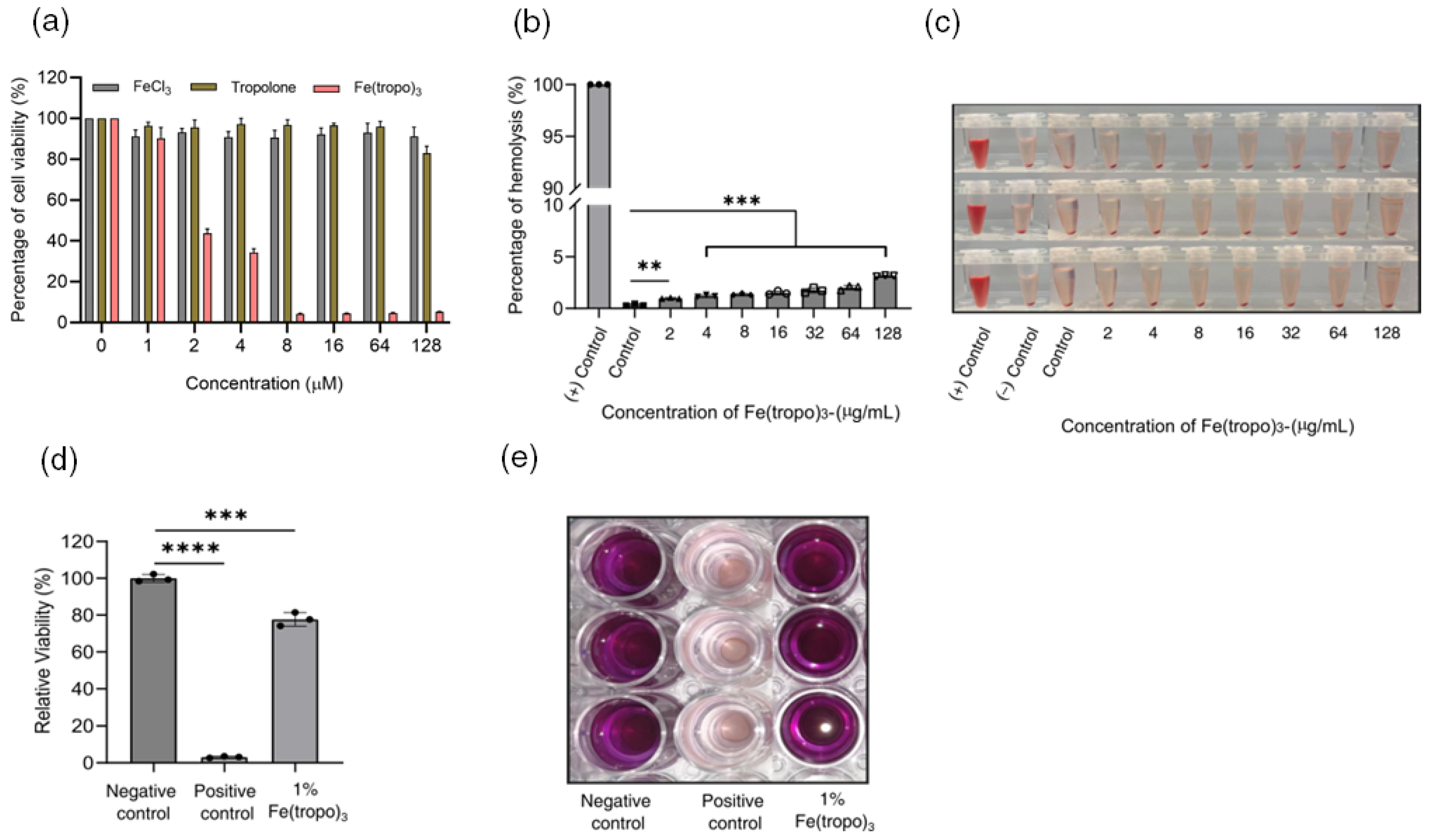
2.12. Selectivity of Fe(tropo)3 Against MRSA
2.13. In Vitro Skin Irritation Test
3. Materials and Methods
3.1. Synthesis and Characterization of Fe(tropo)3
3.2. Minimum Inhibitory Concentration (MIC) Assays
3.3. Investigation of Antibacterial Activity of Tropolone and Fe(tropo)3
3.4. Determination of Intracellular Iron Content
3.5. Time–Kill Assay
3.6. Biofilm Inhibition Assay
3.7. Bacterial Reactive Oxygen Species (ROS) Measurements
3.8. Measurements of Intracellular ROS Scavenging Effect
3.9. Visualization of Cell Membrane Integrity by SEM
3.10. Checkerboard Assay
3.11. In Vitro Assay for Resistance Development
3.12. Preparation of High-Level Mupirocin and Fusidate-Resistant MRSA Strains of SA Bacteria
3.13. Preparation of 2% Mupirocin, 2% Fusidate and 1% Fe(tropo)3 PEG Based Ointment
3.14. In Vitro Ointment Antimicrobial Testing
3.15. Excisional Murine Skin Wound Infection Model with S. aureus
3.16. Cytotoxicity to the Mammalian Cells
3.17. Hemolysis Assay
3.18. In Vitro Skin Irritation Assay
3.19. Statistical Analysis
4. Conclusions
Supplementary Materials
Author Contributions
Funding
Institutional Review Board Statement
Informed Consent Statement
Data Availability Statement
Acknowledgments
Conflicts of Interest
Abbreviations
| AMR | Antimicrobial Resistance |
| SSTIs | Skin and Soft Infections |
| CO-ADD | Community for Open Antimicrobial Drug Discovery |
| ROS | Reactive Oxygen Species |
| MSSA | Methicillin-Sensitive Staphylococcus aureus |
| MRSA | Methicillin-Resistant Staphylococcus aureus |
| MDR | Multidrug Resistant |
| DNA | Deoxyribonucleic Acid |
| hRBCs | Human Red Blood Cells |
| CFU | Colony Forming Unit |
| MIC | Minimum Inhibitory Concentration |
| FICI | Fractional Inhibitory Concentration Index |
References
- Tong, S.Y.; Davis, J.S.; Eichenberger, E.; Holland, T.L.; Fowler, V.G., Jr. Staphylococcus aureus infections: Epidemiology, pathophysiology, clinical manifestations, and management. Clin. Microbiol. Rev. 2015, 28, 603–661. [Google Scholar] [CrossRef] [Scilit]
- Rossi, F.; Diaz, L.; Wollam, A.; Panesso, D.; Zhou, Y.; Rincon, S.; Narechania, A.; Xing, G.; Di Gioia, T.S.; Doi, A. Transferable vancomycin resistance in a community-associated MRSA lineage. N. Engl. J. Med. 2014, 370, 1524–1531. [Google Scholar] [CrossRef] [Scilit]
- Loomba, P.S.; Taneja, J.; Mishra, B. Methicillin and vancomycin resistant S. aureus in hospitalized patients. J. Glob. Infect. Dis. 2010, 2, 275. [Google Scholar] [CrossRef] [Scilit] [PubMed]
- Stryjewski, M.E.; Corey, G.R. Methicillin-resistant Staphylococcus aureus: An evolving pathogen. Clin. Infect. Dis. 2014, 58, S10–S19. [Google Scholar] [CrossRef] [Scilit]
- Shorr, A.F.; Tabak, Y.P.; Gupta, V.; Johannes, R.; Liu, L.Z.; Kollef, M.H. Morbidity and cost burden of methicillin-resistant Staphylococcus aureus in early onset ventilator-associated pneumonia. Crit. Care 2006, 10, R97. [Google Scholar] [CrossRef] [Scilit] [PubMed]
- Cosgrove, S.E.; Qi, Y.; Kaye, K.S.; Harbarth, S.; Karchmer, A.W.; Carmeli, Y. The impact of methicillin resistance in Staphylococcus aureus bacteremia on patient outcomes: Mortality, length of stay, and hospital charges. Infect. Control Hosp. Epidemiol. 2005, 26, 166–174. [Google Scholar] [CrossRef] [Scilit] [PubMed]
- Hurdle, J.G.; O’Neill, A.J.; Chopra, I. Prospects for aminoacyl-tRNA synthetase inhibitors as new antimicrobial agents. Antimicrob. Agents Chemother. 2005, 49, 4821–4833. [Google Scholar] [CrossRef] [Scilit] [PubMed]
- Curbete, M.M.; Salgado, H.R.N. A critical review of the properties of fusidic acid and analytical methods for its determination. Crit. Rev. Anal. Chem. 2016, 46, 352–360. [Google Scholar] [CrossRef] [Scilit]
- Hajikhani, B.; Goudarzi, M.; Kakavandi, S.; Amini, S.; Zamani, S.; van Belkum, A.; Goudarzi, H.; Dadashi, M. The global prevalence of fusidic acid resistance in clinical isolates of Staphylococcus aureus: A systematic review and meta-analysis. Antimicrob. Resist. Infect. Control 2021, 10, 75. [Google Scholar] [CrossRef] [Scilit]
- Rode, H.; Hanslo, D.; De Wet, P.; Millar, A.; Cywes, S. Efficacy of mupirocin in methicillin-resistant Staphylococcus aureus burn wound infection. Antimicrob. Agents Chemother. 1989, 33, 1358–1361. [Google Scholar] [CrossRef] [Scilit]
- Hetem, D.J.; Bonten, M.J. Clinical relevance of mupirocin resistance in Staphylococcus aureus. J. Hosp. Infect. 2013, 85, 249–256. [Google Scholar] [CrossRef] [Scilit]
- Dobie, D.; Gray, J. Fusidic acid resistance in Staphylococcus aureus. Arch. Dis. Child. 2004, 89, 74. [Google Scholar] [CrossRef] [Scilit]
- Lundberg, C.V.; Frimodt-Møller, N. Efficacy of topical and systemic antibiotic treatment of meticillin-resistant Staphylococcus aureus in a murine superficial skin wound infection model. Int. J. Antimicrob. Agents 2013, 42, 272–275. [Google Scholar] [CrossRef] [Scilit] [PubMed]
- Fernandes, P. Fusidic acid: A bacterial elongation factor inhibitor for the oral treatment of acute and chronic staphylococcal infections. Cold Spring Harb. Perspect. Med. 2016, 6, a025437. [Google Scholar] [CrossRef] [Scilit] [PubMed]
- Fernandes, P.; Pereira, D. Efforts to support the development of fusidic acid in the United States. Clin. Infect. Dis. 2011, 52, S542–S546. [Google Scholar] [CrossRef] [Scilit]
- Kohanski, M.A.; Dwyer, D.J.; Collins, J.J. How antibiotics kill bacteria: From targets to networks. Nat. Rev. Microbiol. 2010, 8, 423–435. [Google Scholar] [CrossRef] [Scilit] [PubMed]
- Blair, J.M.; Webber, M.A.; Baylay, A.J.; Ogbolu, D.O.; Piddock, L.J. Molecular mechanisms of antibiotic resistance. Nat. Rev. Microbiol. 2015, 13, 42–51. [Google Scholar] [CrossRef] [Scilit]
- Baylay, A.J.; Piddock, L.J.; Webber, M.A. Molecular Mechanisms of Antibiotic Resistance–Part I. In Bacterial Resistance to Antibiotics—From Molecules to Man; Wiley: Hoboken, NJ, USA, 2019; pp. 1–26. [Google Scholar]
- Pantosti, A.; Sanchini, A.; Monaco, M. Mechanisms of antibiotic resistance in Staphylococcus aureus. Future Microbiol. 2007, 2, 323–334. [Google Scholar] [CrossRef] [Scilit]
- Lemire, J.A.; Harrison, J.J.; Turner, R.J. Antimicrobial activity of metals: Mechanisms, molecular targets and applications. Nat. Rev. Microbiol. 2013, 11, 371–384. [Google Scholar] [CrossRef] [Scilit]
- Alves Ferreira, D.; Martins, L.M.; Fernandes, A.R.; Martins, M. A Tale of Two Ends: Repurposing Metallic Compounds from Anti-Tumour Agents to Effective Antibacterial Activity. Antibiotics 2020, 9, 321. [Google Scholar] [CrossRef] [Scilit]
- Frei, A. Metal complexes, an untapped source of antibiotic potential? Antibiotics 2020, 9, 90. [Google Scholar] [CrossRef] [Scilit]
- Skaar, E.P.; Humayun, M.; Bae, T.; DeBord, K.L.; Schneewind, O. Iron-source preference of Staphylococcus aureus infections. Science 2004, 305, 1626–1628. [Google Scholar] [CrossRef] [Scilit]
- Bullen, J.J.; Rogers, H.J.; Spalding, P.B.; Ward, C.G. Iron and infection: The heart of the matter. FEMS Immunol. Med. Microbiol. 2005, 43, 325–330. [Google Scholar] [CrossRef] [Scilit] [PubMed]
- Létoffé, S.; Heuck, G.; Delepelaire, P.; Lange, N.; Wandersman, C. Bacteria capture iron from heme by keeping tetrapyrrol skeleton intact. Proc. Natl. Acad. Sci. USA 2009, 106, 11719–11724. [Google Scholar] [CrossRef] [Scilit] [PubMed]
- Watanabe, N.; Nagasu, T.; Katsu, K.; Kitoh, K. E-0702, a new cephalosporin, is incorporated into Escherichia coli cells via the tonB-dependent iron transport system. Antimicrob. Agents Chemother. 1987, 31, 497–504. [Google Scholar] [CrossRef] [Scilit]
- Abeydeera, N.; Yu, B.; Pant, B.D.; Kim, M.-H.; Huang, S.D. Harnessing the toxicity of dysregulated iron uptake for killing Staphylococcus aureus: Reality or mirage? Biomater. Sci. 2022, 10, 474–484. [Google Scholar] [CrossRef] [Scilit]
- CLSI M100-S27; Performance Standards for Antimicrobial Susceptibility Testing, 27th ed. Clinical and Laboratory Standards Institute—CLSI: Wayne, PA, USA, 2017.
- Costerton, J.W.; Lewandowski, Z.; Caldwell, D.E.; Korber, D.R.; Lappin-Scott, H.M. Microbial biofilms. Annu. Rev. Microbiol. 1995, 49, 711–745. [Google Scholar] [CrossRef]
- Otto, M. Staphylococcal infections: Mechanisms of biofilm maturation and detachment as critical determinants of pathogenicity. Annu. Rev. Med. 2013, 64, 175–188. [Google Scholar] [CrossRef] [Scilit] [PubMed]
- Davies, D. Understanding biofilm resistance to antibacterial agents. Nat. Rev. Drug Discov. 2003, 2, 114–122. [Google Scholar] [CrossRef] [Scilit]
- Zhang, X.; Wang, Y.; Guo, J.; Yu, Y.; Li, J.; Guo, Y.; Liu, C. Comparing two functions for optical density and cell numbers in bacterial exponential growth phase. J. Pure Appl. Microbiol. 2015, 9, 299–305. [Google Scholar]
- Hobbs, J.K.; Miller, K.; O’neill, A.J.; Chopra, I. Consequences of daptomycin-mediated membrane damage in Staphylococcus aureus. J. Antimicrob. Chemother. 2008, 62, 1003–1008. [Google Scholar] [CrossRef] [Scilit]
- Trust, T. Antibacterial activity of tropolone. Antimicrob. Agents Chemother. 1975, 7, 500–506. [Google Scholar] [CrossRef] [Scilit] [PubMed]
- Abeydeera, N.; Benin, B.M.; Mudarmah, K.; Pant, B.D.; Chen, G.; Shin, W.S.; Kim, M.-H.; Huang, S.D. Harnessing the Dual Antimicrobial Mechanism of Action with Fe (8-Hydroxyquinoline) 3 to Develop a Topical Ointment for Mupirocin-Resistant MRSA Infections. Antibiotics 2023, 12, 886. [Google Scholar] [CrossRef] [Scilit]
- Abeydeera, N. Recent Development of Exploring Ferroptosis-Inspired Effect of Iron as a Feasible Strategy for Combating Multidrug Resistant Bacterial Infections. Appl. Microbiol. 2025, 5, 73. [Google Scholar] [CrossRef] [Scilit]
- Meletiadis, J.; Pournaras, S.; Roilides, E.; Walsh, T.J. Defining fractional inhibitory concentration index cutoffs for additive interactions based on self-drug additive combinations, Monte Carlo simulation analysis, and in vitro-in vivo correlation data for antifungal drug combinations against Aspergillus fumigatus. Antimicrob. Agents Chemother. 2010, 54, 602–609. [Google Scholar]
- Lin, Y.-S.; Haynes, C.L. Impacts of mesoporous silica nanoparticle size, pore ordering, and pore integrity on hemolytic activity. J. Am. Chem. Soc. 2010, 132, 4834–4842. [Google Scholar] [CrossRef] [Scilit]
- Mudarmah, K.; Abeydeera, N.; Chen, G.; Jogadi, W.; Krause, J.A.; Budzik, J.M.; Huang, S.D. Synthesis, structural characterization, and antimicrobial activity of Zn (cloxyquin) 2: Towards harnessing zinc intoxication and immune response restoration to combat Staphylococcus aureus and Mycobacterium tuberculosis. Dalton Trans. 2025, 54, 9975–9983. [Google Scholar] [CrossRef] [Scilit]
- Wang, Z.; Yu, B.; Alamri, H.; Yarabarla, S.; Kim, M.H.; Huang, S.D. KCa(H2O)2[FeIII(CN)6] · H2O Nanoparticles as an Antimicrobial Agent against Staphylococcus aureus. Angew. Chem. 2018, 130, 2236–2240. [Google Scholar] [CrossRef] [Scilit]
- Dassanayake, T.M.; Dassanayake, A.C.; Abeydeera, N.; Pant, B.D.; Jaroniec, M.; Kim, M.-H.; Huang, S.D. An aluminum lining to the dark cloud of silver resistance: Harnessing the power of potent antimicrobial activity of γ-alumina nanoparticles. Biomater. Sci. 2021, 9, 7996–8006. [Google Scholar] [CrossRef] [Scilit] [PubMed]
- Ling, L.L.; Schneider, T.; Peoples, A.J.; Spoering, A.L.; Engels, I.; Conlon, B.P.; Mueller, A.; Schäberle, T.F.; Hughes, D.E.; Epstein, S. A new antibiotic kills pathogens without detectable resistance. Nature 2015, 517, 455–459. [Google Scholar] [CrossRef] [Scilit]
- Divakara, S. L-Lysine based lipidated biphenyls as agents with anti-biofilm and anti-inflammatory properties that also inhibit intracellular bacteria. Chem. Commun. 2017, 53, 8427–8430. [Google Scholar]
- Pant, B.D.; Benin, B.M.; Abeydeera, N.; Kim, M.-H.; Huang, S.D. Bi2O3 nanoparticles exhibit potent broad-spectrum antimicrobial activity and the ability to overcome Ag-, ciprofloxacin- and meropenem-resistance in Pseudomonas aeruginosa: The next silver bullet of metal antimicrobials? Biomater. Sci. 2022, 10, 1523–1531. [Google Scholar] [CrossRef] [Scilit] [PubMed]
- Janardhanan, J.; Bouley, R.; Martínez-Caballero, S.; Peng, Z.; Batuecas-Mordillo, M.; Meisel, J.E.; Ding, D.; Schroeder, V.A.; Wolter, W.R.; Mahasenan, K.V. The quinazolinone allosteric inhibitor of PBP 2a synergizes with piperacillin and tazobactam against methicillin-resistant Staphylococcus aureus. Antimicrob. Agents Chemother. 2019, 63, e02637-18. [Google Scholar] [CrossRef] [Scilit]
- Orhan, G.; Bayram, A.; Zer, Y.; Balci, I. Synergy tests by E test and checkerboard methods of antimicrobial combinations against Brucella melitensis. J. Clin. Microbiol. 2005, 43, 140–143. [Google Scholar] [CrossRef] [Scilit]
- Wang, Z.; Li, J.; Benin, B.M.; Yu, B.; Bunge, S.D.; Abeydeera, N.; Huang, S.D.; Kim, M.-H. Lipophilic Ga complex with broad-spectrum antimicrobial activity and the ability to overcome gallium resistance in both Pseudomonas aeruginosa and Staphylococcus aureus. J. Med. Chem. 2021, 64, 9381–9388. [Google Scholar] [CrossRef] [Scilit] [PubMed]
- Blanchard, C.; Brooks, L.; Beckley, A.; Colquhoun, J.; Dewhurst, S.; Dunman, P.M. Neomycin sulfate improves the antimicrobial activity of mupirocin-based antibacterial ointments. Antimicrob. Agents Chemother. 2016, 60, 862–872. [Google Scholar] [CrossRef] [Scilit]
- Fosso, M.Y.; Shrestha, S.K.; Green, K.D.; Garneau-Tsodikova, S. Synthesis and Bioactivities of Kanamycin B-Derived Cationic Amphiphiles. J. Med. Chem. 2015, 58, 9124–9132. [Google Scholar] [CrossRef] [Scilit] [PubMed]
- Schröder, I.; Johnson, E.; De Vries, S. Microbial ferric iron reductases. FEMS Microbiol. Rev. 2003, 27, 427–447. [Google Scholar] [CrossRef] [Scilit] [PubMed]



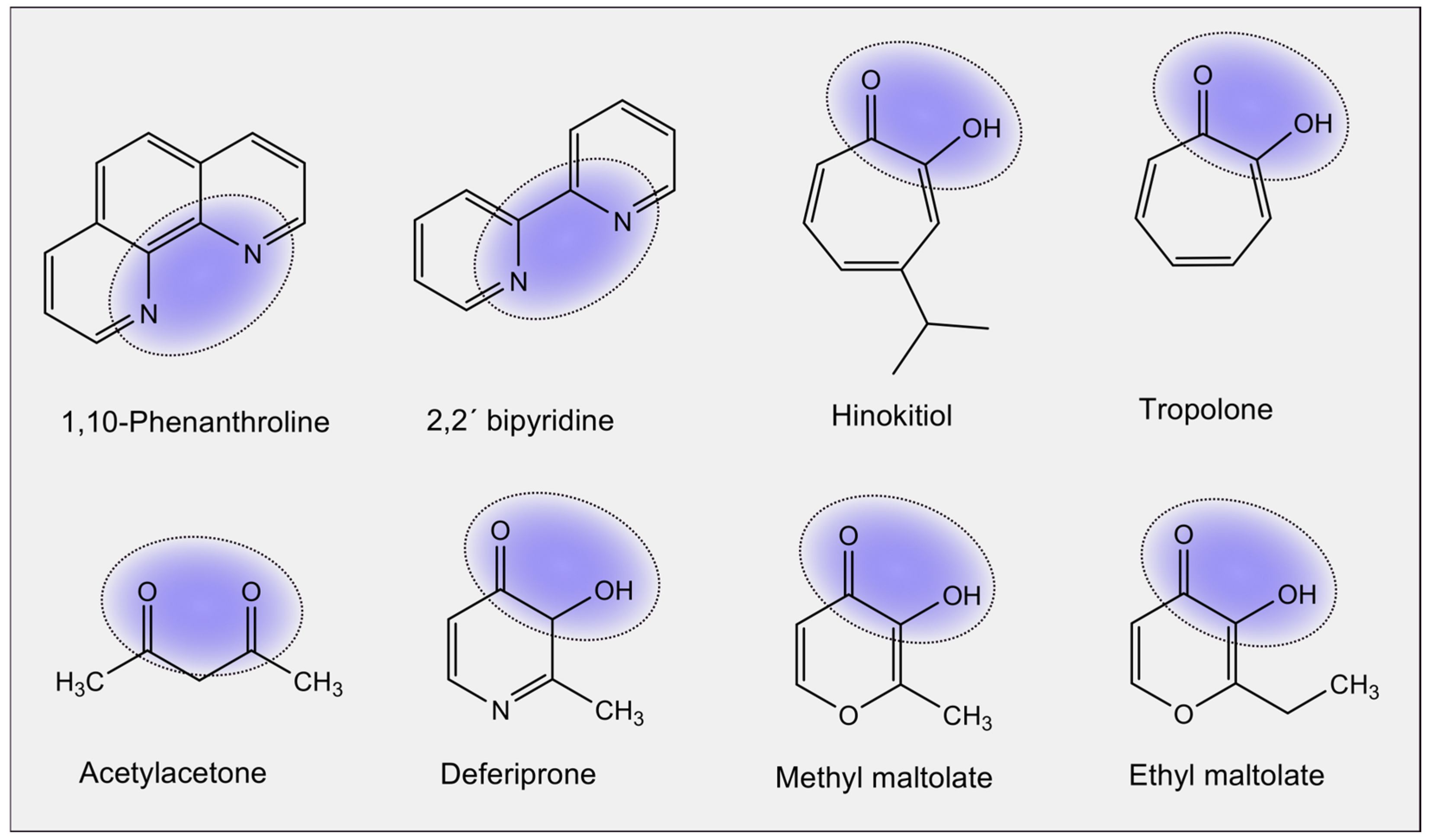
| Compound Name | MIC (µg/mL) | Ligand LogP |
|---|---|---|
| 1,10-Phenanthroline | 64 | 2.20 |
| Fe(1,10-Phenanthroline)3 | 64 | - |
| 2,2′-bipyridine | >256 | 1.88 |
| Fe(2,2′-bipyridine)3 | >256 | - |
| Hinokitiol | 16 | 0.59 |
| Fe(hinokitiol)3 | 2 | - |
| Acetylacetone | 256 | 0.24 |
| Fe(Acetylacetone)3 | 256 | - |
| Tropolone | 80 | −0.34 |
| Fe(Tropolone)3 | 2 | - |
| Deferiprone | >256 | −0.83 |
| Fe(Deferiprone)3 | >256 | - |
| Ethyl maltolate | >128 | −1.11 |
| Fe(Ethyl maltolate)3 | 64 | - |
| Methyl maltolate | >256 | −1.60 |
| Fe(Methyl maltolate)3 | 128 | - |
| Minimum Inhibitory Concentration (MIC) µg/mL | ||
|---|---|---|
| Bacteria Strains | Tropolone | Fe(Tropo)3 |
| MSSA (ATCC 6538) | 80 | 2 |
| MRSAα (ATCC BAA-44) | 160 | 2 |
| MRSAβ (ATCC BAA-1717) | 160 | 2 |
| VISA (ATCC-700699) | 160 | 2 |
| MRSAα(mupR) | 160 | 2 |
| MRSAα(fudR) | 160 | 2 |
| MRSAα(mupR+fusR) | 160 | 2 |
Disclaimer/Publisher’s Note: The statements, opinions and data contained in all publications are solely those of the individual author(s) and contributor(s) and not of MDPI and/or the editor(s). MDPI and/or the editor(s) disclaim responsibility for any injury to people or property resulting from any ideas, methods, instructions or products referred to in the content. |
© 2026 by the authors. Licensee MDPI, Basel, Switzerland. This article is an open access article distributed under the terms and conditions of the Creative Commons Attribution (CC BY) license.
Share and Cite
Abeydeera, N.; Chen, G.; Zarea, K.; Pant, B.D.; Benin, B.M.; Ratnayake, K.M.; Kim, M.-H.; Shin, W.S.; Huang, S.D. Iron(III)–Tropolone Complex as a Topical Agent Against Drug-Resistant MRSA Skin Infections. Antibiotics 2026, 15, 298. https://doi.org/10.3390/antibiotics15030298
Abeydeera N, Chen G, Zarea K, Pant BD, Benin BM, Ratnayake KM, Kim M-H, Shin WS, Huang SD. Iron(III)–Tropolone Complex as a Topical Agent Against Drug-Resistant MRSA Skin Infections. Antibiotics. 2026; 15(3):298. https://doi.org/10.3390/antibiotics15030298
Chicago/Turabian StyleAbeydeera, Nalin, Guanyu Chen, Khalil Zarea, Bishnu D. Pant, Bogdan M. Benin, Kalpani M. Ratnayake, Min-Ho Kim, Woo Shik Shin, and Songping D. Huang. 2026. "Iron(III)–Tropolone Complex as a Topical Agent Against Drug-Resistant MRSA Skin Infections" Antibiotics 15, no. 3: 298. https://doi.org/10.3390/antibiotics15030298
APA StyleAbeydeera, N., Chen, G., Zarea, K., Pant, B. D., Benin, B. M., Ratnayake, K. M., Kim, M.-H., Shin, W. S., & Huang, S. D. (2026). Iron(III)–Tropolone Complex as a Topical Agent Against Drug-Resistant MRSA Skin Infections. Antibiotics, 15(3), 298. https://doi.org/10.3390/antibiotics15030298