Lactic Acid Bacteria as Natural Antimicrobials: Biofilm Control in Food and Food Industry


Abstract
1. Introduction
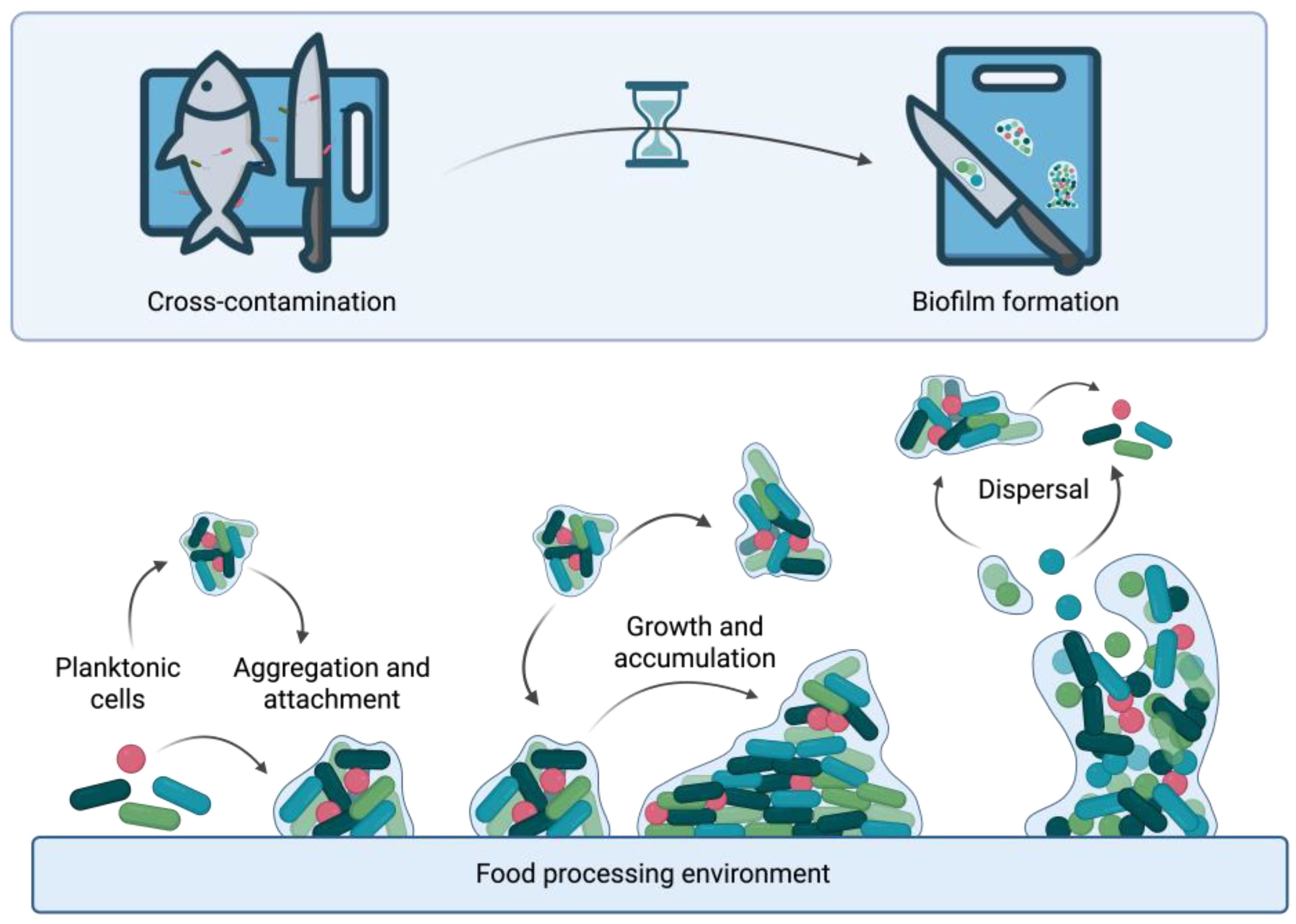
2. Impact of Biofilms on Food and the Food Industry
2.1. Biofilms in Food Production and Storage
2.2. Biofilms in Food Processing Facilities
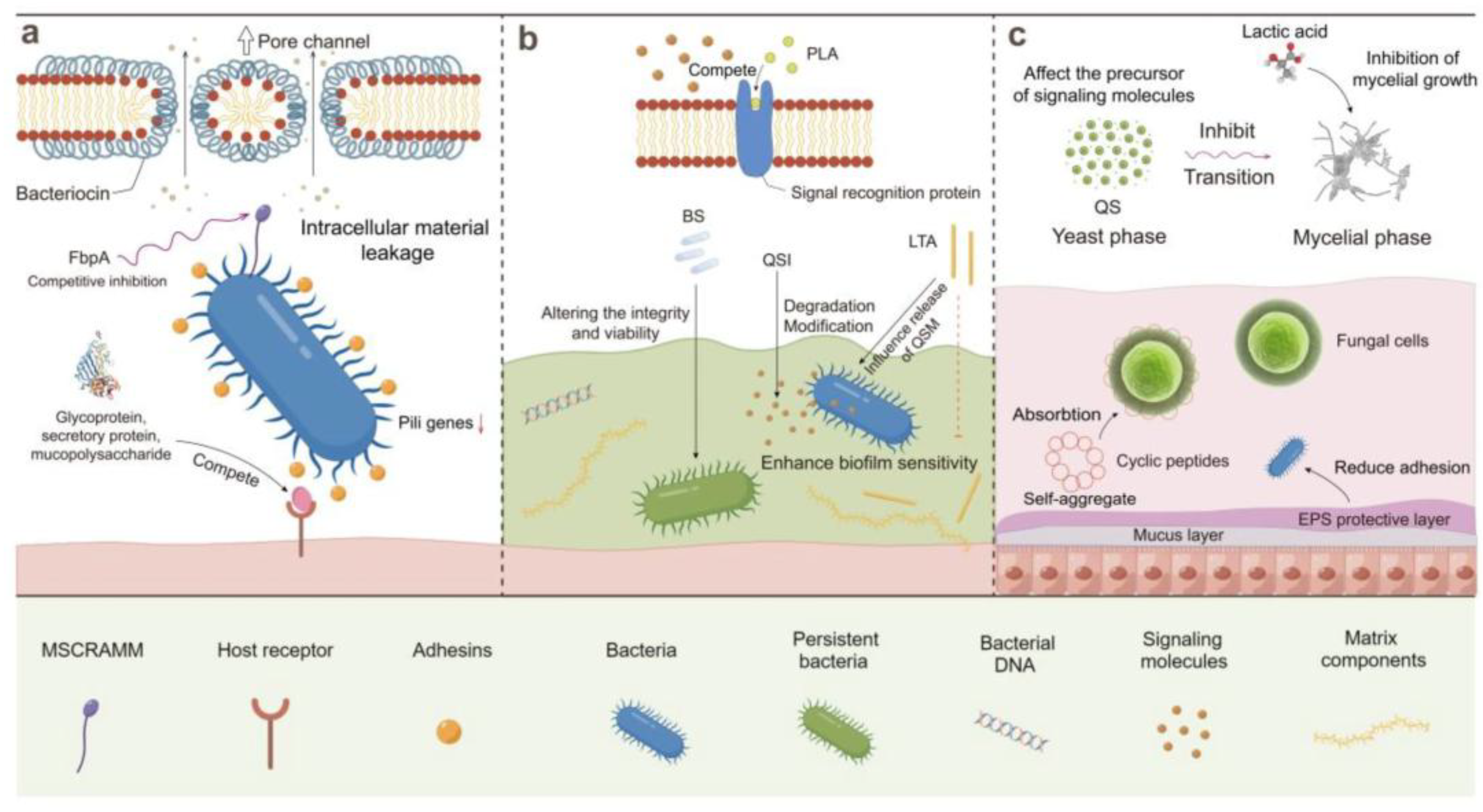
3. LAB Secondary Metabolites and Their Role in Biofilm Control
Classification and Types of LAB Secondary Metabolites

| Major LAB Secondary Metabolites | LAB Strain | Potential Application or Mechanism | References |
|---|---|---|---|
| Sakacin A | L. sakei Lb706 | Inhibition of L. monocytogenes by cell membrane permeabilization | [130] |
| Bacteriocin (free-form) | L. curvatus CWBI-B28 | Disrupts L. monocytogenes membranes | [131] |
| Sakacin G, P | L. Sakei CWBI-BI1365, L. curvatus CWBI-B28 | Both Sakacin G and P inhibit L. monocytogenes through their activity | [132] |
| Divergicine M35 | Carnobacterium divergens M35 | Culture supernatant proves more effective than purified bacteriocin. Inhibit L. monocytogenes | [133] |
| Nisin | L. lactis | Inhibits Clostridium spores, widely used as a food bio preservative | [134] |
| Plantaricin | L. plantarum 2C12 | Antimicrobial activity by cell membrane disruption | [135] |
| Lactocin 705, AL 705 | L. curvatus CRL705 | Bacteriocin was effective in controlling spoilage bacteria in refrigerated storage for 60 days | [136] |
| Reuterin | L. reuteri INIA P572 | Antimicrobial effects on L. monocytogenes and E. coli | [137] |
| Sakacin Q | L. curvatus ACU-1I | Inhibits L. innocua in the form of freeze-dried reconstituted supernatant | [138] |
| Sakacin P, X | L. curvatus MBSa2, MBSa3 | Heat, pH, NaCl stable bacteriocins inhibiting L. monocytogenes | [139] |
| LD-phenyllactic acid (PLA) | L. plantarum CXG9 | Inhibit L. monocytogenes by cell membrane integrity | [140] |
4. LAB-Based Strategies for Biofilm Prevention and Removal
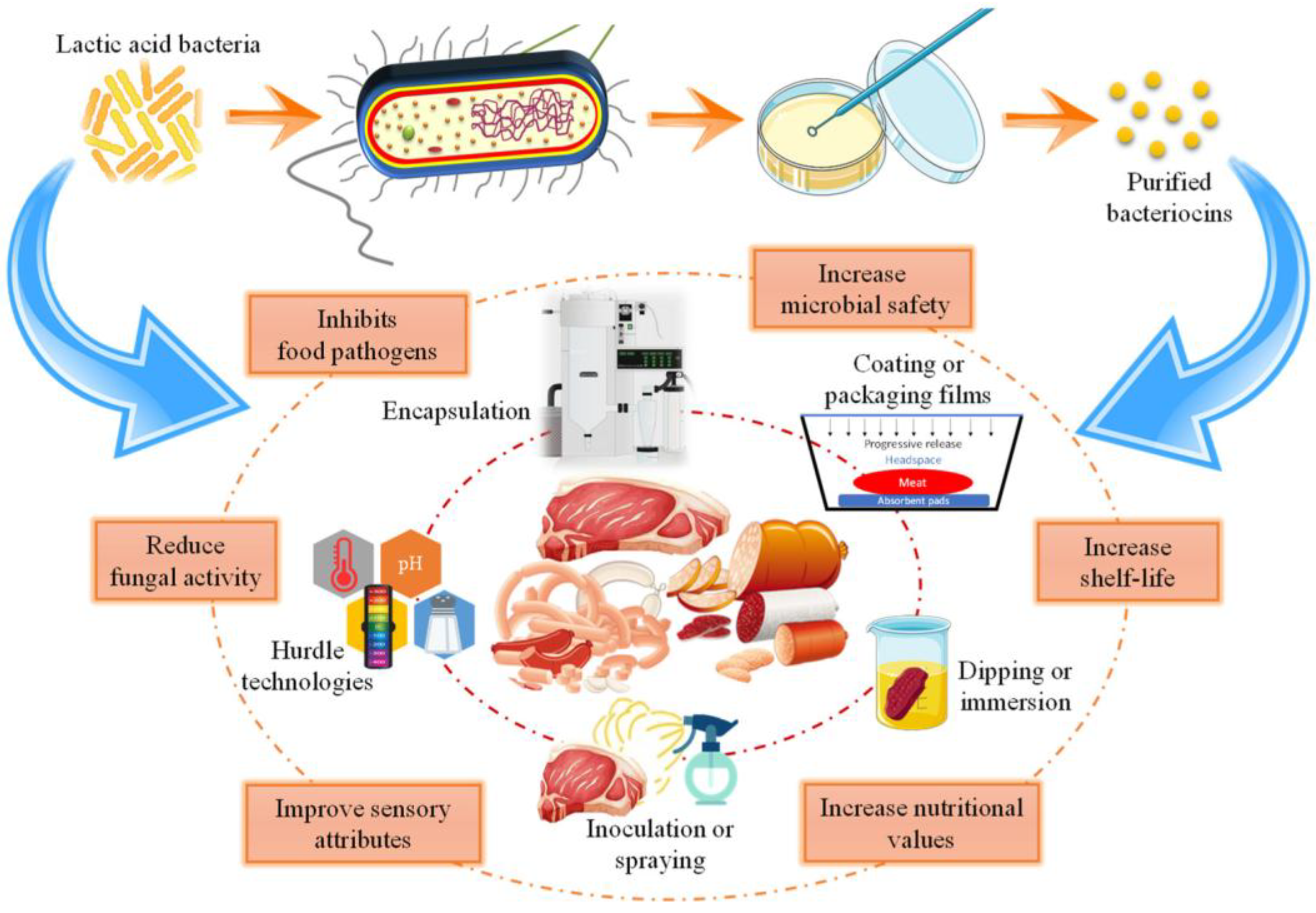
4.1. LAB in Food Products for Natural Preservation
4.2. LAB in the Food Industry for Equipment and Facility Hygiene
5. Enhancing LAB Application: Derivatives and Nano-Formulations
5.1. LAB-Derived Antimicrobial Coating and Packaging
5.2. Nanotechnology for LAB Metabolites Delivery
5.3. Synergistic Approaches with LAB Metabolites
6. Conclusions
Author Contributions
Funding
Data Availability Statement
Conflicts of Interest
Abbreviations
| LAB | Lactic Acid Bacteria |
| QS | Quorum Sensing |
| EPS | Exopolysaccharides |
| GRAS | Generally Recognized as Safe |
| CFS | Cell Free Supernatant |
| PVC | Polyvinyl chloride |
| CIP | Cleaning-in-place |
| MNPs | Metal nanoparticles |
| LDPE | Low Density Polyethylene |
References
- Ban-Cucerzan, A.; Imre, K.; Morar, A.; Marcu, A.; Hotea, I.; Popa, S.-A.; Pătrînjan, R.-T.; Bucur, I.-M.; Gașpar, C.; Plotuna, A.-M.; et al. Persistent Threats: A Comprehensive Review of Biofilm Formation, Control, and Economic Implications in Food Processing Environments. Microorganisms 2025, 13, 1805. [Google Scholar] [CrossRef] [PubMed]
- Carrascosa, C.; Raheem, D.; Ramos, F.; Saraiva, A.; Raposo, A. Microbial Biofilms in the Food Industry—A Comprehensive Review. Int. J. Environ. Res. Public Health 2021, 18, 2014. [Google Scholar] [CrossRef] [PubMed]
- Abebe, G.M. The Role of Bacterial Biofilm in Antibiotic Resistance and Food Contamination. Int. J. Microbiol. 2020, 2020, 1705814. [Google Scholar] [CrossRef] [PubMed]
- Elafify, M.; Liao, X.; Feng, J.; Ahn, J.; Ding, T. Biofilm formation in food industries: Challenges and control strategies for food safety. Food Res. Int. 2024, 190, 114650. [Google Scholar] [CrossRef]
- Chmielewski, R.A.N.; Frank, J.F. Biofilm Formation and Control in Food Processing Facilities. Compr. Rev. Food Sci. Food Saf. 2003, 2, 22–32. [Google Scholar] [CrossRef]
- Alvarez-Ordóñez, A.; Coughlan, L.M.; Briandet, R.; Cotter, P.D. Biofilms in Food Processing Environments: Challenges and Opportunities. Annu. Rev. Food Sci. Technol. 2019, 10, 173–195. [Google Scholar] [CrossRef]
- Flemming, H.-C.; Wingender, J. The biofilm matrix. Nat. Rev. Microbiol. 2010, 8, 623–633. [Google Scholar] [CrossRef]
- Muhammad, M.H.; Idris, A.L.; Fan, X.; Guo, Y.; Yu, Y.; Jin, X.; Qiu, J.; Guan, X.; Huang, T. Beyond Risk: Bacterial Biofilms and Their Regulating Approaches. Front. Microbiol. 2020, 11, 928. [Google Scholar] [CrossRef]
- Dunne, W.M. Bacterial Adhesion: Seen Any Good Biofilms Lately? Clin. Microbiol. Rev. 2002, 15, 155–166. [Google Scholar] [CrossRef]
- Donlan, R.M. Biofilms: Microbial Life on Surfaces. Emerg. Infect. Dis. 2002, 8, 9. [Google Scholar] [CrossRef]
- Yang, L.; Liu, Y.; Wu, H.; Song, Z.; Høiby, N.; Molin, S.; Givskov, M. Combating biofilms. FEMS Immunol. Med. Microbiol. 2012, 65, 146–157. [Google Scholar] [CrossRef] [PubMed]
- Barraud, N.; Kjelleberg, S.; Rice Scott, A. Dispersal from Microbial Biofilms. Microbiol. Spectr. 2015, 3, 343–362. [Google Scholar] [CrossRef] [PubMed]
- Zehra, A.; Ahmad, Z.; Rasheed, M.U.; Shahzadi, N.; Abid, F.; Emaan, R.; Sherwani, M.I.K. Lastest Perspetives In Bacterial Biofilm Eradication. J. Med. Health Sci. Rev. 2025, 2. [Google Scholar] [CrossRef]
- Blackman, I.C.; Frank, J.F. Growth of Listeria monocytogenes as a Biofilm on Various Food-Processing Surfaces. J. Food Prot. 1996, 59, 827–831. [Google Scholar] [CrossRef]
- Myszka, K.; Czaczyk, K. Bacterial Biofilms on Food Contact Surfaces—A Review. Pol. J. Food Nutr. Sci. 2011, 61, 173–180. [Google Scholar] [CrossRef]
- Bai, X.; Nakatsu, C.H.; Bhunia, A.K. Bacterial Biofilms and Their Implications in Pathogenesis and Food Safety. Foods 2021, 10, 2117. [Google Scholar] [CrossRef]
- Galié, S.; García-Gutiérrez, C.; Miguélez, E.M.; Villar, C.J.; Lombó, F. Biofilms in the Food Industry: Health Aspects and Control Methods. Front. Microbiol. 2018, 9, 315815. [Google Scholar] [CrossRef]
- Møretrø, T.; Langsrud, S. Listeria monocytogenes: Biofilm formation and persistence in food-processing environments. Biofilms 2004, 1, 107–121. [Google Scholar] [CrossRef]
- Liu, X.; Yao, H.; Zhao, X.; Ge, C. Biofilm Formation and Control of Foodborne Pathogenic Bacteria. Molecules 2023, 28, 2432. [Google Scholar] [CrossRef]
- Hua, Z.; Zhu, M.-J. Comprehensive strategies for controlling Listeria monocytogenes biofilms on food-contact surfaces. Compr. Rev. Food Sci. Food Saf. 2024, 23, e13348. [Google Scholar] [CrossRef]
- Dawan, J.; Zhang, S.; Ahn, J. Recent Advances in Biofilm Control Technologies for the Food Industry. Antibiotics 2025, 14, 254. [Google Scholar] [CrossRef]
- Singh, B.P.; Ghosh, S.; Chauhan, A. Control of Bacterial Biofilms for Mitigating Antimicrobial Resistance. In Sustainable Agriculture Reviews 46: Mitigation of Antimicrobial Resistance Vol 1 Tools and Targets; Panwar, H., Sharma, C., Lichtfouse, E., Eds.; Springer International Publishing: Cham, Switzerland, 2020; pp. 147–176. [Google Scholar]
- Esposito, M.M.; Turku, S. The Use of Natural Methods to Control Foodborne Biofilms. Pathogens 2023, 12, 45. [Google Scholar] [CrossRef]
- Fernandes, S.; Gomes, I.B.; Simões, M.; Simões, L.C. Novel chemical-based approaches for biofilm cleaning and disinfection. Curr. Opin. Food Sci. 2024, 55, 101124. [Google Scholar] [CrossRef]
- Javanmard, Z.; Pourhajibagher, M.; Bahador, A. Advancing Anti-Biofilm Strategies: Innovations to Combat Biofilm-Related Challenges and Enhance Efficacy. J. Basic Microbiol. 2024, 64, e2400271. [Google Scholar] [CrossRef] [PubMed]
- Mevo, S.I.U.; Ashrafudoulla, M.; Furkanur Rahaman Mizan, M.; Park, S.H.; Ha, S.-D. Promising strategies to control persistent enemies: Some new technologies to combat biofilm in the food industry—A review. Compr. Rev. Food Sci. Food Saf. 2021, 20, 5938–5964. [Google Scholar] [CrossRef] [PubMed]
- Toushik, S.H.; Mizan, M.F.R.; Hossain, M.I.; Ha, S.-D. Fighting with old foes: The pledge of microbe-derived biological agents to defeat mono- and mixed-bacterial biofilms concerning food industries. Trends Food Sci. Technol. 2020, 99, 413–425. [Google Scholar] [CrossRef]
- Sadekuzzaman, M.; Yang, S.; Mizan, M.F.R.; Ha, S.D. Current and Recent Advanced Strategies for Combating Biofilms. Compr. Rev. Food Sci. Food Saf. 2015, 14, 491–509. [Google Scholar] [CrossRef]
- Castellano, P.; Pérez Ibarreche, M.; Blanco Massani, M.; Fontana, C.; Vignolo, G.M. Strategies for Pathogen Biocontrol Using Lactic Acid Bacteria and Their Metabolites: A Focus on Meat Ecosystems and Industrial Environments. Microorganisms 2017, 5, 38. [Google Scholar] [CrossRef]
- Giaouris, E. Chapter 9—Application of lactic acid bacteria and their metabolites against foodborne pathogenic bacterial biofilms. In Recent Trends in Biofilm Science and Technology; Simoes, M., Borges, A., Chaves Simoes, L., Eds.; Academic Press: Cambridge, MA, USA, 2020; pp. 205–232. [Google Scholar]
- Cirat, R.; Capozzi, V.; Benmechernene, Z.; Spano, G.; Grieco, F.; Fragasso, M. LAB Antagonistic Activities and Their Significance in Food Biotechnology: Molecular Mechanisms, Food Targets, and Other Related Traits of Interest. Fermentation 2024, 10, 222. [Google Scholar] [CrossRef]
- Pang, X.; Song, X.; Chen, M.; Tian, S.; Lu, Z.; Sun, J.; Li, X.; Lu, Y.; Yuk, H.-G. Combating biofilms of foodborne pathogens with bacteriocins by lactic acid bacteria in the food industry. Compr. Rev. Food Sci. Food Saf. 2022, 21, 1657–1676. [Google Scholar] [CrossRef]
- Camargo, A.C.; Todorov, S.D.; Chihib, N.E.; Drider, D.; Nero, L.A. Lactic Acid Bacteria (LAB) and Their Bacteriocins as Alternative Biotechnological Tools to Control Listeria monocytogenes Biofilms in Food Processing Facilities. Mol. Biotechnol. 2018, 60, 712–726. [Google Scholar] [CrossRef]
- Saragoça, A.; Canha, H.; Varanda, C.M.R.; Materatski, P.; Cordeiro, A.I.; Gama, J. Lactic acid bacteria: A sustainable solution against phytopathogenic agents. Environ. Microbiol. Rep. 2024, 16, e70021. [Google Scholar] [CrossRef] [PubMed]
- Ibrahim, S.A.; Ayivi, R.D.; Zimmerman, T.; Siddiqui, S.A.; Altemimi, A.B.; Fidan, H.; Esatbeyoglu, T.; Bakhshayesh, R.V. Lactic Acid Bacteria as Antimicrobial Agents: Food Safety and Microbial Food Spoilage Prevention. Foods 2021, 10, 3131. [Google Scholar] [CrossRef] [PubMed]
- Daliri, F.; Aboagye, A.A.; Daliri, E.B.-M. Inactivation of Foodborne Pathogens by Lactic Acid Bacteria. J. Food Hyg. Saf. 2020, 35, 419–429. [Google Scholar] [CrossRef]
- Siedler, S.; Balti, R.; Neves, A.R. Bioprotective mechanisms of lactic acid bacteria against fungal spoilage of food. Curr. Opin. Biotechnol. 2019, 56, 138–146. [Google Scholar] [CrossRef]
- Silva, S.P.M.; Teixeira, J.A.; Silva, C.C.G. Recent advances in the use of edible films and coatings with probiotic and bacteriocin-producing lactic acid bacteria. Food Biosci. 2023, 56, 103196. [Google Scholar] [CrossRef]
- Moradi, M.; Guimarães, J.T.; Sahin, S. Current applications of exopolysaccharides from lactic acid bacteria in the development of food active edible packaging. Curr. Opin. Food Sci. 2021, 40, 33–39. [Google Scholar] [CrossRef]
- Punia Bangar, S.; Suri, S.; Trif, M.; Ozogul, F. Organic acids production from lactic acid bacteria: A preservation approach. Food Biosci. 2022, 46, 101615. [Google Scholar] [CrossRef]
- Mokoena, M.P.; Omatola, C.A.; Olaniran, A.O. Applications of Lactic Acid Bacteria and Their Bacteriocins against Food Spoilage Microorganisms and Foodborne Pathogens. Molecules 2021, 26, 7055. [Google Scholar] [CrossRef]
- Zang, J.; Kou, Y.; Shi, Y.; Xiao, L.; Ma, K.; Zhang, C.; Geng, S.; Rui, X.; Lin, T.; Li, W. Structural and functional roles of lactic acid bacteria in food delivery systems: A dual perspective of passive encapsulation and active carriers. Adv. Colloid Interface Sci. 2025, 344, 103599. [Google Scholar] [CrossRef]
- Wang, Y.; Wu, J.; Lv, M.; Shao, Z.; Hungwe, M.; Wang, J.; Bai, X.; Xie, J.; Wang, Y.; Geng, W. Metabolism Characteristics of Lactic Acid Bacteria and the Expanding Applications in Food Industry. Front. Bioeng. Biotechnol. 2021, 9, 612285. [Google Scholar] [CrossRef]
- Murata, R.; Shim, Y.Y.; Kim, Y.J.; Reaney, M.J.T.; Tse, T.J. Exploring lactic acid bacteria in food, human health, and agriculture. Crit. Rev. Food Sci. Nutr. 2025, 65, 8122–8148. [Google Scholar] [CrossRef]
- Stabnikov, V.; Kovshar, I.; Stabnikova, O. Recent advances in the study of the properties and applications of lactic acid bacteria. World J. Microbiol. Biotechnol. 2025, 41, 287. [Google Scholar] [CrossRef] [PubMed]
- Gregirchak, N.; Syniavska, D.; Khonkiv, M.; Stabnikov, V. Lactic acid bacteria for the synthesis of metals nanoparticles. Ukr. Food J. 2023, 12, 599–626. [Google Scholar] [CrossRef]
- Kang, M.-G.; Khan, F.; Tabassum, N.; Cho, K.-J.; Jo, D.-M.; Kim, Y.-M. Inhibition of Biofilm and Virulence Properties of Pathogenic Bacteria by Silver and Gold Nanoparticles Synthesized from Lactiplantibacillus sp. Strain C1. ACS Omega 2023, 8, 9873–9888. [Google Scholar] [CrossRef] [PubMed]
- Mgomi, F.C.; Yang, Y.-r.; Cheng, G.; Yang, Z.-q. Lactic acid bacteria biofilms and their antimicrobial potential against pathogenic microorganisms. Biofilm 2023, 5, 100118. [Google Scholar] [CrossRef]
- Barcenilla, C.; Ducic, M.; López, M.; Prieto, M.; Álvarez-Ordóñez, A. Application of lactic acid bacteria for the biopreservation of meat products: A systematic review. Meat Sci. 2022, 183, 108661. [Google Scholar] [CrossRef]
- Annous, B.A.; Solomon, E.B.; Cooke, P.H.; Burke, A. Biofilm formation by Salmonella spp. on cantaloupe melons. J. Food Saf. 2005, 25, 276–287. [Google Scholar] [CrossRef]
- Rolon, M.L.; Voloshchuk, O.; Bartlett, K.V.; LaBorde, L.F.; Kovac, J. Multi-species biofilms of environmental microbiota isolated from fruit packing facilities promoted tolerance of Listeria monocytogenes to benzalkonium chloride. Biofilm 2024, 7, 100177. [Google Scholar] [CrossRef]
- Zhu, Q.; Gooneratne, R.; Hussain, M.A. Listeria monocytogenes in Fresh Produce: Outbreaks, Prevalence and Contamination Levels. Foods 2017, 6, 21. [Google Scholar] [CrossRef]
- Amrutha, B.; Sundar, K.; Shetty, P.H. Study on E. coli and Salmonella biofilms from fresh fruits and vegetables. J. Food Sci. Technol. 2017, 54, 1091–1097. [Google Scholar] [CrossRef] [PubMed]
- Sun, Y.; Ma, Y.; Guan, H.; Liang, H.; Zhao, X.; Wang, D. Adhesion mechanism and biofilm formation of Escherichia coli O157:H7 in infected cucumber (Cucumis sativus L.). Food Microbiol. 2022, 105, 103885. [Google Scholar] [CrossRef] [PubMed]
- Schlechter Rudolf, O.; Marti, E.; Remus-Emsermann Mitja, N.P.; Drissner, D.; Gekenidis, M.-T. Correlation of in vitro biofilm formation capacity with persistence of antibiotic-resistant Escherichia coli on gnotobiotic lamb’s lettuce. Appl. Environ. Microbiol. 2025, 91, e00299-25. [Google Scholar] [CrossRef] [PubMed]
- Ghosh, B.; Dhar, J.; Mukhopadhyay, M.; Bhattacharya, D. Bacillus cereus biofilm: Implications for food and diseases. Microbe 2024, 4, 100129. [Google Scholar] [CrossRef]
- Todd, E.C.D. Foodborne Diseases: Overview of Biological Hazards and Foodborne Diseases. In Encyclopedia of Food Safety; Motarjemi, Y., Ed.; Academic Press: Waltham, MA, USA, 2014; pp. 221–242. [Google Scholar]
- Klančnik, A.; Šimunović, K.; Sterniša, M.; Ramić, D.; Smole Možina, S.; Bucar, F. Anti-adhesion activity of phytochemicals to prevent Campylobacter jejuni biofilm formation on abiotic surfaces. Phytochem. Rev. 2021, 20, 55–84. [Google Scholar] [CrossRef]
- Stenfors Arnesen, L.P.; Fagerlund, A.; Granum, P.E. From soil to gut: Bacillus cereus and its food poisoning toxins. FEMS Microbiol. Rev. 2008, 32, 579–606. [Google Scholar] [CrossRef]
- Yang, S.; Wang, Y.; Ren, F.; Wang, X.; Zhang, W.; Pei, X.; Dong, Q. The Sources of Bacillus cereus Contamination and their Association with Cereulide Production in Dairy and Cooked Rice Processing Lines. Food Qual. Saf. 2023, 7, fyad023. [Google Scholar] [CrossRef]
- Annous, B.A.; Smith, J.L.; Fratamico, P.M.; Solomon, E.B. Biofilms in fresh fruit and vegetables. In Biofilms in the Food and Beverage Industries; Fratamico, P.M., Annous, B.A., Gunther, N.W., Eds.; Woodhead Publishing: Cambridge, UK, 2009; pp. 517–535. [Google Scholar]
- Brandl, M.T. Plant Lesions Promote the Rapid Multiplication of Escherichia coli O157:H7 on Postharvest Lettuce. Appl. Environ. Microbiol. 2008, 74, 5285–5289. [Google Scholar] [CrossRef]
- Robbins, J.B.; Fisher, C.W.; Moltz, A.G.; Martin, S.E. Elimination of Listeria monocytogenes Biofilms by Ozone, Chlorine, and Hydrogen Peroxide. J. Food Prot. 2005, 68, 494–498. [Google Scholar] [CrossRef]
- Høiby, N.; Bjarnsholt, T.; Givskov, M.; Molin, S.; Ciofu, O. Antibiotic resistance of bacterial biofilms. Int. J. Antimicrob. Agents 2010, 35, 322–332. [Google Scholar] [CrossRef]
- Patel, J.; Sharma, M. Differences in attachment of Salmonella enterica serovars to cabbage and lettuce leaves. Int. J. Food Microbiol. 2010, 139, 41–47. [Google Scholar] [CrossRef] [PubMed]
- Gorski, L.; Walker, S.; Romanolo, K.F.; Kathariou, S. Growth and Survival of Attached Listeria on Lettuce and Stainless Steel Varies by Strain and Surface Type. J. Food Prot. 2021, 84, 903–911. [Google Scholar] [CrossRef]
- Pagedar, A.; Singh, J. Influence of physiological cell stages on biofilm formation by Bacillus cereus of dairy origin. Int. Dairy J. 2012, 23, 30–35. [Google Scholar] [CrossRef]
- Tewari, A.; Abdullah, S. Bacillus cereus food poisoning: International and Indian perspective. J. Food Sci. Technol. 2015, 52, 2500–2511. [Google Scholar] [CrossRef] [PubMed]
- Sarrías, J.A.; Valero, M.; Salmerón, M.C. Enumeration, isolation and characterization of Bacillus cereus strains from Spanish raw rice. Food Microbiol. 2002, 19, 589–595. [Google Scholar] [CrossRef]
- Villa-Rojas, R.; Zhu, M.-J.; Paul, N.C.; Gray, P.; Xu, J.; Shah, D.H.; Tang, J. Biofilm forming Salmonella strains exhibit enhanced thermal resistance in wheat flour. Food Control 2017, 73, 689–695. [Google Scholar] [CrossRef]
- Pang, X.; Hu, X.; Du, X.; Lv, C.; Yuk, H.-G. Biofilm formation in food processing plants and novel control strategies to combat resistant biofilms: The case of Salmonella spp. Food Sci. Biotechnol. 2023, 32, 1703–1718. [Google Scholar] [CrossRef]
- Zhao, X.; Zhao, F.; Wang, J.; Zhong, N. Biofilm formation and control strategies of foodborne pathogens: Food safety perspectives. RSC Adv. 2017, 7, 36670–36683. [Google Scholar] [CrossRef]
- Wang, R. Biofilms and Meat Safety: A Mini-Review. J. Food Prot. 2019, 82, 120–127. [Google Scholar] [CrossRef]
- Truelstrup Hansen, L.; Vogel, B.F. Desiccation of adhering and biofilm Listeria monocytogenes on stainless steel: Survival and transfer to salmon products. Int. J. Food Microbiol. 2011, 146, 88–93. [Google Scholar] [CrossRef]
- Keskinen, L.A.; Todd, E.C.D.; Ryser, E.T. Impact of bacterial stress and biofilm-forming ability on transfer of surface-dried Listeria monocytogenes during slicing of delicatessen meats. Int. J. Food Microbiol. 2008, 127, 298–304. [Google Scholar] [CrossRef]
- Wang, R.; Schmidt, J.W.; Harhay, D.M.; Bosilevac, J.M.; King, D.A.; Arthur, T.M. Biofilm Formation, Antimicrobial Resistance, and Sanitizer Tolerance of Salmonella enterica Strains Isolated from Beef Trim. Foodborne Pathog. Dis. 2017, 14, 687–695. [Google Scholar] [CrossRef] [PubMed]
- Mizan, M.F.R.; Jahid, I.K.; Ha, S.-D. Microbial biofilms in seafood: A food-hygiene challenge. Food Microbiol. 2015, 49, 41–55. [Google Scholar] [CrossRef] [PubMed]
- Aagesen, A.M.; Phuvasate, S.; Su, Y.-C.; Häse, C.C. Persistence of Vibrio parahaemolyticus in the Pacific Oyster, Crassostrea gigas, Is a Multifactorial Process Involving Pili and Flagella but Not Type III Secretion Systems or Phase Variation. Appl. Environ. Microbiol. 2013, 79, 3303–3305. [Google Scholar] [CrossRef] [PubMed]
- Jahid, I.K.; Lee, N.-Y.; Kim, A.; Ha, S.-D. Influence of Glucose Concentrations on Biofilm Formation, Motility, Exoprotease Production, and Quorum Sensing in Aeromonas hydrophila. J. Food Prot. 2013, 76, 239–247. [Google Scholar] [CrossRef]
- Vestby, L.K.; Møretrø, T.; Langsrud, S.; Heir, E.; Nesse, L.L. Biofilm forming abilities of Salmonella are correlated with persistence in fish meal- and feed factories. BMC Vet. Res. 2009, 5, 20. [Google Scholar] [CrossRef]
- Catania, A.M.; Di Ciccio, P.; Ferrocino, I.; Civera, T.; Cannizzo, F.T.; Dalmasso, A. Evaluation of the biofilm-forming ability and molecular characterization of dairy Bacillus spp. isolates. Front. Cell. Infect. Microbiol. 2023, 13, 1229460. [Google Scholar] [CrossRef]
- Fysun, O.; Kern, H.; Wilke, B.; Langowski, H.-C. Evaluation of factors influencing dairy biofilm formation in filling hoses of food-processing equipment. Food Bioprod. Process. 2019, 113, 39–48. [Google Scholar] [CrossRef]
- Goetz, C.; Sanschagrin, L.; Jubinville, E.; Jacques, M.; Jean, J. Biofilm Formation in Dairy: A Food Safety Concern—Recent progress in antibiofilm strategies in the dairy industry. J. Dairy Sci. 2025, 108, 8157–8175. [Google Scholar] [CrossRef]
- Marković, K.G.; Grujović, M.Ž.; Stefanović, O.D. Biofilms in dairy products: Safety hazard or beneficial asset? Int. Dairy J. 2025, 171, 106381. [Google Scholar] [CrossRef]
- Mladenović, K.G.; Muruzović, M.Ž.; Čomić, L.R. The effects of environmental factors on planktonic growth and biofilm formation of Serratia odorifera and Serratia marcescens isolated from traditionally made cheese. Acta Aliment. 2018, 47, 370–378. [Google Scholar] [CrossRef]
- Mladenović, K.G.; Grujović, M.Ž.; Kiš, M.; Furmeg, S.; Tkalec, V.J.; Stefanović, O.D.; Kocić-Tanackov, S.D. Enterobacteriaceae in food safety with an emphasis on raw milk and meat. Appl. Microbiol. Biotechnol. 2021, 105, 8615–8627. [Google Scholar] [CrossRef] [PubMed]
- Grujović, M.Ž.; Mladenović, K.G.; Semedo-Lemsaddek, T.; Laranjo, M.; Stefanović, O.D.; Kocić-Tanackov, S.D. Advantages and disadvantages of non-starter lactic acid bacteria from traditional fermented foods: Potential use as starters or probiotics. Compr. Rev. Food Sci. Food Saf. 2022, 21, 1537–1567. [Google Scholar] [CrossRef] [PubMed]
- McMillan, K.; Moore, S.C.; McAuley, C.M.; Fegan, N.; Fox, E.M. Characterization of Staphylococcus aureus isolates from raw milk sources in Victoria, Australia. BMC Microbiol. 2016, 16, 169. [Google Scholar] [CrossRef]
- Rall, V.L.M.; Vieira, F.P.; Rall, R.; Vieitis, R.L.; Fernandes, A.; Candeias, J.M.G.; Cardoso, K.F.G.; Araújo, J.P. PCR detection of staphylococcal enterotoxin genes in Staphylococcus aureus strains isolated from raw and pasteurized milk. Vet. Microbiol. 2008, 132, 408–413. [Google Scholar] [CrossRef]
- Wang, X.; Meng, J.; Zhang, J.; Zhou, T.; Zhang, Y.; Yang, B.; Xi, M.; Xia, X. Characterization of Staphylococcus aureus isolated from powdered infant formula milk and infant rice cereal in China. Int. J. Food Microbiol. 2012, 153, 142–147. [Google Scholar] [CrossRef]
- Unnerstad, H.; Bannerman, E.; Bille, J.; Danielsson-Tham, M.; Waak, E.; Tham, W. Prolonged contamination of a dairy with Listeria monocytogenes. Neth. Milk Dairy J. 1996, 50, 493–499. [Google Scholar]
- Simões, M.; Simões, L.C.; Vieira, M.J. A review of current and emergent biofilm control strategies. LWT—Food Sci. Technol. 2010, 43, 573–583. [Google Scholar] [CrossRef]
- Abdallah, M.; Khelissa, O.; Ibrahim, A.; Benoliel, C.; Heliot, L.; Dhulster, P.; Chihib, N.-E. Impact of growth temperature and surface type on the resistance of Pseudomonas aeruginosa and Staphylococcus aureus biofilms to disinfectants. Int. J. Food Microbiol. 2015, 214, 38–47. [Google Scholar] [CrossRef]
- Lindsay, D.; Brözel, V.S.; Von Holy, A. Biofilm-Spore Response in Bacillus cereus and Bacillus subtilis during Nutrient Limitation. J. Food Prot. 2006, 69, 1168–1172. [Google Scholar] [CrossRef]
- Pant, K.J.; Cotter, P.D.; Wilkinson, M.G.; Sheehan, J.J. Towards sustainable Cleaning-in-Place (CIP) in dairy processing: Exploring enzyme-based approaches to cleaning in the Cheese industry. Compr. Rev. Food Sci. Food Saf. 2023, 22, 3602–3619. [Google Scholar] [CrossRef] [PubMed]
- Abdel-Rahman, M.A.; Tashiro, Y.; Sonomoto, K. Recent advances in lactic acid production by microbial fermentation processes. Biotechnol. Adv. 2013, 31, 877–902. [Google Scholar] [CrossRef] [PubMed]
- Kwak, M.-K.; Liu, R.; Kwon, J.-O.; Kim, M.-K.; Kim, A.H.; Kang, S.-O. Cyclic dipeptides from lactic acid bacteria inhibit proliferation of the influenza a virus. J. Microbiol. 2013, 51, 836–843. [Google Scholar] [CrossRef] [PubMed]
- Juturu, V.; Wu, J.C. Microbial production of lactic acid: The latest development. Crit. Rev. Biotechnol. 2016, 36, 967–977. [Google Scholar] [CrossRef]
- Shanker, E.; Federle, M.J. Quorum Sensing Regulation of Competence and Bacteriocins in Streptococcus pneumoniae and mutans. Genes 2017, 8, 15. [Google Scholar] [CrossRef]
- Lim, S.-M.; Lee, N.-K.; Paik, H.-D. Antibacterial and anticavity activity of probiotic Lactobacillus plantarum 200661 isolated from fermented foods against Streptococcus mutans. LWT 2020, 118, 108840. [Google Scholar] [CrossRef]
- Tang, H.; Huang, W.; Yao, Y.-F. The metabolites of lactic acid bacteria: Classification, biosynthesis and modulation of gut microbiota. Microb. Cell 2023, 10, 49–62. [Google Scholar] [CrossRef]
- Ahmad, V.; Khan, M.S.; Jamal, Q.M.S.; Alzohairy, M.A.; Al Karaawi, M.A.; Siddiqui, M.U. Antimicrobial potential of bacteriocins: In therapy, agriculture and food preservation. Int. J. Antimicrob. Agents 2017, 49, 1–11. [Google Scholar] [CrossRef]
- Demirgül, F.; Kaya, H.İ.; Ucar, R.A.; Mitaf, N.A.; Şimşek, Ö. Expanding Layers of Bacteriocin Applications: From Food Preservation to Human Health Interventions. Fermentation 2025, 11, 142. [Google Scholar] [CrossRef]
- Zhao, C.; Shen, J.; Cai, X.; Zhao, Y.; Meng, X.; Liu, Z.; Qian, Y. A novel bacteriostatic system for seafood preservation: Impact of plantaricin Bac-329 on bacterial cell wall integrity driven by lactic acid levels. Food Control 2025, 176, 111331. [Google Scholar] [CrossRef]
- Solis-Balandra, M.A.; Sanchez-Salas, J.L. Classification and Multi-Functional Use of Bacteriocins in Health, Biotechnology, and Food Industry. Antibiotics 2024, 13, 666. [Google Scholar] [CrossRef] [PubMed]
- Tarifa, M.C.; Agustín, M.d.R.; Brugnoni, L.I. Biological control of foodborne pathogens by lactic acid bacteria: A focus on juice processing industries. Rev. Argent. De Microbiol. 2023, 55, 378–386. [Google Scholar] [CrossRef] [PubMed]
- Jiang, P.; Li, J.; Han, F.; Duan, G.; Lu, X.; Gu, Y.; Yu, W. Antibiofilm Activity of an Exopolysaccharide from Marine Bacterium Vibrio sp. QY101. PLoS ONE 2011, 6, e18514. [Google Scholar] [CrossRef] [PubMed]
- Che, J.; Shi, J.; Fang, C.; Zeng, X.; Wu, Z.; Du, Q.; Tu, M.; Pan, D. Elimination of Pathogen Biofilms via Postbiotics from Lactic Acid Bacteria: A Promising Method in Food and Biomedicine. Microorganisms 2024, 12, 704. [Google Scholar] [CrossRef]
- Jung, S.; Hwang, H.; Lee, J.-H. Effect of lactic acid bacteria on phenyllactic acid production in kimchi. Food Control 2019, 106, 106701. [Google Scholar] [CrossRef]
- Aguirre-Garcia, Y.L.; Cerda-Alvarez, N.C.; Santiago-Santiago, R.M.; Chantre-López, A.R.; Rangel-Ortega, S.D.C.; Rodríguez-Herrera, R. The Metabolites Produced by Lactic Acid Bacteria and Their Role in the Microbiota–Gut–Brain Axis. Fermentation 2025, 11, 378. [Google Scholar] [CrossRef]
- Singh, N.; Sharma, C.; Gulhane, R.D.; Rokana, N.; Singh, B.P.; Puniya, A.K.; Attri, S.; Goel, G.; Panwar, H. Inhibitory effects of lactobacilli of goat’s milk origin against growth and biofilm formation by pathogens: An in vitro study. Food Biosci. 2018, 22, 129–138. [Google Scholar] [CrossRef]
- Shokri, D.; Khorasgani, M.R.; Mohkam, M.; Fatemi, S.M.; Ghasemi, Y.; Taheri-Kafrani, A. The Inhibition Effect of Lactobacilli Against Growth and Biofilm Formation of Pseudomonas aeruginosa. Probiotics Antimicrob. Proteins 2018, 10, 34–42. [Google Scholar] [CrossRef]
- Perez, R.H.; Zendo, T.; Sonomoto, K. Novel bacteriocins from lactic acid bacteria (LAB): Various structures and applications. Microb. Cell Factories 2014, 13, S3. [Google Scholar] [CrossRef]
- Cleveland, J.; Montville, T.J.; Nes, I.F.; Chikindas, M.L. Bacteriocins: Safe, natural antimicrobials for food preservation. Int. J. Food Microbiol. 2001, 71, 1–20. [Google Scholar] [CrossRef]
- Ismael, M.; Wang, T.; Yue, F.; Cui, Y.; Yantin, Q.; Qayyum, N.; Lü, X. A comparison of mining methods to extract novel bacteriocins from Lactiplantibacillus plantarum NWAFU-BIO-BS29. Anal. Biochem. 2023, 661, 114938. [Google Scholar] [CrossRef] [PubMed]
- Sacks, D.; Baxter, B.; Campbell, B.C.V.; Carpenter, J.S.; Cognard, C.; Dippel, D.; Eesa, M.; Fischer, U.; Hausegger, K.; Hirsch, J.A.; et al. Multisociety Consensus Quality Improvement Revised Consensus Statement for Endovascular Therapy of Acute Ischemic Stroke. Int. J. Stroke 2018, 13, 612–632. [Google Scholar] [CrossRef] [PubMed]
- Kim, J.; Ahn, J.; Ahn, C. Characterization of novel bacteriocin produced by bacteriocinogenic Carnobacterium maltaromaticum isolated from raw milk. Microb. Pathog. 2022, 173, 105872. [Google Scholar] [CrossRef] [PubMed]
- Gontijo, M.T.P.; Silva, J.d.S.; Vidigal, P.M.P.; Martin, J.G.P. Phylogenetic distribution of the bacteriocin repertoire of lactic acid bacteria species associated with artisanal cheese. Food Res. Int. 2020, 128, 108783. [Google Scholar] [CrossRef]
- Angelin, J.; Kavitha, M. Exopolysaccharides from probiotic bacteria and their health potential. Int. J. Biol. Macromol. 2020, 162, 853–865. [Google Scholar] [CrossRef]
- Riaz Rajoka, M.S.; Jin, M.; Haobin, Z.; Li, Q.; Shao, D.; Jiang, C.; Huang, Q.; Yang, H.; Shi, J.; Hussain, N. Functional characterization and biotechnological potential of exopolysaccharide produced by Lactobacillus rhamnosus strains isolated from human breast milk. LWT 2018, 89, 638–647. [Google Scholar] [CrossRef]
- Liang, S.; Wang, X.; Li, C.; Liu, L. Biological Activity of Lactic Acid Bacteria Exopolysaccharides and Their Applications in the Food and Pharmaceutical Industries. Foods 2024, 13, 1621. [Google Scholar] [CrossRef]
- Nataraj, B.H.; Ramesh, C.; Mallappa, R.H. Functional group characterization of lactic bacterial biosurfactants and evaluation of antagonistic actions against clinical isolates of methicillin-resistant Staphylococcus aureus. Lett. Appl. Microbiol. 2021, 73, 372–382. [Google Scholar] [CrossRef]
- Koohestani, M.; Moradi, M.; Tajik, H.; Badali, A. Effects of cell-free supernatant of Lactobacillus acidophilus LA5 and Lactobacillus casei 431 against planktonic form and biofilm of Staphylococcus aureus. Vet. Res. Forum 2018, 9, 301–306. [Google Scholar] [CrossRef]
- Al-Shamiri Mona, M.; Wang, J.; Zhang, S.; Li, P.; Odhiambo Woodvine, O.; Chen, Y.; Han, B.; Yang, E.; Xun, M.; Han, L.; et al. Probiotic Lactobacillus Species and Their Biosurfactants Eliminate Acinetobacter baumannii Biofilm in Various Manners. Microbiol. Spectr. 2023, 11, e04614–e04622. [Google Scholar] [CrossRef]
- Aman, M.; Aneeqha, N.; Bristi, K.; Deeksha, J.; Afza, N.; Sindhuja, V.; Shastry, R.P. Lactic acid bacteria inhibits quorum sensing and biofilm formation of Pseudomonas aeruginosa strain JUPG01 isolated from rancid butter. Biocatal. Agric. Biotechnol. 2021, 36, 102115. [Google Scholar] [CrossRef]
- Zhang, C.; Zhang, S.; Liu, W.; Guo, T.; Gu, R.; Kong, J. Potential Application and Bactericidal Mechanism of Lactic Acid–Hydrogen Peroxide Consortium. Appl. Biochem. Biotechnol. 2019, 189, 822–833. [Google Scholar] [CrossRef]
- Vollenweider, S.; Evers, S.; Zurbriggen, K.; Lacroix, C. Unraveling the Hydroxypropionaldehyde (HPA) System: An Active Antimicrobial Agent against Human Pathogens. J. Agric. Food Chem. 2010, 58, 10315–10322. [Google Scholar] [CrossRef] [PubMed]
- Sun, M.-C.; Hu, Z.-Y.; Li, D.-D.; Chen, Y.-X.; Xi, J.-H.; Zhao, C.-H. Application of the Reuterin System as Food Preservative or Health-Promoting Agent: A Critical Review. Foods 2022, 11, 4000. [Google Scholar] [CrossRef] [PubMed]
- Shi, C.; Jia, L.; Chen, Y.; Aziz, T.; Shami, A.; Al-Asmari, F.; Al-Joufi, F.A.; Cui, H.; Lin, L. Exploration of the inhibitory and eradicative effects of diacetyl on Listeria monocytogenes biofilms and its potential application on cantaloupe preservation. Food Control 2026, 179, 111584. [Google Scholar] [CrossRef]
- Aras Şükriye Hİ, S.A.R.; Güzin, K.; Olcay Hİ, S.A.R.; Telat, Y.; Mükerrem, K. Effect of Lactobacillus sakei Lb706 on behavior of Listeria monocytogenes in vacuum-packed rainbow trout fillets. Turk. J. Vet. Anim. Sci. 2005, 29, 1039–1044. [Google Scholar]
- Ghalfi, H.; Allaoui, A.; Destain, J.; Benkerroum, N.; Thonart, P. Bacteriocin Activity by Lactobacillus curvatus CWBI-B28 To Inactivate Listeria monocytogenes in Cold-Smoked Salmon during 4 °C Storage. J. Food Prot. 2006, 69, 1066–1071. [Google Scholar] [CrossRef]
- Dortu, C.; Huch, M.; Holzapfel, W.H.; Franz, C.M.A.P.; Thonart, P. Anti-listerial activity of bacteriocin-producing Lactobacillus curvatus CWBI-B28 and Lactobacillus sakei CWBI-B1365 on raw beef and poultry meat. Lett. Appl. Microbiol. 2008, 47, 581–586. [Google Scholar] [CrossRef]
- Tahiri, I.; Desbiens, M.; Kheadr, E.; Lacroix, C.; Fliss, I. Comparison of different application strategies of divergicin M35 for inactivation of Listeria monocytogenes in cold-smoked wild salmon. Food Microbiol. 2009, 26, 783–793. [Google Scholar] [CrossRef]
- Wijnker, J.J.; Weerts, E.A.W.S.; Breukink, E.J.; Houben, J.H.; Lipman, L.J.A. Reduction of Clostridium sporogenes spore outgrowth in natural sausage casings using nisin. Food Microbiol. 2011, 28, 974–979. [Google Scholar] [CrossRef]
- Arief, I.I.; Jenie, B.S.L.; Suryati, T.; Ayuningtyas, G.; Fuziawan, A. Antimicrobial activity of bacteriocin from indigenous Lactobacillus plantarum 2c12 and its application on beef meatball as biopreservative. J. Indones. Trop. Anim. Agric. 2012, 37, 7. [Google Scholar] [CrossRef]
- Castellano, P.; González, C.; Carduza, F.; Vignolo, G. Protective action of Lactobacillus curvatus CRL705 on vacuum-packaged raw beef. Effect on sensory and structural characteristics. Meat Sci. 2010, 85, 394–401. [Google Scholar] [CrossRef] [PubMed]
- Langa, S.; Martín-Cabrejas, I.; Montiel, R.; Peirotén, Á.; Arqués, J.L.; Medina, M. Protective effect of reuterin-producing Lactobacillus reuteri against Listeria monocytogenes and Escherichia coli O157:H7 in semi-hard cheese. Food Control 2018, 84, 284–289. [Google Scholar] [CrossRef]
- Rivas, F.P.; Castro, M.P.; Vallejo, M.; Marguet, E.; Campos, C.A. Sakacin Q produced by Lactobacillus curvatus ACU-1: Functionality characterization and antilisterial activity on cooked meat surface. Meat Sci. 2014, 97, 475–479. [Google Scholar] [CrossRef]
- de Souza Barbosa, M.; Todorov, S.D.; Ivanova, I.; Chobert, J.-M.; Haertlé, T.; de Melo Franco, B.D.G. Improving safety of salami by application of bacteriocins produced by an autochthonous Lactobacillus curvatus isolate. Food Microbiol. 2015, 46, 254–262. [Google Scholar] [CrossRef]
- Zhang, J.; Zhang, C.; Lei, P.; Xin, X.; Liu, D.; Yi, H. Isolation, purification, identification, and discovery of the antibacterial mechanism of ld-phenyllactic acid produced by Lactiplantibacillus plantarum CXG9 isolated from a traditional Chinese fermented vegetable. Food Control 2022, 132, 108490. [Google Scholar] [CrossRef]
- García-Burgos, M.; Moreno-Fernández, J.; Alférez, M.J.M.; Díaz-Castro, J.; López-Aliaga, I. New perspectives in fermented dairy products and their health relevance. J. Funct. Foods 2020, 72, 104059. [Google Scholar] [CrossRef]
- Hill, D.; Sugrue, I.; Arendt, E.; Hill, C.; Stanton, C.; Ross, R. Recent advances in microbial fermentation for dairy and health [version 1; peer review: 3 approved]. F1000Research 2017, 6, 751. [Google Scholar] [CrossRef]
- Granier, A.; Goulet, O.; Hoarau, C. Fermentation products: Immunological effects on human and animal models. Pediatr. Res. 2013, 74, 238–244. [Google Scholar] [CrossRef]
- Savaiano, D.A.; Hutkins, R.W. Yogurt, cultured fermented milk, and health: A systematic review. Nutr. Rev. 2020, 79, 599–614. [Google Scholar] [CrossRef]
- Bhattacharya, D.; Nanda, P.K.; Pateiro, M.; Lorenzo, J.M.; Dhar, P.; Das, A.K. Lactic Acid Bacteria and Bacteriocins: Novel Biotechnological Approach for Biopreservation of Meat and Meat Products. Microorganisms 2022, 10, 2058. [Google Scholar] [CrossRef] [PubMed]
- Sakaridis, I.; Soultos, N.; Batzios, C.; Ambrosiadis, I.; Koidis, P. Lactic acid bacteria isolated from chicken carcasses with inhibitory activity against Salmonella spp. and Listeria monocytogenes. Czech J. Food Sci. 2014, 32, 61–68. [Google Scholar] [CrossRef]
- Kamiloğlu, A.; Kaban, G.; Kaya, M. Effects of autochthonous Lactobacillus plantarum strains on Listeria monocytogenes in sucuk during ripening. J. Food Saf. 2019, 39, e12618. [Google Scholar] [CrossRef]
- Khalili Sadaghiani, S.; Aliakbarlu, J.; Tajik, H.; Mahmoudian, A. Anti-listeria activity and shelf life extension effects of Lactobacillus along with garlic extract in ground beef. J. Food Saf. 2019, 39, e12709. [Google Scholar] [CrossRef]
- Gelinski, J.M.L.N.; Baratto, C.M.; Casagrande, M.; Oliveira, T.P.d.; Megiolaro, F.; Soares, F.A.S.d.M.; Souza, E.M.B.d.; Vicente, V.A.; Fonseca, G.G. Control of pathogens in fresh pork sausage by inclusion of Lactobacillus sakei BAS0117. Can. J. Microbiol. 2019, 65, 831–841. [Google Scholar] [CrossRef]
- Ortiz, S.; López, V.; Garriga, M.; Martínez-Suárez, J.V. Antilisterial effect of two bioprotective cultures in a model system of Iberian chorizo fermentation. Int. J. Food Sci. Technol. 2014, 49, 753–758. [Google Scholar] [CrossRef]
- Olaoye, O.A.; Onilude, A.A. Investigation on the potential application of biological agents in the extension of shelf life of fresh beef in Nigeria. World J. Microbiol. Biotechnol. 2010, 26, 1445–1454. [Google Scholar] [CrossRef]
- Ben Slima, S.; Ktari, N.; Triki, M.; Trabelsi, I.; Abdeslam, A.; Moussa, H.; Makni, I.; Herrero, A.M.; Jiménez-Colmenero, F.; Ruiz-Capillas, C.; et al. Effects of probiotic strains, Lactobacillus plantarum TN8 and Pediococcus acidilactici, on microbiological and physico-chemical characteristics of beef sausages. LWT 2018, 92, 195–203. [Google Scholar] [CrossRef]
- Yıldırım, Z.; Yerlikaya, S.; Öncül, N.; Sakin, T. Inhibitory Effect of Lactococcin BZ Against Listeria innocua and Indigenous Microbiota of Fresh Beef. Food Technol. Biotechnol. 2016, 54, 317–323. [Google Scholar] [CrossRef]
- Chakchouk-Mtibaa, A.; Smaoui, S.; Ktari, N.; Sellem, I.; Najah, S.; Karray-Rebai, I.; Mellouli, L. Biopreservative Efficacy of Bacteriocin BacFL31 in Raw Ground Turkey Meat in terms of Microbiological, Physicochemical, and Sensory Qualities. Biocontrol Sci. 2017, 22, 67–77. [Google Scholar] [CrossRef]
- Balay, D.R.; Dangeti, R.V.; Kaur, K.; McMullen, L.M. Purification of leucocin A for use on wieners to inhibit Listeria monocytogenes in the presence of spoilage organisms. Int. J. Food Microbiol. 2017, 255, 25–31. [Google Scholar] [CrossRef]
- Ruiz, A.; Williams, S.K.; Djeri, N.; Hinton, A.; Rodrick, G.E. Nisin affects the growth of Listeria monocytogenes on ready-to-eat turkey ham stored at four degrees Celsius for sixty-three days. Poult. Sci. 2010, 89, 353–358. [Google Scholar] [CrossRef]
- Kęska, P.; Zielińska, D.; Karbowiak, M.; Kruk, M.; Lisiecka, U.; Stadnik, J. The potential of cell-free supernatants from Lacticaseibacillus paracasei B1 and Lactiplantibacillus plantarum O24 as antioxidant and antimicrobial agents. Food Chem. 2025, 492, 145408. [Google Scholar] [CrossRef] [PubMed]
- Acuña, L.; Picariello, G.; Sesma, F.; Morero, R.D.; Bellomio, A. A new hybrid bacteriocin, Ent35–MccV, displays antimicrobial activity against pathogenic Gram-positive and Gram-negative bacteria. FEBS Open Bio 2012, 2, 12–19. [Google Scholar] [CrossRef] [PubMed]
- Trinetta, V.; Floros, J.D.; Cutter, C.N. Sakacin A-containing pullulan film: An active packaging system to control epidemic clones of Listeria monocytogenes in ready-to-eat foods. J. Food Saf. 2010, 30, 366–381. [Google Scholar] [CrossRef]
- Xie, Y.; Zhang, M.; Gao, X.; Shao, Y.; Liu, H.; Jin, J.; Yang, W.; Zhang, H. Development and antimicrobial application of plantaricin BM-1 incorporating a PVDC film on fresh pork meat during cold storage. J. Appl. Microbiol. 2018, 125, 1108–1116. [Google Scholar] [CrossRef]
- Ghabraie, M.; Vu, K.D.; Huq, T.; Khan, A.; Lacroix, M. Antilisterial effects of antibacterial formulations containing essential oils, nisin, nitrite and organic acid salts in a sausage model. J. Food Sci. Technol. 2016, 53, 2625–2633. [Google Scholar] [CrossRef]
- Anacarso, I.; Messi, P.; Condò, C.; Iseppi, R.; Bondi, M.; Sabia, C.; de Niederhäusern, S. A bacteriocin-like substance produced from Lactobacillus pentosus 39 is a natural antagonist for the control of Aeromonas hydrophila and Listeria monocytogenes in fresh salmon fillets. LWT—Food Sci. Technol. 2014, 55, 604–611. [Google Scholar] [CrossRef]
- Jakobsen, A.; Stupar, J.; Lerfall, J.; Sunniva, H.; Turid, R. Biopreservation of Ready-to-Eat Atlantic Salmon (Salmo salar) by Lactic Acid Bacteria: Effect on Safety and Quality Parameters. 2025. Available online: https://ssrn.com/abstract=5332555 (accessed on 30 January 2026).
- Stupar, J.; Hoel, S.; Strømseth, S.; Lerfall, J.; Rustad, T.; Jakobsen, A.N. Selection of lactic acid bacteria for biopreservation of salmon products applying processing-dependent growth kinetic parameters and antimicrobial mechanisms. Heliyon 2023, 9, e19887. [Google Scholar] [CrossRef]
- Brillet, A.; Pilet, M.-F.; Prevost, H.; Cardinal, M.; Leroi, F. Effect of inoculation of Carnobacterium divergens V41, a biopreservative strain against Listeria monocytogenes risk, on the microbiological, chemical and sensory quality of cold-smoked salmon. Int. J. Food Microbiol. 2005, 104, 309–324. [Google Scholar] [CrossRef]
- Brillet, A.; Pilet, M.F.; Prevost, H.; Bouttefroy, A.; Leroi, F. Biodiversity of Listeria monocytogenes sensitivity to bacteriocin-producing Carnobacterium strains and application in sterile cold-smoked salmon. J. Appl. Microbiol. 2004, 97, 1029–1037. [Google Scholar] [CrossRef]
- Nilsson, L.; Gram, L.; Huss, H.H. Growth Control of Listeria monocytogenes on Cold-Smoked Salmon Using a Competitive Lactic Acid Bacteria Flora. J. Food Prot. 1999, 62, 336–342. [Google Scholar] [CrossRef]
- Katla, T.; Møretrø, T.; Aasen, I.M.; Holck, A.; Axelsson, L.; Naterstad, K. Inhibition of Listeria monocytogenes in cold smoked salmon by addition of sakacin P and/or live Lactobacillus sakei cultures. Food Microbiol. 2001, 18, 431–439. [Google Scholar] [CrossRef]
- Tomé, E.; Gibbs, P.A.; Teixeira, P.C. Growth control of Listeria innocua 2030c on vacuum-packaged cold-smoked salmon by lactic acid bacteria. Int. J. Food Microbiol. 2008, 121, 285–294. [Google Scholar] [CrossRef] [PubMed]
- Aymerich, T.; Rodríguez, M.; Garriga, M.; Bover-Cid, S. Assessment of the bioprotective potential of lactic acid bacteria against Listeria monocytogenes on vacuum-packed cold-smoked salmon stored at 8 °C. Food Microbiol. 2019, 83, 64–70. [Google Scholar] [CrossRef] [PubMed]
- Jakobsen, A.N.; Hoel, S. Controlling Listeria monocytogenes in ready-to-eat salmon products using bioprotective cultures of lactic acid bacteria: What hinders the transition from research to industrial application? Int. J. Food Microbiol. 2025, 443, 111400. [Google Scholar] [CrossRef]
- Sánchez-Martín, J.; Serrano-Heredia, S.M.; Possas, A.; Valero, A.; Carrasco, E. Evaluation of the Antimicrobial Effect of Bioprotective Lactic Acid Bacteria Cultures Against Listeria monocytogenes in Vacuum-Packaged Cold-Smoked Rainbow Trout (Oncorhynchus mykiss) at Different Temperatures. Foods 2025, 14, 1951. [Google Scholar] [CrossRef]
- Siroli, L.; Patrignani, F.; Serrazanetti, D.I.; Tabanelli, G.; Montanari, C.; Gardini, F.; Lanciotti, R. Lactic acid bacteria and natural antimicrobials to improve the safety and shelf-life of minimally processed sliced apples and lamb’s lettuce. Food Microbiol. 2015, 47, 74–84. [Google Scholar] [CrossRef]
- Chun, H.; Kim, C.-h.; Cho, Y.-h. Microencapsulation of Lactobacillus plantarum DKL 109 using External Ionic Gelation Method. Korean J. Food Sci. Anim. Resour. 2014, 34, 692–699. [Google Scholar] [CrossRef]
- Linares-Morales, J.R.; Gutiérrez-Méndez, N.; Rivera-Chavira, B.E.; Pérez-Vega, S.B.; Nevárez-Moorillón, G.V. Biocontrol Processes in Fruits and Fresh Produce, the Use of Lactic Acid Bacteria as a Sustainable Option. Front. Sustain. Food Syst. 2018, 2, 50. [Google Scholar] [CrossRef]
- Zanzan, M.; Ezzaky, Y.; Achemchem, F.; Hamadi, F. Leveraging lactic acid bacteria biofilms and bioactive substances to counteract pathogenic biofilms in the dairy processing. Food Humanit. 2024, 3, 100448. [Google Scholar] [CrossRef]
- Speranza, B.; Sinigaglia, M.; Corbo, M.R. Non starter lactic acid bacteria biofilms: A means to control the growth of Listeria monocytogenes in soft cheese. Food Control 2009, 20, 1063–1067. [Google Scholar] [CrossRef]
- Zhao, T.; Podtburg, T.C.; Zhao, P.; Chen, D.; Baker, D.A.; Cords, B.; Doyle, M.P. Reduction by Competitive Bacteria of Listeria monocytogenes in Biofilms and Listeria Bacteria in Floor Drains in a Ready-to-Eat Poultry Processing Plant. J. Food Prot. 2013, 76, 601–607. [Google Scholar] [CrossRef] [PubMed]
- Tatsaporn, T.; Kornkanok, K. Using Potential Lactic Acid Bacteria Biofilms and their Compounds to Control Biofilms of Foodborne Pathogens. Biotechnol. Rep. 2020, 26, e00477. [Google Scholar] [CrossRef]
- Tan, X.; Han, Y.; Xiao, H.; Zhou, Z. Pediococcus Acidilactici Inhibit Biofilm Formation of Food-Borne Pathogens on Abiotic Surfaces. Trans. Tianjin Univ. 2017, 23, 70–77. [Google Scholar] [CrossRef]
- Masebe, R.D.; Thantsha, M.S. Anti-Biofilm Activity of Cell Free Supernatants of Selected Lactic Acid Bacteria against Listeria monocytogenes Isolated from Avocado and Cucumber Fruits, and from an Avocado Processing Plant. Foods 2022, 11, 2872. [Google Scholar] [CrossRef]
- Obafemi, Y.D.; Obiukwu, A.C.; Oranusi, S.U. Revisiting the application, current trends, and prospect of bacteriocins in food preservation. Discov. Food 2025, 5, 165. [Google Scholar] [CrossRef]
- Boelter, J.F.; Brandelli, A. Innovative bionanocomposite films of edible proteins containing liposome-encapsulated nisin and halloysite nanoclay. Colloids Surf. B Biointerfaces 2016, 145, 740–747. [Google Scholar] [CrossRef]
- Hashemi, S.M.; Kaveh, S.; Abedi, E.; Phimolsiripol, Y. Polysaccharide-Based Edible Films/Coatings for the Preservation of Meat and Fish Products: Emphasis on Incorporation of Lipid-Based Nanosystems Loaded with Bioactive Compounds. Foods 2023, 12, 3268. [Google Scholar] [CrossRef]
- Hou, T.; Ma, S.; Wang, F.; Wang, L. A comprehensive review of intelligent controlled release antimicrobial packaging in food preservation. Food Sci. Biotechnol. 2023, 32, 1459–1478. [Google Scholar] [CrossRef]
- Lisboa, H.M.; Pasquali, M.B.; dos Anjos, A.I.; Sarinho, A.M.; de Melo, E.D.; Andrade, R.; Batista, L.; Lima, J.; Diniz, Y.; Barros, A. Innovative and Sustainable Food Preservation Techniques: Enhancing Food Quality, Safety, and Environmental Sustainability. Sustainability 2024, 16, 8223. [Google Scholar] [CrossRef]
- Benbettaïeb, N.; Debeaufort, F.; Karbowiak, T. Bioactive edible films for food applications: Mechanisms of antimicrobial and antioxidant activity. Crit. Rev. Food Sci. Nutr. 2019, 59, 3431–3455. [Google Scholar] [CrossRef]
- Nor, A.H.A.; Jalil, M.T.M.; Seow, E.-K.; Idris, M.H.M.; Yahya, M.F.Z.R. Antimicrobial packaging: Mechanisms, materials, incorporation methods, strategies, biodegradability, and smart innovations—A comprehensive review. Food Mater. Res. 2025, 5, e009. [Google Scholar] [CrossRef]
- Medeiros, B.G.S.; Pinheiro, A.C.; Carneiro-da-Cunha, M.G.; Vicente, A.A. Development and characterization of a nanomultilayer coating of pectin and chitosan—Evaluation of its gas barrier properties and application on ‘Tommy Atkins’ mangoes. J. Food Eng. 2012, 110, 457–464. [Google Scholar] [CrossRef]
- Poverenov, E.; Danino, S.; Horev, B.; Granit, R.; Vinokur, Y.; Rodov, V. Layer-by-Layer Electrostatic Deposition of Edible Coating on Fresh Cut Melon Model: Anticipated and Unexpected Effects of Alginate–Chitosan Combination. Food Bioprocess Technol. 2014, 7, 1424–1432. [Google Scholar] [CrossRef]
- Yan, J.; Luo, Z.; Ban, Z.; Lu, H.; Li, D.; Yang, D.; Aghdam, M.S.; Li, L. The effect of the layer-by-layer (LBL) edible coating on strawberry quality and metabolites during storage. Postharvest Biol. Technol. 2019, 147, 29–38. [Google Scholar] [CrossRef]
- Vasiliauskaite, A.; Mileriene, J.; Songisepp, E.; Rud, I.; Muizniece-Brasava, S.; Ciprovica, I.; Axelsson, L.; Lutter, L.; Aleksandrovas, E.; Tammsaar, E.; et al. Application of Edible Coating Based on Liquid Acid Whey Protein Concentrate with Indigenous Lactobacillus helveticus for Acid-Curd Cheese Quality Improvement. Foods 2022, 11, 3353. [Google Scholar] [CrossRef]
- Gialamas, H.; Zinoviadou, K.G.; Biliaderis, C.G.; Koutsoumanis, K.P. Development of a novel bioactive packaging based on the incorporation of Lactobacillus sakei into sodium-caseinate films for controlling Listeria monocytogenes in foods. Food Res. Int. 2010, 43, 2402–2408. [Google Scholar] [CrossRef]
- La Storia, A.; Di Giuseppe, F.A.; Volpe, S.; Oliviero, V.; Villani, F.; Torrieri, E. Physical properties and antimicrobial activity of bioactive film based on whey protein and Lactobacillus curvatus 54M16 producer of bacteriocins. Food Hydrocoll. 2020, 108, 105959. [Google Scholar] [CrossRef]
- Bambace, M.F.; Alvarez, M.V.; Moreira, M.d.R. Novel functional blueberries: Fructo-oligosaccharides and probiotic lactobacilli incorporated into alginate edible coatings. Food Res. Int. 2019, 122, 653–660. [Google Scholar] [CrossRef]
- Alvarez, M.V.; Bambace, M.F.; Quintana, G.; Gomez-Zavaglia, A.; Moreira, M.d.R. Prebiotic-alginate edible coating on fresh-cut apple as a new carrier for probiotic lactobacilli and bifidobacteria. LWT 2021, 137, 110483. [Google Scholar] [CrossRef]
- Mozaffarzogh, M.; Misaghi, A.; Shahbazi, Y.; Kamkar, A. Evaluation of probiotic carboxymethyl cellulose-sodium caseinate films and their application in extending shelf life quality of fresh trout fillets. LWT 2020, 126, 109305. [Google Scholar] [CrossRef]
- Degli Esposti, M.; Toselli, M.; Sabia, C.; Messi, P.; de Niederhäusern, S.; Bondi, M.; Iseppi, R. Effectiveness of polymeric coated films containing bacteriocin-producer living bacteria for Listeria monocytogenes control under simulated cold chain break. Food Microbiol. 2018, 76, 173–179. [Google Scholar] [CrossRef] [PubMed]
- Cheng, X.; Xie, Q.; Sun, Y. Advances in nanomaterial-based targeted drug delivery systems. Front. Bioeng. Biotechnol. 2023, 11, 1177151. [Google Scholar] [CrossRef] [PubMed]
- Gressler, S.; Hipfinger, C.; Part, F.; Pavlicek, A.; Zafiu, C.; Giese, B. A systematic review of nanocarriers used in medicine and beyond—Definition and categorization framework. J. Nanobiotechnology 2025, 23, 90. [Google Scholar] [CrossRef]
- Anandharamakrishnan, C.; Moses, J.A.; Leena, M.M. Nanotechnology for Sustainable Food Packaging; John Wiley & Sons: Hoboken, NJ, USA, 2025. [Google Scholar]
- Fadel, N.; Abu-Elghait, M.; Gebreel, H.; Zendo, T.; Youssef, H. Lactic Acid Bacteria-Mediated Synthesis of Selenium Nanoparticles: A Smart Strategy Against Multidrug-Resistant Pathogens. Appl. Microbiol. 2025, 5, 121. [Google Scholar] [CrossRef]
- Kumar, P.; Gautam, S.; Bansal, D.; Kaur, R. Starch-based antibacterial food packaging with ZnO nanoparticle. J. Food Sci. Technol. 2024, 61, 178–191. [Google Scholar] [CrossRef]
- Jha, A.K.; Prasad, K. Biosynthesis of metal and oxide nanoparticles using Lactobacilli from yoghurt and probiotic spore tablets. Biotechnol. J. 2010, 5, 285–291. [Google Scholar] [CrossRef]
- Carrapiço, A.; Martins, M.R.; Caldeira, A.T.; Mirão, J.; Dias, L. Biosynthesis of Metal and Metal Oxide Nanoparticles Using Microbial Cultures: Mechanisms, Antimicrobial Activity and Applications to Cultural Heritage. Microorganisms 2023, 11, 378. [Google Scholar] [CrossRef]
- Chang, H.; Kim, B.H.; Lim, S.G.; Baek, H.; Park, J.; Hyeon, T. Role of the Precursor Composition in the Synthesis of Metal Ferrite Nanoparticles. Inorg. Chem. 2021, 60, 4261–4268. [Google Scholar] [CrossRef]
- Jeevanandam, J.; Chan, Y.S.; Danquah, M.K. Biosynthesis of Metal and Metal Oxide Nanoparticles. ChemBioEng Rev. 2016, 3, 55–67. [Google Scholar] [CrossRef]
- Zikalala, N.; Matshetshe, K.; Parani, S.; Oluwafemi, O.S. Biosynthesis protocols for colloidal metal oxide nanoparticles. Nano-Struct. Nano-Objects 2018, 16, 288–299. [Google Scholar] [CrossRef]
- Huq, M.A.; Ashrafudoulla, M.; Rahman, M.M.; Balusamy, S.R.; Akter, S. Green Synthesis and Potential Antibacterial Applications of Bioactive Silver Nanoparticles: A Review. Polymers 2022, 14, 742. [Google Scholar] [CrossRef] [PubMed]
- Alves, F.C.B.; Barbosa, L.N.; Andrade, B.F.M.T.; Albano, M.; Furtado, F.B.; Marques Pereira, A.F.; Rall, V.L.M.; Júnior, A.F. Short communication: Inhibitory activities of the lantibiotic nisin combined with phenolic compounds against Staphylococcus aureus and Listeria monocytogenes in cow milk. J. Dairy Sci. 2016, 99, 1831–1836. [Google Scholar] [CrossRef] [PubMed]
- Campion, A.; Morrissey, R.; Field, D.; Cotter, P.D.; Hill, C.; Ross, R.P. Use of enhanced nisin derivatives in combination with food-grade oils or citric acid to control Cronobacter sakazakii and Escherichia coli O157:H7. Food Microbiol. 2017, 65, 254–263. [Google Scholar] [CrossRef]
- Kumar, N.; Kumar, V.; Waheed, S.M.; Pradhan, D. Efficacy of reuterin and bacteriocins nisin and pediocin in the preservation of raw milk from dairy farms. Food Technol. Biotechnol. 2020, 58, 359–369. [Google Scholar] [CrossRef] [PubMed]
- Zhang, L.; Ben Said, L.; Diarra, M.S.; Fliss, I. Inhibitory Activity of Natural Synergetic Antimicrobial Consortia Against Salmonella enterica on Broiler Chicken Carcasses. Front. Microbiol. 2021, 12, 656956. [Google Scholar] [CrossRef]
- Raeisi, M.; Tabaraei, A.; Hashemi, M.; Behnampour, N. Effect of sodium alginate coating incorporated with nisin, Cinnamomum zeylanicum, and rosemary essential oils on microbial quality of chicken meat and fate of Listeria monocytogenes during refrigeration. Int. J. Food Microbiol. 2016, 238, 139–145. [Google Scholar] [CrossRef]
- Iseppi, R.; Pilati, F.; Marini, M.; Toselli, M.; de Niederhäusern, S.; Guerrieri, E.; Messi, P.; Sabia, C.; Manicardi, G.; Anacarso, I.; et al. Anti-listerial activity of a polymeric film coated with hybrid coatings doped with Enterocin 416K1 for use as bioactive food packaging. Int. J. Food Microbiol. 2008, 123, 281–287. [Google Scholar] [CrossRef]
- Beristain-Bauza, S.C.; Mani-López, E.; Palou, E.; López-Malo, A. Antimicrobial activity and physical properties of protein films added with cell-free supernatant of Lactobacillus rhamnosus. Food Control 2016, 62, 44–51. [Google Scholar] [CrossRef]
- Beristain-Bauza, S.d.C.; Mani-López, E.; Palou, E.; López-Malo, A. Antimicrobial activity of whey protein films supplemented with Lactobacillus sakei cell-free supernatant on fresh beef. Food Microbiol. 2017, 62, 207–211. [Google Scholar] [CrossRef]
- Toushik, S.H.; Kim, K.; Ashrafudoulla, M.; Mizan, M.F.R.; Roy, P.K.; Nahar, S.; Kim, Y.; Ha, S.-D. Korean kimchi-derived lactic acid bacteria inhibit foodborne pathogenic biofilm growth on seafood and food processing surface materials. Food Control 2021, 129, 108276. [Google Scholar] [CrossRef]
- Yahya, M.F.Z.R.; Aazmi, M.S.; Ismail, M.F. Antibiofilm potential of lactic acid bacteria: Mechanism of cell-free supernatant, metabolite insights, and prospects for edible coating applications in food quality control. Food Mater. Res. 2025, 5, e006. [Google Scholar] [CrossRef]
- Negash, A.W.; Tsehai, B.A. Current Applications of Bacteriocin. Int. J. Microbiol. 2020, 2020, 4374891. [Google Scholar] [CrossRef] [PubMed]
- Moniente, M.; García-Gonzalo, D.; Ontañón, I.; Pagán, R.; Botello-Morte, L. Histamine accumulation in dairy products: Microbial causes, techniques for the detection of histamine-producing microbiota, and potential solutions. Compr. Rev. Food Sci. Food Saf. 2021, 20, 1481–1523. [Google Scholar] [CrossRef] [PubMed]
- Sun, L.; Xu, B.; Tao, Y.; Liang, Y.; Chen, X. Exploring Intervention Strategies for Microbial Biofilms in the Food Industry Based on a Biomolecular Mechanism Perspective: Recent Advances and Emerging Trends. Foods 2025, 14, 4192. [Google Scholar] [CrossRef]
- Gilmore, B.F.; Flynn, P.B.; O’Brien, S.; Hickok, N.; Freeman, T.; Bourke, P. Cold Plasmas for Biofilm Control: Opportunities and Challenges. Trends Biotechnol. 2018, 36, 627–638. [Google Scholar] [CrossRef]
- Oliulla, H.; Mizan, M.F.R.; Ashrafudoulla, M.; Meghla, N.S.; Ha, A.J.-w.; Park, S.H.; Ha, S.-D. The challenges and prospects of using cold plasma to prevent bacterial contamination and biofilm formation in the meat industry. Meat Sci. 2024, 217, 109596. [Google Scholar] [CrossRef]
- Sirelkhatim, A.; Mahmud, S.; Seeni, A.; Kaus, N.H.M.; Ann, L.C.; Bakhori, S.K.M.; Hasan, H.; Mohamad, D. Review on Zinc Oxide Nanoparticles: Antibacterial Activity and Toxicity Mechanism. Nano-Micro Lett. 2015, 7, 219–242. [Google Scholar] [CrossRef]
- Yang, D.; Liu, Q.; Gao, Y.; Wan, S.; Meng, F.; Weng, W.; Zhang, Y. Characterization of silver nanoparticles loaded chitosan/polyvinyl alcohol antibacterial films for food packaging. Food Hydrocoll. 2023, 136, 108305. [Google Scholar] [CrossRef]
- Vasiljevic, Z.Z.; Vunduk, J.; Dojcinovic, M.P.; Miskovic, G.; Tadic, N.B.; Vidic, J.; Nikolic, M.V. ZnO and Fe2TiO5 nanoparticles obtained by green synthesis as active components of alginate food packaging films. Food Packag. Shelf Life 2024, 43, 101280. [Google Scholar] [CrossRef]
- Sharma, D.; Sharma, A.; Gautam, H.R. Green synthesized nanoparticles for disease management in vegetable crops: A review. Plant Nano Biol. 2025, 13, 100179. [Google Scholar] [CrossRef]
- Afzaal, M.; Saeed, F.; Hussain, S.; Mohamed, A.A.; Alamri, M.S.; Ahmad, A.; Ateeq, H.; Tufail, T.; Hussain, M. Survival and storage stability of encapsulated probiotic under simulated digestion conditions and on dried apple snacks. Food Sci. Nutr. 2020, 8, 5392–5401. [Google Scholar] [CrossRef]
- Sbehat, M.; Mauriello, G.; Altamimi, M. Microencapsulation of Probiotics for Food Functionalization: An Update on Literature Reviews. Microorganisms 2022, 10, 1948. [Google Scholar] [CrossRef]


| Food Group | Characteristics | Pathogens of Concerns | Refs |
|---|---|---|---|
| Fruits | High in sugar and moisture | L. monocytogenes, E. coli Salmonella spp., | [50,51,52,53] |
| Vegetables | Contaminated by contacting soil and irrigation water. | L. monocytogenes, Salmonella spp., E. coli | [53,54,55] |
| Grains | Although grains are dry and have low water activity, pathogens can persist during processing and storage. | B. cereus, S. enterica | [56] |
| Protein foods (Meat, poultry, seafoods, and legumes) | Protein-rich foods support biofilm formation, especially in processing environments. | L. monocytogenes, Salmonella spp., Campylobacter jejuni, Pseudomonas spp., B. cereus, Vibrio parahaemolyticus, Aeromonas hydrophila, E. coli | [19,57,58] |
| Dairy | Milk and dairy processing environments support bacterial biofilm formation, leading to contamination. | L. monocytogenes, S. aureus, Pseudomonas spp., B. cereus | [59,60] |
| Application | LAB Strain | Components Used | Outcomes | Reference |
|---|---|---|---|---|
| ‘Tommy Atkins’ mango coating | L. casei | Five nanolayers of pectin and chitosan | Better quality in weight loss, total soluble solids, and titrable acidity | [189] |
| Melon coating | L. plantarum | Alginate and chitosan | Enhances the physiological and microbial quality of fresh-cut melon | [190] |
| Akihime’s strawberry | L. casei | CMC with chitosan | Inhibition of the loss of fruit firmness and aroma volatiles of strawberry | [191] |
| Cheese coating | L. helveticus M-LH13 | Liquid acid whey protein concentrate, apple pectin, sunflower oil, glycerol | Improved appearance, slowed down discoloration of cheese | [192] |
| Beef slice coating | L. sakei | Sodium caseinate film | Reduce the growth of L. monocytogenes | [193] |
| Ham coating | L. curvatus | Whey protein-based film with bacteriocin producing strain | Reduce listeria contamination | [194] |
| Blueberry coating | L. rhamnonsus | Alginate, prebiotics, and probiotics | Reduce the level of L. innocua | [195] |
| Apple coating | L. rhamnosus, B. lactis | Alginate, prebiotics (fructooligosaccharides and insulin) | Preserve freshness and safety, shows antagonistic properties | [196] |
| Trout filet coating | Lactobacillus spp., B. bifidum | Carboxymethyle cellulose and sodium caseinate films | Improves quality and shelf-life | [197] |
| Artificially contaminated chicken filet | Enterococcus caseiflavus | Poluthylene terephthalate films (PET) | Produces anti-listeria substances, lowering L. monocytogenes contamination | [198] |
Disclaimer/Publisher’s Note: The statements, opinions and data contained in all publications are solely those of the individual author(s) and contributor(s) and not of MDPI and/or the editor(s). MDPI and/or the editor(s) disclaim responsibility for any injury to people or property resulting from any ideas, methods, instructions or products referred to in the content. |
© 2026 by the authors. Licensee MDPI, Basel, Switzerland. This article is an open access article distributed under the terms and conditions of the Creative Commons Attribution (CC BY) license.
Share and Cite
Kim, M.; Khatun, J.; Khan, F.; Kim, Y.-M. Lactic Acid Bacteria as Natural Antimicrobials: Biofilm Control in Food and Food Industry. Antibiotics 2026, 15, 248. https://doi.org/10.3390/antibiotics15030248
Kim M, Khatun J, Khan F, Kim Y-M. Lactic Acid Bacteria as Natural Antimicrobials: Biofilm Control in Food and Food Industry. Antibiotics. 2026; 15(3):248. https://doi.org/10.3390/antibiotics15030248
Chicago/Turabian StyleKim, Minji, Jesmina Khatun, Fazlurrahman Khan, and Young-Mog Kim. 2026. "Lactic Acid Bacteria as Natural Antimicrobials: Biofilm Control in Food and Food Industry" Antibiotics 15, no. 3: 248. https://doi.org/10.3390/antibiotics15030248
APA StyleKim, M., Khatun, J., Khan, F., & Kim, Y.-M. (2026). Lactic Acid Bacteria as Natural Antimicrobials: Biofilm Control in Food and Food Industry. Antibiotics, 15(3), 248. https://doi.org/10.3390/antibiotics15030248