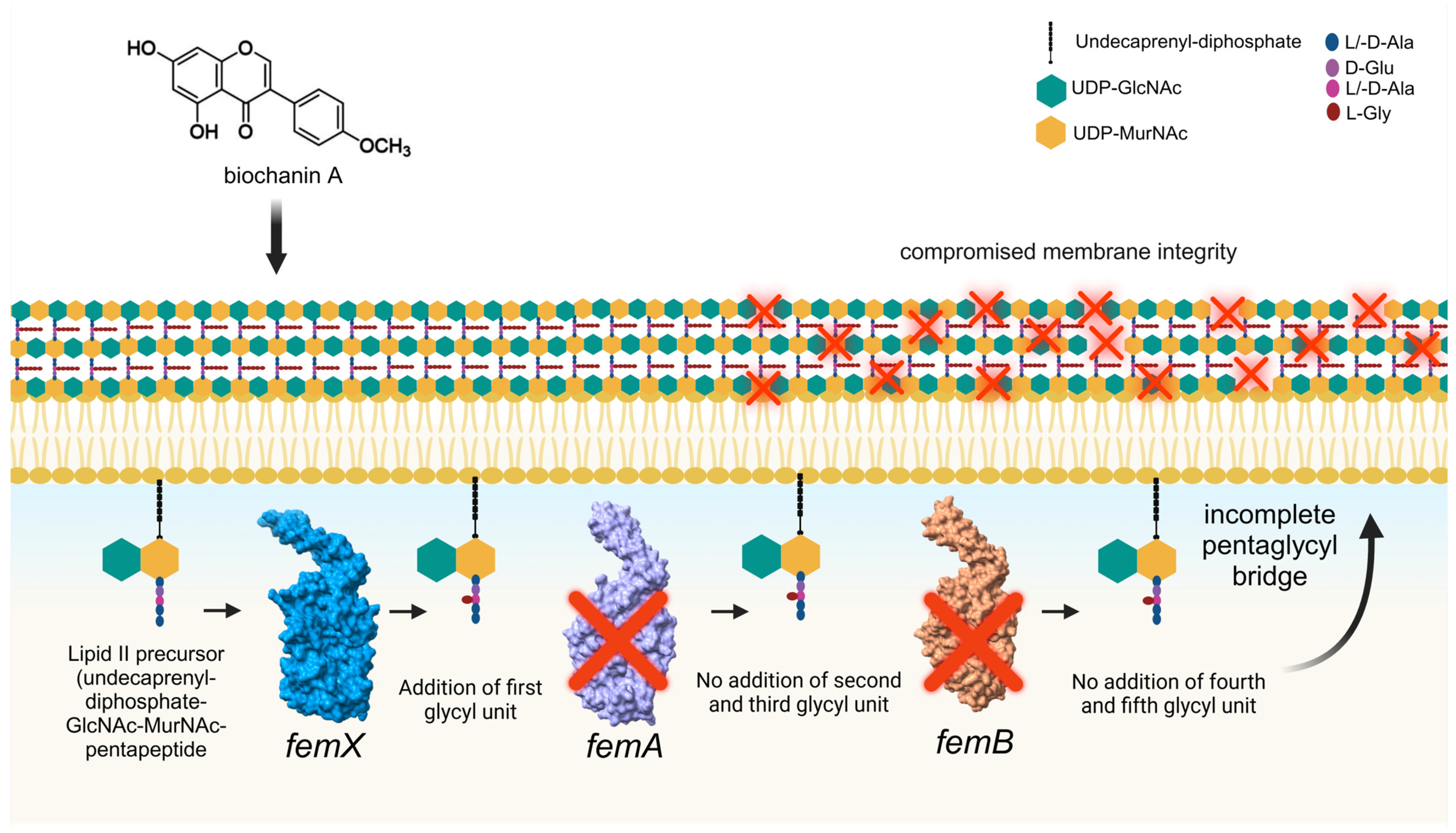
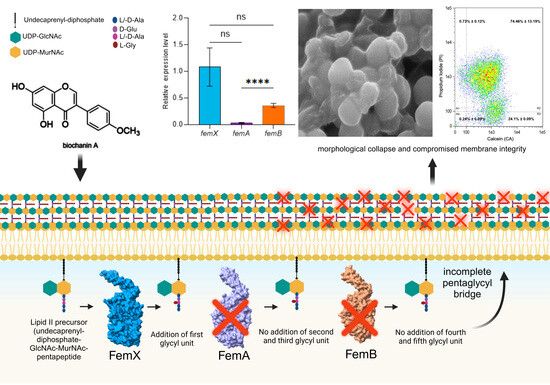
Biochanin A, a Plant Isoflavone, Disrupts Peptidoglycan Biosynthesis by Downregulating femA and femB, and Impairs Cell Wall Integrity in Multidrug-Resistant Staphylococcus aureus

 ,
, 


 and
and 
Abstract
1. Introduction
2. Results
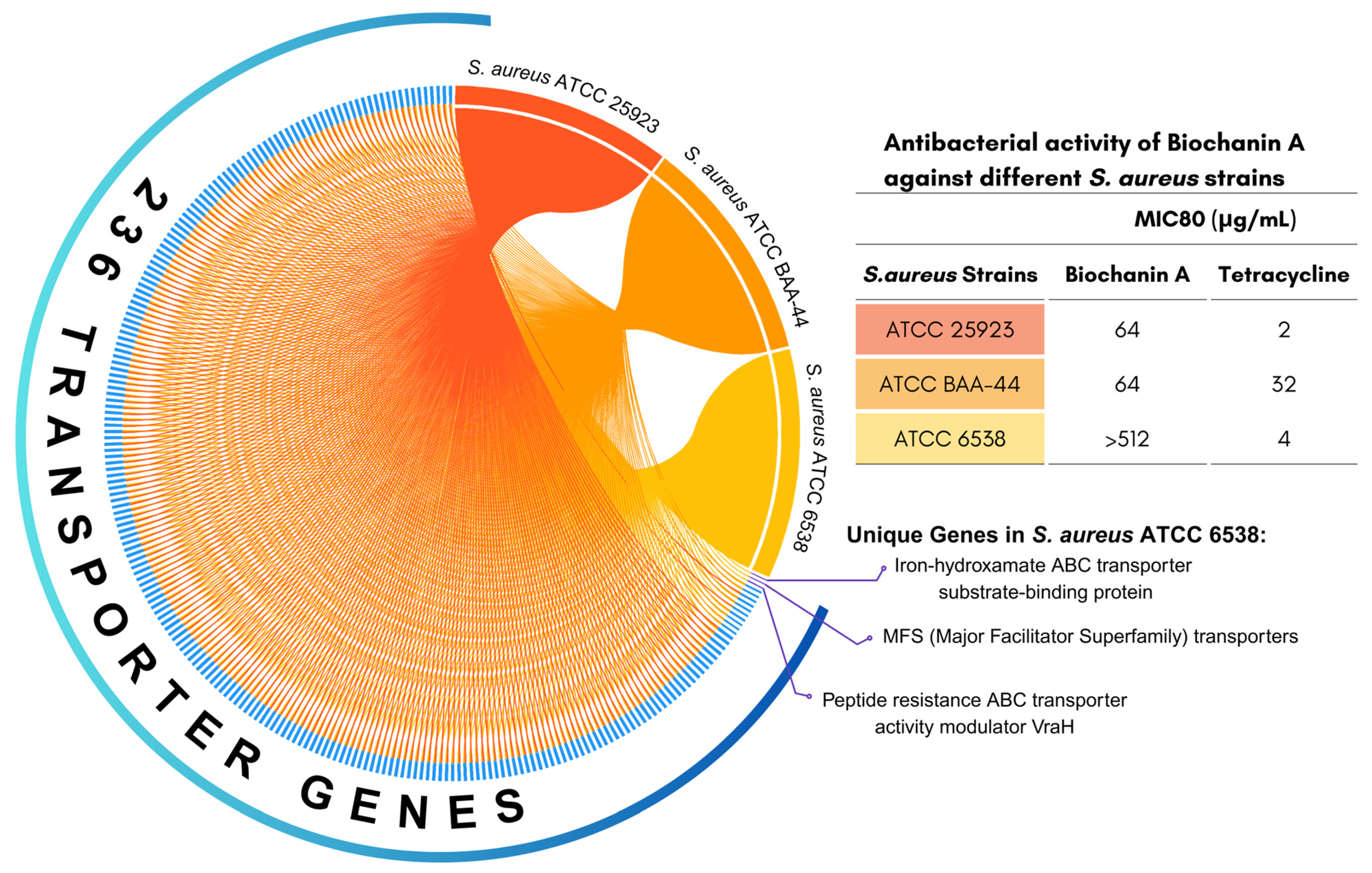
2.1. Minimum Inhibitory Concentration (MIC)
2.2. Comparative Genome Analysis on Genes Encoding Membrane-Associated Transport Proteins
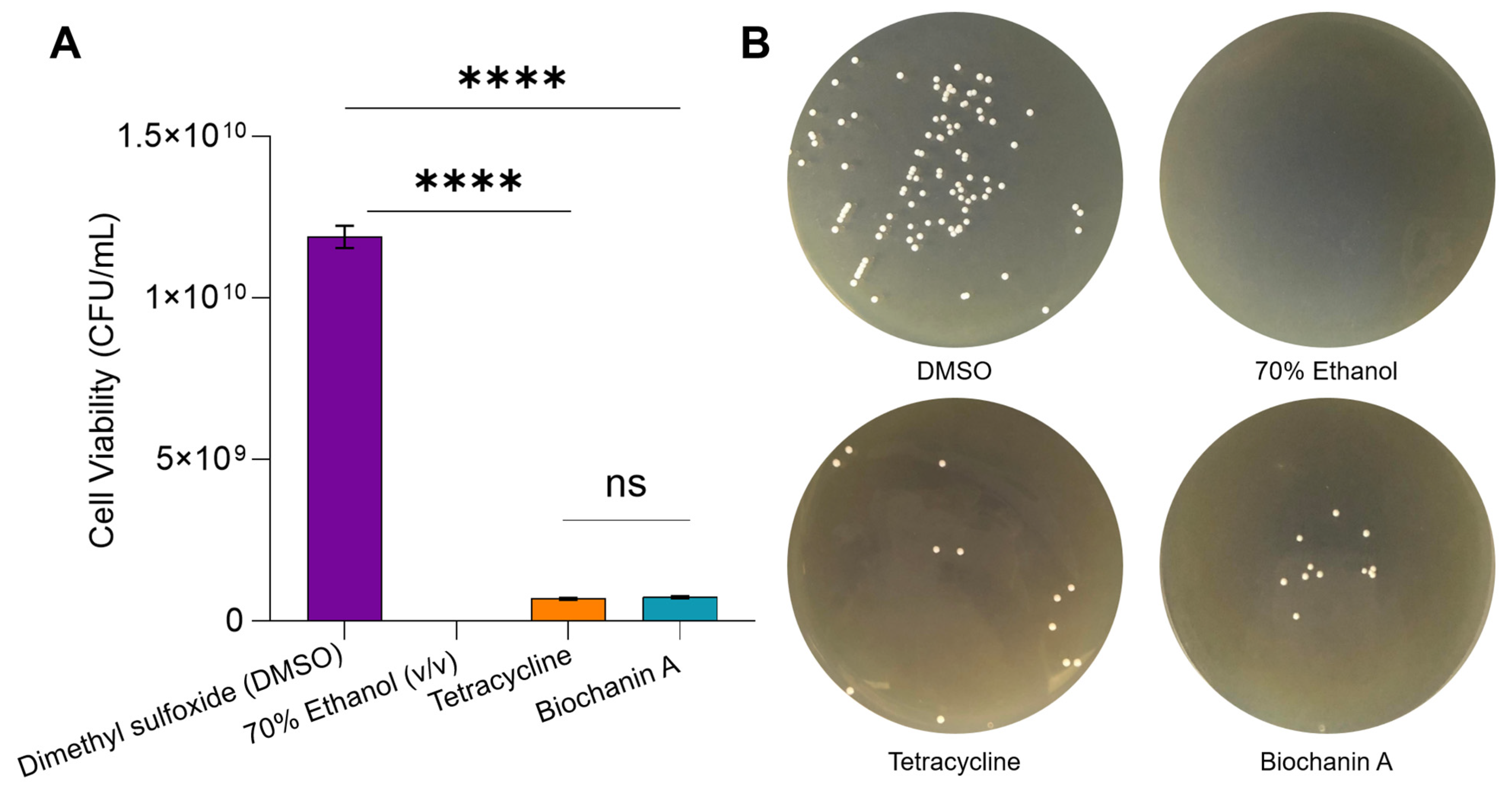
2.3. Bacterial Cell Viability Using Spread Plate Method
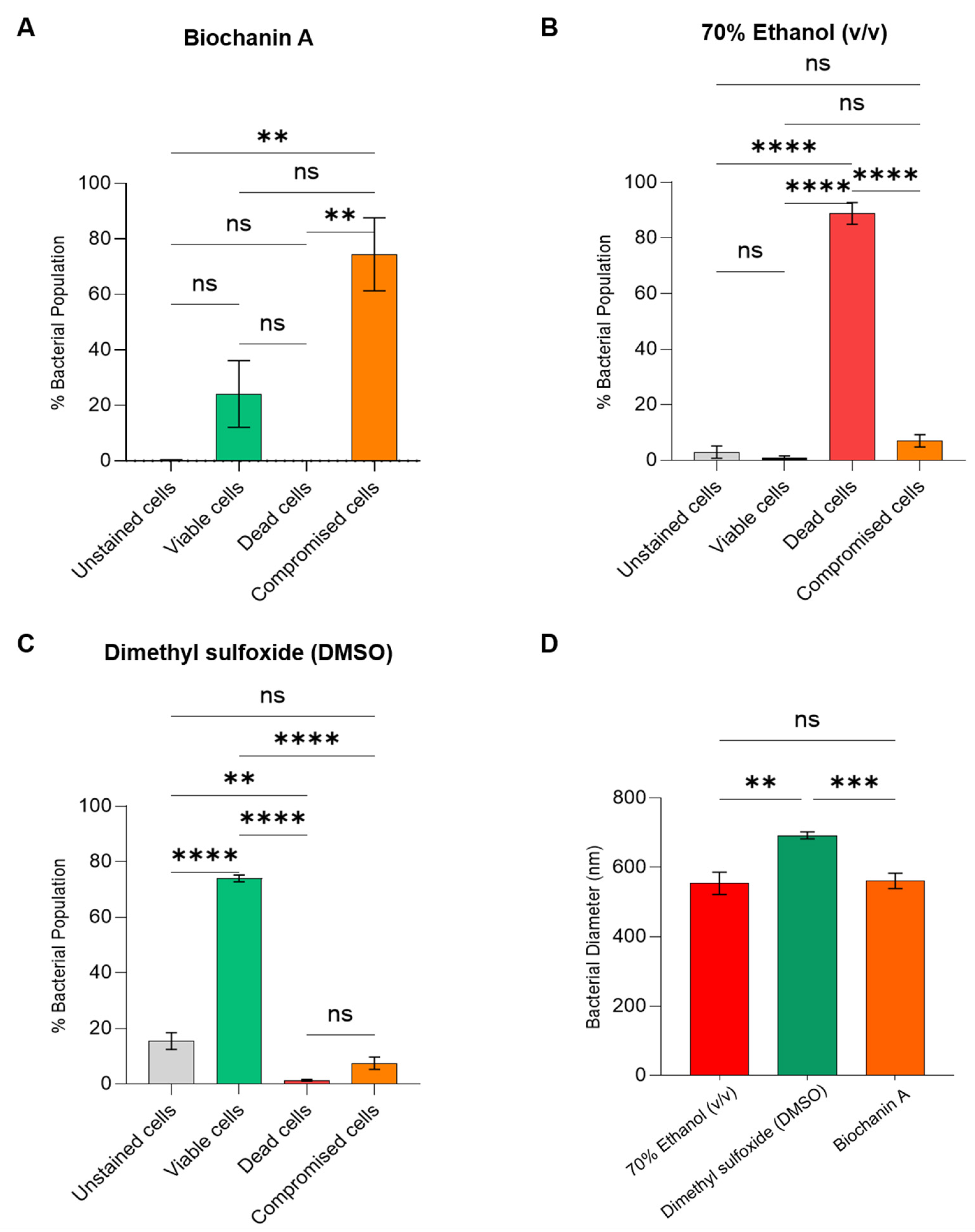
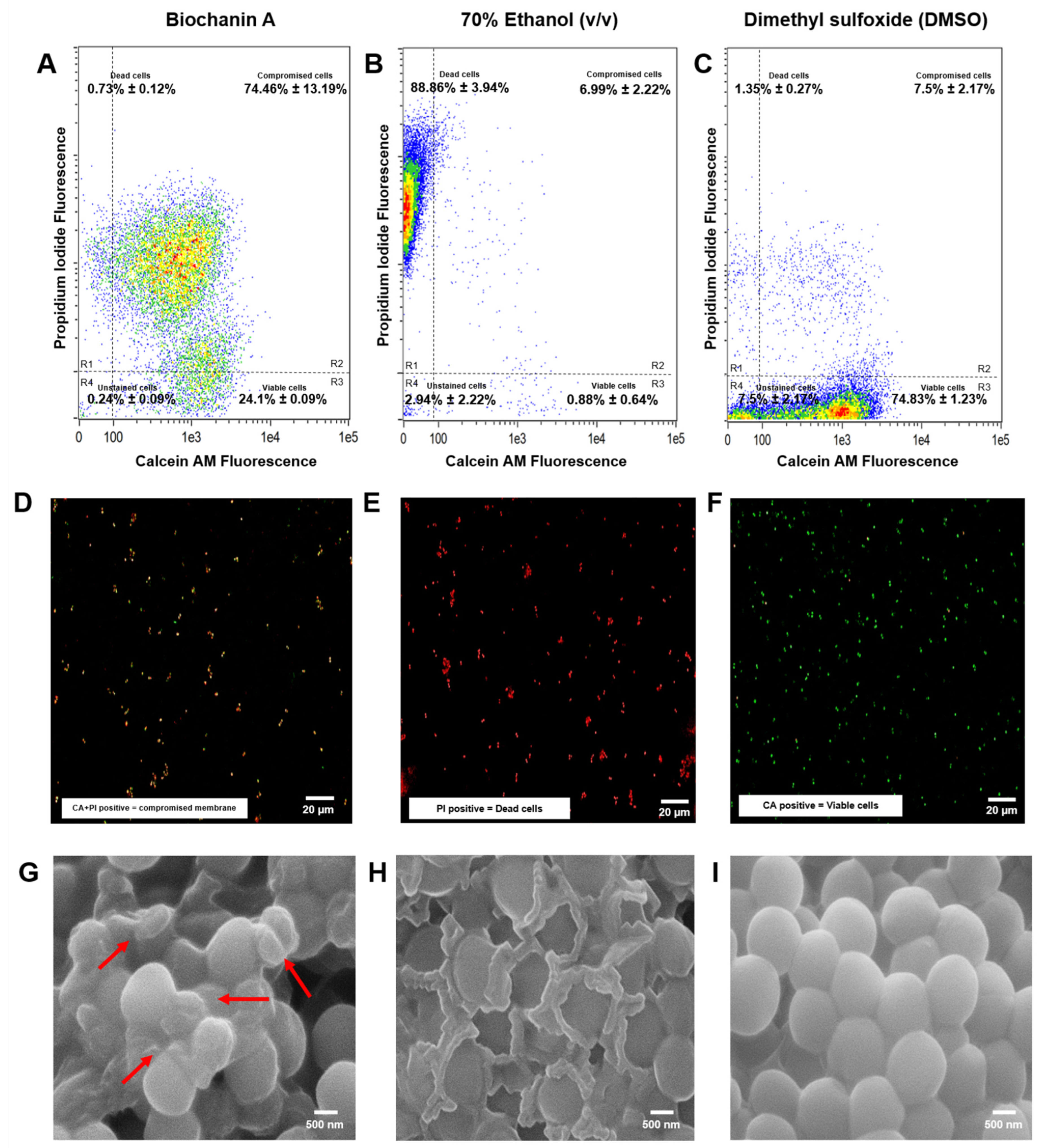
2.4. Propidium Iodide and Calcein Uptake Assay Using Flow Cytometer
2.5. MDR-SA Bacterial Membrane Is Compromised upon Treatment with Biochanin A as Indicated in Fluorescence Microscopy Analysis
2.6. Scanning Electron Microscopy (SEM) Reveals Morphological Effects of Biochanin A on MDR-SA Cells
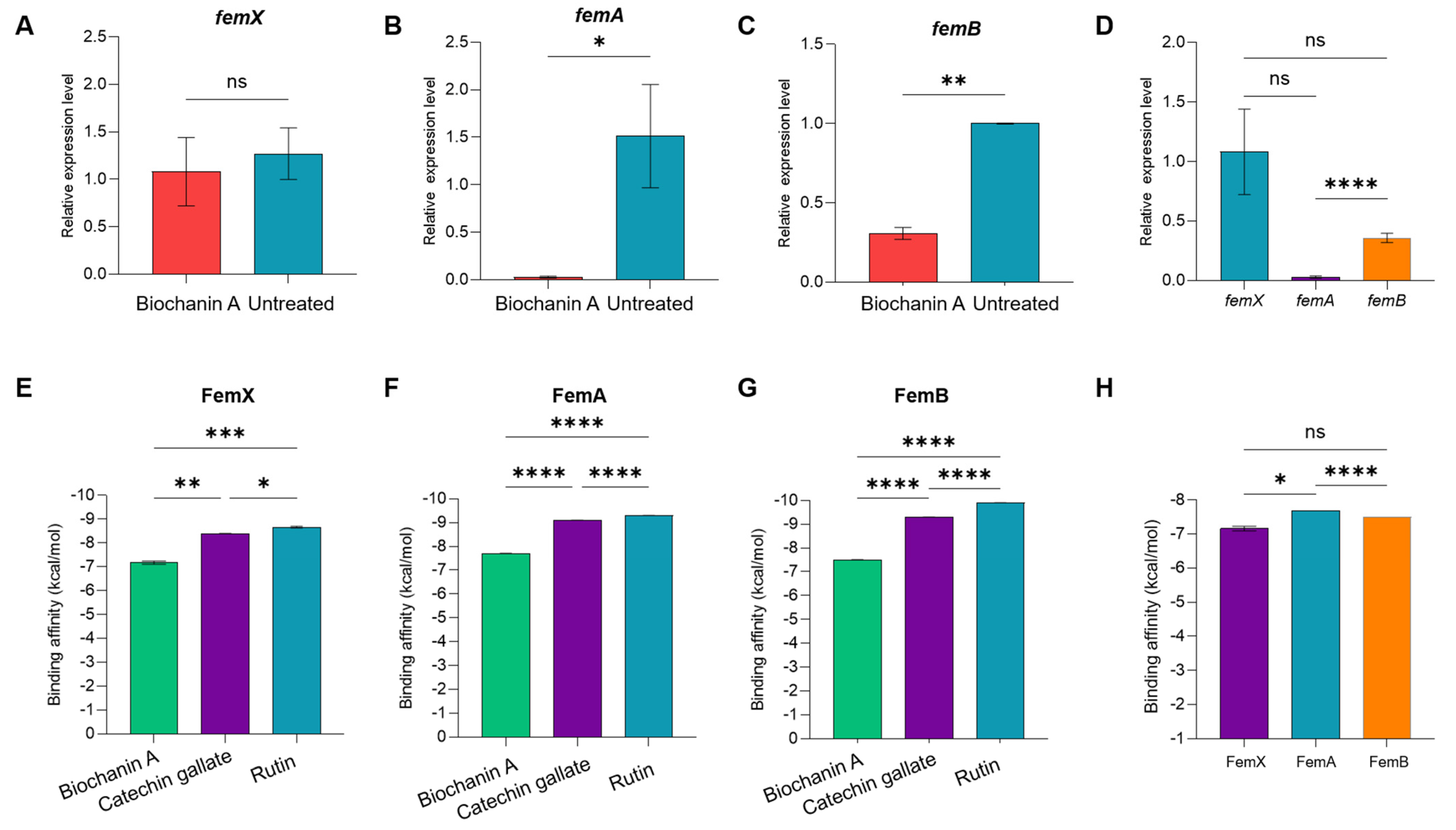
2.7. Relative Gene Expression Using Quantitative Real-Time Polymerase Chain Reaction (qRT-PCR)
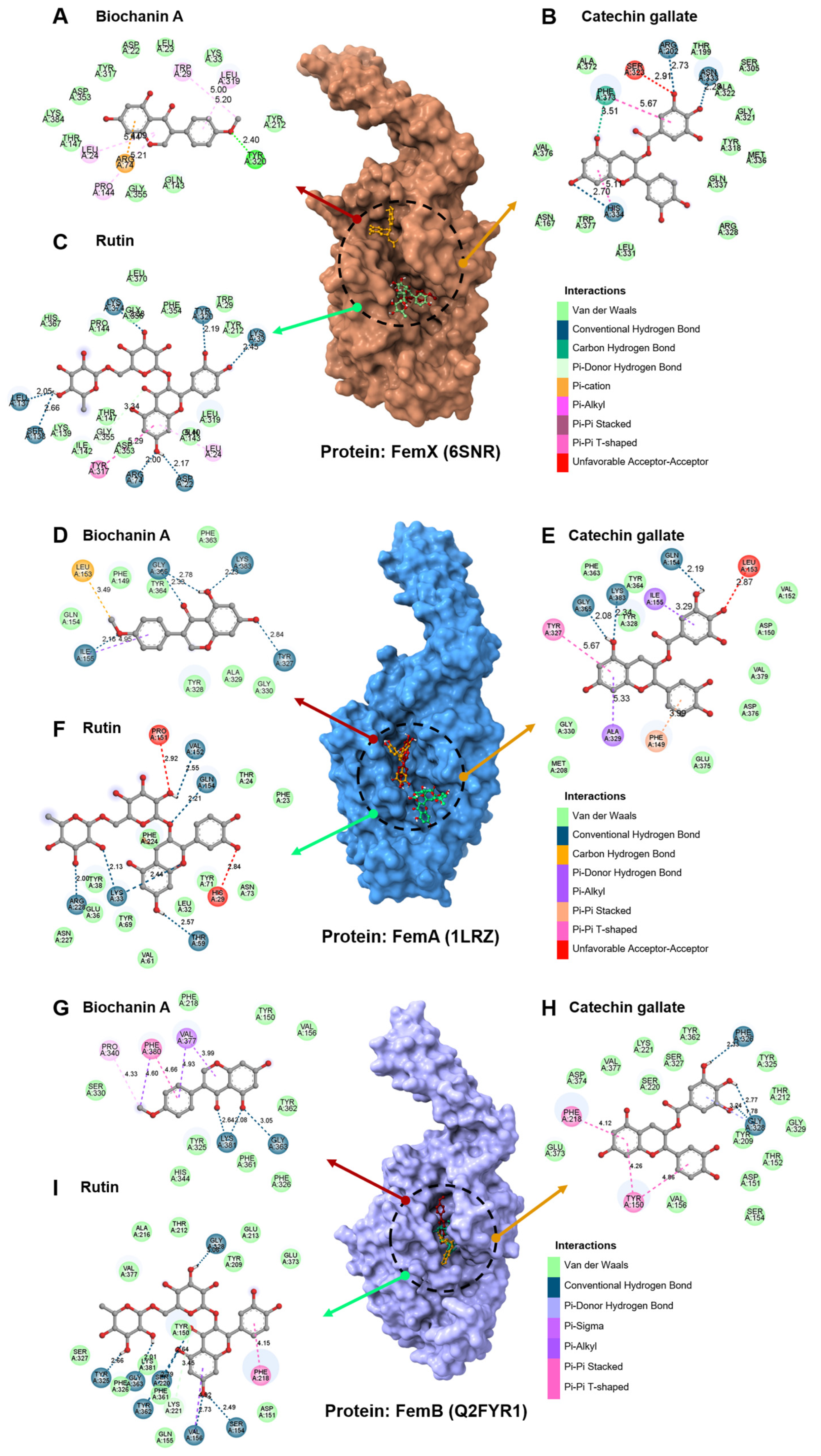
2.8. In Silico Analyses Showing Biochanin A’s Interaction with FemX, FemA, and FemB Proteins
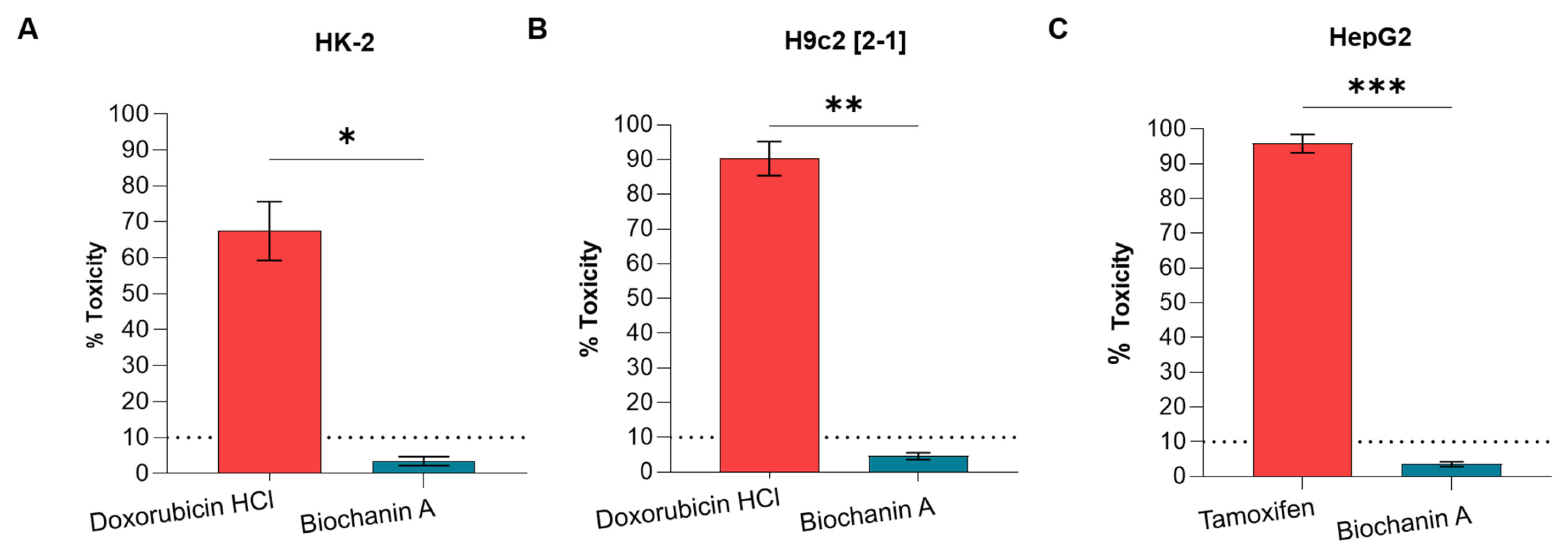
2.9. Lactate Dehydrogenase (LDH) Toxicity Assay
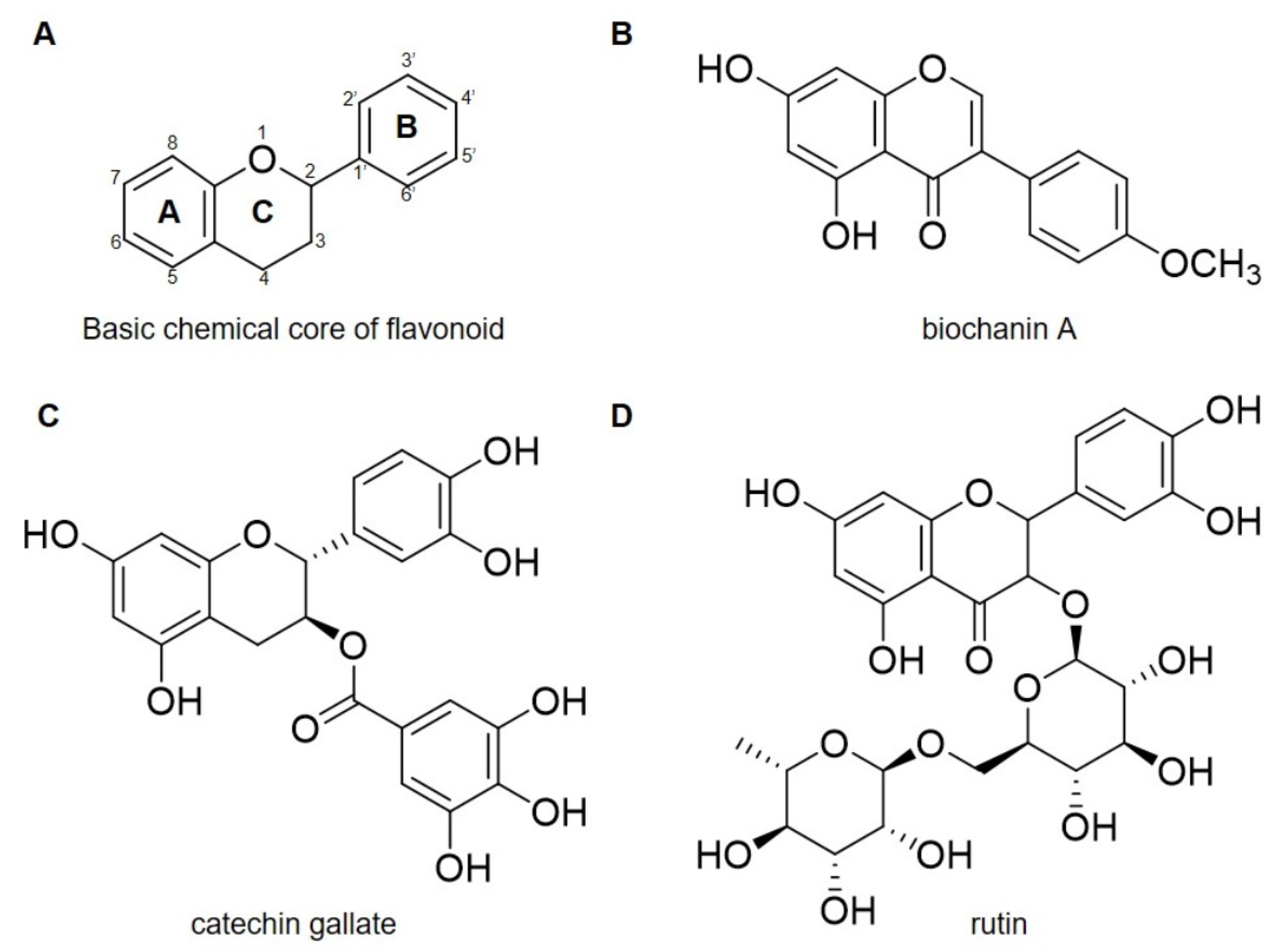
2.10. Structure-Activity Relationship (SAR) of Biochanin A Compared to Other Flavonoids
3. Discussion
4. Materials and Methods
4.1. Standards and Biological Samples
4.2. Minimum Inhibitory Concentration (MIC) Testing
4.3. Comparative Genome Analysis
4.4. Bacterial Cell Viability Assay Using Spread Plate Method
4.5. Live/Dead Propidium Iodide and Calcein Uptake Assay Using Flow Cytometer
4.6. Fluorescence Microscopy
4.7. Scanning Electron Microscopy (SEM)
4.8. Relative Gene Expression Analysis
4.9. In Silico Analyses
4.10. Toxicity Screening by Lactate Dehydrogsenase Assay
5. Conclusions
Supplementary Materials
Author Contributions
Funding
Institutional Review Board Statement
Informed Consent Statement
Data Availability Statement
Acknowledgments
Conflicts of Interest
Abbreviations
| AMR | antimicrobial resistance |
| BBB | blood–brain barrier |
| CFU/mL | colony-forming units per milliliter |
| CNS | central nervous system |
| DMSO | Dimethyl sulfoxide |
| femA | factor essential for methicillin resistance A gene |
| femB | factor essential for methicillin resistance B gene |
| femX | factor essential for methicillin resistance X gene |
| Fu | Fraction unbound |
| LDH | lactate dehydrogenase |
| MDR-SA | multidrug-resistant S. aureus |
| MIC | minimum inhibitory concentration |
| NS | no significance |
| OD | optical density |
| PBP2a | Penicillin-Binding Protein 2a |
| PBS | phosphate-buffered saline |
| PG | peptidoglycan |
| CA | Calcein AM |
| PI | propidium iodide |
| SAR | structure–activity relationship |
| SEM | scanning electron microscopy |
| ±SEM | standard error of the mean |
| TSA | tryptone soy agar |
| WHO | World Health Organization |
References
- Kadariya, J.; Smith, T.C.; Thapaliya, D. Staphylococcus aureus and staphylococcal food-borne disease: An ongoing challenge in public health. Biomed. Res. Int. 2014, 2014, 827965. [Google Scholar] [CrossRef] [PubMed]
- Lee, B.Y.; Singh, A.; David, M.Z.; Bartsch, S.M.; Slayton, R.B.; Huang, S.S.; Zimmer, S.M.; Potter, M.A.; Macal, C.M.; Lauderdale, D.S.; et al. The economic burden of community-associated methicillin-resistant Staphylococcus aureus (CA-MRSA). Clin. Microbiol. Infect. 2013, 19, 528–536. [Google Scholar] [CrossRef] [PubMed]
- Ikuta, K.S.; Swetschinski, L.R.; Aguilar, G.R.; Sharara, F.; Mestrovic, T.; Gray, A.P.; Weaver, N.D.; Wool, E.E.; Han, C.; Hayoon, A.G.; et al. Global mortality associated with 33 bacterial pathogens in 2019: A systematic analysis for the Global Burden of Disease Study 2019. Lancet 2022, 10369, 2221–2248. [Google Scholar] [CrossRef] [PubMed]
- Omwenga, I.; Aboge, G.O.; Mitema, E.S.; Obiero, G.; Ngaywa, C.; Ngwili, N.; Wamwere, G.; Wainaina, M.; Bett, B. Antimicrobial Usage and Detection of Multidrug-Resistant Staphylococcus aureus, Including Methicillin-Resistant Strains in Raw Milk of Livestock from Northern Kenya. Microb. Drug Resist. 2021, 21, 843–854. [Google Scholar] [CrossRef]
- Saravolatz, S.N.; Martin, H.; Pawlak, J.; Johnson, L.B.; Saravolatz, L.D. Ceftaroline-heteroresistant Staphylococcus aureus. Antimicrob. Agents Chemother. 2014, 58, 3133–3136. [Google Scholar] [CrossRef]
- Papp-Wallace, K.M.; Endimiani, A.; Taracila, M.A.; Bonomo, R.A. Carbapenems: Past, present, and future. Antimicrob. Agents Chemother. 2011, 55, 4943–4960. [Google Scholar] [CrossRef]
- Chen, Y.; Sun, L.; Hong, Y.; Chen, M.; Zhang, H.; Peng, Y.; Liao, K.; Wang, H.; Zhu, F.; Zhuang, H.; et al. Exploring the third-generation tetracycline resistance of multidrug-resistant livestock-associated methicillin-resistant Staphylococcus aureus ST9 across healthcare settings in China. J. Antimicrob. Chemother. 2023, 78, 1871–1881. [Google Scholar] [CrossRef]
- Kang, H.K.; Park, Y. Glycopeptide antibiotics: Structure and mechanisms of action. J. Bacteriol. Virol. 2015, 45, 67–78. [Google Scholar] [CrossRef]
- Van Bambeke, F. Lipoglycopeptide Antibacterial Agents in Gram-Positive Infections: A Comparative Review. Drugs 2015, 75, 2073–2095. [Google Scholar] [CrossRef]
- Michalopoulos, A.S.; Livaditis, I.G.; Gougoutas, V. The revival of fosfomycin. Int. J. Infect. Dis. 2011, 15, e732–e739. [Google Scholar] [CrossRef]
- Miller, S.I. Antibiotic Resistance and Regulation of the Gram-Negative Bacterial Outer Membrane Barrier by Host Innate Immune Molecules. mBio 2016, 7, e01541-16. [Google Scholar] [CrossRef]
- Pfaller, M.A.; Mendes, R.E.; Streit, J.M.; Hogan, P.A.; Flamm, R.K. Five-Year Summary of In Vitro Activity and Resistance Mechanisms of Linezolid against Clinically Important Gram-Positive Cocci in the United States from the LEADER Surveillance Program (2011 to 2015). Antimicrob. Agents Chemother. 2017, 61, e00609-17. [Google Scholar] [CrossRef] [PubMed]
- El-Banna, T.E.S.; Sonbol, F.I.; Kamer, A.M.A.; Badr, S.A.M.M. Genetic diversity of macrolides resistant Staphylococcus aureus clinical isolates and the potential synergistic effect of vitamins, C and K3. BMC Microbiol. 2024, 24, 30. [Google Scholar] [CrossRef] [PubMed]
- Wang, K.; Chen, J.; Li, W.; Wang, M.; Fan, T.; Bu, D.; Ye, S. Structural basis for antibiotic resistance by chloramphenicol acetyltransferase type A in Staphylococcus aureus. Sci. Rep. 2025, 15, 37020. [Google Scholar] [CrossRef] [PubMed]
- Rahimi, F. Characterization of Resistance to Aminoglycosides in Methicillin-Resistant Staphylococcus aureus Strains Isolated from a Tertiary Care Hospital in Tehran, Iran. Jundishapur J. Microbiol. 2016, 9, e29237. [Google Scholar] [CrossRef]
- WHO. WHO Bacterial Priority Pathogens list, 2024: Bacterial Pathogens of Public Health Importance to Guide Research, Development and Strategies to Prevent and Control Antimicrobial Resistance. Available online: https://www.who.int/publications/i/item/9789240093461 (accessed on 15 November 2025).
- Yang, H.; Singh, M.; Kim, S.J.; Schaefer, J. Characterization of the tertiary structure of the peptidoglycan of Enterococcus faecalis. Biochim. Biophys. Acta Biomembr. 2017, 1859, 2171–2180. [Google Scholar] [CrossRef]
- Kim, S.J.; Chang, J.; Singh, M. Peptidoglycan architecture of Gram-positive bacteria by solid-state NMR. Biophys. Acta 2015, 1848, 350–362. [Google Scholar] [CrossRef]
- Garde, S.; Chodisetti, P.K.; Reddy, M. Peptidoglycan: Structure, Synthesis, and Regulation. EcoSal Plus 2021, 9, eESP-0010-2020. [Google Scholar] [CrossRef]
- Rohrer, S.; Berger-Bächi, B. FemABX peptidyl transferases: A link between branched-chain cell wall peptide formation and beta-lactam resistance in gram-positive cocci. Antimicrob. Agents Chemother. 2003, 47, 837–846. [Google Scholar] [CrossRef]
- Monteiro, J.M.; Covas, G.; Rausch, D.; Filipe, S.R.; Schneider, T.; Sahl, H.G.; Pinho, M.G. The pentaglycine bridges of Staphylococcus aureus peptidoglycan are essential for cell integrity. Sci. Rep. 2019, 9, 5010. [Google Scholar] [CrossRef]
- Sharif, S.; Kim, S.J.; Labischinski, H.; Chen, J.; Schaefer, J. Uniformity of glycyl bridge lengths in the mature cell walls of fem mutants of methicillin-resistant Staphylococcus aureus. J. Bacteriol. 2013, 195, 1421–1427. [Google Scholar] [CrossRef]
- Zhydzetski, A.; Głowacka-Grzyb, Z.; Bukowski, M.; Żądło, T.; Bonar, E.; Władyka, B. Agents targeting the bacterial cell wall as tools to combat gram-positive pathogens. Molecules 2024, 29, 4065. [Google Scholar] [CrossRef] [PubMed]
- Akkiraju, A.G.; Atcha, K.R.; Sagurthi, S.R. Cloning, Purification, and Biophysical Characterization of FemB Protein from Methicillin-Resistant Staphylococcus aureus and Inhibitors Screening. Appl. Biochem. Biotechnol. 2024, 196, 4974–4992. [Google Scholar] [CrossRef] [PubMed]
- Siegel, S.D.; Liu, J.; Ton-That, H. Biogenesis of the Gram-positive bacterial cell envelope. Curr. Opin. Microbiol. 2016, 34, 31–37. [Google Scholar] [CrossRef] [PubMed]
- Sharif, S.; Kim, S.J.; Labischinski, H.; Schaefer, J. Characterization of peptidoglycan in fem-deletion mutants of methicillin-resistant Staphylococcus aureus by solid-state NMR. Biochemistry 2009, 48, 3100–3108. [Google Scholar] [CrossRef]
- Rahman, S.; Nath, S.; Mohan, U.; Das, A.K. Targeting Staphylococcal Cell-Wall Biosynthesis Protein FemX Through Steered Molecular Dynamics and Drug-Repurposing Approach. ACS Omega 2023, 8, 29292–29301. [Google Scholar] [CrossRef]
- Goodarzi, N.N.; Shahbazi, B.; Khiavi, E.H.A.G.; Asforooshani, M.K.; Abed, S.; Badmasti, F. Repurposing of Compounds from Streptomyces spp. as Potential Inhibitors of Aminoacyltransferase FemA: An Essential Drug Target against Antibiotic-resistant Staphylococcus aureus. Curr. Comput. Drug Des. 2025, 21, 708–720. [Google Scholar] [CrossRef]
- Abdallah, E.M.; Alhatlani, B.Y.; de Paula Menezes, R.; Martins, C.H.G. Back to Nature: Medicinal Plants as Promising Sources for Antibacterial Drugs in the Post-Antibiotic Era. Plants 2023, 12, 3077. [Google Scholar] [CrossRef]
- Wu, S.C.; Yang, Z.Q.; Liu, F.; Peng, W.J.; Qu, S.Q.; Li, Q.; Shen, J.Z. Antibacterial effect and mode of action of flavonoids from licorice against methicillin-resistant Staphylococcus aureus. Front. Microbiol. 2019, 10, 2489. [Google Scholar] [CrossRef]
- Herlina, T.; Nishinarizki, V.; Hardianto, A.; Latip, J.B. Review on antibacterial flavonoids from genus Erythrina: Structure-activity relationship and mode of action. Heliyon 2025, 11, 1. [Google Scholar] [CrossRef]
- Weng, Z.; Zeng, F.; Wang, M.; Guo, S.; Tang, Z.; Itagaki, K.; Wang, F. Antimicrobial activities of lavandulylated flavonoids in Sophora flavences against methicillin-resistant Staphylococcus aureus via membrane disruption. J. Adv. Res. 2024, 57, 197–212. [Google Scholar] [CrossRef]
- Ramaroson, M.L.; Koutouan, C.; Helesbeux, J.J.; Le Clerc, V.; Hamama, L.; Geoffriau, E.; Briard, M. Role of phenylpropanoids and flavonoids in plant resistance to pests and diseases. Molecules 2022, 27, 8371. [Google Scholar] [CrossRef] [PubMed]
- Takó, M.; Kerekes, E.B.; Zambrano, C.; Kotogán, A.; Papp, T.; Krisch, J.; Vágvölgyi, C. Plant Phenolics and Phenolic-Enriched Extracts as Antimicrobial Agents against Food-Contaminating Microorganisms. Antioxidants 2020, 9, 165. [Google Scholar] [CrossRef] [PubMed]
- Balida, L.A.P.; Regalado, J.T.A.; Teodosio, J.J.R.; Dizon, K.A.H.; Sun, Z.; Zhan, Z.Q.; Blancaflor, J.M.D.; Sollesta, J.V.N.; Villorente, Z.M.; Saludes, J.P.; et al. Antibiotic Isoflavonoids, Anthraquinones, and Pterocarpanoids from Pigeon Pea (Cajanus cajan L.) Seeds against Multidrug-Resistant Staphylococcus aureus. Metabolites 2022, 12, 279. [Google Scholar] [CrossRef]
- Wang, Y.; Li, J.J.; Chen, Y.M. Biochanin A extirpates the epithelial-mesenchymal transition in a human lung cancer. Exp. Ther. Med. 2018, 15, 2830–2836. [Google Scholar] [CrossRef] [PubMed]
- Szliszka, E.; Czuba, Z.P.; Mertas, A.; Paradysz, A.; Krol, W. The dietary isoflavone biochanin-A sensitizes prostate cancer cells to TRAIL-induced apoptosis. Urol. Oncol. 2013, 31, 331–342. [Google Scholar] [CrossRef]
- Puthli, A.; Tiwari, R.; Mishra, K.P. Biochanin A enhances the radiotoxicity in colon tumor cells in vitro. J. Environ. Pathol. Toxicol. Oncol. 2013, 32, 189–203. [Google Scholar] [CrossRef]
- Li, J.; Xu, J.; Sun, Y.; Fu, R.; Ye, D. An Insight on Synergistic Anti-cancer Efficacy of Biochanin A and Sulforaphane Combination Against Breast Cancer. Appl. Biochem. Biotechnol. 2024, 196, 992–1007. [Google Scholar] [CrossRef]
- Hsu, Y.N.; Shyu, H.W.; Hu, T.W.; Yeh, J.P.; Lin, Y.W.; Lee, L.Y.; Yeh, Y.T.; Dai, H.Y.; Perng, D.S.; Su, S.H.; et al. Anti-proliferative activity of biochanin A in human osteosarcoma cells via mitochondrial-involved apoptosis. Food Chem. Toxicol. 2018, 112, 194–204. [Google Scholar] [CrossRef]
- Lim, T.G.; Kim, J.E.; Jung, S.K.; Li, Y.; Bode, A.M.; Park, J.S.; Yeom, M.H.; Dong, Z.; Lee, K.W. MLK3 is a direct target of biochanin A, which plays a role in solar UV-induced COX-2 expression in human keratinocytes. Biochem. Pharmacol. 2013, 86, 896–903. [Google Scholar] [CrossRef]
- Zhou, N.; Zheng, D.; You, Q.; Chen, T.; Jiang, J.; Shen, W.; Zhang, D.; Liu, J.; Chen, D.; Hu, K. Therapeutic Potential of Biochanin A in Herpes Simplex Keratitis. Pharmaceuticals 2023, 16, 1240. [Google Scholar] [CrossRef] [PubMed]
- Moon, Y.J.; Morris, M.E. Pharmacokinetics and bioavailability of the bioflavonoid biochanin A: Effects of quercetin and EGCG on biochanin A disposition in rats. Mol. Pharm. 2007, 4, 865–872. [Google Scholar] [CrossRef] [PubMed]
- Liu, G.; Liang, J.C.; Wang, X.L.; Li, Z.H.; Wang, W.; Guo, N.; Wu, X.P.; Shen, F.G.; Xing, M.X.; Liu, L.H.; et al. In Vitro Synergy of Biochanin A and Ciprofloxacin against Clinical Isolates of Staphylococcus aureus. Molecules 2011, 16, 6656–6666. [Google Scholar] [CrossRef] [PubMed]
- Sklenickova, O.; Flesar, J.; Kokoska, L.; Vlkova, E.; Halamova, K.; Malik, J. Selective growth inhibitory effect of biochanin A against intestinal tract colonizing bacteria. Molecules 2010, 15, 1270–1279. [Google Scholar] [CrossRef]
- He, X.Z.; Li, W.S.; Blount, J.W.; Dixon, R.A. Regioselective synthesis of plant (iso)flavone glycosides in Escherichia coli. Appl. Microbiol. Biotechnol. 2008, 80, 253–260. [Google Scholar] [CrossRef]
- Hanski, L.; Genina, N.; Uvell, H.; Malinovskaja, K.; Gylfe, Å.; Laaksonen, T.; Kolakovic, R.; Mäkilä, E.; Salonen, J.; Hirvonen, J.; et al. Inhibitory activity of the isoflavone biochanin A on intracellular bacteria of genus G and initial development of a buccal formulation. PLoS ONE 2014, 9, e115115. [Google Scholar] [CrossRef]
- Hu, K.X.; Shi, X.C.; Xu, D.; Laborda, P.; Wu, G.C.; Liu, F.Q.; Laborda, P.; Wang, S.Y. Antibacterial mechanism of Biochanin A and its efficacy for the control of Xanthomonas axonopodis pv. glycines in soybean. Pest Manag. Sci. 2021, 77, 1668–1673. [Google Scholar] [CrossRef]
- Blanco, P.; Hernando-Amado, S.; Reales-Calderon, J.A.; Corona, F.; Lira, F.; Alcalde-Rico, M.; Bernardini, A.; Sanchez, M.B.; Martinez, J.L. Bacterial Multidrug Efflux Pumps: Much More Than Antibiotic Resistance Determinants. Microorganisms 2016, 4, 14. [Google Scholar] [CrossRef]
- Chetri, S. The culmination of multidrug-resistant efflux pumps vs. meager antibiotic arsenal era: Urgent need for an improved new generation of EPIs. Front. Microbiol. 2023, 14, 1149418. [Google Scholar] [CrossRef]
- Zack, K.M.; Sorenson, T.; Joshi, S.G. Types and Mechanisms of Efflux Pump Systems and the Potential of Efflux Pump Inhibitors in the Restoration of Antimicrobial Susceptibility, with a Special Reference to Acinetobacter baumannii. Pathogens 2024, 13, 197. [Google Scholar] [CrossRef]
- Koyama, N.; Tokura, Y.; Münch, D.; Sahl, H.G.; Schneider, T.; Shibagaki, Y.; Ikeda, H.; Tomoda, H. The nonantibiotic small molecule cyslabdan enhances the potency of β-lactams against MRSA by inhibiting pentaglycine interpeptide bridge synthesis. PLoS ONE 2012, 7, 48981. [Google Scholar] [CrossRef] [PubMed]
- Feng, Z.-J.; Lai, W.-F. Chemical and Biological Properties of Biochanin A and Its Pharmaceutical Applications. Pharmaceutics 2023, 15, 1105. [Google Scholar] [CrossRef] [PubMed]
- Dias, M.C.; Pinto, D.C.G.A.; Silva, A.M.S. Plant Flavonoids: Chemical Characteristics and Biological Activity. Molecules 2021, 26, 5377. [Google Scholar] [CrossRef] [PubMed]
- Singhal, D.; Saxena, S. Screening and Toxicity Analysis of Catechin Isomers Against FemA Protein. Indian J. Pharm. Sci. 2015, 77, 758–763. [Google Scholar]
- Rani, N.; Kumar, C.; Arunachalam, A.; PTV, L. Rutin as a potential inhibitor to target peptidoglycan pathway of Staphylococcus aureus cell wall synthesis. Clin. Microbiol. Infect. 2018, 3, 15761. [Google Scholar] [CrossRef]
- Taylor, P.W. Interactions of Tea-Derived Catechin Gallates with Bacterial Pathogens. Molecules 2020, 25, 1986. [Google Scholar] [CrossRef]
- Al-Khayri, J.M.; Rashmi, R.; Toppo, V.; Chole, P.B.; Banadka, A.; Sudheer, W.N.; Rezk, A.A.S. Plant secondary metabolites: The weapons for biotic stress management. Metabolites 2023, 13, 716. [Google Scholar] [CrossRef]
- Alghazeer, R.O.; Azwai, S.M.; Elmansori, A.A.; Alzintani, K.M.; Elghmasi, S.; Alnajjar, A.Y.; Eldaghayes, I.M. Antibacterial activity of flavonoid extracts from Enteromorpha intestinalis and Caulerpa prolifera against multidrug-resistant foodborne bacterial isolates. Open Vet. J. 2024, 14, 769. [Google Scholar] [CrossRef]
- Macêdo, H.L.R.D.Q.; de Oliveira, L.L.; de Oliveira, D.N.; Lima, K.F.A.; Cavalcanti, I.M.F.; Campos, L.A.D.A. Nanostructures for delivery of flavonoids with antibacterial potential against Klebsiella pneumoniae. Antibiotics 2024, 13, 844. [Google Scholar] [CrossRef]
- Tura, A.M.; Anbessa, M.; Tulu, E.D.; Tilinti, B.Z. Exploring Vernonia amygdalina’s leaf extracts for phytochemical screening and its anti-bacterial activities. Int. J. Food Prop. 2024, 27, 960–974. [Google Scholar] [CrossRef]
- Dall’Agnol, R.; Ferraz, A.; Bernardi, A.P.; Albring, D.; Nör, C.; Sarmento, L.; Lamb, L.; Hass, M.; von Poser, G.; Schapoval, E.E. Antimicrobial activity of some Hypericum species. Phytomedicine 2003, 10, 511–516. [Google Scholar] [CrossRef]
- Nayaka, H.B.; Londonkar, R.L.; Umesh, M.K.; Tukappa, A. Antibacterial Attributes of Apigenin, Isolated from Portulaca oleracea L. Int. J. Bacteriol. 2014, 2014, 175851. [Google Scholar] [CrossRef] [PubMed]
- Makarewicz, M.; Drożdż, I.; Tarko, T.; Duda-Chodak, A. The interactions between polyphenols and microorganisms, especially gut microbiota. Antioxidants 2021, 10, 188. [Google Scholar] [CrossRef] [PubMed]
- do Nascimento, J.B.; da Costa, J.G.M. Flavonoids: A Review of Antibacterial Activity Against Gram-Negative Bacteria. Int. J. Microbiol. 2025, 2025, 9961121. [Google Scholar] [CrossRef] [PubMed]
- Yuan, G.; Guan, Y.; Yi, H.; Lai, S.; Sun, Y.; Cao, S. Antibacterial activity and mechanism of plant flavonoids to gram-positive bacteria predicted from their lipophilicities. Sci. Rep. 2021, 11, 10471. [Google Scholar] [CrossRef]
- ATCC. Staphylococcus aureus subsp. aureus Rosenbach. Available online: https://www.atcc.org/products/baa-44 (accessed on 15 November 2025).
- Liu, G.; Qin, P.; Cheng, X.; Wu, L.; Zhao, W.; Gao, W. Evaluation of the mechanistic basis for the antibacterial activity of ursolic acid against Staphylococcus aureus. Front. Microbiol. 2024, 15, 1389242. [Google Scholar] [CrossRef]
- Ong, J.; Godfrey, R.; Nazarian, A.; Tam, J.; Isaacson, B.M.; Pasquina, P.F.; Williams, D.L. Comparison of Staphylococcus aureus tolerance between antimicrobial blue light, levofloxacin, and rifampin. Front. Microbiol. 2023, 14, 1158558. [Google Scholar] [CrossRef]
- Jin, H.W.; Eom, Y.B. Biochanin A Suppresses Growth and Biofilm Formation of Fluconazole-Resistant Candida auris. Curr. Microbiol. 2025, 82, 591. [Google Scholar] [CrossRef]
- Bai, X.; Shen, Y.; Zhang, T.; Meng, R.; Zhang, Y.; Deng, Y.; Guo, N. Anti-biofilm activity of biochanin A against Staphylococcus aureus. Appl. Microbiol. Biotechnol. 2023, 107, 867–879. [Google Scholar] [CrossRef]
- Yan, Y.; Xia, X.; Fatima, A.; Zhang, L.; Yuan, G.; Lian, F.; Wang, Y. Antibacterial Activity and Mechanisms of Plant Flavonoids against Gram-Negative Bacteria Based on the Antibacterial Statistical Model. Pharmaceuticals 2024, 17, 292. [Google Scholar] [CrossRef]
- Pang, D.; Liao, S.; Wang, W.; Mu, L.; Li, E.; Shen, W.; Zou, Y. Destruction of the cell membrane and inhibition of cell phosphatidic acid biosynthesis in Staphylococcus aureus: An explanation for the antibacterial mechanism of morusin. Food Funct. 2019, 10, 6438–6446. [Google Scholar] [CrossRef]
- Lopes, L.A.A.; dos Santos Rodrigues, J.B.; Magnani, M.; de Souza, E.L.; de Siqueira-Júnior, J.P. Inhibitory effects of flavonoids on biofilm formation by Staphylococcus aureus that overexpresses efflux protein genes. Microb. Pathog. 2017, 107, 193–197. [Google Scholar] [CrossRef] [PubMed]
- Moulick, S.; Roy, D.N. Bioflavonoid baicalein modulates tetracycline resistance by inhibiting efflux pump in Staphylococcus aureus. Microb. Drug Resist. 2024, 30, 363–371. [Google Scholar] [CrossRef] [PubMed]
- Caza, M.; Kronstad, J.W. Shared and distinct mechanisms of iron acquisition by bacterial and fungal pathogens of humans. Front. Cell Infect. Microbiol. 2013, 3, 80. [Google Scholar] [CrossRef] [PubMed]
- Elbaiomy, R.G.; El-Sappah, A.H.; Guo, R.; Luo, X.; Deng, S.; Du, M.; Jian, X.; Bakeer, M.; Li, Z.; Zhang, Z. Antibiotic Resistance: A Genetic and Physiological Perspective. MedComm 2025, 6, e70447. [Google Scholar] [CrossRef]
- Zhang, R.; Li, D.; Fang, H.; Xie, Q.; Tang, H.; Chen, L. Iron-dependent mechanisms in Acinetobacter baumannii: Pathogenicity and resistance. JAC-AMR 2025, 7, dlaf039. [Google Scholar] [CrossRef]
- Sebulsky, M.T.; Shilton, B.H.; Speziali, C.D.; Heinrichs, D.E. The role of FhuD2 in iron(III)-hydroxamate transport in Staphylococcus aureus. Demonstration that FhuD2 binds iron(III)-hydroxamates but with minimal conformational change and implication of mutations on transport. J. Biol. Chem. 2003, 278, 49890–49900. [Google Scholar] [CrossRef]
- Pasqua, M.; Grossi, M.; Zennaro, A.; Fanelli, G.; Micheli, G.; Barras, F.; Colonna, B.; Prosseda, G. The Varied Role of Efflux Pumps of the MFS Family in the Interplay of Bacteria with Animal and Plant Cells. Microorganisms 2019, 7, 285. [Google Scholar] [CrossRef]
- Drew, D.; North, R.A.; Nagarathinam, K.; Tanabe, M. Structures and General Transport Mechanisms by the Major Facilitator Superfamily (MFS). Chem. Rev. 2021, 121, 5289–5335. [Google Scholar] [CrossRef]
- Ghssein, G.; Ezzeddine, Z. The key element role of metallophores in the pathogenicity and virulence of Staphylococcus aureus: A Review. Biology 2022, 11, 1525. [Google Scholar] [CrossRef]
- Clemens, R.; Zaschke-Kriesche, J.; Khosa, S.; Smits, S.H.J. nsight into Two ABC Transporter Families Involved in Lantibiotic Resistance. Front. Mol. Biosci. 2018, 4, 91. [Google Scholar] [CrossRef] [PubMed]
- Popella, P.; Krauss, S.; Ebner, P.; Nega, M.; Deibert, J.; Götz, F. VraH Is the Third Component of the Staphylococcus aureus VraDEH System Involved in Gallidermin and Daptomycin Resistance and Pathogenicity. Antimicrob. Agents Chemother. 2016, 60, 2391–2401. [Google Scholar] [CrossRef] [PubMed]
- Górniak, I.; Bartoszewski, R.; Króliczewski, J. Comprehensive review of antimicrobial activities of plant flavonoids. Phytochem. Rev. 2019, 18, 241–272. [Google Scholar] [CrossRef]
- Bai, L.; Takagi, S.; Ando, T.; Yoneyama, H.; Ito, K.; Mizugai, H.; Isogai, E. Antimicrobial activity of tea catechin against canine oral bacteria and the functional mechanisms. J. Vet. Med. Sci. 2016, 78, 1439–1445. [Google Scholar] [CrossRef]
- Hui, X.; Hua, S.H.; Wu, Q.Q.; Li, H.; Gao, W.Y. Antimicrobial mechanism of epigallocatechin gallate and gallocatechin gallate: They target 1-deoxy-d-xylulose 5-phosphate reductoisomerase, the key enzyme of the MEP terpenoid biosynthetic pathway. Arch. Biochem. Biophys. 2017, 622, 1–8. [Google Scholar] [CrossRef]
- Lee, S.; Razqan, G.S.; Kwon, D.H. Antibacterial activity of epigallocatechin-3-gallate (EGCG) and its synergism with β-lactam antibiotics sensitizing carbapenem-associated multidrug resistant clinical isolates of Acinetobacter baumannii. Phytomedicine 2017, 24, 49–55. [Google Scholar] [CrossRef]
- Ruhe, J.J.; Menon, A. Tetracyclines as an oral treatment option for patients with community onset skin and soft tissue infections caused by methicillin-resistant Staphylococcus aureus. Antimicrob. Agents Chemother. 2007, 51, 3298–3303. [Google Scholar] [CrossRef]
- Hummelova, J.; Rondevaldova, J.; Balastikova, A.; Lapcik, O.; Kokoska, L. The relationship between structure and in vitro antibacterial activity of selected isoflavones and their metabolites with special focus on antistaphylococcal effect of demethyltexasin. Lett. Appl. Microbiol. 2015, 60, 242–247. [Google Scholar] [CrossRef]
- Jin, H.; Qi, C.; Zou, Y.; Kong, Y.; Ruan, Z.; Ding, H.; Xie, X.; Zhang, J. Biochanin A partially restores the activity of ofloxacin and ciprofloxacin against topoisomerase IV mutation-associated fluoroquinolone-resistant Ureaplasma species. J. Med. Microbiol. 2017, 66, 1545–1553. [Google Scholar] [CrossRef]
- Rondevaldova, J.; Hummelova, J.; Tauchen, J.; Kokoska, L. In Vitro Antistaphylococcal Synergistic Effect of Isoflavone Metabolite Demethyltexasin with Amoxicillin and Oxacillin. Microb. Drug Resist. 2018, 24, 24–29. [Google Scholar] [CrossRef]
- Feng, J.; Sun, D.; Wang, L.; Li, X.; Guan, J.; Wei, L.; Yue, D.; Wang, X.; Zhao, Y.; Yang, H.; et al. Biochanin A as an α-hemolysin inhibitor for combating methicillin-resistant Staphylococcus aureus infection. World J. Microbiol. Biotechnol. 2021, 38, 6. [Google Scholar] [CrossRef] [PubMed]
- Lombardo Bedran, T.B.; Morin, M.P.; Palomari Spolidorio, D.; Grenier, D. Black Tea Extract and Its Theaflavin Derivatives Inhibit the Growth of Periodontopathogens and Modulate Interleukin-8 and β-Defensin Secretion in Oral Epithelial Cells. PLoS ONE 2015, 10, 0143158. [Google Scholar] [CrossRef] [PubMed]
- Janeczko, M.; Kochanowicz, E. Biochanin A inhibits the growth and biofilm of Candida species. Pharmaceuticals 2024, 17, 89. [Google Scholar] [CrossRef] [PubMed]
- Onyango, L.A.; Dunstan, R.H.; Gottfries, J.; von Eiff, C.; Roberts, T.K. Effect of low temperature on growth and ultra-structure of Staphylococcus spp. PLoS ONE 2012, 7, e29031. [Google Scholar] [CrossRef]
- Hartmann, M.; Berditsch, M.; Hawecker, J.; Ardakani, M.F.; Gerthsen, D.; Ulrich, A.S. Damage of the bacterial cell envelope by antimicrobial peptides gramicidin S and PGLa as revealed by transmission and scanning electron microscopy. Antimicrob. Agents Chemother. 2010, 54, 3132–3142. [Google Scholar] [CrossRef]
- Rahman, S.; Rajak, K.; Mishra, S.; Das, A.K. Identification of potential inhibitors against FemX of Staphylococcus aureus: A hierarchial in-silico drug repurposing approach. J. Mol. Graph. Model. 2022, 115, 108215. [Google Scholar] [CrossRef]
- Davis, K.M.; Weiser, J.N. Modifications to the peptidoglycan backbone help bacteria to establish infection. Infect. Immun. 2011, 79, 562–570. [Google Scholar] [CrossRef]
- Srisuknimit, V.; Qiao, Y.; Schaefer, K.; Kahne, D.; Walker, S. Peptidoglycan Cross-Linking Preferences of Staphylococcus aureus Penicillin-Binding Proteins Have Implications for Treating MRSA Infections. J. Am. Chem. Soc. 2017, 139, 9791–9794. [Google Scholar] [CrossRef]
- ENZYME Database. ENZYME Entry: EC 2.3.2.18. Available online: https://enzyme.expasy.org/EC/2.3.2.18 (accessed on 27 December 2025).
- ENZYME Database. ENZYME Entry: EC 2.3.2.16. Available online: https://enzyme.expasy.org/EC/2.3.2.16 (accessed on 27 December 2025).
- ENZYME Database. ENZYME Entry: EC 2.3.2.17. Available online: https://enzyme.expasy.org/EC/2.3.2.17 (accessed on 27 December 2025).
- Brahma, U.; Sharma, P.; Murthy, S.; Sharma, S.; Chakraborty, S.; Appalaraju, S.N.; Bhandari, V. Decreased expression of femXAB genes and fnbp mediated biofilm pathways in OS-MRSA clinical isolates. Sci. Rep. 2019, 9, 16028. [Google Scholar] [CrossRef]
- BioRender. Available online: https://BioRender.com/e39t921 (accessed on 5 January 2025).
- Yao, Q.; Gao, L.; Xu, T.; Chen, Y.; Yang, X.; Han, M.; He, X.; Li, C.; Zhou, R.; Yang, Y. Amoxicillin Administration Regimen and Resistance Mechanisms of Staphylococcus aureus Established in Tissue Cage Infection Model. Front. Microbiol. 2019, 10, 1638. [Google Scholar] [CrossRef]
- Pimentel, R.B.; da Costa, C.A.; Albuquerque, P.M.; Junior, S.D. Antimicrobial activity and rutin identification of honey produced by the stingless bee Melipona compressipes manaosensis and commercial honey. BMC Complement. Altern. Med. 2013, 13, 151. [Google Scholar] [CrossRef] [PubMed]
- Choi, J.H.; Choi, C.Y.; Lee, K.J.; Hwang, Y.P.; Chung, Y.C.; Jeong, H.G. Hepatoprotective effects of an anthocyanin fraction from purple-fleshed sweet potato against acetaminophen-induced liver damage in mice. J. Med. Food 2009, 12, 320–326. [Google Scholar] [CrossRef] [PubMed]
- Jalaludeen, A.M.; Lee, W.Y.; Kim, J.H.; Jeong, H.Y.; Ki, K.S.; Kwon, E.G.; Song, H. Therapeutic efficacy of biochanin A against arsenic-induced renal and cardiac damage in rats. Environ. Toxicol. Pharmacol. 2015, 39, 1221–1231. [Google Scholar] [CrossRef] [PubMed]
- Suliman, F.A.; Khodeer, D.M.; Ibrahiem, A.; Mehanna, E.T.; El-Kherbetawy, M.K.; Mohammad, H.M.F.; Zaitone, S.A.; Moustafa, Y.M. Renoprotective effect of the isoflavonoid biochanin A against cisplatin induced acute kidney injury in mice: Effect on inflammatory burden and p53 apoptosis. Int. Immunopharmacol. 2018, 61, 8–19. [Google Scholar] [CrossRef]
- CLSI. Methods for Dilution Antimicrobial Susceptibility Tests for Bacteria That Grow Aerobically. Available online: https://clsi.org/shop/standards/m07/ (accessed on 15 November 2025).
- Dieckmann, M.A.; Beyvers, S.; Nkouamedjo-Fankep, R.C.; Hanel, P.H.G.; Jelonek, L.; Blom, J.; Goesmann, A. EDGAR3. 0: Comparative genomics and phylogenomics on a scalable infrastructure. Nucleic Acids Res. 2021, 49, 185–192. [Google Scholar] [CrossRef]
- Krzywinski, M.; Schein, J.; Birol, I.; Connors, J.; Gascoyne, R.; Horsman, D.; Jones, S.J.; Marra, M.A. Circos: An information aesthetic for comparative genomics. Genome Res. 2009, 19, 1639–1645. [Google Scholar] [CrossRef]
- Tenebro, C.P.; Trono, D.J.V.L.; Balida, L.A.P.; Bayog, L.K.A.; Bruna, J.R.; Sabido, E.M.; Caspe, D.P.C.; de Los Santos, E.L.C.; Saludes, J.P.; Dalisay, D.S. Synergy between Genome Mining, Metabolomics, and Bioinformatics Uncovers Antibacterial Chlorinated Carbazole Alkaloids and Their Biosynthetic Gene Cluster from Streptomyces tubbatahanensis sp. nov., a Novel Actinomycete Isolated from Sulu Sea, Philippines. Microbiol. Spectr. 2023, 11, 0366122. [Google Scholar] [CrossRef]
- Tenebro, C.P.; Trono, D.J.V.L.; Vicera, C.V.B.; Sabido, E.M.; Ysulat, J.A., Jr.; Macaspac, A.J.M.; Tampus, K.A.; Fabrigar, T.A.P.; Saludes, J.P.; Dalisay, D.S. Multiple strain analysis of Streptomyces species from Philippine marine sediments reveals intraspecies heterogeneity in antibiotic activities. Sci. Rep. 2021, 11, 17544. [Google Scholar] [CrossRef]
- Livak, K.J.; Schmittgen, T.D. Analysis of relative gene expression data using real-time quantitative PCR and the 2−ΔΔCT Method. Methods 2001, 25, 402–408. [Google Scholar] [CrossRef]
- Trott, O.; Olson, A.J. AutoDock Vina: Improving the speed and accuracy of docking with a new scoring function, efficient optimization, and multithreading. J. Comput. Chem. 2010, 31, 455–461. [Google Scholar] [CrossRef]
- PubChem. Available online: https://pubchem.ncbi.nlm.nih.gov/ (accessed on 15 November 2025).
- Amin, M.U.; Khurram, M.; Khattak, B.; Khan, J. Antibiotic additive and synergistic action of rutin, morin and quercetin against methicillin resistant Staphylococcus aureus. BMC Complement. Altern. Med. 2015, 15, 59. [Google Scholar] [CrossRef]
- Pires, D.E.; Blundell, T.L.; Ascher, D.B. pkCSM: Predicting Small-Molecule Pharmacokinetic and Toxicity Properties Using Graph-Based Signatures. J. Med. Chem. 2015, 58, 4066–4072. [Google Scholar] [CrossRef]


Disclaimer/Publisher’s Note: The statements, opinions and data contained in all publications are solely those of the individual author(s) and contributor(s) and not of MDPI and/or the editor(s). MDPI and/or the editor(s) disclaim responsibility for any injury to people or property resulting from any ideas, methods, instructions or products referred to in the content. |
© 2026 by the authors. Licensee MDPI, Basel, Switzerland. This article is an open access article distributed under the terms and conditions of the Creative Commons Attribution (CC BY) license.
Share and Cite
Teodosio, J.J.R.; Dizon, K.A.H.; Bruna, J.R.; Sollesta, J.V.N.; Villorente, Z.M.; Saludes, J.P.; Dalisay, D.S. Biochanin A, a Plant Isoflavone, Disrupts Peptidoglycan Biosynthesis by Downregulating femA and femB, and Impairs Cell Wall Integrity in Multidrug-Resistant Staphylococcus aureus. Antibiotics 2026, 15, 195. https://doi.org/10.3390/antibiotics15020195
Teodosio JJR, Dizon KAH, Bruna JR, Sollesta JVN, Villorente ZM, Saludes JP, Dalisay DS. Biochanin A, a Plant Isoflavone, Disrupts Peptidoglycan Biosynthesis by Downregulating femA and femB, and Impairs Cell Wall Integrity in Multidrug-Resistant Staphylococcus aureus. Antibiotics. 2026; 15(2):195. https://doi.org/10.3390/antibiotics15020195
Chicago/Turabian StyleTeodosio, Jade Joshua R., Kathryn Ann H. Dizon, Julyanna R. Bruna, Jan Vincent N. Sollesta, Zenith M. Villorente, Jonel P. Saludes, and Doralyn S. Dalisay. 2026. "Biochanin A, a Plant Isoflavone, Disrupts Peptidoglycan Biosynthesis by Downregulating femA and femB, and Impairs Cell Wall Integrity in Multidrug-Resistant Staphylococcus aureus" Antibiotics 15, no. 2: 195. https://doi.org/10.3390/antibiotics15020195
APA StyleTeodosio, J. J. R., Dizon, K. A. H., Bruna, J. R., Sollesta, J. V. N., Villorente, Z. M., Saludes, J. P., & Dalisay, D. S. (2026). Biochanin A, a Plant Isoflavone, Disrupts Peptidoglycan Biosynthesis by Downregulating femA and femB, and Impairs Cell Wall Integrity in Multidrug-Resistant Staphylococcus aureus. Antibiotics, 15(2), 195. https://doi.org/10.3390/antibiotics15020195