Article

Unexplained High Prevalence of ESBL-Escherichia coli Among Cattle and Pigs in Peru

1
UMR MIVEGEC, IRD, CNRS, University of Montpellier, 34394 Montpellier, France
2
Facultad de Medicina Veterinaria y Zootecnia, Universidad Peruana Cayetano Heredia, Lima 15102, Peru
3
Facultad de Educación, Universidad Peruana Cayetano Heredia, Lima 15102, Peru
4
Emerge, Unidad de Investigación en Enfermedades Emergentes y Cambio Climático, Facultad de Salud Pública y Administración, Universidad Peruana Cayetano Heredia, Lima 15102, Peru
5
Facultad de Medicina Veterinaria y Zootecnia, Universidad Nacional San Luis Gonzaga, Ica 11002, Peru
6
One Health Institute and Doctorado en Medicina de la Conservación, Faculty of Life Sciences, Universidad Andres Bello, Santiago 8320000, Chile
*
Authors to whom correspondence should be addressed.
Antibiotics 2025, 14(9), 867; https://doi.org/10.3390/antibiotics14090867

Submission received: 14 May 2025 / Revised: 28 July 2025 / Accepted: 5 August 2025 / Published: 28 August 2025
(This article belongs to the Special Issue Strategies to Combat Antibiotic Resistance and Microbial Biofilms)

Abstract

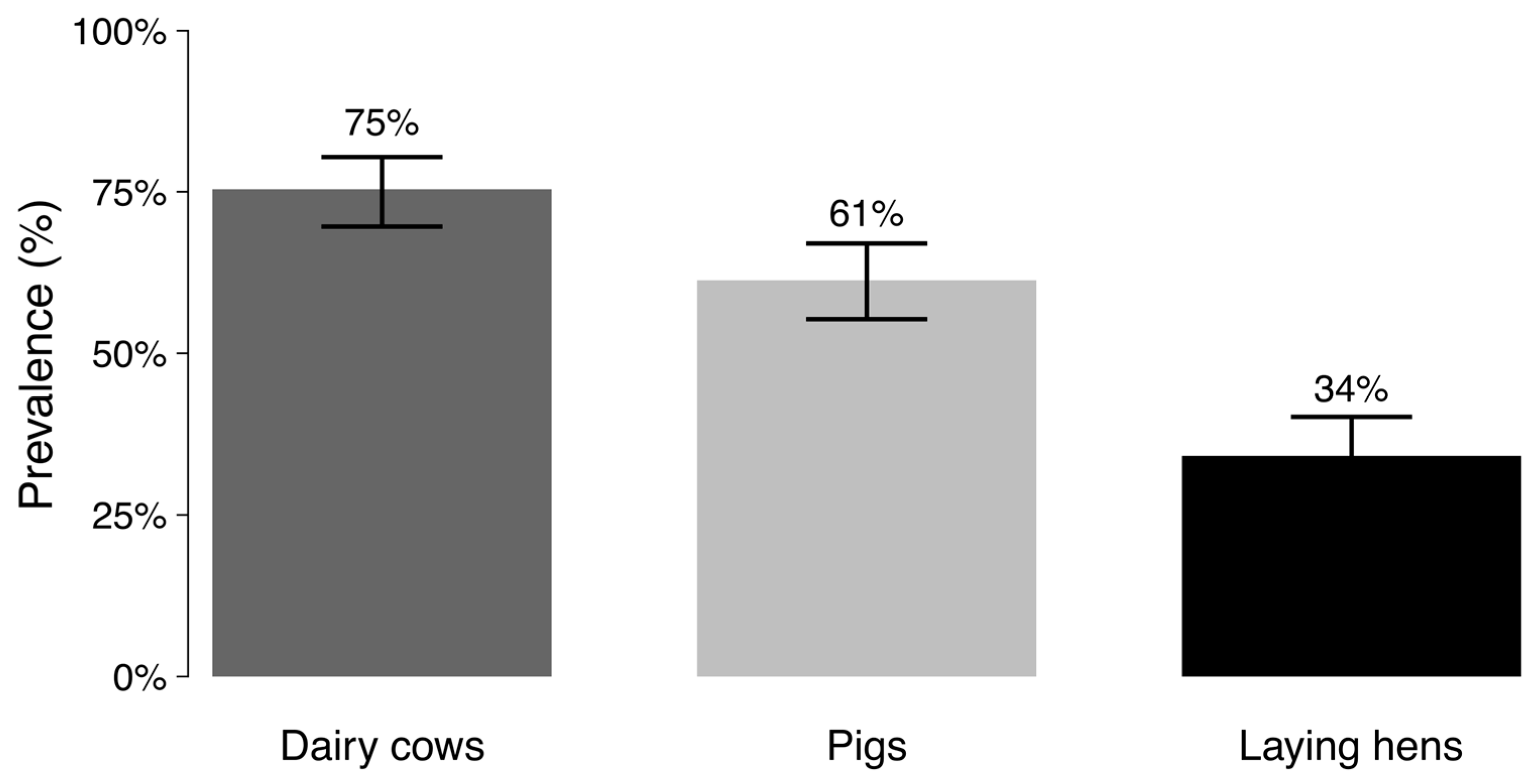
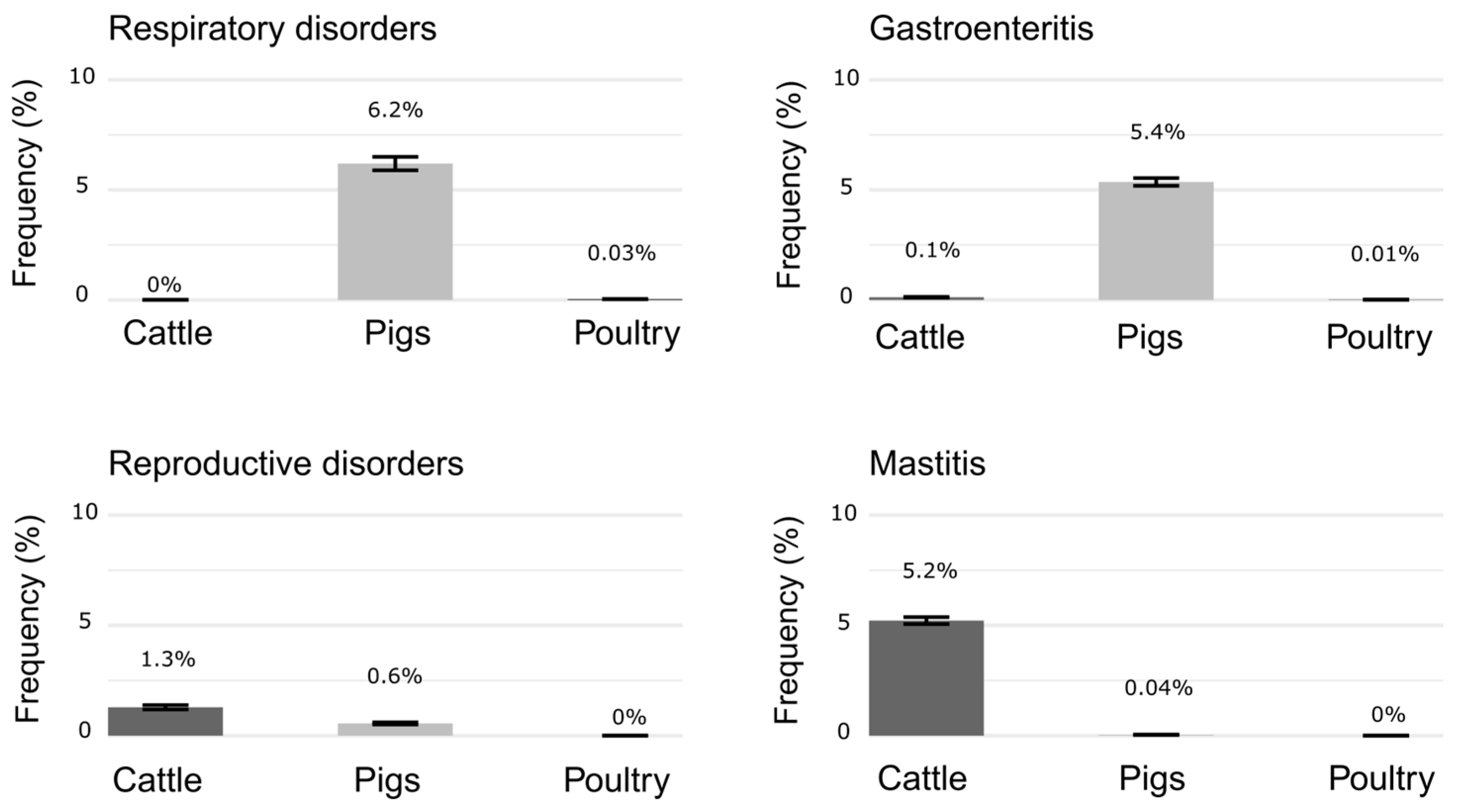
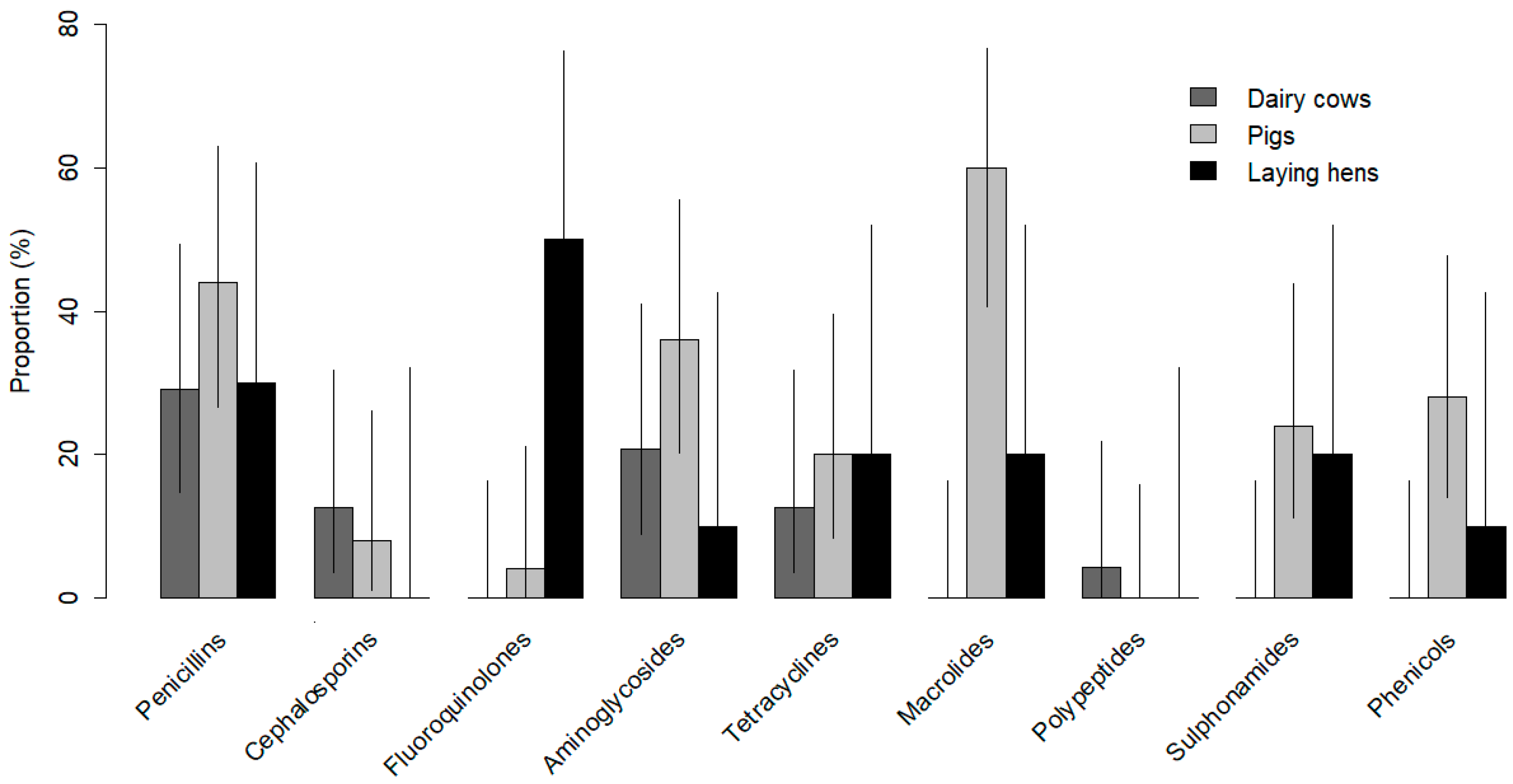
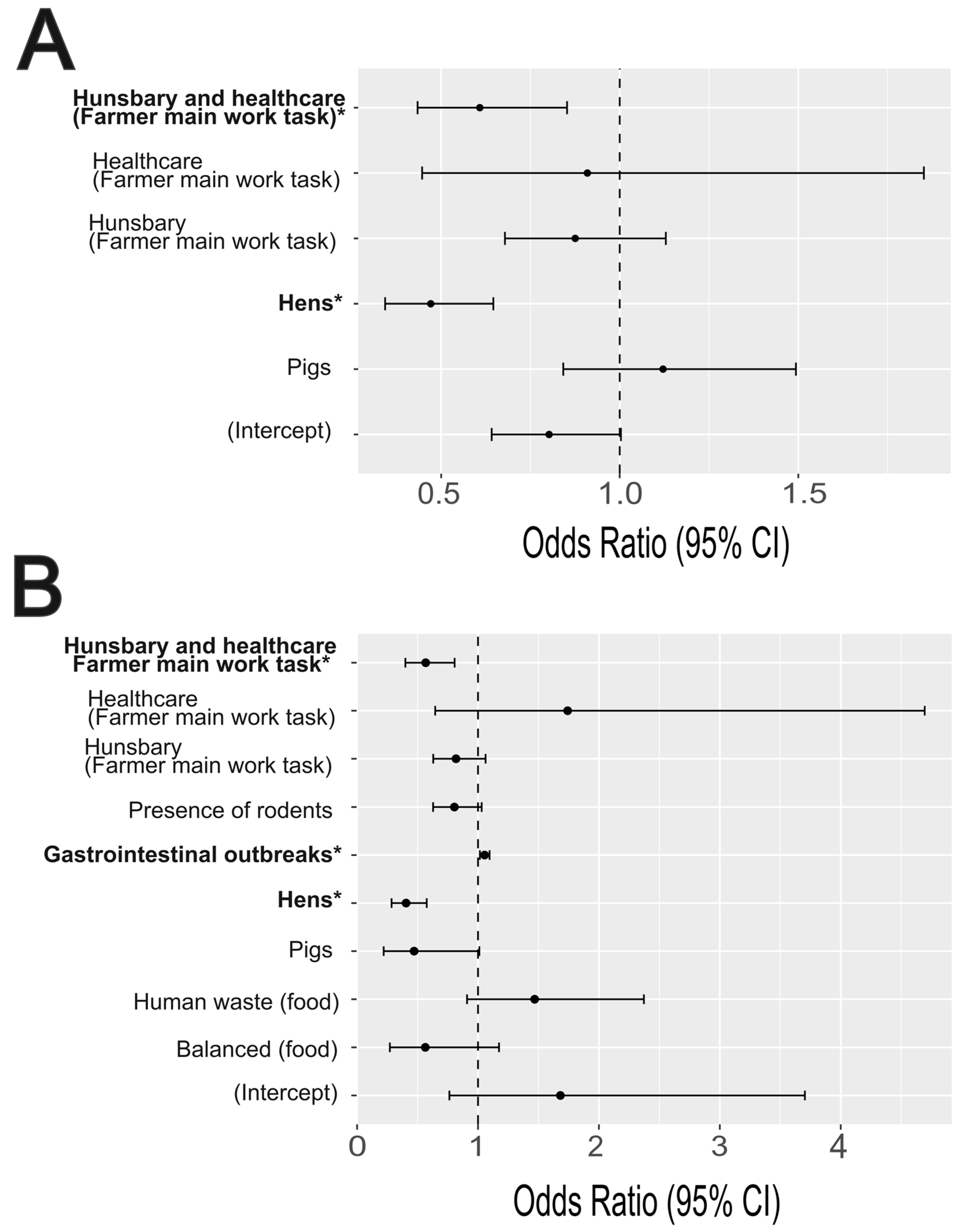
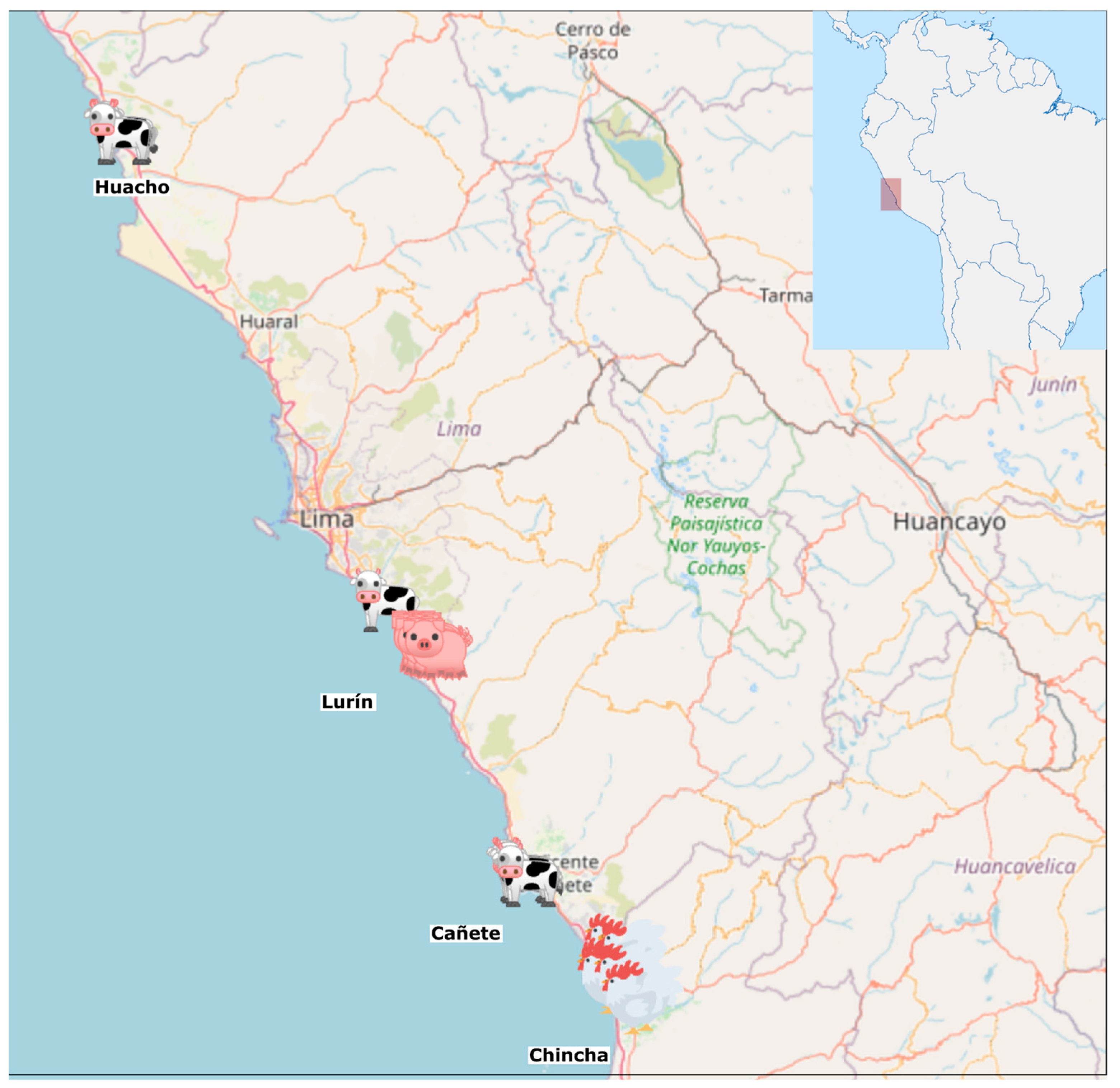
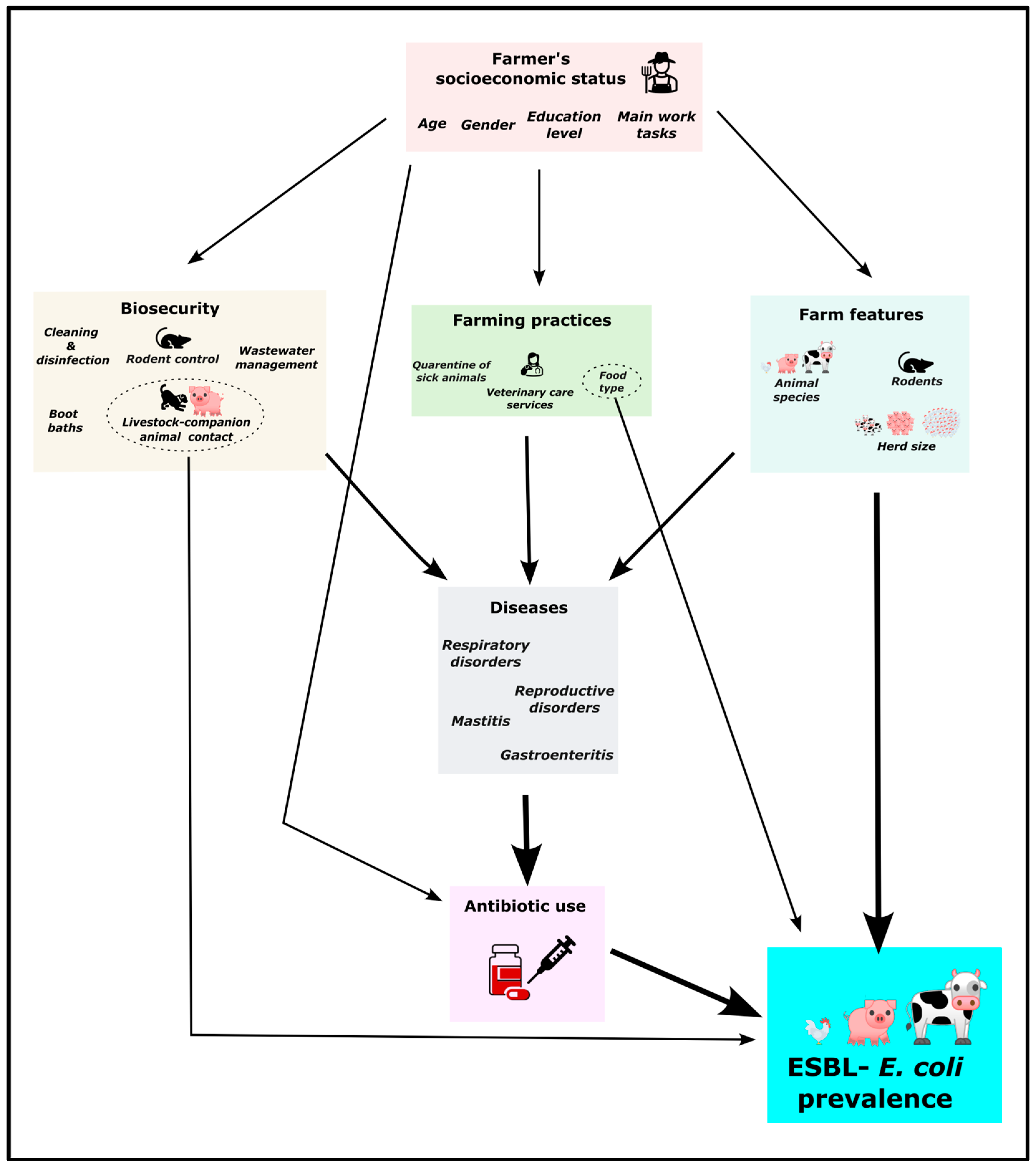
Background/Objectives: Extended-Spectrum Beta-Lactamase-producing Escherichia coli (ESBL-E. coli) are widely circulating in livestock of low- and middle-income countries. However, the drivers of their circulation remain largely unknown. Small-scale farms in Peru exhibit an unusually high prevalence of fecal carriage of ESBL-E. coli in their livestock. The objective of this study was to compare the prevalence of ESBL-E. coli fecal carriage in dairy cows, pigs, and poultry in the Lima and Ica regions of Peru and to identify the drivers associated with the observed prevalence at the farm level. Methods: We compared the prevalence of fecal carriage of ESBL-E. coli isolated from dairy cattle (N = 244 animals; 25 farms), pigs (N = 261; 25), and laying hens (N = 255; 10). We also administrated questionnaires to 59 farmers regarding their socioeconomic status, husbandry practices, animal diseases, and antibiotic use. Results: All but one of the 60 farms sampled had at least one animal carrying ESBL-E. coli. A statistically higher prevalence of ESBL-E. coli was estimated in dairy cows (75%) and pigs (61%) from Lima compared to laying hens from Ica (34%). Our statistical analyses (Poisson generalized linear models) using two variable selection approaches revealed that the prevalence of ESBL-E. coli was lower in farms raising laying hens, when farmers oversaw both animal husbandry and healthcare, and in farms with a lower number of gastrointestinal outbreaks in the last semester. Socio-economic features of farmers and self-reporting antibiotic use varied across farms (i.e., highest antibiotic use over the last semester was reported among pig farmers (96%), followed by laying hen (70%) and dairy cattle farmers (50%)), but these factors were not associated with the prevalence of ESBL-E. coli. Conclusions: Despite a relatively low number of farms sampled, our findings suggest that the widespread circulation of ESBL-E. coli among livestock in Peru could be mainly associated with unknown species-specific drivers, independently of the socioeconomic status of farmers and antibiotic use. Therefore, our study calls for future research to identify the specific drivers promoting the high prevalence of ESBL-E. coli among cattle and pigs in Peru.
Keywords: Extended-Spectrum Beta-Lactamases; dairy cows; pigs; poultry; Latin America; farmer; questionnaires Extended-Spectrum Beta-Lactamases; dairy cows; pigs; poultry; Latin America; farmer; questionnaires