


Three Innovations of Next-Generation Antibiotics: Evolvability, Specificity, and Non-Immunogenicity

Abstract
1. Introduction
2. Evolvability
2.1. Evolution of Antimicrobial Resistance in Bacteria
2.2. Phage Therapy
2.3. Evolvability of a Bacteriophage-Based Therapy
3. Specificity
3.1. Broad-Spectrum and Narrow-Spectrum Small-Molecule Antibiotics
3.2. Specificity of CRISPR-Based Antimicrobials
3.3. Diagnostic Tests for Pathogen Identification
4. Non-Immunogenicity
4.1. Effects of Antibiotics on the Immune System
4.2. Human Microbiome
4.3. Non-Immunogenicity of Microbiome-Derived Antibiotics
5. Conclusions
Funding
Institutional Review Board Statement
Informed Consent Statement
Data Availability Statement
Acknowledgments
Conflicts of Interest
References
- Antimicrobial Resistance Collaborators. Global burden of bacterial antimicrobial resistance in 2019: A systematic analysis. Lancet 2022, 399, 629–655. [Google Scholar] [CrossRef] [Scilit] [PubMed]
- Lastinger, L.M.; Alvarez, C.R.; Kofman, A.; Konnor, R.Y.; Kuhar, D.T.; Nkwata, A.; Patel, P.R.; Pattabiraman, V.; Xu, S.Y.; Dudeck, M.A. Continued increases in the incidence of healthcare-associated infection (HAI) during the second year of the coronavirus disease 2019 (COVID-19) pandemic. Infect. Control. Hosp. Epidemiology 2022, 1–5. [Google Scholar] [CrossRef] [Scilit] [PubMed]
- Hutchings, M.I.; Truman, A.W.; Wilkinson, B. Antibiotics: Past, present and future. Curr. Opin. Microbiol. 2019, 51, 72–80. [Google Scholar] [CrossRef] [Scilit] [PubMed]
- Chu, J.; Vila-Farres, X.; Inoyama, D.; Ternei, M.; Cohen, L.J.; Gordon, E.A.; Reddy, B.V.B.; Charlop-Powers, Z.; Zebroski, H.A.; Gallardo-Macias, R.; et al. Discovery of MRSA active antibiotics using primary sequence from the human microbiome. Nat. Chem. Biol. 2016, 12, 1004–1006. [Google Scholar] [CrossRef] [Scilit] [PubMed]
- Qin, Z.; Munnoch, J.T.; Devine, R.; Holmes, N.A.; Seipke, R.F.; Wilkinson, K.A.; Wilkinson, B.; Hutchings, M.I. Formicamycins, antibacterial polyketides produced by Streptomyces formicae isolated from African Tetraponera plant-ants. Chem. Sci. 2017, 8, 3218–3227. [Google Scholar] [CrossRef] [Scilit]
- Saha, S.; Zhang, W.; Zhang, G.; Zhu, Y.; Chen, Y.; Liu, W.; Yuan, C.; Zhang, Q.; Zhang, H.; Zhang, L.; et al. Activation and characterization of a cryptic gene cluster reveals a cyclization cascade for polycyclic tetramate macrolactams. Chem. Sci. 2017, 8, 1607–1612. [Google Scholar] [CrossRef] [Scilit]
- Butler, M.S.; Paterson, D.L. Antibiotics in the clinical pipeline in October 2019. J. Antibiot. 2020, 73, 329–364. [Google Scholar] [CrossRef] [Scilit]
- Breijyeh, Z.; Jubeh, B.; Karaman, R. Resistance of Gram-Negative Bacteria to Current Antibacterial Agents and Approaches to Resolve It. Molecules 2020, 25, 1340. [Google Scholar] [CrossRef] [Scilit]
- Lepore, C.; Silver, L.; Theuretzbacher, U.; Thomas, J.; Visi, D. The small-molecule antibiotics pipeline: 2014–2018. Nat. Rev. Drug Discov. 2019, 18, 739–740. [Google Scholar] [CrossRef] [Scilit]
- World Health Organization. Antibacterial Agents in Clinical and Preclinical Development: An Overview and Analysis; World Health Organization: Geneva, Switzerland, 2021.
- Rymut, S.M.; Deng, R.; Owen, R.; Saad, O.; Berhanu, A.; Lim, J.; Carrasco-Triguero, M.; Couch, J.; Peck, M. 1305. Comparison of Pharmacokinetics of DSTA4637S, a novel THIOMABTM Antibody-Antibiotic Conjugate, in Patients with Staphylococcus aureus Bacteremia Receiving Standard-of-Care Antibiotics with Pharmacokinetics in Healthy Volunteers. Open Forum. Infect. Dis. 2020, 7, S666–S667. [Google Scholar] [CrossRef] [Scilit]
- Donadio, S.; Maffioli, S.; Monciardini, P.; Sosio, M.; Jabes, D. Antibiotic discovery in the twenty-first century: Current trends and future perspectives. J. Antibiot. 2010, 63, 423–430. [Google Scholar] [CrossRef] [Scilit] [PubMed]
- Woese, C.R.; Fox, G.E. Phylogenetic structure of the prokaryotic domain: The primary kingdoms. Proc. Natl. Acad. Sci. USA 1977, 74, 5088–5090. [Google Scholar] [CrossRef] [Scilit] [PubMed]
- Jiao, J.-Y.; Liu, L.; Hua, Z.-S.; Fang, B.-Z.; Zhou, E.-M.; Salam, N.; Hedlund, B.; Li, W.-J. Microbial dark matter coming to light: Challenges and opportunities. Natl. Sci. Rev. 2021, 8, nwaa280. [Google Scholar] [CrossRef] [Scilit] [PubMed]
- Koonin, E.V.; Wolf, Y.I. Evolution of microbes and viruses: A paradigm shift in evolutionary biology? Front. Cell Infect. Microbiol. 2012, 2, 119. [Google Scholar] [CrossRef] [Scilit]
- Shim, H. Feature Learning of Virus Genome Evolution With the Nucleotide Skip-Gram Neural Network. Evol. Bioinform. 2019, 15, 1176934318821072. [Google Scholar] [CrossRef] [Scilit]
- Shim, H.; Laurent, S.; Matuszewski, S.; Foll, M.; Jensen, J.D. Detecting and Quantifying Changing Selection Intensities from Time-Sampled Polymorphism Data. G3 2016, 6, 893–904. [Google Scholar] [CrossRef] [Scilit]
- Munita, J.M.; Arias, C.A. Mechanisms of Antibiotic Resistance. Microbiol. Spectr. 2016, 4, 464–473. [Google Scholar] [CrossRef] [Scilit]
- Traxler, M.F.; Kolter, R. Natural products in soil microbe interactions and evolution. Nat. Prod. Rep. 2015, 32, 956–970. [Google Scholar] [CrossRef] [Scilit]
- Lerminiaux, N.A.; Cameron, A.D.S. Horizontal transfer of antibiotic resistance genes in clinical environments. Can. J. Microbiol. 2019, 65, 34–44. [Google Scholar] [CrossRef] [Scilit]
- Thomas, C.M.; Nielsen, K.M. Mechanisms of, and Barriers to, Horizontal Gene Transfer between Bacteria. Nat. Rev. Microbiol. 2005, 3, 711–721. [Google Scholar] [CrossRef] [Scilit]
- Reygaert, W.C. An overview of the antimicrobial resistance mechanisms of bacteria. AIMS Microbiol. 2018, 4, 482. [Google Scholar] [CrossRef] [Scilit] [PubMed]
- Olivares, J.; Ebernardini, A.; Egarcia-Leon, G.; Ecorona, F.; Esanchez, M.B.; Martinez, J.L. The intrinsic resistome of bacterial pathogens. Front. Microbiol. 2013, 4, 103. [Google Scholar] [CrossRef] [Scilit] [PubMed]
- Clokie, M.R.; Millard, A.D.; Letarov, A.V.; Heaphy, S. Phages in nature. Bacteriophage 2011, 1, 31–45. [Google Scholar] [CrossRef] [Scilit] [PubMed]
- Altamirano, F.L.G.; Barr, J.J. Phage Therapy in the Postantibiotic Era. Clin. Microbiol. Rev. 2019, 32, e00066-18. [Google Scholar] [CrossRef] [Scilit]
- Chanishvili, N. Phage Therapy—History from Twort and d’Herelle through soviet experience to current approaches. Adv. Virus Res. 2012, 83, 3–40. [Google Scholar]
- Young, R.; Gill, J.J. MICROBIOLOGY. Phage therapy redux--What is to be done? Science 2015, 350, 1163–1164. [Google Scholar] [CrossRef] [Scilit]
- Jault, P.; Leclerc, T.; Jennes, S.; Pirnay, J.P.; Que, Y.-A.A.; Resch, G.; Rousseau, A.F.; Ravat, F.; Carsin, H.; Le Floch, R.; et al. Efficacy and tolerability of a cocktail of bacteriophages to treat burn wounds infected by Pseudomonas aeruginosa (PhagoBurn): A randomised, controlled, double-blind phase 1/2 trial. Lancet Infect. Dis. 2019, 19, 35–45. [Google Scholar] [CrossRef] [Scilit]
- Moye, Z.D.; Woolston, J.; Sulakvelidze, A. Bacteriophage Applications for Food Production and Processing. Viruses 2018, 10, 205. [Google Scholar] [CrossRef] [Scilit]
- Peng, H.; Borg, R.E.; Dow, L.P.; Pruitt, B.L.; Chen, I.A. Controlled phage therapy by photothermal ablation of specific bacterial species using gold nanorods targeted by chimeric phages. Proc. Natl. Acad. Sci. USA 2020, 117, 1951–1961. [Google Scholar] [CrossRef] [Scilit]
- Murray, E.; Draper, L.A.; Ross, R.P.; Hill, C. The Advantages and Challenges of Using Endolysins in a Clinical Setting. Viruses 2021, 13, 680. [Google Scholar] [CrossRef] [Scilit]
- Harada, L.K.; Silva, E.C.; Campos, W.F.; Del Fiol, F.S.; Vila, M.; Dąbrowska, K.; Krylov, V.N.; Balcão, V.M. Biotechnological applications of bacteriophages: State of the art. Microbiol. Res. 2018, 212–213, 38–58. [Google Scholar] [CrossRef] [Scilit] [PubMed]
- Abdelkader, K.; Gerstmans, H.; Saafan, A.; Dishisha, T.; Briers, Y. The Preclinical and Clinical Progress of Bacteriophages and Their Lytic Enzymes: The Parts are Easier than the Whole. Viruses 2019, 11, 96. [Google Scholar] [CrossRef] [Scilit] [PubMed]
- Suh, G.A.; Lodise, T.P.; Tamma, P.D.; Knisely, J.M.; Alexander, J.; Aslam, S.; Barton, K.D.; Bizzell, E.; Totten, K.M.C.; Campbell, J.L.; et al. Considerations for the Use of Phage Therapy in Clinical Practice. Antimicrob. Agents Chemother. 2022, 66, e0207121. [Google Scholar] [CrossRef] [Scilit] [PubMed]
- Lu, T.K.; Collins, J.J. Dispersing biofilms with engineered enzymatic bacteriophage. Proc. Natl. Acad. Sci. USA 2007, 104, 11197–11202. [Google Scholar] [CrossRef] [Scilit]
- Luria, S.E.; Human, M.L. A nonhereditary, host-induced variation of bacterial viruses. J. Bacteriol. 1952, 64, 557–569. [Google Scholar] [CrossRef] [Scilit]
- Mojica, F.J.M.; Díez-Villaseñor, C.; García-Martínez, J.; Soria, E. Intervening sequences of regularly spaced prokaryotic repeats derive from foreign genetic elements. J. Mol. Evol. 2005, 60, 174–182. [Google Scholar] [CrossRef] [Scilit]
- Bondy-Denomy, J.; Pawluk, A.; Maxwell, K.L.; Davidson, A.R. Bacteriophage genes that inactivate the CRISPR/Cas bacterial immune system. Nature 2013, 493, 429–432. [Google Scholar] [CrossRef] [Scilit]
- Park, H.-M.; Park, Y.; Vankerschaver, J.; Van Messem, A.; De Neve, W.; Shim, H. Rethinking Protein Drug Design with Highly Accurate Structure Prediction of Anti-CRISPR Proteins. Pharmaceuticals 2022, 15, 310. [Google Scholar] [CrossRef] [Scilit]
- Dong, L.; Guan, X.; Li, N.; Zhang, F.; Zhu, Y.; Ren, K.; Yu, L.; Zhou, F.; Han, Z.; Gao, N.; et al. An anti-CRISPR protein disables type V Cas12a by acetylation. Nat. Struct. Mol. Biol. 2019, 26, 308–314. [Google Scholar] [CrossRef] [Scilit]
- Knott, G.J.; Thornton, B.W.; Lobba, M.J.; Liu, J.-J.; Al-Shayeb, B.; Watters, K.E.; Doudna, J.A. Broad-spectrum enzymatic inhibition of CRISPR-Cas12a. Nat. Struct. Mol. Biol. 2019, 26, 315–321. [Google Scholar] [CrossRef] [Scilit]
- Cohen, D.; Melamed, S.; Millman, A.; Shulman, G.; Oppenheimer-Shaanan, Y.; Kacen, A.; Doron, S.; Amitai, G.; Sorek, R. Cyclic GMP-AMP signalling protects bacteria against viral infection. Nature 2019, 574, 691–695. [Google Scholar] [CrossRef] [Scilit]
- Labrie, S.J.; Samson, J.E.; Moineau, S. Bacteriophage resistance mechanisms. Nat. Rev. Microbiol. 2010, 8, 317–327. [Google Scholar] [CrossRef] [Scilit]
- Lu, T.K.; Koeris, M.S. The next generation of bacteriophage therapy. Curr. Opin. Microbiol. 2011, 14, 524–531. [Google Scholar] [CrossRef] [Scilit]
- Langdon, A.; Crook, N.; Dantas, G. The effects of antibiotics on the microbiome throughout development and alternative approaches for therapeutic modulation. Genome Med. 2016, 8, 39. [Google Scholar] [CrossRef] [Scilit]
- De Sordi, L.; Khanna, V.; Debarbieux, L. The Gut Microbiota Facilitates Drifts in the Genetic Diversity and Infectivity of Bacterial Viruses. Cell Host Microbe 2017, 22, 801–808.e3. [Google Scholar] [CrossRef] [Scilit]
- Citorik, R.J.; Mimee, M.; Lu, T.K. Bacteriophage-based synthetic biology for the study of infectious diseases. Curr. Opin. Microbiol. 2014, 19, 59–69. [Google Scholar] [CrossRef] [Scilit]
- Melander, R.J.; Zurawski, D.V.; Melander, C. Narrow-spectrum antibacterial agents. MedChemComm 2018, 9, 12–21. [Google Scholar] [CrossRef] [Scilit]
- Gerber, J.; Ross, R.; Bryan, M.; Localio, A.R.; Szymczak, J.; Fiks, A.; Barkman, D.; Odeniyi, F.; Conaboy, K.; Bell, L.; et al. Comparing Broad- and Narrow-Spectrum Antibiotics for Children with Ear, Sinus, and Throat Infections; Patient-Centered Outcomes Research Institute (PCORI): Washington, DC, USA, 2022. [Google Scholar]
- Jernberg, C.; Löfmark, S.; Edlund, C.; Jansson, J.K. Long-term ecological impacts of antibiotic administration on the human intestinal microbiota. ISME J. 2007, 1, 56–66. [Google Scholar] [CrossRef] [Scilit]
- Raymann, K.; Shaffer, Z.; Moran, N.A. Antibiotic exposure perturbs the gut microbiota and elevates mortality in honeybees. PLoS Biol. 2017, 15, e2001861. [Google Scholar] [CrossRef] [Scilit]
- Schulfer, A.; Blaser, M.J. Risks of Antibiotic Exposures Early in Life on the Developing Microbiome. PLoS Pathog. 2015, 11, e1004903. [Google Scholar] [CrossRef] [Scilit]
- Makarova, K.S.; Grishin, N.V.; Shabalina, S.A.; Wolf, Y.I.; Koonin, E.V. A putative RNA-interference-based immune system in prokaryotes: Computational analysis of the predicted enzymatic machinery, functional analogies with eukaryotic RNAi, and hypothetical mechanisms of action. Biol. Direct. 2006, 1, 7. [Google Scholar] [CrossRef] [Scilit]
- Deltcheva, E.; Chylinski, K.; Sharma, C.M.; Gonzales, K.; Chao, Y.; Pirzada, Z.A.; Eckert, M.R.; Vogel, J.; Charpentier, E. CRISPR RNA maturation by trans-encoded small RNA and host factor RNase III. Nature 2011, 471, 602–607. [Google Scholar] [CrossRef] [Scilit]
- Jinek, M.; Chylinski, K.; Fonfara, I.; Hauer, M.; Doudna, J.A.; Charpentier, E. A programmable dual-RNA-guided DNA endonuclease in adaptive bacterial immunity. Science 2012, 337, 816–821. [Google Scholar] [CrossRef] [Scilit]
- Makarova, K.S.; Wolf, Y.I.; Iranzo, J.; Shmakov, S.A.; Alkhnbashi, O.S.; Brouns, S.J.J.; Charpentier, E.; Cheng, D.; Haft, D.H.; Horvath, P.; et al. Evolutionary classification of CRISPR–Cas systems: A burst of class 2 and derived variants. Nat. Rev. Microbiol. 2019, 18, 67–83. [Google Scholar] [CrossRef] [Scilit]
- Bikard, D.; Barrangou, R. Using CRISPR-Cas systems as antimicrobials. Curr. Opin. Microbiol. 2017, 37, 155–160. [Google Scholar] [CrossRef] [Scilit]
- Park, H.-M.; Park, Y.; Berani, U.; Bang, E.; Vankerschaver, J.; Van Messem, A.; De Neve, W.; Shim, H. In silico optimization of RNA-protein interactions for CRISPR-Cas13-based antimicrobials. Biol. Direct. 2022, 17, 27. [Google Scholar] [CrossRef] [Scilit]
- Citorik, R.J.; Mimee, M.; Lu, T.K. Sequence-specific antimicrobials using efficiently delivered RNA-guided nucleases. Nat. Biotechnol. 2014, 32, 1141–1145. [Google Scholar] [CrossRef] [Scilit]
- Bikard, D.; Euler, C.W.; Jiang, W.; Nussenzweig, P.M.; Goldberg, G.W.; Duportet, X.; Fischetti, V.; Marraffini, L. Exploiting CRISPR-Cas nucleases to produce sequence-specific antimicrobials. Nat Biotechnol. 2014, 32, 1146–1150. [Google Scholar] [CrossRef] [Scilit]
- Yosef, I.; Manor, M.; Kiro, R.; Qimron, U. Temperate and lytic bacteriophages programmed to sensitize and kill antibiotic-resistant bacteria. Proc. Natl. Acad. Sci. USA 2015, 112, 7267–7272. [Google Scholar] [CrossRef] [Scilit]
- Kiga, K.; Tan, X.-E.; Ibarra-Chávez, R.; Watanabe, S.; Aiba, Y.; Sato’O, Y.; Li, F.-Y.; Sasahara, T.; Cui, B.; Kawauchi, M.; et al. Development of CRISPR-Cas13a-based antimicrobials capable of sequence-specific killing of target bacteria. Nat. Commun. 2020, 11, 2934. [Google Scholar] [CrossRef] [Scilit]
- Shim, H. Investigating the Genomic Background of CRISPR-Cas Genomes for CRISPR-Based Antimicrobials. Evol. Bioinform. 2022, 18, 11769343221103887. [Google Scholar] [CrossRef] [Scilit] [PubMed]
- Maurer, F.P.; Christner, M.; Hentschke, M.; Rohde, H. Advances in Rapid Identification and Susceptibility Testing of Bacteria in the Clinical Microbiology Laboratory: Implications for Patient Care and Antimicrobial Stewardship Programs. Infect. Dis. Rep. 2017, 9, 6839. [Google Scholar] [CrossRef] [Scilit] [PubMed]
- Caliendo, A.M.; Gilbert, D.N.; Ginocchio, C.C.; Hanson, K.E.; May, L.; Quinn, T.C.; Tenover, F.C.; Alland, D.; Blaschke, A.J.; Bonomo, R.A.; et al. Better Tests, Better Care: Improved Diagnostics for Infectious Diseases. Clin. Infect. Dis. 2013, 57 (Suppl. S3), S139–S170. [Google Scholar] [CrossRef] [Scilit] [PubMed]
- Opota, O.; Jaton, K.; Greub, G. Microbial diagnosis of bloodstream infection: Towards molecular diagnosis directly from blood. Clin. Microbiol. Infect. 2015, 21, 323–331. [Google Scholar] [CrossRef] [Scilit] [PubMed]
- Patel, R. MALDI-TOF MS for the Diagnosis of Infectious Diseases. Clin. Chem. 2015, 61, 100–111. [Google Scholar] [CrossRef] [Scilit]
- Shekhar, S.; Petersen, F.C. The Dark Side of Antibiotics: Adverse Effects on the Infant Immune Defense Against Infection. Front. Pediatr. 2020, 8, 544460. [Google Scholar] [CrossRef] [Scilit]
- Stokholm, J.; Schjørring, S.; Pedersen, L.; Bischoff, A.L.; Følsgaard, N.; Carson, C.G.; Chawes, B.L.K.; Bønnelykke, K.; Mølgaard, A.; Krogfelt, K.A.; et al. Prevalence and Predictors of Antibiotic Administration during Pregnancy and Birth. PLoS ONE 2013, 8, e82932. [Google Scholar] [CrossRef] [Scilit]
- Gonzalez-Perez, G.; Hicks, A.L.; Tekieli, T.M.; Radens, C.M.; Williams, B.L.; Lamousé-Smith, E.S.N. Maternal Antibiotic Treatment Impacts Development of the Neonatal Intestinal Microbiome and Antiviral Immunity. J. Immunol. 2016, 196, 3768–3779. [Google Scholar] [CrossRef] [Scilit]
- Lynn, M.A.; Tumes, D.J.; Choo, J.M.; Sribnaia, A.; Blake, S.J.; Leong, L.E.X.; Young, G.P.; Marshall, H.S.; Wesselingh, S.L.; Rogers, G.B.; et al. Early-Life Antibiotic-Driven Dysbiosis Leads to Dysregulated Vaccine Immune Responses in Mice. Cell Host Microbe 2018, 23, 653–660.e5. [Google Scholar] [CrossRef] [Scilit]
- Yatsunenko, T.; Rey, F.E.; Manary, M.J.; Trehan, I.; Dominguez-Bello, M.G.; Contreras, M.; Magris, M.; Hidalgo, G.; Baldassano, R.N.; Anokhin, A.P.; et al. Human gut microbiome viewed across age and geography. Nature 2012, 486, 222–227. [Google Scholar] [CrossRef] [Scilit]
- Kau, A.L.; Ahern, P.P.; Griffin, N.W.; Goodman, A.L.; Gordon, J.I. Human nutrition, the gut microbiome and the immune system. Nature 2011, 474, 327–336. [Google Scholar] [CrossRef] [Scilit]
- Ley, R.E.; Turnbaugh, P.J.; Klein, S.; Gordon, J.I. Human Gut Microbes Associated with Obesity. Nature 2006, 444, 1022–1023. [Google Scholar] [CrossRef] [Scilit]
- Frank, D.N.; St Amand, A.L.; Feldman, R.A.; Boedeker, E.C.; Harpaz, N.; Pace, N.R. Molecular-phylogenetic characterization of microbial community imbalances in human inflammatory bowel diseases. Proc. Natl. Acad. Sci. USA 2007, 104, 13780–13785. [Google Scholar] [CrossRef] [Scilit]
- Gonzalez, A.; Stombaugh, J.; Lozupone, C.; Turnbaugh, P.J.; Gordon, J.I.; Knight, R. The mind-body-microbial continuum. Dialog- Clin. Neurosci. 2011, 13, 55–62. [Google Scholar] [CrossRef] [Scilit]
- Rajer, M.; Segelov, E. (Eds.) Current Cancer Treatment; In-Tech: Hong Kong, China, 2020. [Google Scholar] [CrossRef] [Scilit]
- Stone, V.; Xu, P. Targeted antimicrobial therapy in the microbiome era. Mol. Oral Microbiol. 2017, 32, 446–454. [Google Scholar] [CrossRef] [Scilit]
- Moore, A.M.; Ahmadi, S.; Patel, S.; Gibson, M.K.; Bin Wang, B.; Ndao, I.M.; Deych, E.; Shannon, W.; Tarr, P.I.; Warner, B.B.; et al. Gut resistome development in healthy twin pairs in the first year of life. Microbiome 2015, 3, 27. [Google Scholar] [CrossRef] [Scilit]
- Turnbaugh, P.J.; Hamady, M.; Yatsunenko, T.; Cantarel, B.L.; Duncan, A.; Ley, R.E.; Sogin, M.L.; Jones, W.J.; Roe, B.A.; Affourtit, J.P.; et al. A core gut microbiome in obese and lean twins. Nature 2009, 457, 480–484. [Google Scholar] [CrossRef] [Scilit]
- Mikkelsen, K.H.; Knop, F.K.; Frost, M.; Hallas, J.; Pottegård, A. Use of Antibiotics and Risk of Type 2 Diabetes: A Population-Based Case-Control Study. J. Clin. Endocrinol. Metab. 2015, 100, 3633–3640. [Google Scholar] [CrossRef] [Scilit]
- Maurice, C.F.; Haiser, H.J.; Turnbaugh, P.J. Xenobiotics shape the physiology and gene expression of the active human gut microbiome. Cell 2013, 152, 39–50. [Google Scholar] [CrossRef] [Scilit]
- Mårild, K.; Ye, W.; Lebwohl, B.; Green, P.H.R.; Blaser, M.J.; Card, T.; Ludvigsson, J. Antibiotic exposure and the development of coeliac disease: A nationwide case-control study. BMC Gastroenterol. 2013, 13, 109. [Google Scholar] [CrossRef] [Scilit]
- Morgun, A.; Dzutsev, A.; Dong, X.; Greer, R.L.; Sexton, D.J.; Ravel, J.; Schuster, M.; Hsiao, W.; Matzinger, P.; Shulzhenko, N. Uncovering effects of antibiotics on the host and microbiota using transkingdom gene networks. Gut 2015, 64, 1732–1743. [Google Scholar] [CrossRef] [Scilit] [PubMed]
- Garcia-Gutierrez, E.; Mayer, M.J.; Cotter, P.D.; Narbad, A. Gut microbiota as a source of novel antimicrobials. Gut Microbes 2019, 10, 1–21. [Google Scholar] [CrossRef] [Scilit] [PubMed]
- Donia, M.S.; Cimermancic, P.; Schulze, C.J.; Wieland Brown, L.C.; Martin, J.; Mitreva, M.; Clardy, J.; Linington, R.G.; Fischbach, M.A. A Systematic Analysis of Biosynthetic Gene Clusters in the Human Microbiome Reveals a Common Family of Antibiotics. Cell 2014, 158, 1402–1414. [Google Scholar] [CrossRef] [Scilit]
- Zipperer, A.; Konnerth, M.C.; Laux, C.; Berscheid, A.; Janek, D.; Weidenmaier, C.; Burian, M.; Schilling, N.A.; Slavetinsky, C.; Marschal, M.; et al. Human commensals producing a novel antibiotic impair pathogen colonization. Nature 2016, 535, 511–516. [Google Scholar] [CrossRef] [Scilit] [PubMed]
- Pridmore, R.D.; Pittet, A.-C.; Praplan, F.; Cavadini, C. Hydrogen peroxide production by Lactobacillus johnsonii NCC 533 and its role in anti-Salmonella activity. FEMS Microbiol. Lett. 2008, 283, 210–215. [Google Scholar] [CrossRef] [Scilit] [PubMed]
- Donia, M.S.; Fischbach, M.A. HUMAN MICROBIOTA. Small molecules from the human microbiota. Science 2015, 349, 1254766. [Google Scholar] [CrossRef] [Scilit] [PubMed]
- Cotter, P.D.; Ross, R.P.; Hill, C. Bacteriocins—A viable alternative to antibiotics? Nat. Rev. Microbiol. 2013, 11, 95–105. [Google Scholar] [CrossRef] [Scilit]
- Mulkern, A.J.; Oyama, L.B.; Cookson, A.R.; Creevey, C.J.; Wilkinson, T.J.; Olleik, H.; Maresca, M.; da Silva, G.C.; Fontes, P.P.; Bazzolli, D.M.S.; et al. Microbiome-derived antimicrobial peptides offer therapeutic solutions for the treatment of Pseudomonas aeruginosa infections. NPJ Biofilms Microbiomes 2022, 8, 70. [Google Scholar] [CrossRef] [Scilit]
- Manrique, P.; Bolduc, B.; Walk, S.T.; van der Oost, J.; de Vos, W.M.; Young, M.J. Healthy human gut phageome. Proc. Natl. Acad. Sci. USA 2016, 113, 10400–10405. [Google Scholar] [CrossRef] [Scilit]
- Townsend, E.M.; Kelly, L.; Muscatt, G.; Box, J.D.; Hargraves, N.; Lilley, D.; Jameson, E. The Human Gut Phageome: Origins and Roles in the Human Gut Microbiome. Front. Cell. Infect. Microbiol. 2021, 11, 643214. [Google Scholar] [CrossRef] [Scilit]
- Scarpellini, E.; Ianiro, G.; Attili, F.; Bassanelli, C.; De Santis, A.; Gasbarrini, A. The human gut microbiota and virome: Potential therapeutic implications. Dig. Liver Dis. 2015, 47, 1007–1012. [Google Scholar] [CrossRef] [Scilit] [PubMed]
- Reyes, A.; Semenkovich, N.P.; Whiteson, K.; Rohwer, F.; Gordon, J.I. Going viral: Next-generation sequencing applied to phage populations in the human gut. Nat. Rev. Genet. 2012, 10, 607–617. [Google Scholar] [CrossRef] [Scilit]
- Shim, H.; Shivram, H.; Lei, S.; Doudna, J.A.; Banfield, J.F. Diverse ATPase Proteins in Mobilomes Constitute a Large Potential Sink for Prokaryotic Host ATP. Front. Microbiol. 2021, 12, 691847. [Google Scholar] [CrossRef] [Scilit] [PubMed]
- Fischetti, V.A. Bacteriophage lysins as effective antibacterials. Curr. Opin. Microbiol. 2008, 11, 393–400. [Google Scholar] [CrossRef] [Scilit]
- Nie, T.; Meng, F.; Lu, F.; Bie, X.; Zhao, H.; Sun, J.; Lu, Z.; Lu, Y. An endolysin Salmcide-p1 from bacteriophage fmb-p1 against gram-negative bacteria. J. Appl. Microbiol. 2022, 133, 1597–1609. [Google Scholar] [CrossRef] [Scilit]
- Oechslin, F.; Zhu, X.; Dion, M.B.; Shi, R.; Moineau, S. Phage endolysins are adapted to specific hosts and are evolutionarily dynamic. PLoS Biol. 2022, 20, e3001740. [Google Scholar] [CrossRef] [Scilit]
- Ghequire, M.G.; De Mot, R. The Tailocin Tale: Peeling off Phage Tails. Trends Microbiol. 2015, 23, 587–590. [Google Scholar] [CrossRef] [Scilit] [PubMed]
- Bhardwaj, P.; Mitra, A.K.; Hurst, M.R.H. Investigating the Process of Sheath Maturation in Antifeeding Prophage: A Phage Tail-Like Protein Translocation Structure. J. Bacteriol. 2021, 203, e0010421. [Google Scholar] [CrossRef] [Scilit]

| WHO | Pathogen | Type |
|---|---|---|
| Priority 1: CRITICAL | Acinetobacter baumannii, carbapenem-resistant | Gram-negative bacteria |
| Pseudomonas aeruginosa, carbapenem-resistant | Gram-negative bacteria | |
| Enterobacteriaceae, carbapenem-resistant, 3rd gen. cephalosporin-resistant | Gram-negative bacteria | |
| Priority 2: HIGH | Enterococcus faecium, vancomycin-resistant | Gram-positive bacteria |
| Staphylococcus aureus, methicillin-resistant, vancomycin-resistant | Gram-positive bacteria | |
| Helicobacter pylori, clarithromycin-resistant | Gram-negative bacteria | |
| Campylobacter species, fluoroquinolone-resistant | Gram-negative bacteria | |
| Salmonellae species, fluoroquinolone-resistant | Gram-negative bacteria | |
| Neisseria gonorrhoeae, 3rd gen. cephalosporin-resistant, fluoroquinolone-resistant | Gram-negative bacteria | |
| Priority 1: MEDIUM | Streptococcus pneumoniae, penicillin-non-susceptible | Gram-positive bacteria |
| Haemophilus influenzae, ampicillin-resistant | Gram-negative bacteria | |
| Shigella species, fluoroquinolone-resistant | Gram-negative bacteria | |
| CDC | Pathogen | Type |
| Urgent Threats | Carbapenem-resistant Acinetobacter | Gram-negative bacteria |
| Candida auris | Fungus | |
| Clostridioides difficile | Gram-positive bacteria | |
| Carbapenem-resistant Enterobacterales | Gram-negative bacteria | |
| Serious Threats | Drug-resistant Campylobacter | Gram-negative bacteria |
| Drug-resistant Candida | Fungus | |
| ESBL-producing Enterobacterales | Gram-negative bacteria | |
| Vancomycin-resistant Enterococci (VRE) | Gram-positive bacteria | |
| Multidrug-resistant Pseudomonas aeruginosa | Gram-negative bacteria | |
| Drug-resistant nontyphoidal Salmonella | Gram-negative bacteria | |
| Drug-resistant Salmonella serotype Typhi | Gram-negative bacteria | |
| Drug-resistant Shigella | Gram-negative bacteria | |
| Methicillin-resistant Staphylococcus aureus (MRSA) | Gram-positive bacteria | |
| Drug-resistant Streptococcus pneumoniae | Gram-positive bacteria | |
| Drug-resistant Tuberculosis | Gram-positive bacteria | |
| Concerning Threats | Erythromycin-Resistant Group A Streptococcus | Gram-positive bacteria |
| Clindamycin-resistant Group B Streptococcus | Gram-positive bacteria | |
| Watch List | Azole-resistant Aspergillus fumigatus | Fungus |
| Drug-resistant Mycoplasma genitalium | Gram-positive bacteria | |
| Drug-resistant Bordetella pertussis | Gram-negative bacteria |
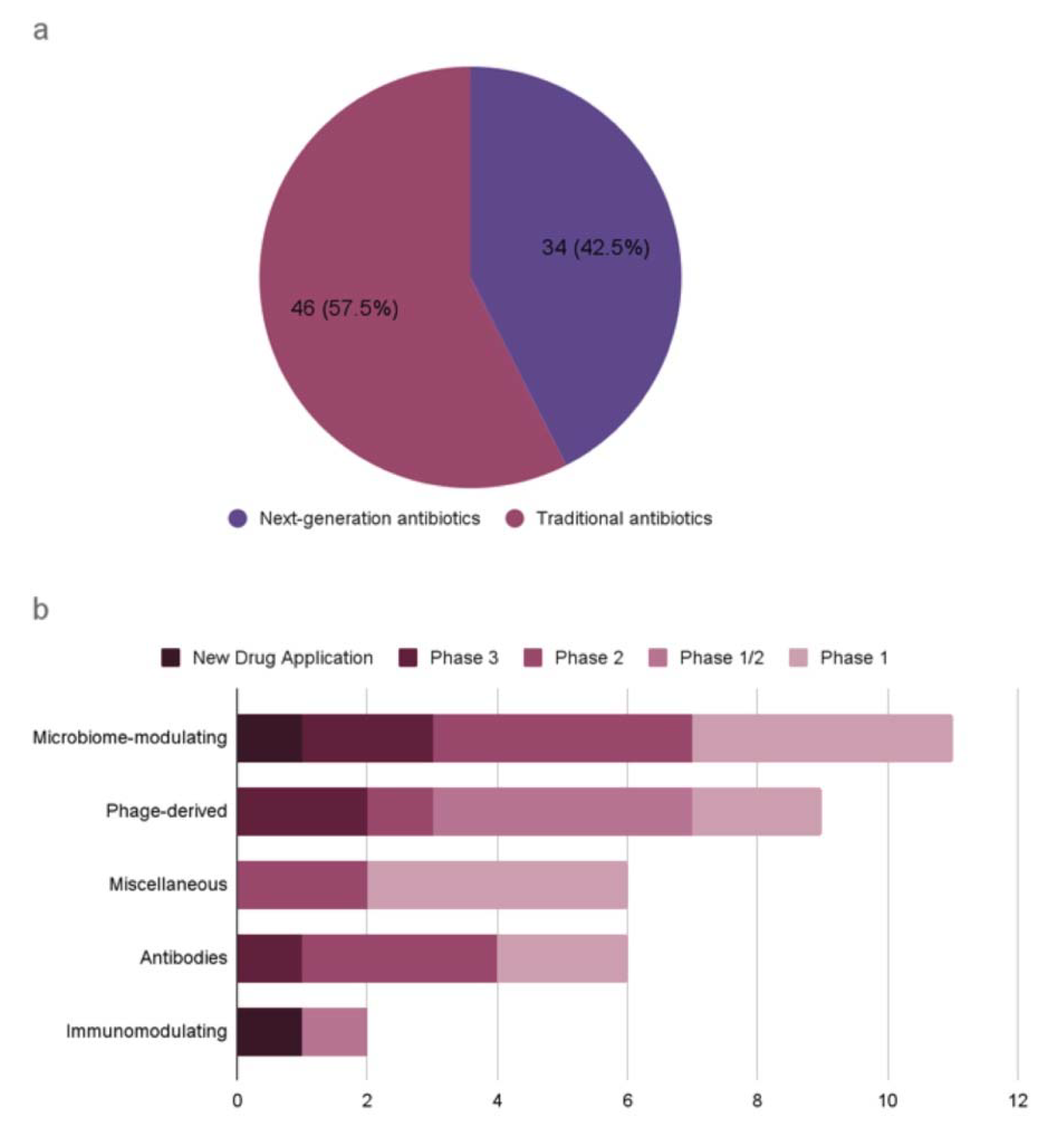
| Class | Name (Synonym) | Phase | Antibacterial Class | Route of Administration | Expected Activity against Priority Pathogens |
|---|---|---|---|---|---|
| Phage-derived | Exebacase (CF-301) | 3 | Phage endolysin | intravenous | S. aureus |
| Bacteriophage cocktail | 3 | Phage | inhalation | Gram-positive and Gram-negative | |
| LSVT-1701 (N-Rephasin SAL200, tonabacase) | 2a/1 | Phage endolysin | intravenous | S. aureus | |
| Phage | 1/2 | Phage | intravenous | E. coli | |
| AP-PA02 | 1/2 | Phage | inhalation | P. aeruginosa | |
| YPT-01 | 1/2 | Phage | inhalation | P. aeruginosa | |
| BX004-A | 1/2 | Phage | inhalation | P. aeruginosa | |
| LBP-EC01 | 1b | CRISPR-Cas3 enhanced phage | intravenous | E. coli | |
| LMN-201 | 1b | Phage endolysin and three toxin-binding proteins (5D, E3 and 7F) | oral | C. difficile | |
| Microbiome- modulating | BB128 | MAA | Live biotherapeutic product | colonoscopy | C. difficile |
| SER-109 | 3 | Live biotherapeutic product | oral | C. difficile | |
| RBX2660 | 3 | Live biotherapeutic product | enema | C. difficile | |
| SYN-004 (ribaxamase) | 2b | Antibiotic inactivator | oral | C. difficile | |
| VE303 | 2 | Live biotherapeutic product | oral | C. difficile | |
| CP101 | 2 | Live biotherapeutic product | oral | C. difficile | |
| DAV132 | 2 | Antibiotic inactivator and protective colon-targeted adsorbent | oral | C. difficile | |
| MET-2 | 1 | Live biotherapeutic product | oral | C. difficile | |
| RBX7455 | 1 | Live biotherapeutic product | oral | C. difficile | |
| ART24 | 1 | Live biotherapeutic product | oral | C. difficile | |
| SVT-1C469 | 1 | Live biotherapeutic product | oral | H. pylori | |
| Immunomodulating | Reltecimod (AB103) | NDA | Synthetic peptide antagonist of both superantigen exotoxins and the CD28 T-cell receptor | intravenous | S. aureus |
| Rhu-pGSN (rhu-plasma gelsolin) | 1b/2a | Recombinant human plasma gelsolin protein | intravenous | Non-specific Gram-positive and Gram-negative | |
| Antibodies | Tosatoxumab (AR-301) | 3 | Anti-S. aureus IgG1 antibody | intravenous | S. aureus |
| LMN-101 | 2 | mAb-like recombinant protein | oral | E. coli, C. jejuni | |
| AR-302 (MEDI4893, suvratoxumab) | 2 | Anti-S. aureus IgG mAb | intravenous | S. aureus | |
| IM-01 | 2 | Chicken egg-derived anti-C. difficile polyclonal antibody | oral | C. difficile | |
| TRL1068 | 1 | mAB | intravenous | Gram-positive and Gram-negative biofilms | |
| 9MW1411 | 1 | mAb (α-toxin) | intravenous | S. aureus | |
| Miscellaneous | OligoG (CF-5/20) | 2b | Alginate oligosaccharide (G-block) fragment | inhalation | P. aeruginosa |
| Ftortiazinon (fluorothyazinone) + cefepime | 2 | Thyazinone (type III secretion system inhibitor) + cephalosporin | oral | P. aeruginosa | |
| CAL02 | 1 | Broad-spectrum anti-toxin liposomal agent and nanoparticle | intravenous | S. pneumoniae | |
| BVL-GSK098 | 1 | Amido piperidine (inactivation of TetR-like repressor EthR2) | oral | M. tuberculosis | |
| GSK3882347 | 1 | Undisclosed (FimH antagonist) | oral | E. coli | |
| ALS-4 | 1 | Anti-virulence (staphyloxanthin biosynthesis inhibition) | oral | S. aureus |
| Mechanism of Action | Antibiotic Group | Examples | Gram(-) Coverage |
|---|---|---|---|
| Inhibit Cell Wall Synthesis | β-Lactams | Penicillins, Cephalosporins, Monobactams, Carbapenems | Some |
| Glycopeptides | Vancomycin, Teicoplanin | No | |
| Depolarize Cell Membrane | Lipopeptides | Daptomycin, Surfactin | No |
| Inhibit Protein Synthesis | Bind to 30S Ribosomal Subunit | Aminoglycosides, Tetracyclines | Yes |
| Bind to 50S Ribosomal Subunit | Chloramphenicol, Lincosamides, Macrolides, Oxazolidinones, Streptogramins | Some | |
| Fusidic Acid | No | ||
| Inhibit DNA Synthesis | Quinolones | Fluoroquinolones | Yes |
| Metronidazole | Metronidazole, Tindazole | Yes | |
| Nitrofurantoin | Nitrofurantoin, Furazolidone | No | |
| Inhibit RNA Synthesis | Ansamycins | Geldanamycin, Rifamycin, Naphthomycin | Yes |
| Inhibit Metabolic Pathways | Sulfonamides | Prontosil, Sulfanilamide, Sulfisoxazole | Yes |
| Trimethoprim | Sulfasalazine, Sulfadiazine | Yes |
Disclaimer/Publisher’s Note: The statements, opinions and data contained in all publications are solely those of the individual author(s) and contributor(s) and not of MDPI and/or the editor(s). MDPI and/or the editor(s) disclaim responsibility for any injury to people or property resulting from any ideas, methods, instructions or products referred to in the content. |
© 2023 by the author. Licensee MDPI, Basel, Switzerland. This article is an open access article distributed under the terms and conditions of the Creative Commons Attribution (CC BY) license (https://creativecommons.org/licenses/by/4.0/).
Share and Cite
Shim, H. Three Innovations of Next-Generation Antibiotics: Evolvability, Specificity, and Non-Immunogenicity. Antibiotics 2023, 12, 204. https://doi.org/10.3390/antibiotics12020204
Shim H. Three Innovations of Next-Generation Antibiotics: Evolvability, Specificity, and Non-Immunogenicity. Antibiotics. 2023; 12(2):204. https://doi.org/10.3390/antibiotics12020204
Chicago/Turabian StyleShim, Hyunjin. 2023. "Three Innovations of Next-Generation Antibiotics: Evolvability, Specificity, and Non-Immunogenicity" Antibiotics 12, no. 2: 204. https://doi.org/10.3390/antibiotics12020204
APA StyleShim, H. (2023). Three Innovations of Next-Generation Antibiotics: Evolvability, Specificity, and Non-Immunogenicity. Antibiotics, 12(2), 204. https://doi.org/10.3390/antibiotics12020204

