Article

A Validated UHPLC–MS/MS Method to Quantify Eight Antibiotics in Quantitative Dried Blood Spots in Support of Pharmacokinetic Studies in Neonates

Division of Biopharmaceutics and Pharmacokinetics, Xiangya School of Pharmaceutical Sciences, Central South University, Changsha 410013, China
*
Author to whom correspondence should be addressed.
These two authors contributed equally and shared the first authorship.
Antibiotics 2023, 12(2), 199; https://doi.org/10.3390/antibiotics12020199

Submission received: 20 December 2022 / Revised: 11 January 2023 / Accepted: 16 January 2023 / Published: 18 January 2023
(This article belongs to the Section Antibiotics Use and Antimicrobial Stewardship)

Abstract

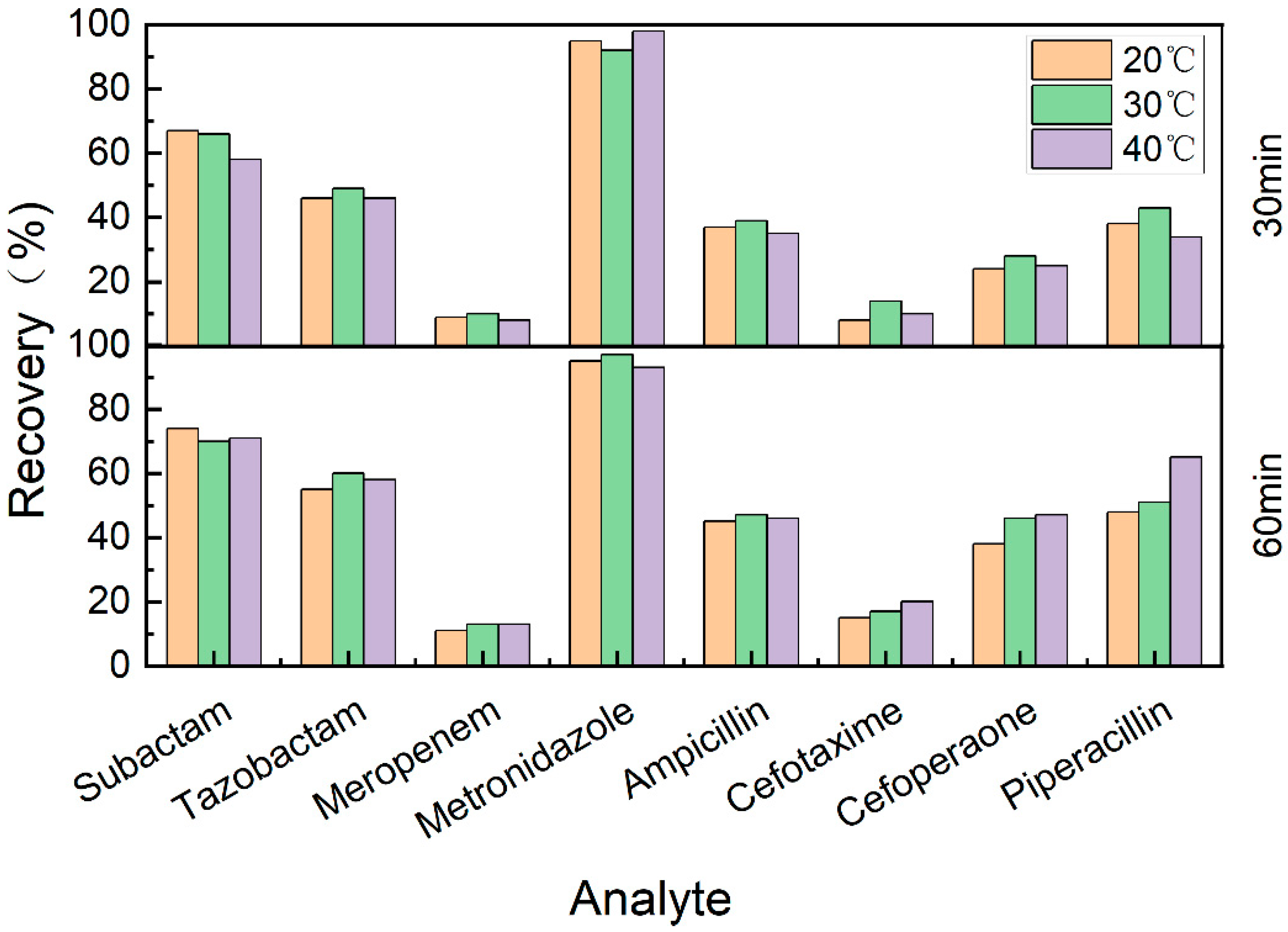
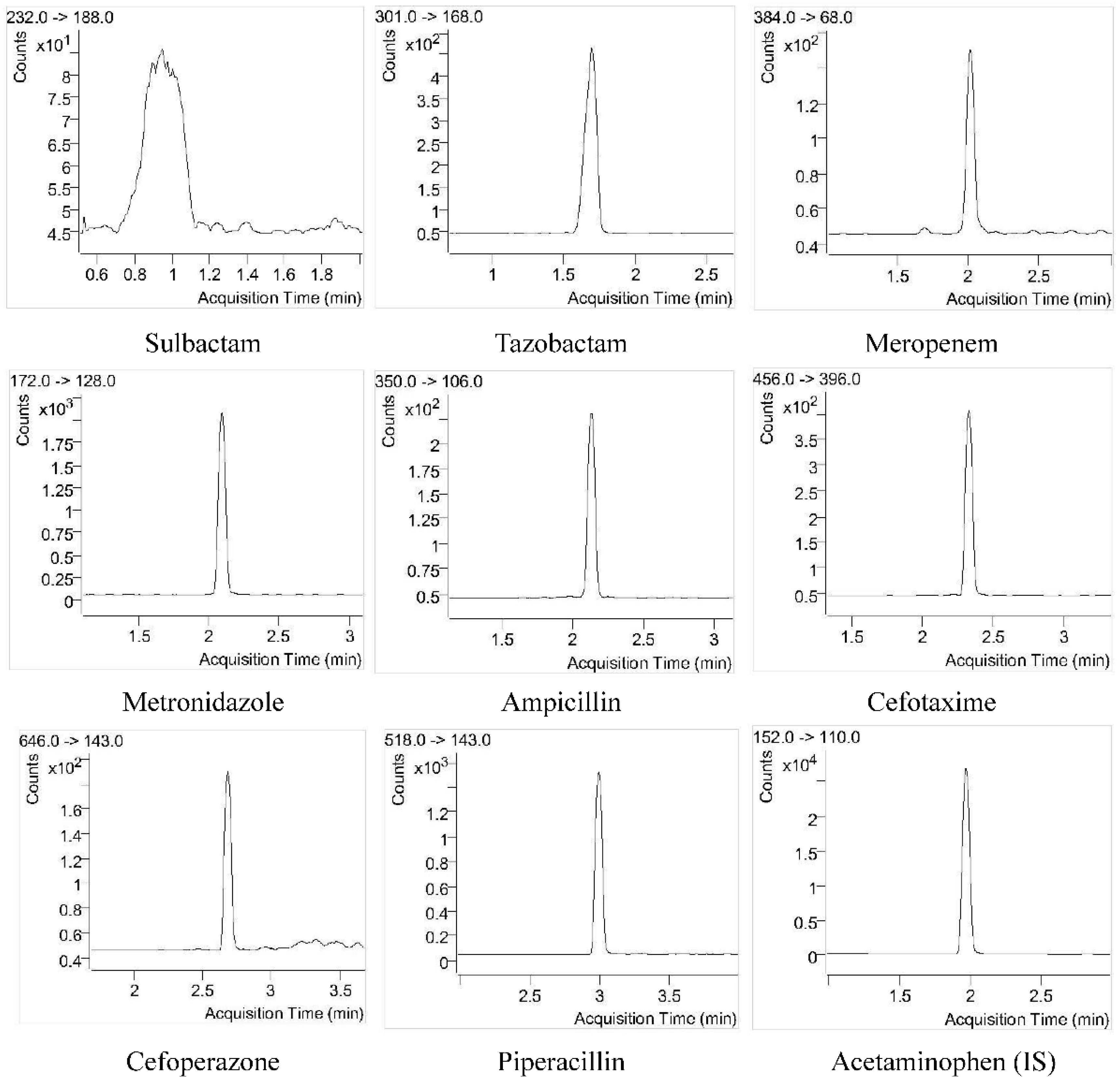
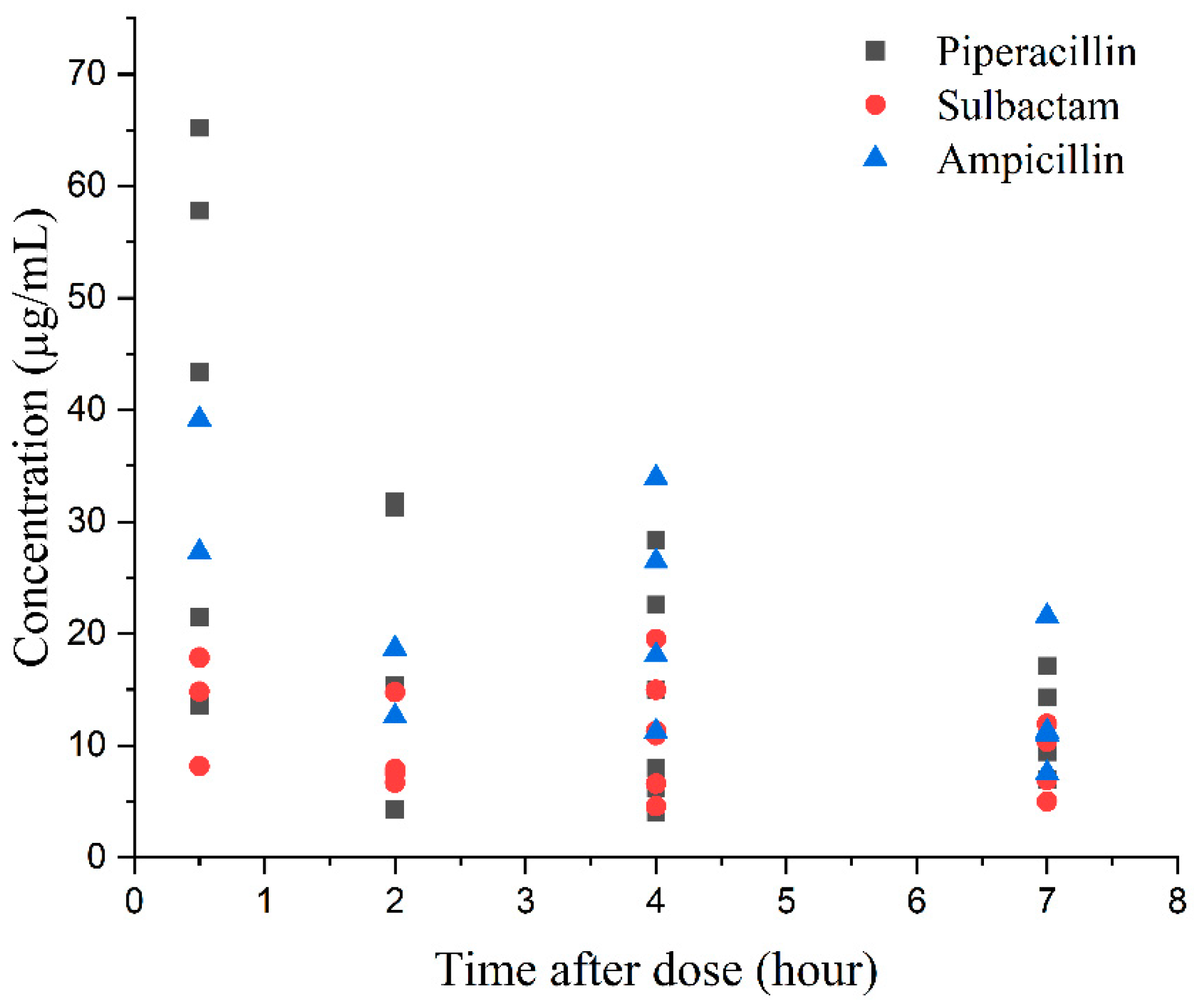
Objectives: Conduction of pharmacokinetic (PK) study in pediatric patients is challenging due to blood sampling limits. The dried blood spots (DBS) method represents a potential matrix for microsampling in support of PK studies in children. Herein, we used the Capitainer® qDBS device to develop a DBS method that can collect an exact 10 µL volume of blood on a paper card. This DBS method was developed to simultaneously quantify the concentrations of eight antibiotics, including sulbactam, tazobactam, ampicillin, meropenem, cefotaxime, cefoperazone, piperacillin, and metronidazole using ultra-high performance liquid chromatography–tandem mass spectrometry (UHPLC–MS/MS). Methods: The prepared DBS samples were extracted in methanol containing acetaminophen as the internal standard at 20 °C on a block bath shaker at 500 rpm for 30 min. The extracted antibiotics were eluted on an Acquity UPLC HSS T3 column (2.1 × 50 mm, 1.8 µm) using gradient elution with a total chromatographic run time of 6.5 min. The precursor and product ions of the analytes were detected by use of the multiple reaction monitoring (MRM) mode. Results: No interfering peaks at the respective retention times of the analytes were observed in DBS samples. The lower limits of quantification (LLOQ) for the antibiotics were between 0.25 and 2.0 μg/mL, and satisfactory accuracies (intra/inter-assay bias −16.7 to +13.6%) and precisions (intra/inter-assay coefficient of variations 1.5–15.6%) were obtained for the analytes. As a proof of concept, the method was applied to DBS samples obtained from neonatal patients treated with ampicillin and piperacillin/sulbactam. Conclusions: The DBS method is simple and robust, and it can be used in children with limited blood sampling.
Keywords: dried blood spots; LC–MS/MS; antibiotics; pediatrics; pharmacokinetics dried blood spots; LC–MS/MS; antibiotics; pediatrics; pharmacokinetics