Article

What Is the Most Effective Empirical Antibiotic Treatment for Early, Delayed, and Late Fracture-Related Infections?

1
Department for Trauma Surgery, University Hospital, 93053 Regensburg, Germany
2
Department for Psychosomatic Medicine, University Hospital, 93053 Regensburg, Germany
3
Institute of Laboratory Medicine, Microbiology and Hygiene, Hospital of the Order of St. John, 93053 Regensburg, Germany
4
Department of Infection Prevention and Infectious Diseases, University Hospital, 93053 Regensburg, Germany
*
Author to whom correspondence should be addressed.
These authors contributed equally to this work.
Antibiotics 2022, 11(3), 287; https://doi.org/10.3390/antibiotics11030287

Submission received: 21 January 2022 / Revised: 14 February 2022 / Accepted: 21 February 2022 / Published: 22 February 2022
(This article belongs to the Special Issue Fracture-Related Infection: An Update on Antimicrobial Therapy)

Abstract

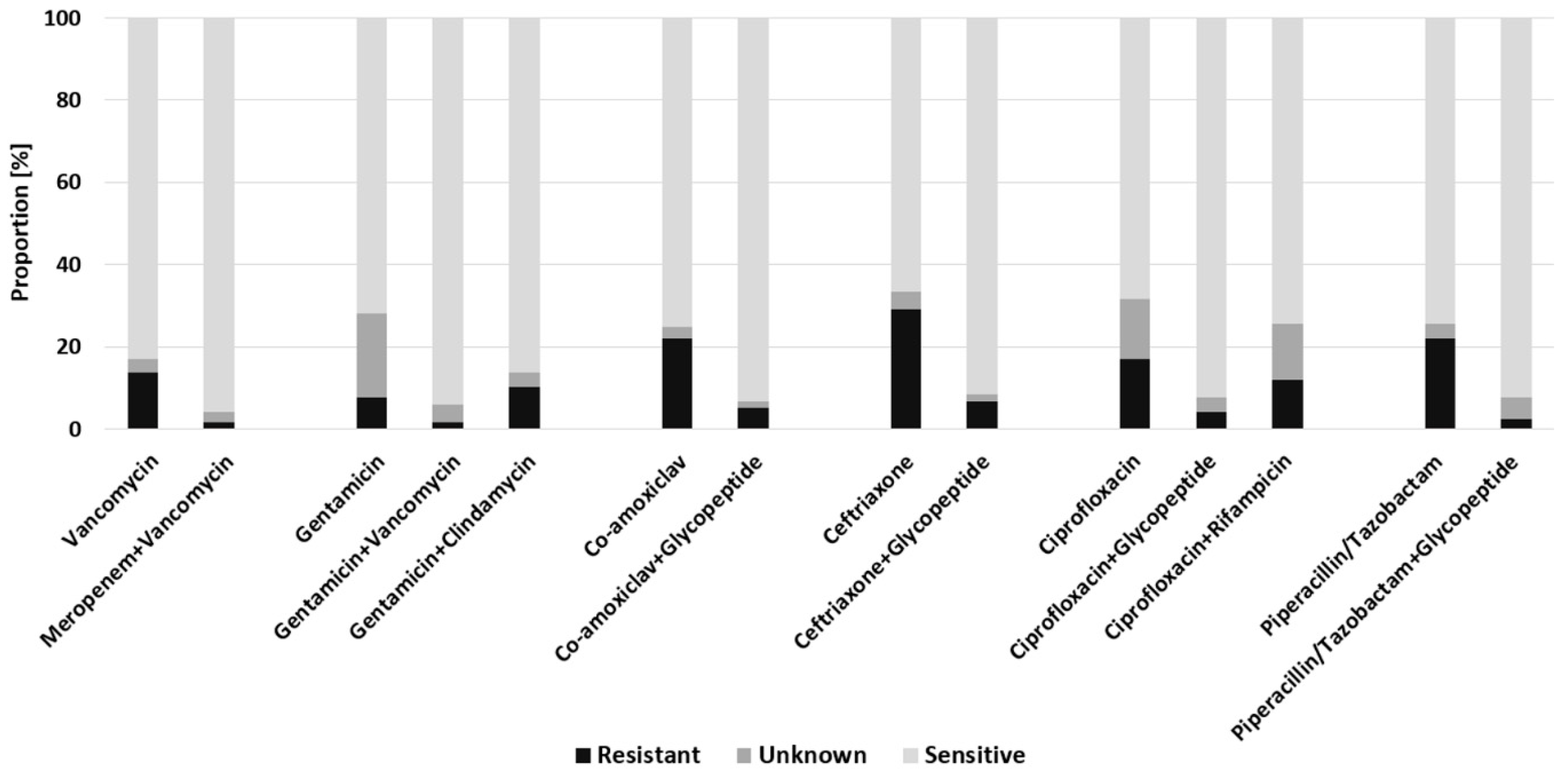
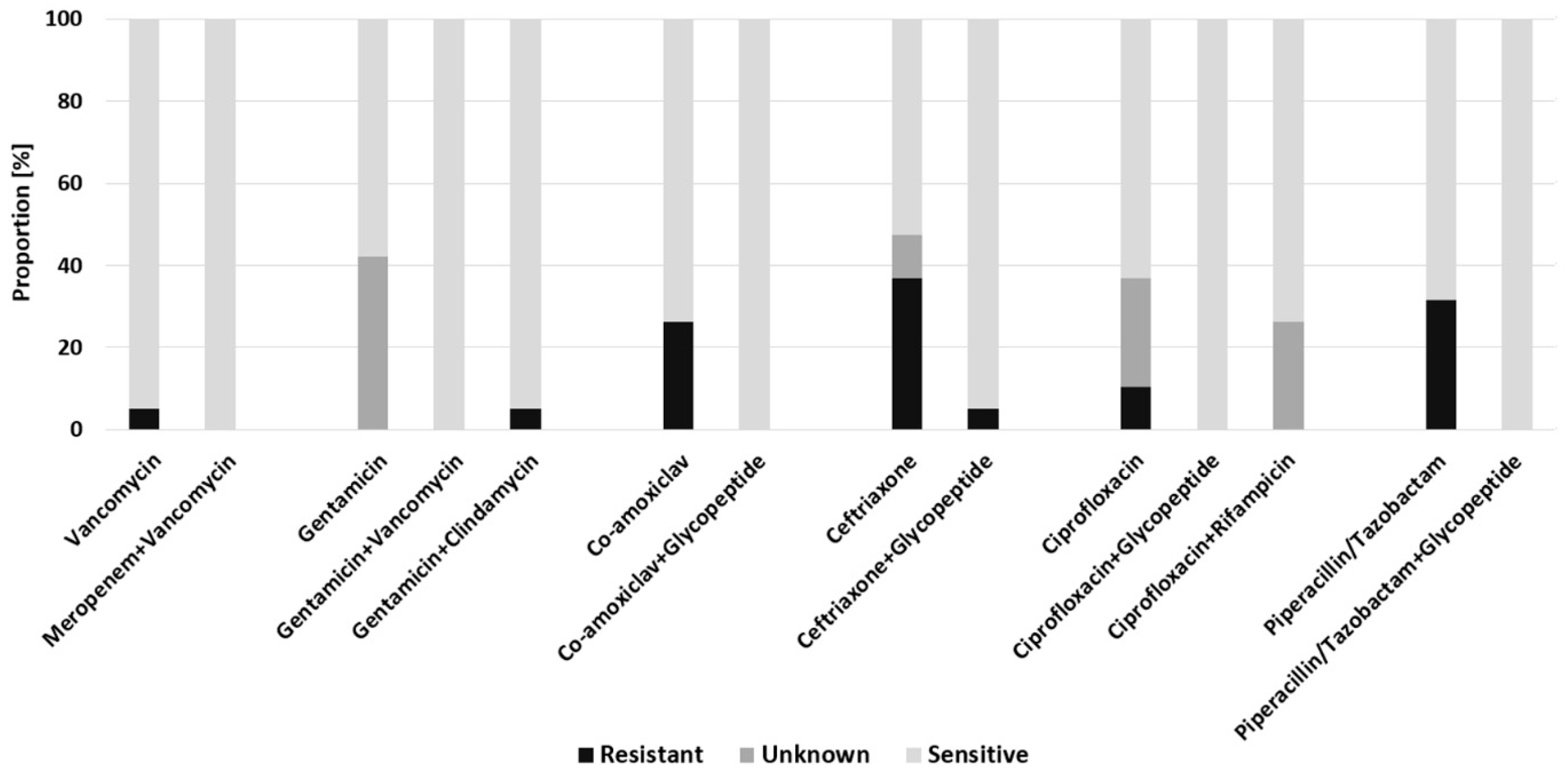
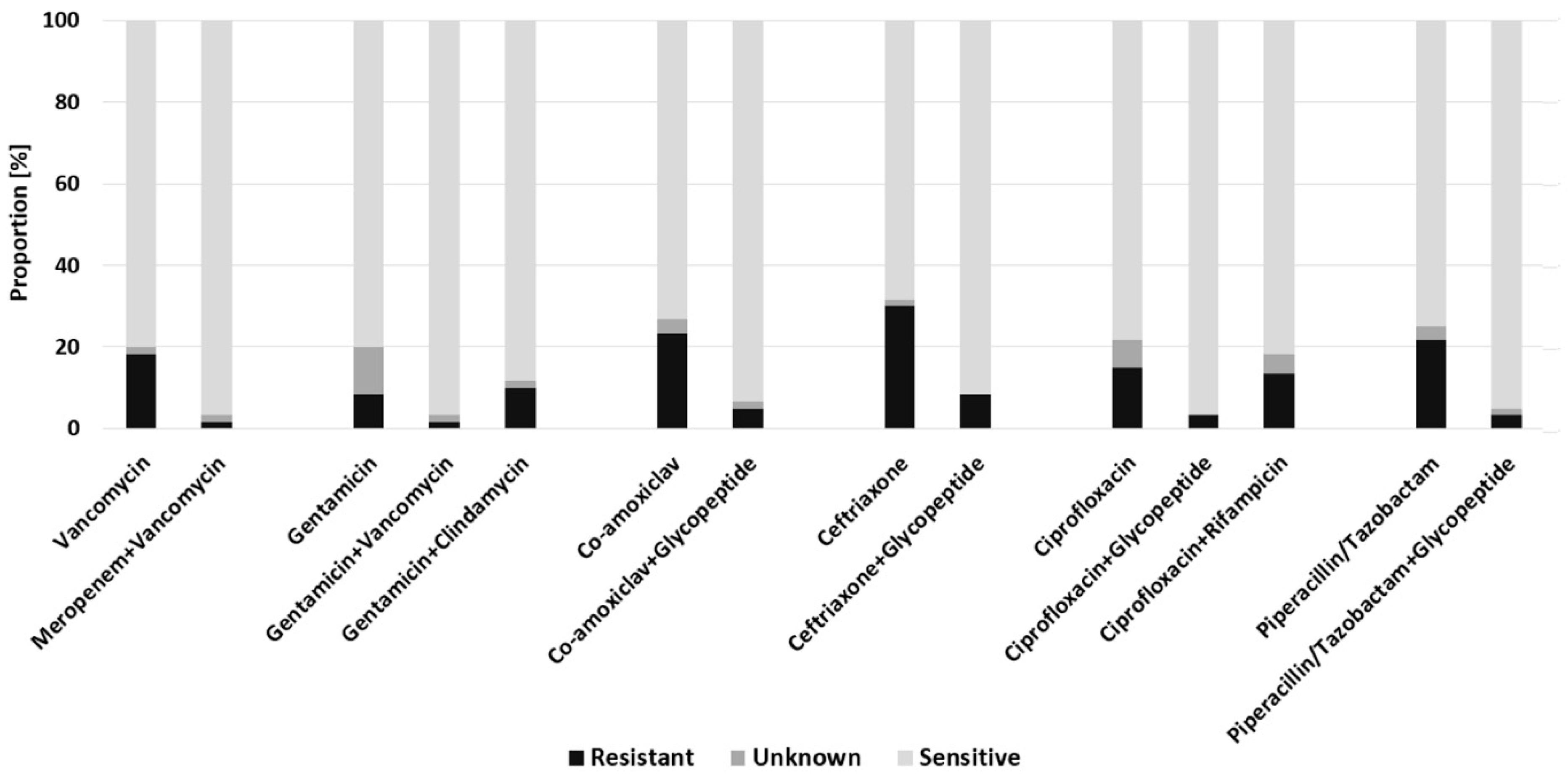
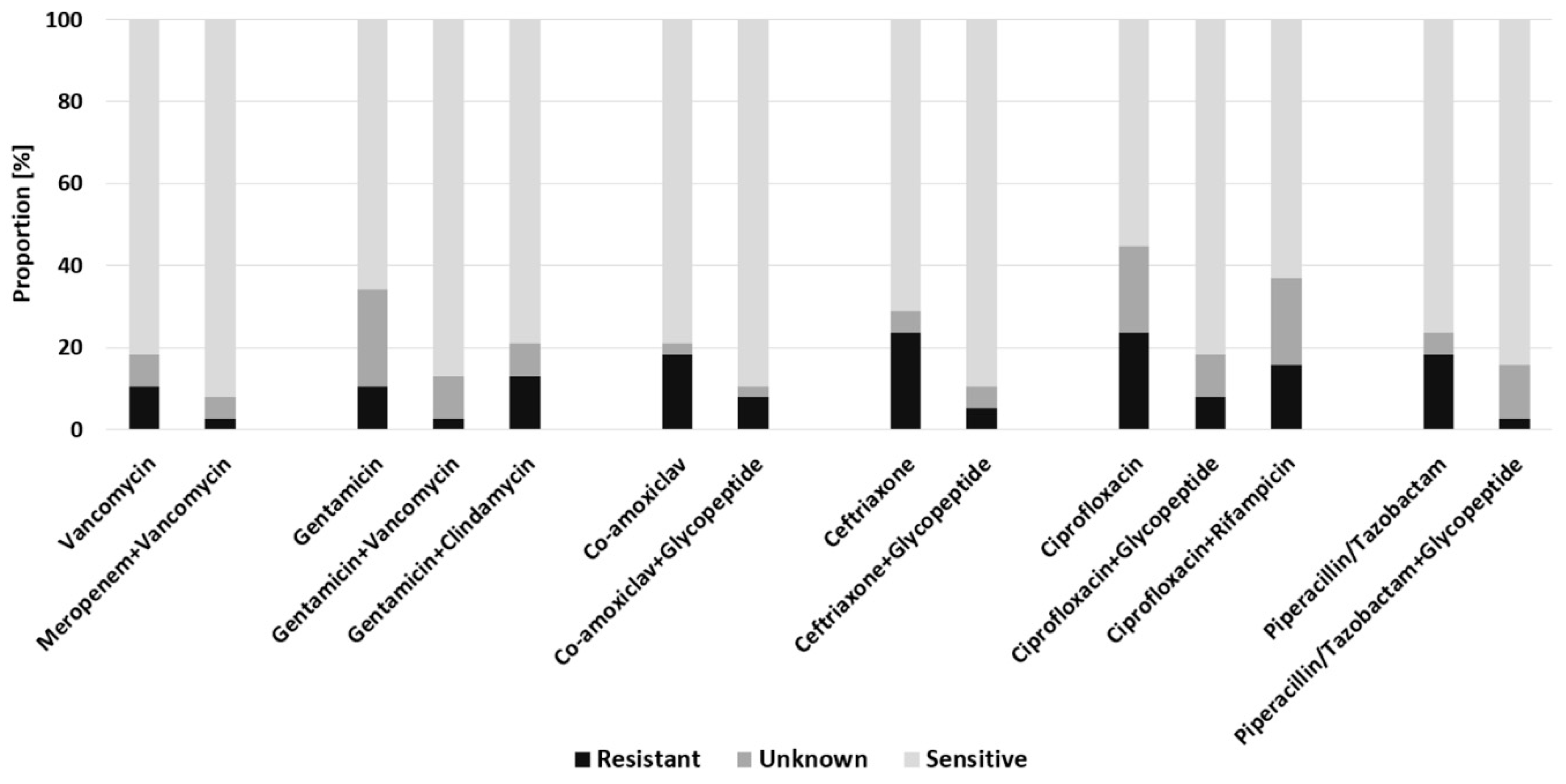
Antibiotic treatment strategies for fracture-related infections (FRI) are often extrapolated from periprosthetic joint infections (PJI), although, in contrast to PJI, detailed analysis of pathogens and their antibiotic resistance is missing. Therefore, this study aimed to investigate antibiotic susceptibility profiles to identify effective empiric antibiotic treatment for early-, delayed-, and late-onset FRI. Patients treated for FRI from 2013 to 2020 were grouped into early (<2 weeks), delayed (3–10 weeks), and late (>10 weeks) onset of infection. Antibiotic susceptibility profiles were examined with respect to broadly used antibiotics and antibiotic combinations. In total, 117 patients (early n = 19, delayed n = 60, late n = 38) were enrolled. In early-onset FRI, 100.0% efficacy would be achieved by meropenem + vancomycin, gentamicin + vancomycin, co-amoxiclav + glycopeptide, ciprofloxacin + glycopeptide and piperacillin/tazobactam + glycopeptide. For patients with delayed FRI, the highest susceptibility was revealed for meropenem + vancomycin, gentamicin + vancomycin and ciprofloxacin + glycopeptide (96.7%). Meropenem + vancomycin was the most effective empiric antimicrobial in patients with late-onset of infection with 92.1% coverage. No subgroup differences in antibiotic sensitivity profiles were observed except for the combination ciprofloxacin + glycopeptide, which was significantly superior in early FRI (F = 3.304, p = 0.04). Across all subgroups meropenem + vancomycin was the most effective empiric treatment in 95.7% of patients with confirmed susceptibility. Meropenem + vancomycin, gentamicin + vancomycin, co-amoxiclav + glycopeptide are the best therapeutic options for FRI, regardless of the onset of infection. To avoid multidrug resistance, established antibiotic combinations such as co-amoxiclav with a glycopeptide seem to be reasonable as a systemic antibiotic therapy, while vancomycin + gentamicin could be implemented in local antibiotic therapy to reduce adverse events during treatment.
Keywords: fracture-related infection; antimicrobial resistance; empiric antibiotic treatment fracture-related infection; antimicrobial resistance; empiric antibiotic treatment