
Communication

A Signal-On Fluorosensor Based on Quench-Release Principle for Sensitive Detection of Antibiotic Rapamycin
1
Chemical Resources Laboratory, Tokyo Institute of Technology, 4259-R1-18 Nagatsuta-cho, Midori-ku, Yokohama, 226-8503, Japan
2
Department of Chemistry and Biotechnology, School of Engineering, The University of Tokyo, 7-3-1 Hongo, Bunkyo-ku, Tokyo 113-8656, Japan
*
Author to whom correspondence should be addressed.
Biosensors 2015, 5(2), 131-140; https://doi.org/10.3390/bios5020131
Submission received: 4 February 2015 / Revised: 13 March 2015 / Accepted: 20 March 2015 / Published: 26 March 2015
(This article belongs to the Special Issue Fluorescence Based Sensing Technologies)

Abstract

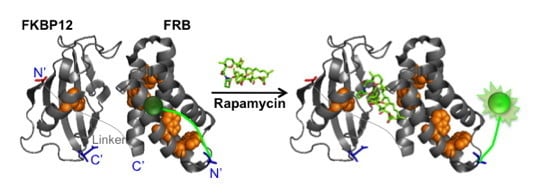
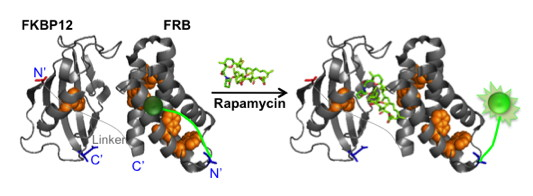
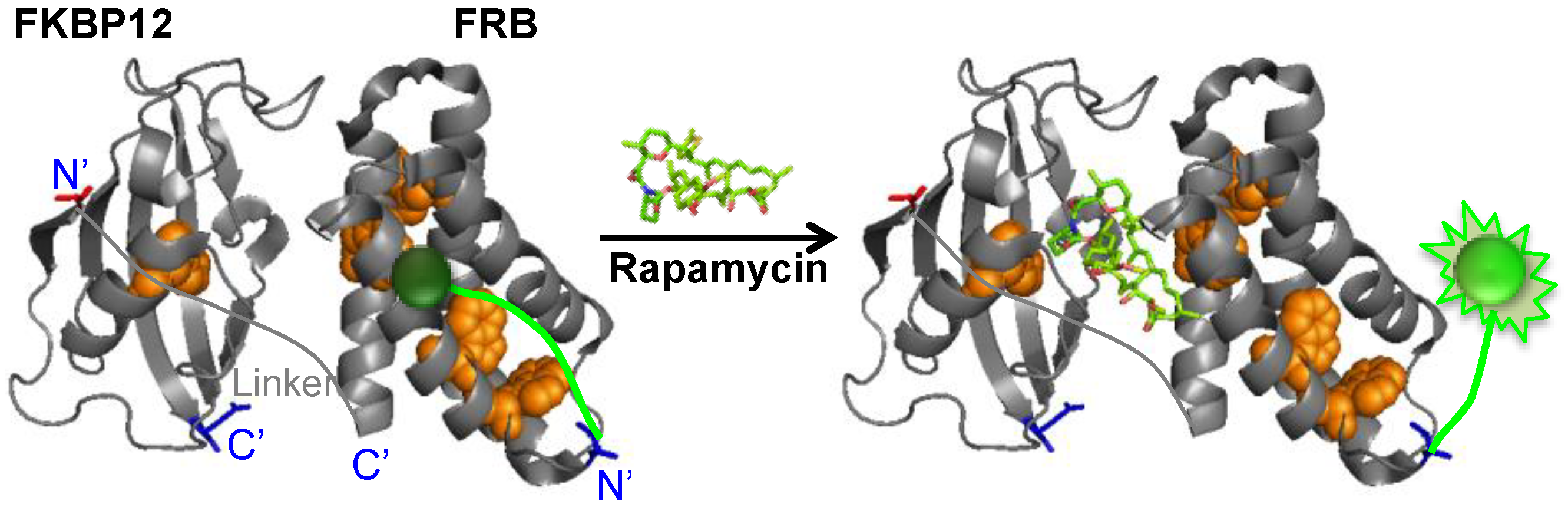
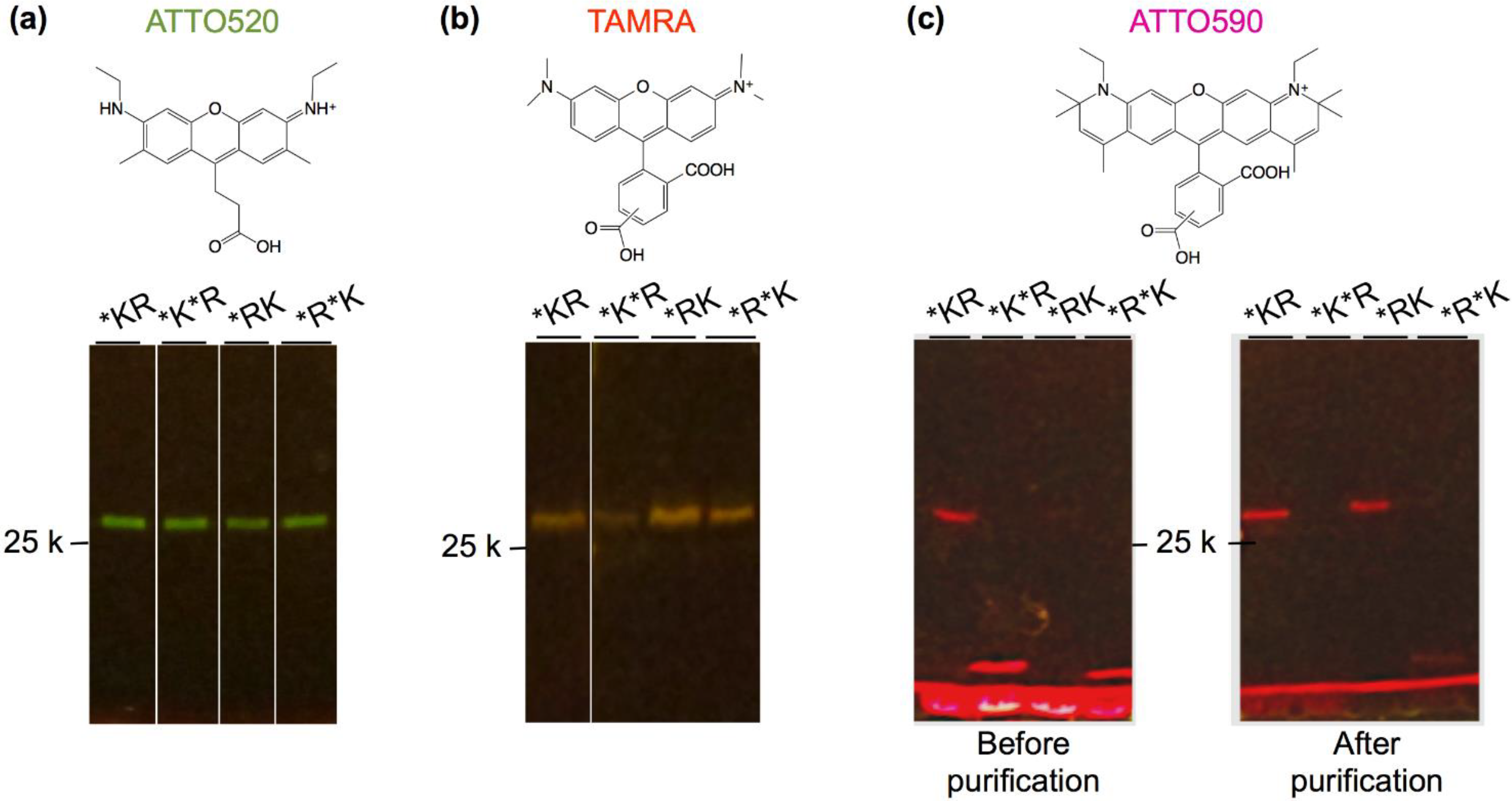
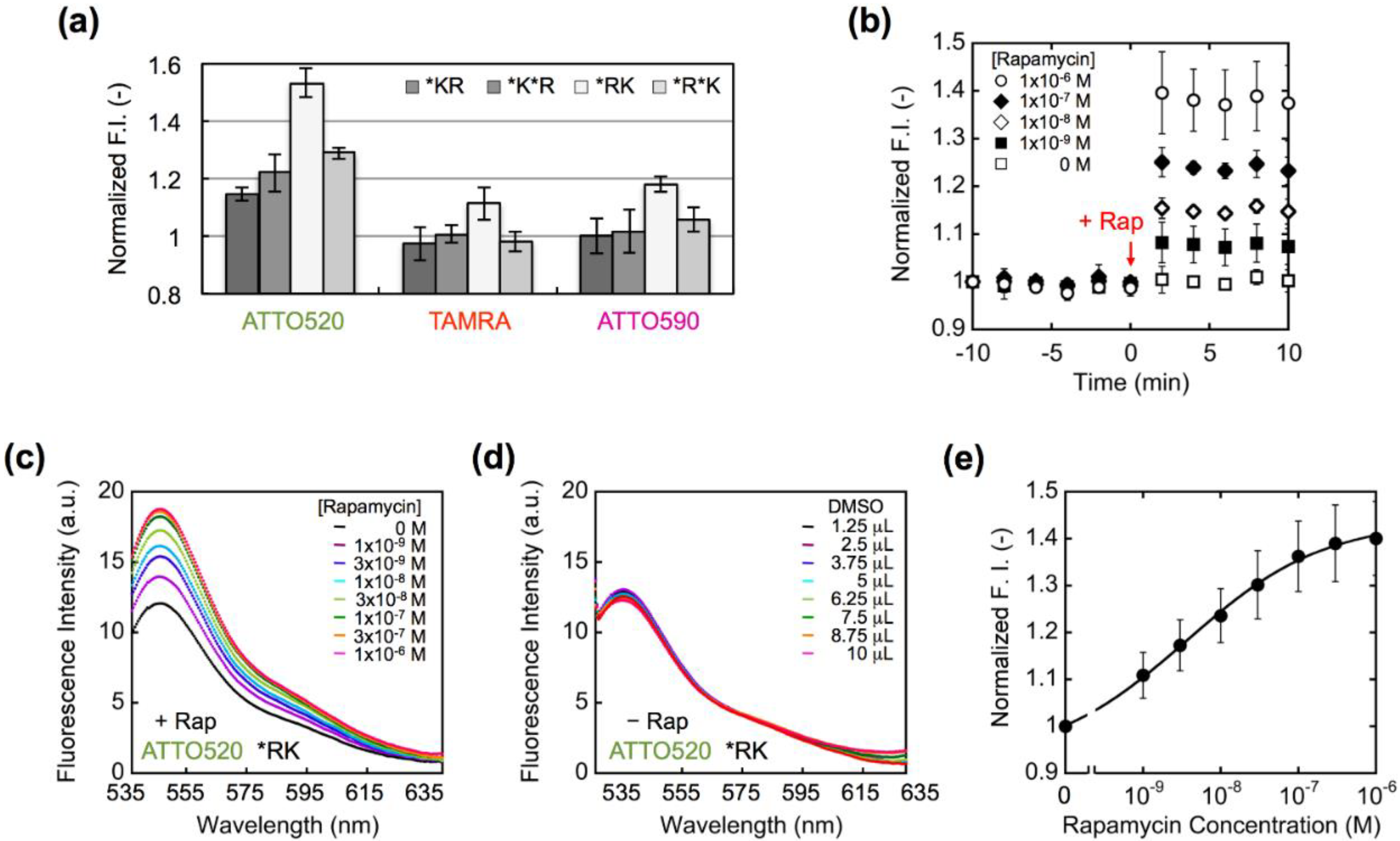
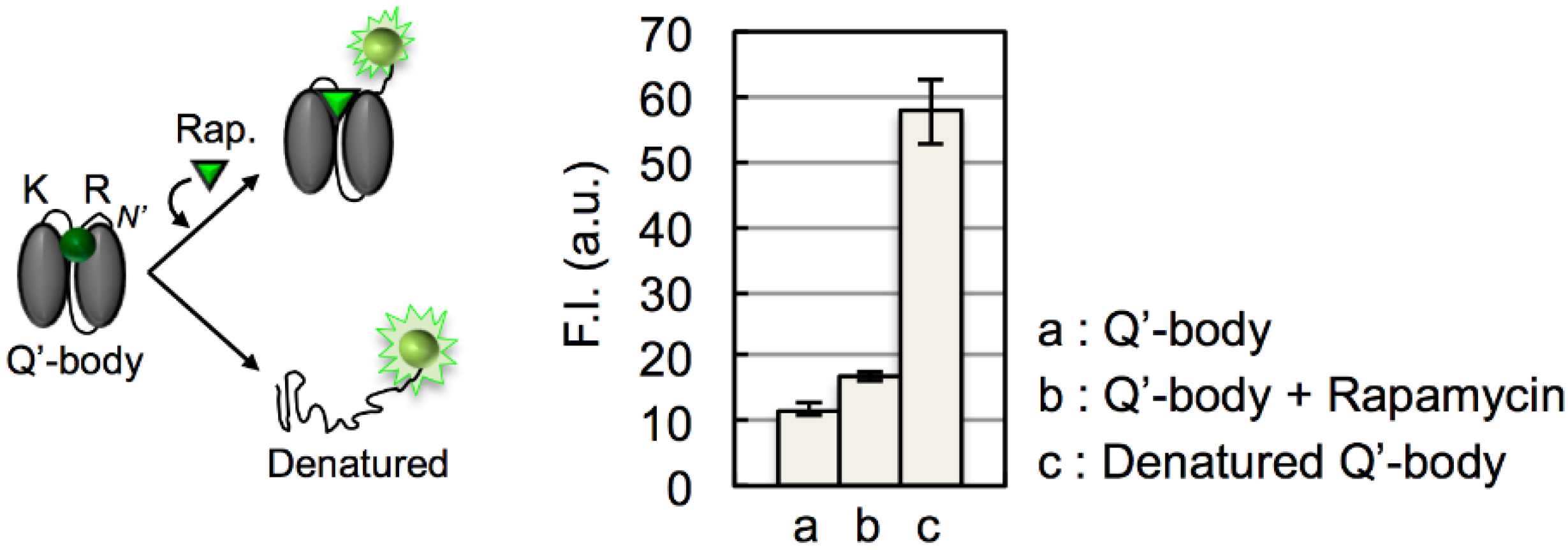
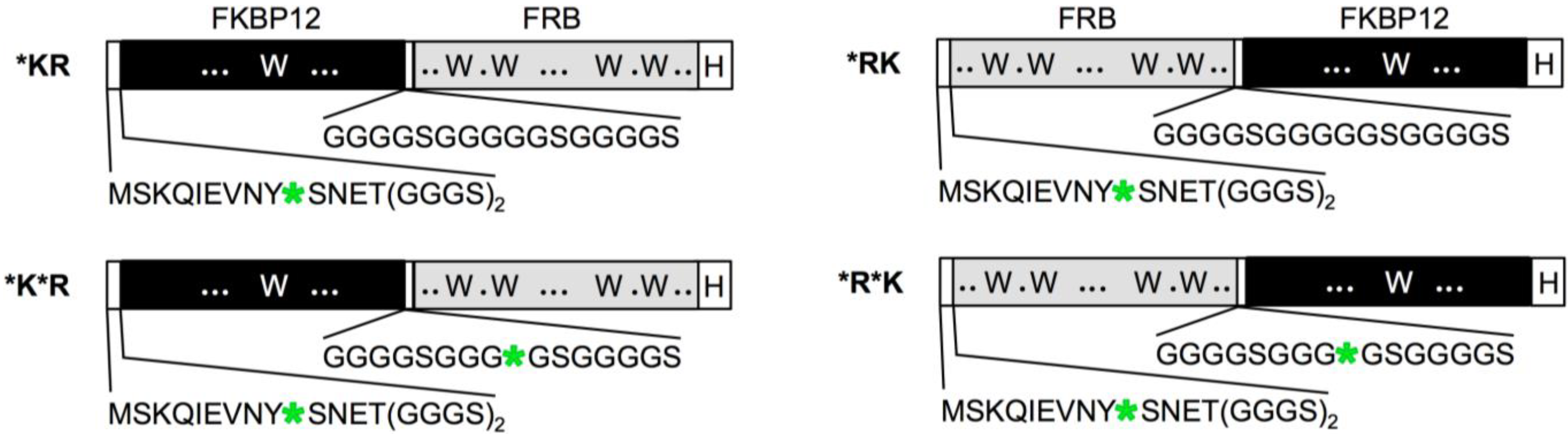
An antibiotic rapamycin is one of the most commonly used immunosuppressive drugs, and also implicated for its anti-cancer activity. Hence, the determination of its blood level after organ transplantation or tumor treatment is of great concern in medicine. Although there are several rapamycin detection methods, many of them have limited sensitivity, and/or need complicated procedures and long assay time. As a novel fluorescent biosensor for rapamycin, here we propose “Q’-body”, which works on the fluorescence quench-release principle inspired by the antibody-based quenchbody (Q-body) technology. We constructed rapamycin Q’-bodies by linking the two interacting domains FKBP12 and FRB, whose association is triggered by rapamycin. The fusion proteins were each incorporated position-specifically with one of fluorescence dyes ATTO520, tetramethylrhodamine, or ATTO590 using a cell-free translation system. As a result, rapid rapamycin dose-dependent fluorescence increase derived of Q’-bodies was observed, especially for those with ATTO520 with a lowest detection limit of 0.65 nM, which indicates its utility as a novel fluorescent biosensor for rapamycin.
Keywords: fluorescent biosensor; fluorescence quenching; rapamycin; antibiotics; photoinduced electron transfer fluorescent biosensor; fluorescence quenching; rapamycin; antibiotics; photoinduced electron transfer
Graphical Abstract