From Static to Dynamic: The Convergence of Nanomaterials and 3D/4D Bioprinting for Adaptive Wearable Sports Biosensors



Abstract
1. Introduction
Advanced Wearable Sensing Platforms for Multimodal Physiological Assessment
2. Engineering the Transducer: Nanomaterials for Electrochemical Precision
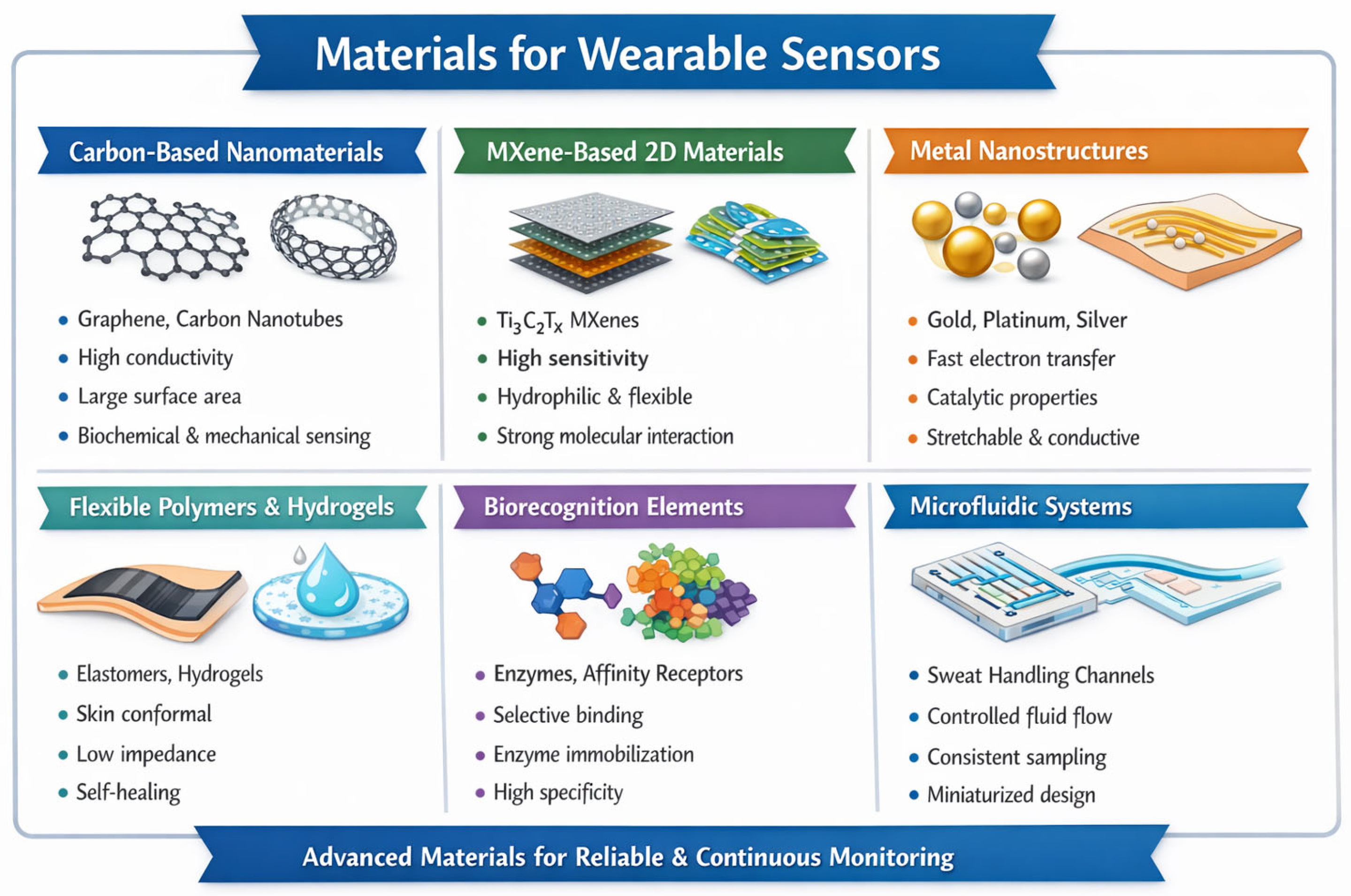
2.1. Classification of Materials Used in Wearable Sensors
2.1.1. Carbon-Based Nanomaterials
2.1.2. Mxene-Based Two-Dimensional Materials
2.1.3. Metal Nanostructures
2.1.4. Flexible Polymer Substrates and Elastomers
2.1.5. Hydrogel-Based Biointerfaces
2.2. Biorecognition Elements and Enzyme Immobilization Strategies
2.3. Microfluidic Sweat Handling Systems
Osmotic, Porous Hydrogel, and Janus Textile Interfaces for Passive Biofluid Harvesting
2.4. Smart and Adaptive Materials
2.5. Manufacturing Scalability and Translational Fabrication
2.6. Regulatory and Clinical Translation Framework

| Material Class | Typical Sensitivity (µA mM−1 cm−2) | Limit of Detection | Linear Range | Response Time | Mechanical Strain Tolerance | Operational Stability | Relative Advantages | Relative Limitations | References |
|---|---|---|---|---|---|---|---|---|---|
| Graphene/rGO | 50–500 | 0.1–10 µM | µM–mM | 3–20 s | 20–40% | 7–30 days | Excellent sensitivity, rapid electron transfer, high flexibility, suitable for multiplex sensing | Complex large-scale fabrication, performance variability between batches | [26,64,65] |
| Carbon Nanotubes (CNTs) | 100–800 | 0.05–5 µM | µM–mM | <10 s | 30–60% | 2–4 weeks | High conductivity, strong electrocatalytic activity, excellent strain sensing capability | Aggregation tendency, potential biocompatibility concerns | [66,67] |
| Porous Carbon/Carbon Black | 20–200 | 1–50 µM | µM–high mM | 5–30 s | substrate dependent | weeks | Cost-effective, scalable production, large electroactive surface area | Lower sensitivity compared with MXenes and CNTs | [68] |
| MXene (Ti3C2Tx) | 300–1500 | <1 µM | nM–mM | 1–10 s | 40–80% | 5–14 days (oxidation limited) | Highest sensitivity, ultrafast response, excellent conductivity and hydrophilicity | Oxidation susceptibility and limited long-term stability | [69,70,71] |
| Gold Nanoparticles | Signal amplification dependent | down to nM (enzyme systems) | wide | fast kinetics | substrate dependent | weeks | Outstanding bioconjugation capability, excellent signal amplification | High material cost and limited mechanical functionality | [33] |
| Silver Nanowires | Used as a conductor (not primary sensing) | — | — | — | 50–100% | weeks | Highly stretchable and transparent conductive networks | Mainly conductive elements rather than primary sensing materials | [32,35] |
| Platinum Nanoparticles | Strong catalytic gain | sub-µM | wide | <5 s | substrate dependent | weeks | Superior catalytic performance and fast electron-transfer kinetics | High cost and limited flexibility without composite integration | [32,34] |
| Conductive Hydrogels | 10–150 (interface mediated) | µM | µM–mM | 5–30 s | 50–200% | days–weeks, hydration dependent | Excellent skin conformity, low interfacial impedance, high stretchability | Dehydration and mechanical degradation during prolonged operation | [44,72] |
| Enzyme-Functionalized Electrodes | 100–1000+ (target dependent) | nM–µM | narrow–moderate | seconds | matrix dependent | 3–14 days (activity decay) | Highest molecular selectivity and target specificity | Enzyme denaturation and limited operational lifetime | [73] |
| Microfluidic Sweat Systems | Indirect influence | Improves effective LOD | Stabilizes range | Improves response reproducibility | flexible | long-term | Improved sampling reliability, reduced evaporation, enhanced reproducibility | Increased fabrication complexity and integration challenges | [17,74] |
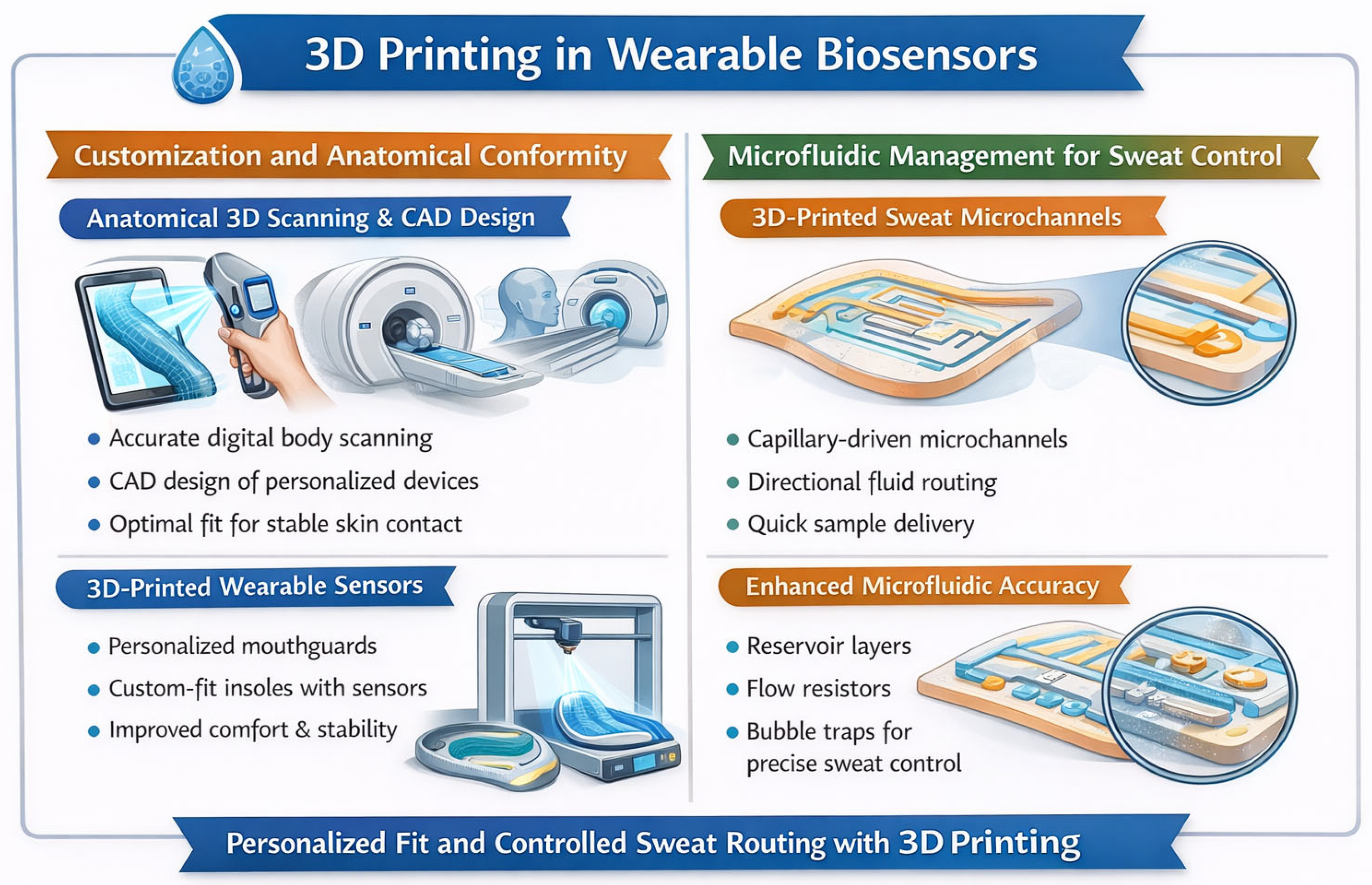
3. 3D Printing: Customization and Microfluidic Management
3.1. Anatomical Conformity via 3D Scanning
3.2. Microfluidic Architectures for Controlled Sweat Routing
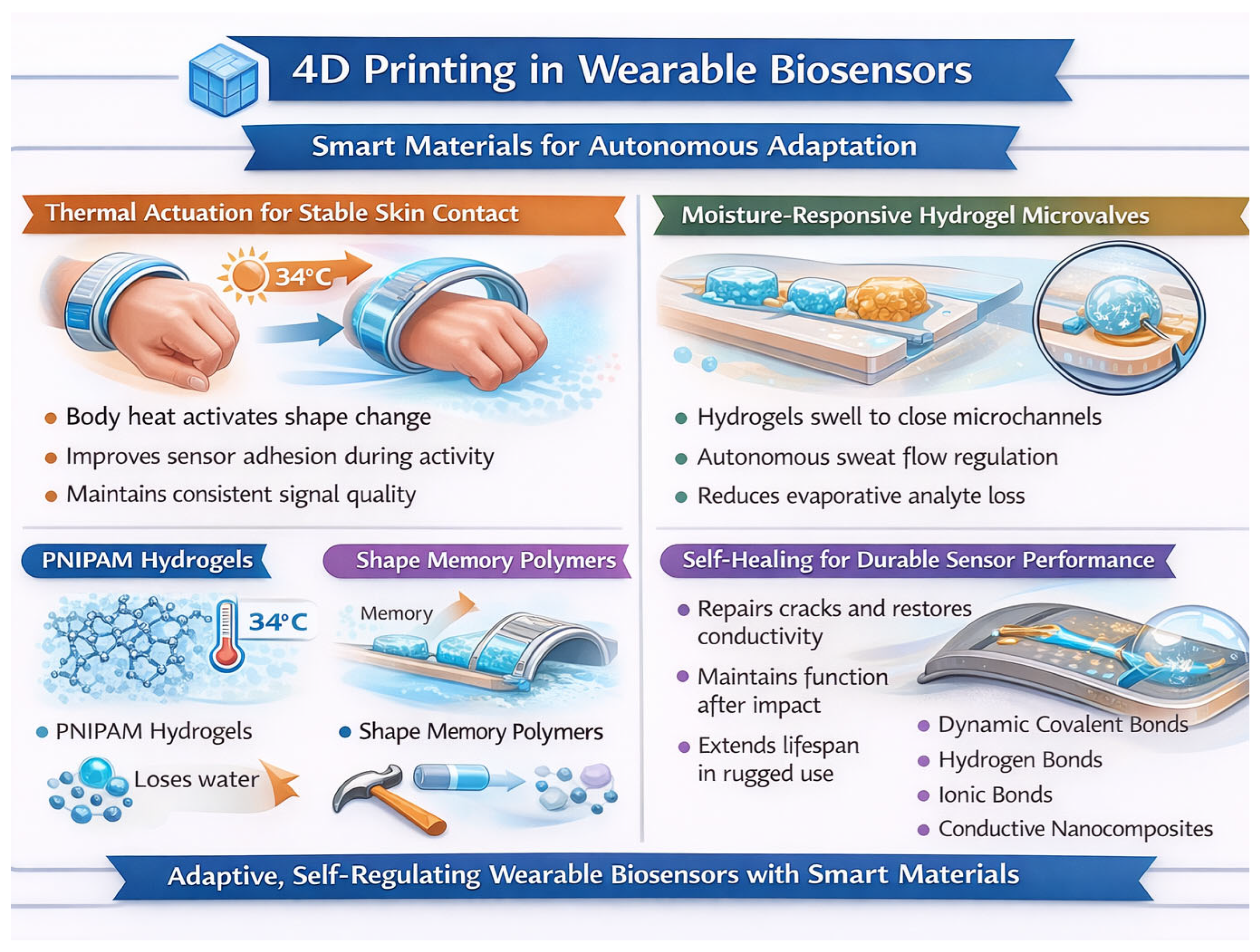
4. 4D Printing: Smart Materials for Autonomous Adaptation
4.1. Thermal Actuation for Robust Skin–Sensor Coupling
4.2. Moisture-Responsive Microvalves for Autonomous Fluid Regulation
4.3. Self-Healing Structural and Electrical Integrity in High-Impact Environments
5. Application-Specific Case Studies
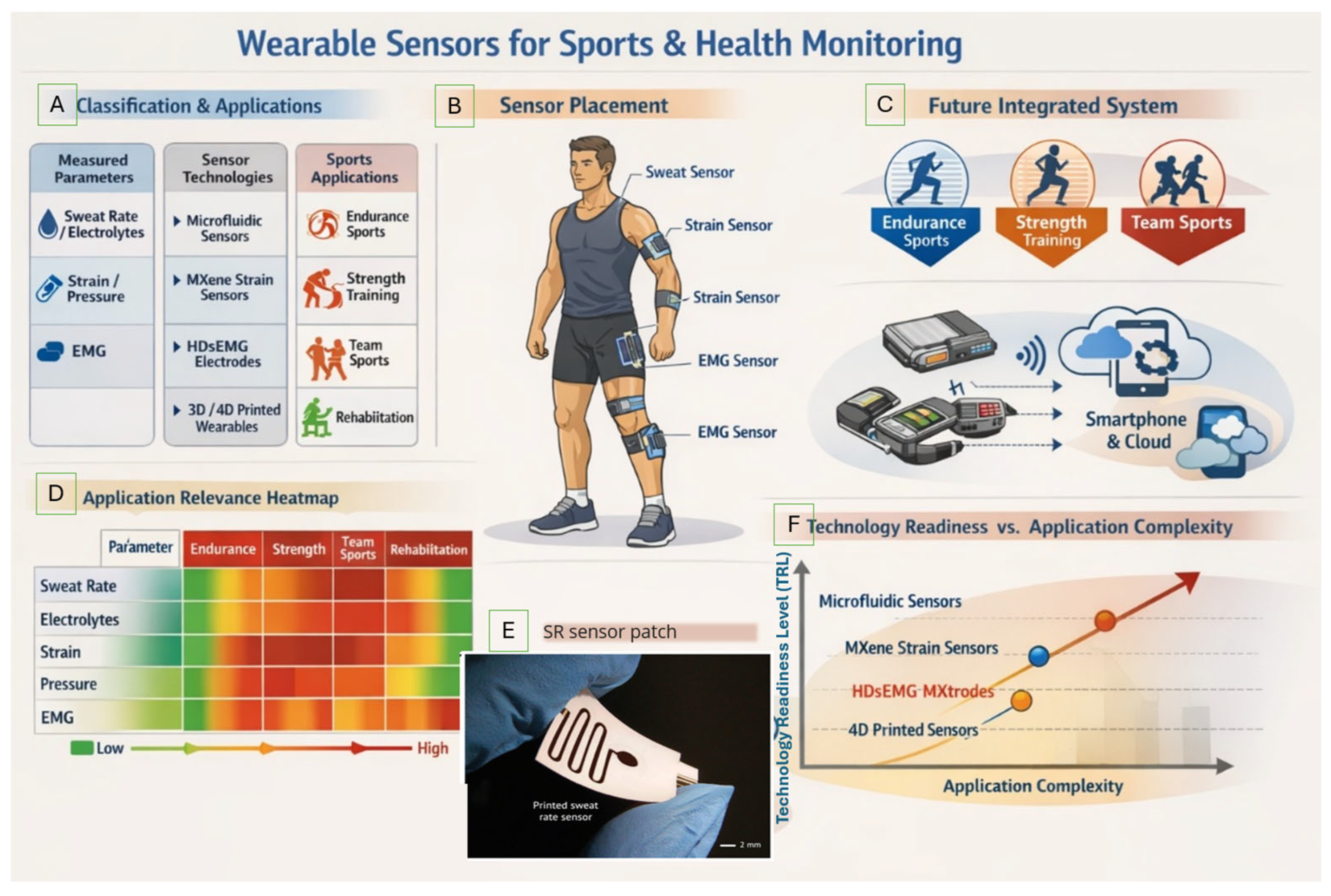
5.1. Wearable Sensors That Measure Physical and Electrophysiological Parameters

| Study | Measured Parameter | Sensor Type | Sports-Related Application | Relative Advantages | Current Limitations | References |
|---|---|---|---|---|---|---|
| Hashimoto et al. | Sweat rate, NaCl | Microfluidic + electrochemical | Endurance sports, hydration monitoring | Quantitative sweat analysis with continuous monitoring capability; suitable for hydration assessment | Requires reliable sweat generation and microfluidic integration | [83] |
| Islam et al. | Sweat rate | Printed microfluidic capacitive sensor | Long-duration training monitoring | Low-cost, scalable, and wearable-friendly fabrication | Limited biomarker diversity and lower analytical complexity | [90] |
| Zhang (MPCA) | Pressure | MXene/PEDOT: PSS aerogel | Foot pressure, force distribution | High-pressure sensitivity and robust mechanical performance | Primarily focused on mechanical sensing rather than biochemical monitoring | [91] |
| Lu et al. | Strain, pressure | MXene-based hydrogel | Joint motion, muscle deformation | Exceptional stretchability and mechanical adaptability | Long-term durability and environmental stability require further validation | [92] |
| Lee et al. | EMG | Textile-integrated MXene electrode | Hand–arm sports, gesture analysis | Comfortable textile integration and stable EMG acquisition during movement | Signal quality may be influenced by textile degradation and motion artifacts | [93] |
| Garg et al. | HDsEMG | MXene electrode arrays (MXtrodes) | Gait analysis, muscle fatigue detection | High-density electrophysiological mapping with superior spatial resolution | Increased system complexity and data-processing requirements | [94] |
| Zhang (AMSS) | Strain, temperature | 4D printed PLA sensor | Full-range joint motion tracking | Adaptive sensing through programmable shape transformation | Early-stage technology with limited real-world validation | [95] |
| Deng et al. | Strain-induced deformation | 4D printed elastomer composite | Adaptive wearable sensor platforms | Reconfigurable sensor architecture and multistable behavior | Manufacturing complexity and limited commercialization readiness | [96] |
| Cheng et al. | Mechanical adaptation | Bio-inspired 4D structures | Sports orthoses and support systems | Biomimetic adaptation and potential for personalized support systems | Mostly proof-of-concept studies with limited quantitative validation | [97] |
| Driscoll et al. | EMG, stimulation | MXene bioelectronic interface | Neuromuscular monitoring in athletes | High-quality electrophysiological recording without conductive gels | Translation to large-scale wearable deployment remains under investigation | [98] |
5.2. Wearable Sensors That Measure Chemical Parameters
5.3. Wearable Sensors That Measure Molecular Biomarkers
5.4. Cardiovascular Monitoring in Sports Applications
6. Technical Challenges and Translational Hurdles
6.1. Material Incompatibility and Multi-Material Printing Constraints
6.1.1. Physical and Electrophysiological Sensors
6.1.2. Chemical Sensors
6.1.3. Molecular Biomarker Sensors
6.2. Response Time Lag and Dynamic Mismatch
6.2.1. Physical and Electrophysiological Sensors
6.2.2. Chemical Sensors
6.2.3. Molecular Biomarker Sensors
6.3. Sterilization, Biocompatibility, and Long-Term Wear
6.3.1. Physical and Electrophysiological Sensors
6.3.2. Chemical Sensors
6.3.3. Molecular Biomarker Sensors
7. Future Outlook: Toward a Digital Skin Ecosystem
7.1. Beyond 4D Printing: Toward Information-Embedded (5D) Systems
7.2. Integration with Soft Robotics and Closed-Loop Feedback
7.3. Future Challenges and Opportunities in Quantitative Sweat and ISF Biosensing
8. Comparative Analysis and Emerging Trends in Wearable Sports Biosensors
9. Conclusions
Author Contributions
Funding
Institutional Review Board Statement
Informed Consent Statement
Data Availability Statement
Acknowledgments
Conflicts of Interest
References
- Weng, X.; Fu, Z.; Zhang, C.; Jiang, W.; Jiang, H. A Portable 3D Microfluidic Origami Biosensor for Cortisol Detection in Human Sweat. Anal. Chem. 2022, 94, 3526–3534. [Google Scholar] [CrossRef] [Scilit] [PubMed]
- Kim, J.; Sempionatto, J.R.; Imani, S.; Hartel, M.C.; Barfidokht, A.; Tang, G.; Wang, J. Simultaneous Monitoring of Sweat and Interstitial Fluid Using a Single Wearable Biosensor Platform. Adv. Sci. 2018, 5, 1800880. [Google Scholar] [CrossRef] [Scilit] [PubMed]
- Parrilla, M.; Claes, N.; Toyos-Rodríguez, C.; Dricot, C.E.M.K.; Steijlen, A.; Lebeer, S.; De Wael, K. Wearable 3D-printed solid microneedle voltammetric sensors based on nanostructured gold for uric acid monitoring. Biosens. Bioelectron. 2025, 289, 117934. [Google Scholar] [CrossRef] [Scilit] [PubMed]
- Lu, T.; Ji, S.; Jin, W.; Yang, Q.; Luo, Q.; Ren, T.-L. Biocompatible and Long-Term Monitoring Strategies of Wearable, Ingestible and Implantable Biosensors: Reform the Next Generation Healthcare. Sensors 2023, 23, 2991. [Google Scholar] [CrossRef] [Scilit] [PubMed]
- Jan, B.; Sheikh, K.A.; Javeed, S.; Rafiquee, A.; Bashir, S.; Hassan, R.; Masoodi, M.H. Rheumatoid Arthritis: Pathogenesis, Therapeutic Strategies, Advances, and Structural Activity Relationships of Synthesized Agents. Curr. Top. Med. Chem. 2025, 25, 2807–2828. [Google Scholar] [CrossRef] [Scilit] [PubMed]
- Shergujri, D.A.; Khanday, M.A.; Noor, A.; Adnan, M.; Arif, I.; Raza, S.N.; Shah, M.A. Next-generation biopolymer gels: Innovations in drug delivery and theranostics. J. Mater. Chem. B 2025, 13, 3222–3244. [Google Scholar] [CrossRef] [Scilit] [PubMed]
- Brennan, M.; Layrolle, P.; Mooney, D.J. Biomaterials Functionalized with MSC Secreted Extracellular Vesicles and Soluble Factors for Tissue Regeneration. Adv. Funct. Mater. 2020, 30, 1909125. [Google Scholar] [CrossRef] [Scilit] [PubMed]
- Ravizza, A.; De Maria, C.; Di Pietro, L.; Sternini, F.; Audenino, A.L.; Bignardi, C. Comprehensive Review on Current and Future Regulatory Requirements on Wearable Sensors in Preclinical and Clinical Testing. Front. Bioeng. Biotechnol. 2019, 7, 313. [Google Scholar] [CrossRef] [Scilit] [PubMed]
- Yuda, E.; Yoshida, Y.; Edamatsu, H.; Hayano, J. Multimodal Physiological Monitoring Using Novel Wearable Sensors: A Pilot Study on Nocturnal Glucose Dynamics and Meal-Related Cardiovascular Responses. Bioengineering 2026, 13, 69. [Google Scholar] [CrossRef] [Scilit] [PubMed]
- Kim, J.; Campbell, A.S.; de Ávila, B.E.-F.; Wang, J. Wearable biosensors for healthcare monitoring. Nat. Biotechnol. 2019, 37, 389–406. [Google Scholar] [CrossRef] [Scilit] [PubMed]
- Yamaguchi, H.; Yamaguchi, H. Oxidative and Glycation Stress Biomarkers: Advances in Detection Technologies and Point-of-Care Clinical Applications. Molecules 2025, 30, 4286. [Google Scholar] [CrossRef] [Scilit] [PubMed]
- Liu, Y.; Liu, S.; Cui, D.; Li, H. Progress and Strategies of Wearable Sensors in Human Health Monitoring Based on Physiological, Biochemical, and Environmental Signals. ACS Omega 2025, 10, 49378–49401. [Google Scholar] [CrossRef] [Scilit] [PubMed]
- Wu, S.; Sha, Z.; Wu, L.; Phan, H.-P.; He, S.; Tang, J.; Wang, D. Recent advances in multimodal skin-like wearable sensors. Appl. Phys. Rev. 2024, 11, 041310. [Google Scholar] [CrossRef] [Scilit]
- Acar, T.; Nur Çimen, K.; Özalp, E.; Ilıca, Ö.; Ahlatcıoğlu Özerol, E. Recent Advances in Biosensors Based on Conducting Polymers for Biomedical Applications. ChemistrySelect 2023, 8, e202300819. [Google Scholar] [CrossRef] [Scilit]
- Koyun, A.; Ahlatcioglu, E.; Koca, Y. Biosensors and Their Principles. In A Roadmap of Biomedical Engineers and Milestones; InTech: Houston, TX, USA, 2012; pp. 115–142. [Google Scholar] [CrossRef] [Scilit] [PubMed]
- Akkad, H.; Keçeci, K.; Ahlatcıoğlu Özerol, E. Recent advances in biodegradable biosensors for biomedical and environmental applications. J. Biomater. Sci. Polym. Ed. 2025, 37, 1352–1383. [Google Scholar] [CrossRef] [Scilit] [PubMed]
- Padash, M.; Carrara, S. A 3D printed wearable device for sweat analysis. In 2020 IEEE International Symposium on Medical Measurements and Applications (MeMeA); IEEE: New York, NY, USA, 2020; pp. 1–5. [Google Scholar] [CrossRef] [Scilit]
- Wang, M.; Yang, Y.; Min, J.; Song, Y.; Tu, J.; Mukasa, D.; Gao, W. A wearable electrochemical biosensor for the monitoring of metabolites and nutrients. Nat. Biomed. Eng. 2022, 6, 1225–1235. [Google Scholar] [CrossRef] [Scilit] [PubMed]
- Gao, F.; Liu, C.; Zhang, L.; Liu, T.; Wang, Z.; Song, Z.; Real, L. Wearable and flexible electrochemical sensors for sweat analysis: A review. Microsyst. Nanoeng. 2023, 9, 1. [Google Scholar] [CrossRef] [Scilit] [PubMed]
- Assalve, G.; Lunetti, P.; Di Cagno, A.; De Luca, E.W.; Aldegheri, S.; Zara, V.; Capobianco, L. Advanced Wearable Devices for Monitoring Sweat Biochemical Markers in Athletic Performance: A Comprehensive Review. Biosensors 2024, 14, 574. [Google Scholar] [CrossRef] [Scilit] [PubMed]
- Fanous, Y.; Dorian, P. Wearables for cardiac monitoring in athletes: Precious metal or fool’s gold? Eur. Heart J. Digit. Health 2021, 2, 358–360. [Google Scholar] [CrossRef] [Scilit] [PubMed]
- Gajda, R.; Gajda, J.; Czuba, M.; Knechtle, B.; Drygas, W. Sports Heart Monitors as Reliable Diagnostic Tools for Training Control and Detecting Arrhythmias in Professional and Leisure-Time Endurance Athletes: An Expert Consensus Statement. Sports Med. 2024, 54, 1–21. [Google Scholar] [CrossRef] [Scilit] [PubMed]
- Al-azzawi, N.; Yunculer, I.; Atalay, A.T.; Atalay, O.; Ince, G. Monitoring of Heart and Respiration Rate Using a 3D Knitted T-shirt with Textile-based Electrodes. IFAC-PapersOnLine 2024, 58, 49–54. [Google Scholar] [CrossRef] [Scilit]
- Zhang, S.; Cai, Y.; Wei, Y.; Chen, Z.; Xu, R.; Zhou, Y.; Liu, T.; Gai, Y.; Li, J.; Xu, Z.; et al. A wax-printed Janus paper-based microfluidic wearable sensor for metabolic analysis in sweat. Biosens. Bioelectron. 2026, 311, 118882. [Google Scholar] [CrossRef] [Scilit] [PubMed]
- Cao, Q.; Pu, J.; Gao, Q.; Liu, X.; Guan, C. 3D printing aqueous batteries for flexible electronics: From materials and components to integrated devices. DeCarbon 2026, 12, 100153. [Google Scholar] [CrossRef] [Scilit]
- Ehtesabi, H.; Kalji, S.-O. Carbon nanomaterials for sweat-based sensors: A review. Microchim. Acta 2024, 191, 77. [Google Scholar] [CrossRef] [Scilit] [PubMed]
- Bi, C.; Fei, W.; Zhang, H.; Song, J.; Chen, S.; Dou, Y.; Wang, X. Carbon Nanotube-Induced Enzyme Polymerization for Wearable Multifunctional Biosensors in Sweat Analysis. JACS Au 2026, 6, 423–433. [Google Scholar] [CrossRef] [Scilit] [PubMed]
- Das, R.; Nag, S.; Banerjee, P. Electrochemical Nanosensors for Sensitization of Sweat Metabolites: From Concept Mapping to Personalized Health Monitoring. Molecules 2023, 28, 1259. [Google Scholar] [CrossRef] [Scilit] [PubMed]
- Farahmandpour, M.; Kordrostami, Z. Wearable MXene-enhanced organic Bio-FET paper patch for glucose detection in sweat with pH and temperature calibration. Sci. Rep. 2025, 15, 345. [Google Scholar] [CrossRef] [Scilit] [PubMed]
- Ganesan, S.; Ramajayam, K.; Kokulnathan, T.; Palaniappan, A. Recent Advances in Two-Dimensional MXene-Based Electrochemical Biosensors for Sweat Analysis. Molecules 2023, 28, 4617. [Google Scholar] [CrossRef] [Scilit] [PubMed]
- Yang, H.; Xiao, X.; Li, Z.; Li, K.; Cheng, N.; Li, S.; Gao, Y. Wireless Ti3C2Tx MXene Strain Sensor with Ultrahigh Sensitivity and Designated Working Windows for Soft Exoskeletons. ACS Nano 2020, 14, 11860–11875. [Google Scholar] [CrossRef] [Scilit] [PubMed]
- Meng, J.; Zahran, M.; Li, X. Metal–Organic Framework-Based Nanostructures for Electrochemical Sensing of Sweat Biomarkers. Biosensors 2024, 14, 495. [Google Scholar] [CrossRef] [Scilit] [PubMed]
- Zhou, D.; Zhang, S.; Khan, A.U.; Chen, L.; Ge, G. A wearable AuNP enhanced metal–organic gel (Au@MOG) sensor for sweat glucose detection with ultrahigh sensitivity. Nanoscale 2024, 16, 163–170. [Google Scholar] [CrossRef] [Scilit] [PubMed]
- Wang, Y.; Guo, H.; Yuan, M.; Yu, J.; Wang, Z.; Chen, X. One-step laser synthesis platinum nanostructured 3D porous graphene: A flexible dual-functional electrochemical biosensor for glucose and pH detection in human perspiration. Talanta 2023, 257, 124362. [Google Scholar] [CrossRef] [Scilit] [PubMed]
- Ding, C.; Li, Q.; Lin, Y.; Wu, X.; Wang, Z.; Yuan, W.; Zhang, J. Omnidirectionally stretchable electrodes based on wrinkled silver nanowires through the shrinkage of electrospun polymer fibers. J. Mater. Chem. C 2020, 8, 16798–16807. [Google Scholar] [CrossRef] [Scilit]
- Xu, Y.; Ma, X.; Fan, K.; Min, J.; Qu, J.; Heng, W.; Li, J.; Tang, S.; Kim, G.; Liu, R.; et al. Strain-resilient intrinsically stretchable electrochemical biointerfaces. Science 2026, 392, eaeaed1630. [Google Scholar] [CrossRef] [Scilit] [PubMed]
- Kim, M.S.; Lee, Y.; Ahn, J.; Kim, S.; Kang, K.; Lim, H.; Takei, K. Skin-like Omnidirectional Stretchable Platform with Negative Poisson’s Ratio for Wearable Strain–Pressure Simultaneous Sensor. Adv. Funct. Mater. 2023, 33, 2208792. [Google Scholar] [CrossRef] [Scilit]
- Amoah, C.; Skene, W.G. Survey of Sustainable Wearable Strain Sensors Enabled by Biopolymers and Conductive Organic Polymers. Gels 2025, 11, 235. [Google Scholar] [CrossRef] [Scilit] [PubMed]
- Ma, Y.; Pharr, M.; Wang, L.; Kim, J.; Liu, Y.; Xue, Y.; Rogers, J.A. Soft Elastomers with Ionic Liquid-Filled Cavities as Strain Isolating Substrates for Wearable Electronics. Small 2017, 13, 1602954. [Google Scholar] [CrossRef] [Scilit] [PubMed]
- Hosseinzadeh Fakhr, M.; Lopez Carrasco, I.; Belyaev, D.; Kang, J.; Shin, Y.; Yeo, J.-S.; Corrie, S. Recent advances in wearable electrochemical biosensors towards technological and material aspects. Biosens. Bioelectron. X 2024, 19, 100503. [Google Scholar] [CrossRef] [Scilit]
- Qaiser, N.; Suryaprabha, T.; Vetrano, F.; Hwang, B.; Elatab, N. Mechanics and bio-interface engineering in flexible biosensors for continuous health monitoring. npj Flex. Electron. 2026, 10, 23. [Google Scholar] [CrossRef] [Scilit]
- Rahman, M.S.; Shon, A.; Joseph, R.; Pavlov, A.; Stefanov, A.; Namkoong, M.; Kim, D. Soft, stretchable conductive hydrogels for high-performance electronic implants. Sci. Adv. 2025, 11, eads4415. [Google Scholar] [CrossRef] [Scilit] [PubMed]
- Ge, X.; Guo, Y.; Gong, C.; Han, R.; Feng, J.; Ji, J.; Lu, W. High-Conductivity, Low-Impedance, and High-Biological-Adaptability Ionic Conductive Hydrogels for Ear-EEG Acquisition. ACS Appl. Polym. Mater. 2023, 5, 8151–8158. [Google Scholar] [CrossRef] [Scilit]
- Yang, J.; Liu, Y.; Yan, W.; Zhou, P.; Wang, Z.; Wang, Y.; Zhang, X. Conductive hydrogel-based epidermal electrodes for electrophysiological monitoring. J. Mater. Chem. C 2025, 13, 22491–22514. [Google Scholar] [CrossRef] [Scilit]
- Pillai, S.; Upadhyay, A.; Sayson, D.; Nguyen, B.H.; Tran, S.D. Advances in Medical Wearable Biosensors: Design, Fabrication and Materials Strategies in Healthcare Monitoring. Molecules 2021, 27, 165. [Google Scholar] [CrossRef] [Scilit] [PubMed]
- Abdelfattah, M.A.; Jamali, S.S.; Kashaninejad, N.; Nguyen, N.T. Wearable biosensors for health monitoring: Advances in graphene-based technologies. Nanoscale Horiz. 2025, 10, 1542–1574. [Google Scholar] [CrossRef] [Scilit] [PubMed]
- Sun, G.; Wei, X.; Zhang, D.; Huang, L.; Liu, H.; Fang, H. Immobilization of Enzyme Electrochemical Biosensors and Their Application to Food Bioprocess Monitoring. Biosensors 2023, 13, 886. [Google Scholar] [CrossRef] [Scilit] [PubMed]
- Nguyen, H.H.; Lee, S.H.; Lee, U.J.; Fermin, C.D.; Kim, M. Immobilized Enzymes in Biosensor Applications. Materials 2019, 12, 121. [Google Scholar] [CrossRef] [Scilit] [PubMed]
- Kim, J.; Jeerapan, I.; Sempionatto, J.R.; Barfidokht, A.; Mishra, R.K.; Campbell, A.S.; Wang, J. Wearable Bioelectronics: Enzyme-Based Body-Worn Electronic Devices. Acc. Chem. Res. 2018, 51, 2820–2828. [Google Scholar] [CrossRef] [Scilit] [PubMed]
- Xue, Y.; Wang, F.-C.; Wang, Q.-B.; Shan, L.-J.; Li, H.; Liu, J. Direct Ink Writing 3D Printing of Hydrogel Bioelectronics. Chin. J. Polym. Sci. 2026, 44, 512–528. [Google Scholar] [CrossRef] [Scilit]
- Su, B.; Chen, L.; Liu, R.; Zhong, G.; Ji, Y.; Wang, J.; Wang, L. Fully Integrated Janus Textile with Enhanced Skin Comfortability for Autonomous Sweat Extraction and Analysis. Anal. Chem. 2025, 97, 22099–22107. [Google Scholar] [CrossRef] [Scilit] [PubMed]
- Bakhshandeh, F.; Zheng, H.; Barra, N.G.; Sadeghzadeh, S.; Ausri, I.; Sen, P.; Zhang, B. Wearable Aptalyzer Integrates Microneedle and Electrochemical Sensing for In Vivo Monitoring of Glucose and Lactate in Live Animals. Adv. Mater. 2024, 36, e2313743. [Google Scholar] [CrossRef] [Scilit] [PubMed]
- Sadeghzadeh, S.; Li, P.; Zheng, H.; Ausri, I.R.; GhavamiNejad, P.; Caron-Godon, C.; Zhang, B. Functional wearable hydrogel microneedle platform for continuous ketone monitoring: Translating from rodents to humans. Biosens. Bioelectron. 2026, 304, 118640. [Google Scholar] [CrossRef] [Scilit] [PubMed]
- Saha, T.; Khan, M.I.; Sandhu, S.S.; Yin, L.; Earney, S.; Zhang, C.; Wang, J. A Passive Perspiration Inspired Wearable Platform for Continuous Glucose Monitoring. Adv. Sci. 2024, 11, e2405518. [Google Scholar] [CrossRef] [Scilit] [PubMed]
- Nyein, H.Y.Y.; Bariya, M.; Tran, B.; Ahn, C.H.; Brown, B.J.; Ji, W.; Javey, A. A wearable patch for continuous analysis of thermoregulatory sweat at rest. Nat. Commun. 2021, 12, 1823. [Google Scholar] [CrossRef] [Scilit] [PubMed]
- Ding, S.; Saha, T.; Yin, L.; Liu, R.; Khan, M.I.; Chang, A.-Y.; Wang, J. A fingertip-wearable microgrid system for autonomous energy management and metabolic monitoring. Nat. Electron. 2024, 7, 788–799. [Google Scholar] [CrossRef] [Scilit]
- Xia, Y.; He, Y.; Zhang, F.; Liu, Y.; Leng, J. A Review of Shape Memory Polymers and Composites: Mechanisms, Materials, and Applications. Adv. Mater. 2021, 33, e2000713. [Google Scholar] [CrossRef] [Scilit] [PubMed]
- World Intellectual Property Organization (WIPO). Process of Production of Interdigitated Array of Electrodes and Derivatives by Screen Printing Technique. International Patent WO2018048362A1, 15 March 2018. [Google Scholar] [CrossRef] [Scilit]
- Yang, K.; Freeman, C.; Torah, R.; Beeby, S.; Tudor, J. Screen printed fabric electrode array for wearable functional electrical stimulation. Sens. Actuators A Phys. 2014, 213, 108–115. [Google Scholar] [CrossRef] [Scilit]
- Hu, C.; Bai, X.; Wang, Y.; Jin, W.; Zhang, X.; Hu, S. Inkjet Printing of Nanoporous Gold Electrode Arrays on Cellulose Membranes for High-Sensitive Paper-Like Electrochemical Oxygen Sensors Using Ionic Liquid Electrolytes. Anal. Chem. 2012, 84, 3745–3750. [Google Scholar] [CrossRef] [Scilit] [PubMed]
- Vitthal, P.; Anuradha, S. A review on microsponges drug delivery system. Int. J. Res. Anal. Rev. 2020, 7, 961–974. [Google Scholar]
- Lee, H.B.; Lee, D.; Ko, S.H. Wearable and implantable aptamer sensors for physiological monitoring. Soft Sci. 2026, 6, 2. [Google Scholar] [CrossRef] [Scilit]
- Zhang, L.; Yuan, Y.; Ding, X.; Mak, W.C. Multidimensional and Multifunctional Laser-Induced Graphene (LIG) for Point-of-Care and Wearable Biosensing, Theranostics, and Bioactive Interfaces Toward Personalized Healthcare and Regenerative Medicine. Adv. Sci. 2026, 13, e75238. [Google Scholar] [CrossRef] [Scilit] [PubMed]
- Konios, D.; Stylianakis, M.M.; Stratakis, E.; Kymakis, E. Dispersion behaviour of graphene oxide and reduced graphene oxide. J. Colloid Interface Sci. 2014, 430, 108–112. [Google Scholar] [CrossRef] [Scilit] [PubMed]
- Gaudin, R.; Knipfer, C.; Henningsen, A.; Smeets, R.; Heiland, M.; Hadlock, T. Approaches to peripheral nerve repair: Generations of biomaterial conduits yielding to replacing autologous nerve grafts in craniomaxillofacial surgery. BioMed Res. Int. 2016, 2016, 3856262. [Google Scholar] [CrossRef] [Scilit] [PubMed]
- Arunachalam, S.; Izquierdo, R.; Nabki, F. Low-Hysteresis and Fast Response Time Humidity Sensors Using Suspended Functionalized Carbon Nanotubes. Sensors 2019, 19, 680. [Google Scholar] [CrossRef] [Scilit] [PubMed]
- Akbar, M.A.; Selvaganapathy, P.R.; Kruse, P. Optimization of Carbon Nanotube Percolation Networks for Broad Dynamic Range Detection of Permanganate in Water. J. Phys. Chem. C 2025, 129, 14583–14592. [Google Scholar] [CrossRef] [Scilit] [PubMed]
- Sornambikai, S.; Kadir, M.R.A.; Kumar, A.S.; Ponpandian, N.; Viswanathan, C. Selective and low potential electrocatalytic oxidation and sensing of l-cysteine using metal impurity containing carbon black modified electrode. Anal. Methods 2017, 9, 6791–6800. [Google Scholar] [CrossRef] [Scilit]
- Zhang, K. MXene-Based Electrochemiluminescence (ECL) Biosensors: A Review on Analyte Detection and Diagnostic Applications. MedComm Biomater. Appl. 2025, 4, e70027. [Google Scholar] [CrossRef] [Scilit]
- Zachariah, S.; Indirajith, R.; Rajalakshmi, M. Recent advances in optoelectronic properties and applications of Ti3C2Tx MXene. J. Alloys Compd. 2025, 1011, 178296. [Google Scholar] [CrossRef] [Scilit]
- Roslyk, I.; Baginskiy, I.; Zahorodna, V.; Gogotsi, O.; Ippolito, S.; Gogotsi, Y. Porous Ti3C2Tx MAX phase enables efficient synthesis of Ti3C2Tx MXene. Int. J. Appl. Ceram. Technol. 2024, 21, 2605–2612. [Google Scholar] [CrossRef] [Scilit]
- Herrada-Manchón, H.; Rodríguez-González, D.; Fernández, M.A.; Kucko, N.W.; Barrère-de Groot, F.; Aguilar, E. Effect on Rheological Properties and 3D Printability of Biphasic Calcium Phosphate Microporous Particles in Hydrocolloid-Based Hydrogels. Gels 2022, 8, 28. [Google Scholar] [CrossRef] [Scilit] [PubMed]
- Gohil, S.V.; Padmanabhan, A.; Kan, H.-M.; Khanal, M.; Nair, L.S. Degradation-Dependent Protein Release from Enzyme Sensitive Injectable Glycol Chitosan Hydrogel. Tissue Eng. Part A 2021, 27, 867–880. [Google Scholar] [CrossRef] [Scilit] [PubMed]
- Chen, C.; Fu, Y.; Sparks, S.S.; Lyu, Z.; Pradhan, A.; Ding, S.; Wang, J. 3D-Printed Flexible Microfluidic Health Monitor for In Situ Sweat Analysis and Biomarker Detection. ACS Sens. 2024, 9, 3212–3223. [Google Scholar] [CrossRef] [Scilit] [PubMed]
- Maji, S.; Kwak, M.; Kumar, R.; Lee, H. 3D Printing Assisted Wearable and Implantable Biosensors. Biosensors 2025, 15, 619. [Google Scholar] [CrossRef] [Scilit] [PubMed]
- Parupelli, S.K.; Desai, S. The 3D Printing of Nanocomposites for Wearable Biosensors: Recent Advances, Challenges, and Prospects. Bioengineering 2024, 11, 32. [Google Scholar] [CrossRef] [Scilit] [PubMed]
- Mishra, P.; Emmerling, C. Integrating 3D scans and CAD tools for custom-fit wearable health monitoring systems. In Proceedings of the 3DBODY.TECH 2025: 16th International Conference and Expo on 3D/4D Body Scanning, Data and Processing Technologies, Lugano, Switzerland, 21–22 October 2025. [Google Scholar]
- Rajendran, J.; Esfandyarpour, R. Revolutionizing Personalized Health: The Frontier of Wearable Biomolecule Sensors Through 3D Printing Innovation. Biomed. Mater. Devices 2025, 3, 818–834. [Google Scholar] [CrossRef] [Scilit]
- Lei, T.; Wang, Y.; Feng, Y.; Duan, X.; Zhang, Q.; Wan, A.; Lu, X. PNIPAAm-based temperature responsive ionic conductive hydrogels for flexible strain and temperature sensing. J. Colloid Interface Sci. 2025, 678, 726–741. [Google Scholar] [CrossRef] [Scilit] [PubMed]
- Li, S.; Li, H.; Lu, Y.; Zhou, M.; Jiang, S.; Du, X.; Dong, Z. Advanced Textile-Based Wearable Biosensors for Healthcare Monitoring. Biosensors 2023, 13, 909. [Google Scholar] [CrossRef] [Scilit] [PubMed]
- Davidoff, L.M. Neuroradiologie: Vĕci nejsou vzdy takové, jak vyhlízejí [Neuroradiology: Things are not always what they seem]. Cas. Lek. Cesk. 1967, 106, 833–834. [Google Scholar] [PubMed]
- Jung, Y.; Kim, M.; Kim, T.; Ahn, J.; Lee, J.; Ko, S.H. Functional Materials and Innovative Strategies for Wearable Thermal Management Applications. Nano-Micro Lett. 2023, 15, 160. [Google Scholar] [CrossRef] [Scilit] [PubMed]
- Hashimoto, Y.; Ishihara, T.; Kuwabara, K.; Amano, T.; Togo, H. Wearable Microfluidic Sensor for the Simultaneous and Continuous Monitoring of Local Sweat Rates and Electrolyte Concentrations. Micromachines 2022, 13, 575. [Google Scholar] [CrossRef] [Scilit] [PubMed]
- Shen, H.; Liu, S.; Liu, M.; Liu, Y.; Wen, F.; Wang, M.; Chen, Z. Directional permeation-driven microfiber composite hydrogel towards rapid sweat uptaking and hydration monitoring. npj Flex. Electron. 2026, 10, 12. [Google Scholar] [CrossRef] [Scilit]
- Yoon, J.H.; Kim, S.-M.; Eom, Y.; Koo, J.M.; Cho, H.-W.; Lee, T.J.; Park, J. Extremely Fast Self-Healable Bio-Based Supramolecular Polymer for Wearable Real-Time Sweat-Monitoring Sensor. ACS Appl. Mater. Interfaces 2019, 11, 46165–46175. [Google Scholar] [CrossRef] [Scilit] [PubMed]
- Zahid, M.; Zych, A.; Dussoni, S.; Spallanzani, G.; Donno, R.; Maggiali, M.; Athanassiou, A. Wearable and self-healable textile-based strain sensors to monitor human muscular activities. Compos. Part B Eng. 2021, 220, 108969. [Google Scholar] [CrossRef] [Scilit]
- Lim, C.-J.; Lee, S.; Kim, J.-H.; Kil, H.-J.; Kim, Y.-C.; Park, J.-W. Wearable, Luminescent Oxygen Sensor for Transcutaneous Oxygen Monitoring. ACS Appl. Mater. Interfaces 2018, 10, 41026–41034. [Google Scholar] [CrossRef] [Scilit] [PubMed]
- NajafiKhoshnoo, S.; Kim, T.; Tavares-Negrete, J.A.; Pei, X.; Das, P.; Lee, S.W.; Jafari, R. A 3D Nanomaterials-Printed Wearable, Battery-Free, Biocompatible, Flexible, and Wireless pH Sensor System for Real-Time Health Monitoring. Adv. Mater. Technol. 2023, 8, e2201655. [Google Scholar] [CrossRef] [Scilit]
- Wang, J.; Tang, M.; He, X.; Zhen, S.; Dunkin, F.; Wu, Z. Ultrathin asymmetric ZnFe-LDH/PDMS flexible sensor for accurate gesture recognition and high-stability human motion monitoring via geometry-embedded algorithm. Chem. Eng. J. 2026, 536, 176118. [Google Scholar] [CrossRef] [Scilit]
- Islam, M.S.; Cha, S.; Hassan, M.F.; Cai, W.; Saniat, T.S.; Leach, C.R.; Khan, S. Printed Wearable Sweat Rate Sensor for Continuous In Situ Perspiration Measurement. Adv. Intell. Syst. 2025, 7, e2400927. [Google Scholar] [CrossRef] [Scilit] [PubMed]
- Zhang, S.; Tu, T.; Li, T.; Cai, Y.; Wang, Z.; Zhou, Y.; Ye, X. 3D MXene/PEDOT:PSS Composite Aerogel with a Controllable Patterning Property for Highly Sensitive Wearable Physical Monitoring and Robotic Tactile Sensing. ACS Appl. Mater. Interfaces 2022, 14, 23877–23887. [Google Scholar] [CrossRef] [Scilit] [PubMed]
- Lu, Y.; Qu, X.; Zhao, W.; Ren, Y.; Si, W.; Wang, W.; Dong, X. Highly Stretchable, Elastic, and Sensitive MXene-Based Hydrogel for Flexible Strain and Pressure Sensors. Research 2020, 2020, 2038560. [Google Scholar] [CrossRef] [Scilit] [PubMed]
- Lee, S.; Ho, D.H.; Jekal, J.; Cho, S.Y.; Choi, Y.J.; Oh, S.; Cho, J.H. Fabric-based lamina emergent MXene-based electrode for electrophysiological monitoring. Nat. Commun. 2024, 15, 5974. [Google Scholar] [CrossRef] [Scilit] [PubMed]
- Garg, R.; Driscoll, N.; Shankar, S.; Hullfish, T.; Anselmino, E.; Iberite, F.; Flamm, J. Wearable High-Density MXene-Bioelectronics for Neuromuscular Diagnostics, Rehabilitation, and Assistive Technologies. Small Methods 2023, 7, e2201318. [Google Scholar] [CrossRef] [Scilit] [PubMed]
- Zhang, J.; Yang, X.; Li, W.; Liu, H.; Yin, Z.; Chen, Y.; Li, L. 4D printed multifunctional wearable strain sensors with programmable sensing characteristics. Compos. Part B Eng. 2024, 275, 111346. [Google Scholar] [CrossRef] [Scilit]
- Deng, H.; Zhang, C.; Sattari, K.; Ling, Y.; Su, J.-W.; Yan, Z.; Lin, J. 4D Printing Elastic Composites for Strain-Tailored Multistable Shape Morphing. ACS Appl. Mater. Interfaces 2021, 13, 12719–12725. [Google Scholar] [CrossRef] [Scilit] [PubMed]
- Cheng, T.; Thielen, M.; Poppinga, S.; Tahouni, Y.; Wood, D.; Steinberg, T.; Speck, T. Bio-Inspired Motion Mechanisms: Computational Design and Material Programming of Self-Adjusting 4D-Printed Wearable Systems. Adv. Sci. 2021, 8, e2100411. [Google Scholar] [CrossRef] [Scilit] [PubMed]
- Driscoll, N.; Erickson, B.; Murphy, B.B.; Richardson, A.G.; Robbins, G.; Apollo, N.V.; Vitale, F. MXene-infused bioelectronic interfaces for multiscale electrophysiology and stimulation. Sci. Transl. Med. 2021, 13, eabf8629. [Google Scholar] [CrossRef] [Scilit] [PubMed]
- Ji, W.; Liu, H.; Liu, Y.; Zhang, W.; Zhou, T.; Liu, X.; Javey, A. Large-scale fully printed “Lego Bricks” type wearable sweat sensor for physical activity monitoring. npj Flex. Electron. 2023, 7, 53. [Google Scholar] [CrossRef] [Scilit]
- Kim, T.; Yi, Q.; Hoang, E.; Esfandyarpour, R. A 3D Printed Wearable Bioelectronic Patch for Multi-Sensing and In Situ Sweat Electrolyte Monitoring. Adv. Mater. Technol. 2021, 6, e2001021. [Google Scholar] [CrossRef] [Scilit]
- Mei, X.; Chen, Z.; Wen, A.; Zhang, J.; Wei, X.; Wang, F.; Zhao, Y. Wearable three-dimensional paper-based microfluidic electrochemical sensors for real-time sweat monitoring. Chem. Eng. J. 2025, 515, 163786. [Google Scholar] [CrossRef] [Scilit]
- Wu, Z.-Q.; Cao, X.-Q.; Hua, Y.; Yu, C.-M. A Bifunctional Wearable Sensor Based on a Nanoporous Membrane for Simultaneous Detection of Sweat Lactate and Temperature. Anal. Chem. 2024, 96, 1245–1253. [Google Scholar] [CrossRef] [Scilit] [PubMed]
- Asaduzzaman, M.; Zahed, M.A.; Sharifuzzaman, M.; Reza, M.S.; Hui, X.; Sharma, S.; Park, J.Y. A hybridized nano-porous carbon reinforced 3D graphene-based epidermal patch for precise sweat glucose and lactate analysis. Biosens. Bioelectron. 2023, 219, 114846. [Google Scholar] [CrossRef] [Scilit] [PubMed]
- Song, Y.; Tay, R.Y.; Li, J.; Xu, C.; Min, J.; Sani, E.S.; Kim, G.; Heng, W.; Kim, I.; Gao, W. 3D-printed epifluidic electronic skin for machine learning–powered multimodal health surveillance. Sci. Adv. 2023, 9, eadi6492. [Google Scholar] [CrossRef] [Scilit] [PubMed]
- Galliani, M.; Ismailova, E.; Azizian, P.; Makhinia, A.; Cabot, J.M. Vertical textile microfluidics: Advancing on-garment sweat sampling for real-time biosensing. npj Flex. Electron. 2025, 9, 38. [Google Scholar] [CrossRef] [Scilit]
- Wang, S.X.; Lu, Y.B.; Wang, X.X.; Wang, Y.; Song, Y.J.; Wang, X.; Zhang, L. Graphene and graphene-based materials in axonal repair of spinal cord injury. Neural Regen. Res. 2022, 17, 2117–2125. [Google Scholar] [CrossRef] [Scilit] [PubMed]
- Cao, Q.; Liang, B.; Tu, T.; Wei, J.; Fang, L.; Ye, X. Three-dimensional paper-based microfluidic electrochemical integrated devices (3D-PMED) for wearable electrochemical glucose detection. RSC Adv. 2019, 9, 5674–5681. [Google Scholar] [CrossRef] [Scilit] [PubMed]
- Nesaei, S.; Song, Y.; Wang, Y.; Ruan, X.; Du, D.; Gozen, A.; Lin, Y. Micro additive manufacturing of glucose biosensors: A feasibility study. Anal. Chim. Acta 2018, 1043, 142–149. [Google Scholar] [CrossRef] [Scilit] [PubMed]
- Katseli, V.; Economou, A.; Kokkinos, C. Smartphone-Addressable 3D-Printed Electrochemical Ring for Nonenzymatic Self-Monitoring of Glucose in Human Sweat. Anal. Chem. 2021, 93, 3331–3336. [Google Scholar] [CrossRef] [Scilit] [PubMed]
- Singh, N.K.; Chung, S.; Chang, A.-Y.; Wang, J.; Hall, D.A. A non-invasive wearable stress patch for real-time cortisol monitoring using a pseudoknot-assisted aptamer. Biosens. Bioelectron. 2023, 227, 115097. [Google Scholar] [CrossRef] [Scilit] [PubMed]
- Chakoma, S.; Pei, X.; Qin, H.; Ghandehari, A.; Najafikhoshnoo, S.; Rajendran, J.; Lin, J. A passive, reusable, and resonating wearable sensing system for on-demand, non-invasive, and wireless molecular stress biomarker detection. Nano Res. 2024, 17, 7542–7556. [Google Scholar] [CrossRef] [Scilit]
- Nah, J.S.; Barman, S.C.; Zahed, M.A.; Sharifuzzaman, M.; Yoon, H.; Park, C.; Park, J.Y. A wearable microfluidics-integrated impedimetric immunosensor based on Ti3C2Tx MXene incorporated laser-burned graphene for noninvasive sweat cortisol detection. Sens. Actuators B Chem. 2021, 329, 129206. [Google Scholar] [CrossRef] [Scilit]
- Lapsa, D.; Janeliukstis, R.; Metshein, M.; Selavo, L. PPG and Bioimpedance-Based Wearable Applications in Heart Rate Monitoring—A Comprehensive Review. Appl. Sci. 2024, 14, 7451. [Google Scholar] [CrossRef] [Scilit]
- Xie, H.; Yang, L.; Jiang, B.; Huang, Z.; Lin, Y. State-of-the-art wearable sensors for cardiovascular health: A review. npj Cardiovasc. Health 2025, 2, 53. [Google Scholar] [CrossRef] [Scilit] [PubMed]
- Sadeghi, H.; Ahmadi, M.; Rajabi, D. Design and prototyping of an AI-powered wearable device for continuous vital signs monitoring with intelligent alerting. Sci. Rep. 2025, 15, 45178. [Google Scholar] [CrossRef] [Scilit] [PubMed]
- Van Oost, C.N.; Masci, F.; Malisse, A.; Schyvens, A.-M.; Peters, B.; Dirix, H.; Meeusen, R. Accuracy of Heart Rate Measurement Under Transient States: A Validation Study of Wearables for Real-Life Monitoring. Sensors 2025, 25, 6319. [Google Scholar] [CrossRef] [Scilit] [PubMed]
- Kobayashi, T.; Goto, D.; Sakaue, Y.; Okada, S.; Shiozawa, N. Low compression smart clothing for respiratory rate monitoring using a bending angle sensor based on double-layer capacitance. Biomed. Eng. Lett. 2025, 15, 389–399. [Google Scholar] [CrossRef] [Scilit] [PubMed]
- Petek, B.J.; Al-Alusi, M.A.; Moulson, N.; Grant, A.J.; Besson, C.; Guseh, J.S.; Baggish, A.L. Consumer Wearable Health and Fitness Technology in Cardiovascular Medicine: JACC State-of-the-Art Review. J. Am. Coll. Cardiol. 2023, 82, 245–264. [Google Scholar] [CrossRef] [Scilit] [PubMed]
- Yang, J.; Du, L.; Du, H.; Yang, G.; Fu, W.; Zhai, L.; Wang, X. Bioinspired Immunomodulatory Scaffold Based on Mineralized Lotus Stalks Laden with MnCO3 Microspheres for Accelerated Bone Regeneration. Adv. Mater. 2025, 37, e2502919. [Google Scholar] [CrossRef] [Scilit] [PubMed]


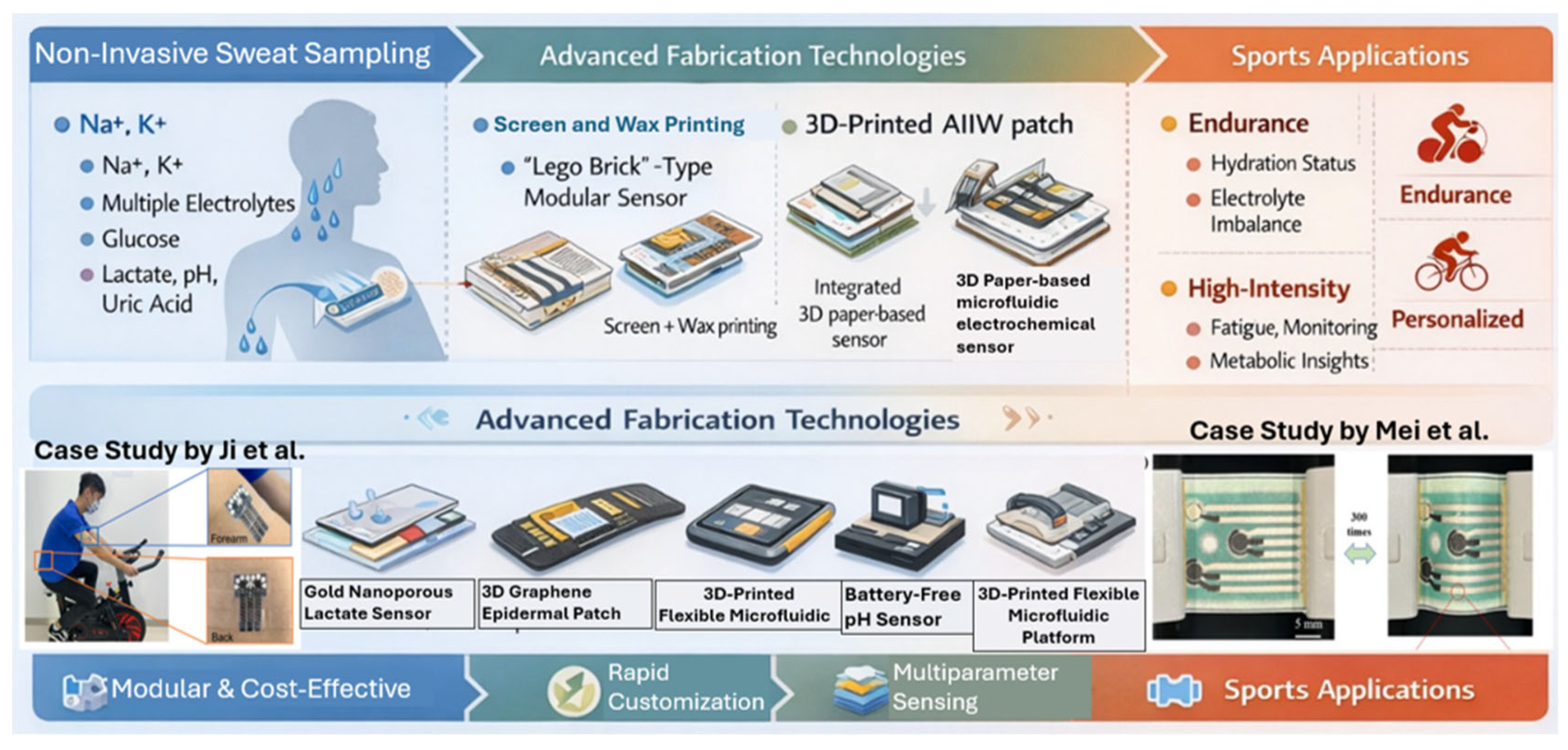
| Study | Target Analytes/Parameters | Fabrication & System | Sports Relevance | Relative Advantages | Current Limitations | References |
|---|---|---|---|---|---|---|
| Ji et al. | Na+, K+ | Screen + wax printing, modular paper/PET system | Endurance sports, prolonged exercise, and hydration monitoring | Modular and scalable architecture; low-cost manufacturing; suitable for multiplex sweat analysis | Limited integration of advanced data analytics and multimodal sensing | [99] |
| Kim et al. | Multiple electrolytes | 3D-printed AIIW patch with microfluidics | Personalized training, endurance, and team sports | Highly customizable 3D-printed design; multiplex biomarker monitoring | Dependence on fabrication precision and user-specific fitting | [100] |
| Mei et al. | Multiple sweat analytes | 3D paper-based microfluidic electrochemical sensor | General fitness, endurance exercise | Simple fabrication process and wireless real-time monitoring capability | Limited long-term validation under intensive sports conditions | [101] |
| Chen et al. | Sweat rate, glucose, lactate, and uric acid | 3D-printed microfluidics with single-atom catalysts | High-intensity training, metabolic monitoring | High analytical sensitivity with quantitative in situ biochemical analysis | Increased system complexity due to catalyst integration and microfluidics | [74] |
| Wu et al. | Lactate, temperature | Nanoporous gold electrodes with LOx | High-intensity and interval sports | Accurate lactate sensing with temperature compensation; broad analytical range | Focused primarily on lactate monitoring rather than multimodal assessment | [102] |
| Asaduzzaman et al. | Glucose, lactate, pH, temperature | 3D graphene-based epidermal patch | Fatigue and metabolic stress monitoring | Multimodal physiological monitoring with signal-correction algorithms | Complex system integration and higher power/data-processing requirements | [106] |
| Padash et al. | Model drugs, ionic analytes | 3D-printed microfluidic device | Proof-of-concept for sports sweat analysis | Flexible microfluidic architecture demonstrating versatile transport behavior | Primarily proof-of-concept with limited physiological validation | [17] |
| NajafiKhoshnoo et al. | pH | Battery-free 3D-printed wireless system | Endurance sports, prolonged exertion | Battery-free operation and wireless communication; high user comfort | Restricted to a limited number of analytes and sensing functions | [88] |
| Song et al. | Multimodal physicochemical signals | 3D-printed epifluidic electronic skin | Performance and cognitive state monitoring | Integration of multimodal sensing with machine learning-assisted analysis | Computational complexity and limited large-scale validation studies | [104] |
| Galliani et al. | K+ (demonstrated) | Textile-integrated microfluidics via SLA | On-garment monitoring for endurance sports | Direct textile integration enabling continuous and unobtrusive monitoring | Limited analyte range demonstrated and potential textile durability concerns | [105] |
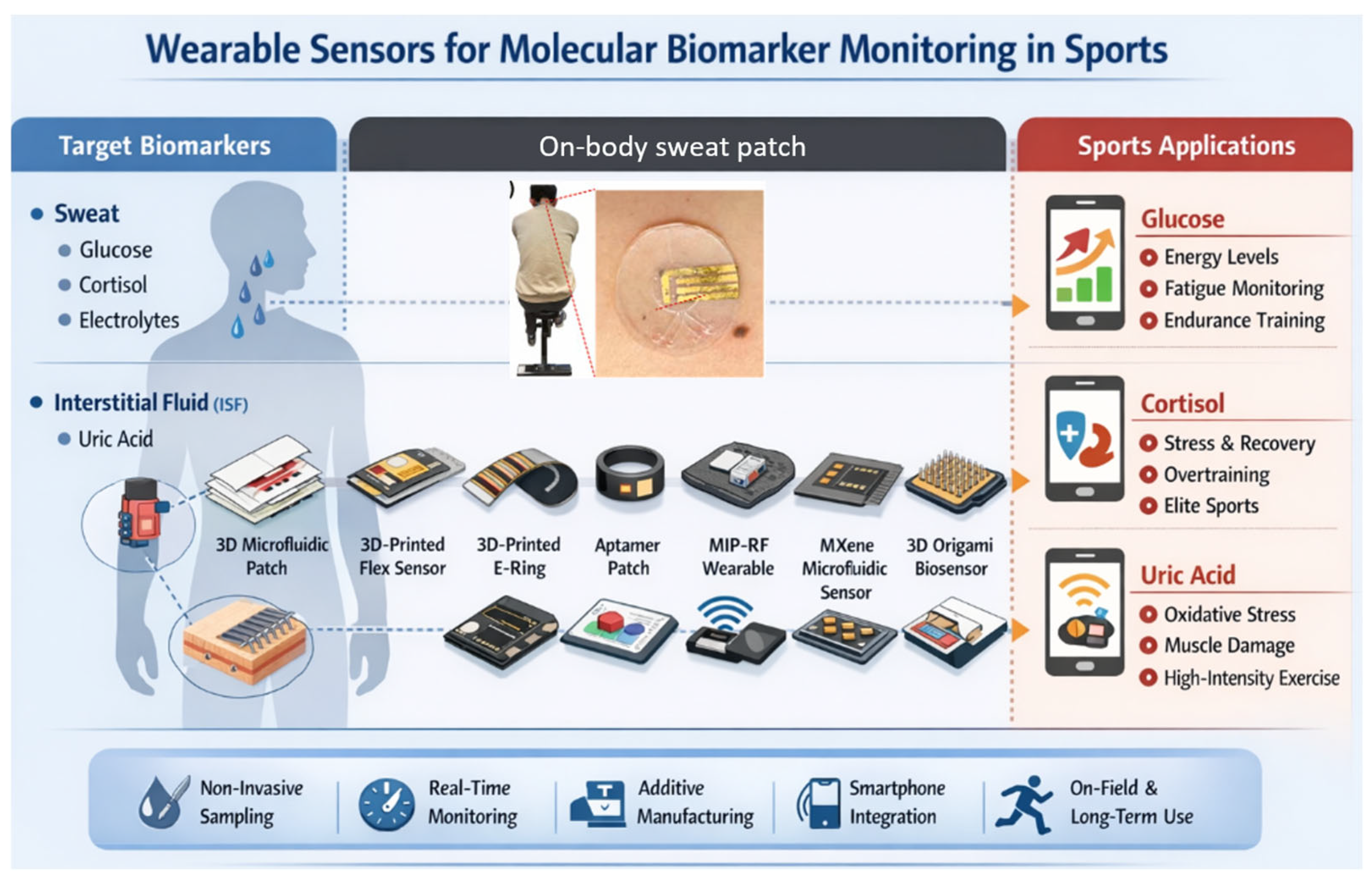
| Study | Target Biomarker(s) | Sensing/Fabrication Approach | Sports Relevance | Relative Advantages | Current Limitations | References |
|---|---|---|---|---|---|---|
| Cao et al. | Glucose (expandable to others) | Paper-based 3D microfluidic electrochemical device | Endurance sports, metabolic monitoring | Low-cost fabrication, simple operation, and effective sweat handling through 3D microfluidics | Limited biomarker panel and proof-of-concept stage validation | [107] |
| Nesaei et al. | Glucose | 3D-printed flexible electrochemical biosensor | Training load and energy balance | Enhanced sensitivity with reduced material consumption and flexible architecture | Primarily focused on glucose monitoring; broader applicability remains to be demonstrated | [108] |
| Katseli et al. | Glucose | 3D-printed electrochemical ring (nonenzymatic) | Field sports, continuous self-monitoring | Nonenzymatic detection, smartphone integration, and high mechanical robustness | Limited clinical validation under real-world sports conditions | [109] |
| Singh et al. | Cortisol (pH-compensated) | Aptamer-based electrochemical patch | Stress, overtraining, and recovery assessment | Ultra-low detection limit, high selectivity, and real-time sensor regeneration | Aptamer stability and long-term operational performance require further investigation | [110] |
| Chakoma et al. | Cortisol | MIP-RF wearable with NFC | Long-term stress monitoring in athletes | Battery-free operation, NFC, and reusable sensing platform | Limited multiplexing capability and dependence on MIP fabrication quality | [111] |
| Nah et al. | Cortisol | MXene–LBG microfluidic immunosensor | Acute and chronic stress during training | High sensitivity through MXene-enhanced conductivity and integrated microfluidics | Potential long-term MXene oxidation and fabrication complexity | [112] |
| Weng et al. | Cortisol | 3D microfluidic origami + smartphone readout | On-field stress screening | Portable smartphone-assisted analysis with ELISA-comparable performance | Requires additional sample-processing steps compared with fully integrated wearable systems | [1] |
| Parrilla et al. | Uric acid (ISF) | 3D-printed microneedle electrochemical patch | High-intensity and endurance sports | Direct access to interstitial fluid, reduced biofouling, and improved analytical reliability | Microneedle-based systems may face user acceptance and regulatory challenges | [3] |
| Study | Target Biomarker(s) | Sensing/Fabrication Approach | Sports Relevance | Key Advantage | References |
|---|---|---|---|---|---|
| Gajda et al. | Heart rate, arrhythmia-related signals | Wearable heart rate monitoring systems and ECG-based platforms | Athlete safety, arrhythmia detection, cardiovascular risk assessment | Established recommendations for next-generation sports cardiovascular monitoring systems | [22] |
| Al-Azzawi et al. | Heart rate, respiratory rate | 3D knitted smart textile T-shirt with integrated textile sensors | Continuous physiological monitoring during sports activities | High wearability and simultaneous HR–RR monitoring without restricting movement | [23] |
| Xie et al. | HR, ECG, PPG, blood pressure-related signals, vascular parameters | Multimodal wearable cardiovascular sensors integrating ECG, PPG, bioimpedance, flexible electronics, and wireless communication | Comprehensive cardiovascular assessment during exercise | Simultaneous acquisition of multiple cardiovascular parameters | [114] |
| Sadeghi et al. | Heart rate, SpO2, body temperature, vital signs | AI-assisted wearable physiological monitoring platform | Real-time athlete monitoring and abnormal physiological event detection | Machine learning improves interpretation and reduces false alarms | [115] |
| Van Oost et al. | Heart rate (HR) | Wearable ECG and PPG-based commercial devices | Exercise intensity monitoring, training load assessment | Demonstrated superior accuracy of chest-based systems during dynamic exercise compared to wrist-worn devices | [116] |
| Kobayashi et al. | Respiratory rate | Low-compression smart garment incorporating double-layer capacitive bending-angle sensors | Monitoring ventilatory response, aerobic performance, and recovery | Excellent agreement with spirometry while maintaining athlete comfort | [117] |
Disclaimer/Publisher’s Note: The statements, opinions and data contained in all publications are solely those of the individual author(s) and contributor(s) and not of MDPI and/or the editor(s). MDPI and/or the editor(s) disclaim responsibility for any injury to people or property resulting from any ideas, methods, instructions or products referred to in the content. |
© 2026 by the authors. Licensee MDPI, Basel, Switzerland. This article is an open access article distributed under the terms and conditions of the Creative Commons Attribution (CC BY) license.
Share and Cite
Akkad, H.; Ciftci, F.; Ahlatcıoğlu Özerol, E.; Kizilkurtlu, A.A. From Static to Dynamic: The Convergence of Nanomaterials and 3D/4D Bioprinting for Adaptive Wearable Sports Biosensors. Biosensors 2026, 16, 392. https://doi.org/10.3390/bios16070392
Akkad H, Ciftci F, Ahlatcıoğlu Özerol E, Kizilkurtlu AA. From Static to Dynamic: The Convergence of Nanomaterials and 3D/4D Bioprinting for Adaptive Wearable Sports Biosensors. Biosensors. 2026; 16(7):392. https://doi.org/10.3390/bios16070392
Chicago/Turabian StyleAkkad, Haya, Fatih Ciftci, Esma Ahlatcıoğlu Özerol, and Ahmet Akif Kizilkurtlu. 2026. "From Static to Dynamic: The Convergence of Nanomaterials and 3D/4D Bioprinting for Adaptive Wearable Sports Biosensors" Biosensors 16, no. 7: 392. https://doi.org/10.3390/bios16070392
APA StyleAkkad, H., Ciftci, F., Ahlatcıoğlu Özerol, E., & Kizilkurtlu, A. A. (2026). From Static to Dynamic: The Convergence of Nanomaterials and 3D/4D Bioprinting for Adaptive Wearable Sports Biosensors. Biosensors, 16(7), 392. https://doi.org/10.3390/bios16070392