Catalytic Reduction of H2O2 by Polyvinylpyrrolidone Nickel Oxide Nanozymatic Activity and Colorimetric Sensing of Ascorbic Acid



Abstract
1. Introduction
2. Experimental
2.1. Material and Reagents
2.2. Apparatus
2.3. Preparation of PVP-NiONPs
2.4. ROS Generated by PVP-NiONPs and H2O2 Oxidize OPD
2.5. Optimizing of Conditions of Enzyme-like Activity of PVP-NiONPs
2.5.1. Effect of pH on Oxidation of OPD
2.5.2. Effect of Time on Oxidation of OPD
2.5.3. Effect of Temperature on Oxidation of OPD
2.5.4. Effect of the H2O2 Concentration on Oxidation of OPD
2.5.5. Effect of the OPD Concentration
2.5.6. ROS Confirmation Using Radical Scavengers
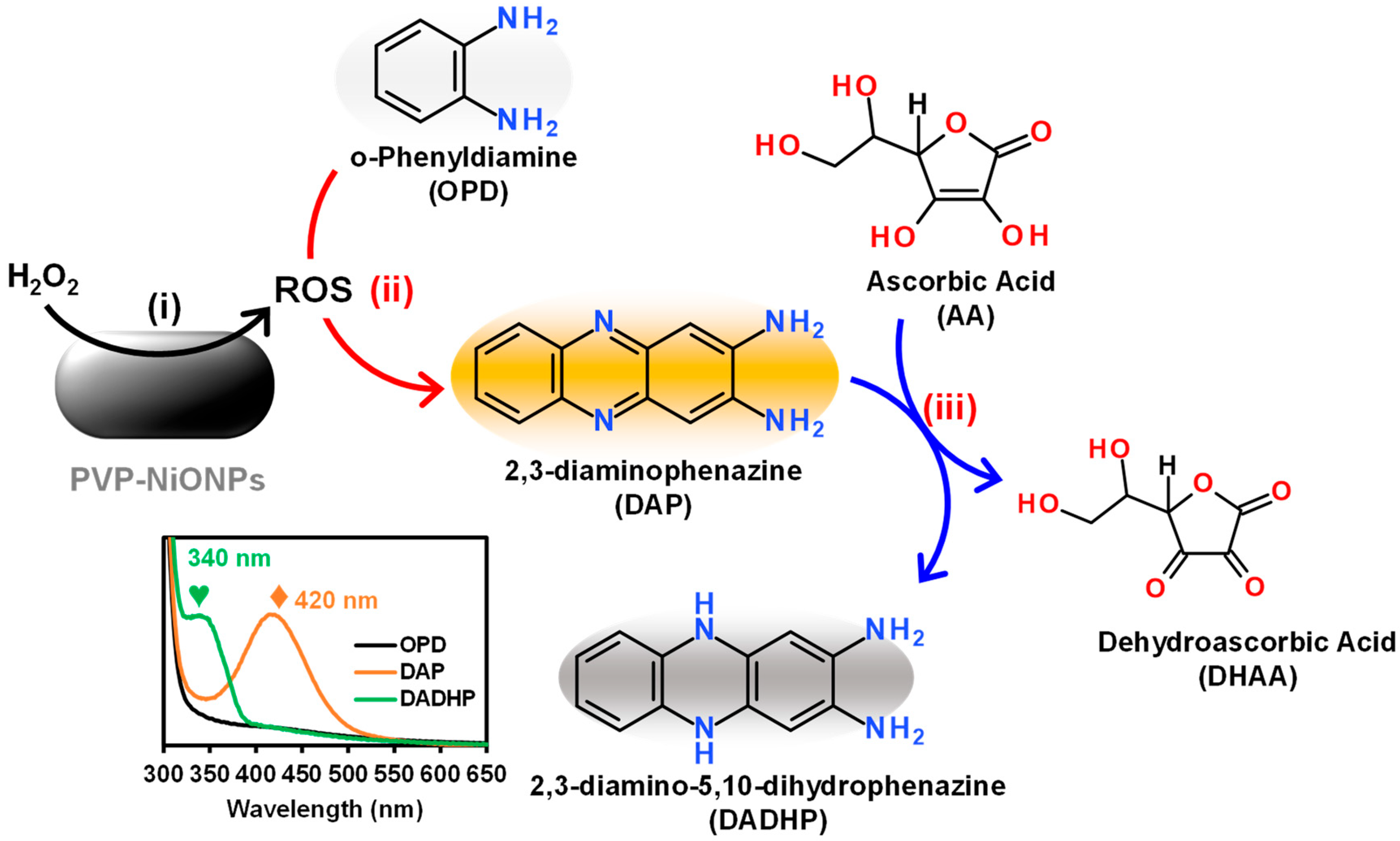
2.5.7. Detection of Ascorbic Acid, Scheme 1
2.5.8. Selectivity, Reproducibility, and Applications
3. Results and Discussion
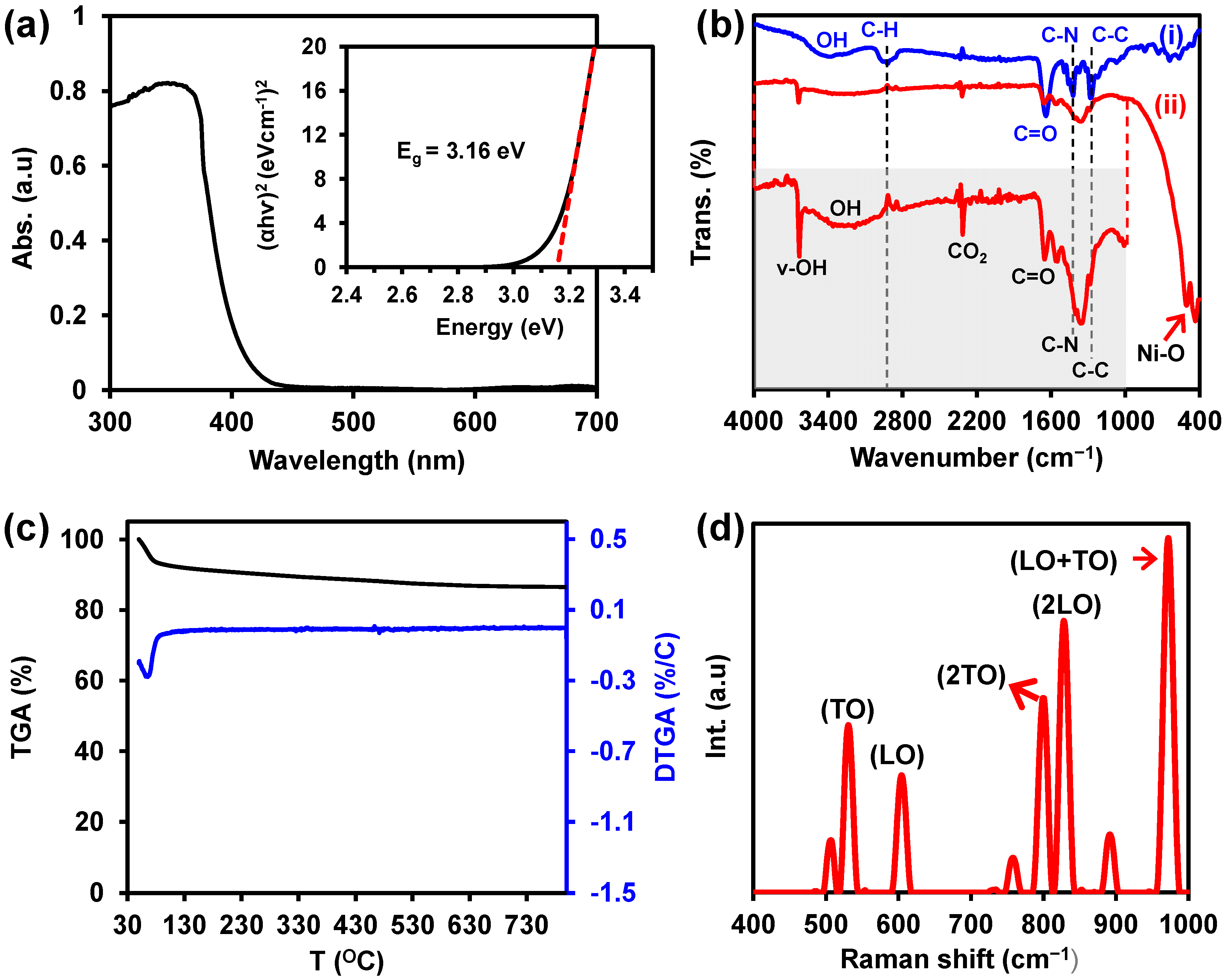
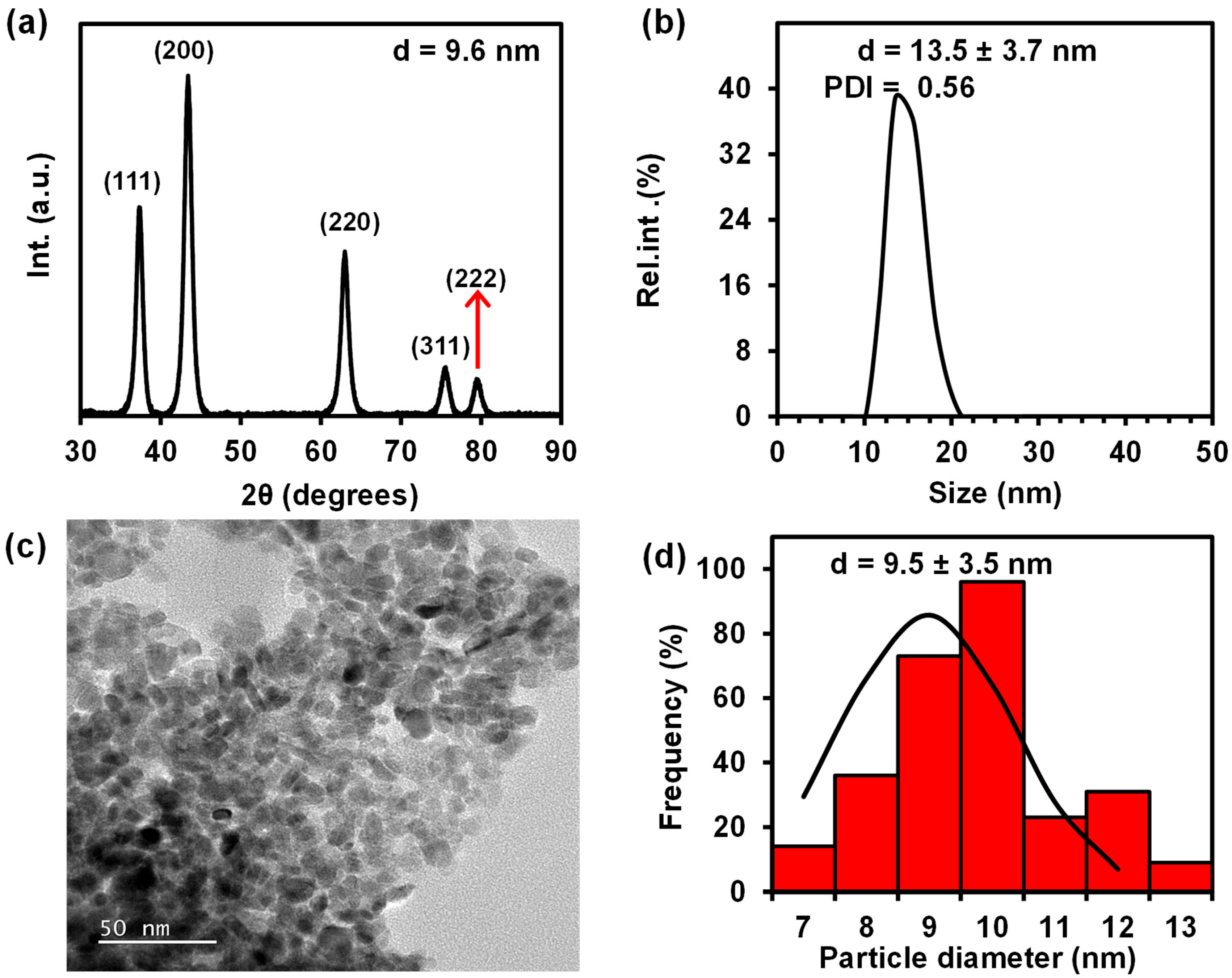
3.1. Characterization of PVP-NiONPs
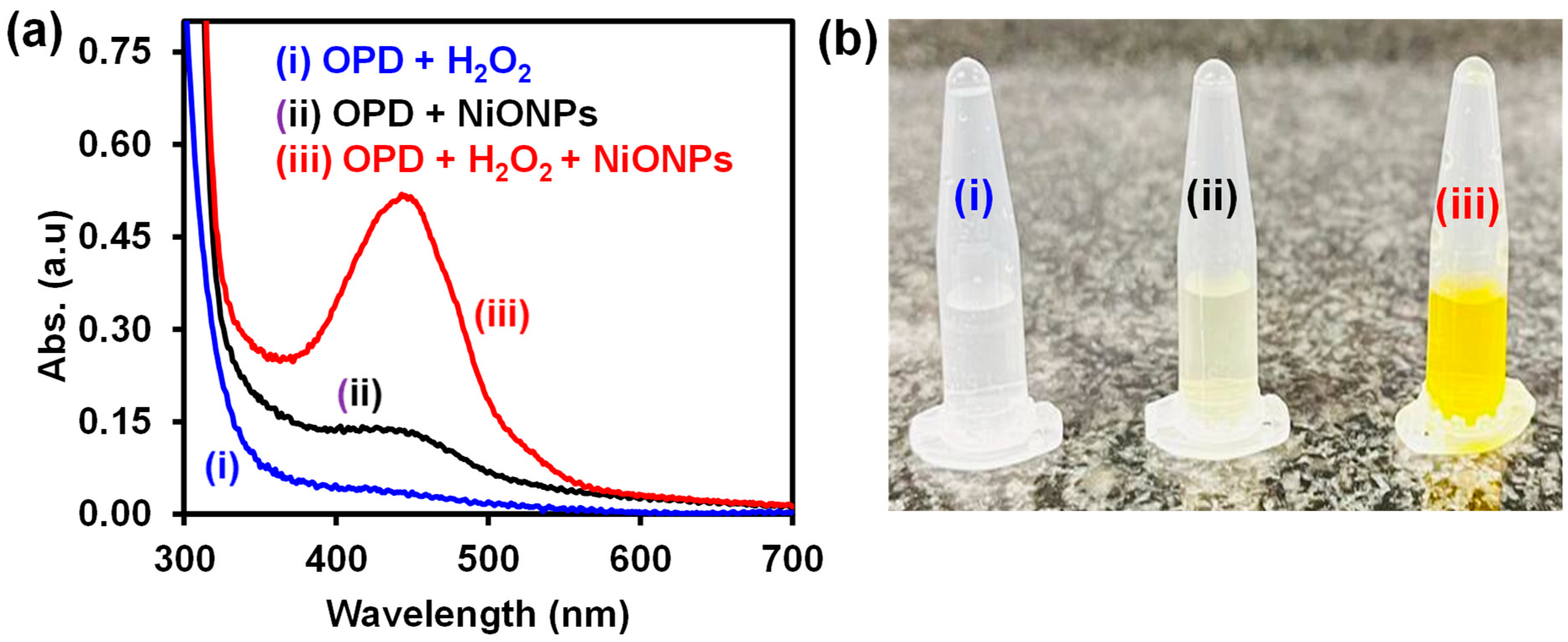
3.2. Peroxidase-like Activity of PVP-NiONPs
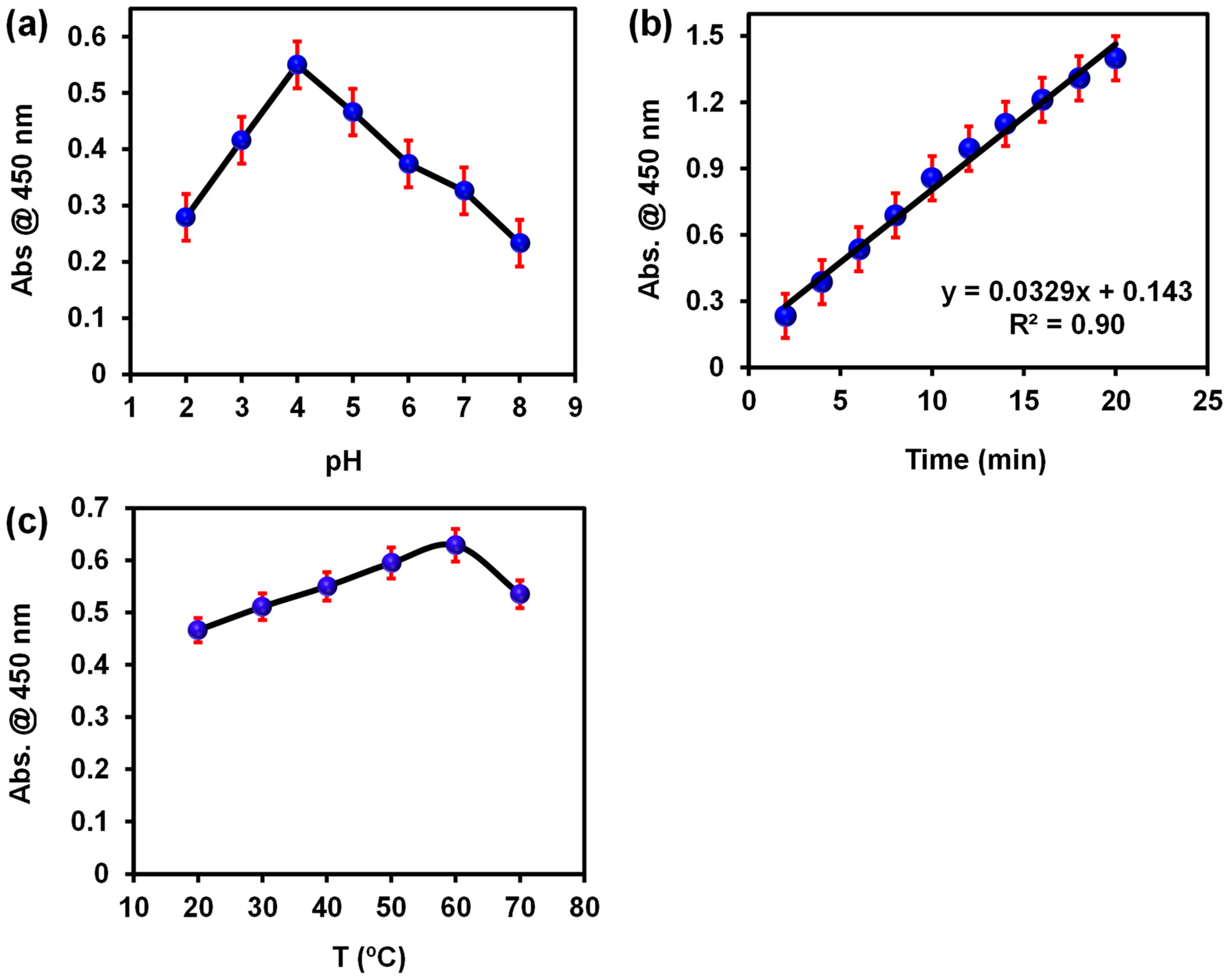
3.3. Conditions Affecting Peroxidase-like Activity of PVP-NiONPs
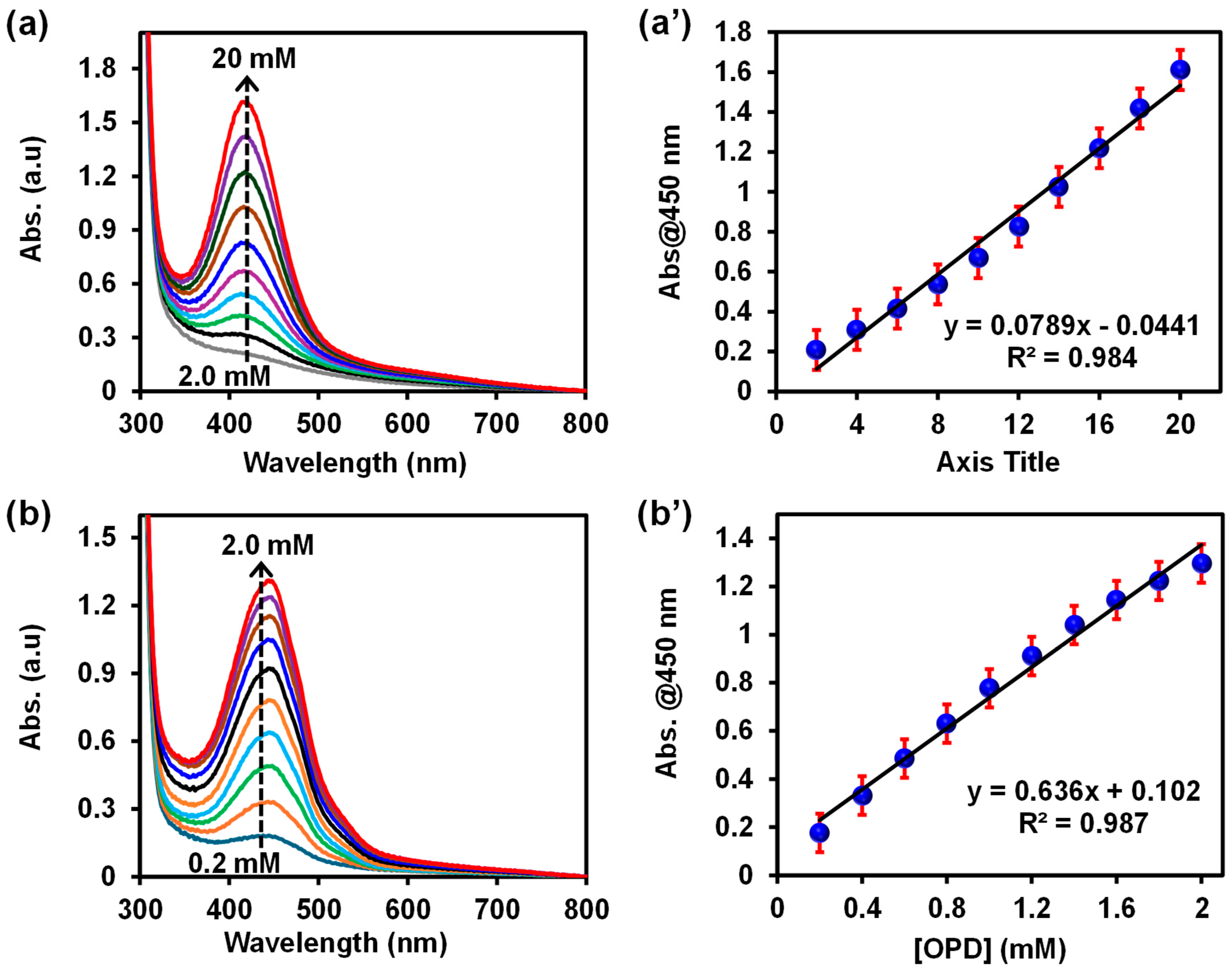
3.4. Effect of Substrate (OPD and H2O2) Concentration
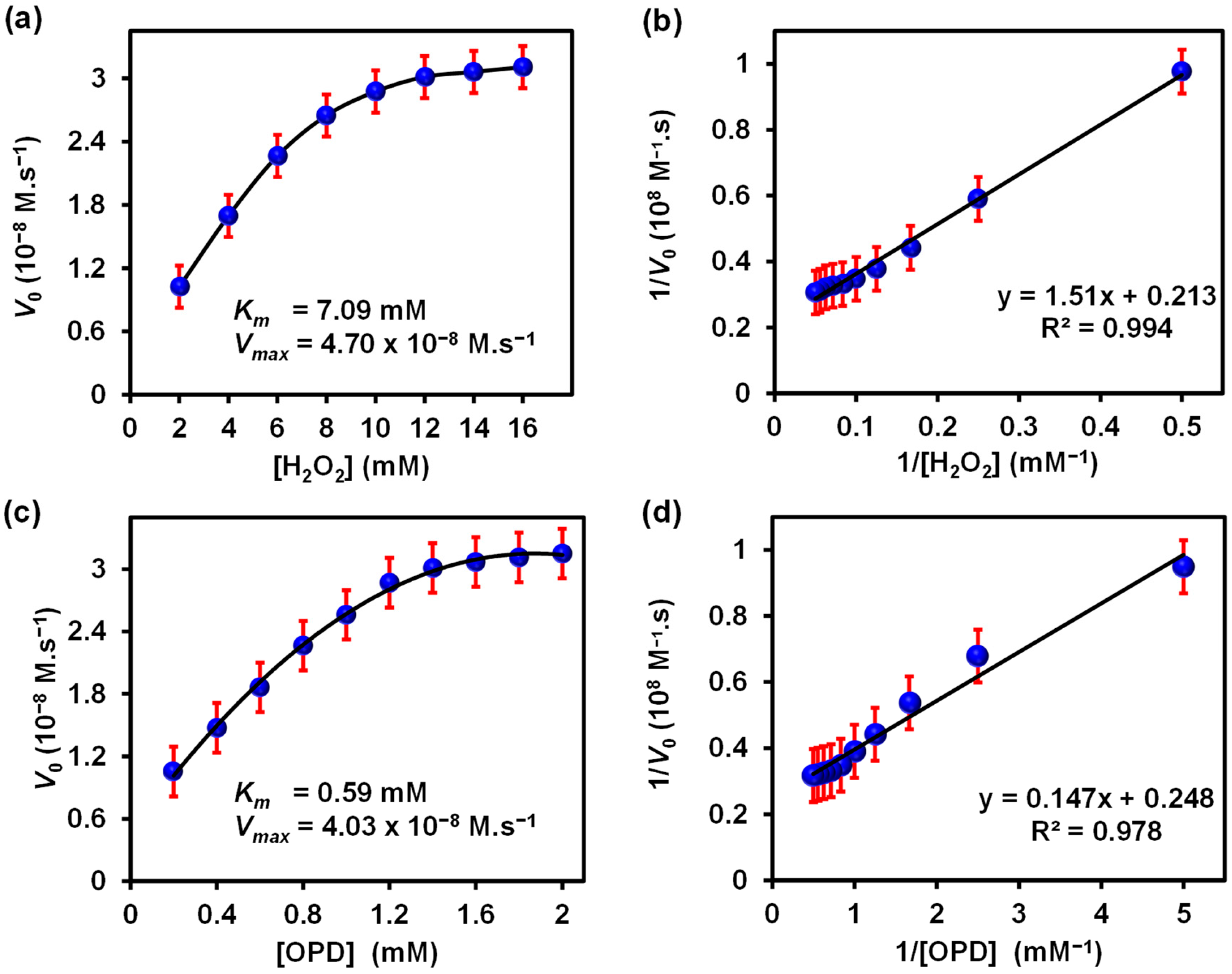
3.5. Steady-State Kinetic Analysis of PVP-NiONPs
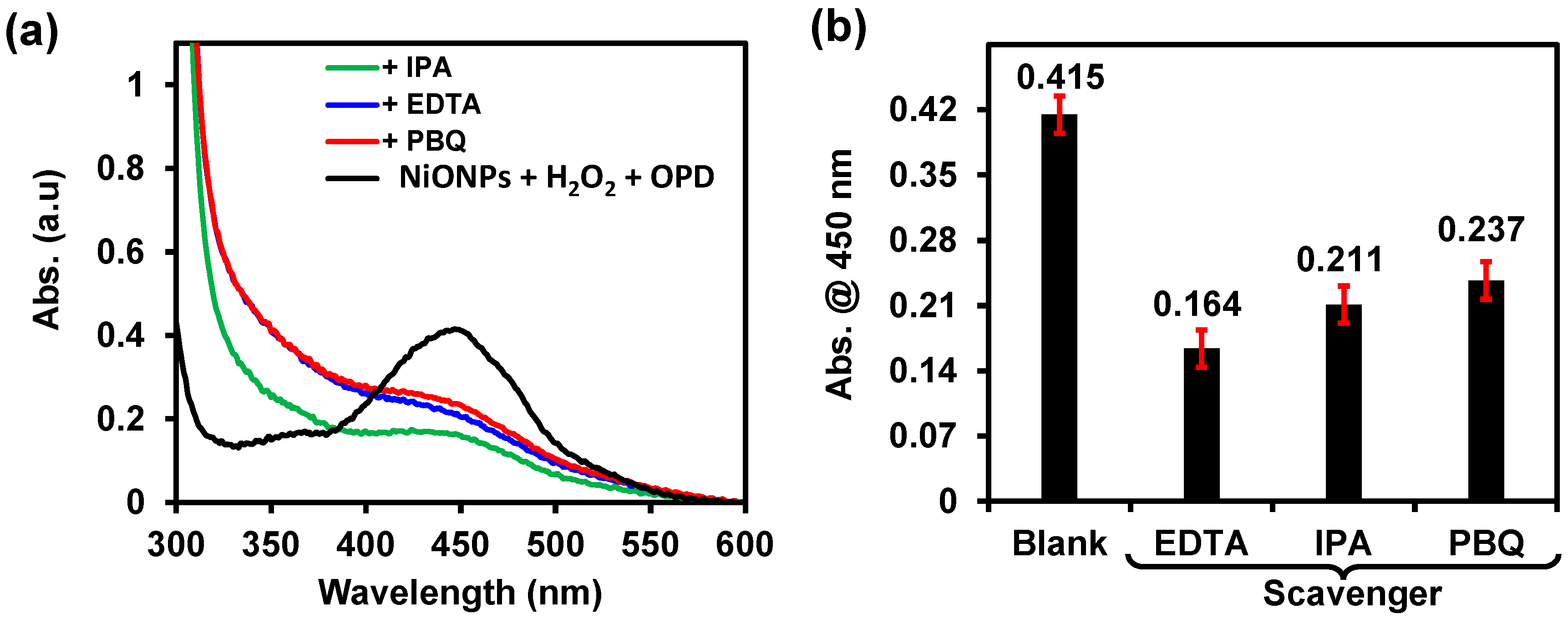
3.6. Confirming Reaction Oxygen Radical Species (ROS) Generation
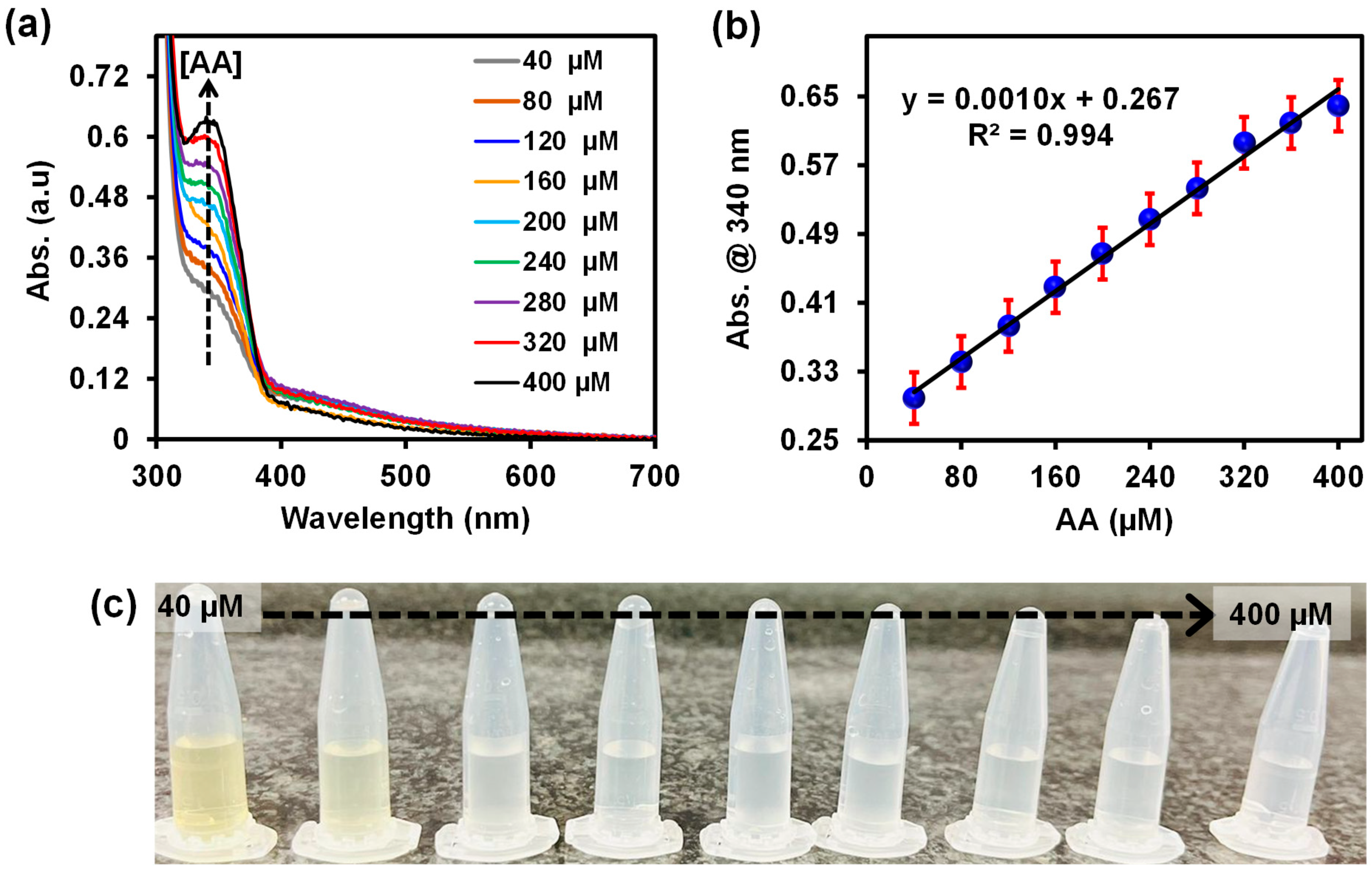
3.7. Colorimetric Detection of Ascorbic Acid
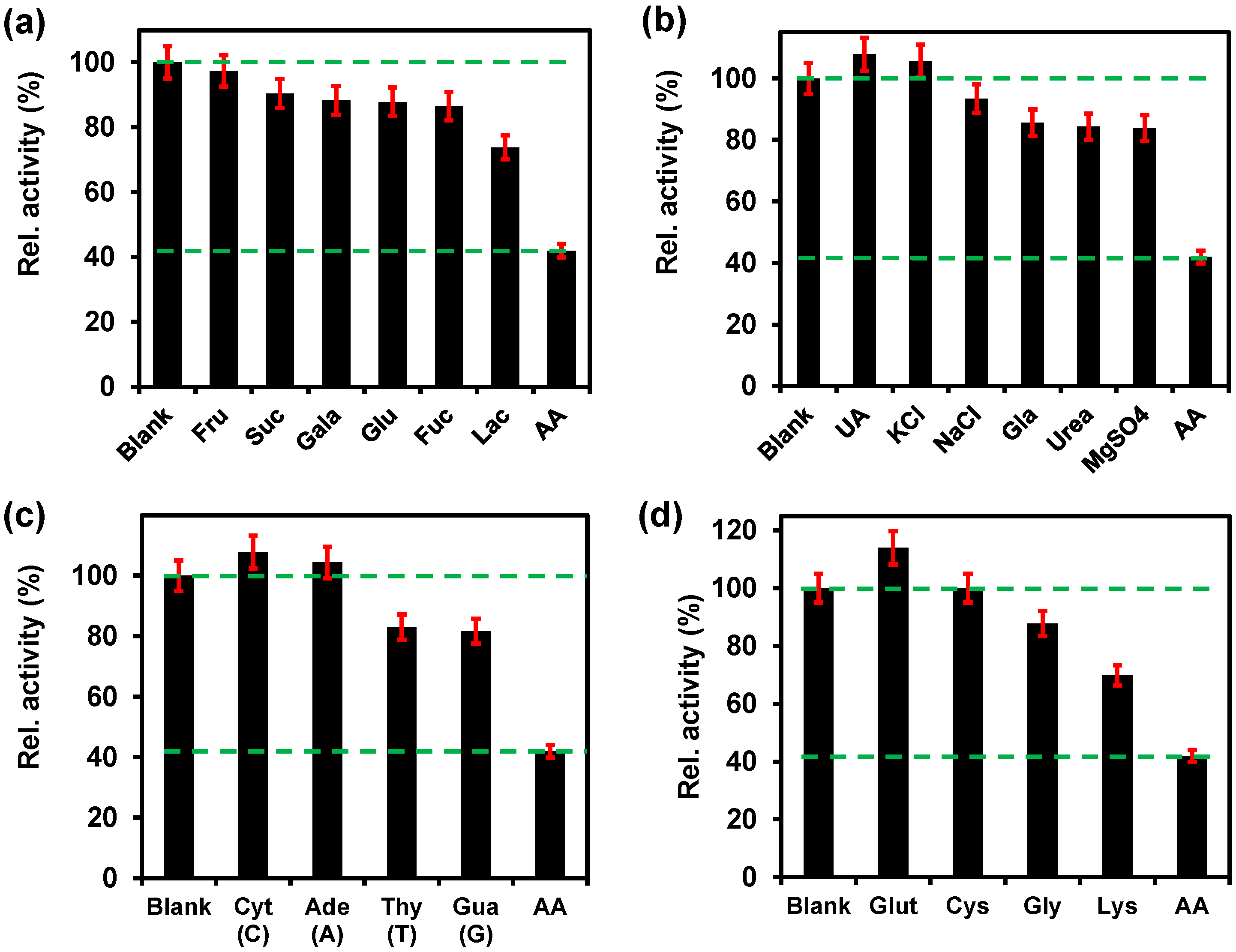
3.8. Selectivity, Reproducibility, and Applicability
4. Conclusions
Supplementary Materials
Author Contributions
Funding
Institutional Review Board Statement
Informed Consent Statement
Data Availability Statement
Acknowledgments
Conflicts of Interest
References
- Agwu, E.; Ezihe, C.; Kaigama, G. Antioxidant roles/functions of ascorbic acid (Vitamin C). In Ascorbic Acid—Biochemistry and Functions; Kurkut, A., Gelen, V., Eds.; IntechOpen: London, UK, 2024; Chapter 4. [Google Scholar]
- Kükürt, A.; Gelen, V. Understanding Vitamin C: Comprehensive examination of its biological significance and antioxidant properties. In Ascorbic Acid: Biochemistry and Functions; Kurkut, A., Gelen, V., Eds.; IntechOpen: London, UK, 2024; Chapter 1. [Google Scholar]
- Guo, D.; Liao, Y.; Na, J.; Wu, L.; Yin, Y.; Mi, Z.; Fang, S.; Liu, X.; Huang, Y. The involvement of ascorbic acid in cancer treatment. Molecules 2024, 29, 2295. [Google Scholar] [CrossRef] [Scilit]
- Celin, T.; Gandhimathi, S. Synthesis and characterization of bipyridine modified Cu-POMs as chemosensors for the detection of ascorbic acid and hydrogen sulphide. J. Mol. Struct. 2025, 1326, 141071. [Google Scholar] [CrossRef] [Scilit]
- Caban, M.; Lenard, K.; Nowak, A.; Dzimitrowicz, A. New method for quantification of ascorbic acid in fruit juices with an application of ionic liquids as phase modifier in reverse phase HPLC. Microchem. J. 2025, 215, 114440. [Google Scholar] [CrossRef] [Scilit]
- Jabbar, S.; Abid, M.; Hu, B.; Hashim, M.M.; Saeeduddin, M.; Lei, S.; Wu, T.; Zeng, X. Influence of sonication and high hydrostatic pressure on the quality of carrot juice. Int. J. Food Sci. Technol. 2014, 49, 2449–2457. [Google Scholar] [CrossRef] [Scilit]
- Kim, W.-S.; Dahlgren, R.L.; Moroz, L.L.; Sweedler, J.V. Ascorbic acid assays of individual neurons and neuronal tissues using capillary electrophoresis with laser-induced fluorescence detection. Anal. Chem. 2002, 74, 5614–5620. [Google Scholar] [CrossRef] [Scilit] [PubMed]
- Verdini, R.A.; Lagier, C.M. Voltammetric iodometric titration of ascorbic acid with dead-stop end-point detection in fresh vegetables and fruit samples. J. Agric. Food Chem. 2000, 48, 2812–2817. [Google Scholar] [CrossRef] [Scilit]
- Pilarski, B.; Wyrzykowski, D. A novel approach to study ascorbic acid oxidation using hexavalent chromium species—Theoretical and practical perspectives of the use of potentiometric titration technique. Transit. Met. Chem. 2025, 50, 33–41. [Google Scholar] [CrossRef] [Scilit]
- Tee, E.S.; Young, S.I.; Ho, S.K.; Mizura, S.S. Determination of Vitamin C in fresh fruits and vegetables using the dye-titration and microfluorometric methods. Pertanika 1988, 11, 39–44. [Google Scholar]
- Aliabadi, F.; Zaimbashi, R. MnWO4/reduced graphene oxide/modified glassy carbon electrode for determination of ascorbic acid in the presence of vitamin B6 in the real sample. J. Environ. Bioanal. Electrochem. 2025, 1, 84–95. [Google Scholar] [CrossRef]
- Tajik, S.; Dourandish, Z.; Nejad, F.G.; Beitollahi, H. Evaluating the electrochemical detection of three antioxidants, ascorbic acid, salicylic acid, and glutathione by using a screen-printed carbon electrode modified with nanocomposite of cobalt nanosheets anchored on reduced graphene oxide. Monatshefte Für Chem. Chem. Mon. 2025, 156, 1119–1127. [Google Scholar] [CrossRef] [Scilit]
- Wang, G.; Tang, T.; Liu, R.; Li, J.; Xu, Y.; Liao, S. Novel electrochemical sensor based on Cu-MOF/MWCNT-COOH for the simultaneous detection of ascorbic acid and dopamine. Langmuir 2025, 41, 4102–4112. [Google Scholar] [CrossRef] [Scilit]
- Li, S.N.; Zhang, J.; Liu, Y.Q.; Zhou, K.P.; Jiang, X.Y.; Yu, J.G. Cobalt vanadate intertwined in carboxylated multiple-walled carbon nanotubes for simultaneous electrochemical detection of ascorbic acid, dopamine and uric acid. Talanta 2025, 282, 127038. [Google Scholar] [CrossRef] [Scilit]
- Wang, R.; Liang, Y.; Huang, H.; Su, C.; Pei, Y.; Jing, Y. The electrochemical detection of ascorbic acid constructed on CuO nanocubes with excellent sensitivity and wide linearity. J. Mol. Struct. 2025, 1328, 141314. [Google Scholar] [CrossRef] [Scilit]
- Kukreja, E.A.; Tripathi, R.M.; Chung, S.J. Colorimetric and smartphone-based dual modality sensing platform for detection of ascorbic acid. Sens. Actuator A Phys. 2025, 389, 116573. [Google Scholar] [CrossRef] [Scilit]
- Chen, Y.Y.; Sun, J.X.; Wang, A.J.; Mei, L.P.; Song, P.; Zhao, T.; Feng, J.J. Well-defined PtMn alloy/porous N-doped carbon nanoflowers with bifunctional activities for colorimetric/fluorescent dual-mode determination of ascorbic acid in juice beverages. Microchim. Acta 2025, 192, 583. [Google Scholar] [CrossRef] [Scilit]
- Kanwal, N.; Khan, M.; Khan, S.A.; Bari, A.; Ali, E.A.; Sun, W.; Rehman, T.; Nishan, U.; Badshah, A. Chitosan-stabilized copper oxide nanoparticles: A novel colorimetric approach for ascorbic acid sensing. Anal. Biochem. 2025, 702, 115855. [Google Scholar] [CrossRef] [Scilit]
- Dong, W.; Liu, J.; Lan, H.; Lu, T.; Liu, Y.; Ran, Z.; Wang, Z.; Cao, H.; Shi, W.; Chen, G. A novel detection mode for ascorbic acid with high selectivity based on peroxidase mimetic system. Microchem. J. 2025, 209, 112753. [Google Scholar] [CrossRef] [Scilit]
- Mathur, P.; Singh, R.; Kumawat, M.; Srinivas, S.P.; Daima, H.K. Trends in designer-made metal oxide nanozymes for environmental applications. Inorg. Chem. Comm. 2025, 181, 115190. [Google Scholar] [CrossRef] [Scilit]
- Chen, S.; Yu, Z.; Wang, Y.; Tian, S.; Wei, Q.; Tang, D. Pioneering food analysis: Transformative antioxidant testing with colorimetric assays using Co–Mn bimetallic oxide nanozyme. Anal. Chim. Acta 2025, 1333, 343389. [Google Scholar] [CrossRef] [Scilit] [PubMed]
- Huang, S.; Yang, P.; Yuan, Y.; Wan, S.; Xu, J.; Fu, J.; Tan, Q.; Zhang, J. Nanozyme-Based Therapy in Gout. ACS Appl. Mater. Interfaces 2025, 17, 39863–39879. [Google Scholar] [CrossRef] [Scilit] [PubMed]
- Fite, M.C.; Karse, S.D.; Gode, L.M. Optical and photocatalytic properties of nickel oxide nanoparticles. J. Cryst. Growth 2025, 660, 128163. [Google Scholar] [CrossRef] [Scilit]
- Mahmud, M.; Rahman, M.S. A concise review on applications of nickel oxide nanoparticles and their extraction parts. Int. J. Adv. Biol. Biomed. Res. 2025, 13, 317–340. [Google Scholar] [CrossRef]
- Isho, R.D.; Mohammed, N.M.S.; Idrees, S.A. Bimetallic oxide (CoNi2O4) nanozyme as ROS independent for ascorbic acid detection with computational study. Talanta 2025, 295, 128315. [Google Scholar] [CrossRef] [Scilit] [PubMed]
- Pham, T.-H.; Ngo, X.-D.; Van Tuyen, N.; Quang, C.X.; De, P.-C.; Van Tran, T.; Linh, N.P.D.; Hoang, V.-T.; Le, A.-T. Insight into the oxidase-mimicking activity enhancement of MnO2 nanozymes by Co ion-doping for colorimetric sensor assays. RSC Adv. 2025, 15, 34537–34550. [Google Scholar] [CrossRef] [Scilit]
- Menamo, D.S.; Ayele, D.W.; Ali, M.T. Green synthesis, characterization and antibacterial activity of copper nanoparticles using L-ascorbic acid as a reducing agent. Ethiop. J. Sci. Technol. 2017, 10, 209–220. [Google Scholar] [CrossRef] [Scilit]
- Makuła, P.; Pacia, M.; Macyk, W. How to correctly determine the band gap energy of modified semiconductor photocatalysts based on UV–Vis spectra. J. Phys. Chem. Lett. 2018, 9, 6814–6817. [Google Scholar] [CrossRef] [Scilit]
- Ahmed, T.Y.; Saeed, S.R.; Aziz, S.B.; Abdullah, O.G. Enhancing electronic and optical properties of NiO using Cu-doping: A DFT approach for band gap reduction. Oxf. Open Mater. Sci. 2025, 5, itaf009. [Google Scholar] [CrossRef] [Scilit]
- Patel, M.; Park, S.H.; Kim, J. Optical, electrical and photoresponse data of flexible and high-performing NiO/ZnO ultraviolet photodetector. Data Brief 2018, 17, 520–525. [Google Scholar] [CrossRef] [Scilit]
- Litvintseva, K.; Kaichev, V. Operando infrared spectroscopy study of dehydration of isopropanol to propylene over a monolayer V2O5/TiO2 catalyst. React. Kinet. Mech. Catal. 2025, 138, 2741–2758. [Google Scholar] [CrossRef] [Scilit]
- Yousaf, S.; Zulfiqar, S.; Shahi, M.N.; Warsi, M.F.; Al-Khalli, N.F.; Aboud, M.F.A.; Shakir, I. Tuning the structural, optical and electrical properties of NiO nanoparticles prepared by wet chemical route. Ceram. Int. 2020, 46, 3750–3758. [Google Scholar] [CrossRef] [Scilit]
- Gondal, M.A.; Saleh, T.A.; Drmosh, Q.A. Synthesis of nickel oxide nanoparticles using pulsed laser ablation in liquids and their optical characterization. Appl. Surf. Sci. 2012, 258, 6982–6986. [Google Scholar] [CrossRef] [Scilit]
- Salavati-Niasari, M.; Mir, N.; Davar, F. Synthesis and characterization of NiO nanoclusters via thermal decomposition. Polyhedron 2009, 28, 1111–1114. [Google Scholar] [CrossRef] [Scilit]
- Silviya, N.; Mahalakshmi, S. A study on the oxidative property using thermogravimetric analysis of NiO nanoparticles prepared by a simple wet chemical method. Chem. Phys. Impact 2024, 8, 100613. [Google Scholar] [CrossRef] [Scilit]
- Gebretinsae, H.G.; Tsegay, M.G.; Nuru, Z.Y. Biosynthesis of nickel oxide (NiO) nanoparticleiss from cactus plant extract. Mater. Today Proc. 2020, 36, 566–570. [Google Scholar] [CrossRef] [Scilit]
- Thema, F.T.; Manikandan, E.; Gurib-Fakim, A.; Maaza, M. Single phase Bunsenite NiO nanoparticles green synthesis by Agathosma betulina natural extract. J. Alloys Compd. 2016, 657, 655–661. [Google Scholar] [CrossRef] [Scilit]
- Peck, M.A.; Langell, M.A. Comparison of nanoscaled and bulk NiO structural and environmental characteristics by XRD, XAFS, and XPS. Chem. Mater. 2012, 24, 4483–4490. [Google Scholar] [CrossRef] [Scilit]
- Qiao, H.; Wei, Z.; Yang, H.; Zhu, L.; Yan, X. Preparation of NiO nanoparticles by anodic arc plasma method. J. Nanomater. 2009, 2009, 795928. [Google Scholar] [CrossRef] [Scilit]
- Kathiravan, P.; Thillaivelavan, K.; Viruthagiri, G.; Shanmugam, N. Investigations of thermal, structural, optical, morphological and magnetic properties of chemical precipitation synthesized NiO nanoparticles for optoelectronic applications. J. Indian Chem. Soc. 2024, 101, 101171. [Google Scholar] [CrossRef] [Scilit]
- Al Boukhari, J.; Bitar, Z.; Azab, A.A.; Awad, R.; Rekaby, M. Synthesis and physical properties of pure NiO and Ni1–2xMgxMxO (M = Cu, Ru) nanoparticles: Role of growth temperature. J. Alloys Compd. 2023, 969, 172500. [Google Scholar] [CrossRef] [Scilit]
- Kunjir, S.; Pathare, P.; Sharma, S.; Malayandi, R.; Malgave, A.; Natesan, S. Development and validation of particle size measurement for mesalamine nanocrystals using Dynamic Light Scattering and Microscopic Techniques. BioNanoScience 2025, 15, 27. [Google Scholar] [CrossRef] [Scilit]
- Rehman, H.U.; Khan, H.; Abbasi, Z.; Tahar, L.B.; Khan, R.A.; Waseem, A.; Shaikh, A.J. DLS-based optimization of ZnS-CoS Nanoparticles with Enhanced energy and power density for supercapacitor applications and validation by AI models. Mater. Adv. 2025, 6, 7847–7865. [Google Scholar] [CrossRef] [Scilit]
- Dheeraj; Rana, L.; Hundal, G. New bis[MoO2] and [MoO(O2)] compounds: An artificial enzyme with peroxidase activity against o-phenyldiamine and dopamine. J. Inorg. Biochem. 2023, 244, 112231. [Google Scholar] [CrossRef] [Scilit] [PubMed]
- Vallabani, N.V.S.; Karakoti, A.S.; Singh, S. ATP-mediated intrinsic peroxidase-like activity of Fe3O4-based nanozyme: One step detection of blood glucose at physiological pH. Coll. Surf. B Biointerfaces 2017, 153, 52–60. [Google Scholar] [CrossRef] [Scilit]
- Drozd, M.; Pietrzak, M.; Parzuchowski, P.G.; Malinowska, E. Pitfalls and capabilities of various hydrogen donors in evaluation of peroxidase-like activity of gold nanoparticles. Anal. Bioanal. Chem. 2016, 408, 8505–8513. [Google Scholar] [CrossRef] [Scilit] [PubMed]
- Han, Y.; Luo, L.; Zhang, L.; Kang, Y.; Sun, H.; Dan, J.; Sun, J.; Zhang, W.; Yue, T.; Wang, J. Oxidase-like Fe–Mn bimetallic nanozymes for colorimetric detection of ascorbic acid in kiwi fruit. LWT Food Sci. Technol. 2022, 154, 112821. [Google Scholar] [CrossRef] [Scilit]
- Liu, X.; Wang, Q.; Zhao, H.; Zhang, L.; Su, Y.; Lv, Y. BSA-templated MnO2 nanoparticles as both peroxidase and oxidase mimics. Analyst 2012, 137, 4552–4558. [Google Scholar] [CrossRef] [Scilit]
- Hu, Y.; Wang, J.; Wu, Y. A simple and rapid chemosensor for colorimetric detection of dimethoate pesticide based on the peroxidase-mimicking catalytic activity of gold nanoparticles. Anal. Methods 2019, 11, 5337–5347. [Google Scholar] [CrossRef] [Scilit]
- Chen, J.; Wei, X.; Tang, H.; Munyemana, J.C.; Guan, M.; Zhang, S.; Qiu, H. Deep eutectic solvents-assisted synthesis of ZnCo2O4 nanosheets as peroxidase-like nanozyme and its application in colorimetric logic gate. Talanta 2021, 222, 121680. [Google Scholar] [CrossRef] [Scilit]
- Alizadeh, N.; Salimi, A.; Hallaj, R.; Fathi, F.; Soleimani, F. CuO/WO3 nanoparticles decorated graphene oxide nanosheets with enhanced peroxidase-like activity for electrochemical cancer cell detection and targeted therapeutics. Mater. Sci. Eng. C 2019, 99, 1374–1383. [Google Scholar] [CrossRef] [Scilit]
- Yan, L.-X.; Yan, Z.-Y.; Zhao, X.; Chen, L.-J.; Yan, X.-P. Highly efficient persistent luminescent nanozymes-based luminescence-colorimetric dual-mode sensor for total antioxidant capacity assay. Sens. Actuator B Chem. 2024, 405, 135333. [Google Scholar] [CrossRef] [Scilit]
- Bu, X.; Fu, Y.; Jin, H.; Gui, R. Specific enzymatic synthesis of 2,3-diaminophenazine and copper nanoclusters used for dual-emission ratiometric and naked-eye visual fluorescence sensing of choline. New J. Chem. 2018, 42, 17323. [Google Scholar] [CrossRef] [Scilit]
- Wu, A.; Ding, H.; Zhang, W.; Rao, H.; Wang, L.; Chen, Y.; Lu, C.; Wang, X. A colorimetric and fluorescence turn-on probe for the detection of ascorbic acid in living cells and beverages. Food Chem. 2021, 363, 130325. [Google Scholar] [CrossRef] [Scilit] [PubMed]
- Chen, H.; Liu, Y.; Li, H.; Zhang, Y.; Yao, S. Non-oxidation reduction strategy for highly selective detection of ascorbic acid with dual-ratio fluorescence and colorimetric signals. Sens. Actuator B Chem. 2019, 281, 983–988. [Google Scholar] [CrossRef] [Scilit]
- Chandra, S.; Singh, V.K.; Yadav, P.K.; Bano, D.; Kumar, V.; Pandey, V.K.; Talat, M.; Hasan, S.H. Mustard seeds derived fluorescent carbon quantum dots and their peroxidase-like activity for colorimetric detection of H2O2 and ascorbic acid in a real sample. Anal. Chim. Acta 2019, 1054, 145–156. [Google Scholar] [CrossRef] [Scilit] [PubMed]
- Lian, Q.; Zheng, X.; Peng, G.; Liu, Z.; Chen, L.; Wu, S. Oxidase mimicking of CuMnO2 nanoflowers and the application in colorimetric detection of ascorbic acid. Coll. Surf. A Physicochem. Eng. Asp. 2022, 652, 129887. [Google Scholar] [CrossRef] [Scilit]
- Badshah, A.; Noreen, S.; Shah, M.; Asad, M.; Ullah, R.; Ali, E.A.; Iqbal, J.; Sun, W.; Nishan, U. From waste to wealth: Iron oxide doped hydroxyapatite-based biosensor for the colorimetric detection of ascorbic acid. RSC Adv. 2024, 14, 19539–19549. [Google Scholar] [CrossRef] [Scilit]
- Tureček, F.; Chen, X.; Hao, C. Where does the electron go? Electron distribution and reactivity of peptide cation radicals formed by electron transfer in the gas phase. J. Am. Chem. Soc. 2008, 130, 8818–8833. [Google Scholar] [CrossRef] [Scilit]
- Xu, P.; Zheng, Y.; Zhu, X.; Li, S.; Zhou, C. L-lysine and L-arginine inhibit the oxidation of lipids and proteins of emulsion sausage by chelating iron ion and scavenging radical. Asian-Australas. J. Anim. Sci. 2017, 31, 905–913. [Google Scholar] [CrossRef] [Scilit]



| Nanozymes | Km (mM) | Vmax (×10−8 M.s−1) | ||
|---|---|---|---|---|
| H2O2 | OPD | H2O2 | OPD | |
| PVP-NiONPsTW | 7.09 | 0.59 | 4.70 | 4.03 |
| BSA-MnO2 NPs [48] | 0.12 | 0.31 | 5.71 | 8.21 |
| HRP [48] | 0.34 | 0.59 | 9.48 | 4.65 |
| cc-AuNPs [49] | 159.7 | 0.69 | 59.7 | 45.4 |
| ZnCo2O4 nanosheet [50] | 0.23 | 0.40 | 4.75 | 5.90 |
| CuO/WO3-GO [51] | 277 | 0.152 | 19.8 | 15.8 |
| CoO-GO [52] | 773 | 0.328 | 19.7 | 13.0 |
| Nanozymes | Linear Range (µM) | LoD (µM) | LoQ (µM) |
|---|---|---|---|
| PVP-NiONPsTW | 40–400 | 0.11 | 0.36 |
| CoNi2O4 [21] | 1–140 | 0.44 | - |
| AuNCs [54] | 0.5–200 | 0.22 a | - |
| 0.15 b | - | ||
| AgNPs [55] | 0–100 | 0.69 a | |
| 0.17 b | |||
| M.CQDs [56] | 10–70 | 3.36 | - |
| CuMnO2 nanoflowers [57] | 1–105 | 0.39 | - |
| HAp@Fe2O3 [58] | 0.6–56 | 0.16 | 0.53 |
| Added [AA] (µM) | Detected [AA] (µM) | Recovery (%) | RSD (%) |
|---|---|---|---|
| 120 | 111.6 | 98.0 | 0.66 |
| 160 | 147.6 | 92.3 | 1.25 |
| 200 | 205.1 | 102.6 | 0.46 |
Disclaimer/Publisher’s Note: The statements, opinions and data contained in all publications are solely those of the individual author(s) and contributor(s) and not of MDPI and/or the editor(s). MDPI and/or the editor(s) disclaim responsibility for any injury to people or property resulting from any ideas, methods, instructions or products referred to in the content. |
© 2026 by the authors. Licensee MDPI, Basel, Switzerland. This article is an open access article distributed under the terms and conditions of the Creative Commons Attribution (CC BY) license.
Share and Cite
Rambevha, M.; Chavalala, R.; Mashazi, P. Catalytic Reduction of H2O2 by Polyvinylpyrrolidone Nickel Oxide Nanozymatic Activity and Colorimetric Sensing of Ascorbic Acid. Biosensors 2026, 16, 299. https://doi.org/10.3390/bios16050299
Rambevha M, Chavalala R, Mashazi P. Catalytic Reduction of H2O2 by Polyvinylpyrrolidone Nickel Oxide Nanozymatic Activity and Colorimetric Sensing of Ascorbic Acid. Biosensors. 2026; 16(5):299. https://doi.org/10.3390/bios16050299
Chicago/Turabian StyleRambevha, Mosebudi, Ridge Chavalala, and Philani Mashazi. 2026. "Catalytic Reduction of H2O2 by Polyvinylpyrrolidone Nickel Oxide Nanozymatic Activity and Colorimetric Sensing of Ascorbic Acid" Biosensors 16, no. 5: 299. https://doi.org/10.3390/bios16050299
APA StyleRambevha, M., Chavalala, R., & Mashazi, P. (2026). Catalytic Reduction of H2O2 by Polyvinylpyrrolidone Nickel Oxide Nanozymatic Activity and Colorimetric Sensing of Ascorbic Acid. Biosensors, 16(5), 299. https://doi.org/10.3390/bios16050299