Review

NIR-II AIEgens for Phototheranostics: Design, Applications and Perspectives


1
School of Pharmacy, Hubei University of Science and Technology, Xianning 437100, China
2
Center for AIE Research, Shenzhen Key Laboratory of Polymer Science and Technology, Guangdong Research Center for Interfacial Engineering of Functional Materials, College of Materials Science and Engineering, Shenzhen University, Shenzhen 518060, China
*
Authors to whom correspondence should be addressed.
Biosensors 2026, 16(4), 219; https://doi.org/10.3390/bios16040219
Submission received: 28 February 2026 / Revised: 3 April 2026 / Accepted: 8 April 2026 / Published: 14 April 2026

Abstract

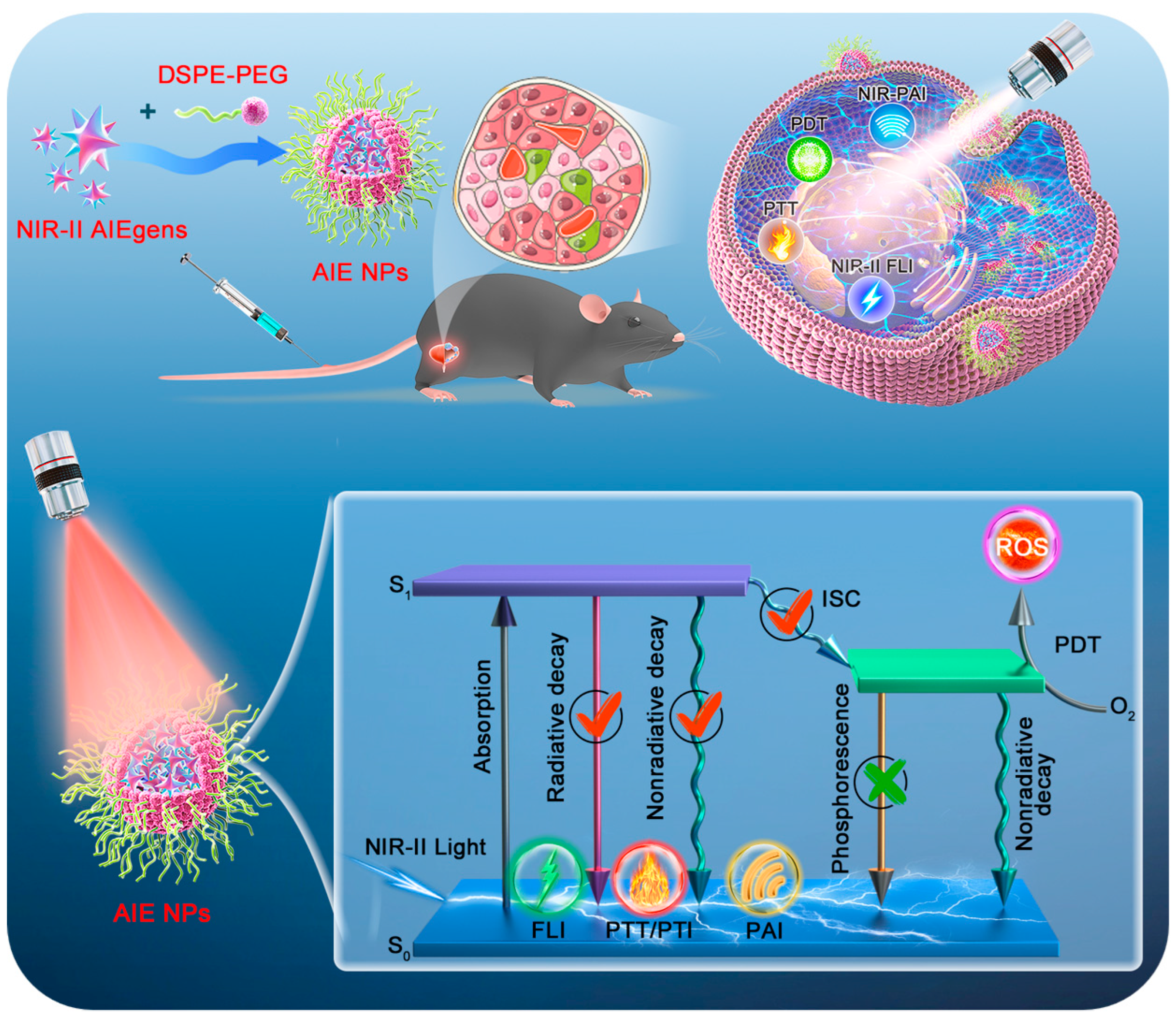
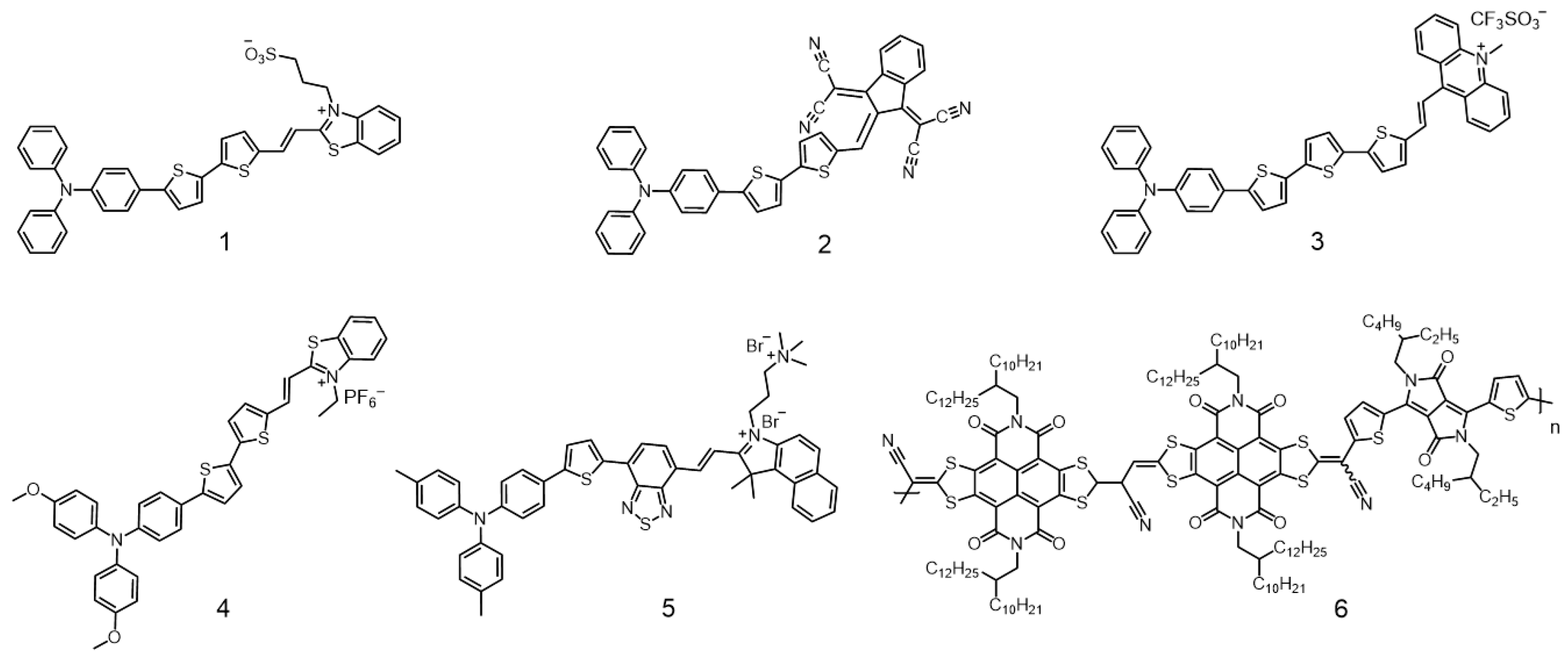
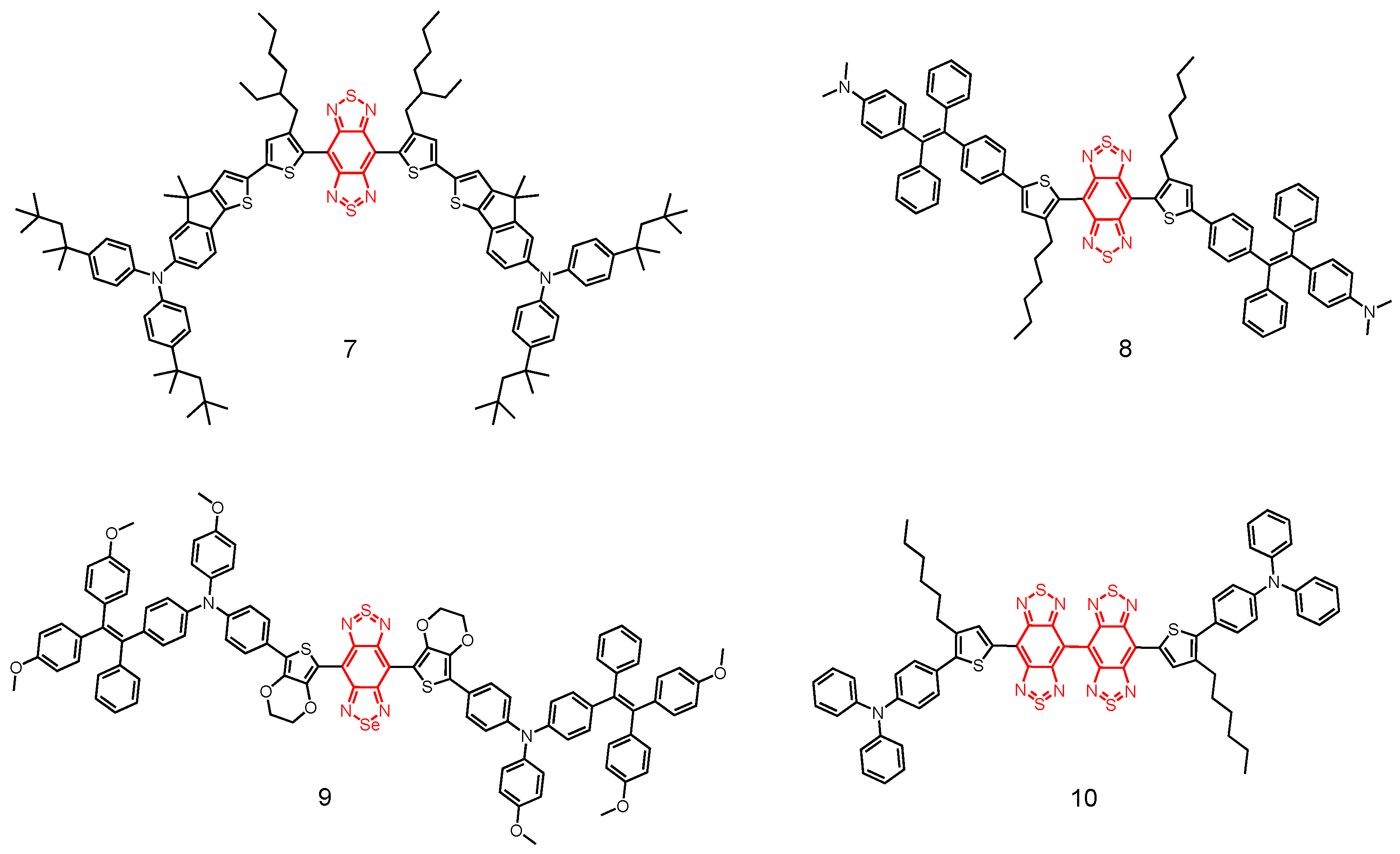
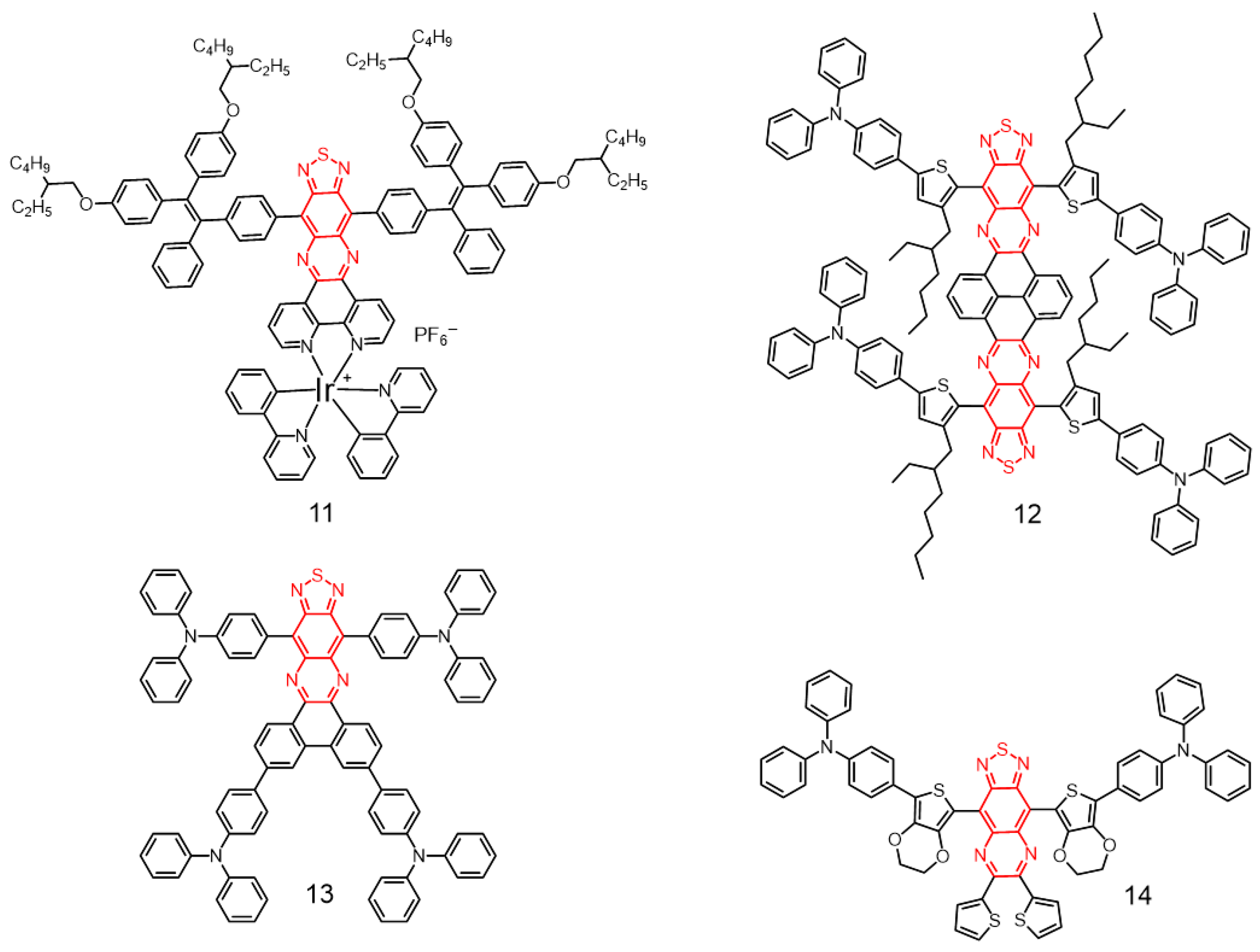
The design of novel aggregation-induced emission (AIE)-active molecules represents a cutting-edge strategy for integrated phototheranostics in the second near-infrared (NIR-II) window. This review systematically outlines rational molecular engineering approaches based on D-A, D-A-D, and A-D-A systems to achieve red-shifted NIR-II absorption/emission, enhanced AIE characteristics, and balanced radiative and non-radiative decay pathways. These AIEgens enable high-contrast NIR-II fluorescence imaging (FLI) and photoacoustic imaging (PAI) for precise tumor localization, while concurrently facilitating efficient photothermal therapy (PTT) and robust photodynamic therapy (PDT) through both type-I and type-II mechanisms. Nanoformulations of these molecules exhibit excellent stability, biocompatibility, and passive targeting via the enhanced permeability and retention (EPR) effect. We further highlight representative “all-in-one” AIE platforms that demonstrate synergistic PTT/PDT under multimodal imaging guidance, offering a promising paradigm for precision cancer theranostics. Challenges and future directions in clinical translation and combination therapy are also discussed.
Keywords: second near-infrared (NIR-II); fluorescence imaging (FLI); photoacoustic imaging (PAI); photothermal therapy (PTT); photodynamic therapy (PDT); aggregation-induced emission (AIE) second near-infrared (NIR-II); fluorescence imaging (FLI); photoacoustic imaging (PAI); photothermal therapy (PTT); photodynamic therapy (PDT); aggregation-induced emission (AIE)