Article

The Label-Free Fluorescence Detection of Inorganic and Organic Mercury Based on DNA-Templated Gold Nanoclusters

1
School of Food Engineering, Zhangzhou Institute of Technology, Zhangzhou 363000, China
2
School of Advanced Manufacturing, Fuzhou University, Quanzhou 362251, China
*
Author to whom correspondence should be addressed.
Biosensors 2026, 16(4), 218; https://doi.org/10.3390/bios16040218
Submission received: 6 March 2026 / Revised: 6 April 2026 / Accepted: 10 April 2026 / Published: 14 April 2026
(This article belongs to the Section Environmental, Agricultural, and Food Biosensors)

Abstract

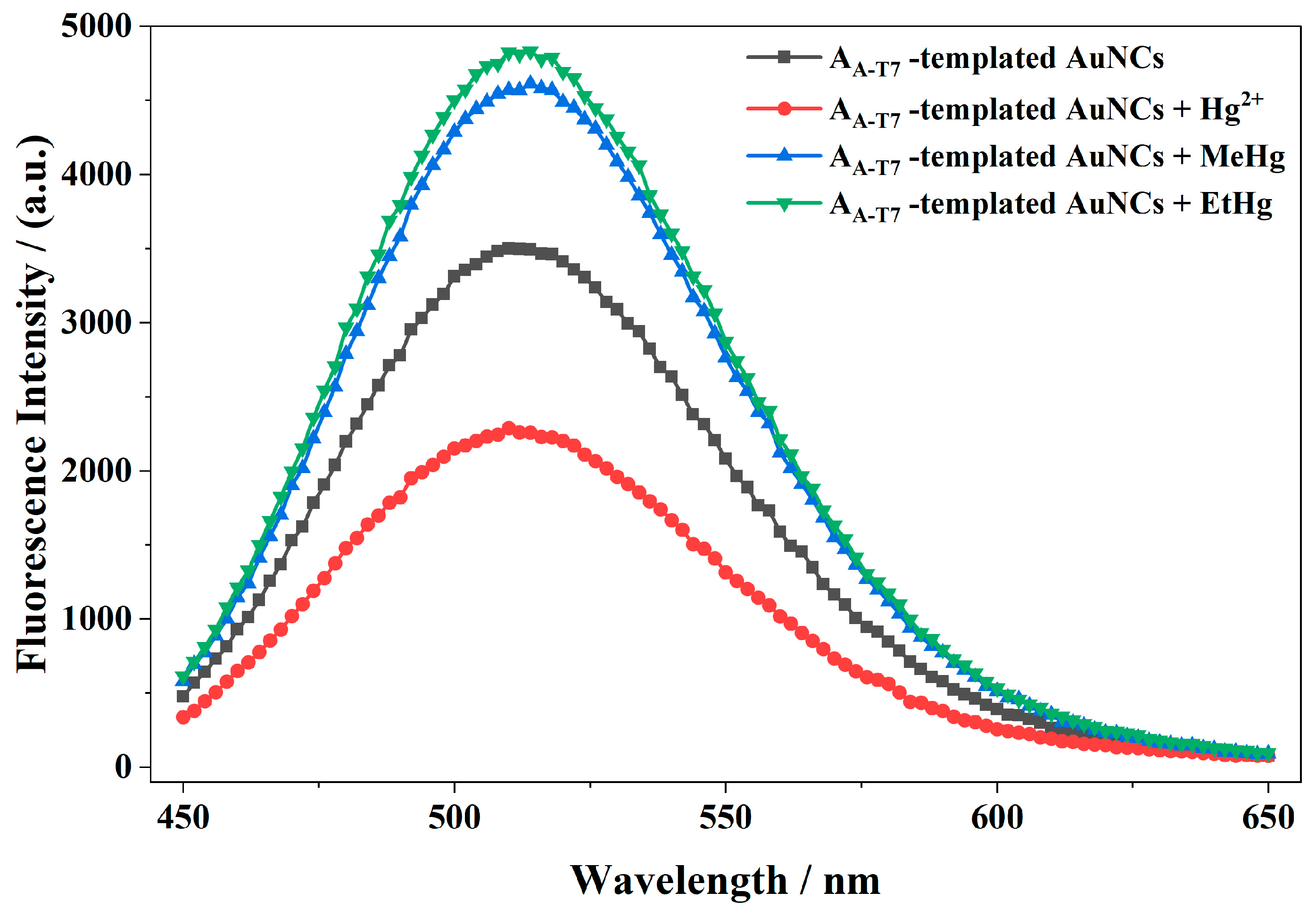
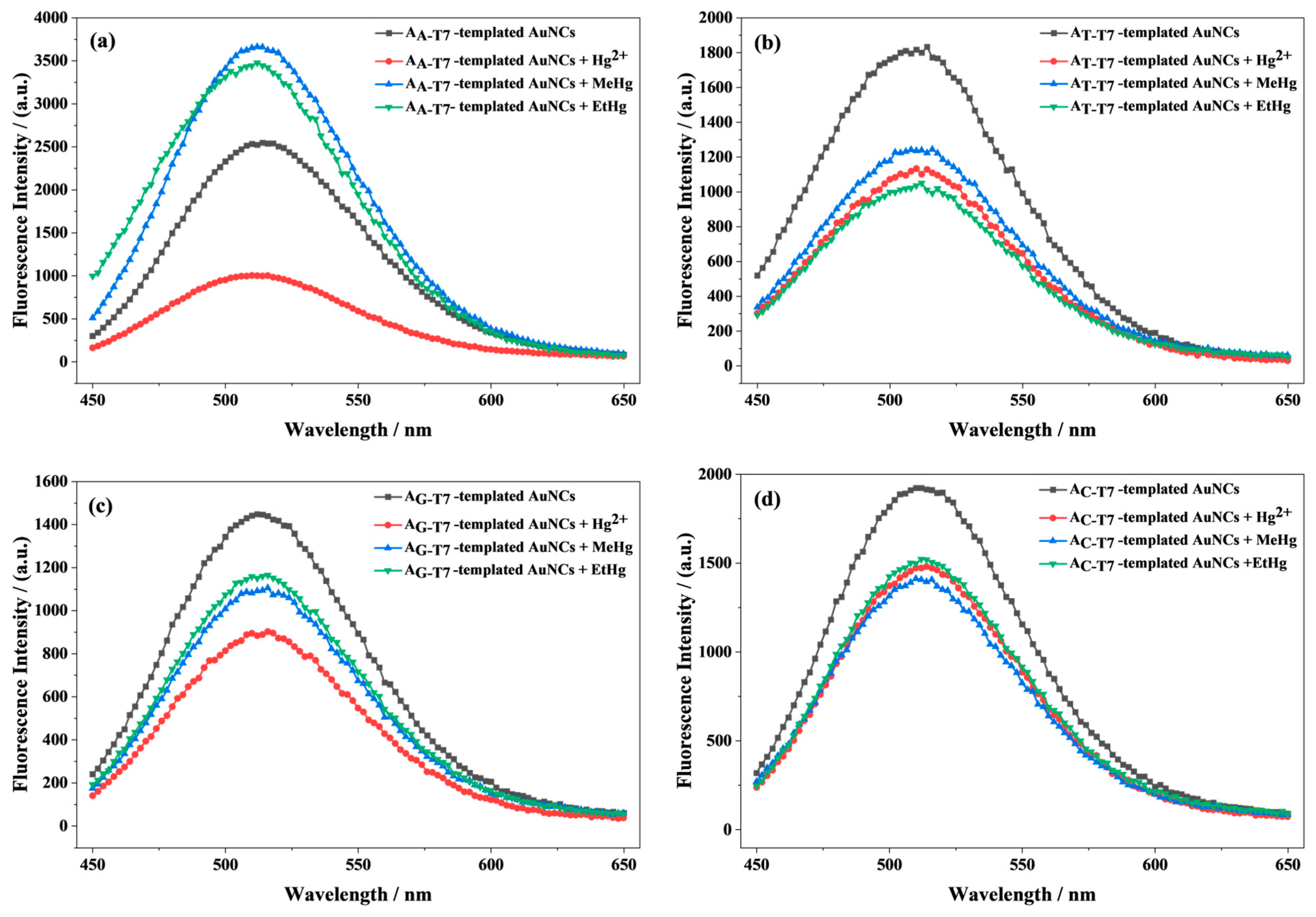
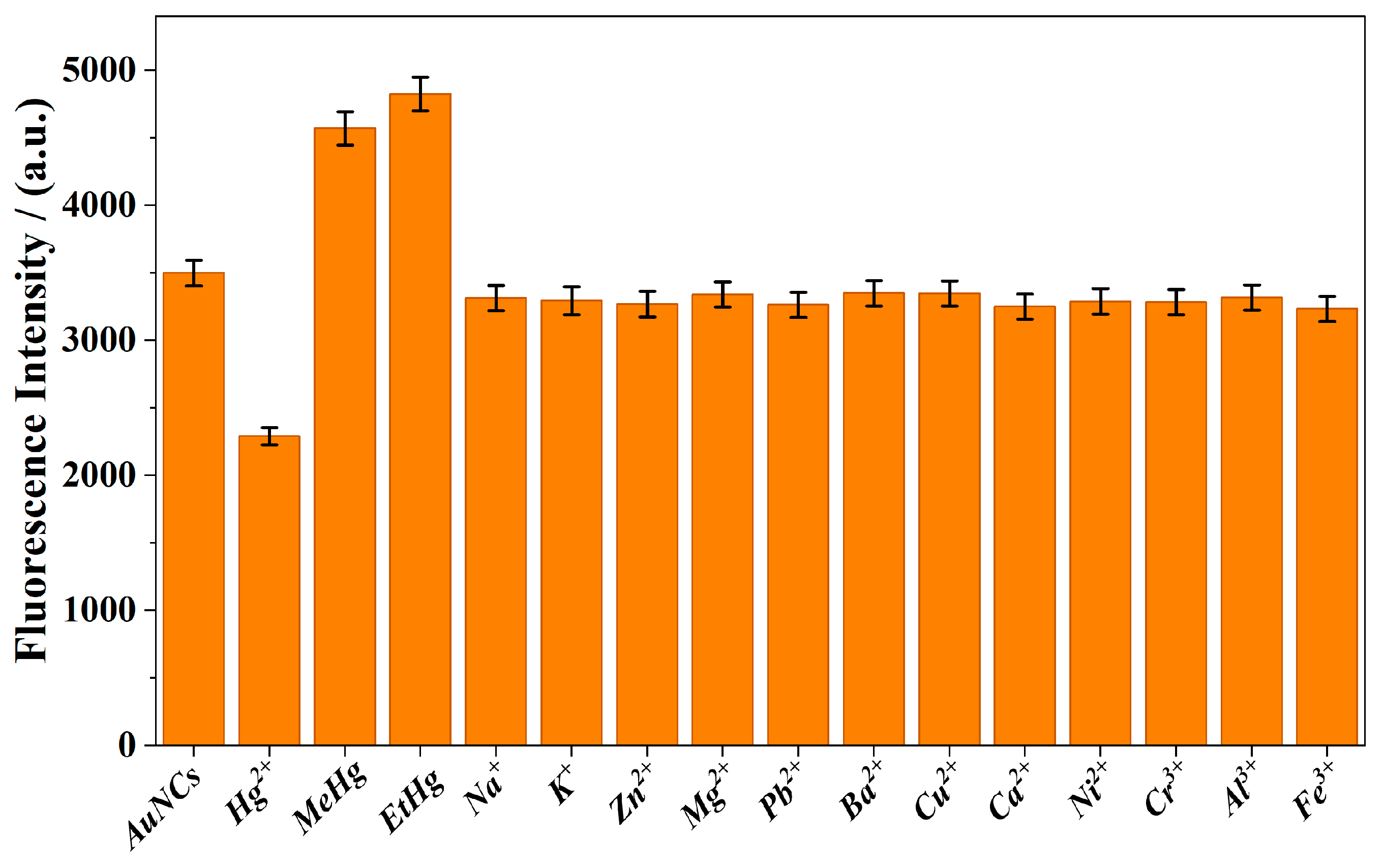
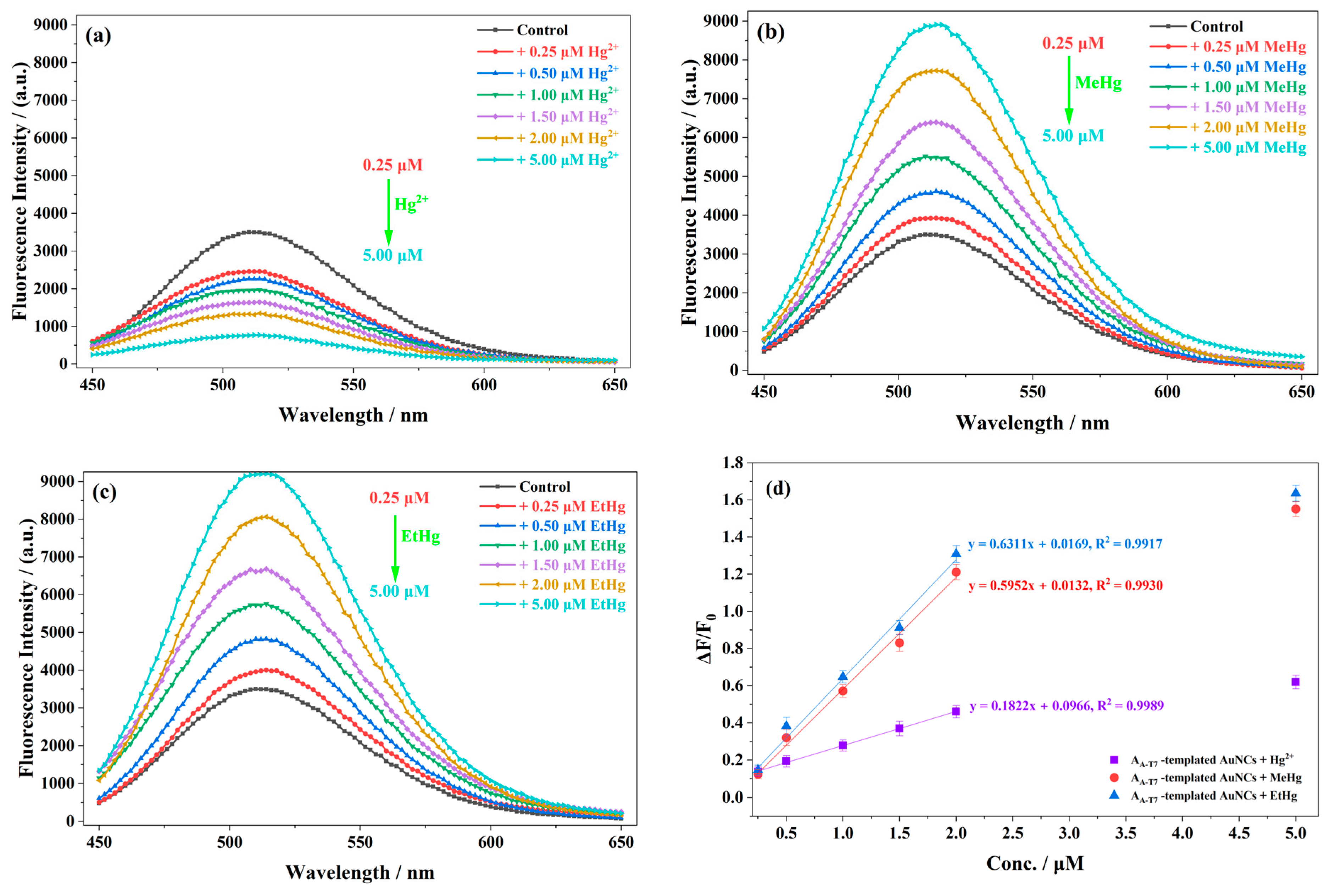
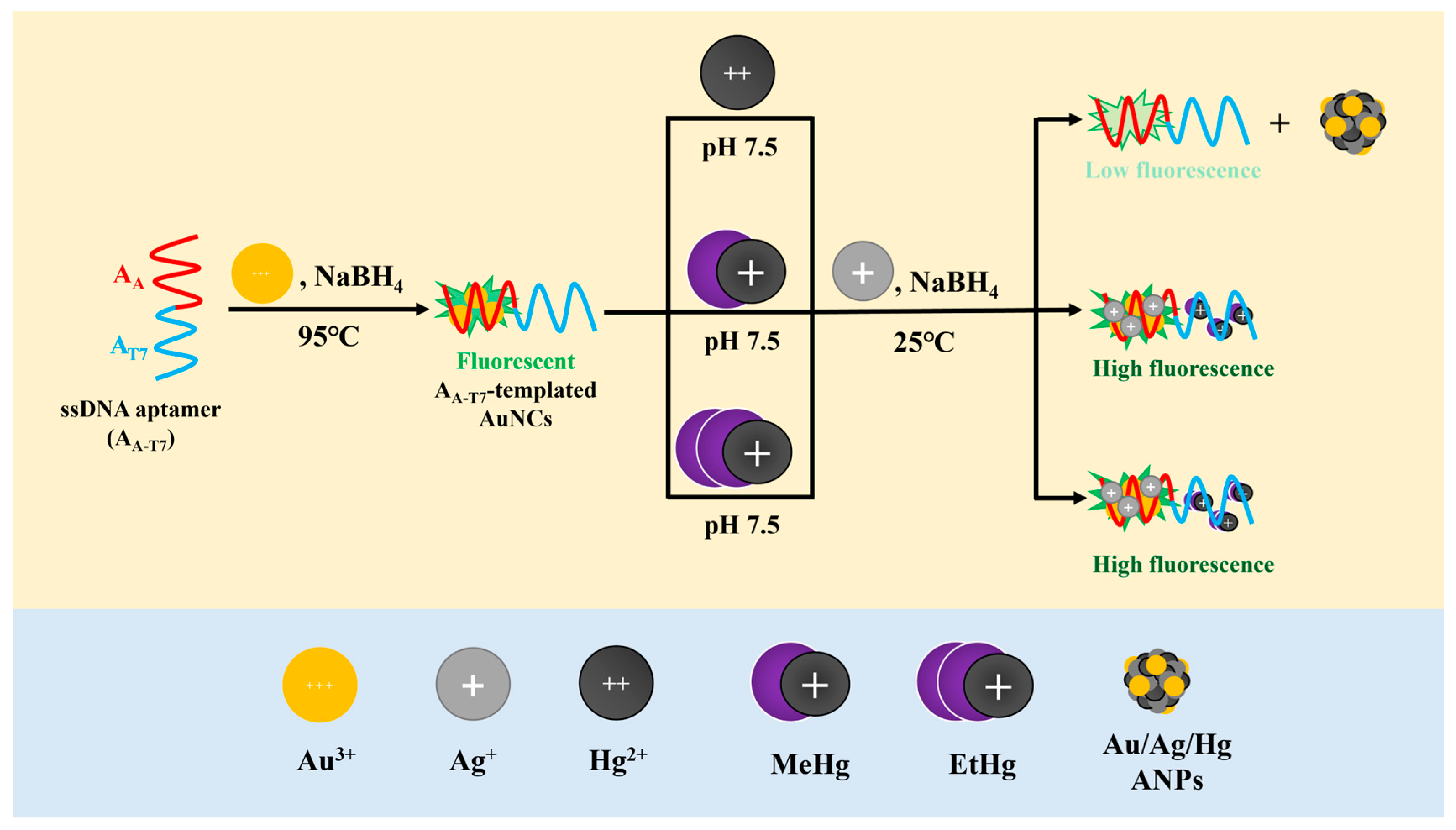
Heavy metal mercury is one of the most significant and toxic environmental contaminants. Its inorganic form (Hg2+) and organic form (organic mercury, OrHg) can cause irreversible harm to human health and the ecological environment, and the latter is particularly prone to bioaccumulation and bioamplification in the food chain. Therefore, there is an urgent need for a rapid, reliable and specific detection of Hg2+ and OrHg to evaluate the potential risk for human health. Here, a novel label-free fluorescent sensing platform based on ssDNA aptamer (AA-T7)-templated AuNCs was established for sensitive recognition and specific detection of Hg2+ and OrHg. In the presence of OrHg, the fluorescence of pure AA-T7-templated AuNCs was visibly enhanced through forming Ag/AuNCs based on Ag0-doped AIEE effect. However, they were obviously quenched because of generating non-fluorescent Au/Ag/Hg ANPs via metallophilic interactions among Au3+, Ag+, and Hg2+ (5d10-4d10-5d10) when only Hg2+ existed. This fluorescent sensing platform could detect as low as 20.0 nM (4.0 ng Hg/g) and has a good linear detection range, with target concentrations ranging from 0.25 μM to 2.00 μM, recoveries of 98.0–108.0%, and RSD ≤ 5.0%. Low-toxic AA-T7-templated AuNCs could be used for cytotoxicity analysis and intracellular fluorescent imaging. The method has been successfully applied to the determination of Hg2+ and OrHg in tap water, seawater and dried golden pomfret fish muscle samples, demonstrating promising prospects for the assay of mercury species in environmental samples and aquatic products to ensure human health and food safety.
Keywords: inorganic mercury; organic mercury; gold nanoclusters; ssDNA aptamer; fluorescence detection inorganic mercury; organic mercury; gold nanoclusters; ssDNA aptamer; fluorescence detection