Article

Microneedle–Tissue Interaction Across Varying Biological and Mechanical Conditions


1
Queensland Quantum and Advanced Technologies Research Institute, Griffith University, 170 Kessels Road, Nathan, QLD 4111, Australia
2
Centre for Regional and Rural Futures (CeRRF), Centre for Sustainable Bioproducts (CSB), School of Engineering, Deakin University, Geelong, VIC 3216, Australia
3
School of Engineering and Built Environment, Griffith University, 170 Kessels Road, Nathan, QLD 4111, Australia
*
Authors to whom correspondence should be addressed.
Biosensors 2025, 15(8), 521; https://doi.org/10.3390/bios15080521
Submission received: 24 June 2025 / Revised: 2 August 2025 / Accepted: 6 August 2025 / Published: 9 August 2025
(This article belongs to the Special Issue Nano/Micro Biosensors for Biomedical Applications (2nd Edition))

Abstract

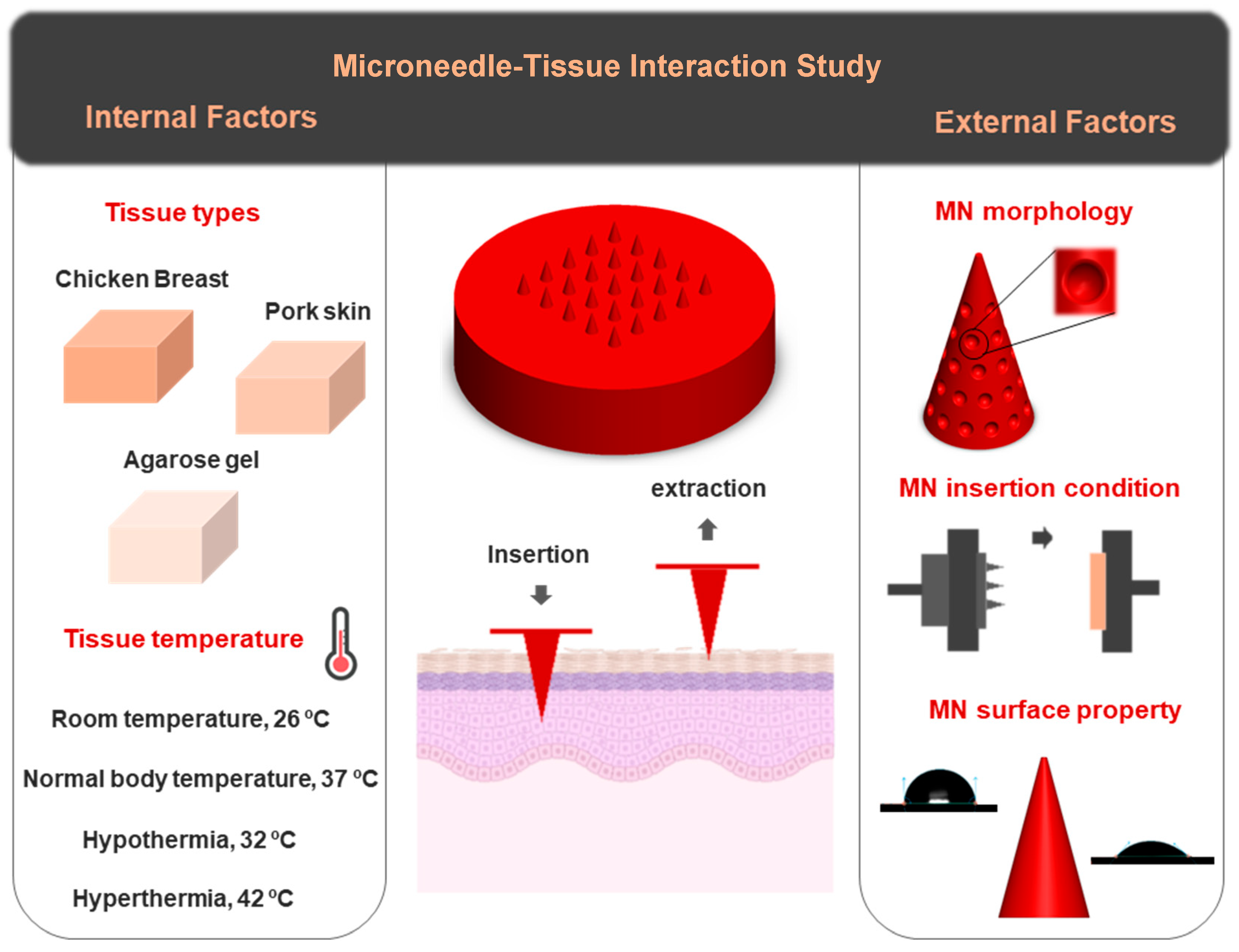
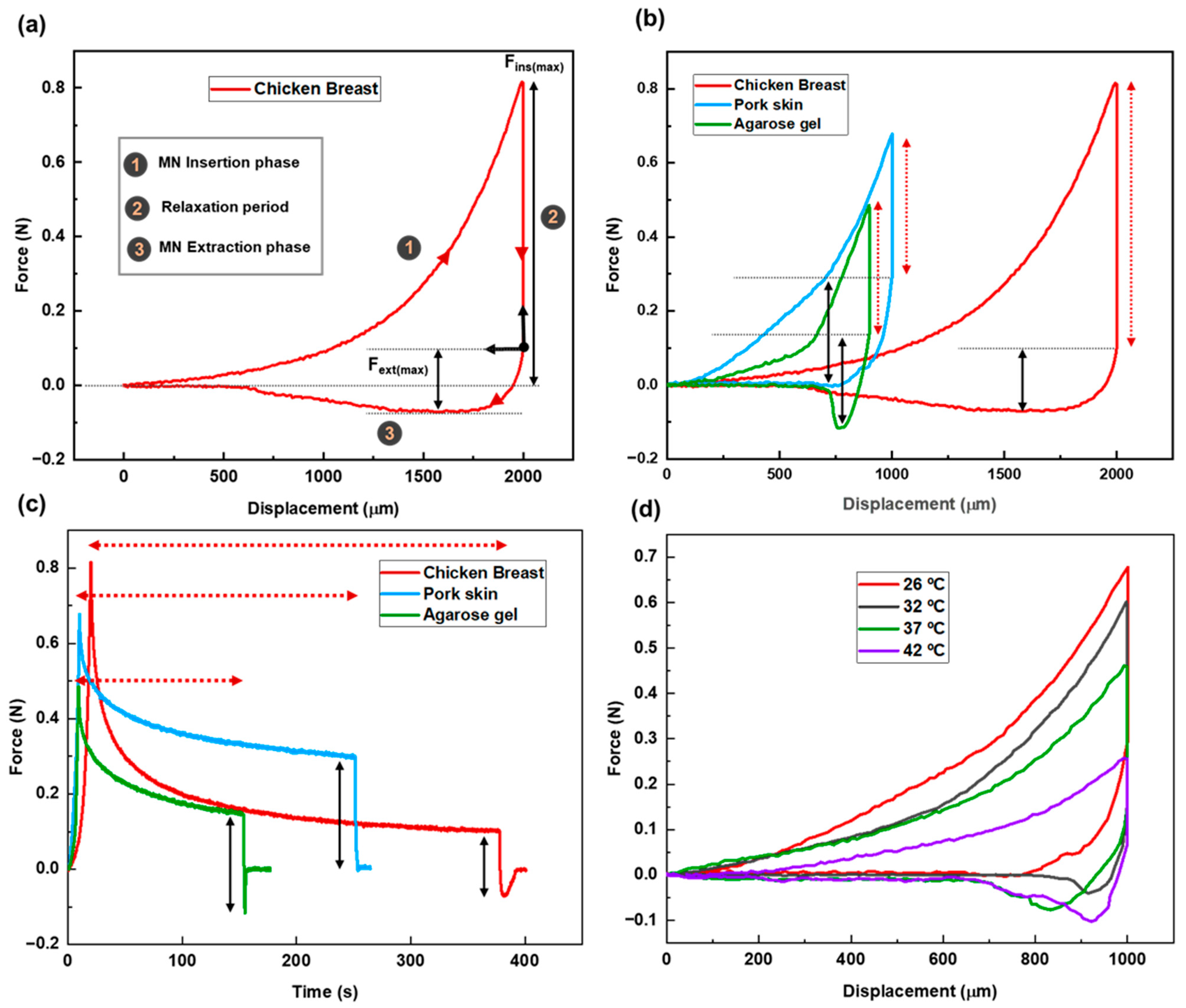
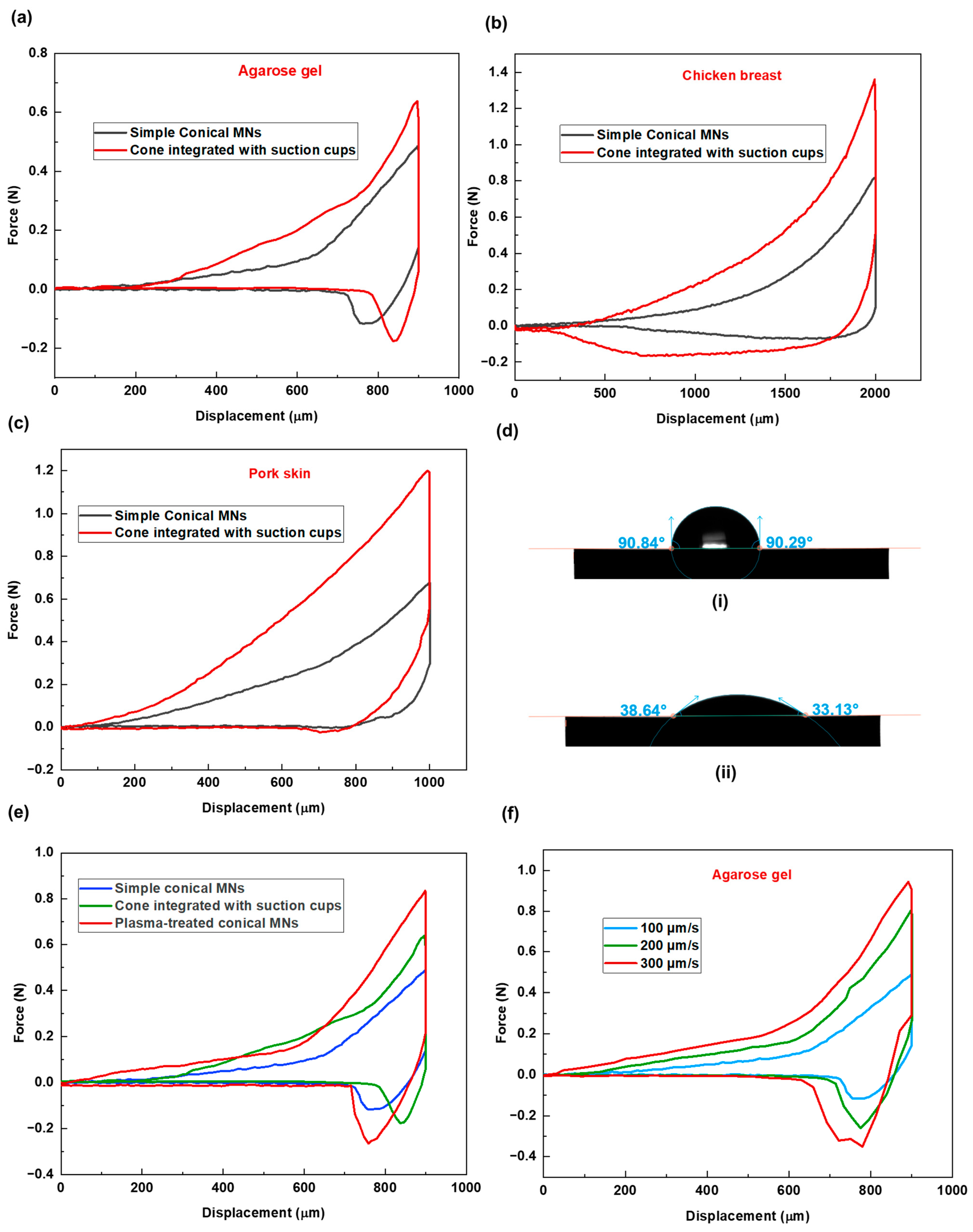
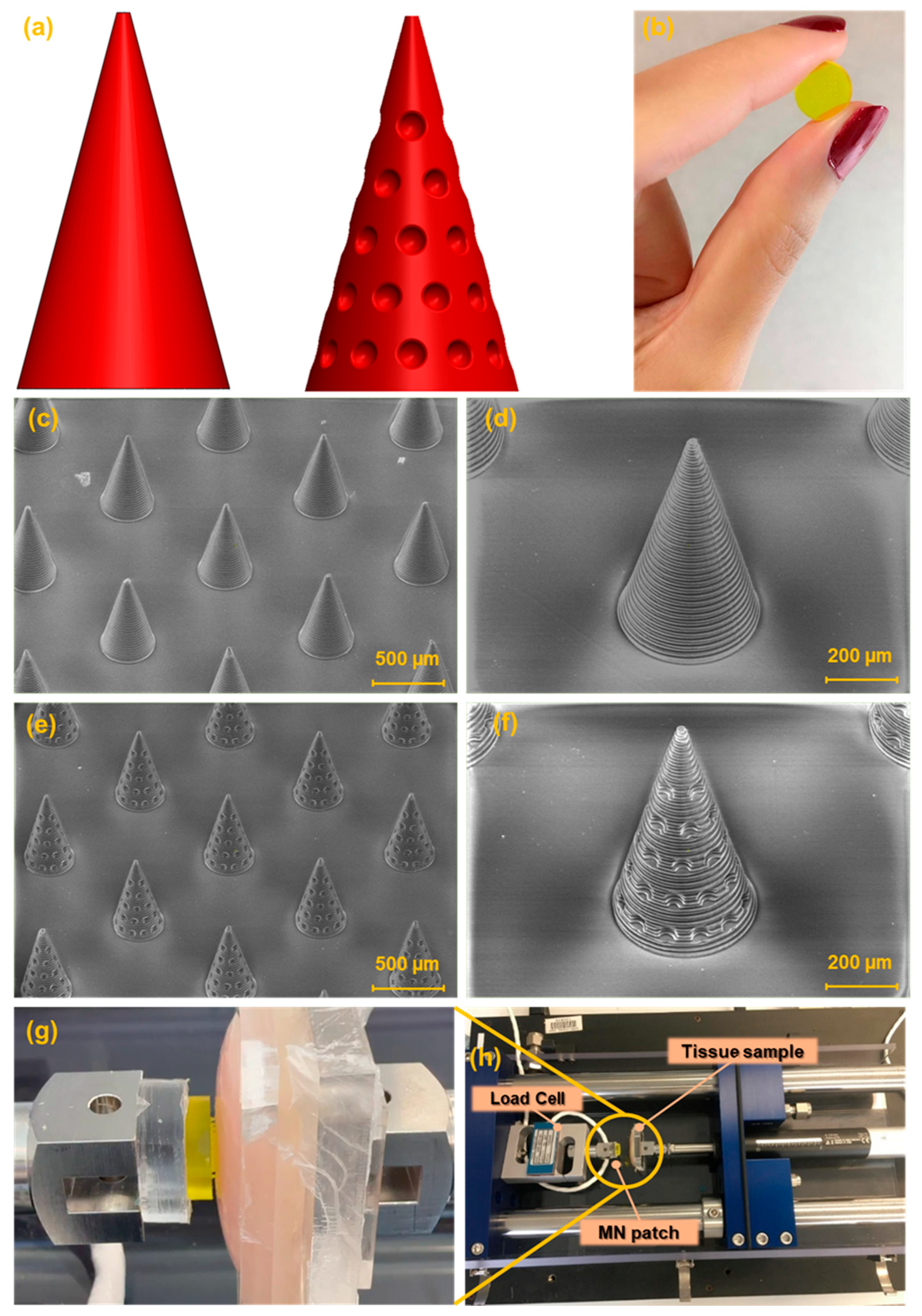
Microneedle (MN)–tissue interactions play a critical role in the efficiency and reliability of transdermal drug delivery and biosensing, yet their mechanistic understanding remains limited. This study systematically investigates the effects of biological (tissue type and temperature) and mechanical (needle design, material, and insertion velocity) parameters on the performance of microneedle insertion and extraction. Experiments were performed on porcine skin, chicken breast, and agarose gel to represent varying tissue properties. Additionally, the effect of tissue temperature on replicating physiological conditions, such as hypo- and hyperthermia, was evaluated using porcine skin as the sample. A novel conical MN design integrated with surface suction-cup structures was developed to improve tissue adhesion. Mechanical responses were analyzed through force–displacement measurements, evaluating insertion force, extraction force, and relaxation time. Results show that elevated tissue temperature reduces insertion and extraction forces while shortening relaxation times, indicating increased tissue compliance. The suction-cup MNs significantly enhanced needle–tissue adhesion, with the most pronounced effect observed in chicken breast tissue, achieving more than a four-fold increase in extraction force compared to conventional conical needles. These findings provide valuable insights into optimizing the design of MNs for advanced biomedical applications.
Keywords: microneedles; tissue adhesion; drug delivery; biosensing; insertion force; extraction force microneedles; tissue adhesion; drug delivery; biosensing; insertion force; extraction force