Review

Advancements and Prospects of Metal-Organic Framework-Based Fluorescent Sensors


1
Department of Food & Biological Engineering, Jiangsu University, Zhenjiang 212013, China
2
Food and Drug Supervision and Inspection Center in Zhenjiang, Zhenjiang 212000, China
*
Author to whom correspondence should be addressed.
These authors contributed equally to this work.
Biosensors 2025, 15(11), 709; https://doi.org/10.3390/bios15110709
Submission received: 25 September 2025 / Revised: 21 October 2025 / Accepted: 22 October 2025 / Published: 24 October 2025
(This article belongs to the Section Biosensor Materials)

Abstract

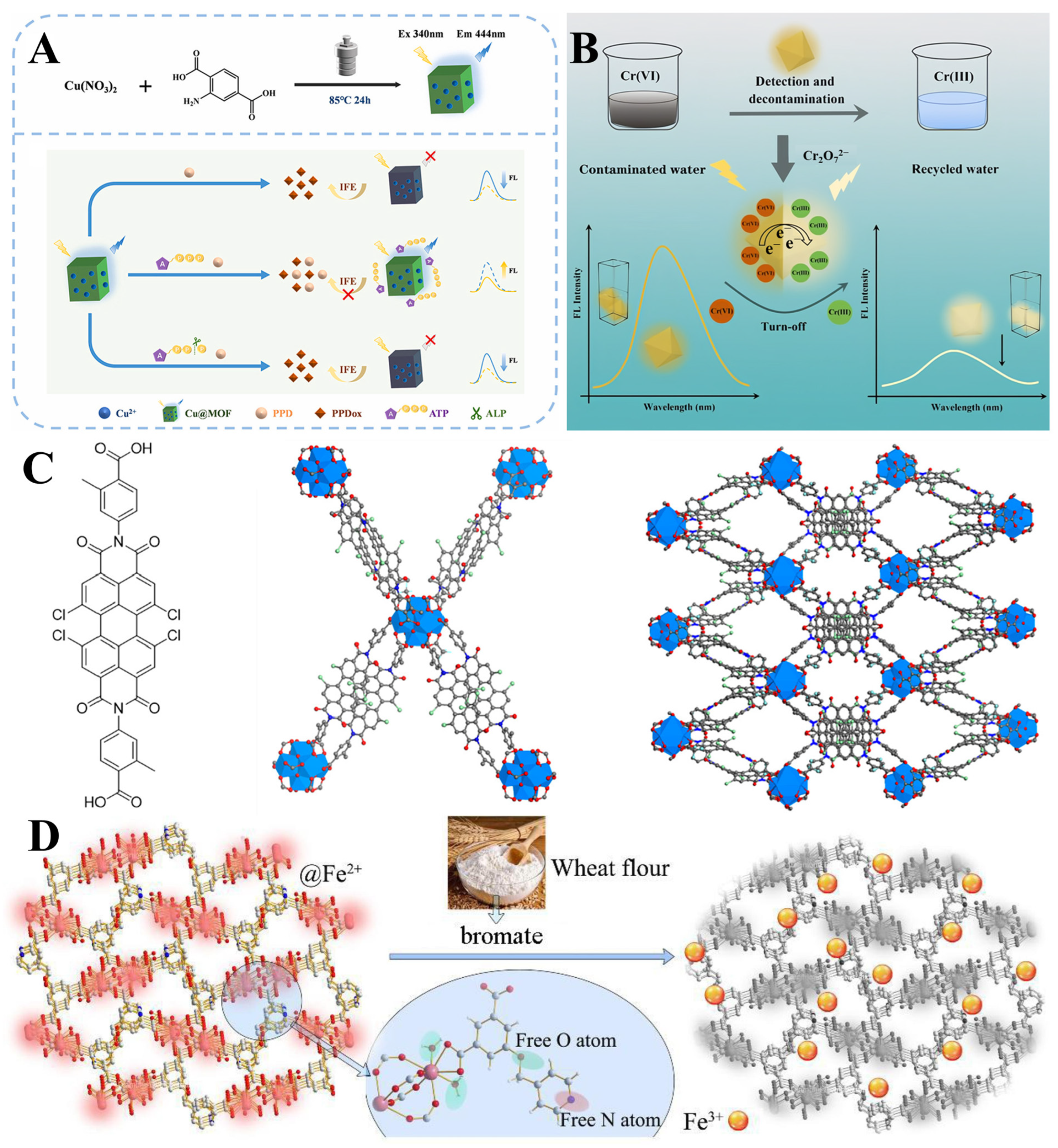
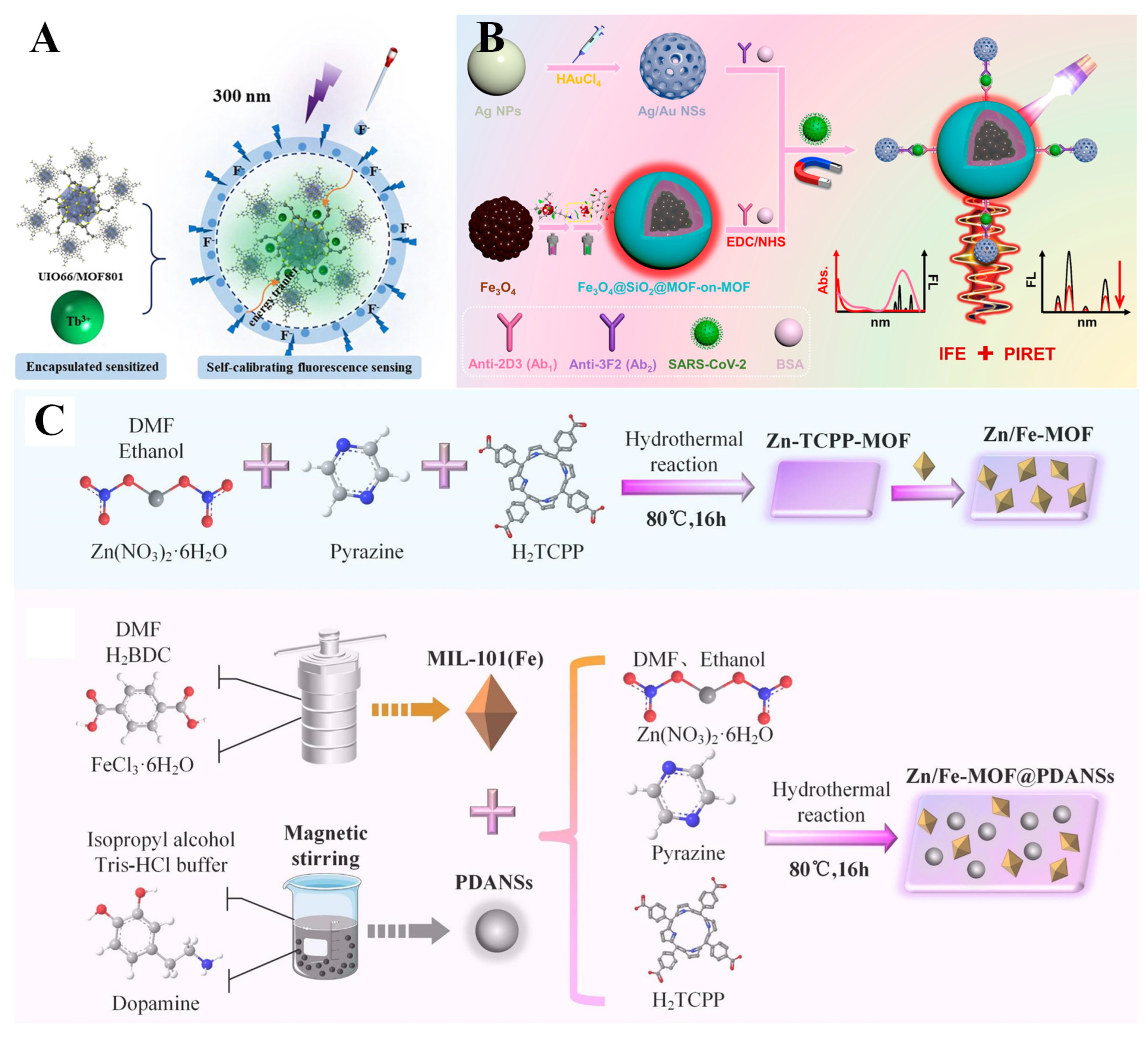
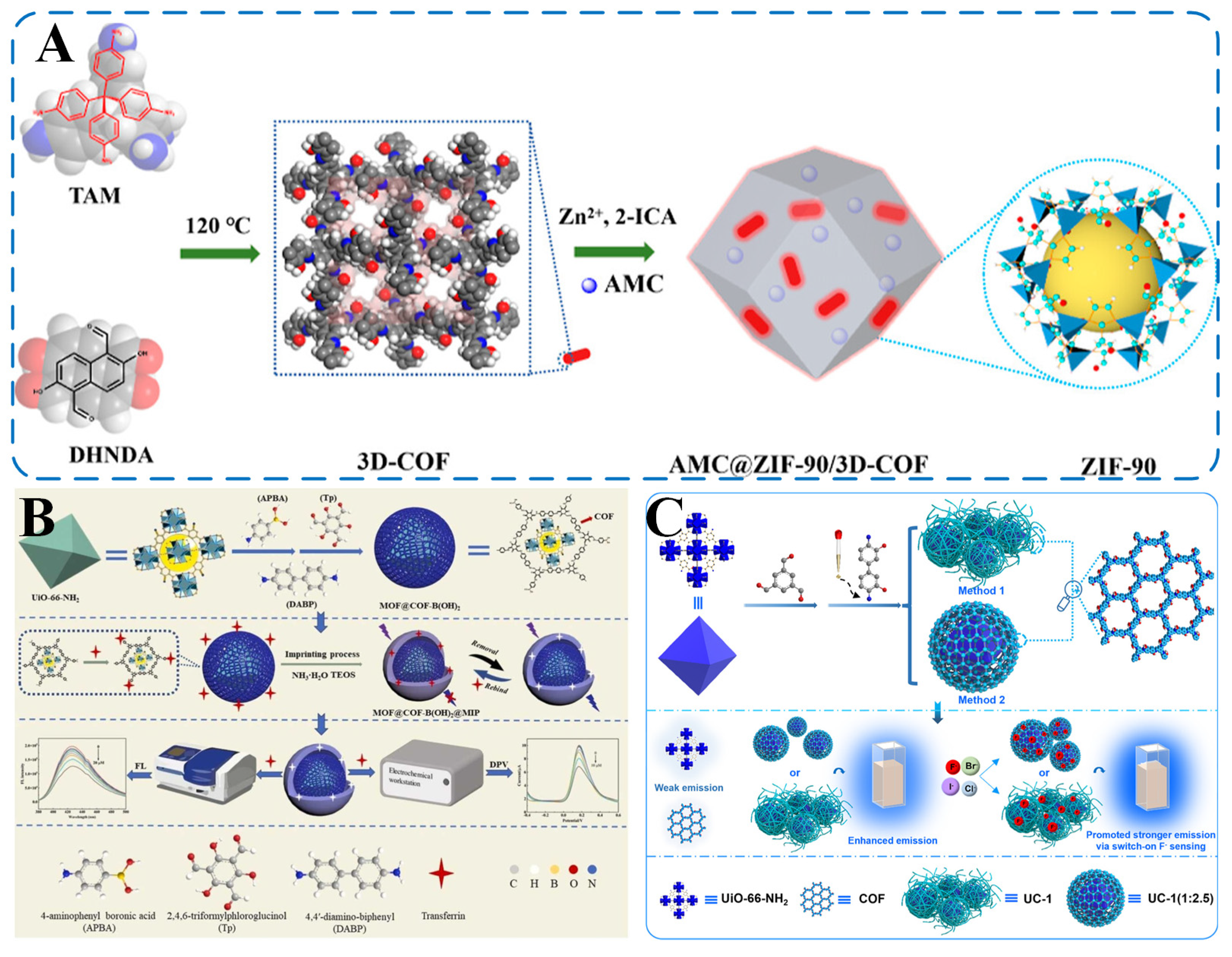
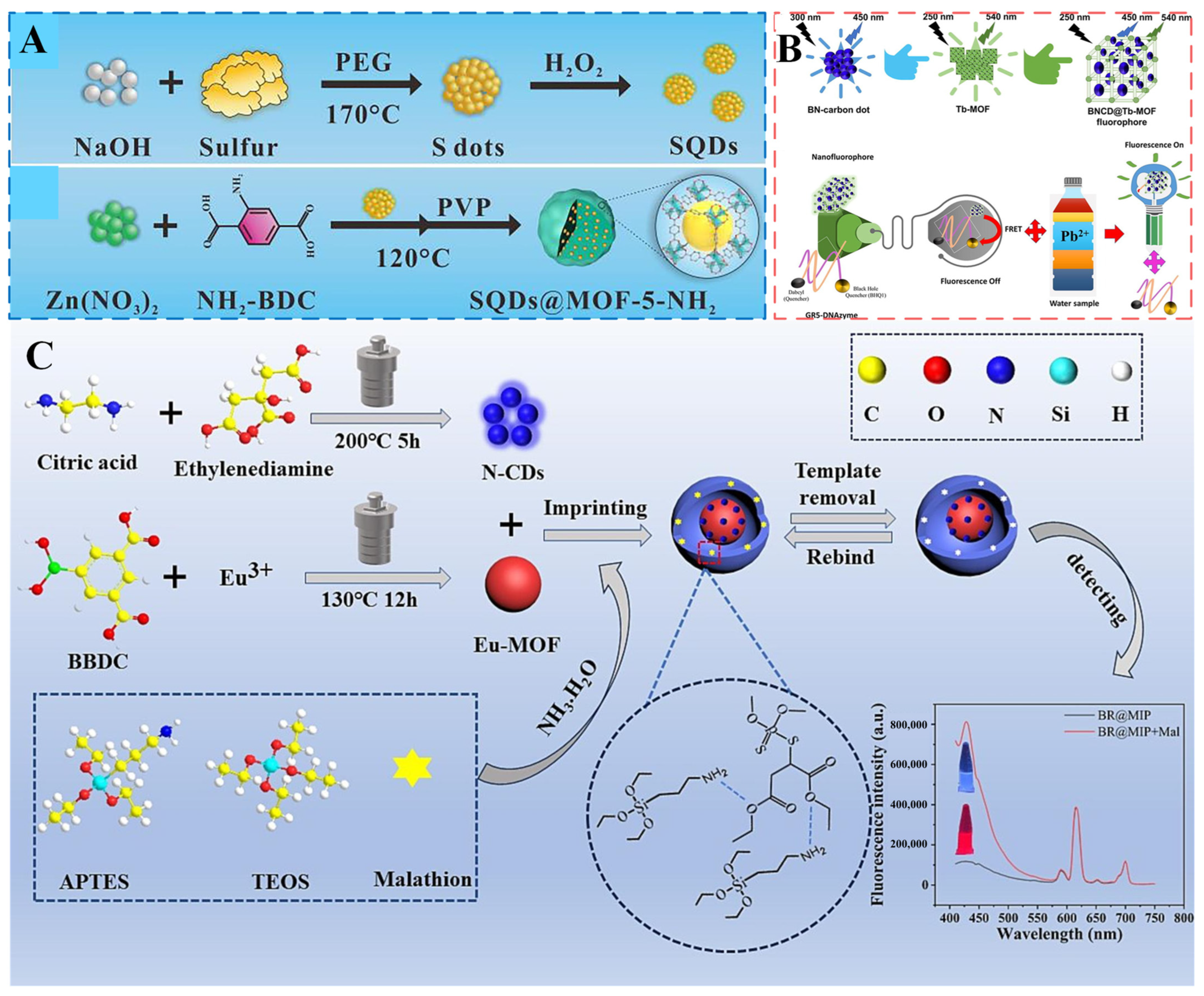
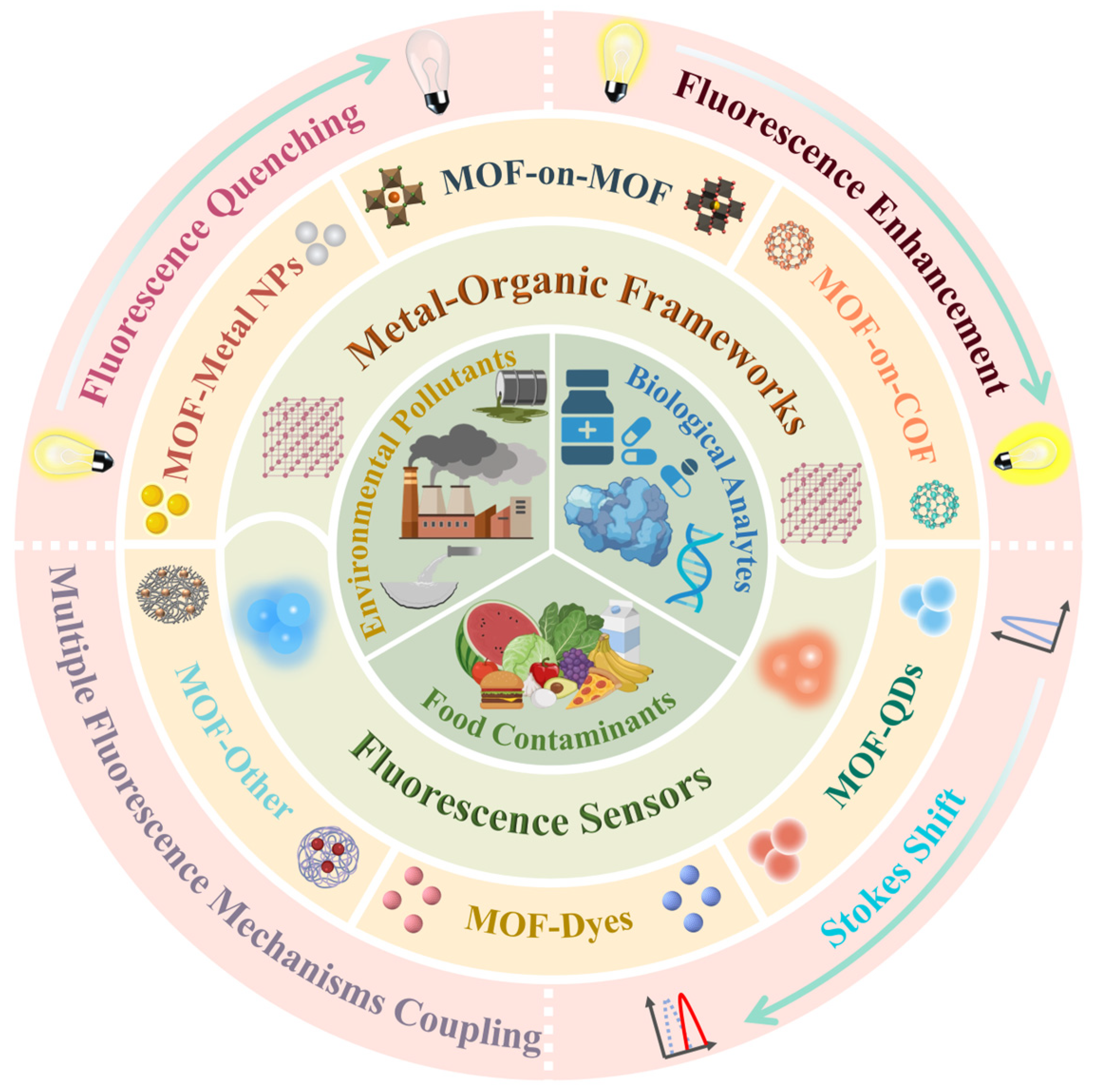
Metal-organic frameworks (MOFs), a class of crystalline porous materials featuring a high specific surface area, tunable pore structures, and functional surfaces, exhibit remarkable potential in fluorescent sensing. This review systematically summarizes recent advances in the construction strategies, sensing mechanisms, and applications of MOF-based fluorescent sensors. It begins by highlighting the diverse degradation pathways that MOFs encounter in practical applications, including hydrolysis, acid/base attack, ligand displacement by coordinating anions, photodegradation, redox processes, and biofouling, followed by a detailed discussion of corresponding stabilization strategies. Subsequently, the review elaborates on the construction of sensors based on individual MOFs and their composites with metal nanomaterials, MOF-on-MOF heterostructures, covalent organic frameworks (COFs), quantum dots (QDs), and fluorescent dyes, emphasizing the synergistic effects of composite structures in enhancing sensor performance. Furthermore, key sensing mechanisms such as fluorescence quenching, fluorescence enhancement, Stokes shift, and multi-mechanism coupling are thoroughly examined, with examples provided of their application in detecting biological analytes, environmental pollutants, and food contaminants. Finally, future directions for MOF-based fluorescent sensors in food safety, environmental monitoring, and clinical diagnostics are outlined, pointing to the development of high-performance, low-cost MOFs; the integration of multi-technology platforms; and the construction of intelligent sensing systems as key to enabling their practical deployment and commercialization.
Keywords: metal-organic frameworks; fluorescent sensor; nanozyme; luminescence; pollutant detection metal-organic frameworks; fluorescent sensor; nanozyme; luminescence; pollutant detection