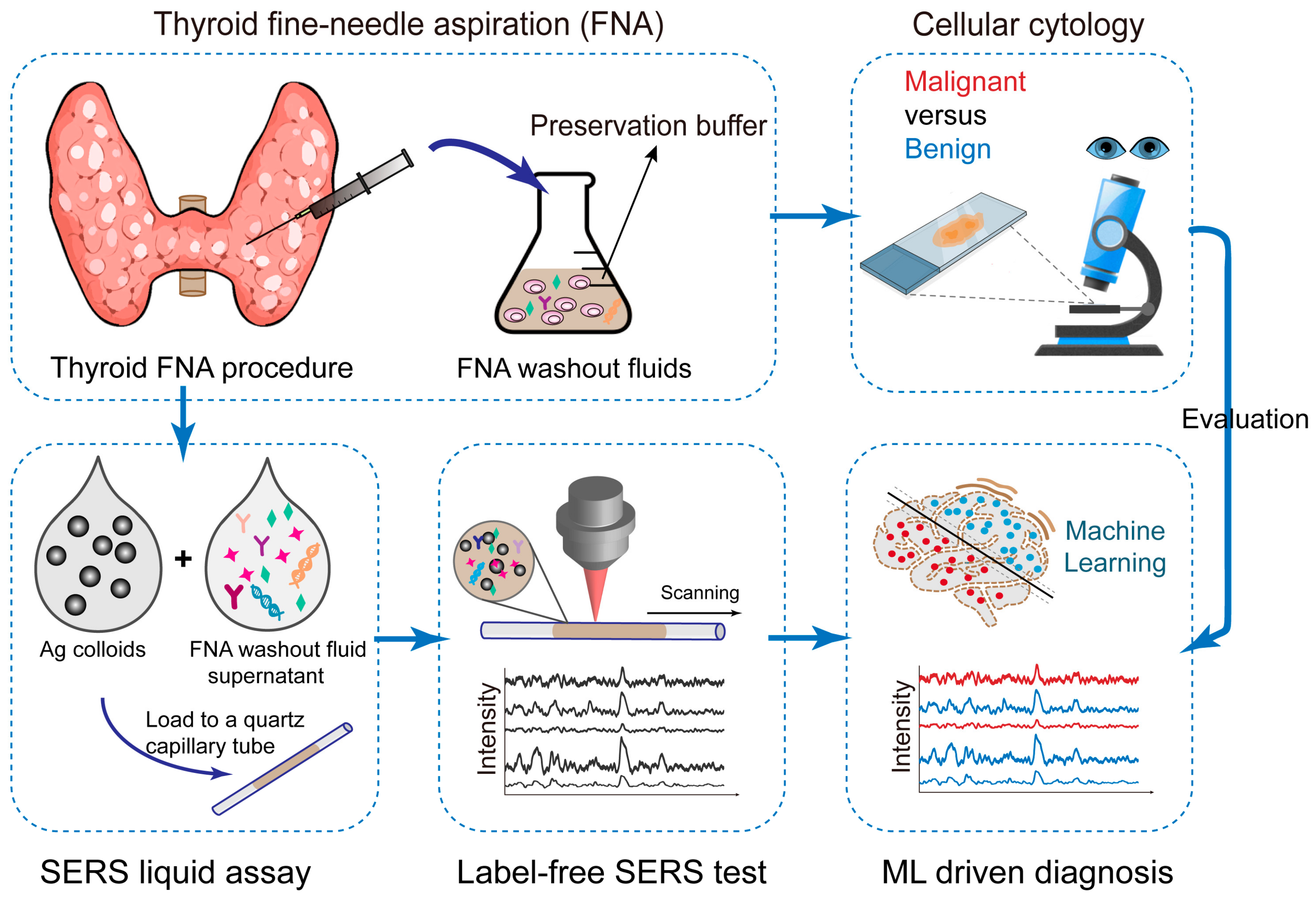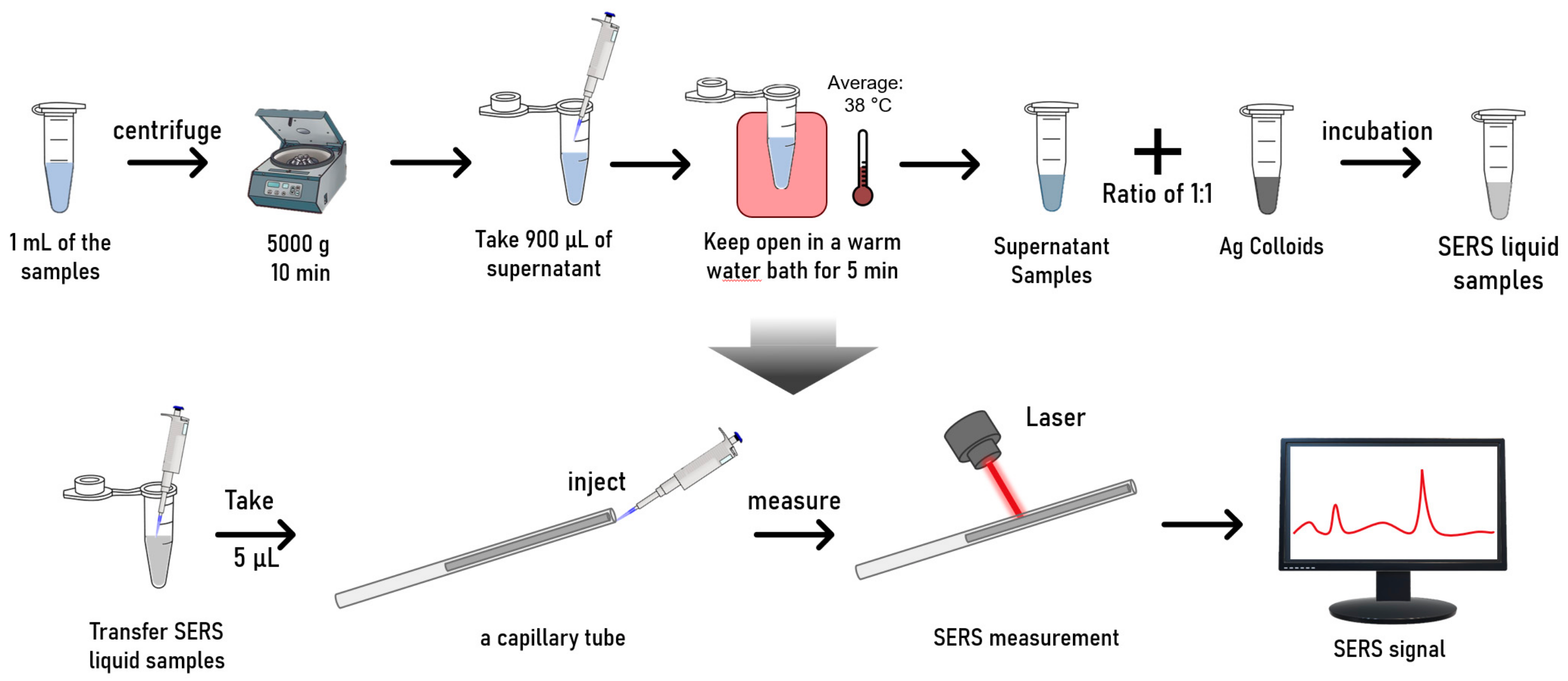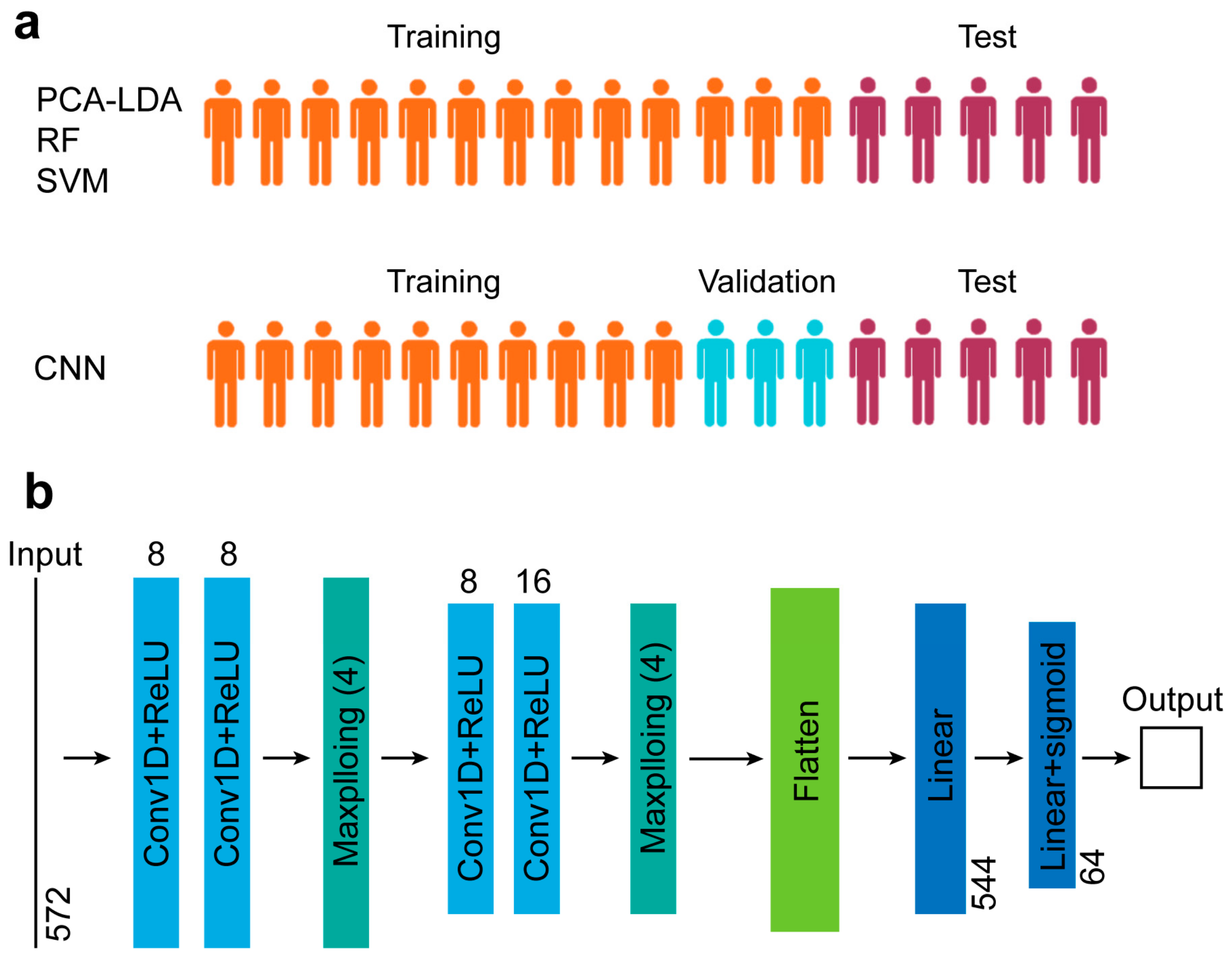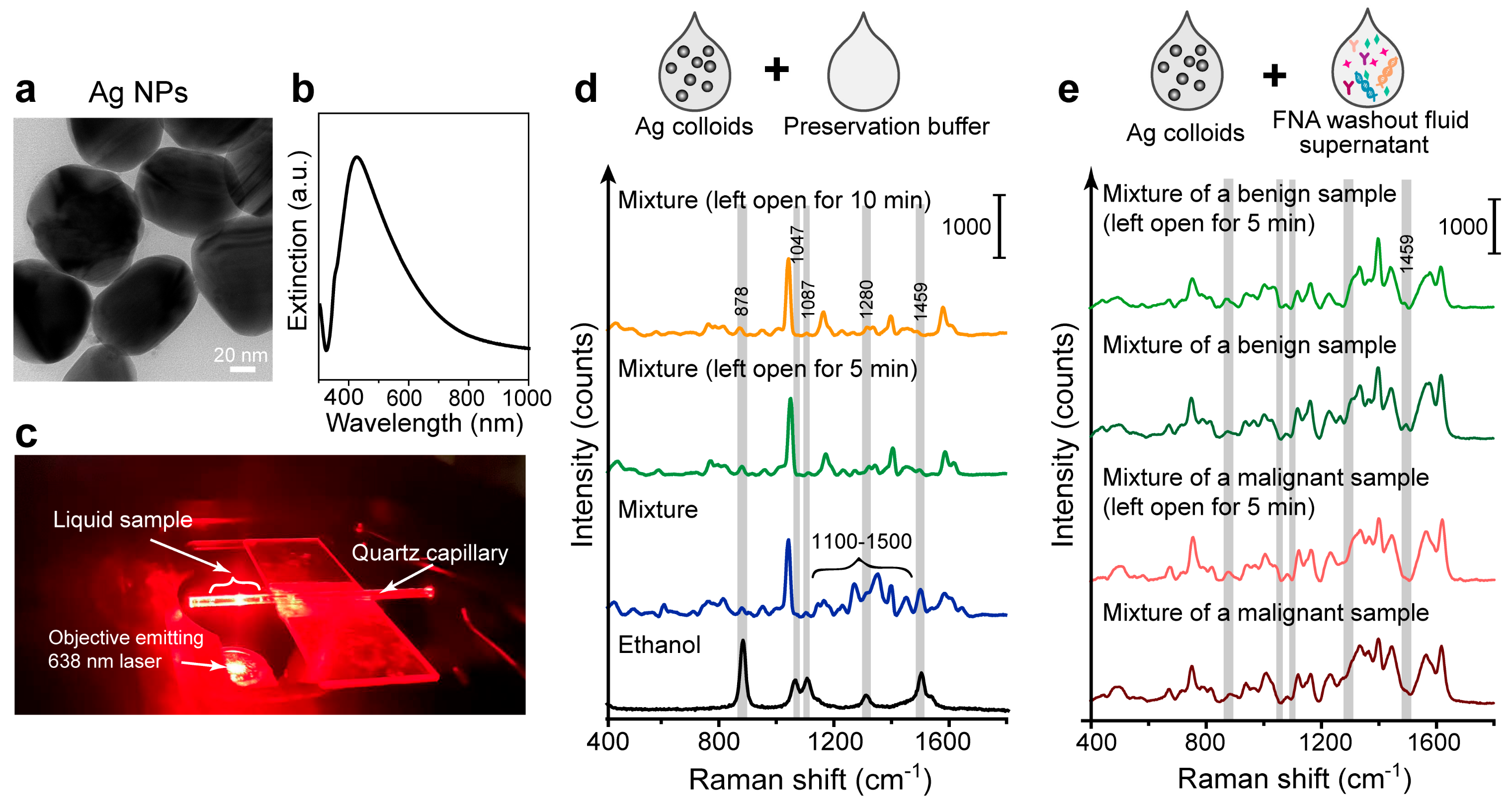
Label-Free Surface-Enhanced Raman Spectroscopy with Machine Learning for the Diagnosis of Thyroid Cancer by Using Fine-Needle Aspiration Liquid Samples

 , , , and
 Abstract
Share and Cite
Gao, L.; Wu, S.; Wongwasuratthakul, P.; Chen, Z.; Cai, W.; Li, Q.; Lin, L.L. Label-Free Surface-Enhanced Raman Spectroscopy with Machine Learning for the Diagnosis of Thyroid Cancer by Using Fine-Needle Aspiration Liquid Samples. Biosensors 2024, 14, 372. https://doi.org/10.3390/bios14080372
Gao L, Wu S, Wongwasuratthakul P, Chen Z, Cai W, Li Q, Lin LL. Label-Free Surface-Enhanced Raman Spectroscopy with Machine Learning for the Diagnosis of Thyroid Cancer by Using Fine-Needle Aspiration Liquid Samples. Biosensors. 2024; 14(8):372. https://doi.org/10.3390/bios14080372
Chicago/Turabian StyleGao, Lili, Siyi Wu, Puwasit Wongwasuratthakul, Zhou Chen, Wei Cai, Qinyu Li, and Linley Li Lin. 2024. "Label-Free Surface-Enhanced Raman Spectroscopy with Machine Learning for the Diagnosis of Thyroid Cancer by Using Fine-Needle Aspiration Liquid Samples" Biosensors 14, no. 8: 372. https://doi.org/10.3390/bios14080372
APA StyleGao, L., Wu, S., Wongwasuratthakul, P., Chen, Z., Cai, W., Li, Q., & Lin, L. L. (2024). Label-Free Surface-Enhanced Raman Spectroscopy with Machine Learning for the Diagnosis of Thyroid Cancer by Using Fine-Needle Aspiration Liquid Samples. Biosensors, 14(8), 372. https://doi.org/10.3390/bios14080372