Review

A Review from a Clinical Perspective: Recent Advances in Biosensors for the Detection of L-Amino Acids


by
Kristina Ratautė
1 and
Dalius Ratautas
2,*
1
Faculty of Medicine, Vilnius University, M. K. Čiurlionio Str. 21, LT-03101 Vilnius, Lithuania
2
Life Science Center, Vilnius University, Saulėtekio al. 7, LT-10257 Vilnius, Lithuania
*
Author to whom correspondence should be addressed.
Biosensors 2024, 14(1), 5; https://doi.org/10.3390/bios14010005
Submission received: 23 October 2023 / Revised: 14 December 2023 / Accepted: 19 December 2023 / Published: 22 December 2023
(This article belongs to the Special Issue Electrochemical Sensors and Biosensors for Biomedical Applications)

Abstract

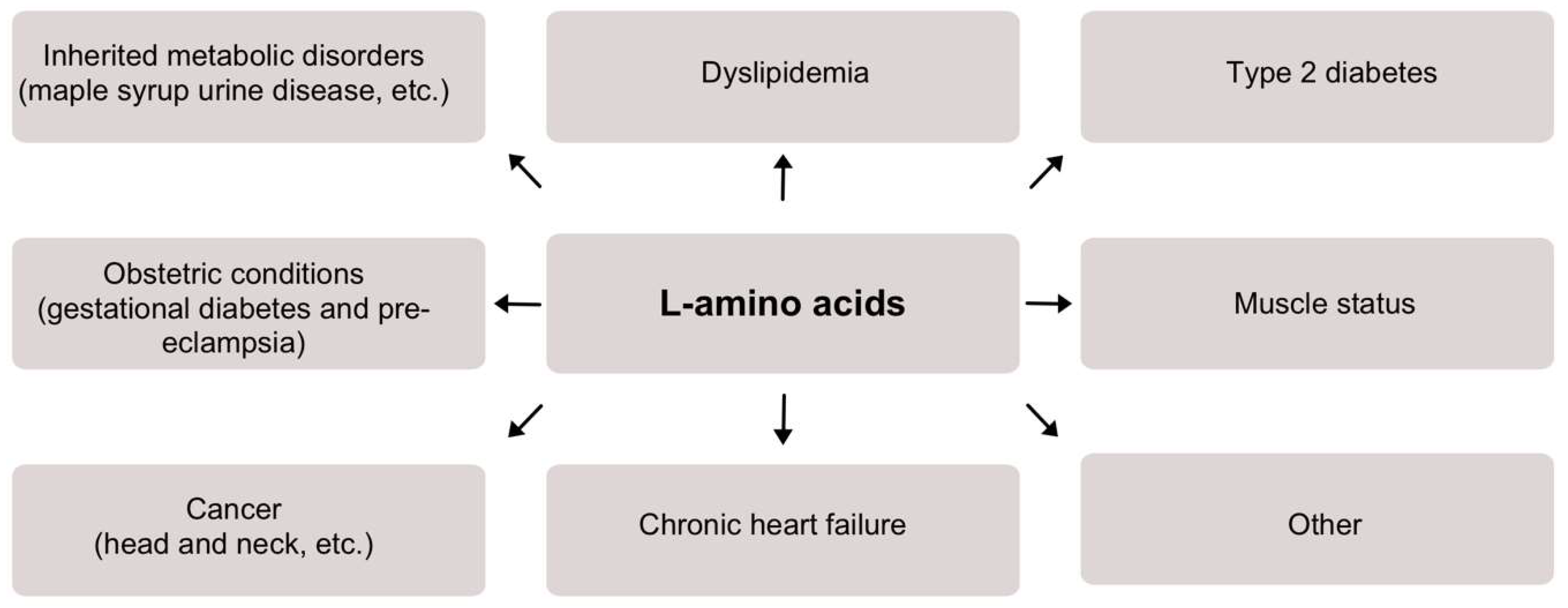
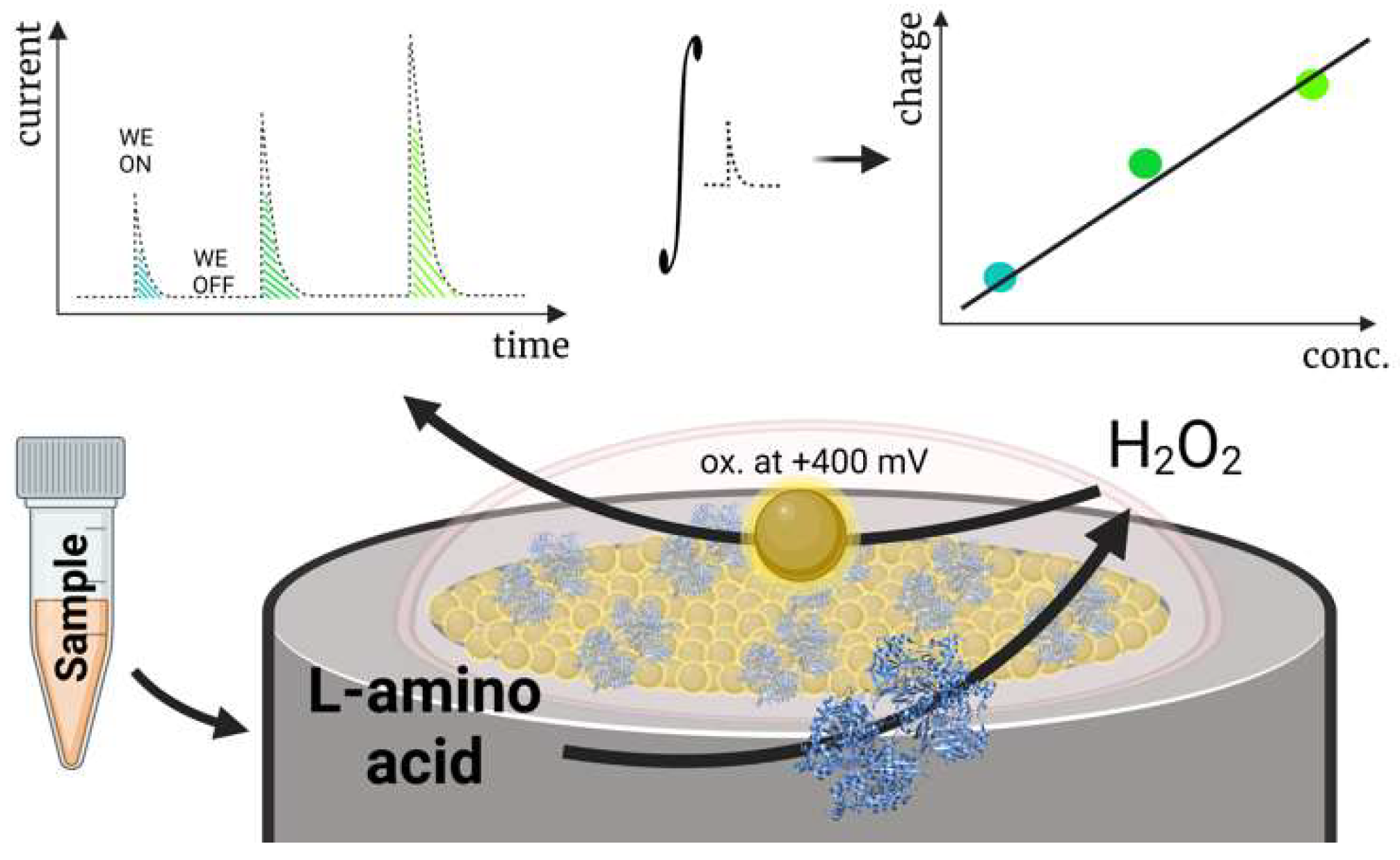
The field of biosensors is filled with reports and designs of various sensors, with the vast majority focusing on glucose sensing. However, in addition to glucose, there are many other important analytes that are worth investigating as well. In particular, L-amino acids appear as important diagnostic markers for a number of conditions. However, the progress in L-amino acid detection and the development of biosensors for L-amino acids are still somewhat insufficient. In recent years, the need to determine L-amino acids from clinical samples has risen. More clinical data appear to demonstrate that abnormal concentrations of L-amino acids are related to various clinical conditions such as inherited metabolic disorders, dyslipidemia, type 2 diabetes, muscle damage, etc. However, to this day, the diagnostic potential of L-amino acids is not yet fully established. Most likely, this is because of the difficulties in measuring L-amino acids, especially in human blood. In this review article, we extensively investigate the ‘overlooked’ L-amino acids. We review typical levels of amino acids present in human blood and broadly survey the importance of L-amino acids in most common conditions which can be monitored or diagnosed from changes in L-amino acids present in human blood. We also provide an overview of recent biosensors for L-amino acid monitoring and their advantages and disadvantages, with some other alternative methods for L-amino acid quantification, and finally we outline future perspectives related to the development of biosensing devices for L-amino acid monitoring.
Keywords: amino acids; detection; biosensors; diagnostics; clinical condition; disease amino acids; detection; biosensors; diagnostics; clinical condition; disease