Article

Changes in Coordination and Its Variability with an Increase in Functional Performance of the Lower Extremities


1
Neurogeriatrics, University Hospital Kiel, 24105 Kiel, Germany
2
Neuromechanics Unit, Stellenbosch University, Stellenbosch 7602, South Africa
3
NESMOS Department, Sapienza University of Rome, 00185 Rome, Italy
4
Digital Signal Processing and System Theory, Kiel University, 24118 Kiel, Germany
*
Author to whom correspondence should be addressed.
Biosensors 2023, 13(2), 156; https://doi.org/10.3390/bios13020156
Submission received: 18 November 2022 / Revised: 13 January 2023 / Accepted: 16 January 2023 / Published: 19 January 2023

Abstract

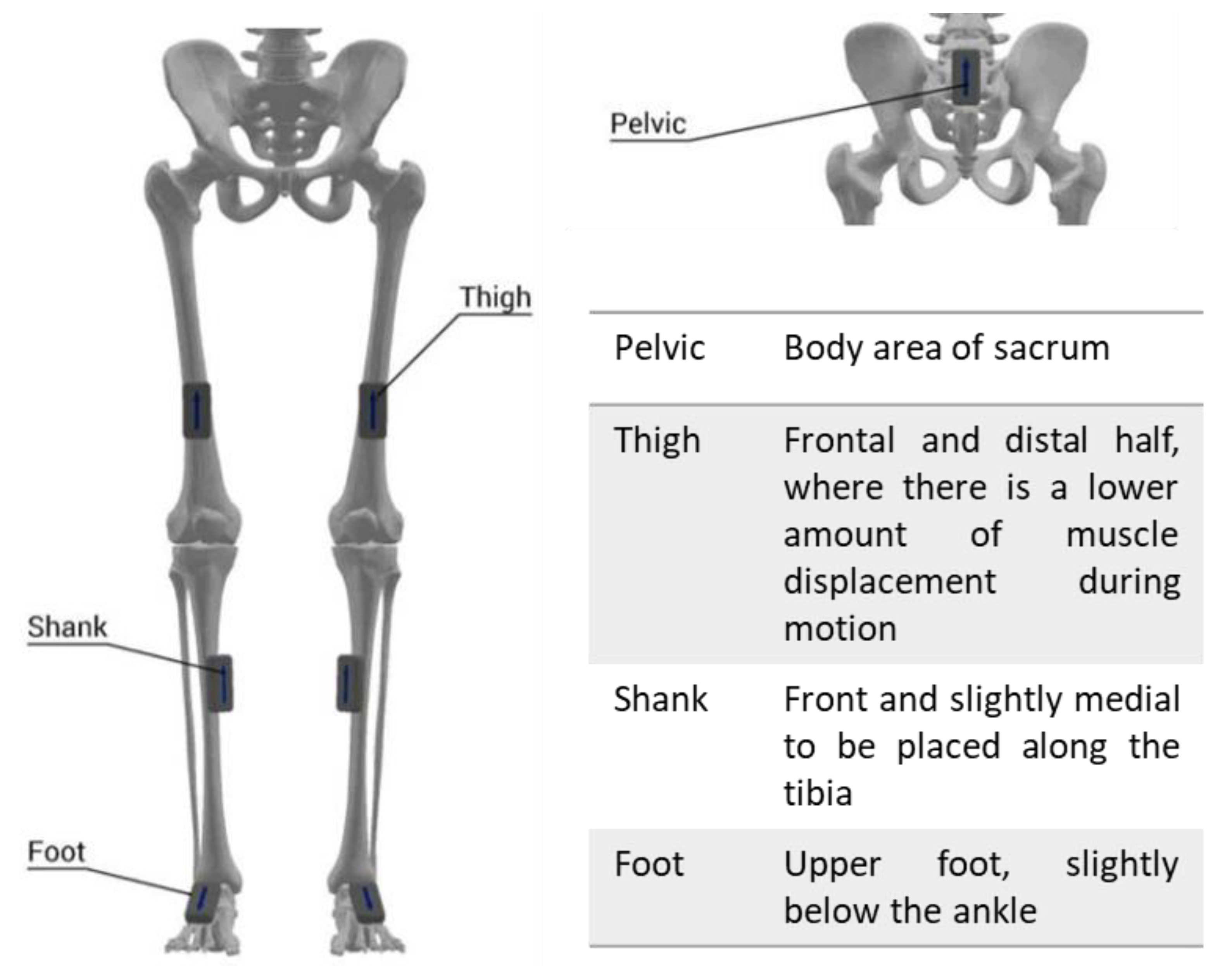
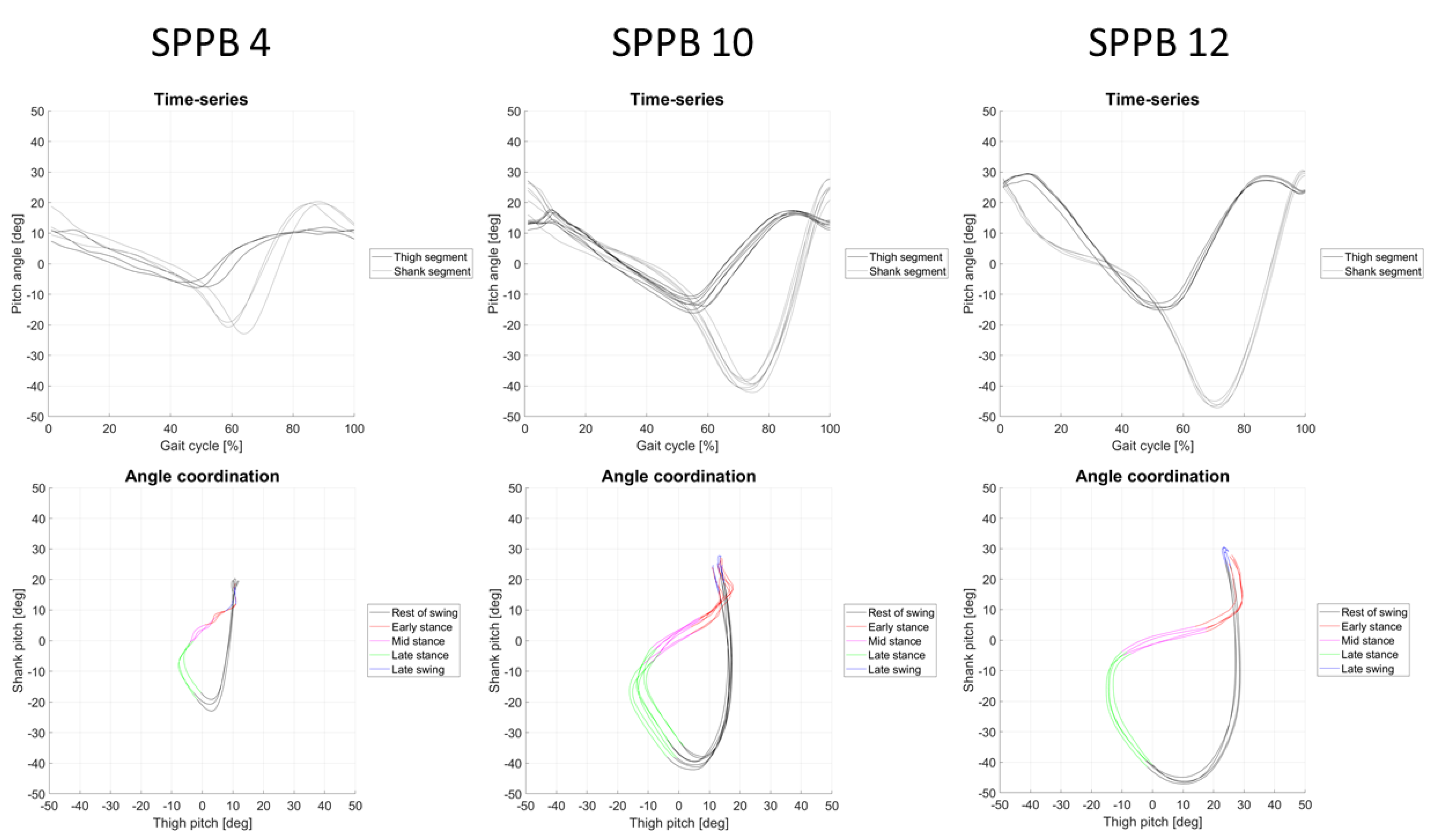
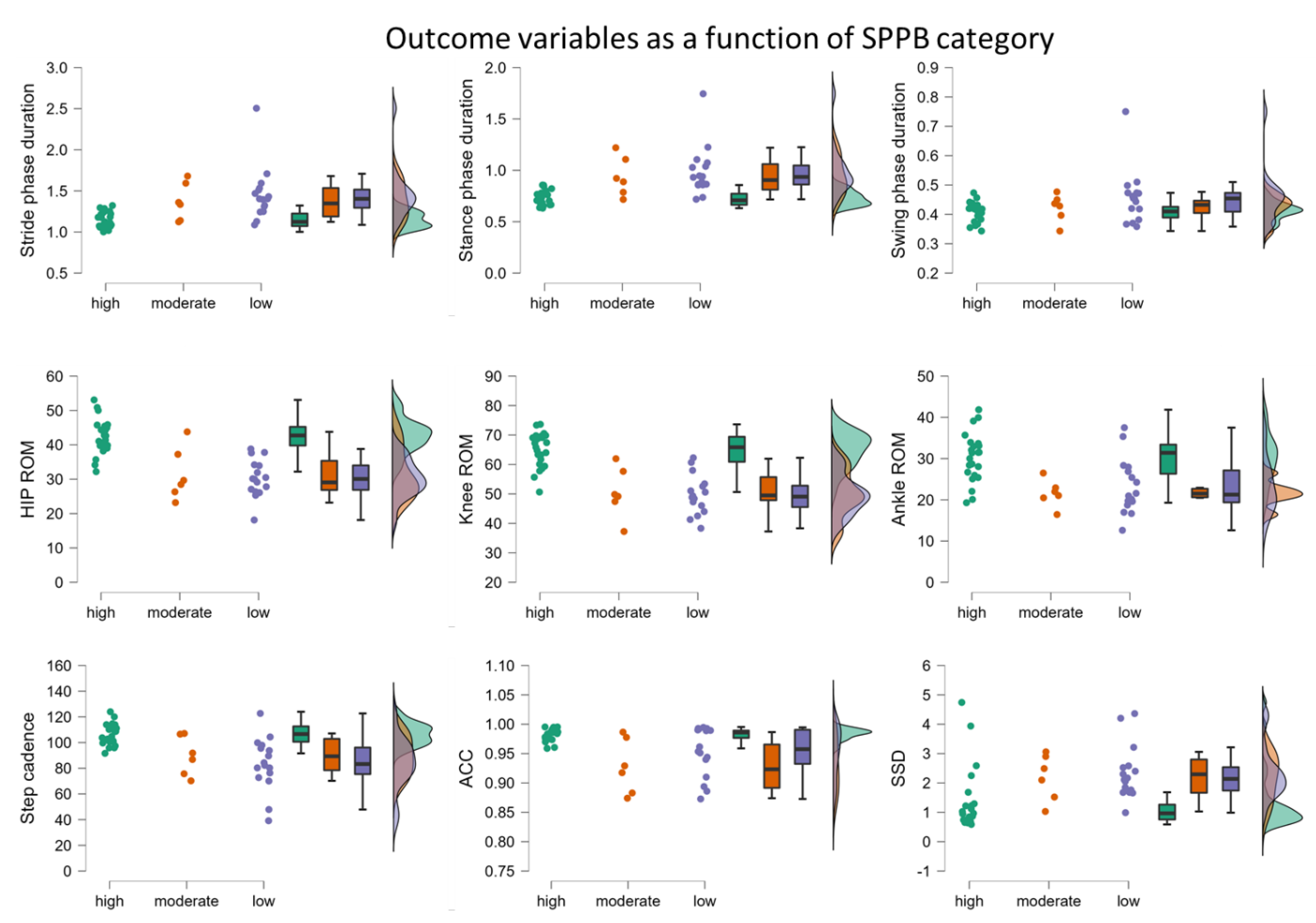
Clinical gait analysis has a long-standing tradition in biomechanics. However, the use of kinematic data or segment coordination has not been reported based on wearable sensors in “real-life” environments. In this work, the skeletal kinematics of 21 healthy and 24 neurogeriatric participants was collected in a magnetically disturbed environment with inertial measurement units (IMUs) using an accelerometer-based functional calibration method. The system consists of seven IMUs attached to the lower back, the thighs, the shanks, and the feet to acquire and process the raw sensor data. The Short Physical Performance Battery (SPPB) test was performed to relate joint kinematics and segment coordination to the overall SPPB score. Participants were then divided into three subgroups based on low (0–6), moderate (7–9), or high (10–12) SPPB scores. The main finding of this study is that most IMU-based parameters significantly correlated with the SPPB score and the parameters significantly differed between the SPPB subgroups. Lower limb range of motion and joint segment coordination correlated positively with the SPPB score, and the segment coordination variability correlated negatively. The results suggest that segment coordination impairments become more pronounced with a decreasing SPPB score, indicating that participants with low overall SPPB scores produce a peculiar inconsistent walking pattern to counteract lower extremity impairment in strength, balance, and mobility. Our findings confirm the usefulness of SPPB through objectively measured parameters, which may be relevant for the design of future studies and clinical routines.
Keywords: Short Physical Performance Battery; SPPB; wearables; kinematics; inter-joint coordination; cyclogram; neurogeriatrics Short Physical Performance Battery; SPPB; wearables; kinematics; inter-joint coordination; cyclogram; neurogeriatrics