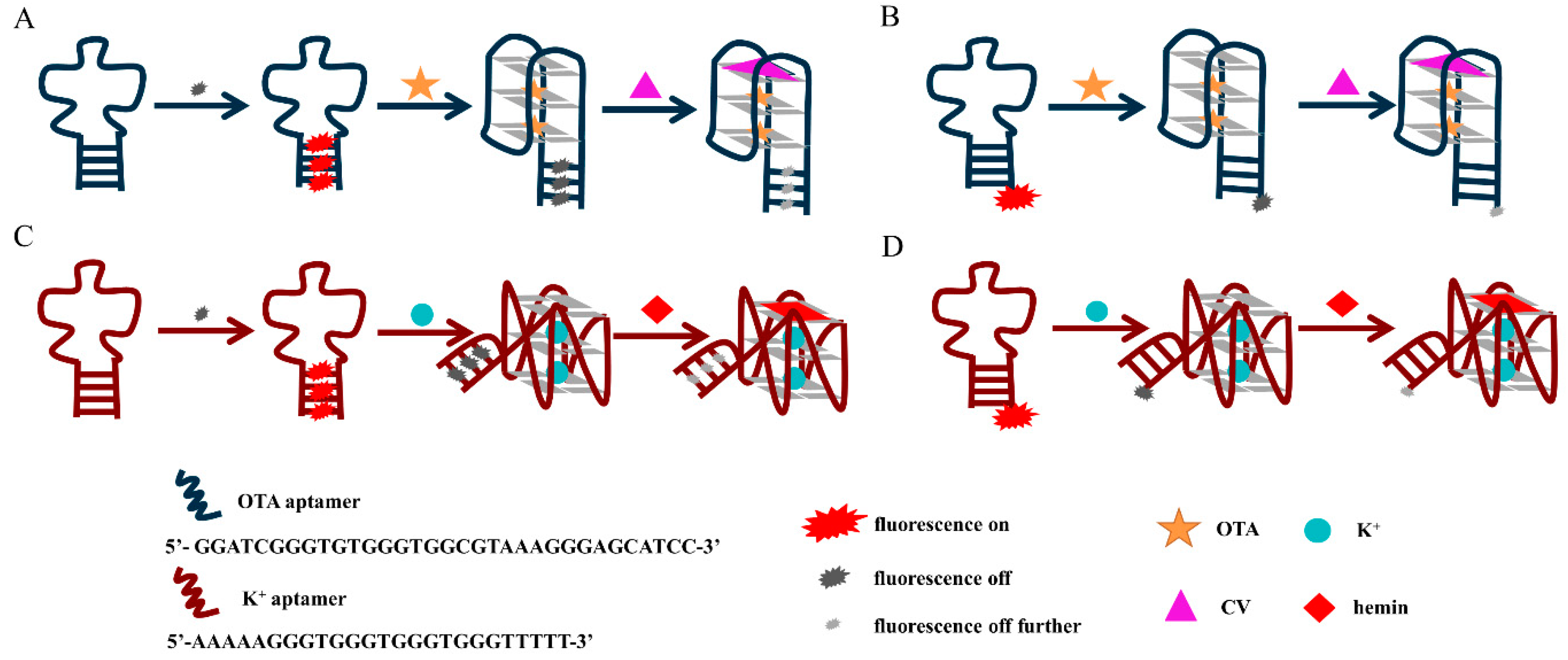
Development of Fluorescent Aptasensors Based on G-Quadruplex Quenching Ability for Ochratoxin A and Potassium Ions Detection

Abstract
Share and Cite
Yang, C.; Chu, X.; Zeng, L.; Rhouati, A.; Abbas, F.; Cui, S.; Lin, D. Development of Fluorescent Aptasensors Based on G-Quadruplex Quenching Ability for Ochratoxin A and Potassium Ions Detection. Biosensors 2022, 12, 423. https://doi.org/10.3390/bios12060423
Yang C, Chu X, Zeng L, Rhouati A, Abbas F, Cui S, Lin D. Development of Fluorescent Aptasensors Based on G-Quadruplex Quenching Ability for Ochratoxin A and Potassium Ions Detection. Biosensors. 2022; 12(6):423. https://doi.org/10.3390/bios12060423
Chicago/Turabian StyleYang, Cheng, Xiaolin Chu, Li Zeng, Amina Rhouati, Fathimath Abbas, Shengnan Cui, and Daiqin Lin. 2022. "Development of Fluorescent Aptasensors Based on G-Quadruplex Quenching Ability for Ochratoxin A and Potassium Ions Detection" Biosensors 12, no. 6: 423. https://doi.org/10.3390/bios12060423
APA StyleYang, C., Chu, X., Zeng, L., Rhouati, A., Abbas, F., Cui, S., & Lin, D. (2022). Development of Fluorescent Aptasensors Based on G-Quadruplex Quenching Ability for Ochratoxin A and Potassium Ions Detection. Biosensors, 12(6), 423. https://doi.org/10.3390/bios12060423