Structural, Thermal Behaviour and Tribological Performance in Cold Rolling of Mineral Lubricants with Graphene Nanoplatelets Functionalized with Oleic Acid


Abstract
1. Introduction
2. Materials and Methods
2.1. Materials
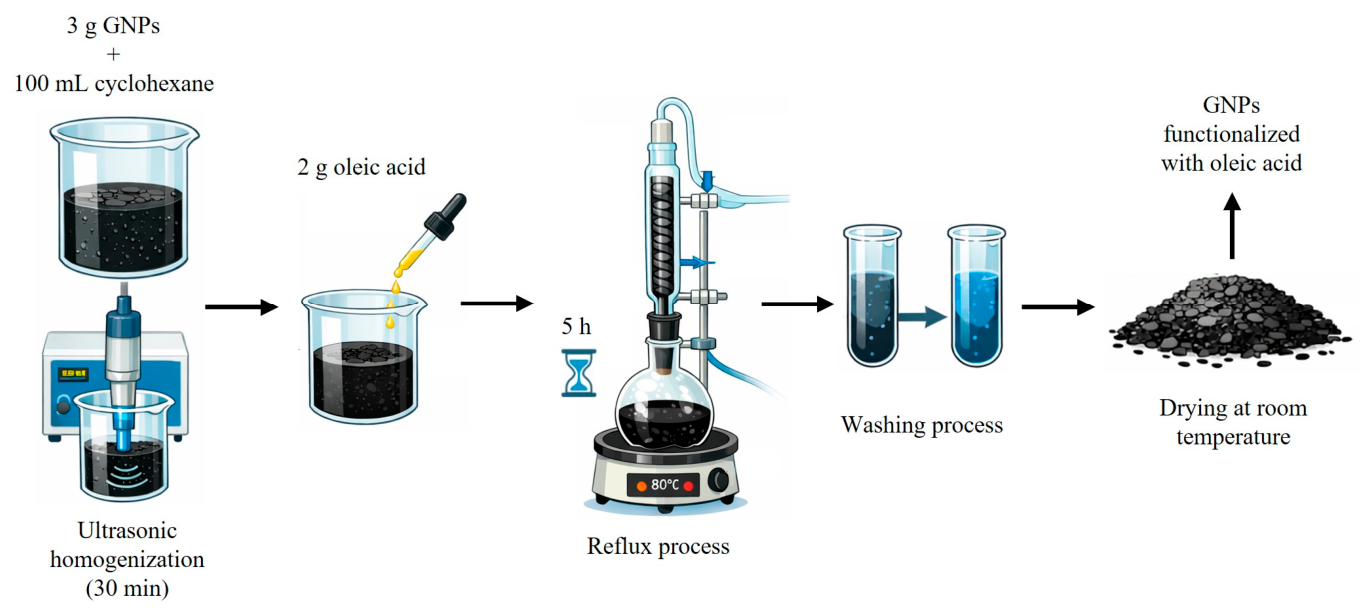
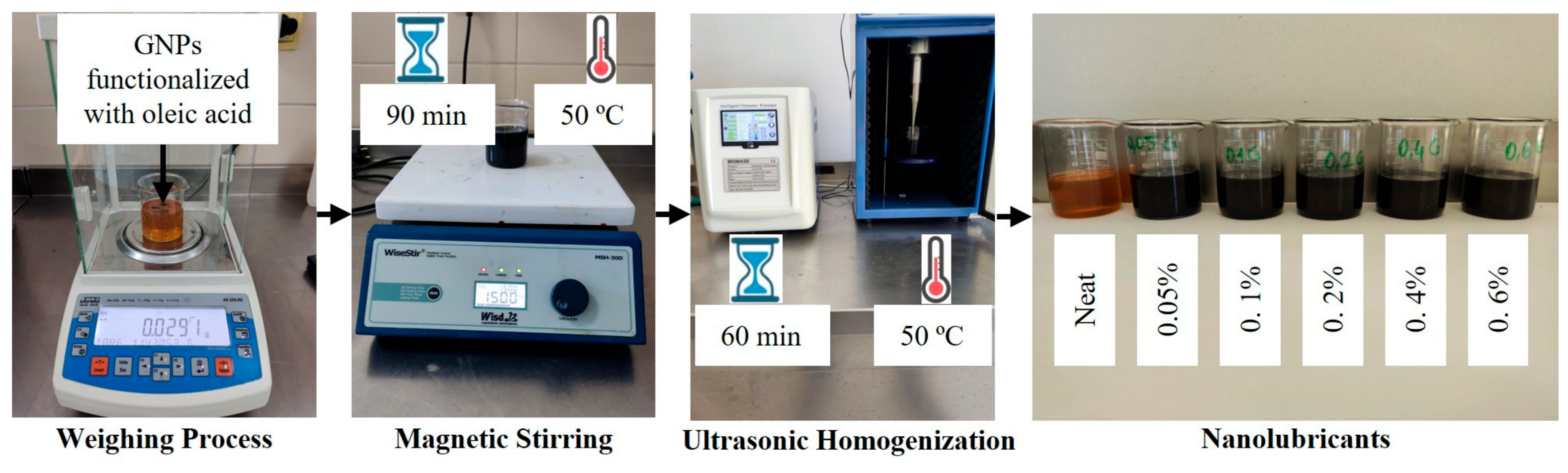
2.2. Functionalization of GNPs with Oleic Acid and Preparation of Nanolubricants
2.3. Methods
2.3.1. Fourier Transform Infrared (FT-IR) Spectroscopy
2.3.2. Ultraviolet–Visible (UV–VIS) Spectroscopy
2.3.3. Viscosity Measurements
2.3.4. Thermogravimetric Analysis (TGA)
2.3.5. Rolling Tests
3. Results and Discussion
3.1. Fourier Transform Infrared (FT-IR) Spectroscopy Results
3.2. Ultraviolet–Visible (UV–VIS) Spectroscopy Results
3.3. Viscosity Results
3.4. Thermogravimetric Analysis (TGA) Results
3.5. Rolling Results and Surface Characterisation
4. Conclusions
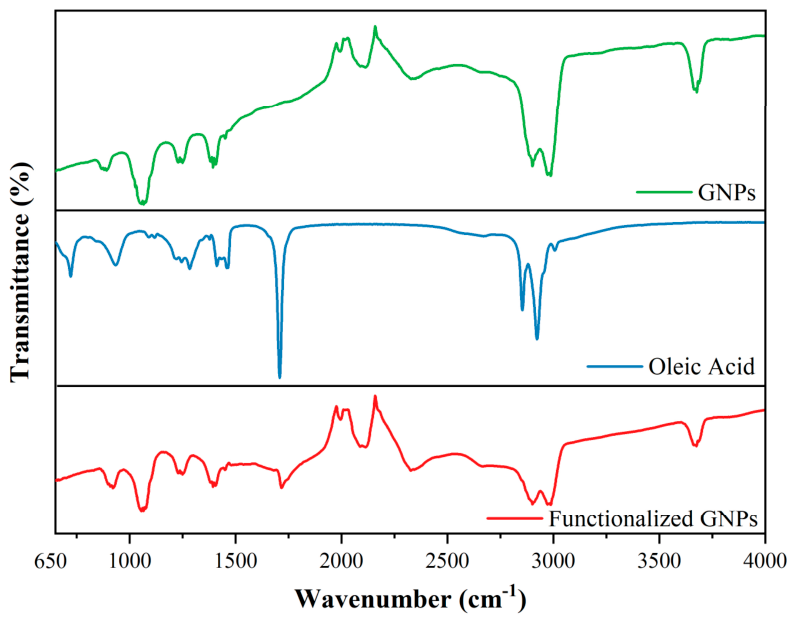
- FT-IR analyses confirmed the successful functionalization of GNPs with oleic acid, as evidenced by the C=O band observed around 1710 cm−1 and the changes in CH2 vibrations in the 2850–3000 cm−1 range.
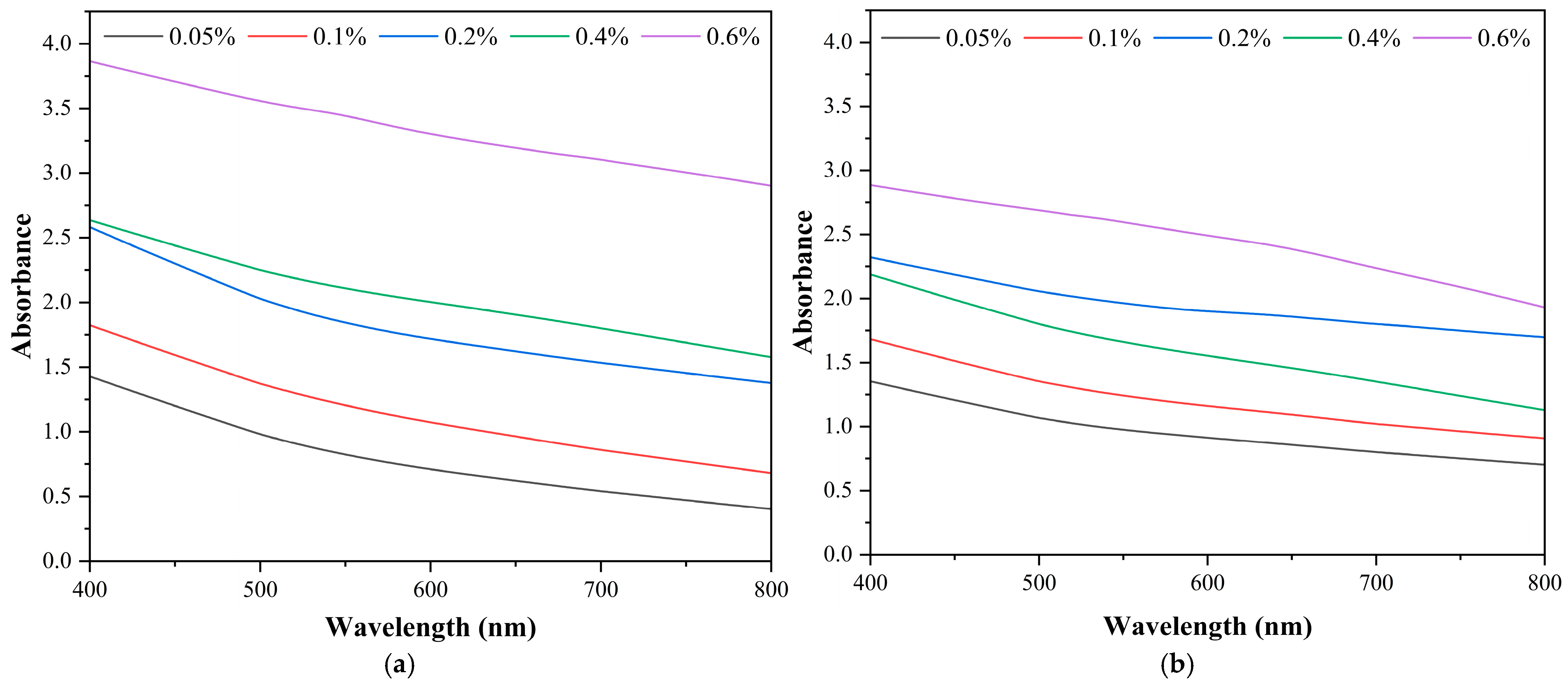
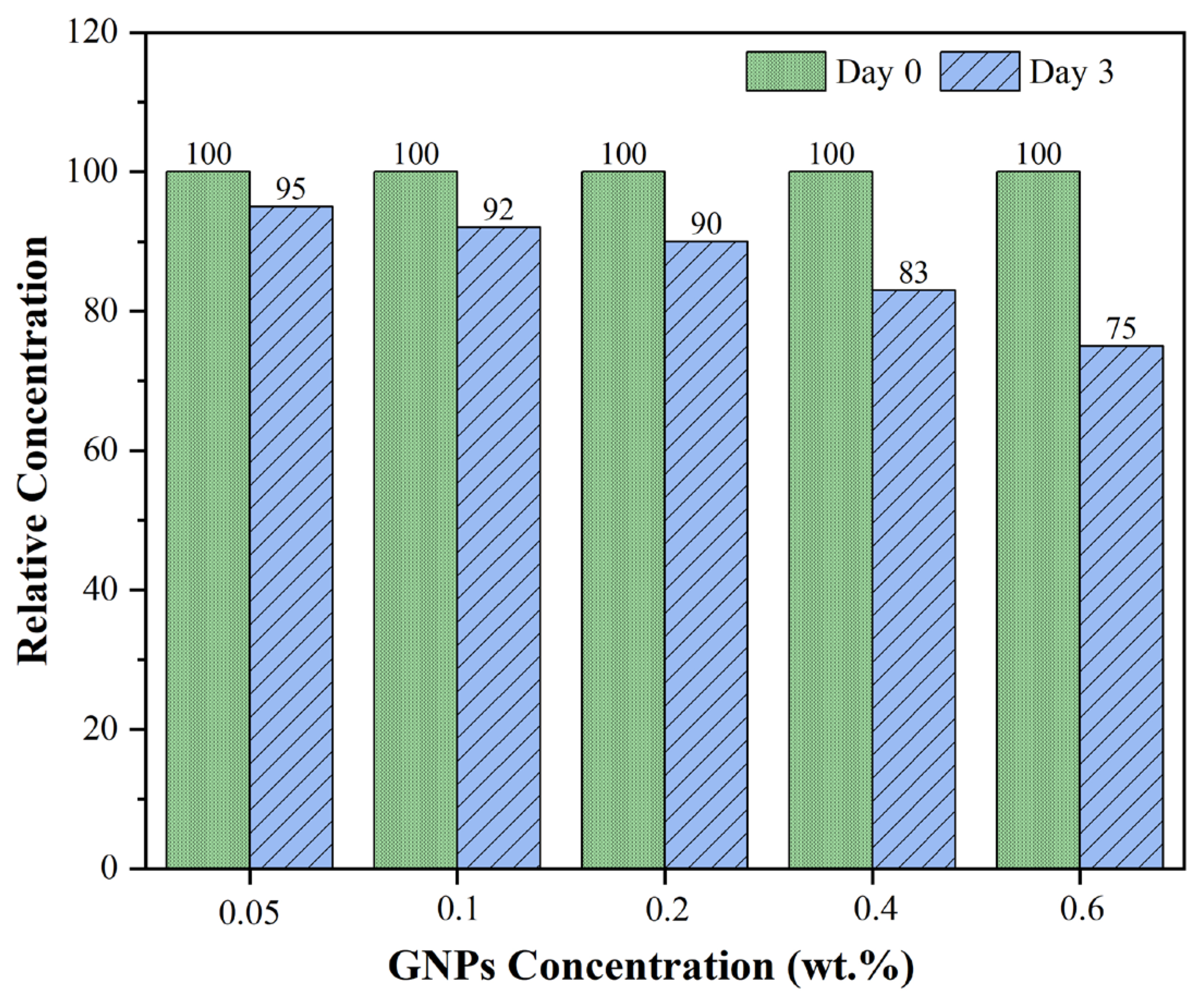
- UV–VIS results indicated that a homogeneous dispersion was initially achieved in all samples. After 3 days of storage, the relative concentrations were 95%, 90%, and 75% for 0.05%, 0.2%, and 0.6% GNPs, respectively, indicating a greater tendency toward agglomeration at higher concentrations.
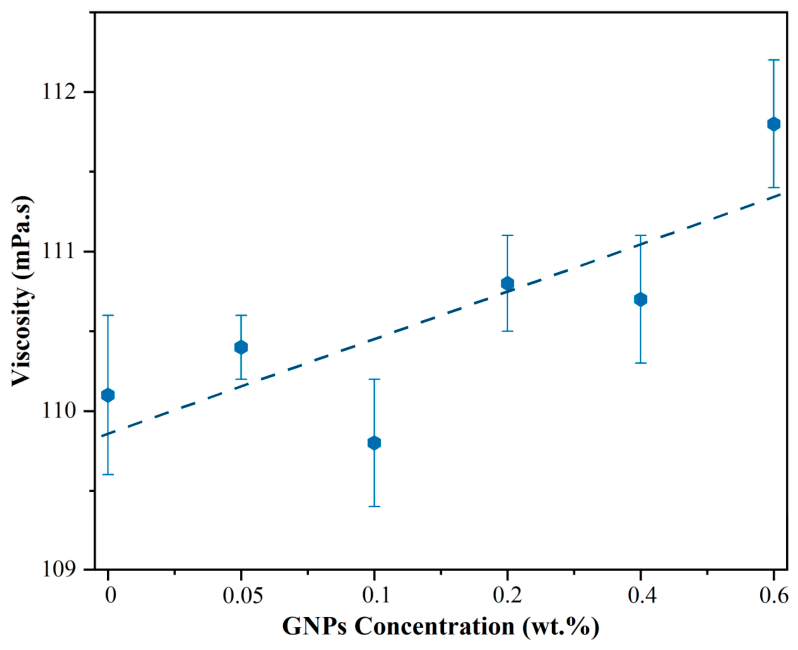
- Viscosity measurements showed that the flow properties were largely preserved at low GNPs concentrations. In the 0.2% GNPs sample, viscosity increased by only 0.64% compared to the base oil.
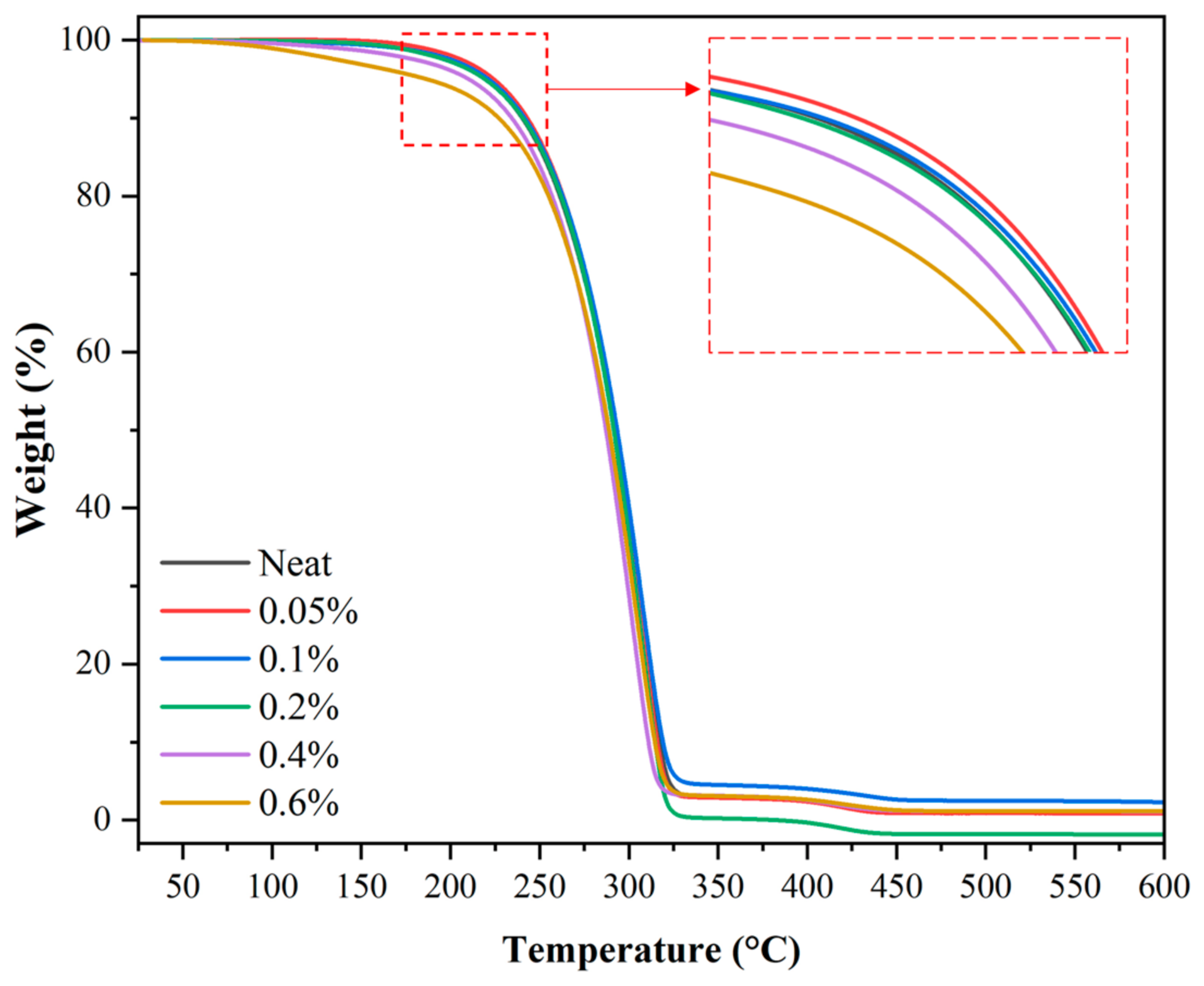
- TGAs revealed that low GNPs concentrations did not significantly affect oxidative stability. The oxidation onset temperature of the base oil, 205.3 °C, increased to 207.2 °C at 0.05% GNPs, but decreased at higher concentrations, reaching 176.8 °C at 0.6% GNPs.
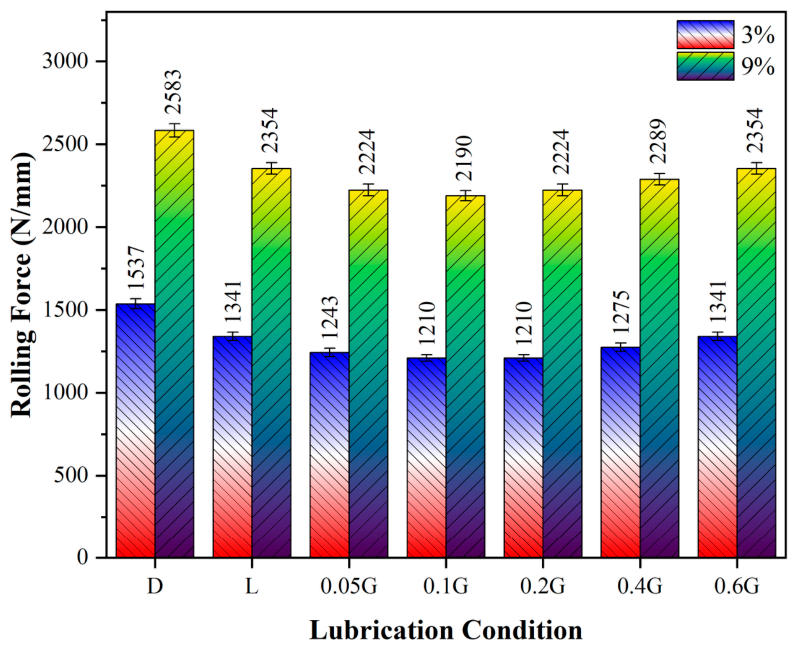
- Cold rolling tests demonstrated that the addition of GNPs improved tribological performance. At a 3% reduction, the rolling force decreased from 1341 N/mm for the base oil to 1210 N/mm with 0.1% GNPs, representing approximately a 21% reduction compared to dry conditions.
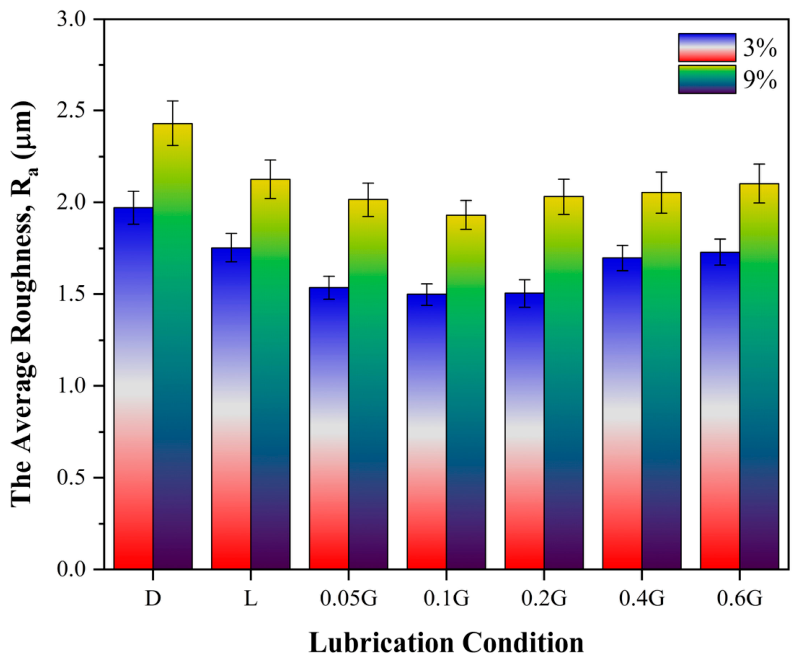
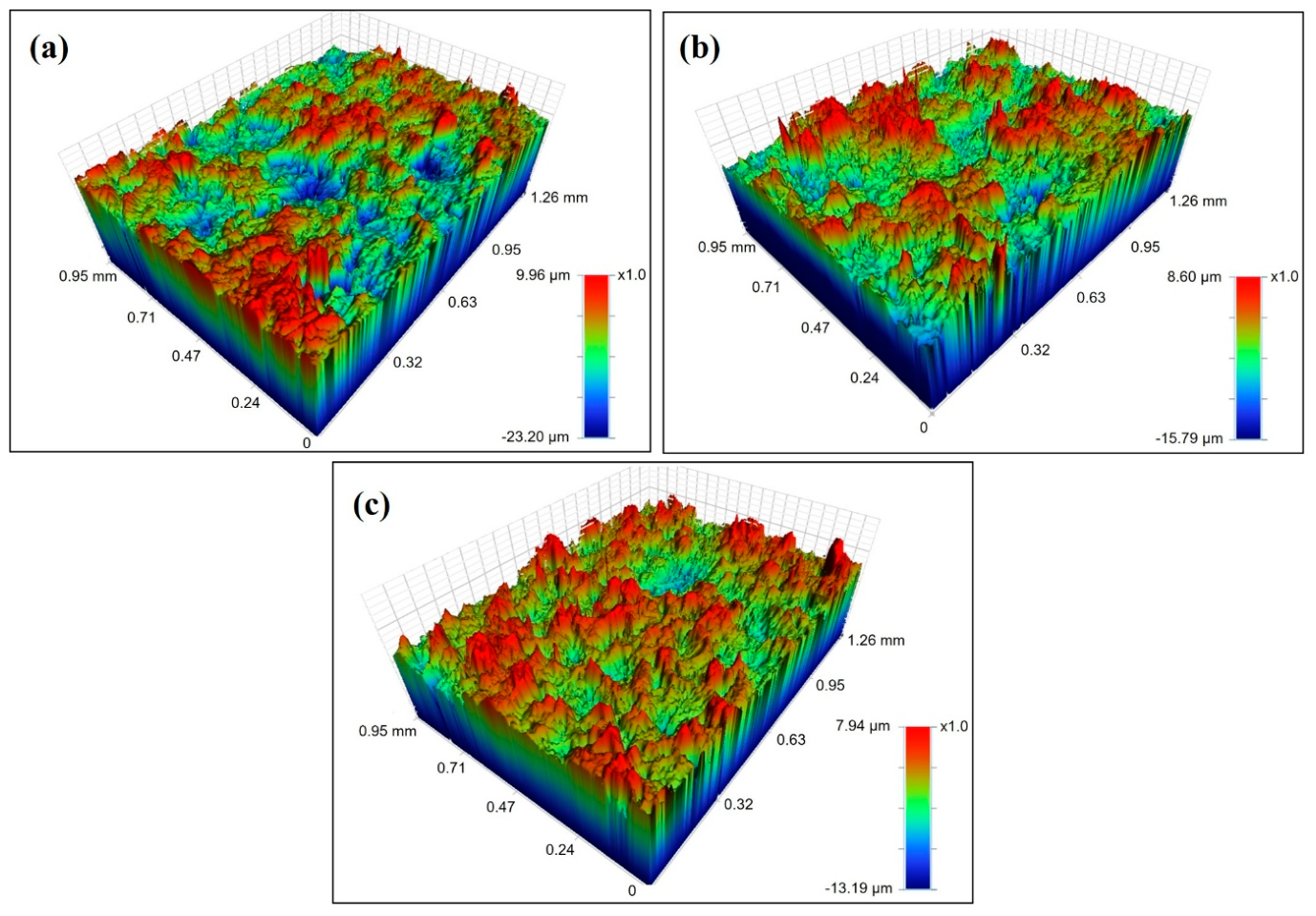
- Surface roughness and 3D topography analyses showed that a more uniform surface morphology and lower roughness values were achieved, particularly in the 0.1–0.2% GNPs range.
- Overall, the 0.1–0.2% GNPs concentration range was found to provide optimal results for dispersion stability, thermal behaviour, and tribological performance. The developed nanolubricants have demonstrated the potential to reduce friction and energy losses in cold rolling processes.
- From an industrial implementation perspective, several factors beyond laboratory-scale tribological performance should be considered. These include the cost-effectiveness of large-scale functionalization of graphene nanoplatelets, long-term oxidative and colloidal stability under continuous industrial recirculation, and compatibility with filtration systems used in cold-rolling mills. In addition, the present results indicate that at higher GNP concentrations (0.4–0.6 wt%), agglomeration-induced clustering may lead to increased abrasive interactions, posing challenges for practical applications. Therefore, future studies should focus on long-term ageing behaviour, the scalability of the functionalization process, and system-level performance under industrial operating conditions.
Author Contributions
Funding
Data Availability Statement
Conflicts of Interest
References
- Woydt, M. The Importance of Tribology for Reducing CO2 Emissions and for Sustainability. Wear 2021, 474–475, 203768. [Google Scholar] [CrossRef]
- Amiri, M.; Khonsari, M.M. On the Thermodynamics of Friction and Wear―A Review. Entropy 2010, 12, 1021–1049. [Google Scholar] [CrossRef]
- Ouyang, J.-H.; Li, Y.-F.; Zhang, Y.-Z.; Wang, Y.-M.; Wang, Y.-J. High-Temperature Solid Lubricants and Self-Lubricating Composites: A Critical Review. Lubricants 2022, 10, 177. [Google Scholar] [CrossRef]
- Rudnick, L.R.; Bartz, W.J. Comparison of Synthetic, Mineral Oil, and Bio-Based Lubricant Fluids. In Synthetics, Mineral Oils, and Bio-Based Lubricants; Rudnick, L.R., Ed.; CRC Press: Boca Raton, FL, USA, 2020; pp. 359–378. [Google Scholar]
- Hoque, M.A.; Yao, C.-W. Nanoscale Characterization of Nanomaterial-Based Systems: Mechanisms, Experimental Methods, and Challenges in Probing Corrosion, Mechanical, and Tribological Properties. Nanomaterials 2025, 15, 1824. [Google Scholar] [CrossRef] [PubMed]
- Lee, K.; Hwang, Y.; Cheong, S.; Choi, Y.; Kwon, L.; Lee, J.; Kim, S.H. Understanding the Role of Nanoparticles in Nano-Oil Lubrication. Tribol. Lett. 2009, 35, 127–131. [Google Scholar] [CrossRef]
- Uniyal, P.; Gaur, P.; Yadav, J.; Khan, T.; Ahmed, O.S. A Review on the Effect of Metal Oxide Nanoparticles on Tribological Properties of Biolubricants. ACS Omega 2024, 9, 12436–12456. [Google Scholar] [CrossRef]
- Haldar, A.; Kotia, A.; Kumar, N.; Ghosh, S.K. Enhancing the Tribological Properties of Hydraulic Oil-Based Nanolubricants Using MWCNT-SiO2 Hybrid Nanoparticles. J. Braz. Soc. Mech. Sci. Eng. 2022, 44, 223. [Google Scholar] [CrossRef]
- Baş, H.; Karabacak, Y.E. Investigation of the Effects of Boron Additives on the Performance of Engine Oil. Tribol. Trans. 2014, 57, 740–748. [Google Scholar] [CrossRef]
- Chhowalla, M.; Amaratunga, G.A.J. Thin Films of Fullerene-like MoS2 Nanoparticles with Ultra-Low Friction and Wear. Nature 2000, 407, 164–167. [Google Scholar] [CrossRef]
- Jiang, N.; Nan, F. Applications of Phyllosilicates Mineral Powder as Anti-Wear Lubricating Materials in Lubricating Oil and Grease: A Review. Lubricants 2024, 12, 324. [Google Scholar] [CrossRef]
- Yin, X.; Chen, H.; Zhang, F.; Yu, H.; Li, S.; Zhao, Z.; Zhu, Y.; Yang, K. Recent Progress on Carbon Nanomaterials for Resisting the Wear Damages. J. Nanomater. 2022, 2022, 1074133. [Google Scholar] [CrossRef]
- Sun, J.; Du, S. Application of Graphene Derivatives and Their Nanocomposites in Tribology and Lubrication: A Review. RSC Adv. 2019, 9, 40642–40661. [Google Scholar] [CrossRef] [PubMed]
- Gao, Q.; Liu, S.; Hou, K.; Li, Z.; Wang, J. Graphene-Based Nanomaterials as Lubricant Additives: A Review. Lubricants 2022, 10, 273. [Google Scholar] [CrossRef]
- Chen, Y.; Renner, P.; Liang, H. Dispersion of Nanoparticles in Lubricating Oil: A Critical Review. Lubricants 2019, 7, 7. [Google Scholar] [CrossRef]
- Mungse, H.P.; Gupta, K.; Singh, R.; Sharma, O.P.; Sugimura, H.; Khatri, O.P. Alkylated Graphene Oxide and Reduced Graphene Oxide: Grafting Density, Dispersion Stability to Enhancement of Lubrication Properties. J. Colloid Interface Sci. 2019, 541, 150–162. [Google Scholar] [CrossRef]
- Chouhan, A.; Kumari, S.; Sarkar, T.K.; Rawat, S.S.; Khatri, O.P. Graphene-Based Aqueous Lubricants: Dispersion Stability to the Enhancement of Tribological Properties. ACS Appl. Mater. Interfaces 2020, 12, 51785–51796. [Google Scholar] [CrossRef]
- Mousavi, S.B.; Pourpasha, H.; Heris, S.Z. High-Temperature Lubricity and Physicochemical Behaviors of Synthesized Cu/TiO2/MnO2-Doped GO Nanocomposite in High-Viscosity Index Synthetic Biodegradable PAO Oil. Int. Commun. Heat Mass Transf. 2024, 156, 107642. [Google Scholar] [CrossRef]
- La, D.D.; Truong, T.N.; Pham, T.Q.; Vo, H.T.; Tran, N.T.; Nguyen, T.A.; Nadda, A.K.; Nguyen, T.T.; Chang, S.W.; Chung, W.J.; et al. Scalable Fabrication of Modified Graphene Nanoplatelets as an Effective Additive for Engine Lubricant Oil. Nanomaterials 2020, 10, 877. [Google Scholar] [CrossRef]
- Wu, P.; Chen, X.; Zhang, C.; Zhang, J.; Luo, J.; Zhang, J. Modified Graphene as Novel Lubricating Additive with High Dispersion Stability in Oil. Friction 2021, 9, 143–154. [Google Scholar] [CrossRef]
- Chen, Y.; Hu, E.; Zhong, H.; Wang, J.; Subedi, A.; Hu, K.; Hu, X. Characterization and Tribological Performances of Graphene and Fluorinated Graphene Particles in PAO. Nanomaterials 2021, 11, 2126. [Google Scholar] [CrossRef]
- Aguilar-Rosas, O.A.; Alvis-Sánchez, J.A.; Tormos, B.; Marín-Santibáñez, B.M.; Pérez-González, J.; Farfan-Cabrera, L.I. Enhancement of Low-Viscosity Synthetic Oil Using Graphene Nanoparticles as Additives for Enduring Electrified Tribological Environments. Tribol. Int. 2023, 188, 108848. [Google Scholar] [CrossRef]
- Sabar, S.K.; Ghosh, S.K. Nanolubrication and Tribological Behaviour of the Rolling Process—A Review. Surf. Eng. 2023, 39, 6–24. [Google Scholar] [CrossRef]
- Lin, J.; Wang, L.; Chen, G. Modification of Graphene Platelets and Their Tribological Properties as a Lubricant Additive. Tribol. Lett. 2011, 41, 209–215. [Google Scholar] [CrossRef]
- Chen, T.; Xia, Y.; Jia, Z.; Liu, Z.; Zhang, H. Synthesis, Characterization, and Tribological Behavior of Oleic Acid Capped Graphene Oxide. J. Nanomater. 2014, 2014, 654145. [Google Scholar] [CrossRef]
- Özakın, B.; Gültekin, K.; Yurdgülü, H.İ. Improvement of Oxidation Stability, Hydrolytic Stability and Tribological Properties of Kaolin Particles Doped Bio-Based Green Palm Oil. Colloids Surf. A Physicochem. Eng. Asp. 2025, 712, 136441. [Google Scholar] [CrossRef]
- Paul, G.; Shit, S.; Hirani, H.; Kuila, T.; Murmu, N.C. Tribological Behavior of Dodecylamine Functionalized Graphene Nanosheets Dispersed Engine Oil Nanolubricants. Tribol. Int. 2019, 131, 605–619. [Google Scholar] [CrossRef]
- Özakın, B.; Gültekin, K.; Uğuz, G. Investigation of the Effect of Particle Size on Dispersion Stability and Viscosity in Kaolin Particles-Doped Bio-Based Palm Nanolubricants. Arab. J. Sci. Eng. 2025, 50, 4223–4241. [Google Scholar] [CrossRef]
- Özakın, B.; Gültekin, K.; Uymaz, S.E.; Özakın, A.N. Formulation Optimization with Structural, Oxidative and Thermal Behaviors of Castor Oil-Based Nanolubricants Reinforced with Boron Nitride and Black Cumin Oil. J. Mol. Liq. 2026, 443, 129163. [Google Scholar] [CrossRef]
- Özakın, B.; Gültekin, K.; Aygür, Ö. Investigation of Tribological Performance of Bio-Based Palm Oil Reinforced with Oleic Acid Modified Kaolin Nanoparticles in Cold Rolling. Appl. Clay Sci. 2026, 282, 108107. [Google Scholar] [CrossRef]
- Firdaus, R.M.; Vigolo, B.; Mohamed, A.R. Enhanced Functionalization of Graphene Nanoplates through Sulfonitric Treatment: Investigating Optimal Conditions via FTIR Analysis. Malays. J. Chem. 2024, 26, 127–133. [Google Scholar] [CrossRef]
- Tran, V.Q.; Doan, H.T.; Nguyen, N.T.; Do, C. V Preparation of Graphene Nanoplatelets by Thermal Shock Combined with Ball Milling Methods for Fabricating Flame-Retardant Polymers. J. Chem. 2019, 2019, 5284160. [Google Scholar] [CrossRef]
- Phua, J.-L.; Teh, P.-L.; Ghani, S.A.; Yeoh, C.-K. Effect of Heat Assisted Bath Sonication on the Mechanical and Thermal Deformation Behaviours of Graphene Nanoplatelets Filled Epoxy Polymer Composites. Int. J. Polym. Sci. 2016, 2016, 9767183. [Google Scholar] [CrossRef]
- Bello, R.H.; Coelho, L.A.F.; Becker, D. Role of Chemical Funcionalization of Carbon Nanoparticles in Epoxy Matrices. J. Compos. Mater. 2018, 52, 449–464. [Google Scholar] [CrossRef]
- Zhang, R.; Cheng, X.; Xia, Y.; Zhang, H.; Ding, Z.; Wang, M.; Ding, Q.; Hu, X.; Xu, X. Synergistic Effect of Sodium Dodecyl Sulfate (SDS) and Oleic Acid (OA) on Gelation and Lubrication Performance. Colloids Surf. A Physicochem. Eng. Asp. 2024, 681, 132768. [Google Scholar] [CrossRef]
- Calabokis, O.P.; Nuñez de la Rosa, Y.; Ballesteros-Ballesteros, V.; Borges, P.C.; Cousseau, T. Effect of a Metal Conditioner on the Physicochemical Properties and Tribological Performance of the Engine Oil SAE 5W-30 API SN. Lubricants 2023, 11, 305. [Google Scholar] [CrossRef]
- Kaynakli, M.; Albayrak, A.; Işcan, B. Spectroscopic Characterization and AI-Based Classification of Engine Oil Degradation in Internal Combustion Engines. In Proceedings of the 9th International Artificial Intelligence and Data Processing Symposium (IDAP), Malatya, Turkey, 6–7 September 2025; IEEE: New York, NY, USA, 2025; pp. 6–7. [Google Scholar] [CrossRef]
- Li, W.; Li, Y.; Hu, Y.; Wang, Y. Synthesis and Characterisation of HSIBR Used as Viscosity Index Improver for Lubricants. Lubr. Sci. 2012, 24, 188–197. [Google Scholar] [CrossRef]
- Sofiah, A.G.N.; Pandey, A.K.; Rajamony, R.K.; Samykano, M.; Pasupuleti, J.; Sulaiman, N.F.; Saidur, R. Energetic, Exergetic, and Entropy Generation Prediction and Optimization of Photovoltaic Thermal System Integrated Hexagonal Boron Nitride-Water Nanofluid. Appl. Therm. Eng. 2025, 263, 125356. [Google Scholar] [CrossRef]
- Ismail, M.F.; Azmi, W.H.; Mamat, R.; Sharma, K.V.; Ali, H.M. Extensive Stability Assessment of TiO2/Polyvinyl Ether Nanolubricant with Physical Homogenization. Lubricants 2023, 11, 67. [Google Scholar] [CrossRef]
- Yeap, S.P.; Lim, J.; Ooi, B.S.; Ahmad, A.L. Agglomeration, Colloidal Stability, and Magnetic Separation of Magnetic Nanoparticles: Collective Influences on Environmental Engineering Applications. J. Nanopart. Res. 2017, 19, 368. [Google Scholar] [CrossRef]
- Thottackkad, M.V.; Perikinalil, R.K.; Kumarapillai, P.N. Experimental Evaluation on the Tribological Properties of Coconut Oil by the Addition of CuO Nanoparticles. Int. J. Precis. Eng. Manuf. 2012, 13, 111–116. [Google Scholar] [CrossRef]
- Guo, J.; Xiao, H.; Wu, F. Prediction of Viscosity of Kerosene-Based Nanographene Fluids by Molecular Dynamics Simulation Analysis. J. Mol. Liq. 2023, 391, 123417. [Google Scholar] [CrossRef]
- Sadiq, I.O.; Suhaimi, M.A.; Sharif, S.; Mohd Yusof, N.; Hisam, M.J. Enhanced Performance of Bio-Lubricant Properties with Nano-Additives for Sustainable Lubrication. Ind. Lubr. Tribol. 2022, 74, 995–1006. [Google Scholar] [CrossRef]
- Ahmed Abdalglil Mustafa, W.; Dassenoy, F.; Sarno, M.; Senatore, A. A Review on Potentials and Challenges of Nanolubricants as Promising Lubricants for Electric Vehicles. Lubr. Sci. 2022, 34, 1–29. [Google Scholar] [CrossRef]
- Rasheed, A.K.; Khalid, M.; Javeed, A.; Rashmi, W.; Gupta, T.C.S.M.; Chan, A. Heat Transfer and Tribological Performance of Graphene Nanolubricant in an Internal Combustion Engine. Tribol. Int. 2016, 103, 504–515. [Google Scholar] [CrossRef]
- Nagarajan, T.; Khalid, M.; Sridewi, N.; Jagadish, P.; Shahabuddin, S.; Muthoosamy, K.; Walvekar, R. Tribological, Oxidation and Thermal Conductivity Studies of Microwave Synthesised Molybdenum Disulfide (MoS2) Nanoparticles as Nano-Additives in Diesel Based Engine Oil. Sci. Rep. 2022, 12, 14108. [Google Scholar] [CrossRef]
- Morelos-Gomez, A.; Kondo, K.; Omori, K.; Kamei, Y.; Kuritani, M.; Irwansyah; Yokokawa, T.; Fajardo-Díaz, J.L.; Cruz-Silva, R.; Endo, M. Tuning Autoxidation and Friction of Mineral Oil by Fullerene Cluster Properties. Ind. Eng. Chem. Res. 2023, 62, 7941–7949. [Google Scholar] [CrossRef]
- Ren, M.; Xie, H.; Lin, F.; Wu, H.; Yuan, S.; Li, Z.; Yang, M.; Manabe, K.; Jiang, Z. Influence of GNPs Solid Lubricant on the Fabrication of Cu/SS304L Composite Micro Channels. Tribol. Int. 2024, 194, 109517. [Google Scholar] [CrossRef]
- Pourpasha, H.; Zeinali Heris, S.; Mohammadfam, Y.; Sharifpur, M.; Meyer, J. Development of New Hybrid Graphene-Based Engine Oil Nanolubricant for Thermal and Tribological Applications. Adv. Eng. Mater. 2025, 27, e202500793. [Google Scholar] [CrossRef]
- Jin, S.; Li, X.; Gao, H.; Wang, P.; Zhang, D. Analysis and Prospects of Lubrication and Friction Characteristics in Cold Strip Rolling: A Review. Steel Res. Int. 2025, 96, 2400258. [Google Scholar] [CrossRef]
- Omrani, E.; Siddaiah, A.; Moghadam, A.D.; Garg, U.; Rohatgi, P.; Menezes, P.L. Ball Milled Graphene Nano Additives for Enhancing Sliding Contact in Vegetable Oil. Nanomaterials 2021, 11, 610. [Google Scholar] [CrossRef]
- Mekicha, M.A.; de Rooij, M.B.; Mishra, T.; Matthews, D.T.A.; Jacobs, L.; Schipper, D.J. Study of Wear Particles Formation at Single Asperity Contact: An Experimental and Numerical Approach. Wear 2021, 470–471, 203644. [Google Scholar] [CrossRef]
- Wu, H.; Zhao, J.; Luo, L.; Huang, S.; Wang, L.; Zhang, S.; Jiao, S.; Huang, H.; Jiang, Z. Performance Evaluation and Lubrication Mechanism of Water-Based Nanolubricants Containing Nano-TiO2 in Hot Steel Rolling. Lubricants 2018, 6, 57. [Google Scholar] [CrossRef]
- Hao, L.; Wang, Z.; Zhang, G.; Zhao, Y.; Duan, Q.; Wang, Z.; Chen, Y.; Li, T. Tribological Evaluation and Lubrication Mechanisms of Nanoparticles Enhanced Lubricants in Cold Rolling. Mech. Ind. 2020, 21, 108. [Google Scholar] [CrossRef]







| Rolling Parameter (L/R) | ||||||||
|---|---|---|---|---|---|---|---|---|
| Lubrication Condition (L) | Indicator | D | L | 0.05G | 0.1G | 0.2G | 0.4G | 0.6G |
| Meaning | Dry | Neat lubricant | 0.05 wt% GNPs doped | 0.1 wt% GNPs doped | 0.2 wt% GNPs doped | 0.4 wt% GNPs doped | 0.6 wt% GNPs doped | |
| Reduction Ratio (R) | Indicator | 3 | 9 | |||||
| Meaning | 3% reduction ratio | 9% reduction ratio | ||||||
| Sample | Oxidation Onset Temperature (To) (°C) |
|---|---|
| Neat | 205.3 |
| 0.05% | 207.2 |
| 0.1% | 206.4 |
| 0.2% | 200.1 |
| 0.4% | 197.9 |
| 0.6% | 176.8 |
Disclaimer/Publisher’s Note: The statements, opinions and data contained in all publications are solely those of the individual author(s) and contributor(s) and not of MDPI and/or the editor(s). MDPI and/or the editor(s) disclaim responsibility for any injury to people or property resulting from any ideas, methods, instructions or products referred to in the content. |
© 2026 by the authors. Licensee MDPI, Basel, Switzerland. This article is an open access article distributed under the terms and conditions of the Creative Commons Attribution (CC BY) license.
Share and Cite
Özakın, B.; Gültekin, K. Structural, Thermal Behaviour and Tribological Performance in Cold Rolling of Mineral Lubricants with Graphene Nanoplatelets Functionalized with Oleic Acid. Nanomaterials 2026, 16, 495. https://doi.org/10.3390/nano16080495
Özakın B, Gültekin K. Structural, Thermal Behaviour and Tribological Performance in Cold Rolling of Mineral Lubricants with Graphene Nanoplatelets Functionalized with Oleic Acid. Nanomaterials. 2026; 16(8):495. https://doi.org/10.3390/nano16080495
Chicago/Turabian StyleÖzakın, Batuhan, and Kürşat Gültekin. 2026. "Structural, Thermal Behaviour and Tribological Performance in Cold Rolling of Mineral Lubricants with Graphene Nanoplatelets Functionalized with Oleic Acid" Nanomaterials 16, no. 8: 495. https://doi.org/10.3390/nano16080495
APA StyleÖzakın, B., & Gültekin, K. (2026). Structural, Thermal Behaviour and Tribological Performance in Cold Rolling of Mineral Lubricants with Graphene Nanoplatelets Functionalized with Oleic Acid. Nanomaterials, 16(8), 495. https://doi.org/10.3390/nano16080495