Carbon Dots for Corrosion Protection: A Systematic Review of Applications and Mechanisms


Abstract
1. Introduction
2. Progress on the Application and Mechanism of CDs in the Field of Corrosion Inhibitors
2.1. Applications in a Variety of Corrosive Media
2.1.1. Applications in Acidic Media

2.1.2. Applications in Neutral/Saline Media
2.1.3. Applications in Alkaline Media
2.2. Inhibition Mechanism of CDs Inhibitors
3. Progress on the Application and Protective Mechanisms of CDs in Anticorrosive Coatings
3.1. Applications of CDs in Anticorrosive Coatings
3.2. Mechanisms of CDs in Enhancing Coating Anticorrosive Performance
4. Progress on the Application and Mechanism of CDs in Photogenerated Cathodic Protection
4.1. Construction and Application of CDs-Based Composite Photoanodes
4.2. Mechanisms of CDs in Enhancing Photoanode Performance
5. Applications and Mechanisms of CDs in Other Corrosion Protection Sub-Fields
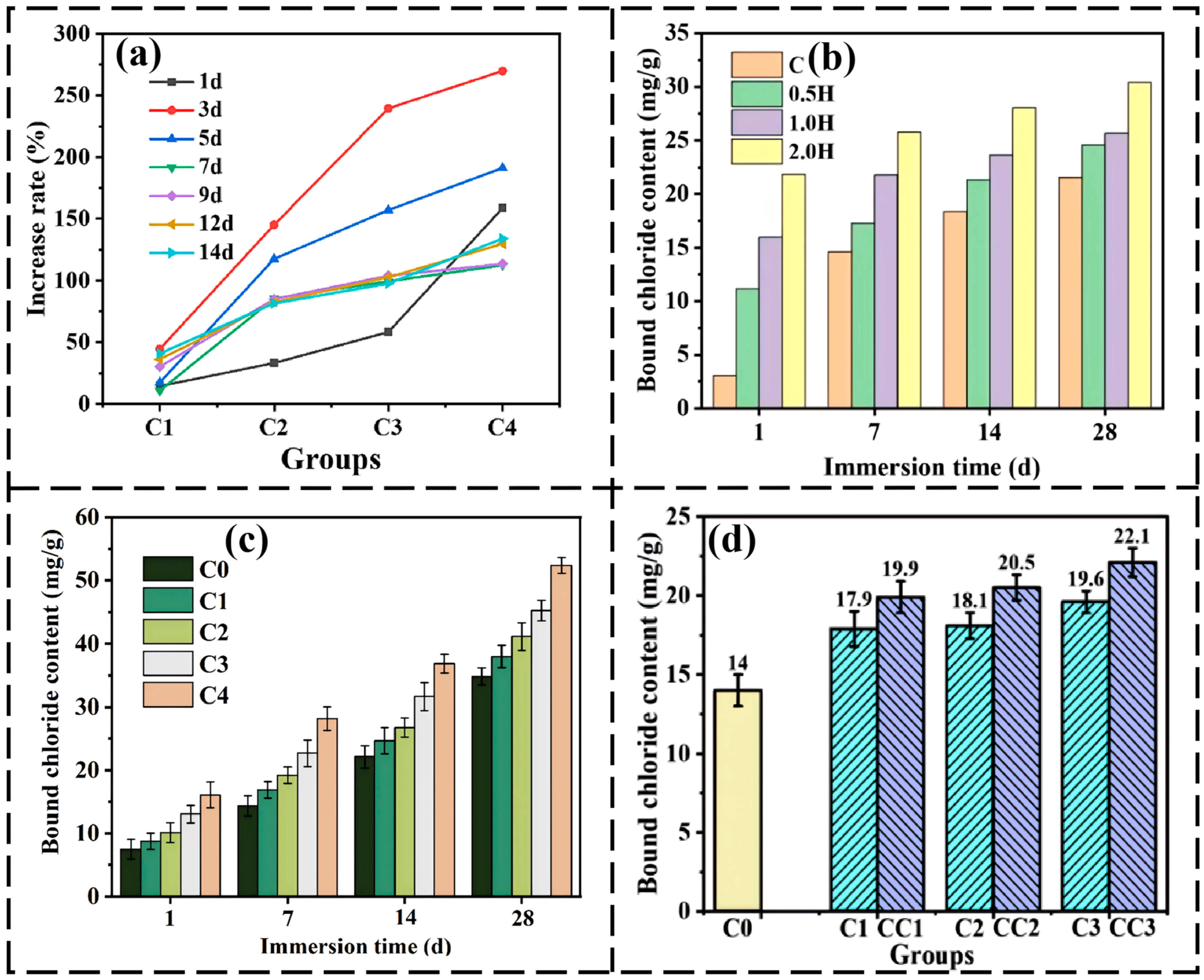
5.1. CDs as Chloride Binding Promoters
5.2. CDs as Corrosion Sensing Platforms
6. Conclusions and Outlook
6.1. Conclusions
6.2. Future Research Outlook
- (1)
- Controllable Synthesis and Scalable Preparation of CDs
- (2)
- Long-Term Service Performance and Stability in Complex Environments
- (3)
- Structure-Activity Relationship Studies of CDs
- (4)
- In-Depth Elucidation of Multi-Factor Coupling Mechanisms
- (5)
- Machine Learning-Assisted Design of High-Efficiency CDs
- (6)
- Construction of Multifunctional Integrated Intelligent Protection Systems
Author Contributions
Funding
Data Availability Statement
Acknowledgments
Conflicts of Interest
References
- Verma, C.; Alfantazi, A.; Hussain, C.M. Exploring the frontiers of self-healing layered double hydroxides in corrosion: Innovations, challenges, and applications. Coord. Chem. Rev. 2026, 559, 217833. [Google Scholar] [CrossRef]
- Lv, Y.; Zhao, W.; Qiang, Y.; Zhao, J. Constructing the interface of g-C3N4/epoxy composites using carbon quantum dots to achieve self-repairing, early corrosion monitoring and superior anticorrosion performance. Corros. Sci. 2023, 225, 111601. [Google Scholar] [CrossRef]
- Xu, W.; Zhang, R.; Duan, J.; Greenfield, D.T. Corrosion is a global menace to crucial infrastructure—Act to stop the rot now. Nature 2024, 629, 41. [Google Scholar] [CrossRef]
- Hou, B.; Li, X.; Ma, X.; Du, C.; Zhang, D.; Zheng, M.; Xu, W.; Lu, D.; Ma, F. The cost of corrosion in China. npj Mater. Degrad. 2017, 1, 4. [Google Scholar] [CrossRef]
- Haque, J.; Nabilah, I.; Zulkifli, F.; Izionworu, V.O.; Wan Nik, W.B.; Daoudi, W.; Al-Amiery, A.A.; Othman, N.K.; Praveen, B.M.; Berdimurodov, E. A review on environmental benign polyepoxysuccinic acid-based inhibitor for carbon steel in seawater environment. Int. J. Corros. Scale Inhib. 2025, 14, 321–332. [Google Scholar]
- Devi, S.; Kumar, R.; Prajapat, A.; Mathpati, R.S.; Dahiya, H.; Singh, P.; Lal, K. Experimental and theoretical study of Phenylhydrazone-1,2,3-Triazole hybrids: Synthesis, characterization, corrosion inhibition efficiency. J. Mol. Struct. 2026, 1352, 143458. [Google Scholar] [CrossRef]
- Hithesh, M.C.; Mohana, K.N.S.; Harsha, Y.M.; Sreelakshmi, M.; Nayak, S.R. Development of anti-corrosion coating material by inducting functionalized graphene oxide into acrylated glucose—Vinyl acetate copolymer. Colloids Surf. A Physicochem. Eng. Asp. 2025, 715, 136622. [Google Scholar] [CrossRef]
- Yin, Z.; Zeng, R.-c.; Cui, L.-y.; Zou, Y.; Li, S.; Zhang, F. Research Progress on Phosphate Coatings on the Surface of Medical Degradable Magnesium Alloys. J. Shandong Univ. Sci. Technol. (Nat. Sci.) 2017, 36, 2. [Google Scholar]
- Tijjani, Y.; Muhammad, U.M.; Abubakar, H.; Abubakar, M. Corrosion Behavior of Different Welded Zones and Cathodic Protection Using Zinc Sacrificial Anode for Carbon Steel Used in Overhead Tank Applications. J. Fail. Anal. Prev. 2025, 25, 877–884. [Google Scholar] [CrossRef]
- Xiang, T.; Chen, X.; Wang, J.; Liu, D.; Cui, L.; Wang, T.; Zhang, Z.; Yang, Y.; Zhang, S. Design of F-ZIF-67/PDMS-based triboelectric nanogenerator for enhanced cathodic protection. npj Mater. Degrad. 2025, 9, 110. [Google Scholar] [CrossRef]
- Guo, Q.; Wu, Z.; Xing, Y.; Lu, Y.; Zhang, F.; Li, W. Corrosion evolution and mechanical property deterioration of Q355NH weathering steel in long-term neutral salt spray environment. Constr. Build. Mater. 2024, 411, 134193. [Google Scholar] [CrossRef]
- Ebrahimi, N.; Roshanfar, M.; Momeni, M.; Naboka, O. Corrosion Performance of Atmospheric Corrosion Resistant Steel Bridges in the Current Climate: A Performance Review. Materials 2025, 18, 3510. [Google Scholar] [CrossRef]
- Kwak, J.; Jung, S.-M.; Kim, K.-S.; Choe, G.; Son, S.; Kim, H.S.; Kim, Y.-T. Fe–N–C surface treatment as method for enhancing spontaneous passivation of low Ni and Cr stainless steel. Appl. Surf. Sci. Adv. 2025, 30, 100871. [Google Scholar] [CrossRef]
- Nikpour, S.; Henderson, J.D.; Matin, S.; Nie, H.-Y.; Hedberg, J.; Dehnavi, V.; Hosein, Y.K.; Holdsworth, D.W.; Biesinger, M.; Hedberg, Y.S. Effect of passivation and surface treatment of a laser powder bed fusion biomedical titanium alloy on corrosion resistance and protein adsorption. Electrochim. Acta 2024, 475, 143650. [Google Scholar] [CrossRef]
- Wu, Y.; Wu, Y.; Sun, Y.; Zhao, W.; Wang, L. 2D Nanomaterials Reinforced Organic Coatings for Marine Corrosion Protection: State of the Art, Challenges, and Future Prospectives. Adv. Mater. 2024, 36, e2312460. [Google Scholar] [CrossRef]
- Soroush, E.; Davarpanah, A.; Keramatinia, M.; Nouri, N.; Ramezanzadeh, B. Synergistic impact of the functionalized graphene oxide (fGO) nano-sheets and Mn2+-doped zinc phosphate conversion film on the polyester coating corrosion protection properties. Colloids Surf. A Physicochem. Eng. Asp. 2023, 678, 132510. [Google Scholar] [CrossRef]
- Shuang, E.; He, C.; Wang, J.-H.; Mao, Q.; Chen, X. Tunable Organelle Imaging by Rational Design of Carbon Dots and Utilization of Uptake Pathways. ACS Nano 2021, 15, 14465–14474. [Google Scholar] [CrossRef] [PubMed]
- Shuang, E.; Xing, Y.Z.; Du, S.; Liu, A.M.; Gao, Z.; Zhou, Q.; Xuan, Y.; Zhao, Y.N.; Chen, X.W.; Zhang, S.B. Shape Control of Carbon Nanoparticles via a Simple Anion-Directed Strategy for Precise Endoplasmic Reticulum-Targeted Imaging. Angew. Chem. Int. Ed. Engl. 2023, 62, e202311008. [Google Scholar]
- Li, J.; Zhang, D.; Xu, Z.; Liao, J.; Yin, G.; Gong, X. In situ Derivation Strategy for Constructing Hour-level Long-Persistence Luminescence of Carbon Dots by Matrix Synergy and Internal Charge Transfer. Adv. Funct. Mater. 2026, e74859. [Google Scholar] [CrossRef]
- Liao, J.; Wu, M.; Li, J.; Gong, X. Photo-Induced Fluorescence Discoloration of Carbon Dots for Advanced Dynamic Information Encryption. Adv. Opt. Mater. 2024, 13, 2402472. [Google Scholar] [CrossRef]
- Shuang, E.; Mao, Q.-X.; Wang, J.-H.; Chen, X.-W. Carbon dots with tunable dual emissions: From the mechanism to the specific imaging of endoplasmic reticulum polarity. Nanoscale 2020, 12, 6852–6860. [Google Scholar] [CrossRef]
- Xu, X.; Ray, R.; Gu, Y.; Ploehn, H.; Gearheart, L.; Raker, K.; Scrivens, W.A. Electrophoretic Analysis and Purification of Fluorescent Single-Walled Carbon Nanotube Fragments. J. Am. Chem. Soc. 2004, 126, 12736–12737. [Google Scholar] [CrossRef]
- Sun, Y.; Zhou, B.; Lin, Y.; Wang, W.; Fernando, K.A.S.; Pathak, P.; Meziani, M.J.; Barbara, A.; Harruff, X.W.; Wang, H.; et al. Quantum-Sized Carbon Dots for Bright and Colorful Photoluminescence. J. Am. Chem. Soc. 2006, 128, 7756–7757. [Google Scholar] [CrossRef] [PubMed]
- Song, H.; Ru, Y.; Yu, J.; Tao, S.; Li, Y.; Liu, H.; Liu, Y.; Zhang, H.; Wu, H.; Cheng, Y.; et al. Carbon dots: From fundamentals to frontier applications. Sci. China Chem. 2026, 69, 539–618. [Google Scholar] [CrossRef]
- Hu, Y.; Hong, T.; Zhou, S.; Wang, Y.; Sheng, S.; Hong, J.; Wang, S.; Liu, C.; He, C.; He, H.; et al. Synthesis, Applications, and Inhibition Mechanisms of Carbon Dots as Corrosion Inhibitors: A Review. Processes 2025, 13, 4002. [Google Scholar] [CrossRef]
- He, H.; Zhang, Z.; Jiang, C.; He, C. Research progress of carbon dots as novel corrosion inhibitors. J. Mol. Struct. 2025, 1334, 141894. [Google Scholar] [CrossRef]
- Feng, M.; Liu, Y.; Zhang, S.; Liu, Y.; Luo, N.; Wang, D. Carbon quantum dots (CQDs) modified TiO2 nanorods photoelectrode for enhanced photocathodic protection of Q235 carbon steel. Corros. Sci. 2020, 176, 108919. [Google Scholar] [CrossRef]
- Guan, Z.-C.; Jin, P.; Liu, Q.; Wang, X.; Chen, L.-F.; Xu, H.; Song, G.-L.; Du, R.-G. Carbon quantum dots/Ag sensitized TiO2 nanotube film for applications in photocathodic protection. J. Alloys Compd. 2019, 797, 912–921. [Google Scholar] [CrossRef]
- Dong, B.; Diao, H.; Ren, H.; Hong, S.; Wang, Y.; Fang, G.; Zhang, Y. Chloride-ion-triggered microcapsule for self-suppression of capillary suction in cement paste. Cem. Concr. Compos. 2023, 141, 105144. [Google Scholar] [CrossRef]
- He, H.; Wang, X.; Wang, Y.; Gao, H.; Zhang, J.; Lin, C.; Fang, Y.; He, C.; Wang, B. Five-birds-with-one-stone: Employing novel sucrose derived carbon dots to modify cementitious materials. J. Clean. Prod. 2026, 538, 147327. [Google Scholar] [CrossRef]
- Liu, Q.; Zhou, T. Corrosion inhibition performance of graphene quantum dots on carbon steel in hydrochloric acid solution. Corros. Prot. 2015, 2, 36. [Google Scholar]
- Cui, M.; Ren, S.; Xue, Q.; Zhao, H.; Wang, L. Carbon dots as new eco-friendly and effective corrosion inhibitor. J. Alloys Compd. 2017, 726, 680–692. [Google Scholar] [CrossRef]
- Ye, Y.; Zou, Y.; Jiang, Z.; Yang, Q.; Chen, L.; Guo, S.; Chen, H. An effective corrosion inhibitor of N doped carbon dots for Q235 steel in 1 M HCl solution. J. Alloys Compd. 2020, 815, 152338. [Google Scholar] [CrossRef]
- Cao, S.; Liu, D.; Wang, T.; Ma, A.; Liu, C.; Zhuang, X.; Ding, H.; Mamba, B.B.; Gui, J. Nitrogen-doped carbon dots as high-effective inhibitors for carbon steel in acidic medium. Colloids Surf. A Physicochem. Eng. Asp. 2021, 616, 126280. [Google Scholar] [CrossRef]
- Cui, M.; Yu, Y.; Zheng, Y. Effective Corrosion Inhibition of Carbon Steel in Hydrochloric Acid by Dopamine-Produced Carbon Dots. Polymers 2021, 13, 1923. [Google Scholar] [CrossRef]
- He, H.; Shi, J.; Yu, S.; Yang, J.; Xu, K.; He, C.; Li, X. Exploring green and efficient zero-dimensional carbon-based inhibitors for carbon steel: From performance to mechanism. Constr. Build. Mater. 2024, 411, 134334. [Google Scholar] [CrossRef]
- Wang, S.; Wang, J.; Wang, Z.; Zhang, L.; Xu, H. The effect of pyrrolic nitrogen on corrosion inhibition performance of N-doped carbon dots. Surf. Interfaces 2024, 44, 103740. [Google Scholar] [CrossRef]
- Ren, S.; Cui, M.; Chen, X.; Mei, S.; Qiang, Y. Comparative study on corrosion inhibition of N doped and N,S codoped carbon dots for carbon steel in strong acidic solution. J. Colloid Interface Sci. 2022, 628, 384–397. [Google Scholar] [CrossRef]
- Luo, J.; Cheng, X.; Chen, X.; Zhong, C.F.; Xie, H.; Ye, Y.W.; Zhao, H.C.; Li, Y.; Chen, H. The effect of N and S ratios in N, S co-doped carbon dot inhibitor on metal protection in 1 M HCl solution. J. Taiwan Inst. Chem. Eng. 2021, 127, 387–398. [Google Scholar] [CrossRef]
- Long, W.-J.; Li, X.-Q.; Yu, Y.; He, C. Green synthesis of biomass-derived carbon dots as an efficient corrosion inhibitor. J. Mol. Liq. 2022, 360, 119522. [Google Scholar] [CrossRef]
- Zheng, S.; Feng, L.; Hu, Z.; Li, J.; Zhu, H.; Ma, X. Study on the corrosion inhibition of biomass carbon quantum dot self- aggregation on Q235 steel in hydrochloric acid. Arab. J. Chem. 2023, 16, 104605. [Google Scholar] [CrossRef]
- Dong, L.; Ma, Y.; Jin, X.; Feng, L.; Zhu, H.; Hu, Z.; Ma, X. High-Efficiency Corrosion Inhibitor of Biomass-Derived High-Yield Carbon Quantum Dots for Q235 Carbon Steel in 1 M HCl Solution. ACS Omega 2023, 8, 46934–46945. [Google Scholar] [CrossRef]
- Tan, Y.; Zhao, P.; Guo, L.; Zhu, L.; Lgaz, H.; Mahmoud Makin Adam, A. Spent coffee grounds-derived N-doped carbon dots as efficient green corrosion inhibitors for Q235 steel in acidic environment. Prog. Org. Coat. 2026, 210, 109700. [Google Scholar] [CrossRef]
- Qiang, Y.; Zhang, S.; Zhao, H.; Tan, B.; Wang, L. Enhanced anticorrosion performance of copper by novel N-doped carbon dots. Corros. Sci. 2019, 161, 108193. [Google Scholar] [CrossRef]
- Yang, D.; Ye, Y.; Su, Y.; Liu, S.; Gong, D.; Zhao, H. Functionalization of citric acid-based carbon dots by imidazole toward novel green corrosion inhibitor for carbon steel. J. Clean. Prod. 2019, 229, 180–192. [Google Scholar] [CrossRef]
- Ye, Y.; Jiang, Z.; Zou, Y.; Chen, H.; Guo, S.; Yang, Q.; Chen, L. Evaluation of the inhibition behavior of carbon dots on carbon steel in HCl and NaCl solutions. J. Mater. Sci. Technol. 2020, 43, 144–153. [Google Scholar] [CrossRef]
- Zhang, T.; Zhang, D.; Wu, P.; Gao, L. Corrosion inhibition of high-nitrogen-doped CDs for copper in 3 wt.% NaCl solution. J. Taiwan Inst. Chem. Eng. 2022, 138, 104462. [Google Scholar] [CrossRef]
- Miao, C.; Wang, Q.; Yang, S.; Tang, Y.; Liu, X.; Lu, S. Hydrothermal route upcycling surgical masks into dual-emitting carbon dots as ratiometric fluorescent probe for Cr (VI) and corrosion inhibitor in saline solution. Talanta 2024, 275, 126070. [Google Scholar] [CrossRef]
- Zhang, Y.; Zhou, Z.; Hou, X.; Gong, Z.; Zhang, Y.; Guo, L.; Marzouki, R.; Sun, J.; Tan, B.; Li, X.; et al. Sesame straw-based self-doped carbon quantum dots as green inhibitors for AZ31 magnesium alloy in 3.5% sodium chloride solution. Sustain. Mater. Technol. 2026, 47, 01905. [Google Scholar] [CrossRef]
- Long, W.-J.; Li, X.-Q.; Zheng, S.-Y.; He, C. A novel effective carbon dots-based inhibitor for carbon steel against chloride corrosion: From inhibition behavior to mechanism. Carbon 2024, 218, 118708. [Google Scholar] [CrossRef]
- He, H.; Shuang, E.; Ai, L.; Wang, X.; Yao, J.; He, C.; Cheng, B. Exploiting machine learning for controlled synthesis of carbon dots-based corrosion inhibitors. J. Clean. Prod. 2023, 419, 138210. [Google Scholar] [CrossRef]
- Zhu, C.; Fu, Y.; Liu, C.; Liu, Y.; Hu, L.; Liu, J.; Bello, I.; Li, H.; Liu, N.; Guo, S.; et al. Carbon Dots as Fillers Inducing Healing/Self-Healing and Anticorrosion Properties in Polymers. Adv. Mater. 2017, 29, 170622. [Google Scholar] [CrossRef]
- Pourhashem, S.; Ghasemy, E.; Rashidi, A.; Vaezi, M.R. Corrosion protection properties of novel epoxy nanocomposite coatings containing silane functionalized graphene quantum dots. J. Alloys Compd. 2018, 731, 1112–1118. [Google Scholar] [CrossRef]
- Ren, S.; Cui, M.; Zhao, H.; Wang, L. Effect of nitrogen-doped carbon dots on the anticorrosion properties of waterborne epoxy coatings. Surf. Topogr. Metrol. Prop. 2018, 6, 024003. [Google Scholar] [CrossRef]
- Jiang, B.K.; Chen, A.Y.; Gu, J.F.; Fan, J.T.; Liu, Y.; Wang, P.; Li, H.J.; Sun, H.; Yang, J.H.; Wang, X.Y. Corrosion resistance enhancement of magnesium alloy by N-doped graphene quantum dots and polymethyltrimethoxysilane composite coating. Carbon 2020, 157, 537–548. [Google Scholar] [CrossRef]
- Zhang, H.D.; Chen, A.Y.; Gan, B.; Jiang, H.; Gu, L.J. Corrosion protection investigations of carbon dots and polydopamine composite coating on magnesium alloy. J. Magnes. Alloys 2022, 10, 1358–1367. [Google Scholar] [CrossRef]
- Ye, Y.; Chen, H.; Zou, Y.; Zhao, H. Study on self-healing and corrosion resistance behaviors of functionalized carbon dot-intercalated graphene-based waterborne epoxy coating. J. Mater. Sci. Technol. 2021, 67, 226–236. [Google Scholar] [CrossRef]
- Du, W.; Zhang, L.; Bai, J.; An, H.; Guo, J.; Lin, X.; Tian, Y.; Zhang, H. In-situ cation capture self-healing coating inspired by the Venus flytrap for long-term corrosion protection of buried metal: Preparation, mechanism and performance. Prog. Org. Coat. 2026, 213, 109980. [Google Scholar] [CrossRef]
- Zhou, M.; Guo, Q.; Wang, C.; Su, Y.; Li, M.; Zhao, H. Carbon-Dot-Assisted Mg-Al-Layered Double Hydroxide Dispersion in Waterborne Epoxy Coating with Enhanced Corrosion Protection. Langmuir 2026, 42, 7248–7260. [Google Scholar] [CrossRef]
- Daksha, D.; Rout, T.K.; Bhagat, A.N.; Satpathy, B.K.; Mishra, S.; Panigrahi, H. Luminescent Carbon Dot-Graphene Oxide Epoxy Coatings: Enhanced Corrosion Protection and Detection. Langmuir 2025, 41, 18447–18462. [Google Scholar] [CrossRef] [PubMed]
- Wang, H.; Chen, Z.; Wang, L.; Zhao, Q.; Zeng, B.; Xu, Y.; Chen, G.; Luo, W.; Yuan, C.; Dai, L. Alpha-Zirconium Phosphate Hybrid Intercalated by Carbon Dots with High Anticorrosion Efficiency for Waterborne Epoxy Resin Composite Coating. ACS Appl. Mater. Interfaces 2025, 17, 17368–17380. [Google Scholar] [CrossRef]
- Li, T.; Zhu, Z.; Zhou, S.; Yang, H. Preparation of P-CDs functionalized α-ZrP flake fillers and enhancing anti-corrosion properties of epoxy coating. Prog. Org. Coat. 2024, 196, 108733. [Google Scholar] [CrossRef]
- Wolk, A.; Rosenthal, M.; Neuhaus, S.; Huber, K.; Brassat, K.; Lindner, J.K.N.; Grothe, R.; Grundmeier, G.; Bremser, W.; Wilhelm, R. A Novel Lubricant Based on Covalent Functionalized Graphene Oxide Quantum Dots. Sci. Rep. 2018, 8, 5843. [Google Scholar] [CrossRef]
- Yin, H.; Ma, L.; Wang, Z.; Lu, Z.; Zhou, S. Tailoring lubricity and anticorrosion by CDs-anchoring Ti3C2Tx MXene for the CDs@Ti3C2Tx/EP composite coating. Tribol. Int. 2026, 214, 111216. [Google Scholar] [CrossRef]
- Jin, G.; Xue, S.; Zhao, B.; Wang, Y.; Liu, S.; Ye, Q.; Zhou, F. N-doped carbon dots based nano-composite coatings with ultra-low coefficient of friction and superior corrosion resistance. Friction 2025, 14, 3. [Google Scholar] [CrossRef]
- Chen, N.; Wang, F.; Wang, J.; Liu, J.; Zhu, X. Fabrication of photothermal responsive dual-chamber microcapsules for self-healing epoxy anticorrosion coatings. Polymer 2024, 303, 127113. [Google Scholar] [CrossRef]
- Li, L.; Nian, F.; Zhang, S.; Xu, Y.; Ma, S.; Li, Y. Hydrophobic and anti-fouling novel anti-corrosion coatings of graphene quantum dots in situ doped with polyphenylene sulfide. Surf. Coat. Technol. 2024, 479, 130527. [Google Scholar] [CrossRef]
- Duarte, T.F.; Paiva, V.M.; Almeida, C.M.d.S.d.; Archanjo, B.S.; Suguihiro, N.M.; Correa, R.J.; Ribeiro, E.S.; D’Elia, E. Effect of carbon quantum dots on the anticorrosive action of the tin coatings. J. Mater. Res. Technol. 2025, 34, 2477–2490. [Google Scholar] [CrossRef]
- Song, T.-B.; Ma, Q.-L.; Zhang, X.-R.; Ni, J.-W.; He, T.-L.; Xiong, H.-M. Zn anode surface engineering for stable zinc-ion batteries: Carbon dots incorporated mesoporous TiO2 as a coating layer. Chem. Eng. J. 2023, 471, 144735. [Google Scholar] [CrossRef]
- Wang, J.; Zhou, T.; Zhang, Y.; Chen, S.; Bai, J.; Li, J.; Zhu, H.; Zhou, B. The design of high performance photoanode of CQDs/TiO2/WO3 based on DFT alignment of lattice parameter and energy band, and charge distribution. J. Colloid Interface Sci. 2021, 600, 828–837. [Google Scholar] [CrossRef]
- Xu, X.; Bao, Z.; Tang, W.; Wu, H.; Pan, J.; Hu, J.; Zeng, H. Surface states engineering carbon dots as multi-band light active sensitizers for ZnO nanowire array photoanode to boost solar water splitting. Carbon 2017, 121, 201–208. [Google Scholar] [CrossRef]
- Han, Y.; Wu, J.; Li, Y.; Gu, X.; He, T.; Zhao, Y.; Huang, H.; Liu, Y.; Kang, Z. Carbon dots enhance the interface electron transfer and photoelectrochemical kinetics in TiO2 photoanode. Appl. Catal. B Environ. 2022, 304, 120983. [Google Scholar] [CrossRef]
- Zhao, Z.; Li, W.; Wang, Y.; He, Q.; Zhan, S.; Zhou, F. Chlorine repulsion layer via splicing of S, N co-doped carbon dots for photoelectrochemical seawater splitting. Mater. Today Energy 2025, 51, 101883. [Google Scholar] [CrossRef]
- Long, W.-J.; Yu, Y.; He, C. A novel and promising engineering application of carbon dots: Enhancing the chloride binding performance of cement. Chin. Chem. Lett. 2024, 35, 108943. [Google Scholar] [CrossRef]
- He, H.; Shuang, E.; Wen, T.; Yao, J.; Wang, X.; He, C.; Yu, Y. Employing novel N-doped graphene quantum dots to improve chloride binding of cement. Constr. Build. Mater. 2023, 401, 132944. [Google Scholar] [CrossRef]
- Long, W.-J.; Zhong, A.-N.; Zheng, S.-Y.; He, C. Effects of a novel carbon nanomaterial on hydration, mechanics, and chloride binding of cement composites. Carbon 2024, 221, 118933. [Google Scholar] [CrossRef]
- Shan, H.; Shuang, E.; Zhao, R.; Miao, Y.; Wang, Z.; He, H.; He, C. Effect of carbon dots with different sizes on chloride binding of cement. Constr. Build. Mater. 2024, 425, 136103. [Google Scholar] [CrossRef]
- He, C.; Lin, W.; He, H.; Shuang, E. Green and sustainable leaf-derived carbon dots toward greatly facilitating chloride binding of cement. Ind. Crops Prod. 2026, 240, 122640. [Google Scholar] [CrossRef]
- He, C.; Sun, T.; Wang, X.; He, H.; Shuang, E. Development of high-dispersion CLDH/carbon dot composites to boost chloride binding of cement. Cem. Concr. Compos. 2024, 152, 105669. [Google Scholar] [CrossRef]
- Liang, H.; Miao, C.; Zhou, C.; Wang, Q. Norfloxacin–derived carbon dots modifying mechanical properties, impermeability, and chloride binding of cement–based materials. Constr. Build. Mater. 2025, 500, 144191. [Google Scholar] [CrossRef]
- Long, W.-J.; Zhong, A.-N.; Zheng, S.-Y.; Guo, H.-R.; He, C. Highly enhancing chloride immobilization of cement pastes by novel polymer dots. Constr. Build. Mater. 2024, 442, 137523. [Google Scholar] [CrossRef]
- Darani, M.K.; Rouhani, S.; Ranjbar, Z. Carbon dot enhanced electrodeposited coatings for advanced early-stage corrosion sensing. Opt. Mater. 2024, 154, 115771. [Google Scholar] [CrossRef]
- Liu, Z.; Jia, R.; Jian, Y.; Chen, F.; Yan, G.; He, D. N-doped carbon dots as a multifunctional platform for real-time corrosion monitoring and inhibition. Colloids Surf. A Physicochem. Eng. Asp. 2022, 650, 129499. [Google Scholar] [CrossRef]
- Liu, Z.; Jia, R.; Chen, F.; Yan, G.; Tian, W.; Zhang, J.; Zhang, J. Electrochemical process of early-stage corrosion detection based on N-doped carbon dots with superior Fe3+ responsiveness. J. Colloid Interface Sci. 2022, 606, 567–576. [Google Scholar] [CrossRef]
- Wu, S.; Wang, J.; Liu, T.; Guo, X.; Ma, L. Sulfosalicylic acid modified carbon dots as effective corrosion inhibitor and fluorescent corrosion indicator for carbon steel in HCl solution. Colloids Surf. A Physicochem. Eng. Asp. 2023, 661, 130951. [Google Scholar] [CrossRef]
- Wang, Z.; Liu, Y.; Cui, M.; Li, X.; Xue, J.; Ren, S. Multifunctional N-doped carbon dots: Integrating corrosion protection and Fe3+-responsive warning for steel in acidic environments. Surf. Interfaces 2026, 83, 108592. [Google Scholar] [CrossRef]
- Liao, X.; Chen, Y.; Fan, L.; Chen, J.; Tian, Q.; Jiang, Q.; Lai, J.; Sun, C.; Hou, B. “Off-on” fluorescence sensor based on phytic acid carbon dots for OH−/H+ detection in metal corrosion. Appl. Surf. Sci. 2025, 682, 161680. [Google Scholar] [CrossRef]
- Zhou, D.; Peng, L.; Chen, X.; Wang, D.; Zhou, P.; Li, W. Dual-functional corrosion inhibitors from biomass-derived N, Br-carbon dots via adsorption film protection and fluorescence response. Sustain. Mater. Technol. 2026, 47, e01797. [Google Scholar] [CrossRef]


Disclaimer/Publisher’s Note: The statements, opinions and data contained in all publications are solely those of the individual author(s) and contributor(s) and not of MDPI and/or the editor(s). MDPI and/or the editor(s) disclaim responsibility for any injury to people or property resulting from any ideas, methods, instructions or products referred to in the content. |
© 2026 by the authors. Licensee MDPI, Basel, Switzerland. This article is an open access article distributed under the terms and conditions of the Creative Commons Attribution (CC BY) license.
Share and Cite
Liu, X.; Li, J.; Li, S.; He, C.; He, H. Carbon Dots for Corrosion Protection: A Systematic Review of Applications and Mechanisms. Nanomaterials 2026, 16, 488. https://doi.org/10.3390/nano16080488
Liu X, Li J, Li S, He C, He H. Carbon Dots for Corrosion Protection: A Systematic Review of Applications and Mechanisms. Nanomaterials. 2026; 16(8):488. https://doi.org/10.3390/nano16080488
Chicago/Turabian StyleLiu, Xiaochuan, Jinlin Li, Shengbin Li, Chuang He, and Haijie He. 2026. "Carbon Dots for Corrosion Protection: A Systematic Review of Applications and Mechanisms" Nanomaterials 16, no. 8: 488. https://doi.org/10.3390/nano16080488
APA StyleLiu, X., Li, J., Li, S., He, C., & He, H. (2026). Carbon Dots for Corrosion Protection: A Systematic Review of Applications and Mechanisms. Nanomaterials, 16(8), 488. https://doi.org/10.3390/nano16080488