Article

Room-Temperature QCM Sensor Based on GO@WO3 Nanocomposites for Ammonia Detection

1
School of Electronic Engineering, Huainan Normal University, Huainan 232038, China
2
Shenzhen Key Laboratory of Advanced Thin Films and Applications, College of Physics and Optoelectronic Engineering, Shenzhen University, Shenzhen 518060, China
3
Xi’an Structure-Function Materials International Science and Technology Cooperation Base, School of Materials and Chemical Engineering, Xi’an Technological University, Xi’an 710021, China
*
Authors to whom correspondence should be addressed.
Nanomaterials 2026, 16(8), 467; https://doi.org/10.3390/nano16080467
Submission received: 23 March 2026 / Revised: 13 April 2026 / Accepted: 14 April 2026 / Published: 15 April 2026

Abstract

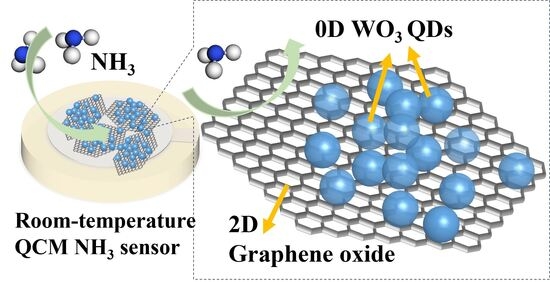
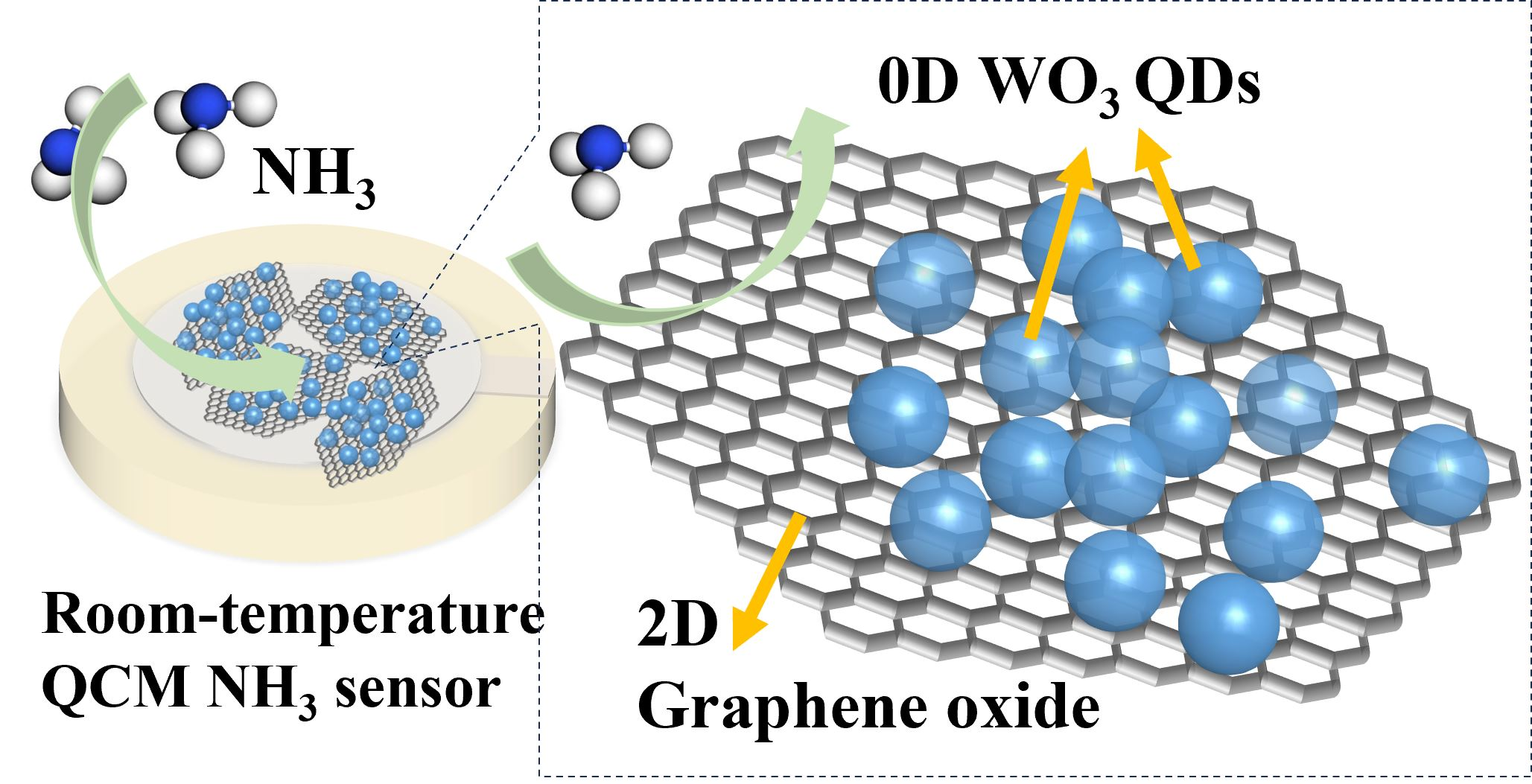
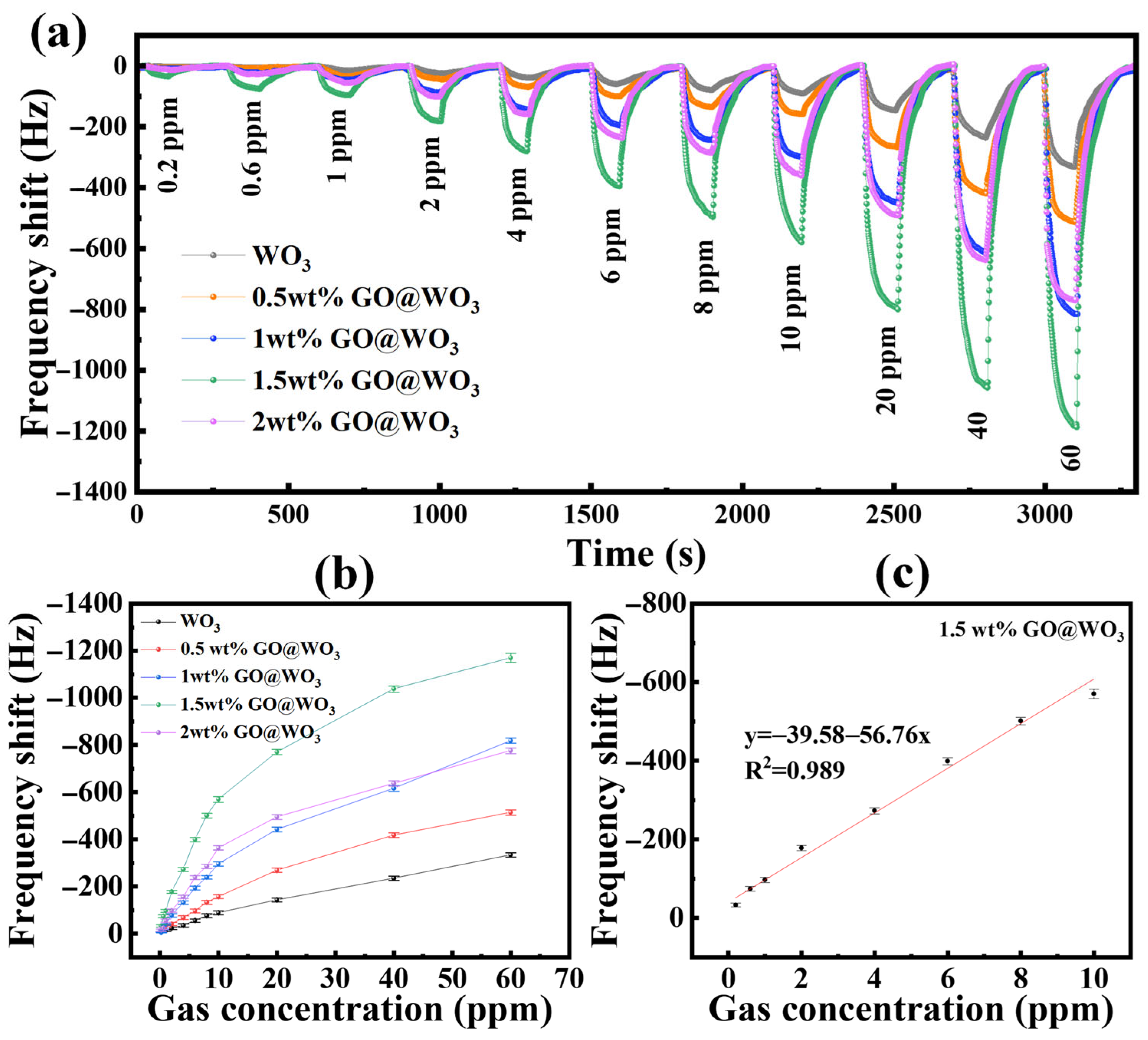
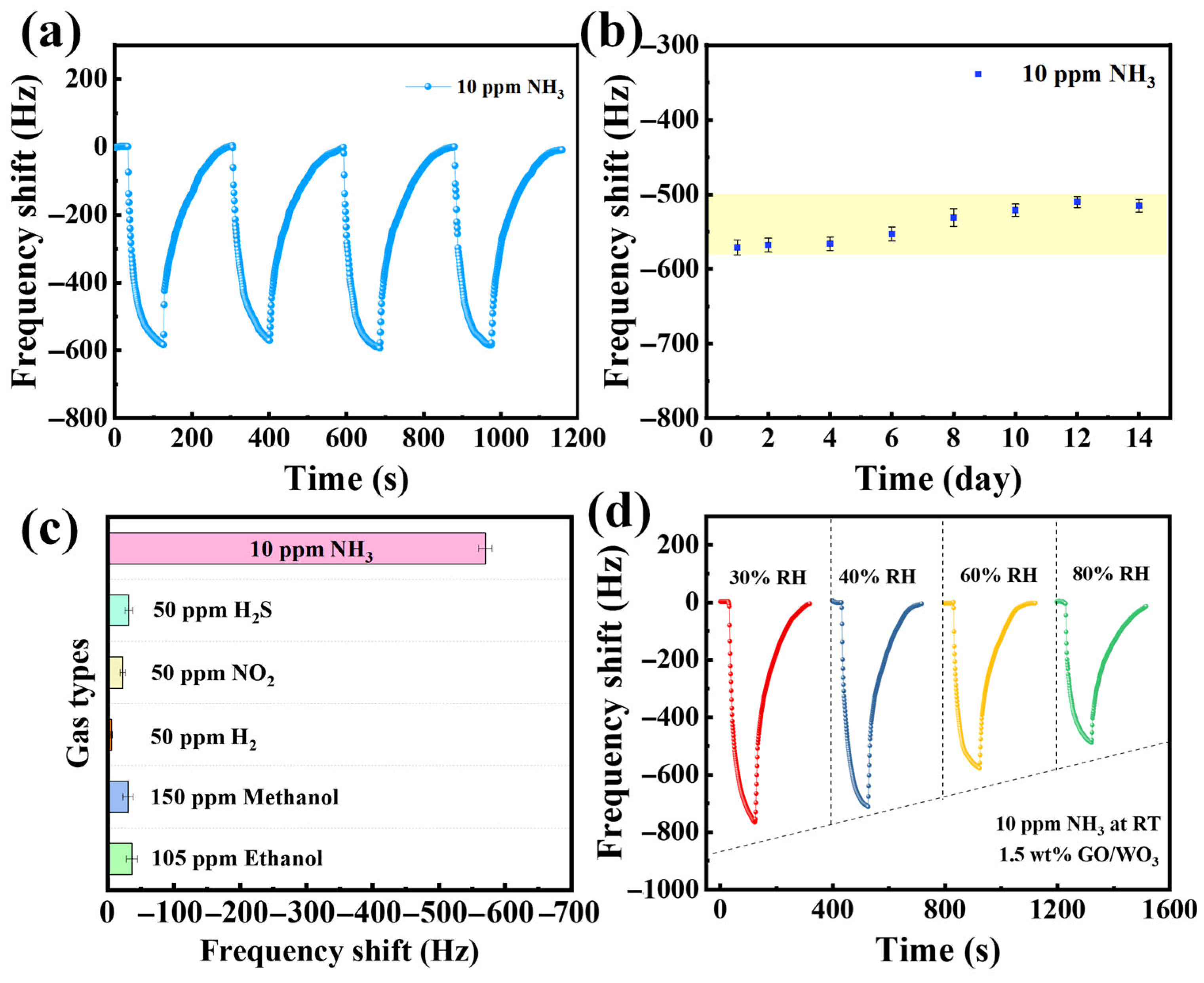
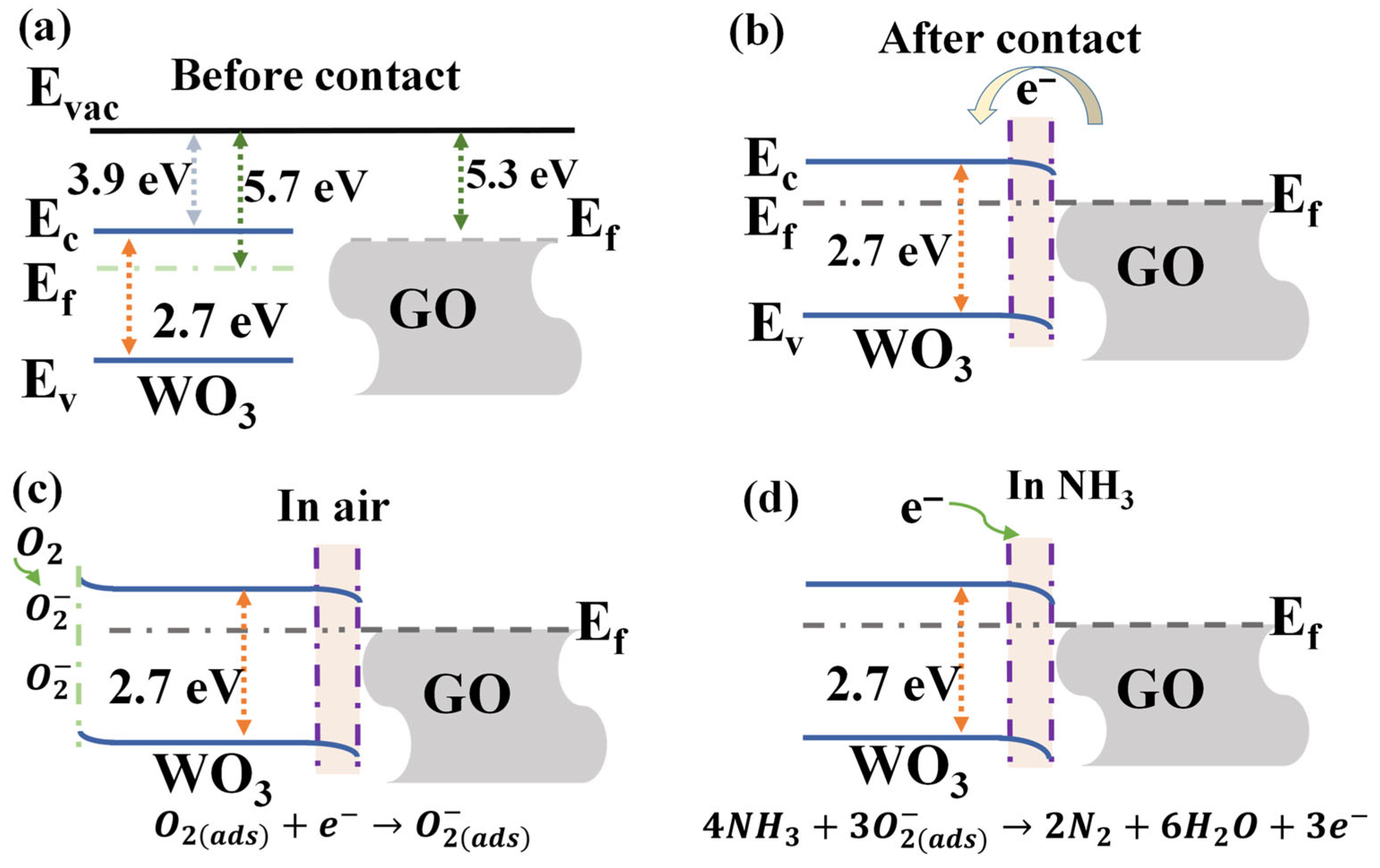
The detection of ammonia (NH3) at room temperature is of significant importance for environmental monitoring, industrial safety and early disease diagnosis. In this work, a novel room-temperature ammonia sensor was developed by combining graphene oxide with WO3 quantum dots. The as-fabricated sensor exhibited excellent comprehensive sensing performance, including high sensitivity, rapid response, outstanding selectivity, and reliable long-term stability. Specifically, when exposed to 10 ppm NH3, the sensor based on 1.5% GO@WO3 nanocomposites achieved a frequency shift of 578 Hz, which was 6.4 times that of the pure WO3 QDs sensor. The theoretical limit of detection (LOD) of the sensor was calculated to be 60 ppb, enabling ppb-level NH3 detection. In addition, the sensor demonstrated good long-term stability over a two-week period. The enhanced performance of the GO@WO3 nanocomposite sensor is attributed to the formation of an ohmic contact between GO and WO3, which eliminates charge transfer barriers, promotes oxygen adsorption, and amplifies the sensing signal. This work provides a simple, efficient, and practical solution for room-temperature NH3 detection, offering significant advantages over traditional single-component sensors.
Keywords: quartz crystal microbalance; graphene oxide; WO3; quantum dots; NH3 quartz crystal microbalance; graphene oxide; WO3; quantum dots; NH3
Graphical Abstract