1. Introduction
In the field of advanced aerospace technology such as deep-space exploration and on-orbit servicing, the reliability of moving mechanisms (e.g., solar array deployment mechanisms and scanning pointing mechanisms) directly determines the success or failure of a mission for spacecraft, valued at hundreds of millions of dollars. These precision mechanical systems must endure tens of thousands of fault-free cycles under extreme conditions, including ultra-high vacuum (10
−3 Pa), thermal cycling between −150 °C and 150 °C, and atomic oxygen irradiation [
1,
2,
3]. Such demanding conditions impose nearly stringent requirements on solid lubricating materials: they must maintain ultra-low friction coefficients in vacuum while resisting performance degradation when accidentally exposed to atmospheric or high-humidity environments [
4,
5]. Molybdenum disulfide (MoS
2), as a typical layered solid lubricant, exhibits an ultra-low friction coefficient in vacuum due to its unique S-Mo-S sandwich structure, where interlayer shear occurs via weak van der Waals forces [
6,
7,
8]. This outstanding lubricating property has established MoS
2 as the “space lubricant” and made it widely used in the moving mechanisms of various spacecraft and launch vehicles [
9,
10]. However, escalating mission complexity (e.g., lunar space stations, Mars sample return) intensifies multi-environmental coupling challenges at lubricant interfaces. For instance, during atmospheric entry or cabin depressurization, lubricant films may undergo abrupt transitions between vacuum, atmospheric, and high-humidity conditions within hours [
11]. Meanwhile, the films are typically required to exhibit a moderate surface roughness to maintain stable friction and avoid localized adhesion or delamination. The pure MoS
2 film, characterized by their loose columnar structure, exhibits critical vulnerabilities: its open lamellar structure readily adsorbs water molecules to form intercalation compounds, causing friction coefficients to surge above 0.2, while the wear rate increases by two to three orders of magnitude. Moreover, the exposure of active edge sites due to the porous columnar crystalline structure accelerates oxidative corrosion, further exacerbating the risk of lubrication failure [
12,
13]. Consequently, enhancing the multi-environmental adaptability of MoS
2 films is imperative.
To address these challenges, extensive research has been conducted, and doping elements (Ti, Al, Ag, Ni, C and O, etc.) has been proven to be an effective strategy for significantly improving the comprehensive properties of MoS
2 films [
7,
14,
15,
16]. For example, Hu et al. [
7] have studied the effects of Ti content on the tribological and corrosion performances of MoS
2-Ti films. The results showed that the MoS
2-Ti composite film possessed the lowest average friction coefficient of (COF) 0.049 at 13.89 at. % Ti content. While the best wear resistance and corrosion resistance of film was achieved at 15.17 at. % Ti content. These were ascribed to the denser structure and good mechanical properties by doping proper Ti content in films. Li et al. [
17] have deposited the MoS
2/Zr coatings and investigated the tribological and corrosive properties in high-humidity conditions. With the addition of Zr, the microstructure of coating changes gradually from the nano-multilayer to an amorphous structure. Due to the formation of a special nano-structure, the film could maintain the relative low COF of 0.05 in 78% RH humidity. Meanwhile, the corrosion resistance of MoS
2/Zr coating was also improved, ascribed to the formed Zr oxide and dense nano multilayer structure. In Ye et al.’s work [
18], both the maximum hardness and adhesion were achieved in the MoS
2 + Zr composite coatings by appropriately adjusting the Zr doping content. Jin et al. [
15] have explored the tribological properties of MoS
2 film by doping softer metal Ag. Results revealed that the Ag-MoS
2 film was more suitable for applying in high sliding speed areas. The metal dopants changed the structure of the MoS
2 film and increased the hardness of the film, thereby significantly improving the tribological performance. On the other hand, Ju et al. [
19] have investigated the properties of MoS
2 films by doping nitrogen. They found that all Mo-S-N films exhibited higher hardness and oxidation resistance than that of MoS
2 films due to the formation of Mo-N bonds. The Mo-S-N films showed excellent tribological properties ranging from room temperature to 400 °C. In Bondarev et al.’s [
16] work, Mo-S-O films were fabricated in the Ar + O atmosphere with various proportions of oxygen. The composite film showed a decreased COF of 0.02, lower than the pure MoS
2 film. The ultra-thin crystalline MoS
2 tribolayer induced by the incorporated oxygen could be responsible for the low COF.
Although researchers have studied the influence of different doping elements on the performance of MoS2 films, the tribological properties of films are mostly studied in a single environment, and there is a lack of research on the tribological properties in an alternating environment. Thus, in this work, the MoS2-Zr composite films with different Zr contents were prepared by adjusting the power of Zr target power. The microstructure, mechanical, and tribological properties of MoS2-Zr films were systematically investigated; especially, the tribological property various environments, such as in air, vacuum, and humidity, were extensively explored. This study will contribute to the development and application of MoS2-based film in complex working conditions.
3. Results and Discussion
The element compositions of MoS
2-Zr films deposited with various Zr target powers are illustrated in
Table 2. The total atomic percentage of elements in films were normalized to 100 at. %. With the increase in Zr target power, the Zr content was linearly increased from 3.60 at. % to 19.03 at. %. This implies the Zr content can precisely adjust by changing the power parameter [
17,
18]. The Mo and S contents in films were decreased simultaneously, while the S decreased even faster than Mo. The S/Mo atomic ratios (1.9 to 1.8) were lower than that of the standard MoS
2 target (S/Mo = 2) in all deposited MoS
2-Zr composite films. Sub-stoichiometric sulfur in MoS
2-based composite films has also been reported previously by other authors [
17,
19]. The sulfur loss could be attributed to two primary reasons: Firstly, the lighter sulfur atoms are more susceptible to being sputtered away under the re-sputtering effect, where high-energy particles impinging on the film surface preferentially remove lighter elements. Secondly, ionized sulfur species tend to chemically react with residual oxygen, nitrogen, or hydrogen present in the vacuum chamber environment. These resultant compounds are subsequently evacuated through the pumping system, thereby leading to progressive sulfur depletion in the deposited film [
20,
21].
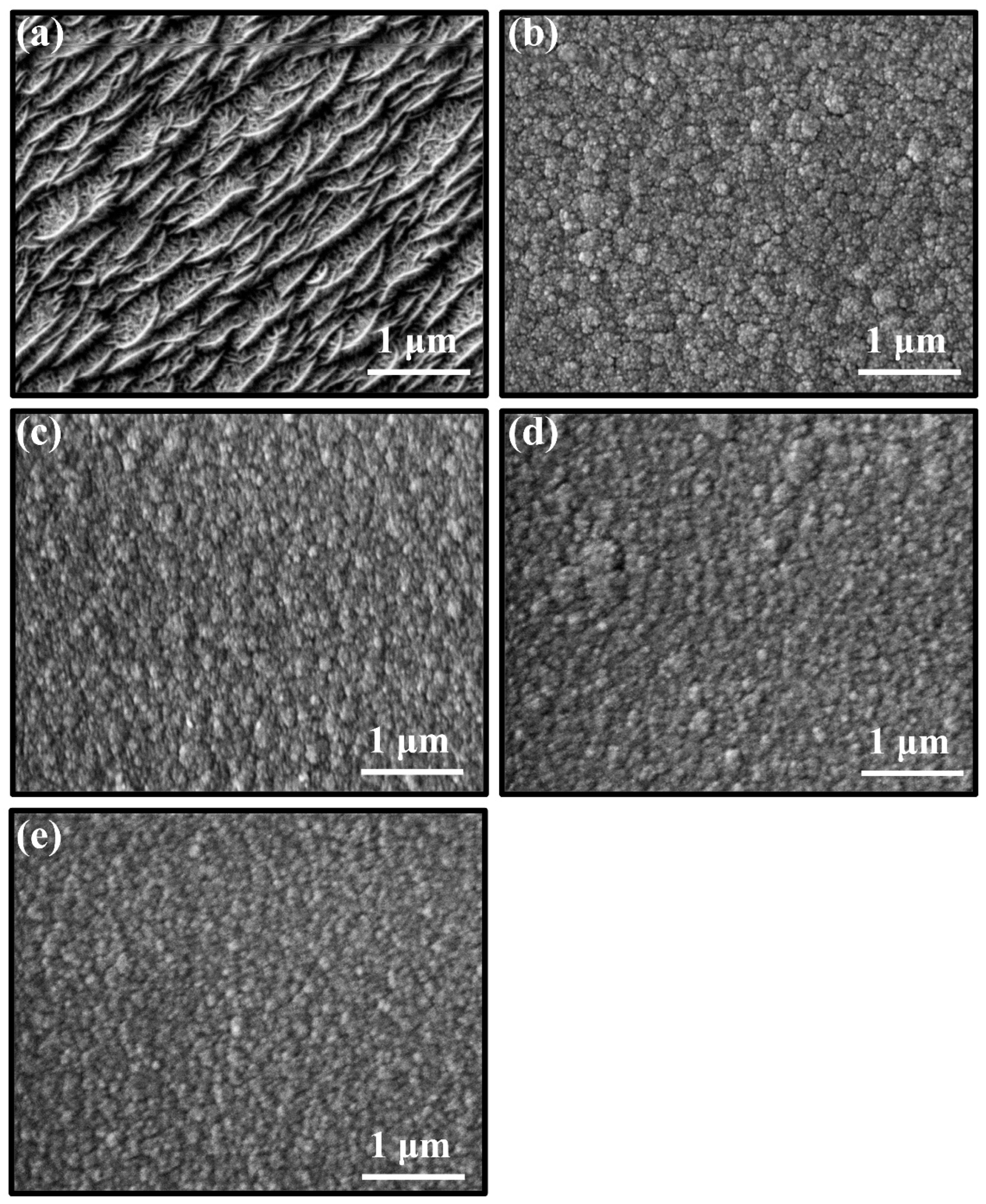
Surface morphologies of the MoS
2-Zr composite films deposited at different Zr target powers are presented in
Figure 1. It can be seen that the surface of the pure MoS
2 film showed typically worm-like morphology due to low deposition temperature and shading effect during the growth, and these “worms” uniformly distributed on the surface with obvious gaps [
16,
22]. For the Z2 film, deposited at low Zr target power, the surface presented a cauliflower-like structure composed of aggregated particles. With a further increase in the target power, as shown in
Figure 1c–e, a similar “island-like” appearance was found, indicating that the film was the island-like growth. The size of particles on the surface of films became smaller [
23,
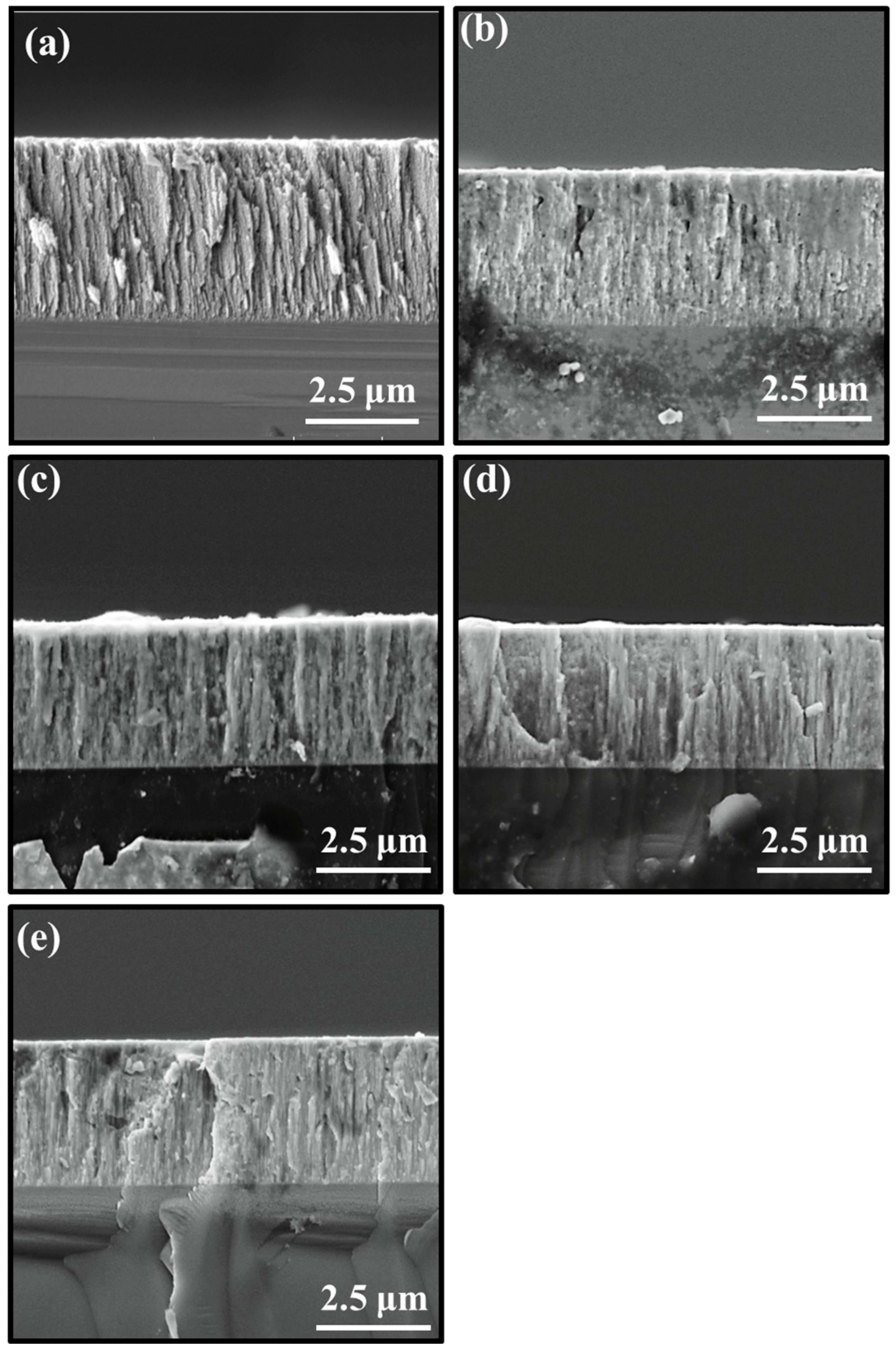
24]. Meanwhile, the surface particles became compact and fewer micro-pores/defects could be observed in the boundary of the particles. The cross-sectional morphologies of films are displayed in
Figure 2. For the MoS
2 film without Zr doping, the typical loose and columnar structure is observed in
Figure 2a. The cross-sectional images became denser and the loose columnar structure gradually weakened with increasing Zr target power [
25]. Moreover, the thickness of films decreased from 3.8 μm to 2.6 μm with an increase in target power from 0 to 300 W. These results suggest that Zr doping promotes the densification of the film. Upon incorporation of metallic Zr, its strong thermodynamic affinity for oxygen may lead to preferential bonding between residual oxygen and Zr, as evidenced by the formation of zirconium oxide species observed in the XPS analysis part. Rather than implying a direct reduction in total oxygen content, this behavior suggests that oxygen can be chemically stabilized in the form of Zr-O bonds. Such stabilization may reduce the interaction of oxygen with Mo-S bonds and modify the activity of growth sites on the MoS
2 surface, particularly the edge facets (100) and (110). The possible passivation of these active sites can suppress the development of a loose columnar morphology, thereby reducing grain size, minimizing intergranular voids, and promoting a denser film microstructure [
26,
27].
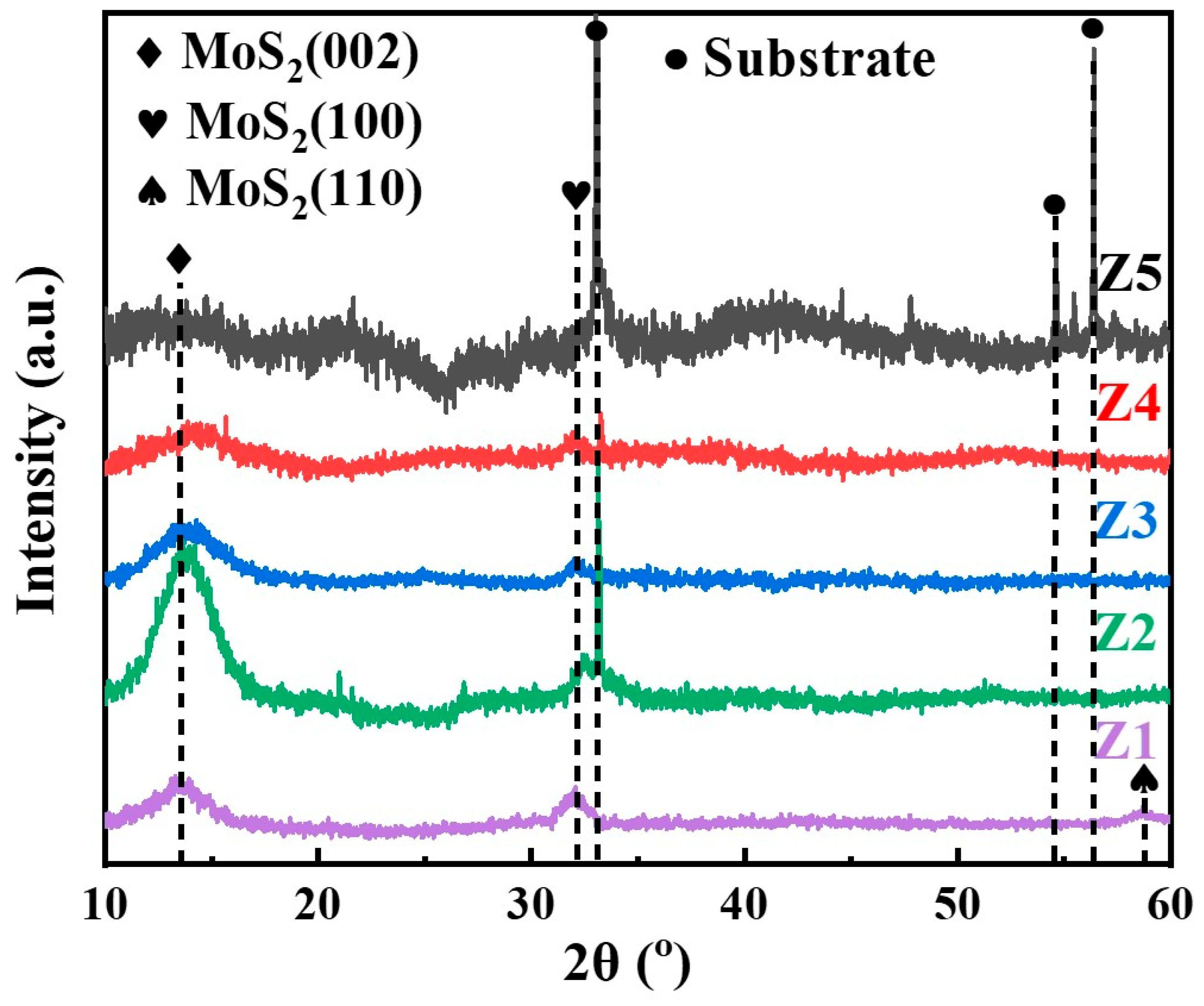
The XRD patterns of all MoS
2-Zr composite films are shown in
Figure 3. The pattern for the MoS
2 (Z1) film primarily features three peaks according to JCPDS card (PDF# 37-1492) at approximately 2θ = 13°, 33°, and 59°, corresponding to the (002), (100), and (110) crystal planes of MoS
2, respectively [
26,
28]. This film is classified as a randomly oriented film, exhibiting a porous columnar structure, as confirmed by the SEM image in
Figure 2a. For the composite film deposited at 50 W Zr target power, the (002) peak is the strongest peak. The incorporation of Zr induces a rearrangement of crystal nuclei and promotes the growth of (002) crystal planes parallel to the substrate, which is also beneficial for reducing the friction coefficient [
29]. Furthermore, Lauwerens et al. [
30] demonstrated that the (002) preferred orientation tends to form under low S/Mo ratios. As shown previously in
Table 1, the S/Mo ratio exhibits a decreasing trend with increasing Zr content. With further increase in the Zr target power, the characteristic peaks of MoS
2 (100) and (110) peaks almost disappeared, and there was only a broad and low (002) peak, which means the film transformed to an amorphous structural characteristic. The incorporation of metal elements into MoS
2 films typically leads to reduced crystallinity, as also reported in previous studies [
14,
16]. For instance, Li et al. [
17] found that the (002) peak of MoS
2-Zr coating disappeared and the coating appeared amorphous with the increase in Zr content. A similar result was also observed in Shi et al.’s [
31] work, where the (002) peak of MoS
2-Ti film became weaker and broader, indicating a phase transformation from a columnar crystalline to an amorphous structure. These phenomena may be attributed to the lattice distortion induced by the incorporation of metals.
The chemical bonds of MoS
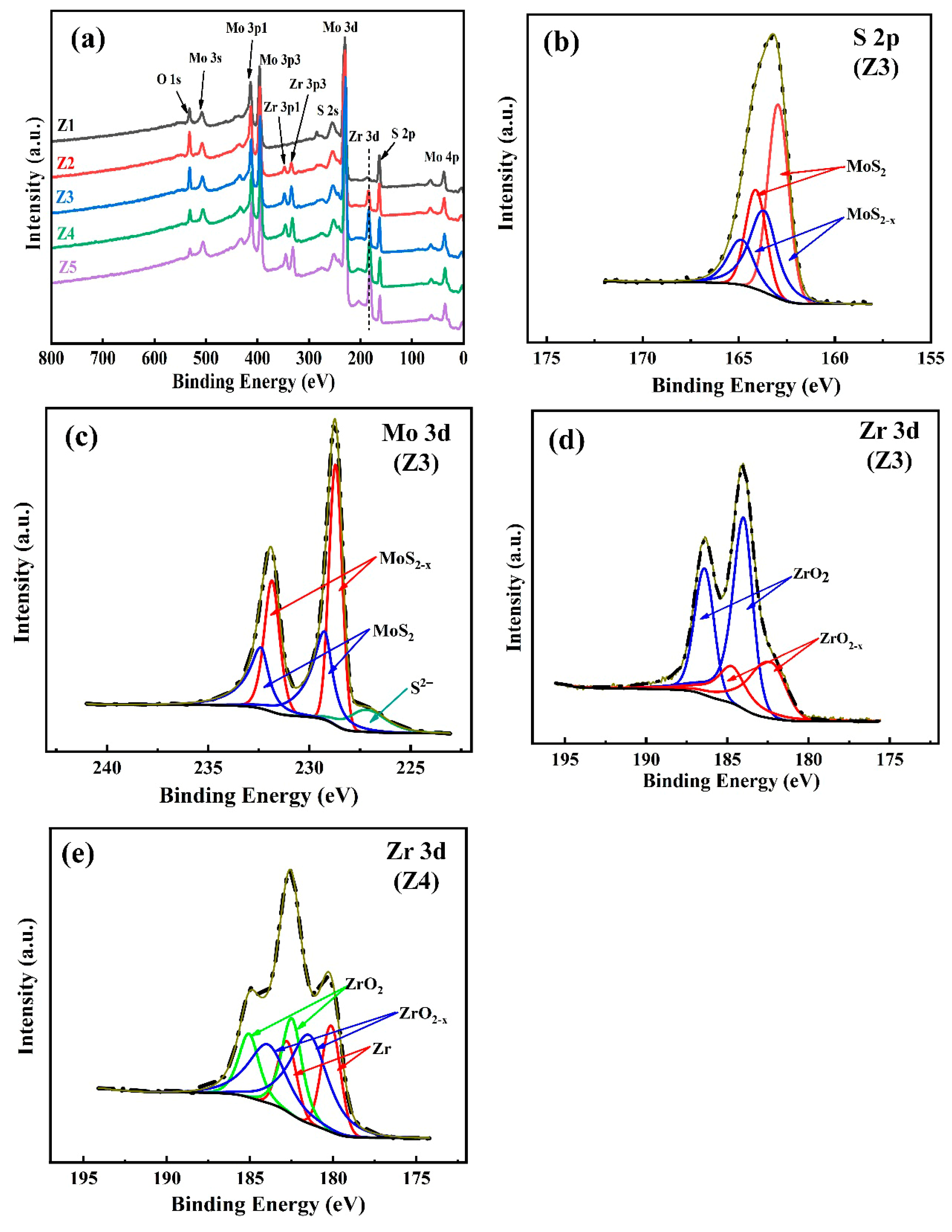
2-Zr composite films were characterized by the XPS technique. The XPS survey spectrums of MoS
2-Zr composite films with different target powers are shown in
Figure 4. It can be seen that the composite film is mainly composed of Mo, S, and Zr in
Figure 4a. All the measured binding energies were calibrated by using the work function (Φ
SA) method [
32,
33]. Since the sum of C 1 s binding energy and Φ
SA is constant at 289.58 eV, the C 1 s peak can be set to 289.58–Φ
SA eV for calibration [
33]. By looking up references, we found that the Φ
SA value of the MoS
2 film is approximately 4.71 eV [
7]. Thus, the C 1 s binding energy was set to 284.87 ± 0.21 eV in this work. The Z3 film was selected for fitting by a Gaussian–Lorentzian function, as shown in
Figure 4b, the S 2p peaks at 162.2 eV and 163.4 eV correspond to the S 2p
3/2 and S 2p
1/2 spin-orbit components of MoS
2, respectively. However, the observed S/Mo ratio deviates from the ideal stoichiometric value of 2:1. Additional peaks at 161.5 eV and 162.7 eV are identified as the S 2p
3/2 and S 2p
1/2 signals of MoS
2−x, indicating the presence of sulfur vacancies [
34]. The Mo 3d spectra are displayed in
Figure 4c; the fitted Mo 3d peaks at 229.2 eV and 232.4 eV are attributed to Mo
4+ in MoS
2, corresponding to the Mo 3d
5/2 and Mo 3d
3/2 orbitals, respectively. The additional peaks at 228.6 eV and 231.2 eV are assigned to a doublet of Mo in MoS
2-x. The other peak approximately at 227.0 eV is the S
2− state in MoS
2 [
34,
35]. For Zr 3d spectra, as shown in
Figure 4d, the peaks at 182.4 eV and 185.0 eV correspond to ZrO
2, while the peaks at 181.4 eV and 183.9 eV are attributed to sub-stoichiometric zirconium oxides (ZrO
2−x) [
34]. With a further increase in the Zr target power, for Z4 film (
Figure 4e), the Zr 3d spectrum has two additional peaks at around 180.1 eV and 182.7 eV, representing the metallic Zr, which is consistent with the findings reported by Li et al. [
17]. In addition, no high energy peak such as 235.5 eV attributed to Mo-O bonds was found in the Mo 3d spectrum. This implies that Zr element is more likely to react with oxygen preferentially.
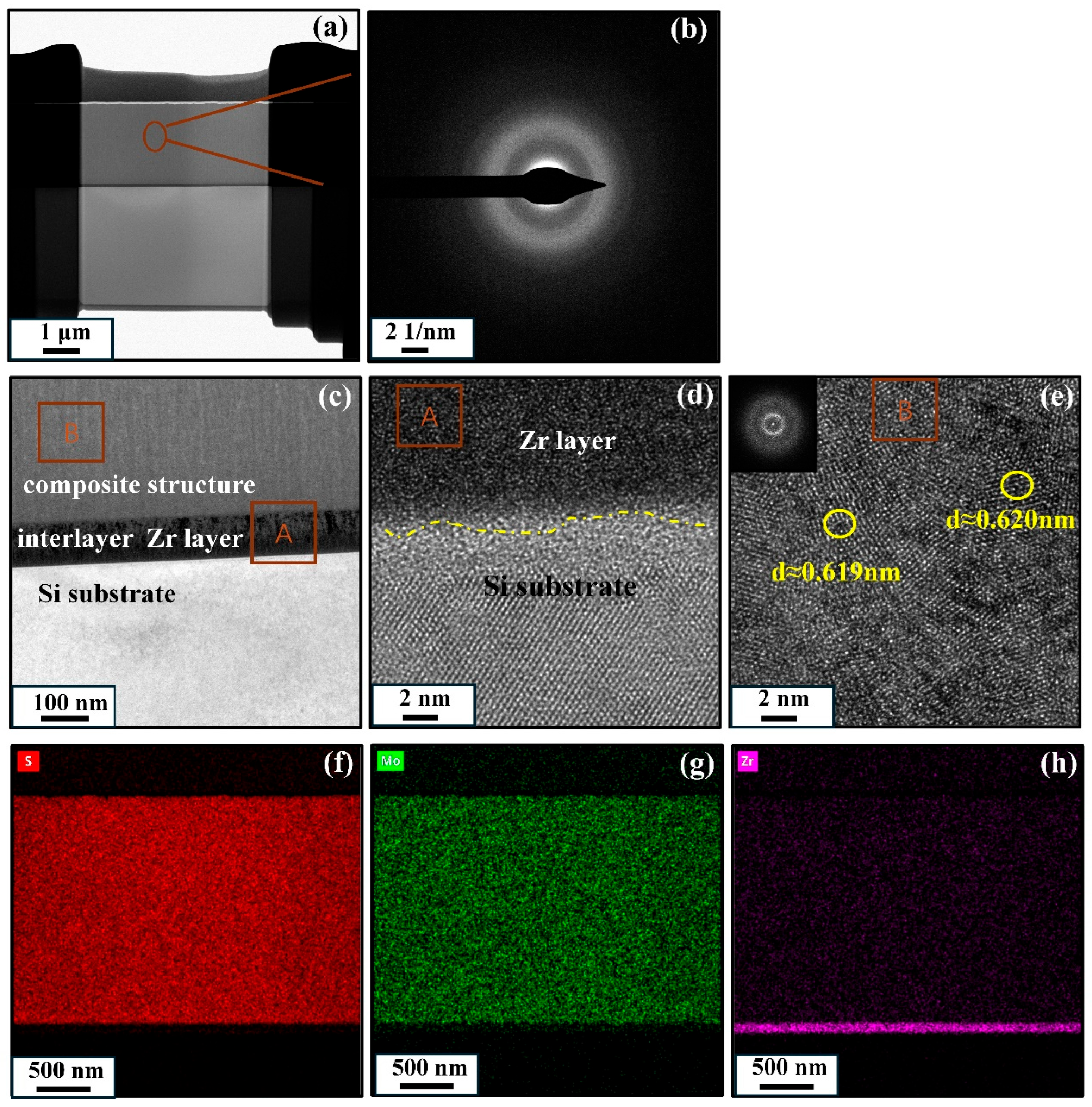
In order to further investigate the microstructure of MoS
2-Zr composite film, the typical Z3 composite film was selected for characterization. As shown in
Figure 5a, the film presents a dense structure. The selected-area electron diffraction (SAED) pattern (see inset marked as circle in
Figure 5a) in
Figure 5b showed almost a continuous diffraction ring pattern, implying that the film is almost amorphous with few nanocrystals.
Figure 5c is a partial enlarged view of
Figure 5a, and it is clear that the composite film has double layer structure, which is composed of a Zr interlayer and a MoS
2-Zr composite layer. The thickness of the Zr layer is around 100 nm. The areas in the bottom and middle are marked as A and B, respectively. A high-resolution image of region A, shown in
Figure 5d, illustrates the interface between different layers of the film. The absence of a clear boundary between the Zr interlayer and the film above suggests strong interfacial bonding and good structural integrity across the multilayer architecture. The high-magnification image of region B in
Figure 5e reveals a measured d spacing of approximately 0.620 nm, which is consistent with the (002) crystal plane of the MoS
2 film. The d spacing of the (002) plane is slightly larger than that of bulk MoS
2, which can be attributed to the disorder effects induced by Zr doping [
36]. No Zr nanocrystals are detected, indicating that Zr primarily exists in the form of a solid solution within the MoS
2 matrix. This is also consistent with previous XRD result. Based on the STEM mapping, as shown in
Figure 5f–h, the Mo and S exhibit uniform and consistent distribution across the film, and although the Zr content is relatively low, it is also homogeneously distributed within the film layer.
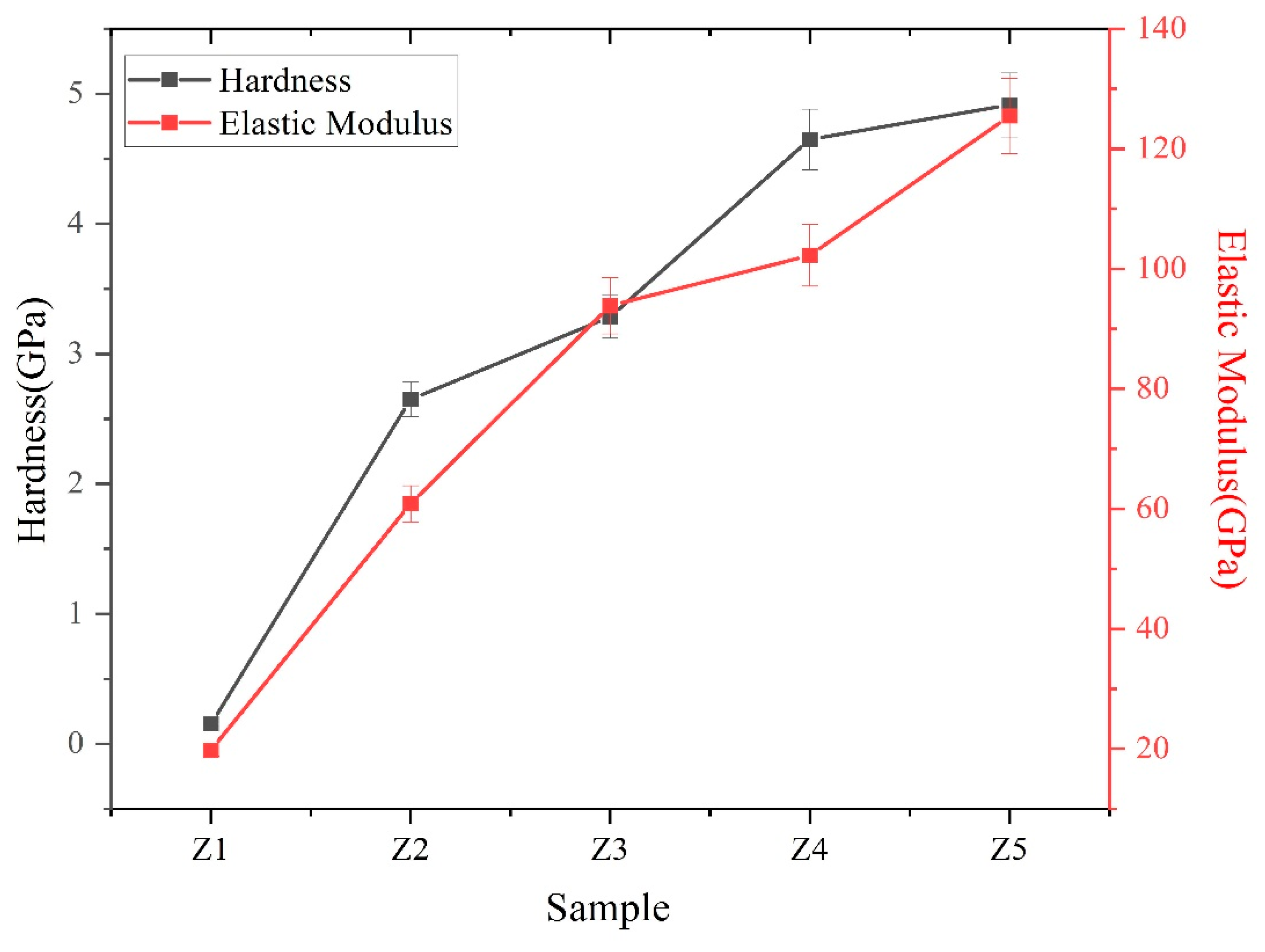
The hardness (H) and elastic modulus (E) of MoS
2-Zr composite films are shown in
Figure 6. With increasing Zr target power, both the hardness and elastic modulus of the films exhibit a gradual upward trend. The Z5 film achieves its maximum mechanical performance with a hardness of 4.9 GPa and an elastic modulus of 125.5 GPa. The enhancement in hardness and surface strength is mainly attributed to the solid solution strengthening effect and the microstructural densification caused by Zr incorporation. Interstitial Zr atoms introduce lattice distortion and hinder dislocation motion, while the denser structure with fewer intercolumnar voids improves load-bearing capacity and adhesion [
37,
38]. Additionally, Zr captures residual oxygen, suppressing Mo-O bond formation and further stabilizing the layered structure. These combined effects account for the observed hardness improvement.
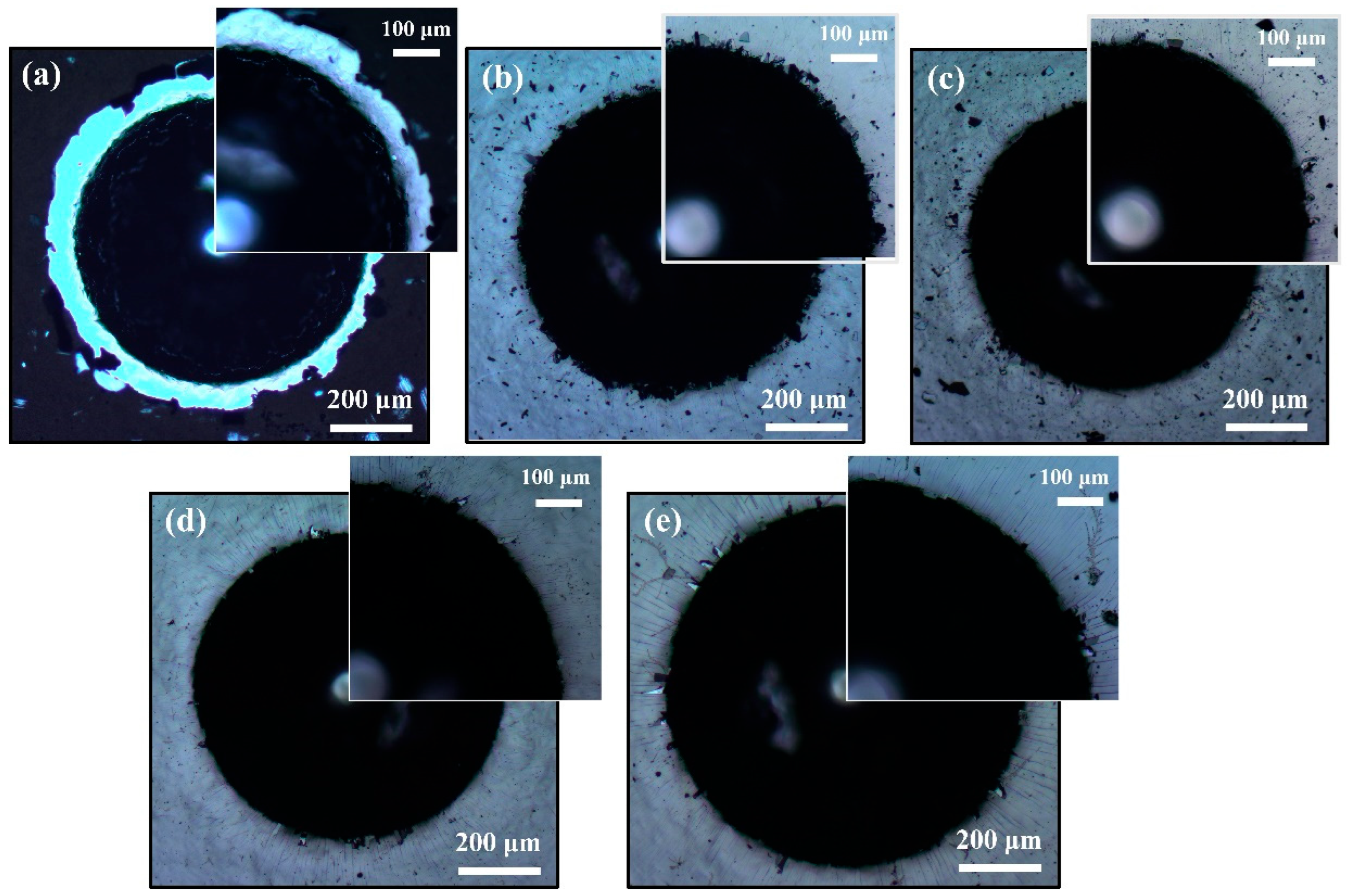
Figure 7 presents a comparative analysis of the indentation morphologies of pure MoS
2 films and MoS
2-Zr composite films with varying Zr doping contents, observed under an optical microscope. The results reveal that the pure MoS
2 film exhibits significant edge delamination, accompanied by the formation of numerous flake-like fragments, corresponding to an adhesion strength rating of HF6. When the Zr doping concentration increases to 3.60 at. % and 7.20 at. % (Z2 and Z3 film), the extent of interfacial delamination is markedly reduced, with the adhesion ratings improving to HF3. Notably, at a Zr content of 13.86 at. % (Z4 film), delamination is further suppressed, and the adhesion strength reaches HF2. However, when the Zr doping exceeds this critical value, the adhesion strength exhibits slight fluctuations, with ratings varying between HF2 and HF3. These experimental findings indicate that, compared with the pure MoS
2 film, the incorporation of Zr can enhance the adhesion strength of the composite films by approximately 3–4 levels (from HF6 to HF2/HF3). This improvement is primarily attributed to the following mechanisms: (1) the increase in microstructural density of the composite films with higher Zr content; and (2) the simultaneous enhancement of material hardness, which effectively improves the films’ resistance to plastic deformation, thereby enhancing the interfacial adhesion performance.
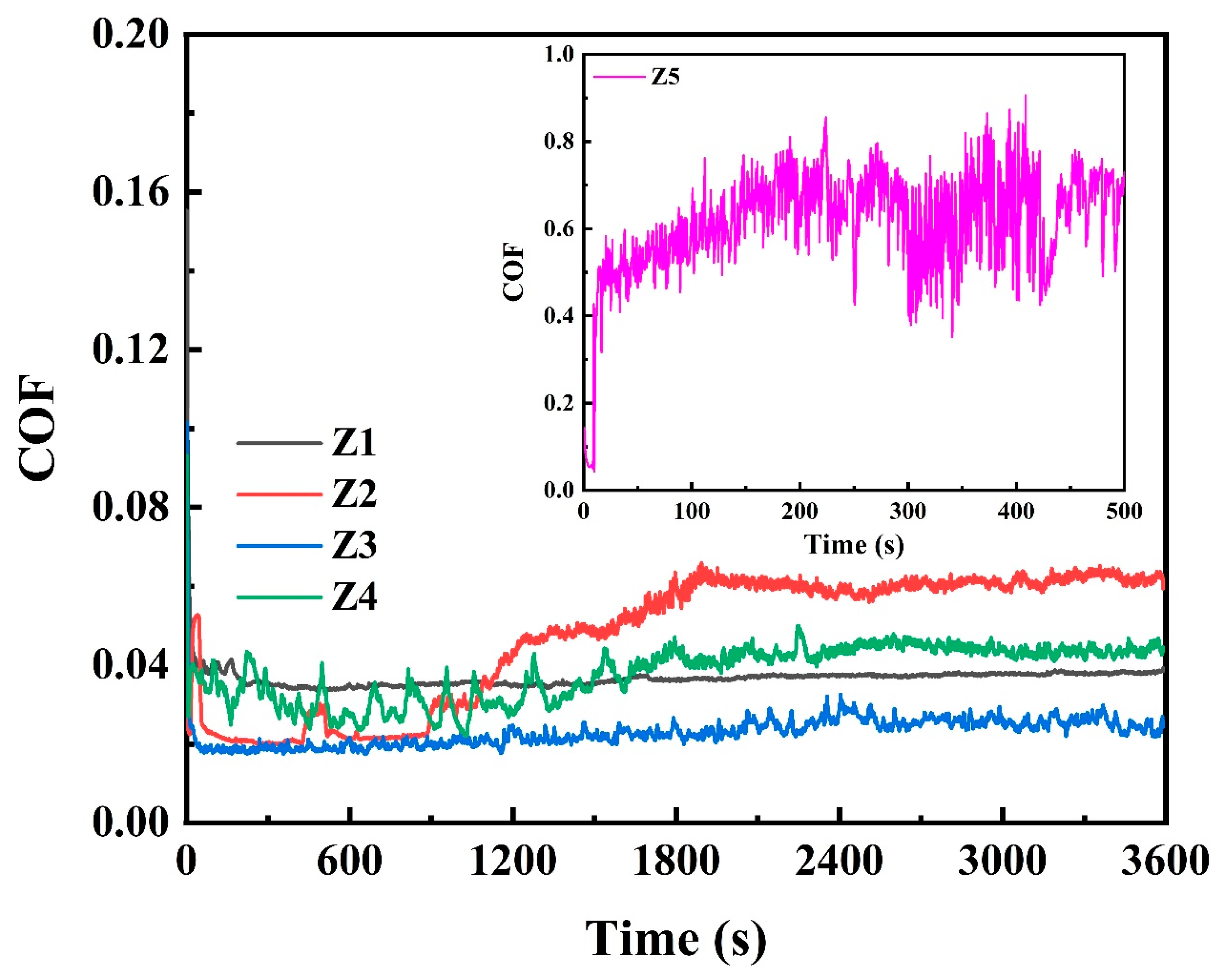
Figure 8 shows the evolution of the friction coefficient curves for MoS
2-Zr composite films in a vacuum environment, while
Table 3 summarizes the corresponding average friction coefficients and wear rates for all films. The results indicate that with increasing Zr target power, the tribological performance of the films gradually improves, characterized by decreases in both friction coefficient and wear rate. Although the pure MoS
2 film exhibits a relatively stable friction coefficient of approximately 0.036, it undergoes rapid wear-through and failure during sliding tests. This poor wear resistance is attributed to the low hardness and elastic modulus of the pure MoS
2 film. As the Zr sputtering power increases, the friction behavior initially exhibits a slight rise followed by a pronounced decrease. Notably, the composite film with 7.20 at. % Zr (Z3 film) demonstrates the best tribological performance, with a stable friction coefficient of 0.022 and a minimum wear rate of 6.23 × 10
−8 mm
3/N·m. This enhanced performance can be attributed to two main factors. On the one hand, the XRD patterns suggest that moderate Zr incorporation is associated with a relative enhancement of the (002) orientation in the MoS
2 matrix, which favors basal plane sliding under vacuum conditions. In contrast, the pure MoS
2 film exhibits multiple orientations, including (002), (100), and (110), which may result in less efficient interlayer shear. On the other hand, increasing Zr content promotes microstructural densification, leading to improved hardness and elastic modulus, thereby enhancing load-bearing capacity and wear resistance. However, when the Zr sputtering power is further increased, the tribological performance deteriorates. At a Zr content of 19.03 at. % (Z5 film), the film rapidly fails at the initial stage of sliding. This degradation is likely related to excessive Zr incorporation, which disrupts the continuity of layered MoS
2 domains and weakens the basal plane-dominated lubrication mechanism under vacuum.
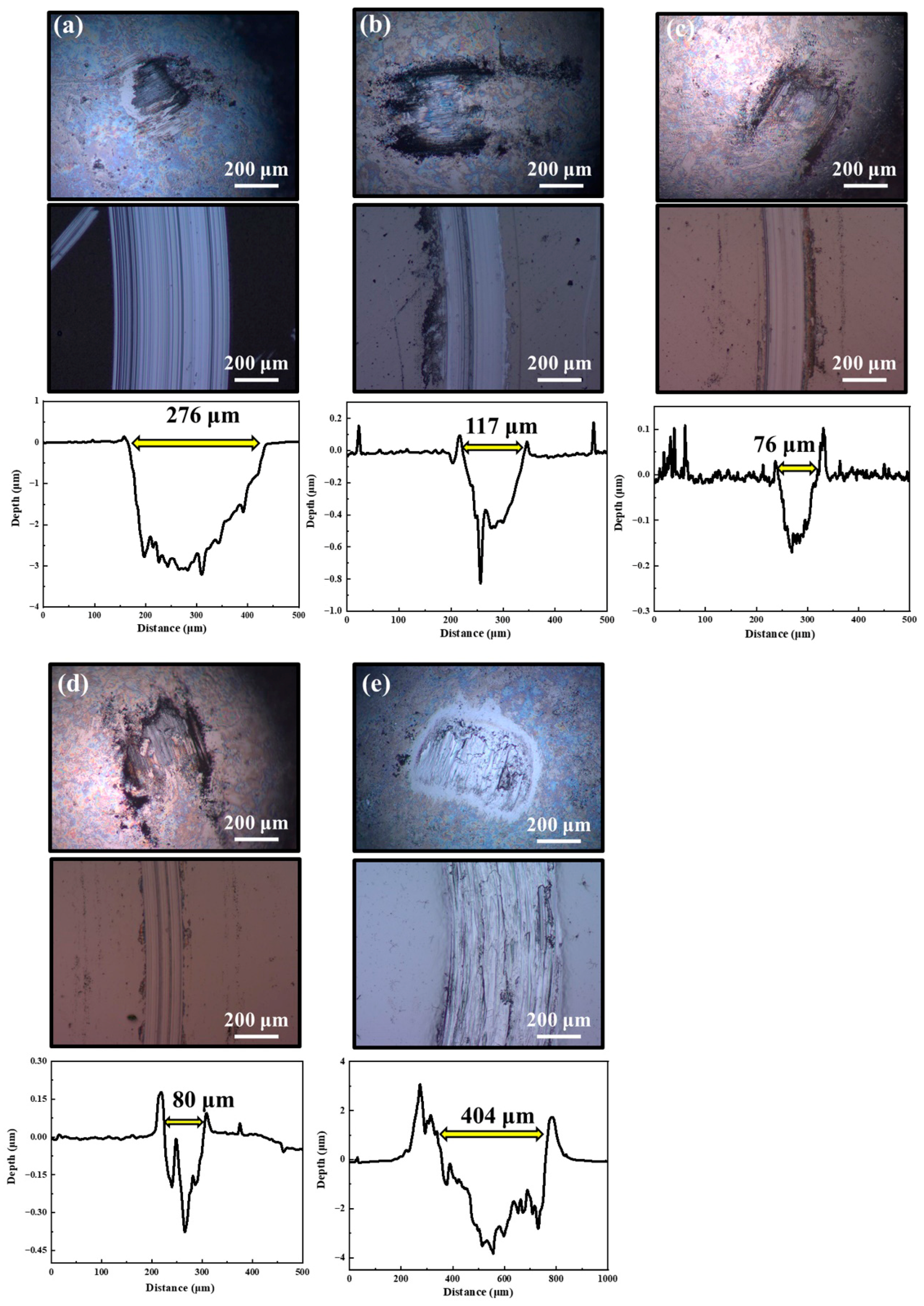
Figure 9 presents the two-dimensional wear tracks and corresponding friction ball scar morphologies of MoS
2-Zr composite films under a vacuum friction condition. Obviously, the pure MoS
2 film exhibits a wear track width of ~276 µm and a maximum depth of ~3.2 µm, which exceeds the thickness of the film, indicating that the film has been worn through. For Z2 film, the wear track narrows to ~117 µm and shrinks to 0.85 µm depth. As for Z3 film, the film achieves its best wear resistance, with a track width of ~76 µm and only ~0.17 µm depth. For Z4 film, the values for wear track and depth is about 80 µm and 0.43 µm, respectively. For Z5 film, the wear depth of film increases to 3.8 µm, exceeding the film thickness. The depth of the wear track on films Z2–Z4 do not exceed the thickness of the films. A dark gray layer was observed in the central area of the friction ball scars, which is indicative of transfer layer formation during sliding, and obvious furrows were observed in the wear tracks of the films. These characteristics indicate that the friction process mainly involves two mechanisms: abrasive wear and adhesive wear. The wear track of Z5 film was found to be very rough due to the excessive metal adhesives on the surface of the counterpart ball; severe adhesive wear is the main wear mechanism. It can be concluded that as the Zr content increases, the tribological properties of the films gradually improve. When the Zr content reaches 7.20 at. %, the films have the best tribological properties. However, with the further increase in Zr content, the tribological properties of the film gradually deteriorate until it completely loses its lubricating function under vacuum conditions.
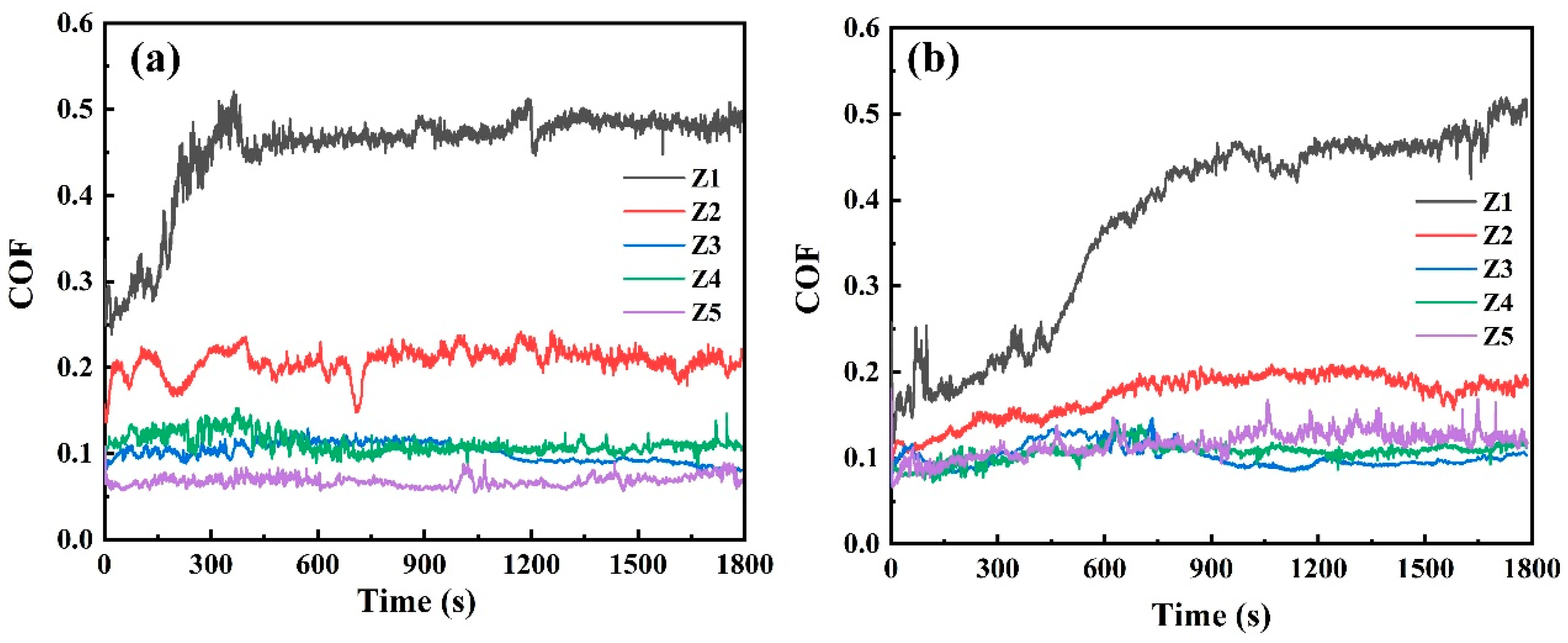
Figure 10 shows the variation of the friction coefficient of MoS
2-Zr composite films deposited under different Zr sputtering powers in both ambient air and humid environments, while
Table 4 summarizes the average friction coefficients and wear rates of these films. Overall, the MoS
2-Zr composite films exhibit superior tribological performance compared with pure MoS
2 film. As seen in
Figure 10a,b, the pure MoS
2 film fails rapidly within a short sliding duration under both ambient and humid conditions. With increasing Zr target power, the friction coefficients of the MoS
2-Zr films decrease progressively during sliding. Among all films, the Z3 film, with a Zr content of approximately 7.20 at. %, shows the lowest friction coefficient and wear rate of 0.10 and 1.23 × 10
−6 mm
3/N·m in ambient air and 0.10 and 1.80 × 10
−6 mm
3/N·m in humid atmosphere, respectively. This improvement is attributed to two factors: first, the enhanced densification and increased hardness of the MoS
2-Zr films with higher Zr incorporation; and second, the active oxidation surface of (100) in the MoS
2-Zr composite film was effectively suppressed, both of which synergistically contribute to the excellent tribological performance of the MoS
2-Zr film.
It is worth noting that, unlike in vacuum, the Z5 film exhibits the lowest friction coefficient in air. Under vacuum conditions, lubrication is primarily governed by basal plane sliding of MoS
2, and excessive Zr disrupts layered continuity, thereby degrading performance. In contrast, under atmospheric conditions, lubrication is influenced not only by MoS
2 shear but also by tribo-oxidation processes and the formation of adaptive surface layers. The presence of Zr facilitates the formation of stable zirconium oxide species during sliding, which may contribute to improved friction stability in air [
39]. Consequently, films with higher Zr contents maintain reduced friction coefficients in atmospheric environments.
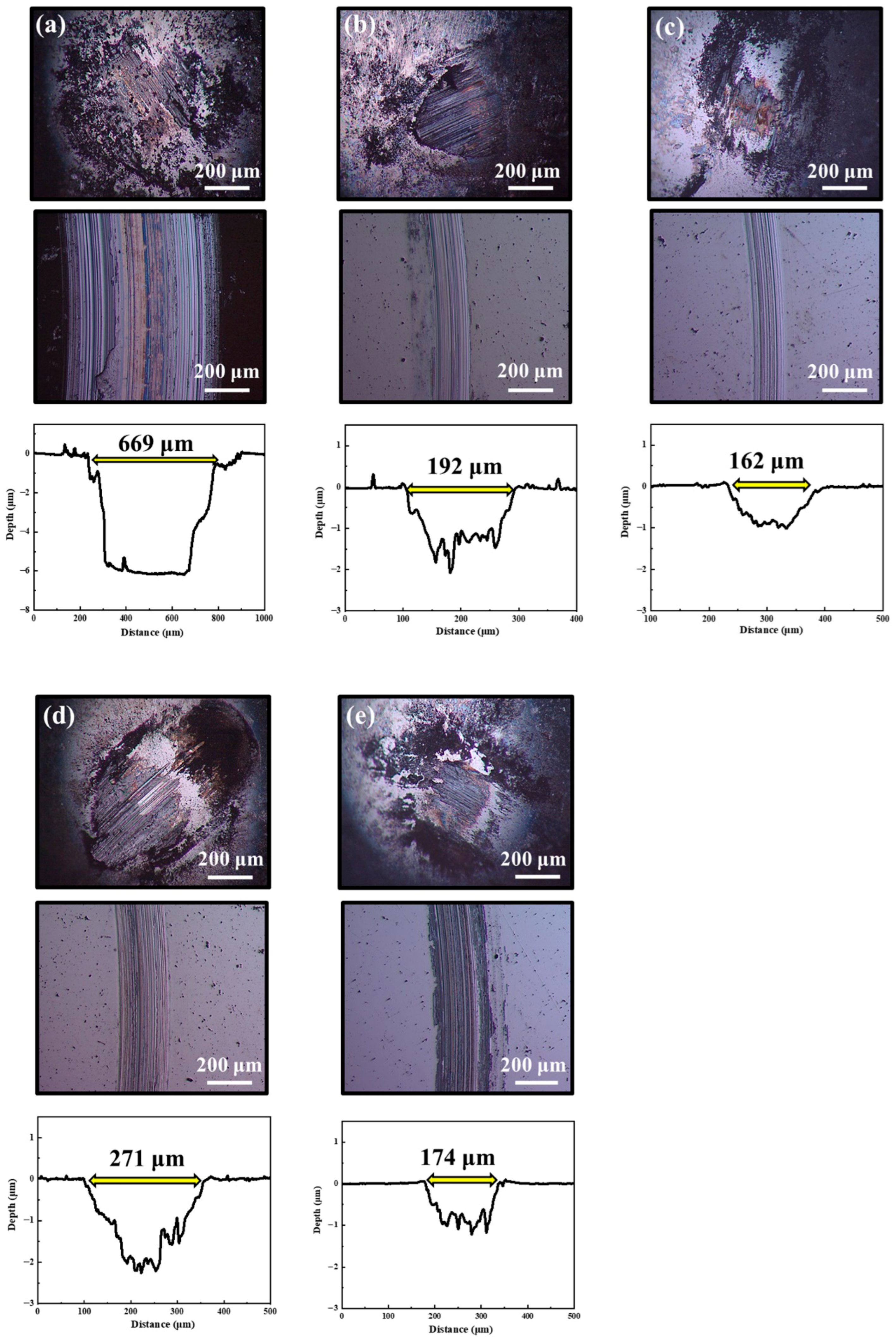
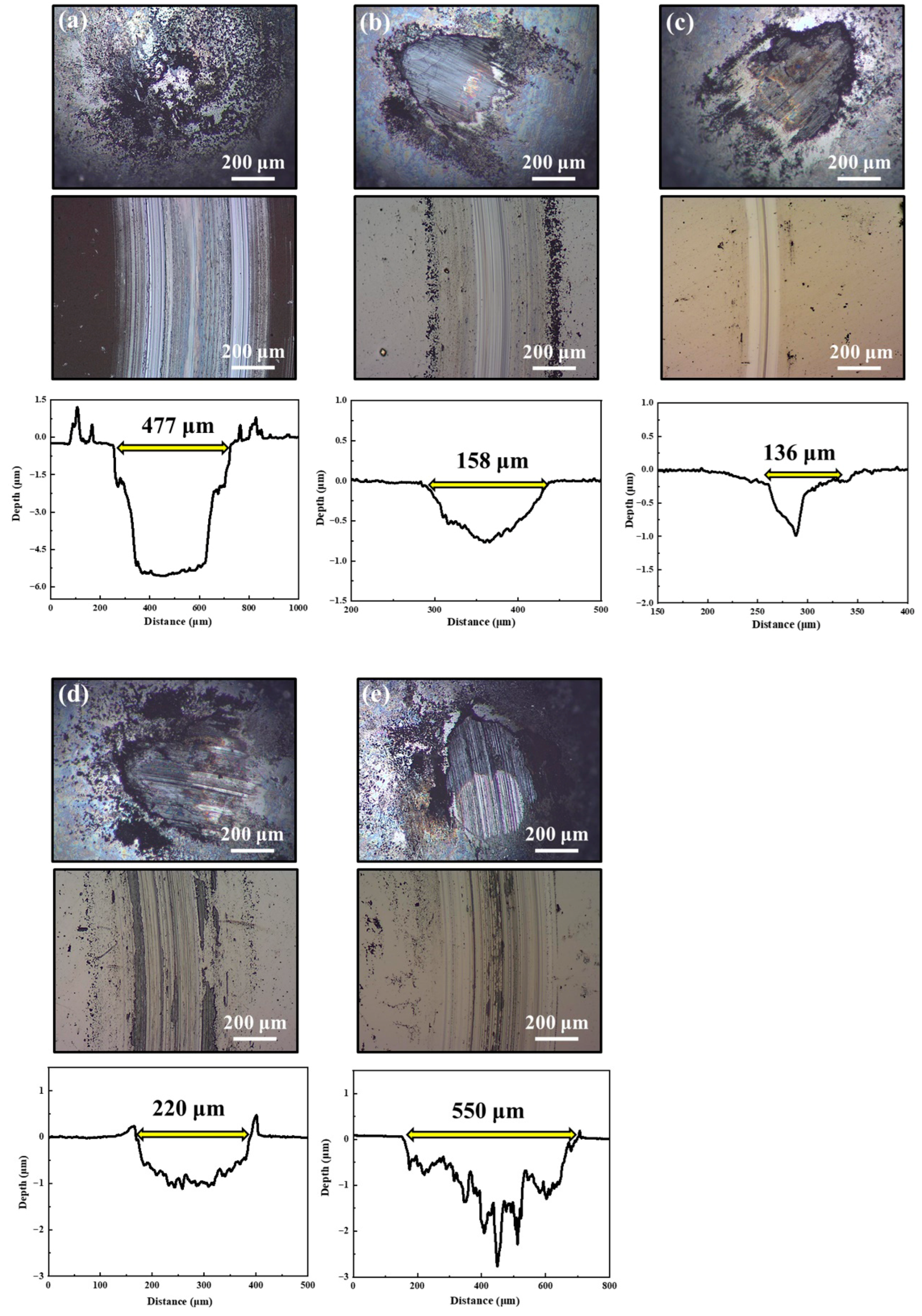
Figure 11 and
Figure 12 show the two-dimensional optical microscope morphologies of the wear tracks on MoS
2-Zr composite films and the corresponding wear scars on the counterpart balls after sliding in atmospheric and humid environments. For the pure MoS
2 films, the wear-track depths in both environments exceed the film thickness, indicating complete film failure. Prominent plowing grooves are observed on the worn surfaces, suggesting that abrasive wear is the dominant wear mechanism. In contrast, for the Z2–Z5 composite films, the wear track depths remain below the film thickness, and the plowing features are markedly shallower than that of pure MoS
2. In addition, a gray layer is evident at the center of each ball scar, which suggests material transfer between the film and the counterpart during sliding. These observations suggest that the dominant wear mechanisms for the Z2–Z5 films involve a combination of abrasive wear and adhesive wear. Among them, the Z3 film exhibits the narrowest wear tracks and the lowest wear volume. However, starting from the Z4 film, both the width and depth of the wear tracks gradually increase with further Zr addition. This degradation in wear resistance is attributed to the excessive presence of metallic Zr in the films. Particularly in humid environments, the presence of water molecules changes the interfacial chemistry. Excessive Zr addition promotes partial oxidation and hydroxylation, generating Zr-O-H compounds rather than stable ZrO
2. These hydrophilic phases can absorb moisture and disrupt the layered MoS
2 structure, leading to higher shear resistance and debris generation during sliding, which exacerbates film wear. In summary, the tribological tests demonstrate that incorporating an optimal Zr content significantly enhances the friction and wear performance of MoS
2-Zr composite films under all three alternating environments.





 ,
,