The Pneumoconiosis Renaissance: Revisiting the Pulmonary Pathology of Poorly Soluble Low Toxicity Particles: Insights from Rodent Inhalation Studies on Titanium Dioxide Nanoparticles


Abstract
1. Introduction
1.1. Pneumoconiosis: Historical Background
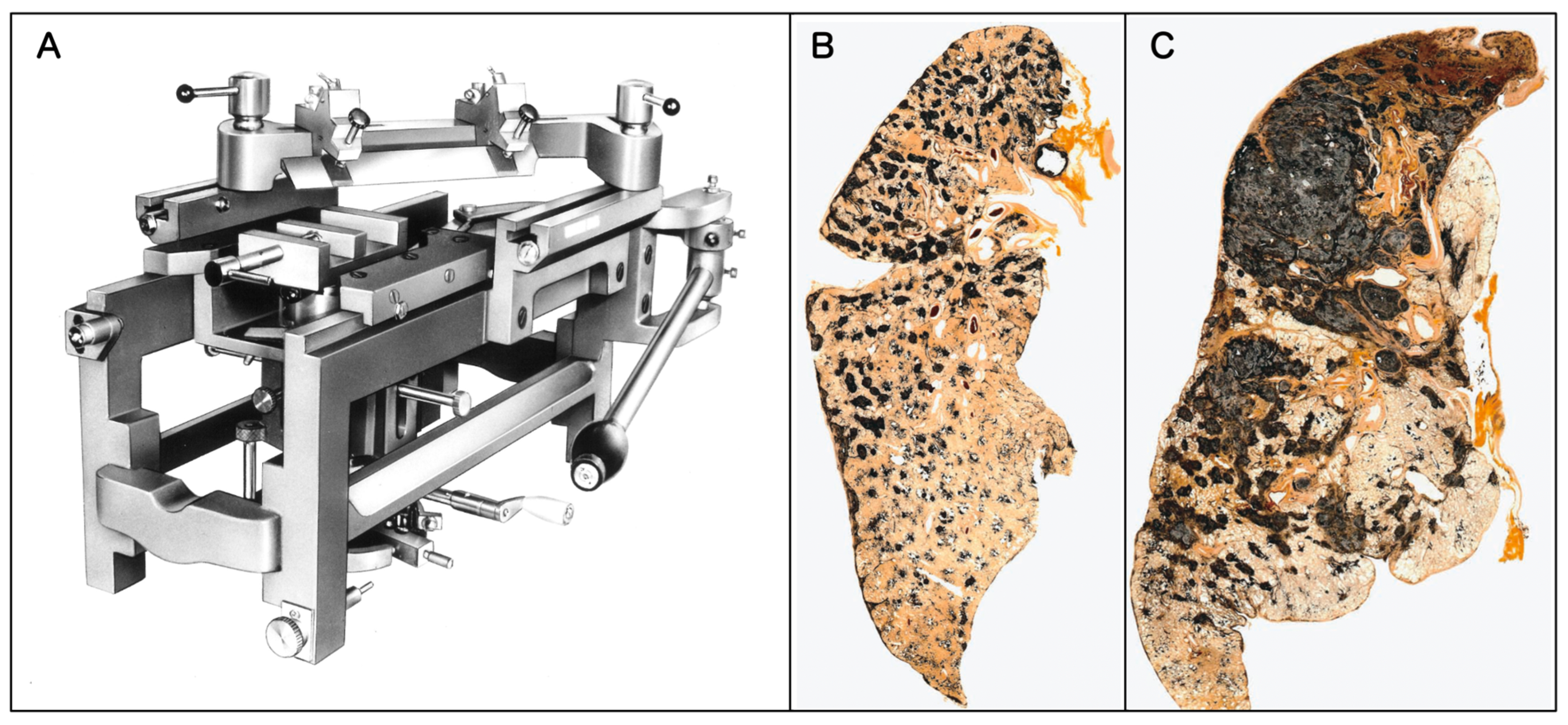
1.2. The Gold Standard of Human Pathology: Insights from Whole Lung Sections
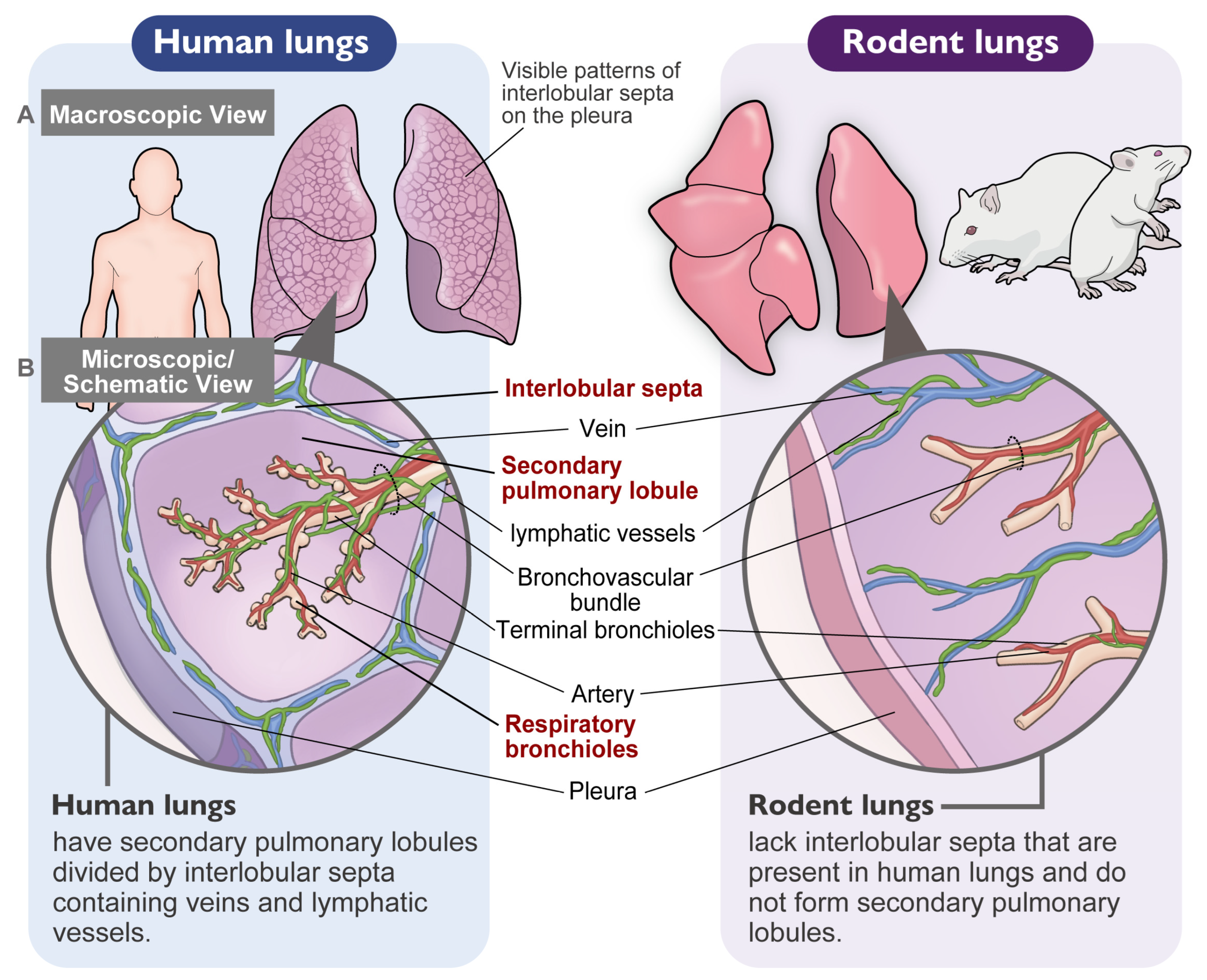
1.3. Comparative Anatomy of the Lung Interstitium: Defining the “Broad” Compartment
1.4. Histopathological Classification: Macules, Nodules, and Fibrosis
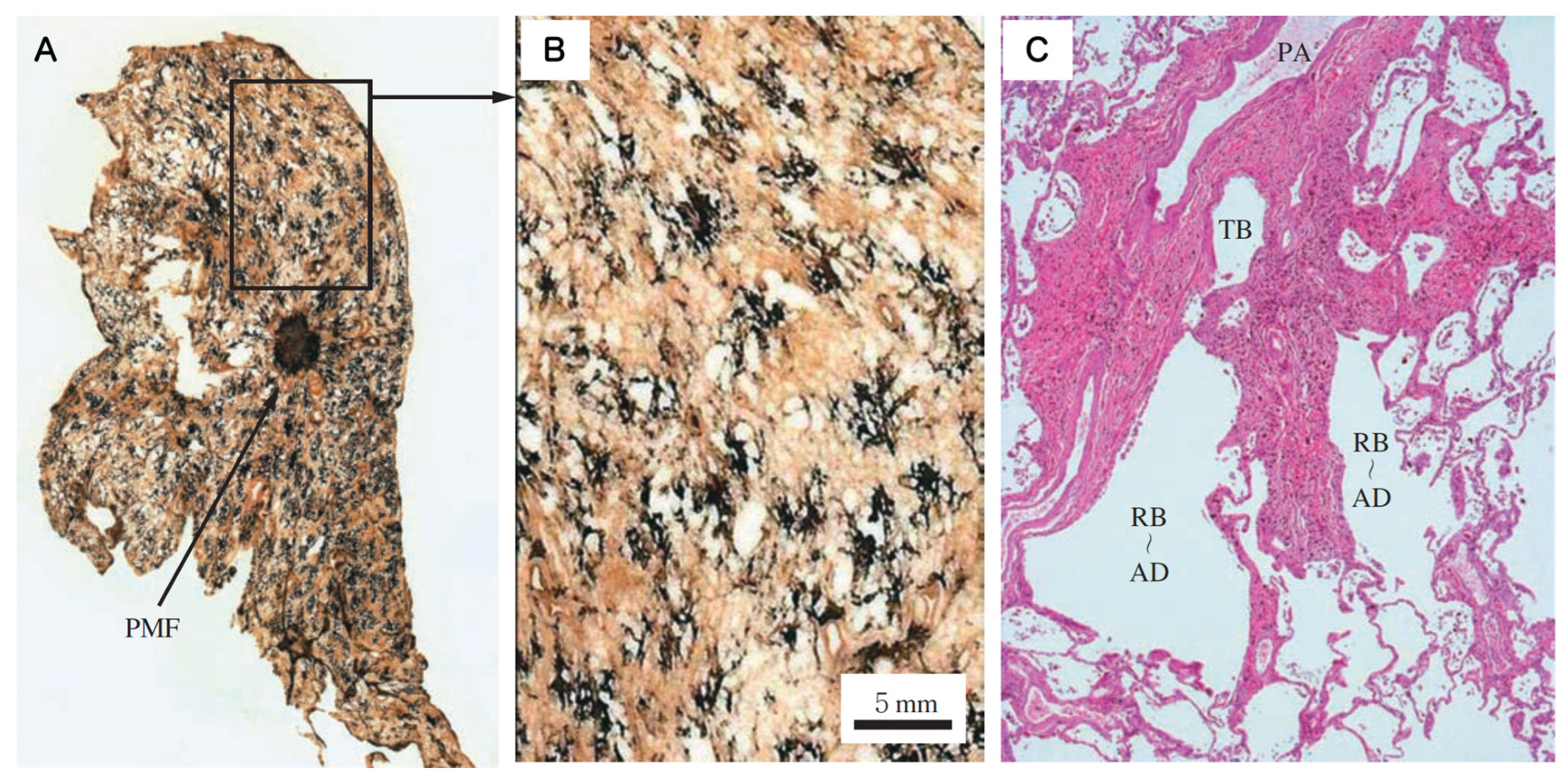
- Dust Macule (DM): A non-palpable collection of dust-laden macrophages accumulating primarily in the peribronchiolar interstitium. In coal worker’s pneumoconiosis (CWP), this is often associated with the destruction of adjacent alveolar septa, termed focal emphysema. Donaldson et al. emphasized that the macule is characterized by reticulin fibers rather than collagen and is distinctively linked to focal dust emphysema [10]. Importantly, the macule itself exhibits minimal to no collagen deposition (Figure 3).
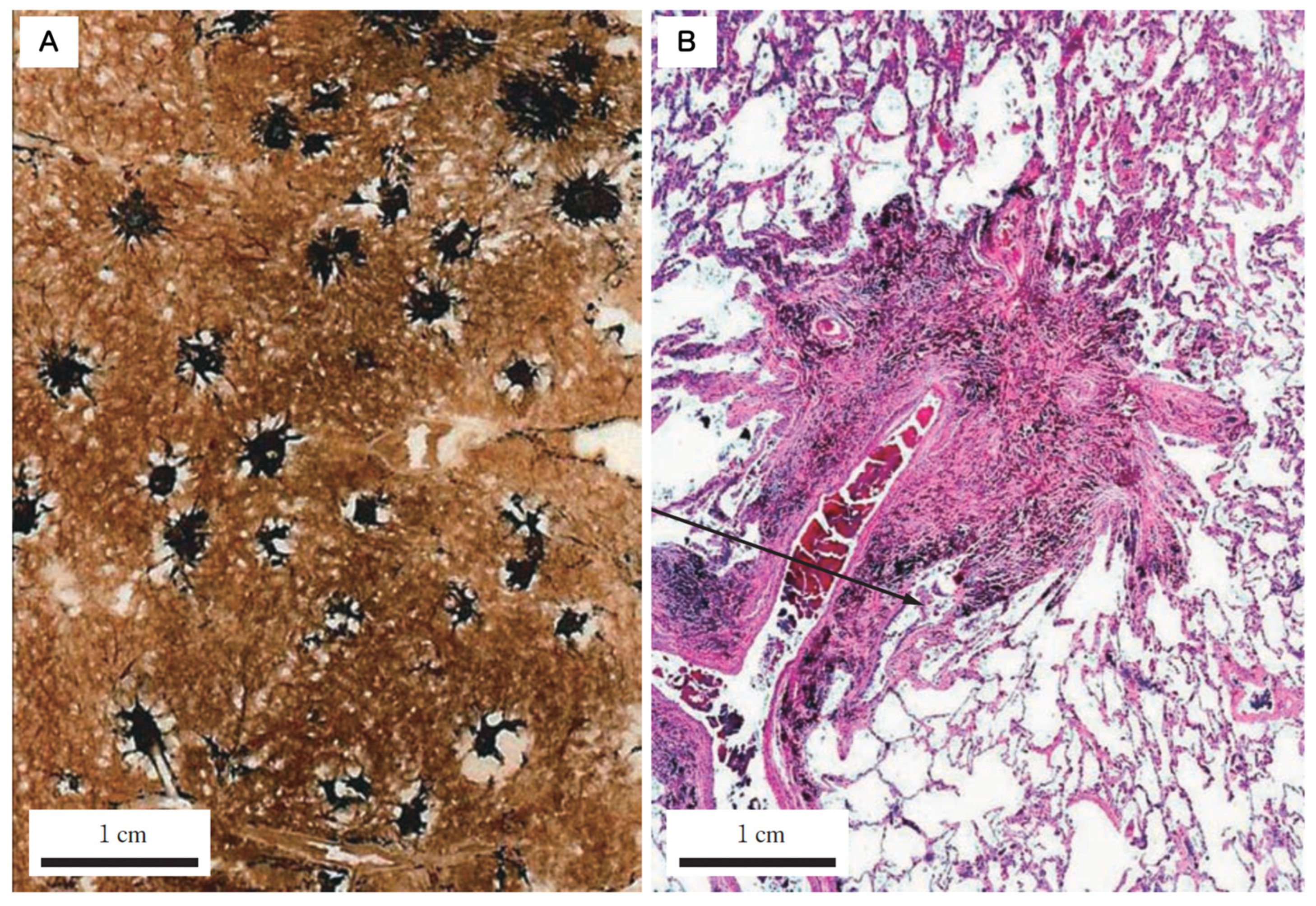
- Nodule (Fibrotic): A palpable, discrete lesion characterized by collagen deposition. It is critical to distinguish between two subtypes of nodules based on the nature of the dust. The classic Silicotic Nodule features concentric, whorled hyalinized collagen with a sharp border, typical of high-silica exposure. In contrast, dusts with lower silica content or poorly soluble low toxicity particles (PSLTs) typically induce the Mixed Dust Fibrotic (MDF) nodule (also known as the mixed dust pneumoconiosis nodule). As defined by Honma et al. [27], the MDF nodule is distinctively characterized by a stellate (star-shaped) or irregular distribution of collagen fibers extending into the surrounding interstitium, intermingled with abundant dust-laden macrophages (Figure 4).
- 3.
- Progressive Massive Fibrosis (PMF): A large area of confluent fibrosis, typically defined as a lesion greater than 1 cm in diameter (based on ILO classification), resulting from the aggregation of nodules and often associated with vascular destruction.
1.5. Poorly Soluble Low Toxicity Particles (PSLTS)/Poorly Soluble Particles (PSPS) and TiO2: The “Dm–Mdf Axis”
1.6. Prospectus
2. Experimental Studies in Animal Models for TiO2: Decoding the Pathological Signal
2.1. Detailed Histopathological Analysis in Mouse Models: Absence of the Dust Macule Architecture
2.2. The Rat-Specific Overload Phenotype: The Challenge of Biological Masking
The Molecular Basis of the “Airspace Mask”: Insights from Comparative Transcriptomics
2.3. Unmasking the Truth: The Role of Recovery and Spatial Resolution
3. Integrating Pathology into the AOP Framework: The Missing Spatial Dimension
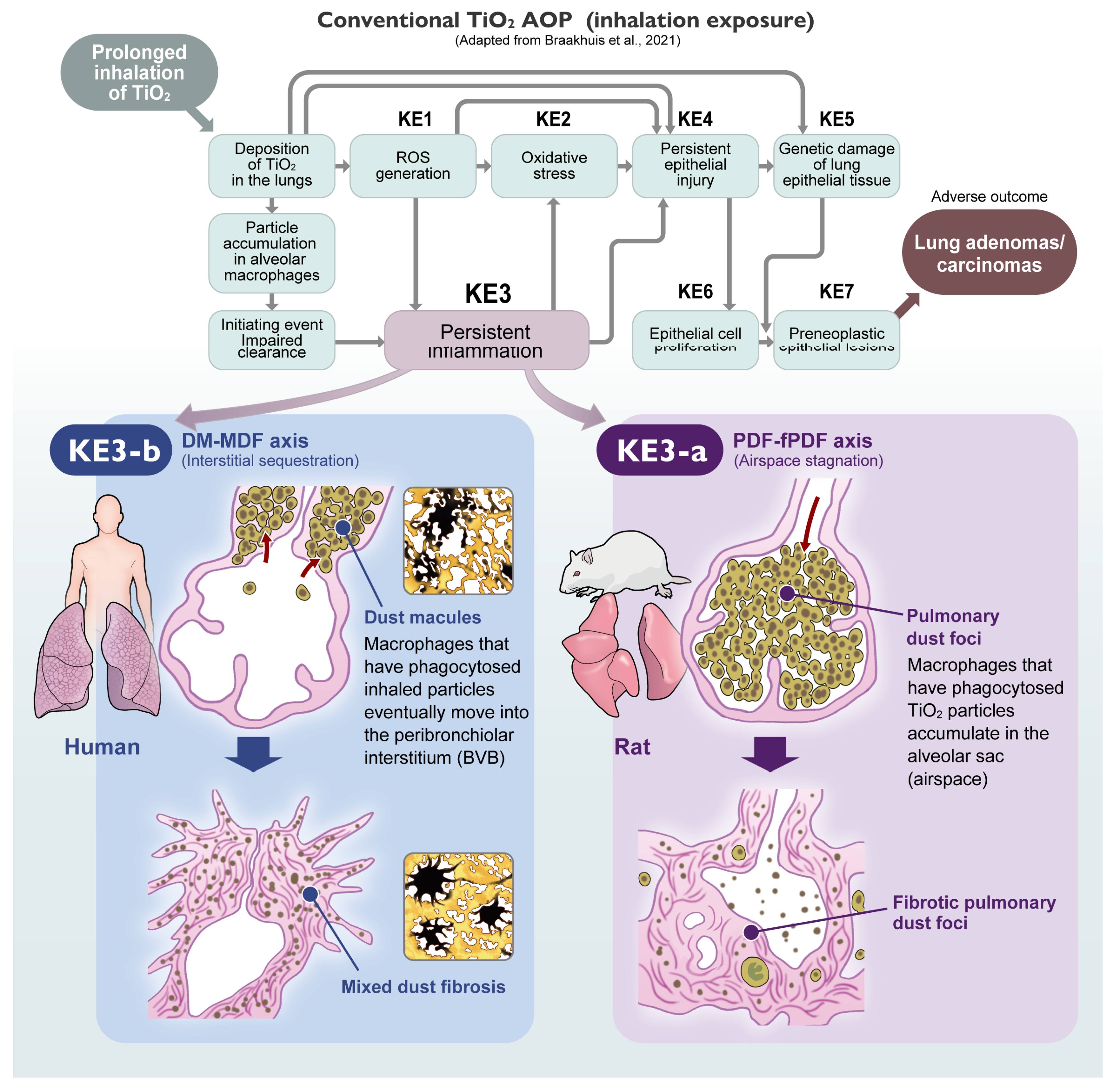
- KE3-a: Chronic Alveolar Inflammation (Rat-Dominant):
- 2.
- KE3-b: Chronic Interstitial Inflammation (Human-Relevant):
- In Rats: The pathway is often dominated by IE (Impaired Clearance) → KE3-a (Alveolar Inflammation) → KE6 (Epithelial Proliferation) → AO (Tumors).
- In Humans: The pathway of concern is likely IE (Translocation) → KE3-b (Interstitial Inflammation) → AO (Interstitial Fibrosis/Pneumoconiosis).
4. Implications for Risk Assessment and Future Directions
4.1. Integrating Spatial Resolution into Risk Assessment: A Dual-Track Approach
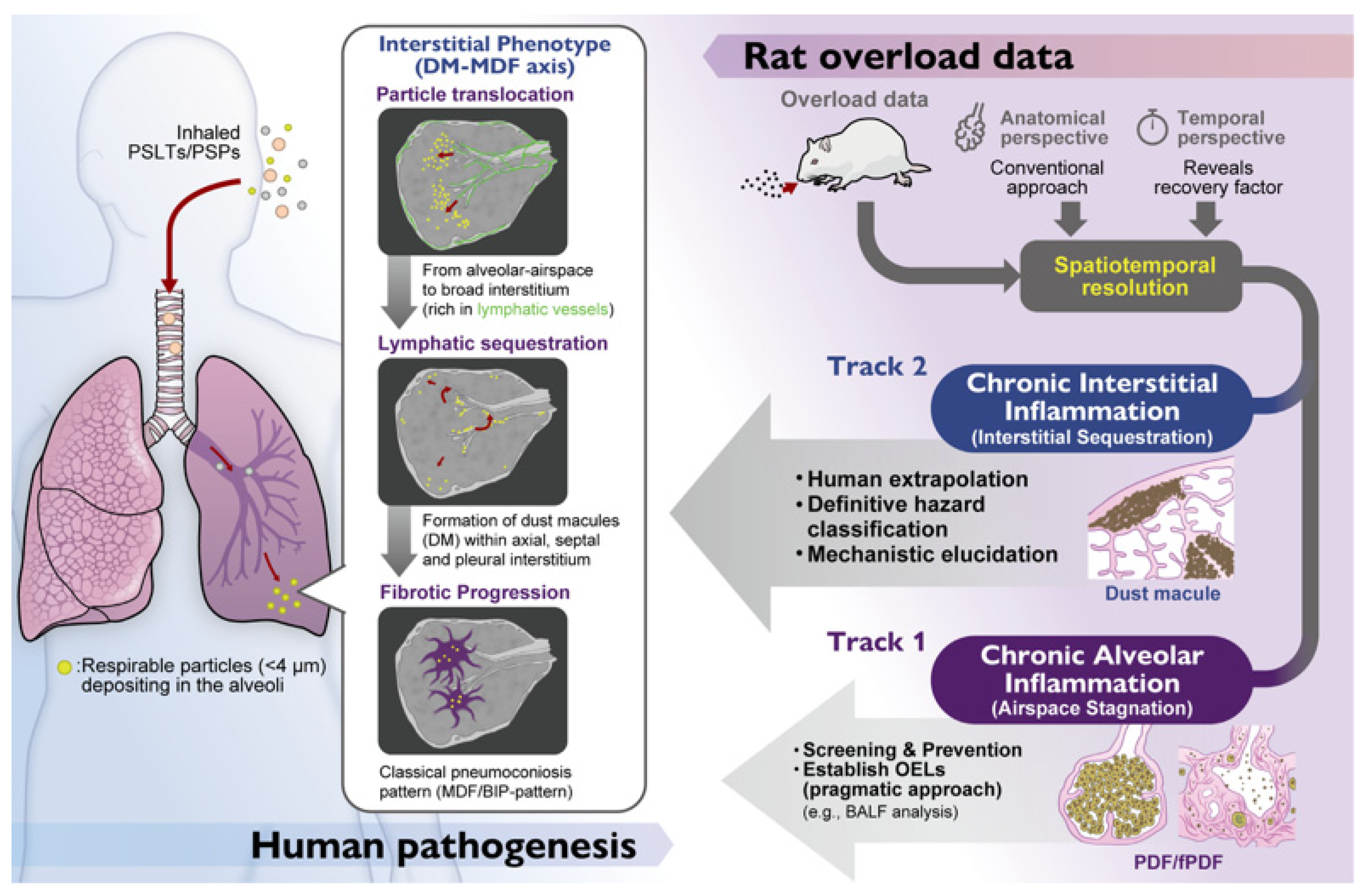
- Track 1 (Screening & Prevention): Use KE3-a (Chronic Alveolar Inflammation) as a sensitive and pragmatic warning signal (e.g., BALF analysis). If a substance induces KE3-a in rats, it indicates a potential for biopersistence and lung overload. Regulatory limits should be set to prevent this state. However, deep mechanistic investigation of this phenotype is not recommended for human extrapolation as it carries a high risk of being a species-specific anomaly.
- Track 2 (Human Extrapolation): Use KE3-b (Chronic Interstitial Inflammation) for definitive hazard classification and mechanistic elucidation. To determine if a substance poses a risk of human pneumoconiosis or interstitial fibrosis, data must be evaluated for interstitial changes. This represents the true pathological ground for investigating human disease mechanisms. As demonstrated by Schaudien et al., this requires “Unmasking” strategies—specifically, exposure designs with extended recovery periods that allow the airspace noise to subside.
4.2. Broadening the Scope: From TiO2 to All PSLT
4.3. The “Ground Truth” for Future Methodologies
5. Conclusions and Perspectives
- (The Filter) Spatiotemporal Resolution: By applying anatomical and chronological perspectives (e.g., recovery periods), we can separate the data into two tracks.
- Track 1 (Screening & Prevention/KE3-a): Represents Airspace Stagnation (PDF/fPDF). Use as a sensitive warning signal for establishing OELs (pragmatic approach).
- Track 2 (Human Extrapolation/KE3-b): Represents Interstitial Sequestration (Dust Macule). This is the basis for definitive hazard classification and mechanistic elucidation.
The Role of AI and Digital Pathology: The Necessity of “Ground Truth”
Author Contributions
Funding
Institutional Review Board Statement
Informed Consent Statement
Data Availability Statement
Acknowledgments
Conflicts of Interest
Abbreviations
| ACGIH | American Conference of Governmental Industrial Hygienists |
| AMP | Alveolar Macrophage Pneumonia |
| AO | Adverse Outcome |
| AOP | Adverse Outcome Pathway |
| BALF | Bronchoalveolar Lavage Fluid |
| BIP | Bronchiolocentric Interstitial Pneumonia |
| CWP | Coal Worker’s Pneumoconiosis |
| DAD | Diffuse Alveolar Damage |
| DM | Dust Macule |
| ECHA | European Chemicals Agency |
| ERS/ATS | European Respiratory Society/American Thoracic Society |
| fPDF | Fibrotic Pulmonary Dust Foci |
| GIP | Giant Cell Interstitial Pneumonia |
| IARC | International Agency for Research on Cancer |
| IE | Initiating Event |
| ILO | International Labor Organization |
| IPF | Idiopathic Pulmonary Fibrosis |
| JOHAS | Japan Organization of Occupational Health and Safety |
| KE | Key Event |
| LDH | Lactate Dehydrogenase |
| MDF | Mixed Dust Fibrosis |
| NAMs | New Approach Methodologies |
| NIOSH | National Institute for Occupational Safety and Health |
| NSIP | Non-Specific Interstitial Pneumonia |
| OECD | Organization for Economic Co-operation and Development |
| OEL | Occupational Exposure Limit |
| OSHA | Occupational Safety and Health Administration |
| Pulmonary Dust Foci | |
| PMF | Progressive Massive Fibrosis |
| PSLTs | Poorly Soluble Low Toxicity Particles |
| PSPs | Poorly Soluble Particles |
| ROS | Reactive Oxygen Species |
| TiO2 | Titanium Dioxide |
| TiO2 NPs | Titanium Dioxide Nanoparticles |
| TLV | Threshold Limit Value |
| UIP | Usual Interstitial Pneumonia |
References
- DeLight, N.; Sachs, H. Pneumoconiosis. In StatPearls; StatPearls Publishing: Treasure Island, FL, USA, 2023. Available online: https://www.ncbi.nlm.nih.gov/books/NBK555902/ (accessed on 18 January 2026).
- Harley, R.A.; Vallyathan, V. History of Silicosis. In Silica and Silica-Induced Lung Diseases; Castranova, V., Vallyathan, V., Wallace, W.E., Eds.; CRC Press: Boca Raton, FL, USA, 1996; pp. 7–15. [Google Scholar]
- Meiklejohn, A. History of lung diseases of coal miners in Great Britain: 1800–1875. Br. J. Ind. Med. 1951, 8, 127–137. [Google Scholar] [CrossRef]
- Meiklejohn, A. History of lung diseases of coal miners in Great Britain: Part II, 1875–1920. Br. J. Ind. Med. 1952, 9, 93–98. [Google Scholar] [CrossRef]
- Meiklejohn, A. History of lung diseases of coal miners in Great Britain: III. 1920–1952. Br. J. Ind. Med. 1952, 9, 208–220. [Google Scholar] [CrossRef][Green Version]
- Virchow, R. Cellular Pathology as Based upon Physiological and Pathological Histology; Churchill: London, UK, 1860. [Google Scholar]
- Laennec, R.T.H. A Treatise on the Diseases of the Chest and on Mediate Auscultation; Samuel Wood & Sons: New York, NY, USA, 1838. [Google Scholar]
- Donaldson, K.; Wallace, W.A.; Henry, C.; Seaton, A. Black lungs in the general population: A new look at an old dispute. J. R. Coll. Physicians Edinb. 2019, 49, 165–170. [Google Scholar] [CrossRef]
- Gough, J.; Wentworth, J.E. The use of thin sections of entire organs in morbid anatomical studies. J. R. Microsc. Soc. 1949, 69, 231–235. [Google Scholar] [CrossRef]
- Donaldson, K.; Wallace, W.A.; MacNee, W.; Henry, C.; Seaton, A. The recognition of lung disease in coal workers: The role of Gough-Wentworth whole lung sections. J. R. Coll. Physicians Edinb. 2022, 52, 65–72. [Google Scholar] [CrossRef]
- Japan Labour Health and Welfare Organization (currently Japan Organization of Occupational Health and Safety). Comprehensive Atlas of Contemporary Pneumoconiosis: Radiologic and Pathologic Findings; Japan Labour Health and Welfare Organization: Kawasaki, Japan, 2008.
- Gurney, J. Cross-sectional physiology of the lung. Radiology 1991, 178, 1–10. [Google Scholar] [CrossRef]
- Corrin, B.; Nicholson, A.G. Pathology of the Lungs, 3rd ed.; Churchill Livingstone: London, UK, 2011; p. 327. [Google Scholar]
- Amandus, H.E.; Lapp, N.L.; Morgan, W.K.; Reger, R.B. Pulmonary zonal involvement in coal workers’ pneumoconiosis. J. Occup. Environ. Med. 1974, 16, 245–247. [Google Scholar]
- Young, R.C., Jr.; Rachal, R.E.; Carr, P.G.; Press, H.C. Patterns of coal workers’ pneumoconiosis in Appalachian former coal miners. J. Natl. Med. Assoc. 1992, 84, 41–48. [Google Scholar]
- Laney, A.S.; Petsonk, E.L. Small pneumoconiotic opacities on U.S. coal worker surveillance chest radiographs are not predominantly in the upper lung zones. Am. J. Ind. Med. 2012, 55, 793–798. [Google Scholar] [CrossRef]
- Rehman, M.; Sood, A.; Pollard, C.; Johnson, D.; Vlahovich, K.; Myers, O.; Shore, X.; Cook, L.; Assad, N. Characterizing patterns of small pneumoconiotic opacities on chest radiographs of New Mexico coal miners. Arch. Environ. Occup. Health 2022, 77, 263–267. [Google Scholar] [CrossRef]
- Halldin, C.N.; Blackley, D.J.; Markle, T.; Cohen, R.A.; Laney, A.S. Patterns of progressive massive fibrosis on modern coal miner chest radiographs. Arch. Environ. Occup. Health 2020, 75, 152–158. [Google Scholar] [CrossRef]
- Sari, G.; Gokcek, A.; Koyuncu, A.; Simsek, C. Computed Tomography Findings in Progressive Massive Fibrosis: Analyses of 90 Cases. Med. Lav. 2022, 113, e2022002. [Google Scholar] [CrossRef]
- Gil, J.; McNiff, J.M. Interstitial cells at the boundary between alveolar and extraalveolar connective tissue in the lung. J. Ultrastruct. Res. 1981, 76, 149–157. [Google Scholar] [CrossRef]
- Taylor, A.E.; Parker, J.C.; Kvietys, P.R.; Perry, M.A. The pulmonary interstitium in capillary exchange. Ann. N. Y. Acad. Sci. 1982, 384, 146–165. [Google Scholar] [CrossRef]
- Umeda, Y.; Izawa, T.; Kazama, K.; Arai, S.; Kamiie, J.; Nakamura, S.; Hano, K.; Takasu, M.; Hirata, A.; Rittinghausen, S.; et al. Comparative anatomy of respiratory bronchioles and lobular structures in mammals. J. Toxicol. Pathol. 2025, 38, 113–129. [Google Scholar] [CrossRef]
- Kleinerman, J.; Green, F.; Harley, R.; Lapp, L.; Laqueur, W.; Naeye, R.; Pratt, P.; Taylor, G.; Wiot, J.; Wyatt, J. Pathology standards for coal workers’ pneumoconiosis. Arch. Pathol. Lab. Med. 1979, 103, 375–432. [Google Scholar]
- Butnor, K.J.; Roggli, V.L. Pneumoconioses. In Practical Pulmonary Pathology: A Diagnostic Approach, 3rd ed.; Leslie, K.O., Wick, M.R., Eds.; Elsevier: Philadelphia, PA, USA, 2018; pp. 335–364. [Google Scholar]
- Mukhopadhyay, S. Non-Neoplastic Pulmonary Pathology with Online Resource; Cambridge University Press: Cambridge, UK, 2016. [Google Scholar]
- Katzenstein, A.-L.A. Diagnostic Atlas of Non-Neoplastic Lung Disease: A Practical Guide for Surgical Pathologists; Demos Medical Publishing: New York, NY, USA, 2016. [Google Scholar]
- Honma, K.; Abraham, J.L.; Chiyotani, K.; De Vuyst, P.; Dumortier, P.; Gibbs, A.R.; Green, F.H.; Hosoda, Y.; Iwai, K.; Williams, W.J.; et al. Proposed criteria for mixed-dust pneumoconiosis: Definition, descriptions, and guidelines for pathologic diagnosis and clinical correlation. Hum. Pathol. 2004, 35, 1515–1523. [Google Scholar] [CrossRef]
- Bevan, R.J.; Kreiling, R.; Levy, L.S.; Warheit, D.B. Toxicity testing of poorly soluble particles, lung overload and lung cancer. Regul. Toxicol. Pharmacol. 2018, 100, 80–91. [Google Scholar] [CrossRef]
- ECETOC. Poorly Soluble Particles/Lung Overload; Technical Report No. 122; European Centre for Ecotoxicology and Toxicology of Chemicals: Brussels, Belgium, 2013. [Google Scholar]
- Riediker, M.; Zink, D.; Kreyling, W.; Oberdörster, G.; Elder, A.; Graham, U.; Lynch, I.; Duschl, A.; Ichihara, G.; Ichihara, S.; et al. Particle toxicology and health—Where are we? Part. Fibre Toxicol. 2019, 16, 19. [Google Scholar] [CrossRef]
- Koyanagi, T.; Kishimoto, T. A case of pneumoconiosis after exposure to titan dioxide powder. J. Jpn. Respir. Soc. 2023, 12, 329–333. (In Japanese) [Google Scholar]
- Schaudien, D.; Hansen, T.; Tillmann, T.; Pohlmann, G.; Kock, H.; Creutzenberg, O. Comparative toxicity study of three surface-modified titanium dioxide nanoparticles following subacute inhalation. Part. Fibre Toxicol. 2025, 22, 5. [Google Scholar] [CrossRef] [PubMed]
- Yamano, S.; Takeda, T.; Goto, Y.; Hirai, S.; Furukawa, Y.; Kikuchi, Y.; Kasai, T.; Misumi, K.; Suzuki, M.; Takanobu, K.; et al. No evidence for carcinogenicity of titanium dioxide nanoparticles in 26-week inhalation study in rasH2 mouse model. Sci. Rep. 2022, 12, 14969. [Google Scholar] [CrossRef]
- Heinrich, U.; Fuhst, R.; Rittinghausen, S.; Creutzenberg, O.; Bellmann, B.; Koch, W.; Levsen, K. Chronic inhalation exposure of Wistar rats and two different strains of mice to diesel engine exhaust, carbon black, and titanium dioxide. Inhal. Toxicol. 1995, 7, 533–556. [Google Scholar] [CrossRef]
- Bermudez, E.; Mangum, J.B.; Asgharian, B.; Wong, B.A.; Reverdy, E.E.; Janszen, D.B.; Hext, P.M.; Warheit, D.B.; Everitt, J.I. Long-term pulmonary responses of three laboratory rodent species to subchronic inhalation of pigmentary titanium dioxide particles. Toxicol. Sci. 2002, 70, 86–97. [Google Scholar] [CrossRef]
- Bermudez, E.; Mangum, J.B.; Wong, B.A.; Asgharian, B.; Hext, P.M.; Warheit, D.B.; Everitt, J.I. Pulmonary responses of mice, rats, and hamsters to subchronic inhalation of ultrafine titanium dioxide particles. Toxicol. Sci. 2004, 77, 347–357. [Google Scholar] [CrossRef] [PubMed]
- Lee, K.P.; Trochimowicz, H.J.; Reinhardt, C.F. Pulmonary response of rats exposed to titanium dioxide (TiO2) by inhalation for two years. Toxicol. Appl. Pharmacol. 1985, 79, 179–192. [Google Scholar] [CrossRef]
- Yamano, S.; Goto, Y.; Takeda, T.; Hirai, S.; Furukawa, Y.; Kikuchi, Y.; Kasai, T.; Misumi, K.; Suzuki, M.; Takanobu, K.; et al. Pulmonary dust foci as rat pneumoconiosis lesion induced by titanium dioxide nanoparticles in 13-week inhalation study. Part. Fibre Toxicol. 2022, 19, 58. [Google Scholar] [CrossRef]
- Yamano, S.; Umeda, Y. Fibrotic pulmonary dust foci is an advanced pneumoconiosis lesion in rats induced by titanium dioxide nanoparticles in a 2-year inhalation study. Part. Fibre Toxicol. 2025, 22, 7. [Google Scholar] [CrossRef]
- Okada, T.; Lee, B.W.; Ogami, A.; Oyabu, T.; Myojo, T. Inhalation of titanium dioxide (P25) nanoparticles to rats and changes in surfactant protein (SP-D) levels in bronchoalveolar lavage fluid and serum. Nanotoxicology 2019, 13, 1396–1408. [Google Scholar] [CrossRef]
- IARC. Carbon Black, Titanium Dioxide, and Talc; IARC Monographs on the Evaluation of Carcinogenic Risks to Humans; International Agency for Research on Cancer: Lyon, France, 2010; Volume 93.
- Morrow, P.E. Possible mechanisms to explain dust overloading of the lungs. Fundam. Appl. Toxicol. 1988, 10, 369–384. [Google Scholar] [CrossRef]
- Oberdörster, G.; Ferin, J.; Lehnert, B.E. Correlation between particle size, in vivo particle persistence, and lung injury. Environ. Health Perspect. 1994, 102, 173–179. [Google Scholar] [CrossRef][Green Version]
- Warheit, D.B.; Kreiling, R.; Levy, L.S. Relevance of the rat lung tumor response to particle overload for human risk assessment—Update and interpretation of new data since ILSI 2000. Toxicology 2016, 374, 42–59. [Google Scholar] [CrossRef]
- Ryerson, C.J.; Adegunsoye, A.; Piciucchi, S.; Hariri, L.P.; Khor, Y.H.; Wijsenbeek, M.S.; Wells, A.U.; Sharma, A.; Cooper, W.A.; Antoniou, K.; et al. Update of the international multidisciplinary classification of the interstitial pneumonias: An ERS/ATS statement. Eur. Respir. J. 2025, 66, 2400158. [Google Scholar] [CrossRef]
- Perez, L.; Ambroise, J.; Bearzatto, B.; Froidure, A.; Pilette, C.; Yakoub, Y.; Palmai-Pallag, M.; Bouzin, C.; Ryelandt, L.; Pavan, C.; et al. Unique transcriptomic responses of rat and human alveolar macrophages in an in vitro model of overload with TiO2 and carbon black. Part. Fibre Toxicol. 2025, 22, 8. [Google Scholar] [CrossRef] [PubMed]
- Takeda, T.; Yamano, S.; Goto, Y.; Hirai, S.; Furukawa, Y.; Kikuchi, Y.; Misumi, K.; Suzuki, M.; Takanobu, K.; Senoh, H.; et al. Dose-response relationship of pulmonary disorders by inhalation exposure to cross-linked water-soluble acrylic acid polymers in F344 rats. Part. Fibre Toxicol. 2022, 19, 27. [Google Scholar] [CrossRef]
- Baluk, P.; McDonald, D.M. Imaging Lymphatics in Mouse Lungs. In Lymphangiogenesis: Methods and Protocols; Methods in Molecular Biology; Oliver, G., Kahn, M.L., Eds.; Springer: New York, NY, USA, 2018; Volume 1846, pp. 161–180. [Google Scholar]
- Lee, D.K.; Kim, G.; Maruthupandy, M.; Lee, K.; Cho, W.S. Multimodal pulmonary clearance kinetics of carbon black nanoparticles deposited in the lungs of rats: The role of alveolar macrophages. Part. Fibre Toxicol. 2024, 21, 32. [Google Scholar] [CrossRef] [PubMed]
- Ankley, G.T.; Bennett, R.S.; Erickson, R.J.; Hoff, D.J.; Hornung, M.W.; Johnson, R.D.; Mount, D.R.; Nichols, J.W.; Russom, C.L.; Schmieder, P.K.; et al. Adverse outcome pathways: A conceptual framework to support ecotoxicology research and risk assessment. Environ. Toxicol. Chem. 2010, 29, 730–741. [Google Scholar] [CrossRef]
- Villeneuve, D.L.; Crump, D.; Garcia-Reyero, N.; Hecker, M.; Hutchinson, T.H.; LaLone, C.A.; Landesmann, B.; Lettieri, T.; Munn, S.; Nepelska, M.; et al. Adverse outcome pathway (AOP) development I: Strategies and principles. Toxicol. Sci. 2014, 142, 312–320. [Google Scholar] [CrossRef] [PubMed]
- Braakhuis, H.M.; Gosens, I.; Heringa, M.B.; Oomen, A.G.; Vandebriel, R.J.; Groenewold, M.; Cassee, F.R. Mechanism of Action of TiO2: Recommendations to Reduce Uncertainties Related to Carcinogenic Potential. Annu. Rev. Pharmacol. Toxicol. 2021, 61, 203–223. [Google Scholar] [CrossRef]
- OECD. Test No. 413: Subchronic Inhalation Toxicity: 90-Day Study; OECD Guidelines for the Testing of Chemicals, Section 4; OECD Publishing: Paris, France, 2018.
- Gosens, I.; Minnema, J.; Boere, A.J.F.; Duistermaat, E.; Fokkens, P.; Vidmar, J.; Löschner, K.; Bokkers, B.; Costa, A.L.; Peters, R.J.B.; et al. Biodistribution of cerium dioxide and titanium dioxide nanomaterials in rats after single and repeated inhalation exposures. Part. Fibre Toxicol. 2024, 21, 33. [Google Scholar] [CrossRef] [PubMed]
- McCormack, A.; Stone, V.; McQuat, J.; Johnston, H. Investigating the impact of the dispersion protocol on the physico-chemical identity and toxicity of nanomaterials: A review of the literature with focus on TiO2 particles. Part. Fibre Toxicol. 2025, 22, 11. [Google Scholar] [CrossRef] [PubMed]



| Feature | Human (Gold Standard) | Rat (Overload Model) |
|---|---|---|
| Anatomy (Secondary Lobule) | Present (Well-developed interlobular septa) | Absent (No interlobular septa; continuous parenchyma) |
| Lymphatic Drainage Route | Axial & Interlobular (Broad Interstitium) | Axial & Perivenous (Functional equivalent) |
| Primary Response Site | Interstitial (Peribronchiolar/Interlobular) | Airspace (Alveolar duct/Alveoli) |
| Key Lesion (Initial) | Dust Macule (DM)—Interstitial sequestration | Pulmonary Dust Foci (PDF)—Airspace stagnation |
| Key Lesion (Advanced) | Mixed Dust Fibrosis (MDF)/PMF | Fibrotic PDF (fPDF)—Mimics PMF but airspace-derived |
| Impact on Risk Assessment | Standard for chronic pneumoconiosis | “Biological Mask” (Confounding factor) |
| Reference | Animal | Material | Exposure Duration/Frequency | Concentrations | Recovery Period | Reported Findings (Original Authors) | Spatial Phenotype (Our Interpretation) |
|---|---|---|---|---|---|---|---|
| Yamano et al., 2022 Ref. [33] | CByB6F1-Tg(HRAS)2Jic (rasH2) | Anatase (30 nm, purity 97.9%) | 26 weeks (6 h/day, 5 days/week) | 2, 8, or 32 mg/m3 | None | No evidence of carcinogenicity or fibrosis. Particles were phagocytosed by alveolar macrophages but these macrophages remained as scattered cells or loose aggregates within the alveolar airspaces. No distinct formation of “foci” or interstitial accumulation of macrophages was observed. | No architectural remodeling (non-responder): Unlike rats, mice lack the biological response to organize particle-laden macrophages into specific structures (neither PDF nor DM), even at high concentrations. |
| Heinrich et al., 1995 Ref. [34] | NMRI, C57BL/6N | P-25 (80% anatase, 20% rutile) | 13.5 months (18 h/day, 5 days/week) | 7.2, 14.8, or 9.4 mg/m3 | Up to 9.5 months | No description of non-neoplastic lesions (focus on tumorigenicity). | Not specified: Lack of description regarding interstitial changes or macule formation. |
| Bermudez et al., 2002 Ref. [35] | B3C3F1 (female) | Pigmentary TiO2 | 13 weeks (6 h/day, 5 days/week) | 10, 50, or 250 mg/m3 | Up to 52 weeks | Mild alveolar type II cell hypertrophy without fibrosis. Inflammation persisted but was moderate. | Minimal response: Despite high concentrations, no distinct PDF or Macule formation observed. |
| Bermudez et al., 2004 Ref. [36] | B3C3F1 (female) | TiO2 NPs | 13 weeks (6 h/day, 5 days/week) | 0.5, 2.0, or 10 mg/m3 | Up to 52 weeks | Particle-laden macrophages accumulated in centriacinar regions. Inflammation remained elevated but epithelial hyperplasia was mild. | Minimal response: Lack of progressive fibrosis or structural remodeling compared to rats. |
| Reference | Animal | Material | Exposure Duration/Frequency | Concentrations | Recovery Period | Reported Findings (Original Authors) | Spatial Phenotype (Our Interpretation) |
|---|---|---|---|---|---|---|---|
| Lee et al., 1985 Ref. [37] | SD (male/female) | Respirable TiO2 (1.5–1.7 μm) | 24 months (6 h/day, 5 days/week) | 10, 50, or 250 mg/m3 | None | Minute collagenized fibrosis occurred in the alveolar walls enclosing large dust cell aggregates. Collagen deposition remained minimal. | Airspace-dominant (PDF): The ‘dust cell aggregates’ correspond to alveolar stagnation. No discussion of pneumoconiosis relevance. |
| Heinrich et al., 1995 Ref. [34] | Wistar (female) | TiO2 NPs (P25) | 24 months (18 h/day, 5 days/week) | 7.2, 14.8, or 9.4 mg/m3 | Up to 6 months | Interstitial fibrosis progressed from very slight to moderate with 2 years of exposure. | Unverifiable: Lacks histological images to distinguish between septal thickening (airspace) and true interstitial fibrosis. |
| Bermudez et al., 2002 Ref. [35] | F344 (female) | Pigmentary TiO2 | 13 weeks (6 h/day, 5 days/week) | 10, 50, or 250 mg/m3 | Up to 52 weeks | “Progressive fibroproliferative lesions”, “alveolar epithelial metaplasia”, and “septal fibrosis” in high-dose rats. | Airspace-dominant (fPDF): Retrospective review of the histopathological findings reported by Bermudez et al. [35] confirms the characteristics of Fibrotic PDF (fPDF), including cholesterol granulomas and airspace fibrosis. Potential interstitial DMs were likely present but overshadowed by this overwhelming airspace pathology (Biological Mask). |
| Bermudez et al., 2004 Ref. [36] | F344 (female) | TiO2 NPs | 13 weeks (6 h/day, 5 days/week) | 0.5, 2.0, or 10 mg/m3 | Up to 52 weeks | “Septal thickening” and “slight proliferation of Type II cells”. Minimal fibrotic response noted. | Airspace-dominant (PDF): Retrospective review of the histopathological findings reported by Bermudez et al. [36] identifies loose aggregates of particle-laden macrophages in the alveolar duct/alveoli, consistent with the definition of PDF (early stage). No distinct formation of interstitial DMs. |
| Yamano et al., 2022 Ref. [38] | F344 (male/female) | Anatase (30 nm, purity 97.9%) | 13 weeks (6 h/day, 5 days/week) | 6.3, 12.5, 25, or 50 mg/m3 | None | Pulmonary dust foci (PDF): Focal aggregations of particle-laden macrophages localized in the proximal alveolar regions. | Airspace-dominant (PDF): Clearly defined as an airspace stagnation phenotype. Crucially, unlike the 2-year study, no interstitial Dust Macules (DM) were formed at this subchronic stage, indicating DM formation requires longer duration. |
| Yamano et al., 2025 Ref. [39] | F344 (male/female) | Anatase (30 nm, purity 97.9%) | 24 months (6 h/day, 5 days/week) | 0.5, 2, 8 mg/m3 | None | Two distinct lesions developed: (1) Fibrotic PDF (fPDF): Advanced alveolar lesions with fibrosis, inflammation, and epithelial hyperplasia. (2) Dust Macules (DM): Interstitial accumulation of macrophages in subpleural/perivascular regions without fibrosis or inflammation. DMs appeared later than fPDFs. | Dual phenotype (airspace-dominant toxicity): Rats can form human-like interstitial DMs (confirming anatomical potential). However, toxic fibrosis (fPDF) is driven exclusively by “Airspace Stagnation”, which quantitatively overwhelms the benign interstitial DMs. |
| Schaudien et al., 2025 Ref. [32] | Wistar | NM-103/104/105 (Surface modified) | 4 weeks (Nose-only) | 3, 12, and 48 mg/m3 | 94 days | 94-day recovery reduced alveolar inflammation. Particle-laden macrophages became prominent in the perivenous interstitium and BALT. No granuloma formation. | Interstitial unmasking: The removal of the “Airspace Mask” (acute inflammation) via recovery allowed the visualization of interstitial sequestration (macule formation) in the perivenous regions, equivalent to human interlobular septa. |
| Okada et al., 2019 Ref. [40] | Wistar (male) | TiO2 NPs (P25) | 4 weeks | 4.1 mg/m3 | None | Mild pulmonary inflammation and thickened pulmonary alveolar wall. | Minimal response: Histological changes were subtle; difficult to categorize spatially based on provided images. |
Disclaimer/Publisher’s Note: The statements, opinions and data contained in all publications are solely those of the individual author(s) and contributor(s) and not of MDPI and/or the editor(s). MDPI and/or the editor(s) disclaim responsibility for any injury to people or property resulting from any ideas, methods, instructions or products referred to in the content. |
© 2026 by the authors. Licensee MDPI, Basel, Switzerland. This article is an open access article distributed under the terms and conditions of the Creative Commons Attribution (CC BY) license.
Share and Cite
Yamano, S.; Schaudien, D.; Umeda, Y. The Pneumoconiosis Renaissance: Revisiting the Pulmonary Pathology of Poorly Soluble Low Toxicity Particles: Insights from Rodent Inhalation Studies on Titanium Dioxide Nanoparticles. Nanomaterials 2026, 16, 230. https://doi.org/10.3390/nano16040230
Yamano S, Schaudien D, Umeda Y. The Pneumoconiosis Renaissance: Revisiting the Pulmonary Pathology of Poorly Soluble Low Toxicity Particles: Insights from Rodent Inhalation Studies on Titanium Dioxide Nanoparticles. Nanomaterials. 2026; 16(4):230. https://doi.org/10.3390/nano16040230
Chicago/Turabian StyleYamano, Shotaro, Dirk Schaudien, and Yumi Umeda. 2026. "The Pneumoconiosis Renaissance: Revisiting the Pulmonary Pathology of Poorly Soluble Low Toxicity Particles: Insights from Rodent Inhalation Studies on Titanium Dioxide Nanoparticles" Nanomaterials 16, no. 4: 230. https://doi.org/10.3390/nano16040230
APA StyleYamano, S., Schaudien, D., & Umeda, Y. (2026). The Pneumoconiosis Renaissance: Revisiting the Pulmonary Pathology of Poorly Soluble Low Toxicity Particles: Insights from Rodent Inhalation Studies on Titanium Dioxide Nanoparticles. Nanomaterials, 16(4), 230. https://doi.org/10.3390/nano16040230