Production-Level Mitigation of Mn(VII) via a Novel Quaternary Hybrid Nanocomposite: Structural Elucidation, Experimental Optimization, and Advanced Ionic Simulation



Abstract
1. Introduction
2. Materials and Methods
2.1. Materials and Chemicals
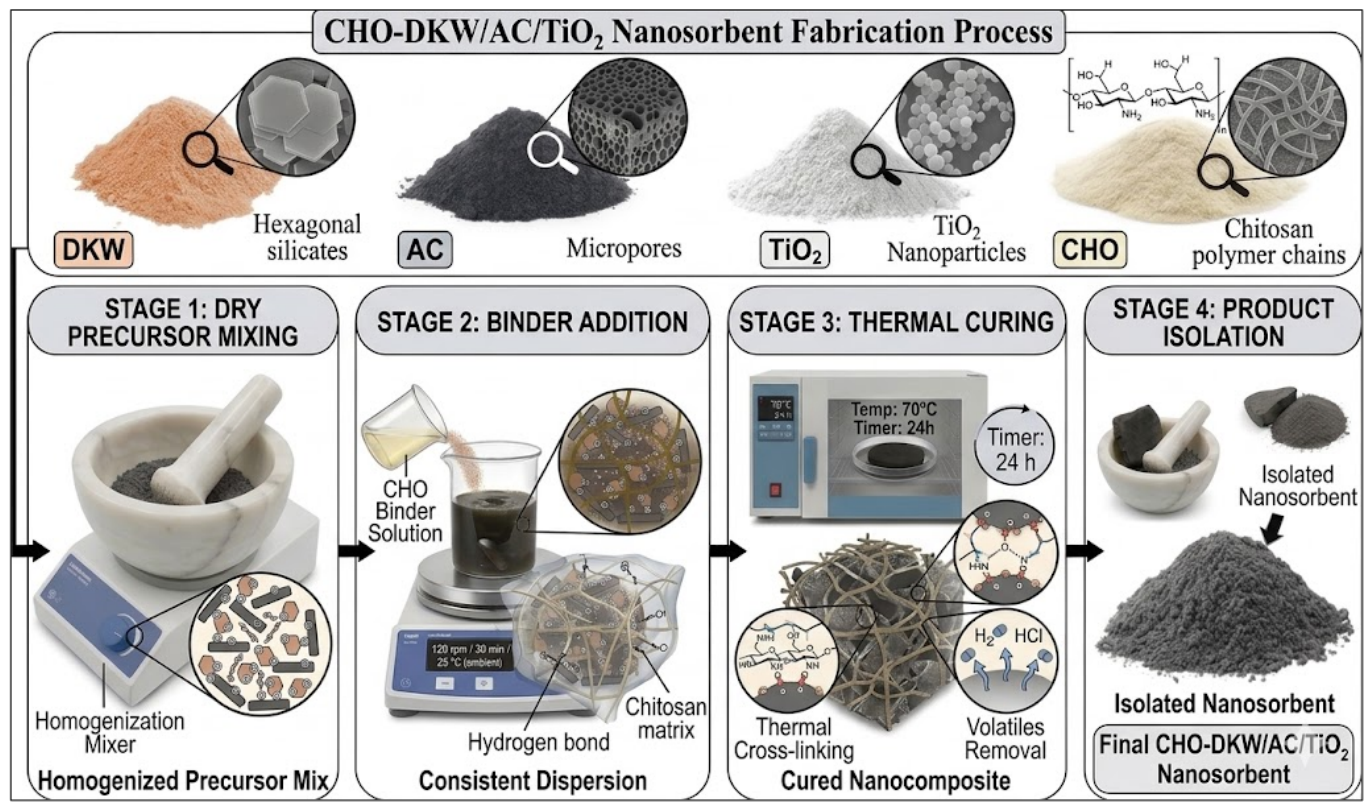
2.2. Fabrication of QHNC Adsorbent
2.3. Characterization of the Created QHNC Biocomposite
2.4. Mn(VII) Adsorption Experiments
2.5. Modeling of Mn(VII) Adsorption on QHNC
2.6. Regeneration and Desorption
3. Results and Discussion
3.1. Characterization of Created QHNC Biosorbent
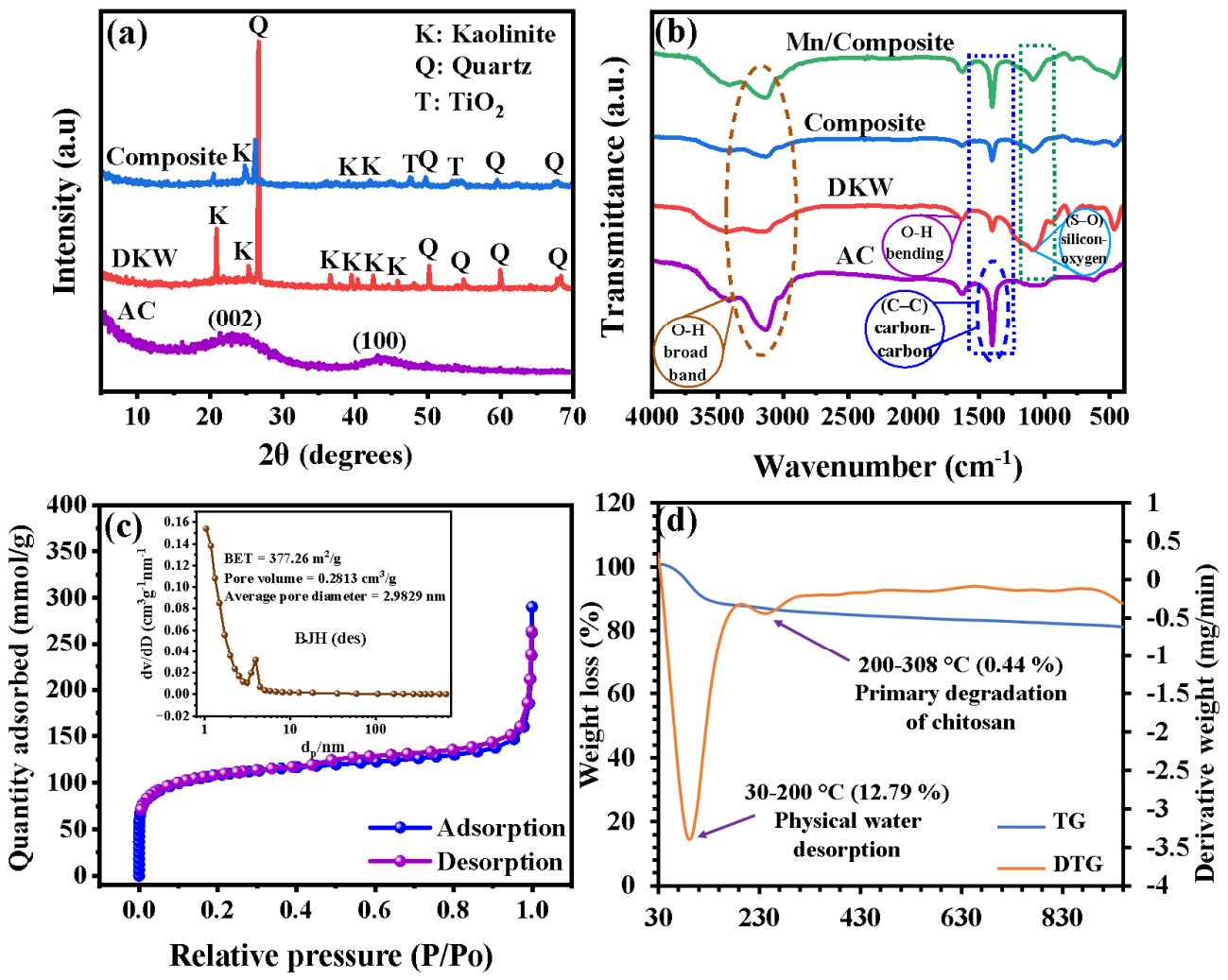
3.1.1. XRD Investigations
3.1.2. FTIR Spectroscopy
3.1.3. Bet-Derived Surface Analysis
3.1.4. Thermogravimetric Investigations
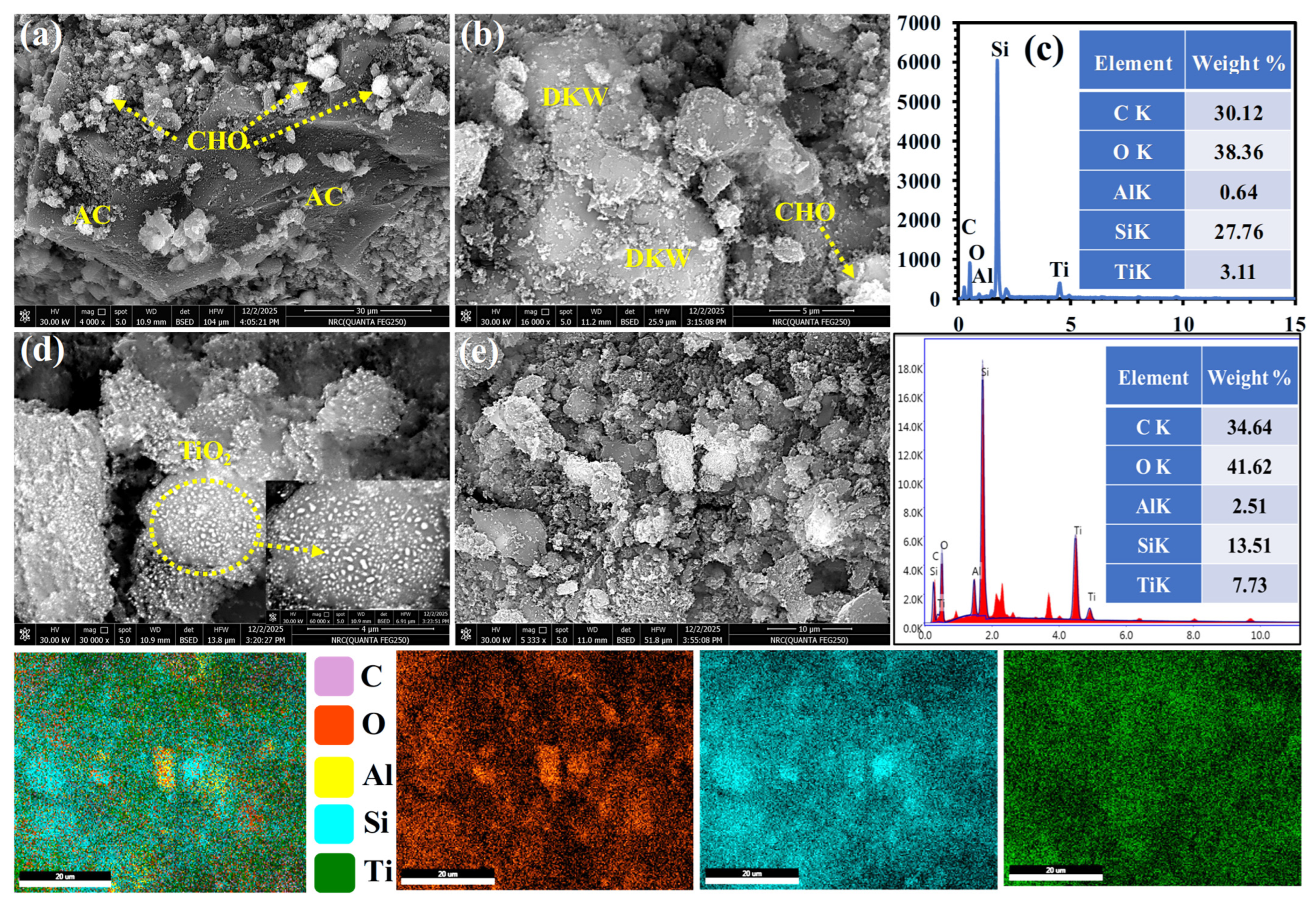
3.1.5. FESEM/EDX and Mapping Interpretations
3.2. Adsorption Investigations of Mn(VII) on QHNC
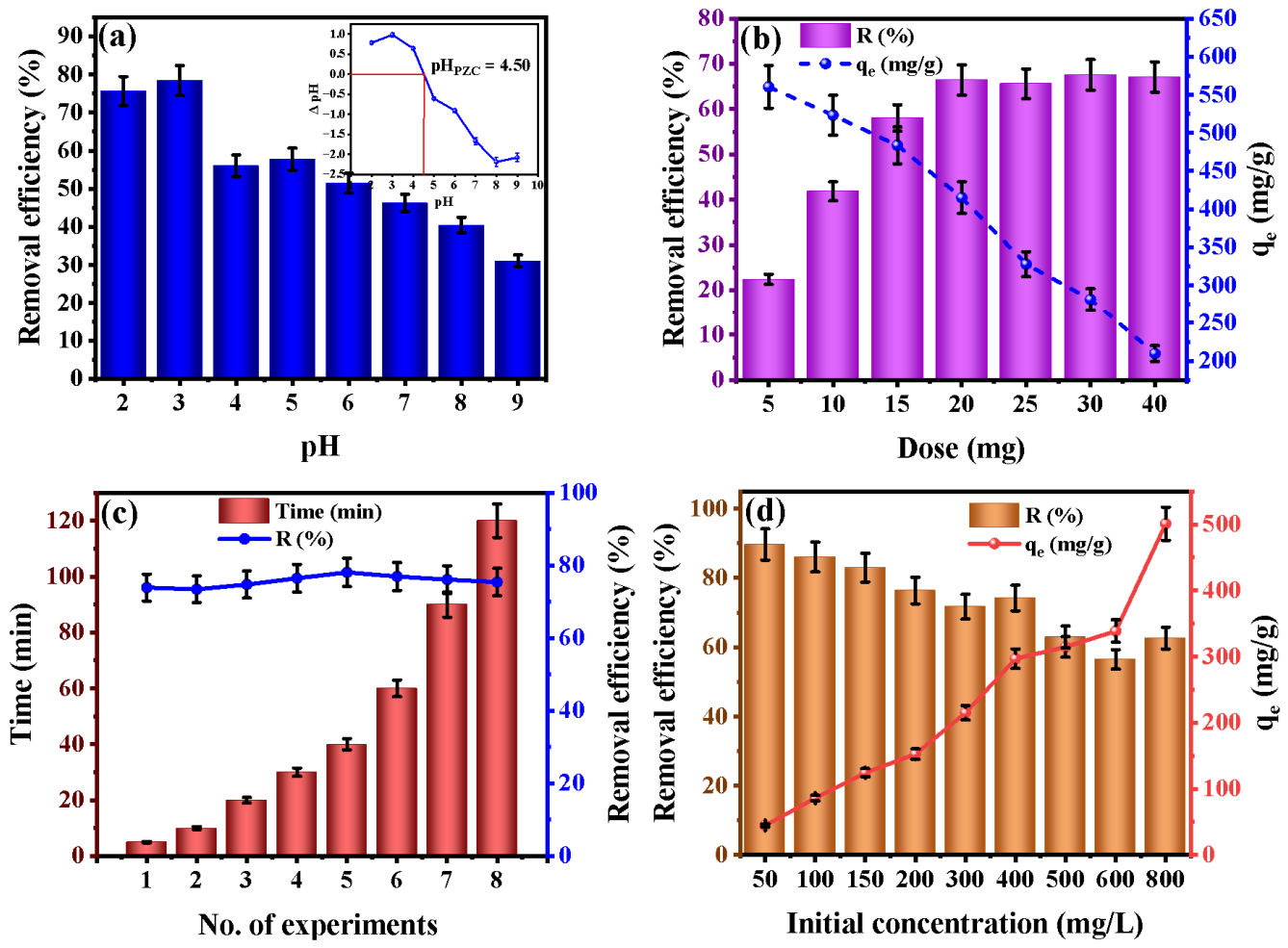
3.2.1. Effect of Solution pH and QHNC pHPZC on Mn(VII) Uptake
3.2.2. Influence of QHNC Dosage
3.2.3. Impact of Adsorption Time
3.2.4. Role of Initial Mn(VII) Concentration
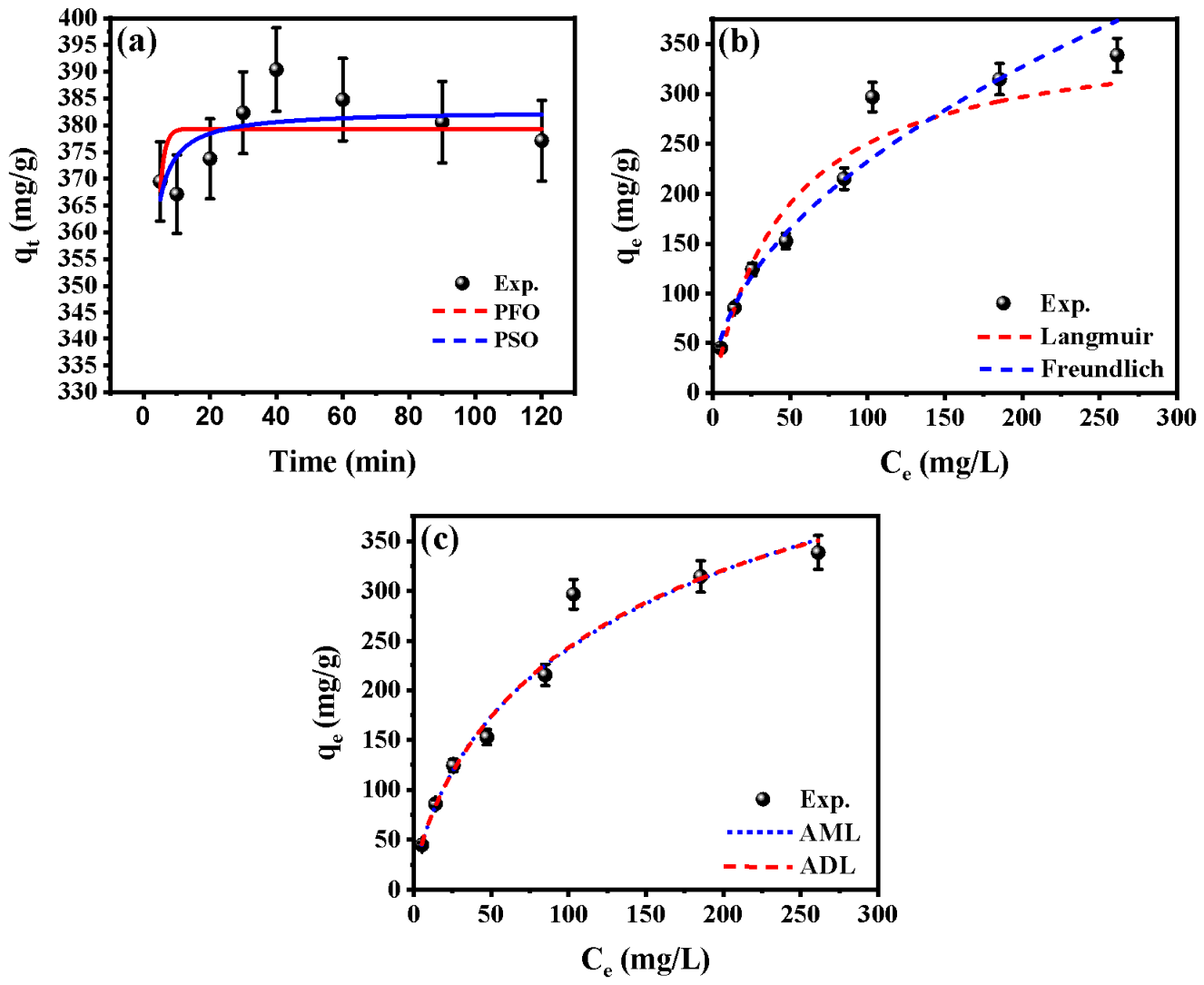
3.3. Mn Adsorption Kinetic Investigations
3.4. Isotherm Modeling of Mn(VII) Uptake via QHNC
3.4.1. Fundamental Equilibrium Fitting
3.4.2. Advanced Statistical Modeling
Examination of Steric (n, NM, Nt, and Qsat) Parameters
Evaluation of Energetic Parameters (ΔE)
3.5. Mn(VII) Adsorption Thermodynamics
3.6. Probable Mn(VII) Adsorption Mechanism
3.7. Performance Benchmarking with Conventional Adsorbents
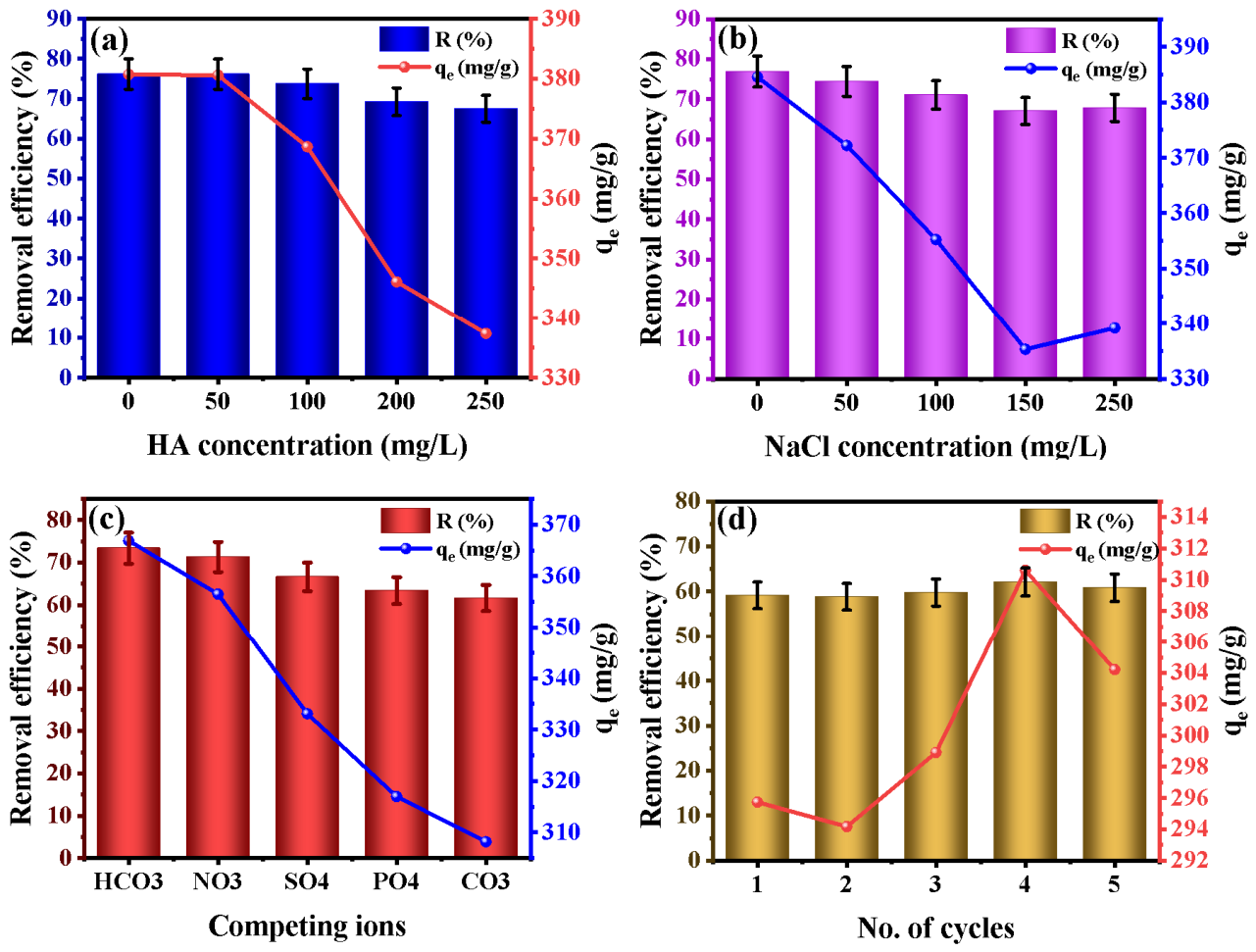
3.8. Evaluation of Competing Substances on Adsorption Efficacy
3.9. Reusability and Regeneration of QHNC
3.10. Approximate QHNC Cost Analysis
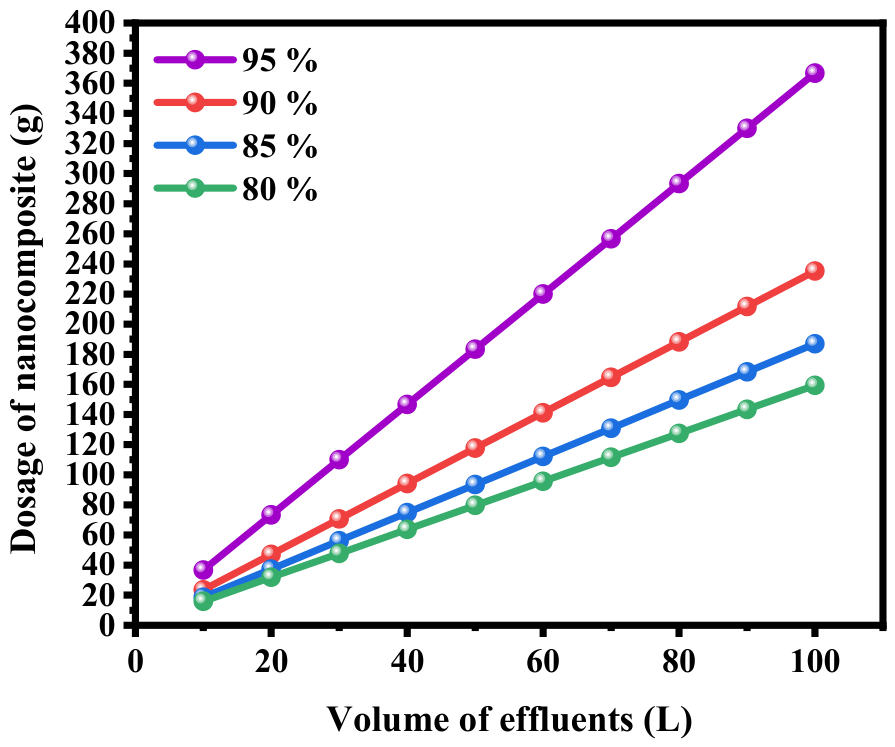
3.11. Design and Implementation of Industrial-Scale Performance
4. Conclusions
Supplementary Materials
Author Contributions
Funding
Data Availability Statement
Conflicts of Interest
References
- Lelieveld, J.; Klingmüller, K.; Pozzer, A.; Pöschl, U.; Fnais, M.; Daiber, A.; Münzel, T. Cardiovascular disease burden from ambient air pollution in Europe reassessed using novel hazard ratio functions. Eur. Heart J. 2019, 40, 1590–1596. [Google Scholar] [CrossRef]
- Chowdhary, P.; Bharagava, R.N.; Mishra, S.; Khan, N.; Chowdhary, P.; Bharagava, R.N.; Mishra, S.; Khan, N. Role of Industries in Water Scarcity and Its Adverse Effects on Environment and Human Health. In Environmental Concerns and Sustainable De-velopment; Springer: Singapore, 2020; pp. 235–256. [Google Scholar]
- Ukaogo, P.O.; Ewuzie, U.; Onwuka, C.V. Environmental pollution: Causes, effects, and the remedies. In Microorganisms for Sustainable Environment and Health; Elsevier: Amsterdam, The Netherlands, 2020; pp. 419–429. [Google Scholar]
- Zahoor, I.; Mushtaq, A. Water Pollution from Agricultural Activities: A Critical Global Review. Int. J. Chem. Biochem. Sci. 2023, 23, 164–176. [Google Scholar]
- Zhou, H.; Li, X.; Xu, G.; Yu, H. Overview of strategies for enhanced treatment of municipal/domestic wastewater at low temperature. Sci. Total Environ. 2018, 643, 225–237. [Google Scholar] [CrossRef] [PubMed]
- Meena, A.K.; Mishra, G.K.; Rai, P.K.; Rajagopal, C. Removal of heavy metal ions from aqueous solutions using carbon aerogel as an adsorbent. J. Hazard. Mater. 2005, 122, 161–170. [Google Scholar] [CrossRef]
- Jusoha, A.; Chenga, W.H.; Lowa, W.M.; Nora’ainia, A.; Megat, M.J.; Noor, M. Study on the removal of iron and manganese in groundwater by granular activated carbon. Desalination 2005, 182, 347–353. [Google Scholar] [CrossRef]
- Taffarel, S.R.; Rubio, J. On the removal of Mn2+ ions by adsorption onto natural and activated Chilean zeolites. Miner. Eng. 2009, 22, 336–343. [Google Scholar] [CrossRef]
- World Health Organization. Guidelines for Drinking Water Quality; Health Criteria and Other Support Information 2; World Health Organization: Geneva, Switzerland, 1996; pp. 248–253. [Google Scholar]
- Zhu, Z.; Gao, C.; Wu, Y.; Sun, L.; Huang, X.; Ran, W.; Shen, Q. Removal of heavy metals from aqueous solution by lipopeptides and lipopeptides modified Na-montmorillonite. Bioresour. Technol. 2013, 147, 378–386. [Google Scholar] [CrossRef]
- Xie, S.; Wang, Y.; Zhang, R.; Huang, L.; Yan, J.; Chen, Z.; Zeng, H. Fe-NC-supported LaFeO3 heterojunction electrodes for efficient copper and fluoride removal in symmetric capacitive deionization. Water Res. 2026, 297, 125744. [Google Scholar] [CrossRef]
- Egbosiuba, T.C.; Abdulkareem, A.S.; Kovo, A.S.; Afolabi, E.A.; Tijani, J.O.; Roos, W.D. Enhanced adsorption of As(V) and Mn(VII) from industrial wastewater using multi-walled carbon nanotubes and carboxylated multi-walled carbon nanotubes. Chemosphere 2020, 254, 126780. [Google Scholar] [CrossRef]
- Çifçi, D.İ.; Meriç, S. Manganese adsorption by iron impregnated pumice composite. Colloids Surf. A Physicochem. Eng. Asp. 2017, 522, 279–286. [Google Scholar] [CrossRef]
- Mahmoud, M.E.; El-Said, G.F.; Rashedy, I.R.K.; Abdelfattah, A.M. Assembly and implementation of an eco-friendly marine nanosediment for adsorptive removal of heptavalent manganese: Adsorption isotherm, thermodynamic and kinetics studies. Powder Technol. 2020, 359, 247–260. [Google Scholar] [CrossRef]
- Salem, H.S.A.; Hassan, S.S.; Refay, F.A.; Sulieman, Z.K.; Mohamed, M.Y.; Rabea, A.R.; Refaay, N.S.; Abdel Moain, S.Y.; Abdulrahman, M.E.S.; Radwan, O.N.; et al. Modified bentonite @ microwave for Mn(VII) removal with a simulation study. Sci. Rep. 2025, 15, 8520. [Google Scholar] [CrossRef]
- El-Aassar, M.R.; Mohamed, F.M. Characterization valorized anthracite and its application in manganese (VII) adsorption from aqueous solution; batch and column studies. Microporous Mesoporous Mater. 2021, 310, 110641. [Google Scholar] [CrossRef]
- Elshimy, A.S.; Abdel Gawwad, H.A.; Sharib, A.A.; Abd EL-Gawaad, N.S.; Al-Ahmed, Z.A.M.; Bonilla-Petriciolet, A.; Seliem, M.K. A new alkali-activated binder prepared from dolomite waste and diatom frustules: Insights into the mechanical performance and Mn (VII) treatment. J. Environ. Chem. Eng. 2023, 11, 110392. [Google Scholar] [CrossRef]
- Ali, M.A.; Mobarak, M.; Salah, A.M.; Yehia, A.; Lima, E.C.; Seliem, A.Q.; Seliem, M.K. Facile synthesis and characterization of a magnetic biosorbent derived from sodium alginate and activated graphite schist: Experimental and statistical physics analysis for Mn (VII) remediation. Int. J. Biol. Macromol. 2024, 261, 129692. [Google Scholar] [CrossRef] [PubMed]
- Al-kroom, H.; Rashad, A.M.; Alghamdi, H.; Abadel, A.A.; Abd Elrahman, M.; Abdel-Gawwad, H.A.; Arif, M.A. Application of pretreated dealuminated kaolin as a modifier agent for alkali-activated slag cement. Case Stud. Constr. Mater. 2024, 20, e02858. [Google Scholar] [CrossRef]
- Zhao, Y.; Babatunde, A.; Hu, Y.; Kumar, J.; Zhao, X. Pilot field-scale demonstration of a novel alum sludge-based constructed wetland system for enhanced wastewater treatment. Process Biochem. 2011, 46, 278–283. [Google Scholar] [CrossRef]
- Espro, C.; Satira, A.; Mauriello, F.; Anajafi, Z.; Moulaee, K.; Iannazzo, D.; Neri, G. Orange peels-derived hydrochar for chemical sensing applications. Sens. Actuators B Chem. 2021, 341, 130016. [Google Scholar] [CrossRef]
- Cancelliere, R.; Cosio, T.; Campione, E.; Corvino, M.; D’Amico, M.P.; Micheli, L.; Signori, E.; Contini, G. Label-free electrochemical immunosensor as a reliable point-of-care device for the detection of Interleukin-6 in serum samples from patients with psoriasis. Front. Chem. 2023, 11, 1251360. [Google Scholar] [CrossRef] [PubMed]
- Cancelliere, R.; Rea, G.; Severini, L.; Cerri, L.; Leo, G.; Paialunga, E.; Mantegazza, P.; Mazzuca, C.; Micheli, L. Expanding the cir-cularity of plastic and biochar materials by developing alternative low environmental footprint sensors. Green Chem. 2023, 25, 6774–6783. [Google Scholar] [CrossRef]
- Hussain, S.; Gajbhiye, P.; Siddiqui, M.I.H.; Sonawane, C.; Dobrotă, D. Comparative assessment of vegetable yield with and without biochar derived from locally sourced apricot shells. Sci. Rep. 2025, 15, 6825. [Google Scholar] [CrossRef] [PubMed]
- Lopičić, Z.R.; Šoštarić, T.D.; Milojković, J.V.; Antanasković, A.V.; Milić, J.S.; Spasić, S.D.; Avdalović, J.S. Efficient Removal of Water Soluble Fraction of Diesel Oil by Biochar Sorption Supported by Microbiological Degradation. Processes 2024, 12, 964. [Google Scholar] [CrossRef]
- Karam, D.S.; Nagabovanalli, P.; Rajoo, K.S.; Ishak, C.F.; Abdu, A.; Rosli, Z.; Muharam, F.M.; Zulperi, D. An overview on the preparation of rice husk biochar, factors affecting its properties, and its agriculture application. J. Saudi Soc. Agric. Sci. 2022, 21, 149–159. [Google Scholar] [CrossRef]
- Wang, Y.; Jiang, B.; Wang, L.; Feng, Z.; Fan, H.; Sun, T. Hierarchically structured two-dimensional magnetic microporous biochar derived from hazelnut shell toward effective removal of p-arsanilic acid. Appl. Surf. Sci. 2021, 540, 148372. [Google Scholar] [CrossRef]
- Bobde, P.; Sharma, A.K.; Kumar, R.; Pal, S.; Pandey, J.K.; Wadhwa, S. Adsorptive removal of oxytetracycline using MnO2-engineered pine-cone biochar: Thermodynamic and kinetic investigation and process optimization. Environ. Monit. Assess. 2023, 195, 1291. [Google Scholar] [CrossRef]
- Dilshani, A.; Amarasinghe, P.; Rathnayake, M. Multicomponent Heavy Metals Adsorption by Raw Coir Dust and Processed Coir Pith: Experimental Investigation and Life Cycle Analysis. In Proceedings of the MERCon 2022—Moratuwa Engineering Research Conference, Moratuwa, Sri Lanka, 27–29 July 2022. [Google Scholar]
- Hussain, M.; Ali, A.S.; Kousar, T.; Mahmood, F.; Haruna, A.; Zango, Z.U.; Adamu, H.; Kotp, M.G.; Abdulganiyyu, I.A.; Keshta, B.E. Efficient removal of manganese (II) ions from aqueous solution using biosorbent derived from rice husk. Sustain. Chem. One World 2025, 5, 100047. [Google Scholar] [CrossRef]
- Liu, X.; Li, D.; Li, J.; Wang, J.; Liang, S.; Deng, H. A novel MnOx-impregnated on peanut shells derived biochar for high adsorption performance of Pb(II) and Cd(II): Behavior and mechanism. Surf. Interfaces 2022, 34, 102323. [Google Scholar] [CrossRef]
- Patra, J.M.; Panda, S.S.; Dhal, N.K. Biochar as a low-cost adsorbent for heavy metal removal: A review. Int. J. Res. Biosci. 2017, 6, 1–7. [Google Scholar]
- Johari, K.; Saman, N.; Song, S.T.; Mat, H.; Stuckey, D.C. Utilization of coconut milk processing waste as a low-cost mercury sorbent. Ind. Eng. Chem. Res. 2013, 52, 15648–15657. [Google Scholar] [CrossRef]
- Rahim, A.R.A.; Rabat, N.E.; Johari, K.; Saman, N.; Mat, H. Removal of lead (II) ions from aqueous solution using desiccated coconut waste as low-cost adsorbent. Chem. Eng. Trans. 2019, 72, 169. [Google Scholar]
- Ramadan, H.S.; Ali, R.A.; Mobarak, M.; Badawi, M.; Selim, A.Q.; Mohamed, E.A.; Seliem, M.K. One-step fabrication of a new outstanding rutile TiO2 nanoparticles/anthracite adsorbent: Modeling and physicochemical interpretations for malachite green removal. Chem. Eng. J. 2021, 426, 131890. [Google Scholar] [CrossRef]
- Arif, M.A.; Abdel-Gawwad, H.A.; Elshimy, A.S.; Seliem, M.K.; Ali, M.A.; Maodaa, S.N.; Federowicz, K.; Mobarak, M.; Bendary, H.I.; Salama, Y.F.; et al. Facile synthesis and characterization of metakaolin/carbonate waste-based geopolymer for Cr(VI) remediation: Experimental and theoretical studies. Inorganica Chim. Acta 2024, 564, 121939. [Google Scholar] [CrossRef]
- Sharib, A.S.A.A.A.; Mobarak, M.; Elshimy, A.S.; Al-arifi, N.; Salama, Y.F.; Li, Z.; Selim, A.Q.; Seliem, M.K. Facile and green fabrication of an effective and low-cost alkali-activated binder using carbonized limestone: Characterization, experiments, and statistical physics formalism for ibuprofen adsorption. Sustain. Chem. Pharm. 2024, 41, 101701. [Google Scholar] [CrossRef]
- Rahman, M.H.; Gadallah, A.G.; Alrowais, R.; Elshimy, A.S. Deacetylated chitin-modified, biogenic waste-derived magnetic nanocomposite for enhanced Mn (VII) adsorption: Industrial scalability, ANOVA, and advanced theoretical treatment. J. Water Process Eng. 2026, 86, 109944. [Google Scholar] [CrossRef]
- Elshimy, A.S.; Abdel-Gawwad, H.A.; Al-Dossari, M.; Abd EL-Gawaad, N.S.; Bonilla-Petriciolet, A.; Badawi, M.; Mobarak, M.; Lima, E.C.; Selim, A.Q.; Seliem, M.K. Utilization of alkali-activated dolomite waste toward the fabrication of an effective adsorbent: Experimental study and statistical physics formalism for the removal of methylene blue and crystal violet. J. Phys. Chem. Solids 2023, 180, 111442. [Google Scholar] [CrossRef]
- Suzuki, R.M.; Andrade, A.D.; Sousa, J.C.; Rollemberg, M.C. Preparation and characterization of activated carbon from rice bran. Bioresour. Technol. 2007, 98, 1985–1991. [Google Scholar] [CrossRef]
- Oluseyi, A.K.; Olanrewaju, A.; Pal, M.; Das, S.K. Evaluation of Nigerian source of kaolin as a raw material for mullite synthesis. Orient. J. Chem. 2016, 32, 1571–1582. [Google Scholar] [CrossRef]
- Kumar, K.A.; Subalakshmi, K.; Senthilselvan, J. Effect of mixed valence state of titanium on reduced recombination for natural dye-sensitized solar cell applications. J. Solid State Electrochem. 2016, 20, 1921–1932. [Google Scholar] [CrossRef]
- Teanchai, K.; Witit-Anun, N.; Chaikhun, S. Characterization and analyzation of chitosan from Anadara granosa shell. J. Key Eng. Mater. 2016, 675, 463–466. [Google Scholar] [CrossRef]
- Valencia, A.; Muñiz-Valencia, R.; Ceballos-Magaña, S.G.; Rojas-Mayorga, C.K.; Bonilla-Petriciolet, A.; González, J.; Aguayo-Villarreal, I.A. Cyclohexane and benzene separation by fixed-bed adsorption on activated carbons prepared from coconut shell. Environ. Technol. Innov. 2022, 25, 102076. [Google Scholar] [CrossRef]
- Hassan, R.; Alrowais, R.; Soliman, A.A.; Elshimy, A.S. A novel biogenic waste-derived CHS-DFCW/AC hybrid composite for highly efficient Mn (VII) remediation: Techno-economic assessment, ANOVA, and advanced modeling. J. Environ. Chem. Eng. 2025, 14, 120736. [Google Scholar] [CrossRef]
- Chen, X.; Peng, S.; Wang, J. Retention profile and kinetics characteristics of the radionuclide 90-Sr (II) onto kaolinite. J. Radioanal. Nucl. Chem. 2015, 303, 509–519. [Google Scholar] [CrossRef]
- Saikia, B.J.; Parthasarathy, G. Fourier transform infrared spectroscopic characterization of kaolinite from Assam and Meghalaya, Northeastern India. J. Mod. Phys. 2010, 1, 206–210. [Google Scholar] [CrossRef]
- Zeng, K.W.; Li, Y.P.; Fang, Y.E. Preparation and structure of water-soluble microcrystalline chitosan. Chin. J. Appl. Chem. 2002, 19, 216–219. [Google Scholar]
- Wanule, D.; Balkhande, J.V.; Ratnakar, P.U.; Kulkarni, A.N.; Bhowate, C.S. Extraction and FTIR analysis of chitosan from American cockroach, Periplaneta americana. Extraction 2014, 3, 299–304. [Google Scholar]
- Sharma, H.N.; Harley, S.J.; Sun, Y.; Glascoe, E.A. Dynamic triple-mode sorption and outgassing in materials. Sci. Rep. 2017, 7, 2942. [Google Scholar] [CrossRef]
- Correia, D.M.; Gámiz-González, M.A.; Botelho, G.; Vidaurre, A.; Ribelles, J.L.G.; Lanceros-Méndez, S.; Sencadas, V. Effect of neutralization and cross-linking on the thermal degradation of chitosan electrospun membranes. J. Therm. Anal. Calorim. 2014, 117, 123–130. [Google Scholar] [CrossRef]
- Wu, R.; Abdulhameed, A.S.; Jawad, A.H.; Yong, S.K.; Li, H.; ALOthman, Z.A.; Wilson, L.D.; Algburi, S. Development of a chitosan/nanosilica biocomposite with arene functionalization via hydrothermal synthesis for acid red 88 dye removal. Int. J. Biol. Macromol. 2023, 252, 126342. [Google Scholar] [CrossRef]
- Zhang, X.; Sathiyaseelan, A.; Lin, J.; Jin, T.; Wang, M.H. Preparation of silver nitroprusside nanoparticles for enhanced acid red 94 removal from effluent: A study on synergistic adsorption and photocatalytic processes, with toxicological assessment. J. Mol. Liq. 2024, 406, 125010. [Google Scholar] [CrossRef]
- Xu, Z.; Chen, D.; Duan, X.; Chen, Y.; Li, C.; Li, S.; Ma, Y.; Huang, B.; Pan, X. Collaboratively removal of phosphate and glyphosate from wastewater by a macroscopic Zr-SA/Ce-UIO-66 adsorbent: Performance, mechanisms and applicability. J. Hazard. Mater. 2025, 484, 136786. [Google Scholar] [CrossRef] [PubMed]
- Al-Aoh, H.A.; Alamrani, N.A. Chemically modified Teucrium polium (Lamiaceae) plant act as an effective adsorbent tool for potassium permanganate (KMnO4) in wastewater remediation. Open Chem. 2022, 20, 736–747. [Google Scholar] [CrossRef]
- Lagergren, S. About the theory of so-called adsorption of soluble substances. K. Sven. Vetenskapsakademiens Handl. 1898, 24, 1–39. [Google Scholar]
- WeberJr, W.J.; Morris, J.C. Kinetics of Adsorption on Carbon from Solution. J. Sanit. Eng. Div. 1963, 89, 31–59. [Google Scholar] [CrossRef]
- Bhran, A.A.; Gadallah, A.G.; Alrowais, R.; Aadli, A.S.; Elshimy, A.S. Economic Design of a Novel Magnetic ZnO-Doped Biocomposite: An Integrated Advanced Ionic Theory and Statistical Physics Approach for Cr (VI) and Hg (II) Remediation. Nanomaterials 2026, 16, 521. [Google Scholar] [CrossRef]
- Elshimy, A.S.; Mohamed, O.A.; Kotp, A.A.; Hassan, S.M. A novel selenite-based magnetic nanocomposite for malachite green removal from aqueous solution: Industrial scalability, ANOVA, and advanced modeling. Mater. Chem. Phys. 2026, 359, 132550. [Google Scholar] [CrossRef]
- Barakat, M.A.; Selim, A.Q.; Mobarak, M.; Kumar, R.; Anastopoulos, I.; Giannakoudakis, D.A.; Bonilla-Petriciolet, A.; Mohamed, E.A.; Seliem, M.K.; Komarneni, S. Experimental and theoretical studies of methyl orange uptake by Mn-rich synthetic mica: Insights into manganese role in adsorption and selectivity. Nanomaterials 2020, 10, 1464. [Google Scholar] [CrossRef]
- Sellaoui, L.; Saha, B.B.; Wjihi, S.; Lamine, A.B. Physicochemical parameters interpretation for adsorption equilibrium of ethanol on metal organic framework: Application of the multilayer model with saturation. J. Mol. Liq. 2017, 223, 537–542. [Google Scholar] [CrossRef]
- Younes, H.; Mahanna, H.; El-Etriby, H.K. Fast adsorption of phosphate (PO4−) from wastewater using glauconite. Water Sci. Technol. 2019, 80, 1643–1653. [Google Scholar] [CrossRef] [PubMed]
- Gebreel, S.K.; Zayed, A.M.; Rafea, M.A.; Mustapha, N.; Zaki, M.E.A.; Roshdy, M.A.; Kholief, M.G.; Mohamed, F.M. Towards zero-wastewaters treatment: Biogenic composite for targeted dye congo red adsorption. Cellulose 2025, 32, 8015–8046. [Google Scholar] [CrossRef]
- Bhran, A.A.; Gadallah, A.G.; Alrowais, R.; Elshimy, A.S. Ibuprofen adsorption using an alginate-functionalized manure/sunflower seed biochar composite: Characterization, optimization, and molecular simulation. Biomass Bioenergy 2026, 215, 109617. [Google Scholar] [CrossRef]



| Model | Variable | Unit | Value | Std. Error | t-Value | Pr (>|t|) |
|---|---|---|---|---|---|---|
| PFO | qe | mg/g·min−1 | 379.36 ± 2.98 | 2.89 | 131.42 | 1.31 × 10⁻¹¹ |
| K1 | min−1 | 0.6 ± 0.2 | 0.2 | 3.5 | 0.01 | |
| R2 | 0.99 | |||||
| X2 | 0.99 | |||||
| PSO | qe | mg/g | 389.76 ± 2.97 | 2.97 | 128.59 | 1.5 × 10⁻¹¹ |
| K2 | g.mg−1·min−1 | 0.01 ± 0.005 | 0.005 | 2.29 | 0.06 | |
| R2 | 0.65 | |||||
| X2 | 0.49 |
| Isotherm Model | Parameters | Values |
|---|---|---|
| Langmuir | 365.1 ± 41.9 | |
| 0.02 ± 0.005 | ||
| R2 | 0.96 | |
| 8.13 | ||
| Freundlich | 23.96 ± 4.09 | |
| f | 0.49 ± 0.04 | |
| R2 | 0.99 | |
| 4.2 | ||
| AML | n | 0.7 ± 0.16 |
| NM (mg/g) | 959.9 ± 719.2 | |
| Qsat (mg/g) | 669.8 | |
| ∆E1 (kJ/mol) | 14.42 | |
| R2 | 0.99 | |
| 3.6 | ||
| ADL | n | 0.56 |
| NM (mg/g) | 524.8 | |
| Qsat (mg/g) | 591.9 | |
| ∆E1 (kJ/mol) | 15.1 | |
| ∆E2 (kJ/mol) | 15.28 | |
| R2 | 0.99 | |
| 4.35 |
| Material | pH | Time (min) | Dose (mg) | Cycle Number | Temperature | Q (mg/g) | Ref. |
|---|---|---|---|---|---|---|---|
| MWCNTs-OCH2CO2H | 6.0 | 60 | 30 | 6 | 50 °C | 238 | [12] |
| MWCNTs | 6.0 | 60 | 30 | 6 | 50 °C | 192 | [12] |
| Marine nanosediment | 3.0 | 30 | 20 | - | 25 °C | 49.2 | [14] |
| Iron impregnated pumice | 7.0 | 1440 | 500 | - | 25 °C | 7.14 | [13] |
| Modified anthracite (MAn) | 3.0 | 60 | 30 | - | 25 °C | 555.5 | [16] |
| CHS-DFCW/AC | 3.0 | 60 | 20 | 5 | 55 °C | 422.4 | [45] |
| Microwave-treated bentonite | 3.0 | 120 | 50 | 4 | 25 °C | 3.17 | [15] |
| QHNC | 2.0 | 60 | 25 | 8 | 25 °C | 338.8 | This work |
| Material | Experimental Mass Yield (kg/g) | Total Procurement Cost (USD) | Cost per Acquired Unit (kg or g/USD) | Quantity of Material Utilized (by Mass or Volume) | Production Process Material Outlay (USD) |
|---|---|---|---|---|---|
| DKW | 5 kg | - | - | 1 kg | - |
| AC | 4 kg | 6.52 | 1.63 | 1 kg | 0.815 |
| TiO2 | 500 g | 36 | 0.072 | 200 g | 14.4 |
| CHO | 150 g | 1.5 | 0.01 | 80 g | 0.8 |
| Production Machinery | Time (h) | Certified power output limit (kW/h) | Energy unit cost (USD/kW·h−1) | Total cost | |
| Dryer | 24 | 1 | 0.24 | 5.76 | |
| Stirrer | 0.5 | 1 | 0.24 | 0.12 | |
| Total yield cost = 21.895 USD For 2.2 kg | Total yield cost 9.95 USD/kg |
Disclaimer/Publisher’s Note: The statements, opinions and data contained in all publications are solely those of the individual author(s) and contributor(s) and not of MDPI and/or the editor(s). MDPI and/or the editor(s) disclaim responsibility for any injury to people or property resulting from any ideas, methods, instructions or products referred to in the content. |
© 2026 by the authors. Licensee MDPI, Basel, Switzerland. This article is an open access article distributed under the terms and conditions of the Creative Commons Attribution (CC BY) license.
Share and Cite
Hassan, R.; Mohamed, O.A.; Rashad, M.; Elshimy, A.S. Production-Level Mitigation of Mn(VII) via a Novel Quaternary Hybrid Nanocomposite: Structural Elucidation, Experimental Optimization, and Advanced Ionic Simulation. Nanomaterials 2026, 16, 742. https://doi.org/10.3390/nano16120742
Hassan R, Mohamed OA, Rashad M, Elshimy AS. Production-Level Mitigation of Mn(VII) via a Novel Quaternary Hybrid Nanocomposite: Structural Elucidation, Experimental Optimization, and Advanced Ionic Simulation. Nanomaterials. 2026; 16(12):742. https://doi.org/10.3390/nano16120742
Chicago/Turabian StyleHassan, Raouf, O. A. Mohamed, M. Rashad, and Ahmed S. Elshimy. 2026. "Production-Level Mitigation of Mn(VII) via a Novel Quaternary Hybrid Nanocomposite: Structural Elucidation, Experimental Optimization, and Advanced Ionic Simulation" Nanomaterials 16, no. 12: 742. https://doi.org/10.3390/nano16120742
APA StyleHassan, R., Mohamed, O. A., Rashad, M., & Elshimy, A. S. (2026). Production-Level Mitigation of Mn(VII) via a Novel Quaternary Hybrid Nanocomposite: Structural Elucidation, Experimental Optimization, and Advanced Ionic Simulation. Nanomaterials, 16(12), 742. https://doi.org/10.3390/nano16120742