Tin(II) Dithiocarbamate-Derived SnS Nanoparticles for High-Performance Quantum Dot-Sensitized Solar Cells

 ,
,  ,
,  and
and 
Abstract
1. Introduction
2. Methodology
2.1. Materials, Methods and Physical Measurements
2.2. Synthesis of Sn(II) Dithiocarbamate Complexes
2.3. Synthesis of SnS Quantum Dots
2.4. Solar-Cell Fabrication and Assembly
2.5. Characterization
3. Results and Discussion
3.1. FTIR and Electronic Spectra Studies of the Ligands
3.2. FTIR, Raman, and UV–Vis Analyses of the Sn(II) Complexes
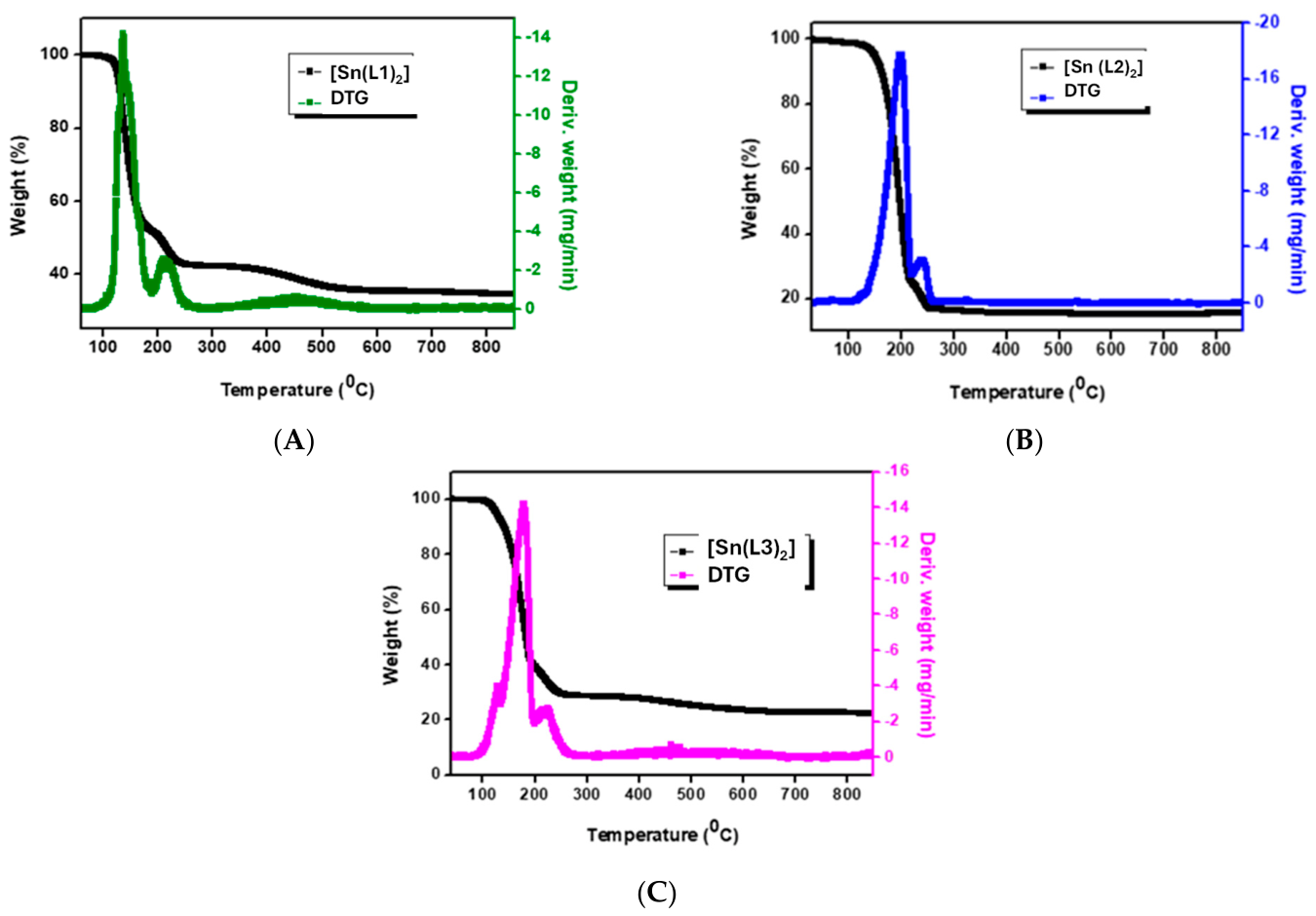
3.3. Thermal Stability and Decomposition of Sn(II) Complexes
3.4. Structural Characterization of SnS Quantum Dot
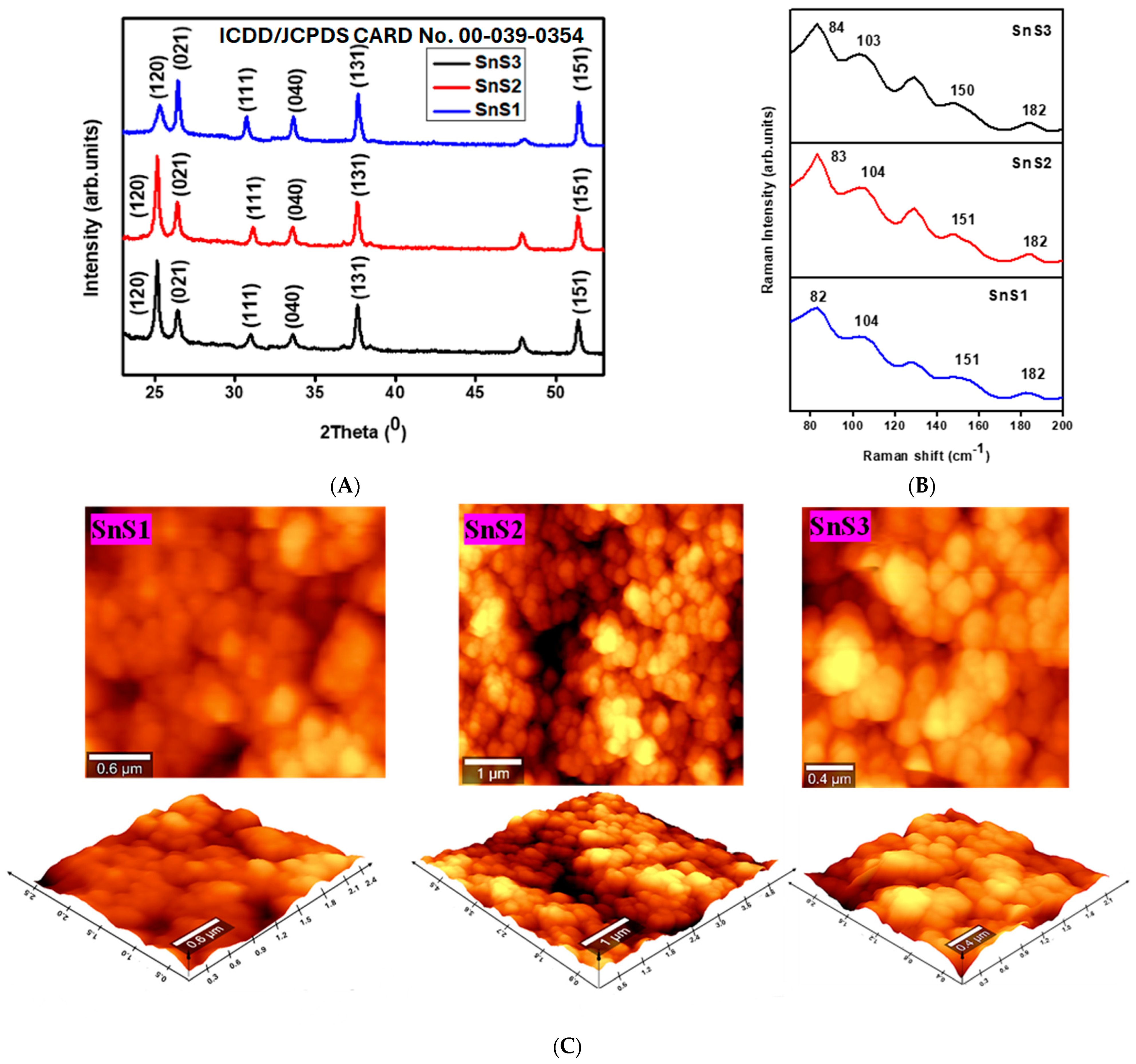
3.4.1. XRD, Raman and AFM Analysis
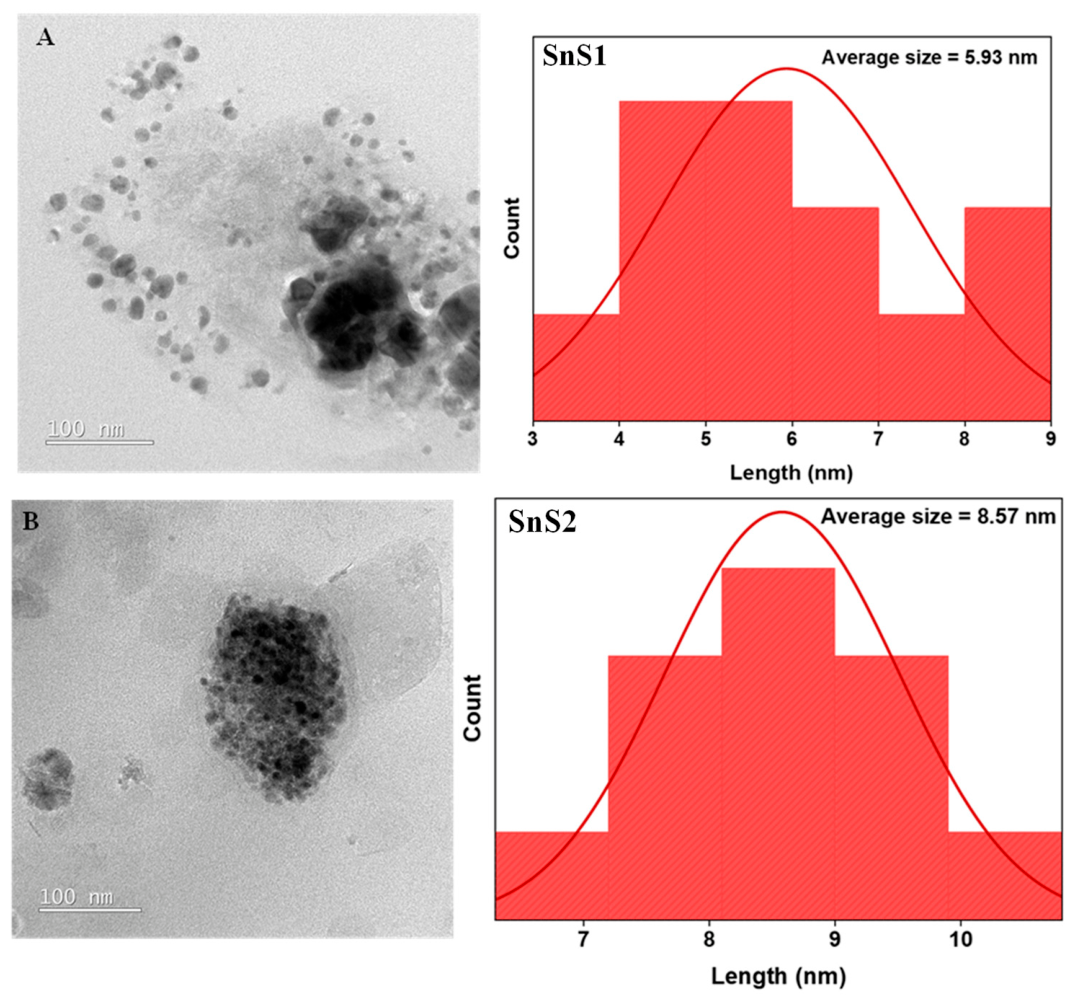
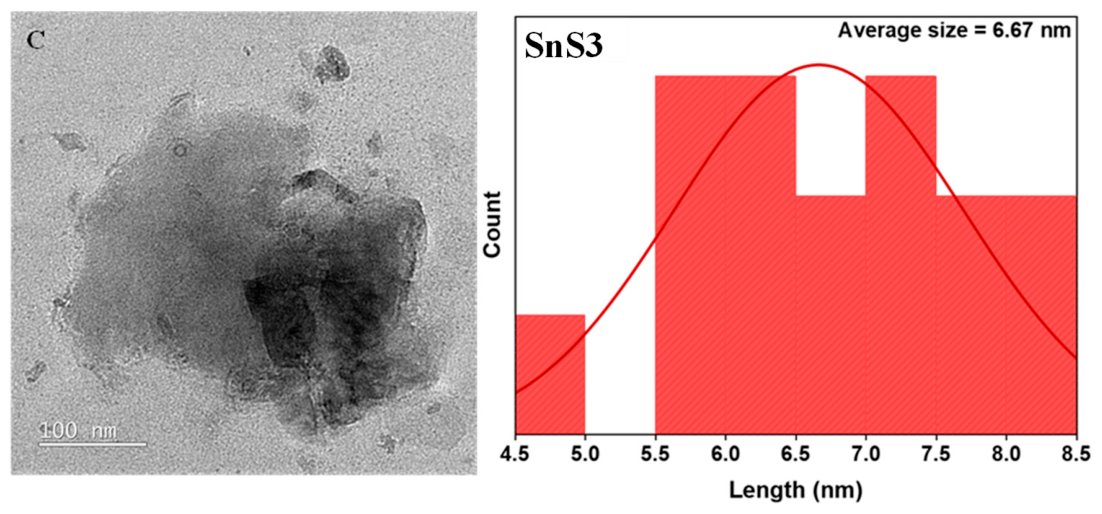
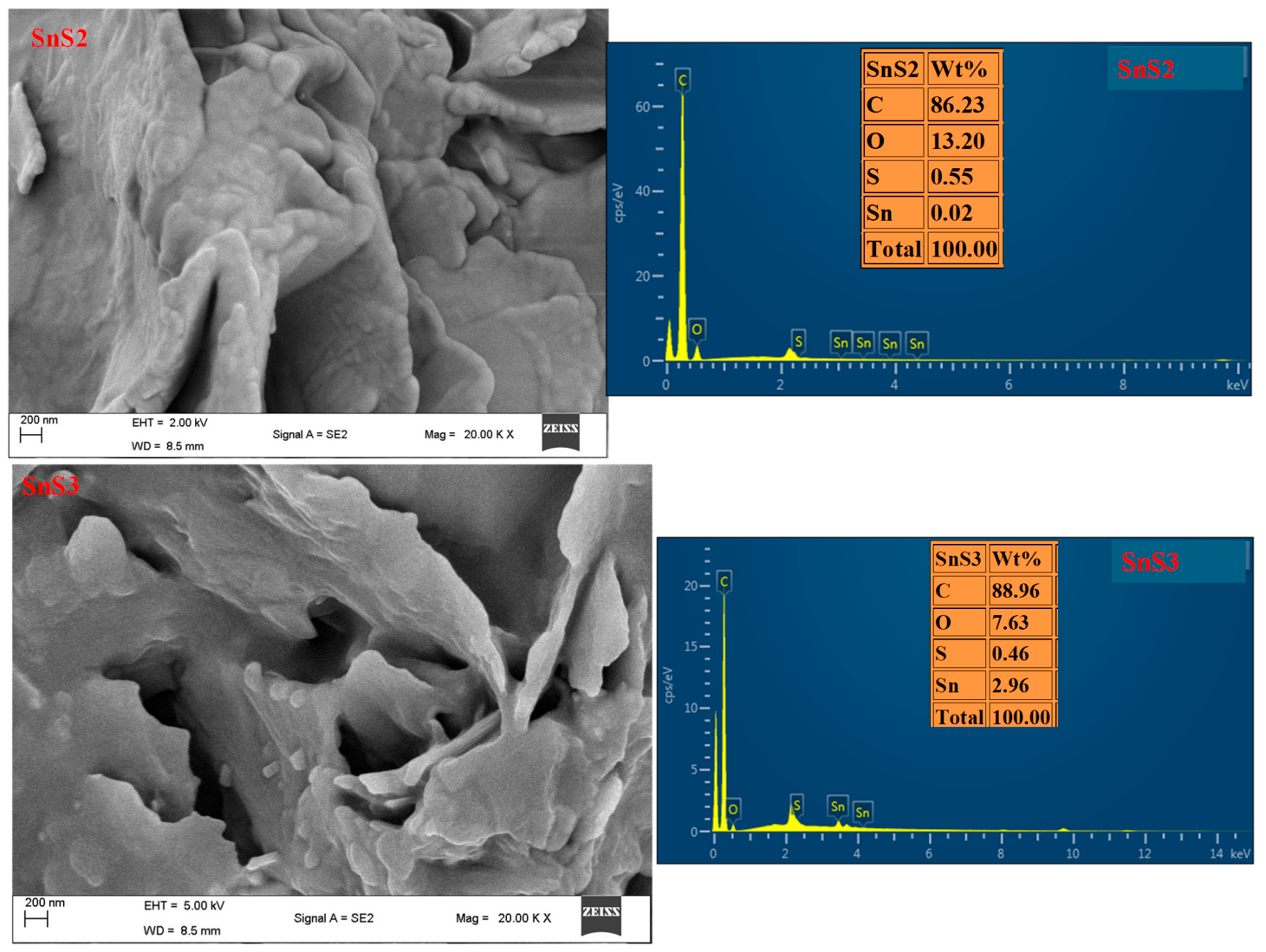
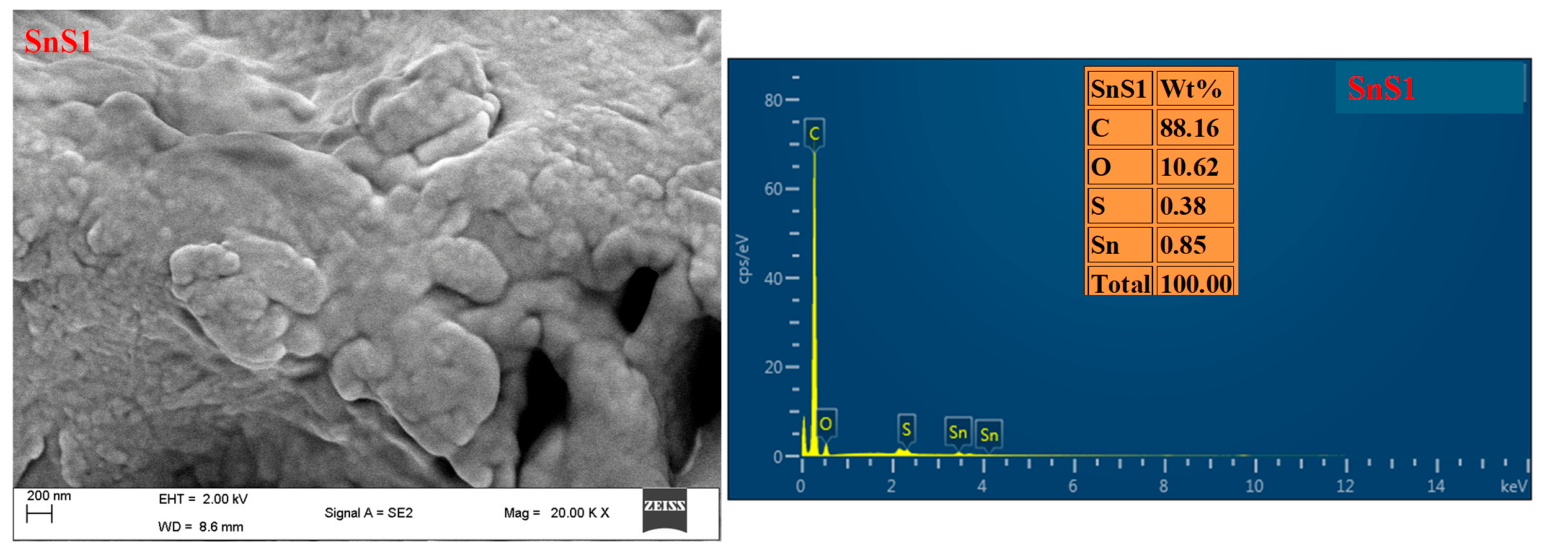
3.4.2. TEM, Size Distribution, SEM and EDS
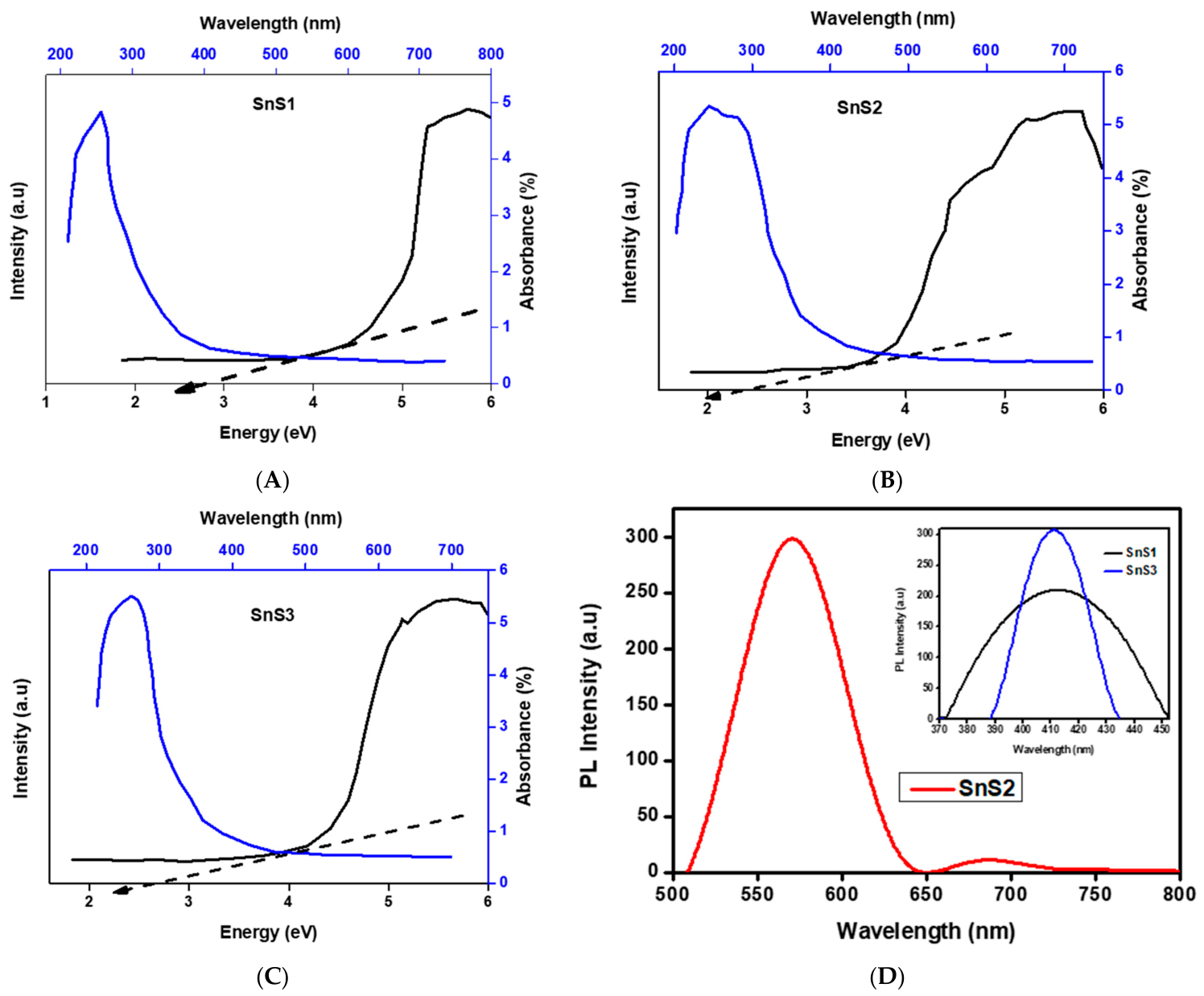
3.5. Optical Properties of SnS Quantum Dots
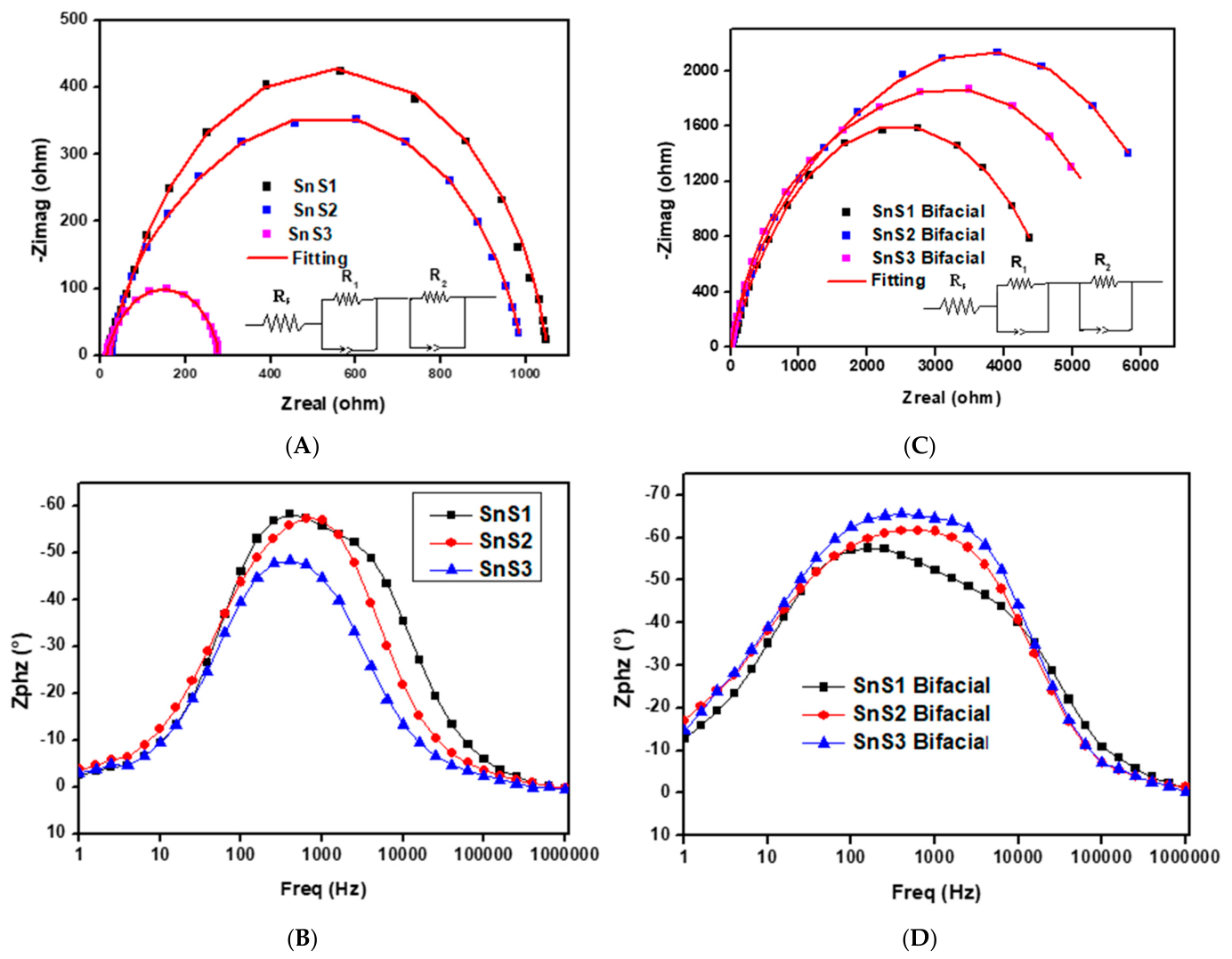
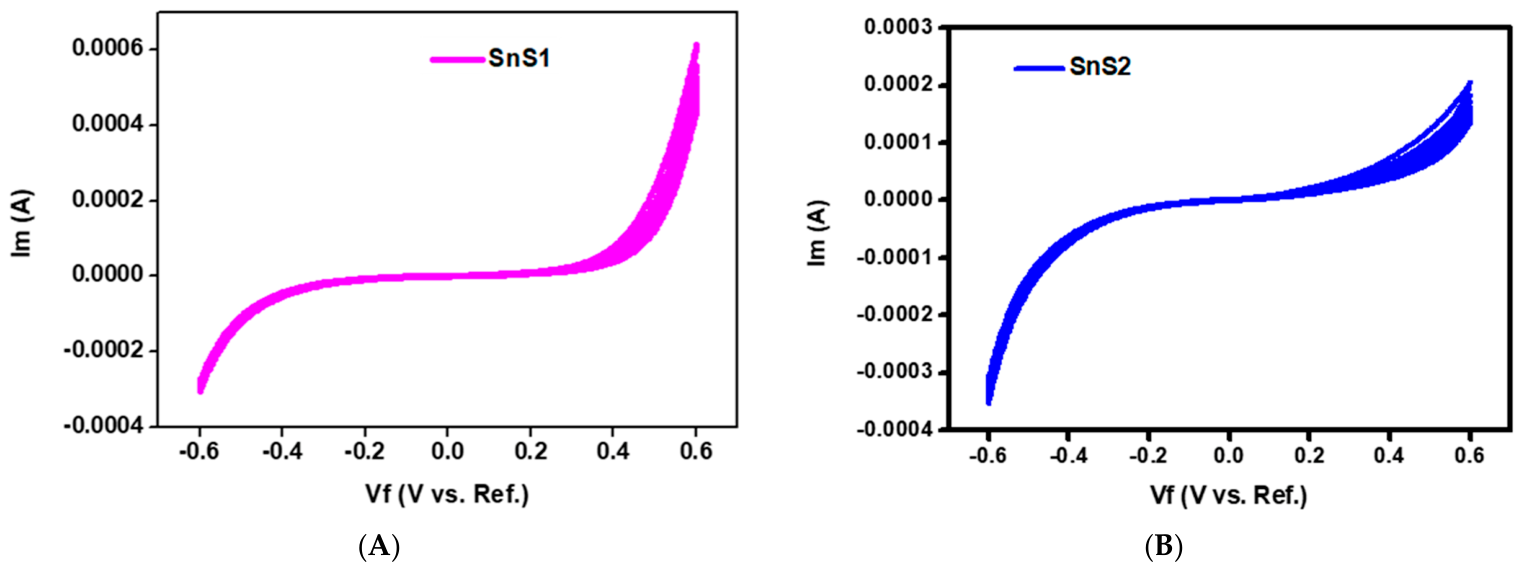
3.6. Electrochemistry
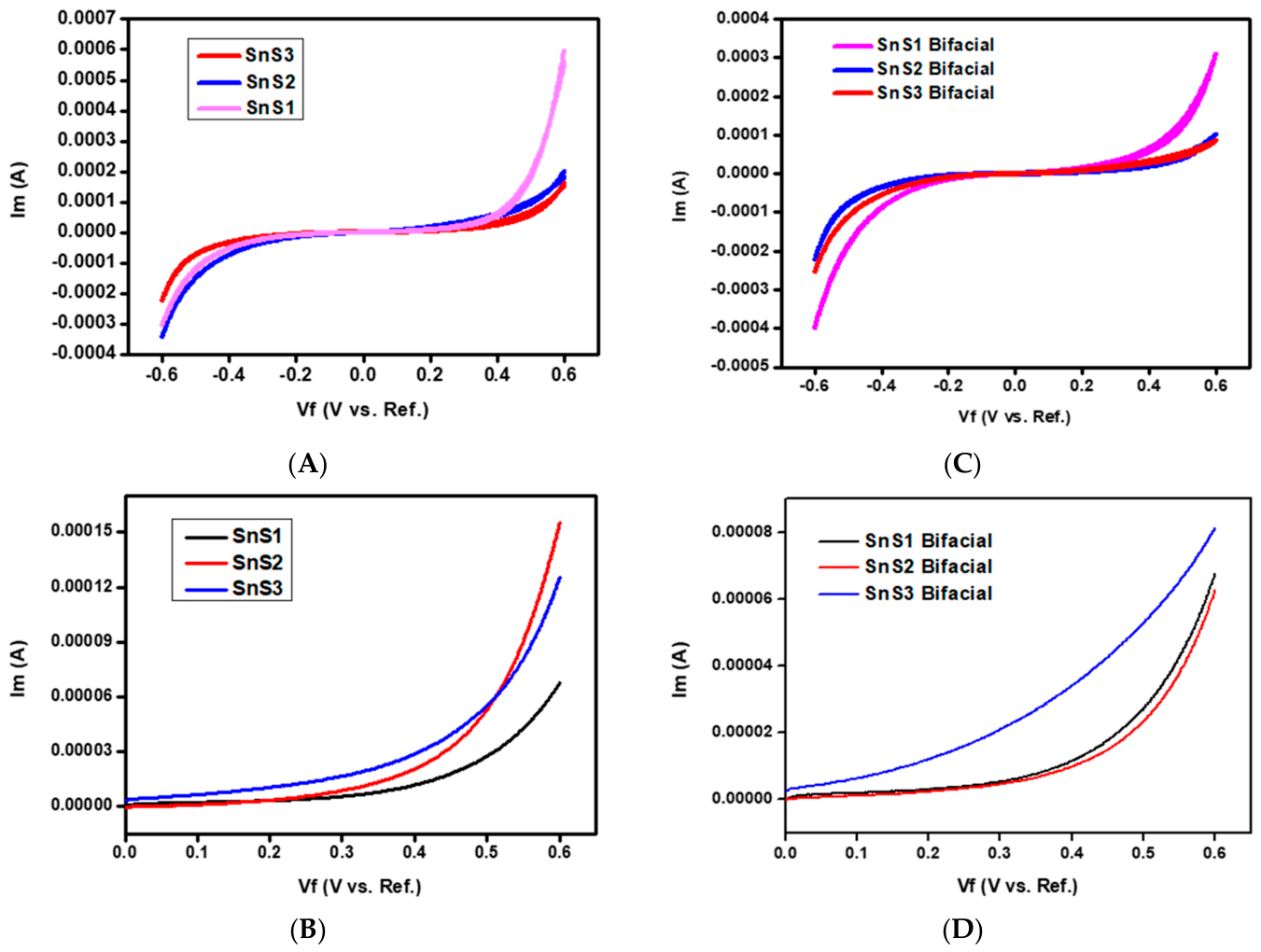
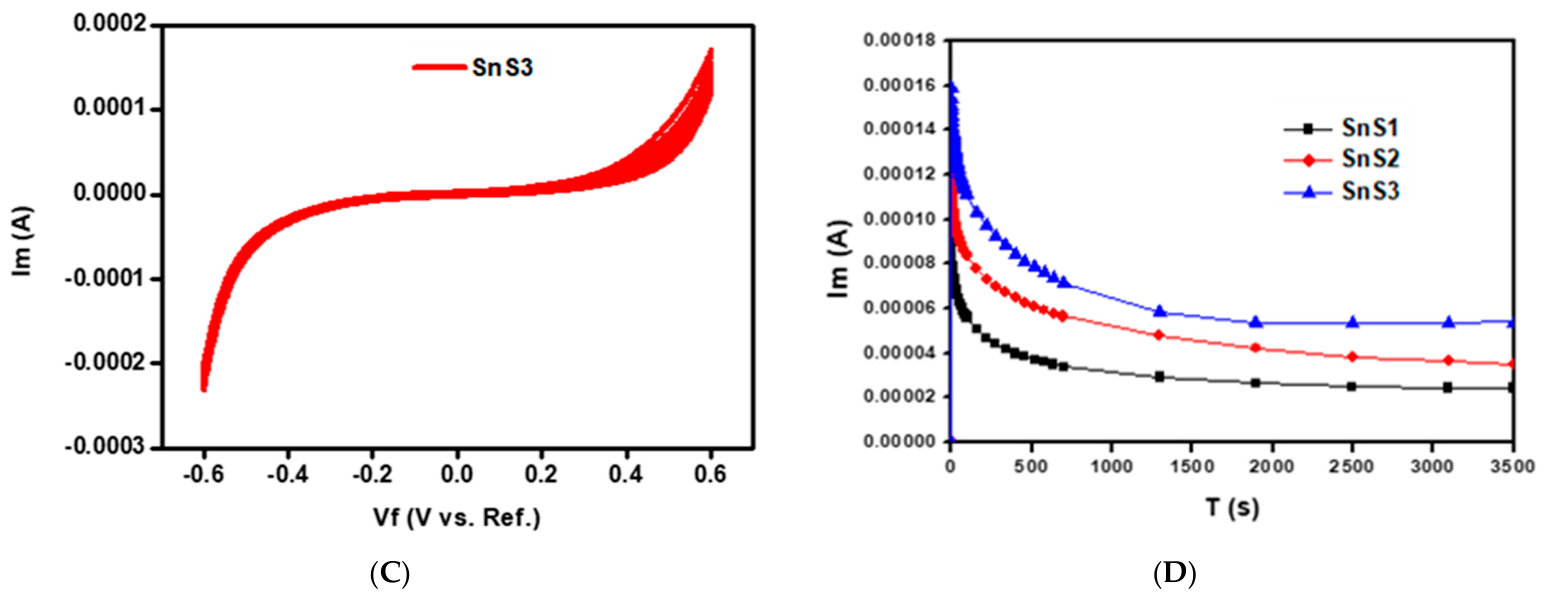
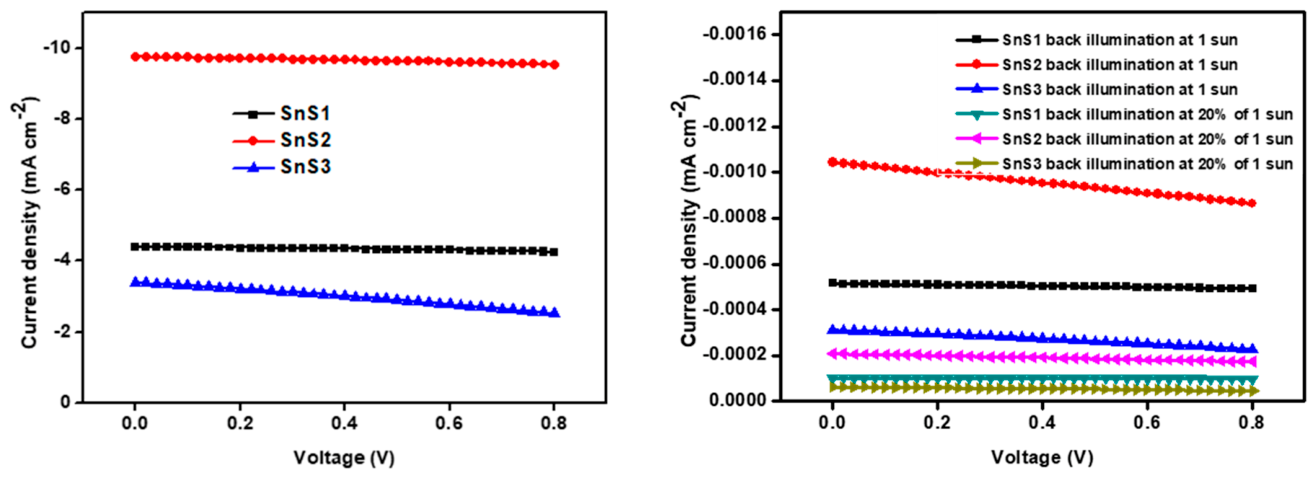
3.7. J–V Curves (Front and Back Illumination)
3.8. Photovoltaic Parameters
4. Conclusions
Author Contributions
Funding
Data Availability Statement
Acknowledgments
Conflicts of Interest
References
- Manukumar, K.; Nagaraju, G.; Kishore, B.; Madhu, C.; Munichandraiah, N. Ionic liquid-assisted hydrothermal synthesis of SnS nanoparticles: Electrode materials for lithium batteries, photoluminescence and photocatalytic activities. J. Energy Chem. 2018, 27, 806–812. [Google Scholar] [CrossRef]
- Hegde, S.; Murahari, P.; Fernandes, B.J.; Venkatesh, R.; Ramesh, K. Synthesis, thermal stability and structural transition of cubic SnS nanoparticles. J. Alloys Compd. 2020, 820, 153116. [Google Scholar] [CrossRef]
- Vulindlela, I.; Paca, A.M.; Meyer, E.L.; Agoro, M.A.; Rono, N. Design and computational investigation of PbS-based bifacial quantum dot-sensitized solar cells. Results Opt. 2025, 19, 100818. [Google Scholar] [CrossRef]
- Pullabhotla, V.R.; Mabila, M. A simple single molecular precursor route in the synthesis of high quality SnS nanoparticles. Mater. Lett. 2016, 183, 30–33. [Google Scholar] [CrossRef]
- Goswami, Y.; Goswami, R.; Bisht, K. Tin Sulfide Nanoparticles: A Comprehensive Review on Phases, Synthesis Strategies, and Applications in Sustainable Technologies. Next Res. 2025, 2, 100828. [Google Scholar] [CrossRef]
- Jamali-Sheini, F.; Cheraghizade, M.; Yousefi, R. Ultrasonic synthesis of In-doped SnS nanoparticles and their physical properties. Solid State Sci. 2018, 79, 30–37. [Google Scholar] [CrossRef]
- Reddy, N.K.; Devika, M.; Gopal, E.S.R. Review on Tin (II) Sulfide (SnS) Material: Synthesis, Properties, and Applications. Crit. Rev. Solid State Mater. Sci. 2015, 40, 359–398. [Google Scholar] [CrossRef]
- Duangchuen, T.; Karaphun, A.; Wannasen, L.; Kotutha, I.; Swatsitang, E. Effect of SnS2 concentrations on electrochemical properties of SnS2/RGO nanocomposites synthesized by a one-pot hydrothermal method. Appl. Surf. Sci. 2019, 487, 634–646. [Google Scholar] [CrossRef]
- Dar, M.A.; Govindarajan, D.; Batoo, K.M.; Siva, C. Supercapacitor and magnetic properties of Fe doped SnS nanoparticles synthesized through solvothermal method. J. Energy Storage 2022, 52, 105034. [Google Scholar] [CrossRef]
- Jana, M.K.; Rajendra, H.; Bhattacharyya, A.J.; Biswas, K. Green ionothermal synthesis of hierarchical nanostructures of SnS 2 and their Li-ion storage properties. CrystEngComm 2014, 16, 3994–4000. [Google Scholar] [CrossRef]
- Park, S.; Park, J.; Selvaraj, R.; Kim, Y. Facile microwave-assisted synthesis of SnS2 nanoparticles for visible-light responsive photocatalyst. J. Ind. Eng. Chem. 2015, 31, 269–275. [Google Scholar] [CrossRef]
- Pal, M.; Ayala, A.M.; Mathews, N.; Mathew, X. Synthesis and characterization of SnS nanoparticles through a non-aqueous chemical route for depositing photovoltaic absorber layers. J. Nano Res. 2014, 28, 91–99. [Google Scholar] [CrossRef]
- Agapiou, K. Organometallic Precursors for Novel Material Design; The University of Texas at Austin: Austin, TX, USA, 2007. [Google Scholar]
- Makin, F. Binary and Ternary Metal Chalcogenides for Sustainable and Inexpensive Solar Energy Generation. Ph.D. Thesis, The University of Manchester, Manchester, UK, 2022. [Google Scholar]
- Agoro, M.A.; Meyer, E.L. The formation of SnS nanorods orthorhombic phases grown from different molecular precursors. Results Chem. 2023, 5, 100690. [Google Scholar] [CrossRef]
- Ahmet, I.Y.; Hill, M.S.; Johnson, A.L.; Peter, L.M. Polymorph-selective deposition of high purity SnS thin films from a single source precursor. Chem. Mater. 2015, 27, 7680–7688. [Google Scholar] [CrossRef]
- Agoro, M.A.; Meyer, E.L.; Mbese, J.Z.; Fuku, X.; Ahia, C.C. Aliphatic mixed ligands Sn (II) complexes as photon absorbers in quantum dots sensitized solar cell. J. Solid State Chem. 2022, 308, 122890. [Google Scholar] [CrossRef]
- Ajibade, P.A.; Oluwalana, A.E.; Mphahlele, L.L. Effect of temperature on the morphological, optical, and photocatalytic properties of CdS quantum dots. Opt. Quantum Electron. 2021, 53, 342. [Google Scholar] [CrossRef]
- Mamba, S.M. Synthesis, Characterization and Applications of Dithiocarbamate Transition Metal Complexes. Ph.D. Thesis, University of Johannesburg, Johannesburg, South Africa, 2011. [Google Scholar]
- Paca, A.M.; Ajibade, P.A. Synthesis and structural studies of iron sulphide nanocomposites prepared from Fe (III) dithiocarbamates single source precursors. Mater. Chem. Phys. 2017, 202, 143–150. [Google Scholar] [CrossRef]
- Zaldi, N. Synthesis, Characterization and Encapsulation Studies of Mixed Diorganotin Dithiocarbamates Complexes. Master’s Thesis, University of Malaya, Kuala Lumpur, Malaysia, 2018. [Google Scholar]
- Muhammad, N.; Ali, S.; Butler, I.S.; Meetsma, A. Synthesis, spectroscopic properties, X-ray single crystal analysis and antimicrobial activities of organotin (IV) 4-(4-methoxyphenyl) piperazine-1-carbodithioates. Inorg. Chim. Acta 2011, 376, 381–388. [Google Scholar] [CrossRef]
- Loukova, G.V. Ligand-to-metal charge transfer excited states in organometallic compounds. In Springer Handbook of Inorganic Photochemistry; Springer: Berlin/Heidelberg, Germany, 2022; pp. 459–492. [Google Scholar]
- Lee, H.; Yang, J.W.; Tan, J.; Park, J.; Shim, S.G.; Park, Y.S.; Yun, J.; Kim, K.; Jang, H.W.; Moon, J. Crystal facet-controlled efficient SnS photocathodes for high performance bias-free solar water splitting. Adv. Sci. 2021, 8, 2102458. [Google Scholar] [CrossRef]
- Burton, L.A.; Walsh, A. Phase stability of the earth-abundant tin sulfides SnS, SnS2, and Sn2S3. J. Phys. Chem. C 2012, 116, 24262–24267. [Google Scholar] [CrossRef]
- Norton, K.J.; Alam, F.; Lewis, D.J. A review of the synthesis, properties, and applications of bulk and two-dimensional tin (II) sulfide (SnS). Appl. Sci. 2021, 11, 2062. [Google Scholar] [CrossRef]
- Li, F.; Moayed, M.M.R.; Gerdes, F.; Kull, S.; Klein, E.; Lesyuk, R.; Klinke, C. Colloidal tin sulfide nanosheets: Formation mechanism, ligand-mediated shape tuning and photo-detection. J. Mater. Chem. C 2018, 6, 9410. [Google Scholar] [CrossRef]
- Domènech, B.; Plunkett, A.; Kampferbeck, M.; Blankenburg, M.; Bor, B.S.; Giuntini, D.; Krekeler, T.; Wagstaffe, M.; Noei, H.; Stierle, A.; et al. Modulating the mechanical properties of supercrystalline nanocomposite materials via solvent–ligand interactions. Langmuir 2019, 35, 13893–13903. [Google Scholar] [CrossRef] [PubMed]
- Tripuramallu, B.K.; Manna, P.; Reddy, S.N.; Das, S.K. Factors Affecting the Conformational Modulation of Flexible Ligands in the Self-Assembly Process of Coordination Polymers: Synthesis, Structural Characterization, Magnetic Properties, and Theoretical Studies of [Co(pda)(bix)]n, [Ni(pda)(bix)(H2O)]n, [Cu(pda)(bix)2(H2O)2]n·8nH2O, [Co2(μ-OH)(pda)(ptz)]n·nH2O, [Co(hfipbb)(bix)0.5]n, and [Co(2,6-pydc)(bix)1.5]n·4n H2O. Cryst. Growth Des. 2012, 12, 777–792. [Google Scholar] [CrossRef]
- Chowdhury, A.P.; Shambharkar, B.H.; Ghugal, S.G.; Umare, S.S.; Shende, A.G. Ethylene glycol mediated synthesis of SnS quantum dots and their application towards degradation of eosin yellow and brilliant green dyes under solar irradiation. RSC Adv. 2016, 6, 108290–108297. [Google Scholar] [CrossRef]
- Sandeno, S.F.; Schnitzenbaumer, K.J.; Krajewski, S.M.; Beck, R.A.; Ladd, D.M.; Levine, K.R.; Dayton, D.; Toney, M.F.; Kaminsky, W.; Li, X.; et al. Ligand steric profile tunes the reactivity of indium phosphide clusters. J. Am. Chem. Soc. 2024, 146, 3102–3113. [Google Scholar] [CrossRef]
- Fernandez-Garcia, M.; Martinez-Arias, A.; Hanson, J.; Rodriguez, J. Nanostructured oxides in chemistry: Characterization and properties. Chem. Rev. 2004, 104, 4063–4104. [Google Scholar] [CrossRef]
- Zhang, F.; Yin, Y.; Li, M.; Liu, Y.; Jiang, J.; Li, X. Enhanced and Balanced Carrier Mobility Via n-Type SnS Dopant Enables High-Performance Non-Fullerene Organic Solar Cells. Adv. Funct. Mater. 2024, 34, 2406066. [Google Scholar] [CrossRef]
- Rani, D. Synthesis of Tin Disulfide (SnS2) and its Characterization; Haryana Agricultural University Hisar: Haryana, India, 2022. [Google Scholar]
- Tayade, N.T.; Tirpude, M.P. Frustrated microstructures composite PbS material’s size perspective from XRD by variant models of Williamson–Hall plot method. Bull. Mater. Sci. 2023, 46, 20. [Google Scholar] [CrossRef]
- Kiani, D. X-ray diffraction (XRD). In Springer Handbook of Advanced Catalyst Characterization; Springer: Berlin/Heidelberg, Germany, 2023; p. 519. [Google Scholar]
- Volochaev, V.; Tsaturyan, A.A. Multimodal analytical approaches to nanomaterials: TEM, diffraction, image processing, and fractal analysis. Analyst 2026, 151, 327–355. [Google Scholar] [CrossRef]
- Reifarth, M.; Hoeppener, S.; Schubert, U.S. Uptake and Intracellular Fate of Engineered Nanoparticles in Mammalian Cells: Capabilities and Limitations of Transmission Electron Microscopy—Polymer-Based Nanoparticles. Adv. Mater. 2018, 30, 1703704. [Google Scholar] [CrossRef]
- Aggarwal, P.; Vasu, R.; Paul, A. Pyrolytic transformation of ZIF-67 to N-doped porous carbon as high performance metal-free electrocatalyst for oxygen evolution reaction. Electrochim. Acta 2025, 547, 147845. [Google Scholar] [CrossRef]
- Borjigin, B.; Hao, R.; Zhang, B.; Jin, H.; Hou, S.; Wu, Y. Self-assembled carbon-rich porous cerium oxide via complexation-evaporation for enhanced fluoride removal from water. Colloids Surf. A Physicochem. Eng. Asp. 2025, 728, 138604. [Google Scholar] [CrossRef]
- Agarwal, A.; Bolea-Fernandez, E.; Clough, R.; Fisher, A.; Gibson, B.; Hill, S. Atomic spectrometry update: Review of advances in the analysis of metals, chemicals and functional materials. J. Anal. At. Spectrom. 2025, 40, 2982–3022. [Google Scholar] [CrossRef]
- Jayawardena, H.S.N.; Liyanage, S.H.; Rathnayake, K.; Patel, U.; Yan, M. Analytical methods for characterization of nanomaterial surfaces. Anal. Chem. 2021, 93, 1889–1911. [Google Scholar] [CrossRef]
- Jubu, P.R.; Adedokun, O.; Mbakaan, C.; Nathan-Abutu, A.; Danladi, E.; Tsaviv, J.; Kyesmen, P.; Akeredolu, B.; Adepoju, A.; Aungwa, F.; et al. Accuracy in estimating the absorption coefficient of powdered nanomaterials: Resolving misconceptions in tauc plot application for energy bandgap determination. J. Mater. Sci. Mater. Electron. 2025, 36, 961. [Google Scholar] [CrossRef]
- Cheraghizade, M.; Jamali-Sheini, F.; Yousefi, R.; Niknia, F.; Mahmoudian, M.R.; Sookhakian, M. The effect of tin sulfide quantum dots size on photocatalytic and photovoltaic performance. Mater. Chem. Phys. 2017, 195, 187–194. [Google Scholar] [CrossRef]
- Liu, J.; Nie, Y.; Xue, W.; Wu, L.; Jin, H.; Jin, G.; Zhai, Z.; Fu, C. Size effects on structural and optical properties of tin oxide quantum dots with enhanced quantum confinement. J. Mater. Res. Technol. 2020, 9, 8020–8028. [Google Scholar] [CrossRef]
- Apblett, A.W.; Barron, A.R.; Hepp, A.F. Nanomaterials via Single-Source Precursors: Synthesis, Processing and Applications; Elsevier: Amsterdam, The Netherlands, 2022. [Google Scholar]
- Kim, Y.; Che, F.; Jo, J.W.; Choi, J.; de Arquer, F.P.G.; Voznyy, O.; Sun, B.; Kim, J.; Choi, M.J.; Quintero-Bermudez, R.; et al. A facet-specific quantum dot passivation strategy for colloid management and efficient infrared photovoltaics. Adv. Mater. 2019, 31, 1805580. [Google Scholar] [CrossRef] [PubMed]
- Laref, A.; Alshammari, N.; Laref, S.; Luo, S. Surface passivation effects on the electronic and optical properties of silicon quantum dots. Sol. Energy Mater. Sol. Cells 2014, 120, 622–630. [Google Scholar] [CrossRef]
- Zhou, W.; Fu, H. Defect-mediated electron–hole separation in semiconductor photocatalysis. Inorg. Chem. Front. 2018, 5, 1240–1254. [Google Scholar] [CrossRef]
- Maarisetty, D.; Baral, S.S. Defect engineering in photocatalysis: Formation, chemistry, optoelectronics, and interface studies. J. Mater. Chem. A 2020, 8, 18560–18604. [Google Scholar] [CrossRef]
- Cruz-Manzo, S.; Greenwood, P. An impedance model based on a transmission line circuit and a frequency dispersion Warburg component for the study of EIS in Li-ion batteries. J. Electroanal. Chem. 2020, 871, 114305. [Google Scholar] [CrossRef]
- Karmakar, S. Impedance spectroscopy for electroceramics and electrochemical system. arXiv 2024, arXiv:2406.15467. [Google Scholar] [CrossRef]
- Teixeira, J.S.M. Copper Electroplating for Wafer Level Packaging Study of Plating Suppressor and Electrolyte Working Time on Copper Nucleation and Growth. Master’s Thesis, University of Porto, Porto, Portugal, 2022. [Google Scholar]
- Dong, W.; Lu, C.; Luo, M.; Liu, Y.; Han, T.; Ge, Y.; Xue, X.; Zhou, Y.; Xu, X. Enhanced UV–Vis photodetector performance by optimizing interfacial charge transportation in the heterostructure by SnS and SnSe2. J. Colloid Interface Sci. 2022, 621, 374–384. [Google Scholar] [CrossRef]
- Zhang, D.; Wang, J.; He, C.; Wang, Y.; Guan, T.; Zhao, J.; Qiao, J.; Li, K. Rational surface tailoring oxygen functional groups on carbon spheres for capacitive mechanistic study. ACS Appl. Mater. Interfaces 2019, 11, 13214–13224. [Google Scholar] [CrossRef] [PubMed]
- He, C.; Zheng, Z.; Tang, H.; Zhao, L.; Lu, F. Electrochemical impedance spectroscopy characterization of electron transport and recombination in ZnO nanorod dye-sensitized solar cells. J. Phys. Chem. C 2009, 113, 10322–10325. [Google Scholar] [CrossRef]
- Costentin, C.; Porter, T.R.; Savéant, J.-M. How do pseudocapacitors store energy? Theoretical analysis and experimental illustration. ACS Appl. Mater. Interfaces 2017, 9, 8649–8658. [Google Scholar] [CrossRef]
- Costentin, C.; Savéant, J.-M. Energy storage: Pseudocapacitance in prospect. Chem. Sci. 2019, 10, 5656–5666. [Google Scholar] [CrossRef]
- Rafiee, M.; Abrams, D.J.; Cardinale, L.; Goss, Z.; Romero-Arenas, A.; Stahl, S.S. Cyclic voltammetry and chronoamperometry: Mechanistic tools for organic electrosynthesis. Chem. Soc. Rev. 2024, 53, 566–585. [Google Scholar] [CrossRef]
- Mottakin, M.; Sobayel, K.; Sarkar, D.; Alkhammash, H.; Alharthi, S.; Techato, K.; Shahiduzzaman, M.; Amin, N.; Sopian, K.; Akhtaruzzaman, M. Design and modelling of eco-friendly CH3NH3SnI3-based perovskite solar cells with suitable transport layers. Energies 2021, 14, 7200. [Google Scholar] [CrossRef]
- Raza, A.; Shehzad, K.; Ali, S.; Ali, Z.; Rasheed, F.; Wang, S.; Li, N.; Zhang, S.; Liu, C.; Xi, M.; et al. High-Efficiency (21%) SnS Heterojunction Solar Cells Enabled by a Novel ZrS2 Buffer Layer: A Numerical Study. Results Eng. 2025, 28, 108470. [Google Scholar] [CrossRef]
- Benghabrit, S.; Yagoub, M.S.; Adnane, M. SCAPS-1D simulation of high-efficiency SnS/SnS2 QD/WS2 chalcogenide solar cells. Indian J. Phys. 2025, 100, 721–733. [Google Scholar] [CrossRef]
- Chowdhury, T.A. Numerical modeling study of a ZnS/CFTS/SnS solar cell using SCAPS-1D. Opt. Contin. 2025, 4, 1065. [Google Scholar] [CrossRef]
- Lim, D.; Suh, H.; Suryawanshi, M.; Song, G.Y.; Cho, J.Y.; Kim, J.H.; Jang, J.H.; Jeon, C.W.; Cho, A.; Ahn, S.; et al. Kinetically controlled growth of phase-pure SnS absorbers for thin film solar cells: Achieving efficiency near 3% with long-term stability using an SnS/CdS heterojunction. Adv. Energy Mater. 2018, 8, 1702605. [Google Scholar] [CrossRef]
- Wangperawong, A.; Hsu, P.-C.; Yee, Y.; Herron, S.M.; Clemens, B.M.; Cui, Y.; Bent, S.F. Bifacial solar cell with SnS absorber by vapor transport deposition. Appl. Phys. Lett. 2014, 105, 173904. [Google Scholar] [CrossRef]
- Kumar, N.; Nguyen, T.T.; Lee, J.; Patel, M.; Bhatnagar, P.; Lee, K.; Kim, J. Van Der Waals Semiconductor Based Omnidirectional Bifacial Transparent Photovoltaic for Visual-Speech Photocommunication. Adv. Sci. 2024, 11, 2306408. [Google Scholar] [CrossRef]





| Peak No. | Hkl | 2θ (°) | d [Å] | FWHM (°) | D (nm) |
| SnS1 | (120) | 25.19 | 3.5413 | 0.2708 | 30.08 |
| (021) | 26.38 | 3.3760 | 0.3380 | 24.16 | |
| (111) | 31.09 | 2.8747 | 0.2738 | 30.14 | |
| (040) | 34.27 | 2.6148 | 0.4388 | 18.96 | |
| (131) | 37.61 | 2.3899 | 0.2695 | 31.17 | |
| (151) | 51.51 | 1.7773 | 0.2627 | 33.60 | |
| Average (nm) 28.02 | |||||
| SnS2 | (120) | 24.92 | 3.5784 | 0.5765 | 14.12 |
| (021) | 26.59 | 3.3578 | 0.2626 | 31.11 | |
| (111) | 30.35 | 2.9503 | 0.2205 | 37.36 | |
| (040) | 34.44 | 2.6084 | 0.4202 | 19.81 | |
| (131) | 37.32 | 2.4134 | 0.2620 | 32.03 | |
| (151) | 51.13 | 1.7894 | 0.2104 | 41.89 | |
| Average (nm) 29.39 | |||||
| SnS3 | (120) | 25.12 | 3.5420 | 0.2762 | 29.79 |
| (021) | 26.47 | 3.3727 | 0.3694 | 22.11 | |
| (111) | 30.93 | 2.8892 | 0.2786 | 29.61 | |
| (040) | 33.67 | 2.6661 | 0.2961 | 28.05 | |
| (131) | 37.61 | 2.3894 | 0.2768 | 30.34 | |
| (151) | 51.50 | 1.7773 | 0.2789 | 31.65 | |
| Average (nm) 28.54 | |||||
| Sample | Rs (Ω) | R1 (Ω) | R2 (Ω) |
| SnS1 | 28.57 | 20.98 | 1006.36 |
| SnS2 | 26.16 | 79.96 | 887.52 |
| SnS3 | 16.13 | 6.05 | 257.06 |
| SnS1 (Bifacial) | 19.35 | 2105.31 | 49.10 |
| SnS2 (Bifacial) | 19.28 | 60.68 | 1782.15 |
| SnS3 (Bifacial) | 11.01 | 8.16 | 440.39 |
| Device | Type | Voc (V) | Jsc (mA cm−2) | FF (%) | PCE (%) | Ref. | |
| FTO/SnS2/PbS/Ni | Monofacial | Simulation | 0.99 | 26.99 | 85.08 | 22.96 | [60] |
| ZnO/ZrS2/SnS/Au | 0.86 | 34.2 | 70.0 | 21.0 | [61] | ||
| FTO/WS2/SnS2QDs/SnS/Pt | 0.95 | 26.38 | 84.95 | 22.3 | [62] | ||
| ITO/ZnO/ZnS/CFTS/SnS/Au | 0.70 | 32.53 | 61.98 | 14.20 | [63] | ||
| ZnO/ZrS2/SnS | 0.70 | 42.32 | 21.78 | [61] | |||
| FTO/SnS2/SnS1/CsSnI3/Se | Experimental | - | 4.39 | - | 3.40 | This work | |
| FTO/SnS2/SnS2/CsSnI3/Se | 2.852 | 3.39 | 20.95 | 2.03 | This work | ||
| FTO/SnS2/SnS3/CsSnI3/Se | - | 9.76 | - | 7.63 | This work | ||
| SLG/Mo/SnS/ZnxCd1-xS/i-ZnO/AZO/Ag | 0.291 | - | - | 2.98 | [60] | ||
| SLG/Mo/SnS/CdS/i-ZnO/AZO/Ni/Ag | 0.405 | 22.86 | 0.401 | 3.72 | [64] | ||
| FTO/SnS/CdS/ZnO/ITO | Bifacial | Experimental | 0.30 | 9.8 | 40.0 | 1.2 | [65] |
| Al/FTO/SnS2/SnS1/CsSnI3/Se | - | 42.59 | - | 3.40 | This work | ||
| Al/FTO/SnS2/SnS2/CsSnI3/Se | 3.684 | 85.82 | 38.99 | 2.03 | This work | ||
| Transparent TPV (FTO/Ga2O3/SnS/AgNW) | 0.526 | 2.40 | 56.5 | 7.13 | [66] | ||
| Al/FTO/SnS2/SnS3/CsSnI3/Se | 1.294 | 32.9 | 22.78 | 7.63 | This work |
Disclaimer/Publisher’s Note: The statements, opinions and data contained in all publications are solely those of the individual author(s) and contributor(s) and not of MDPI and/or the editor(s). MDPI and/or the editor(s) disclaim responsibility for any injury to people or property resulting from any ideas, methods, instructions or products referred to in the content. |
© 2026 by the authors. Licensee MDPI, Basel, Switzerland. This article is an open access article distributed under the terms and conditions of the Creative Commons Attribution (CC BY) license.
Share and Cite
Vulindlela, I.; Paca, A.M.; Meyer, E.L.; Agoro, M.A.; Rono, N. Tin(II) Dithiocarbamate-Derived SnS Nanoparticles for High-Performance Quantum Dot-Sensitized Solar Cells. Nanomaterials 2026, 16, 718. https://doi.org/10.3390/nano16120718
Vulindlela I, Paca AM, Meyer EL, Agoro MA, Rono N. Tin(II) Dithiocarbamate-Derived SnS Nanoparticles for High-Performance Quantum Dot-Sensitized Solar Cells. Nanomaterials. 2026; 16(12):718. https://doi.org/10.3390/nano16120718
Chicago/Turabian StyleVulindlela, Inam, Athandwe M. Paca, Edson L. Meyer, Mojeed A. Agoro, and Nicholas Rono. 2026. "Tin(II) Dithiocarbamate-Derived SnS Nanoparticles for High-Performance Quantum Dot-Sensitized Solar Cells" Nanomaterials 16, no. 12: 718. https://doi.org/10.3390/nano16120718
APA StyleVulindlela, I., Paca, A. M., Meyer, E. L., Agoro, M. A., & Rono, N. (2026). Tin(II) Dithiocarbamate-Derived SnS Nanoparticles for High-Performance Quantum Dot-Sensitized Solar Cells. Nanomaterials, 16(12), 718. https://doi.org/10.3390/nano16120718