Fabrication of Polyimide/Aluminum Nitride Composites and Wafer Channel Filling via Direct Ink Writing




Abstract
1. Introduction
2. Materials and Methods
2.1. Materials
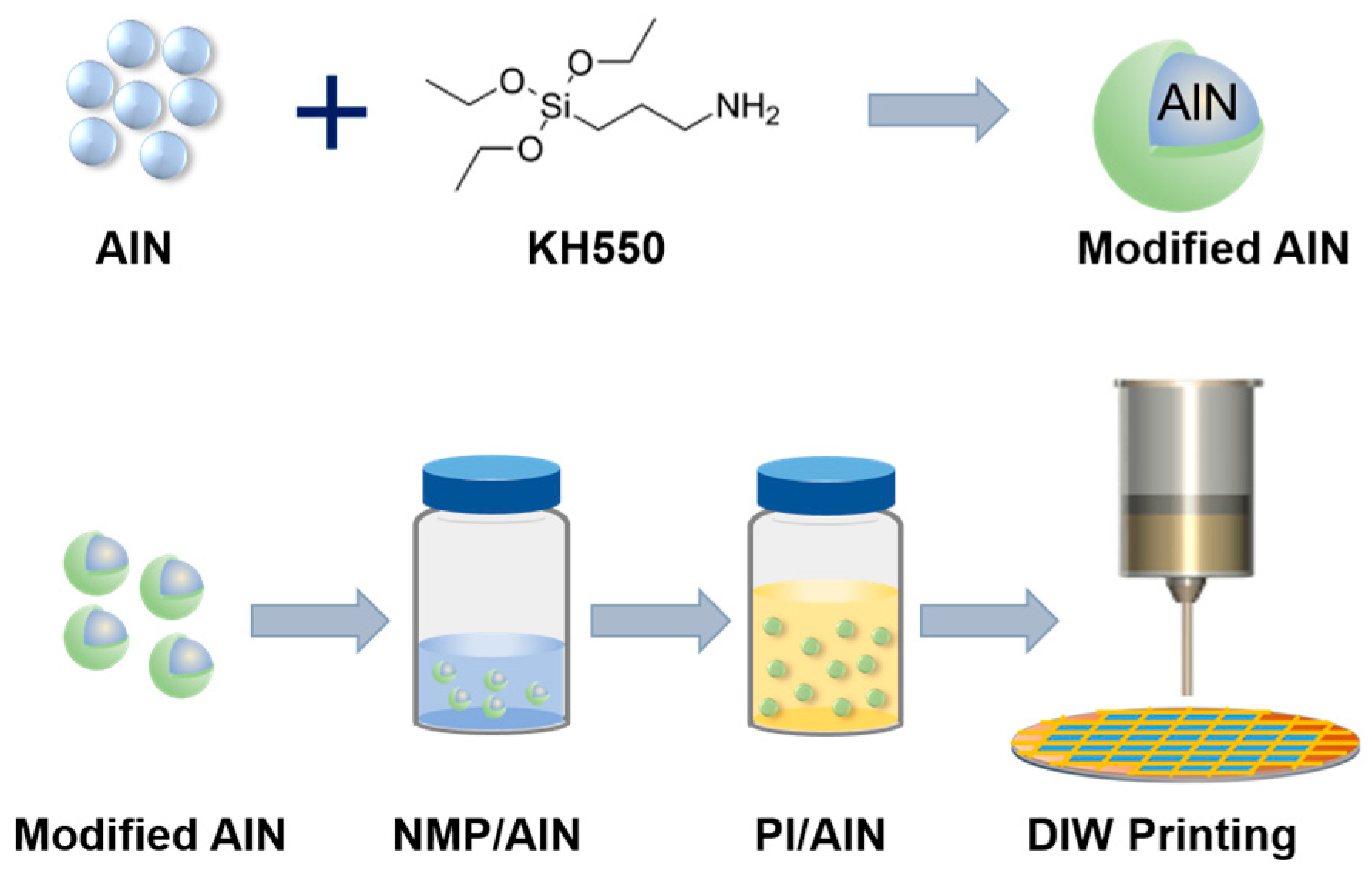
2.2. Preparation Process of Composite Ink
3. Results
3.1. Printability of Composite Ink
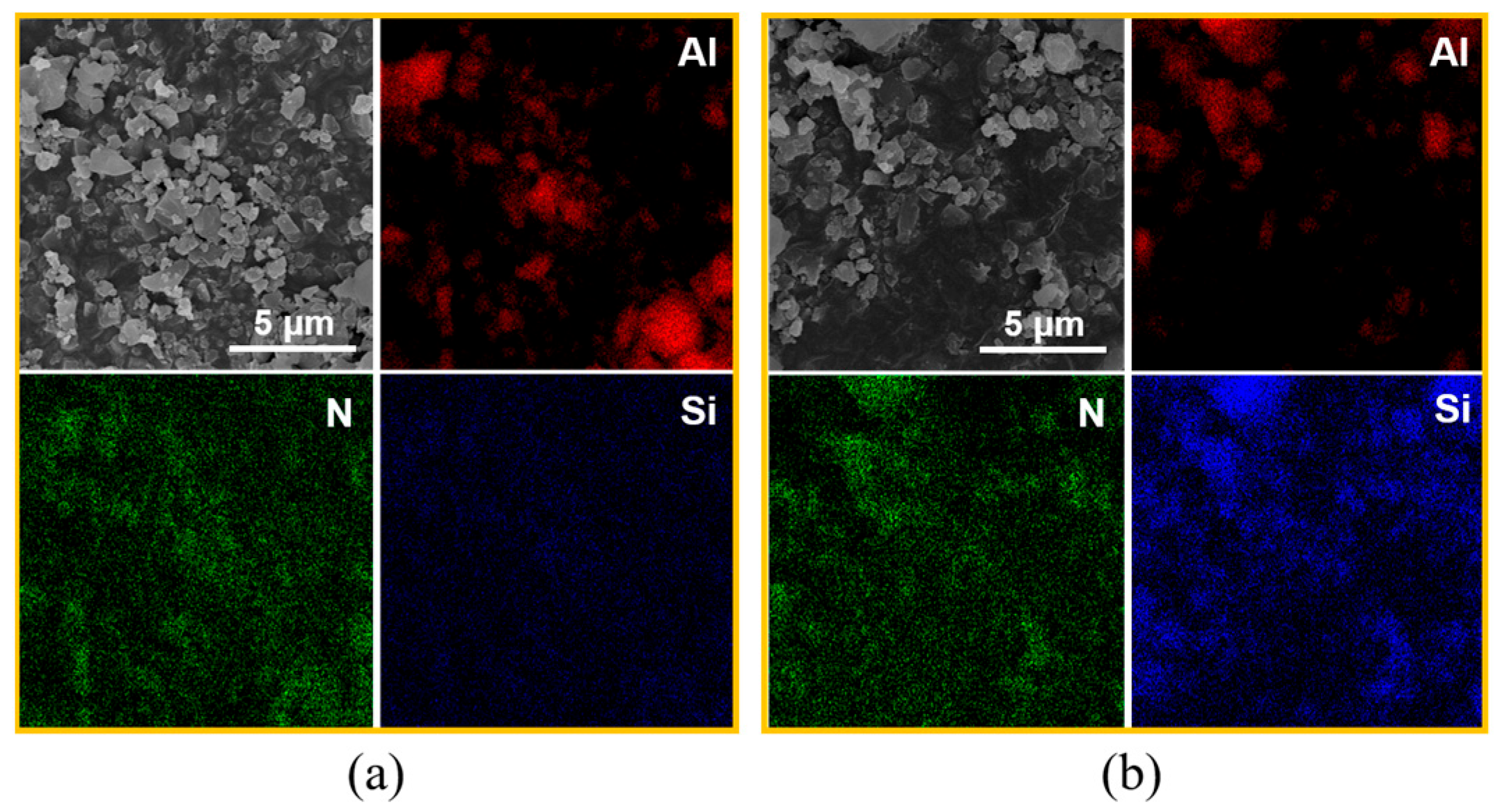
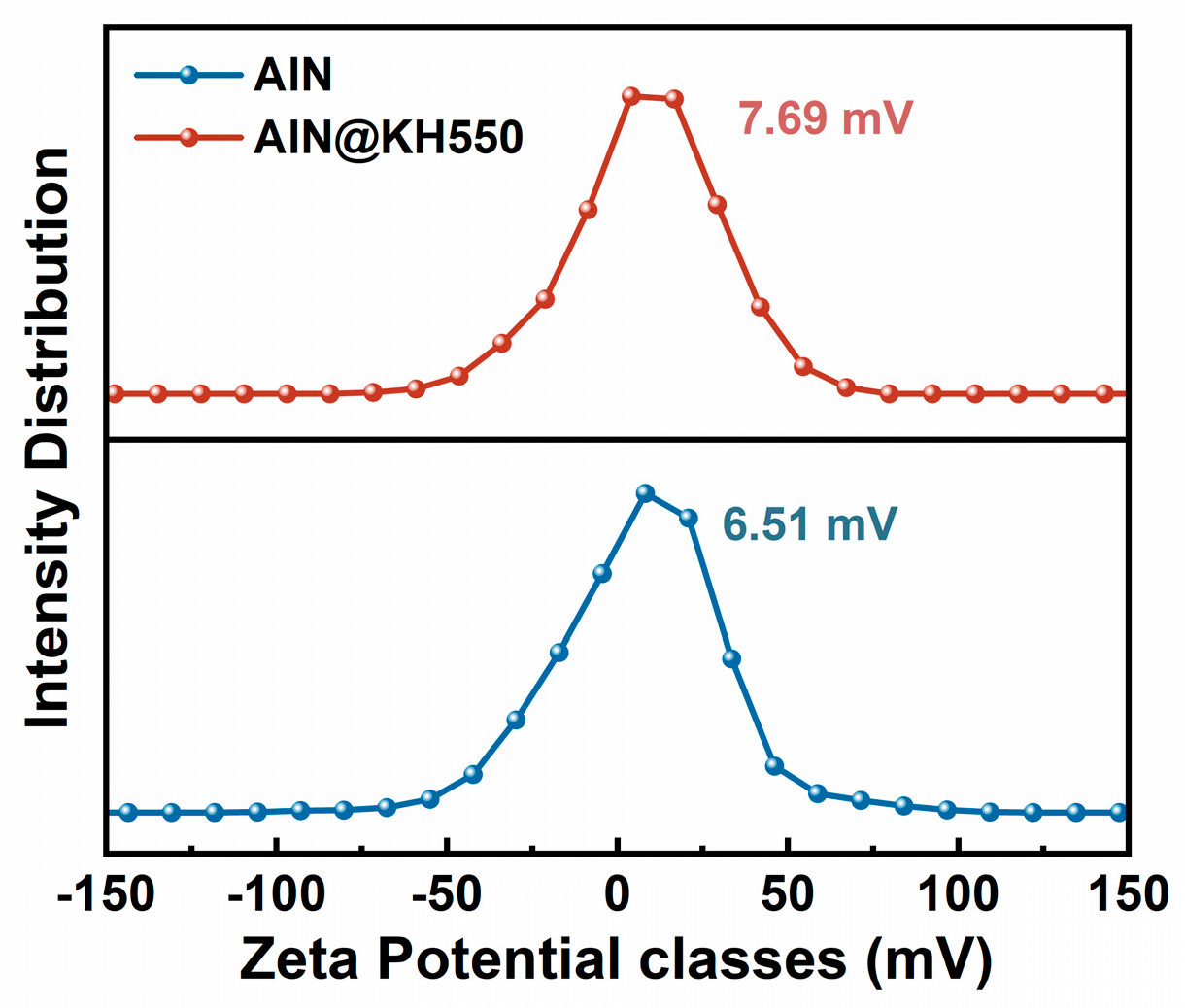
3.1.1. Analysis of AlN Modification
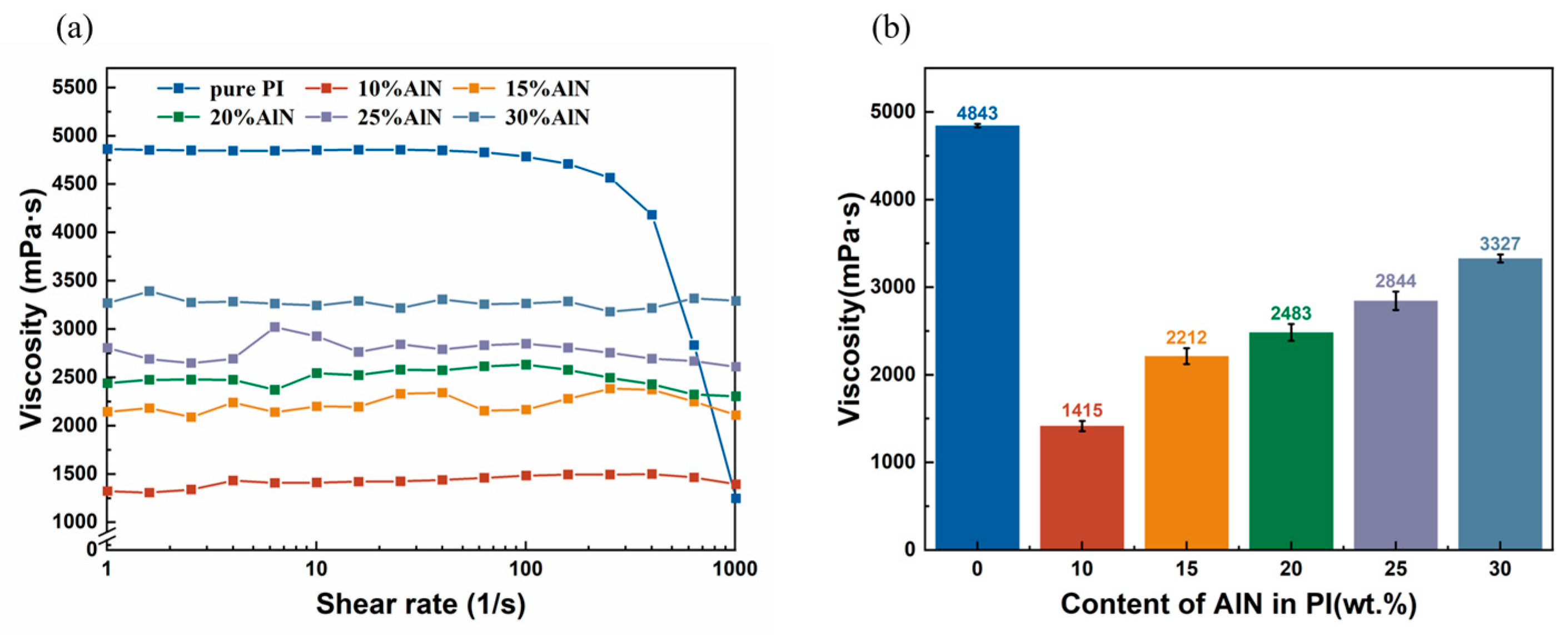
3.1.2. Analysis of Viscosity
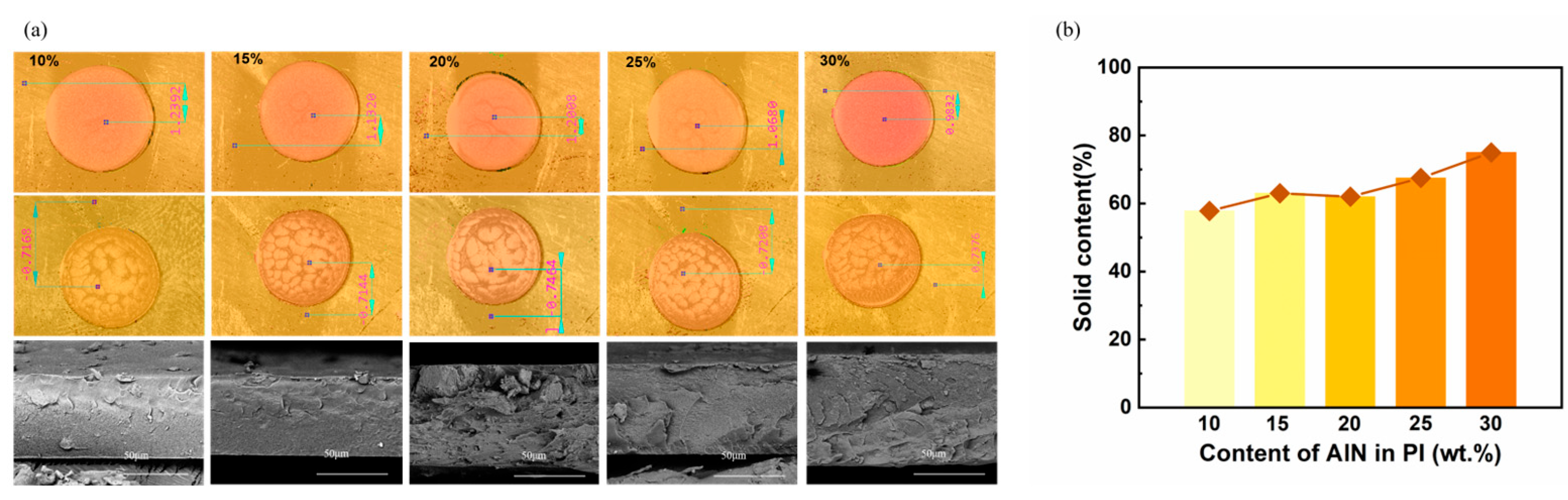
3.1.3. Solid Content Analysis
3.2. Compatibility of Composite Films
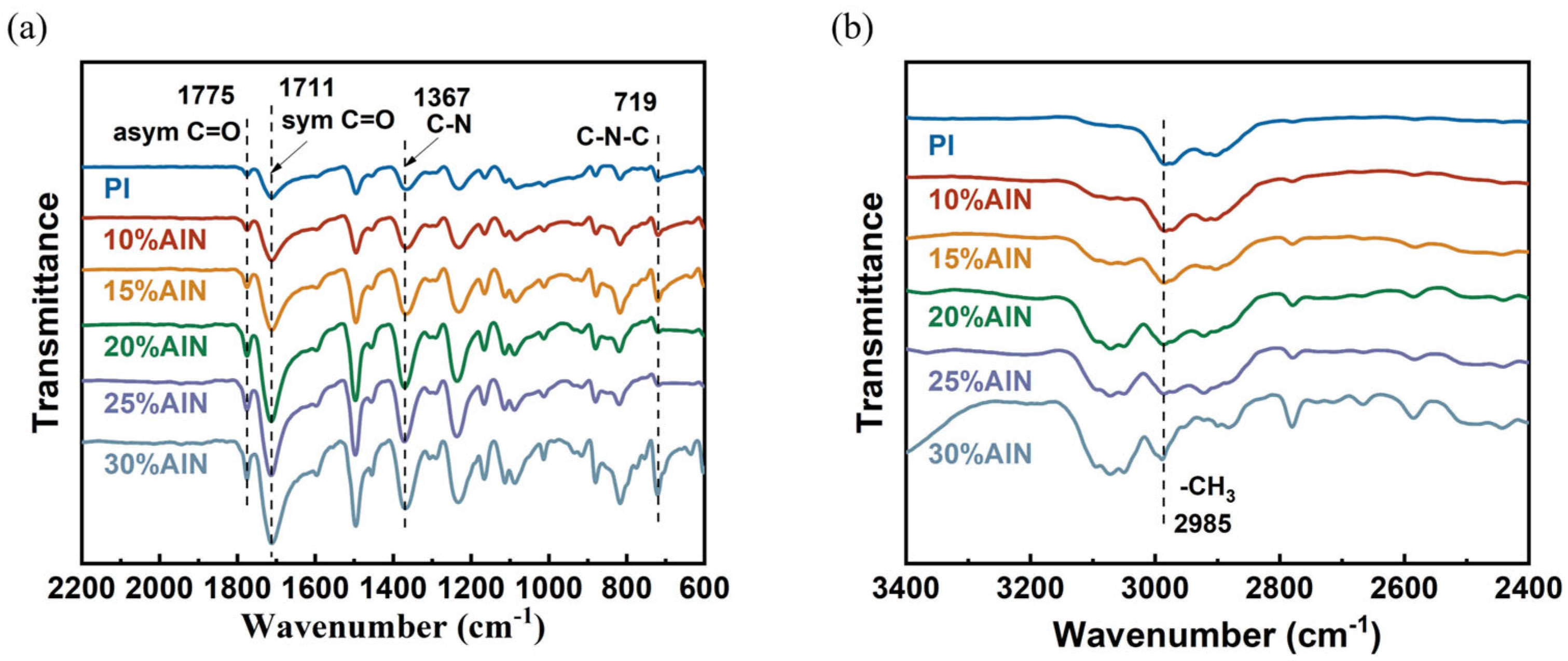
3.2.1. Imidization Analysis
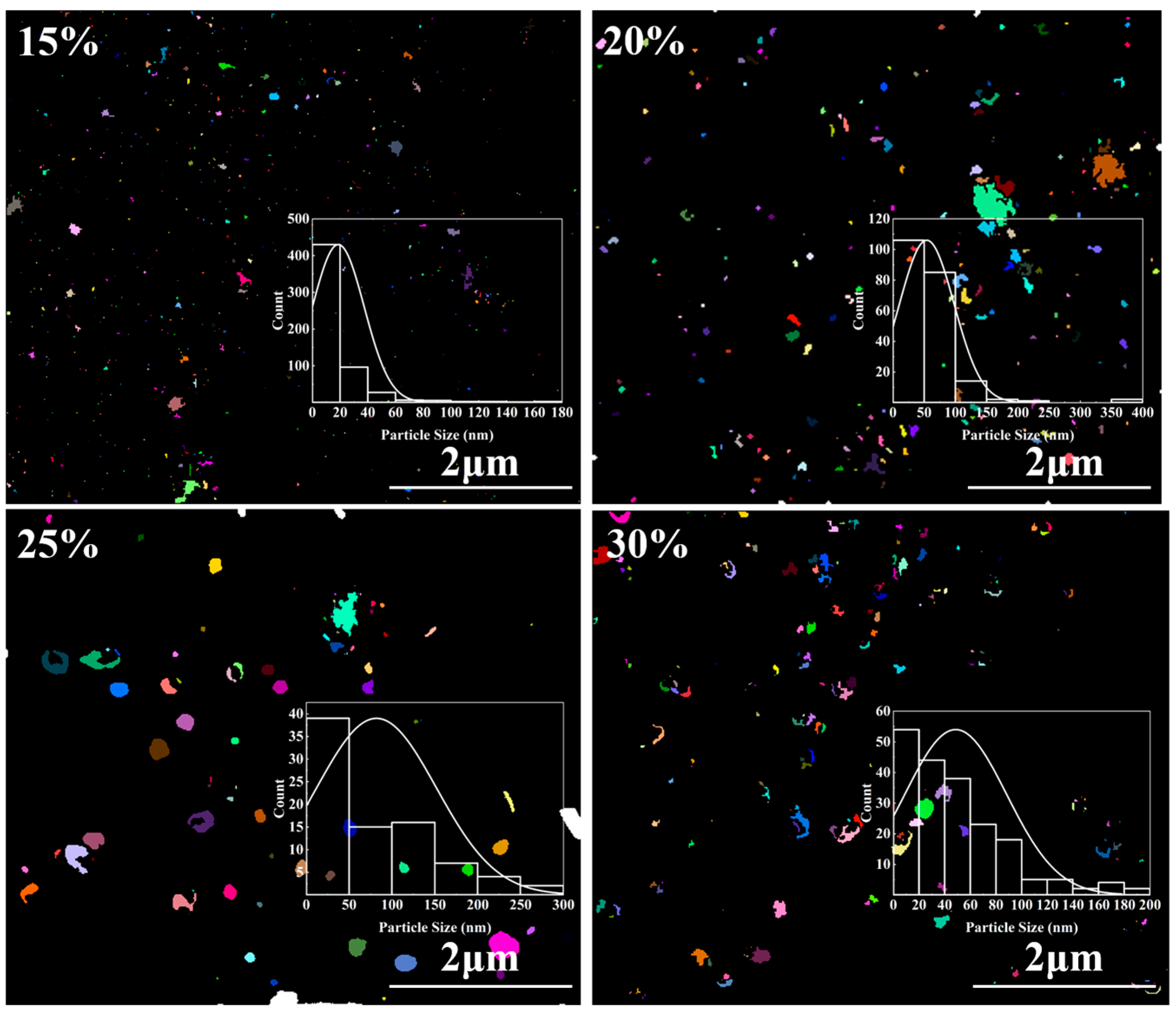
3.2.2. Particle Size and Dispersion
3.2.3. Structure of the AlN/PI Films
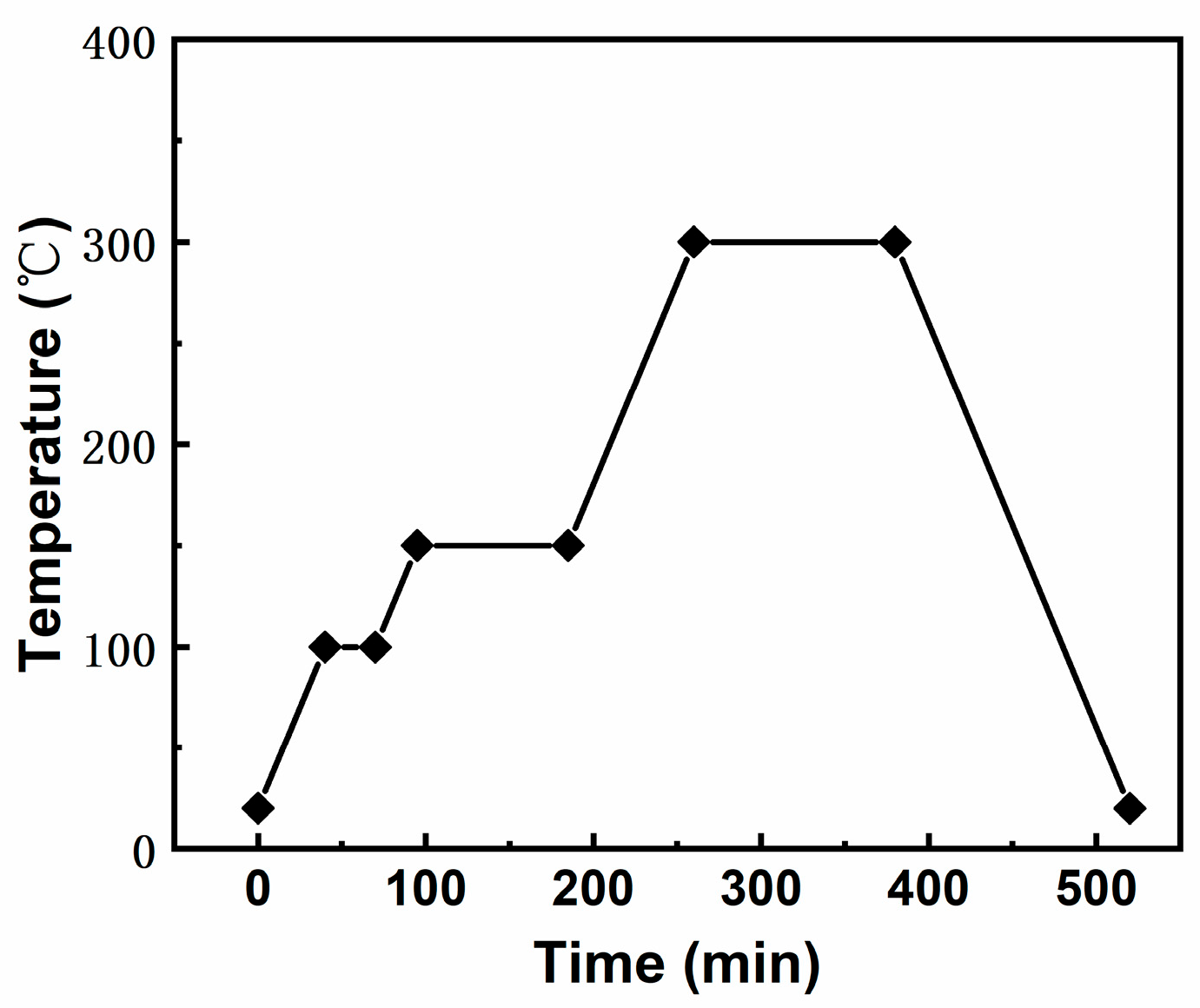
3.2.4. Thermogravimetric Analysis
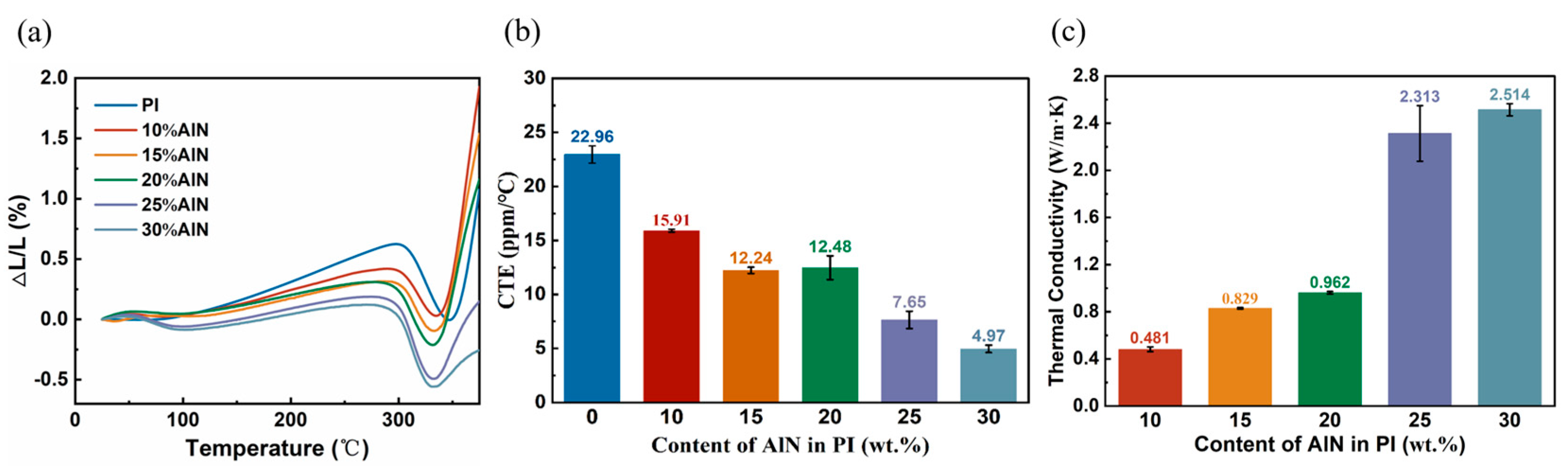
3.2.5. Thermal Properties Analysis
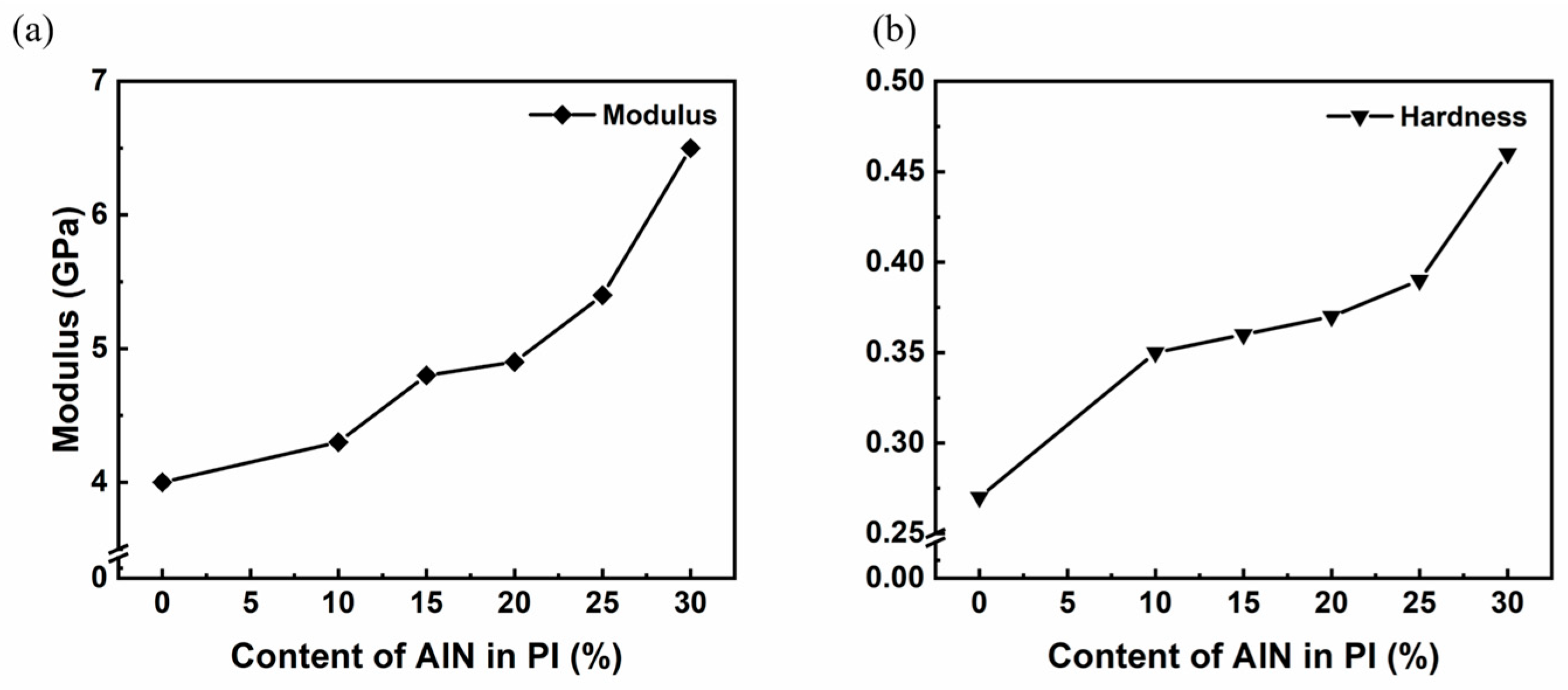
3.2.6. Mechanical Properties Analysis
3.3. Application in Wafer Channel Filling
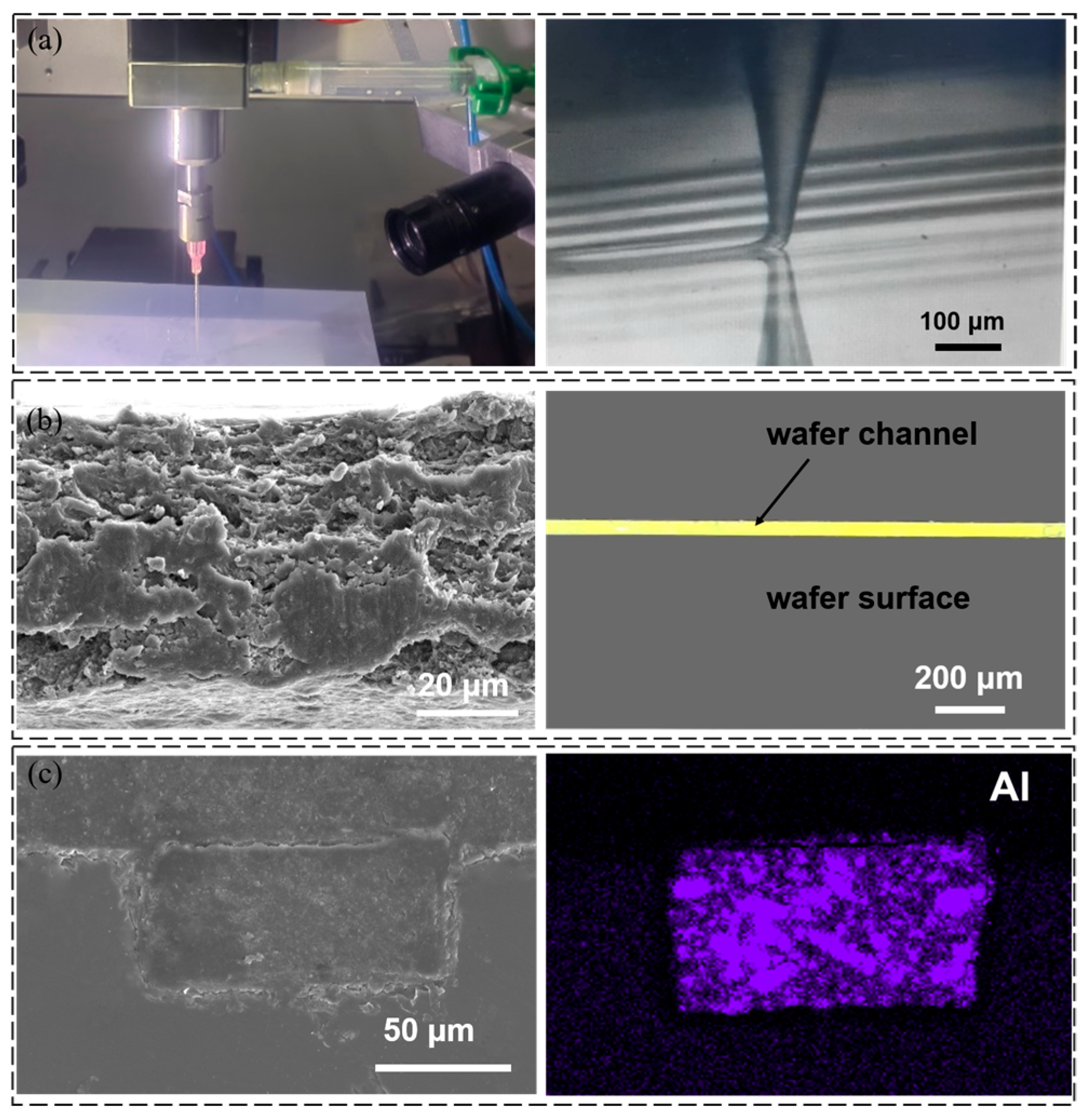
3.3.1. Results of Wafer Channel Filling
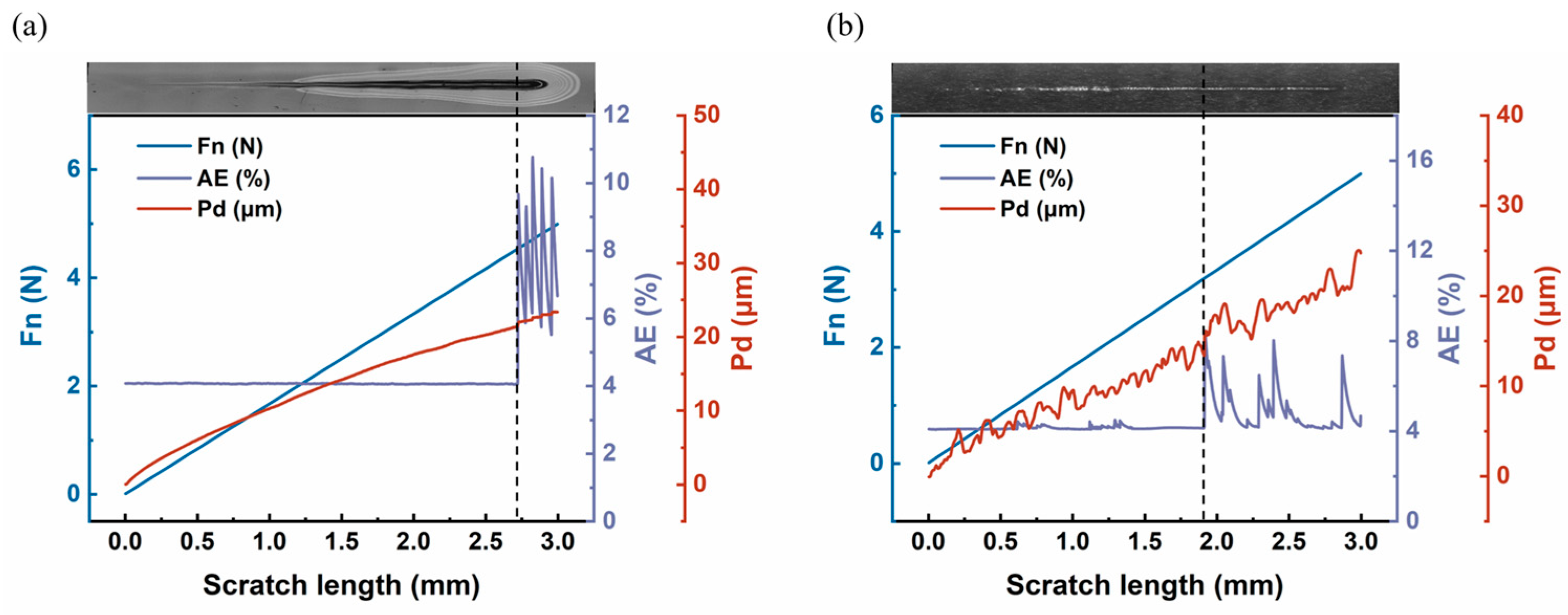
3.3.2. Bonding Force Analysis
4. Conclusions
- The AlN/PI composite ink showed stable, uniformly distributed nano-AlN particles and optimal viscosity, ensuring uniform dispersion and precise flow control during the DIW process. It also had a high solid content, enhancing filling efficiency;
- The composite films exhibited excellent thermal stability. At 30% AlN content, the 10 wt% thermal decomposition temperature was 588 °C, and the CTE decreased significantly, reaching 4.97 ppm/K, better matching that of silicon-based materials, effectively preventing stress concentration during subsequent high-temperature processes;
- The composite films possessed outstanding mechanical performance. At 30% AlN content, the elastic modulus and hardness reached 6.5 GPa and 0.46 GPa, which increased by 62.5% and 70.4% compared with pure PI film, respectively. The optimized elastic modulus and hardness avoid thermal-stress mismatch and brittle fracture, satisfying the mechanical requirements for wafer channel filling materials.
- DIW technology efficiently filled wafer channels in three filling cycles, with no surface overflow, delamination, and a high interfacial bonding force, indicating that this method is effective and reliable.
Author Contributions
Funding
Data Availability Statement
Conflicts of Interest
Abbreviations
| 3D HI | three-dimensional heterogeneous integration |
| C2W | Chip-to-wafer |
| DIW | Direct ink Writing |
| PI | Polyimide |
| AlN | Aluminum nitride |
| CTE | Coefficient of thermal expansion |
| PECVD | Plasma-enhanced chemical vapor deposition |
| CMP | Chemical Mechanical Polishing |
References
- Jayachandran, D.; Pendurthi, R.; Sadaf, M.U.K.; Sakib, N.U.; Pannone, A.; Chen, C.; Han, Y.; Trainor, N.; Kumari, S.; Mc Knight, T.V.; et al. Three-Dimensional Integration of Two-Dimensional Field-Effect Transistors. Nature 2024, 625, 276–281. [Google Scholar] [CrossRef] [Scilit]
- Rangarajan, S.; Schiffres, S.; Sammakia, B. A Review of Recent Developments in “On-Chip” Embedded Cooling Technologies for Heterogeneous Integrated Applications. Engineering 2023, 26, 185. [Google Scholar] [CrossRef] [Scilit]
- Park, S.; Lee, S.; Kim, S.E. Two-Step Ar/N2 Plasma Treatment on SiO2 Surface for Cu/SiO2 Hybrid Bonding. IEEE Trans. Compon. Packag. Manuf. Technol. 2024, 14, 723–728. [Google Scholar] [CrossRef] [Scilit]
- Feng, W.; Shimamoto, H.; Kawagoe, T.; Honma, I.; Yamasaki, M.; Okutsu, F.; Masuda, T.; Kikuchi, K. Wafer-to-Wafer Bonding Fabrication Process-Induced Wafer Warpage. IEEE Trans. Semicond. Manuf. 2023, 36, 398–403. [Google Scholar] [CrossRef] [Scilit]
- Kim, H.; Hwang, J.Y.; Kim, S.E.; Joo, Y.-C.; Jang, H. Thermomechanical Challenges of 2.5-D Packaging: A Review of Warpage and Interconnect Reliability. IEEE Trans. Compon. Packag. Manuf. Technol. 2023, 13, 1624–1641. [Google Scholar] [CrossRef] [Scilit]
- He, T.; Wang, C.; Xie, B.; Xu, Z.; Yin, Z.; Wu, H. Thermomechanical Finite Element Analysis of Cu-SiCN Hybrid Bonding with Protruding and Recessed Cu Pad in 3D-IC. J. Electron. Packag. 2026, 148, 021004. [Google Scholar] [CrossRef] [Scilit]
- Lai, C.C.; Li, L.Y.; Wang, W.L.; Huang, T.B.; Chien, H.J.; Ying, T.H. The Improvement of MOSFET Performance by the Optimization of STI HDP-CVD Integration Process. Microelectron. Eng. 2016, 149, 9–13. [Google Scholar] [CrossRef] [Scilit]
- Park, H.; Kim, K.; Hong, O.; Kim, H.; Lee, H.; Lee, K.; Cho, I.; Choi, B. Impact of STI Gap-Fill Process Deposited By HDP-CVD in Flash Memory. ECS Meet. Abstr. 2013, MA2013-02, 2005. [Google Scholar] [CrossRef] [Scilit]
- Yu, Z.; Sun, X.; Zhu, Y.; Zhou, E.; Cheng, C.; Zhu, J.; Yang, P.; Zheng, D.; Zhang, Y.; Panahi-Sarmad, M.; et al. Direct Ink Writing 3D Printing Elastomeric Polyurethane Aided by Cellulose Nanofibrils. ACS Nano 2024, 18, 28142–28153. [Google Scholar] [CrossRef] [Scilit]
- Zheng, Q.; Xie, B.; Xu, Z.; Wu, H. A Systematic Printability Study of Direct Ink Writing towards High-Resolution Rapid Manufacturing. Int. J. Extrem. Manuf. 2023, 5, 035002. [Google Scholar] [CrossRef] [Scilit]
- Gao, R.; Ma, R.; Li, J.; Su, M.; Hou, F.; Cao, L. Selection and Characterization of Photosensitive Polyimide for Fan-Out Wafer-Level Packaging. IEEE Trans. Compon. Packag. Manuf. Technol. 2022, 12, 368–374. [Google Scholar] [CrossRef] [Scilit]
- Zhang, W.; Jiang, H.; Nie, Y.; Fang, X.; Chen, G. Composite Films with Low Dielectric Constant and Dielectric Loss Factor at High Frequency Prepared from Polyimide and Polytetrafluoroethylene. Polym. Eng. Sci. 2022, 62, 4226–4234. [Google Scholar] [CrossRef] [Scilit]
- Seo, K.; Nam, K.-H.; Lee, S.; Han, H. Low Stress Polyimide/Silica Nanocomposites as Dielectrics for Wafer Level Chip Scale Packaging. Mater. Lett. 2020, 263, 127204. [Google Scholar] [CrossRef] [Scilit]
- Kim, J.; Baek, S.; Lee, J.; Lee, S.; Ahn, C.; Kim, J.; Han, H. Improvement of Trade-off between Mechanical Properties and Dielectric of Polyimide with Surface Modified Silica Nanoparticle for Wafer Level Packaging. J. Ind. Eng. Chem. 2022, 114, 438–445. [Google Scholar] [CrossRef] [Scilit]
- Ma, P.; Dai, C.; Wang, H.; Li, Z.; Liu, H.; Li, W.; Yang, C. A Review on High Temperature Resistant Polyimide Films: Heterocyclic Structures and Nanocomposites. Compos. Commun. 2019, 16, 84–93. [Google Scholar] [CrossRef] [Scilit]
- Li, Z.; Qin, H.; Song, J.; Liu, M.; Zhang, X.; Wang, S.; Xiong, C. Polyimide Nanodielectrics Doped with Ultralow Content of MgO Nanoparticles for High-Temperature Energy Storage. Polymers 2022, 14, 2918. [Google Scholar] [CrossRef] [Scilit]
- Chen, X.; Zhu, W.; Chen, J.; Cao, Q.; Chen, Y.; Hu, D. TiO2 Nanoparticle/Polyimide Nanocomposite for Ultrahigh-Temperature Energy Storage. Nanomaterials 2022, 12, 4458. [Google Scholar] [CrossRef] [Scilit]
- Agrawal, A.; Satapathy, A. Effects of Aluminium Nitride Inclusions on Thermal and Electrical Properties of Epoxy and Polypropylene: An Experimental Investigation. Compos. Part Appl. Sci. Manuf. 2014, 63, 51–58. [Google Scholar] [CrossRef] [Scilit]
- Wang, X.; Liu, K.; Su, Y.; Wang, X.; Cao, H.; Hua, A.; Ouyang, Q.; Zhang, D. Synergistic Enhancing Effect of Tungsten-Copper Coated Graphite Flakes and Aluminum Nitride Nanoparticles on Microstructure, Mechanical and Thermal Properties of Copper Matrix Composites. Mater. Sci. Eng. A 2022, 857, 143987. [Google Scholar] [CrossRef] [Scilit]
- Ożóg, P.; Kata, D.; Graule, T. Tape Casting of UV-Curable Aluminium Nitride-Based Slurries. Ceram. Int. 2018, 44, 22800–22807. [Google Scholar] [CrossRef] [Scilit]
- Shu, X.; Ren, H.; Jiang, Y.; Zhou, J.; Wang, Y.; Wang, Y.; Liu, Y.; Oh, W.-C. Enhanced Electromagnetic Wave Absorption Performance of Silane Coupling Agent KH550@Fe3O4 Hollow Nanospheres/Graphene Composites. J. Mater. Chem. C 2020, 8, 2913–2926. [Google Scholar] [CrossRef] [Scilit]
- Wu, Y.; Zhang, J.; Chen, B.; Li, H.; Tang, C. Two-Element Mixed Natural Ester Insulation Oil Doped with KH550-TiO2 Nanoparticles for Enhanced Antiaging Properties. ACS Appl. Nano Mater. 2024, 7, 4721–4730. [Google Scholar] [CrossRef] [Scilit]
- Yuan, Y.; Chi, Z.; Tang, B.; Li, E.; Zhang, S. Research on Hydrophobicity Treatment of Aluminum Nitride Powder and the Fabrication and Characterization of AlN/PTFE Composite Substrates. J. Mater. Sci. Mater. Electron. 2018, 29, 14890–14896. [Google Scholar] [CrossRef] [Scilit]
- Lee Sanchez, W.A.; Li, J.-W.; Chiu, H.-T.; Cheng, C.-C.; Chiou, K.-C.; Lee, T.-M.; Chiu, C.-W. Highly Thermally Conductive Epoxy Composites with AlN/BN Hybrid Filler as Underfill Encapsulation Material for Electronic Packaging. Polymers 2022, 14, 2950. [Google Scholar] [CrossRef] [Scilit]
- Gao, M.-Y.; Zhai, L.; Mo, S.; Jia, Y.; Liu, Y.; He, M.-H.; Fan, L. Thermally Conductive Polyimide/Boron Nitride Composite Films with Improved Interfacial Compatibility Based on Modified Fillers by Polyimide Brushes. Chin. J. Polym. Sci. 2023, 41, 1921–1936. [Google Scholar] [CrossRef] [Scilit]
- Min, K.; Kim, Y.; Goyal, S.; Lee, S.H.; McKenzie, M.; Park, H.; Savoy, E.S.; Rammohan, A.R.; Mauro, J.C.; Kim, H.; et al. Interfacial Adhesion Behavior of Polyimides on Silica Glass: A Molecular Dynamics Study. Polymer 2016, 98, 1–10. [Google Scholar] [CrossRef] [Scilit]




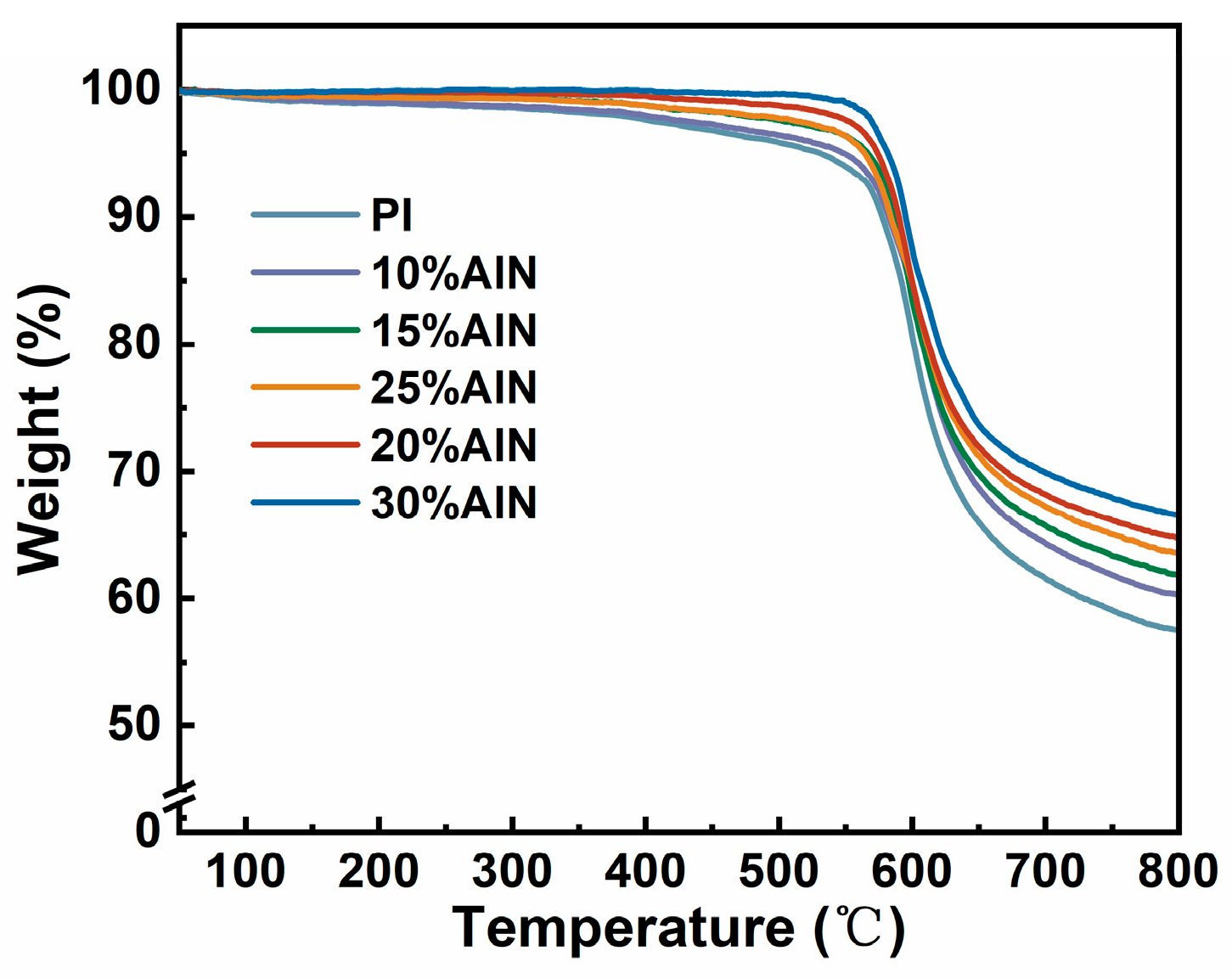



| 0 wt% (Pure PI) | 10 wt% | 15 wt% | 20 wt% | 25 wt% | 30 wt% | |
|---|---|---|---|---|---|---|
| Td5% (°C) | 534 | 549 | 567 | 566 | 572 | 576 |
| Td10% (°C) | 579 | 582 | 588 | 585 | 587 | 588 |
Disclaimer/Publisher’s Note: The statements, opinions and data contained in all publications are solely those of the individual author(s) and contributor(s) and not of MDPI and/or the editor(s). MDPI and/or the editor(s) disclaim responsibility for any injury to people or property resulting from any ideas, methods, instructions or products referred to in the content. |
© 2026 by the authors. Licensee MDPI, Basel, Switzerland. This article is an open access article distributed under the terms and conditions of the Creative Commons Attribution (CC BY) license.
Share and Cite
Xiao, J.; Shan, Q.; Xu, Z.; Yin, Z.; Xie, B.; Wu, H. Fabrication of Polyimide/Aluminum Nitride Composites and Wafer Channel Filling via Direct Ink Writing. Nanomaterials 2026, 16, 681. https://doi.org/10.3390/nano16110681
Xiao J, Shan Q, Xu Z, Yin Z, Xie B, Wu H. Fabrication of Polyimide/Aluminum Nitride Composites and Wafer Channel Filling via Direct Ink Writing. Nanomaterials. 2026; 16(11):681. https://doi.org/10.3390/nano16110681
Chicago/Turabian StyleXiao, Junjie, Qingjie Shan, Zhoulong Xu, Zhouping Yin, Bin Xie, and Hao Wu. 2026. "Fabrication of Polyimide/Aluminum Nitride Composites and Wafer Channel Filling via Direct Ink Writing" Nanomaterials 16, no. 11: 681. https://doi.org/10.3390/nano16110681
APA StyleXiao, J., Shan, Q., Xu, Z., Yin, Z., Xie, B., & Wu, H. (2026). Fabrication of Polyimide/Aluminum Nitride Composites and Wafer Channel Filling via Direct Ink Writing. Nanomaterials, 16(11), 681. https://doi.org/10.3390/nano16110681